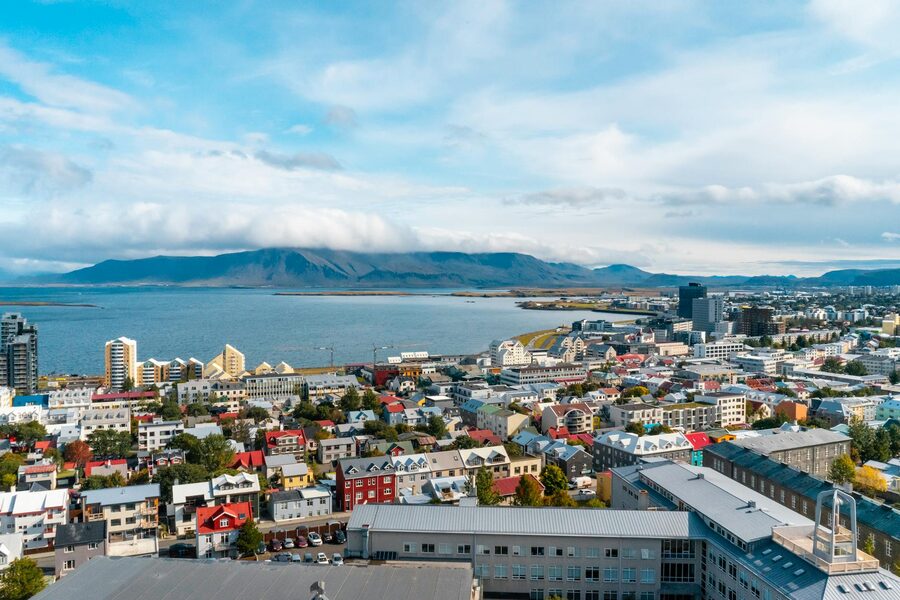
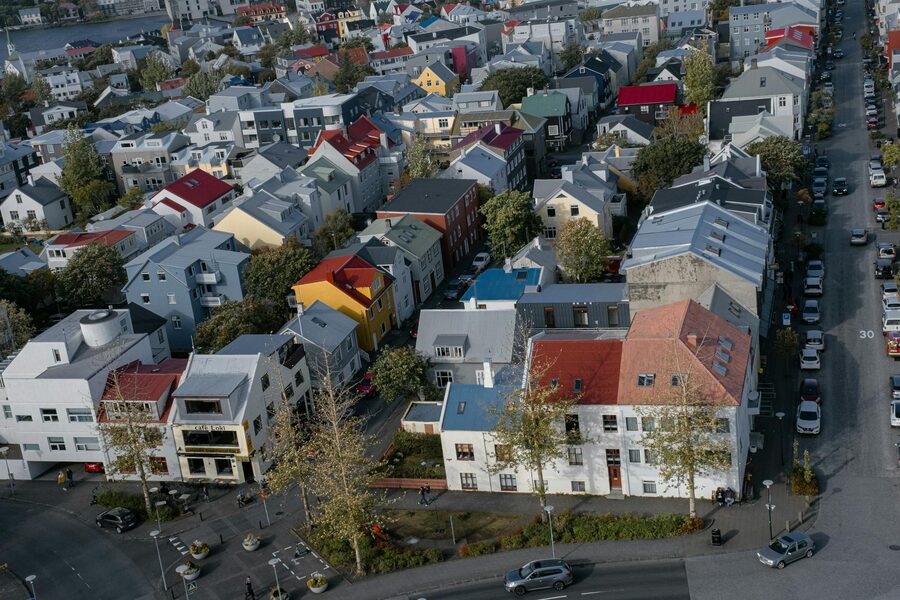
Reykjavik is small. That’s the first thing to know. You can walk the whole downtown in forty minutes and cross what people here call Route 1, the main road, in about twelve. There’s exactly one skyscraper-ish building, a glass one called Smáratorg Tower out in Kópavogur, and locals make fun of it for being twenty stories tall in a country that mostly tops out at five. The capital holds roughly 140,000 people. Add the suburbs, Kópavogur, Hafnarfjörður, Garðabær, Mosfellsbær, and you get around 235,000. That’s two-thirds of Iceland, crammed onto a peninsula jutting into Faxaflói Bay with Mount Esja watching from across the water.
I grew up walking to Laugardalslaug on Saturday mornings with a towel under my arm. I’ve queued at Bæjarins Beztu in the sleet, sat on the concrete steps of Hallgrímskirkja with an ice cream in July, and watched the aurora from Grótta at least a hundred times. This is the city I know. What follows is how I’d actually spend time here, where to sleep, what to eat, which pools to hit, where the tourists go wrong, and which day trips are worth giving up a morning for.
In This Article
- What Reykjavik actually feels like
- The neighbourhoods
- Downtown 101, where you probably want to be
- Old Harbour and Grandi
- Vesturbær
- Hlíðar and Laugardalur
- Fossvogur, Kópavogur, and further out
- Getting there, and getting from Keflavík
- Flybus from KEF to BSÍ
- Rental car
- Taxi
- Getting around the city
- Where to stay
- Budget (under 25,000 ISK a night)
- Mid-range (25,000-50,000 ISK)
- Upmarket (50,000-90,000 ISK)
- Luxury / design (90,000 ISK and up)
- Things I’d actually recommend doing
- Climb Hallgrímskirkja
- Walk around Tjörnin
- Harpa Concert Hall
- Sólfar, the Sun Voyager sculpture
- Perlan
- The National Museum (Þjóðminjasafn Íslands)
- Swim at a public pool
- Grótta lighthouse walk
- Street art walk
- Árbær Open Air Museum
- Kolaportið flea market
- Sun Voyager to Harpa to Harbour walk
- Viðey island
- Nauthólsvík geothermal beach
- Höfði house
- Where to eat and drink
- The hot dog, Bæjarins Beztu Pylsur
- Bakeries and casual
- Mid-range, the ones I’d book
- Splurge
- Coffee
- Bars
- Day trips from Reykjavik
- Golden Circle
- Blue Lagoon and Sky Lagoon
- South Coast
- Whale watching
- Northern Lights
- Reykjanes peninsula
- The seasons, honestly
- Winter (November to February)
- Shoulder season, March/April and September/October
- Summer (June to August)
- Local culture and small things worth knowing
- A rough four-day plan
- A few final thoughts
What Reykjavik actually feels like
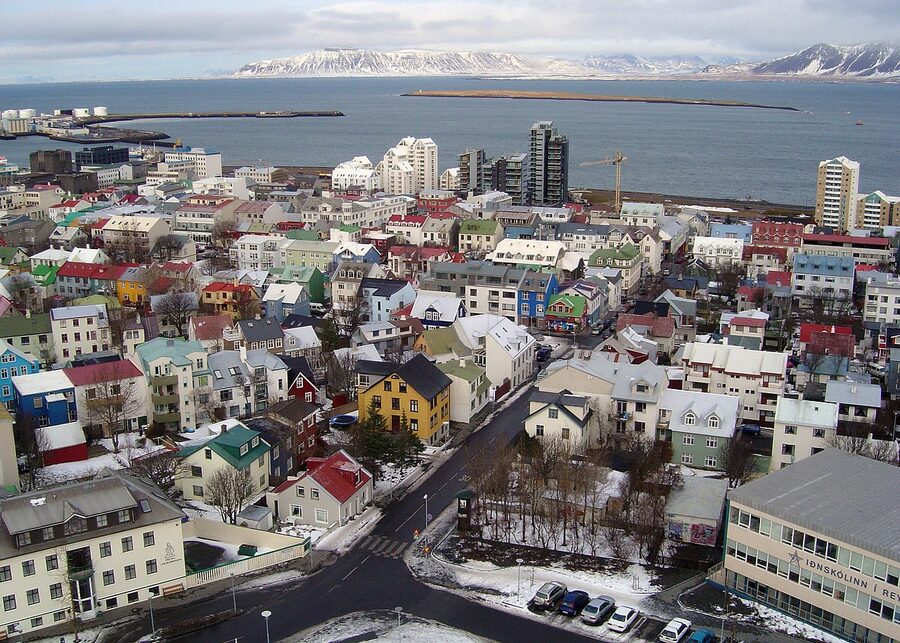
Reykjavik is not a grand European capital and it’s not trying to be. There’s no Haussmann boulevard, no Roman ruins, no ancient cathedral. The oldest building, Aðalstræti 10, dates from 1762. What it has instead is a small, stubborn, very Icelandic city built out of corrugated iron, basalt concrete, and whatever the fishing economy could afford for about 160 years before tourism caught up. The architecture is mostly 20th-century and unpretentious. Most of the charm is in the details: coloured roofs, gable ends painted different colours to the walls, hand-cut turf on a few old houses, hydrangeas in July, snow up to your knees in February.
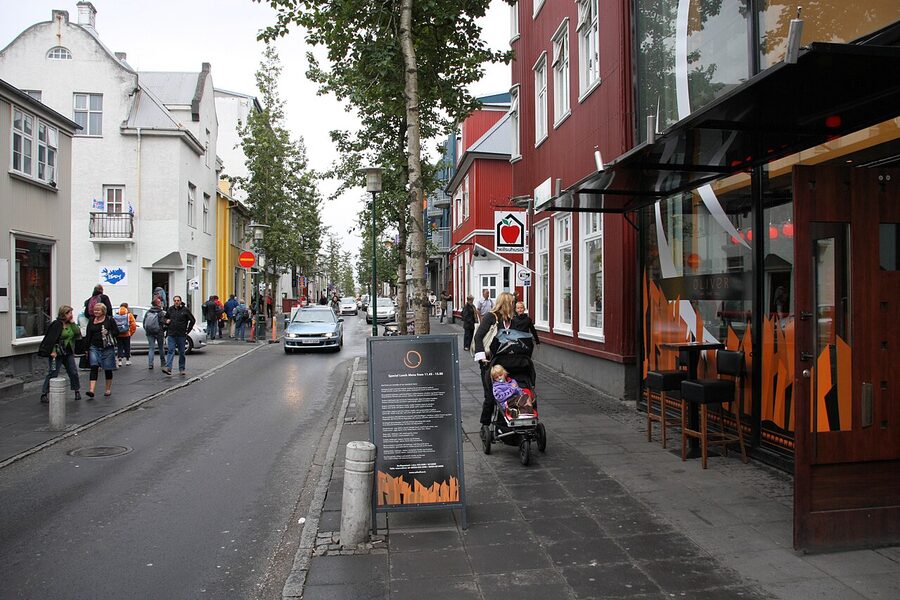
The city runs on two main streets: Laugavegur, which becomes Bankastræti and then Austurstræti as you walk west, and Hverfisgata, which runs parallel a block to the north. Between them and the pond (Tjörnin, always “the pond” in conversation) you’ve got most of the downtown. The postcode is 101, you’ll hear people say “I live in 101” rather than naming the neighbourhood, and that’s where almost everything touristic happens.
One stoplight downtown. That’s the joke, and it’s mostly true. If you see more than three at an intersection in 101 you’re already halfway out of the centre.
The neighbourhoods
Reykjavik is small enough that “neighbourhood” sometimes feels like an overstatement, you’ll cross two of them waiting for coffee to cool. Still, each one has its own character, and where you stay will shape the trip more than any single attraction.
Downtown 101, where you probably want to be
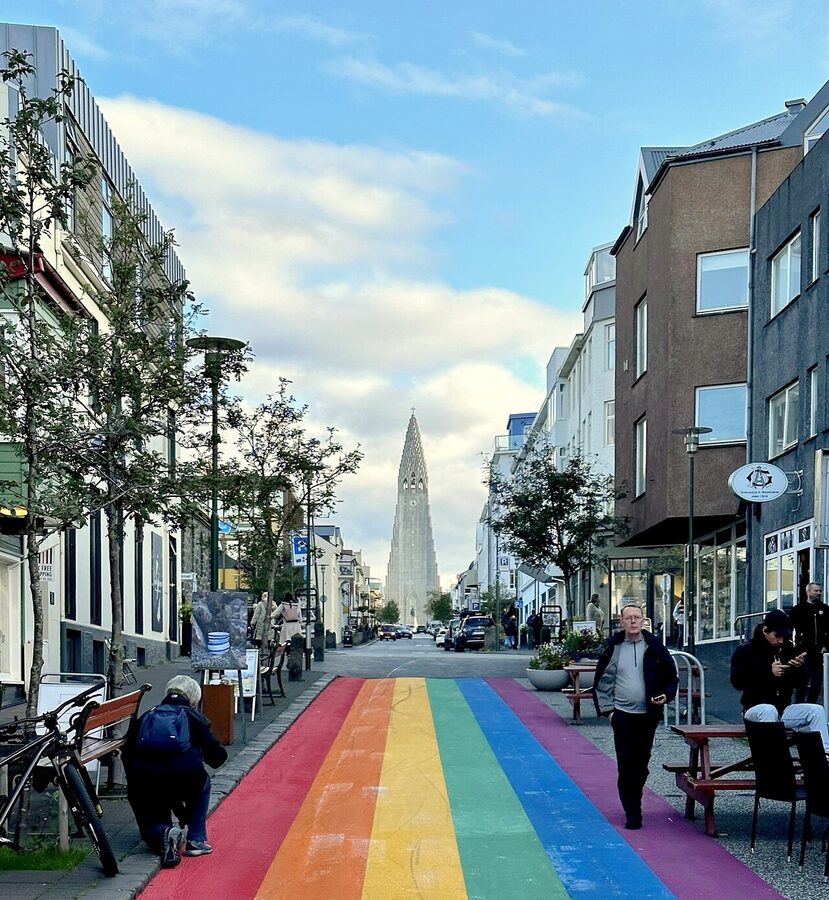
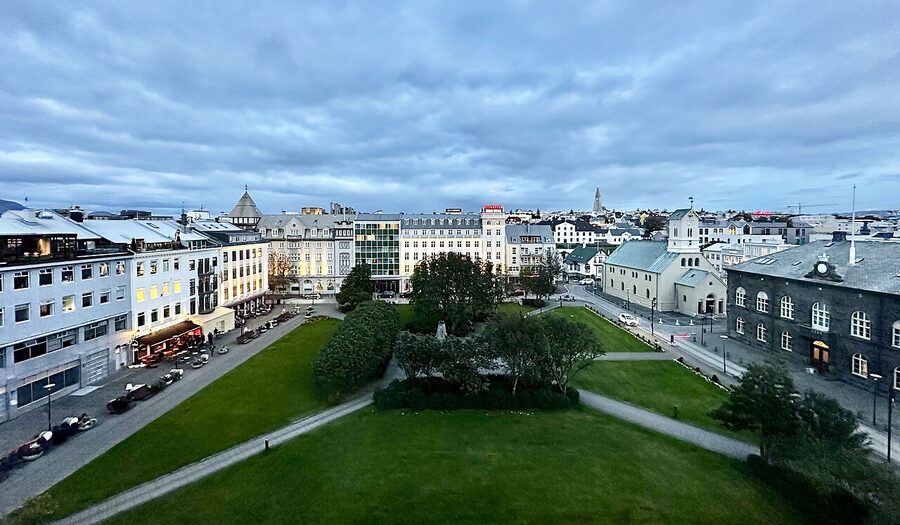
This is the postcode, the old town, and where every tourist map centres. Laugavegur is the main shopping street, running east from Bankastræti up towards Hlemmur square. Skólavörðustígur is the short cobbled hill climbing to Hallgrímskirkja, since 2019 it’s painted as a rainbow and you’ll see it in every photo of Reykjavik ever taken. Bankastræti is the lower extension of Laugavegur, the stretch with the most old-school bars and the one that doubles as a Saturday-night run.
South of the main drag you have Tjörnin (the pond), the small Hljómskálagarður park next to it, and some of the quietest residential streets in the city. North you have the harbour, and west you have Aðalstræti, the city’s first-ever street and still the prettiest corner on a clear summer evening. Book here if it’s your first trip. You’ll walk everywhere.
Old Harbour and Grandi
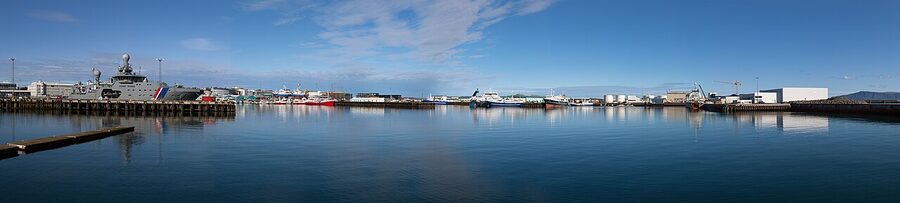
Walk ten minutes north from Laugavegur and you hit the Old Harbour, Gamla höfnin, and then the Grandi industrial spit. Twenty years ago this was nothing but fish processing. Now it’s the area’s most interesting food and culture corner. The whale-watching boats leave from the inner harbour. The Whales of Iceland exhibit, the Marshall House (Kling & Bang and i8 galleries upstairs), Valdís ice cream, the Bryggjan Brugghús brewery, and a cluster of good restaurants sit along Grandagarður and Mýrargata. Stay here if you want easier parking and a slightly less tourist-heavy base, it’s a fifteen-minute walk to the centre.
I end up at Grandi at least once a trip home. It’s the one corner of the city that actually felt different after a ten-year gap.
Vesturbær
West of the centre, over the small hill past the cemetery, is Vesturbær, the “west town.” Quieter, more residential, full of low-rise houses and one of the better neighbourhood pools (Vesturbæjarlaug). The university sits here too. This is where Icelanders who don’t want to live in the tourist bit of 101 actually live. Good for a run or a morning swim, a bit of a trek to the bars at night. Kaffivagninn, a small café on the harbour, has been open since 1935 and does a lobster soup that stops you complaining about the weather.
Hlíðar and Laugardalur
East and up the hill you get into Hlíðar and then Laugardalur, the valley. This is where the big public pool (Laugardalslaug) is, the botanical gardens, the family zoo (Fjölskyldu- og húsdýragarðurinn), the national stadium Laugardalsvöllur, and Valshöll if there’s basketball on. Not where you come for the tourist sights, but if you want to see where locals actually go on Sunday morning, walk the valley loop. Kringlan shopping centre, the city’s main indoor mall, sits just south of here, useful only if it’s snowing sideways and you need a Christmas present.
Fossvogur, Kópavogur, and further out
The southern suburbs roll along the coast towards Kópavogur, which is technically its own municipality but in practice just “the next district.” This is where Sky Lagoon sits (Kópavogur, not Reykjavik proper), along with Smáratorg, the mall with the aforementioned 20-story tower, and a chain of quiet residential streets. Unless you’re coming for Sky Lagoon or visiting family, there’s no reason to base yourself down here.
Getting there, and getting from Keflavík
Your flight lands at Keflavík International Airport (KEF), forty-five kilometres southwest of Reykjavik. Not Reykjavik Airport, that’s the little domestic one next to the pond and it’s only used for flights within Iceland and Greenland. KEF is out on the Reykjanes peninsula, surrounded by lava fields, and your first forty-minute drive into town is going to be mostly moss-covered rock. Welcome.
Three ways in. Pick one.
Flybus from KEF to BSÍ
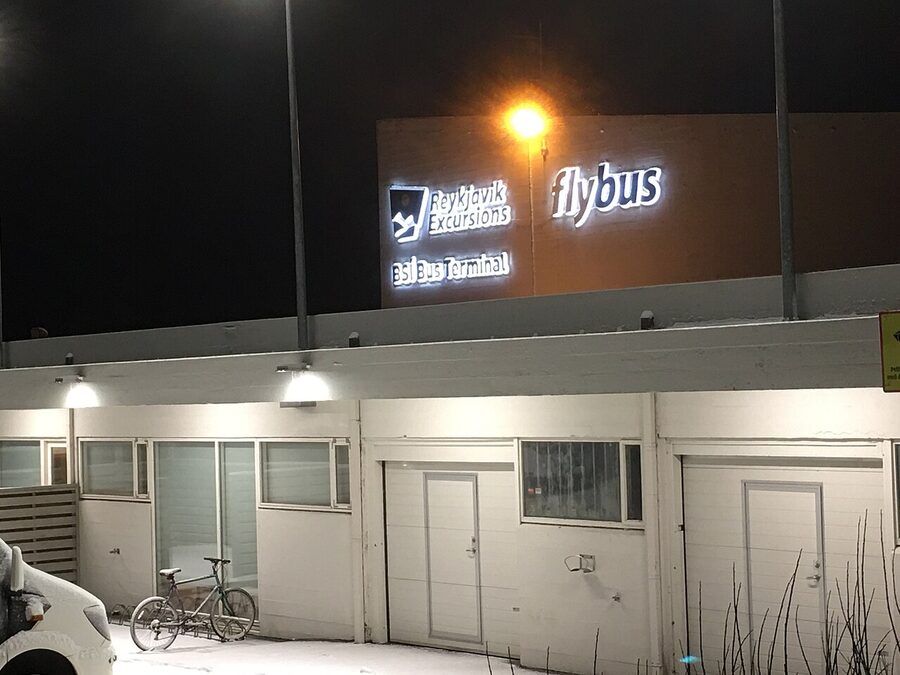
Flybus is what most people use. It’s run by Reykjavik Excursions, it runs to meet every flight, even the 3 a.m. ones, and drops you at BSÍ bus terminal in the centre of town about forty-five minutes later. Around 4,500 ISK one-way, 8,500 return, cheaper if you book online in advance. Buy the add-on Flybus+ (about 2,000 ISK extra) and they’ll drop you at your hotel. If you’re at a central 101 hotel, skip the add-on and walk, BSÍ is a fifteen-minute stroll from Laugavegur and you’ve been sitting on a plane all night anyway. There’s a coffee machine at BSÍ and a decent Icelandic lunch counter if you want a bite on the way.
Airport Direct is the other main operator. Same price, same schedule, slightly nicer buses. Either works.
Rental car
Only rent a car in Reykjavik if you’re planning to leave Reykjavik. The city itself is walkable to the point where a car is a liability, downtown parking costs 340 ISK an hour on weekdays, most of 101 is one-way, and you don’t need it. If you’re doing the Ring Road or even a few self-drive day trips, rent from the airport or from one of the depots on the east side of the city (Blue Car Rental, Lotus, Procar, these are all a five-minute drive from downtown). Pick up the car the day you’re leaving town. Don’t pay for three nights of parking you won’t use.
Taxi
Taxis from Keflavík run about 18,000-22,000 ISK one-way. Only sane option at 4 a.m. with three bags and a small child. Otherwise skip.
Getting around the city
You’ll walk. That’s mostly it.
Downtown Reykjavik is compact, Hallgrímskirkja to the Old Harbour is fifteen minutes on foot. The centre to Hlemmur is ten. Hallgrímskirkja to the Sun Voyager sculpture is maybe eight. If you’ve booked somewhere in 101, you’re not getting in a vehicle unless you’re leaving town.
When you do need it: Strætó (strætó, with the ö, the word means “bus”) is the city bus network. A single ride is 630 ISK for adults when you pay through the app, slightly more if you’re buying a ticket from the driver. Payment is the Klappið card or the Klappið app, there’s no cash on the new buses, which catches tourists out. Buses run roughly every 15-30 minutes depending on route and time, and there’s a real-time map on straeto.is that actually works. Route 14 connects the centre to Laugardalur and the main pool. Route 18 heads out to Kringlan and Smáratorg. Route 55 goes to BSÍ, the airport terminal, and Reykjanesbær.
Biking in summer is genuinely nice. The cycle path around Tjörnin, along Sæbraut on the north coast, and out to Grótta is flat and protected. Hopp (the shared-scooter service) has stations all over 101, about 150 ISK to start a ride and 35-ish ISK a minute, and they’re fun in July, terrifying in January. You’ll see icy patches on the pavement from October to March and there’s no point pretending scooter tyres are going to handle that.
Do not bike between November and April unless you’ve lived somewhere cold before.
Where to stay
There’s no “wrong” neighbourhood in Reykjavik, the whole place is small enough that anywhere within the 101 or 107 postcodes puts you in walking distance. What matters is the budget and what you want from the room. Below are hotels I’d actually send a friend to, across four price tiers. Every Booking.com link below goes to the verified hotel page.
Budget (under 25,000 ISK a night)
KEX Hostel, Skúlagata 28, right on the sea. An old biscuit factory turned into a social hostel with a gastropub downstairs that locals also drink at. Mixed dorms from around 8,000 ISK, private doubles around 24,000-28,000. There are plenty of places in Reykjavik to sleep cheaply; KEX is the only one that feels like part of the city. Book it weeks ahead in summer. Check prices on Booking.com.
Loft – HI Eco Hostel, Bankastræti 7. Right on the main drag, with a rooftop terrace that’s one of the better summer spots for a beer in the whole city. Doubles from about 22,000 ISK, dorms closer to 9,000. The rooftop is the selling point, you can see Hallgrímskirkja, the harbour, and Faxaflói Bay from the same bench. Check prices on Booking.com.
ODDSSON Downtown, Brautarholt 26-28. A newer design hotel-slash-hostel with mixed rooms, a rooftop hot tub, and a sauna. Ten minutes east of Laugavegur. Doubles from 24,000 ISK. Good for solo travellers who want a private room at hostel prices. Check prices on Booking.com.
Mid-range (25,000-50,000 ISK)
Fosshotel Reykjavík, Þórunnartún 1, just east of Hlemmur. Biggest hotel in Iceland at 320 rooms. Not charming. But clean, modern, three-minute walk to Laugavegur, and the breakfast is one of the better buffets in town. 35,000-45,000 ISK a night in peak season. The Flybus stops right outside, so no dragging luggage. Check prices on Booking.com.
Center Hotels Plaza, Aðalstræti 4. Sits right next to Ingólfstorg square, which is as central as you can get. The hotel is a rabbit warren inside, old building, odd corridors, but the location is perfect. Doubles around 38,000-48,000 ISK in summer. Check prices on Booking.com.
Reykjavik Marina, Mýrargata 2. Attached to the Old Harbour, ten-minute walk to Laugavegur. A bit quirky, with nautical touches everywhere and a cinema in the lobby (Bíó Paradís, actually a real arthouse cinema). Great base if you’re doing whale-watching. 40,000-55,000 ISK. Check prices on Booking.com.
Upmarket (50,000-90,000 ISK)
Hotel Borg, Pósthússtræti 11, opened 1930. The original grand hotel of Reykjavik, sitting on Austurvöllur square opposite the parliament. Art deco details throughout, the kind of place where the bar is lit by proper 1930s sconces. 60,000-80,000 ISK. Worth it if you like a hotel that has a history longer than the tourists. Check prices on Booking.com.
Hotel Holt, Bergstaðastræti 37, just south of Laugavegur up a quiet residential hill. Iceland’s largest private art collection hangs in the corridors, Jóhannes Kjarval, Ásmundur Sveinsson, the old masters of Icelandic painting. A slightly fading grande dame, but that’s part of the charm. 55,000-75,000 ISK. Check prices on Booking.com.
Kvosin Downtown Hotel, Kirkjutorg 4, right behind the old cathedral. All suites, all with kitchenettes. The building is from 1900 and the renovation is tasteful. 70,000-90,000 ISK depending on the suite. The view from the top-floor rooms across Austurvöllur is one of the best in the city. Check prices on Booking.com.
Luxury / design (90,000 ISK and up)
101 Hotel, Hverfisgata 10, a Member of Design Hotels. The original boutique luxury hotel in Reykjavik, opened 2003 by the gallerist Ingibjörg Pálmadóttir. Black-and-white rooms, contemporary Icelandic art everywhere, spa in the basement. 90,000-130,000 ISK. The lobby bar is a scene on weekend nights. Check prices on Booking.com.
ION City Hotel, Laugavegur 28. The little sister of the more famous ION Adventure at Þingvellir, but in the middle of Laugavegur. Dark, glamorous, very design-forward. 110,000-150,000 ISK. Not quiet, you’re on the nightlife street, but that’s the point. Check prices on Booking.com.
The Reykjavik EDITION, Austurbakki 2, on the harbour next to Harpa. Opened 2021, still the newest five-star in town. Marriott luxury brand, Icelandic design sensibility, a rooftop bar with Harpa glass reflecting into your gin and tonic. 140,000-250,000 ISK. Biggest spa in Reykjavik. Worth it if someone else is paying. Check prices on Booking.com.
Things I’d actually recommend doing
Reykjavik doesn’t have an Eiffel Tower. There’s no single thing you must do. What the city rewards is wandering slowly, popping into places, following a side street. Here are the spots I send friends to, roughly in order of “worth doing on a first trip.”
Climb Hallgrímskirkja
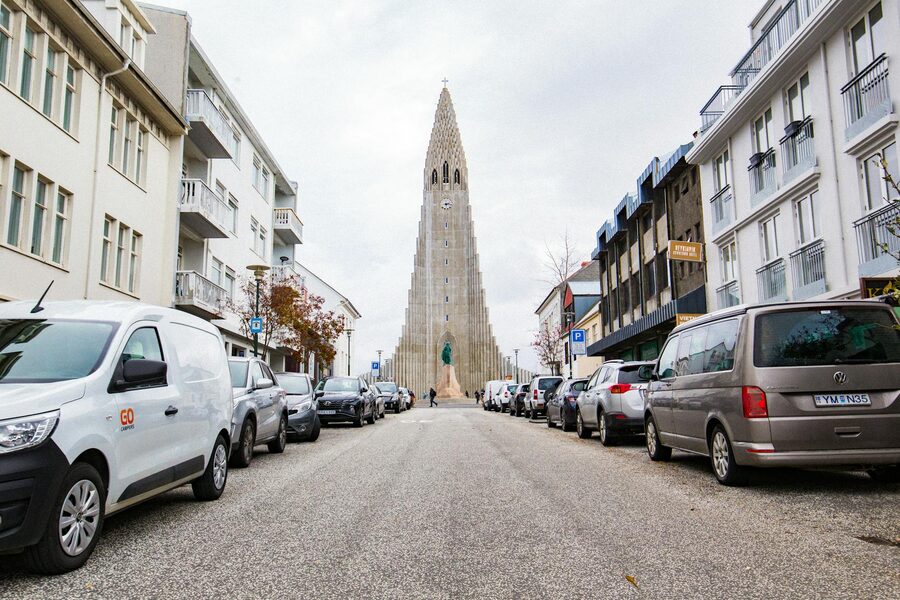
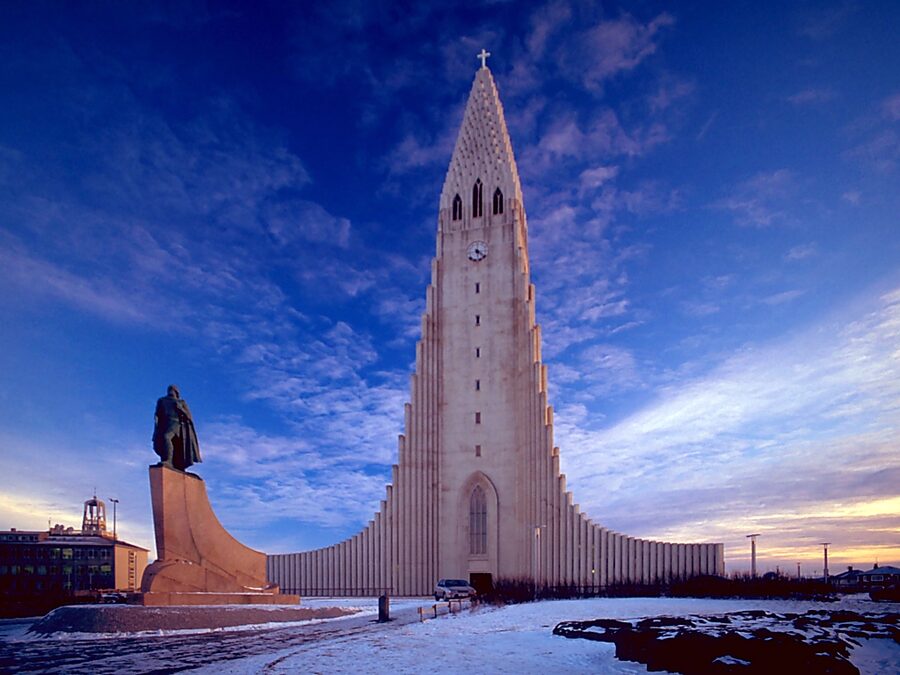
The concrete Lutheran church at the top of Skólavörðustígur is the single most-photographed thing in Iceland. Designed by Guðjón Samúelsson to mimic the basalt columns at Svartifoss, started in 1945, finished in 1986. Free to enter; the tower costs 1,400 ISK for adults, 200 ISK for kids. You go up in an elevator, walk out on an open-air viewing platform 74 metres up, and on a clear day you can see Snæfellsjökull glacier 120 km away across the bay. That’s if it’s clear. Four times out of five it’s cloudy. Check before you go.
The interior is austere, white concrete, enormous organ (5,275 pipes, built by Johannes Klais of Bonn), very little decoration. Free organ recitals happen most Saturdays at noon in summer. Sit near the front if you want the bass to rearrange your ribcage.
Walk around Tjörnin
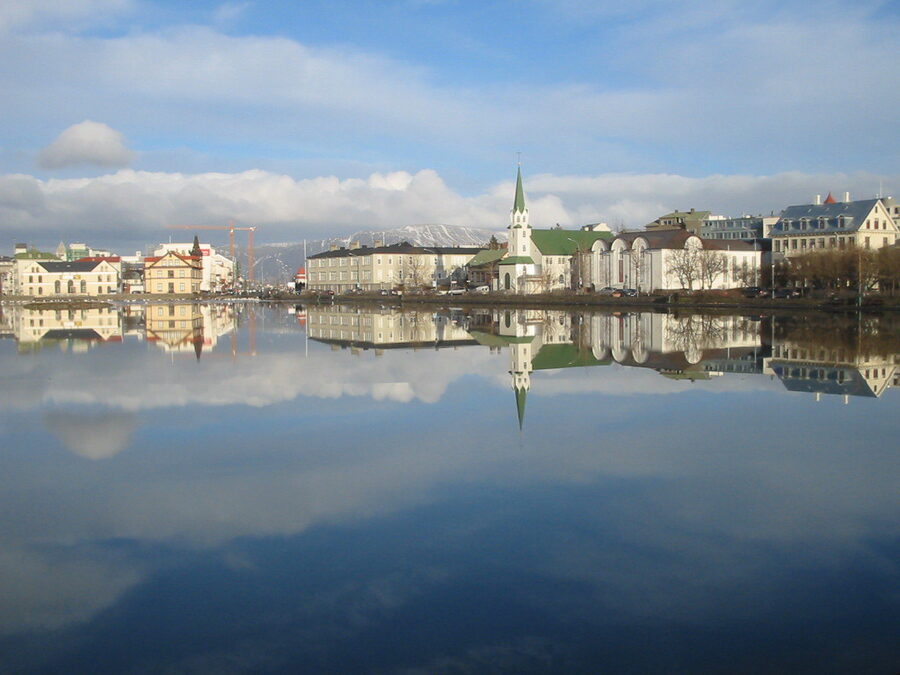
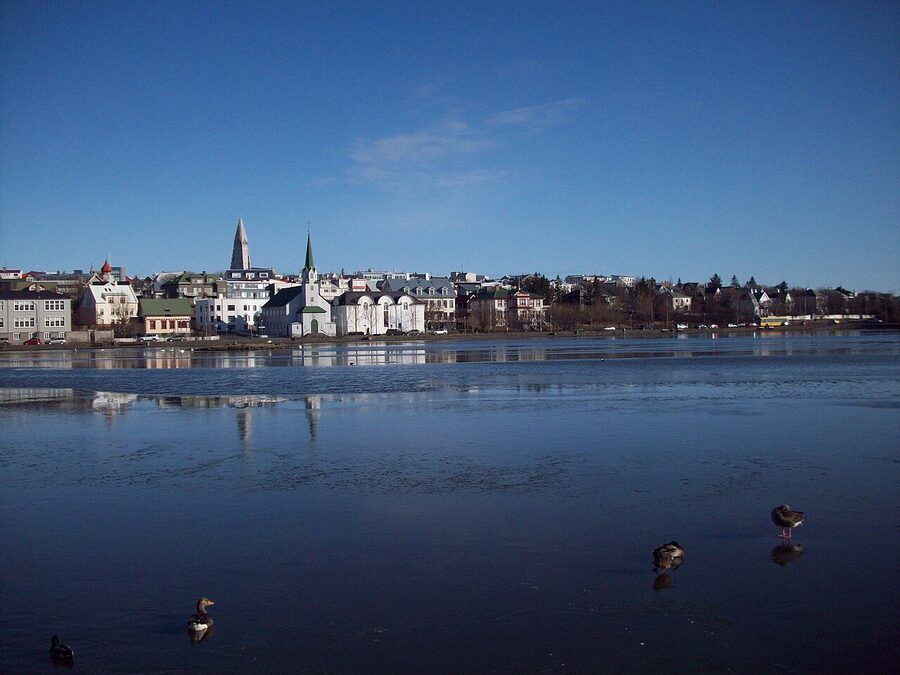
The pond in the middle of town is a loop you can do in twenty minutes. In summer it’s swans, geese, ducks, kids with bags of oats (bring breadcrumbs and you’ll be told off, wheat flour is bad for the birds). In winter it freezes solid enough that the city clears a patch for skating. The south end has Hljómskálagarður park, which has the best bench in the city for sitting and eating an ice cream in August.
On the north shore is Ráðhúsið, the city hall, built on stilts over the water, with a large relief map of Iceland inside that’s free to visit. Kids love it. The south shore has the Nordic House (Norræna húsið), designed by Alvar Aalto and still one of the most pleasant buildings in the city. There’s a café inside that looks onto the wetland.
Harpa Concert Hall
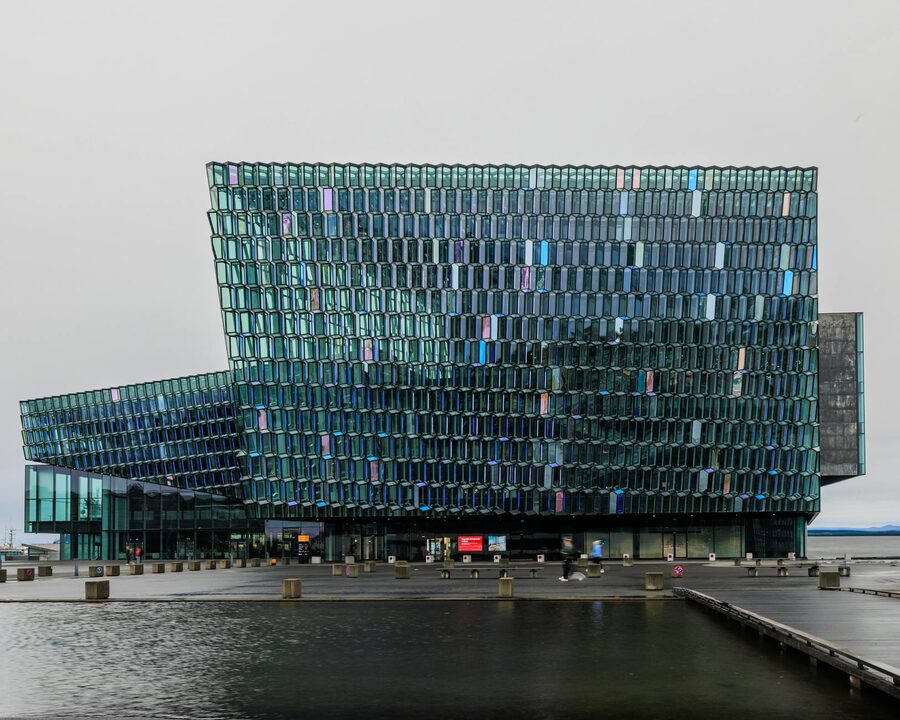
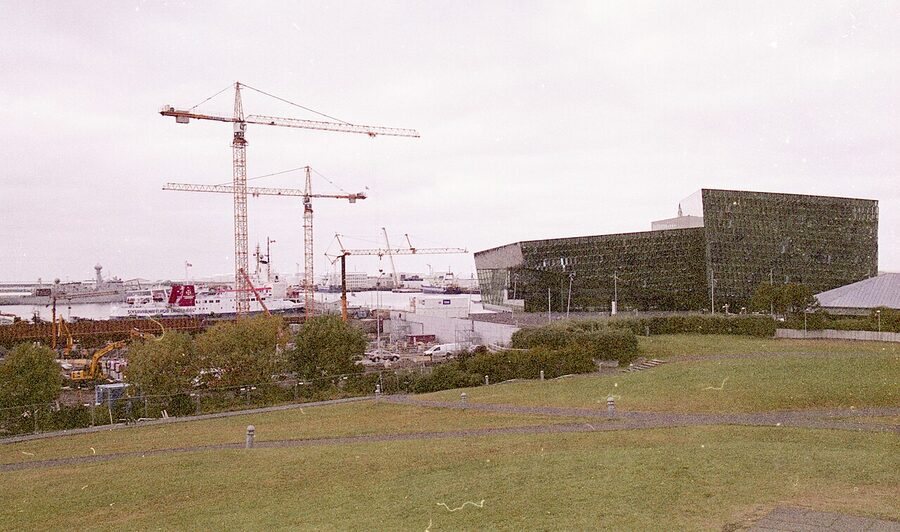
The glass-and-steel honeycomb on the harbour is Reykjavik’s most ambitious building. Designed by Ólafur Elíasson and Henning Larsen, finished in 2011 after the financial crash almost killed it mid-construction. The facade is 714 geometric glass panels that catch the weather, grey when it’s grey, amber at sunset, green in an aurora. Free to walk in any time. If you want to see the main hall (Eldborg, “fire mountain”), book a concert or take the short 1,750 ISK guided tour. The Iceland Symphony plays here most winter weekends and it’s one of the better-sounding halls in Europe.
Don’t leave without walking up to the top floor. The view down the staircase is the shot. Also: Kolabrautin, the restaurant on the fourth floor, does a weekday lunch for about 6,200 ISK that’s one of the better deals for harbour views in Reykjavik.
Sólfar, the Sun Voyager sculpture
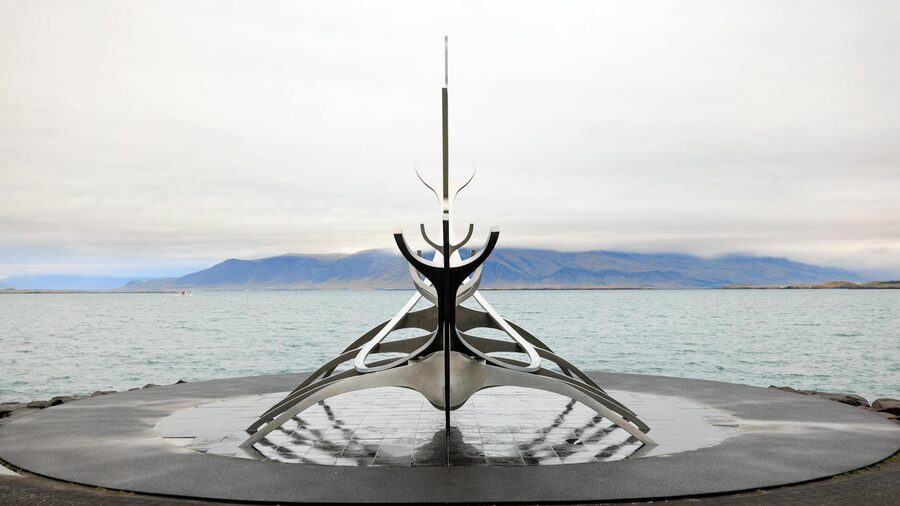
Jón Gunnar Árnason’s steel skeleton ship sits on the Sæbraut waterfront about ten minutes east of Harpa. Every guidebook calls it a Viking ship. It isn’t. Jón Gunnar called it an “ode to the sun”, a dreamboat pointed towards the unexplored, not a raid boat. The misconception happens because it looks like one from certain angles. Go at sunset if you can; in summer that means about 10 p.m.
Perlan
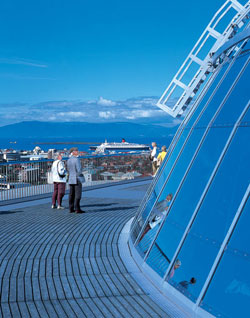
The glass dome on Öskjuhlíð hill sits on top of six old hot-water tanks that used to supply half the city. These days it’s a museum, a planetarium, a viewing platform, and a real (walk-through) 100-metre ice cave carved into a glacier replica. Adults 5,490 ISK, kids 3,190 ISK. Overpriced if you’re going for the view alone, go up Hallgrímskirkja for that, but the Wonders of Iceland exhibit is the best single introduction to the country’s geology, and the ice cave is genuinely cold, genuinely blue, and an easier and cheaper version of doing an actual glacier trip.
Also: the free 360-degree observation deck outside the dome is one of the less-known tips. Walk past the paid exhibits, take the lift up, go outside. View is the same.
The National Museum (Þjóðminjasafn Íslands)
Suðurgata 41, fifteen minutes from the centre. 2,500 ISK. If you only have time for one museum in Reykjavik, make it this one, it walks you through 1,200 years of Icelandic history from settlement to the republic, and it does it with real objects, not reconstructions. The Valþjófsstaður door, a 13th-century carved church door showing a saga scene, is the single most important Icelandic artefact and it’s here. Takes about two hours to do it properly. Closed Mondays in winter.
Swim at a public pool
This is the one I push hardest. If you leave Reykjavik without doing the pools you’ve missed the thing. Every Icelander does this, at least weekly, more in winter, and it’s the country’s real social life. The Blue Lagoon is a tourist spa. The pools are where we actually go.
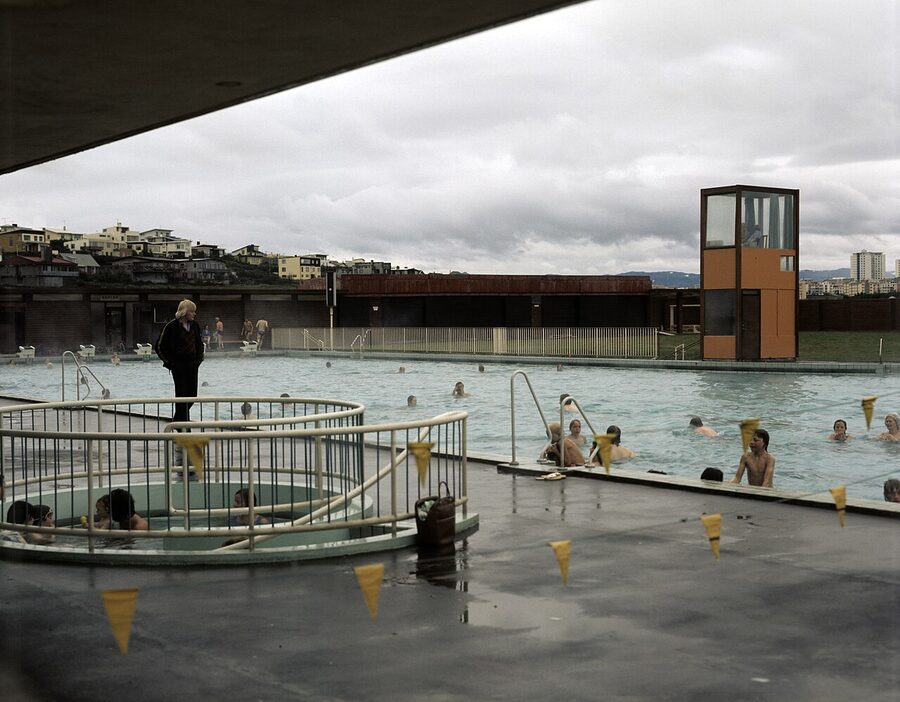
The rules: shower fully naked before getting in, soap, everywhere. This is non-negotiable and there are attendants who check. There are signs in English in every changing room showing which bits to wash. Don’t skip it. After that, go outside. Every pool has a big 25m or 50m swimming basin and then a series of smaller hot pots, heitir pottar, at different temperatures, usually 38, 40, and 42°C. Some have a cold plunge. Some have steam rooms. You move between them. You talk to whoever’s in the pot next to you. That’s the whole thing.
Three pools to know:
- Laugardalslaug, the big one. Sundlaugavegur 30, in Laugardalur valley. 50m outdoor pool, multiple hot pots, a waterslide, a children’s pool, a steam room. 1,340 ISK for adults, free for kids under 18. Fifteen-minute bus ride (route 14) or half-hour walk from downtown. Open 6:30 a.m. to 10 p.m. weekdays.
- Vesturbæjarlaug, the neighbourhood one. Hofsvallagata, in Vesturbær. Smaller, quieter, a real cross-section of the west side of town on a Saturday morning. Same price. Better if you want the actual local experience with fewer tourists.
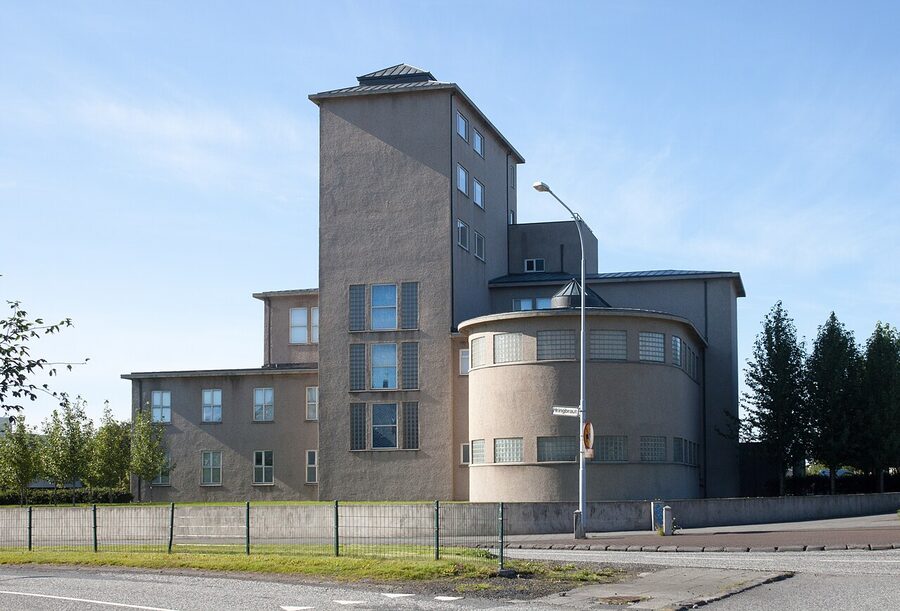
- Sundhöllin, the old downtown one. Barónsstígur 45a, five minutes from Hallgrímskirkja. Opened 1937, designed by Guðjón Samúelsson (same architect as the church), and still the most architecturally interesting pool in the country. There’s an indoor pool as well as outdoor hot pots. The new extension opened in 2017 and has a rooftop hot pot with a view down the city.
Bring a swimsuit, a towel, and flip-flops. Lockers use coins or a card. If you forget a towel, you can rent one, around 600 ISK. The water is geothermal, so it smells faintly of sulphur the first few times. You get used to it.
Grótta lighthouse walk
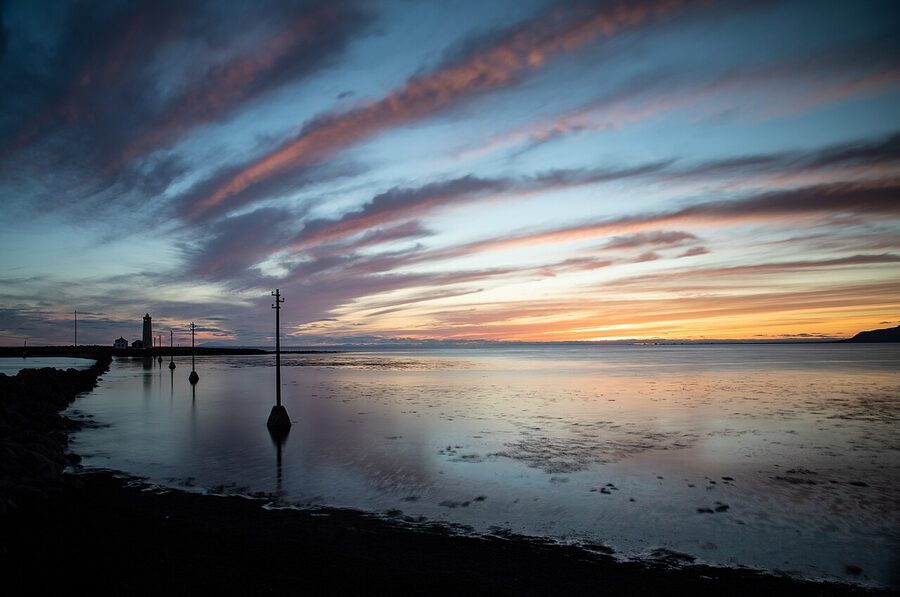
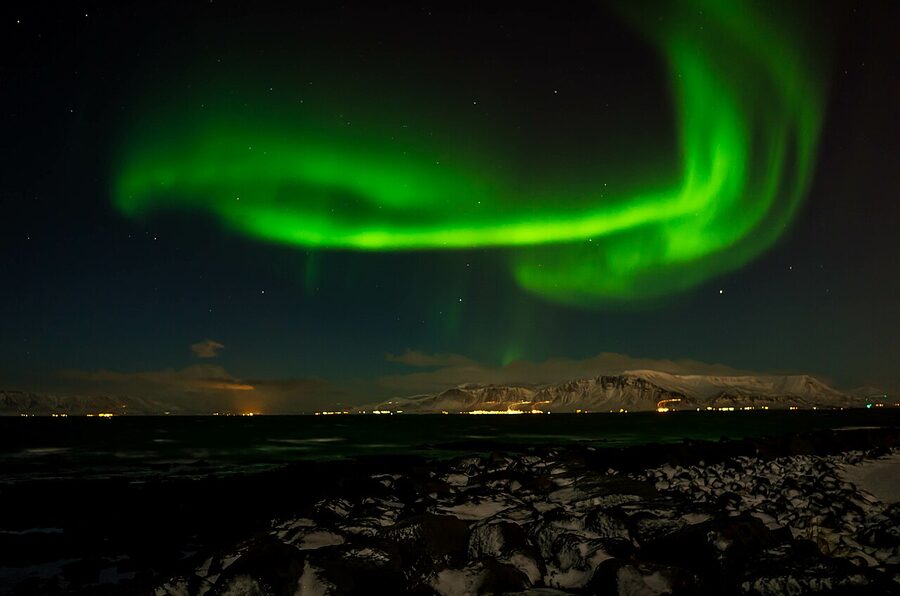
Ten-minute walk north from Vesturbæjarlaug, Grótta is a tiny island with a lighthouse at the western tip of the peninsula. A causeway connects it at low tide, walk out, sit on the rocks, walk back. At high tide the causeway floods and you watch from the shore. Either way the point is the view: Snæfellsjökull to the west (if clear), Esja to the north, and almost no city lights behind you. In winter this is the best place in Reykjavik to hunt for the aurora, you’re only ten minutes from downtown but the light pollution drops off enough to see the northern lights clearly when the solar activity is high.
The bird sanctuary is closed between 1 May and 15 July for nesting. Respect the signs. Eider ducks are protected by a specific law going back to the 19th century and Icelanders take it seriously.
Street art walk
Reykjavik has some of the better street art in Europe, partly because the city has a permissive attitude, partly because the Wall Poetry festival seeds new murals every year. The biggest pieces are around the north side of Hverfisgata, the alleys off Laugavegur, and increasingly along Grandagarður. I’d give it forty-five minutes, walk slowly, look up. The wall at Frakkastígur 8, the Skúlagata sea wall, and the Grandi harbour murals are the most photographed.
Árbær Open Air Museum
A bus ride from the centre (route 12 to the Árbæjarlaug stop, fifteen minutes, 630 ISK). Árbæjarsafn is a collection of 19th-century Icelandic buildings rescued from around Reykjavik and rebuilt in a valley on the east side. Actors in period costume demonstrate the crafts, wool, smithing, baking, and in December the whole thing turns into the best Christmas market in Iceland. 2,060 ISK for adults, free for kids under 18. Skip if it’s raining hard. Go if the sun is out.
Kolaportið flea market
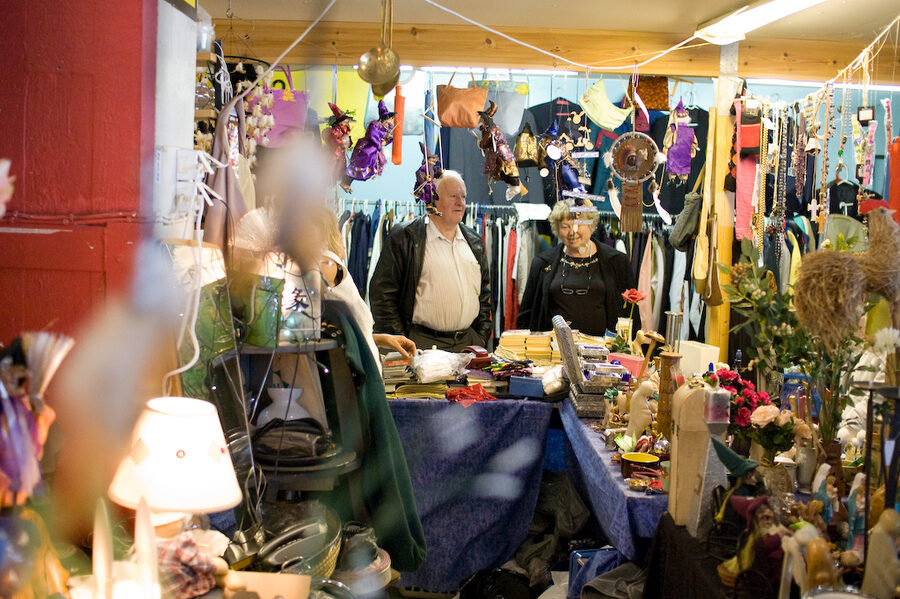
Weekends only, Saturday and Sunday 11 a.m. to 5 p.m., in the old customs warehouse on Tryggvagata next to the harbour. Nothing organised about it, part second-hand clothes, part old books, part fish and cured shark counter, part vinyl records. This is where you buy a lopapeysa (the Icelandic wool sweater) for half what a shop charges if you’re willing to hunt. Also the only place in the city that sells harðfiskur (dried fish) by the bag. Free entry.
A warning: the hákarl (fermented shark) counter is the real deal. If you’re curious, 400 ISK buys you a cube. Don’t chew.
Sun Voyager to Harpa to Harbour walk
If you only do one walk, do this one. Start at Sólfar on Sæbraut, walk west along the waterfront path, past the row of benches where old couples read in the afternoon, arrive at Harpa in about twelve minutes, keep going past the EDITION to the Old Harbour, end at Valdís ice cream on Grandagarður if summer or Flatey Pizza on the same block if winter. That’s the city’s best side-on view and it costs nothing.
Viðey island
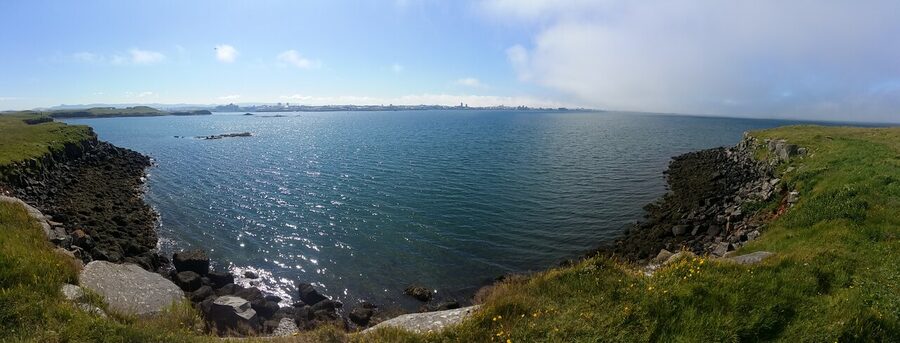
Fifteen-minute ferry from Skarfabakki in Sundahöfn, the cargo harbour east of the centre. 2,200 ISK return. Viðey is an uninhabited island with a church from 1774, the Yoko Ono Imagine Peace Tower (lit from October 9 to December 8 every year in memory of John Lennon), walking trails, and a single café. Good for a half-day if the weather’s decent. Bring a wind layer even in July, the island is exposed.
Nauthólsvík geothermal beach
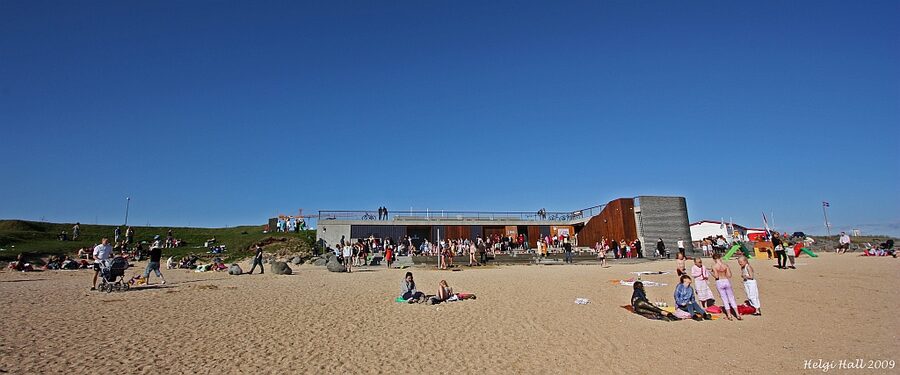
South Reykjavik, past the domestic airport, 25-minute walk from downtown. A small artificial beach with golden sand (trucked in from Morocco originally, refreshed a few years ago) in a little cove where geothermal water is mixed with the cold sea to make a small warm lagoon. Free in summer, 950 ISK to use the hot pot and changing rooms in winter. More a curiosity than a destination, you won’t sunbathe here, but it’s a good summer-evening swim and one of the rare stretches of sand in the country.
Höfði house
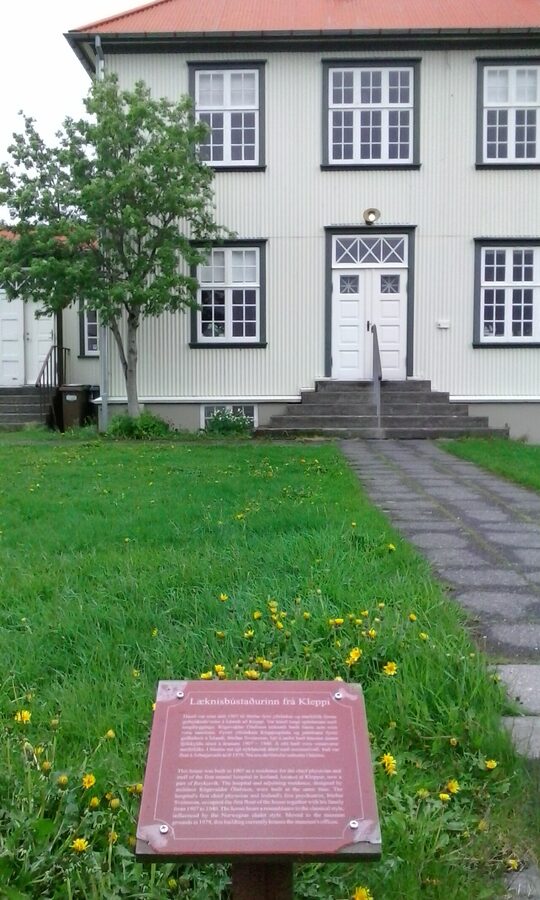
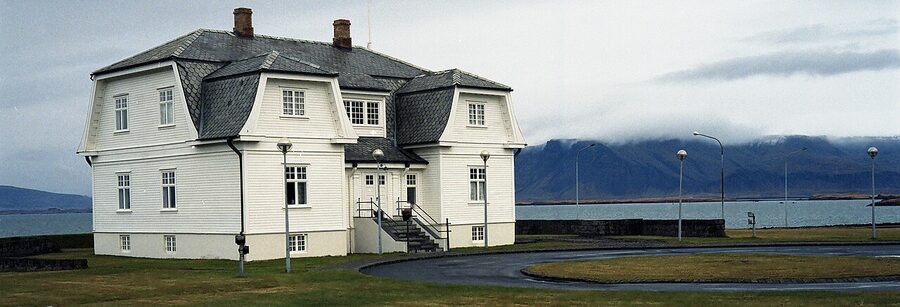
A small white wooden house on Borgartún where Reagan and Gorbachev met in 1986 to almost end the Cold War. You can’t go inside, it’s a city reception building, but the lawn outside has a plaque, a view of the bay, and enough context to make it worth ten minutes. Bus route 12 or a 25-minute walk east along the sea path.
Where to eat and drink
Reykjavik is not cheap. A main course at a mid-range restaurant runs 4,500-6,500 ISK. A good cocktail is 2,500-3,000 ISK. A beer at a bar sits around 1,400-1,700 ISK. Once you accept that, you can eat very well here, the quality of fish is genuinely excellent, lamb is a national specialty, and the bakery scene is in the middle of a long boom. Here’s how I’d break it down.
The hot dog, Bæjarins Beztu Pylsur
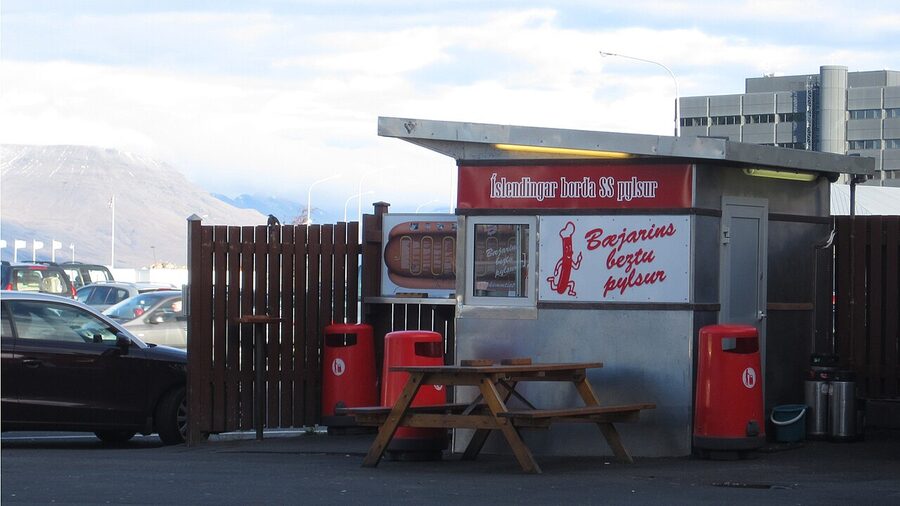
Tryggvagata 1, open since 1937. A cart, not a restaurant. 640 ISK for a pylsa með öllu (with everything), that’s a lamb-and-pork hot dog in a steamed bun with raw onion, crispy fried onion, ketchup, sweet brown mustard, and remoulade. Bill Clinton ordered one here in 2004 and got stick for hold-the-onions, which is why you now ask for “eina með öllu” (one with everything) out of habit. The queue is always there, always moves fast. It is not the best meal in Iceland. It’s the most Icelandic cheap meal in Iceland, and it’s a tradition. Go once, late at night after the bars.
Bakeries and casual
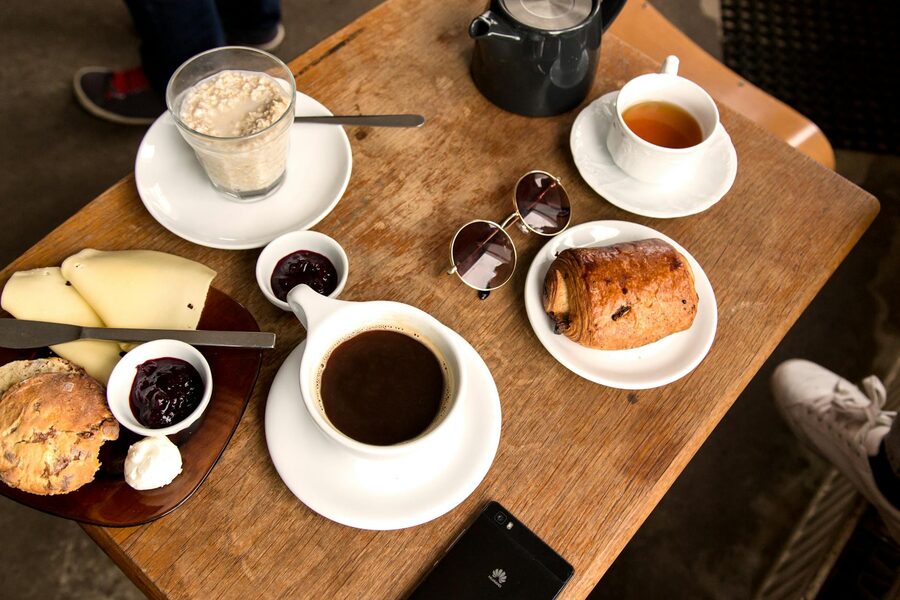
Reykjavik’s bakery scene is one of the best things that happened to the city in the last ten years. You can eat breakfast and lunch for under 2,000 ISK if you plan around them.
- Brauð & Co, Frakkastígur 16 (the original), plus branches around town. Cinnamon rolls the size of your palm, rye-crust sourdough, a handful of counter stools. Open from 6:30 a.m. The walls are painted like a comic book. The cinnamon rolls are 750 ISK and worth an early morning detour.
- Sandholt, Laugavegur 36. Fourth-generation bakery, open since 1920 but the current iteration is a slick café with proper bread, sourdough croissants, and one of the better breakfasts in town (around 3,200 ISK).
- Kaffi Vínyl, Hverfisgata 76. Vegan café with a vinyl wall. Relaxed, cheaper than most places, coffee is good. Lunches under 2,500 ISK.
- Hlemmur Mathöll, Laugavegur 107. The city’s food hall, in the old Hlemmur bus station. Eight food stalls under one roof, Vietnamese, Italian, Mexican tortas, Icelandic classics, fish and chips. A safe bet if you can’t decide, or if people in your group want different things.
Mid-range, the ones I’d book
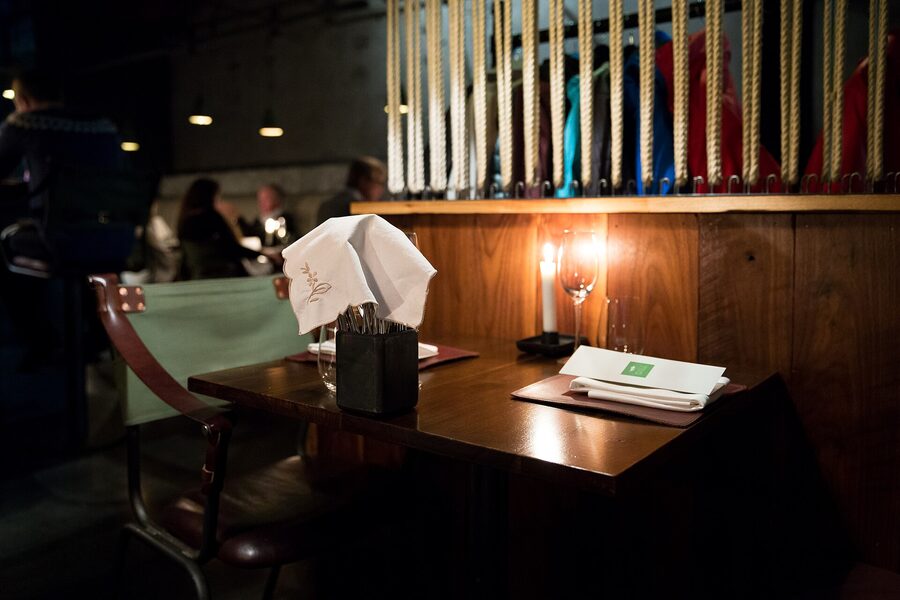
These are the places I’d book if someone visits me for four days and wants a range. 5,500-9,000 ISK a main.
- Matur og Drykkur, Grandagarður 2, down at Grandi. The name means “food and drink”, it’s a restaurant built around reinterpreting the old Icelandic farm kitchen. Salt-cod chowder, cured Arctic char, smoked lamb. Small room, two sittings a night, book ahead.
- Grillmarkaðurinn, Lækjargata 2a. A basement grill that somehow manages to be classy and easy at the same time. Nordic tasting menu around 10,500 ISK, à la carte mains 5,900-7,500. Busy, loud, reliably excellent.
- Fiskmarkaðurinn, Aðalstræti 12. Japanese-Icelandic fusion, mostly fish. The downstairs bar is a scene. Mains 5,800-8,500. Book a window table if you can.
- Kol Restaurant, Skólavörðustígur 40. On the rainbow street, right below Hallgrímskirkja. Modern Icelandic, a solid three-course meal around 11,000 ISK, cocktails that are actually well-made.
- Messinn, Lækjargata 6b. Casual fish counter with a twist, Arctic char in a cast-iron pan, served with new potatoes and salad. Around 4,900 ISK. Fish-forward and uncomplicated.
Splurge
Two places worth the money if you feel like one big meal.
Dill, Hverfisgata 12, Iceland’s first Michelin-starred restaurant and still the most interesting tasting menu in the country. Chef Gunnar Karl Gíslason. Around 19,000 ISK for the tasting, plus wine. Seven to nine courses, mostly fish and lamb and fermented local things. Book a month ahead minimum. This is the one dinner in Iceland that’s actually about Icelandic food, done properly.
ÓX, Laugavegur 28 (hidden inside ION City Hotel’s Sumac). Eleven-seat counter, one seating a night, 42,000 ISK for an eleven-course tasting. Chef Thrainn Vigfusson. You sit at the counter, the chefs cook in front of you, it’s a performance as much as a dinner. For the person whose idea of a trip to Iceland starts and ends with food.
Coffee
Reykjavik takes its coffee seriously. The short list:
- Reykjavik Roasters, Kárastígur 1 (the original), plus Brautarholt 2. Slow pour-overs, serious beans, a rotating single-origin on the grinder. This is where the baristas drink on their day off.
- Kaffibrennslan, Laugavegur 21. Full breakfast menu, reliable espresso, windows onto the main drag. Good for killing an hour.
- Te & Kaffi, multiple branches, local chain, the closest thing Reykjavik has to a “my regular.” Consistent, fast, fair prices.
- Mokka Kaffi, Skólavörðustígur 3a. Open since 1958, unchanged since about 1972. The oldest proper coffee house in the city. They do waffles with jam and cream. Go here on a rainy afternoon.
Bars
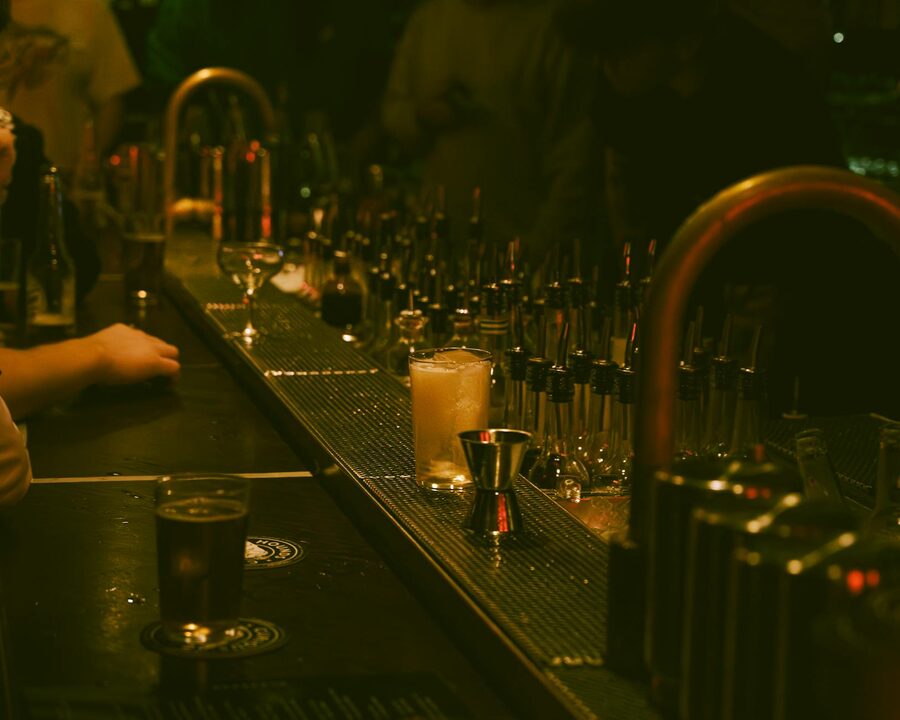
The nightlife downtown is concentrated on three streets, Austurstræti, Laugavegur, and the eastern stretch of Bankastræti. Things start slow (most Icelanders stay home drinking until 11 p.m. because the drink prices at bars are so high) and then go until 5 a.m. at weekends. Midweek most places close at 1. My picks:
- Kaldi Bar, Laugavegur 20b. The flagship of Kaldi brewery from Akureyri. Seven or eight of their beers on tap, half the prices of some places, always a crowd, leather sofas.
- Mikkeller & Friends Reykjavík, Hverfisgata 12 (same building as Dill). Danish craft-beer chain, 20+ taps, international and local.
- Session Craft Bar, Bankastræti 14. Icelandic craft beer only, about 30 rotating taps. The one that taught Reykjavikers which of the local breweries are actually good (hint: Einstök, Borg, Kaldi, Lady Brewery).
- Pétursson & Co, the old-school cocktail list at Hverfisgata 18, dark wood, proper ice. Worth the 2,900 ISK for a martini.
- Jungle Cocktail Bar, Austurstræti 9. The newer wave, creative cocktails, plants everywhere, gets queues after midnight.
Day trips from Reykjavik
Reykjavik is a good base. Most of Iceland’s most-photographed places are within three hours of it. You can do a different trip every day for a week without repeating yourself.
Golden Circle
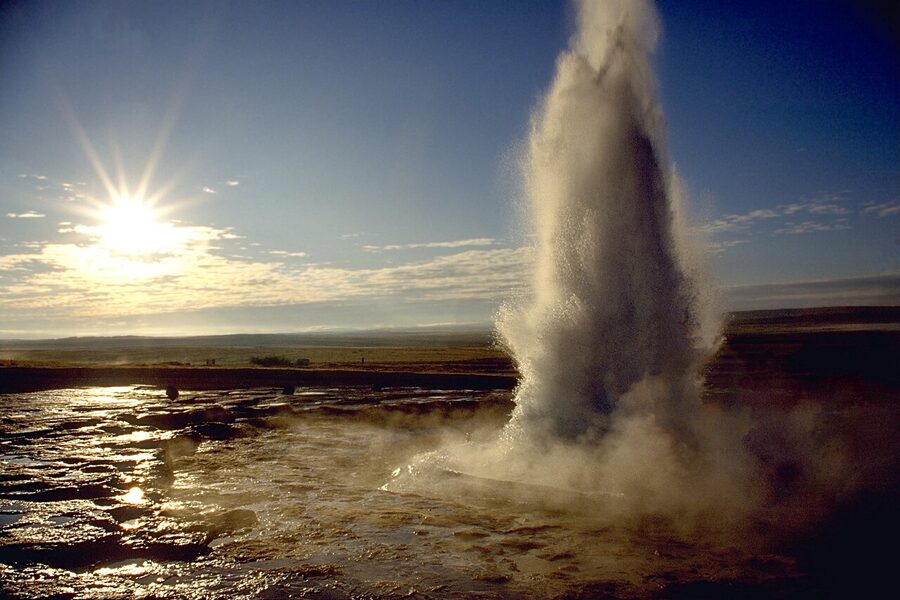
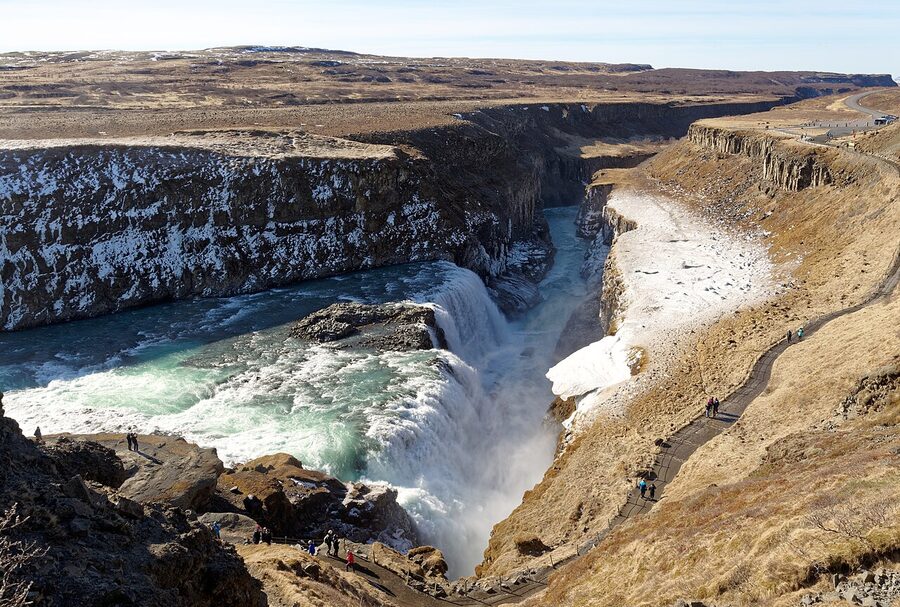
The classic. Three stops: Þingvellir National Park, Geysir/Strokkur, and Gullfoss. All within 100 km of the city, all doable in one day, all worth seeing. Most tours leave Reykjavik around 9 a.m., spend 45 minutes at each site, add in a tomato greenhouse at Friðheimar or the Kerið volcanic crater, and get you back by 5 p.m. Around 11,000-14,000 ISK for a bus tour, more for a small group. Self-drive it if you’ve got the car, the roads are easy and the stops are straightforward. Start with Þingvellir first thing in the morning to beat the coaches.
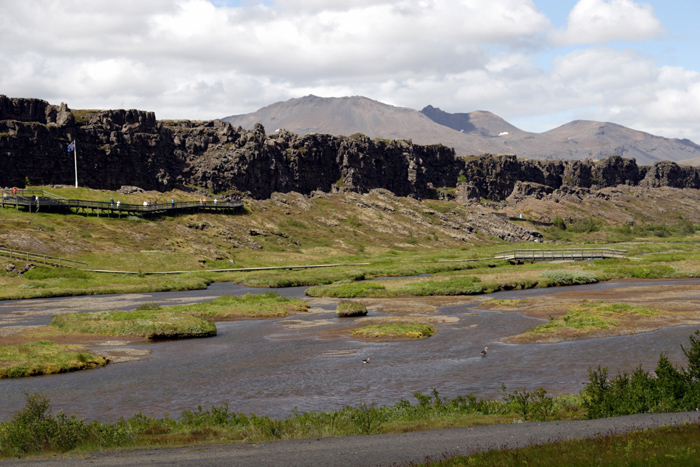
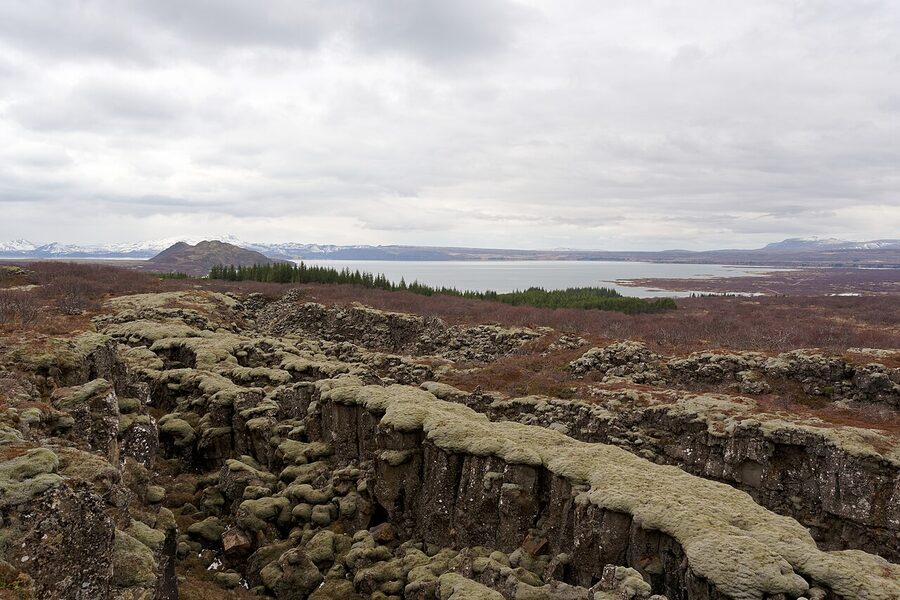
Þingvellir is where Iceland’s parliament, the Alþingi, was founded in 930 AD, and where the American and Eurasian tectonic plates are physically pulling apart. It’s a UNESCO World Heritage site. Allow at least an hour. Walk down into the Almannagjá rift if you can. See more at Golden Circle tour options.
Blue Lagoon and Sky Lagoon
Two geothermal spas, both worth doing, both different. I’d pick one.
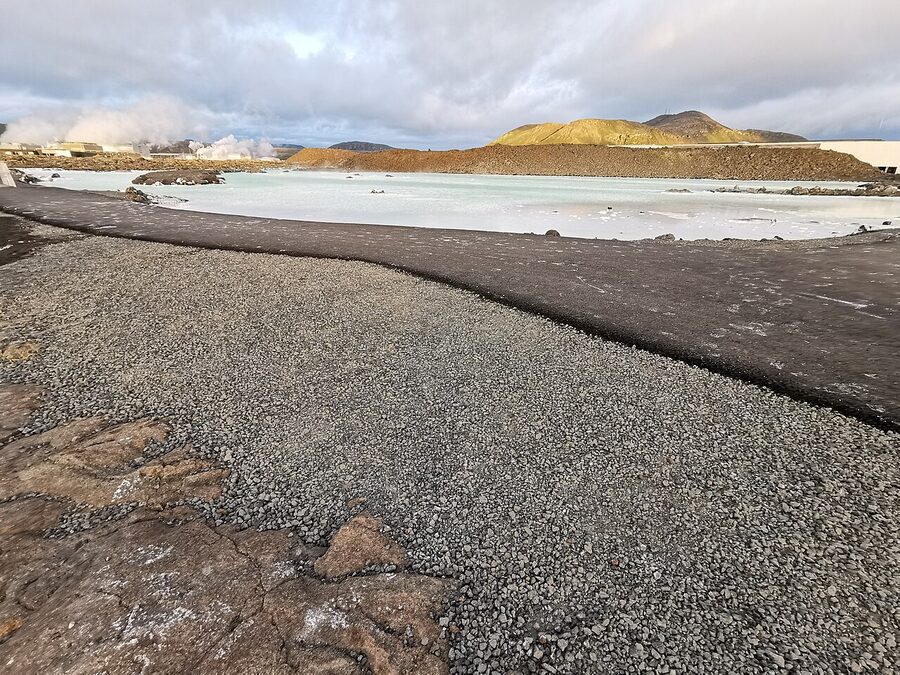
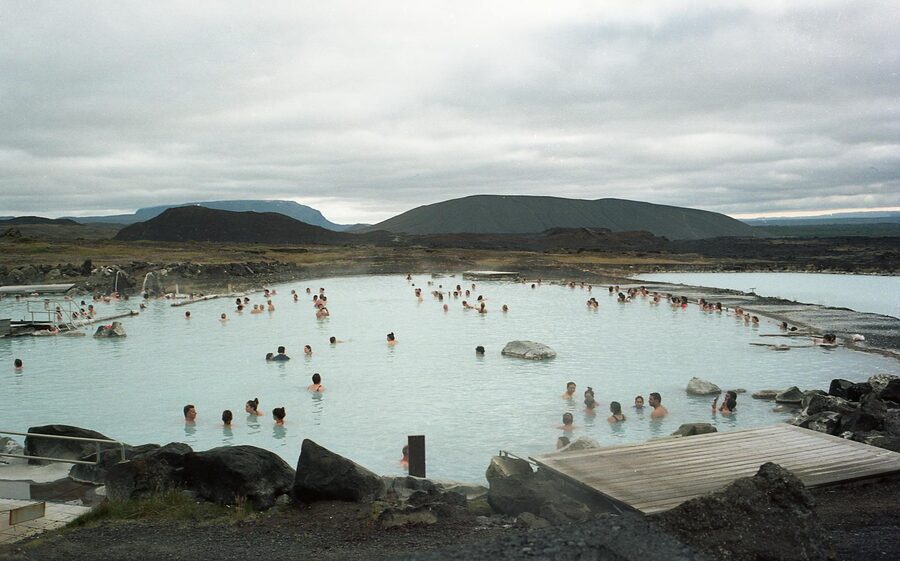
Blue Lagoon is the big one, out on the Reykjanes peninsula, 45 minutes from Reykjavik, closest to the airport. Silica-rich, milky blue, built inside a lava field. Books out weeks ahead in summer. Basic entry is 9,900-13,900 ISK depending on the time slot. It’s the famous one for a reason but it’s also almost always full and feels a bit factory-processed compared to when I first went in the 1990s.
Sky Lagoon is the newer one, in Kópavogur, 15 minutes from downtown, opened 2021. Cheaper base entry (8,490 ISK for Pure, 12,990 for Sky, includes the seven-step ritual with the cold plunge, sauna, mist, and scrub). The infinity edge over the Atlantic is the best shot in Icelandic hot-pool photography right now. I like this one better. Less wait, closer, arguably better-designed.
Either way: book ahead, bring flip-flops, don’t wear jewellery (it tarnishes).
South Coast
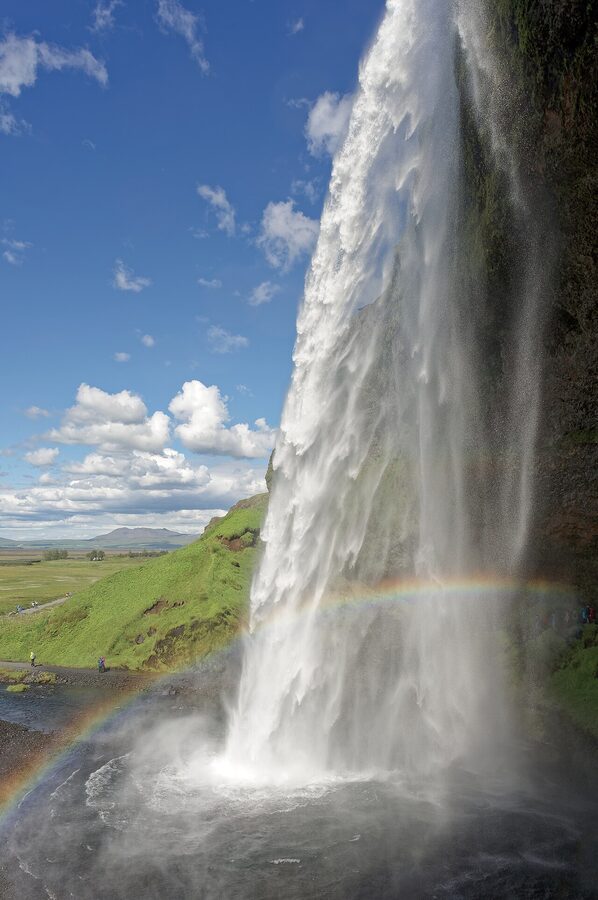
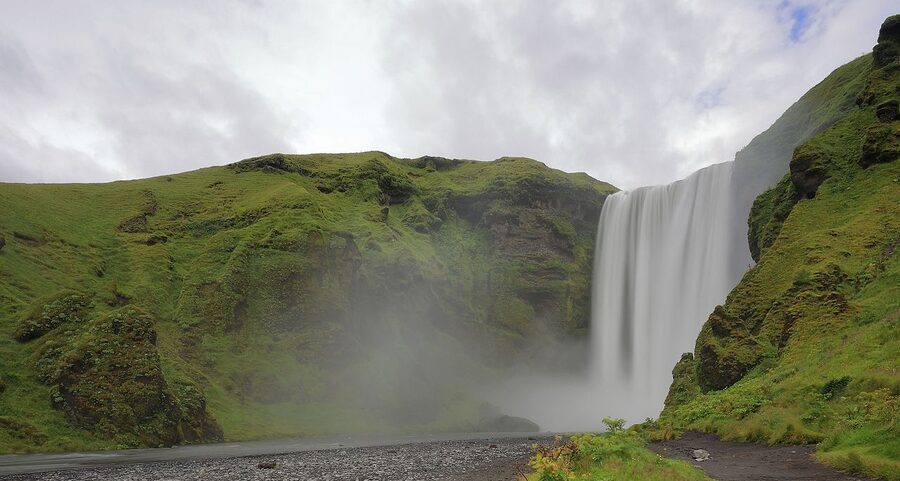
A long day but a classic one. Seljalandsfoss (the waterfall you can walk behind), Skógafoss, the black-sand beach at Reynisfjara, the village of Vík. 180 km one-way, eight-to-ten-hour tour, around 15,000 ISK for a bus. Do this one as a guided tour in winter, the Ring Road gets closed regularly and the black sand beach has sneaker waves that have killed people. I’d skip it if the weather forecast is bad.
Whale watching
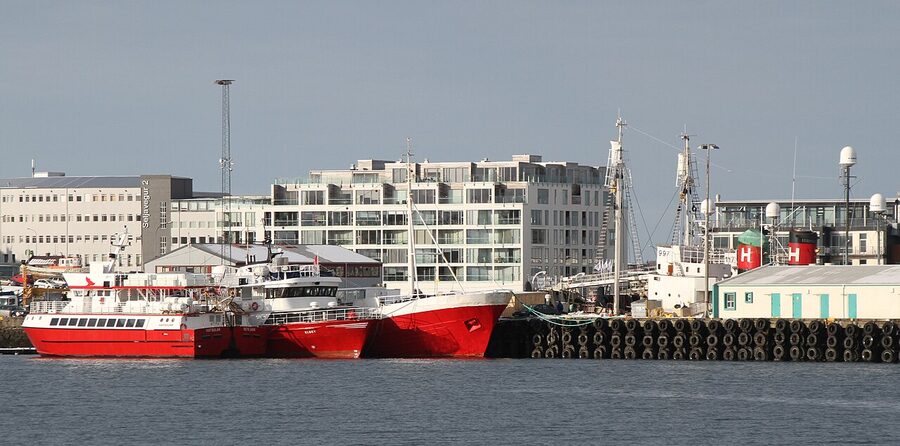
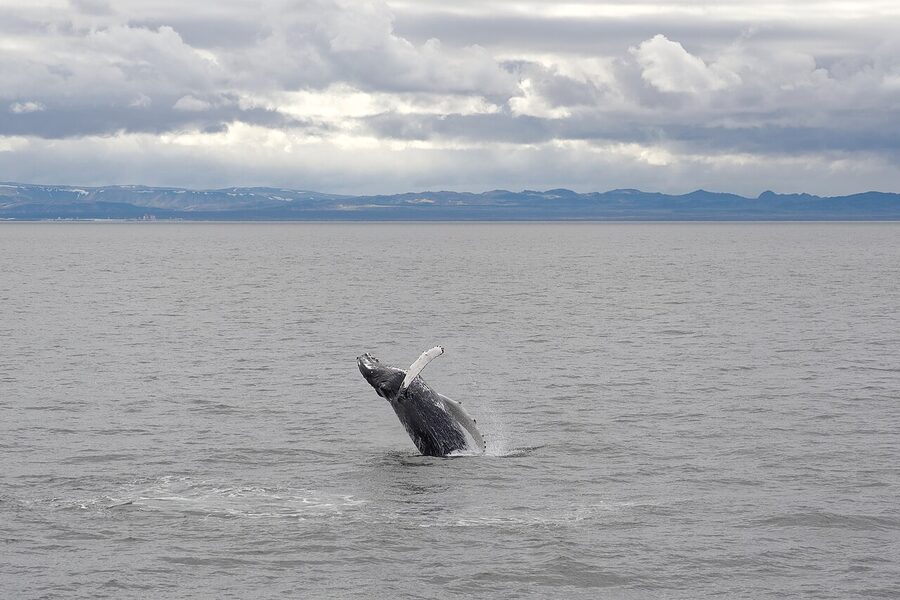
Boats leave from the Old Harbour between April and October. Elding, Special Tours, and Whale Safari are the three main operators, all three pier up right next to each other. Around 12,500-17,500 ISK for a three-hour trip. Peak season for minke and humpback whales is June to August, when sightings are 90%+. Dolphins and porpoises year-round. Even a no-sighting trip gives you the city from the sea, which is a view worth the ticket.
A tip from the operators I’ve talked to: the 1 p.m. sailings in summer have slightly calmer seas. Take seasickness tablets if you’re prone, bring your own; pharmacies want prescriptions.
Northern Lights
September through mid-April. Never promised. I’ll be blunt: most tour operators run a “guarantee” that just means they re-book you if the trip fails, which on a short visit is almost worse than not going. If the aurora forecast on en.vedur.is is 4 or higher and the sky is clear, walk to Grótta, you don’t need a tour. If it’s 2 or lower, or there’s cloud, don’t book one. Aurora hunts only work when the sky cooperates. Also try Iceland’s weather service for the cloud cover map alongside the aurora forecast.
Reykjanes peninsula
Often skipped but worth half a day. Lava fields, steaming Gunnuhver hot springs, the Brú milli heimsálfa “bridge between continents” over a rift, the Reykjanesviti lighthouse. The peninsula has also had active volcanic eruptions since 2021 at the Fagradalsfjall / Sundhnúkur system, whether any are ongoing during your visit depends on the month. Check with a tour operator before going near a fresh lava field.
The seasons, honestly
What you get in Reykjavik depends enormously on when you come. Here’s what actually changes.
Winter (November to February)
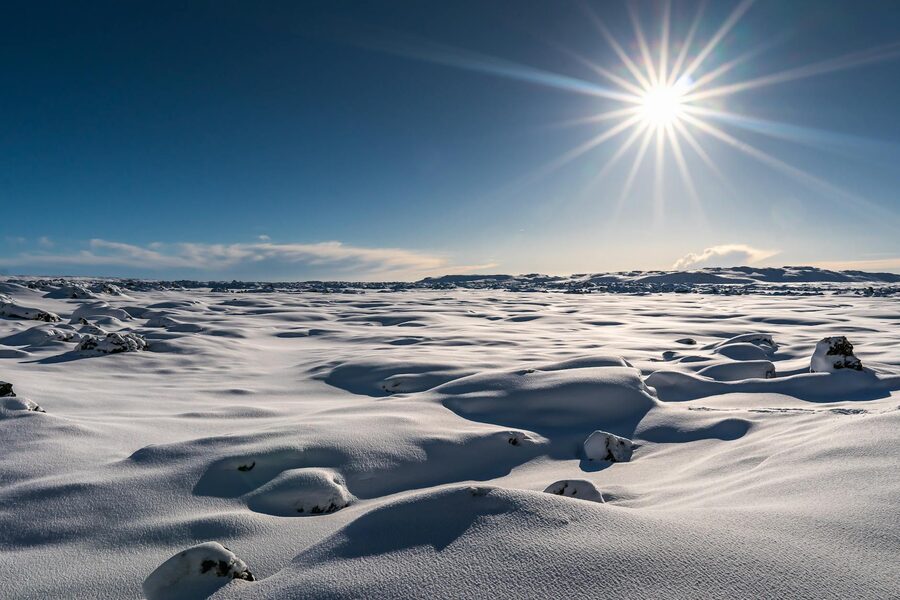
Dark. December gets about four hours of daylight and the sun barely clears the rooftops. Temperatures hover around -3 to 3°C in the city, warmer than you’d expect for the latitude, because of the Gulf Stream. Snow is unreliable: sometimes a clean cover for a week, sometimes slush and rain for a fortnight. Storms close Route 1. The aurora season is on, though, if you want northern lights, this is when. The Christmas markets, the lights, the quiet streets, the pool on a dark afternoon, all of it is specifically winter. For the full picture, see my guide to Christmas in Iceland.
Shoulder season, March/April and September/October
This is when I’d tell a first-timer to come. Days are long enough (10-15 hours), weather is often better than summer (less rain, more stable), tourist numbers are manageable, prices are lower. You still get aurora chances in September and March. You still get most restaurants open. The only downsides: some highland roads are closed (F-roads don’t open till June), and whale watching is slightly quieter.
Summer (June to August)
Peak everything. The famous midnight sun, the sun dips below the horizon for about four hours in late June but it never gets properly dark. Temperatures of 10-15°C, occasionally 20. Festivals, Secret Solstice until 2019, Iceland Airwaves in November, Menningarnótt (Culture Night) in August, Þjóðhátíð Westman Islands (not in Reykjavik but some people come through). Prices at their highest. Every hotel in 101 fully booked by February for July.
Menningarnótt, the third Saturday of August, is the best night to be in the city. Entry to museums is free, bands play on every street corner, the city council puts on a fireworks show at 11 p.m. It’s the one day a year when 101 feels like Reykjavik in a picture and not Reykjavik overrun.
Local culture and small things worth knowing
Some of the quirks that will come up.
Everyone’s on first-name basis. Iceland doesn’t really use surnames. My last name is a patronymic, my father’s first name plus “-son” or “-dóttir.” The phone book (yes, we still have one, online) is sorted by first name. Call the prime minister by their first name. Address a hotel manager the same way. No honorifics.
Tipping isn’t a thing. Service is included. Round up to the nearest 500 if you want, no one will refuse it, no one expects it.
Card everywhere. Genuinely everywhere. Public pools, petrol stations, the hot dog stand, the parking meter in the alley. You do not need to take cash out at the airport. Your card works.
Tap water is the best in Europe. It’s from the glaciers. Don’t buy bottled, it’s the same water with a mark-up and you’ll get looks.
Sunday opening is a gamble. Most shops close Sundays or open shorter hours. Kolaportið flea market is open Saturday and Sunday. Most restaurants are open. Grocery shops (Bónus, Krónan, Nettó) are mostly open but check hours.
Icelandic names are pronounced as written. Each letter is voiced. Hallgrímskirkja is Hah-dl-grims-kirk-ya. Eyjafjallajökull is Ay-ya-f-yatla-yo-kull. Take a run at it, locals will help rather than laugh. The letter Þ (thorn) is a soft “th” as in “thing.” Ð (eth) is the softer “th” as in “this.” Ö is a German ö or French eu.
The weather has no allegiance. Þetta reddast, it’ll work out, is a real word people use and a real attitude. Plans change. A storm that wasn’t on the forecast can close the South Coast road. Leave slack.
A rough four-day plan
If you’re trying to fit Reykjavik into a first Iceland trip, here’s what I’d actually do.
Day 1: Arrive. Flybus to BSÍ. Drop bags. Walk Laugavegur to Hallgrímskirkja, climb the tower. Take the Sun Voyager walk to Harpa. Dinner at Messinn or Matur og Drykkur. Early night, you’re jet-lagged.
Day 2: Sundhöllin or Laugardalslaug in the morning. Brunch at Sandholt. National Museum in the afternoon. Tjörnin walk. Dinner at Grillmarkaðurinn. Cocktails at Pétursson or Kaldi Bar.
Day 3: Golden Circle day trip. Back by 5 p.m. Hot dog at Bæjarins Beztu on the way back to the hotel. Dinner somewhere casual, Hlemmur Mathöll, because you’re tired.
Day 4: Old Harbour morning, whale-watching in summer, Whales of Iceland + Marshall House + Flatey Pizza in winter. Afternoon at Sky Lagoon. Aurora walk to Grótta if the forecast is good. Farewell dinner at Dill or Kol.
A few final thoughts
Reykjavik gets a reputation for being overpriced, over-touristed, and a stopover before “real Iceland.” Half of that is fair. The city is expensive. It’s crowded in July. And there are more puffin-branded souvenir shops than any city of 140,000 has a right to have. The other half is unfair. It’s one of the friendliest small capitals in Europe, the food scene is better than most people expect, and the culture, the books, the pools, the music, is deeper than the Blue Lagoon postcard lets on.
What I’d skip: the Phallological Museum (it’s a gag you read about, not an exhibit you need), the shark-in-a-jar tasting at the souvenir shops (hákarl is supposed to be a full cube from Kolaportið at room temperature, not an airport shot), and any restaurant whose menu is only in English (those are tourist traps). Stay four days if you can. If you’ve got two, prioritise the pools and one day trip. If you’ve got a week, add the South Coast and a morning riding Icelandic horses. And walk everywhere you can, Reykjavik is the kind of city that only gives its good bits to people who’d rather be on foot.
For specific tour options, Golden Circle, glaciers, Northern Lights, check the tour guides section. For more on the country, see the wider destinations index. And for up-to-date information on everything from weather to tourist advice, the official visiticeland.com and visitreykjavik.is are the best free resources.
Come in winter for the lights and the quiet. Come in summer for the midnight sun and the festivals. Either way you’ll see things in four days here that take a fortnight in most countries. Þetta reddast, it’ll work out.