
Iceland is young. The rock under your feet in Reykjavík is less than 20 million years old, which in geological terms is yesterday afternoon. Humans got here even later, a flash ago, 1,150 years give or take. And yet a lot has happened on this small lump of basalt in the north Atlantic. A parliament that met at Þingvellir in 930 AD. A civil war settled by a man sleeping under a cloak. A volcano in 1783 that killed a quarter of the population and helped trigger the French Revolution. A financial collapse in 2008 that bankrupted the whole country. Three “cod wars” with Britain. An eruption in 2010 that most people still can’t pronounce.
This is the short version of a thousand years of it, told the way I’d tell a guest over coffee, not the way a textbook would. If you want the scholarly version, there’s a long Wikipedia article waiting for you. This is the living-room version.
In This Article
- Before the Vikings, the papar and the mystery of Thule
- The Settlement, 874 and the high-seat pillars
- The Commonwealth, 930 to 1262
- The Christianization of 1000 AD
- The golden age of the sagas
- The Sturlung Age, when the Commonwealth ate itself
- Under Norway, then Denmark, the long bad centuries
- The volcanoes, Hekla, and then Laki
- The Reformation and Jón Arason
- The Danish trade monopoly
- The long road to independence
- Iceland in the two world wars
- The Cod Wars, 1958, 1972, and 1975
- 2008, the collapse
- The unexpected country, Eyjafjallajökull, tourism, and the 21st century
- Modern Iceland, what it actually looks like now
- A few final things, and then I’ll stop
Before the Vikings, the papar and the mystery of Thule
Iceland wasn’t quite empty when the Norse arrived, but it was close. The earliest reference people still argue about is the Greek explorer Pytheas of Massalia, who sailed north around 330 BC and wrote about a place called Thule, six days’ sail beyond Britain, where the sun barely set in summer and the sea turned into something “neither sea nor earth nor air.” That description sounds suspiciously like Iceland in June, with pack ice to the north. Scholars still argue whether Thule was Iceland, the Faroes, or Norway. Pliny the Elder mentions Thule a few centuries later. The Irish monk Dicuil, writing around 825 AD, is more specific, he describes a northern island where at midsummer “the setting sun hides itself at the evening hour, as if behind a little hill, so that there is no darkness for even the shortest space of time.”
Those monks, the papar in Old Norse, are the first real inhabitants anyone agrees on. Irish hermits, probably rowing here in leather curraghs, looking for somewhere quiet enough to pray. They left behind bells and crosses and some books, which the first Norse settlers found and wrote about in the Íslendingabók. There’s a bay called Papey on the east coast, still named after them. When the Norse turned up in force, the monks apparently packed up and left, the Íslendingabók says they disliked living alongside “heathens,” which is a polite way of putting it. No archaeological site has ever fully confirmed them, which drives Icelandic historians slightly mad, because everyone wants to prove or disprove the papar once and for all.
The Settlement, 874 and the high-seat pillars
The official year Icelanders learn in school is 874 AD, which is when Ingólfur Arnarson is said to have arrived from Norway and settled what is now Reykjavík. “Is said to have” because the sources are a couple of hundred years later, written down in the 1100s and 1200s from oral tradition, and scholars have been quietly nudging the date around for a century. A layer of volcanic ash from the “Settlement Tephra” eruption of around 870 AD sits underneath all the earliest archaeological sites, which means nothing human-made in Iceland predates that ash. Convenient, if you’re a saga writer trying to pin down a founding date.
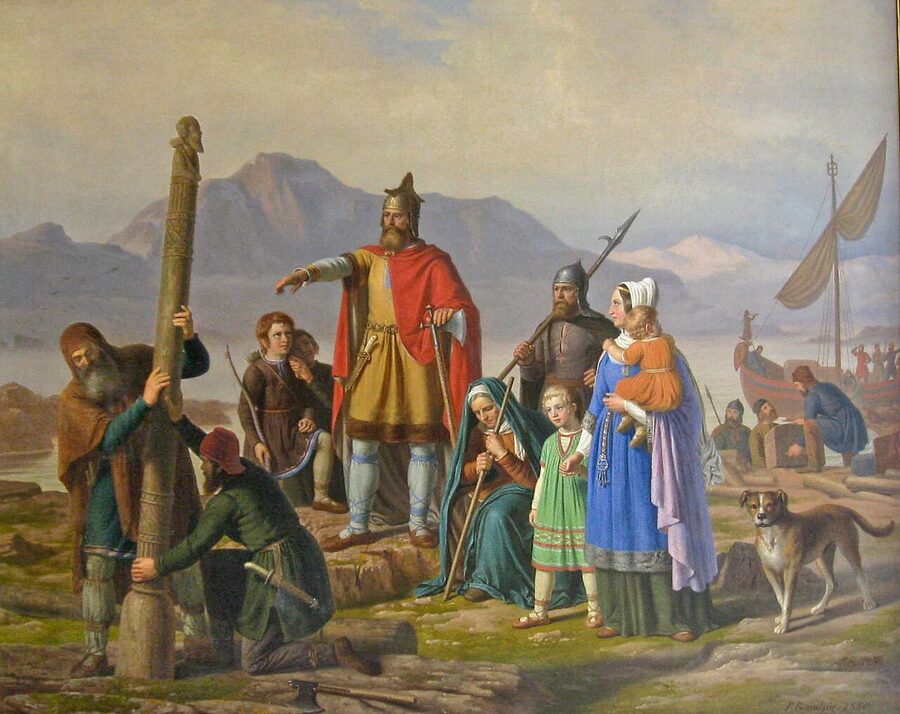
The story goes like this. Ingólfur was a Norwegian chieftain who had gotten into trouble in the old country, specifically, his blood-brother Hjörleifur had killed some relatives of a rival, and the compensation the two were forced to pay stripped them of their lands. So they outfitted ships and went looking for somewhere else. When Ingólfur approached the coast of Iceland, he threw his öndvegissúlur, the carved wooden pillars from the high seat of his hall, into the sea, and swore to Thor that he would build his new home wherever they washed up. He then spent three winters hunting along the south coast before his slaves found the pillars in a bay in the southwest, where hot springs were sending up steam. That’s where he built, and what he called it, Reykjavík, “smoky bay”, has stuck.
Why were Norwegians piling into ships and sailing to an unknown island in the first place? The short answer is politics. In the late 9th century, a king called Harald Fairhair was consolidating Norway by force, breaking up the old system of semi-independent chieftains and demanding taxes from everyone. A lot of chieftains didn’t fancy that. Some fought him and lost. Some left. Iceland got a generation of stubborn, independent-minded Norwegians who would rather row into the north Atlantic than kneel to a king, and that, more than anything else, explains the shape of Icelandic society for the next four hundred years. There was no king here. There wasn’t going to be one either, if the settlers had anything to say about it.
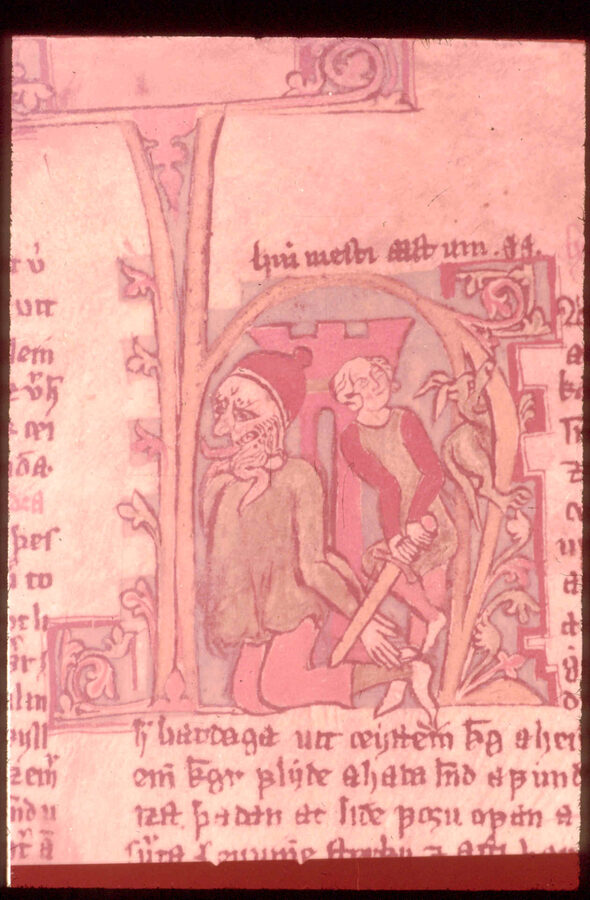
The Landnámabók, “The Book of Settlements”, is the record we have of the 50 years that followed. It was first written down in the early 1100s and revised repeatedly, and it names over 430 principal settlers and traces their land claims, their ancestors, and their quarrels. About 3,000 individuals in total. It’s an extraordinary document. Nothing else in medieval Europe is quite like it. And because modern Icelandic has barely drifted from Old Norse, a ten-year-old in Reykjavík can still read a saga manuscript, more or less, we are still on first-name terms with these people. A kid in my old class was Arnarson. Another was Sighvatsson. They’re not cosplaying; those names really run in the family.
The settlers came mostly from western Norway, but not exclusively. DNA studies from the last twenty years show a surprising amount of Celtic ancestry in the Icelandic gene pool, probably 40% of the maternal line traces to Ireland and Scotland. Some of those Celtic women were brought as wives and some as slaves, and the sagas are blunt about which was which. Iceland was a Norse society, but it was never purely Scandinavian.
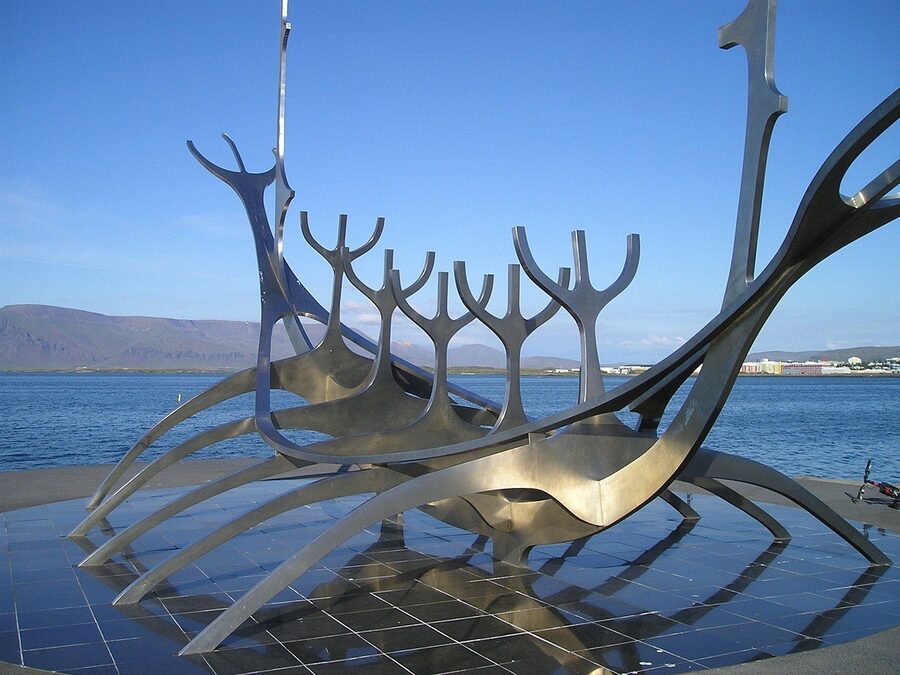
The Commonwealth, 930 to 1262
Sixty years after Ingólfur, the settlers had a problem. The island was filling up. Disputes over land, inheritance, and honour were being settled with violence, which was fine when it was two neighbours, but not when whole families were feuding across a whole region. So in 930 AD they did something that had no real parallel in medieval Europe: they created a parliament.
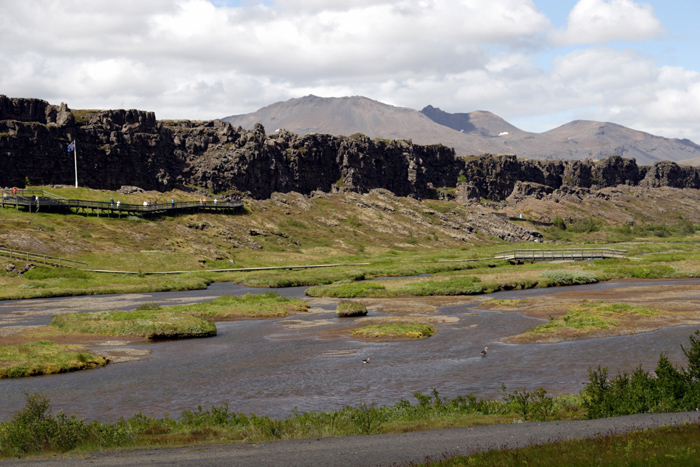
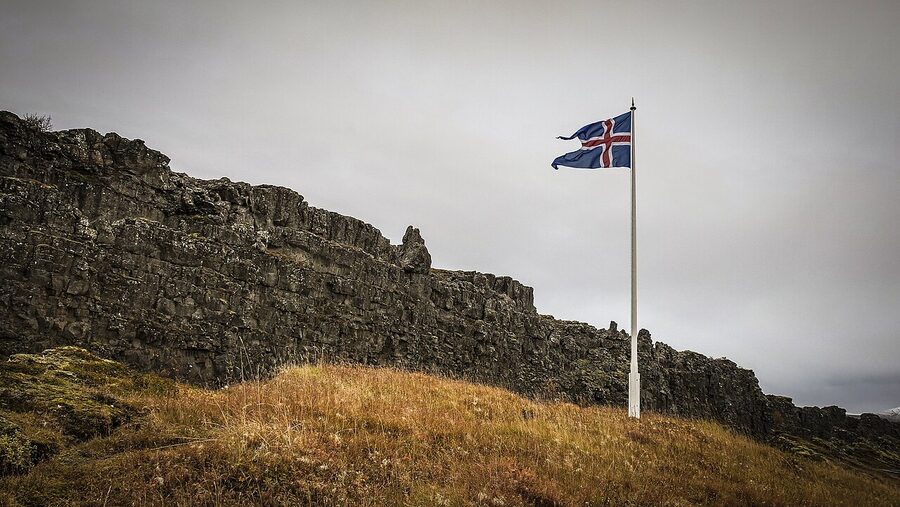
The Alþing, “the all-thing,” the general assembly, first met at Þingvellir (“Parliament Plains”) in the summer of 930, and it kept meeting in the same field every summer for the next 800 years. Delegates from every part of the island rode or walked for days to get there, sometimes a week or more. They camped in booths made of stone and turf. They elected a lögsögumaður, a law-speaker, who recited one third of the laws out loud every year, from memory, from a natural basalt amphitheatre called the Lögberg (Law Rock). Cases were tried. Alliances were brokered. Fights broke out occasionally, and were usually broken up. It was messy, loud, and for a couple of centuries it actually worked.
There was no king. There was no army. There wasn’t even an executive branch, once a court handed down a verdict, enforcing it was on the winner. If you won a case but the other side refused to pay, you were expected to get together with your kin and force the issue, which often meant killing someone. The system assumed violence was part of the process, and tried to channel it into rules. When it worked, it was a kind of rough early democracy. When it didn’t, it was a slow-burning civil war dressed up as legal procedure.
The country was divided into 39 goðorð, chieftainships. Each was held by a goði, a combination of priest and political leader, and farmers attached themselves to whichever goði they liked. Loyalty was contractual, not feudal. If your goði was a bully or an idiot, you could in theory switch to another, though in practice that often meant making an enemy. The goðar were the real power. The Alþing was where they negotiated with each other in public.
The Christianization of 1000 AD
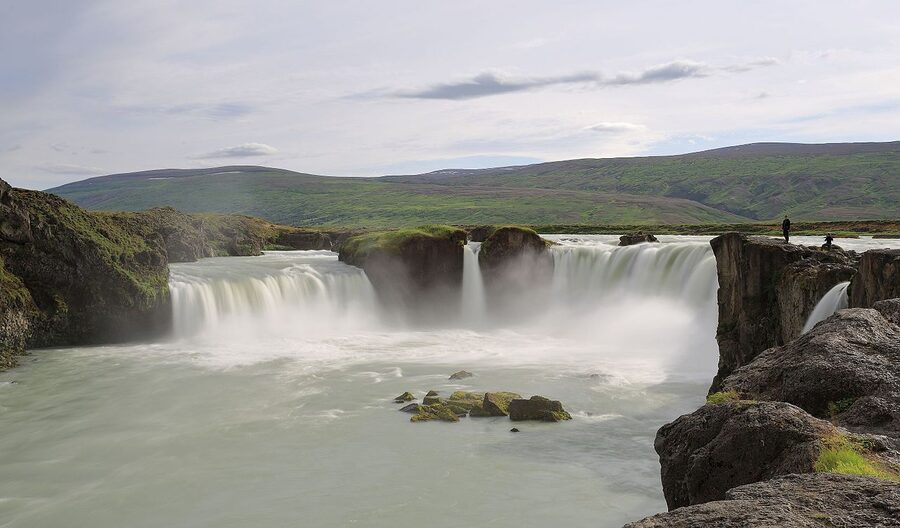
The single strangest event in the Commonwealth’s first century was the official adoption of Christianity. By 999, the pressure was rising. The new king of Norway, Olaf Tryggvason, had become a fierce Christian and was making life difficult for any Icelander who traded with Norway and wasn’t baptised. He had also started taking Icelandic hostages as leverage. The Alþing of 1000 AD looked like it might break into civil war, Christians on one side, pagans on the other, and both camps ready to declare separate laws for themselves. One country, two religions, two law-codes. That would have been the end of the Commonwealth thirty years in.
So both sides agreed to let one man decide. Þorgeir Ljósvetningagoði, a pagan chieftain known as a fair arbiter, was chosen to rule on the question. According to Íslendingabók, he went to his booth, lay down under a fur cloak, and stayed there for the rest of the day and all through the night, thinking. In the morning, he emerged and delivered his judgment: Iceland would be Christian. There would be one law, one faith. But private pagan worship would be tolerated for now, along with the eating of horseflesh and the old practice of exposing unwanted infants. Both camps accepted it. There was no war. A whole country converted by one man under a blanket.
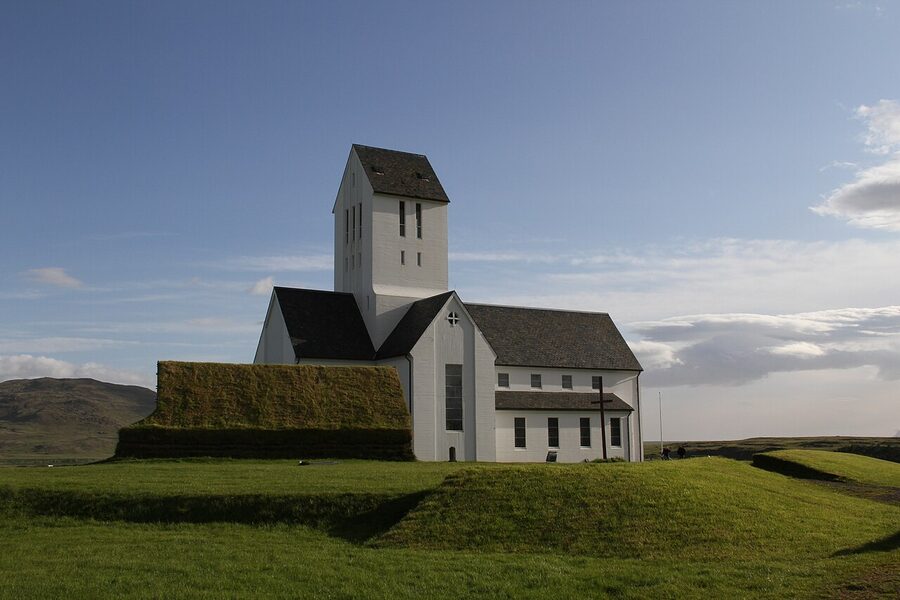
The private exceptions, horseflesh, infanticide, private pagan ritual, were quietly dropped over the next few generations as the new Church found its feet. The first Icelandic bishoprics were founded at Skálholt in 1056 and at Hólar in 1106. A cathedral school at Skálholt became the intellectual centre of the country, and young Icelanders who went abroad to study often came back carrying Latin manuscripts, which they then translated and copied in their own language, at a scale no other Germanic people attempted.
The golden age of the sagas
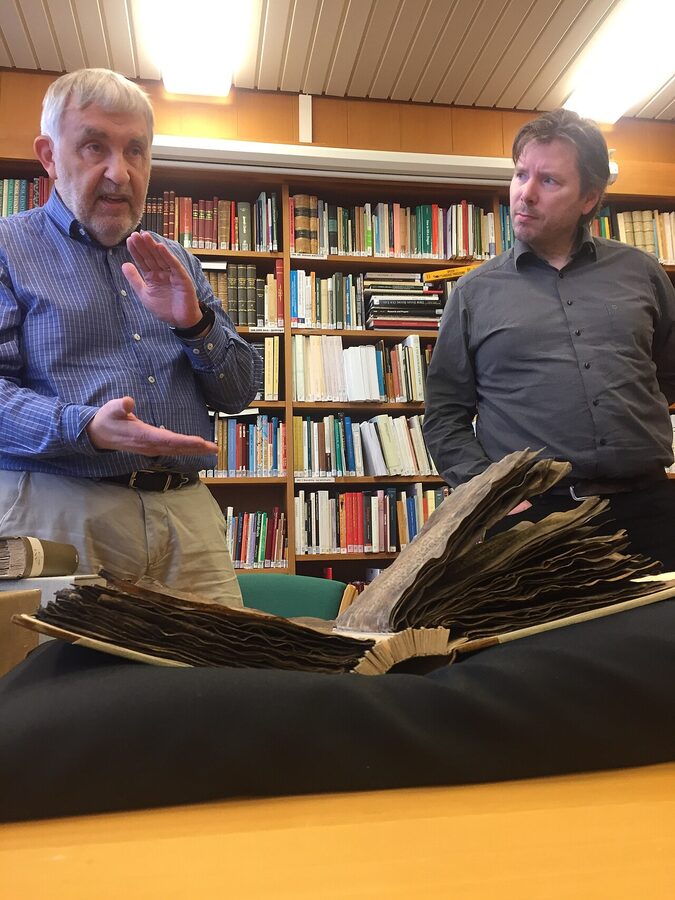
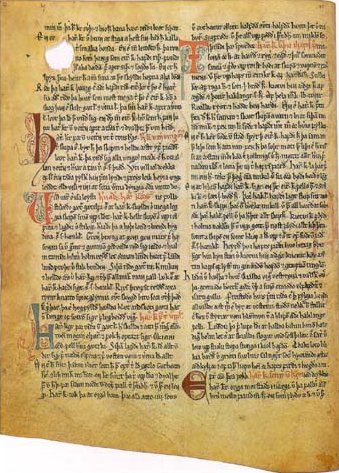
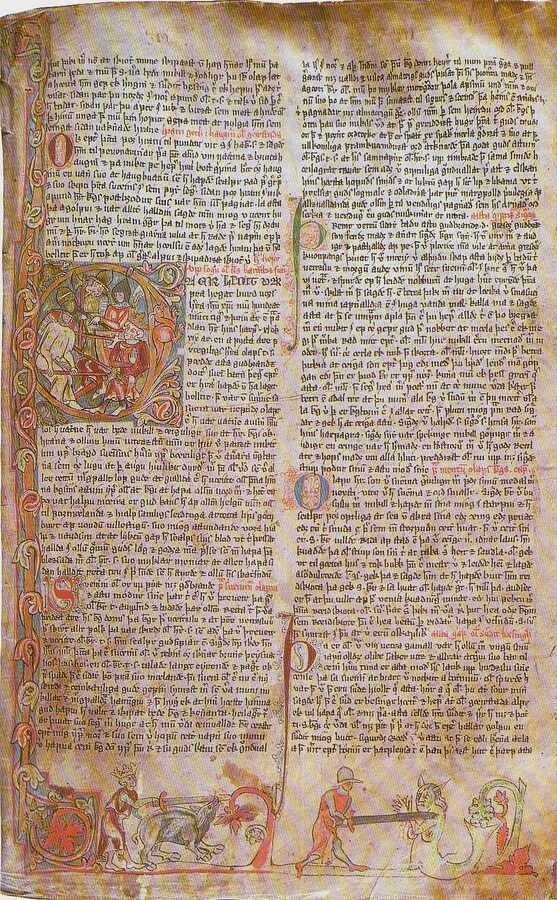
If Iceland’s contribution to world literature had ended with the Landnámabók, it would already be impressive. It didn’t. The 12th and 13th centuries produced a body of work that medieval Europe simply has no equivalent for, the Icelandic family sagas, or Íslendingasögur. Prose narratives, written in Old Norse, telling the stories of the settlement generation and their descendants. Njáls saga, probably the greatest, a 400-page story of feud and fate that ends in a farmstead being burned with the family inside. Egils saga, the life of the warrior-poet Egil Skallagrímsson, probably written by Snorri Sturluson himself. Laxdæla saga, a love triangle and a betrayal set on a broad green valley in the west. Dozens more. We don’t know who wrote most of them. They were probably compiled from older oral material, then reworked by educated monks and chieftains’ sons, and read aloud during the long winters.
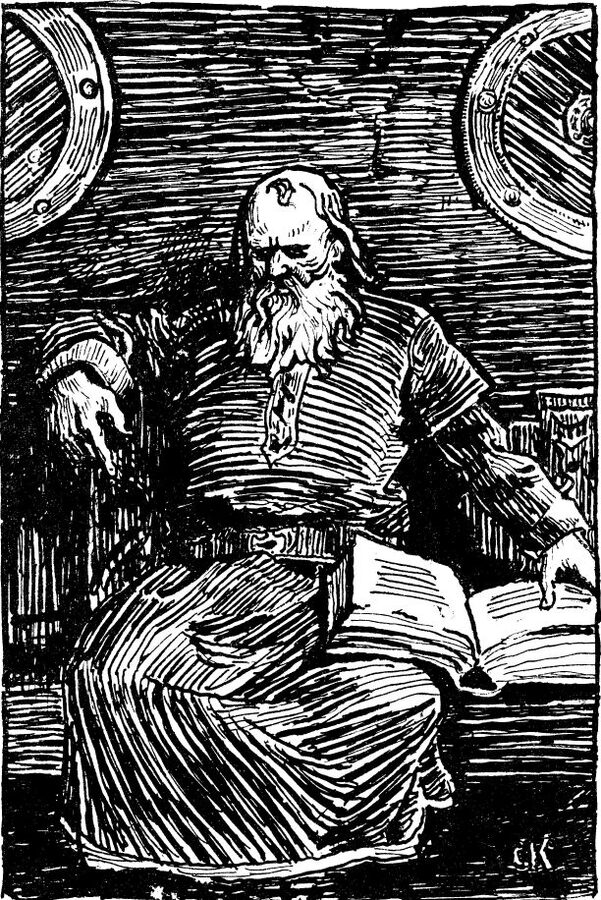
The giant of the period is Snorri Sturluson. A lawyer, a chieftain, a two-time law-speaker of the Alþing, and the most important prose writer in the Scandinavian tradition. He wrote the Heimskringla, a history of the kings of Norway from mythical prehistory down to 1177, and he wrote the Prose Edda, which is the single most important source for everything we think we know about Norse mythology. Odin, Thor, Loki, Ragnarök, all of it comes through Snorri. Without him, the Marvel cinematic universe doesn’t exist. Without him, most of what we think we know about Viking religion is guesswork.
The Sturlung Age, when the Commonwealth ate itself
Snorri wasn’t only a writer. He was a politician, and a rich one, and he made the cardinal Icelandic mistake: he played the Norwegian king. King Hákon of Norway had been eyeing Iceland for decades. He couldn’t conquer it directly, the sea was too wide and the country too poor, but he could buy and flatter individual chieftains, loan them ships and men, and get them to do his work for him. Snorri was one of the chieftains he flattered. For twenty years Snorri went back and forth between Iceland and Norway, collecting titles and favours and promising to bring Iceland into the Norwegian fold. He never delivered.
That was the 13th century in miniature. Five or six of the biggest families in Iceland, the Sturlungs (Snorri’s clan), the Haukdælir, the Ásbirningar, the Vatnsfirðingar, the Oddaverjar, began a slow, vicious war for supremacy. Old alliances collapsed, cousins killed cousins, and every now and then a Norwegian ship arrived with more soldiers, more silver, or more trouble. The period is called Sturlungaöld, “the Age of the Sturlungs.” It lasted roughly from 1220 to 1264, and it was bloody. The battle of Örlygsstaðir in 1238 was the biggest ever fought in Iceland, with around 1,700 men on the field. Sturla Sighvatsson, Snorri’s nephew, was killed there with his father and three brothers.
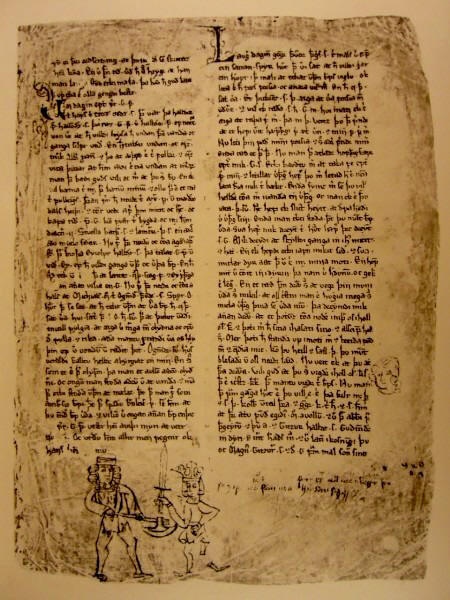
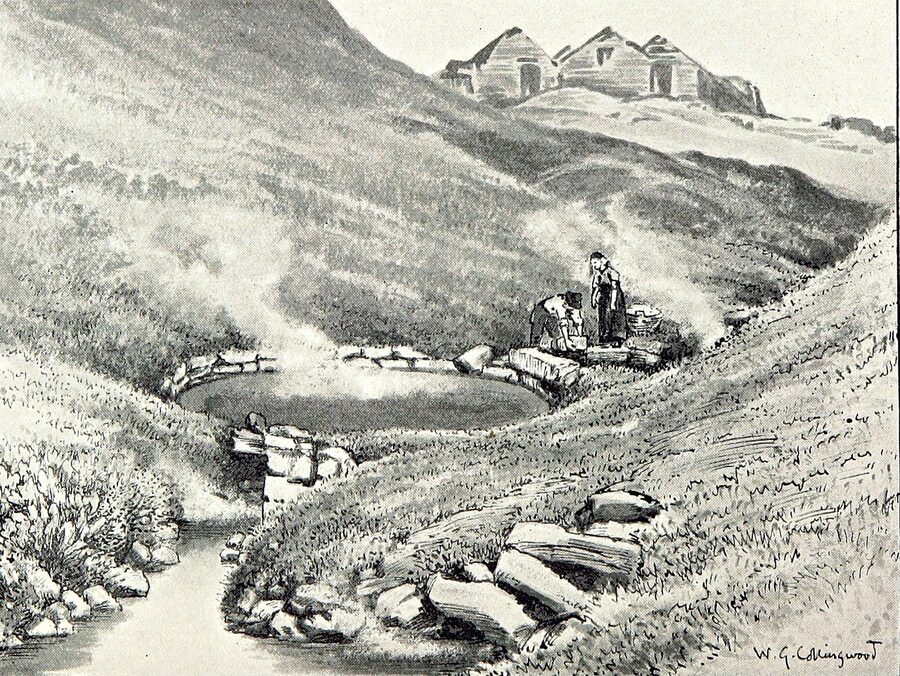
Snorri himself met his end in his own cellar in Reykholt, on the night of 22 September 1241. The king of Norway had ordered him killed. Five men came to the farm after dark. Snorri hid in a storage cellar under the house. One of the killers, a man named Símon Knútur, shouted the famous line “Eigi skal höggva!”, “Don’t strike!”, either as a plea or as an order, depending on who’s reading the passage. They struck him anyway. You can visit Reykholt today, the farm is a small museum, and the geothermal bathing pool Snorri used, Snorralaug, is still there. Stone-lined, hot-spring fed, about the size of a small sitting room. One of the oldest preserved man-made structures in the country.
The Commonwealth limped on for another twenty years after Snorri’s death, but the fight had gone out of it. In 1262, under pressure and exhaustion, the chieftains signed Gamli sáttmáli, the “Old Covenant”, with King Hákon of Norway. Iceland agreed to pay tax and recognise the king; in return the king promised regular ships, stable trade, and no interference with Icelandic law. On paper it was a compromise. In practice, the Commonwealth was over. After 332 years of self-rule, Iceland had a king.
Under Norway, then Denmark, the long bad centuries
The next 550 years are not a great period in Icelandic history. You can cover them quickly.
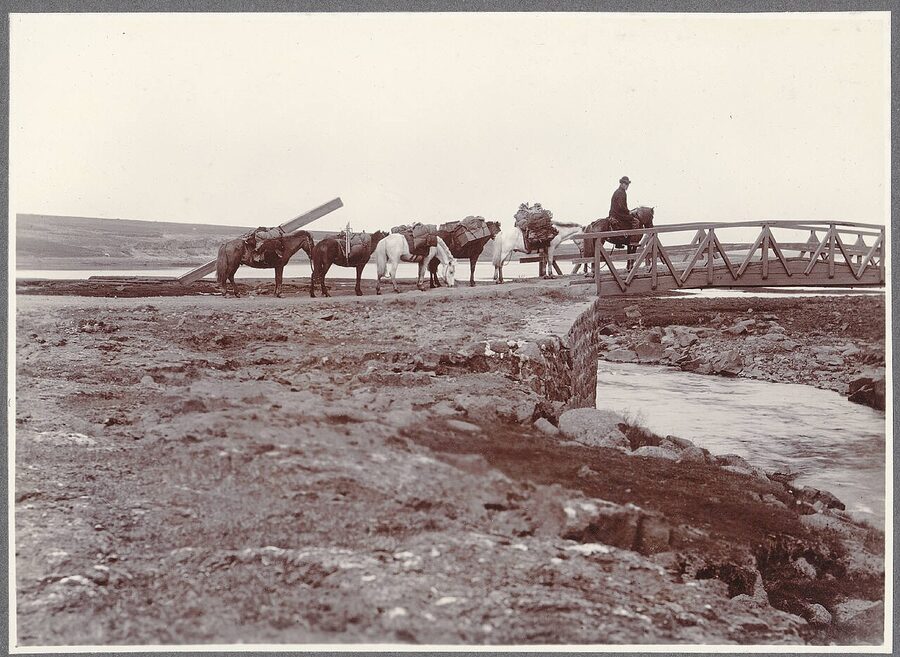
Norwegian rule lasted until 1380, when the Norwegian and Danish crowns merged under the Kalmar Union and Iceland quietly drifted into Denmark’s orbit. Denmark wasn’t a bad overlord by medieval standards, it was an absentee one. Ships came every year or two, bought cod and wool cheap, sold grain and timber at marked-up prices, and sailed away. No Danish colonial governors lived here for generations at a time. The country was administered on a shoestring.
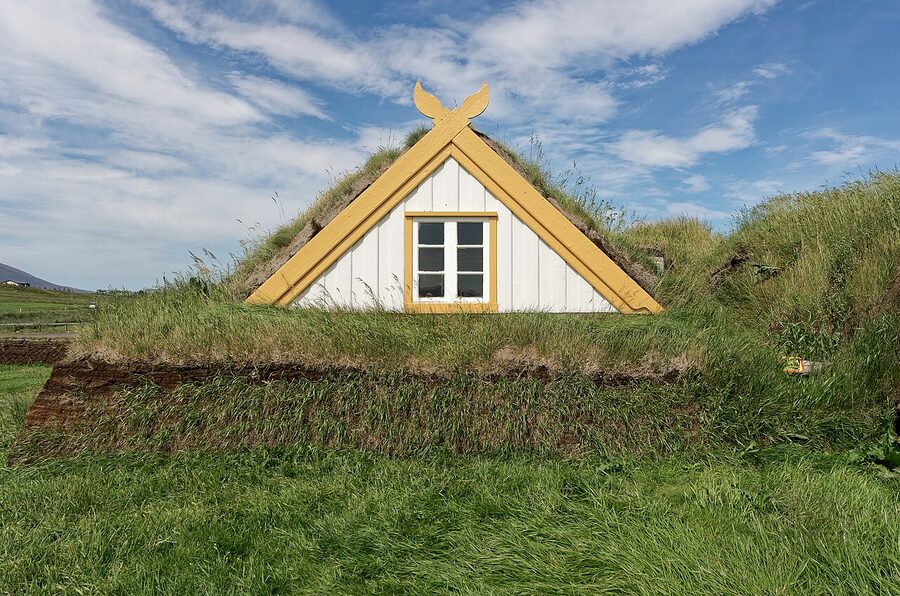
Everyday life in Iceland from 1300 to 1800 was a very hard version of what it had been in 1100. Most people lived on isolated farms in turf houses, wood was scarce and stone was only used for churches. Families of ten or fifteen shared a single heated room called a baðstofa, which doubled as a sleeping room and a workshop. Wool was the great export; cod came second. The fishing economy was run out of seasonal huts, with crews rowing open boats into the north Atlantic for spring cod. The diet was mostly dried fish, soured dairy, and in desperate years whatever bits of sheep you could boil soft.
The volcanoes, Hekla, and then Laki
Iceland has always erupted. Roughly one eruption every five years, for the last thousand years. Most of them are shrugged off. A few have reshaped the country.
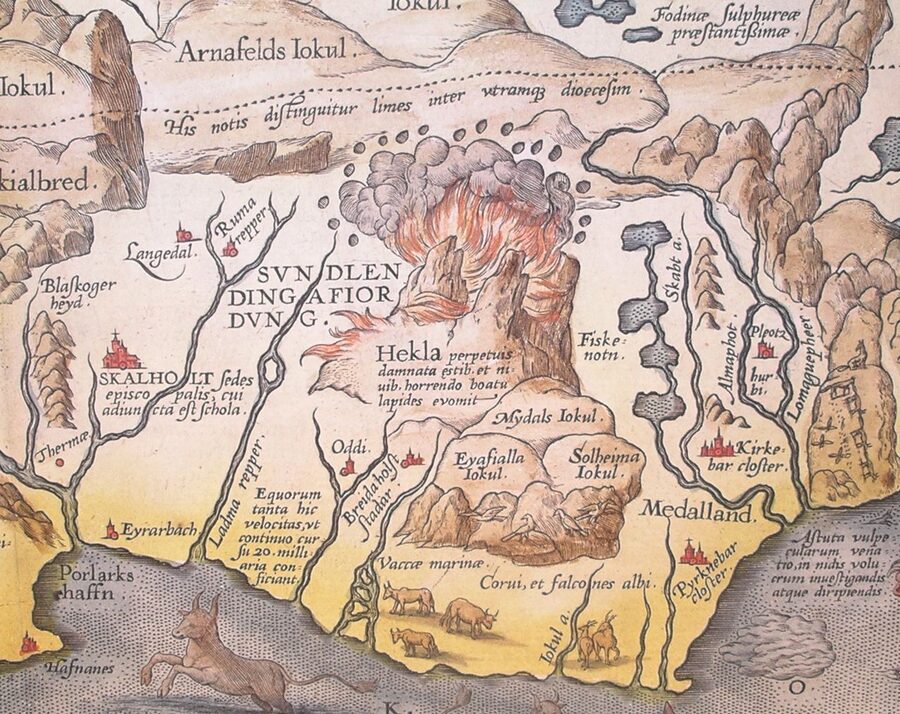
Hekla erupted in 1104 and buried a whole farming region in pumice, the first eruption we have a written record of. For the next seven centuries, Europeans believed Hekla was the literal entrance to Hell. Medieval theologians argued about it. Travellers sent servants up to peer into the crater. The name “Hekla” shows up on 15th-century maps with little demons drawn around the rim.
But the one that genuinely changed the country, and arguably the world, was Laki. On 8 June 1783, a fissure 27 km long opened up in the south and began pumping out lava and gas for eight months. By February 1784 it had produced the largest lava flow in recorded human history, 14 cubic kilometres of basalt, enough to bury central London under 50 metres of rock. The ash was survivable. The gas was not. Sulphur dioxide and hydrogen fluoride poisoned the grass, killed the livestock, and then killed the people. Around 80% of Icelandic sheep died. A quarter of the human population, maybe 10,000 people, died of starvation, fluorine poisoning, or cold. It was the worst natural disaster in the country’s history.
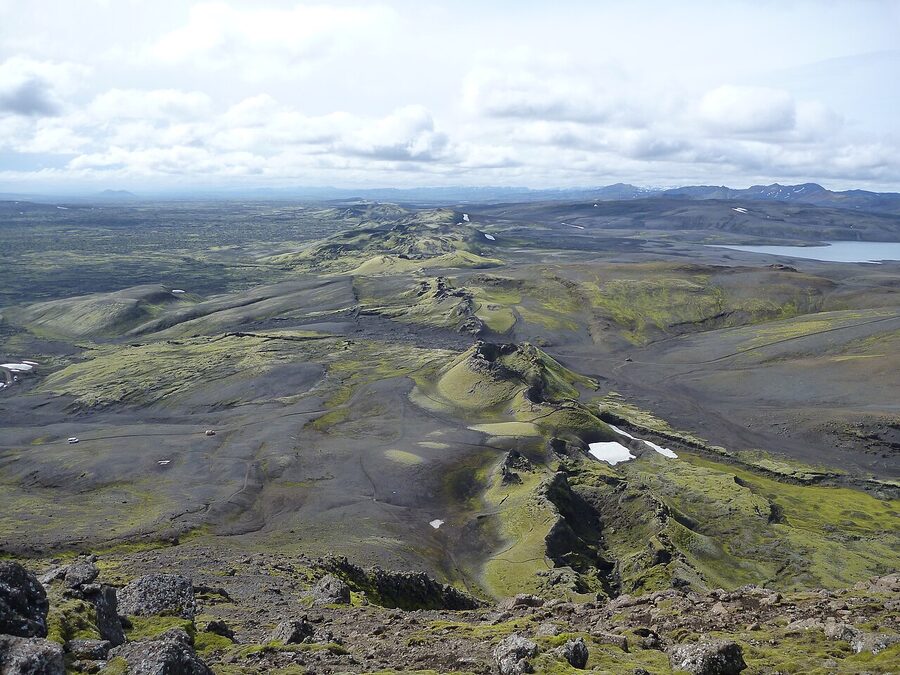
The effects didn’t stop at the coast. The gas plume drifted over Europe that summer of 1783. People in Britain and France wrote about the “dry fog” and the blood-red sun. The ash cooled the northern hemisphere for two years. Crops failed across France. The winter of 1783–84 was one of the hardest on record. Grain prices spiked. There are serious historians who argue that the bread shortages caused by Laki contributed directly to the French Revolution five years later. I don’t entirely buy the whole thesis, but it’s not a crackpot one.
Iceland itself didn’t recover population-wise for fifty years. Denmark briefly considered evacuating the country entirely, moving what was left of the population to Jutland. Icelanders talked them out of it.
The Reformation and Jón Arason
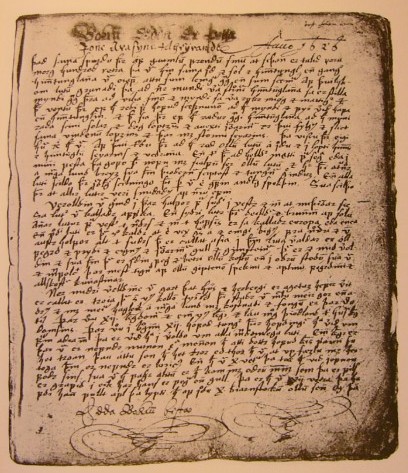
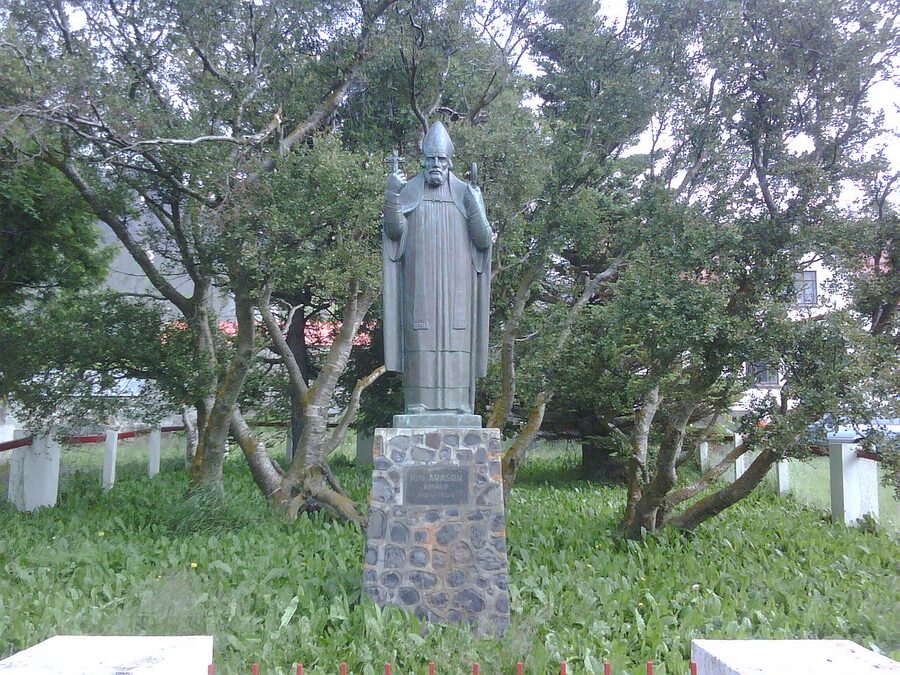
One other thing to mention before we move on. The Reformation arrived in Iceland in the 1540s, imposed by the Danish king Christian III. Lutheranism replaced Catholicism. Monasteries were closed. Church land was confiscated. Most of the country went along with it more or less quietly, but one bishop refused. Jón Arason, the bishop of Hólar, was a poet, a politician, and a stubborn old Catholic, and he would not acknowledge the king’s new church. He had two sons (priests weren’t supposed to, but this was Iceland) who helped him resist. In 1550 he was captured, held for a few weeks, and then beheaded in Skálholt along with his two sons on 7 November of that year. He is the last Catholic bishop of Iceland, and the last person executed on Icelandic soil for reasons of state. There’s a story that on the way to the block, one of his sons said: “Það kemur maður í minn stað”, “Another man will take my place.” The line is still quoted. It’s on his memorial.
The Danish trade monopoly

From 1602 to 1787, Iceland was a closed economy. The Danish crown granted exclusive trading rights first to a small group of Copenhagen merchants and then to a single company, and no Icelander was allowed to trade with anyone else. Prices were rigged. Goods were rationed. If a Dutch or English ship put in with better flour, Icelanders who bought from them were fined or jailed. Cod prices were set far below the market rate. The country was bled quietly for 185 years.
The monopoly was finally lifted in 1787, and free trade with the rest of Denmark (not yet with anyone else) was allowed from 1854. By then the damage had been done. Iceland in 1800 was poorer, smaller, and more malnourished than it had been in 1600. The population in 1800 was about 47,000, fewer people than had lived here in 1100. Whole districts had been abandoned. The country was, by the standards of 19th-century Europe, an economic ruin.
The long road to independence
And then, slowly, things started to turn. The 19th century was Iceland’s national awakening, and it was led, improbably, but really, by one very dedicated man in Copenhagen.
Jón Sigurðsson (1811–1879) was a scholar, a philologist, a magazine editor, and a tireless politician who spent most of his adult life in the Danish capital, lobbying the Danish parliament for Icelandic self-rule. He was not a firebrand. He was patient, methodical, and fluent in both Danish politics and Icelandic tradition. He edited the first modern editions of the Icelandic sagas. He founded the journal Ný Félagsrit, “New Social Writings”, which became the engine of Icelandic nationalism for thirty years. He argued, slowly and on legal grounds, that Iceland had never been conquered by Denmark; it had voluntarily joined the Norwegian and then the Danish crown under Gamli sáttmáli in 1262, and the terms of that union had been violated so many times that Iceland was entitled to renegotiate them.
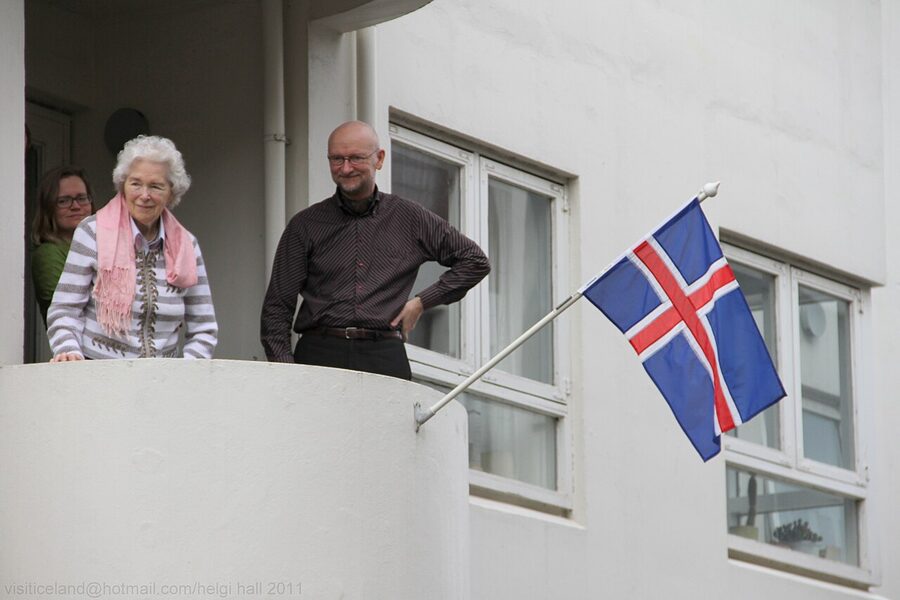
In 1843 the Danish king agreed to restore the Alþing as an advisory assembly, the first time the parliament had met since 1800. In 1874, on the thousandth anniversary of Ingólfur’s settlement, King Christian IX of Denmark travelled to Iceland (the first Danish monarch ever to do so) and presented a constitution at Þingvellir. The constitution gave Iceland limited legislative power. Home rule followed in 1904, sovereignty, as a kingdom in personal union with Denmark, in 1918, and full independence on 17 June 1944.
1944 is the key date, and it has an asterisk. Iceland declared the republic while Denmark was still under German occupation. The Danes couldn’t technically object, but some of them felt, reasonably, that it was ungenerous to take advantage of their bad luck. A referendum in May 1944 returned a 97% vote in favour of ending the union with Denmark and a 95% vote for the new constitution. On 17 June 1944, at Þingvellir, the same plain where the Alþing had first met 1,014 years earlier, the Republic of Iceland was proclaimed. It rained. It always rains there.
Iceland in the two world wars
Iceland was neutral in the First World War, like Denmark. The war barely touched the country directly. Wool and fish exports boomed because demand across Europe was high and Iceland’s sheep weren’t being shelled, the whole country made quite a bit of money between 1914 and 1918. That prosperity fed into the 1918 Act of Union that gave Iceland sovereign kingdom status.
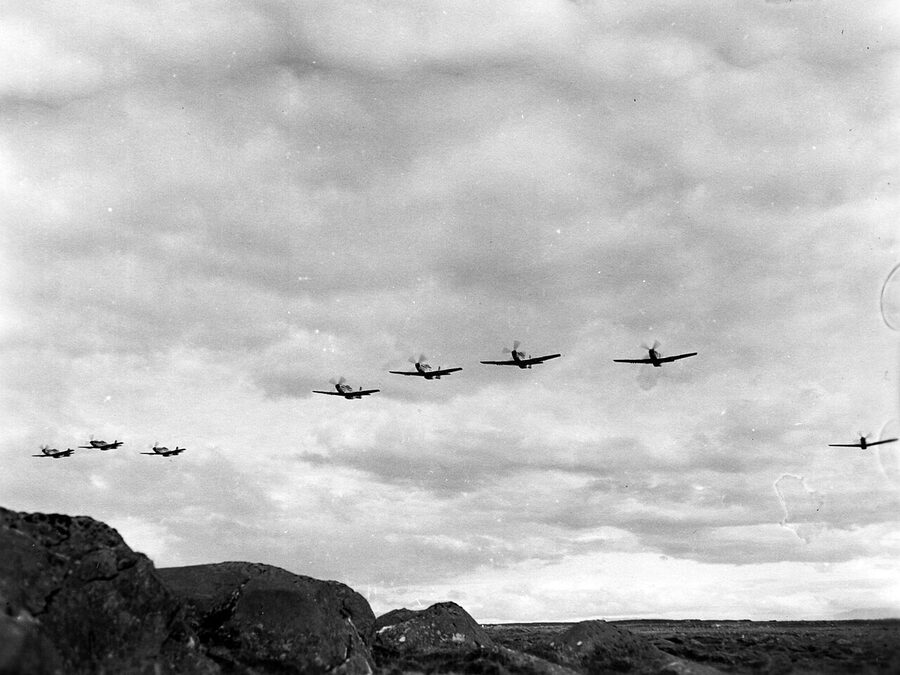
The Second World War was a different story. Denmark was invaded by Germany in April 1940. Iceland was left dangling. The British government decided, correctly, that an undefended Iceland between the Atlantic convoys and the German U-boats was too dangerous to leave alone, and on 10 May 1940 British troops landed in Reykjavík. Iceland protested the occupation but didn’t resist. A year later, the United States took over the garrison duty from the overstretched British. By the end of the war there were about 40,000 American servicemen in Iceland, more than the total male population of the country at the time. The economic effect was enormous. Paved roads got built. The airport at Keflavík was constructed. Reykjavík doubled in size in five years. Icelanders call this period ástandið, “the situation”, a dry word that covers everything from new infrastructure to the Icelandic women who dated foreign soldiers, which caused a moral panic that echoed for a generation.
The Cod Wars, 1958, 1972, and 1975
By 1950 Iceland was a republic, an economic client of the United States, and a reluctant member of NATO. It was also utterly dependent on one thing: fish. Cod, specifically. And British trawlers had been fishing Icelandic waters for centuries, often to the point of overfishing.
Iceland fought three “cod wars” with Britain over the next twenty years. Nobody actually declared war, the name is Icelandic humour, but gunboats were rammed, trawl wires were cut, shots were fired across bows, and at one point Iceland threatened to leave NATO and close the US airbase at Keflavík if the British didn’t back down. Iceland won all three.
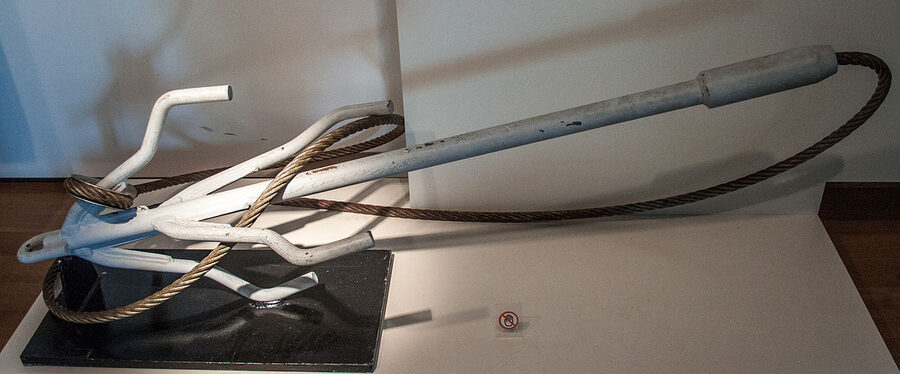
The first war in 1958 pushed the Icelandic fishing zone from 4 to 12 nautical miles. The second in 1972–73 expanded it to 50. The third in 1975–76 pushed it to 200, the largest exclusive economic zone in the world at that point. The Royal Navy lost the argument at every stage. A country of 220,000 people pushed one of the biggest naval powers on earth out of waters it had fished for 400 years. To this day, British trawlermen in Grimsby and Hull remember the Cod Wars the way Icelanders remember the Laki eruption, as the event that wrecked their town.
What’s often missed in the telling is that Iceland’s victory depended on geopolitics. NATO needed the Keflavík airbase. The Americans leaned on the British to settle. Without the Cold War and its strategic geography, Iceland wouldn’t have won, but it did have that geography, and it played the hand perfectly.
2008, the collapse
Skipping ahead three decades. In 2000, Iceland privatised and deregulated its banking sector, and for the next seven years the three biggest banks, Kaupþing, Landsbanki, and Glitnir, grew at a speed that defied gravity. By 2007 the combined balance sheet of the three banks was 11 times the country’s GDP. Everyone was getting rich. New apartment blocks went up everywhere in Reykjavík. Icelanders started buying English football clubs, investing in foreign real estate, throwing money around in London and Copenhagen. The whole country was leveraged to the eyeballs and nobody wanted to slow the music down.
Then came October 2008. The global financial crisis hit, credit markets froze, and the Icelandic banks, which had borrowed in foreign currency and couldn’t refinance, collapsed one after another over a single week. On 6 October, Landsbanki was nationalised. On 8 October, Glitnir. On 9 October, Kaupþing. The króna lost half its value in a month. Unemployment, which had been under 2%, hit 9%. Icelanders who had taken out mortgages in foreign currency, which banks had encouraged, found their debt had doubled overnight. Personal savings held in the banks were frozen. The state itself nearly went bankrupt. Britain used anti-terrorism legislation to freeze Icelandic assets in London, which Icelanders still find genuinely insulting seventeen years on.
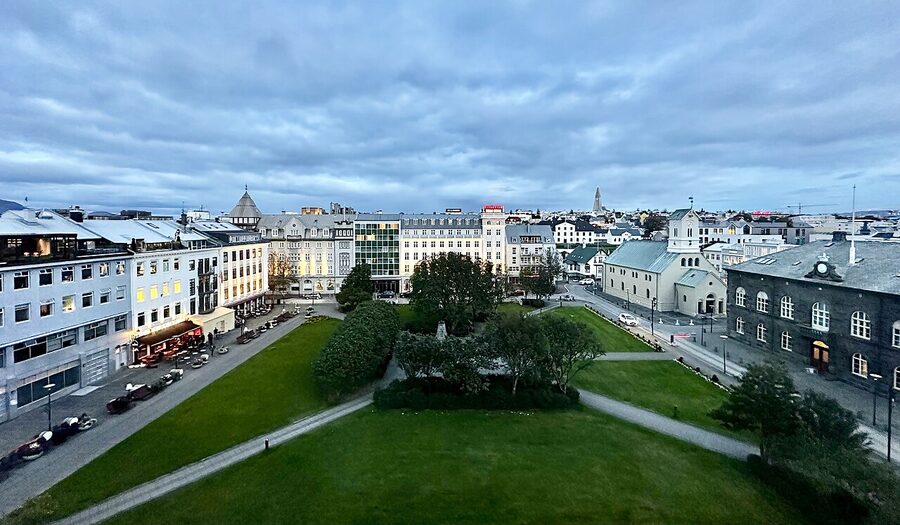
And then Icelanders did something that didn’t happen anywhere else in Europe. They took to the streets. The búsáhaldabyltingin, the “Pots and Pans Revolution”, ran through the winter of 2008–09, with thousands of people banging saucepans and kitchen implements outside the Alþing building on Austurvöllur square every Saturday until the government fell. The prime minister, Geir Haarde, resigned. A left-wing coalition came in under Jóhanna Sigurðardóttir, who, incidentally, became the first openly gay head of government in the world, a detail the international press enjoyed rather more than Icelanders did. She just got on with the job.
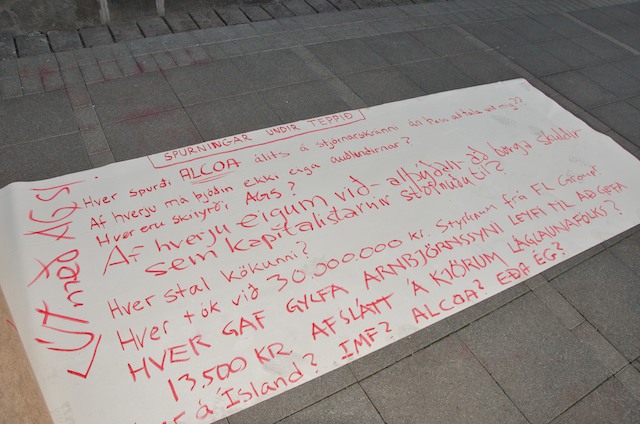
Unlike anywhere else in Europe, Iceland actually jailed its bankers. Not all of them, but quite a few. The Kaupþing CEO got five and a half years. The Landsbanki CEO got four and a half. The Glitnir CEO got five. A few dozen lesser executives served time. I’m not claiming the system worked perfectly, but it worked better than the comparable episode anywhere else in the western world. Iceland also refused, after two national referendums, to pay back foreign depositors in Icesave, the British and Dutch savings accounts held with Landsbanki. This was diplomatically nuclear at the time. Britain and the Netherlands threatened to block Iceland’s EU membership application. They did block it. Iceland shrugged and moved on.
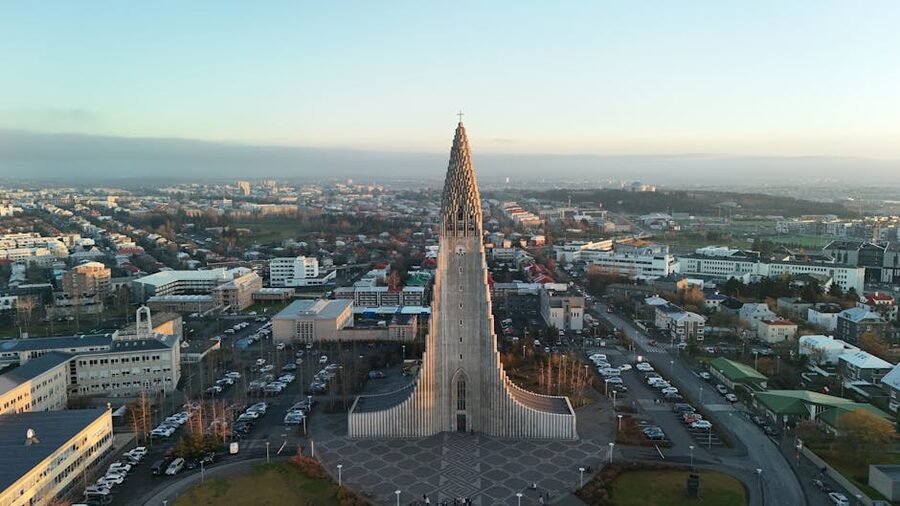
Recovery took four or five years and was rough. But by 2013 the Icelandic economy was growing again, driven by two things: aluminium smelting and, much more importantly, tourism.
The unexpected country, Eyjafjallajökull, tourism, and the 21st century
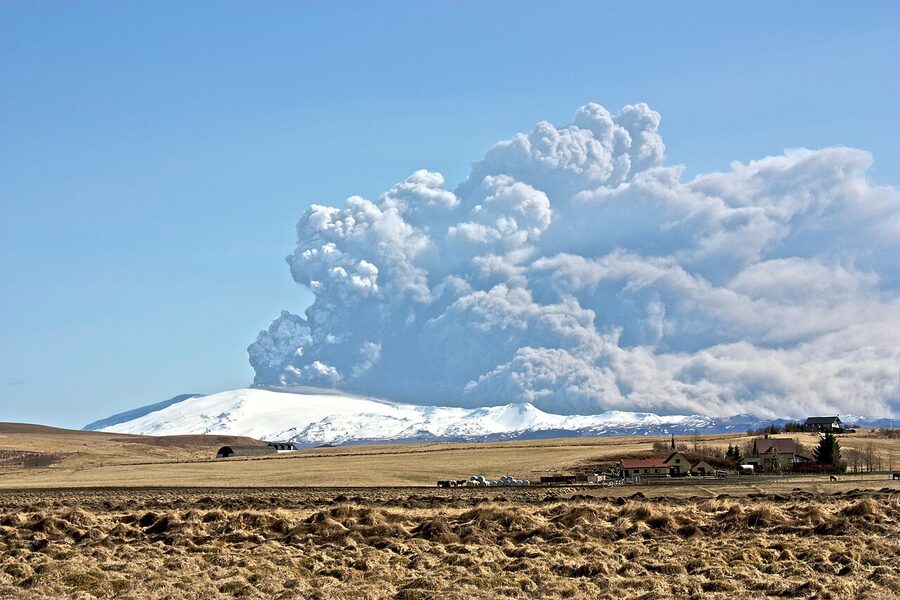
The second great turning point of modern Iceland was a volcano. Eyjafjallajökull, a long, mouth-twisting name that most foreign newsreaders mangled enthusiastically, erupted under its ice cap in April 2010. The eruption itself was small by Icelandic standards, but the ash plume was so fine and so well-placed in the jet stream that it shut down European airspace for six days. Airlines lost an estimated $1.7 billion. Icelanders who lived near the mountain lost several farms and a lot of livestock. The country’s reputation, oddly, gained something.
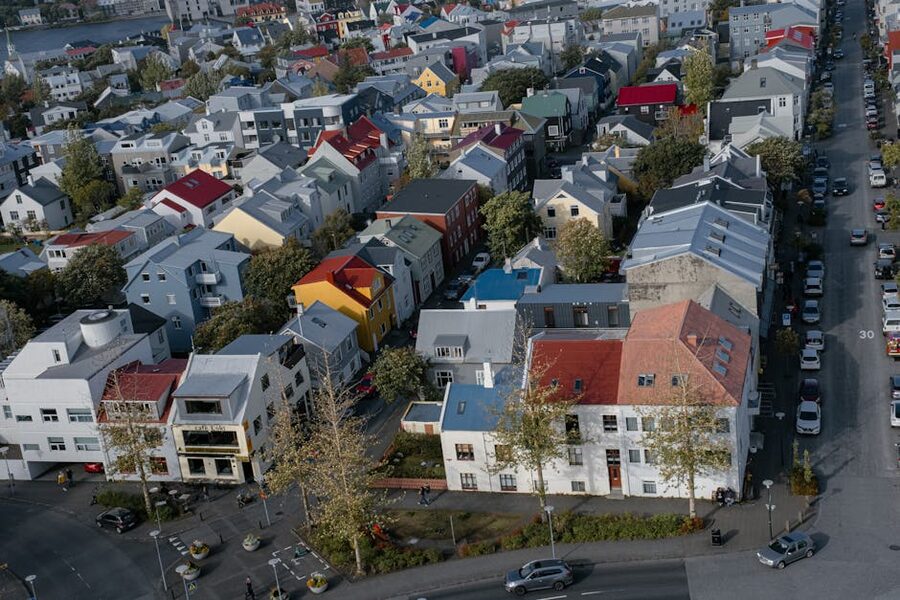
Before 2010, Iceland got about 500,000 foreign visitors a year. After 2010, every travel magazine on earth had to write a piece about this exotic volcanic country with the unpronounceable name and the amazing landscapes. Budget airlines started flying here. The krónur had collapsed in 2008, making the country genuinely affordable for the first time in a generation. By 2019 the annual visitor count had crossed two million, four visitors for every Icelander. The tourist economy grew from about 5% of GDP to about 8% to, at the peak, closer to 10%. Reykjavík got hotels, then more hotels, then short-term rental apartments, then complaints about short-term rental apartments. Housing prices in the capital roughly doubled between 2012 and 2022. Anyone who doesn’t own a flat in 101 Reykjavík yet isn’t getting one anytime soon.
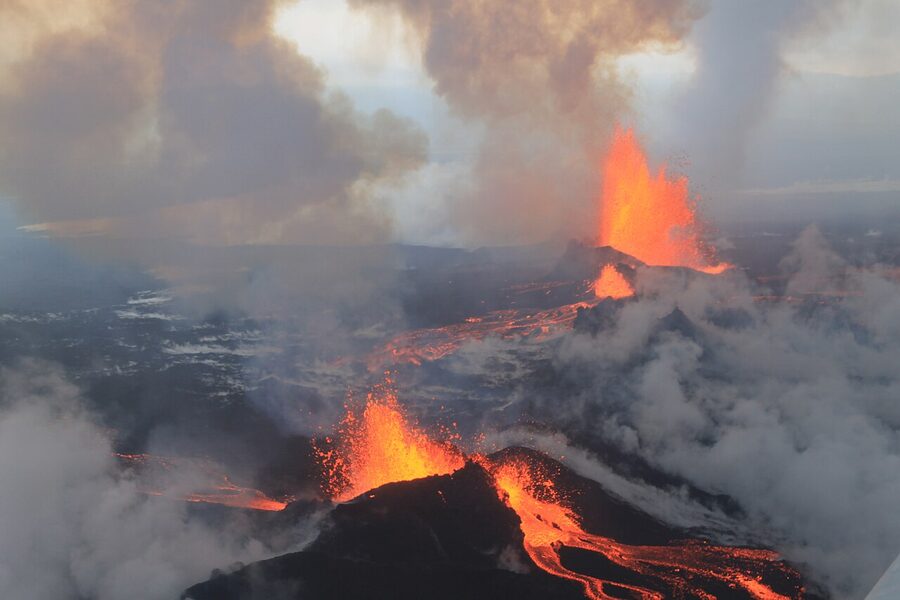
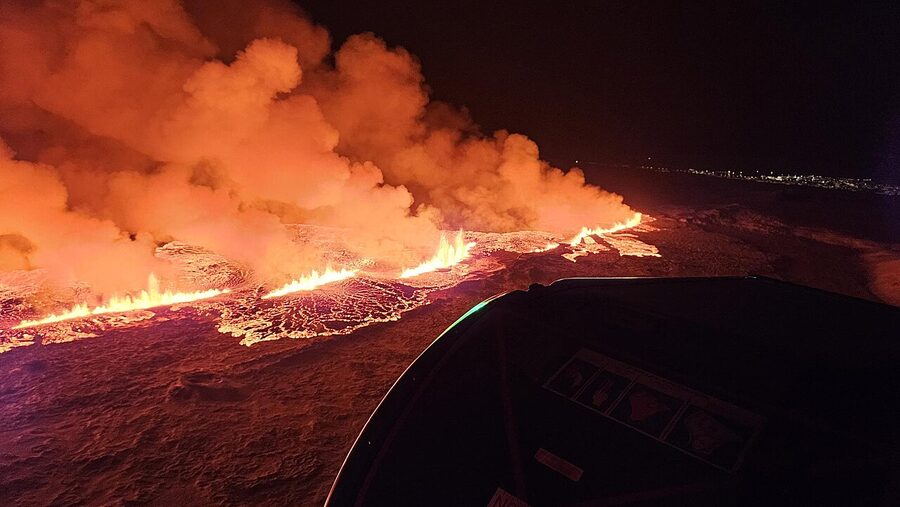
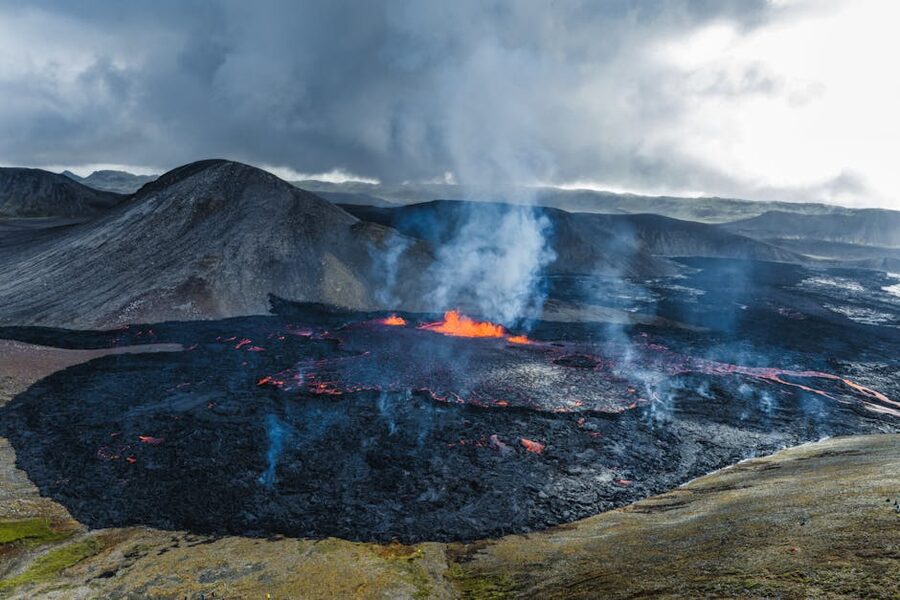
The other volcanoes kept coming. In 2014 Bárðarbunga opened a new fissure and produced the largest basaltic lava flow in Iceland since Laki, thankfully in the uninhabited central highlands. In 2021 a fissure opened in the Reykjanes peninsula southwest of Reykjavík, ending 800 years of dormancy in that system. It erupted again in 2022, and again in 2023, and throughout 2023–24 the sequence intensified to the point that the fishing town of Grindavík had to be evacuated. Most of the population has not returned. Houses have cracked, roads have buckled, the Svartsengi geothermal power plant (which supplies heat and water to 30,000 people) has been walled in with protective lava barriers.
Modern Iceland, what it actually looks like now
A few things to know about Iceland today. The population is about 390,000, the highest it’s ever been. Reykjavík and its suburbs hold two-thirds of that. The economy is based on fish (still), aluminium, tourism, and an increasingly large data-centre industry (cold climate plus cheap geothermal electricity is ideal for server farms). GDP per capita is comparable to Germany. Life expectancy is 83. Every Icelander is covered by the health service. Every Icelander has the right to search their ancestry back to the Landnámabók using a free online database called Íslendingabók.is, which is run as a public good by Reykjavík genealogists. No other country has anything like it.
Politics is stable and slightly boring in that Scandinavian way. Iceland has had female prime ministers, openly gay prime ministers, and (in 2021) a parliament that was briefly 48% women, the most gender-equal legislature in the world at that moment. Elections are held every four years unless the coalition collapses, which it sometimes does. No single party has ever held a majority alone. Coalitions of three or four parties are the norm. It works, mostly.
Culturally, the country is punching above its weight in all the usual ways. Halldór Laxness won the Nobel Prize in Literature in 1955 and he still outsells most living writers here. Björk needs no introduction. Sigur Rós and Ólafur Arnalds and Of Monsters and Men. Baltasar Kormákur directing in Hollywood. Ragnar Kjartansson’s video art in every major gallery. The football team that knocked England out of Euro 2016 (we are still dining out on it). A chess world champion in the 1970s, Friðrik Ólafsson, and the match where Bobby Fischer beat Boris Spassky was held in Reykjavík in 1972, which is the closest the country has ever come to being the centre of a Cold War story.
If you’re coming to visit, you’ll probably see most of this history without realising it. Þingvellir is a morning tour from Reykjavík. The Þingvellir National Park site has good self-guided material if you want more than a glance. The National Museum of Iceland (Þjóðminjasafn) in downtown Reykjavík is an hour well spent, the permanent exhibition walks you from the settlement to the present in one arc and explains a lot of what you’ll see in the landscape. If you really like old manuscripts, the Árni Magnússon Institute keeps the originals of most of the sagas and puts the best ones on rotating display.
For tour context, you’ll find plenty of ways to encounter this history hands-on. The Golden Circle route, Þingvellir, Geysir, Gullfoss, is the shortest history-heavy day trip, and I’ve written more about it and the custom tour options elsewhere on the site. If you’re specifically into Icelandic Christmas folklore, which is actually a medieval hangover, partly pre-Christian, you’ll find a lot of the same themes turning up: the Yule Lads are basically 13 disaster deities from farming culture, the Yule Cat is a very old winter-death figure, and Saint Þorlákur (canonised in 1985, died in 1193) still has his day on 23 December. The modern capital still has the Alþing meeting in the same spot it has met since 1844, just, you know, in a nicer building. And the food you eat on a trip here, the dried fish, the fermented shark, the smoked lamb, nearly all of it comes directly from the hard centuries between 1300 and 1800. Modern Icelandic cuisine is an argument with that past, not an escape from it.
A few final things, and then I’ll stop
The single biggest thing I’d want a visitor to understand about Icelandic history is how thin it is. There are 390,000 of us today. There were 50,000 of us for most of the 1800s. There were 70,000 of us at the time of the Laki eruption, 30,000 of whom died in the aftermath. A single bad winter could set the country back a generation. A single volcano could nearly end it. And yet the Alþing has met more or less continuously for eleven hundred years, in a country that spent most of that time barely clinging on. That’s a long chain of individual decisions by a small group of people not to give up.
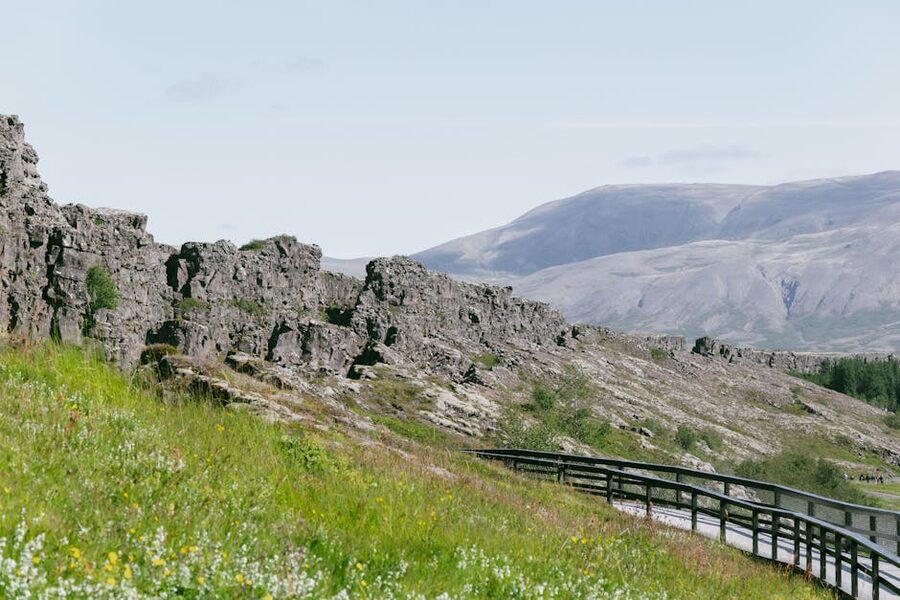
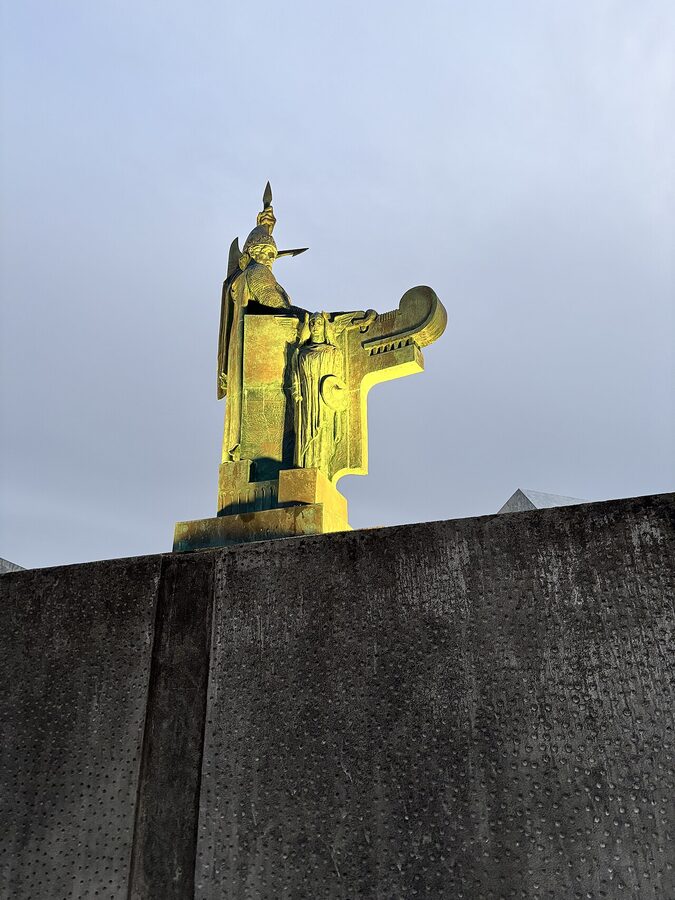
The other thing is that the past isn’t past here, in the way it feels past in larger countries. You walk across the rift at Þingvellir and the rocks are the same rocks Þorgeir stood on when he decided Iceland would be Christian. You pass a statue of Ingólfur on your way to work. Your kid’s school is teaching him sagas in a language not much changed from the one they were first written in. I know a man who can recite the first chapter of Njáls saga from memory, because his father taught him when he was six, because his father had been taught when he was six, and the chain just goes back. That’s what it’s like. Not mystical, not particularly special, just normal because nothing has ever fully broken the thread.
If you’re coming for a week, you won’t see the whole thing. Nobody does. But stand at the Lögberg on a rainy June morning, it’s usually rainy, even in June, and look back up the valley at the wall of black basalt. This is where it started. This is where the republic was declared. This is still where we come when it’s important. Go to other destinations after, by all means. But start here.

.jpg)