Puffins first, whales second, same Reykjavik day.
This Iceland Super Saver bundle strings together two wildlife trips at a discounted price, and you can swap the order if your day goes sideways. You’ll get nonstop narration on puffin behavior and physiology, plus guide-led searching for whales in Faxafloi Bay, where minke and humpback whales are on the spotting menu.
What I love most: the included binoculars for puffins and the gear that keeps you warm on the water. I also like that the experience leans on expert-led wildlife scanning, not just hoping the sea delivers good luck. The guide names you’ll hear on board can change by departure, but the vibe stays consistent: pay attention, then look where they point.
One thing to plan around: whale sightings are never guaranteed, and some puffin views can be distance-limited depending on sea conditions and boat positioning. In the unlikely event you don’t spot whales in Faxafloi Bay, you should get a complimentary ticket for another whale cruise, but you still don’t want to count on a guaranteed close-up.
In This Review
- Key Things That Make This Combo Work
- Reykjavik Meeting Point and How the Day Flows
- The Puffin Cruise: Binoculars, Narration, and the Akurey Circle
- Whale Watching in Faxafloi Bay: What You Can Spot and What You Can’t Control
- Switching Boats: The Practical Benefit of a Combo Day
- Gear, App, and On-Board Comfort That Actually Help
- Price and Value: Is $156.19 a Good Deal for Two Wildlife Tours?
- Weather, Sea Sickness, and What to Wear in Reykjavik Wind
- Who This Tour Fits Best
- Should You Book the Iceland Super Saver Puffin and Whale Combo?
- FAQ
- How long is the Puffin Cruise plus Whale-Watching tour?
- What wildlife might I see on the whale-watching part?
- What’s included on the puffin cruise?
- What clothing is provided?
- Are food and drinks included?
- Can I cancel, and what happens if it’s canceled for weather?
Key Things That Make This Combo Work
- Two tours, one logistics thread: start and finish at the same meeting point, with optional hotel pickup for the whale boat.
- Binoculars included for puffins: you’re not stuck staring with naked eyes at a speck in the distance.
- Warm comfort matters: soft blanket on the puffin cruise and warm overalls on the whale-watching boat.
- Guides actively search the water: you’ll get on-board scanning instructions and wildlife commentary.
- Free Wi-Fi on the whale cruise: useful if you want to text your group between sightings.
- A second whale chance: if no whales show in Faxafloi Bay, you receive another ticket.
Reykjavik Meeting Point and How the Day Flows
This is a 4 hours 30 minutes (approx.) combo that starts and ends back at Geirsgata 11, 101 Reykjavík. That matters because it keeps your day simple: you’re not doing a complicated hop across town on multiple ends. If you bought hotel pickup for the whale-watching part (extra fee), you’ll travel from your hotel to the Old Harbour to board the whale boat, then connect back to the rest of the plan from there.
Also note the small-but-important rule: you’ll need to reconfirm your cruise times with the supplier, using your voucher details. Iceland tours run on tight schedules, and the sea gets the final say, so that reconfirmation helps you avoid showing up at the wrong time and feeling rushed.
Group size is capped at 33 travelers, which is comfortably sized for a wildlife search day. It’s not a tiny private boat, but it also shouldn’t feel like you’re packed into a sardine tin. The most common “crowding” complaint in similar setups usually shows up on the smaller puffin leg, so this matters to you if you hate feeling shoulder-to-shoulder.
You can also read our reviews of more boat tours in Reykjavik


The Puffin Cruise: Binoculars, Narration, and the Akurey Circle

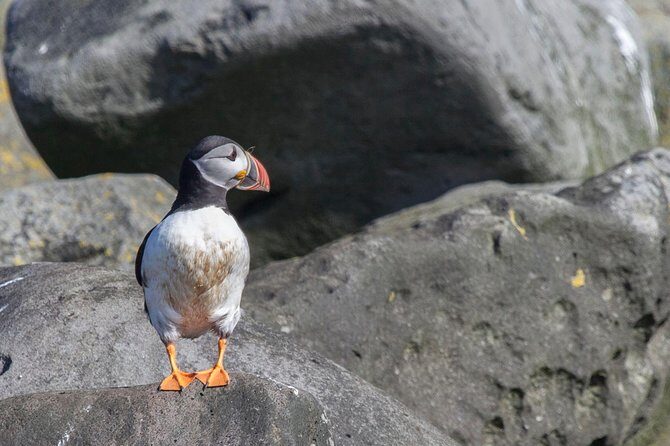
The puffin side of this combo is the part people tend to rate highest because it’s energetic, visual, and information-heavy in a good way. You’ll find a seat, get warmth via a provided soft blanket, and listen to narration that explains puffin behavior and physiology. The point of that storytelling isn’t academic trivia. It helps you know what you’re looking at when birds land, call, and work their way along the water.
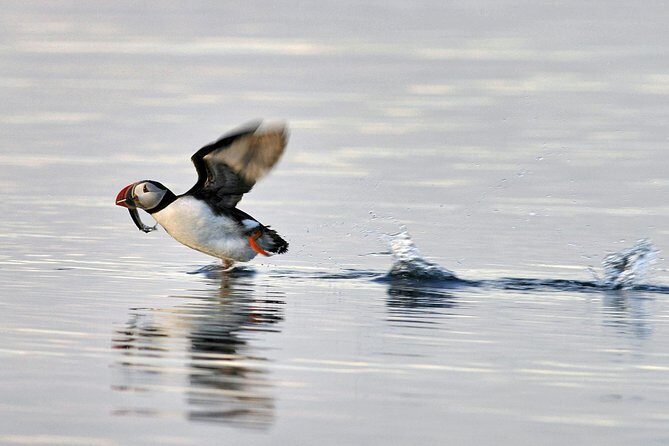
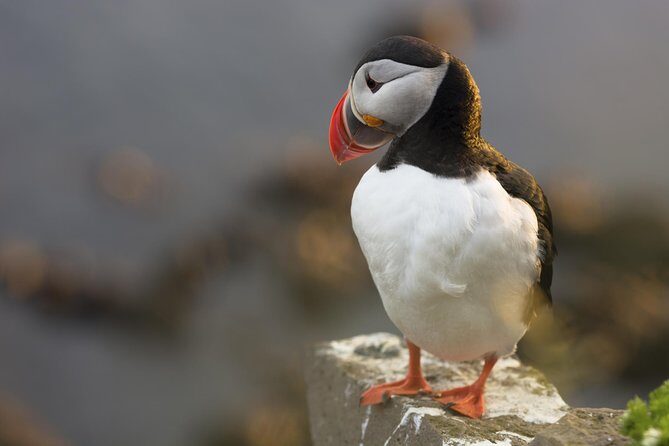
As you approach the island area, you can watch puffins from the boat—often agile at the surface. Then comes the key practical upgrade: you’ll have binoculars included, so you can spot details like posture and movement and not just “see a bird-shaped dot.”
Your boat heads toward the rocky shores of Akurey, and you’ll circle the island for more puffin vantage points. This is smart in a real-world way. From one angle you might get a lot of flight activity, while another pass can make the birds easier to track on the water. You also scan for other seabirds such as Arctic terns, black guillemots, and northern fulmars.
One thing to keep expectations grounded: you can’t access the breeding island itself. Puffins are protected during nesting, so you’re viewing from the water. That’s normal for responsible wildlife viewing, but it explains why some people feel they never get truly close-up views. If you’re picky about “photo-worthy distance,” you should be ready for a mix of great moments and far-enough views where binocular use becomes essential. A few passengers also suggest bringing your own binoculars so you’re not sharing when the birds start moving fast.
If your puffin cruise matches the best days, you’ll come away with a mental movie: birds in the water, birds lifting off, and birds repeatedly doing the same fishing routine from different angles. It’s also a tour where the guide’s style can make a big difference. People mention guides like Patrick for being funny and clear while still giving useful facts. That kind of balance helps because puffins are busy; you want to understand what you’re witnessing without zoning out.
Whale Watching in Faxafloi Bay: What You Can Spot and What You Can’t Control
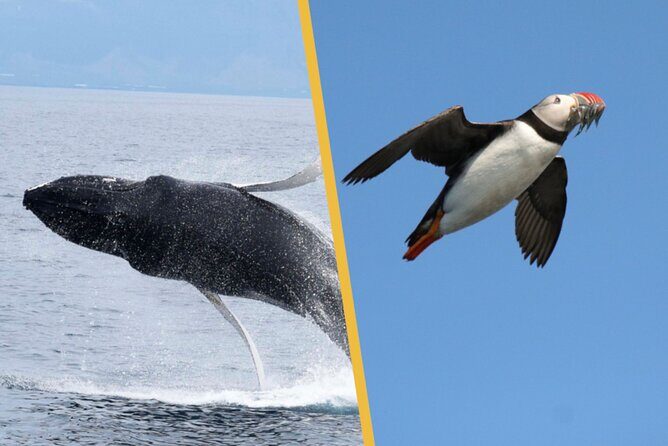
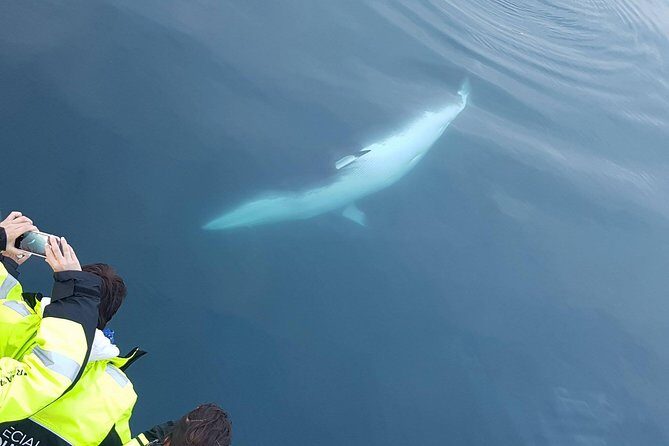
On the whale-watching side, you’ll head out from Reykjavik’s Old Harbour area and search Faxafloi Bay with onboard scanning help and commentary. The target species listed for this cruise are minke whales and humpback whales. You can also look out for white-beaked dolphins and porpoises.
The hard truth: whales are wild, and your day’s results depend on where they choose to surface and how the sea behaves. That’s why I like that the operator builds in a “no whales” safety net: if you don’t spot whales in Faxafloi Bay, you get a complimentary ticket for another whale-watching cruise. It’s not a guarantee, but it reduces the chance that you pay a lot and get basically an expensive boat ride with nothing but salt spray.
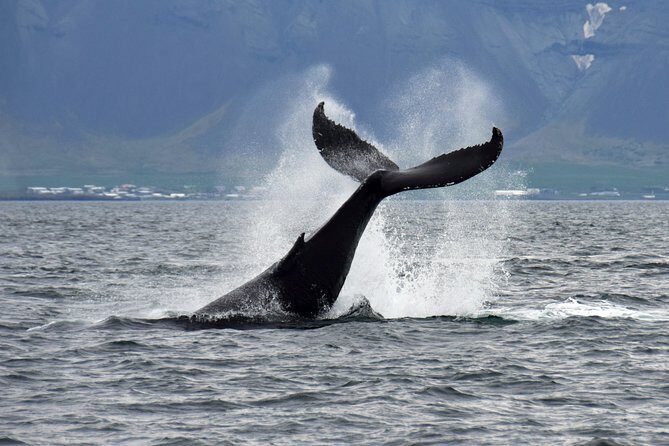
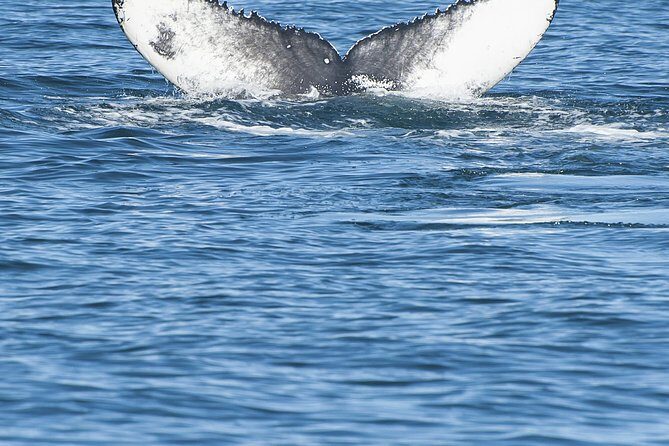
When whales do show, the experience can be dramatic. People describe humpbacks with tail slaps and multiple species in the same outing. A smooth sea can also change everything, because it affects how long you can stay focused on the horizon when the captain is scanning.
You should dress for cold wind. Even in months when Reykjavik feels mild on land, open water can slice right through you. This tour includes warm overalls on the whale cruise, which helps you stay outside the way you need to: watching, not retreating. Some departures also hand out sea-sickness support, like ginger candy and sick bags, and you might see sea-sickness pills offered on rougher days based on the crew and conditions.
In past sightings, people often mention that the guide’s sharp eye matters. When someone on board has practiced spotting, you start seeing action sooner: spouts farther out, quicker surfacing timing, and the telltale patterns dolphins use as they travel. You’ll see this in guides with names like Jo and Lucas (not just as a marketing feature, but as a real on-board role), where the narration stays practical—where to look and what behavior means.
And yes, sometimes you’ll leave with “only dolphins and porpoises.” That can still feel like a win in Iceland terms, but it’s not what you came for if your personal checklist is humpbacks. The smartest move is deciding in advance that this is a wildlife search tour, not a scheduled whale-breaching show.
Switching Boats: The Practical Benefit of a Combo Day
One of the underrated advantages of pairing these two tours is the pacing. You’re not doing an all-day marathon where you burn out and stop paying attention. The structure also keeps your logistics simpler than booking two separate tours on different days with different start times and different meeting points.
In at least some departures, there’s a short break between the whale boat and the puffin boat. One account describes a quick pause—then you switch to a different vessel for the puffin viewing. You’ll often find this “swap” helps your body reset. You’re still in cold air and salt wind, but you’re not stuck in one long loop of the same rocking motion.
It also means you get two kinds of wildlife viewing in one shot. The whale tour is about scanning a wide sea for surfacing events. The puffin cruise is closer, busier, and more visually dense. If you get skunked on one, there’s still a strong chance the other leg delivers. That’s why this value bundle format can work better than choosing only one.
Gear, App, and On-Board Comfort That Actually Help
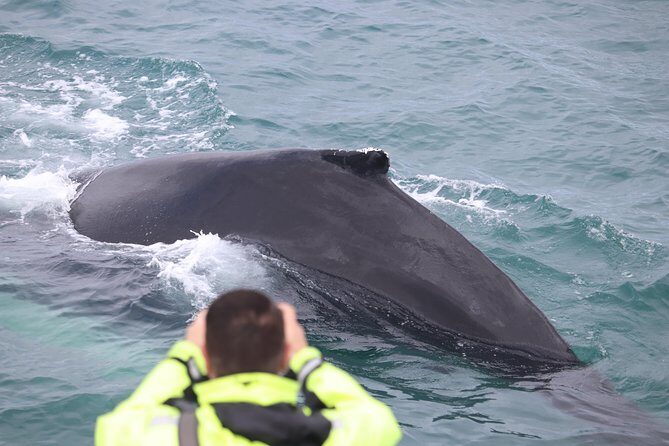
This combo includes practical gear and tools rather than just vibes.
On the puffin cruise you’ll get:
- Binoculars
- A soft provided blanket to stay warm while watching from your seat
On the whale-watching cruise you’ll get:
- Warm overalls
- Free Wi-Fi onboard
There’s also a Special Tours App available in multiple languages (English, German, French, Spanish, and Chinese). The app’s exact value depends on what your departure sets up that day, but in practice it can help you follow along with wildlife facts while you’re on the water. When you’re cold and busy looking, any simple tool that keeps you oriented is a plus.
One more comfort point: the puffin boat can feel small for the number of passengers, and that’s where some people report wanting more space. If you’re sensitive to crowds, arrive mentally ready to share a limited viewing area, then lean on the binoculars and your guide’s direction.
You can also read our reviews of more whale watching tours in Reykjavik
Price and Value: Is $156.19 a Good Deal for Two Wildlife Tours?
At $156.19 per person, you’re paying for two separate wildlife experiences: a puffin cruise focused on a specific island area and a whale-watching cruise focused on open-sea scanning. If you were to price similar experiences individually, bundles like this often work because you’re saving on combined scheduling and transportation time.
This is still wildlife viewing, so no one should sell it as a sure thing. Your value comes from getting:
- Two chances to see Iceland wildlife
- Included equipment that reduces your need to bring extra gear
- A second whale ticket if whales don’t show in Faxafloi Bay
- Warm clothing that makes a cold boat day far more bearable
If your priorities are close-ups, you might feel split. Some passengers want puffins closer to the boat. Others are thrilled by seeing birds in large numbers and getting good binocular viewing. For whales, you can get everything from “a few sightings” to “multiple species, closer than expected,” depending on the day.
I’d call this a good value when you treat it like a wildlife search day and you’re willing to be flexible. If you need guarantees—like you must see a humpback from close range—this price becomes less appealing because nature doesn’t promise that.
Weather, Sea Sickness, and What to Wear in Reykjavik Wind
Weather is a real factor here. The experience requires good weather, and if it’s canceled due to poor weather, you’ll get an option for another date or a full refund. That’s not a small detail; it’s the difference between a comfortable viewing window and a rough ride where you can’t see well enough to enjoy it.
Dress like you’re going to spend hours outside in cold wind. Even with warm overalls, you’ll want layers underneath. Closed shoes help because you might be shifting positions as the boat captain looks around. You’ll also want to plan for the possibility of seasickness. People describe rougher conditions on at least some whale outings, with staff handing out comfort items and making it easier to cope.
If you’re prone to motion sickness, I’d take that risk seriously. Don’t wait until you feel bad. Use the support the crew offers and, if you choose to bring your own remedy, have it ready.
Who This Tour Fits Best
This combo works best if you want variety and you like being outdoors even when it’s chilly. It’s also a strong choice for:
- Couples or solo travelers who want a guided wildlife day without driving
- Families who like a shorter puffin leg followed by a longer sea scan
- Budget-minded travelers who want a discounted two-tour package
It’s less ideal if you need guaranteed whale sightings or if you feel uncomfortable in tight shared spaces on a smaller boat. In that case, you might still enjoy the puffin part, but you shouldn’t assume perfect photo conditions every pass.
Should You Book the Iceland Super Saver Puffin and Whale Combo?
I’d book it if you can handle the basics of wildlife viewing: no guarantees, changing sea conditions, and a lot of scanning time. This combo value is strongest because you get binocular help for puffins, warm gear for the boat rides, and a second whale chance if Faxafloi Bay goes quiet.
You should reconsider if:
- You’re only interested in whales and you’d be disappointed by dolphins or porpoises alone
- You expect puffins close enough for the kind of photos that come from stepping right onto an island (you can’t do that here)
If you’re flexible and you like seeing wildlife in action rather than just ticking a checklist, this is a solid Reykjavik day.
FAQ
How long is the Puffin Cruise plus Whale-Watching tour?
It runs about 4 hours 30 minutes.
What wildlife might I see on the whale-watching part?
The tour focuses on minke whales and humpback whales in Faxafloi Bay, with possible sightings of white-beaked dolphins and porpoises.
What’s included on the puffin cruise?
You get binoculars, plus a soft provided blanket and narration while you look for puffins around Akurey.
What clothing is provided?
On the whale-watching cruise, you’ll receive warm overalls. The puffin cruise provides a soft blanket.
Are food and drinks included?
No. Food and drinks are not included.
Can I cancel, and what happens if it’s canceled for weather?
You can cancel for a full refund up to 24 hours in advance. If the tour is canceled due to poor weather, you’ll be offered a different date or a full refund.