If you’ve ever been dive-bombed by an arctic tern in Iceland, you’ll remember it. They scream. They swoop. They draw blood if you don’t lift a stick or a hat above your head, because the highest point on you is what they aim for. Locals call them kría, which is also the sound they make. The first time I took my niece to Snæfellsnes she cried. Now she carries a tied-up sweater on a stick and yells back at them in Icelandic.
That’s what bird watching in Iceland actually feels like, at least in summer. Loud. Crowded. Faintly chaotic. We don’t have the species count of a tropical island, Iceland sits at maybe 400 recorded species and only 70 to 80 breed here in any given summer, but what we do have is sheer numbers and a setting that puts the birds within touching distance. About 60% of the world’s Atlantic puffins nest in Iceland. The world’s biggest sea-cliff colony of seabirds is on a single 14-kilometre cliff in our Westfjords. And from late May to early August, the sun barely sets, so you can keep watching well past midnight if your eyes will let you.
This guide is for someone planning a trip with birds in mind. That might be a serious lister wanting Barrow’s goldeneye and white-tailed eagle, or a normal traveller who’d just like to stand close to a puffin once in their life, both are well served by what’s here. I’ll cover the species, the cliffs, the seasons, the operators I’d actually book with, and a few warnings that the tour brochures leave out.
In This Article
- What Iceland’s birding actually looks like
- The window: when puffins are here, and when nothing is
- Why mid-summer can also be too late
- Winter, small but real
- The ten species you’ll most want to see
- Atlantic puffin (lundi · Fratercula arctica)
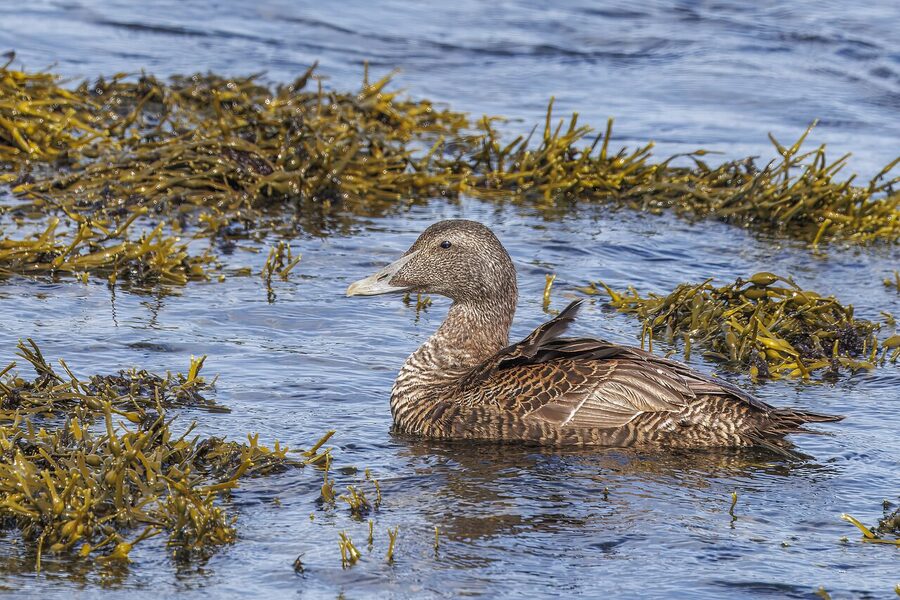
- Common eider (æðarfugl · Somateria mollissima)
- Arctic tern (kría · Sterna paradisaea)
- Common murre / Brünnich’s guillemot (langvía / stuttnefja)
- Razorbill (álka · Alca torda)
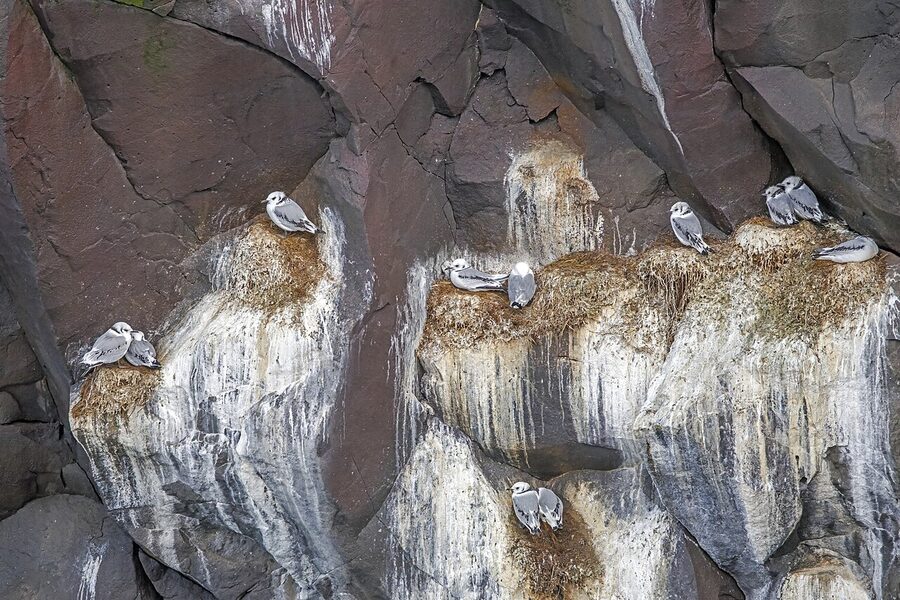
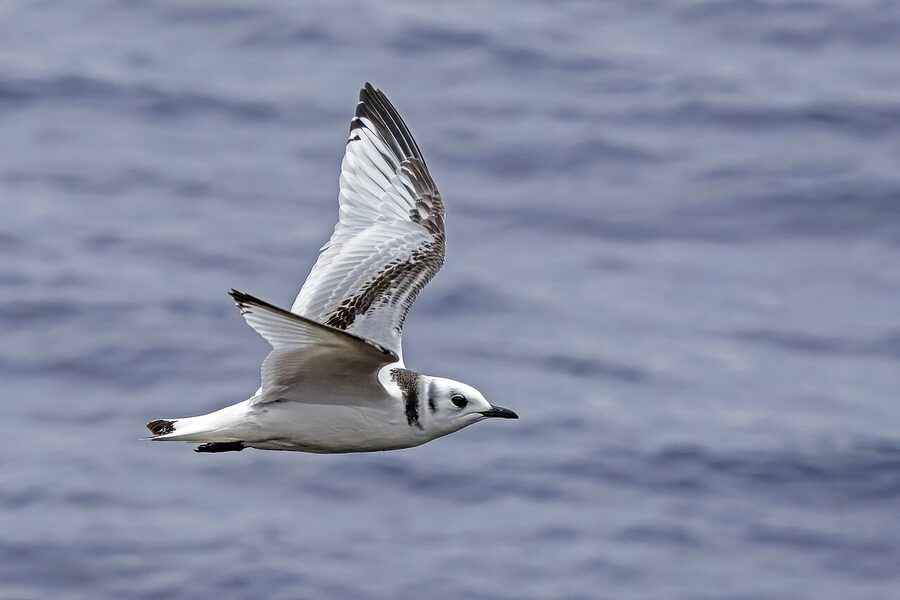
- Black-legged kittiwake (rita · Rissa tridactyla)
- Northern fulmar (fýll · Fulmarus glacialis)
- Northern gannet (súla · Morus bassanus)
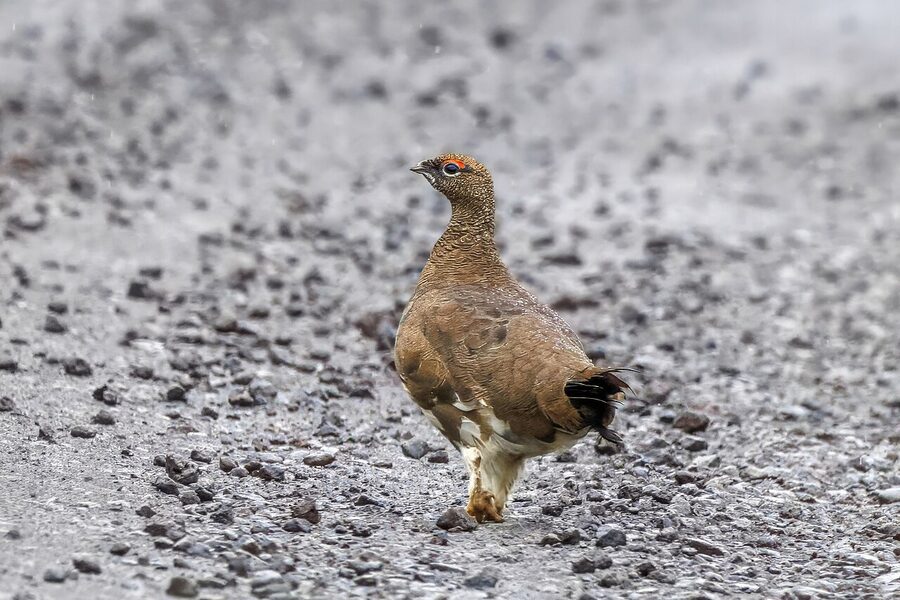
- Rock ptarmigan (rjúpa · Lagopus muta islandorum)
- Gyrfalcon (fálki · Falco rusticolus)
- The cliffs and lagoons, where to actually go
- Látrabjarg, the Westfjords
- Borgarfjörður Eystri
- Vestmannaeyjar (Westman Islands)
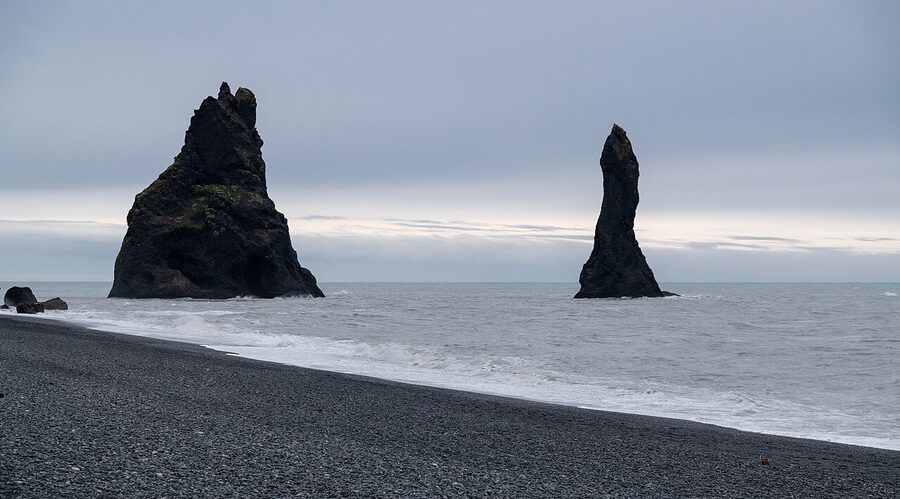
- Dyrhólaey, South Coast
- Lake Mývatn, the duck capital
- Hornstrandir Nature Reserve
- Snæfellsnes Peninsula
- Reykjanes Peninsula
- Other lakes and lagoons
- Tour formats: what kind of birding trip to book
- The half-day boat tour from Reykjavik
- The full-day Westman Islands trip
- The Westfjords birding road trip (3 to 5 days)
- The dedicated multi-day birding tour
- The local-guide private trip
- Photography-focused tours
- What it costs
- What to bring
- Etiquette and safety, the part that matters
- Combining bird-watching with everything else
- Weather, light, and the stuff that goes wrong
- The conservation context, quick
- What I’d actually do
- One last note on operators
- A short bird-by-region cheat sheet
- One more pointer worth saying out loud
What Iceland’s birding actually looks like
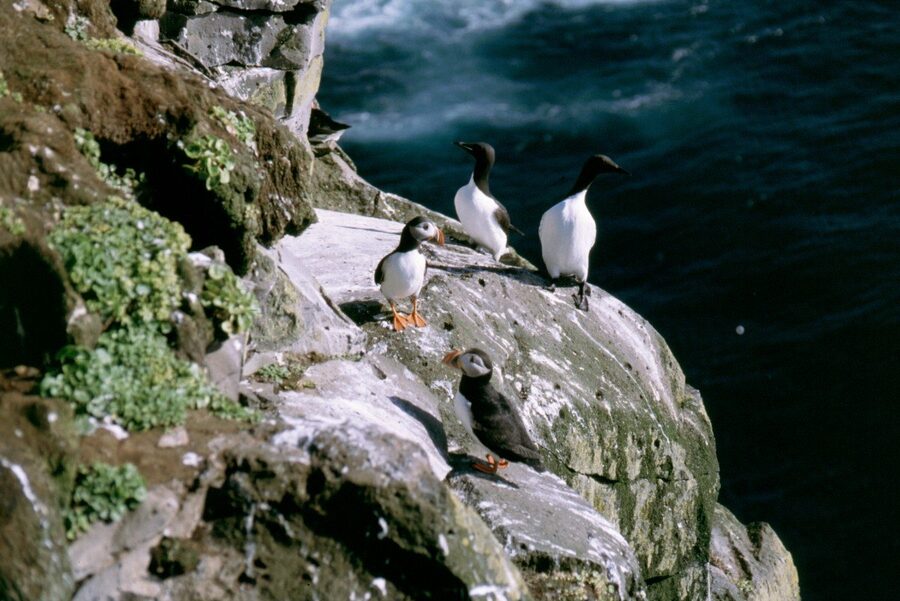
Two things define it. The first is the seabird scale. Cliffs hold six-figure colonies. Single islands host more puffins than entire countries do. When you stand at the western tip of the Látrabjarg cliff at 7pm in June and watch the wheel of birds against the sea, with kittiwakes screaming and razorbills dropping past your feet and puffins flapping like wind-up toys, that’s not a metaphor for “wildlife abundance.” That’s just what it looks like.
The second thing is the duck and waterbird density at one shallow lake in the north, Mývatn, where 13 species of duck breed every summer because of the midge swarms feeding off the lake bed. Most of the year these midges make the place faintly miserable for humans (the name means “midge lake”). For ducks, it’s a buffet. For birders, it’s the only place in Europe you can reliably tick Barrow’s goldeneye and harlequin duck on the same morning.
Outside summer, Iceland still has birds, gyrfalcon hunting ptarmigan in the snow, glaucous gulls and king eider drifting in from Greenland, the occasional snowy owl appearing in a farmer’s field, but the seabird spectacle isn’t there. The cliffs in October are quiet. So if a tour brochure promises puffins in November, ask a follow-up question, because they’re wrong.
The window: when puffins are here, and when nothing is
Pin this down before you book anything else.
Atlantic puffins arrive at the breeding cliffs in mid-April, lay a single egg in May, and depart by mid-August. That’s it. By late August they’re scattered across the North Atlantic and won’t be on land again until the following spring. The same broad calendar applies to most of the other auks, guillemots, razorbills, and the kittiwakes, fulmars, and gannets. There’s some staggered movement, but the rule of thumb is that the cliffs are loud from roughly May through July, dwindling fast in August, and empty by September.
Late May through the first week of July is the sweet spot. All the migrants have arrived. The males are still in clean breeding plumage. The midnight sun makes evening photography unreasonable. If you can only travel one week of the year for birds, that’s the week.
Why mid-summer can also be too late
By mid-July puffin parents are spending a lot of time at sea fetching sand eels for the puffling waiting in the burrow. You’ll still see plenty of birds, but adults shuttle in and out fast, with bills full of fish. The “puffin standing motionless on the cliff edge looking thoughtful” photo most people want is easier in late May and June, before the chick hatches. After that they’re working.
Winter, small but real
From November to March, the seabird cliffs are empty. What you’ve got instead is a winter cast: rock ptarmigan in white plumage on the lava flows around Snæfellsnes and the highlands, Iceland gulls and glaucous gulls along the Reykjanes shore, harlequin ducks and great northern divers in coastal coves, the occasional king eider mixed in with common eider flocks, and, if you’re patient and lucky, a gyrfalcon. Snowy owls show up some winters and not others; they’re news when they do. Don’t book a “winter birding tour” expecting volume. Book it expecting a quiet day with binoculars in the cold and one or two genuinely good sightings. That’s the realistic deal.
The ten species you’ll most want to see
I’m going to walk through these by likelihood and personality, not taxonomic order. Birders, sorry.
Atlantic puffin (lundi · Fratercula arctica)
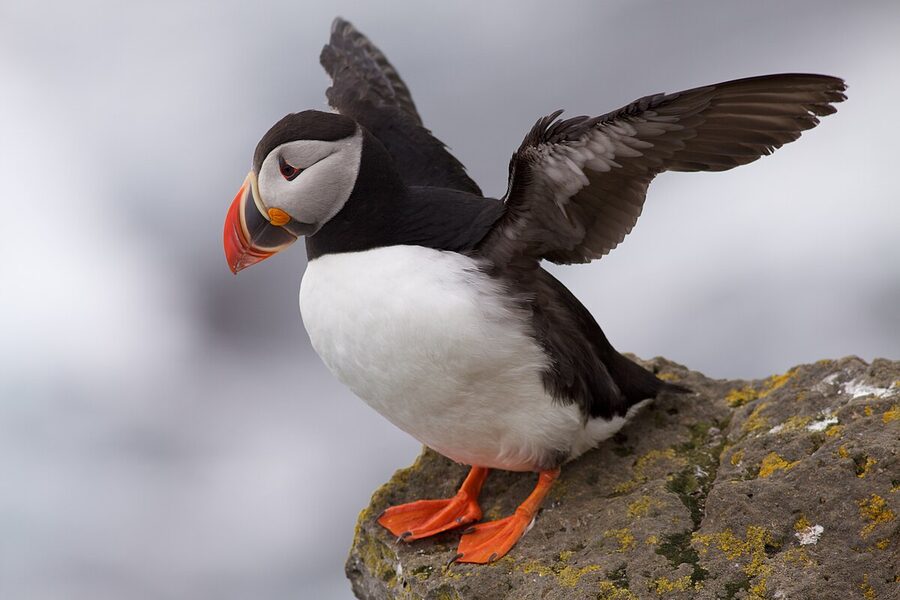
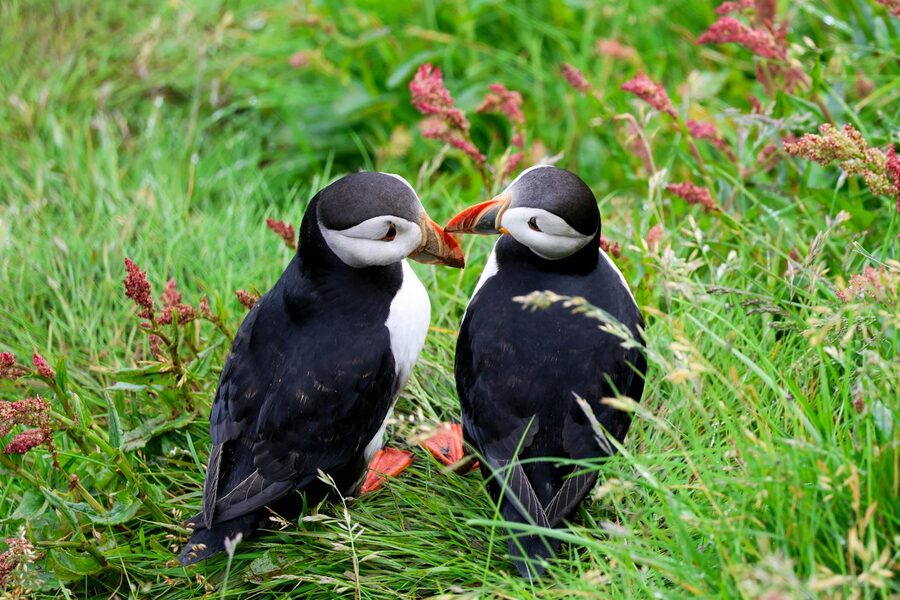
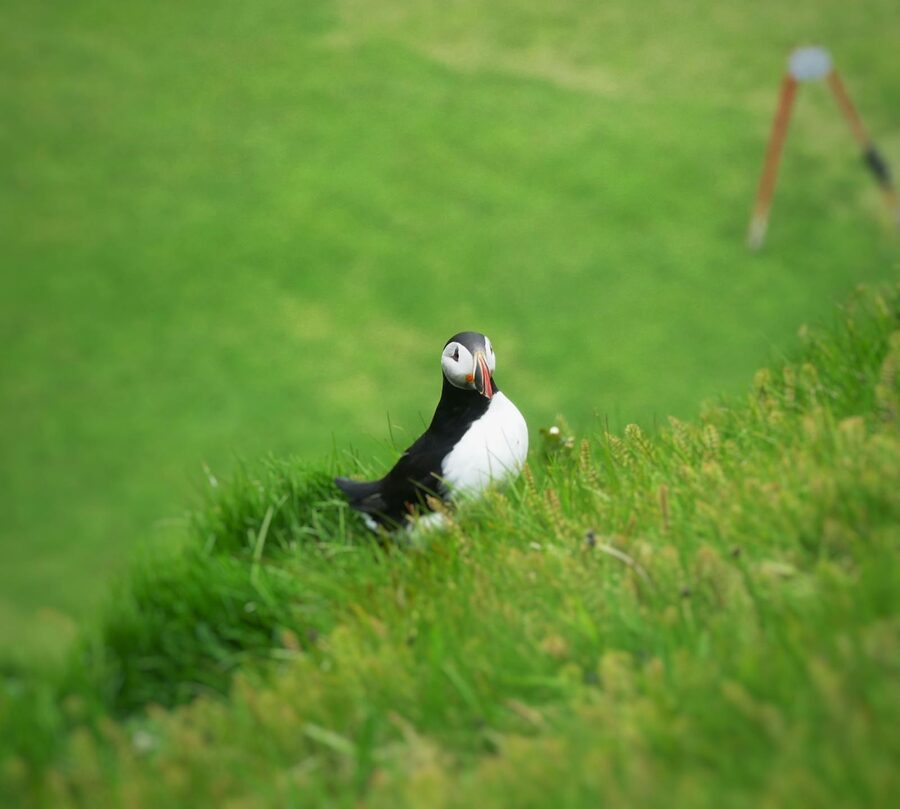
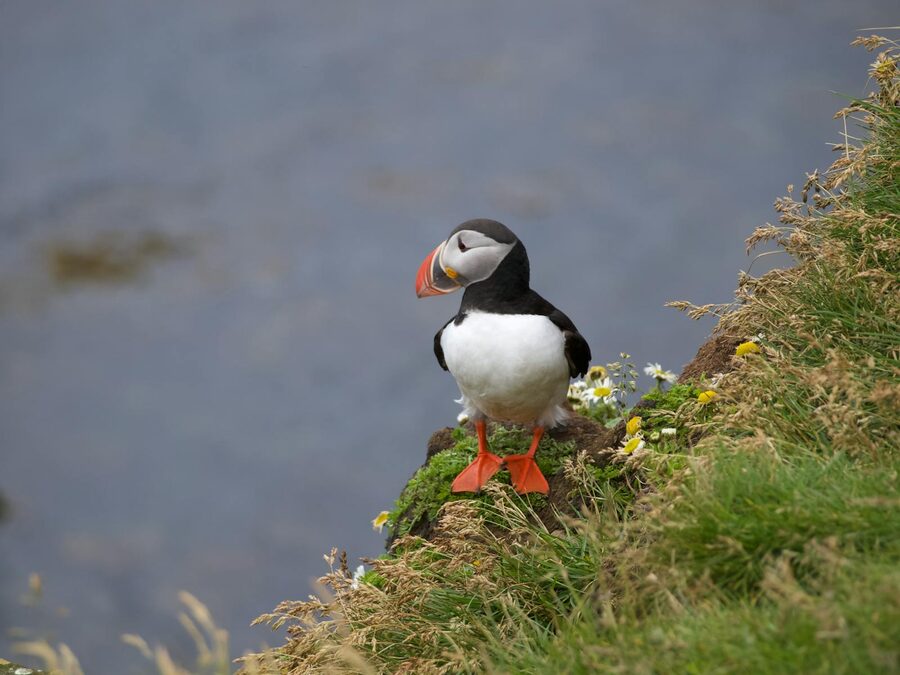
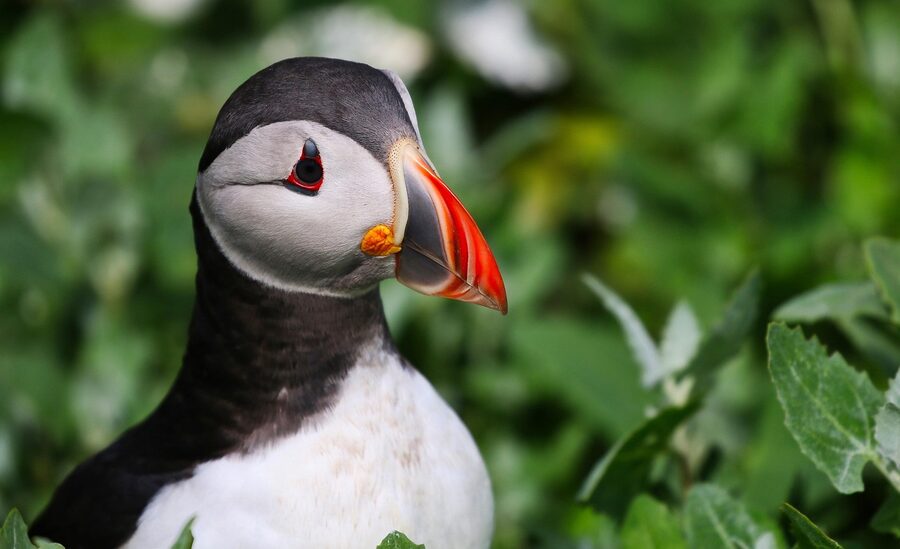
The puffin is the icon, the calendar bird, the souvenir-shop fridge magnet. But it’s also genuinely impressive once you stand near one. They’re smaller than you think, about the weight of a can of beer. Their bills are only that bright orange-red in the breeding months; outside of summer the colourful outer plates fall off and the bill goes grey. They live to about 20, mate for life, and most of them spend nine months a year alone on the open Atlantic before coming back to the same burrow.
Best places to see one without breaking a sweat: Vestmannaeyjar (Westman Islands), where the world’s largest single colony nests, accessed by a 30-minute ferry from Landeyjahöfn; Borgarfjörður Eystri in the east, with a wooden viewing platform overlooking an active colony at Hafnarhólmi where you can stand within metres of nesting birds; Dyrhólaey on the South Coast, on a clifftop driveable from Vík; and Látrabjarg in the Westfjords, the famous one, where the birds are remarkably tolerant of people, possibly because the cliff edge is so dangerous that nobody can get to them anyway.
Common eider (æðarfugl · Somateria mollissima)
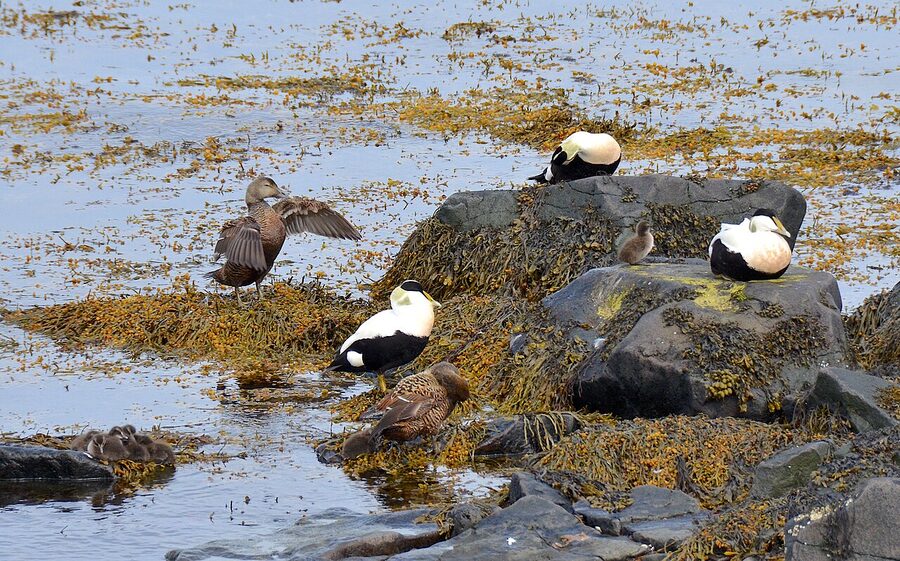
You’ll see eiders bobbing in flocks just off any coastal road. They’re the duck behind the famous Icelandic eiderdown, the female plucks down from her own breast to line her nest, and farmers collect it after the chicks fledge. One kilogram of cleaned eider down requires the harvest from 50 to 60 nests and currently sells for around 100,000 ISK. It’s the most valuable bird product in the country and the reason eiders have been protected since 1849. If you stay at a coastal farmhouse in summer you might see the eider houses, small wooden shelters scattered around the garden where the females are encouraged to nest.
Arctic tern (kría · Sterna paradisaea)
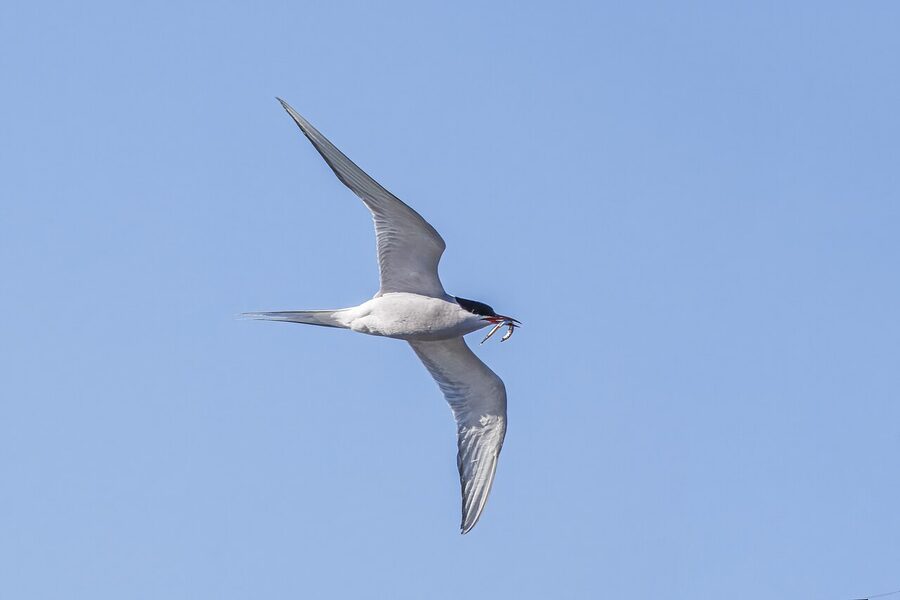
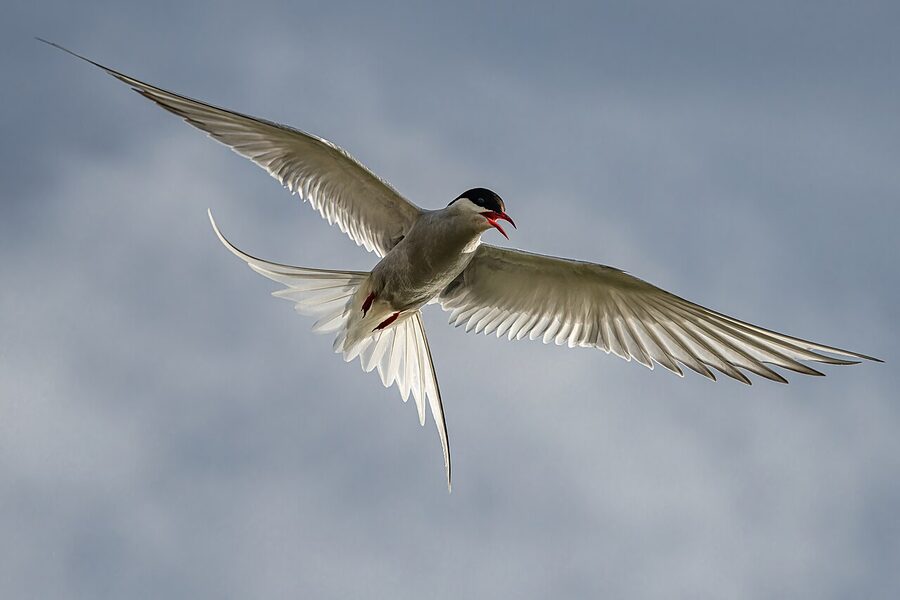
Back to the dive-bombing. Kría are aggressive nest defenders, extremely so, and the breeding colonies at Snæfellsnes (Rif), Jökulsárlón, the Reykjanes Peninsula and several Westman Island sites can’t be quietly walked through in June and July. Hold a stick or pole above your head as you walk; the birds will hit the highest point. They aim for the back of the head if you don’t.
It is not a joke. People come back with bloodied scalps every year. It also doesn’t hurt the bird, they barely make contact and they’re trying to scare you off, not damage you, so don’t be too cross with them. Just bring a hat with a brim, or genuinely a stick. There’s a reason Icelandic kids learn the word kría before they can spell it.
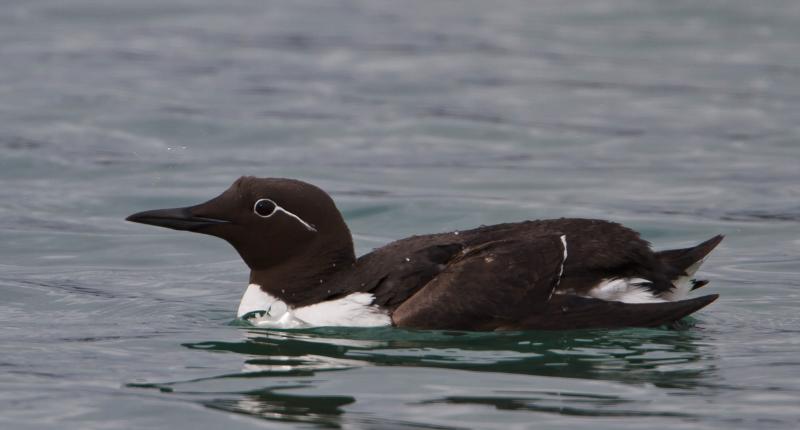
Common murre / Brünnich’s guillemot (langvía / stuttnefja)
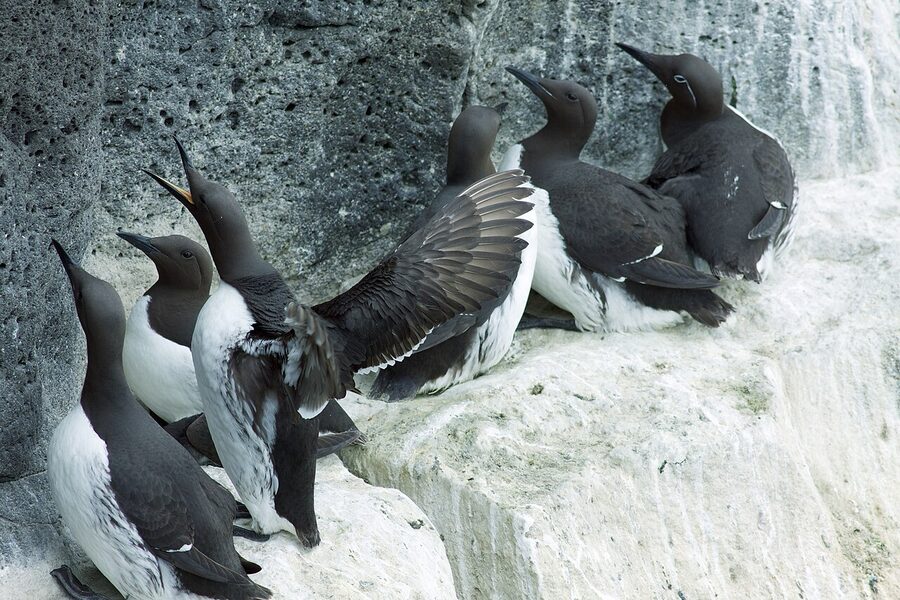
These are the species that build the seabird-cliff sound. Tens of thousands per cliff face, jostling on tiny ledges, calling constantly. Their eggs are pointed at one end so they roll in a circle if knocked, instead of off the cliff. Worth knowing that, then watching one almost roll off and reset, engineering you don’t see often.
Razorbill (álka · Alca torda)
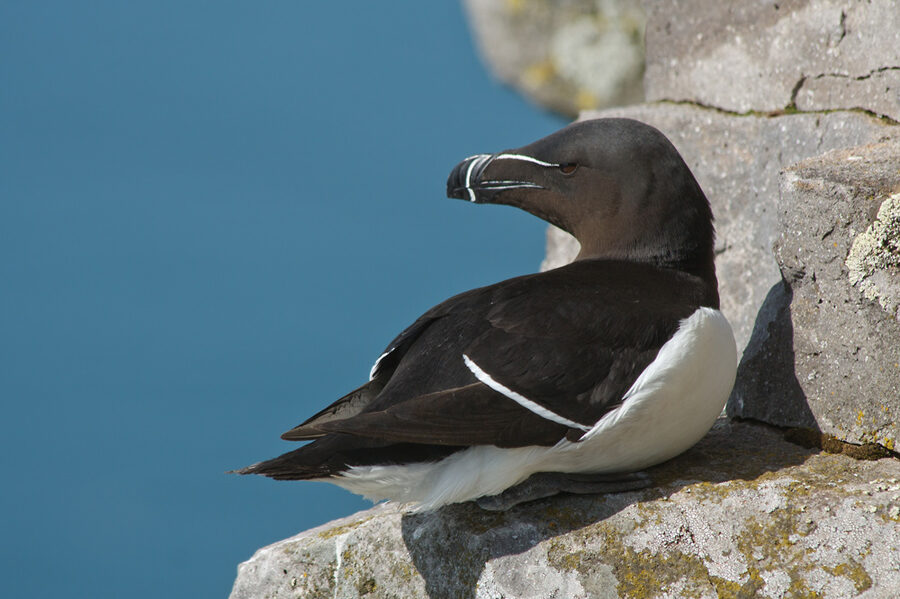
Black-legged kittiwake (rita · Rissa tridactyla)
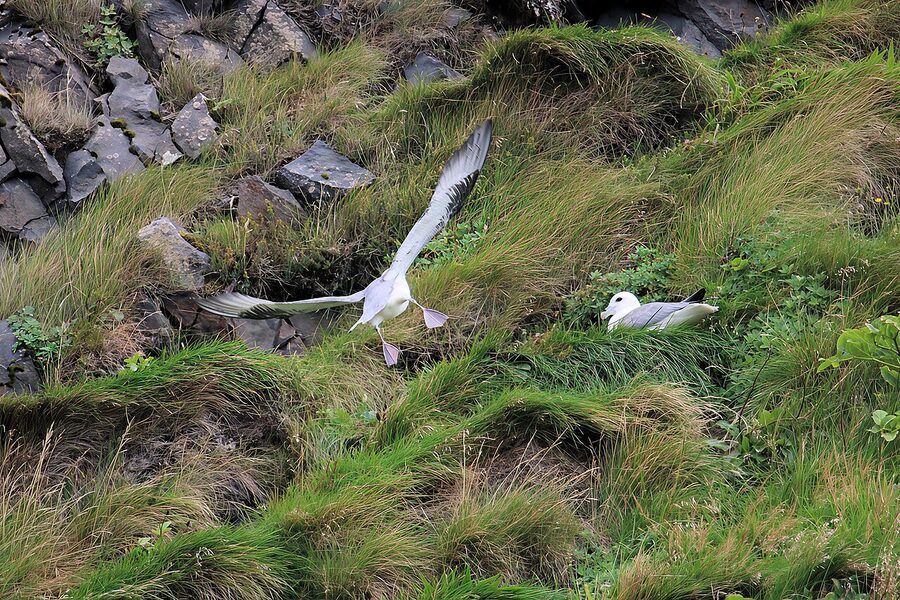
Northern fulmar (fýll · Fulmarus glacialis)
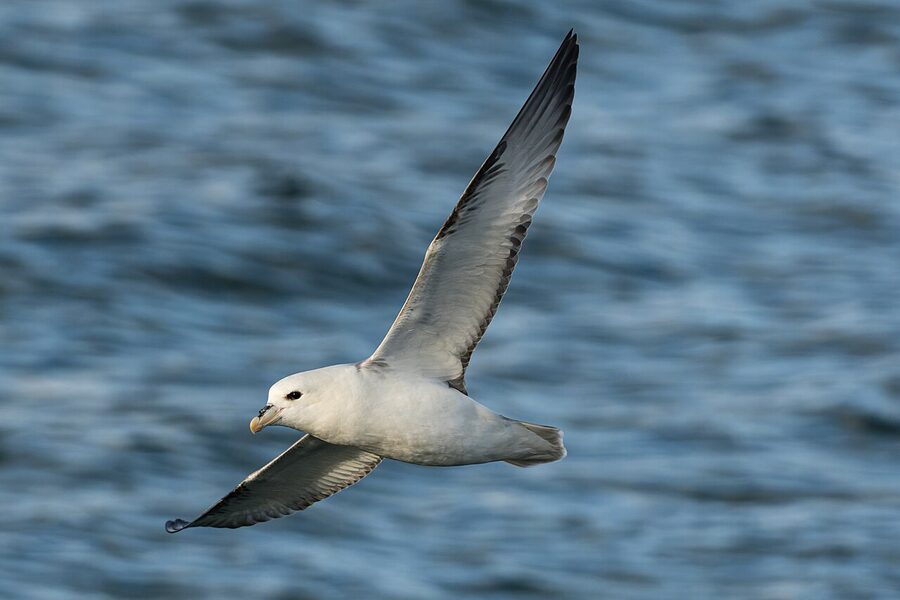
That last bit is not a tour anecdote, it’s a warning. The fulmar oil is real and it stinks for weeks. Stay on the path.
Northern gannet (súla · Morus bassanus)
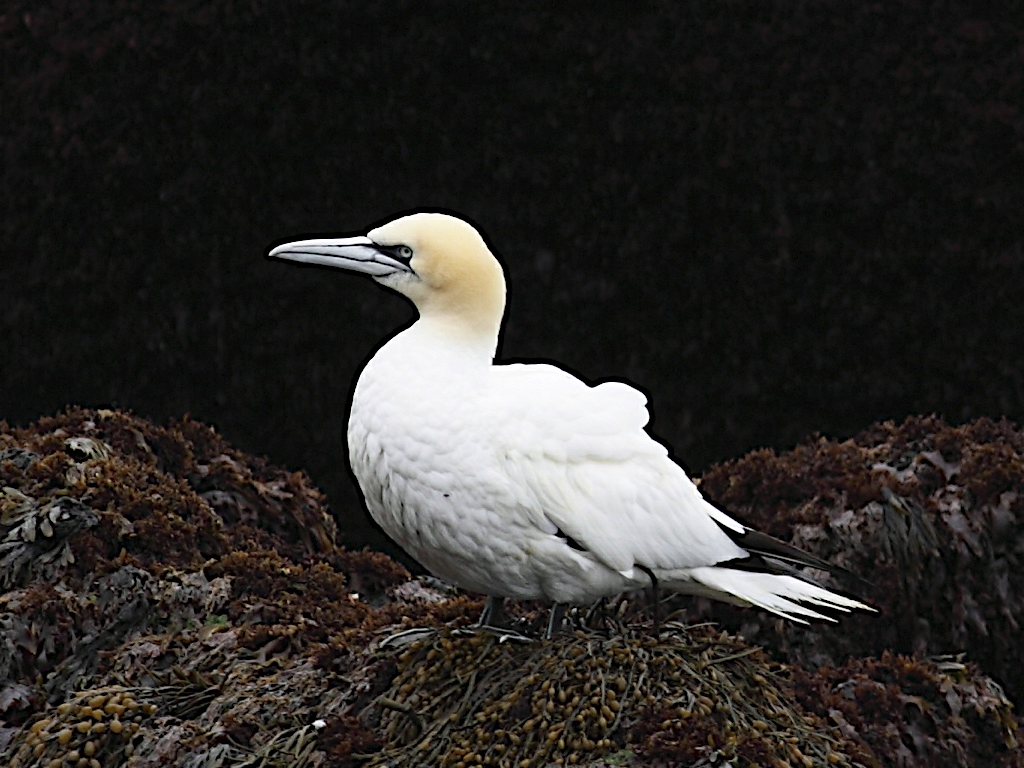
Gannets dive from up to 30 metres straight into the sea to catch fish. Air sacs in the skull absorb the impact. If you can find a fishing flock offshore, watching them work is one of the best things in seabird-watching anywhere.
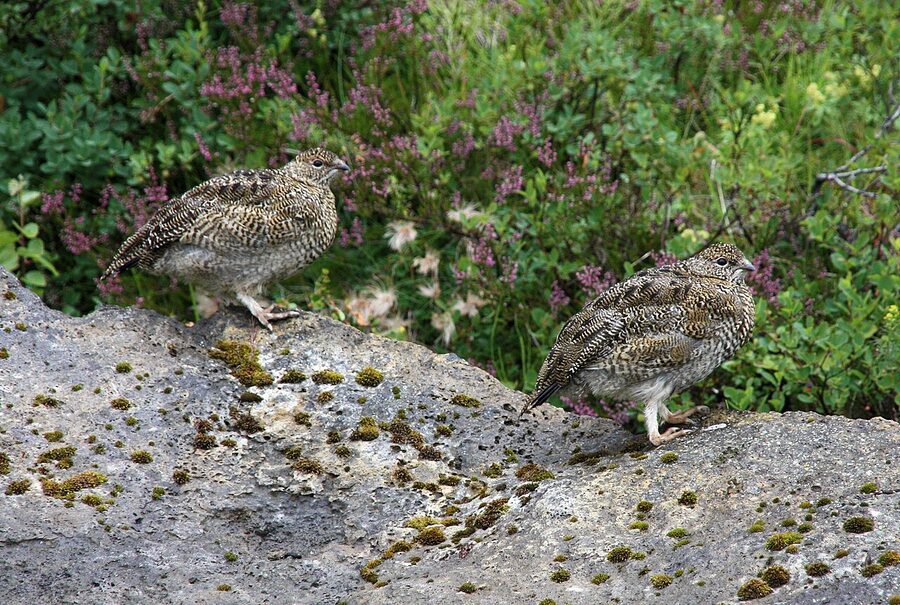
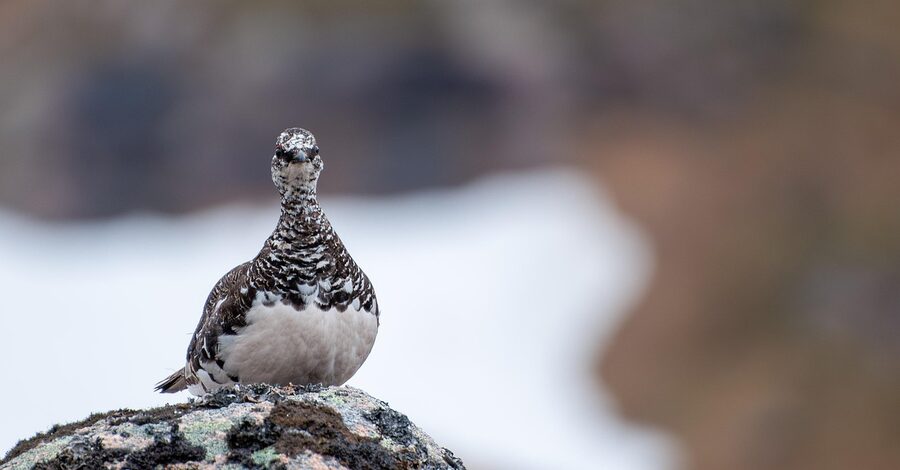
Rock ptarmigan (rjúpa · Lagopus muta islandorum)
Gyrfalcon (fálki · Falco rusticolus)
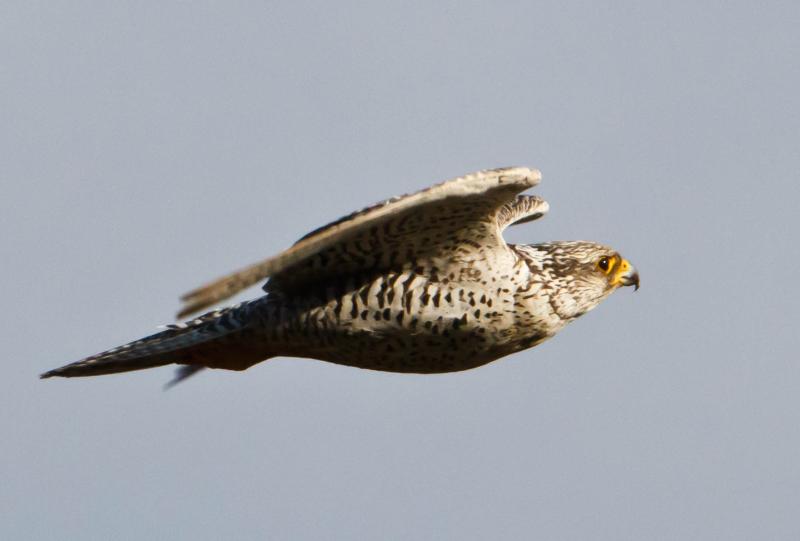
Don’t expect to see one. They’re large and pale and rare, and most people who claim to have spotted one in the wild saw a glaucous gull. Real gyrfalcon sightings on a tour are a stop-the-bus event. The Westfjords and the highlands around Mývatn are the best regions if you’re driving, keep an eye on cliffs and posts above ptarmigan country.
The cliffs and lagoons, where to actually go
Látrabjarg, the Westfjords
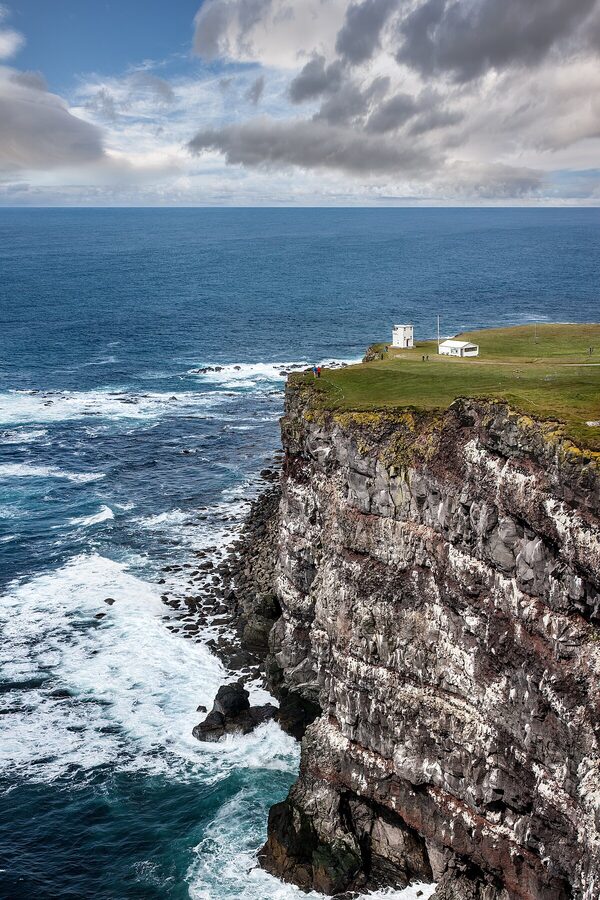
If you only do one bird location in Iceland, this is the contender. Látrabjarg is the westernmost point of Europe and the largest seabird cliff on the continent, 14 km long, up to 440 m high. Tens of millions of birds nest here in summer: about 40% of the global razorbill population, huge numbers of guillemots and Brünnich’s guillemots, fulmars, kittiwakes, and the puffins almost everyone comes to see.
The catch is the drive. Látrabjarg is at the end of an unpaved road in the southern Westfjords, about 6 to 7 hours from Reykjavik, with the last 60 km on gravel that’s slow. Most people stay overnight in Patreksfjörður or one of the small farms further down the peninsula. Don’t try to do it as a day trip from Reykjavik. You’ll spend the day in the car.
The good news for nervous birders: the western tip near the Bjargtangar lighthouse has the easiest puffin access in Iceland. The birds nest right beside the path. Lie flat on the grass, keep your weight back from the edge, and they’ll preen and yawn and wing-stretch about a metre from your face. That’s not exaggeration, they really are this close.
Borgarfjörður Eystri
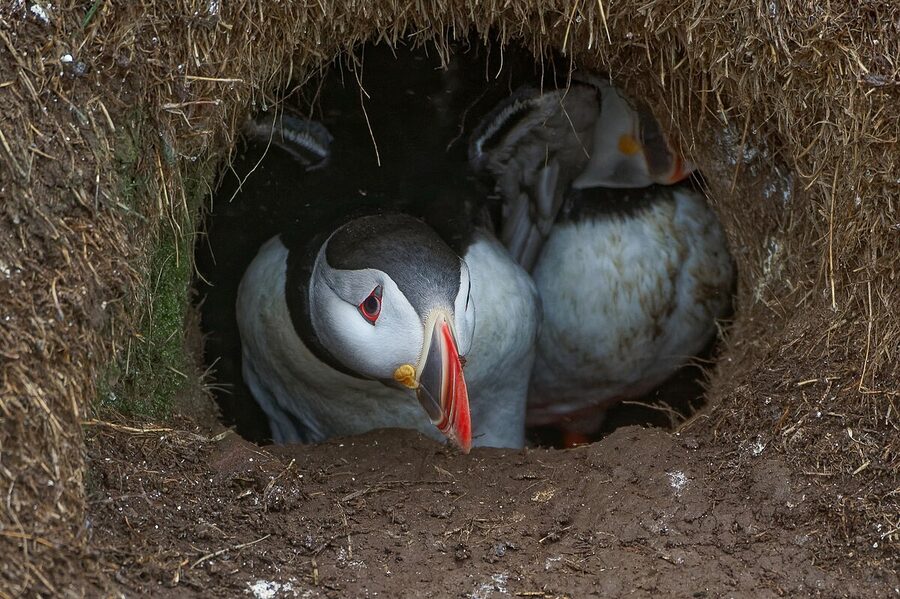
This is my favourite of the easy puffin spots, partly because the village of Bakkagerði (population 100ish) is one of the most beautiful in Iceland and partly because the Hafnarhólmi viewing platform is so well designed. You walk five minutes from the harbour, climb a wooden boardwalk, and you’re standing on a raised deck above a hillside of nesting puffins, kittiwakes, fulmars, and a small group of common eiders.
It’s open mid-April to mid-August. Free. There’s a small café (Hafnarhúsið) at the harbour. Borgarfjörður Eystri is a long detour from the Ring Road, about 70 km of mountain road off Egilsstaðir, but if you’re already in the East, it’s worth the drive.
Vestmannaeyjar (Westman Islands)
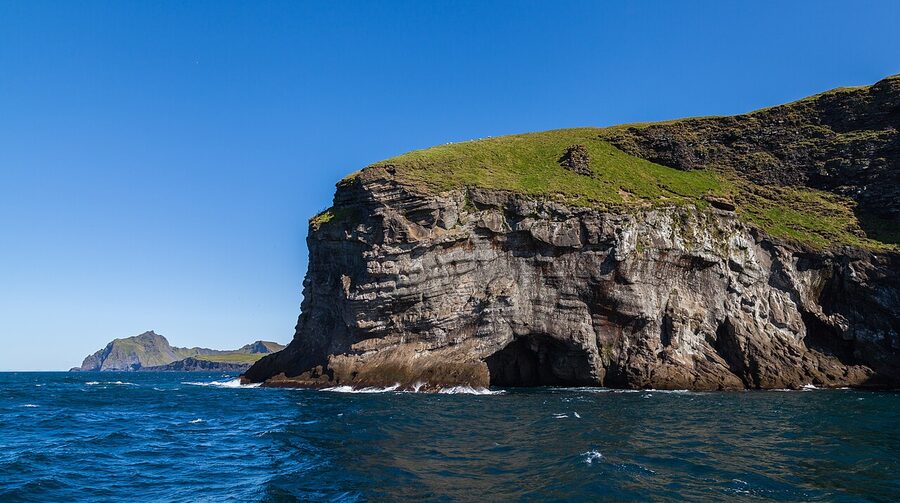
The other Westman Islands fact: this is where the puffling rescue tradition happens. In late August and September, when the chicks fledge from cliff burrows and head out to sea, many of them are confused by the town’s lights and crash-land in driveways instead of into the ocean. Heimaey’s children spend the late-summer evenings collecting them in cardboard boxes and releasing them off the cliffs the next morning. It’s not staged for tourists, it’s an actual local custom going back generations. If you visit in late August it’s worth asking around.
Dyrhólaey, South Coast
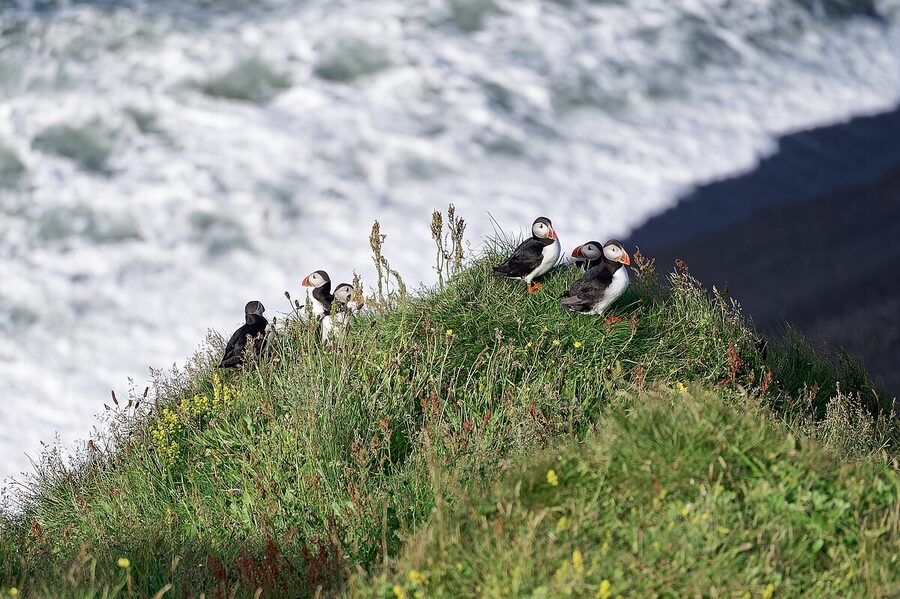
Note: parts of Dyrhólaey are closed during peak nesting, usually from mid-May to late June. The road up to the upper viewpoint and lighthouse can be closed entirely for a few weeks. Check umhverfisstofnun.is (Iceland’s environment agency) before you drive.
Lake Mývatn, the duck capital
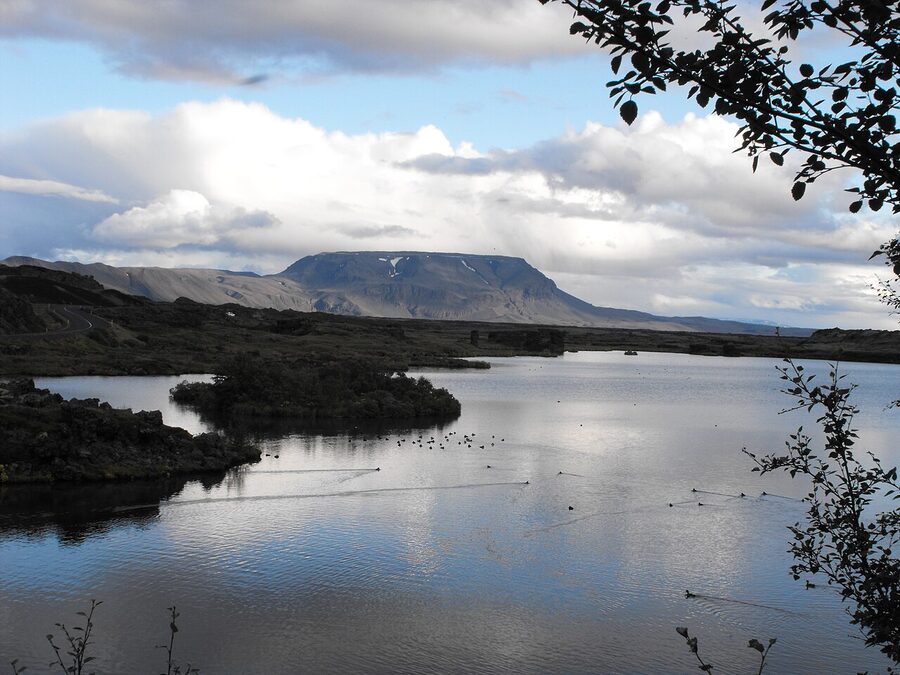
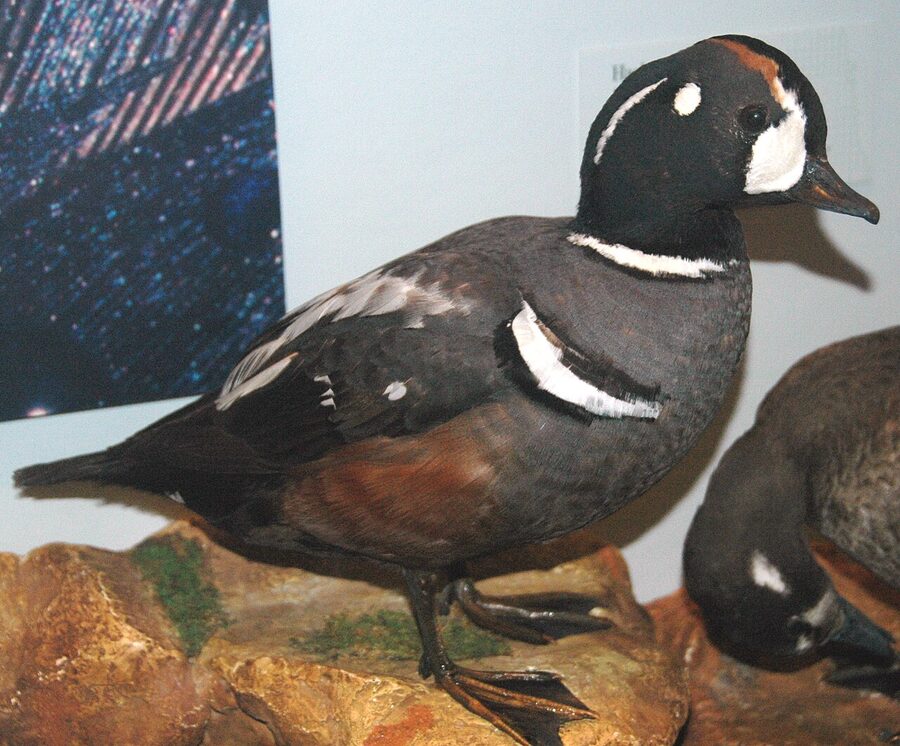
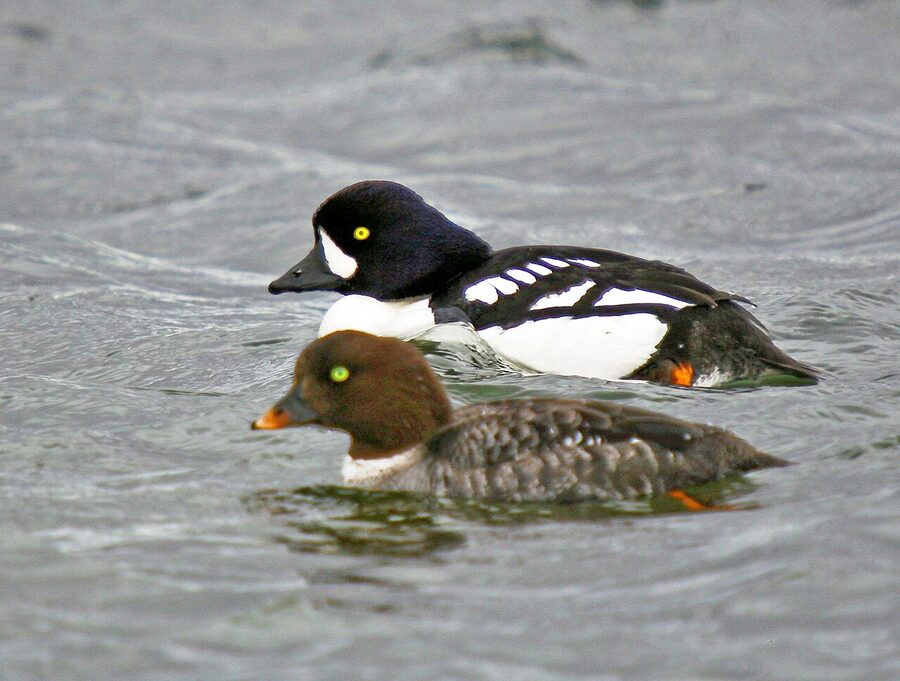
Stop at Sigurgeir’s Bird Museum on the lake’s western shore. It’s a small private museum, run by the family of an amateur ornithologist who died young, and it has every Icelandic bird species in display case form, useful for identification before you head out. There’s a hide on the lakeshore behind the museum.
Bring midge head-nets in June and July. The midges don’t bite but they fly into your nose and eyes. The locals are used to it. You won’t be.
Hornstrandir Nature Reserve
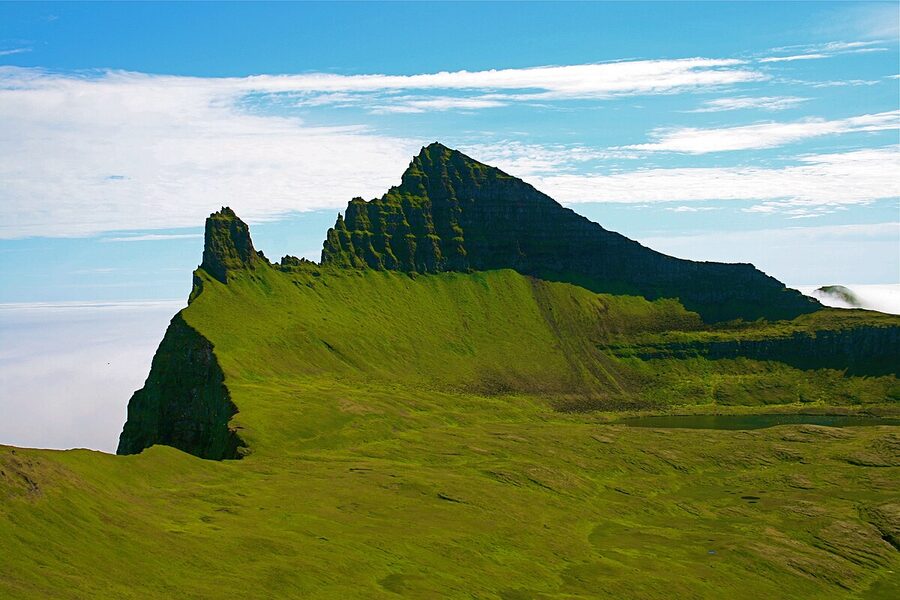
Hornstrandir is for serious birders willing to camp or stay in basic huts. The cliffs at Hornbjarg and Hælavíkurbjarg hold huge seabird colonies, the meadows are full of breeding waders, and the arctic fox population is the densest in the country. You’ll need to be self-sufficient, know how to navigate, carry your gear, and accept that the weather might pin you down for a day. It rewards you with bird density and a quietness you can’t get anywhere else in Iceland.
Snæfellsnes Peninsula
The “miniature Iceland” peninsula a couple of hours from Reykjavik. Useful because it gives you year-round birding plus several other classic Iceland landscapes in one drive. The lava cliffs at Arnarstapi and Hellnar have kittiwakes nesting among basalt columns. Rif hosts Iceland’s largest arctic tern colony (be ready). The fjords on the north side host glaucous gulls, eiders, harlequins, and occasional white-tailed eagles. Melrakkaey, an offshore reserve, has puffins.
Reykjanes Peninsula
Eldey, the gannet-stack offshore from Reykjanes, is visible from the lighthouse at Reykjanestá on a clear day, it looks like a small white-topped iceberg sitting in the sea. You’re looking at one of the world’s largest northern gannet colonies. You can’t land on Eldey but a few operators run boat tours close. If you’re combining birding with the Golden Circle, Reykjanes is the natural add-on either before flying out or on arrival.
Other lakes and lagoons
For waders and migrant shorebirds, these often beat the famous spots: Flói Nature Reserve (south coast, easy), Gauksmýri in north-west Iceland (small reclaimed wetland with a hide), Garðskagi already mentioned, and Jökulsárlón glacier lagoon for arctic tern dive-bombing on a colossal scale and great skua aerial mobbing.
Tour formats: what kind of birding trip to book
The half-day boat tour from Reykjavik
Two operators run these tours from Reykjavik’s Old Harbour:
- Mr. Puffin (puffintours.is), a small, focused operation using a covered boat that gets close enough to the cliff face that you don’t need a long lens. About 1.5 hours. Departures multiple times a day in season.
- Special Tours (Puffin Express), runs the larger fleet, often combining with whale-watching trips. About 1 hour. Slightly cheaper, slightly more crowded.
Either is a reasonable choice. Mr. Puffin is more focused on birding, Special Tours is more general. If you only have a half-day in Reykjavik and want to see puffins guaranteed, this is the trip. The boats don’t land, you stay aboard and watch from the water, but they get within 30 metres of the colonies.
The full-day Westman Islands trip
The classic day-tour option: Reykjavik → Landeyjahöfn ferry to Heimaey → walk the puffin viewpoints at Stórhöfði → ferry back. You’ll need a car or a tour bus to make the connection (the bus options usually cost around 18,000 to 22,000 ISK including the ferry). A full guided day tour with pickup is more like 30,000 ISK. Eyjatours on Heimaey runs a combined puffin-and-volcano tour that’s worth the money if you’ve made it to the island anyway.
Truth is, I think Vestmannaeyjar is wasted on a day trip. Stay overnight at Hótel Vestmannaeyjar or one of the guesthouses. The island has eruption history (1973), a puffling-rescue tradition, the new Eldheimar volcano museum, and views from Eldfell crater that on a clear evening you’ll think about for years.
The Westfjords birding road trip (3 to 5 days)
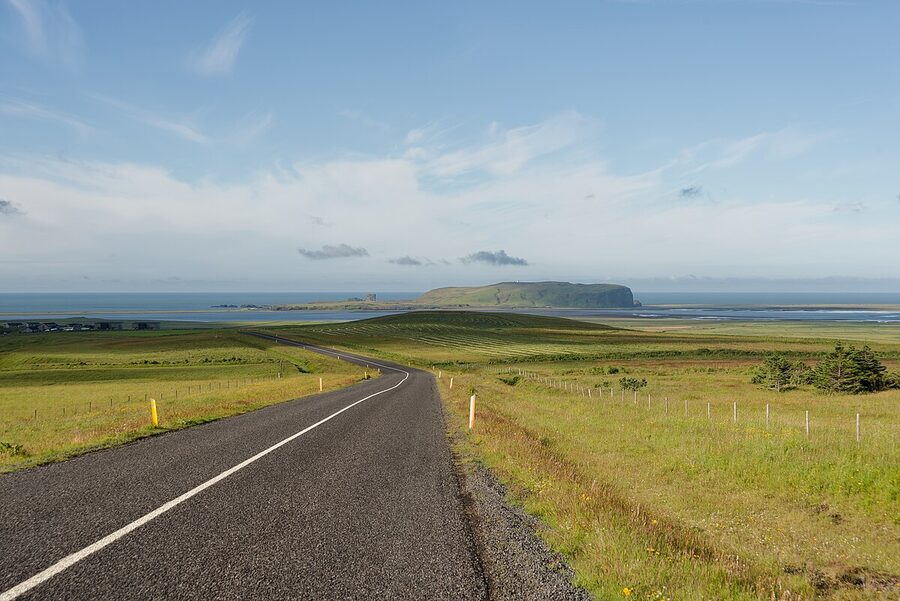
If birds are the main reason you’re coming, this is the trip. Drive west from Reykjavik, ferry from Stykkishólmur to Brjánslækur (saves a couple of hours of driving), spend two nights based around Patreksfjörður, do a full day at Látrabjarg, drive across to Ísafjörður (another 4 hours of fjord roads), and either continue exploring or fly back to Reykjavik on Air Iceland Connect.
Borea Adventures, Westfjords Adventures, and West Tours all run guided day trips to Látrabjarg from Patreksfjörður and Ísafjörður if you don’t want to drive the gravel roads yourself. I’d let someone else do the driving, the F-roads in the southern Westfjords are slow and have very limited services.
The dedicated multi-day birding tour
For lifers and target species, a 7-to-12-day birding tour run by an actual ornithologist is the right call. These tours typically loop the country, hit Mývatn, the Westfjords, and Snæfellsnes, and use small groups (10 to 14 people) with two guides. Operators worth knowing:
- Wild Latitudes, 12-day birds-and-natural-history tours from Reykjavik, with a Ring Road extension. Strong on geology and botany too. Around USD 6,500 main trip, plus 3,000 extension.
- Birding Ecotours, international birding specialist with annual Iceland departures.
- WINGS Birding Tours and Field Guides, both run 9-to-11-day Iceland trips with experienced bird leaders. Pricier but the guiding is excellent.
- Naturalist Journeys, Iceland birding-and-nature trips with a slower pace.
If your priority is full species coverage rather than landscape, one of these is your trip. They’ll get you Barrow’s goldeneye, harlequin duck, gyrfalcon, and white-tailed eagle if any tour can.
The local-guide private trip
A halfway option: hire a local guide for one or two days of targeted birding rather than a full-itinerary tour. Iceland ProTravel, Hidden Iceland, and many of the small Westfjords-based operators above will arrange this. Expect 80,000 to 120,000 ISK per day for a private guide with vehicle. Great if you have a target species in mind, less great if you want general “show me everything.”
Photography-focused tours
Bird photography requires a specific tour rhythm, slower stops, shooting from low angles, awareness of light. Iceland Aurora Photo Tours and a few of the small Westfjords specialists run these. For the broader photography tour landscape including aurora and ice cave specialists, the photography guide goes deeper.
What it costs
I’ll give real 2026 numbers from operator pages and personal experience.
- Half-day Reykjavik puffin boat: 7,000 to 9,000 ISK per adult.
- Full-day guided Vestmannaeyjar tour with pickup: 28,000 to 35,000 ISK.
- Full-day Westfjords-based bird tour (e.g., to Látrabjarg from Patreksfjörður): 18,000 to 30,000 ISK depending on operator and group size.
- Dyrhólaey puffin viewing: Free if you self-drive. Most South Coast guided day tours from Reykjavik (which include Dyrhólaey, Reynisfjara, and a couple of waterfalls) are 18,000 to 25,000 ISK.
- Multi-day organised birding tour (8 to 12 days): Typically USD 5,500 to 7,500 (around 760,000 to 1,050,000 ISK) plus international flights.
- Private guide day rate: 80,000 to 120,000 ISK per day for one guide and vehicle.
- Hornstrandir boat transfer (return): Around 18,000 to 25,000 ISK per person.
- Mývatn area bird hides: Mostly free; Sigurgeir’s Bird Museum is around 2,500 ISK.
Add accommodation: Iceland is expensive. Budget 25,000 to 45,000 ISK per night for a double room outside Reykjavik in summer.
What to bring
I’ll spare you the obvious “wear layers” advice, you’ve heard that. The bird-specific kit list is short:
- Binoculars. 8×42 or 10×42 is the standard. Don’t bring 12x or higher, your hands won’t be steady enough on a windy clifftop.
- A telephoto lens. Anything 300 mm or longer for puffins from boats; 400+ mm is better. The Reykjavik boat tours get close but not that close. If you’re at Borgarfjörður Eystri or Látrabjarg, a 70-200 is fine because the birds are close.
- A hat with a brim or a stick. See above re: arctic terns. Genuinely. Bring it.
- A midge head-net. For Mývatn, May through August. A few hundred krónur at any petrol station in the area.
- Waterproof everything. The Westfjords get a lot of mist and squall.
- The bird book. The standard reference is “Birds of Europe” (Svensson). For an Icelandic-specific PDF, BirdLife Iceland (Fuglavernd) publishes one in English at fuglavernd.is.
Etiquette and safety, the part that matters
The basic rules:
- Don’t approach burrows. Puffin burrows are about 1 to 2 metres long and the soil is fragile. Step on one and you’ve crushed an egg. The viewing platforms at Hafnarhólmi and Borgarfjörður Eystri exist for a reason.
- Don’t make puffins fly. They burn calories they need for fishing and feeding chicks. If a bird is staring at you tensely with its wings half-open, back away. You’re stressing it.
- Stay on paths. Iceland’s tundra is fragile and slow to recover. Off-path footprints last for years.
- Cliff edges are deadly. Especially at Látrabjarg. Crumbling overhangs are common. Lie flat and stay back from the lip, never lean over for a shot.
- Don’t pick up pufflings on Heimaey unless you’re staying. Returning them is part of the local tradition; don’t take them away with you.
- Drone use is heavily restricted over breeding colonies. Most are no-fly zones for nesting season. Check with the operator before you bring one.
Combining bird-watching with everything else
You can build a fully bird-focused trip, but most visitors who care about birds also want to see the country. Reasonable combinations:
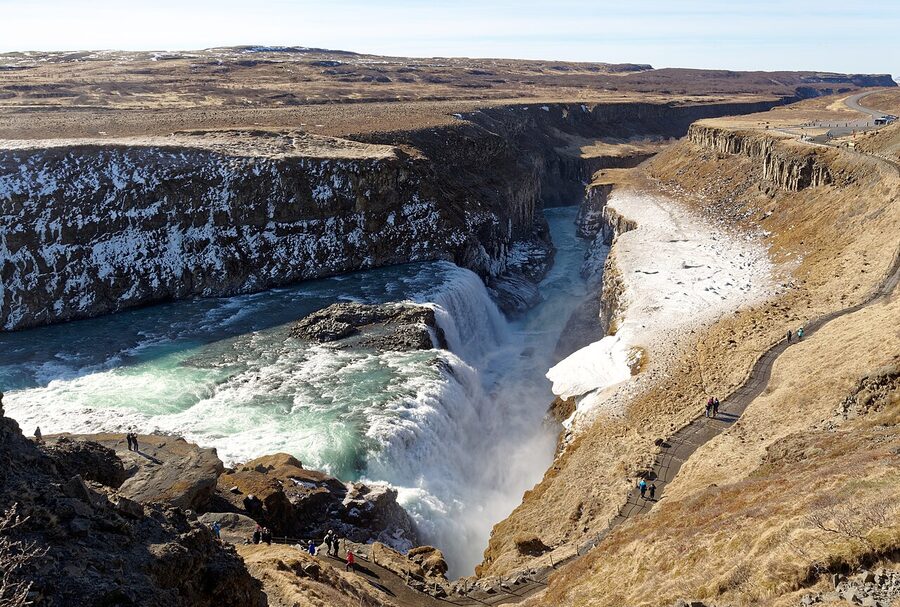
- Birds + Golden Circle: Easy. Þingvellir lake has great northern divers and harlequin ducks; Geysir and Gullfoss are basic Iceland tourism. The Golden Circle and glacier piece covers the Þingvellir-Geysir-Gullfoss route in detail.
- Birds + South Coast: Dyrhólaey for puffins, Jökulsárlón for arctic tern dive-bombing and great skua, Reynisdrangar for fulmars and gulls. Most South Coast tours pass these.
- Birds + Westman Islands: A natural pairing, the islands are both a bird spectacle and a volcano museum.
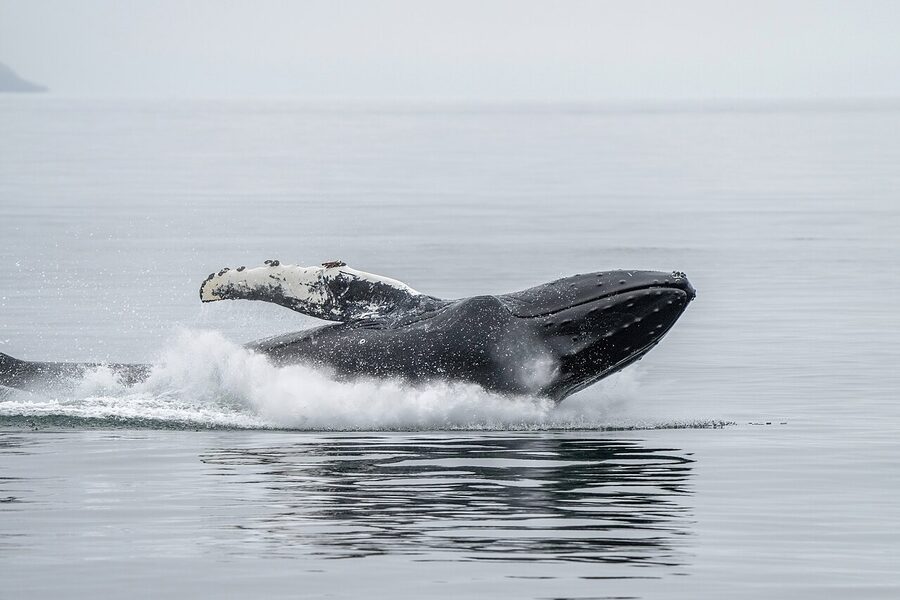
- Birds + Whale watching: Húsavík, Eyjafjörður, and Reykjavik harbour all run combined tours.
- Birds + Photography: Many photography tour operators include puffin time as a default, especially the South Coast itineraries in summer.
- Birds + Westfjords landscape: Dynjandi waterfall, Rauðasandur beach, and Hornstrandir are all in the same region as the major bird cliffs.
If a fully tailored trip suits you better than a fixed itinerary, the customised tour planning piece walks through how that works in practice.
Weather, light, and the stuff that goes wrong
Iceland’s weather changes by the hour. A clear morning at Látrabjarg can become horizontal sleet by lunchtime. The standard rule applies: if you’ve planned a bird day and the weather collapses, drive to the next region or stay in and try again tomorrow. The country is small and you can usually escape weather by moving 100 km.
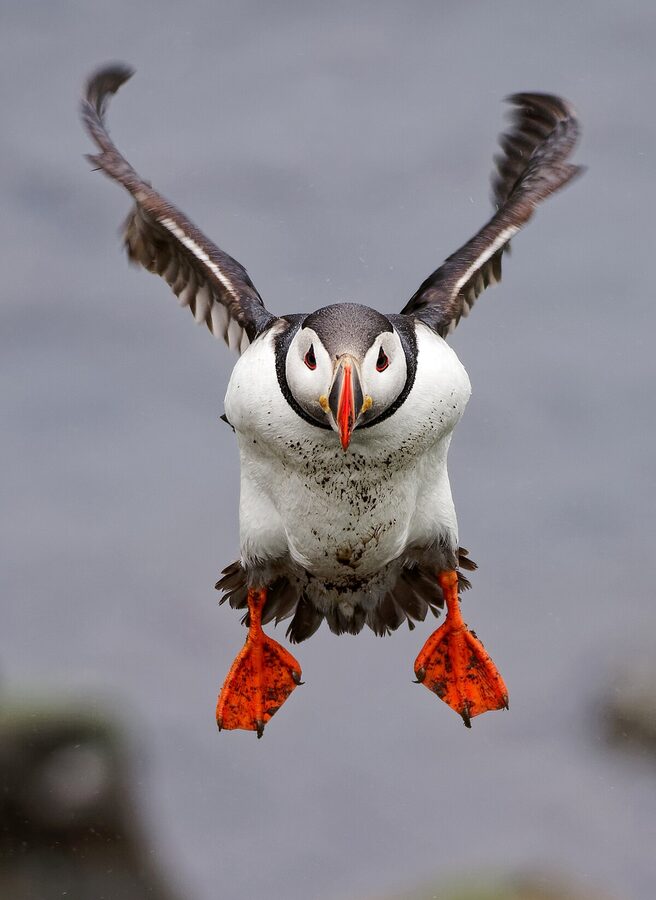
Wind matters more than rain for bird photography. Puffins fly into the wind on take-off and landing, so a mild headwind makes for the best flight shots, they hover in front of you with their wings straight out. A still day or a tailwind means birds streaking past too fast for the shutter.
The midnight sun shifts the day’s rhythm. Birds are active around the clock from late May to mid-July. The “evening light” extends from around 9pm to about 1am. On the Westfjords cliffs in late June, you can shoot at midnight with the sun grazing the colony at a low angle. It’s the best photographic light you’ll ever get and it lasts five hours.
For wind and storm forecasts, Icelandic Met Office at en.vedur.is is the only source worth using. The marine forecast page tells you whether the boat trips will sail.
The conservation context, quick
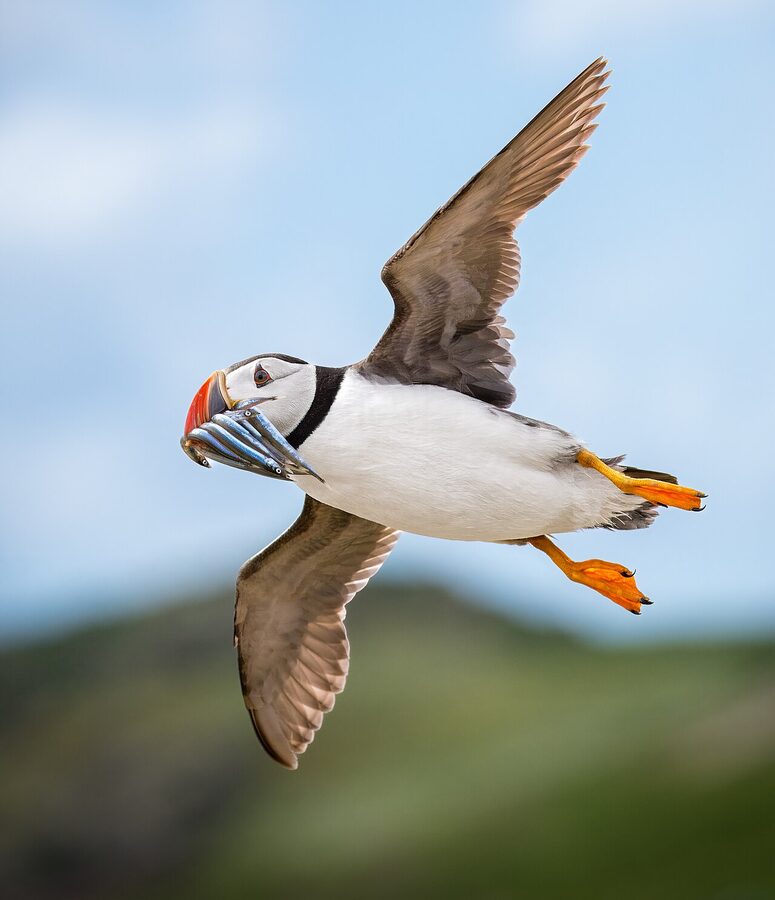
Iceland’s Atlantic puffin numbers have been falling since around 2005, with a sharp crash through the 2010s. The cause was a collapse in sand-eel availability around the southern colonies (warming sea temperatures pushed the sand eels north and east). Vestmannaeyjar was hit hardest. Numbers have stabilised somewhat but the population is still well below historic levels.
This matters for two reasons. First, traditional puffin hunting in places like Vestmannaeyjar and the Westman Islands has been heavily restricted since 2011, you’ll see puffin on a few restaurant menus in the islands but the harvest is small and tightly managed. Second, the conservation status of Atlantic puffin globally is now Vulnerable (IUCN Red List), and Iceland holds the majority of the breeding population. So the polite tourist instincts (don’t approach burrows, don’t make them fly) are not just etiquette. They’re meaningful.
BirdLife Iceland (Fuglavernd) is the local conservation NGO and a good source of recent data and bird-cliff status updates.
What I’d actually do
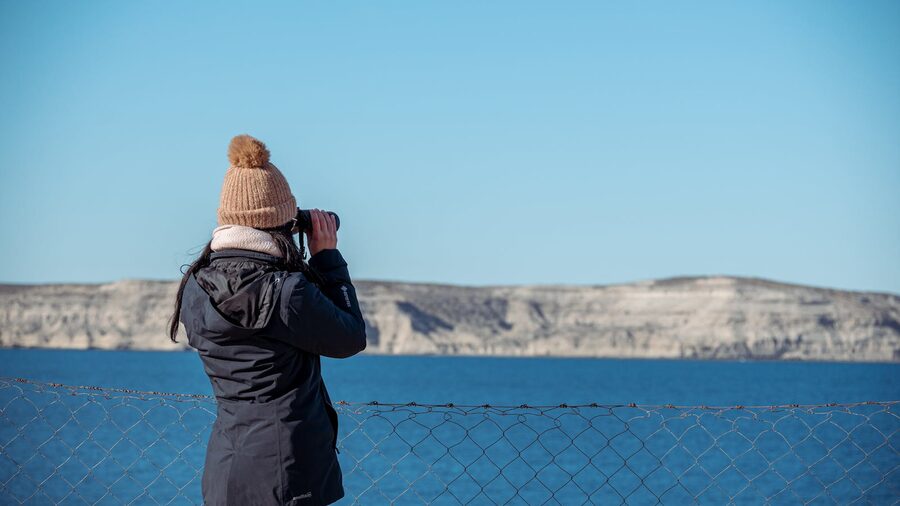
For a deeper trip, say you’ve got 10 days and you really care, fly into Reykjavik, ferry to the Westfjords, drive Látrabjarg to Ísafjörður over four or five days, fly back to Reykjavik, then loop east via the South Coast to Mývatn and Borgarfjörður Eystri. That covers everything except Hornstrandir.
For a half-day or a day before flying out, the Reykjavik puffin boat is the right tool. It’s the cheapest, easiest, and least committed bird tour you can do, and you’ll absolutely see the species you came for.
The thing I’d skip: any “winter puffin tour.” There are none. If a brochure offers one, that’s a sign to look elsewhere.
One last note on operators
Birding tours in Iceland tend to be small businesses, sometimes one-person outfits, sometimes a family. The good ones get booked out months in advance for the prime weeks. I’d book the boat tours within a week or two of your dates, they have lots of departures and rarely sell out. I’d book the multi-day birding tours and Hornstrandir boats 4 to 6 months ahead. And if you want a private guide for a day at Mývatn or Látrabjarg, contact the operator directly by email rather than going through a third-party booking platform, most of them respond within a day, and the small ones don’t always update Klook or Viator listings.
If you’re using Reykjavik as your base for short trips and want to add bird-watching as one of several day activities rather than the focus of the whole holiday, the city-based puffin and whale combos through the Old Harbour are the easiest fit. You can do one before lunch and be on the next thing by 1pm.
A short bird-by-region cheat sheet
If you’re already plotting a self-drive route and just want to know what’s where:
- Reykjavik / Reykjanes: half-day puffin boats, Garðskagi for migration, Hafnaberg cliff, gannets at Eldey, harlequins and divers in winter.
- Snæfellsnes: arctic terns at Rif, kittiwakes at Arnarstapi, puffins on Melrakkaey, white-tailed eagles in Berserkjahraun.
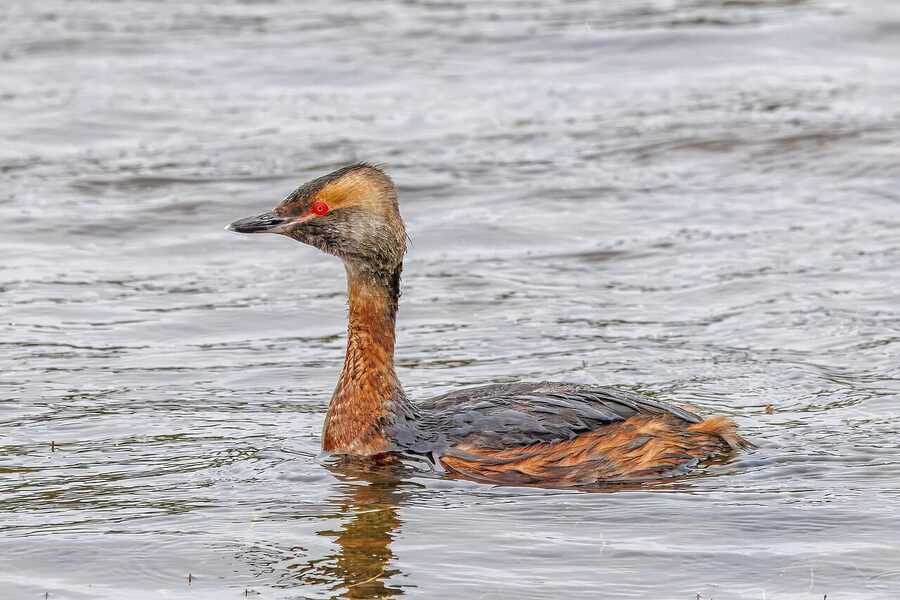
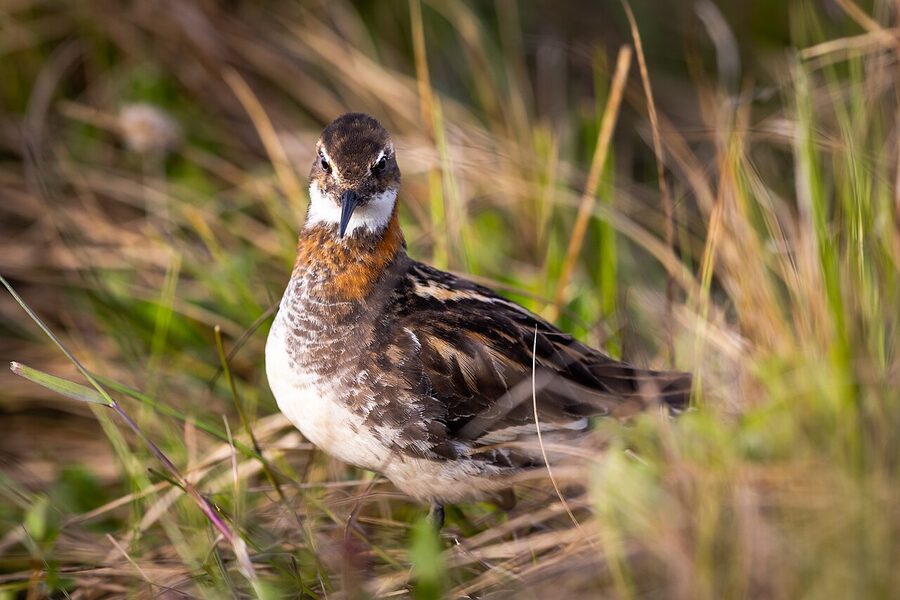
- Westfjords: Látrabjarg (everything), Hornstrandir (everything plus arctic fox), waders at Ónundarfjörður mudflats, Flatey island (puffin, phalarope, all the eiders).
- North (Akureyri / Mývatn): the duck mecca, Sigurgeir’s museum, harlequins on Laxá river.
- East (Borgarfjörður Eystri): the easy puffin platform, kittiwakes, eiders.
- South Coast: Dyrhólaey puffins, Reynisdrangar fulmars, Jökulsárlón arctic terns and skuas.
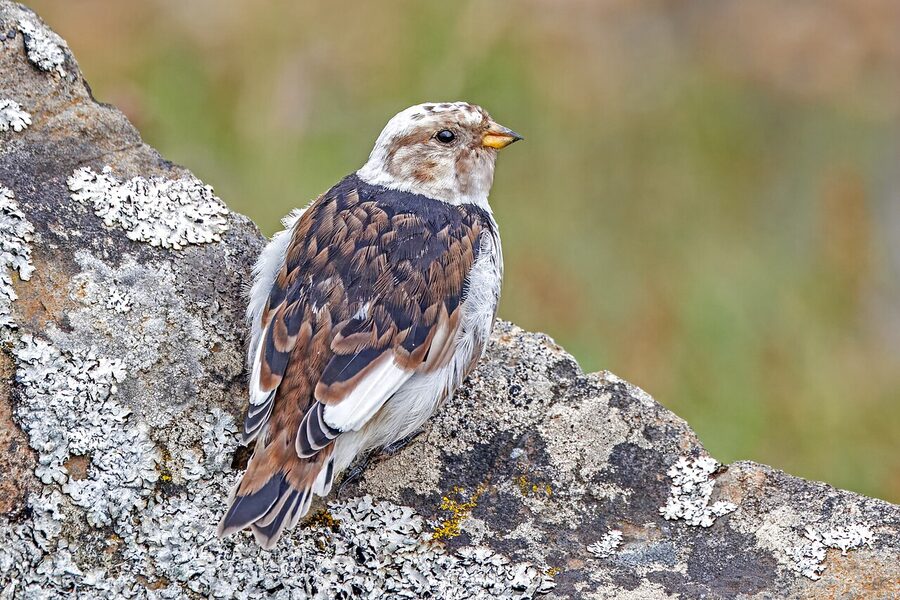
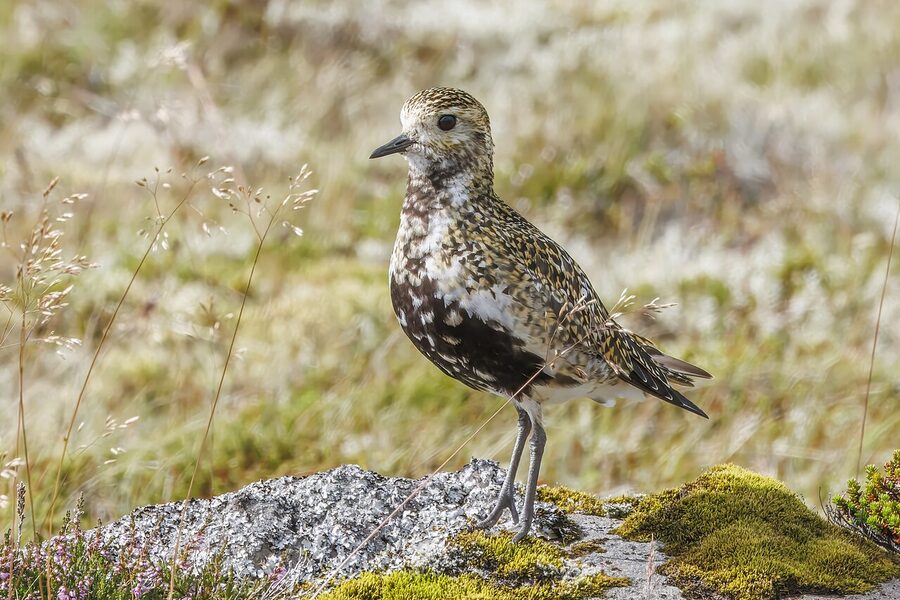
- Highland / interior: ptarmigan and gyrfalcon in winter, snow bunting in summer, occasional snowy owl.
One more pointer worth saying out loud
Bird tours are one of the categories where if you can move your trip dates by even a few weeks, mid-June will pay you back hundreds of times more than late August. I’ve taken visiting friends out in early August who saw a quarter of what they’d have seen in June. The cliffs were already emptying. The light was gentler but the birds were gone. You don’t have control over your work calendar, but if you do, May 25 through July 5 is the window. Inside it, almost any tour you book will deliver. Outside it, most of the seabird itineraries become “see one or two cliffs and a lot of empty grass.”
Þetta reddast, it’ll work out, applies to weather and ferries and most things in Iceland. It does not apply to puffin season. Outside of that window, the birds simply aren’t here.
If you’re in the planning stage and want help building a trip around the bird calendar without being locked into a fixed group itinerary, our team puts together private bird-focused road trips with operators we’ve used for years, get in touch through the customised tours page and we’ll pick a route that matches what you actually want to see, not just what’s on a brochure. Or if you’re somewhere in the planning phase between birding and “just do everything,” the rest of the tour guides section covers the other categories.