A lava tunnel feels like walking inside a story. The Raufarhólshellir lava tube was carved by volcanic eruption power more than 5,000 years ago, and it’s one of Iceland’s longest, most proven-for-visitors tunnels—open all year. You’ll follow the footbridge route while your guide explains what you’re seeing, from lava layers to unusual shapes that can look almost new.
My favorite parts were the guide’s mix of geology and humor (I loved hearing stories told by guides like Alex and Dmitri), and the sudden turn to pure darkness when the lights go out. The one drawback to plan for: the cave floor and route can be rough and slick, so you need steady footing, especially in winter when ice appears.
In This Review
- Key things to know before you go
- What You’re Really Walking Through Underground
- Entering The Lava Tube: Helmets, Headlamps, and Crampons
- The 1-Hour Route: From Footbridge Steps to Lights-Off Black
- Why the Guide Makes the Difference (Alex, Dmitri, and Others)
- Terrain Reality Check: Rough, Uneven, and Sometimes Icy
- Price and Value: Is $73 Worth It?
- Photography, Timing, and the Best Way to Enjoy It
- Who Should Book This Lava Tunnel Tour?
- Should You Book Raufarhólshellir?
- FAQ
- How long is the Raufarhólshellir Lava Tunnel tour?
- Is the tour offered in English?
- What gear is included?
- Does the tour include a total darkness moment?
- Where do I meet the group?
- Is the tour available year-round?
- Is there free cancellation?
- Can I reserve and pay later?
- What kind of shoes should I wear?
Key things to know before you go
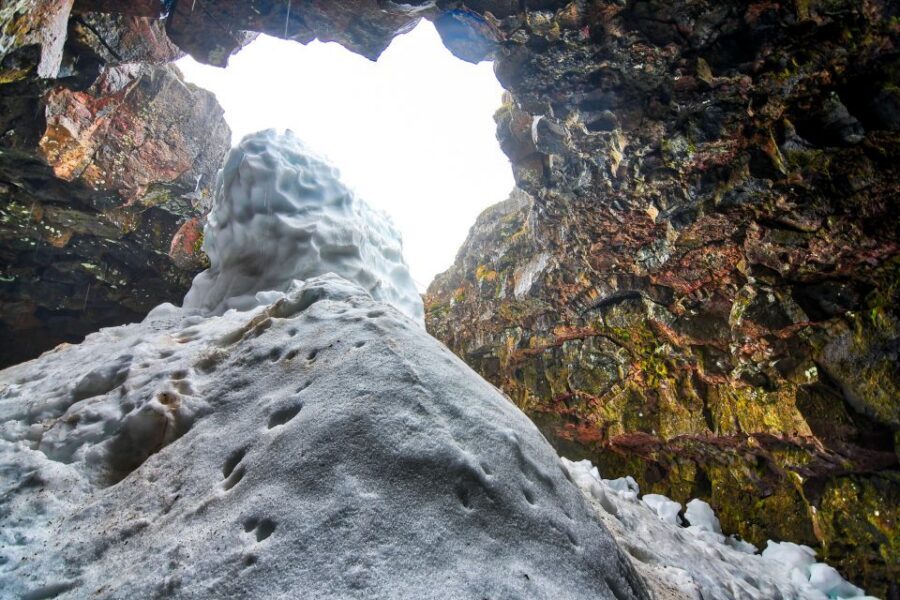
- Long, classic lava tube: Raufarhólshellir is known for being among Iceland’s longer lava tunnels.
- Real gear for real terrain: helmets and headlamps are provided, and crampons come in winter.
- Guide-led science and stories: you get geology and cave history along the route.
- A short stretch of total darkness: lights are turned off so you feel the cave go black.
- Time for photos: you walk with the group, then you get some room to move at your own pace.
What You’re Really Walking Through Underground
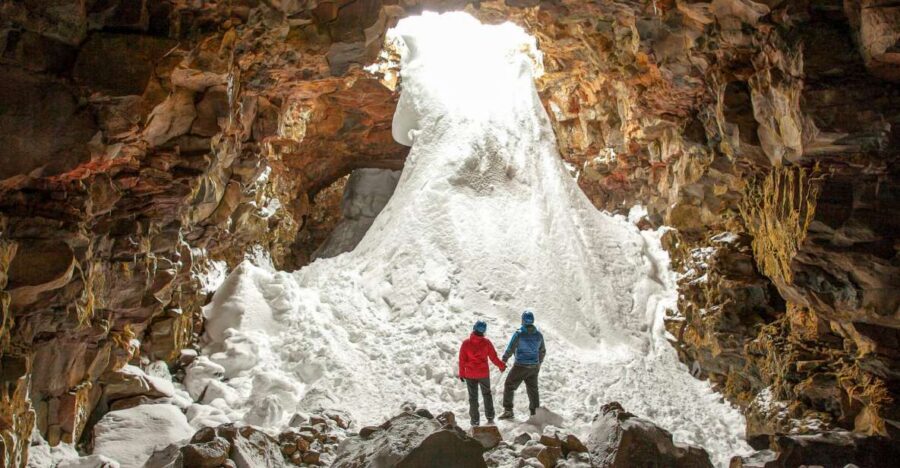
This tour is simple: you enter the lava tunnel created by a volcanic eruption long ago, then you walk it with a guide. Lava tubes form when molten lava flows through a landscape, the surface cools, and the inside keeps moving. What’s left behind is a hollow tunnel that preserves shapes, textures, and layers from the flow.
Raufarhólshellir stands out in the Iceland lineup because it’s accessible year-round and built for visitors. You’re not climbing ladders or doing technical caving. Instead, you’re using a guided route—mostly on an established path—so you can focus on what matters: the weird beauty of the rock and how it formed.
I also like that the experience is short. You get around an hour of activity, which makes it a strong pick when Iceland weather is doing its thing and you don’t want a half-day commitment.
You can also read our reviews of more tours and experiences in Hveragerdi.
Entering The Lava Tube: Helmets, Headlamps, and Crampons
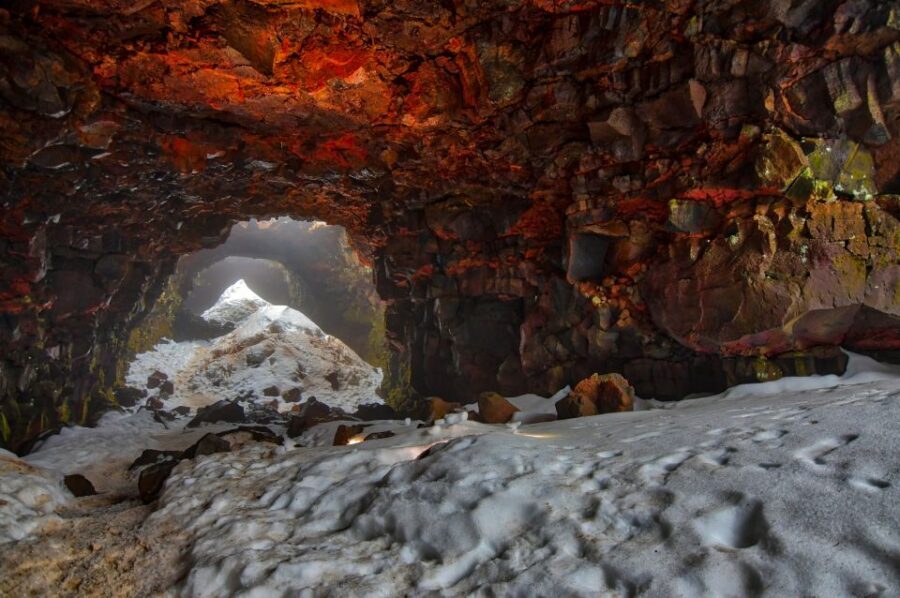
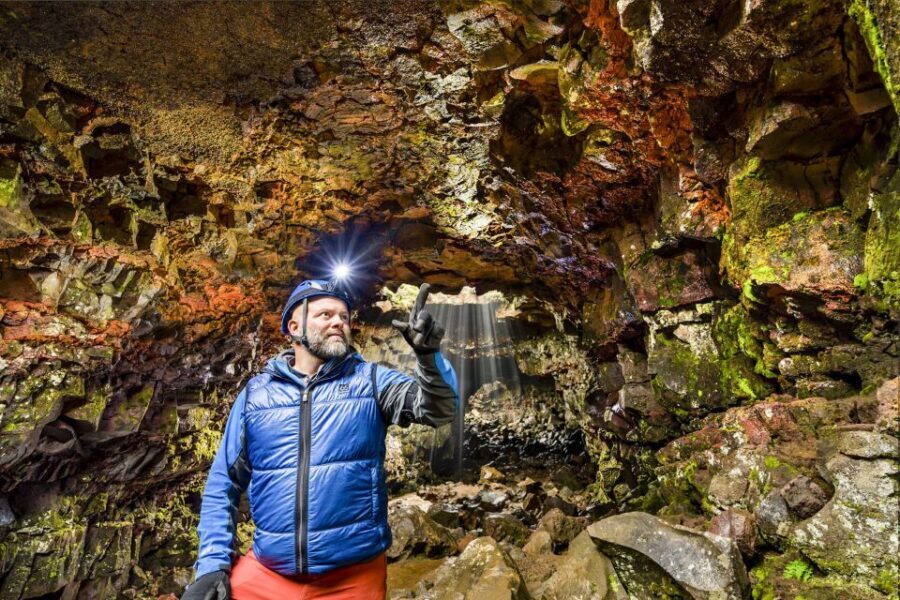
Before you step in, they hand you the essentials. You’ll get a helmet and a headlamp, which is the smartest way to move in a cave—hands free, light where you’re looking. In winter, crampons are included, which matters because the tunnel can have ice and slick patches.
Practical tip: treat this like a walking tour, not a fashion shoot. Bring comfortable shoes with good grip. You’ll be on uneven ground, and even inside a maintained tunnel, your footing needs respect.
The good news is that you’re not guessing. The tour provides the gear you need to see and to move. And because the headlamp is on your helmet, you get a more natural sense of depth than if you were holding a flashlight.
The 1-Hour Route: From Footbridge Steps to Lights-Off Black
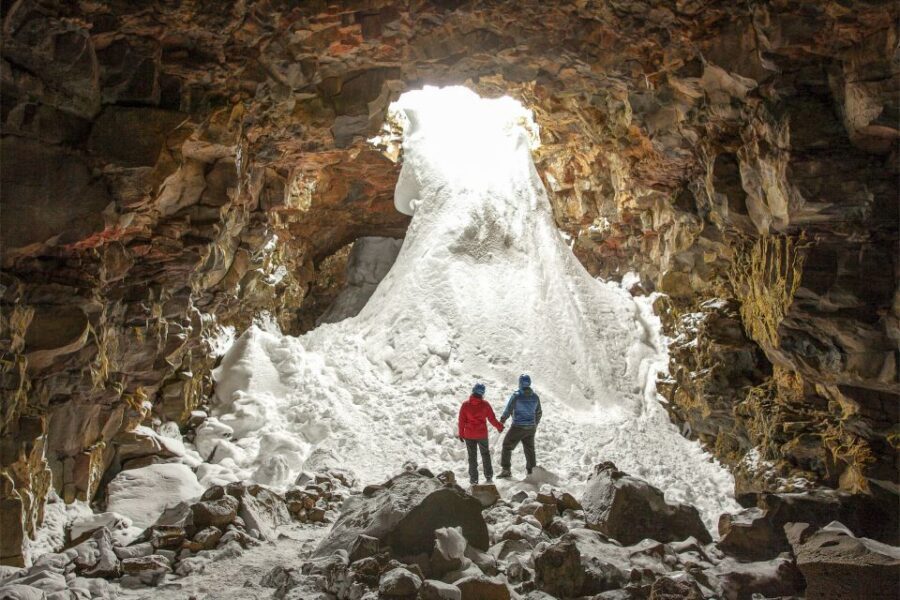
The tour starts at Raufarhólshellir lava tunnel (Þorlákshafnarvegur). From there, you head into the tunnel and follow the footbridge and guide-led route.
Here’s the rhythm you can expect:
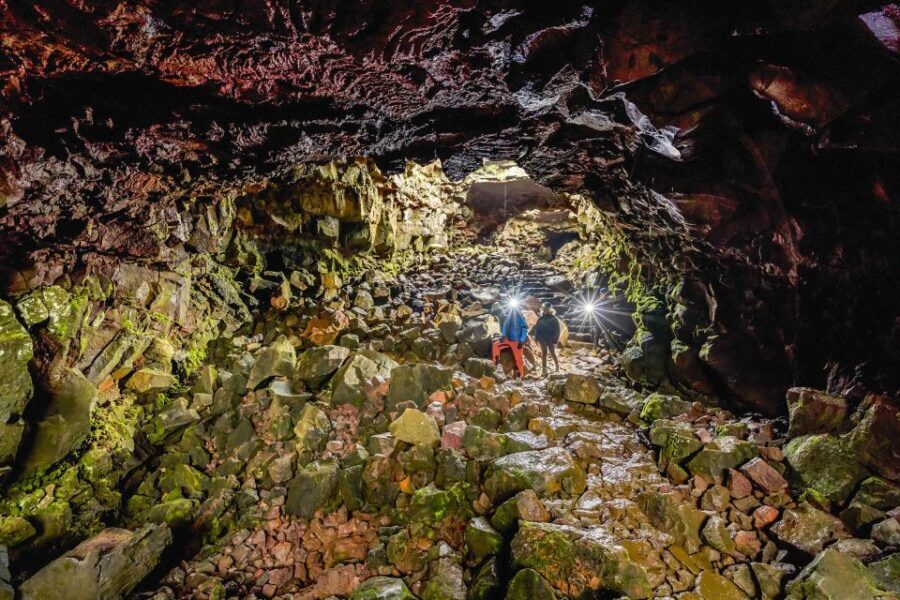
- You walk in with the group while your guide points out formations and explains how the tunnel developed.
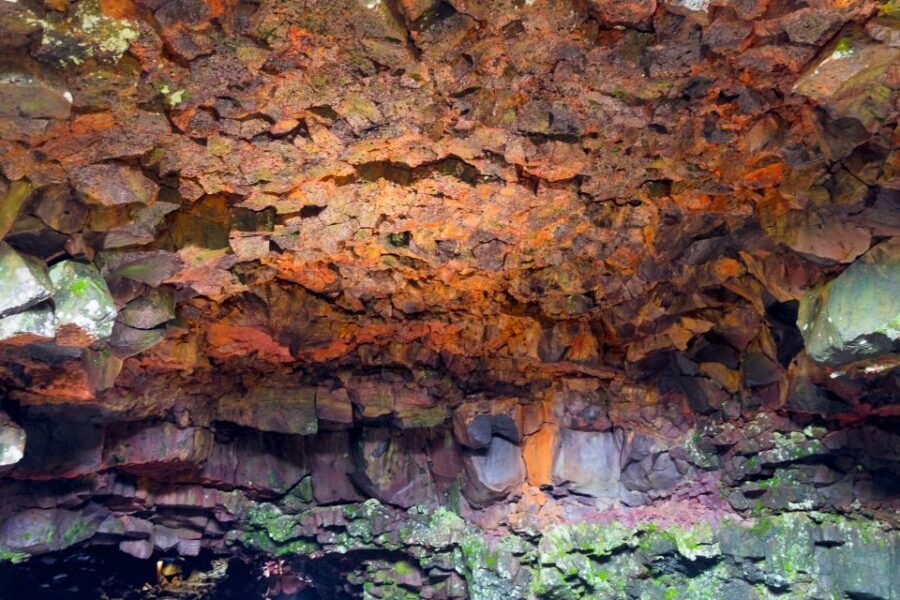
- You keep moving through stretches where colors shift across the rock—think tones created by minerals and cooling history.
- You hear stories along the way, including fun Hollywood-related cave tales.
- You reach the part where darkness takes over, and the staff turns off the lights so you experience what the cave looks like without illumination.
- Then you have some time to move at your own pace for photos and lingering looks.
One review tip that’s worth taking seriously: plan on about 20 minutes of uneven walking to reach the far end on the normal route. That doesn’t mean it’s extreme, but it does mean you’ll want sturdy shoes and a calm pace.
The lights-off moment is the part many people remember. It’s not a stage trick. It’s a fast lesson in how a cave changes you—your eyes adjust, your ears pick up small sounds, and you realize how dark “dark” really is.
Why the Guide Makes the Difference (Alex, Dmitri, and Others)
A lava tube is geology, but it’s also theater—just with rock instead of actors. What turns this from a quick walk into a real experience is the guide narration.
In particular, guides like Alex and Dmitri show up in the feedback as standouts for two things: clarity and humor. Their job isn’t just listing facts; it’s helping you connect what you see to how lava tubes form.
You’ll hear explanations of:
- how the lava tunnel formed during/after eruption activity
- why the tunnel walls look the way they do
- what marks you can notice around water lines and mineral changes
- and the broader cave history that gives context to the shapes
And yes, the comedy helps. Lots of people mention deadpan jokes, laughs, and a guide who keeps the group engaged without turning it into a lecture. That matters because caves naturally slow you down. A good guide keeps the time moving while still letting you stop and look.
Also, the tour format gives you time at the end. Some people note that after walking in together, there’s a chance to wander back or explore at your own pace so you can take photos without feeling rushed.
Terrain Reality Check: Rough, Uneven, and Sometimes Icy
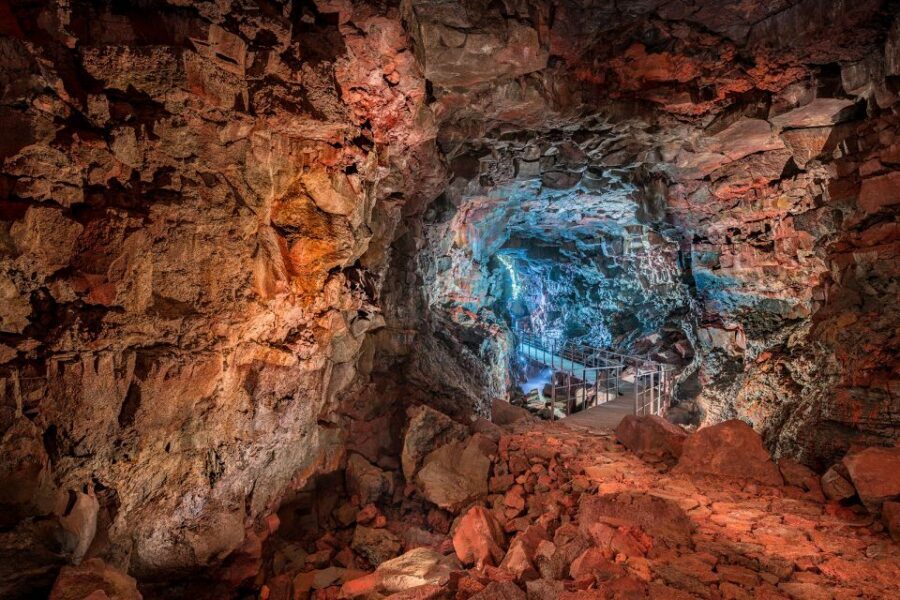
If you only read one practical line, make it this: the tunnel is a natural place, so the terrain can be rough and hard to maneuver. The route uses a footbridge, but you’re still walking on cave floors that don’t behave like a sidewalk.
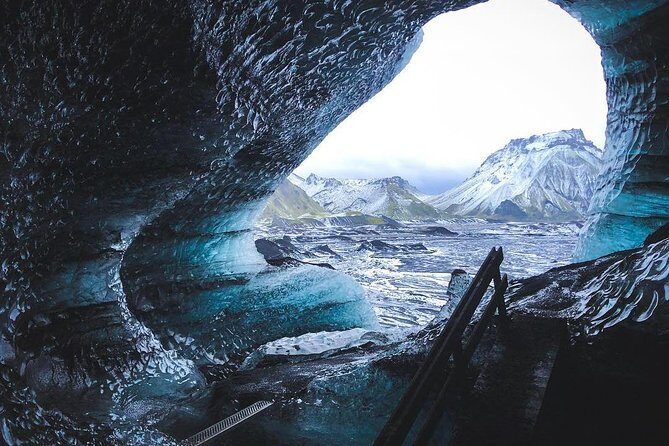
In winter, ice can show up. You may see ice accumulation or even icicle-like formations in the cave interior. That’s beautiful, but it also changes how you walk. That’s why the included crampons in winter are a big deal.
What to do:
- Wear shoes with grip you trust.
- Go slow when the floor looks slick.
- Don’t rush to catch up with the person ahead of you.
One more reality check: the cave can feel crowded at times because it’s a confined space. The route is set for walking, but there’s limited room to spread out. If you hate close quarters, keep your expectations grounded and plan to take photos when the group pauses.



Price and Value: Is $73 Worth It?
At about $73 per person for a 1-hour guided tour, you’re paying for three things you don’t want to handle alone: guided geology, provided safety gear, and an experience that includes the lights-off darkness moment.
Here’s how the value adds up:
- Included gear: helmet and headlamp are included, and crampons are included in winter. That reduces the hassle and cost of preparing on your own.
- A guide-led route: the narration helps you see more than “cool rocks.” You learn what you’re looking at and why it exists.
- A rare feeling: pitch-black darkness inside a lava tube is not something you can fake easily. It’s memorable and genuinely different from a typical Iceland sight.
It’s not a long tour, and a few people wish it lasted longer. Still, for many itineraries, this length is a strength. You can fit it near other stops in the Southern Region without feeling like you’ve spent your whole day underground.
If you want max time inside a cave, consider balancing this with other longer adventure options on the same day. But if you want a compact, high-impact geology moment, this one’s a strong deal.
Photography, Timing, and the Best Way to Enjoy It
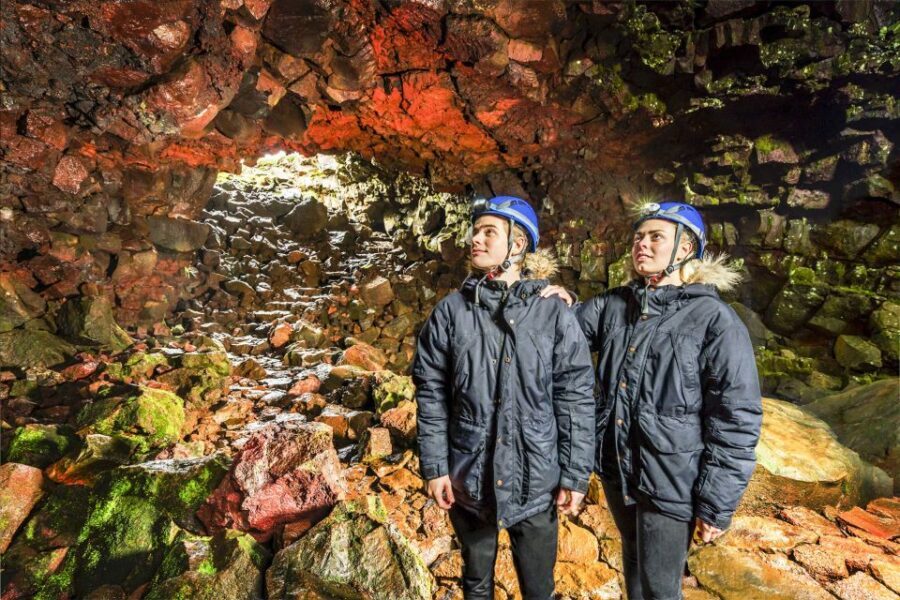
The tour isn’t just about moving forward—it’s about noticing details. People often come away with photos that show the rock colors, formations, and the way the cave interior changes as you walk deeper.
To get the best results:
- Pay attention while the guide explains first, then photograph what you just learned to recognize.
- Keep your headlamp pointed down when walking; save brighter angles for stops.
- Use the end portion of the walk for slower looking and pictures at your own pace.
Timing-wise, the tour is about an hour. That’s enough time for a full arc: entry, explanations, the lights-off moment, and a chance to linger. If you show up ready to move calmly and safely, you’ll get more enjoyment out of the limited time.
Who Should Book This Lava Tunnel Tour?
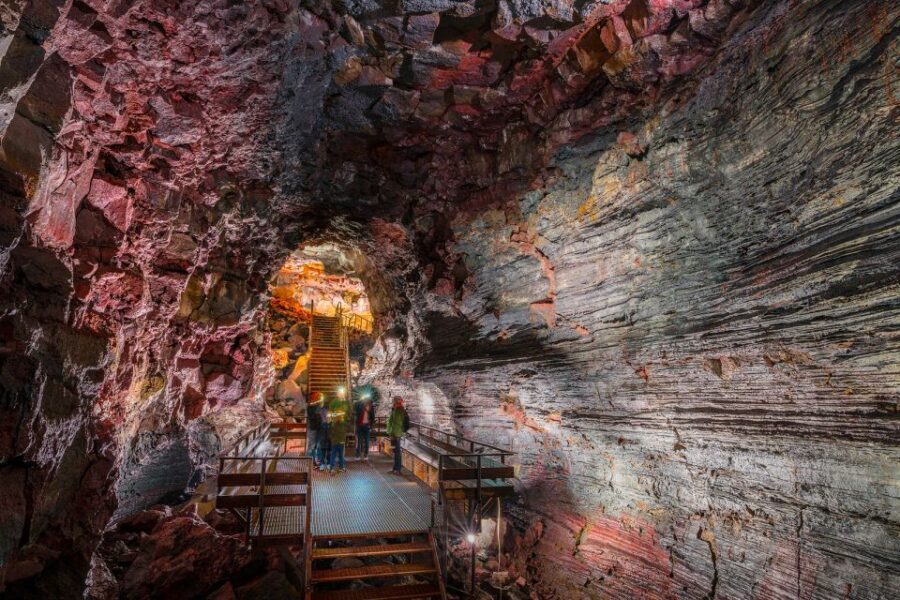
This tour is a great fit if you want:
- a short, high-interest underground walk
- geology explained in a way that feels fun
- the dramatic moment of darkness when lights turn off
- a guided experience that stays manageable even in winter
You should also feel good if you like stories. The narration includes entertaining cave history, including references to Hollywood adventures.
You might want to think twice if:
- you’re uncomfortable with uneven, possibly icy footing
- you dislike tight spaces where a group can feel close together
- you want a longer, slower exploration with more time to sit and stare
Should You Book Raufarhólshellir?
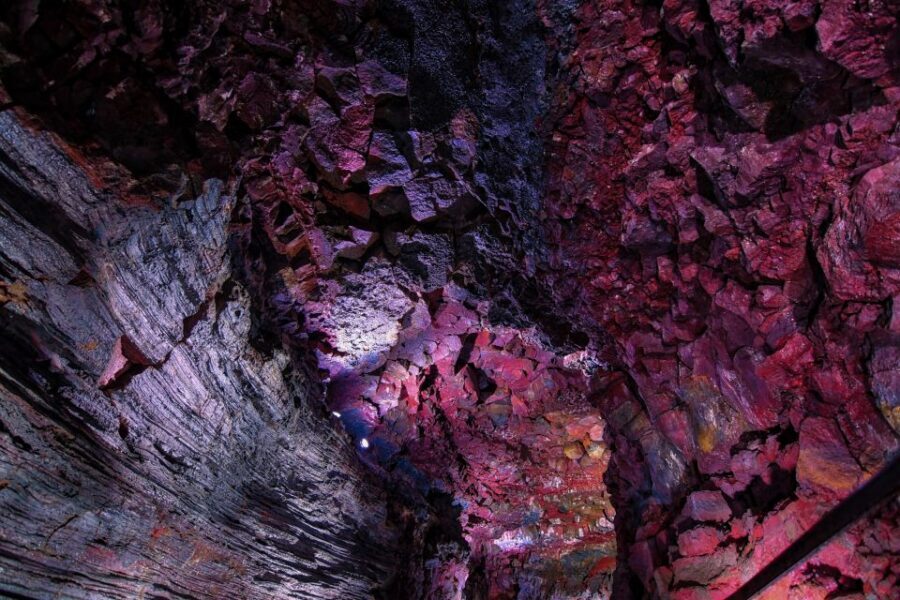
I’d book it if you want a dependable, all-year Iceland cave experience with the right balance of science, humor, and a truly black moment underground. The price makes sense when you factor in the included helmet/headlamp and winter crampons, plus the guided explanations that help the tunnel click in your mind.
If you go in with sturdy shoes and a realistic attitude about caves being rough and dark, you’ll get exactly what this tour promises: about an hour of practical adventure inside one of Iceland’s famous lava tunnels.
FAQ
How long is the Raufarhólshellir Lava Tunnel tour?
The duration is 1 hour.
Is the tour offered in English?
Yes. The live tour guide language is English.
What gear is included?
You get helmets and headlamps. In winter, crampons are included too.
Does the tour include a total darkness moment?
Yes. The lights are turned off in the cave so you can experience pure darkness.
Where do I meet the group?
The meeting point is Raufarhólshellir lava tunnel, Þorlákshafnarvegur.
Is the tour available year-round?
Yes. The lava tunnel is described as easily accessible all year round.
Is there free cancellation?
Free cancellation is available up to 24 hours in advance for a full refund.
Can I reserve and pay later?
Yes. You can reserve now and pay later.
What kind of shoes should I wear?
Wear good walking shoes. The terrain can be rough and hard to maneuver, and it may be slick in the cave.