Cold ice. Warm welcome.
This Skaftafell Ice Cave tour turns winter magic into something hands-on: you ride a modified glacier bus to the Falljökull area, walk with glacier gear, and then step into a naturally formed ice tunnel lit by blue-green tones. You’re learning as you go—how these caves form, what you’re looking at, and why the conditions matter so much in Iceland.
What I like most is the mix of big scenery moments and practical glacier time. I also really appreciate the small group size (limited to 12), which makes safety briefings and gear help feel personal, not rushed. A possible drawback: the cave and route can change with conditions, and in warmer or unstable periods you may see fewer cave areas or a smaller interior than you hoped for.
In This Review
- Key points to know before you go
- Why Skaftafell’s winter ice caves feel otherworldly
- The modified glacier bus gets you to the right ice (and keeps the hike realistic)
- On the glacier hike: crampons, harness, helmet, and calm pacing
- Entering the Falljökull ice cave: blue-green light and the real cave-time window
- The glacier guide makes or breaks the day: Odysseas, Esther, and Hanka
- Price and value: what $216 buys in 3 hours
- Weather and warmth: why your ice cave day can flex
- Who this Skaftafell ice cave tour is best for (and who should skip)
- Should you book the Skaftafell Ice Cave Experience?
- FAQ
- How long is the Skaftafell Ice Cave Experience?
- What’s included in the price?
- Do I need to bring my own crampons or helmet?
- Is the tour in English?
- Is there food or drinks included?
- Where do I meet the guide?
- How big is the group?
- Can the tour be canceled due to weather?
- What should I wear or bring?
Key points to know before you go
- Falljökull terminal face by glacier bus: you spend less time guessing routes and more time on the experience.
- Certified guide + full glacier gear: crampons, harness, and helmet keep you safer on ice.
- Real glacier understanding: you’ll learn how these ice caves form and why the colors shift inside.
- Photos are part of the plan: you’ll have time to shoot the light and the ice textures.
- Small group pace: limited to 12 participants, so the day stays controlled.
- Cave size can vary: some visits feel short once inside, depending on what’s safe and accessible.
Why Skaftafell’s winter ice caves feel otherworldly
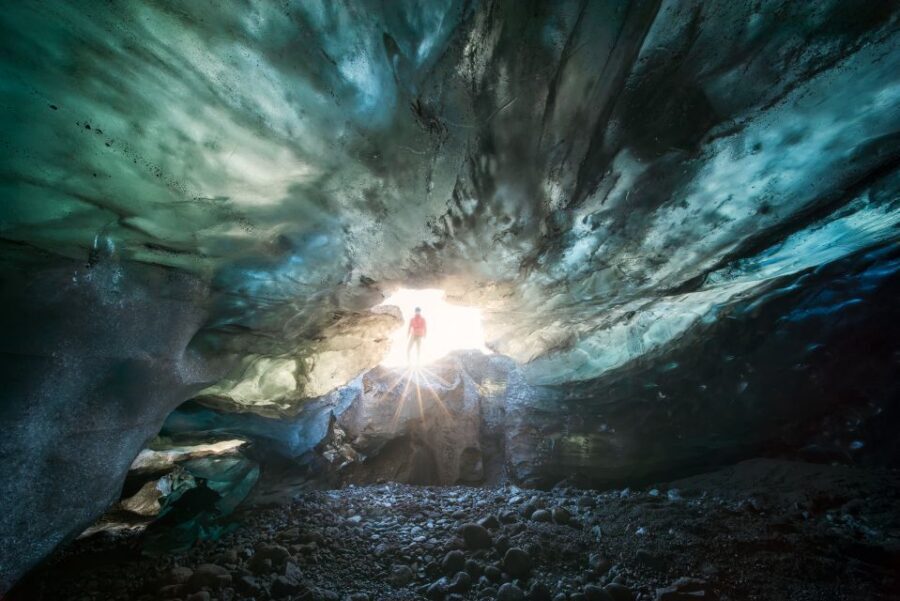
Ice caves in Iceland aren’t man-made photo sets. In winter, meltwater from the outlet glacier freezes again, leaving behind giant tunnel-like spaces you can only reach in colder months. That’s what makes this kind of tour worth doing in season—timing is the whole game.
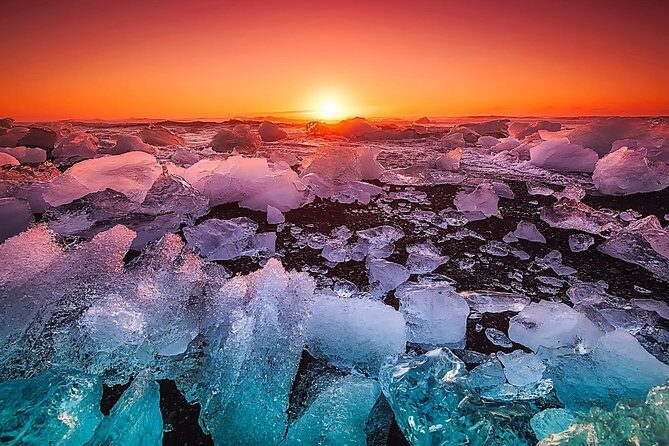
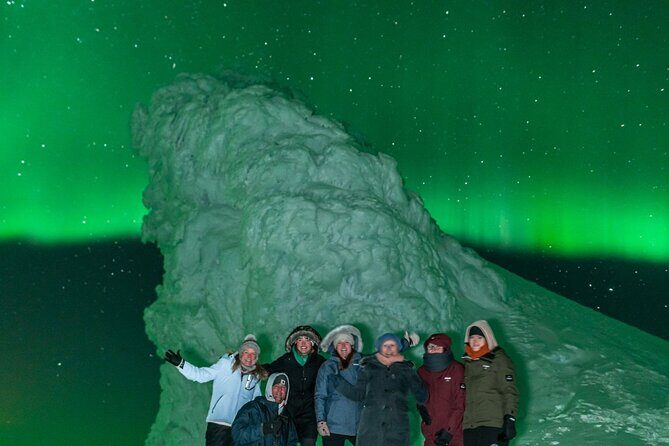
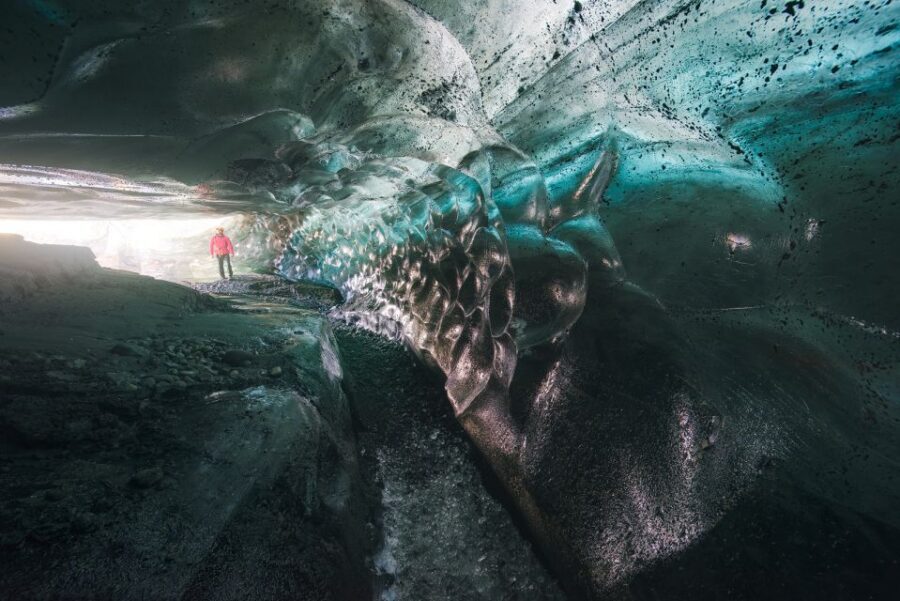
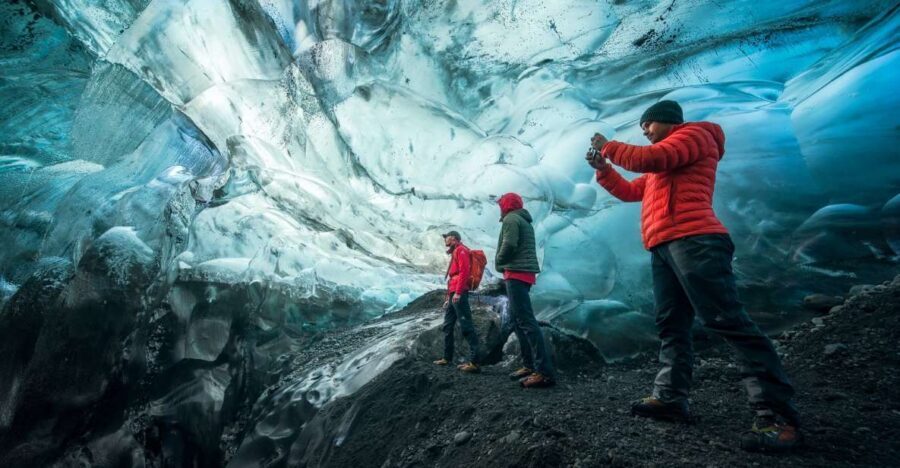
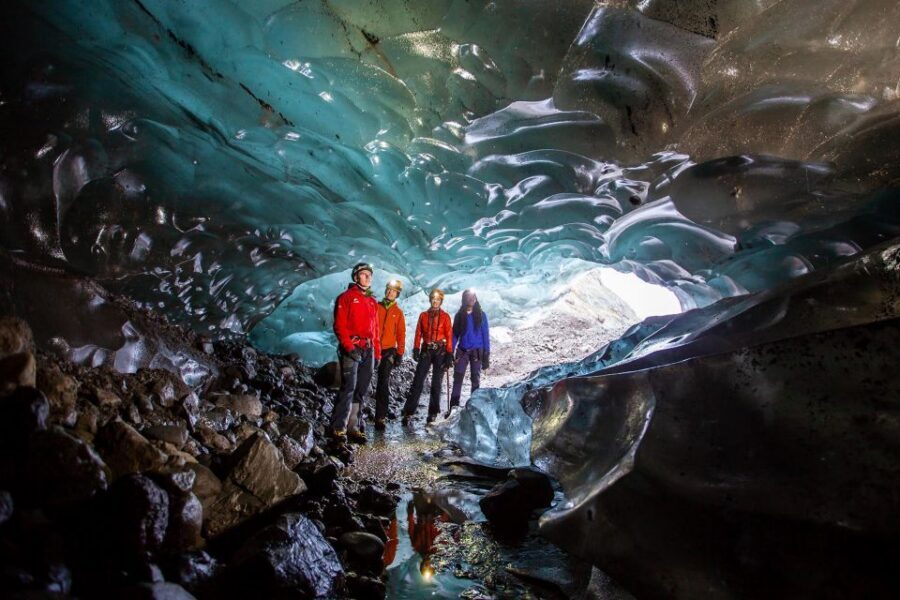
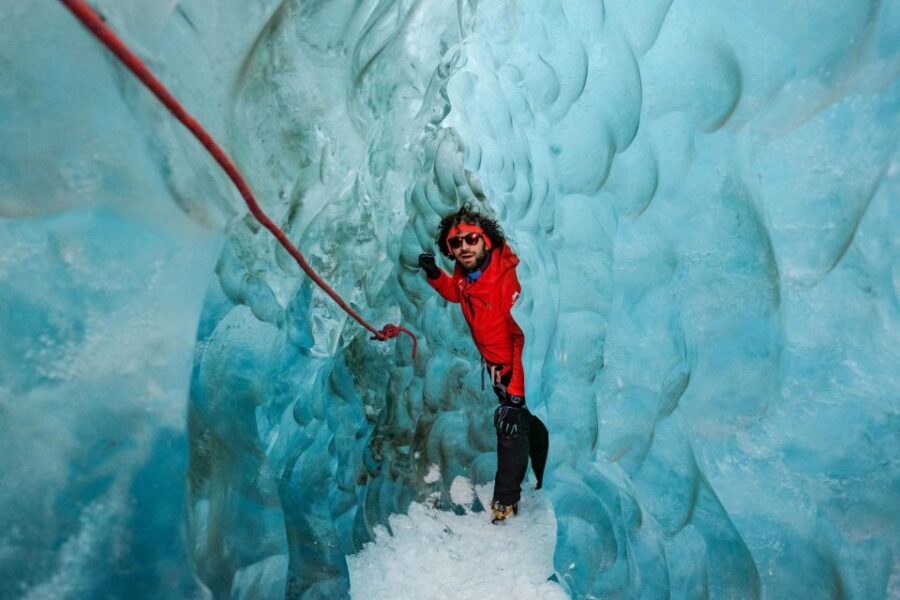
Inside, the ice tends to run from light tones toward deeper ocean blue, with hints of crystal and green ice. The effect is oddly emotional: it’s like the Northern Lights left a piece of themselves in solid form. If you’re the type who loves textures—cracks, layers, and frozen flow—you’ll understand why people keep coming back for different light and different cave shapes.
Two practical tips help your photos: bring your patience for changing light, and expect the best views to be a mix of angles, not just one perfect spot. The cave is beautiful, but it’s also fragile and safety-controlled, so you don’t wander forever like it’s a theme park.
You can also read our reviews of more tours and experiences in Eastern Region Iceland.
The modified glacier bus gets you to the right ice (and keeps the hike realistic)
This tour uses a glacier bus to reach the glacier terminal face area. That matters because you’re visiting a place that’s not easily reached by normal roads, and you’re doing it in a way that fits a 3-hour schedule.
Before you even go, there’s a safety briefing and a practical rundown of your equipment. Then the bus handles the long approach, with you switching from basecamp setup to glacier mode without burning half the day just getting there.
The day also includes a coach transfer segment both ways, so your time is planned. Even if you’re traveling solo and just want the highlights, this structure helps you avoid the most common Iceland-day problem: spending more time coordinating transport than enjoying the ice.
On the glacier hike: crampons, harness, helmet, and calm pacing
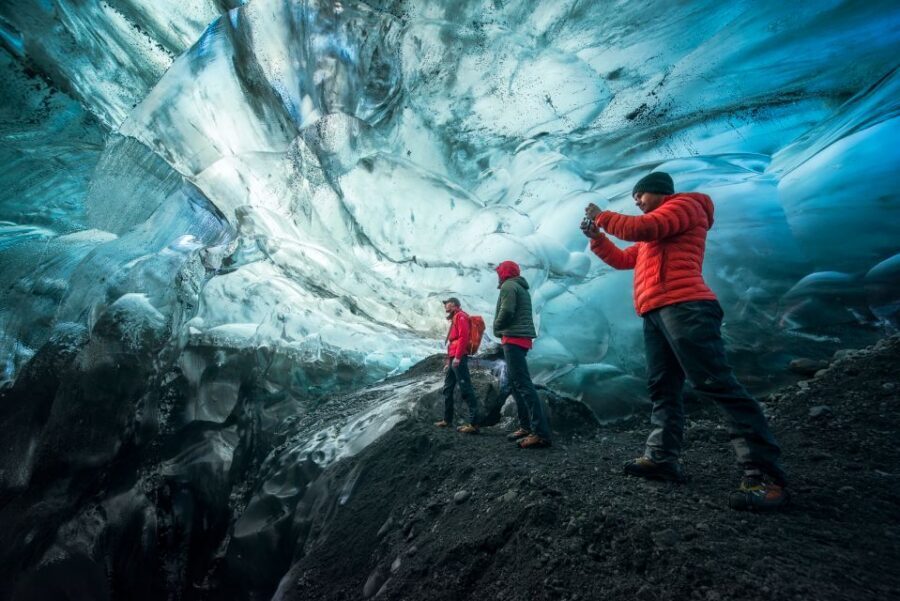
You’ll meet a certified glacier guide at the Skaftafell basecamp area (Icelandic Mountain Guides by Icelandia). The gear comes from the same day’s mission: you get crampons, a harness, and a helmet, so you’re not trying to rent and figure things out in the cold.
The point of the harness and helmet isn’t theater. On glacier terrain, footing can shift, surfaces can look solid but act differently underfoot, and conditions can change quickly. Having the gear means your guide can focus on route choice and safety instead of improvising.
This isn’t a long wilderness expedition. You’re out there long enough to feel the glacier, but the overall time commitment is still tight. That’s a plus if you’re trying to fit ice caves between other Skaftafell activities.
And yes, it’s cold. You’ll want warm clothing, gloves, and hiking shoes you can trust. You’ll also want water—basic, but easy to skip when you’re excited.
Entering the Falljökull ice cave: blue-green light and the real cave-time window
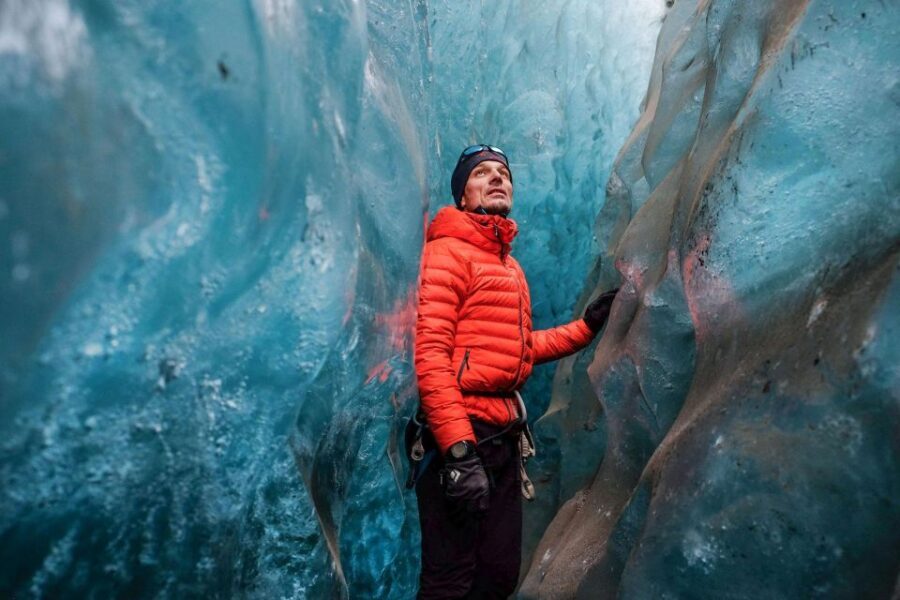
When you reach the cave area, you’ll explore a naturally formed ice cave with your glacier guide. You’re there to see and understand—colors, shapes, and ice formation processes—while also staying within safe boundaries.
Here’s the honest expectation-setting part: the cave experience can feel shorter than you imagine. One review noted that in about half an hour, the inside visit can be done, depending on the conditions and which openings are safe. Another traveler also found the cave smaller than expected. That doesn’t mean it’s not worth it; it means the tour matches glacier reality, not an unlimited walking tour.
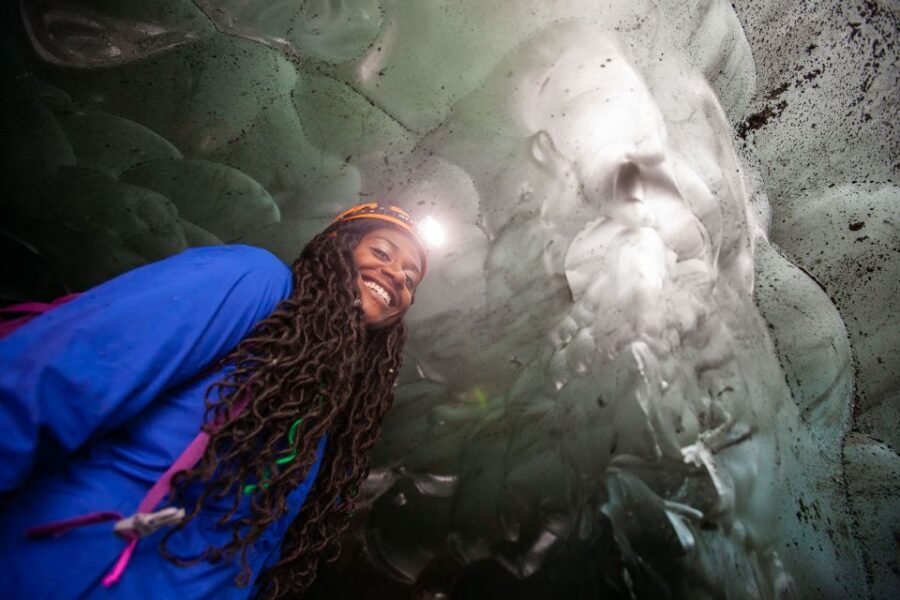
Colors inside still deliver. You’ll see the spectrum shift from pale ice to darker blue tones, and you may notice crystal-like highlights and the green tint that makes the place look almost lit from within. If you’re thinking about photos, think about contrast and texture rather than expecting one “big room” moment.
Also, if warm weather affects stability, you might not be able to visit as many cave areas as the day could allow. One traveler described being unable to see more than one cave due to conditions. So build your mindset around safety and flexibility, not a fixed checklist.
The glacier guide makes or breaks the day: Odysseas, Esther, and Hanka
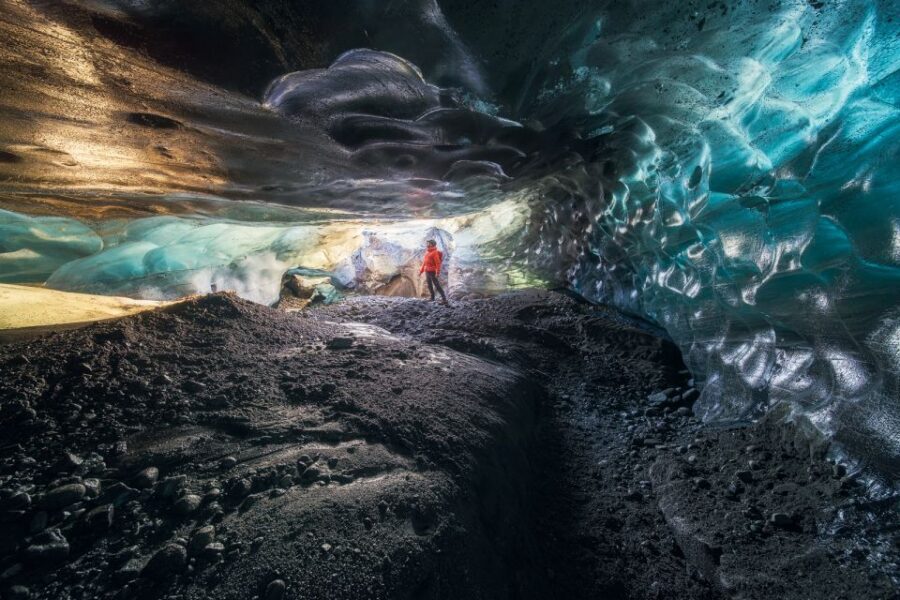
This is one of those activities where the guide quality shows up fast. You need clear safety instructions, good pacing, and confidence in the ice.
A UK visitor praised Odysseas Chloridis for being both knowledgeable and friendly, with the kind of instruction that makes you feel at ease on a glacier. Another review highlighted Esther as very skilled and friendly, especially for making the hike feel manageable and helping with the ice views. A German review also mentioned Hanka driving well to the location and guiding through the ice cave and across the glacier, along with lots of ice-cave insights.
You don’t need a lecture. You need smart guidance that keeps you steady, answers questions, and helps you understand what you’re seeing without turning it into a classroom.
If you have any concerns—balance issues, cold tolerance, or general nerves—this tour’s setup (small group, gear provided, safety briefing) gives you a better chance of getting the support you need. Just be prepared to follow the guide’s decisions. Glacier access isn’t negotiable.
Price and value: what $216 buys in 3 hours
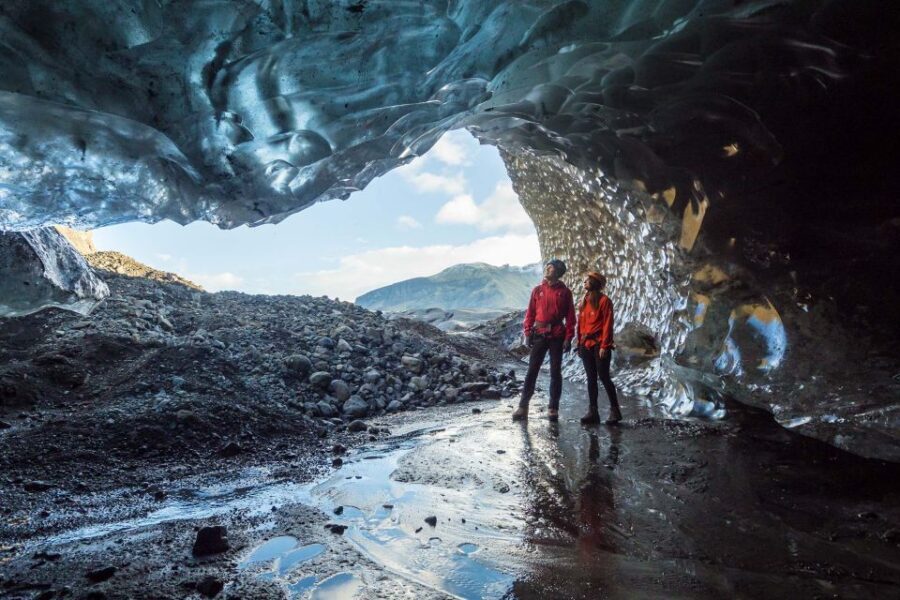
At about $216 per person for a 3-hour experience, you’re paying for three things you’d otherwise struggle to assemble yourself: trained guidance, glacier safety gear, and transportation to the Falljökull terminal face area.
The value angle is simple:
- You’re not just getting a walk. You’re getting crampons, a harness, and a helmet.
- You’re not only visiting a cave. You’re also getting the glacier approach by bus and the guided walk component.
- You’re doing it in a small group (up to 12), which usually means more attention per person during safety moments.
What’s not included is also important for budgeting: food and drinks aren’t covered, and parking fees aren’t included. In Iceland, those extras add up quickly, so plan to buy snacks nearby or carry what you need depending on the timing.
If you’re looking for the biggest possible cave haul—multiple caves, longer interior time, or more rugged hiking—this specific schedule may feel brief. But if you want a solid, well-managed ice cave day without consuming your whole winter itinerary, this feels like a practical sweet spot.
Weather and warmth: why your ice cave day can flex
Ice caves exist because conditions allow them to. That’s why this tour can be canceled in bad weather, with an alternative date offered if that happens.
But there’s a subtler reality too: one review mentioned it was too warm during that period, which affected what cave areas were possible. So even when you do go, the exact cave route and number of areas can shift based on safety.
What you can control is your schedule. If you can, keep extra flexibility on your Iceland winter itinerary. This tour is short enough that it works well as a planned highlight, but weather can still nudge what’s possible.
Who this Skaftafell ice cave tour is best for (and who should skip)
This tour is a good fit if you can handle a winter walk with crampons and you’re comfortable dressing warmly. You’ll want hiking shoes, gloves, and layers that stay warm even when you stop moving.
It’s not suitable for people with mobility impairments or wheelchair users. The activity involves glacier travel and gear, so it’s not a gentle stroll.
One caution from a review: a participant who was pregnant wasn’t allowed to start once they were on site. That doesn’t mean the tour is unsafe for everyone in that situation, but it does mean the guide’s safety judgment can override the planned “easy” expectation. If you’re pregnant or have a medical situation, ask before booking and be ready for a decision on the day based on safety.
If you’re traveling as a couple or as a single and want a guided ice cave experience without a huge group, the small size works in your favor. If you’re hoping for a long, rugged adventure, you might want a different format.
Should you book the Skaftafell Ice Cave Experience?
If you want a well-run winter ice cave day with glacier gear, a certified guide, and a practical bus ride to the glacier terminal face, I think this is a smart booking. The best part is that the experience mixes wonder with safety—ice cave colors plus real glacier technique and guidance.
Skip it (or at least rethink expectations) if you’re only chasing a giant, never-ending cave interior. Based on feedback and how glaciers work, your inside time can be shorter, and cave size can vary with what’s safe that day.
My “book it” checklist:
- You can dress for cold and walk with gear.
- You’re okay with short cave time in exchange for a smoother, guided experience.
- You have at least one backup window for weather changes.
FAQ
How long is the Skaftafell Ice Cave Experience?
The tour lasts about 3 hours total.
What’s included in the price?
You get an experienced and certified glacier guide, glacier gear, and safety equipment.
Do I need to bring my own crampons or helmet?
No. Glacier gear is provided, including crampons, harness, and a helmet as part of the expedition kit.
Is the tour in English?
Yes, the live guide is available in English.
Is there food or drinks included?
No. Food and drinks are not included.
Where do I meet the guide?
Meet at the Icelandic Mountain Guides Sales Lodge, just a few minutes walk from the customer car park. Arrive 20 minutes before the activity starts.
How big is the group?
It’s a small group limited to 12 participants.
Can the tour be canceled due to weather?
Yes. The activity may be canceled if weather is bad, and you can book an alternative date if that happens.
What should I wear or bring?
Bring warm clothing, hiking shoes, gloves, and water, plus comfortable clothes for glacier conditions.