Throttle time on Europe’s biggest glacier.
What makes this tour tick is the combo of proper glacier gear and real time spent tooling across Vatnajökull’s snowy surface. I also like how the route feels off-grid and remote, with time for big “how is this real?” views from high on the icecap, not just a quick photo stop.
The one thing to think about is pacing: the snowmobile portion is planned to be about one hour, with some pauses along the way. If you dream of a long, nonstop ride, this format might feel a touch short.
I found the vibe reassuring and well-run, too. With a maximum of 22 people and a guide along the whole way, you’re not swallowed by a giant crowd, and the tour still keeps that small, personal-feeling energy.
In This Review
- Key highlights worth caring about
- Vatnajökull snowmobiling: why it feels special
- The superjeep climb: part drive, part weather check
- Stop 1: Skalafellsjökull viewpoint at around 1,000 meters
- Stop 2: Snowmobile across Vatnajökull’s ice wilderness
- Stop 3: Jöklasel briefing and a controlled return
- Equipment and guides: the difference between fun and miserable
- Price and value: what $272.11 really buys
- Who this tour suits best (and who should think twice)
- Should you book this Vatnajökull snowmobile tour?
- FAQ
- Do I need a driver’s license to operate the snowmobile?
- What weight limit applies per snowmobile?
- Is gear provided?
- How long is the snowmobile time?
- Is there an extra charge for solo riders?
- What happens if the tour can’t run due to weather?
Key highlights worth caring about
- Included insulated waterproof overalls and helmets so you’re not improvising layers
- Superjeep ride up to the glacier for mountain views before you even touch the snow
- Skalafellsjökull viewpoint about 50 minutes to take in the highest peaks area
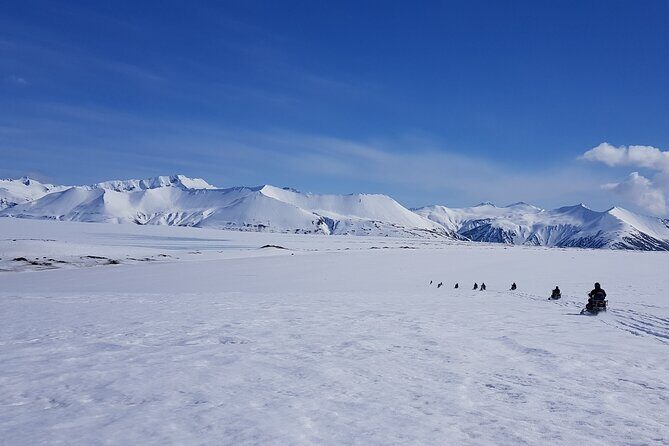
- About an hour of snowmobiling across off-grid glacier trails with spacing between riders
- Guide-led glacier briefing at Jöklasel with environmental context on the way back
- Limits that keep the experience manageable: weight cap per snowmobile and driver license required
Vatnajökull snowmobiling: why it feels special
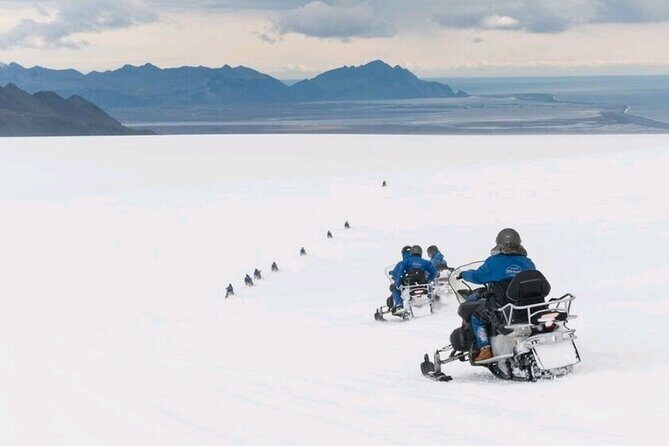
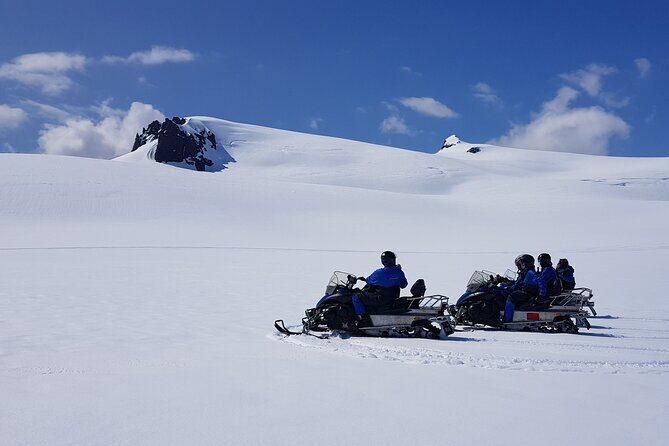
Vatnajökull is Europe’s biggest glacier, and that matters here because you don’t just “visit” it. You climb onto it, look out across Iceland’s highest peaks area, and then ride across the icy world with a guide leading the way.
What I like most is that the experience is built around both sides of the adventure. First you get the physical reality of the cold and the scale when you’re up on the ice. Then you get the motion of snowmobiles, which turns the glacier from something you picture into something you actively travel through.
The “off-grid” part isn’t marketing fluff. Your route is designed so you’re not bouncing around on random ground—you’re exploring planned tracks on the ice wilderness with spacing so groups don’t bunch up. That makes the experience feel wilder, but still controlled.
And because the tour includes gear (not just a helmet), you can focus on the moment instead of playing outfit roulette. You show up with warm base layers, and the rest is handled.
You can also read our reviews of more tours and experiences in East Iceland.
The superjeep climb: part drive, part weather check
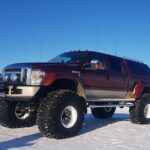
Your day starts at Glacier Journey’s meeting point near Highway 781 (about 34 km east of Jökulsárlón). From there, you ride in an air-conditioned vehicle to the glacier area, and the big show begins when you switch to a specially adapted 4×4 superjeep.
That drive is more than transportation. It’s your first taste of the terrain: mountain roads, big views, and that strong sense of leaving the normal world behind. Many people remember this part almost as much as the snowmobile itself, because it sets the mood. You’re heading up into an environment where weather can change quickly and visibility can go from clear to white-out.
One practical thing: the climb can feel intense if you’re sensitive to heights. The route is up in the mountains, so keep that in mind if you get nervous on steep roads. The guides do keep things orderly, but your body may still react.
Also, take the weather seriously. This experience requires good weather. If conditions are poor, you’ll be offered a different date or a full refund. So if you’re planning other East Iceland stops the same day, build in a little flexibility.
Stop 1: Skalafellsjökull viewpoint at around 1,000 meters
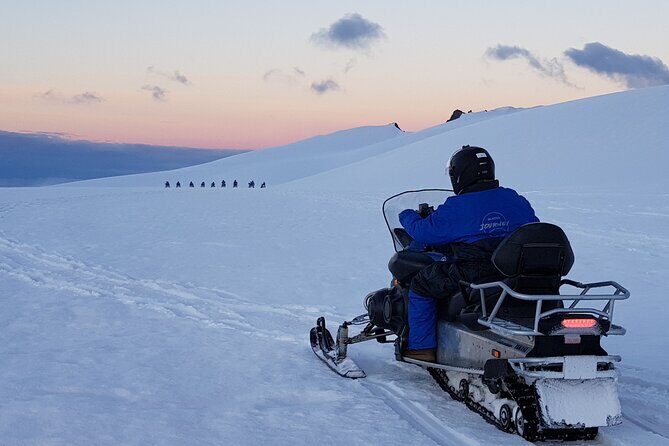
The first stop is Skalafellsjökull, where you’ll sit and enjoy the view while the driver takes you up to about 1,000 meters in the mountains. This is where you get that jaw-dropping look over Iceland’s highest peaks.
What makes this stop valuable is the timing. You’re already warm from the ride, your gear is on, and your brain is ready to absorb the scale. From up here, the glacier doesn’t feel like a destination—it feels like the world’s frozen foundation.
Another plus: you’re not rushed. You get about 50 minutes, which gives time to breathe, take photos, and just watch how light moves across the ice and surrounding peaks. If the sky is clear, this stop can be the moment the whole day clicks into place.
Possible drawback: if it’s windy or snowy, visibility can be limited, and you’ll spend more time hunching under your layers than standing for perfect shots. Still, even “less than perfect” weather can make the glacier feel more dramatic.
Stop 2: Snowmobile across Vatnajökull’s ice wilderness
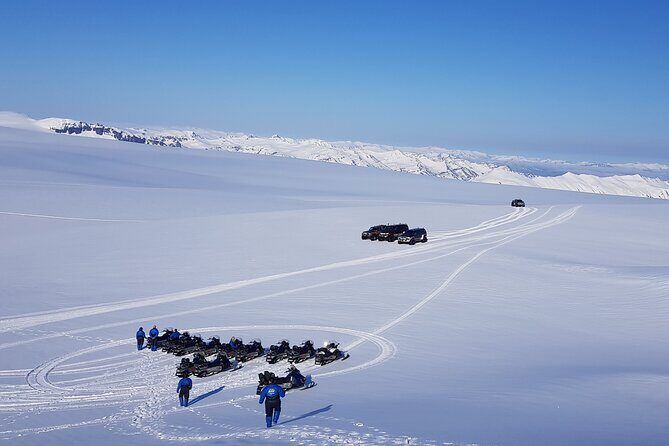
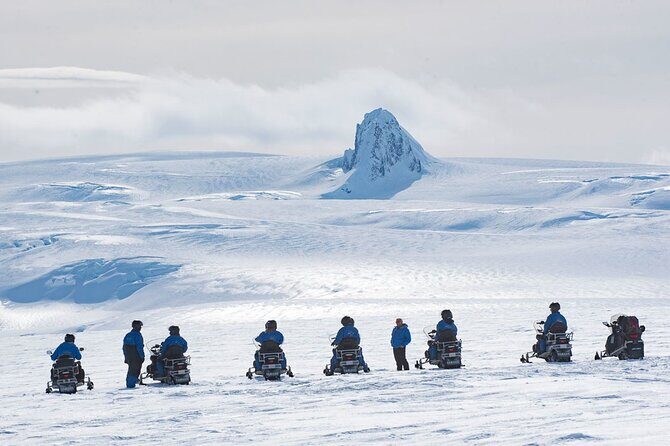
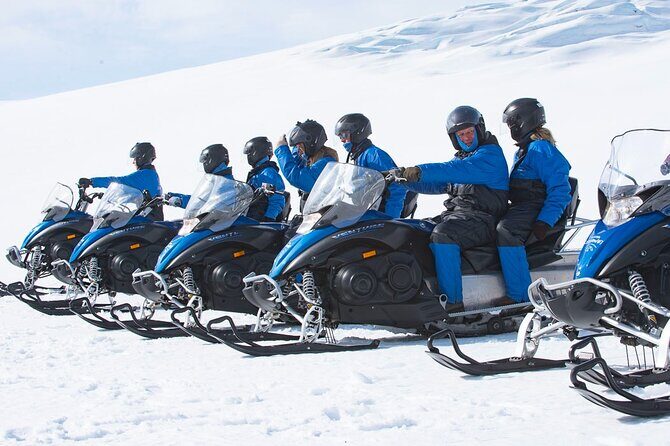
This is the main event. The plan is about one hour on the snowmobiles, where you power up and explore secret trails across the great ice wilderness.
Before you start, you get instructions and a safety briefing. That’s not optional here. Even with experienced guides, glacier driving is different from normal roads—traction, wind, and visibility all change how the machine behaves. You’re riding across snow and ice where conditions can shift fast.
A few key details you’ll want to know ahead of time:
- You need a valid driver’s license to operate the snowmobile.
- The standard setup is two people per snowmobile.
- There’s a combined weight limit of 180 kg / 390 lb per snowmobile. If you exceed that, you must book single snowmobiles.
- If you’re traveling solo (or in an odd-number group), you’ll need at least one solo rider, with an additional cost of 10,000 ISK paid at base camp.
Now, what does the ride actually feel like? When conditions are good, it’s thrilling in a very Iceland way: fast enough to feel the rush, but guided so you’re not doing random stunts. Guides keep riders spaced out so you don’t create a traffic jam on the ice.
Wind matters. On some days, gusts can be strong enough that the guide has to account for how the machine moves. If you’re a beginner driver, go easy on the inputs: smooth acceleration, steady turning, and keeping your balance helps a lot. It’s also why good gloves and keeping warm hands are more than comfort—they help you steer confidently.
Speed is variable based on conditions and group ability. Some guides are known for letting confident riders go a bit faster, while others keep everything at a steady, fun pace. The goal is consistent safety plus that real glacier thrill.
One more reason this stop hits hard: you’re on top of a glacier that covers some of Iceland’s highest peaks and volcanoes beneath the icecap. Even if you can’t see the geology directly, the scale makes it feel like you’re riding on a moving planet.
Stop 3: Jöklasel briefing and a controlled return
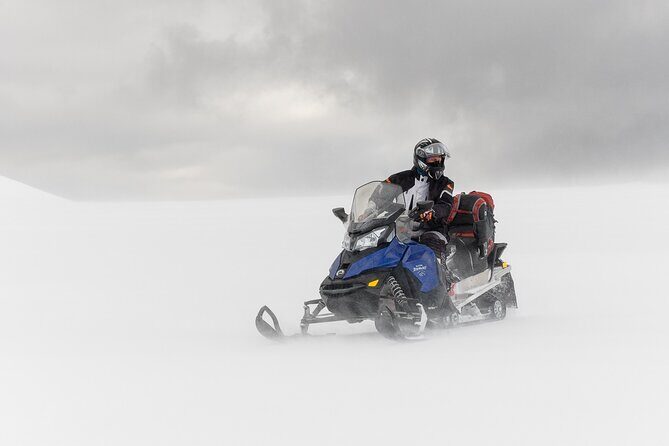
After the snowmobile time, you head to Jöklasel for a 50-minute wrap-up. This is when your guide shares what you just experienced in context—glaciers, icefields, and how these icy systems affect the environment.
What makes this stop useful is that it turns the ride into understanding. It’s easy to leave an adventure day thinking only about adrenaline. A good glacier briefing helps you notice details next time you look at ice back home: how it shapes the land, how it changes over time, and why the glacier matters beyond the postcard.
Then you take the route back down to the base camp area and back to where you started. The return drive is part of the experience, too. You’ll have a weird “weird, calm, snowy planet” feeling while descending, especially if the wind has been strong.
Equipment and guides: the difference between fun and miserable
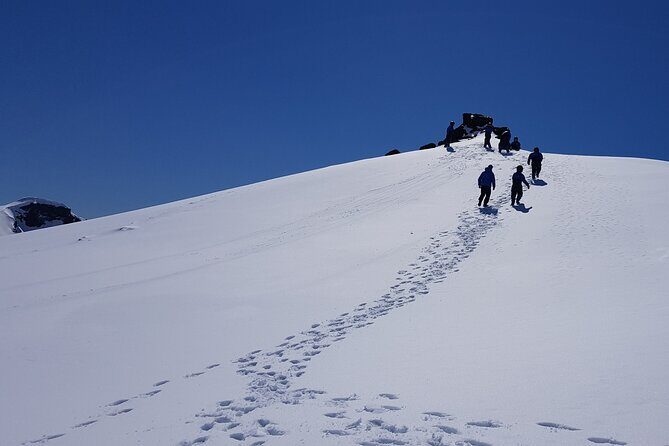
This tour includes a lot of the stuff that usually decides whether you have a good day out on ice.
You get:
- wind and waterproof insulated overalls
- helmets
- gloves and bandanas/neck warmers
- a guide
- an air-conditioned vehicle for transfers
In plain terms: it’s designed so you can stay dry and warm enough to enjoy the whole day, not just survive it.
This is also where the guide quality shows. Names that have stood out in this operation include Kári, Mike, and Stephan. People consistently highlight clear instruction, relaxed but safety-first handling, and guides who talk about the glacier and the area in a way that actually helps you see what you’re standing on.
One practical tip from this kind of experience: bring good layers underneath the overalls. If your base clothes are too bulky or not warm enough, you’ll either restrict movement or end up fighting cold. A lot of “it was colder than expected” days come down to clothing that wasn’t quite right.
And if you’re going in shoulder seasons (or on a particularly harsh day), temperatures can feel brutally low. On one ride, the guide estimated around -15 to -20°C. You can’t control the weather, but you can show up prepared.
Price and value: what $272.11 really buys
At $272.11 per person for about 3 hours, this is not a budget activity. But the value comes from the parts most tours nickel-and-dime: cold-weather equipment and the logistics required to operate on a major glacier.
Here’s what you’re getting that helps justify the price:
- Gear package included (overalls, helmet, gloves, neck warmers)
- Guide throughout the day, including driving instruction and glacier explanations
- A superjeep climb that puts you on the right section of Vatnajökull
- A planned itinerary with multiple glacier-relevant stops (Skalafellsjökull and Jöklasel, not just the ride)
You’re also getting a small-group limit (maximum 22). That matters because it affects how much space you have during briefing and how calmly the guide can manage riders.
Time allocation is worth understanding. You’ll spend a portion of the day in transit and at stops, and the snowmobile time is about an hour. Some people want more wheel time, and they’ll feel that trade-off. But from a value perspective, the full package is what keeps this from being a random ride in snow.
Who this tour suits best (and who should think twice)
This works best for you if you want:
- an adventure that mixes driving and views
- off-grid access to a glacier environment with a guide
- a day trip that’s short enough to fit into an East Iceland plan
- a family-friendly structure if your kids are old enough to drive with a license
It also suits first-timers well. The format includes instruction, and the ride is run so beginners can participate safely and still enjoy themselves.
Think twice if:
- you’re very uncomfortable with steep mountain road drives (the superjeep climb is part of the deal)
- you’re expecting long, uninterrupted snowmobile time. The plan is about an hour, with photo and viewpoint moments built in
If you’re traveling with your weight in mind, pay attention to the 180 kg / 390 lb combined limit per snowmobile. If you’ll exceed it, booking single snowmobiles is required, which changes the group setup.
Also note: service animals are allowed, and the tour is offered in English. That’s helpful if you want clear instructions and a day that doesn’t require language guesswork.
Should you book this Vatnajökull snowmobile tour?
I’d book it if you want one of the most direct ways to experience Vatnajökull without needing glacier skills or technical gear. The included insulated waterproof overalls, guided setup, and glacier viewpoints make it feel like a full day of glacier immersion even when the driving portion is timed.
I’d skip it or consider alternatives if your top priority is maximum minutes on the snowmobile. The ride is thrilling, but the experience is built as a package: drive up, viewpoint stop, snowmobile hour, glacier briefing, drive back down.
Finally, book with weather flexibility in mind. This tour depends on good conditions, and that’s not just a safety rule—it’s what protects the experience quality. If Iceland gives you a clearer day, you’ll be rewarded with views that feel unreal.
FAQ
Do I need a driver’s license to operate the snowmobile?
Yes. A valid driver’s license is required to operate the snowmobile.
What weight limit applies per snowmobile?
Participants combined on one snowmobile must be 180 kg / 390 lb or less. If the combined weight exceeds that, you need to book single snowmobiles.
Is gear provided?
Yes. The tour includes wind and waterproof insulated overalls, helmets, gloves, and bandanas or neck warmers.
How long is the snowmobile time?
The snowmobile portion is scheduled for about 1 hour, within a total trip duration of around 3 hours.
Is there an extra charge for solo riders?
Yes. If you are traveling solo or in an odd-number group, you need at least one solo rider, with an additional cost of 10,000 ISK paid at the base camp.
What happens if the tour can’t run due to weather?
This experience requires good weather. If it’s canceled due to poor weather, you’ll be offered a different date or a full refund.