North Iceland hits hard and fast. This Diamond Circle tour from Akureyri strings together big-ticket nature in one day, from Goðafoss to Lake Mývatn’s geothermal and lava features, with a live English guide who brings the area to life (Ingi is a standout name you’ll hear). You’re not just being taken from A to B. You get the why behind the sights, including saga-style stories and local context that makes the geology feel personal.
I especially like two things: the raw drama of Goðafoss and how Ingi turns each stop into a mix of factual explanation and humor. One possible drawback is that the day is tight. If the weather or timing gets messy, you may lose a little time at early stops, and the schedule can be adjusted on the fly.
Key things to know before you go
- A true highlights loop: Goðafoss, Asbyrgi, Dettifoss, Lake Mývatn, plus geothermal and a lava-maze walk
- A local-story guide: Expect funny, factual talk from Ingi-style guides who grew up around the sights
- You walk in lava rock: Dimmuborgir is a real hike on uneven ground, not a postcard stop
- Geothermal is hands-on in view: Hverir’s bubbling mud pits and Grjótagjá’s cave hot-spring setup
- A long day by coach: 8 hours with several short sightseeing windows, so dress for movement and weather
In This Review
- Hof Cultural and Conference Centre: how the day starts and stays moving
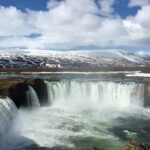
- Goðafoss: the waterfall that changes your mood fast
- Skútustaðagígar, then Dimmuborgir: pseudo-craters and a real lava-maze walk
- Grjótagjá and Hverir: where the earth’s cracks take center stage
- Dettifoss and Ásbyrgi: Europe’s power, then Odin’s horse story
- Price and value: is $330 worth an 8-hour whirlwind?
- What to bring and how to dress for a day of power and mud
- Who this tour fits best (and who might want a different pace)
- Should you book the Diamond Circle from Akureyri?
- FAQ
- How long is the tour?
- Where does the tour start?
- Which main sights are included?
- Is there hiking on this tour?
- Are meals and drinks included in the price?
- What language is the tour guide?
- What should I bring?
- Is smoking allowed?
- Is free cancellation available?
- What’s the weather like during the day?
Hof Cultural and Conference Centre: how the day starts and stays moving
You begin at Hof Cultural and Conference Centre in Akureyri, then it’s onto a coach. The whole tour is built for an 8-hour window, so the pacing matters: there’s enough time to see each stop properly, but you won’t have hours at every viewpoint. You’ll get several short rides between sites—think quick resets for your legs and camera—then short-to-medium sightseeing bursts, often followed by another transfer.
This structure works well if you want North Iceland’s headline scenes without planning a route or driving in big weather. It also means you should be ready for a day that feels active even when you’re mostly seated on the bus. I’d plan around that: snack if you need energy, keep your layers handy, and treat the schedule as flexible rather than guaranteed minute-for-minute.
Goðafoss: the waterfall that changes your mood fast
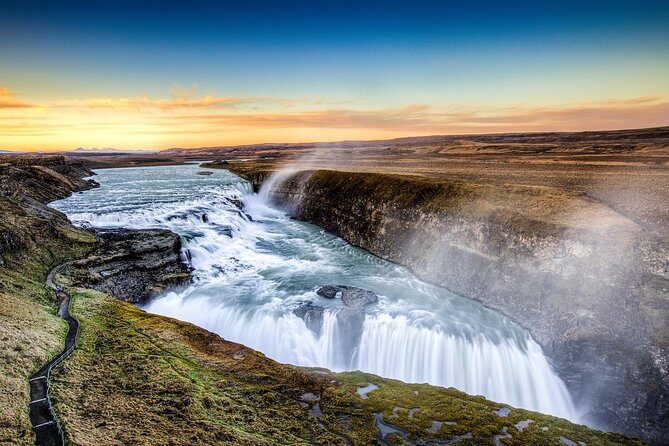
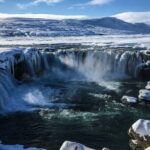
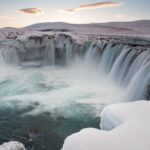
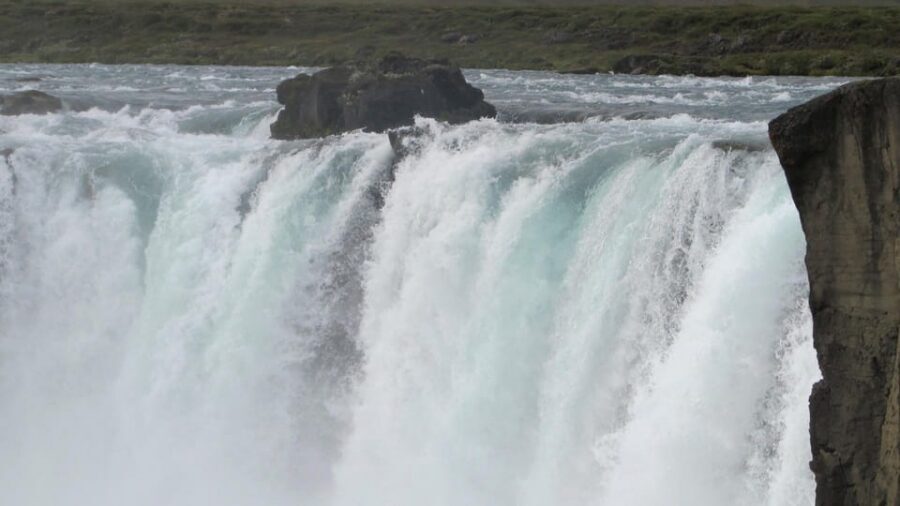
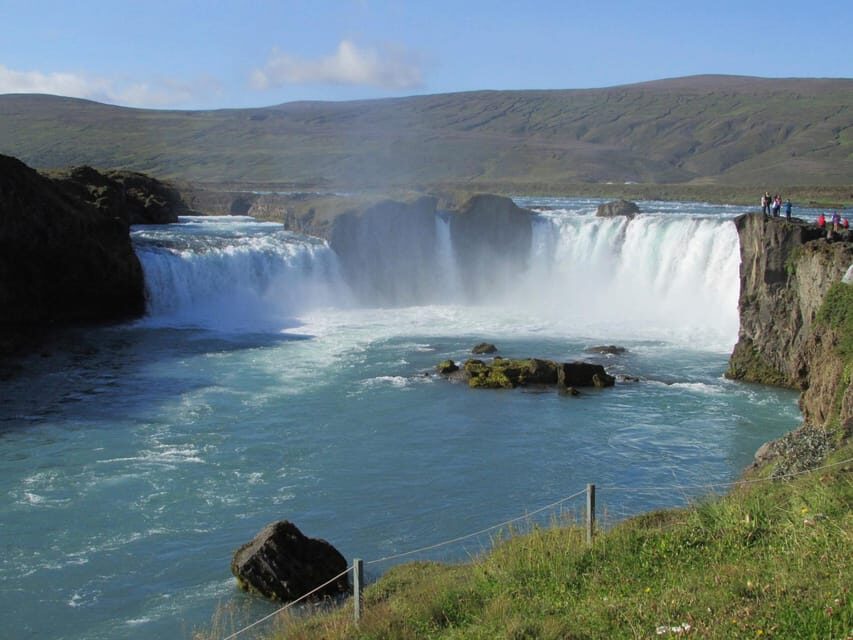
Goðafoss is the first major wow, and it’s easy to see why it’s on every Diamond Circle-style route. You’ll have about 40 minutes there, which is enough time to take in the falls from multiple angles and settle into the scale. This is the kind of waterfall where your brain clicks into a different gear: you can’t ignore the noise, and photos never fully match the feeling of standing close enough to see spray.
What makes Goðafoss particularly satisfying on a guided loop is how the guide frames it. You’re not just watching water drop—you’re learning how these features fit into the wider North Iceland story. If you’re the type who likes to understand what you’re seeing, you’ll enjoy that extra layer.
Practical note: Goðafoss can be windy. Warm outdoor layers and comfortable shoes keep you confident when the ground is damp.
You can also read our reviews of more tours and experiences in Akureyri.
Skútustaðagígar, then Dimmuborgir: pseudo-craters and a real lava-maze walk
After Goðafoss, the route heads toward Lake Mývatn’s area. One early stop is Skútustaðagígar, with roughly 15 minutes set aside. These are the pseudo-craters—interesting formations that help you “read” the area before you go into the bigger lava features. With less time here, you’ll want your camera ready and your questions for the guide queued up.
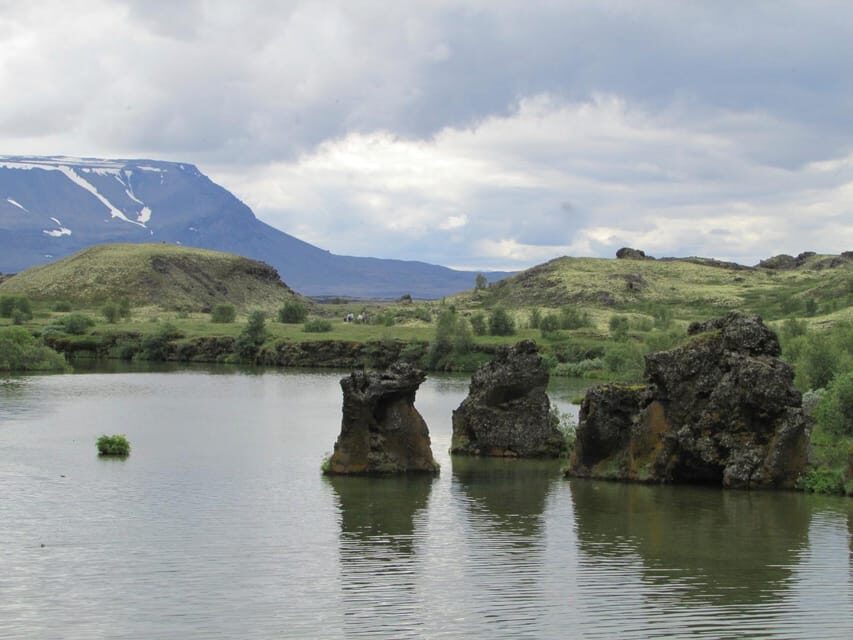
Then comes Dimmuborgir, and this is the part many people remember. You’ll get about 50 minutes for Dimmuborgir, including a hike through the lava maze. This is not a flat stroll. Lava fields tend to be uneven, and the walking paths can feel rugged depending on conditions. That’s exactly why it’s worth bringing solid footwear. When the tour guide leads you through, it turns into more than exercise—it becomes a guided way to understand what you’re walking on.
From a value standpoint, Dimmuborgir is where the tour feels most like an experience and less like a series of stops. You’re moving through the environment, not just viewing it.
Possible drawback to consider: If weather is rough, the walk can feel longer than the clock suggests. Still, a good guide can help you pace safely.
Grjótagjá and Hverir: where the earth’s cracks take center stage
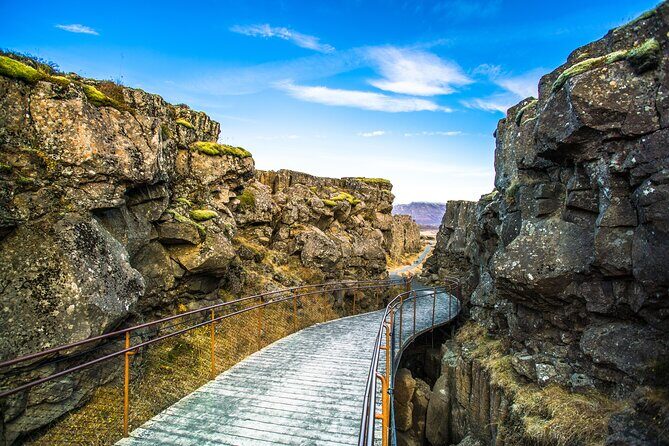
After the lava maze, the day shifts from “rock history” to active geothermal. The first is Grjótagjá Cave, with around 15 minutes. Here, tectonic forces create an enormous crack in the earth’s surface, and you’ll see a small hot spring lagoon inside a cave. The vibe is different from open-air waterfalls. It’s quieter, more enclosed, and it makes the planet feel close—like you’re standing beside a system that’s still working.
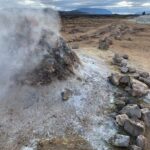
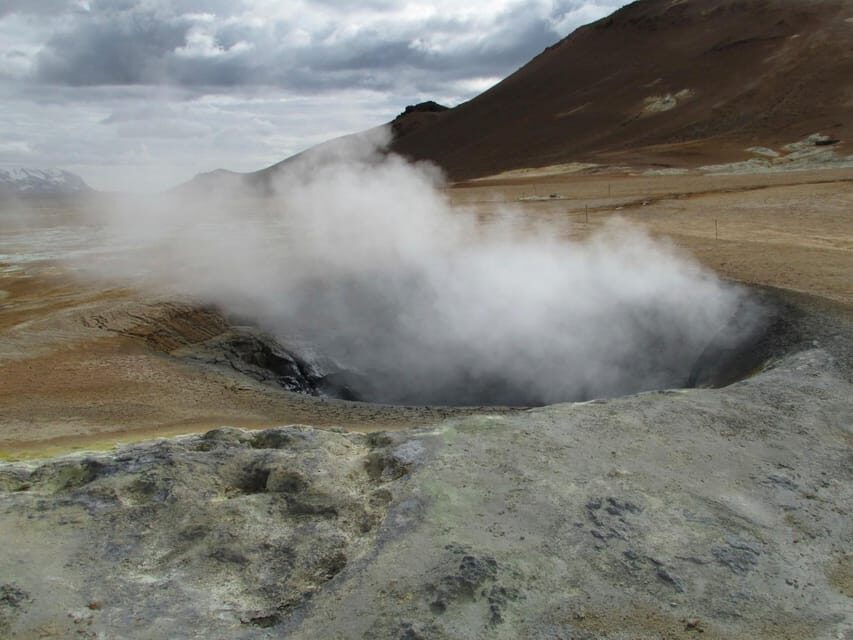
Next is Hverir, where you’ll spend about 20 minutes in the geothermal area. The standout feature you’re going for: bubbling mud pits. Even with a short time window, this is the kind of site that keeps your attention. Geothermal areas don’t just look unusual; they behave differently than anything else you see in Iceland—motion where you expect stillness.
What to expect with your senses: It’s geothermal, so be ready for the general smell and heat effects that come with active ground. I’m keeping it general because conditions vary. What you can rely on is the sight of bubbling mud pits and the odd, cracked-earth feeling at Grjótagjá.
Layers matter here. Warm clothing is a real benefit once you leave the bus and stand around for photos.
Dettifoss and Ásbyrgi: Europe’s power, then Odin’s horse story
Dettifoss is scheduled for about 1 hour, and it earns its reputation. It’s described as the most powerful waterfall in Europe, and that claim holds up when you’re standing there. The sheer volume of moving water makes it feel less like a single waterfall and more like the landscape is in motion. If Goðafoss is dramatic, Dettifoss is dominant.
With a full hour, you’re not rushed. You can get photos, walk to viewpoints your guide points out, and take a moment just to process the scale. If you’re traveling with family or seniors, this longer stop length is helpful—it gives people a chance to see the falls without sprinting between angles.
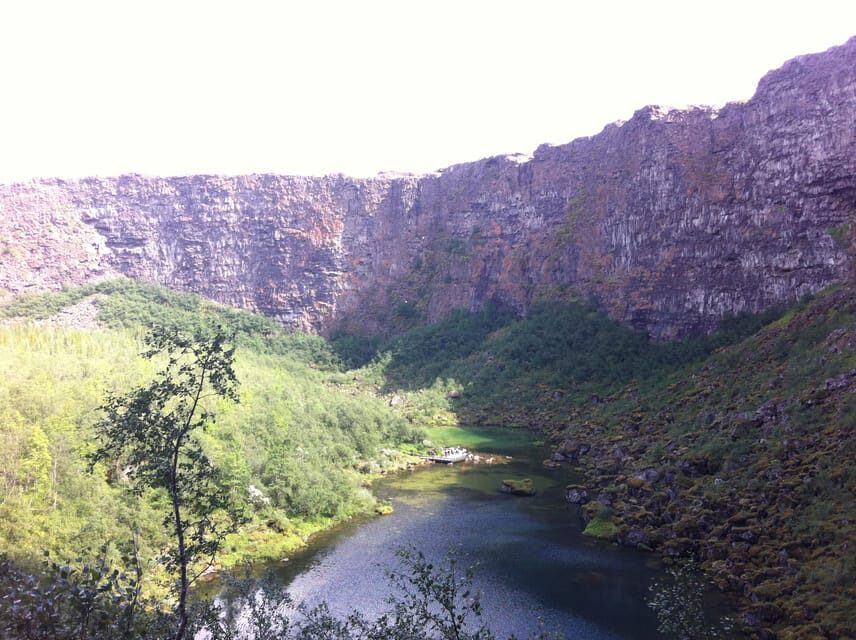
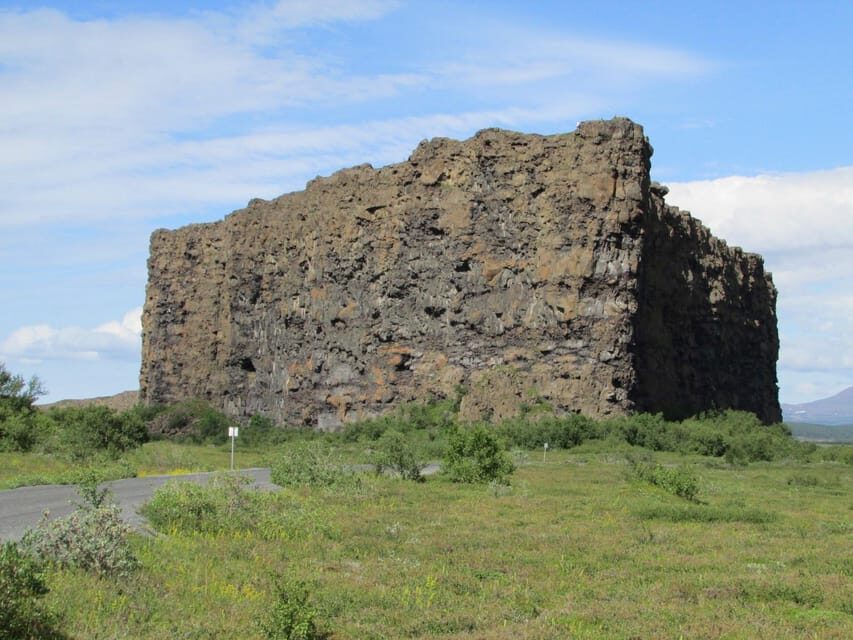
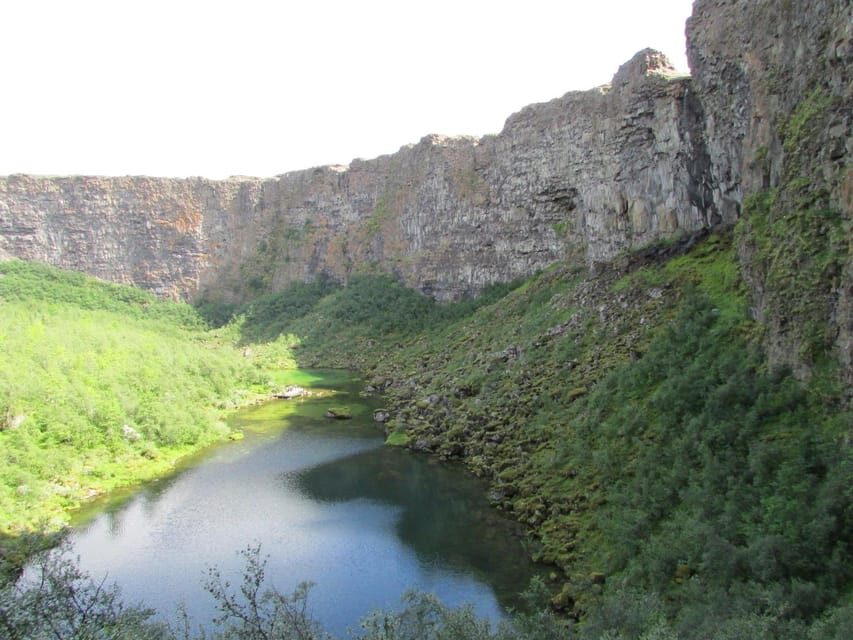
Then the day heads to Ásbyrgi for about 1 hour. Ásbyrgi is the canyon that’s tied to Icelandic lore: it’s believed it was formed when Sleipnir, the horse of Odin, touched the ground with one of his eight legs. Even if you don’t care about mythology, the story changes how you look at the canyon walls. It gives the place a personality, and it helps you connect geology to culture.
This pairing—Dettifoss power plus Ásbyrgi’s legend—adds variety so the day doesn’t turn into one long waterfall blur.
Price and value: is $330 worth an 8-hour whirlwind?
At about $330 per person for an 8-hour guided day, you’re paying for three main things:
- A driver and logistics buffer. North Iceland distances add up fast. A coach tour lets you focus on viewing and walking instead of planning routes and dealing with changing road conditions.
- Time-efficient access to multiple headline sites. You’re hitting Goðafoss, Dettifoss, Ásbyrgi, the Lake Mývatn district, geothermal features, and a lava-maze hike—together in one day.
- A real guide, not just a voice recording. The guide experience is repeatedly praised, especially for Ingi’s mix of funny stories and factual explanations. That matters because it transforms stops from visual snapshots into something you understand.
The main cost-related caution: meals and drinks are not included. If you arrive hungry, you’ll feel it during transfers and short sightseeing windows. Plan to buy snacks on your own or bring what you can where appropriate.
Is it great value? If you’re short on time in Iceland or you don’t want to drive, yes. If you’re the type who likes long, slow stays at one waterfall, the schedule may feel a bit compressed for $330. The tour is designed for coverage and momentum.
What to bring and how to dress for a day of power and mud
Your packing list is simple, but don’t treat it lightly:
- Comfortable shoes: you’ll hike through the lava maze at Dimmuborgir
- Warm clothing and outdoor layers: you’ll be outside for waterfalls and geothermal stops
- Water: recommended during the hike
- Camera: the scenery changes minute to minute, especially with weather
- Outdoor clothing: you’ll want a layer that handles wind
Also note one basic rule: no smoking on the tour.
One more practical tip: keep layers easy to access. You’ll move between bus warmth and cold outdoor viewing, and you don’t want to waste time digging for gloves.
Who this tour fits best (and who might want a different pace)
This is a strong fit if you want North Iceland’s major hits without the hassle of self-driving. It also suits people who enjoy stories—guides in this setup tend to mix Icelandic saga-style explanations with local, real-world context.
It can also work well for mixed-age groups. One key theme from the guide feedback: patience and a calm approach when people need a slower rhythm. If you’re traveling with seniors, this matters.
Where it may not fit is if you need lots of unstructured time at each stop. The tour is tight by design, and at least one departure saw early parts adjusted due to time constraints. Another point that comes up: some people want a bit more time at places like Goðafoss and the nearby pseudo-craters.
So, think of it like this: book it if you want a high-impact day. If you want a relaxed pace and long stays, you might prefer a different kind of tour.
Should you book the Diamond Circle from Akureyri?
I’d book this tour if your priority is seeing the best of North Iceland in one guided day: Goðafoss, Dettifoss, the Lake Mývatn district, Dimmuborgir, plus Grjótagjá and Hverir. The structure is made for travelers who want major nature and a guide who can explain it in a way that sticks.
I’d be cautious if your dream day is slow and unhurried, or if you really want extended time at one location. The itinerary is built for coverage, and weather can force schedule tweaks.
If you’re hoping to maximize your time in the region, and you like the idea of a guide like Ingi who keeps the day funny, informative, and flexible, this is a very sensible choice.
FAQ
How long is the tour?
The Diamond Circle tour from Akureyri runs for 8 hours.
Where does the tour start?
The tour starts at Hof Cultural and Conference Centre.
Which main sights are included?
You’ll visit Goðafoss, Skútustaðagígar, Dimmuborgir, Grjótagjá, Hverir, Dettifoss, and Ásbyrgi, plus Lake Mývatn district sights like Dimmuborgir.
Is there hiking on this tour?
Yes. The tour includes a hike through the Dimmuborgir lava maze.
Are meals and drinks included in the price?
No. Meals and drinks are not included.
What language is the tour guide?
The live tour guide provides English.
What should I bring?
Bring comfortable shoes, warm clothing, a camera, and water (water is recommended for hydration during the hike), plus outdoor clothing.
Is smoking allowed?
No. Smoking is not allowed.
Is free cancellation available?
Yes. You can cancel up to 24 hours in advance for a full refund.
What’s the weather like during the day?
You should be prepared for varying weather conditions, and you’ll be outside for multiple sightseeing stops.