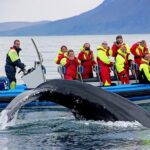
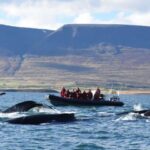
Small boat, big animals, cold water. I love the 12-passenger RIB setup, because it gives everyone a real chance at a clear view when a whale surfaces. I also like that the guide rides separately from the captain, so you get steady, in-the-moment live commentary instead of splitting attention while the boat handles waves.
The main tradeoff is simple: the sea can be cold, wet, and bumpy, and sightings can never be guaranteed. Also, puffins depend on timing—outside roughly mid-April to mid-August, this becomes a big-whales-only trip rather than a true puffin hunt.
In This Review
- Key things to know before you go
- Where this RIB tour fits in Húsavík
- The boat setup: why 12 seats can beat big ships
- Warm gear and what to bring (so you don’t freeze)
- Skjálfandi Bay: how the crew finds whales fast
- Responsible viewing: getting close without stressing whales
- Lundey and puffins: what changes by season
- Tjörnes peninsula: the fossil bonus stop
- The 2-hour pacing: why it feels just right
- Captain and guide roles: what you gain from the split
- What you might see: the real wildlife mix
- Who this tour suits best
- Price and value: is $203.16 worth it?
- Practical cautions: cold, wet, and the occasional surprise
- Should you book this RIB tour in Húsavík?
- FAQ
- How long is the Big Whales & Puffins RIB boat tour?
- Where does the tour start and end?
- What gear is included, and what should I bring?
- Are puffins guaranteed?
- What whales and marine life might I see?
- How old do kids need to be?
- What happens if the weather is poor?
Key things to know before you go
- 12 or fewer on board means you are not fighting for a window-seat position.
- Separate guide + captain helps you focus on wildlife spotting and learning.
- Warm, water-resistant overalls + life vest keep you comfortable in Iceland’s wet weather.
- Skjálfandi Bay search strategy uses speed to find whales, then slows to view them respectfully.
- Lundey (Puffin Island) is seasonal, with big bird action when puffins are present.
- Tjörnes fossil coastline stop adds a rare land-based surprise beyond whales.
Where this RIB tour fits in Húsavík
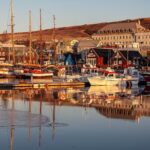
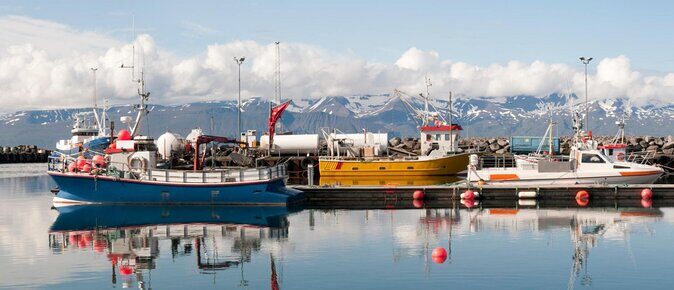
If you base yourself in Húsavík, you’re already in the right place for Iceland’s whale country. This tour runs from the local Husavik Adventures dock, and it focuses on Skjálfandi Bay—the kind of area where more than 10 whale and dolphin species visit each year.
You also get the big advantage of a RIB: it’s fast enough to cover water quickly, but small enough that you’re close to the action once the crew finds it. For me, that combination matters, because whale watching is all about timing, and timing is easier when the boat can respond fast.
You can also read our reviews of more boat tours in Akureyri
The boat setup: why 12 seats can beat big ships
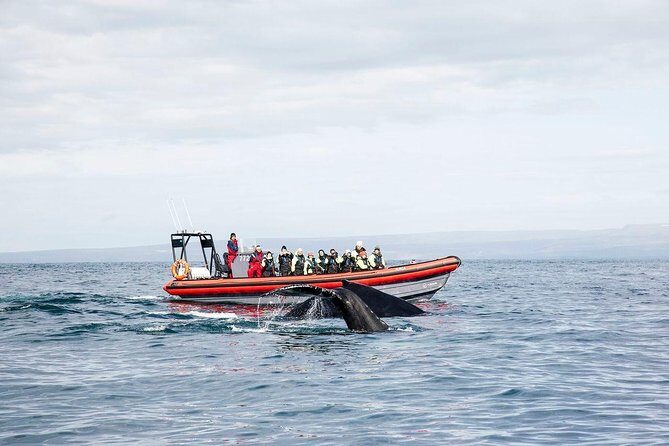
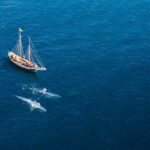
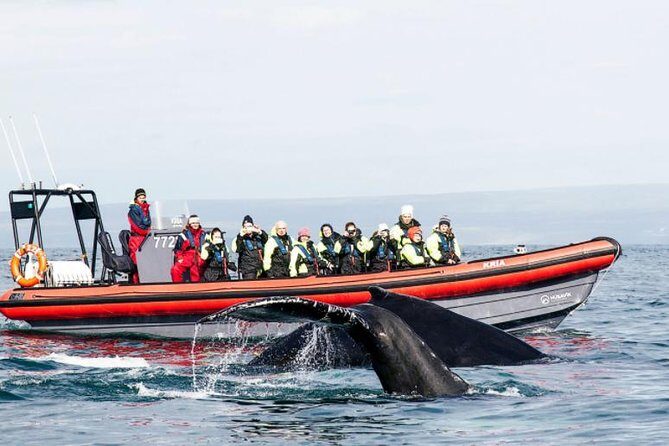
Most whale tours use bigger boats with lots of people. Here, the RIB limits the group to 12 travelers or fewer, which changes the whole feel.
You’re not trying to crane your neck over strangers. With a smaller deck, the captain can reposition the boat and everyone can get a workable view. More than one ride experience points out that the RIB design makes it easier to see whales close to the surface—especially when the crew gets quick notice of a blow or a surfacing pattern.
One more practical point: because you’re on a smaller vessel, you should expect movement. It’s not a slow cruise. You’ll want to treat it like a short, scenic adventure on the water, with a wildlife mission attached.
Warm gear and what to bring (so you don’t freeze)
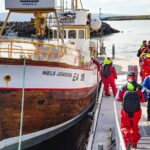
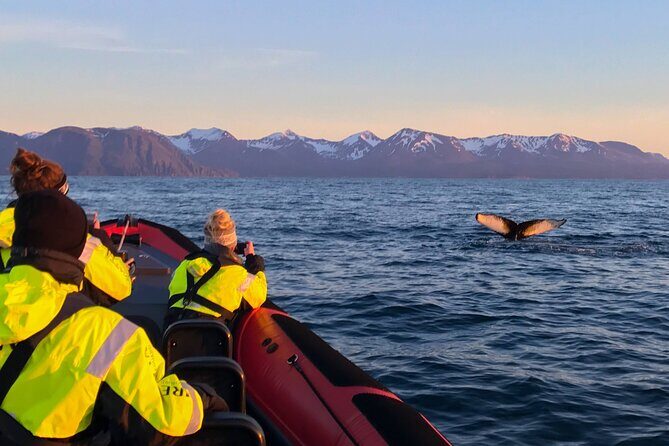
The tour includes warm water-resistant overalls (you wear them) plus a life vest that’s compulsory in Iceland. If conditions call for it, you also get a raincoat. That’s a solid base layer against cold spray and wind.
But the one thing that’s not included is as important as the overalls: gloves and a hat. On RIBs, wind and wet hands can become annoying fast. In Iceland, cold air seems to slip into everything—so pack warm socks and proper layers under the suit.
My practical rule: dress like you expect to get splashed and feel chilly at least once. Bring gloves and a hat anyway. Even on good weather days, you’ll be happier for it.
Skjálfandi Bay: how the crew finds whales fast
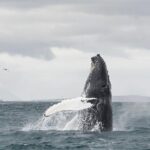
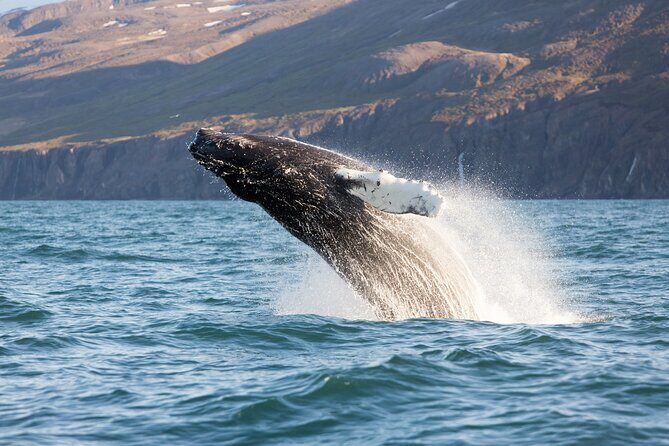
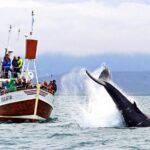
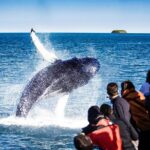
This trip starts with time on the water heading into Skjálfandi Bay, where the species list is broad. The tour specifically names humpback whales and minke whales, plus white-beaked dolphins and porpoises. That’s already a strong mix, and the bay’s reputation comes from the fact that many different species rotate through the area across the year.
The crew uses the RIB’s speed to search more ground than slower boats can cover. In practice, that means you spend less time staring at open water and more time in the areas where whales are likely to show up based on conditions.
Then comes the part you’ll appreciate even more: they also follow a clear approach style once they locate animals. That matters for your experience, because the goal is to get close enough for great viewing without turning it into a chase.
Responsible viewing: getting close without stressing whales
One of the most thoughtful things about this operation is the way they handle proximity. They use distance zones to manage boat behavior around whales, and you’ll notice they shift gears when animals come near.
Here’s the structure they describe:
- In the search zone (over 300 meters), they move efficiently while scanning for signs.
- In the approach zone (under 300 meters), they reduce speed and approach from the side rather than heading straight in.
- In the caution zone (under 100 meters), they slow further or turn off the propeller so whales can choose their path.
They also keep the interaction time focused, aiming not to spend too long on a single animal (they describe a target of about 20–30 minutes). If you care about respectful wildlife viewing, this is the kind of detail that gives you confidence your close encounter isn’t just thrill-seeking—it’s handled with rules.
You can also read our reviews of more whale watching tours in Akureyri
Lundey and puffins: what changes by season
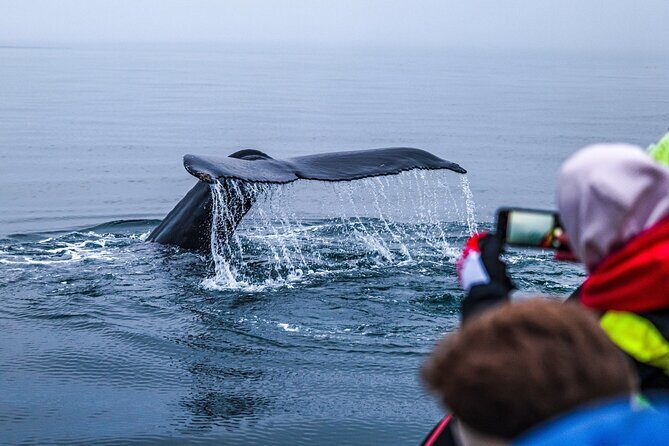
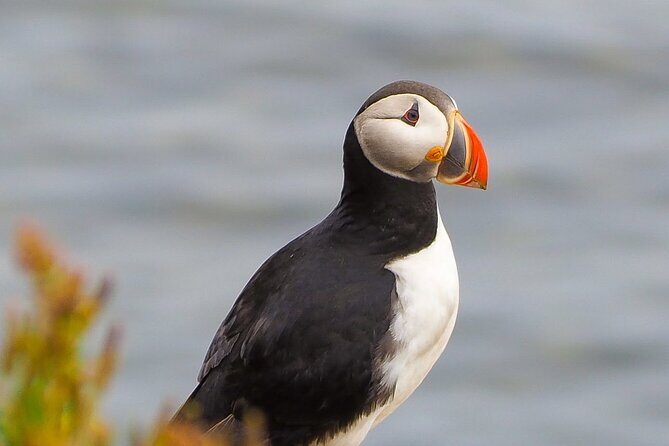
Lundey—often called Puffin Island—is one of the highlights. During puffin season (about 15 April to 20 August), you’re likely to see lots of puffins on land and at the waterline nearby, with birds flying and going after food.
When you’re inside that window, this tour feels like a true combo trip: big whales in the wider bay, then a concentrated bird moment at Lundey.
Outside puffin season, your experience becomes big-whales-only. In other words, you don’t go out expecting puffins year-round. If you’re traveling in winter or shoulder season, you’ll still be out for marine mammals, but the Lundey bird portion is not the focus.
So if puffins are a top goal, plan around the season dates. It’s one of the easiest ways to protect your expectations.
Tjörnes peninsula: the fossil bonus stop
Not every whale tour includes anything on land. Here, you get a stop that connects the marine trip to Iceland’s geology: the Tjörnes peninsula, known for fossil layers.
The tour notes that the oldest layers are about two million years old. That’s an eye-opener when you’re sitting in a weather suit on a boat thinking only about whales. It’s also a reminder that Iceland’s story isn’t just volcanos and waterfalls—it’s time, rock, and what life left behind.
Even if the fossil stop is brief, it adds variety to a trip that otherwise stays fully at sea.
The 2-hour pacing: why it feels just right
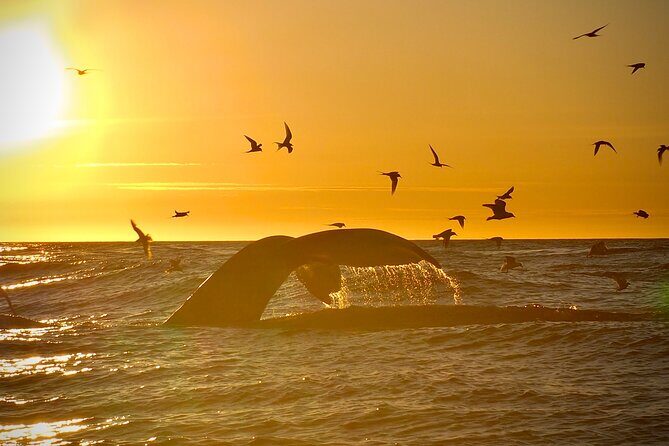
The tour is about 2 hours, which is long enough to do real searching and still short enough to keep energy up. On whale days, you can spend time waiting for surfaces. On slow days, you want enough boat time to find new areas.
A smaller RIB group helps here too: fewer people means faster movement on board when the captain needs to reposition. Your best sightings often happen right after the crew spots something—so the timing is built for getting to those spots quickly, not for leisurely sightseeing.
If you’re trying to fit this into an already full Húsavík day, two hours is a workable chunk. It won’t wreck the rest of your schedule, even if you’re soaked by the end.
Captain and guide roles: what you gain from the split
Another detail that improves the experience is the way the crew is structured. The guide is separate from the driver/captain, which is a smart setup on a fast boat.
It means the captain focuses on handling waves and getting the RIB into the right position, while the guide handles wildlife scanning, species explanations, and live narration. You’ll hear names and behaviors tied to what you’re seeing, and that turns the spotting from random luck into something you can follow in real time.
You may also hear different guide personalities on different days. From the crews connected with this tour, names like Austin and Alessandra show up, while captains such as Danny are mentioned for smooth navigation. Even if your crew differs, the core idea stays the same: one person drives, one person talks and guides.
What you might see: the real wildlife mix
You’ll be chasing whales and dolphins, and the named possibilities are strong. The tour calls out humpbacks and minke whales, plus white-beaked dolphins and porpoises. It also notes that more than 10 species visit the bay each year.
From the field notes that people bring back, you might also get extras such as pilot whales and even a rarer sighting like Northern bottlenose whale. Puffins are the seasonal extra, most exciting when Lundey is active.
This is where to keep your mindset flexible. Whale watching is nature, not a vending machine. But the good news is that the bay supports multiple species, so if one sighting is quiet, you’re still likely to get other marine life—dolphins, porpoises, or multiple whale surfaces during a good run.
Who this tour suits best
This is a great choice if you:
- Want the best odds of close viewing from a small boat.
- Like hands-on wildlife watching with a guide who talks while you’re on the water.
- Travel with kids who can handle cold gear and active movement (the minimum is 8 years old or 130 cm).
It’s also a good fit for photographers who want close, fast positioning, not a long, distant scan. On the other hand, if you hate rougher water movement or you’re extremely sensitive to cold spray, you’ll want to be honest with yourself. The gear helps, but the RIB experience is still an outdoor, wind-and-water activity.
Price and value: is $203.16 worth it?
At about $203.16 per person, this isn’t the cheapest activity in Iceland. But for what you’re paying for, it can be good value.
You’re getting:
- A small-group RIB (up to 12) that improves viewing chances.
- Two roles working at once: a captain navigating and a guide doing real-time wildlife commentary.
- Warm water-resistant overalls and a life vest included.
- About two hours of actively searching in Skjálfandi Bay, with the speed to reposition quickly.
If you compare that to bigger-ship whale tours, the difference is the “time spent near animals” and the “how many people can see the surface.” When you only have a short window to enjoy Húsavík, this style of tour is designed to maximize your time on whale water, not just time on a boat.
Practical cautions: cold, wet, and the occasional surprise
Plan for wet conditions. Even when the weather looks fine before you leave, sea spray can find you. Many people mention getting wet during the run out and the return, and the solution is the gear plus your own hat and gloves.
Also remember puffins are seasonal. If you’re traveling outside mid-April to mid-August, you should treat this as a big-whales mission.
Finally, weather can shut down the schedule. The tour needs good conditions to run safely, and last-minute changes can happen when sea state turns rough. If you can, give yourself flexibility in your itinerary so one canceled slot doesn’t ruin the whole week.
If you’re traveling with family and kids, one more heads-up is fair: because weight distribution and stability can matter on fast boats, the crew may make quick seating adjustments for safety. If staying together is important, tell the crew when you check in.
Should you book this RIB tour in Húsavík?
I’d book it if your top goal is whale watching with real viewing chances and you’re willing to dress for cold, wet water. The small-group format, the guide/captain split, and the respectful approach style all point to a tour designed for high-quality encounters, not just a long ride.
Skip it or adjust expectations if puffins are your non-negotiable goal and you’re outside puffin season. Also, if you strongly dislike bouncy rides, don’t pretend a whale tour will feel like a calm harbor cruise.
If you want a short, high-odds wildlife outing with warmth included, this one fits well—and it’s an easy way to get out on Skjálfandi Bay for the kind of whale moments you’ll remember later.
FAQ
How long is the Big Whales & Puffins RIB boat tour?
It runs for about 2 hours.
Where does the tour start and end?
It starts at Husavik Adventures, Garðarsbraut, 640 Húsavík, Iceland, and ends back at the same meeting point.
What gear is included, and what should I bring?
The tour includes warm water-resistant overalls and a life vest. A raincoat is provided when needed. You should bring gloves and a hat, since those are not included.
Are puffins guaranteed?
No. Puffin season is about 15 April to 20 August. Outside that period, the trip focuses on big whales only.
What whales and marine life might I see?
Skjálfandi Bay is known for humpback whales and minke whales, plus white-beaked dolphins and porpoises. More than 10 species visit the bay each year.
How old do kids need to be?
Children must be accompanied by an adult. The minimum age onboard is 8 years old, or 130 centimeters in height.
What happens if the weather is poor?
The experience requires good weather. If it is canceled due to poor weather, you’ll be offered a different date or a full refund.