Volcano power, minus the driving. This full-day group trip strings together Northern Iceland’s most eye-stopping Myvatn-area highlights with easy round-trip transfers from Akureyri. You get the waterfall, the weird crater shapes, the lava formations, a cave tied to tectonic plates, and sulphur-steam geothermal scenery—plus a guide who turns it all into stories you can actually use while you’re there.
I especially like two things: the stop-by-stop guidance that keeps the day moving smoothly without stressing you out over timing, and the chance to walk through places like Dimmuborgir’s lava sculptures with real context (including how they formed and the local troll tales). The group format also helps if you want photos and explanations without planning a route.
One drawback to keep in mind: this is a sampler course. Each main stop is time-limited, so if you love slow wandering and long, unhurried hikes at one site, you might wish you had more hours on the ground.
In This Review
- Key moments that make this tour worth your time
- From Akureyri With a Plan: Transfers That Let You Enjoy the Day
- Godafoss First: A Waterfall With History Built In
- Skútustaðagígar Pseudo-Craters: The Weird Shapes That Need Explaining
- Dimmuborgir Lava Formations and Troll Tales
- Grjótagjá Cave: Where Tectonic Plates Show Themselves
- Namafjall Hverir Geothermal Area: Steam, Sulphur, and Smell-First Magic
- The Pace: Not Rushed, But You Won’t Park at One Spot
- Guides Make It: When Stories Meet Science
- Price and Value: What You’re Getting for $123.92
- Who This Works Best For (and Who Might Skip It)
- Should You Book This Lake Myvatn Classic Tour?
- FAQ
- How long is the Full Day Lake Myvatn Classic tour?
- What does the tour cost and what’s included?
- Do I get pickup from Akureyri?
- How many people are in the group?
- Is a mobile ticket used?
- Which stops are included?
- What happens if the weather is poor?
Key moments that make this tour worth your time
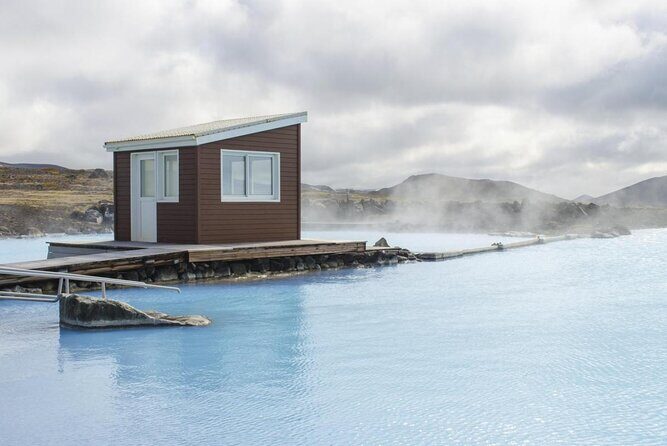
- Round-trip transfers from Akureyri: show up, sit back, and let the driving be someone else’s job
- Small group size (max 17): easier questions, less chaos at the photo stops
- Dimmuborgir lava sculptures + caves: a walking stop where the science and the folklore actually connect
- Grjótagjá cave and the plate crack: you learn what you’re looking at, not just that it’s impressive
- Namafjall Hverir geothermal area: steam vents, sulphur mud pits, and that unmistakable geothermal smell
- Stops with free admission: you’re not stacking extra ticket costs on a day trip
From Akureyri With a Plan: Transfers That Let You Enjoy the Day
Starting in Akureyri makes a huge difference. You meet at the Hof Cultural and Conference Centre on Strandgata 12, and the tour ends back at that same meeting point. If pickup is offered where you’re staying, it’s one less thing to worry about.
What I like about this setup is the trade-off: you’re spending your time looking at Iceland, not figuring out parking, gas, and roads at the exact moment you’re cold, tired, and trying to remember where that one viewing area was. The drive itself becomes part of the experience too—Northern Iceland’s scenery changes fast, and you’re not stuck doing GPS gymnastics.
The day runs about 6 hours, and the group stays under 17 people. That matters because each stop is outdoors, with photo moments and short walks. Smaller groups keep things smoother when the bus pulls up and everyone’s deciding where to go first.
You can also read our reviews of more tours and experiences in Akureyri
Godafoss First: A Waterfall With History Built In
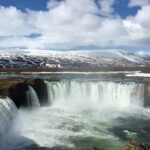
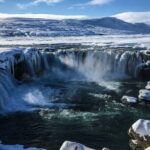
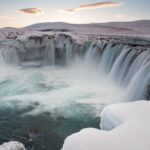
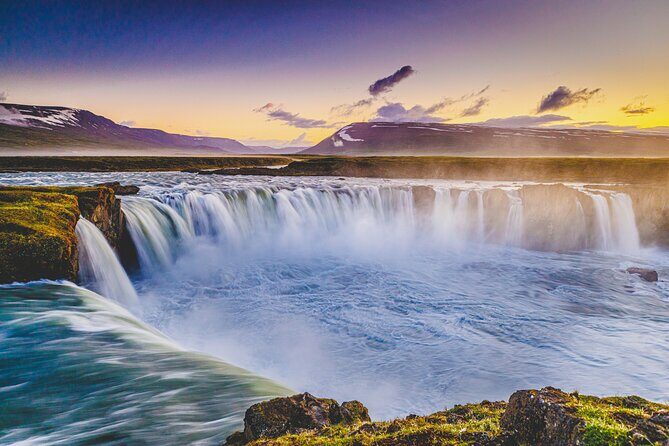
Your first major stop is Godafoss, reached after about a 35-minute drive from Akureyri. You get roughly 40 minutes there, and admission is free.
Godafoss is shaped in a way that makes you slow down even if you’re in a hurry. It’s also tied to Icelandic history, and that’s the point of the guided stop: you’re not just staring at water falling—you’re learning why this waterfall mattered. That context makes the photos feel less like snapshots and more like a story you can explain later.
Practical tip: plan on standing, walking a bit, and shifting viewpoints. Bring layers and expect changeable weather. Iceland weather has a talent for being fine, then not fine, then fine again.
Skútustaðagígar Pseudo-Craters: The Weird Shapes That Need Explaining
Next up are the Skútustaðagígar crater formations near the Lake Myvatn area. You’ll spend about 15 minutes here, and admission is free.
These are sometimes called pseudo craters, and that word actually matters because it signals a key idea. This isn’t the usual story of a volcanic explosion creating a classic crater. Your guide will explain what made these shapes form the way they did, turning the scene from strange into understandable.
Even in a short stop, these craters are the kind of place where a guide helps you notice details you’d miss on your own. You see the form, you get the mechanism, and suddenly you’re not just collecting a photo—you’re collecting knowledge.
Dimmuborgir Lava Formations and Troll Tales
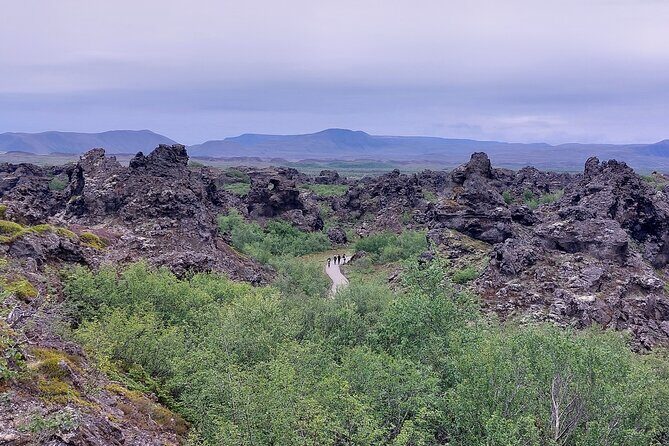
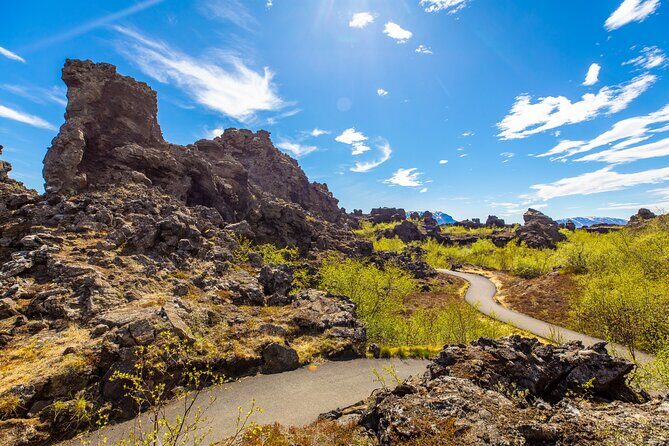
Then comes Dimmuborgir, and this is where the tour feels most like a guided walk through a living geology lesson. You get about 45 minutes here, again with free admission.
You’ll wander among lava sculptures, pillars, and caves—natural shapes that look almost built. The best part is how the guide connects the visuals to what happened in the past, including how the area formed about 2,500 years ago.
And yes, there are folktales too. Your guide shares troll stories tied to the region, which is a smart move. It keeps the day from becoming purely technical. You still learn the science, but you also get the cultural layer that makes Iceland feel like a place with memory, not just rock.
If you like photography, this is one of your prime windows. Go early in the stop for your first viewpoints, then circle back once you know where the dramatic shapes are. You’ll save yourself from sprinting later.
Grjótagjá Cave: Where Tectonic Plates Show Themselves
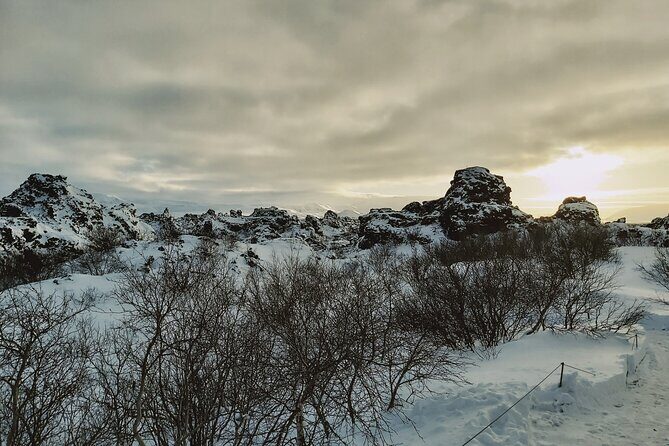
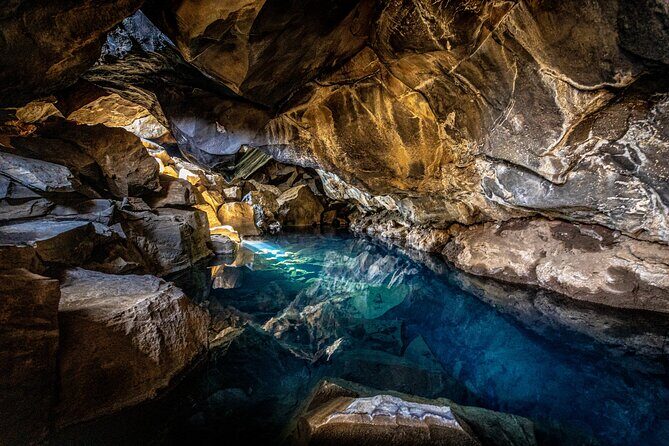
After Dimmuborgir, you’ll head to Grjótagjá, a small cave in the Lake Mývatn area. You’ll have about 20 minutes, and admission is free.
This is a stop with two sides: geology and human history. The cave was once a popular bathing spot, but geological activity between 1975 and 1984 raised the water temperature so bathing has not been possible since. That’s one of those details that changes how you look at a place. You’re not just seeing a cave—you’re seeing a landscape that actively changes and affects real lives.
Your guide will also point out the crack between two tectonic plates and explain what it means in terms of continental drift, mantle plumes, and volcanic activity in Iceland. If you’ve ever wondered how Iceland’s dramatic geology is actually connected to the big planetary story, this is your moment.
Time is short here, so don’t overthink it. Look once for the big features, then let the guide show you what to focus on. Your questions will be easiest to ask at the start, before the group starts moving again.
Namafjall Hverir Geothermal Area: Steam, Sulphur, and Smell-First Magic
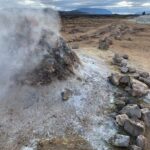
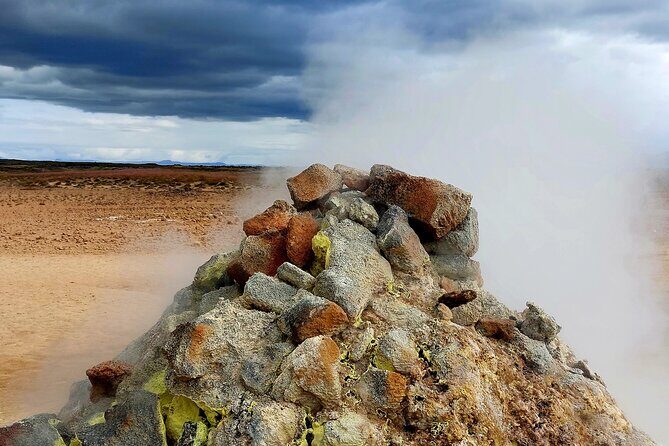
The day ends with Namafjall Hverir, a geothermal area at the foothill of Namaskard near Lake Myvatn. You’ll spend about 20 minutes there, with free admission.
Here, the experience is sensory. You’ll see colourful sulphur mud pits, steam vents, cracked mud, and fumaroles. And you’ll likely notice the smell—this part is explicitly described as a bit sulphur-heavy. That’s not a flaw. It’s the point. This is Iceland’s heat working close to the surface, and your nose gets to be part of the lesson.
This stop is also ideal if you want variety. After waterfalls and lava formations, geothermal areas feel like a different planet. The guide’s commentary helps you understand what you’re looking at—why the ground is cracked, why steam is rising, and why sulphur shows up so strongly.
Quick reality check: if you’re extremely sensitive to smells, this is the one stop where you’ll feel it most. You can still enjoy it, but you should mentally prepare for that sulphur note.
The Pace: Not Rushed, But You Won’t Park at One Spot
This tour is built around covering several signature sites rather than spending a long time at only one. You’ll get enough time to walk and take photos at each stop, and the flow is designed to keep you moving without feeling like you’re being dragged.
Still, expect a “see it, learn it, move on” rhythm. One of the most practical things to decide beforehand is how you like to travel:
- If you’re happy with guided highlights, this works well.
- If you want long stays, your schedule might feel tight.
Also, the tour is about comfort more than luxury. You may find bus seating on the basic side, so bring a mindset of practical comfort. Layers help too—outdoors time adds up fast, and Iceland weather is not a steady-state system.
Guides Make It: When Stories Meet Science
One reason people rate this tour highly is the human factor. The guide work is consistently praised for being engaging and patient—especially with families. Names that have shown up in the tour experience include Ingimundur, Graham, Helly, Lilia, and Inga. The pattern is clear: guides do more than read facts. They explain what you’re looking at, and they keep the energy up for different age groups.
What this means for you: you’ll get better photos. Not because the guide handles a camera, but because you’ll know where to look and what feature matters. You’ll also spend less time guessing. Iceland is big on dramatic scenery, but it’s even better when you understand the mechanism behind the drama.
If you’re the type who likes learning while you walk, you’ll feel the value of a guide here.
Price and Value: What You’re Getting for $123.92
At about $123.92 per person, this tour isn’t the cheapest option in the region—but it’s also not a money-leak. The value comes from bundling several expensive-in-time parts into one package.
You’re paying for:
- Round-trip transfers from Akureyri
- A structured route through multiple signature sights
- Local guided commentary at each stop
- Free admission at the listed stops
When free entry is baked into the day at several points, the real comparison isn’t just the ticket price—it’s what you’d spend and how much effort it would take to manage it yourself: transportation, navigation, and time.
Another value point: the group size is limited to 17, which helps keep the day from turning into a slow-moving line of people. That matters when you’re trying to hear explanations and also move for photos.
Who This Works Best For (and Who Might Skip It)
This is a great fit if:
- You’re visiting Akureyri and want a focused full day without handling driving logistics
- You want both science and stories, especially for sites like Dimmuborgir and Grjótagjá
- You’re traveling with kids or mixed ages and want a guide who can keep everyone engaged
- You want a route that hits several Myvatn-area highlights in one go
It might not be your best choice if:
- You want to linger for hours at one location and go at your own pace
- You’re comfortable driving and you’d rather build a custom route with extra time buffers
For most people, though, the mix of stops and commentary makes it feel efficient in a good way: you get a broad sampling of what makes the region so distinctive.
Should You Book This Lake Myvatn Classic Tour?
If you want the Myvatn area highlights without the stress, I’d say yes. The biggest strength is how the day is assembled: transfers from Akureyri, a logical route through major sites, and guide-led storytelling that turns volcanic features into understandable scenes.
One more thing to factor in is weather. This experience requires good conditions, and if it gets canceled due to poor weather, you’ll be offered another date or a full refund. That flexibility is helpful when you’re planning around Iceland’s mood.
So the decision comes down to your style. If you like guided highlights, short walks, and learning on the way, this tour earns its place on your itinerary.
FAQ
How long is the Full Day Lake Myvatn Classic tour?
The tour runs for about 6 hours.
What does the tour cost and what’s included?
It costs $123.92 per person and includes round-trip transfers from Akureyri. Admission is listed as free for the stops.
Do I get pickup from Akureyri?
Pickup is offered, and the meeting point is the Hof Cultural and Conference Centre, Strandgata 12, 600 Akureyri. The tour ends back at the meeting point.
How many people are in the group?
This tour has a maximum of 17 travelers.
Is a mobile ticket used?
Yes, the tour provides a mobile ticket.
Which stops are included?
The route includes Godafoss, Skútustaðagígar, Dimmuborgir lava formations, Grjotagja Cave, and Namafjall Hverir.
What happens if the weather is poor?
This experience requires good weather. If it’s canceled due to poor weather, you’ll be offered a different date or receive a full refund.