Those north Iceland roads can test you.
This Lake Myvatn, Dettifoss and Godafoss day tour packs giant geology into one long, guided loop. You start in Akureyri with a hotel pickup, then you bounce between volcanic lakes, boiling ground, and waterfalls that feel like they run on pure power.
I really like the tight mix of famous stops and “wait, what is that?” places around Lake Myvatn. I also like that it’s a small group (max 17) with a guide who talks geology and weather, like Nordbert’s careful weather checks and the traction help he offered on icy stretches.
One possible drawback: this is a time-tight day with real walking at Dettifoss, and icy conditions can shrink your viewing time fast if the path is rough or delayed.
In This Review
- Key highlights worth your attention
- From Akureyri to Dettifoss: a long day with a real plan
- Price and value: what you’re actually paying for
- Pickup, meeting points, and the smart way to prepare
- Stop 1: Lake Myvatn for 5 hours of geothermal variety
- Nature Baths (Jardbodin): relax, but budget the extra time and sulfur
- Dettifoss (and Selfoss when conditions allow): Europe’s power test
- Godafoss: quick stop, big payoff
- Namafjall Hverir: mud pools and steam vents
- Grjotagja cave area: Game of Thrones, plus tectonics
- Skútustaðir pseudocraters and Dimmuborgir Dark Castle lava
- Guides and group size: why small matters here
- Timing reality: when the schedule feels tight
- Who this tour is best for
- Quick booking advice: my practical take
- Should you book?
- FAQ
- Is pickup available in Akureyri?
- What time does the tour start?
- How long is the tour?
- How big is the group?
- What’s included in the price?
- Do I need to pay extra for Myvatn Nature Baths?
- Is food provided?
- Is the tour offered in English?
- Is it safe to do in cold weather?
- What if the tour is canceled?
Key highlights worth your attention
- Akureyri pickup that saves time before a big day out of town
- Small-group pace (max 17) instead of getting lost inside a big bus load
- Volcanic “big names plus extras”: Dettifoss, Godafoss, and Myvatn sites like Hverir, Dimmuborgir, Grjotagja
- A guide who manages risk (spikes/crampons advice and route caution when it’s slippery)
- Nature Baths are the one add-on that costs extra and can feel rushed
- Weather-dependent routing around the waterfalls, sometimes changing what you can reach
From Akureyri to Dettifoss: a long day with a real plan
This tour is built for a full north-Iceland day, roughly 7 to 9 hours from start to finish, leaving at 9:00 am. You’ll ride in a climate-controlled vehicle with your group, and the driver/guide keeps the route moving so you can hit multiple sites rather than just one big waterfall.
The tour also promises a guided look at volcanic activity in north Iceland. That matters here, because the ground looks otherworldly—but it’s not random. You get the “why” behind pseudocraters, steam vents, and lava formations, so the stops don’t feel like a checklist.
Small-group format is a big deal on a day like this. With a max of 17 people, you’re more likely to keep up, ask questions, and get practical guidance when conditions turn icy.
You can also read our reviews of more tours and experiences in Akureyri.
Price and value: what you’re actually paying for
At $311.55 per person, this isn’t a cheap outing. The value comes from what’s included: guided tour, transport, and pickup/drop-off.
Most stops have free admission—including Lake Myvatn’s main area, Dettifoss, Godafoss, and the geothermal/lava sites like Hverir (Namafjall), Grjotagja area, Skútustaðir pseudocraters, and Dimmuborgir. The one big exception is the Myvatn Nature Baths, where the entrance fee is ISK 7,400 per person and not included.
What you don’t get is also part of the math. Food and drink aren’t included, so you’ll want to plan snacks and water, especially on a day where you may be moving between stops with limited downtime.
If you’re someone who wants a guided, efficient route across multiple signature sites (instead of renting a car and doing the driving-plus-navigation math yourself), this price can start to make sense.
Pickup, meeting points, and the smart way to prepare
Pickup is offered, and there are lots of possible hotel meeting points in Akureyri. The exact spot depends on where you’re staying, and some locations list a meeting point rather than direct pickup.
For the smoothest start, treat “9:00 am departure” as the moment things begin, not when you should roll out of bed. One practical note from the real world: on winter schedules, being ready earlier (around 8:30 am) can keep you from feeling rushed when weather tightens up the plan.
Bring warm layers. This is north Iceland, and the day includes cold walking time—especially near waterfalls.
Stop 1: Lake Myvatn for 5 hours of geothermal variety
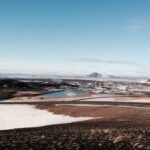
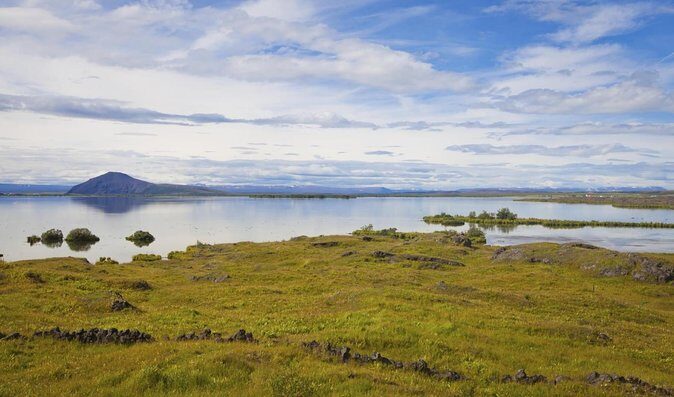
Lake Myvatn is the tour’s main “slow down and understand the area” anchor, with about 5 hours for the Lake Myvatn sites. This is one of the best parts of the day because it’s long enough to absorb more than one type of scenery: volcanic lake edges, geothermal areas, and viewpoints tied to how this region formed.
The tour framing matters here. If you’ve ever looked at Iceland’s geothermal zones and wondered why one area looks muddy, another steams, and another is rock-still, this is the portion where the guide can connect the dots.
Expect to walk a bit and shift between viewing spots. This isn’t a “stay on the bus and see a postcard” segment.
Nature Baths (Jardbodin): relax, but budget the extra time and sulfur
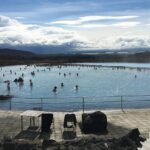
You’ll get a 1 hour 20 minutes stop at Myvatn Nature Baths (Jardbodin vid Myvatn), but the entrance fee is not included. That’s the big decision point in this itinerary.
Here’s the honest trade-off: the baths can be a cozy reset after cold air and volcanic ground. But the time may feel tight if you also planned a long soak and a leisurely snack.
Also be aware of the smell factor. One guide-led day left people feeling sulfur-scented for days, and that’s not surprising given what geothermal baths do. If you’re sensitive to strong odors, mentally prepare for that reality.
One more timing tip: the baths can be under construction at times, so you might see cranes in the surroundings depending on when you go. That doesn’t ruin the soak, but it can change your photos.
Dettifoss (and Selfoss when conditions allow): Europe’s power test
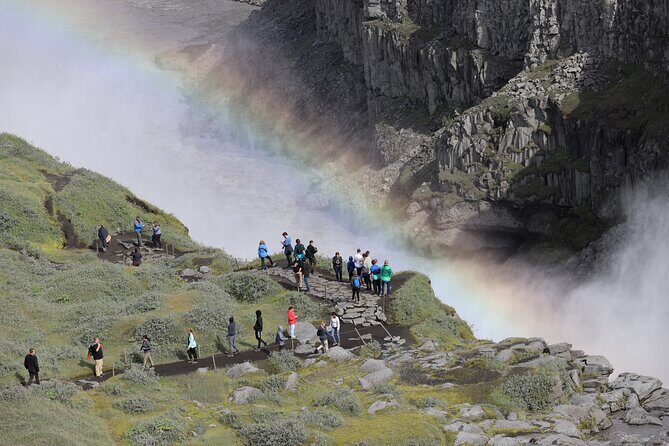
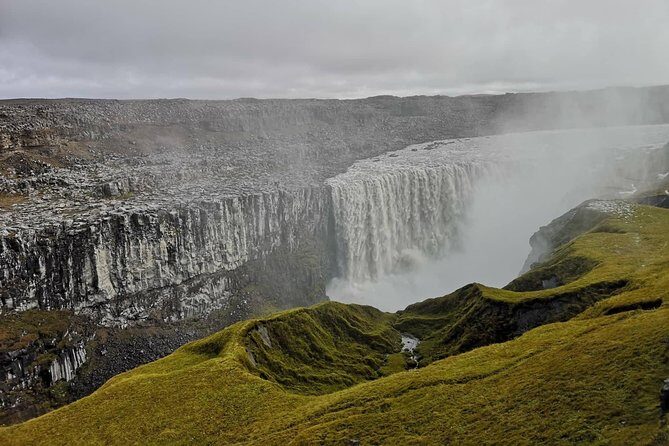
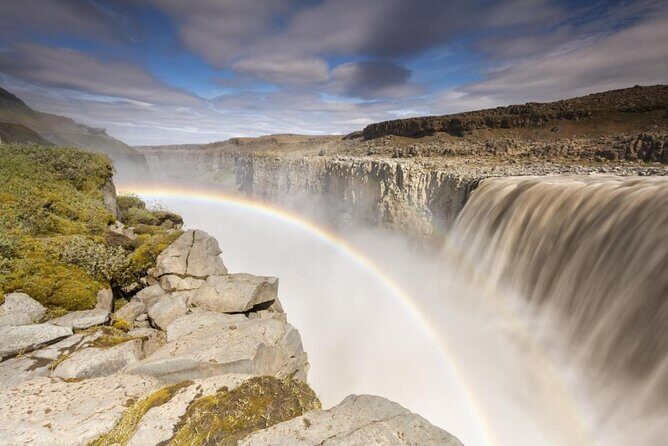
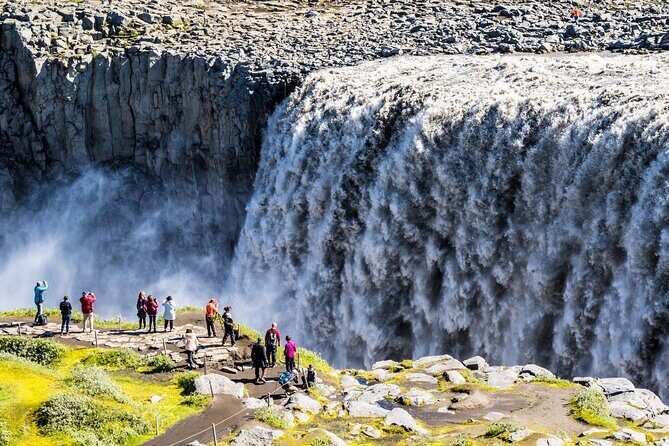
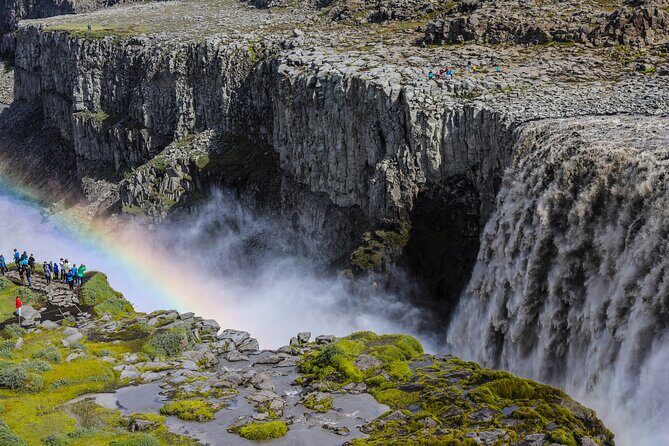
Dettifoss is the dramatic heavyweight: the tour aims for Dettifoss, described as Europe’s most powerful waterfall, and it may also include Selfoss depending on conditions.
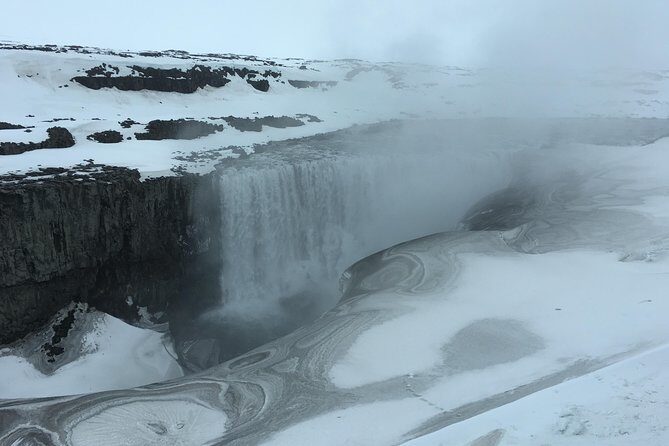
This is where the day’s risk level rises. The walk from the parking area to the falls can be treacherous in winter—ice can make footing hard, and time can get eaten by detours when paths are flooded or rerouted.
Some guides handle this well. Nordbert, for example, was praised for being careful about weather and even providing spikes for slippery terrain around Godafoss and Dettifoss. But don’t assume you’ll always have the right traction gear on your feet.
Practical advice: wear boots with real grip, and if you own crampons or traction spikes, consider bringing them. If you don’t, ask ahead and listen to what your guide recommends, because standing still to take a photo won’t be worth much if you feel unsafe on the approach.
Also note the time squeeze. With about 40 minutes on the stop, your actual “wow time” at the waterfall depends heavily on conditions and how quickly your group can return.
Godafoss: quick stop, big payoff
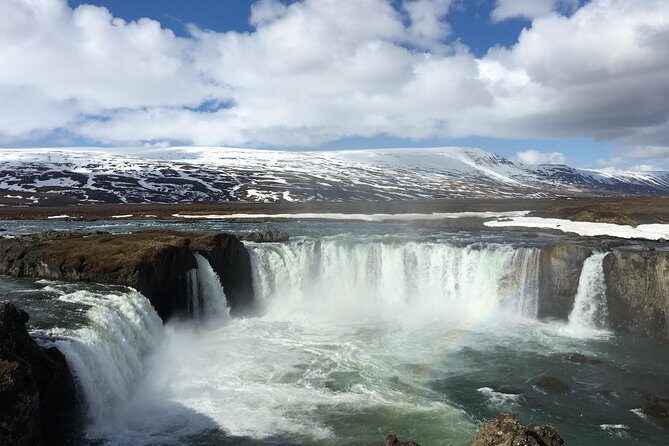
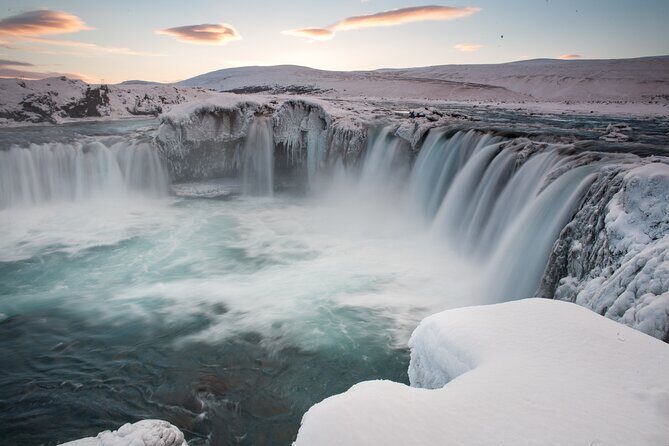
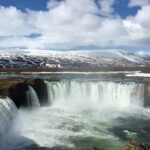
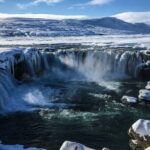
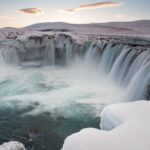
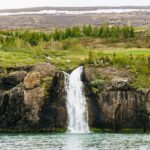
After Dettifoss, you’ll hit Godafoss, the “Waterfall of the Gods.” The stop time here is about 15 minutes.
That short window is a good reason to travel light—no wandering off, no “we’ll just walk back later.” Godafoss is worth the quick hit because it’s instantly recognizable and photograph-friendly, but you’ll want to be ready when you arrive.
If weather has already slowed the morning, think of this stop as the tour’s payoff sprint: see it, appreciate the shape and power, then move on.
Namafjall Hverir: mud pools and steam vents
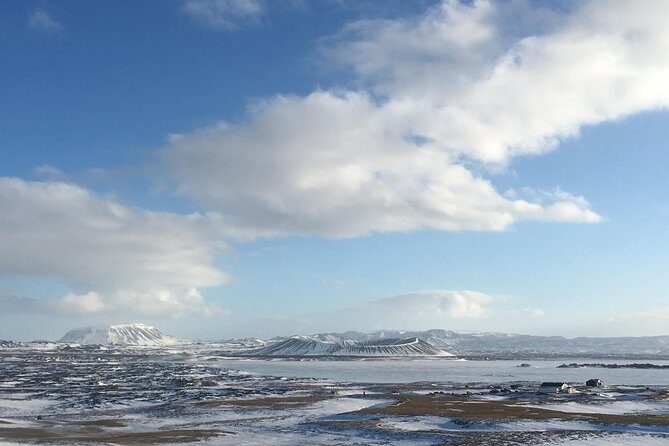
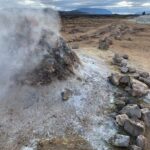
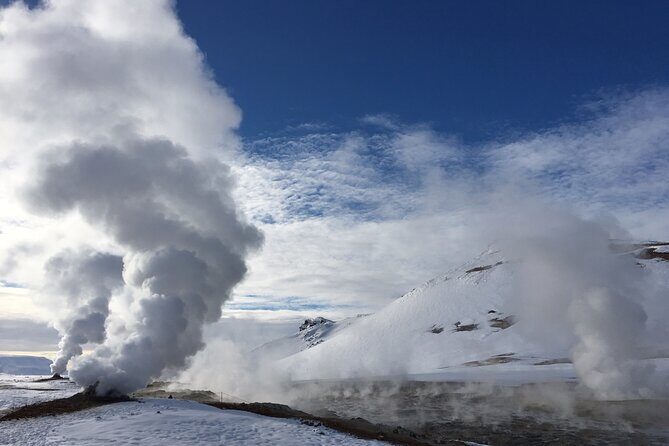
Next comes Namafjall Hverir, where you’ll visit the Hverir mud pools and natural steam vents/fumeroles. The stop is short—about 20 minutes—but it’s one of the most visually “alive” parts of the trip.
This isn’t just pretty scenery. Here the ground is literally active. You’re seeing geothermal output in different forms: steaming areas, bubbling mud, and steam-driven textures that don’t look like anything you’ll see anywhere else.
Bring patience. You might have to look twice to understand what you’re seeing—steam hides edges, and the most interesting activity can be slightly off-center from where you first stand.
Grjotagja cave area: Game of Thrones, plus tectonics
You’ll stop at the Grjotagja Cave and rift area, about 20 minutes. This is the stop that many people connect to pop culture, since it’s been featured in Game of Thrones. But the tour angle is bigger than fandom.
The site ties into the rift between the Eurasian and American Continents, so you get a sense of Iceland as a moving plate boundary—not just a faraway place with cool rocks.
If you like geology stories, this is a satisfying stop because the guide can explain why a cave and a rift look the way they do. It’s also a good break between the hotter geothermal zones and the heavier waterfall sections.
Skútustaðir pseudocraters and Dimmuborgir Dark Castle lava
Two quick stops round out the Lake Myvatn “science and scenery” arc.
- Skútustaðir (Skutustaoagigar): about 10 minutes, with pseudocrater views over the lake
- Dimmuborgir (the “Dark Castle” area): about 20 minutes, featuring lava formations
These aren’t long stops, but they’re memorable because they show how lava can shape the ground into structures that almost look built. The name “Dark Castle” isn’t random—it captures the eerie, fortress-like feel of the formations.
If the weather is miserable, these shorter stops can actually be a win. You can still get the geology without losing half the day to visibility problems.
Guides and group size: why small matters here
Guides show up in the details. Nordbert was repeatedly praised for weather caution and personal care for the group, including practical traction help. Other guides—like Arman, Icky, Amann, Tweety, Daniel, and Armaan—were praised for safe driving, local explanations, and keeping morale up even when conditions weren’t ideal.
That last point matters in north Iceland. You can plan all day long, but weather and road access decide what you can safely reach. In one case, the road conditions meant Dettifoss wasn’t reachable, and the guide adjusted to still show as much of the area as possible.
Small-group format supports this kind of flexibility. If you’re in a large group, delays can snowball. In a smaller group, the guide can often adapt more quickly.
Timing reality: when the schedule feels tight
This itinerary aims to cover a lot, and that’s part of the appeal. The trade-off is that it can feel tight—especially around the waterfalls and the Dettifoss walk.
Some people felt Dettifoss needed more time due to slow walking on icy paths and time lost to detours. Others felt the Myvatn Baths visit could be rushed if you want both soak time and time for food.
So ask yourself what you want most:
- If you want maximum variety, this does that.
- If you want a slower, linger-at-every-stop vibe, you might find the day compressed.
Who this tour is best for
This tour is a good fit if you:
- Want a guided introduction to north Iceland’s volcanic terrain
- Prefer many stops in one day over “just one site”
- Are comfortable with cold weather walking and changing terrain types
- Enjoy learning from a local guide who explains why the ground behaves the way it does
It’s less ideal if you:
- Struggle with slippery paths or cold hikes
- Want a long, uninterrupted soak time at the baths
- Can’t handle schedule changes if roads or access are limited by weather
Quick booking advice: my practical take
If you book, focus on preparation. Pack warm layers, wear traction-ready footwear, and bring a snack plan since food isn’t included. For the baths, plan that you’re paying extra and you might not get a super slow, spa-style pace.
Also keep your expectations flexible. The tour requires good weather, and access can change. That doesn’t mean the day fails—it means the guide may shift the balance toward what’s reachable safely.
Should you book?
Book this tour if you want one day that actually covers north Iceland’s main geological hits, with a guide who handles weather and safety and helps you understand what you’re seeing. The small group size, free admissions at most stops, and the range of sites—mud pools, pseudocraters, lava formations, caves, and waterfalls—make it a strong value for a guided “max sites” day.
Skip or reconsider if you’re aiming for a gentle stroll day or you know you’ll be uncomfortable with ice, short waterfall viewing windows, or the extra cost and time limits at Myvatn Nature Baths.
FAQ
Is pickup available in Akureyri?
Yes. Pickup is offered, with many listed hotel meeting points. Some locations use a meeting point option instead of pickup, so check your exact stop based on where you’re staying.
What time does the tour start?
The tour starts at 9:00 am.
How long is the tour?
It runs about 7 to 9 hours, depending on conditions.
How big is the group?
The tour has a maximum of 17 people.
What’s included in the price?
The price includes a guided tour, transport, and pickup and drop-off. Admission fees are included for most stops, but not for Myvatn Nature Baths.
Do I need to pay extra for Myvatn Nature Baths?
Yes. The Myvatn Nature Baths entrance fee is not included and is listed as ISK 7,400 per person.
Is food provided?
No. Food and drink are not included.
Is the tour offered in English?
Yes, it is offered in English.
Is it safe to do in cold weather?
The tour notes that you should check with your doctor if you have medical conditions that could affect your ability to hike in cold conditions. Dettifoss access involves cold, slippery terrain at times, so come prepared for that.
What if the tour is canceled?
The experience requires good weather, and it can be canceled due to poor weather or minimum traveler numbers. If it’s canceled for these reasons, you’ll be offered a different date or a full refund.