
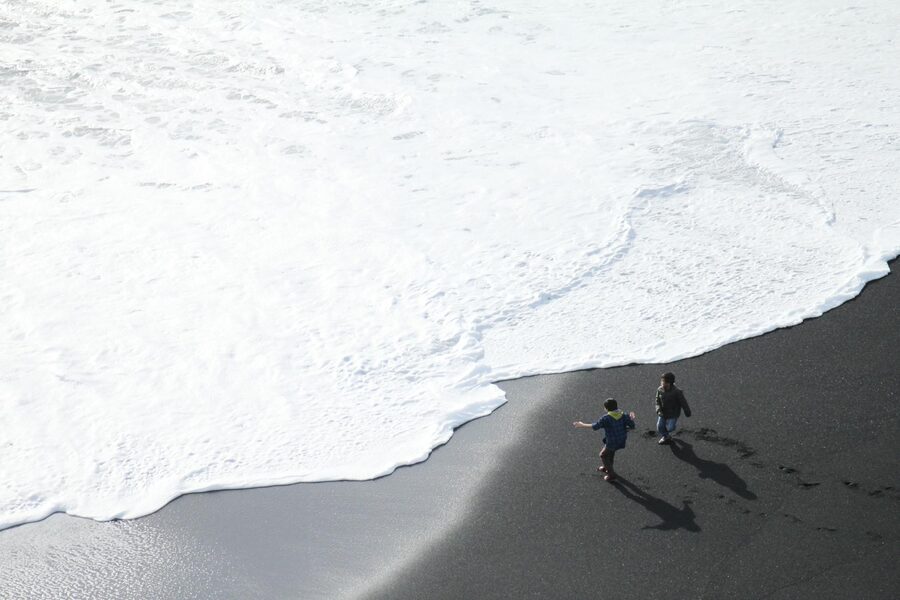
I grew up swimming at Laugardalslaug on Saturday mornings and queueing for the same hot dog at Bæjarins Beztu Pylsur that my grandparents queued for in the 1960s. I now take my own kids to the same pool and the same hot dog stand. So when friends from abroad ask, “Can we really bring the kids to Iceland?” my answer is yes, with three caveats and a lot of joy.
Iceland with kids works really well. It also works very differently from a beach holiday in Mallorca, and if you book it like one you’ll spend half the trip cold and confused. So this is the friendly, parent-to-parent version: when to come, how old the kids should be, where to stay, what to skip, what every Icelandic family does on a wet Sunday, and which day tours are actually worth your money. ISK pricing throughout, named operators, no fluff.
In This Article
- The first real question: is Iceland the right trip for your family?
- When to come with kids
- The pools, the secret weapon
- Reykjavik with kids: a day in Laugardalur
- The day tours that work with kids
- Animals: horses, puffins, sheep, and the fox
- Where to stay with kids
- Self-drive vs guided with kids
- Food: cheaper than you think, simpler than you fear
- What it actually costs
- Sample itineraries
- Five days based in Reykjavik
- Seven days, South Coast loop
- Ten days, Ring Road with kids 8+
- Four days for Christmas with older kids
- Weather, safety, and what to pack
- Three things I wish more families knew
The first real question: is Iceland the right trip for your family?
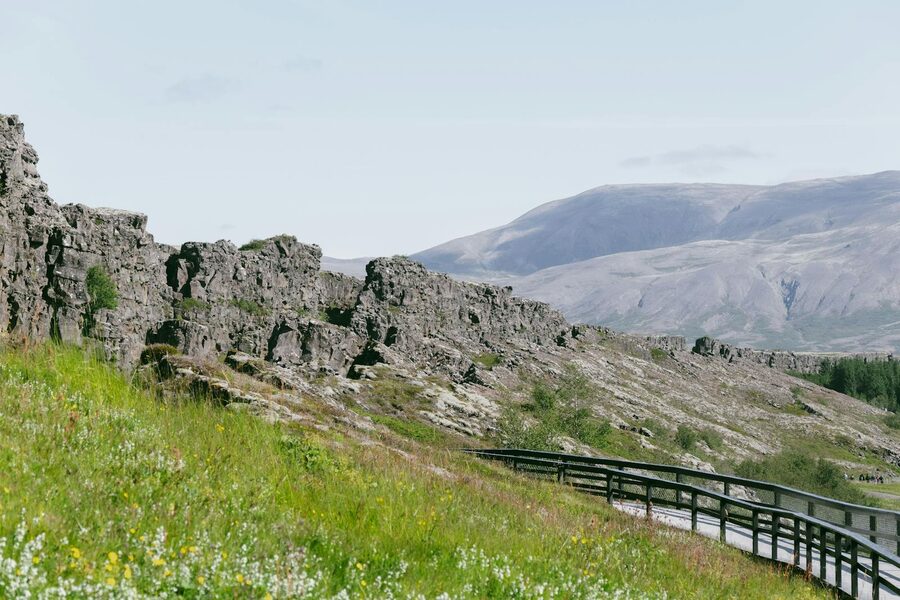
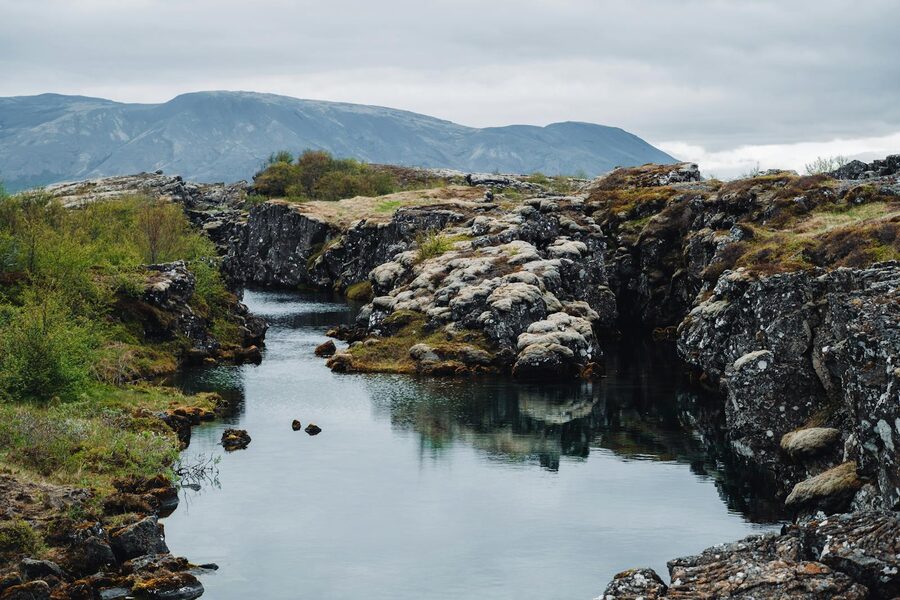
Iceland with school-age kids (roughly six and up) is brilliant. They can walk a km between car stops, sit through a 90-minute pool session, do a 3-hour whale watching boat without losing it, and they’ll remember the feeling of standing in a crack between two continents at Þingvellir. Teens love it for the photos and the slightly off-grid feeling.
Iceland with toddlers and babies is harder. Not impossible, plenty of Icelandic parents do it daily, but the trip is stretched: short days in winter, long drives between sights, no kids’ clubs at hotels, restaurants that don’t have a high chair stack by the door. People absolutely come and have a great time with a one-year-old. They also come back saying they wish they’d waited two years.
So the first real question, before the itinerary: how old are the kids, and what’s their tolerance for a 2-hour car ride followed by half an hour outside in the wind? If the answer is “fine,” book the trip. If the answer is “they melt down at 90 minutes,” consider a Reykjavik-only base with short day tours instead of a Ring Road epic.
When to come with kids
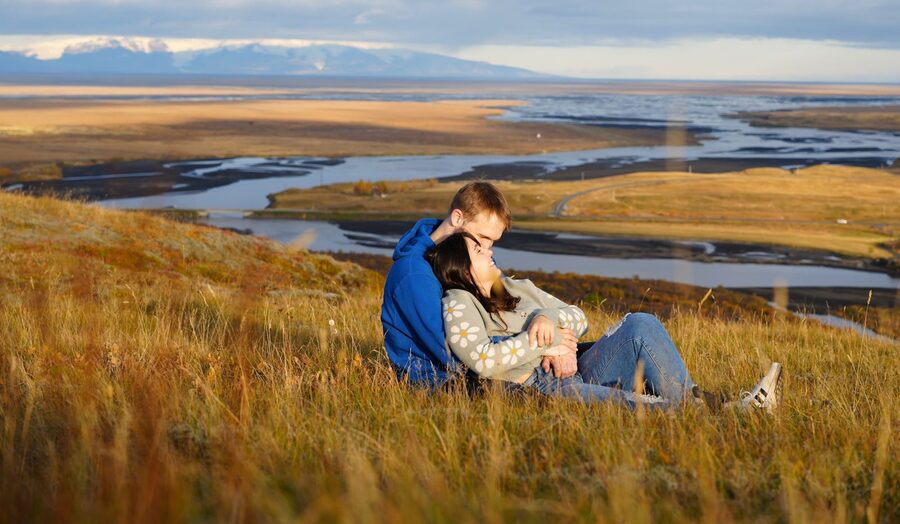
Summer is the right answer for most families on a first trip. June, July, and August give you 18 to 21 hours of daylight, temperatures of around 10-15°C, mostly mild weather, and the F-roads to the highlands are open if you ever want them. Driving at 9pm in full sun is a strange experience and the kids tend to love it. So do the parents, until they realise the kids will not sleep.
The midnight sun is the only real summer downside with small children. Bring blackout curtains or an eye mask, or book accommodation that already has good blinds. By July most Reykjavik hotels know to mention this; outside the capital, a sleep mask saves the holiday.
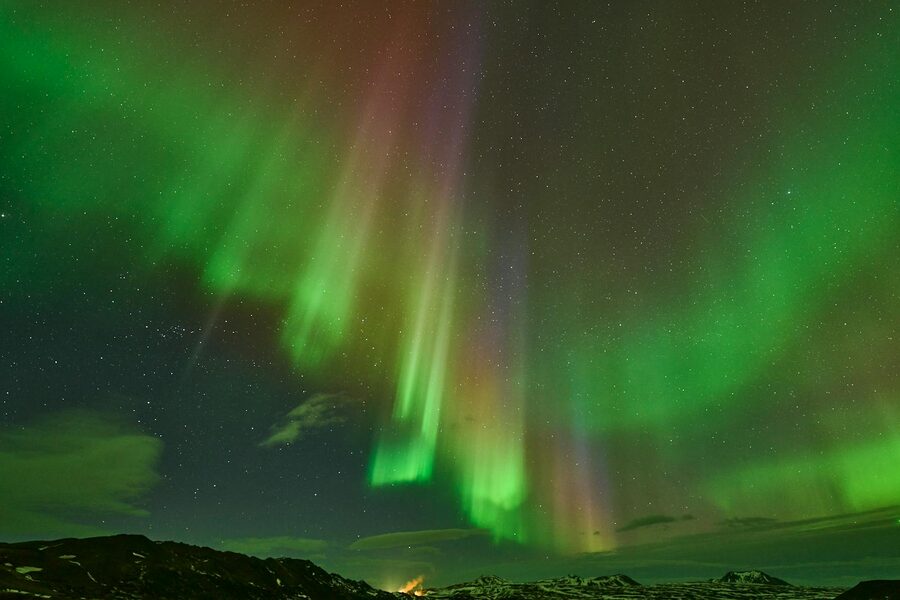
Late August into early September is the sweet spot if you can pull the kids out of school: long days are still long enough, the crowds drop off, and the aurora season starts again from late August. Prices ease in early September too.
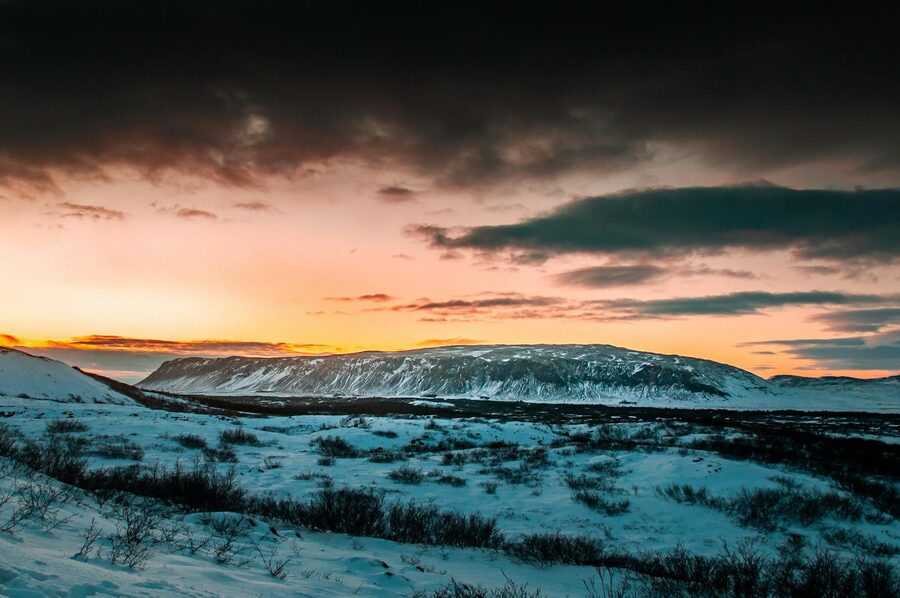
Christmas is wonderful for kids who’ll buy into the Yule Lads, the thirteen mischievous brothers who come down from the mountains one by one in the thirteen nights before Christmas. Kids leave a shoe on the windowsill from 12 December onwards and find a small gift (or a potato, if they’ve been bad) in the morning. The whole country goes a bit mad with lights, fireworks on New Year’s Eve are insane, and the pools stay open in the dark. Just know that the sun rises around 11:30 and sets at 3:30, so you have about four hours of usable outdoor light a day. That’s enough for one big sight, one café, one pool, and the rest is hot chocolate and Lego.
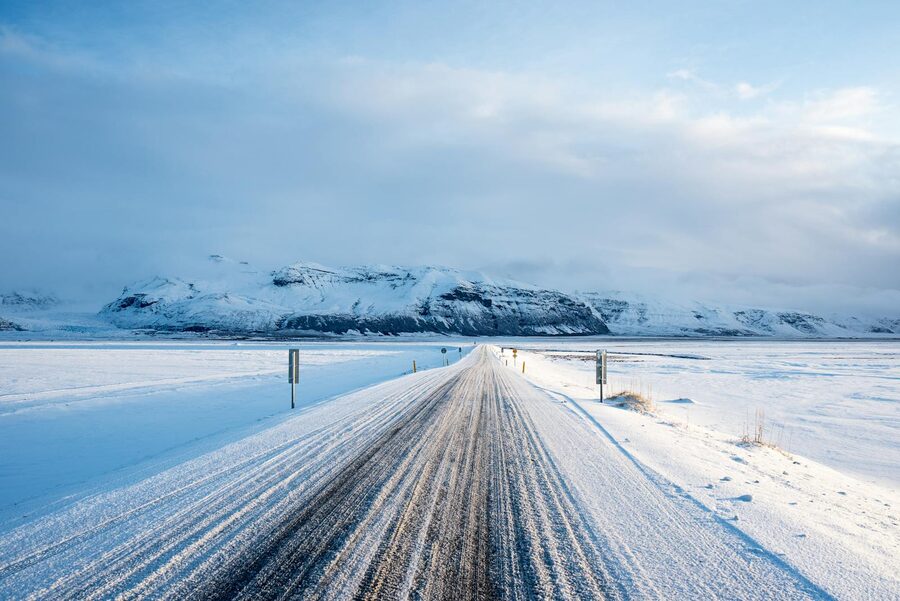
I would not bring small children in October or January unless you have a specific reason. The days are short, weather can close roads at no notice, and the highlights (waterfalls, geysers) work in any season but the drives between them get tense. November to February with teens who want to see the Northern Lights is fine; with a four-year-old it’s a tougher ask.
The pools, the secret weapon
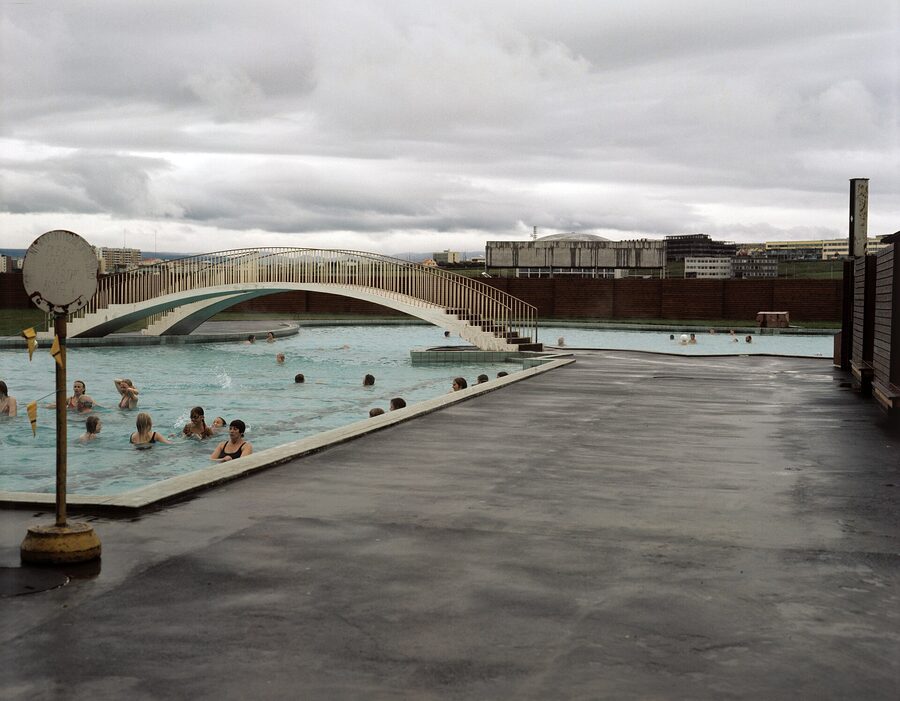
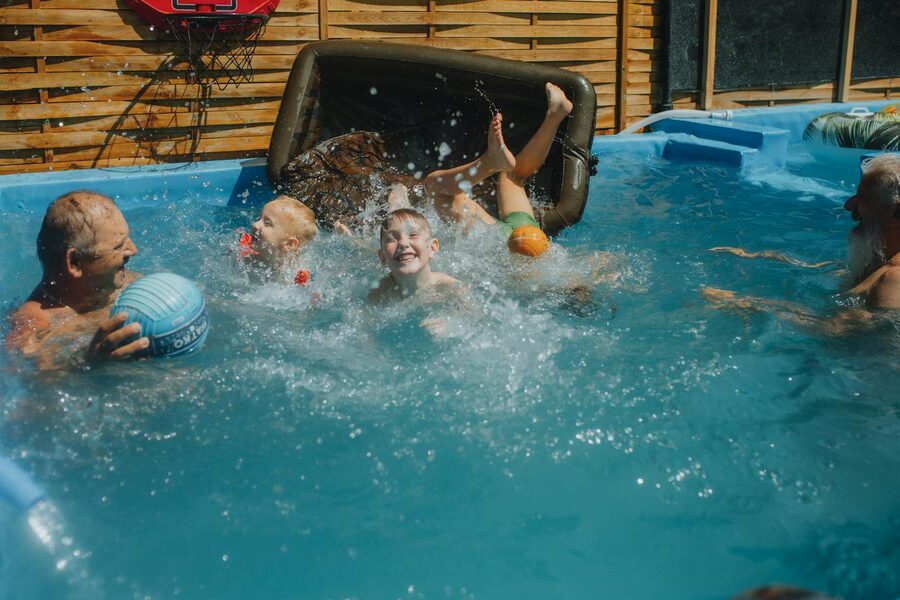
Every Icelandic town has a public geothermal pool. Every single one. Towns of 200 people have a pool. The pool is where Icelandic families spend their evenings, where teenagers flirt, where retired men sit in the 42°C hot pot solving the country’s problems. If you’re travelling with kids, the pool is the single best thing you can build into your day.
The format is the same everywhere: outdoor lap pool (around 28°C, perfectly comfortable), kids’ pool with shallow water and slides, and a row of “hot pots” (heitir pottar) at temperatures from 38°C up to 42°C. Some have steam rooms, saunas, and cold plunges. Almost all have shallow paddling areas for toddlers. The water is geothermal, lightly mineralised, and clean enough that Iceland uses very little chlorine; the tradeoff is that everyone showers naked before getting in. Yes, including the kids. Yes, the staff will check. The first time is awkward, the second time it’s normal, and by day three it’s the most civilised thing about the trip.
Adult entry to a Reykjavik pool is around 1,330 ISK; kids 6 to 17 about 200 ISK; under 6s free. A family of four pays roughly 3,000 ISK for an evening. By Iceland standards that’s almost nothing, and it’s the best-value thing you’ll do all week.
The Reykjavik pools worth picking:
- Laugardalslaug, Sundlaugavegur 30. The biggest pool in Iceland, four hot pots, two slides (one short straight one for small kids, one twisty enclosed one for bigger ones), a shallow lagoon for toddlers, and a saltwater pot. This is the one to take the kids to. Walk-in, no booking needed. Plan to stay 90 minutes.
- Vesturbæjarlaug, JL House neighbourhood. Smaller, more local, less of a tourist scene. The kids’ area is more modest. Better with under-fives.
- Sundhöllin, Barónsstígur. The downtown pool, central and beautifully renovated. Indoor lap pool, outdoor hot pots and a small kids’ pool. Useful if you’re staying in 101 and don’t want to bus out to Laugardalur.
- Árbæjarlaug (east Reykjavik). Big slide complex, less crowded than Laugardalslaug, worth the bus ride if your kids are slide-obsessed.
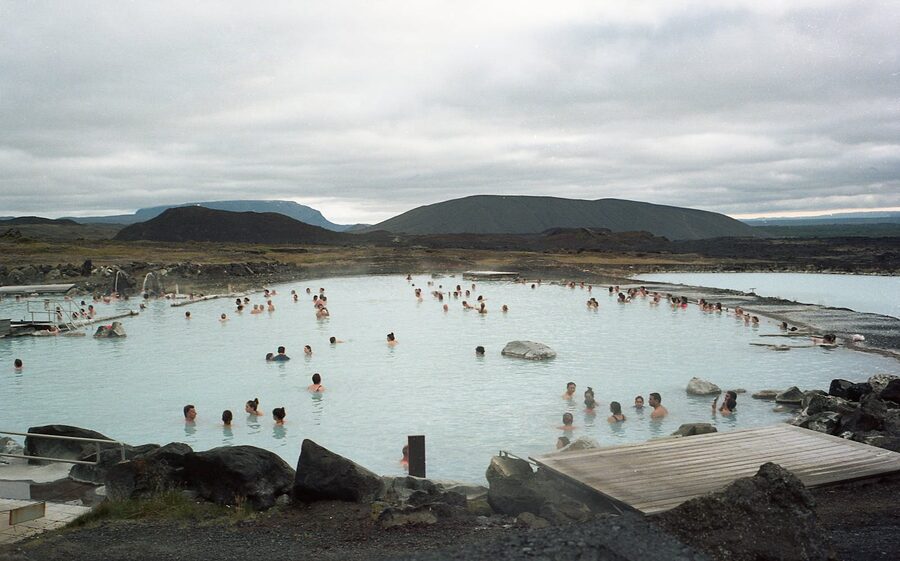
Outside Reykjavik, two destination pools are worth a detour. Hofsós in the north has an infinity-edge pool that looks straight out across Skagafjörður toward the island of Drangey. It’s the kind of place where you swim for ten minutes and then just float and stare. Adult entry around 1,200 ISK. Krossneslaug in the Westfjords sits on a black-pebble beach with the Arctic Ocean three metres from the pool wall. Both are too far for a Reykjavik day trip but if you’re already in the region, add an hour.
For the wild outdoor hot springs (Reykjadalur valley, Seljavallalaug, Hrunalaug) the rule is: think hard with kids under eight. The walks in are 45 minutes to an hour, often muddy, and the water temperature varies along the river so toddlers can scald themselves easily. Older kids who hike enjoy them. Babies stay in the pool back in town.
Reykjavik with kids: a day in Laugardalur
If you have one full day in the capital with kids, my plan is the same every time and it works. Out to Laugardalur valley in the morning, family zoo until lunch, lunch, pool until late afternoon, hot dogs on the way home, ice cream, done. They sleep in the car back to the hotel.
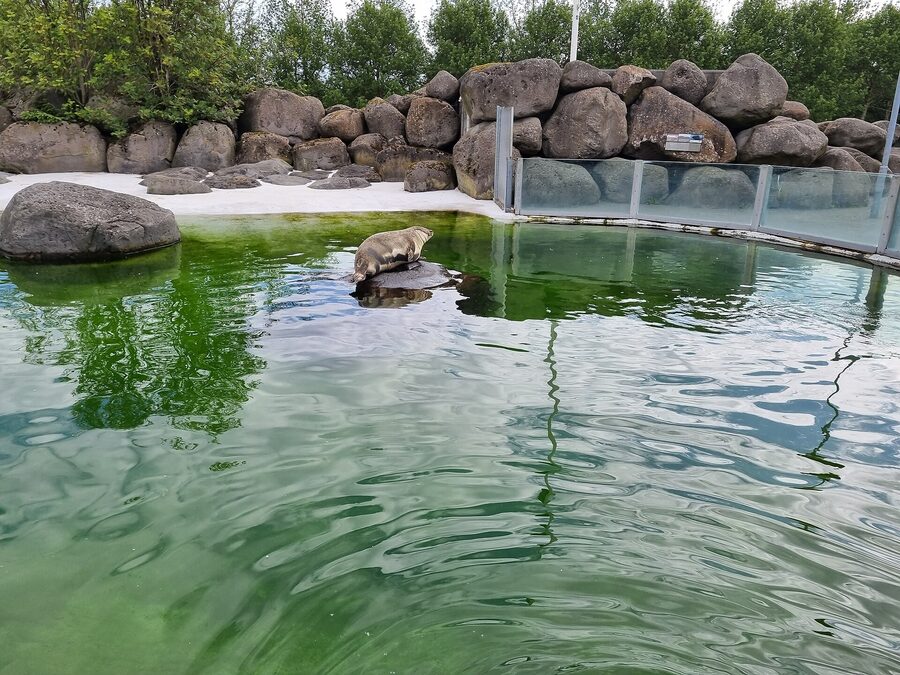
Húsdýragarðurinn, the family park and zoo (full name Fjölskyldu- og húsdýragarðurinn, mercifully shortened by everyone), is in Laugardalur valley about a 15-minute bus ride or 25-minute walk from downtown. It’s tiny by zoo standards and that’s the point. Icelandic farm animals (sheep, cows, pigs, goats, the famous Icelandic horse), the Arctic fox enclosure (Iceland’s only native land mammal), reindeer in winter, seals in a small pool, and a big petting area where kids can actually touch the animals. There’s a small fairground with a few age-appropriate rides for under-tens. Adult entry around 1,500 ISK, kids 5-12 about 1,150 ISK, under 5 free. Plan two hours.
The park sits inside Laugardalur, which is the city’s big green valley. There’s a botanical garden next door (free), an ice rink (winter), the national stadium, and Laugardalslaug a five-minute walk away. So the rhythm is: zoo for two hours, sandwich and coffee at the café in the botanical garden, pool for ninety minutes, drive home.
If the weather is bad and you need an indoor day, Reykjavik has two genuinely good kid options. Whales of Iceland on the Old Harbour at Grandi houses life-size replicas of every whale species in Icelandic waters, including a 25-metre blue whale you can walk under. The lighting is dim, ambient whale song plays, and small kids sit on the floor and stare. Adult entry around 3,800 ISK, children 7-15 around 1,900 ISK, under 7 free. Plan an hour, two if you’ve got a child obsessed with whales.
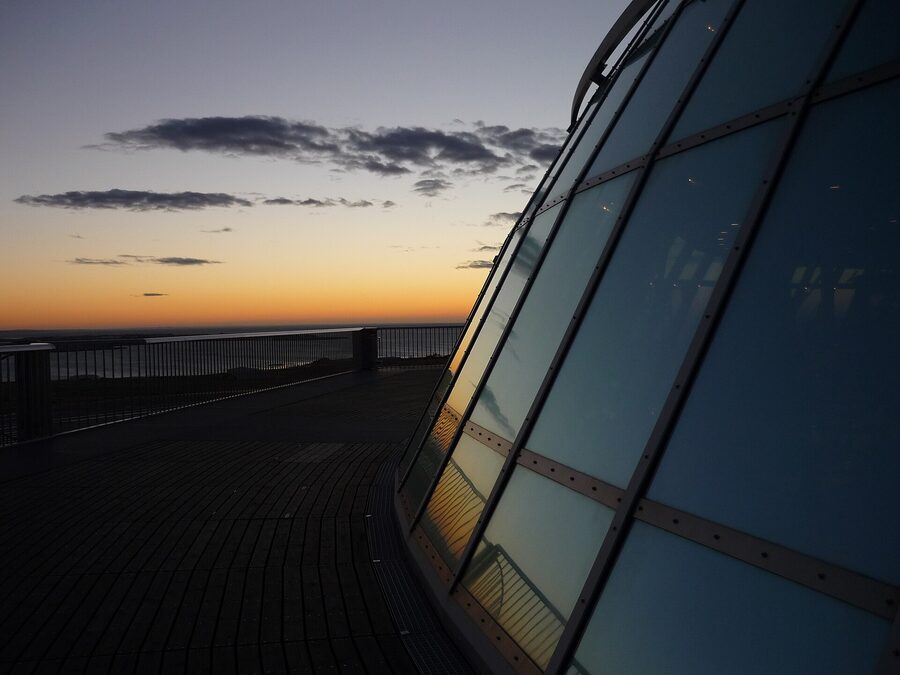
Perlan on Öskjuhlíð hill is the glass-domed building you can see from most of the city. Inside is the Wonders of Iceland exhibition, which is genuinely well done: a 100-metre-long walk-through ice cave (yes, a real one, kept at -10°C, and yes, they have parkas at the entrance for kids who didn’t bring one), a planetarium showing aurora films, and a viewing deck on top with a 360° view of the city, the bay, and Mount Esja. Adult entry around 5,990 ISK, kids 6-17 around 3,490 ISK. Two hours easily, three if you’re keen.
The Settlement Exhibition at Aðalstræti 16 is small but smart, built around the actual remains of a tenth-century longhouse uncovered during construction. It’s interactive, takes about 45 minutes, and even six-year-olds get something out of it. Adult entry 2,200 ISK, free for under-18s. The Saga Museum down on the harbour is more visual: silicone Vikings, audio guides aimed at kids, the smell of leather and woodsmoke. Adult entry around 2,500 ISK.
Skip with kids: the Phallological Museum (it’s a real museum, it’s a fine museum, but you’ll spend the whole visit answering questions you weren’t ready for). The Punk Museum is fun for teens but baffling for under-tens.
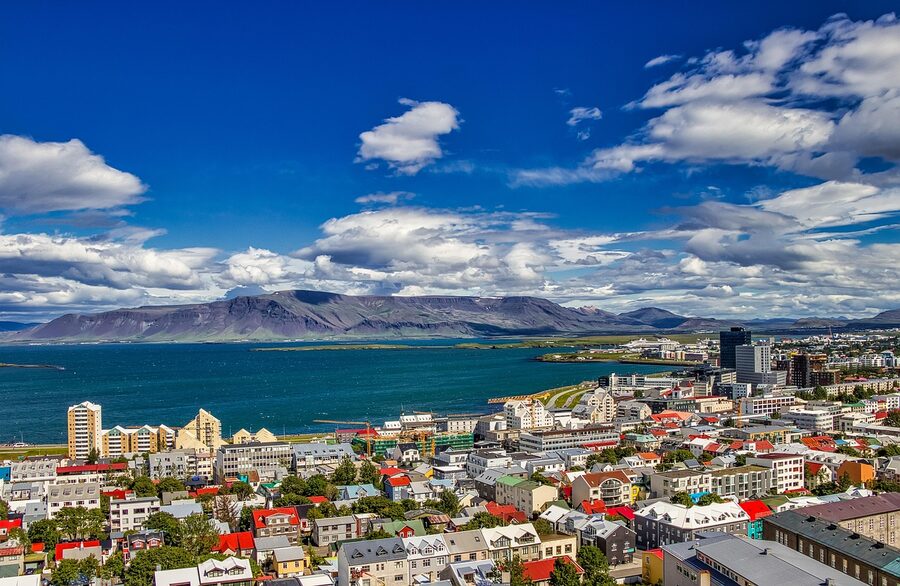
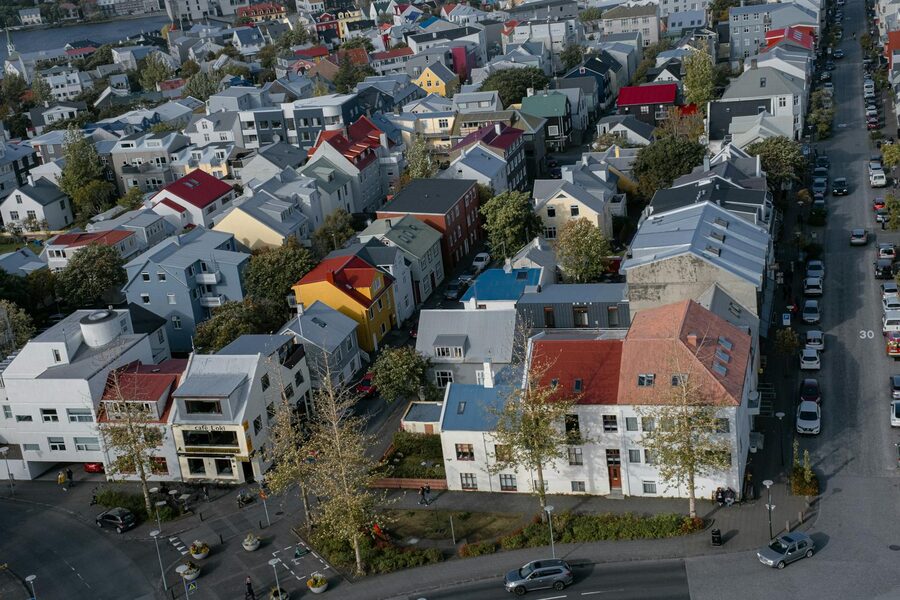
For more on the city, see our full Reykjavik guide, which goes into hotels, restaurants, and getting from Keflavík.
The day tours that work with kids
The big mistake most families make is booking the same day tours adults book. A 12-hour South Coast tour is amazing for adults. With a five-year-old it’s nine hours of complaints about the seatbelt and one hour of waterfall. Pick the trips that match your kids’ attention span, not the trips that have the best photos.
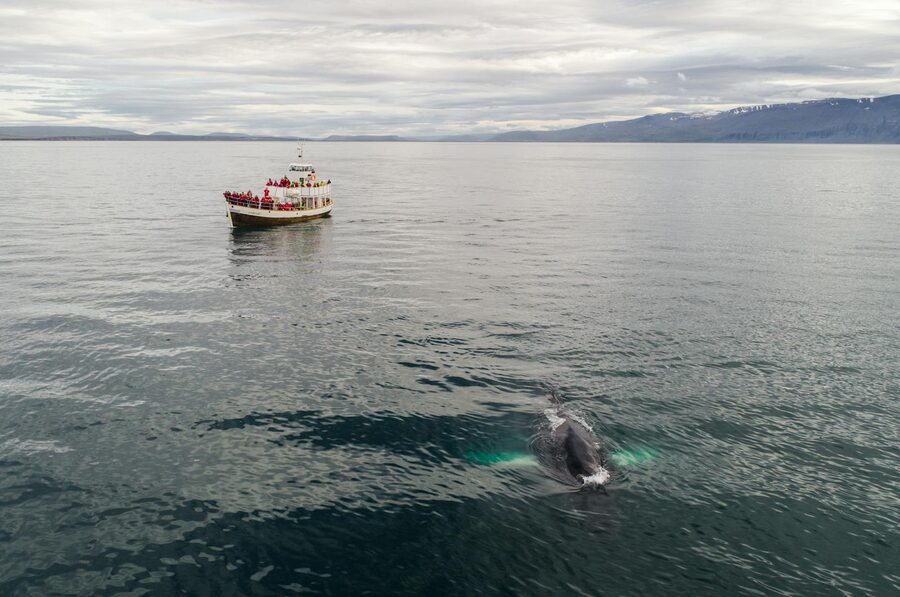
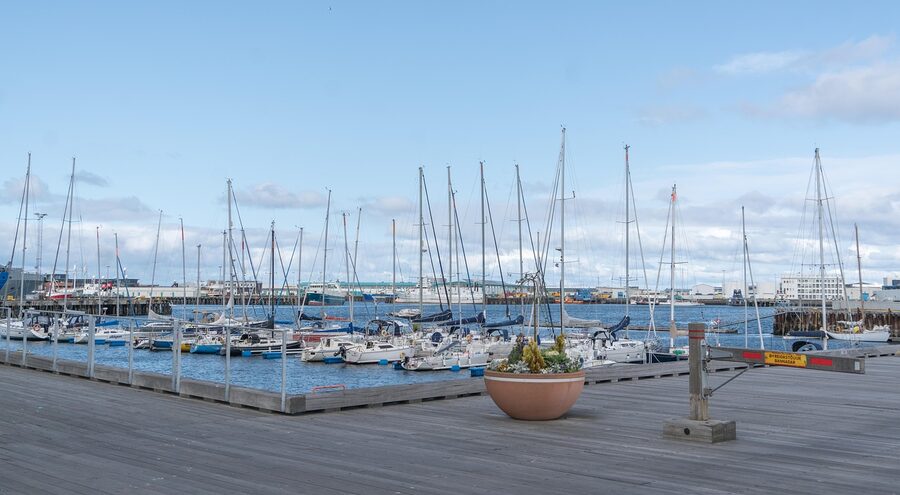
Whale watching from Reykjavik is the day tour I always recommend first. Three hours, leaves from the Old Harbour at Grandi, you’re back in town for a late lunch. Elding is the operator I send people to: the boats are stable, the crew are good with kids, and they run a “no-whale rebooking” guarantee that means if you don’t see anything they take you out again on a later date. Around 13,000 ISK adult, 6,500 ISK kids 7-15, free under 7. Best months May to October. June-July sighting rates are around 90% on this route. The boat is open-deck and indoor-cabin, so kids who get cold come inside, and the snack counter does hot chocolate. Bring a warm hat regardless of the air temperature on land.
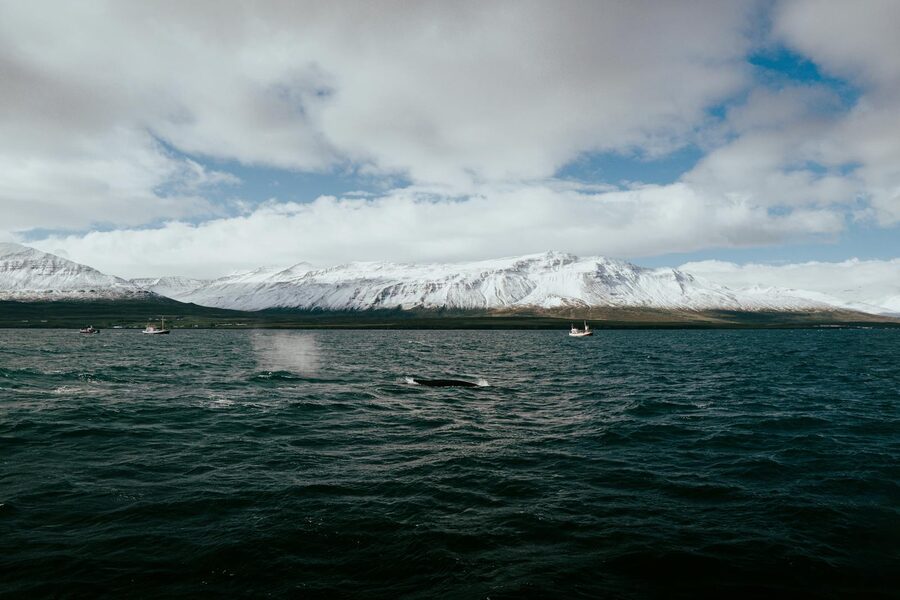
If you make it to Húsavík in the north, that’s the whale watching capital of Europe. North Sailing and Gentle Giants are the two operators, both excellent. Sighting rate 95-99% in summer. Older kids especially love this one because you’ll see multiple humpback whales feeding, and sometimes blue whales, in the same trip.
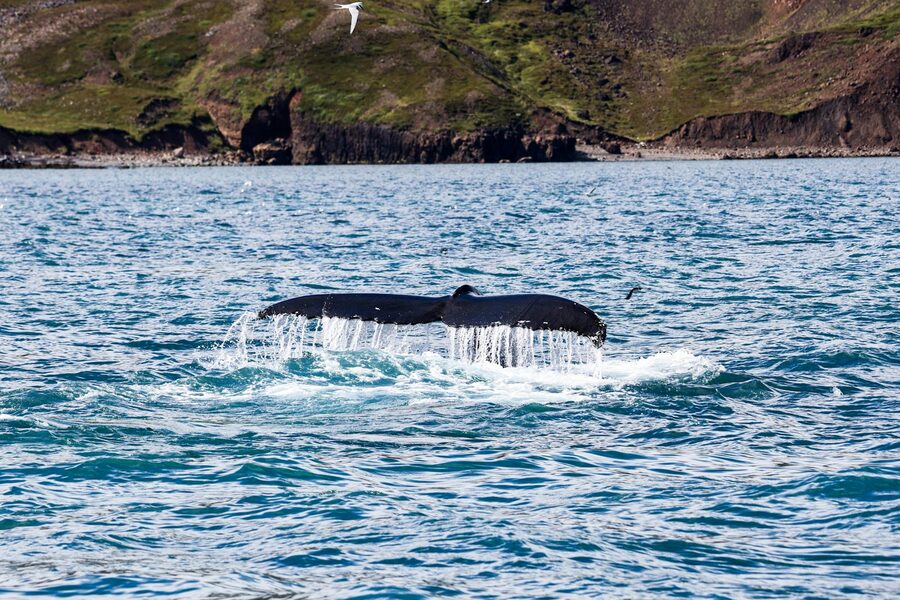
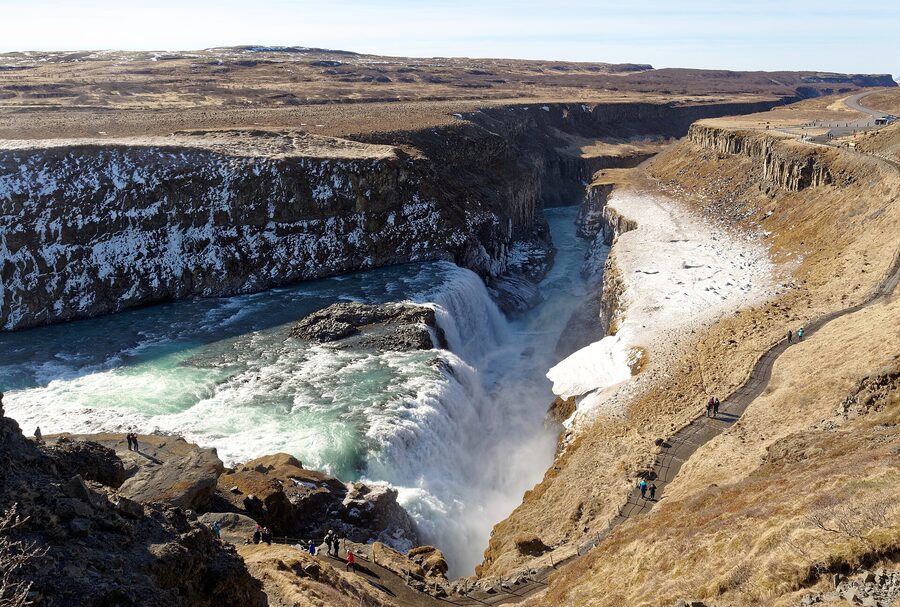
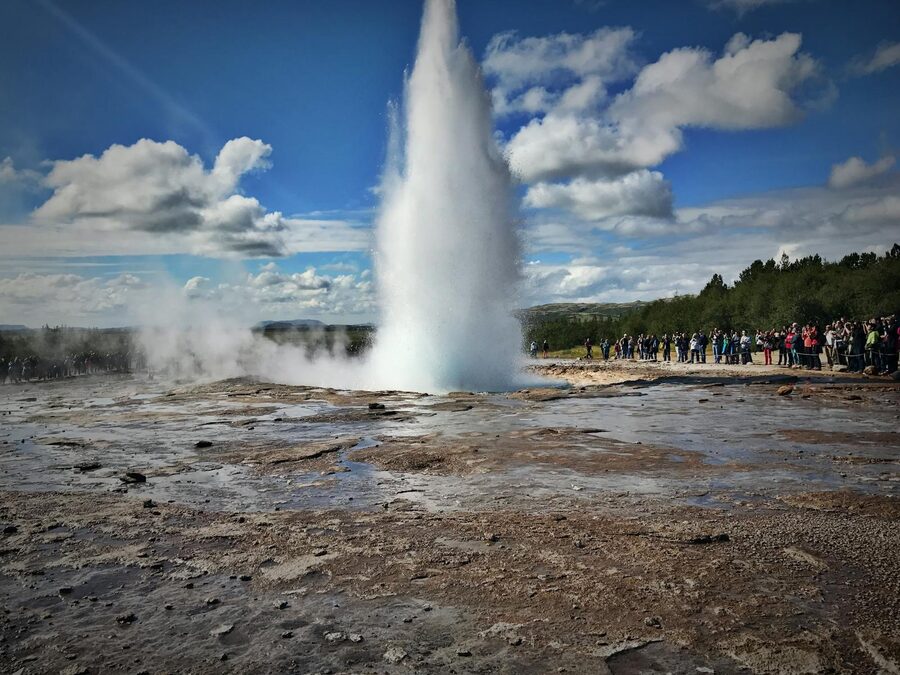
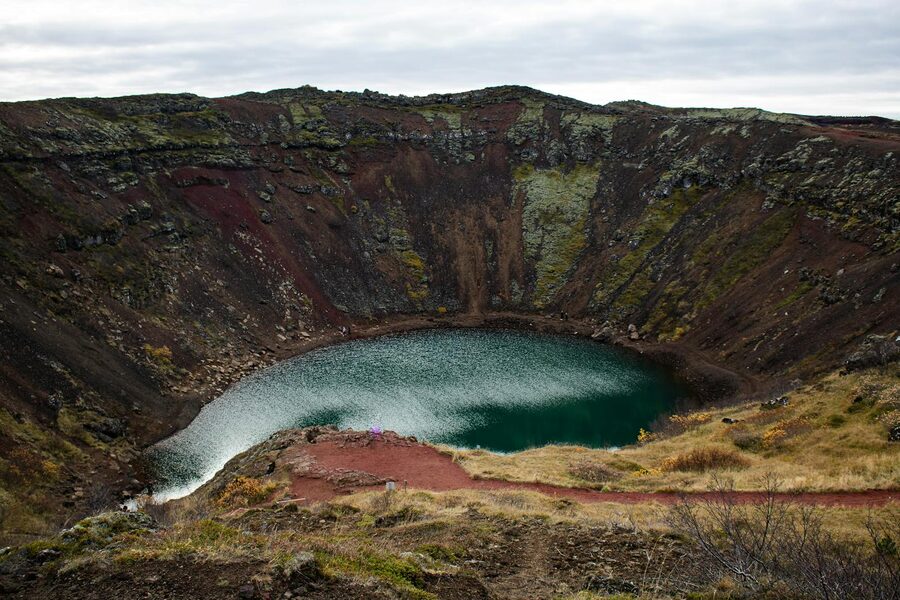
The Golden Circle is the standard one-day tour and it works with kids if you keep it short. Þingvellir, Geysir, and Gullfoss in 8 hours by coach is the right format. The walks at each stop are short (10-30 minutes), bathrooms are clean, lunch stops are organised. Most operators charge around 12,000 ISK adult, 6,500 ISK kids. GetYourGuide and Viator both list reliable operators. If you self-drive, even better; you can add Kerið crater (volcanic crater with a green lake at the bottom, 10-minute walk down, kids love climbing back up) and the Friðheimar tomato greenhouse (lunch served in a working tomato greenhouse, kids get a tomato to plant).
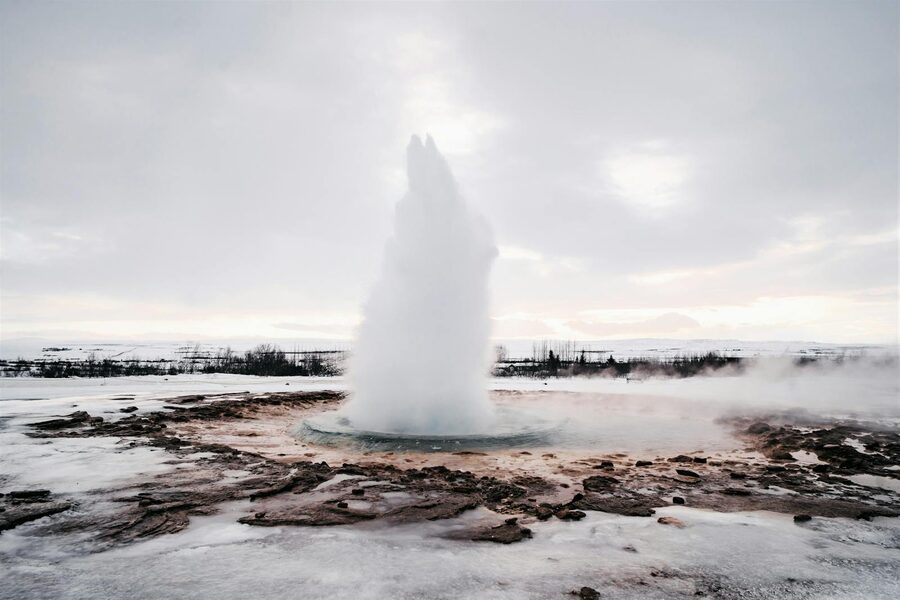
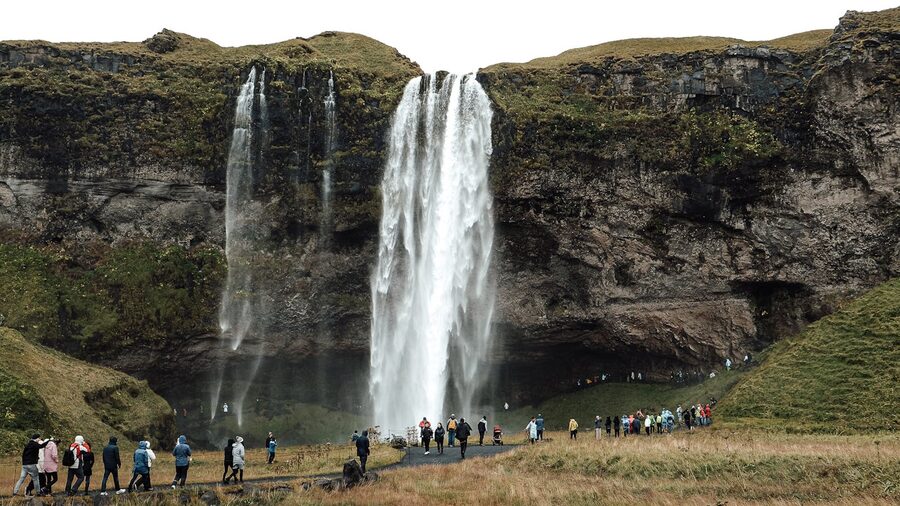
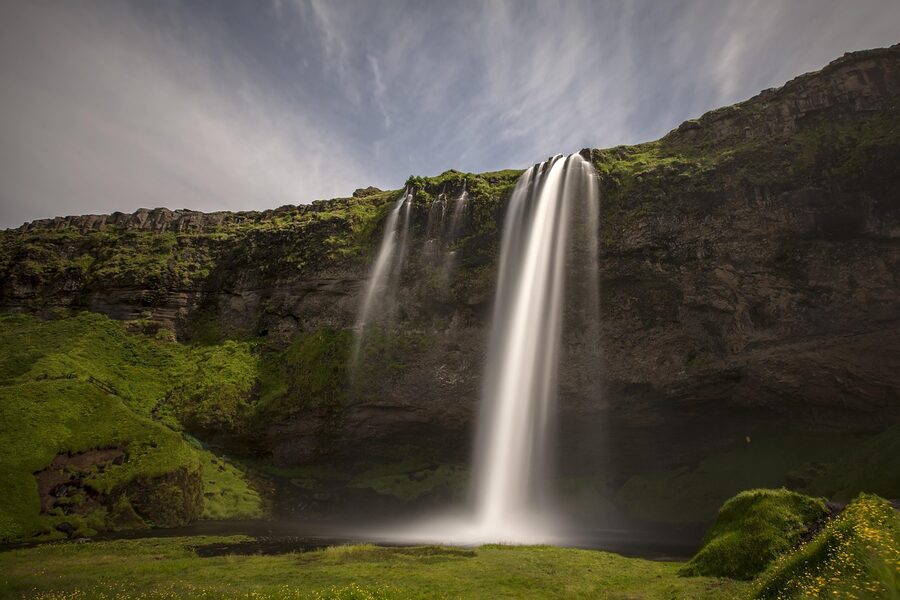
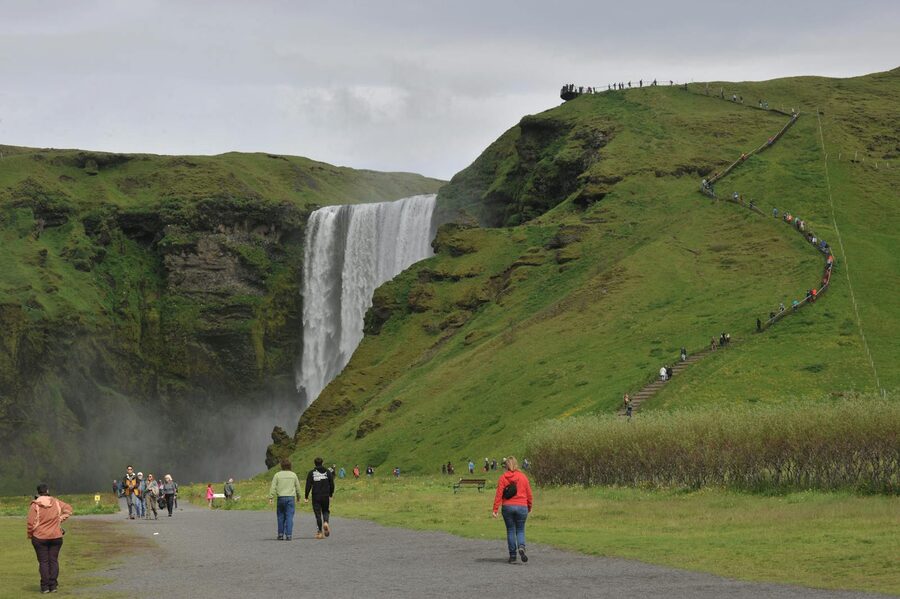
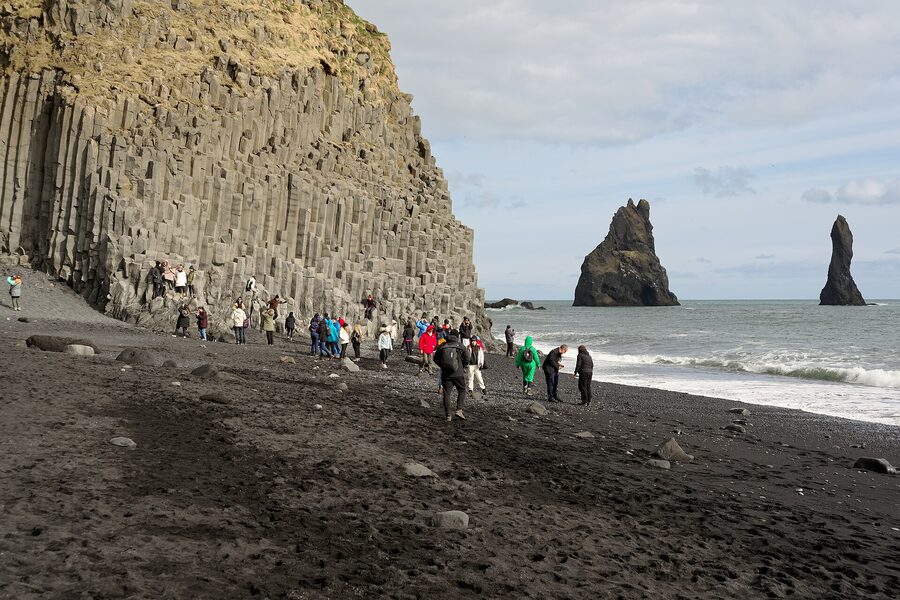
The South Coast in a day is doable with kids 8 and up but a stretch. The full route is Reykjavik to Seljalandsfoss, Skógafoss, Reynisfjara, Vík, and back, about 12 hours by coach. The waterfalls are spectacular and short walks; Reynisfjara is the black sand beach with basalt columns, beautiful but the waves there are genuinely lethal (people die at Reynisfjara every couple of years from sneaker waves). Hold small kids’ hands the entire time, stay 30 metres from the waterline, do not turn your back on the sea. I’m not exaggerating.
The Lava Centre in Hvolsvöllur, on the way out to the South Coast, is the underrated kid stop on this drive. Interactive volcano museum, decent café, gives kids context for what they’re about to see. Adult entry around 4,200 ISK, kids 6-12 around 2,100 ISK, under 6 free. Easily an hour, sometimes two if your kid is volcano-obsessed (most are after about ten minutes).
Day tours to skip with kids:
- Glacier hikes. Most operators have an 8 or 10 minimum. Icelandic Mountain Guides and Troll Expeditions both publish their age limits clearly. Younger kids physically can’t fit the crampons.
- Ice caves (the natural blue ones in Vatnajökull). Cold, dark, slippery, and operators won’t take under 8 or 10 anyway. Beautiful but not for small kids.
- Inside the Volcano at Þríhnúkagígur. The descent is by an open lift cage 120 metres into a magma chamber. The official minimum is 12 and they enforce it. Worth it for teens.
- Super-jeep marathon days. 12 hours in a high-clearance vehicle bouncing across F-roads is character-building for adults and torture for under-tens.
For our full take on day-trip options including ones with kids, see the day tours guide.
Animals: horses, puffins, sheep, and the fox
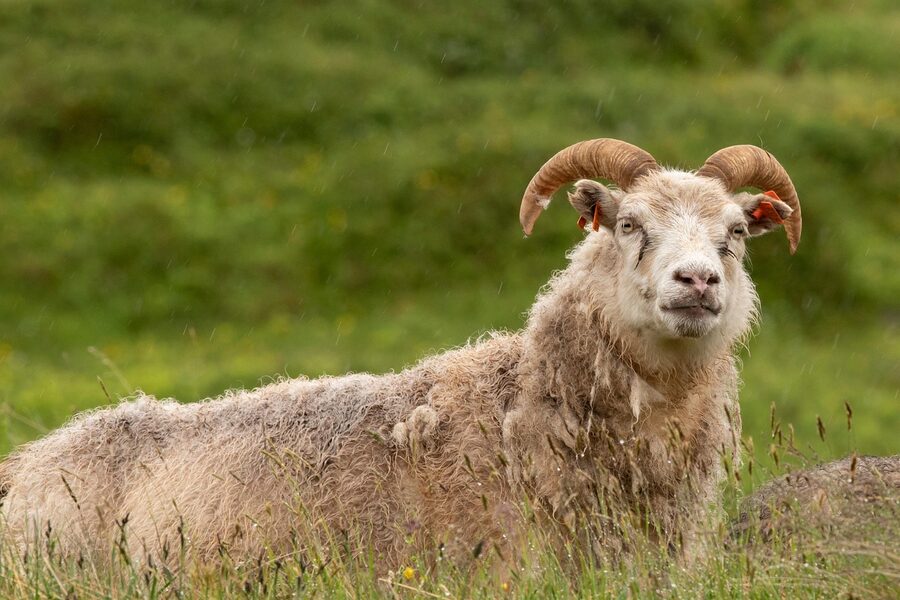
Iceland is light on land mammals. We have one native one, the Arctic fox, and you’ll be lucky to see one in the wild. The animals kids actually meet are the Icelandic horse, the puffin (in summer), the sheep (everywhere, all summer, mostly disinterested), and whales from a boat.
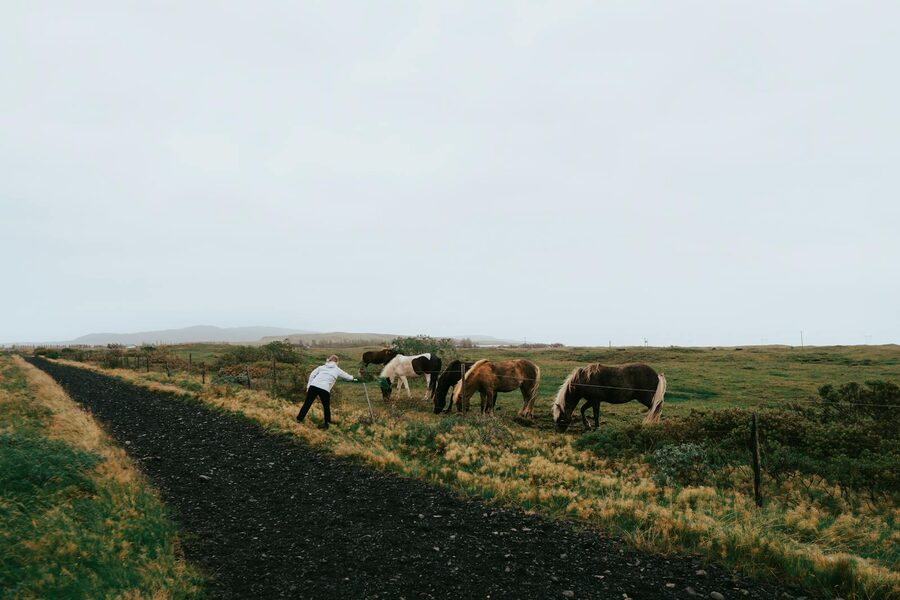
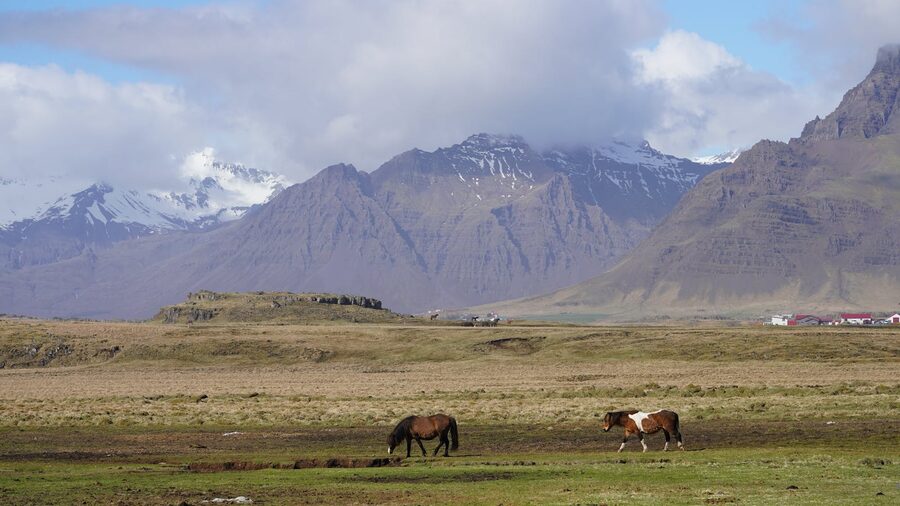
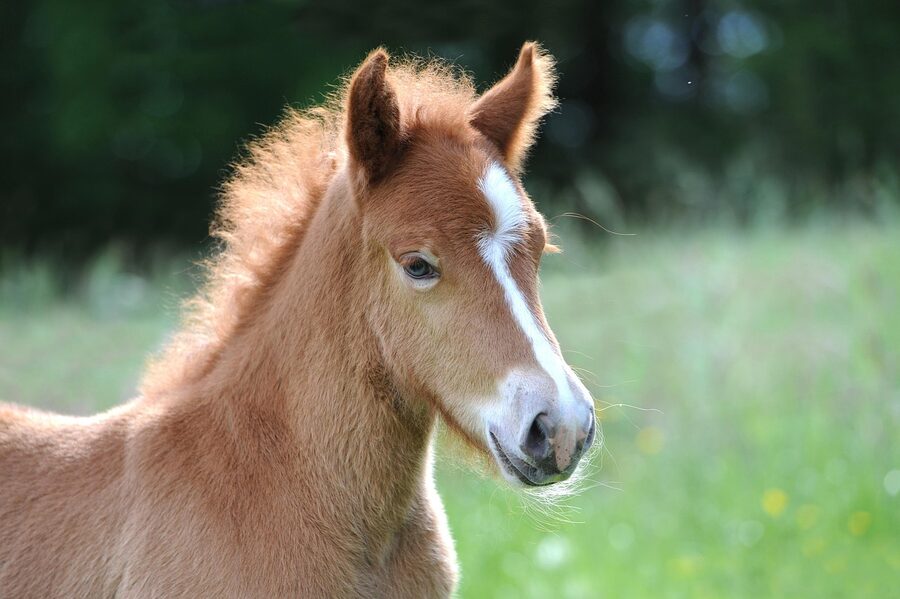
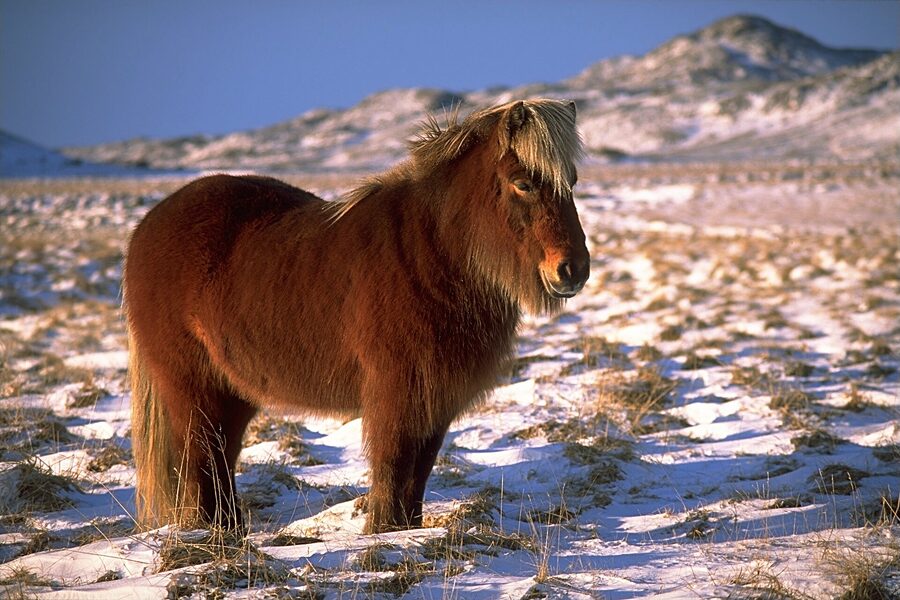
The Icelandic horse is small, friendly, and surprisingly bombproof around children. They were brought here by the settlers in the 9th century and have been bred in isolation since, which is why they look like ponies but are technically horses, and why no other horse can be imported into Iceland (once one leaves, it can’t come back).
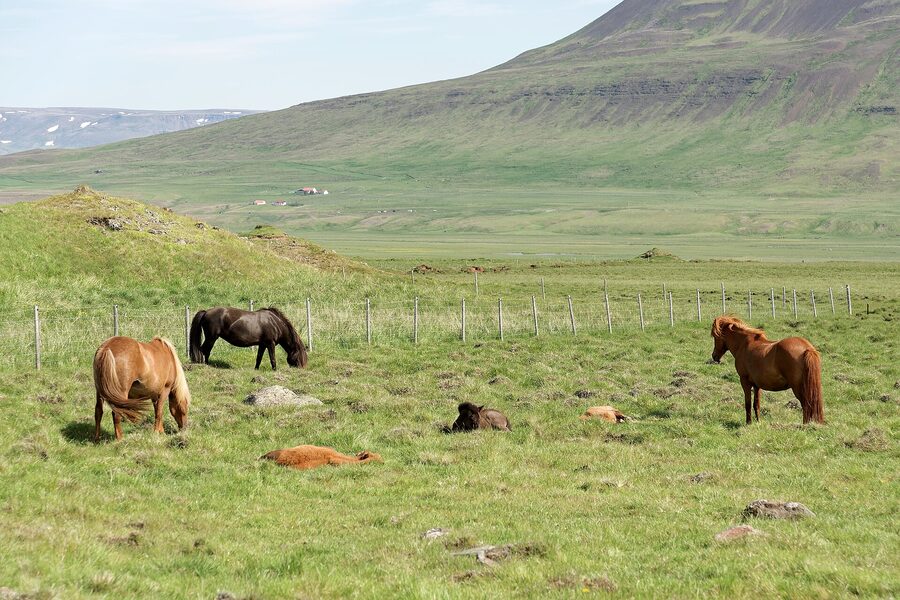
The two horse-experience options for families based near Reykjavik:
- Íshestar, in Hafnarfjörður, 20 minutes south of Reykjavik. Family-friendly riding tours, including a 1-hour beginner ride for kids 7+ at around 13,000 ISK, plus a “Meet the Icelandic Horse” experience for younger kids that’s basically grooming, hand-feeding, and a short lead-walk for around 6,500 ISK.
- Eldhestar in Hveragerði, on the way to the South Coast, runs a similar programme. Slightly more rural setting.
Both will collect from Reykjavik hotels for an extra fee. Helmets are mandatory and provided. Bring proper trousers, not shorts, because horse hair plus the saddle on bare legs is unpleasant. Small kids can ride double with a parent.
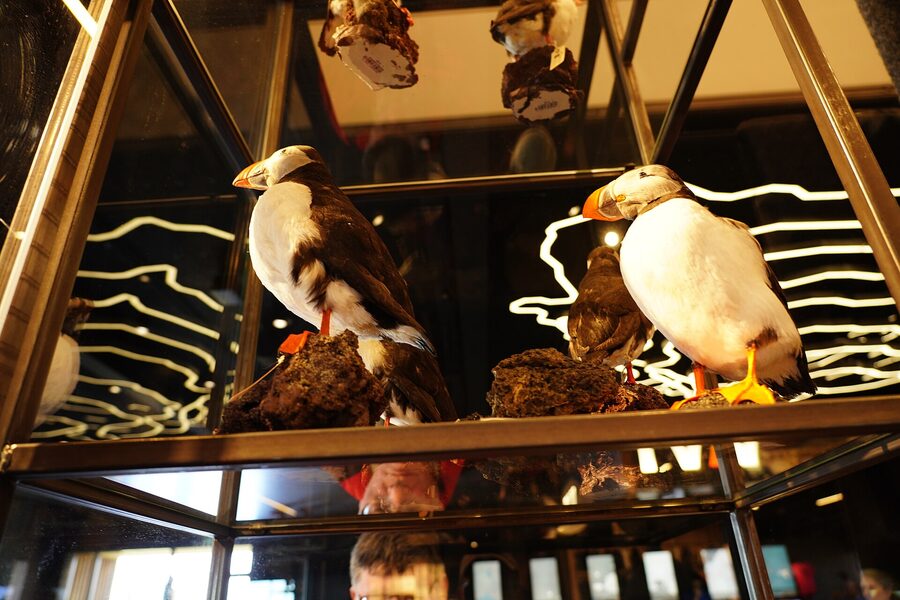
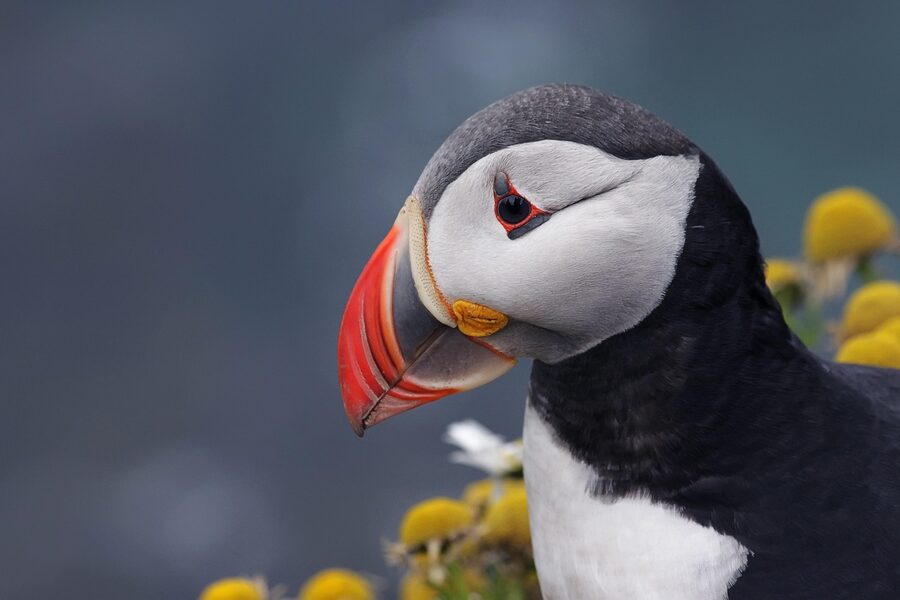
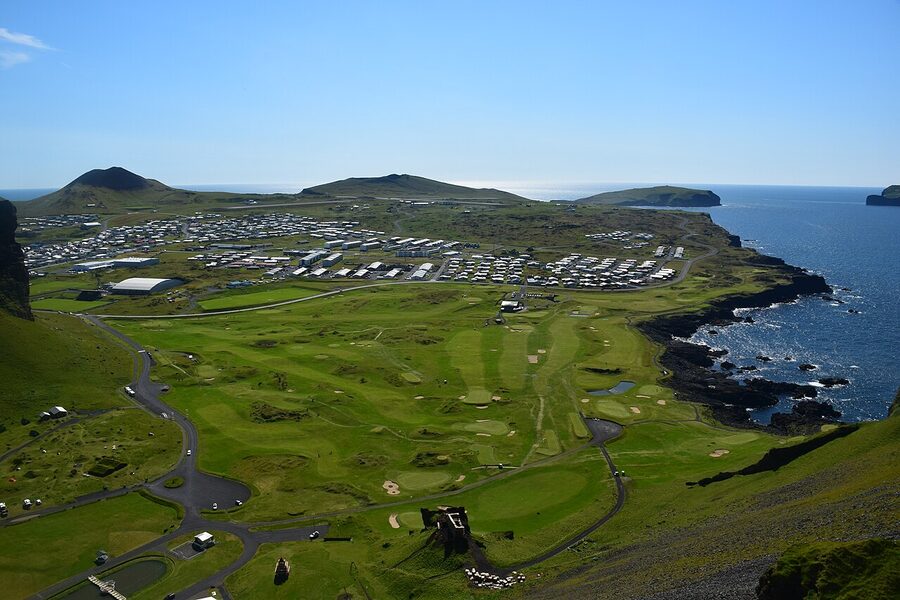
Puffins nest in Iceland from late May to mid-August. The easiest way to see them with kids is the Puffin Express boat from Reykjavik Old Harbour: a 1-hour trip out to two small islands in Faxaflói Bay, around 6,500 ISK adult, 3,250 ISK kids. Elding runs these too. The boat doesn’t land on the islands but gets close enough that kids can see puffins flying and bobbing in the water. The closer-up experiences are at Látrabjarg in the Westfjords (the largest puffin cliff in Europe, but a long drive) and the Westman Islands (Vestmannaeyjar, accessible by ferry from Landeyjahöfn).
For the full picture of Icelandic wildlife, see our animals guide.
Where to stay with kids
Apartment-style accommodation is genuinely better than hotels for families in Iceland, for three reasons. Kitchens cut your food bill in half. Washing machines mean you can pack lighter (you’ll need fewer kid clothes than you think but the ones you bring will get wet). And two-bedroom layouts mean someone gets a separate room when the kids need an early bed.
In Reykjavik, the apartment options I’d send a family to:
- Reykjavik Marina Residences, Mýrargata. Two-bedroom apartments at the Old Harbour, a five-minute walk to Whales of Iceland, ten minutes to downtown. Around 55,000-75,000 ISK depending on season. Check rates on Booking.com.
- 101 Hotel Apartments (separate from 101 Hotel itself), Hverfisgata. Modern and central, with kitchenettes. Pricier, around 70,000-95,000 ISK. Check rates on Booking.com.
- Center Hotels Plaza, Aðalstræti. Standard hotel rooms but family rooms are available; great location on Ingólfstorg square. Around 38,000-48,000 ISK for a family room. Check rates on Booking.com.
- Fosshotel Reykjavík, near Hlemmur. Big, modern, family rooms available, very good buffet breakfast (kids under 6 free, 6-12 half price). 35,000-45,000 ISK. Check rates on Booking.com.
For more on Reykjavik neighbourhoods and where to base yourself, our capital city guide goes deeper.
Outside Reykjavik:
- South Coast: Hotel Rangá near Hella is a luxury log lodge with a hot tub kids love and an aurora wake-up call service. Stracta Hotel Hella is more affordable, family-friendly, and right on the highway. Frost & Fire near Hveragerði has a geothermal river running through the property kids can dip in.
- Akureyri: Hotel Kea is the central pick. Apartments via Booking are plentiful. The municipal pool here, Akureyrarlaug, is one of the best in the country.
- Vík: Hotel Vík í Mýrdal or Black Beach Suites. Stay at least one night if you’re doing the South Coast; the drive back to Reykjavik in a day is brutal with kids.
If you’re driving the Ring Road or doing more than a few days outside Reykjavik, check Hey Iceland for farmstays. Many of them are working farms with sheep, horses, and dogs that kids spend the whole afternoon with.
Self-drive vs guided with kids
Self-drive wins for families. The flexibility to stop for snacks, bathroom emergencies, naps, and unscheduled “ooh look at the horses” moments is worth more than the convenience of a coach. You also get to control the music, the temperature, and how long you spend at each stop, which with kids is everything.
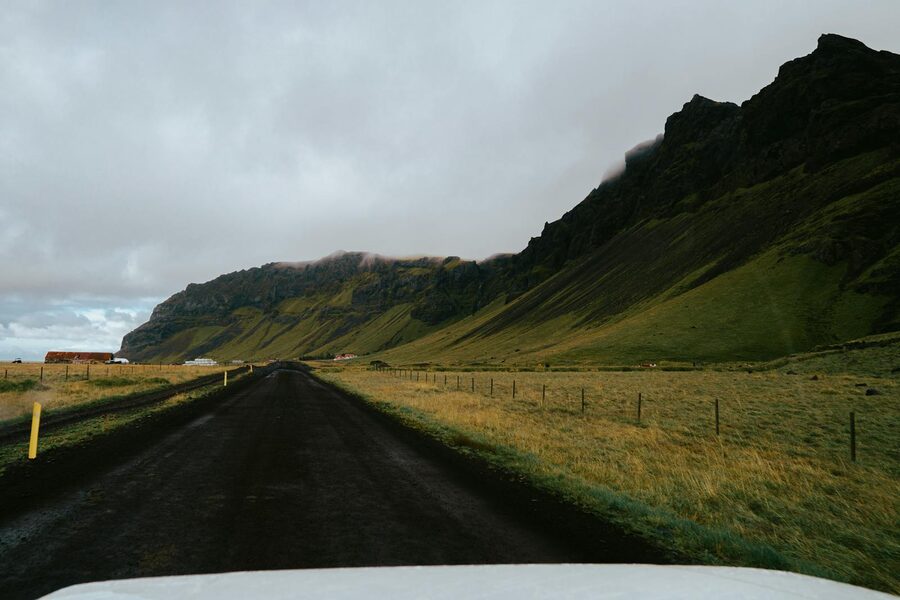
Rent from Blue Car Rental, Lava Car Rental, or Northbound (the comparison engine). For summer day trips a 2WD Toyota Yaris-class car is fine and runs around 14,000-18,000 ISK a day. For winter or any F-road work, you need 4WD: budget 25,000-40,000 ISK a day in summer, more in winter, plus insurance (gravel, sand-and-ash, and SCDW are the three to add). Child seats are mandatory by law and rentals provide them on request, around 1,200 ISK per seat per day. Book the seats when you book the car, not at pickup; at peak season they run out.
For families who want a bit of adventure without the bedtime headache, campervans are surprisingly good. Happy Campers and KuKu Campers both rent 4-berth vans with heaters, fridges, and a kitchen, around 30,000-50,000 ISK a day depending on season and model. Older kids treat the whole thing as a moving treehouse. Younger kids find the lack of a proper bedroom hard. With the campervan you can park overnight at any of Iceland’s official campsites (around 2,500 ISK per adult per night, kids free or half price), which has the side benefit of dramatically cutting accommodation costs. Stelpan, KuKu’s smaller van, is fine for two adults and two small kids; for two adults and two big kids you want the next size up.
Wild camping is illegal in Iceland and aggressively enforced. Camp at marked sites only.
If you want guided multi-day with kids, Nordic Visitor, Iceland Travel, and Hidden Iceland all do family-specific itineraries. Expect to pay 250,000-450,000 ISK per adult for a 7-day package, kids around 60-70% of that. Worth it for the booking-coordination headache alone.
Food: cheaper than you think, simpler than you fear
Icelandic food is mostly kid-safe. Lamb, fish, cod, salmon, plain pasta, pizza, fries, and the national dish: the pylsa (hot dog) at Bæjarins Beztu Pylsur by the Old Harbour. Every Icelander has eaten one of these. Bill Clinton ate one. Anthony Bourdain ate one. Your kid will eat three. Order it eina með öllu (one with everything) which means: lamb hot dog, ketchup, sweet brown mustard, raw white onion, crispy fried onion, remoulade. About 800 ISK a hot dog. Open until 1am most nights. There is sometimes a queue. Worth it.
Beyond the hot dog, kids handle Iceland well at restaurants. Most places have a kids’ menu (barnamatseðill); most do pasta, fish and chips, or chicken and rice. Fish soup (fiskisúpa) is a creamy, mild, faintly tomatoey soup that even fish-sceptical kids tend to inhale. Plokkfiskur, mashed cod with potatoes and onion, is the comfort-food version of fish; it’s served in school cafeterias and tends to land well with under-tens.
Self-cater from Bónus or Krónan supermarkets to save real money. A family of four can do breakfast and dinner from a kitchen-equipped apartment for around 5,000-7,000 ISK a day, versus 15,000-25,000 ISK eating out. The yellow Bónus pig is the cheapest national chain. Krónan is slightly nicer. Skyr (Icelandic yoghurt-but-not-yoghurt, much higher protein) is the breakfast you’ll wish you had at home; it’s 200-300 ISK a tub. Smoked lamb (hangikjöt), Icelandic flatbread (flatkaka), and a tube of liver pâté (kæfa) make a good lunch for under 1,000 ISK total.
For sweet things, the kid wins are: kleinur (twisted cardamom doughnuts, sold at every bakery), ís í brauðformi (soft-serve ice cream in a waffle cone, available year-round including February at -10°C, you’ll do this anyway), and the small chocolate bars by Nói Síríus. Valdís ice cream on Grandi has the best flavours in town if you’re already at the harbour for whale watching.
Skip with kids: hákarl (fermented shark; it’s not for kids and it’s not really for adults either, save the dare for teens), and the more aggressive Icelandic specialities like svið (singed sheep’s head). Plenty of teens will try hákarl on a triple-dare; younger kids should not be subjected to it.
What it actually costs
Iceland is expensive. Let’s be straightforward: a family of four for a week in summer, mid-range, runs around 1.6 to 2.4 million ISK all in (flights extra). The variables that move the bill most are accommodation, car rental, and how often you eat out vs self-cater.
Rough daily numbers for a family of two adults and two kids:
- Accommodation: 35,000-60,000 ISK a night for a family room or two-bedroom apartment in mid-range. Hotel Rangá-style luxury is 75,000-120,000 ISK. Hostels with private family rooms can be 22,000-30,000 ISK.
- Car rental in summer: 14,000 ISK a day (small 2WD) to 30,000 ISK (4WD with full insurance). Add 1,200 ISK per child seat per day. Add fuel: about 350 ISK per litre at the time of writing, a small car uses around 5-7 L/100 km.
- Day tours: 12,000-20,000 ISK per adult for a full-day coach tour, kids 6,500-10,000 ISK. Whale watching and shorter half-day tours come in lower.
- Food: 8,000-15,000 ISK for dinner for four at a mid-range restaurant. Closer to 25,000 ISK at the nicer places. Self-cater for 5,000-7,000 ISK a day.
- Pools: roughly 3,000 ISK for the whole family. Cheap and worth it every day.
- Sights: Most natural sights (waterfalls, geysers, beaches, Þingvellir) are free. Indoor museums (Whales of Iceland, Perlan, Saga Museum) are 4,000-9,000 ISK per adult, half for kids.
Where the budget goes wrong is the airport transfer (don’t pay 22,000 ISK for a Keflavík taxi when the Flybus is 4,500 ISK), drinks at restaurants (a glass of wine is 2,000 ISK, a beer 1,400 ISK; alcohol is taxed heavily), and “extras” sold by tour operators (drone photos, photo packages). The pools and the supermarkets are how you save money.
One thing the kids enjoy that costs nothing: tap water. Icelandic tap water is glacial meltwater, faintly mineral, free, and better than any bottled water you can buy. Refill bottles wherever you go.
Sample itineraries
Five days based in Reykjavik
Best for first-timers, families with younger kids, or anyone who wants to keep things simple.
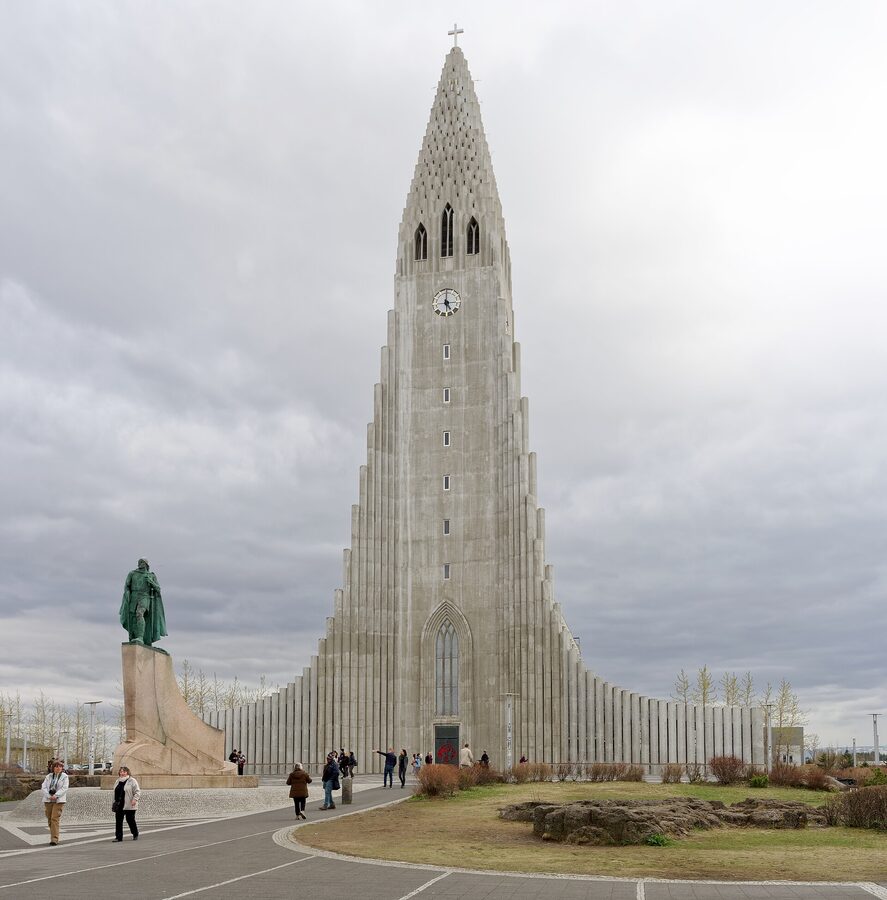
- Day 1: Arrival, Flybus from Keflavík to BSÍ (45 min, 4,500 ISK adult). Walk Tjörnin (the pond), Hallgrímskirkja, easy dinner, early bed.
- Day 2: Laugardalur day. Húsdýragarðurinn family park, lunch in the botanical garden, Laugardalslaug pool. Bæjarins Beztu hot dogs.
- Day 3: Golden Circle by coach or self-drive. Þingvellir, Geysir, Gullfoss, plus Kerið crater on the way back. Dinner in town.
- Day 4: Whale watching from Old Harbour (3 hr morning trip with Elding). Lunch at Grandi. Whales of Iceland exhibit in the afternoon. Pool again.
- Day 5: South Coast in a day with the older kids (Seljalandsfoss, Skógafoss, Lava Centre, Reynisfjara), or a Reykjavik museum + Perlan day with younger ones. Fly home.
Seven days, South Coast loop
Kids 7 and up can handle this comfortably.
- Day 1: Arrive, Reykjavik downtown.
- Day 2: Reykjavik (zoo + pool + harbour).
- Day 3: Pick up rental car, drive Golden Circle, stay overnight near Selfoss.
- Day 4: Drive to South Coast, Seljalandsfoss, Skógafoss, Sólheimajökull glacier (viewpoint only, no hike), stay in Vík.
- Day 5: Reynisfjara, Dyrhólaey arch, Fjaðrárgljúfur canyon, drive back to Hella, stay at Hotel Rangá or Stracta.
- Day 6: Slow morning at the hotel hot tub, drive back to Reykjavik via Friðheimar tomato lunch and a stop at Þingvellir if you skipped it.
- Day 7: Reykjavik museums or Perlan, fly home.
Ten days, Ring Road with kids 8+
Doable, exciting, but pace it. 1,300 km total.
- Day 1-2: Reykjavik base.
- Day 3: Golden Circle then south to Vík.
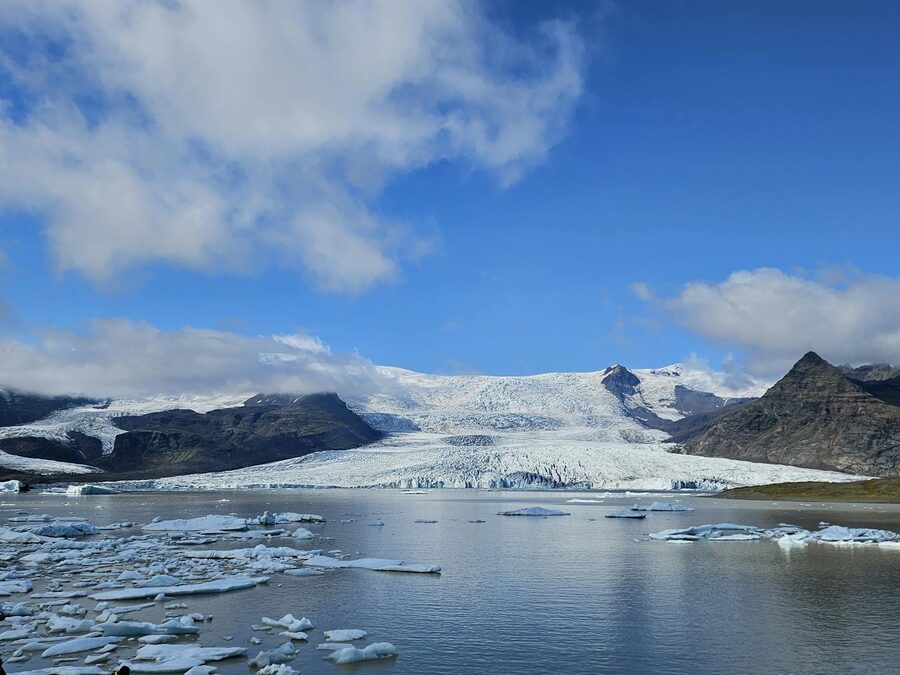
- Day 4: South Coast, Jökulsárlón glacier lagoon (kids LOVE the icebergs), Diamond Beach. Stay in Höfn.
- Day 5: East fjords drive, slow day, lots of stops. Stay in Egilsstaðir.
- Day 6: Up to Mývatn, swim at Mývatn Nature Baths (their version of the Blue Lagoon, kids welcome from any age, around 6,500 ISK adult / 2,500 ISK kids).
- Day 7: Húsavík for whale watching with North Sailing.
- Day 8: Drive to Akureyri, swim at Akureyrarlaug.
- Day 9: Drive south through Borgarfjörður, stop at Glymur if older, stay outside Reykjavik.
- Day 10: Reykjavik morning, fly home.
Four days for Christmas with older kids
Yule Lads age (5 to 11) is the sweet spot. Teens enjoy it for different reasons.
- Day 1: Arrive 13 December, see the first Yule Lad come down. Walk Laugavegur Christmas lights, dinner.
- Day 2: Húsdýragarðurinn winter visit (small but festive), pool, dinner.
- Day 3: Northern Lights tour from Reykjavik (book a “no-aurora rebooking” operator), or Golden Circle in 5 hours of daylight.
- Day 4: Christmas village at Hafnarfjörður, last hot dog, fly home.
Weather, safety, and what to pack
Icelandic weather changes fast. The local saying, if you don’t like the weather wait five minutes, is true. The wind is what catches people out: even on a sunny 12°C summer day, an exposed spot can have 60 km/h gusts that knock a child off their feet.
Layers are the answer:
- Merino base layer (long top + bottoms) for kids in any season except July-August.
- Mid-layer fleece.
- Waterproof and windproof outer shell, jacket and trousers. This is non-negotiable. A regular winter coat is not waterproof and you’ll regret it on the spray at Skógafoss.
- Waterproof shoes or boots, real ones, not “water-resistant trainers.”
- Hat and gloves, even in summer at exposed sights like Reynisfjara or any boat trip.
- Swimsuit and towel always packed (microfibre travel towels are your friend, the pool ones rent for 800 ISK).
Never bring shorts. I see adults arrive in shorts in July; even in town it’s 10°C and the wind comes off the water. For kids it’s a guaranteed melt-down. Long trousers always.
Two daily websites to bookmark:
- en.vedur.is for weather and aurora forecasts.
- road.is for live road conditions, especially essential in winter.
- safetravel.is for safety alerts and to register your itinerary if you’re going anywhere off the main road.
Specific safety calls with kids:
- Reynisfjara waves. Mentioned twice for a reason. Stay 30 metres from the water. Hold small kids’ hands. Sneaker waves come in fast and pull people out. People die here. Take it seriously.
- Hot pots. Always check the temperature before letting a kid in. Wild ones along rivers can be 50°C in one spot and 28°C two metres away. Public pools post the temperature on every hot pot.
- Glaciers. Never walk on a glacier without a guide. Crevasses are hidden under thin snow. The glacier viewpoints (Sólheimajökull, Vatnajökull terminus) are safe; the ice itself isn’t, ever.
- Cliff edges. No fences anywhere. Dyrhólaey, Reynisfjall, Látrabjarg, the cliffs at Þingvellir, all unfenced. Hold hands.
- Wind near coastal viewpoints. Especially at Dyrhólaey arch and the cliffs above Reynisfjara, the wind can come over the edge with real force. Stay back.
- The midnight sun. Apply sunscreen even at 9pm in June. The sun is low but it’s still UV.
Three things I wish more families knew
One: kids enjoy Iceland less when you over-schedule. Plan one big sight a day, not three. The drive between sights is the trip; the stops are the punctuation. A Golden Circle day done slowly with a stop for hot chocolate at the Friðheimar greenhouse is better than two days of “we did Þingvellir, Geysir, Gullfoss, the South Coast, and Reykjanes.”
Two: the pools are the trip. Build one in every day. They’re cheap, every town has one, and they’re where kids meet other kids and adults exhale. If you skip pools because they “feel less Icelandic,” you missed the most Icelandic thing about Iceland.
Three: Iceland is safe. Crime is essentially zero. Strangers are friendly to children. The streets are walkable. The only real risks are environmental (waves, weather, hot water, glaciers) and they’re all manageable with sensible behaviour. We don’t lock our doors in some small towns. We send our seven-year-olds to the pool by themselves. Bring your kids, hold their hands at the right places, and let them roam at the rest. They’ll be fine. Þetta reddast.
For more on the country your kids are about to fall for, browse the wider Iceland destinations guide.

.jpg)
.jpg)


.jpg)


