
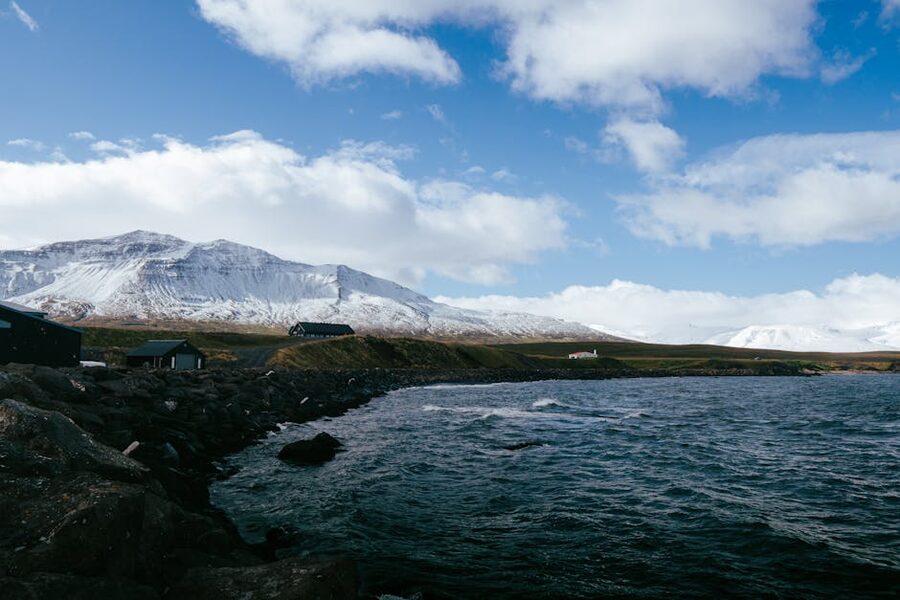
People ask me about the weather in Iceland the way they ask doctors about a strange ache. Worried, polite, hoping to be told it’s nothing. So I’ll tell you what I tell them. Iceland’s climate is not as cold as the name suggests, not as wild as the documentaries make it look, and not at all like the inland Arctic places it sits next to on the map. The numbers are mild. The wind has opinions. And the daylight is the part that catches almost everyone off guard.
Reykjavík averages roughly 0 to 3°C through the worst of winter and 11 to 14°C in July. That’s it. A bad February afternoon in London can be colder than a bad February afternoon here. What changes the whole feel of the country is what’s going on around those numbers. Storms that come in fast and clear in twelve hours. A horizontal sleet that turns four degrees into something that bites. Sun that rises at 11:30 in December and a midnight that never gets fully dark in June. If you understand those rhythms before you book, you’ll plan a trip that works. If you don’t, you’ll spend a lot of energy fighting weather you didn’t sign up for.
This is the season-by-season version, with the realities I wish more articles told you up front.
In This Article
- Why Iceland is milder than its latitude has any right to be
- The wind is the real story
- Daylight: the part nobody really pictures correctly
- Winter: late November to early March
- What winter is good for
- What winter is harder for
- Spring: April and May
- Summer: June, July, August
- The midnight sun thing, practically
- Autumn: September and October
- The storm reality, plainly
- Reading vedur.is and road.is in five minutes
- Microclimates: it’s not one weather, it’s six
- Rain, sleet, and the layering question
- Aurora: realistic expectations
- Volcanoes and what they actually do to your trip
- Climate change and what’s actually shifting
- Animals don’t care, and that’s reassuring
- How to pick the right month
- Two practical websites and a phrase
- What I’d actually do
Why Iceland is milder than its latitude has any right to be
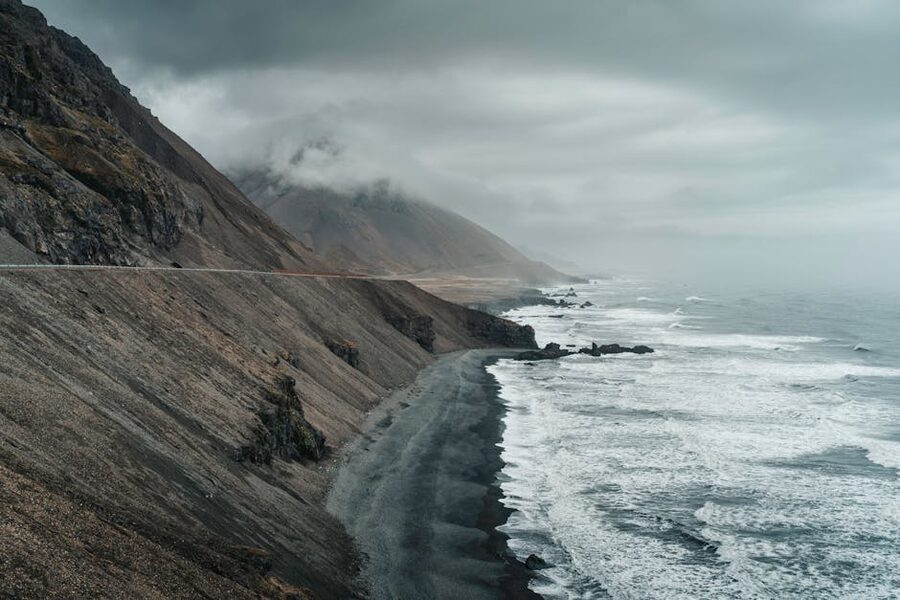
Look at a map and Iceland sits brushing the Arctic Circle. Grímsey, the small island off the north coast, actually crosses it. By all rights this should be a cold-soaked place where January means minus twenty-five and a hard freeze that lasts five months. It isn’t. Reykjavík’s January daily mean is +0.7°C, going by the 1991 to 2020 normals from the Icelandic Met Office. The lowlands of the south coast hover around 1°C. Even Akureyri up north averages about minus half a degree in deep winter. That’s London-mild. That’s Edinburgh.
The reason is sitting offshore. The North Atlantic Current, the northern arm of the Gulf Stream system, pushes warm water all the way up here. Inside that, a smaller current called the Irminger swings north along the west coast and keeps the harbours from freezing. Together they pump enough heat into the air that we get a maritime climate where every climate textbook would predict tundra. Köppen calls the coastal strip “subpolar oceanic” (Cfc, if you care about the codes). The tundra (ET) only kicks in once you climb into the highland interior, where the influence of the sea fades and altitude takes over.
That same warm-water effect is why Iceland gets so much weather. Warm wet ocean colliding with cold polar air a few hundred kilometres up is exactly the recipe for low-pressure systems, and there’s a near-permanent one parked between us and Greenland called, fittingly, the Icelandic Low. Whenever a North Atlantic textbook talks about the Icelandic Low, that’s the thing that’s making your morning awkward. Storms spin off it constantly. Most miss us. Many don’t.
So the picture you should hold in your head: the average is mild, the variability is enormous. A January day can be plus three with rain or minus eight with a blizzard. The annual range, end to end, is one of the smallest of any country at this latitude. The day-to-day range is one of the biggest.
The wind is the real story
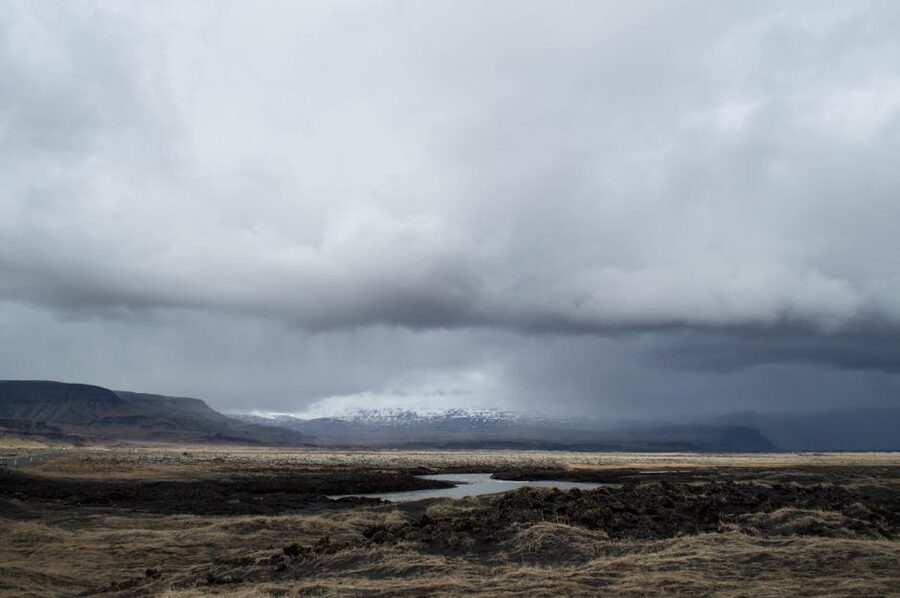
Icelandic has 156 words for wind. I am not exaggerating. There’s logn for absolute calm, gola for a gentle breeze, kaldi for a cold one, strekkingur for a stiff one, rok for a gale, and fárviðri for the kind of storm where you are not driving anywhere and the airline is going to email you about your flight. The reason the language has so much vocabulary for this is that wind is the single most defining feature of Icelandic weather. Not the temperature. Not the snow. The wind.
The Met Office records sustained ten-minute winds of 18 m/s (about 65 km/h, or 40 mph) on roughly 10 to 20 days per year in the lowlands, and 50+ days a year in the highlands. The strongest measured ten-minute sustained wind on record is 62.5 m/s. The strongest gust is 74.2 m/s. Convert that to anything you like, those are hurricane numbers, and they happen here. Not often. But they happen.
What this means in practice: a ten-degree day with a 25 m/s wind is much harder than a minus-five day with no wind. Your face will be cold. The car door will be ripped out of your hand if you’re careless. Light snow will travel sideways across the road and bury everything that isn’t moving. There is a local trick of opening the leeward door of the car first, holding it firmly, and watching where you put your feet, because the wind can also pick up sand and small grit and throw it at you.
And then there’s the dust. The arid highland north of Vatnajökull glacier kicks up enormous black sand and ash storms in early summer when the snow has gone but vegetation hasn’t returned. Up to ten tonnes of material can move per transect per hour. If you’re driving towards Skaftafell or Kirkjubæjarklaustur on a windy June day with a south-easterly, you’ll see it as a brown haze on the horizon. That’s not pollution. That’s the highlands moving.
Daylight: the part nobody really pictures correctly
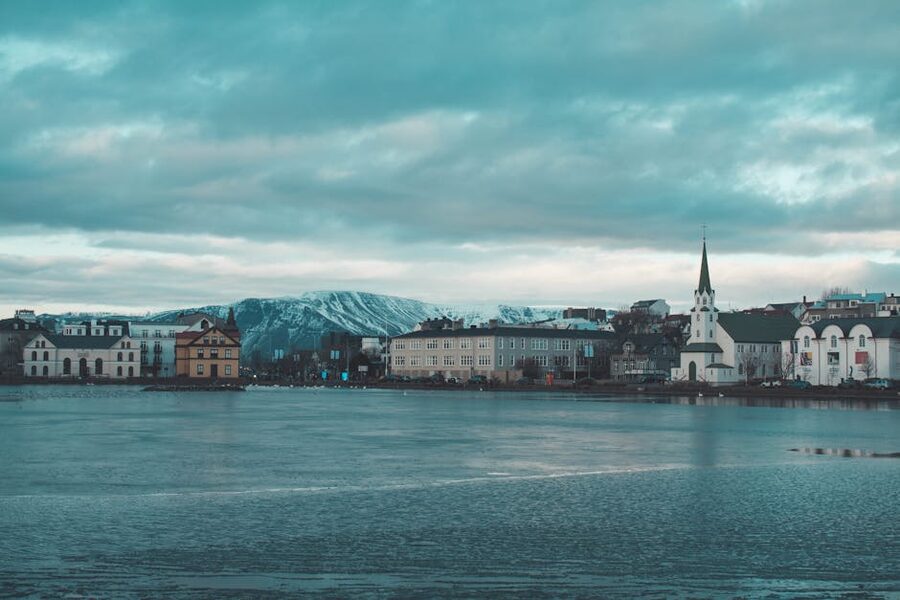
If you remember one number from this article, make it this: the shortest day of the year in Reykjavík is about 4 hours and 7 minutes of sunlight. The longest day is about 21 hours and 8 minutes. That’s the spread. Almost five hours of usable winter daylight on the worst day, almost a full day on the best.
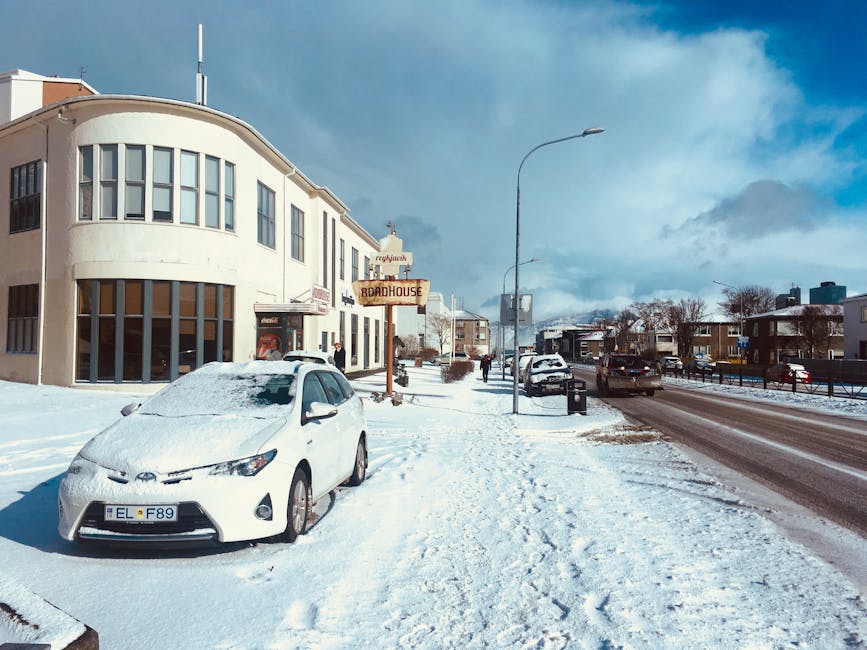
What that looks like on the ground varies wildly. December is the hardest month for visitors. Sunrise around 11:15, sunset around 15:30. Civil twilight a bit either side, so you do get some pinkish light at 10:30 and 16:00. But it’s not the bleak black-out people imagine. The snow reflects, the streets are lit, and Reykjavík genuinely loves the dark. People drink coffee, swim in heated outdoor pools, light candles in windows. Christmas lights go up at the start of November and stay up until late January because they earn their keep. There’s a word for the soft winter light, skammdegi, and it gets used the way Australians might say “summer.”
Then it flips. By mid-June the sun barely sets. In Reykjavík it dips below the horizon around midnight for a couple of hours of dusk, then comes back up. Up north in Akureyri, you get a longer twilight period but no full dark for weeks. On the small island of Grímsey, which sits on the Arctic Circle, you get the actual midnight sun where the disc never goes below the horizon at all. The summer solstice (sumarsólstöður) is the symbolic peak. The winter solstice (vetrarsólstöður) is the bottom. Locals notice both.
Practical points the calendar tables don’t tell you. April and August are the months that surprise people most. In early April the days are already long, around 14 hours by mid-month, and the snow is mostly gone from the south. In late August the dark is back fast enough that the first aurora of the season is realistic. April is much brighter than people expect. August is much darker. Plan accordingly.
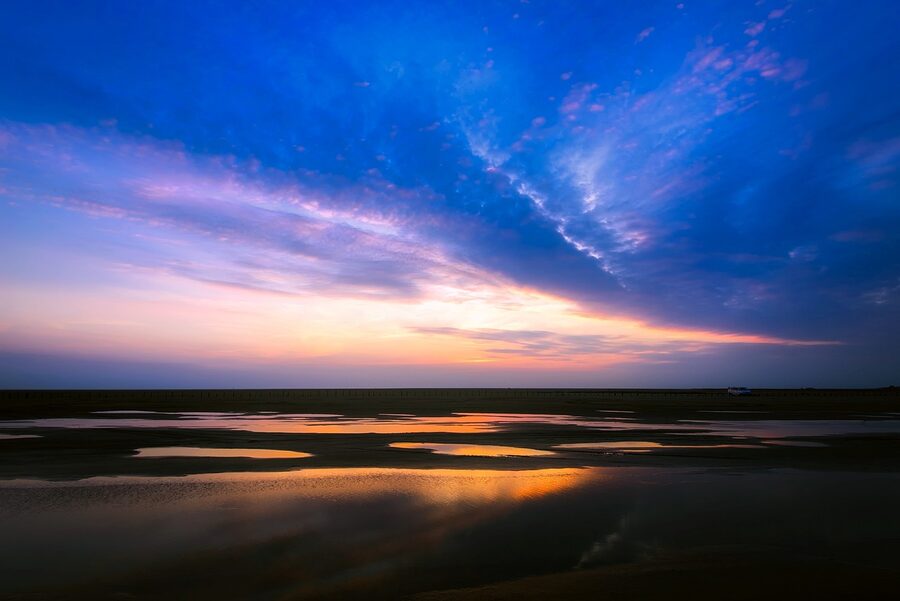
Winter: late November to early March
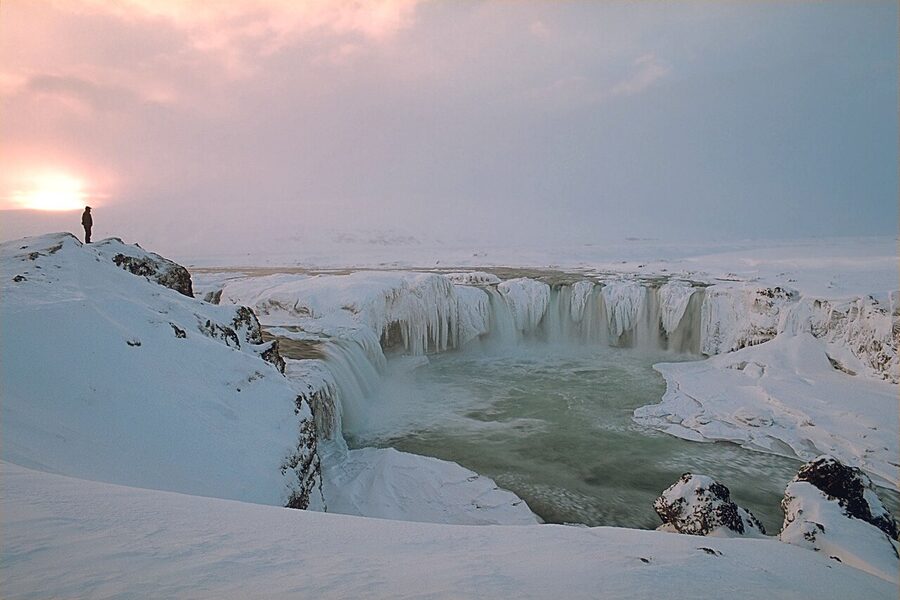
This is the season people debate the hardest. It’s the cheapest time to visit, it has the aurora, it has the ice caves, and it has the kind of moody half-light that photographs beautifully and feels romantic when it’s not your fourth grey day in a row. It also has the storms.
Reykjavík averages 0 to 3°C through January and February. North in Akureyri it’s about two degrees colder, and the inland north can dip to minus 25 in a cold snap. Snow accumulates more reliably in the north and east; the south coast often runs as wet sleet because the Atlantic keeps it just above freezing. January and February average over 80mm of precipitation each in Reykjavík, much of it mixed snow and rain. Wind speeds in winter are higher than other seasons. December has a daily mean wind around 25 km/h. So even on a “warm” minus one day, the wind chill takes the bite of it down to feel more like minus eight.
Sunlight is short and beautiful. Late December gives you about four hours, half of it pink. Sunrise by mid-February is back to 09:00, sunset around 17:30. The change comes fast. You get something like seven extra minutes of daylight per day in January, and even more in February. By the end of winter, you’re back to ordinary day-night rhythms.
What winter is good for
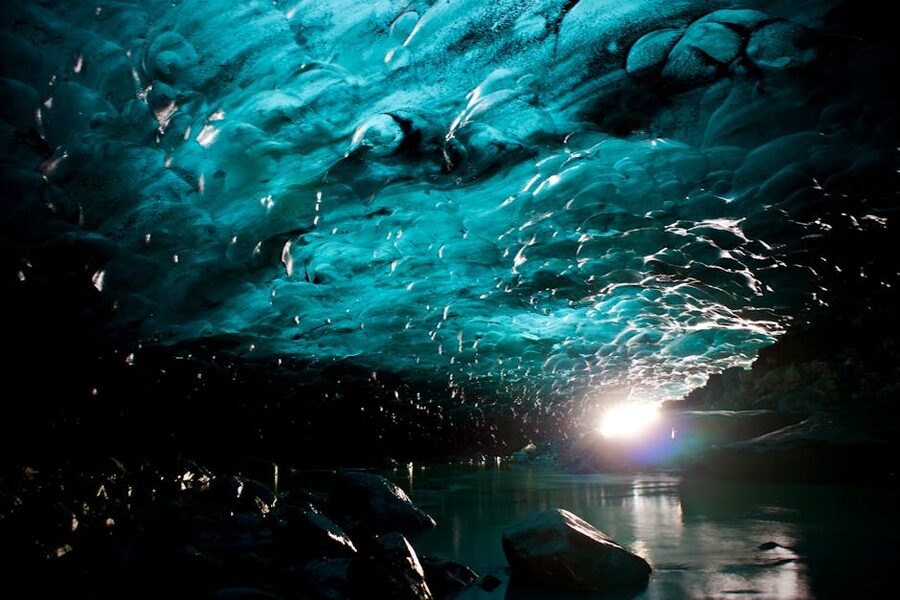
Aurora hunting, obviously. The blue ice caves under the Vatnajökull glacier (more on those in a second). Soaking in geothermal pools while it snows. Cheaper hotels, fewer people on the Golden Circle, restaurants where you can actually walk in. Christmas in Iceland if you visit in late December. New Year’s Eve in Reykjavík, which is a national bonfire situation that is genuinely worth the trip on its own.
What winter is harder for
Self-driving outside the south coast unless you’re confident on snow. Tight itineraries that don’t allow for a storm day. Anything that depends on a single weather window. The big one: do not, under any circumstance, book a non-refundable activity on the day you fly out, because if the weather closes the road from where you are to Keflavík, you’ll lose the activity AND your flight.
If you want a more focused look at Iceland’s winter glacier and volcano experiences, the Fire and Ice tour overview covers what’s actually running in the cold months.
Spring: April and May
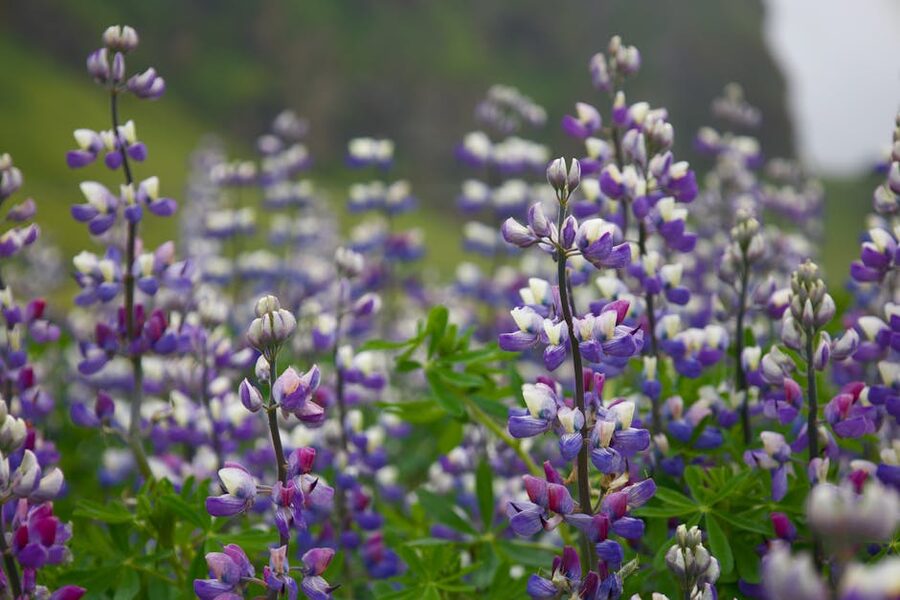
Spring in Iceland is the most underrated season. Almost no one talks about it because it doesn’t have a single big draw. No aurora, mostly. No midnight sun yet. The puffins are only just back. But the daylight builds fast, the worst of winter is over, prices are lower than summer, and the country wakes up.
The numbers: April daily mean in Reykjavík is around 3.7°C. May is 6.7°C. Wind speeds drop noticeably from March onwards. Precipitation halves compared to the autumn peak. Daylight in early April is already 14 hours, and by the end of May you’re looking at nearly 21. The snow is mostly gone from the south by late April but lingers in the north and definitely in the highlands well into June.
Spring weather is, however, the most variable of the year, more so than the depths of winter. You get genuinely warm sunny days that make you take your jacket off, and you get sleet two hours later. The locals know this and dress like an onion. The other thing about spring is what it isn’t yet: it isn’t reliably mosquito season (we don’t have proper mosquitoes anyway, just midges around lakes), it isn’t peak tourist season, and the F-roads to the highlands haven’t opened. Most of those open between mid-June and early July depending on the year.
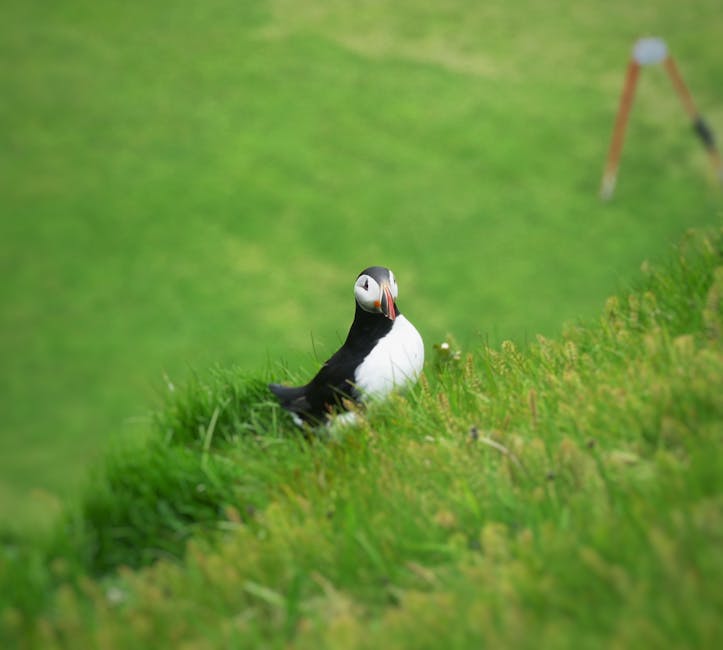
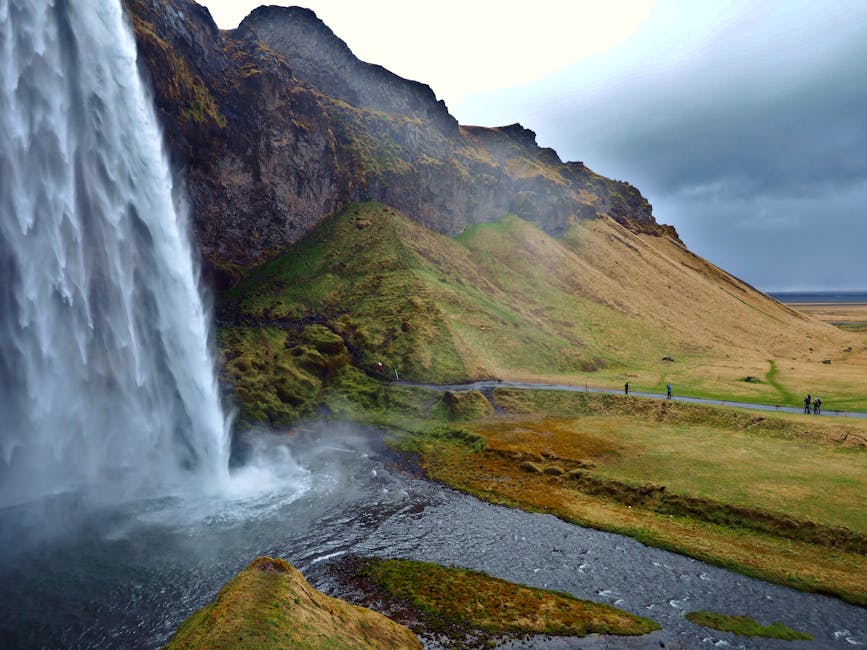
If you’re the sort of traveller who wants empty roads and long light without paying summer prices, May is the one. Fly into Reykjavík, drive the south coast in the long evenings, and you’ll have Seljalandsfoss and Skógafoss without the crowds you’d get in July. For the bird side specifically, our bird watching tour overview goes into which colonies are active in which months.
Summer: June, July, August
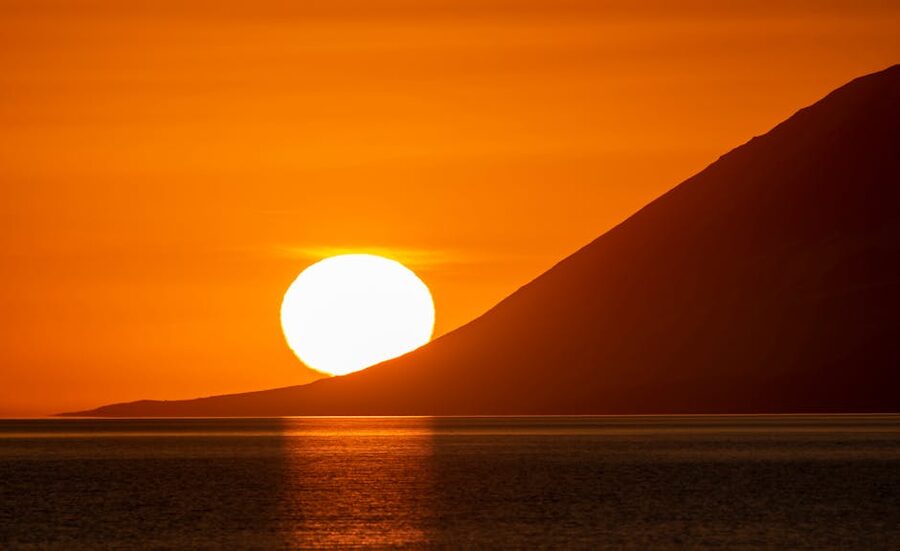
Summer is when the country opens up. The F-roads in the highlands are clear by early July. The puffins are on the cliffs. The midnight sun makes 11pm landscape photography normal. Whales are in the bays. The temperatures in Reykjavík sit around 10 to 14°C with the warmest July days reaching 20 and the record high (set in 1939 in the Eastern fjords) at a wild 30.5°C, though that level of heat is genuinely rare and a bit of a national event when it happens.
July is the warmest, driest, and least windy month. Rainfall in Reykjavík averages around 50mm in July, less than half what falls in October. The wind drops to about 13 km/h on average. June is the second-best on most metrics and has the longest days. August starts to slip back: temperatures begin to drop, rain picks up slightly, and the dark returns surprisingly fast. By the last week of August, you can already see real night.
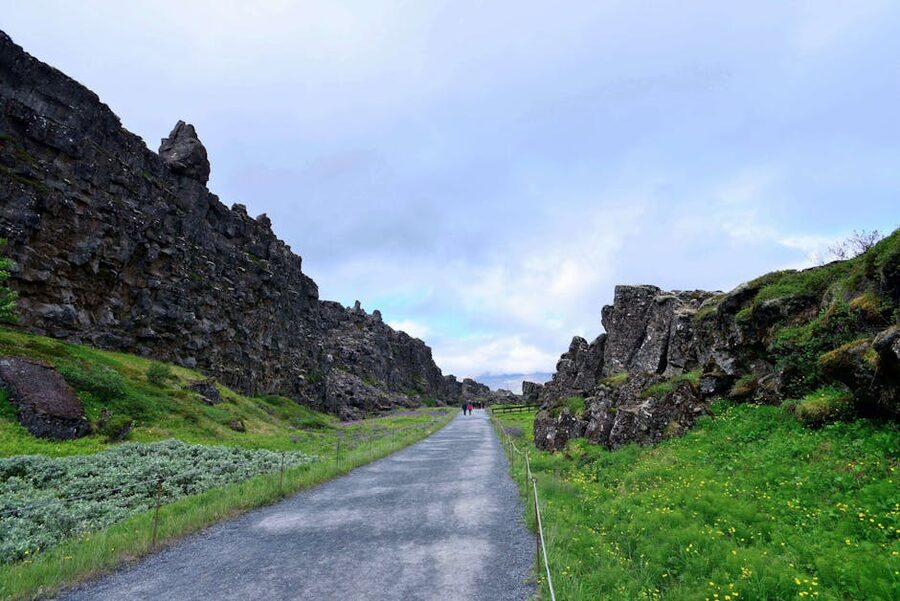
The trade-off for summer is the obvious one. It is high season. Hotel prices are roughly double what they are in March. Popular sites are crowded, especially on the Golden Circle and around Vík. The Blue Lagoon books out weeks ahead. Car rentals are scarce. Ring Road accommodation outside the bigger towns is essentially full from mid-June to mid-August, and you’ll need to book months in advance for the smaller guesthouses on the south coast and in the east. None of this is a reason to skip summer. It’s just worth knowing that “spontaneous” is not a summer travel style here.
The midnight sun thing, practically
You will not sleep well unless you bring a sleep mask or stay somewhere with proper blackout curtains. Most rural guesthouses do not have blackout curtains. The light will be coming through your eyelids at 2am. Bring the mask. I’m serious. Even locals use them in summer. The other practical issue: your sense of time gets weird. You’ll start cooking dinner at 9pm because it feels like 5pm. Restaurants in small towns close their kitchens at 9pm regardless. Eat earlier than your body wants to.
Autumn: September and October
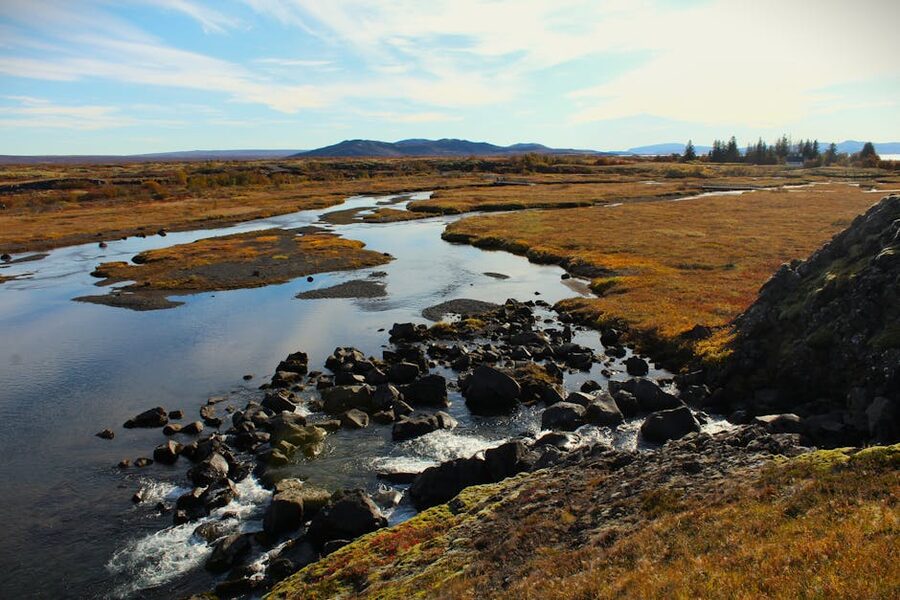
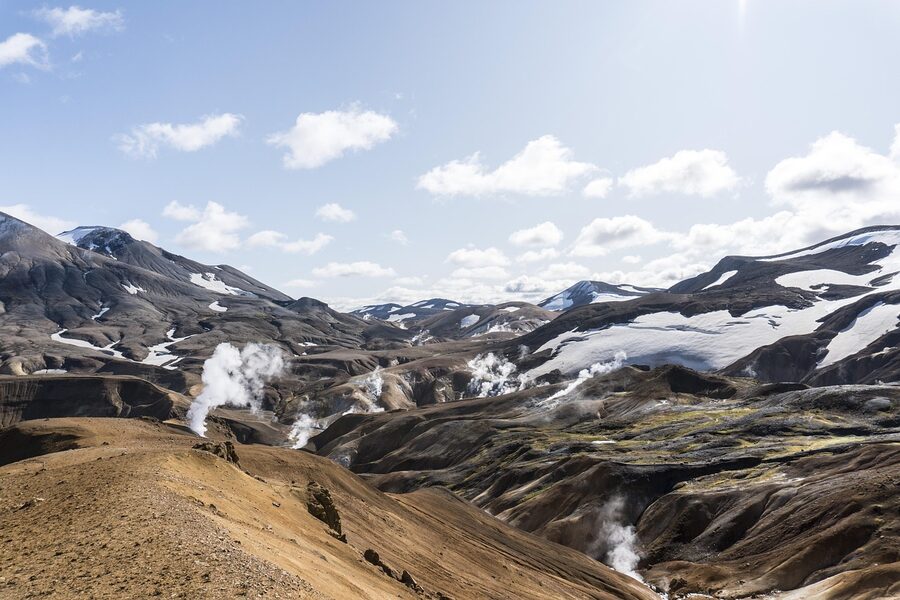
If I had to recommend the single best window for first-time visitors who want to see most things and not pay summer prices, it would be September. Hear me out. The midnight sun is over but the days are still 12 to 13 hours long at the start of the month and around 10 by the end. The highland F-roads are still open until mid-September. The Ring Road is still fully drivable. The crowds drop off sharply after Labor Day. Hotel prices come back to earth. And the aurora season starts again because the nights are dark enough.
The catch: autumn is when the storms start to pick up again. October is the wettest month in much of the country and the wind comes back. November is the transition into proper winter. Daylight by the end of October is down to around 8 hours, and you’ll feel the difference. But for two or three weeks in mid-September, you can have everything that’s good about summer plus the first real aurora plus actual prices.
October is more of a coin flip. You can get clear cold nights with vivid aurora and dry roads. You can also get a string of grey wet days and have to revise the trip on the fly. If you go in October, build in flexibility and don’t book a tight south-to-east loop expecting it to stay open.
The storm reality, plainly
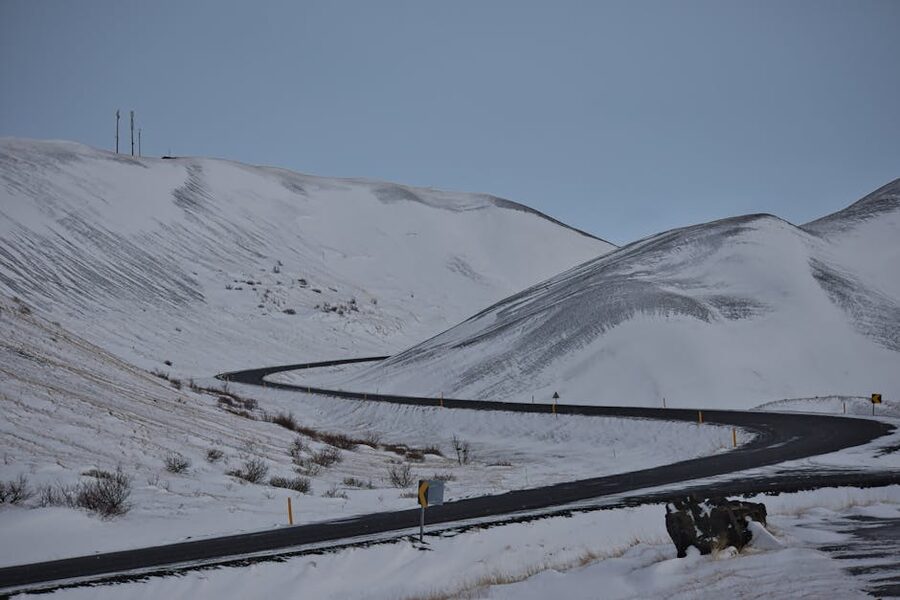
I want to be clear about what storms here actually mean, because it’s the part travel writing tends to either soft-pedal or over-dramatise. Both are unhelpful.
The Icelandic Met Office (en.vedur.is) issues colour-coded warnings the way most of Europe does. Yellow means be aware. Orange means strong winds and travel might be tricky, often with localised closures. Red means stay where you are, you should not be driving anywhere, and probably some flights are affected. There is also occasionally a “violet” or extreme category. Each warning is region-specific. The south coast can be on red while the north is on yellow.
What happens during an orange or red warning: schools close, sometimes whole sections of Route 1 close, the airline texts you, ferries pause, and almost everyone you know just stays inside. It’s not a dramatic event. It’s an organised national pause. Locals don’t push through these, and you shouldn’t either. The wind speeds involved are real.
The two websites you check daily on a winter trip:
- en.vedur.is for weather, wind, precipitation, aurora forecast, cloud cover, and warnings
- road.is for road conditions, closures, snowfall, and webcam views of major routes
Locals look at both, in that order, every morning between November and April. If there’s a storm warning, road.is will show closures within a few hours of the warning going up. If road.is shows a section as red (impassable) or orange (difficult), that’s the answer. Adjust the day. Þetta reddast, as we say. It’ll work out.
Civil Protection also occasionally cordons off areas during volcanic activity or extreme storms, working with police to put physical roadblocks on certain routes. If you see one, do not drive around it. People have died doing that. The cordon is there because a flash flood, a dust storm, or an active eruption is genuinely on the other side.
Reading vedur.is and road.is in five minutes
For a non-Icelandic-speaker the websites can look a bit dense. Here’s the short version of how locals use them.
On en.vedur.is, the front page gives you forecasts by region. The map at the top shows current warnings: yellow, orange, red bubbles over different parts of the country. Click your region to get a 24- to 48-hour breakdown of wind direction, wind speed in metres per second, temperature, and precipitation type. Mentally translate wind speed: 5 m/s is a stiff breeze, 10 is windy, 15 is properly windy, 20 is when you start changing plans, 25 and above is when you don’t drive a small car on an exposed road. Check the precipitation icons too: rain is one thing, sleet on cold ground is another, and freezing rain is the worst. The aurora forecast is on its own page, with a 0 to 9 KP scale and a cloud-cover map (white = clear, green = cloudy). White over your location plus KP 4 or higher is when you go.
On road.is, the country is colour-coded for current driving conditions: green is fine, yellow is slippery, orange is difficult, red is closed. There are little wind icons on the map too, and webcams at major junctions you can click on. Both sites update several times an hour. Hotel staff and tour operators check them obsessively. So should you.
If you only visit in summer, you can probably ignore both. If you’re here November to April, build the morning check into your routine the way you’d check a flight status before going to the airport.
Microclimates: it’s not one weather, it’s six
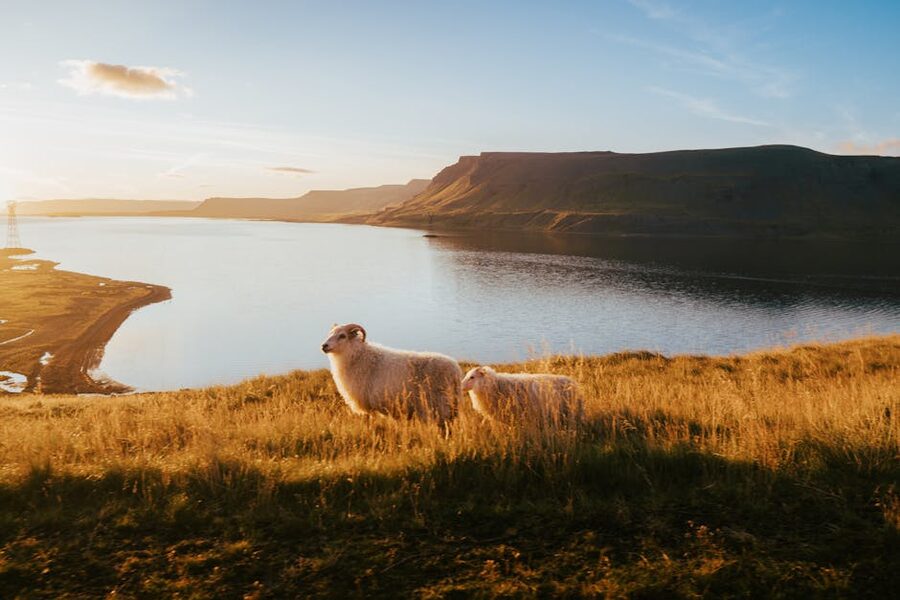
One of the biggest mistakes people make is assuming “Iceland weather” is uniform. It really, really isn’t. The country has at least five distinct climate zones that often disagree with each other on the same day.
The south coast, including Reykjavík, the Golden Circle, Vík, and Skaftafell, is wettest and mildest. It catches every moisture-loaded southerly that comes off the Atlantic. Annual precipitation in Reykjavík is about 875mm (Vík south of it gets a lot more, sometimes over 2,000mm). Snow tends to come and go rather than stick. Storms hit the south coast first.
The north, including Akureyri, Húsavík, and Mývatn, is drier and colder. Annual precipitation in Akureyri is around 575mm, well under two-thirds of Reykjavík’s. Snow accumulates and stays. The summers are slightly warmer when the wind drops, because cold air from the highlands sinks but the surrounding mountains shelter the towns. The aurora is often visible here on nights when Reykjavík is clouded out.
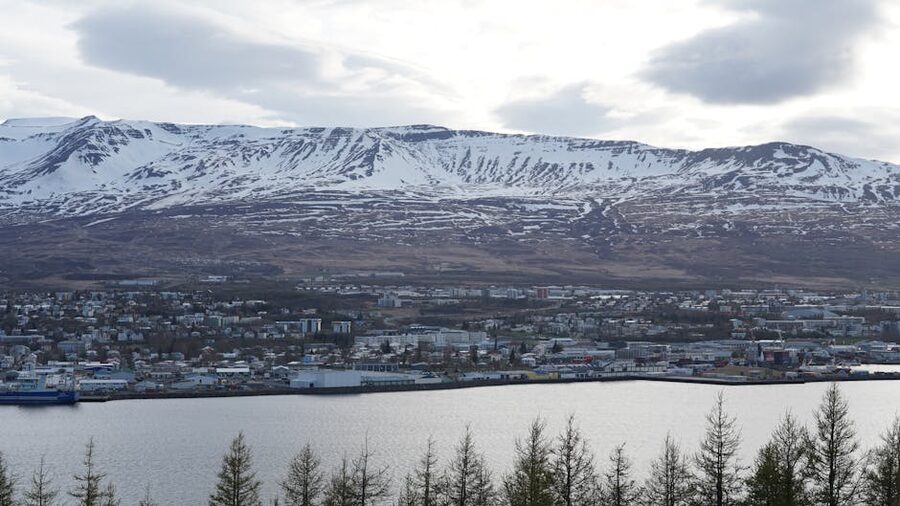
The east fjords, around Egilsstaðir and Seyðisfjörður, are similar to the north in temperature but get more rain than people expect. The microclimate inside Egilsstaðir’s sheltered valley is one of the warmest summer spots in the country, oddly. The record high of 30.5°C was set out here.
The Westfjords are their own thing. Cooler, snowier, more dramatic, and harder to get to. The road in only opens reliably from late spring to early autumn. Some towns up here, like Bolungarvík and Suðureyri, are functionally cut off for stretches of winter. If you’re going to Látrabjarg or Dynjandi, summer only, ideally July or August.
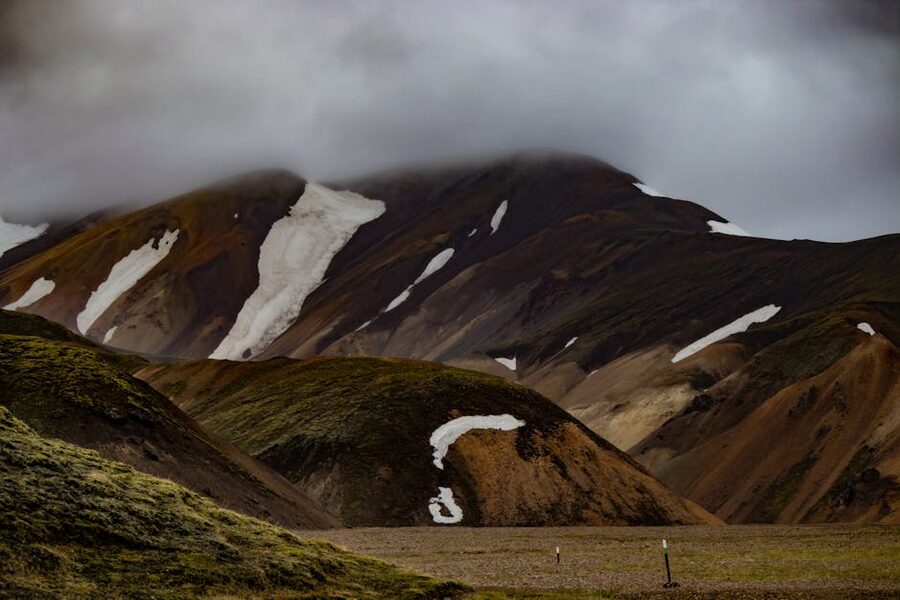
The highlands are inland, high, and effectively closed from October to June. The F-roads (mountain roads, requiring 4×4 and river-crossing skill) open in stages from late June to early July and close again by late September or early October. Inside the highlands the climate is genuinely subarctic: cold nights even in summer, frequent fog, and storms that can blow up out of nothing. Don’t go up here without a plan, a vehicle that can handle it, and a check on conditions.
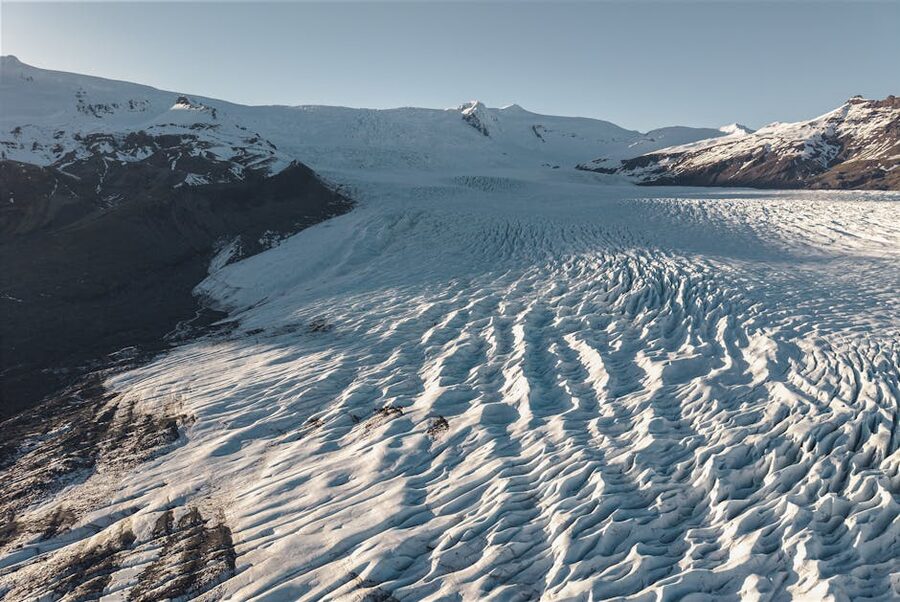
The glaciers generate their own weather. Vatnajökull is so big it visibly affects the climate of the south-east. Cold air sinks off it, dust storms launch from it, and the area immediately south of it (Skaftafell, Jökulsárlón) tends to get the most aggressive wind shifts in the country. If you’re sleeping near Jökulsárlón, expect the temperature to drop noticeably overnight even in July.
Rain, sleet, and the layering question
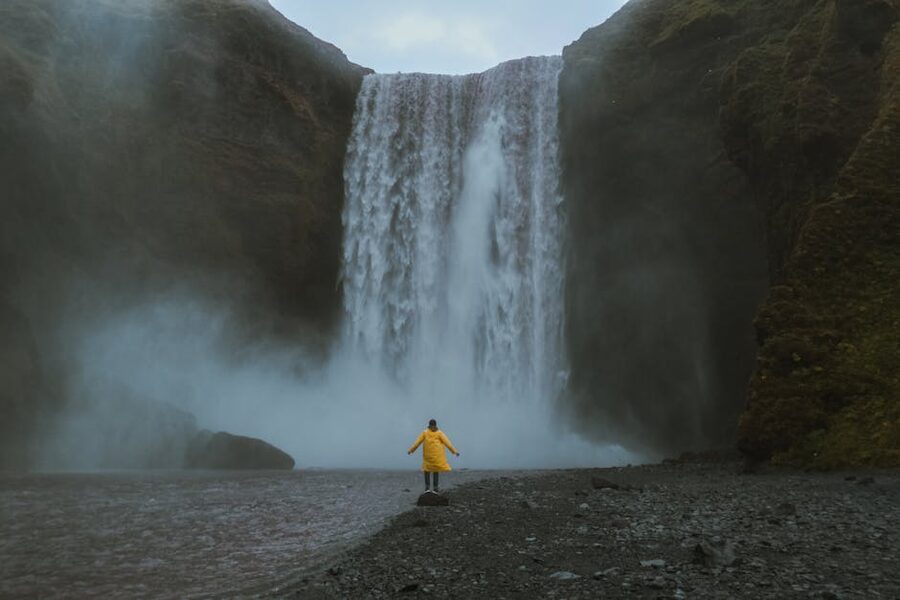
The single most useful packing rule: dress in layers, and the outer layer must be a real wind-and-rain shell. Soft-shell jackets are for hiking somewhere drier than this. The system most locals use:
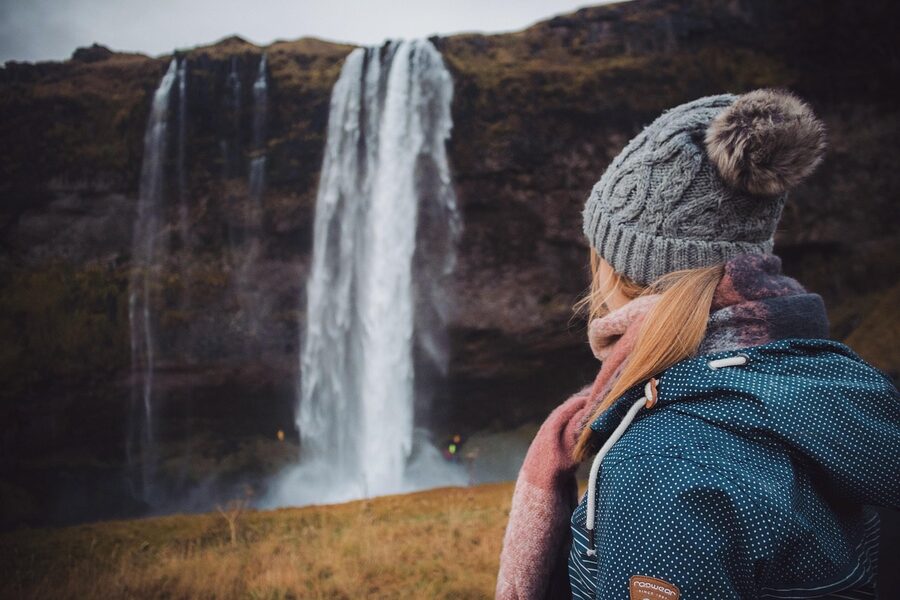
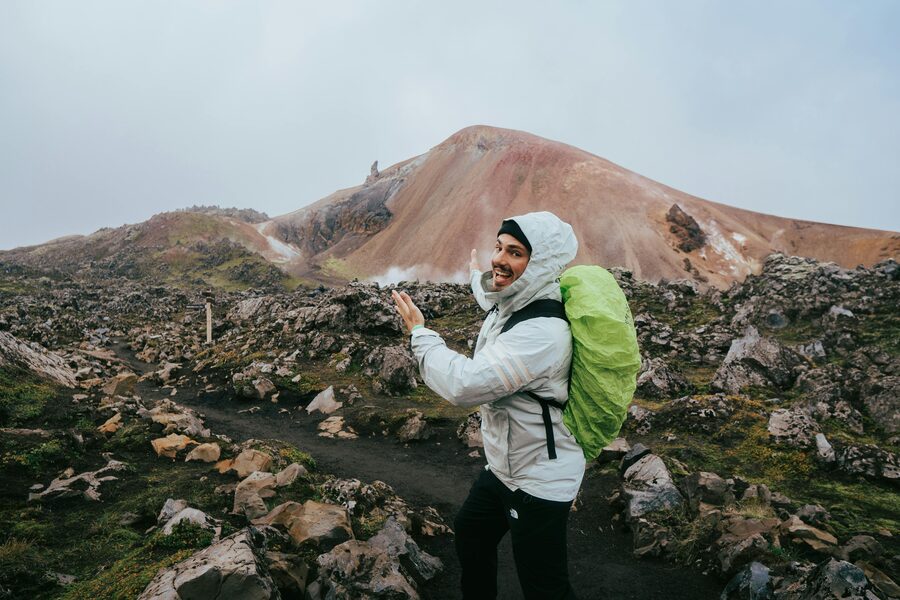
Base: merino wool top and leggings if you’re going to be outside for hours. Cotton holds water against your skin and stays wet. Wool stays warm even when damp. Mid: a fleece or wool jumper, or a light synthetic puffy. Outer shell: waterproof and windproof, ideally with a hood and pit zips. Hands: two pairs of gloves, one thin liner and one thick. Mittens beat gloves in real cold. Head: a beanie that covers your ears, and a buff (the tube of fabric you can pull up over your nose). The buff is the single most useful piece of clothing you can pack for a winter trip here. It cuts wind chill on your face, it doubles as a face mask in horizontal sleet, and it weighs almost nothing.
One thing nobody mentions: sunglasses, even in winter. The sun in November to February sits very low, and the angle of light off snow and water is brutal. A surprising number of locals wear sunglasses to drive in winter for exactly this reason. The midwinter glare across a frozen field at noon will make your eyes water within minutes.
For footwear, waterproof boots are non-negotiable in any season, including August. Trail runners are fine for short walks in summer, but you’ll want proper Gore-Tex boots for anything off pavement. Add ice cleats (microspikes that strap to your boots) for winter walks. They cost almost nothing and they’re the difference between walking confidently and shuffling like you’re 90.
Aurora: realistic expectations
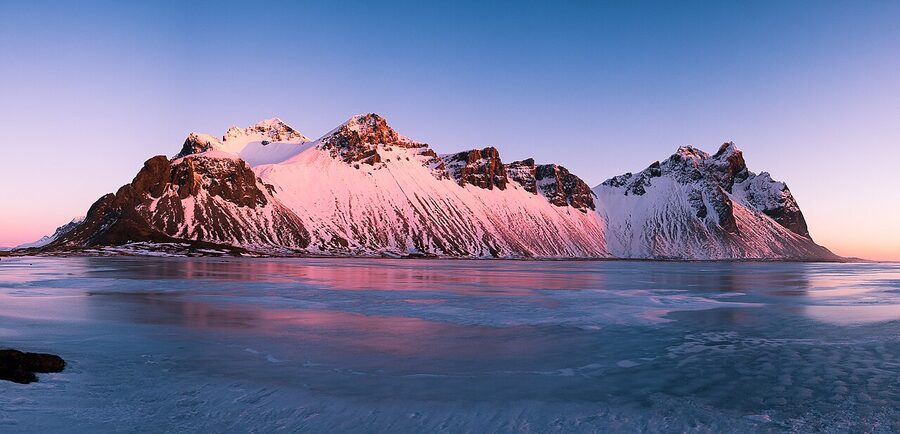
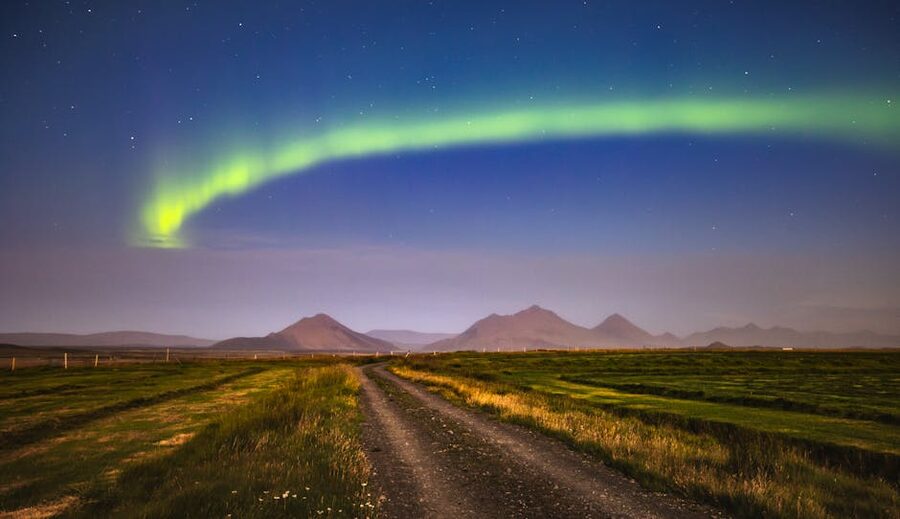
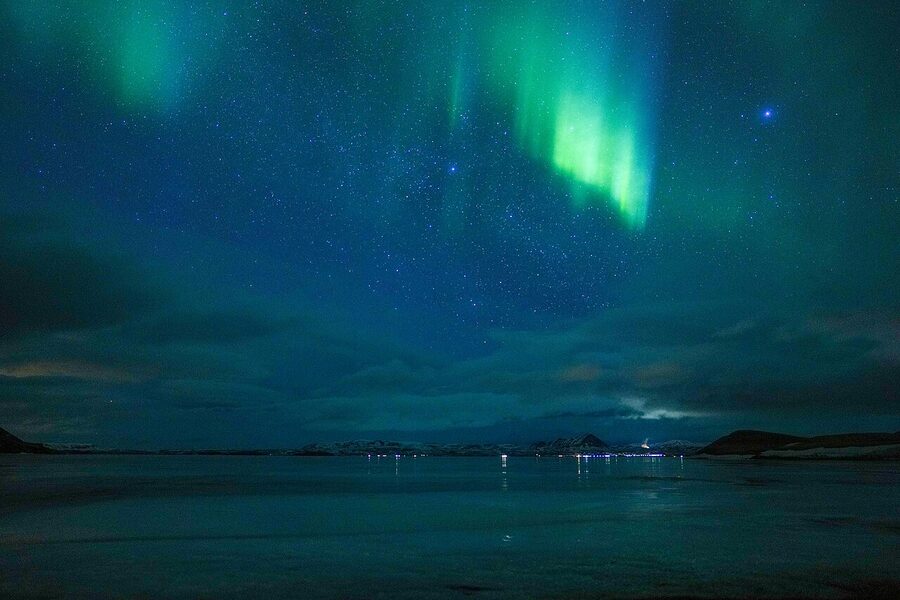
Three things have to line up for you to actually see the northern lights from Iceland: it has to be dark (so roughly September through April), the sky overhead has to be clear, and the geomagnetic activity has to be strong enough. The third one is measured on the KP index from 0 to 9. KP 3 is enough at our latitude to give you a faint green band on the northern horizon. KP 5 and above is when the sky genuinely starts dancing.
What gets people frustrated is the cloud part. We have a lot of cloud. In December, average cloud cover is over 65%. Even on a strong KP night you might be sitting under a closed sky. The trick is to drive. The cloud forecast on vedur.is shows you in real time where the gaps are. Often you can see white patches one valley over from where you started. Many guided aurora tours operate exactly on this principle: pick you up, look at the cloud map, drive to where there’s a gap.
I’d never promise anyone they will see the aurora. I will promise they have a much better chance if they: stay at least three nights in the dark months, get away from city light, watch the cloud forecast, and don’t lock themselves into one spot. The truth is plenty of people come for a long weekend, get clouded out for three nights, and go home without seeing it. That’s part of the gamble. If aurora is the only thing you’re coming for, give it a full week if you can.
For more on photographing the lights specifically, the Iceland photo tour overview has the camera settings and locations the local guides use.
Volcanoes and what they actually do to your trip
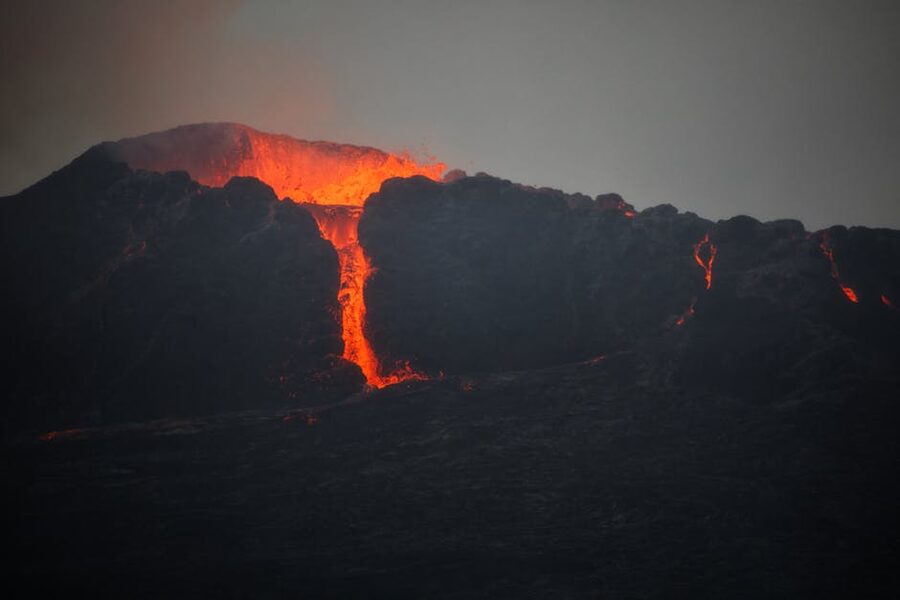
This is going to come up. Iceland sits on the Mid-Atlantic Ridge, where two tectonic plates are pulling apart roughly two centimetres per year, and we have around 130 volcanic mountains across the country, of which about 30 are considered active. Most years one or two of them do something. Sometimes nothing of consequence. Sometimes (Eyjafjallajökull in 2010) a flight-grounding ash plume across half of Europe. Sometimes (Reykjanes from 2021 onwards) a slow rolling series of fissure eruptions that becomes its own tourist attraction.
What this means in practice for a visitor: the chance of a volcano genuinely disrupting your trip is low but not zero. The Reykjanes peninsula, where the airport is, has been the most active area recently and has had multiple eruptions since 2021. None of them so far have stopped flights or damaged the airport, though the Blue Lagoon has been evacuated and closed several times. Civil Protection is good at managing access. They cordon off the immediate area and let the lava do its thing. If an eruption starts during your trip, follow Civil Protection guidance, do not approach the site without a guide, and check road.is for closures.
Ash from a more explosive subglacial eruption is the bigger risk for flight disruption. Eyjafjallajökull was a black-swan event. They’re rare but they happen.
For the geological side of why all this is happening, our fire and ice tour piece goes deeper into the volcanism and how to actually visit eruption sites safely.
Climate change and what’s actually shifting
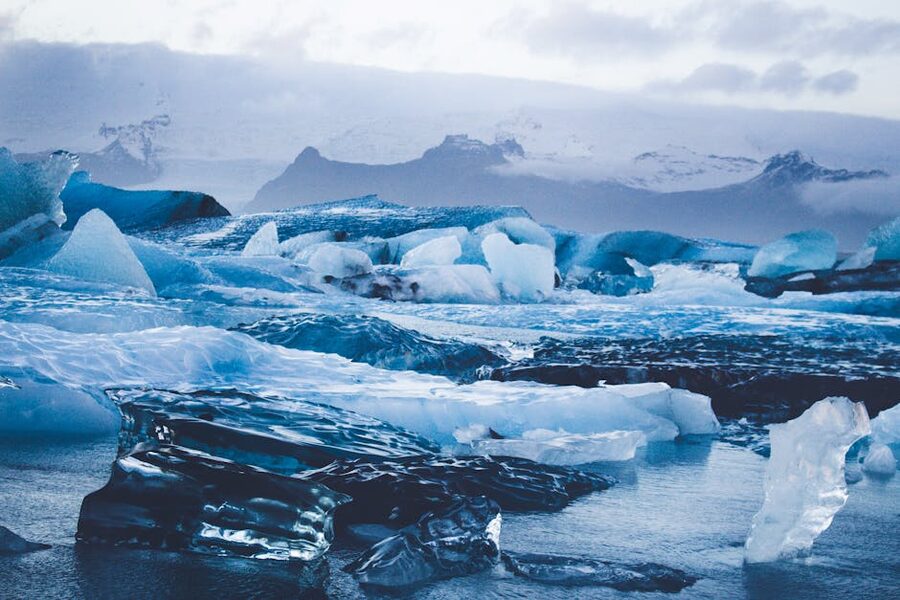
I’ll keep this short because there are entire books on it. Iceland’s glaciers are retreating fast. Roughly 750 square kilometres of glacier ice has melted since 2000. Okjökull, the small Ok glacier, was officially declared dead in 2014 and got a funeral with a plaque in 2019. Current modelling suggests Iceland’s glaciers will lose around 25% of their volume in the next century with just 1°C of further warming, and 60% with 2°C. Some predict only small ice caps will remain after 200 years.
What this means for visitors right now: ice caves are still forming each winter, and the big-name glaciers (Vatnajökull, Langjökull, Mýrdalsjökull) are still very much there. But the snouts have visibly retreated within a single human lifetime. If you go on a glacier hike at Sólheimajökull, the spot where you start walking on ice is hundreds of metres further from the road than it was in 2000. Travel writers from a decade ago describing exactly where to stand are now describing a place that is now open water and gravel.
The other shifts: vegetation patterns are changing, marine ecosystems are shifting, and there’s been growing concern about what a slowdown of the Atlantic Meridional Overturning Circulation (AMOC) would mean for us. The country has officially classified the potential AMOC collapse as a national security risk as of late 2025. Iceland’s own emissions are mostly from transport (electricity is essentially all geothermal and hydro), and the goal is carbon neutrality by 2040.
None of this should change whether you visit. It does change what you see. If you want to see Iceland’s glaciers in something close to their current state, the next few decades are the window.
Animals don’t care, and that’s reassuring
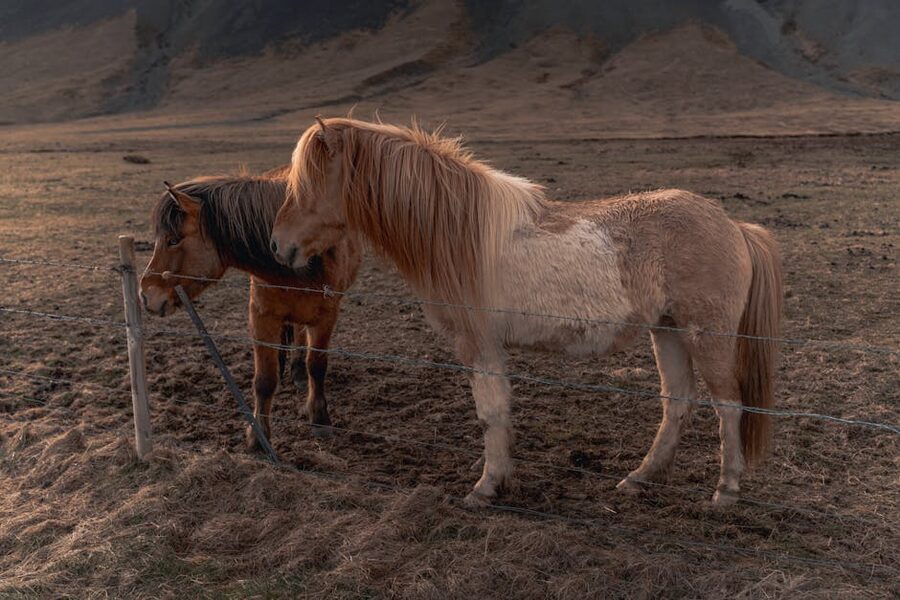
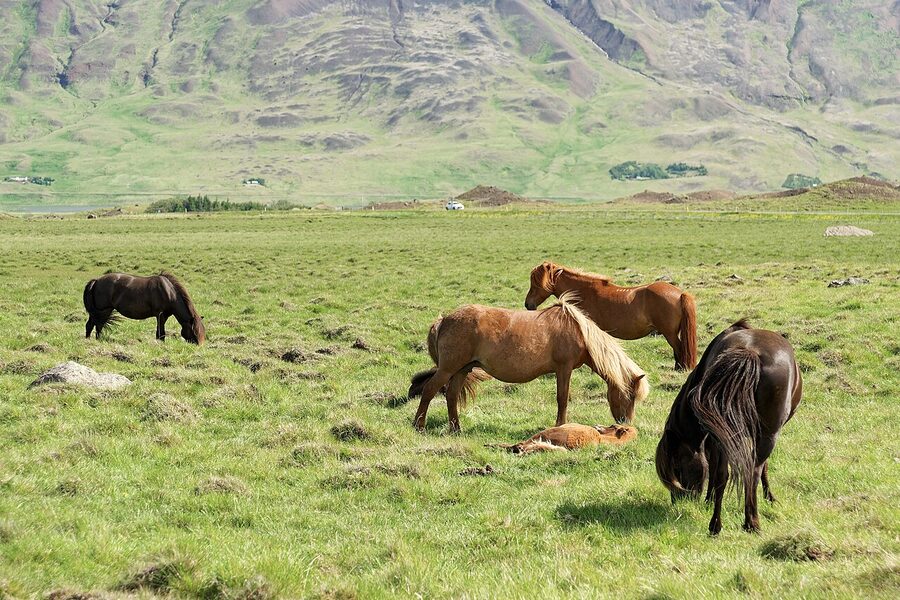
One thing that helps if you start to feel intimidated by the weather: nothing native to this country thinks the weather is a problem. The Icelandic horse stands out in a winter storm with its back to the wind and seems entirely fine. The sheep stay outside in the highlands until October. The puffins time their breeding to the storm season. The arctic foxes don’t even change colour for winter much, because they don’t need to hide. Everything that lives here is built for it. The systems work. You’re slotting into a place that has known how to deal with this weather for a very long time.
Even Reykjavík is built for it. Houses are mostly geothermal-heated, so you’re never cold indoors. Pavements are gritted within hours of snow. Buses run during all but the worst storms. Public pools (the social hub of Icelandic life) are open year-round and outdoors and packed at minus three because the water is 28°C and the hot pots are hotter. Reykjavík in winter is genuinely one of the most pleasant cold-weather cities in Europe to spend time in, partly because everything is designed around the weather rather than against it.
How to pick the right month
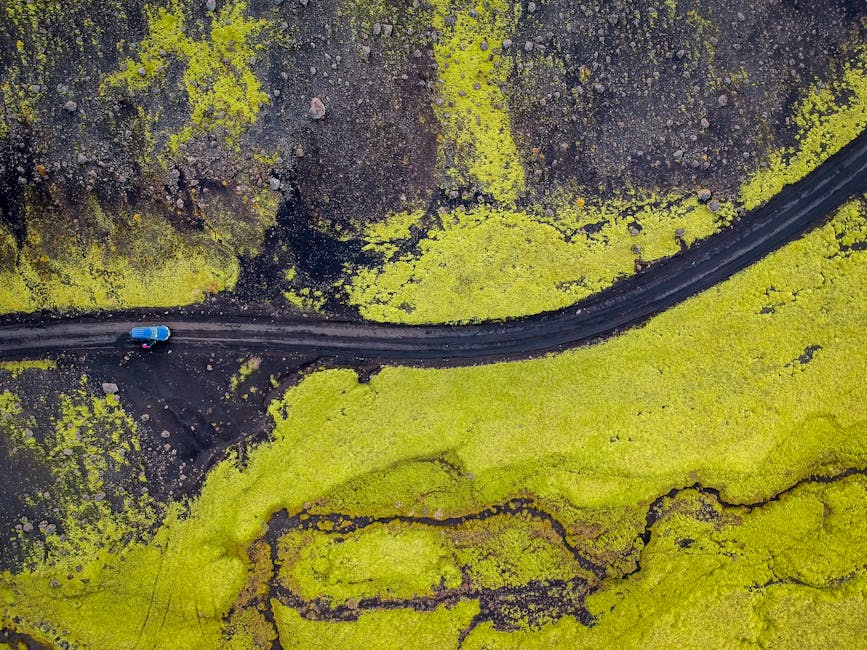
If you only have a long weekend and want the safest bet for stable weather and long days: late June or early July.
If you want the best balance of weather, daylight, low crowds, and price: September, ideally the first three weeks. The aurora returns, the F-roads are still open, the days are still long enough.
If you want the aurora and ice caves specifically: late January through early March. Cold, dark, and most likely to give you a clear KP-active night, plus the ice caves are stable.
If you want puffins: mid-May through mid-August.
If you want to see the highlands and the interior: late June through mid-September. There’s no other window.
If you want Christmas markets and Reykjavík at its most atmospheric: mid-December. Budget for the dark.
If you want the absolute lowest prices and the smallest crowds: late October to late November is the gap, but you’re rolling the dice on storms and the aurora isn’t reliable yet because of cloud.
What I’d avoid for first-timers: trying to do the full Ring Road in a winter week. Booking activities back to back without buffer days. Flying out on a non-refundable ticket the same day as a planned south-coast tour in winter. Driving F-roads in a 2WD in any season. Coming in winter expecting snow in Reykjavík (it’s often slushy or rainy at sea level). Coming in summer expecting a warm beach holiday (it’s not).
Two practical websites and a phrase
Bookmark both:
- en.vedur.is for forecasts, warnings, aurora, cloud cover
- road.is for live road conditions and closures
- And for safety updates and emergency information, safetravel.is from the Icelandic Search and Rescue association
And learn this phrase: þrátt fyrir veðrið. It means “in spite of the weather,” and it’s basically the unofficial Icelandic travel motto. We do almost everything in spite of the weather. We swim outdoors in storms. We have weddings in November. We drive across the country in February for a music festival in Akureyri. The weather is a constant negotiation, not a defeat. The locals know this and so will you, after about three days here.
What I’d actually do
If you came to me asking for a single trip plan that gives you the most reliable mix of “good weather” and “see the things,” I’d send you here in the second week of September for ten days. Fly into Keflavík, two nights in Reykjavík, drive the south coast slowly with three nights between Vík and Höfn so you can build in storm flexibility, two nights up in the Mývatn area, two nights in Akureyri, and a final night back in Reykjavík with the late flight home. You’d get the autumn light, the first aurora chances, the highlands still accessible if you wanted to detour, and prices that aren’t going to break you.
If you’re set on winter, come for at least five nights, base mostly in Reykjavík, and do day tours rather than driving the Ring Road yourself. Day tours from Reykjavík exist precisely for this season, because the operators know which roads are open and which to skip on a given morning. You watch the morning forecast, they pick you up, and if conditions are bad they swap the itinerary or refund. It’s a much less stressful winter than self-driving.
Whichever season you come in, the climate will surprise you in some way. It always does. The thing about Icelandic weather is it makes you pay attention. You stop looking at your phone. You watch the sky. You notice that the wind has shifted and the pressure has dropped and the gulls are flying lower. You become, for a few days, a person who reads the weather. That’s the bit nobody tells you about. It’s actually quite nice.
Pack the shell, bring the buff, check vedur.is in the morning, and come anyway. Þetta reddast.

.jpeg)