When the first Norse settlers came ashore in 874, the only land mammal waiting for them was a small fox. That’s the founding fact of Icelandic wildlife. Everything you see grazing a roadside today, every horse in a paddock, every sheep on a slope, every reindeer in the East Fjords, came with a boat or arrived under its own power long after we did. The puffins on the cliffs and the whales offshore are the originals. Almost everything else is a guest the country slowly absorbed.
I tell visitors this not as a trivia point but because it changes how you watch things here. A horse in Iceland isn’t quite a horse anywhere else. A reindeer is a deliberate import. A mink is a fur-farm escape that the state actively hunts. The whales are the closest thing we have to a continuous wild population, and even they are now caught up in a hunt that splits the country in two. Wildlife in Iceland is half ecology, half human history. You can’t really talk about one without the other.
This guide walks through what’s actually here, where to see it, who to book with if you want a tour, and where I’d quietly tell a friend not to bother. It covers the headline cast (horses, foxes, reindeer, whales, seals) and the supporting cast (mink, ptarmigan, gyrfalcon, sheep), and it tries to tell the truth about the parts that aren’t comfortable, like our whaling. The bird side gets a brief overview here because we already have a separate guide for the cliffs and the seabirds.
In This Article
- The shaping fact: a clean-slate ecosystem
- The íslenski hesturinn: the horse you don’t call a pony
- If you only have an hour and a camera
- The melrakki: Iceland’s only native land mammal
- The hreindýr: introduced reindeer of the East
- The supporting land cast: sheep, mink, and the smaller imports
- Marine mammals: 23 cetacean species and a controversy
- Where to go for whales
- The whaling question
- Seals: harbour and grey
- Birds: the brief overview
- What’s not here, and what people ask about
- How to actually combine wildlife into a trip
- Etiquette and the things people get wrong
- The conservation context
- One last thing
The shaping fact: a clean-slate ecosystem
Iceland sits in the north Atlantic about 800 km from Greenland and 970 km from Norway. That distance kept it largely empty of land animals through every glacial cycle. There were walruses on the coasts in early settlement times, the old chronicles call them rosmhvalr, but they were hunted out within a century or two of arrival. There are no native amphibians. No native reptiles. No mice or rats before us. No deer, no rabbits, no bears, no wolves. Just one small fox that made it across pack ice from Greenland after the last ice age, plus a handful of bird species nesting on the cliffs and the sea life offshore.
That blank-page state is why the introductions matter so much. The Vikings brought sheep and horses and dogs and cats, and a few centuries later somebody brought rats and mice in a cargo hold. In the 1700s a Sami farmer brought reindeer to fill out the meat economy. In the 1930s American mink were imported for fur and the operation collapsed and now they’re a national pest. There are no penguins, despite what surprisingly many people ask, those live in the southern hemisphere. The closest analogue we had was the great auk, an enormous flightless seabird the world’s last breeding pair of which was killed on a small island off Reykjanes in 1844. Iceland is the place the great auk went extinct.
So when you watch a sheep wander into the road in the Westfjords, that sheep is a thousand years of selective breeding. When you see a fox cross a glacier outwash, that fox might be the lone descendant of an animal that walked here on sea ice during the Younger Dryas. The two animals come from very different stories and behave very differently. Once you start seeing the timeline behind each species the country gets a lot more interesting to watch.
The íslenski hesturinn: the horse you don’t call a pony
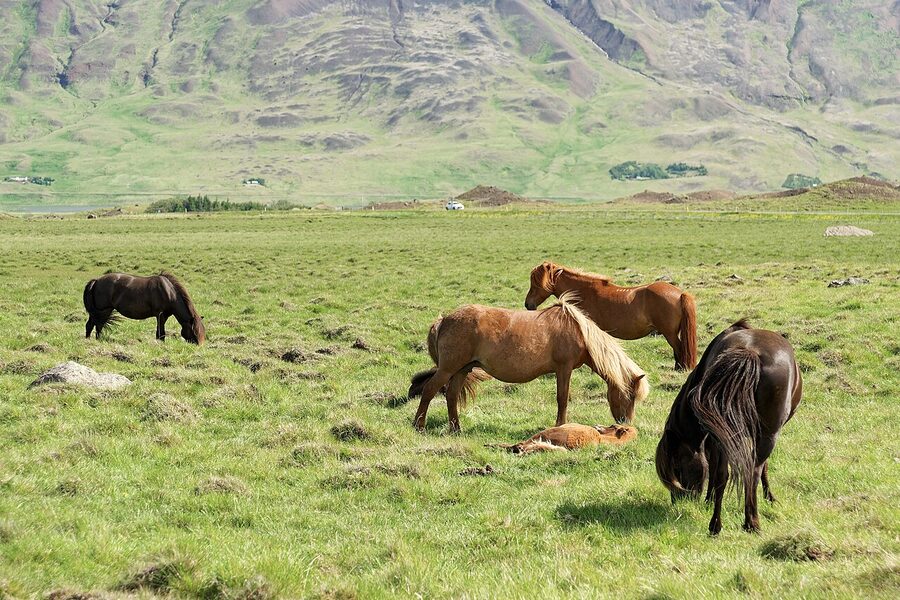
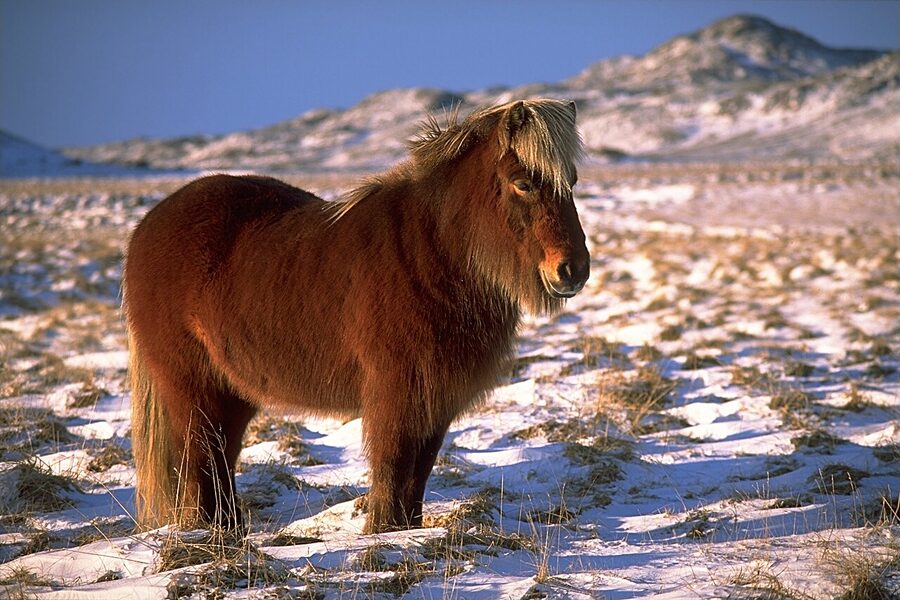
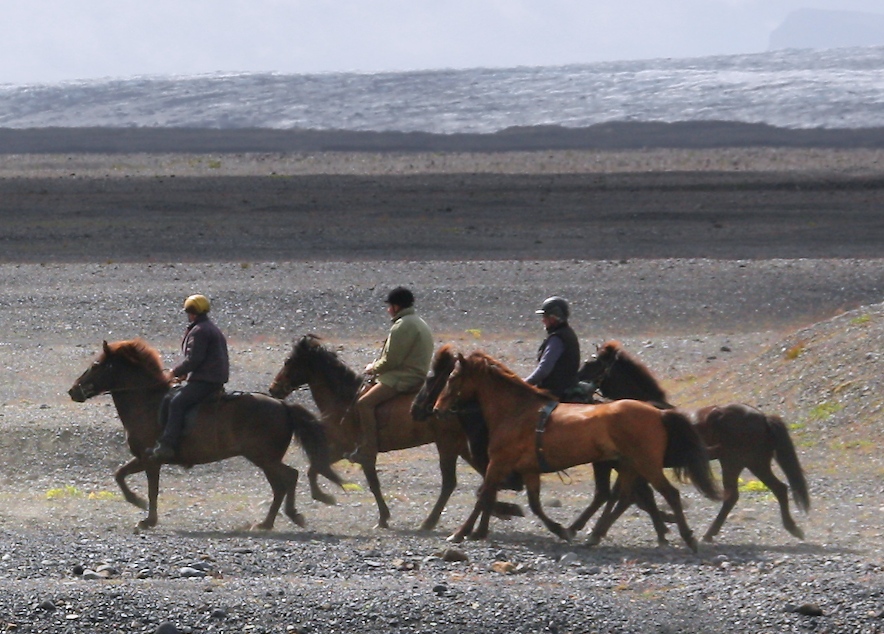
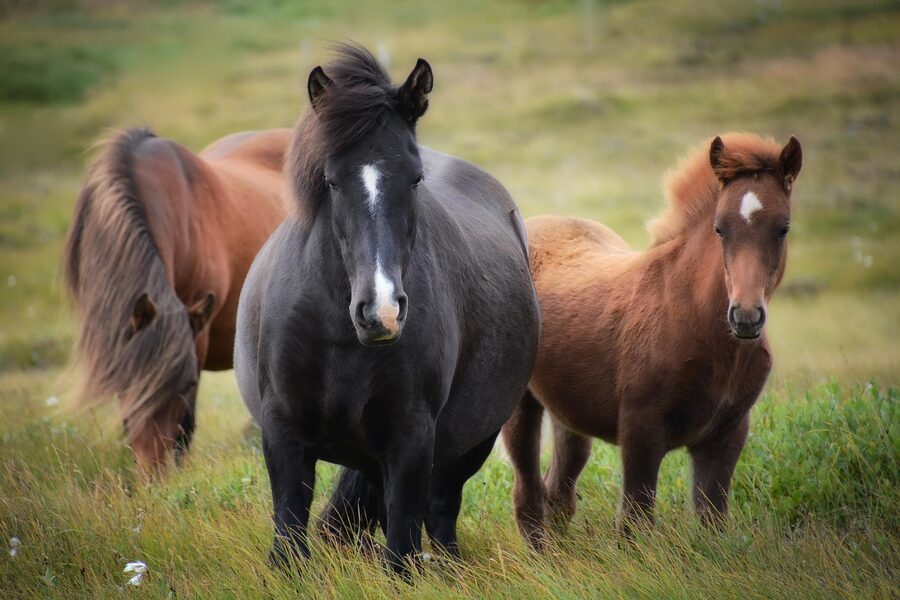
The Icelandic horse is the animal Iceland is best known for and the one Icelanders are most particular about. Two rules to know before we go further. One, you don’t call it a pony. It’s smaller than the typical European riding horse, usually 132 to 142 cm at the withers (about 13 hands), but it has the proportions, attitude, and bone density of a full horse, and Icelanders have been protective about that classification for nine hundred years. Two, the breed is closed by law. A horse that leaves the country can never come back. This is in the legal code, has been since the early 1900s, and is enforced. If you ride one in Germany and ship her to Iceland, the customs authority turns the boat around. The same is true of any used tack you bring in from abroad, which is why visiting riders sometimes have to surrender saddle pads at Keflavík.
The closure is for disease control. The Icelandic herd has no exposure to most equine illnesses found elsewhere, and a single sick horse coming home could collapse the population. So the gene pool you ride in Iceland is the same gene pool the Vikings shipped over in the late 800s, refined for a thousand years by hard winters, scarce feed, and selective breeding for temperament and gait.
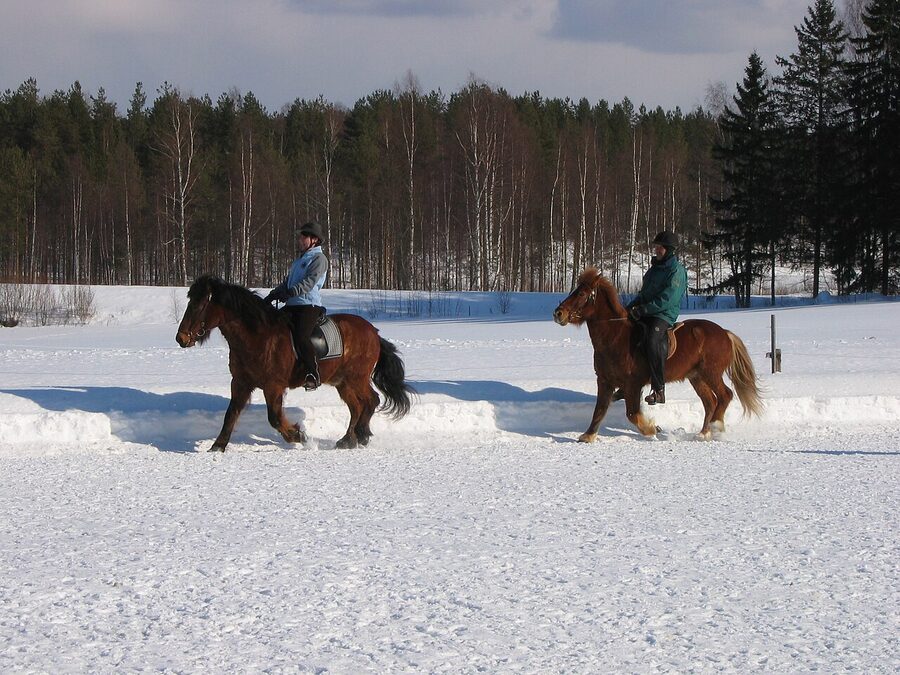
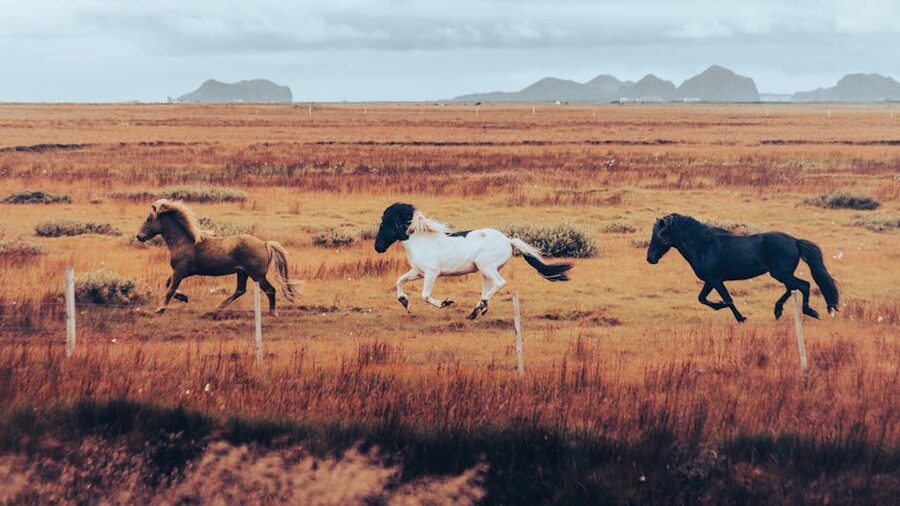
That gait is the thing. Most horses have four gaits: walk, trot, canter, gallop. Icelandic horses have those four plus the tölt and, in some bloodlines, a fifth called skeið (the flying pace). The tölt is a four-beat lateral gait at trot-to-canter speed where one foot is always on the ground. Translated: it feels like you’re floating. Riders carry a beer in one hand on the tölt for show, and very rarely spill it. If you’ve never ridden before in your life, the tölt is the easiest way to enjoy a horse on holiday because there’s almost no bounce.
Where to ride. There are three areas with serious stables that I’d send a friend to.
Near Reykjavik, Íshestar in Hafnarfjörður (about 25 minutes from downtown by their pickup bus) is the largest and most traveller-tested. They run hourly tours from 90 minutes to half-day pricing in the 14,000 to 22,000 ISK range, depending on length. They put beginners on calm horses and let experienced riders out for proper tölt work. The lava-field rides behind the stable are atmospheric, you’re crossing a 1,000-year-old flow with the horse picking its way over the moss.
In the south, around Hveragerði and Selfoss, Eldhestar is the long-standing one. Slightly more rural feel, longer rides into the Hellisheiði highland edge, often combined with Golden Circle day tours. Pickups from Reykjavik available.
In the north, Saltvík just outside Húsavík runs small-group rides on the moors above the bay, with whale-watching boats visible offshore on a clear day. It’s a nice combo if you’re already up north for the whales.
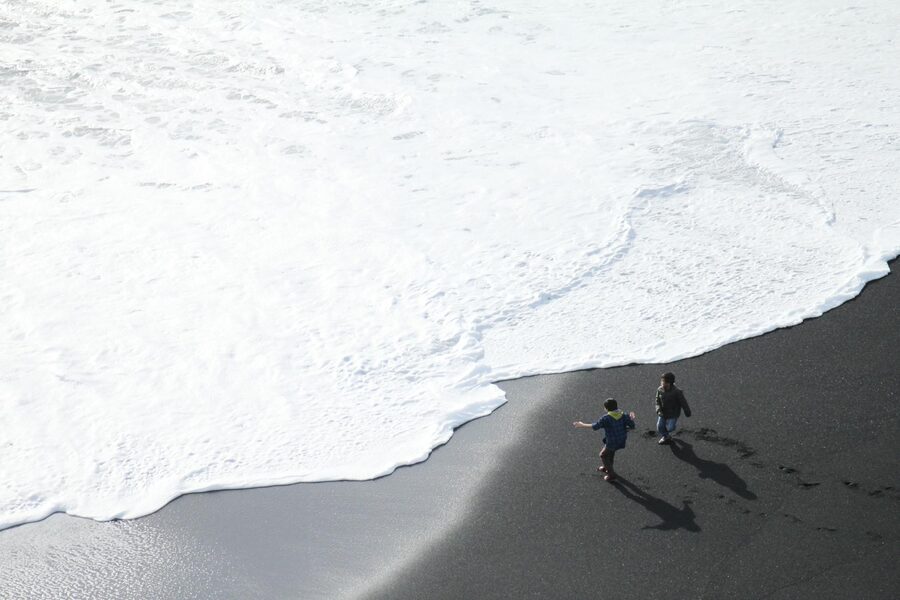
And on the south coast near Vík, Mýrar Hestar and similar small operators run black-sand-beach rides which are visually spectacular and very Instagram-coded. Worth doing if you’ve already ridden once and want a different setting.
One opinion I’ll offer flat out. Skip the pet-a-horse roadside setups, the ones with no booking site, just a sign by the road and a horse in a paddock that visitors can hand-feed for a fee. Some of those horses get fed an unhealthy amount of bread by tourists who think they’re being kind. If you want to interact with a horse, book a proper ride, even a 90-minute one, with a real stable.
If you only have an hour and a camera
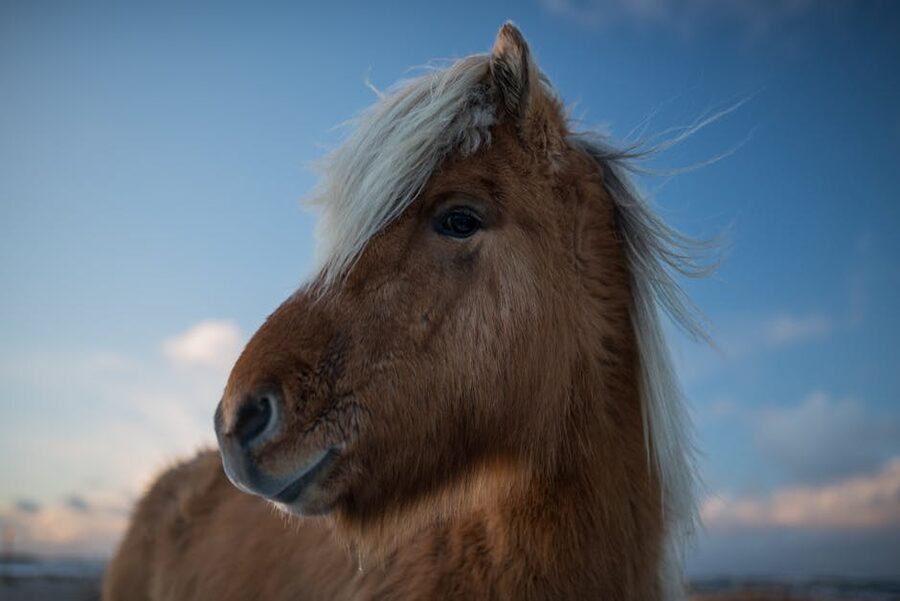
The horses are everywhere on Route 1. Pull off the road safely (there are usually small gravel laybys), don’t climb the fence, and stay on your side. Most horses will wander over to look at you out of curiosity. Photography is fine, feeding isn’t. Bread is bad for horses, apples are okay in tiny quantities but the farmers ask you not to. If a horse comes over and sniffs you, you’ve already had the experience. That’s the whole interaction.
The melrakki: Iceland’s only native land mammal
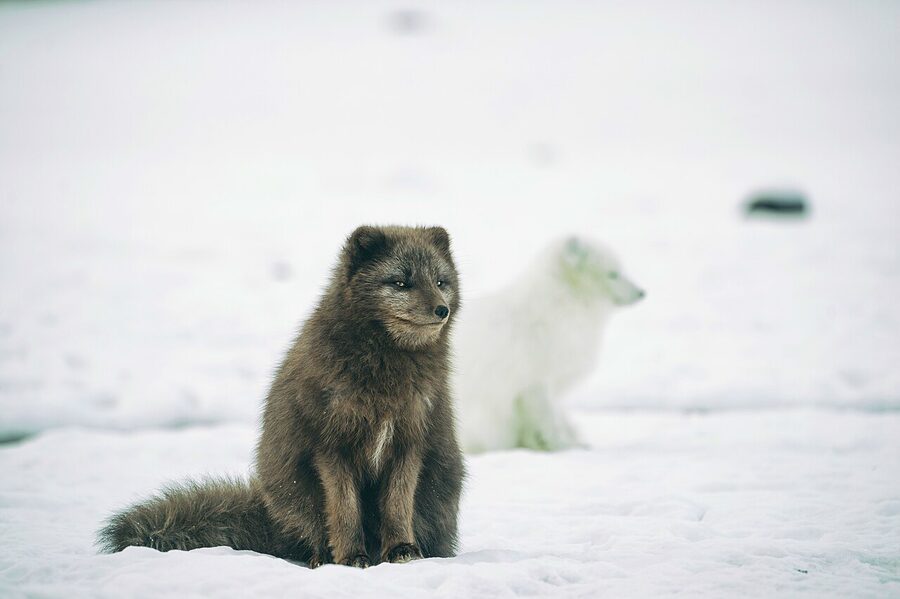
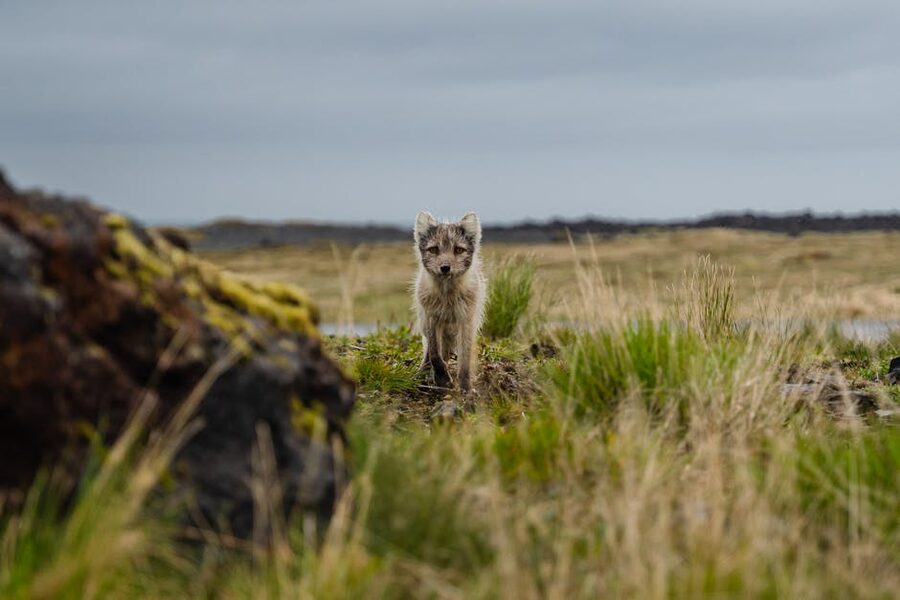
If you’ve read one fact about Iceland’s wildlife, this is probably it: the melrakki, or arctic fox (Vulpes lagopus), is the only land mammal that was here when humans arrived. They’re thought to have walked across pack ice from Greenland or Svalbard towards the end of the last ice age, maybe 10,000 years ago, and they’ve been here unbroken since.
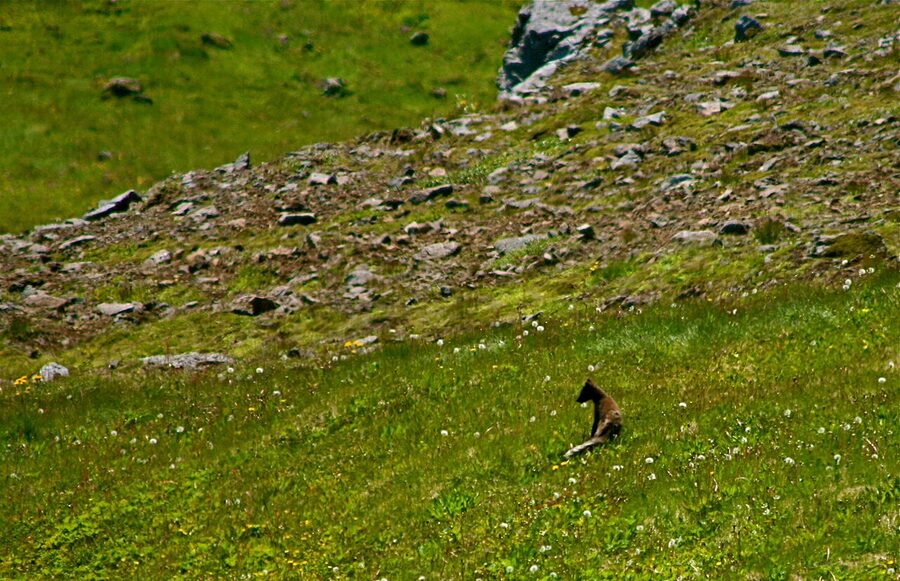
You’ll see two colour morphs and they’re worth telling apart. The white morph is what most people imagine, ghost-white in winter and brownish-grey in summer. The blue morph (an old Norse word, the actual colour is dark chocolate to slate) keeps a brown coat year-round. Globally only about 1% of arctic foxes are blue. In Iceland it’s the dominant morph at roughly 70%, probably because we have very little snow on the coast where most foxes live, so a white coat doesn’t camouflage well against the basalt and seaweed. Evolution, working in real time on a small population.
The best place to see them is Hornstrandir Nature Reserve, a roadless peninsula in the far northwest. The peninsula was abandoned in the 1950s, the last farm cleared out in 1952, and it’s been a no-hunting reserve since 1994. Two generations later, the foxes there are essentially habituated to humans. Hikers walk past denning families and the foxes barely look up. Visiting Hornstrandir is its own undertaking, you take a boat from Ísafjörður, hike with a tent, and accept that you might be weathered in for an extra day. Borea Adventures and West Tours both run multi-day Hornstrandir trips with fox-watching as the headline. Cost is roughly 100,000 to 200,000 ISK depending on length and whether they cook for you.
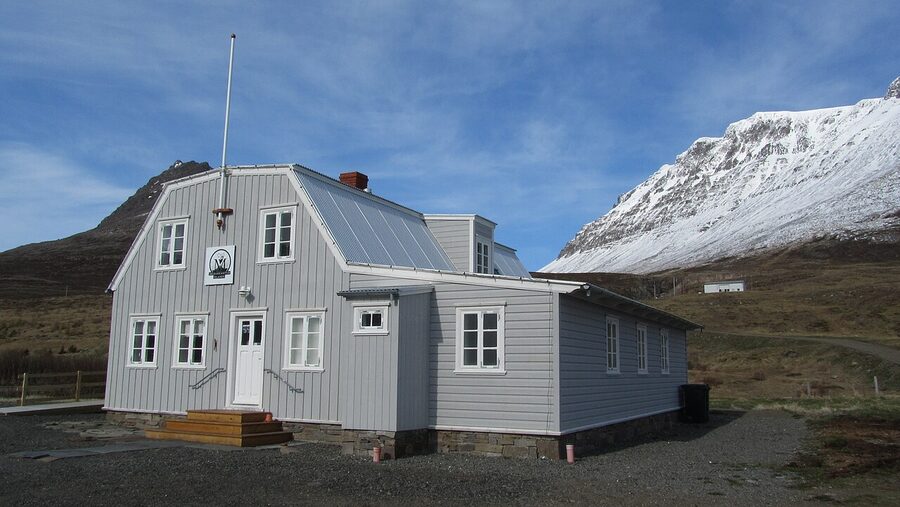
If you can’t get to Hornstrandir, you have options. The Arctic Fox Centre (Melrakkasetur Íslands) in Súðavík, on the road into the Westfjords, is a small research and education centre with rescued foxes you can look at safely. Adult ticket runs around 1,500 ISK. They have a couple of fox kits that were orphaned, raised in a large outdoor enclosure. Worth an hour, especially with kids, and the entry fee directly funds research into the wild population.
Outside Hornstrandir, foxes are still hunted in Iceland by the state. They take lambs and eider down on farms, and the cull keeps the rural population stable but doesn’t threaten it. The total Icelandic population is somewhere around 8,000 to 10,000 animals, and recent fluctuations track the seabird food supply more than they track hunting pressure. If sand eels collapse (and they have, on and off, since the early 2000s), the foxes that depend on bird eggs and chicks crash with them.
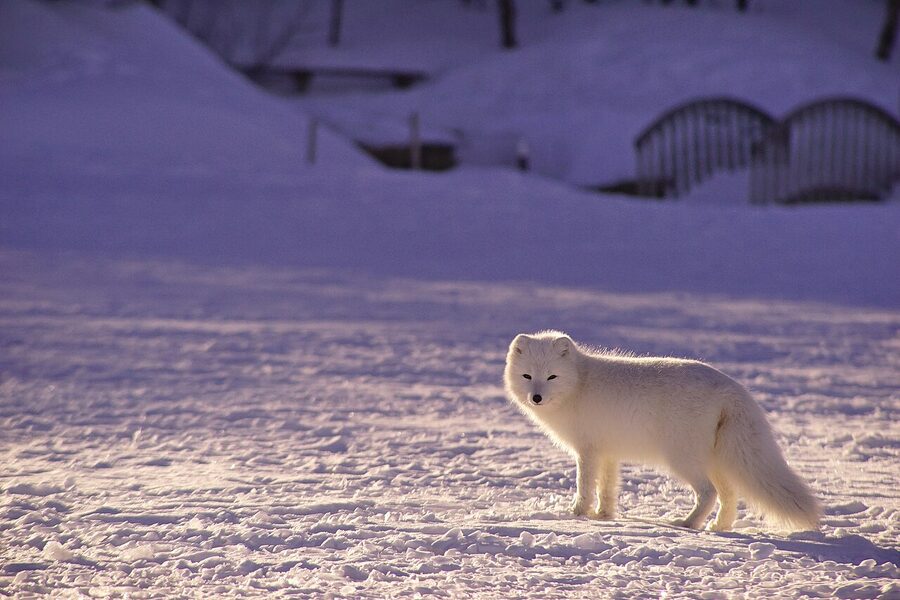
One more place worth a mention. The Reykjavik Family Park and Zoo in Laugardalur has captive arctic foxes among other Icelandic species. I have mixed feelings. The enclosures are small for an animal that ranges 30 km a night in the wild, but the foxes there are in many cases rescues that couldn’t be released. Decide for yourself. If you’ve already booked a Hornstrandir or Súðavík trip, skip it.
The hreindýr: introduced reindeer of the East
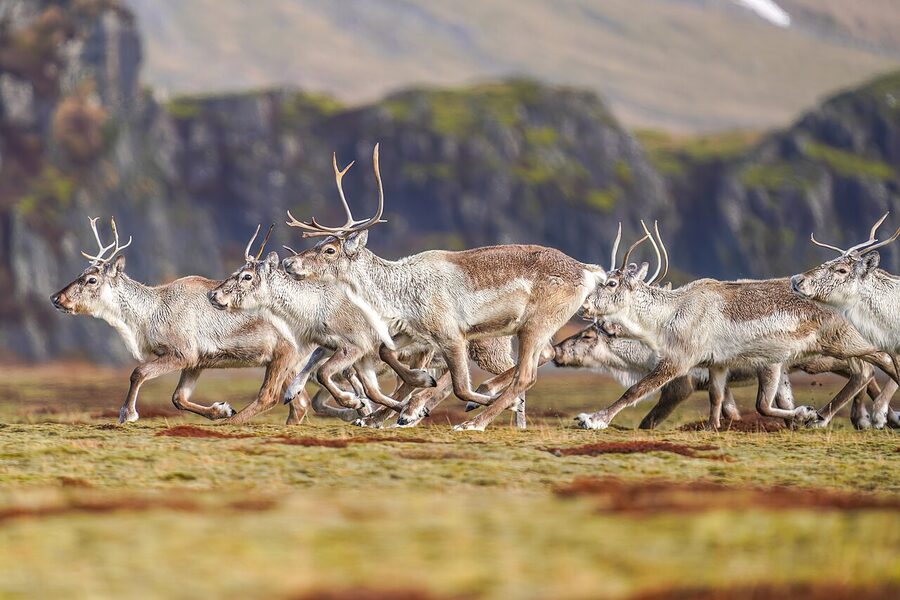
Iceland’s reindeer don’t belong here. They were imported from Norway four times between 1771 and 1787 as livestock, with the idea that Sami-style reindeer husbandry could be transplanted along with the animals. The husbandry never took. The Sami families who came with the herds either left or died, and the reindeer turned feral. Three of the four populations died out within a few decades. Only the fourth, released near Vopnafjörður on the east coast in 1787, survived and spread.
Today there are between 6,000 and 7,000 reindeer in Iceland, all descended from those final 35 animals, and all still confined to the East and the East Fjords. They never crossed back over the highlands to the west. The herd is managed by hunting; about 1,200 to 1,400 animals are taken each year by lottery licence, with the meat selling at a premium in restaurants.
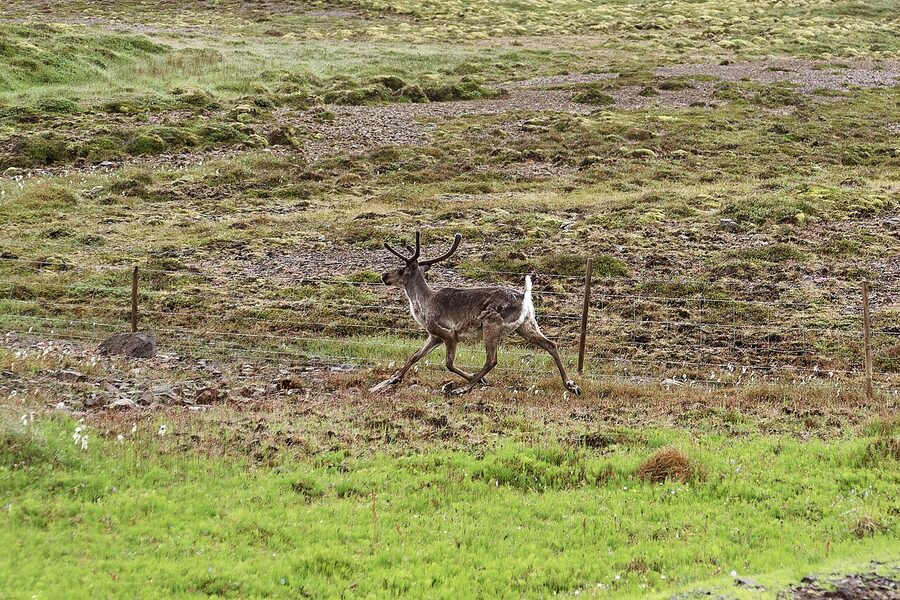
Where to see them. Easiest in winter, between roughly November and March, when they descend from the summer pastures up around Snæfell (the East-Iceland mountain, not the Snæfellsnes peninsula in the west) and graze on lowland heath, often visible from Route 1 between Egilsstaðir and Höfn. In summer you need to head into the highlands above the East Fjords, around Brúaröræfi, Vesturöræfi, and the desert plain west of Snæfell. There are guided 4WD tours run from Egilsstaðir that focus specifically on reindeer; expect 12,000 to 18,000 ISK for a half-day. If you’re driving, the F-roads up there require a real 4WD and river crossings.
Practical warning. Reindeer collisions on Route 1 in winter are one of the more common serious accidents in the East. They cross the road in groups, especially at dusk, and they don’t get out of the way of cars. Slow down through reindeer-warning signs, they’re not decorative.
The supporting land cast: sheep, mink, and the smaller imports
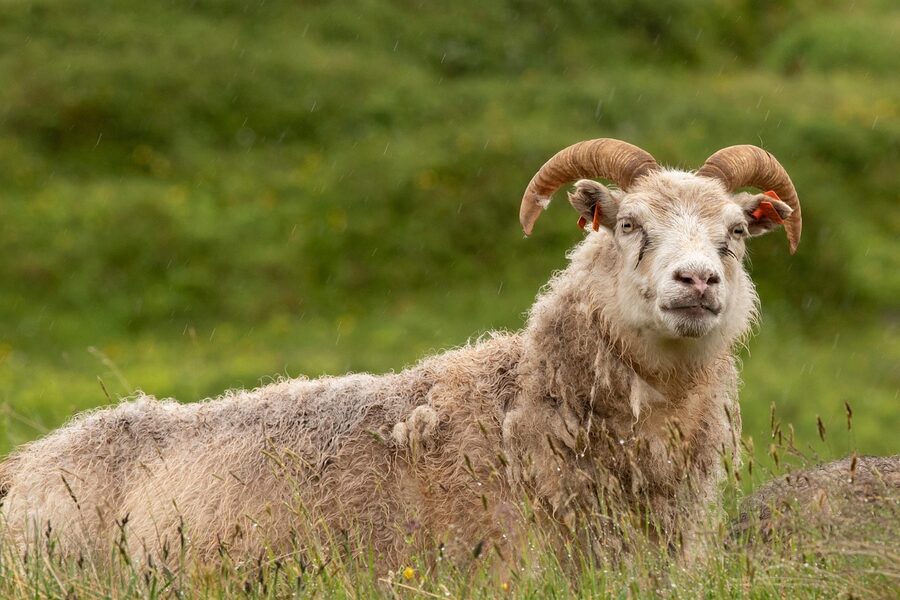
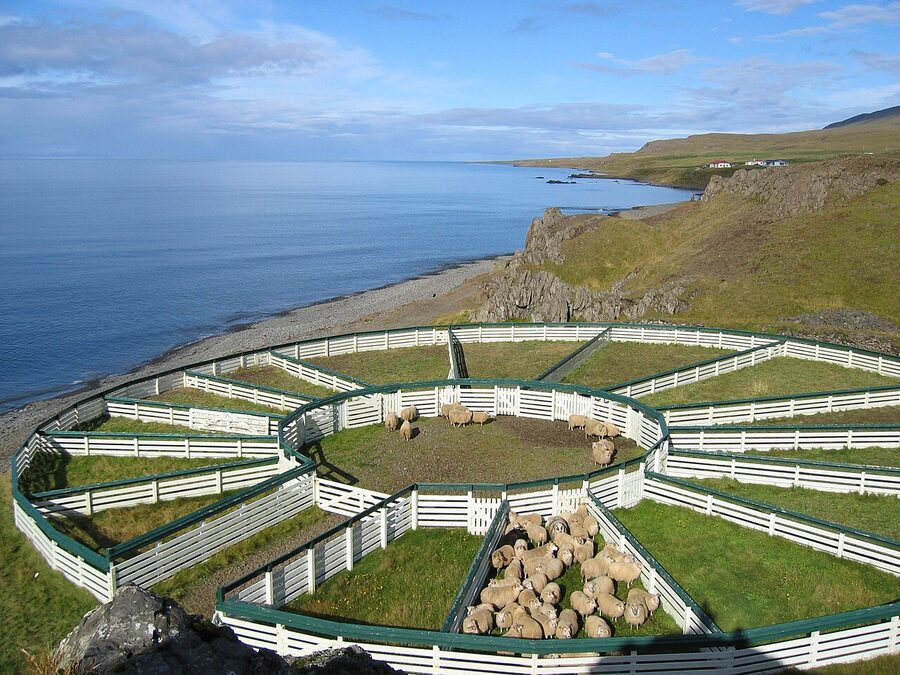
Sheep aren’t wildlife in the strict sense, but they’re as visible on Iceland’s hillsides as anything you’ll see, and they’re worth a section. There are roughly 400,000 of them, more than humans, and the breed is closed in the same way the horse is. Pure Icelandic stock since landnám, no outside genetics. They’re put out on the highland commons in early June and rounded up in late September, an event called réttir that’s worth seeing if you’re here in the right week. Farms across the country open their sorting pens to neighbours and family for a long day of separating each farm’s sheep into the right pens, followed by enormous food and the singing of réttavísur.
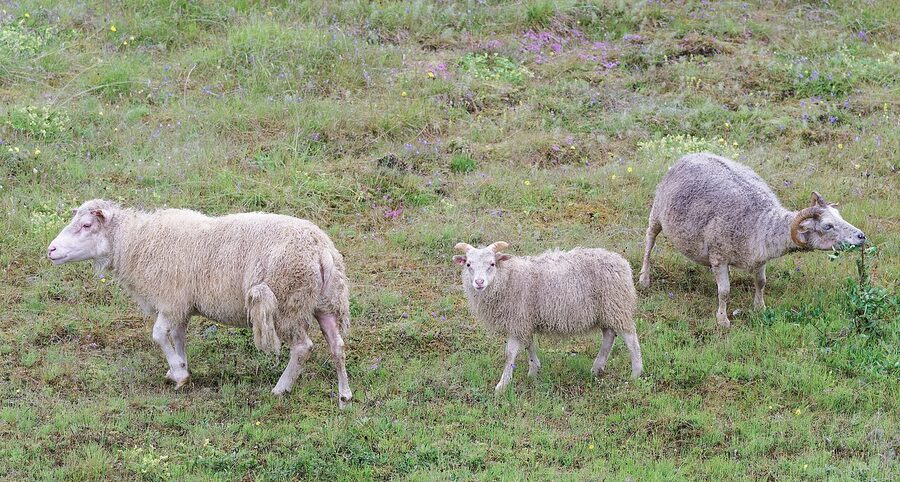
The breed has another quirk. About one in eight Icelandic sheep is forystufé, a leader sheep, taller and rangier than the rest, intelligent enough to lead a flock through deep snow and find shelter in a storm. Farmers value them disproportionately. There’s a small Leader Sheep Museum on the Þistilfjörður peninsula in the northeast that’s worth a stop if you’re driving the coast.
Then there’s the rogues’ gallery of imports we’d rather not have. The American mink (minkur) arrived in 1931 for a short-lived fur industry and started escaping almost immediately. It’s now a serious invasive across the country, eating eider chicks, ground-nesting birds, and small fish. The state pays a bounty (currently around 5,000 ISK per tail through municipal hunters), and there are local eradication efforts on islands and in protected wetlands. You’re unlikely to see one unless you spend time on a riverbank in the late evening and even then it’s mostly a glimpse, dark sleek shape and gone.
The house mouse and brown rat arrived in cargo holds, probably both within the first century or two of settlement. The mouse is everywhere; the rat mostly clings to ports. The Icelandic Genetic Committee has done work on the mouse showing the population traces back to founder mice that came from Britain, not Scandinavia, which says something interesting about the trade routes of the early Middle Ages. Rabbits exist in feral pockets near Reykjavik (Elliðaárdalur park has them), introduced from pet escapes in the late 20th century. There are no native rodents older than the mouse.
And there’s the polar bear. Iceland is not polar bear country, but every five to ten years one drifts down on pack ice from Greenland and ends up on a Westfjords beach. Public-safety policy means they’re shot. The most recent few have been documented and stuffed for the Icelandic Institute of Natural History; you can see one of them at the science museum. The decisions are controversial. Tranquilliser darting and re-floating to ice has been proposed, and rejected, mostly on the grounds that an exhausted bear that swam from Greenland probably can’t be saved.
Marine mammals: 23 cetacean species and a controversy
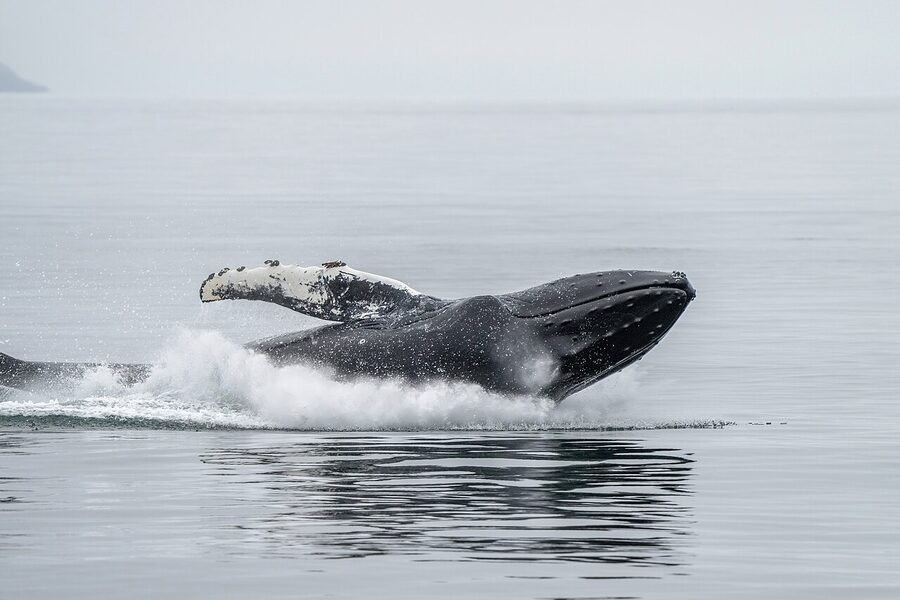
The waters around Iceland are visited by 23 cetacean species over the course of a year. Twelve of those are seen on a regular whale-watching trip. The food chain runs on cold-water plankton blooming in the summer when the days are long, which feeds capelin and sand eels, which feed everything else. By August the bay outside Reykjavik can hold a hundred whales at a time. By February most have gone south. The exceptions, like the orca pods that follow herring round the Snæfellsnes coast in winter, are why Iceland has wildlife on offer year-round, not just in the high tourist season.
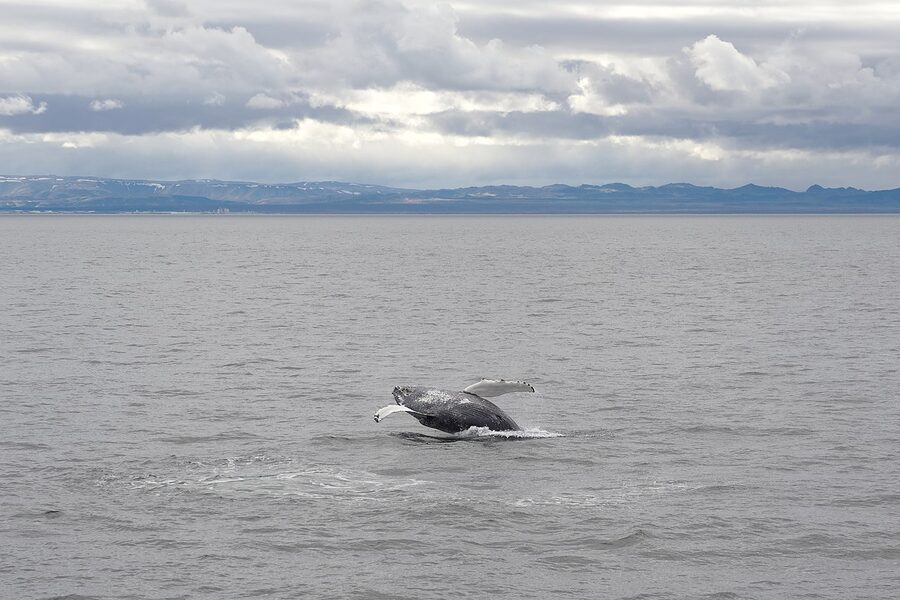
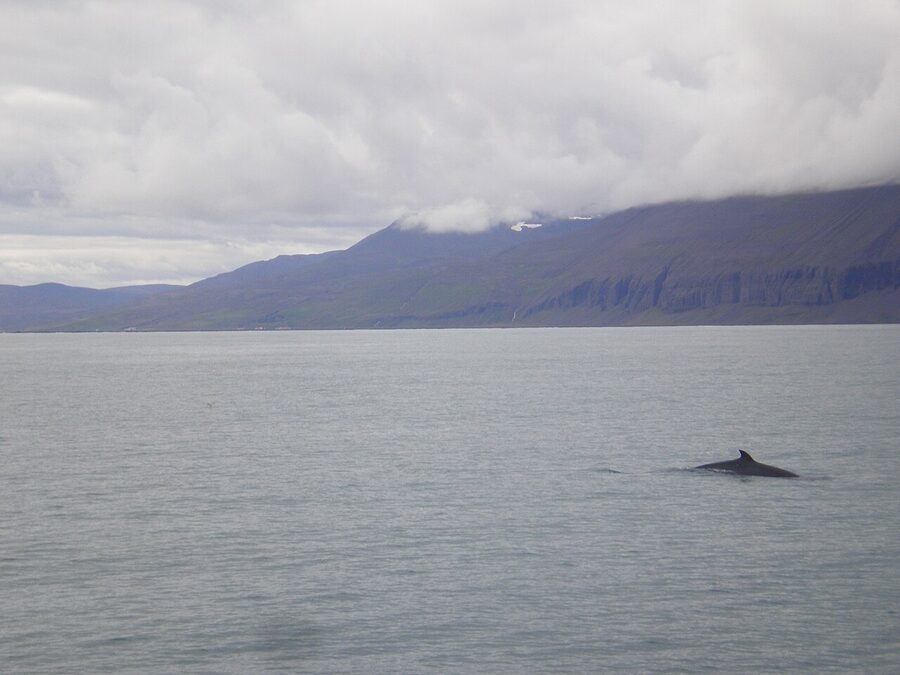
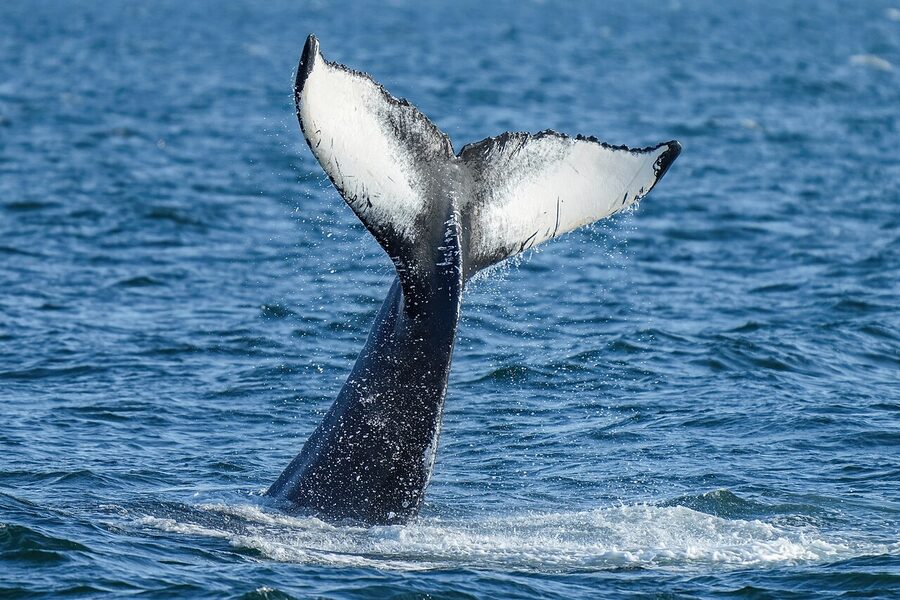
The headline species are the humpback (hnúfubakur), which is the one you came to see, and the minke whale (hrefna), which is the one you’ll most often see. Humpbacks are big (up to 16 m), they breach, they slap their tails, and the photographs come out well. Minke are smaller (around 8 m), faster, more cryptic, and excellent at giving you a fin and going back under before the camera focuses. Both feed in Iceland’s waters from roughly April to October, then move south to the Caribbean (humpbacks) or warmer Atlantic (minke).
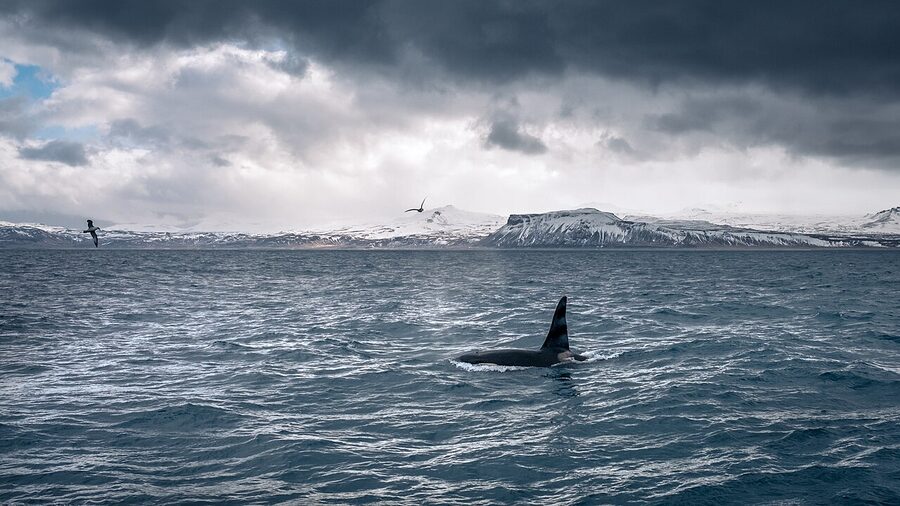
The orca (háhyrningur), technically the world’s largest dolphin, is the one to plan a winter trip around. Pods follow the herring south along the Snæfellsnes peninsula from roughly November to February, with peaks in late January, and the small port of Grundarfjörður becomes the meeting point for orca-specific tours. Láki Tours runs them. The conditions are cold and rough but the encounters are something else: pods of 20 or 30 animals working a herring ball, with white-tailed eagles overhead waiting for spillover. If you’re an orca person, this is among the better encounters available in the northern Atlantic.
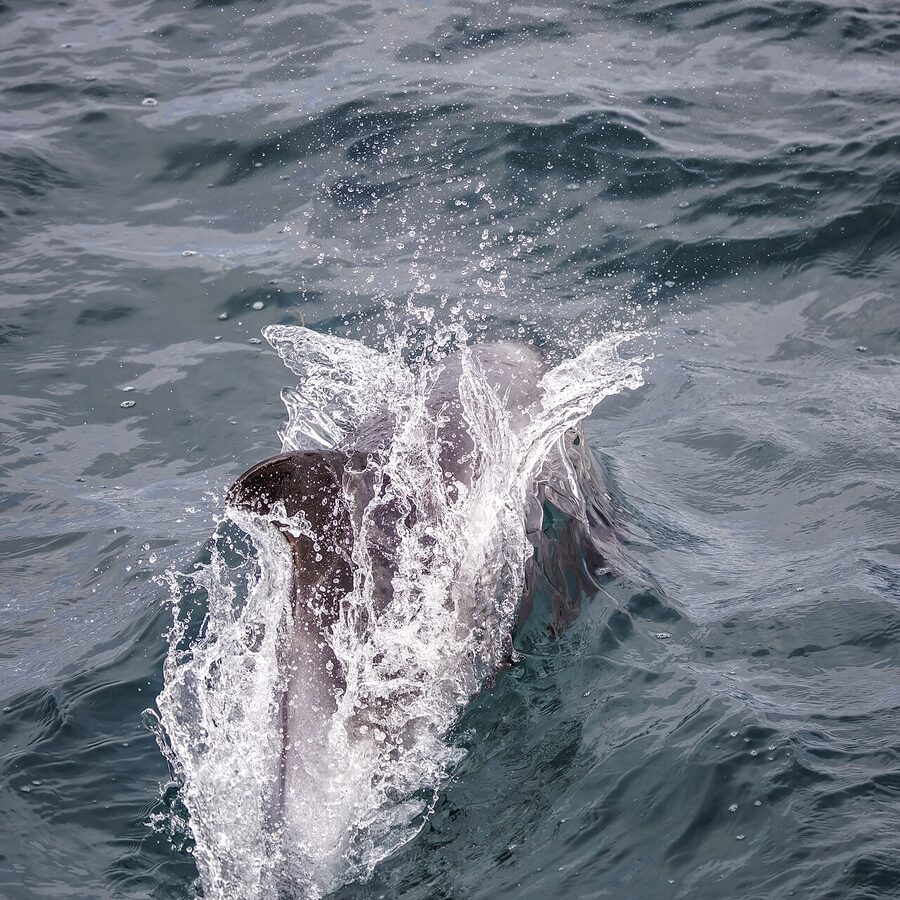
The other species you might see, in roughly decreasing likelihood: white-beaked dolphin (hnýðir), abundant in the bay outside Reykjavik year-round, often bow-riding the boats; harbour porpoise (hnísa), small, shy, very common but hard to photograph; fin whale, the second-largest animal on the planet, summer visitor mostly offshore in deeper water; blue whale (steypireyður), rare but seen from Húsavík in the right years, the largest animal that has ever lived; and sei, sperm, beluga, narwhal, bottlenose, all sporadic.
Where to go for whales
There are three main ports and they each do something slightly different.
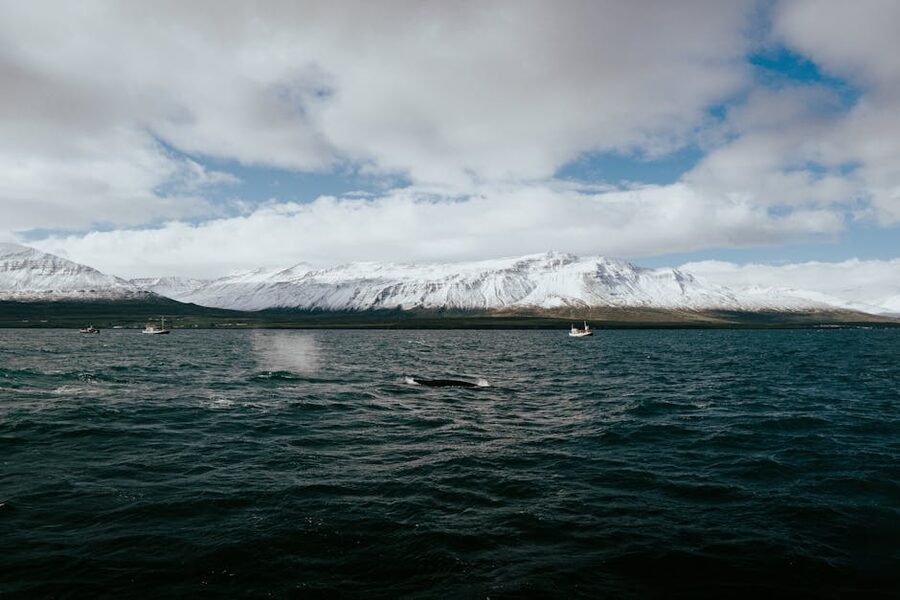
Húsavík, in the north, is the best by reputation. Skjálfandi Bay holds a deep submarine canyon where humpback feeding is concentrated, and the success rates on confirmed-sighting tours run above 95% in summer. North Sailing runs the heritage boats, restored Icelandic oak schooners, and combines the wildlife with a slow, quiet ride that doesn’t smell of diesel. Their two- to three-hour tour costs around 12,000 to 14,000 ISK; the longer schooner version with traditional sail goes higher. Gentle Giants next door runs faster RIB trips and a similar standard-boat option, with slightly cheaper pricing and a strong eco-tour reputation. The town itself is worth a half-day on its own; the small Húsavík Whale Museum on the harbour is excellent and the cafés are good.
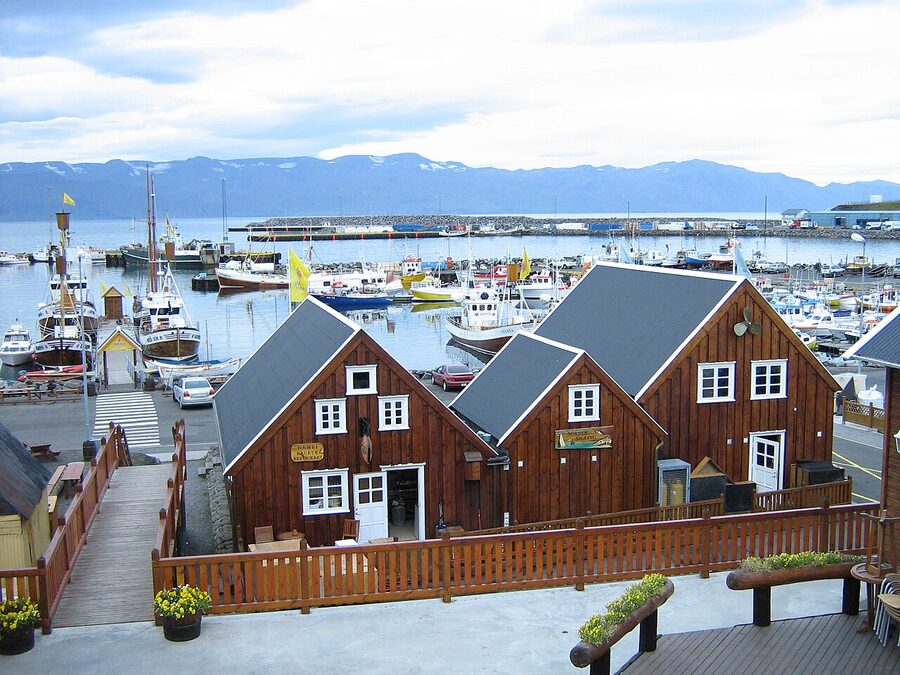
Reykjavik (Old Harbour) is the convenient one. Elding is the long-running family-owned operator and runs three or four daily departures in season from Ægisgarður pier. Their three-hour Faxaflói trip is around 14,500 ISK and the success rate is in the 80s. You’ll see minke and white-beaked dolphins almost certainly, humpbacks if you’re lucky, harbour porpoise often. The downside is the bay is busier, the boats are larger, and the encounter feels less intimate than Húsavík.
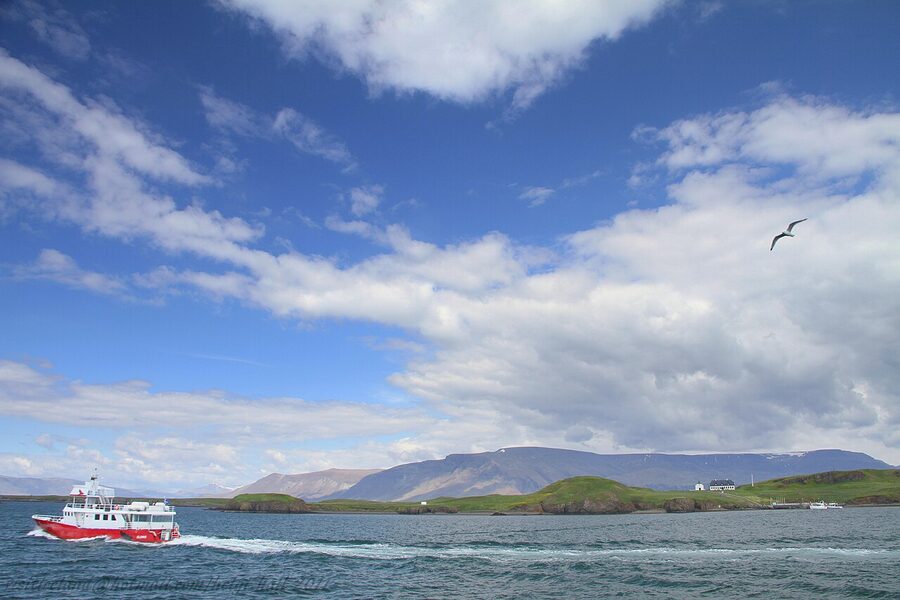
Akureyri and the smaller north-coast ports (Dalvík, Hauganes, Árskógssandur) are the third choice. Eyjafjörður is the longest fjord in Iceland and produces consistently good encounters with humpbacks and white-beaked dolphins, with shorter boat times to the whales than from Reykjavik. Whale Watching Hauganes and Ambassador Whale Watching operate from Akureyri and small ports nearby. Combine with a midnight-sun trip in late June and you’re not getting off the water until 1 a.m.
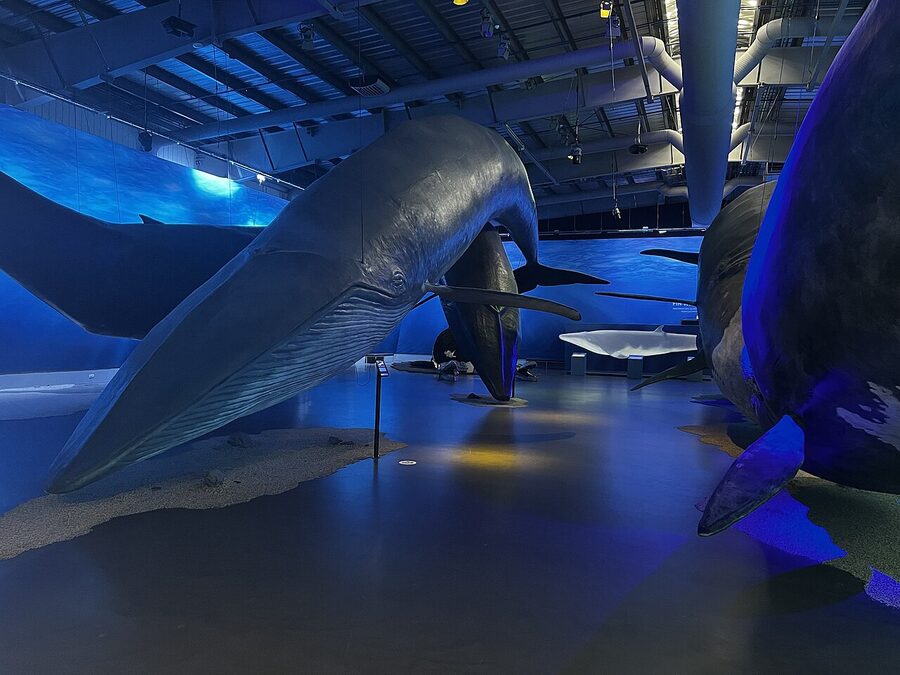
One more option, indoors. The Whales of Iceland exhibition in Reykjavik’s Grandi harbour district has life-size models of every cetacean species in Icelandic waters, hung from the ceiling of a converted warehouse. It’s surprisingly affecting; standing under a 25 m blue whale model gives you a sense of scale a boat tour never will. Adult ticket around 3,500 ISK. There’s also a marine-life exhibit at Perlan in central Reykjavik with smaller models and an ice-cave walkthrough that kids tend to like.
The whaling question
I’ll address this directly because every traveller asks. Iceland is one of three countries that still hunts whales commercially. The other two are Norway and Japan. We hunt fin whales (the second-largest animal alive, classed as Vulnerable globally though our population is healthier) and minke. The fin-whale hunt is run by a single company, Hvalur hf., and most of the meat goes to Japan; the minke hunt is smaller and the meat is sold domestically, mostly to restaurants serving tourists, which is a real and ironic loop. The 2024 annual quotas were 161 fin and 217 minke, and the actual take was below that.
The position inside Iceland is not unanimous. Polling consistently shows around 35% of Icelanders favour stopping the hunt, around 30% favour continuing it, and the rest are unsure. The activity is very visible to the world and it has made Iceland’s tourism authorities quietly uncomfortable for years. The government has issued one-year permits since 2024 instead of the previous five-year blocks, and there’s an open consultation about ending the practice. Whether that happens or not depends on the next election cycle.
What this means for you. Whale watching and whale eating both happen in this country. If you’d rather not order whale meat, you don’t have to; nobody will be offended. If you do, the meat in Reykjavik restaurants is almost always minke and is legal under Icelandic law. The whales you watch from Elding’s or North Sailing’s boats are not the whales that get hunted; they’re different individuals in different waters. The hunt operates further from shore. So you can ethically take a whale-watching tour and it directly supports the operators who lobby against the hunt.
Seals: harbour and grey
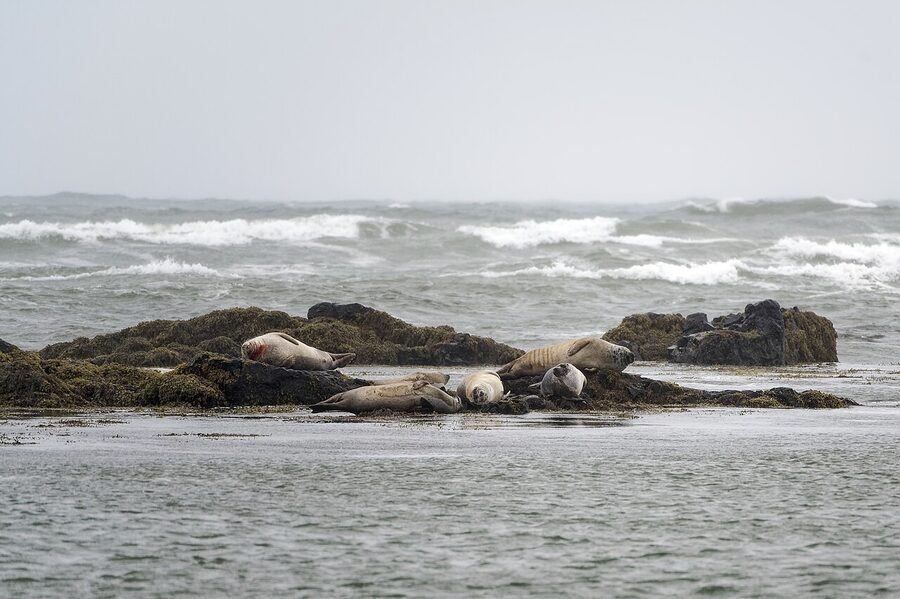
Two seal species breed on Iceland’s coasts: the harbour seal (landselur), smaller, more common, with a round dog-like head and V-shaped nostrils, and the grey seal (útselur), larger, longer-snouted, with parallel nostrils. Both are reasonably easy to see from the right beaches, and unlike whale watching there’s no boat fee involved, just a drive.
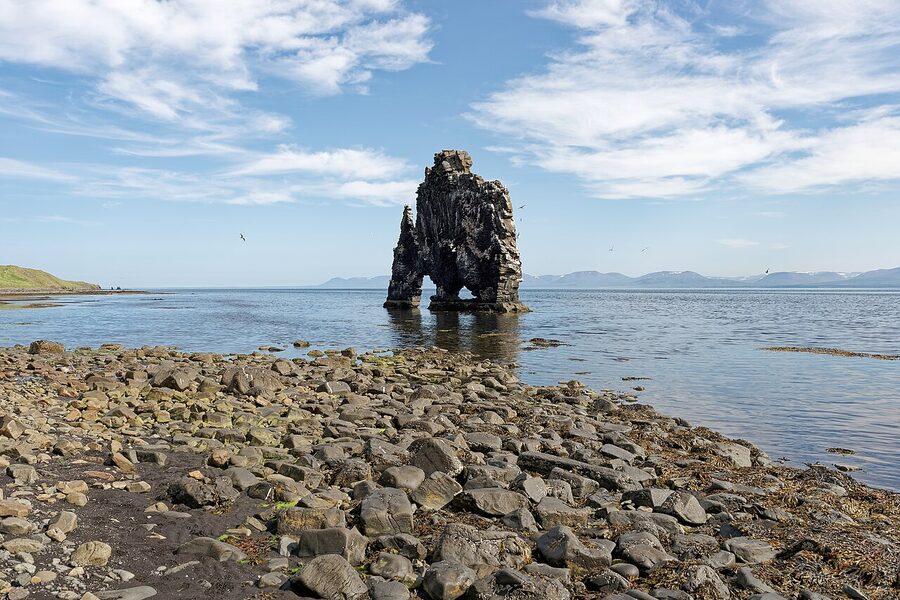
The famous spot is the Vatnsnes peninsula in the northwest, the long thin tongue of land north of Hvammstangi. The east side has the Hvítserkur sea stack, a 15 m basalt formation that locals describe as a troll petrified by the sun, and the surrounding beach has a rotating cast of seals. There’s a small Icelandic Seal Centre in Hvammstangi village that’s worth half an hour and which can tell you which beach has been productive in the last few days. Allow most of a day to drive the peninsula loop slowly; it’s about 90 km of mostly gravel road but the rhythm of stopping and walking out to find seals is the point.
On the south coast of Snæfellsnes, Ytri Tunga beach is the easier alternative. Twenty minutes off Route 54 west of Borgarnes, you walk five minutes from the small parking area to a basalt outcrop where harbour seals are almost always hauled out at low tide. Free, no booking needed. The same rules apply: stay back, don’t approach pups, no drone flying.
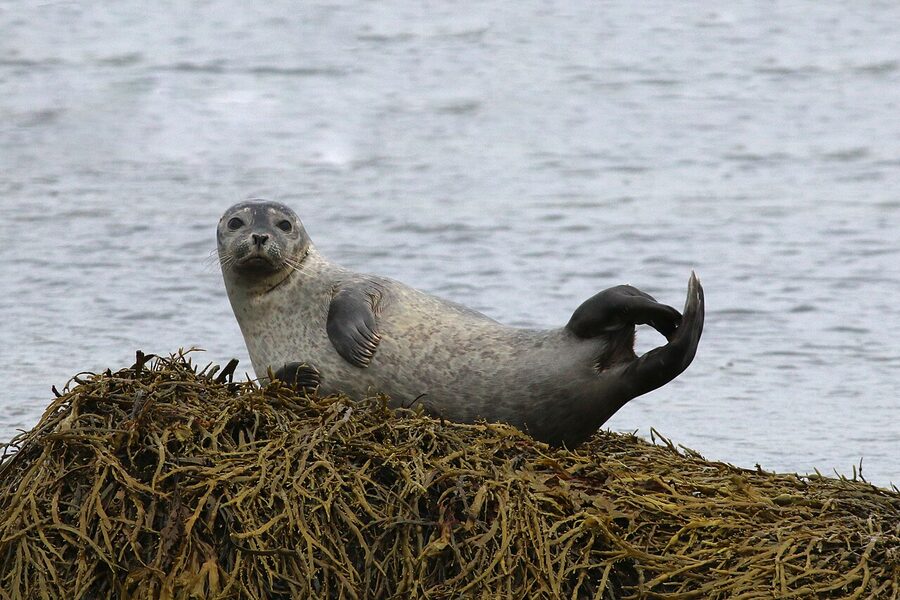
In the southeast, the seal colony at Höfn í Hornafirði uses the lagoon and the rocks behind the harbour. Both species turn up here. Höfn is also where you’ll see harbour seals at Jökulsárlón, the famous glacier lagoon, drifting in the meltwater on icebergs. That’s an unusual sight and worth a half-hour scan with binoculars; the seals are using the icebergs as warm haul-out platforms.
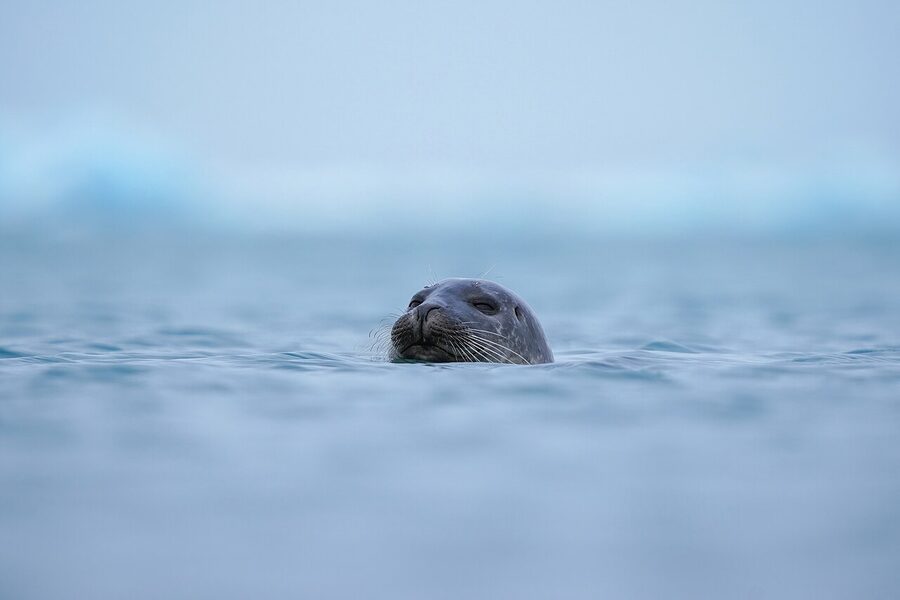
One word on disturbance. Seals can and do bite. They’re wild animals and a defensive bite carries enough bacteria to mean a hospital visit. More importantly, repeated human approach during pupping season (late June through August for harbour seals) reduces pup survival because the mothers spook off the haul-out. Iceland’s harbour seal population has dropped from around 33,000 in the 1980s to around 10,000 today, in part because of disturbance, in part because of bycatch in fishing nets. Keep your distance even if no signs require it. The minimum is ten metres; twenty is better.
Birds: the brief overview
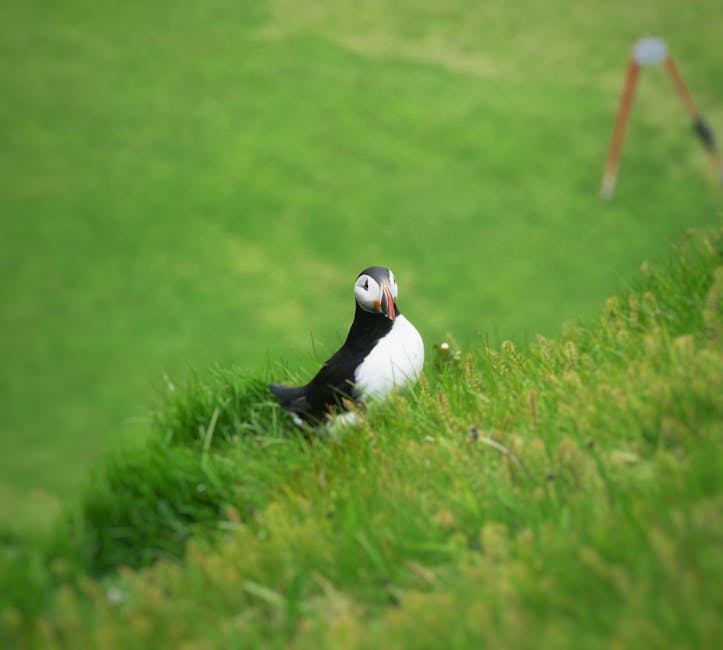
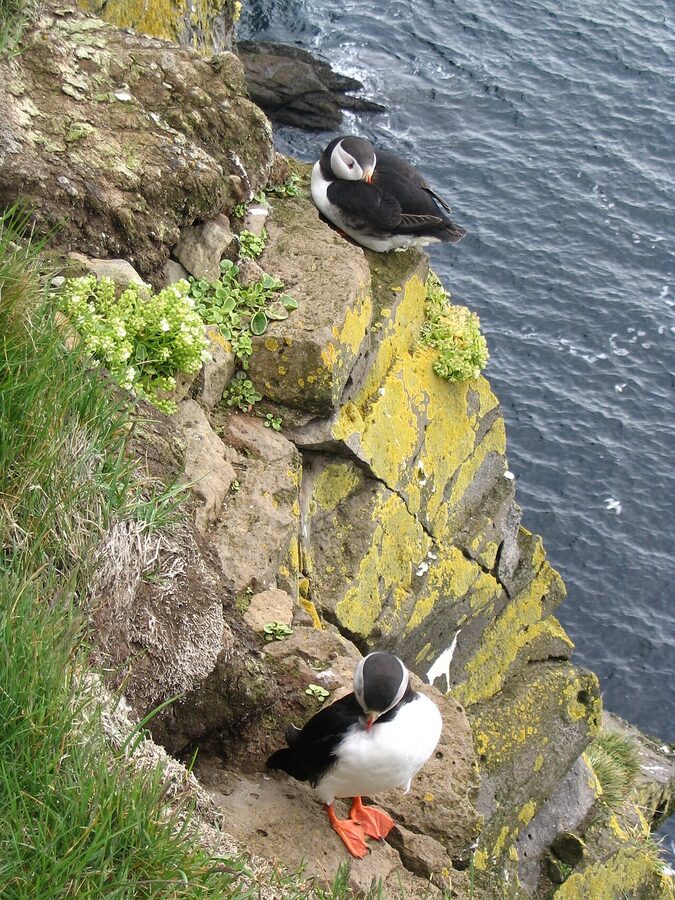
The bird side gets full coverage in our dedicated bird-watching guide, so I’ll keep this brief. Iceland has around 400 recorded species and 70-80 that breed here. The famous summer cast: Atlantic puffins (lundi) on cliffs from Látrabjarg in the Westfjords to Dyrhólaey on the south coast, eider ducks (æður) along most of the coast and on islands, Arctic terns (kría) defending nesting territory with surgical aerial attacks, kittiwakes and fulmars and razorbills filling out the seabird ranks, and the great skua (skúmur) which holds about half the world population in Iceland.
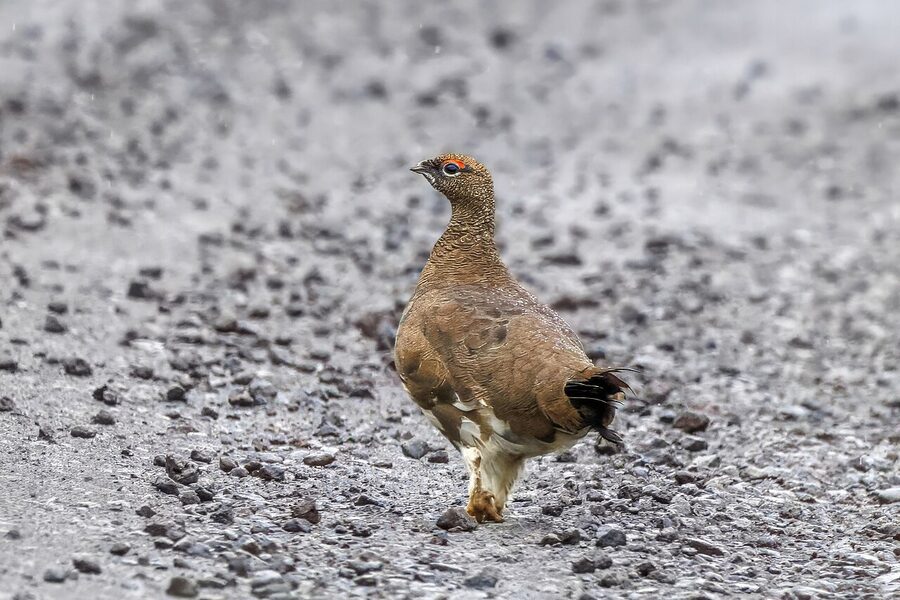
The two iconic land birds are worth a paragraph each because they don’t fit in the cliff group.
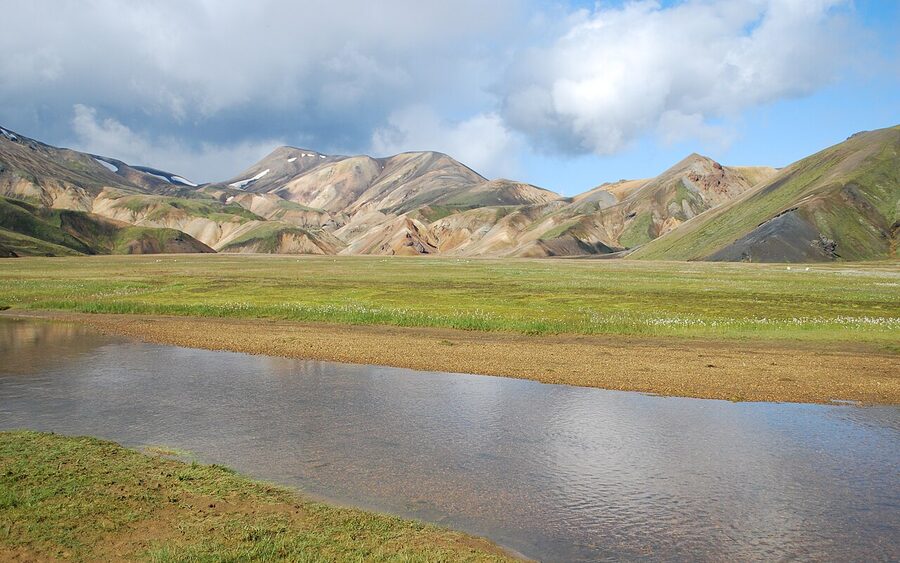
The rock ptarmigan (rjúpa) is Iceland’s hidden mascot. Brown in summer and white in winter, like the fox; about the size of a large pigeon; lives across the highlands and tundra. They’re the traditional Christmas bird, served roasted on the 24th by many families, and the autumn hunting season is regulated tightly by quota. You’re most likely to see one wandering the moss in the highland trail areas (Þórsmörk, Landmannalaugar) or on the rim above Mývatn. Give them a wide berth in summer; the females tend to sit tight on the nest and are very easy to nearly step on.
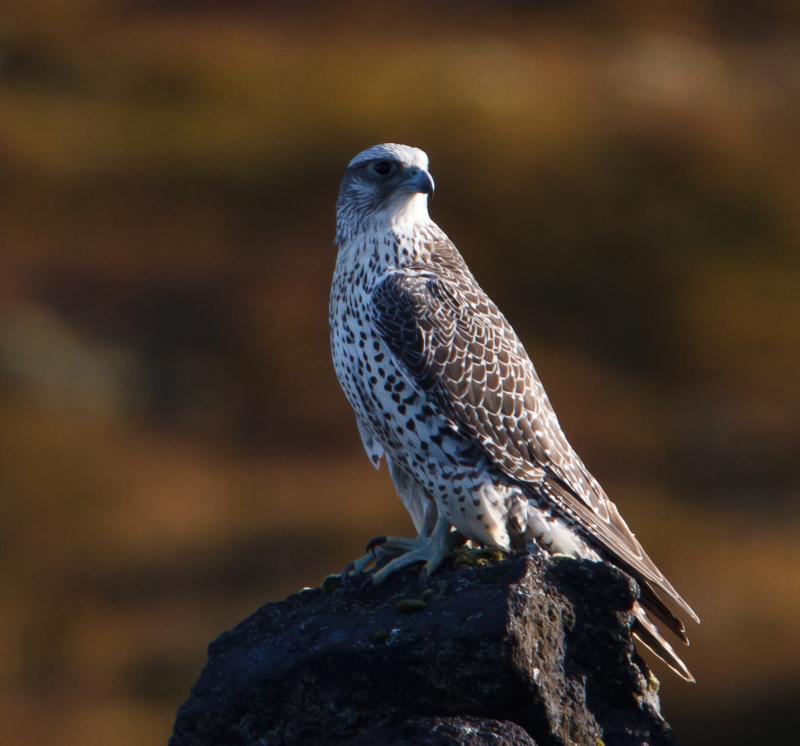
The gyrfalcon (fálki) is the country’s national animal, the largest falcon on earth, and the apex aerial predator of the Icelandic interior. Mostly white morph in Iceland (across most of its global range it’s grey). They hunt rjúpa in winter, taking them out of the air or stooping on them in deep snow. There are roughly 300 to 400 breeding pairs in the country. Photographing one wild is a serious birding challenge; the realistic option for visitors is to know what to scan for. A gyr in the distance looks like a slightly shorter-tailed peregrine, in better light it just looks white.
Conservation note: the eider duck (æður) is one of the few wildlife species in Iceland that has a close traditional human relationship. Farmers along the coast tend wild eider colonies on their land, protecting nests from foxes and gulls and harvesting the down the female plucks from her own breast for insulation. The down is collected after the chicks fledge and processed (cleaned, sterilised) for jackets and duvets at famously high prices. It’s about as sustainable as wildlife harvest gets, the bird isn’t harmed, the colony depends on the farmer’s protection, and the income gives farmers a reason to keep predators down.
What’s not here, and what people ask about
Some things are conspicuously absent and the questions come up enough that it’s worth answering.
No bears. See above on polar bears: they drift in occasionally but don’t establish. No brown bears. No wolves, ever. No native large predators on land at all.
No reptiles, no amphibians. No snakes (a friend reports being seriously asked this in summer), no lizards, no frogs, no toads, no salamanders. Iceland is too cold and arrived in the modern climate too recently for ectotherms.
No native rodents beyond the introduced mouse and rat. The rabbits at Elliðaárdalur in Reykjavik are escaped pets. Squirrels, marmots, voles: none native, none introduced successfully.
No penguins. Penguins are a southern-hemisphere bird. The great auk, the closest analogue, was hunted to extinction here in 1844 by collectors taking the last breeding pair off Eldey island for a museum.
No moose, elk, or wild deer beyond the imported reindeer in the East. Moose are sometimes mentioned by visitors who’ve seen one elsewhere; we don’t have them.
One sheepdog. The Icelandic sheepdog is the country’s only native dog breed, brought by the Vikings, used for sheep-herding for a thousand years, almost extinct in the 1950s and pulled back from the brink by dedicated breeders. Friendly, fluffy, mid-sized, double-coated. You’ll see them on farms and increasingly in cities. Not wildlife, but worth knowing about because they’re our one cultural-heritage breed besides the horse and the sheep.
How to actually combine wildlife into a trip
Most people aren’t here purely for animals. They want a wildlife layer over a Golden Circle and South Coast itinerary, or as part of a Ring Road loop. Here’s how I’d think about it.
If you’ve got a long weekend in Reykjavik, a half-day whale-watching trip with Elding from the Old Harbour gives you the whales-and-dolphins experience without leaving town, and a 90-minute Íshestar horse tour gives you the horse experience. Add the Whales of Iceland exhibit on a rainy afternoon and you’ve covered the headline cast in three half-days. Day tours from Reykjavik are the easiest way to combine these into a planned schedule.
If you’ve got a week and a hire car, a Snæfellsnes loop gets you Ytri Tunga seals and the chance of orcas off the coast in winter; a Vatnsnes detour adds Hvítserkur and a second seal colony; a drive north to Húsavík delivers the better whale-watching with the option of Saltvík horse riding nearby. That’s a wildlife-heavy West-and-North loop in five or six days.
For ten days or more, do the Ring Road clockwise, take the F35 cut across the highlands if it’s open and you have a 4WD (window: late June to mid-September), spend two nights in Húsavík, sleep one night in Egilsstaðir to give yourself a chance at the East-Iceland reindeer, and detour into the Westfjords for the Arctic Fox Centre and Látrabjarg cliff. That’s the full wildlife circuit and it’s more or less unbeatable for variety. Custom-built itineraries are how most of our serious wildlife-focused visitors organise it; the alternative is doing it yourself with a printout and a flexible schedule.
If you only want one wildlife thing on your trip, the answer is whales out of Húsavík. It’s the most reliable encounter, the highest concentration, the least dependent on luck.
Etiquette and the things people get wrong
A few things that come up over and over.
Don’t feed anything. Not the horses (bad for digestion, encourages crowding the road), not the foxes (creates dependency, gets the next-generation animal killed by a farmer), not the seals (encourages closer approach, bites, disturbance), not the birds (changes nesting behaviour). Iceland generally doesn’t have rules requiring this, it’s just a quiet shared norm among people who care about the animals.
Keep the distance. Ten metres minimum from any wild animal, twenty is safer. The arctic fox in Hornstrandir that walks past your tent is a habituated animal in a no-hunting reserve; the one in a farmer’s field is hunted regularly and shouldn’t be approached because it would put it in danger. Same animal, different rules. Default to the cautious one if you’re not sure where you are.
Drones around wildlife are not okay. They terrify nesting birds, scatter seal haul-outs, and the noise is more disturbing than a person walking past. Iceland has been tightening drone rules and as of 2024 you need a registration and a permit for most areas where wildlife concentrates.
If a fox approaches you, stay still and quiet. Don’t crouch, don’t hold out food, don’t try to pet it. The fox is gathering information; let it. After a minute or two it’ll get bored and move on. That’s the entire correct interaction.
For horses on roadside paddocks: stand at the fence, not on it. Don’t enter the paddock. The horses are usually friendly but they’re someone’s working animal and the grass on the side you’re not on is the grass they need. Photos through the fence are fine; over-the-shoulder selfies are fine; bringing them into your own picnic is not.
Don’t expect anything you didn’t book. The aurora, the puffin, the orca, the fox, all of these are weather-dependent and animal-dependent. Build a trip that’s good even if no individual wildlife sighting happens. Then any sighting you get is a bonus.
The conservation context
A short paragraph on the broader picture, because it changes how you read the rest of the country.
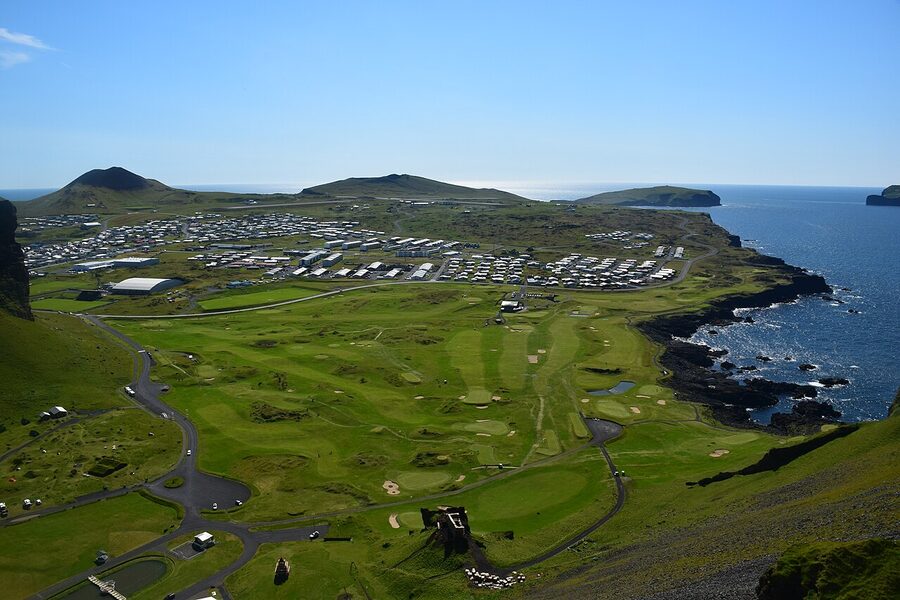
Iceland’s marine ecosystem is doing okay overall but with serious wobbles. The capelin and sand-eel collapses of the last fifteen years have rippled up to the puffins and the kittiwakes and to a lesser extent the foxes. Puffin breeding success in the Westman Islands, the largest colony in Iceland, has been close to zero in some years; the population has dropped roughly a third in two decades. The state has shortened the puffin hunting season repeatedly and may close it entirely. BirdLife Iceland (Fuglavernd) tracks the numbers and publishes them in English on their site.
On land, the introduced mink is the main villain, the reindeer are stable, the foxes are stable, and the sheep are managed under a quota system that’s been adjusting downward for years to reduce overgrazing. The Environment Agency (Umhverfisstofnun) publishes hunting and protection rules in English; the Marine Research Institute (Hafrannsóknastofnun) publishes annual cetacean survey results.
The big political tension remains the whale hunt, and as I write this the future is uncertain. The international pressure is constant; the domestic pressure is growing. If you visit and you’d like to leave a polite tourist comment to that effect on social media or with the operator who took you out, that genuinely helps. Iceland’s tourism authorities pay attention to what visitors say more than what activists say.
One last thing
I’d argue Iceland’s wildlife is unfair on a country this size. We have less than a square metre of land per square metre of Atlantic, and yet we have the world’s most reliable summer humpback encounter, the largest seabird cliff in Europe, the only place outside Greenland and Russia where you can routinely watch arctic foxes raising kits in the wild, and a horse breed that hasn’t been touched by outside genetics since the year a ten-year-old in Norway was learning to milk a cow before sailing west.
The country wears all of this lightly. You drive past it on the way to a waterfall. The reindeer are in the road. The whales are in the bay. The horses are leaning over the fence. The fox is watching you from a moss tussock and you don’t see her until she moves. If you slow down enough to look, the wildlife here works on you. If you drive past it at 90 km/h, you’ll miss the whole thing and remember the country as a landscape. Pull over.
For the cliff-top puffin scene and the duck-rich Mývatn morning, head over to the bird-watching guide. For the horse-and-history settlement story, the history article covers the Norse arrival in proper detail. And if a horse ride or a whale tour is going to fit in around a Golden Circle day, the day-tours guide sets out the practical sequence. Or for something built around the wildlife specifically, a custom itinerary is the cleanest way to do it. More destination guides here.