There’s something wonderfully direct about getting outside fast in Iceland, and this guided Icelandic horse ride makes the countryside feel close without rushing. You travel across lava fields, through green forest sections that are unusual for the region, and up toward the slopes around Reykjafjall/Reykjafell, led by an English-speaking guide.
I like the setup because it’s built for mixed skill levels and still feels safe and controlled. You get free pickup and drop-off, and you’ll also have the gear you need to stay comfortable, including helmets and waterproofs. The route also includes plenty to learn on the move, from the guide’s history of Icelandic horses to what makes the geothermal area around Hveragerði so unusual.
One thing to consider: this experience depends on the weather, so if conditions are poor you may be offered a different date or a refund. It’s also a weight-based activity, with a 120 kg weight limit, so it’s worth checking before you commit.
In This Review
- Key highlights worth marking on your map
- Riding South Iceland from Reykjavík, the easy way
- What you’re really paying for: horse, gear, guide, and convenience
- Meeting at Hótel Eldhestar: where the day starts
- Getting suited up: helmets, waterproofs, and a calmer ride
- Riding up Reykjafjall: trails, a rare green forest, and hot-spring views
- Geothermal country near Hveragerði: hot springs, color, and constant change
- Why this 1.5–2-hour format works (and when it might not)
- Icelandic horses: what you’ll learn and why it matters
- Group size, comfort, and expectations on the trail
- Price and logistics: is $134.15 a fair deal?
- Who should book this horse ride from Reykjavík?
- Should you book the Siggi Tour?
- FAQ
- How long is the Siggi Tour ride?
- Is pickup and drop-off included?
- What gear is provided?
- Is the tour suitable for beginners?
- Are there any weight limits?
- Does the tour depend on weather?
- Where does the tour start and end?
Key highlights worth marking on your map
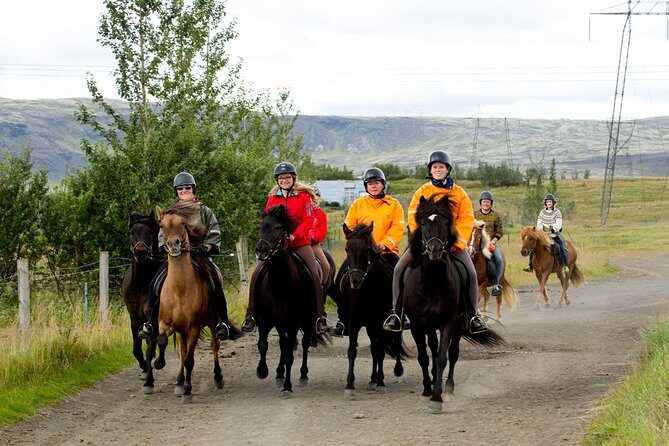
- Icelandic horse riding across countryside instead of slow walking
- Free pickup and drop-off for a lower-effort day trip
- Helmets and waterproofs included for safety and comfort
- Geothermal scenery near Hveragerði above the hot-spring town
- English-speaking guide with horse history and local context
- Small group feel with a maximum of 50 travelers
Riding South Iceland from Reykjavík, the easy way
This is the kind of tour that makes sense when you want Iceland’s outdoors, but you don’t want a full day of hauling yourself around. The Siggi Tour is short—about 2 hours on the experience itself—so it works well as either a first taste of South Iceland or a break between heavier sightseeing days.
You’ll be horseback for a decent chunk of that time, which matters in Iceland. Even when the distance looks small on a map, on-the-ground travel can be slow. Riding helps you cover more ground while still keeping things calm and scenic.
Also, the price lands in the “guided adventure” category, so you want it to feel worth it. Here, you’re getting more than just a trail ride: you’re paying for guided interpretation, safety gear, and the transport convenience of pickup and return.
You can also read our reviews of more tours and experiences in South Iceland.
What you’re really paying for: horse, gear, guide, and convenience
The listed price is $134.15 per person. On its own, that sounds steep compared with self-guided sightseeing, but it’s easier to see the value when you look at what’s included.
Here’s where the value shows up:
- Pickup and drop-off are free, which can remove a big chunk of planning stress if you’re staying in Reykjavík.
- Helmets and waterproofs are included, meaning you’re not scrambling to buy gear for one short outing.
- You’re not just following a trail. The guide provides context, including the history of Icelandic horses—that’s part of the point of hiring a guide instead of going solo.
And since the maximum group size is 50 travelers, you’re not dealing with an enormous crowd vibe. You still get a guided experience designed to keep things moving and safe.
Meeting at Hótel Eldhestar: where the day starts
Your tour begins at Hótel Eldhestar, in the Ölfus area. That matters because it’s not “meet somewhere random and hope for the best.” The stable base is where you’ll get oriented, and it’s where the experience ends too.
From a practical point of view, this is helpful if you’re planning your day back in Reykjavík. You know you’re returning to the same meeting point, and you’re not turning your outing into a long logistical scavenger hunt.
Most people can participate, and there’s a 120 kg weight limit. If you’re near that limit, it’s worth checking carefully in advance so there are no surprises on the day.
Getting suited up: helmets, waterproofs, and a calmer ride
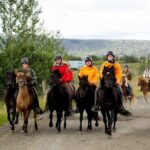
This is one of the tours where the safety details aren’t an afterthought. You’ll have helmets and waterproofs provided. In Iceland, that combo is basically the difference between enjoying yourself and thinking about your comfort the whole time.
You’ll also be riding an Icelandic horse, which is known for its suitability for varied riders. That said, different people have different comfort levels. The key here is that the operation is set up to handle beginners, not just expert riders.
If you’re new to horseback riding, you’ll likely feel reassured by the focus on steady guidance. The experience is designed so people who are less experienced still get help and attention, while experienced riders can keep their confidence.
Riding up Reykjafjall: trails, a rare green forest, and hot-spring views
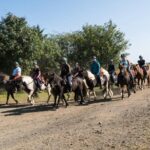
The route starts with a ride up a hill on excellent trails, moving along the slopes around Reykjafjall/Reykjafell. This part of the tour is where you get the classic “I’m actually in Iceland” feeling: you’re not just looking at scenery from a roadside. You’re moving through it at a horse’s pace.
Then comes one of the most memorable turns in the itinerary: a green forest section, which is unusual enough to stand out. Iceland can feel stark if you only focus on glaciers and lava. Seeing greenery during the ride gives you a fuller picture of what South Iceland can look like.
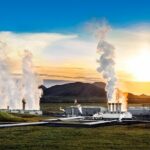
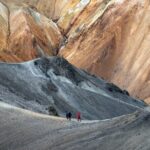
On this upward stretch, you’re also transitioning into a geothermal zone near Hveragerði. The scenery changes in a way that feels obvious even if you don’t know the science—steam smells, colored ground, and the overall sense of a landscape working overtime.
There’s also a strong “you’re moving through layers” feeling here: countryside trail riding, then geothermal terrain above a town. It’s not one-note sightseeing.
Geothermal country near Hveragerði: hot springs, color, and constant change
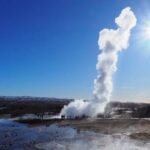
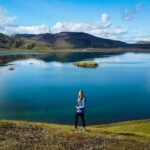
One of the best parts is how the ride passes by many hot springs in the geothermal area above Hveragerði. This isn’t described as a long hike to a single viewpoint. It’s more like a guided route through the terrain, so you experience geothermal features while still staying on the move.
Hveragerði has a reputation connected to hot springs, and the area has been changing dramatically since an earthquake in 2008. That detail matters because it explains why geothermal areas don’t behave like static museums. In Iceland, ground conditions can shift, and the visuals can change over time.
You’ll also ride through volcanic hills above the village area, which sits between volcano Hengill and the southern lowlands. The guide’s job here is important: without context, geothermal landscapes can look like “cool dirt and steam.” With context, it turns into a story you can follow.
A practical note: geothermal areas can mean stronger smells and slick surfaces in spots. That’s part of why waterproof gear is included.
Why this 1.5–2-hour format works (and when it might not)
The tour’s stated experience time is about 2 hours, and that’s a sweet spot in Iceland. It’s long enough to feel like a real activity, but short enough that you can still keep energy for other sights.
That said, your total time commitment on the day depends on pickup and transfer. Since you also get pickup and drop-off, plan for the day to stretch a bit beyond the ride itself. If you’re trying to cram this between tight reservations, give yourself buffer time.
This format also helps if you’re traveling with mixed interests. Some days in Iceland are weather-heavy and sight-heavy. Horse riding is different. You’re outdoors, you’re learning something, and you’re seeing the terrain from a new angle.
Where it may not fit: if you’re looking for a long, multi-stop photography marathon or a half-day hike. This is guided horseback riding with scenery variety, not a long expedition.
Icelandic horses: what you’ll learn and why it matters
You’ll learn about the history of Icelandic horses from your English-speaking guide. That’s not just trivia. It changes how you interpret the whole experience.
Icelandic horses have a strong cultural and practical role in Iceland’s past, and understanding that background makes the ride feel less like a generic activity and more like a living tradition. The guide’s explanation is the thread that ties together the landscape, the riding, and the reason these animals are central to the Iceland experience.
This tour is also geared toward safety and comfort: helmets and waterproofs help, and the guiding style is meant to support riders across skill levels. If you’re unsure about your own riding ability, that reassurance is part of the value.
Group size, comfort, and expectations on the trail
The maximum group size is 50 travelers. That doesn’t automatically mean chaos or crowding, but it does tell you to expect a structured operation. For most people, that’s good. A well-run stable tour keeps the line moving and reduces uncertainty.
What I like about the way this experience is described is that it isn’t only for confident riders. You get guided support so beginners aren’t left to figure it out alone. That’s a big deal because the hardest part for first-timers isn’t the scenery—it’s feeling in control of your body and your horse.
If you’re an experienced rider, you’ll likely appreciate the trails and the movement through varied terrain. If you’re new, you’ll want to lean on the guide’s cues and keep your focus on safety gear and posture.
Price and logistics: is $134.15 a fair deal?
Let’s put the pricing into context. $134.15 is what you pay for a guided Icelandic horse riding experience that includes:
- free pickup and drop-off
- helmets and waterproofs
- an English-speaking guide
- access to riding terrain that includes volcanic and geothermal features
- a max group size limit of 50 travelers
If you’ve ever tried to price “just the guide,” the gear, and the transport separately, this starts to look more reasonable. In Iceland, the labor and infrastructure around tours is expensive, and horseback riding isn’t a DIY activity. You’re not only booking time on a horse—you’re booking trained handling, safety protocols, and a guided route through changing landscapes.
Also, the tour is typically booked about 41 days in advance on average. That’s a clue that it’s popular and likely to sell out closer to departure. If you have firm dates, planning ahead is smart.
Who should book this horse ride from Reykjavík?
This is a strong match if:
- you want a scenic guided activity that doesn’t require long walking
- you’re curious about Icelandic horses and local context
- you want an outdoors experience that works even if you’re not a hardcore hiker
- you value pickup convenience and included gear
It might not be ideal if:
- you’re uncomfortable with being outdoors in changing conditions (even with waterproofs)
- you’re looking for a long multi-hour hike instead of horseback riding
- you’re over the 120 kg weight limit, since that’s a stated restriction
If you’re visiting South Iceland and want something memorable beyond waterfalls and viewpoints, this ride is one of those activities that changes your perspective fast.
Should you book the Siggi Tour?
I’d book it if you want a short, meaningful way to experience South Iceland with a guide who explains what you’re seeing. The combination of free pickup, included helmets and waterproofs, and the variety of terrain—from trails and green forest to geothermal hot-spring country—makes the tour feel purposeful.
I’d skip or reconsider if weather is a major question mark for your dates or if you’re tight on time. Because the ride requires good conditions, it’s wise to keep flexible plans around it.
If you like the idea of learning while moving—horse pace, not foot pace—this is a very practical choice.
FAQ
How long is the Siggi Tour ride?
The tour is listed as approximately 2 hours.
Is pickup and drop-off included?
Yes. Free pickup and drop-off are included.
What gear is provided?
Helmets and waterproofs are included for the ride.
Is the tour suitable for beginners?
Yes, it’s described as a safe experience and designed to look after inexperienced riders while supporting more experienced riders too.
Are there any weight limits?
Yes. The weight limit is 120 kg.
Does the tour depend on weather?
Yes. It requires good weather. If it’s canceled due to poor weather, you’ll be offered a different date or a full refund.
Where does the tour start and end?
It starts at Hótel Eldhestar and ends back at the same meeting point.