Reykjanes turns geology into real life. This half-day small-group tour shows how geothermal heat and tectonic action shape the Reykjanes Peninsula, with hands-on walks and some genuinely otherworldly ground. You start with crater lakes, move through color-banded hot springs, then finish with ocean views, birds, and a symbolic crossing over the tectonic divide.
I really like the mix of stops that feel different from each other. Krysuvik–Seltun is the star for a leg-stretching hot-springs walk, and the views keep changing as the terrain shifts from steam to sulfur tones. I also love how Gunnuhver’s steaming mud pools give you that eerie, slow-motion sense of the earth working under your feet.
One thing to consider is that the route can change if volcanic conditions or safety concerns force detours. That means you might lose a planned segment or two, and the timing can flex when the roads get complicated.
In This Review
- Key highlights you’ll feel in your day
- Why Reykjanes Geopark feels like Iceland’s geology in fast-forward
- Getting from Reykjavik to the geothermal coast: pick-ups and pacing
- Kleifarvatn Lake: a fissure-fed stop that sets the tone
- Grænavatn’s teal crater-water view
- Krysuvik–Seltun hot springs walk: steam, color, and good footing
- Grindavík lava fields near town: the reality check stop
- Gunnuhver mud pools: steaming ground and that ghost-story energy
- Reykjanesviti lighthouse and the coast’s wide views
- Bridge Between the Continents: quick, symbolic, and very photo-friendly
- The guides you might meet: where the real storytelling happens
- Price and value vs doing it on your own
- Who this tour suits best (and who should skip it)
- Should you book this Reykjanes tour?
- FAQ
- How long is the Reykjanes Geopark Tour from Reykjavik?
- What is the price per person?
- Is pickup and drop-off included?
- What group size is this tour?
- What time does the pickup usually happen?
- Is food included?
- Does the tour include admission to the Blue Lagoon?
- Where does the tour end?
- What language is the live guide?
- What should I bring for this tour?
Key highlights you’ll feel in your day
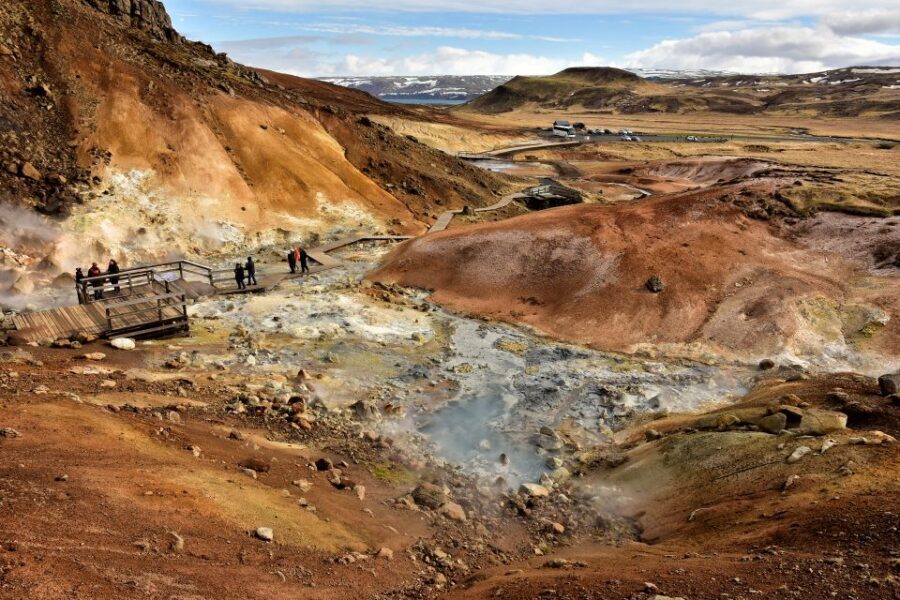
- Krysuvik–Seltun hot springs walk through multicolored ground and bubbling activity
- Gunnuhver geothermal mud pools with steaming vents and a local ghost story vibe
- Reykjanesviti lighthouse + coastal bird cliffs for ocean air and wide sightlines
- Grindavík lava fields near town showing freshly solidified volcanic material
- Bridge Between the Continents crossing Iceland’s tectonic plates, with a clear payoff for photo lovers
- Small-group minibus pacing (5–17 people) that keeps stops from feeling like sprinting
Why Reykjanes Geopark feels like Iceland’s geology in fast-forward
Reykjanes Geopark is all about the way Iceland behaves when plates shift and heat rises. On this tour, you don’t just look at geology from a distance. You move between crater lakes, hot-spring areas, and geothermal vents where steam and sulfur smell like the planet is running a quiet engine.
I like that the day is built for variety. You get both the geothermal side (hot springs and mud pools) and the volcanic aftermath side (lava near Grindavík). Then the finale turns more scenic: lighthouse views, coastal bird cliffs, and a quick but meaningful stop at the Bridge Between the Continents.
This is also a practical fit for your schedule. The tour runs about 7 hours and is designed to get you back to Reykjavik by around 4 PM, with optional drop-off at Keflavík International Airport or a stop near the Blue Lagoon area.
You can also read our reviews of more tours and experiences in Reykjavik
Getting from Reykjavik to the geothermal coast: pick-ups and pacing
The day starts with hotel pickup or designated bus stops, and you’ll ride in a climate-controlled minibus. Your pickup window is typically 9:00–9:30 AM, depending on where you’re picked from, and you’ll need to be outside your location by 9:00 AM.
If you’re staying in the center, you’ll likely be picked up near a listed stop. If you’re outside the easy walk zone, you may need to choose a nearby stop or contact the operator before departure (especially if your hotel is more than a 10-minute walk from a fixed pickup point).
There’s a short break built into the route, including a stop in Hafnarfjörður with coffee and shopping time (about 30 minutes). Then the minibus handles the driving between sites so you can focus on walking where it counts. Expect short to medium stays at each stop rather than long hikes, which is exactly why this works so well if you have a flight or evening plans.
Kleifarvatn Lake: a fissure-fed stop that sets the tone
Kleifarvatn Lake is your first big “wow” moment, sitting along a fissure zone and fed entirely by underground springs. It’s the kind of stop that gives you context fast: this area isn’t just geothermal scenery, it’s a system. The water and the earth are connected.
You’ll have time for sightseeing here, and it works as a warm-up before the steamy spots. If it’s windy or rainy, this is also where outdoor gear pays off. You’ll want a layer you can handle because the Reykjanes coast can feel sharper than Reykjavik even on calm days.
Grænavatn’s teal crater-water view
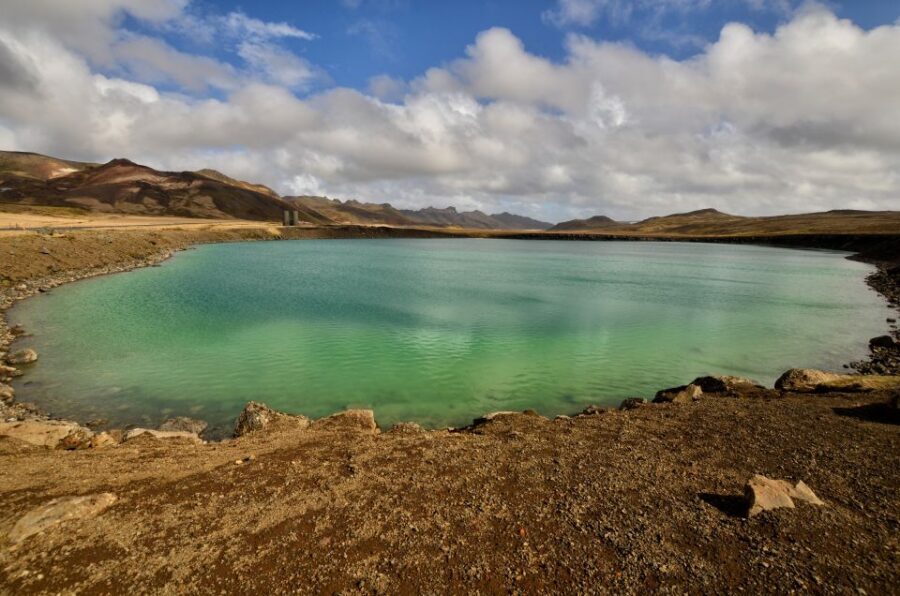
Next comes Grænavatn, a smaller lake occupying a volcanic crater. What makes it memorable is the color—known for a striking teal tone—which can look almost unreal against darker rock.
This is one of the shorter stops on the route (about 10 minutes for sightseeing), so don’t expect long wandering. Instead, use it like a breather. Snap a few photos, take in the crater setting, then get ready for the walk at Krysuvík–Seltun.
Krysuvik–Seltun hot springs walk: steam, color, and good footing
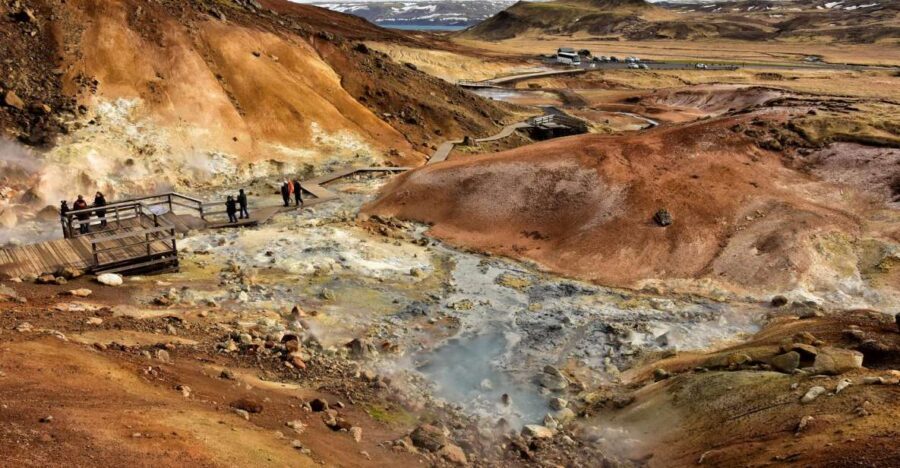
Krysuvik (often paired with Seltun) is where this tour turns from “viewing” to “walking among the activity.” You’ll stroll among multicolored hills and bubbling hot springs, with steam rising from geothermal ground.
This is also where I’d spend most of your mental energy. Look closely at how the surface changes—some areas look stained and crusted, other parts look more actively warmed. The smell can be strong in still weather, so rain gear and outdoor clothing help you stay comfortable long enough to enjoy it.
The walk time here is built for most people: you get enough time to move around without feeling rushed. Just remember the key advice: bring sturdy outdoor footwear and expect uneven ground.
You can also read our reviews of more tours and experiences in Reykjavik




Grindavík lava fields near town: the reality check stop
Around Grindavík, the tour shifts from hot-water geothermal to the volcanic “after” story. You’ll see freshly solidified lava from the most recent volcanic eruption near the town area.
This stop has an eerie emotional pull because the environment looks new and raw. You may also pass by the feeling of an abandoned city area that used to be thriving—one of those reminders that Iceland’s forces aren’t just natural science, they’re everyday life for the region.
It’s not the longest stop (about 15 minutes for sightseeing), but it’s one of the most powerful. If you care about understanding how quickly volcanic change can reshape communities, don’t skip the time here.
Gunnuhver mud pools: steaming ground and that ghost-story energy
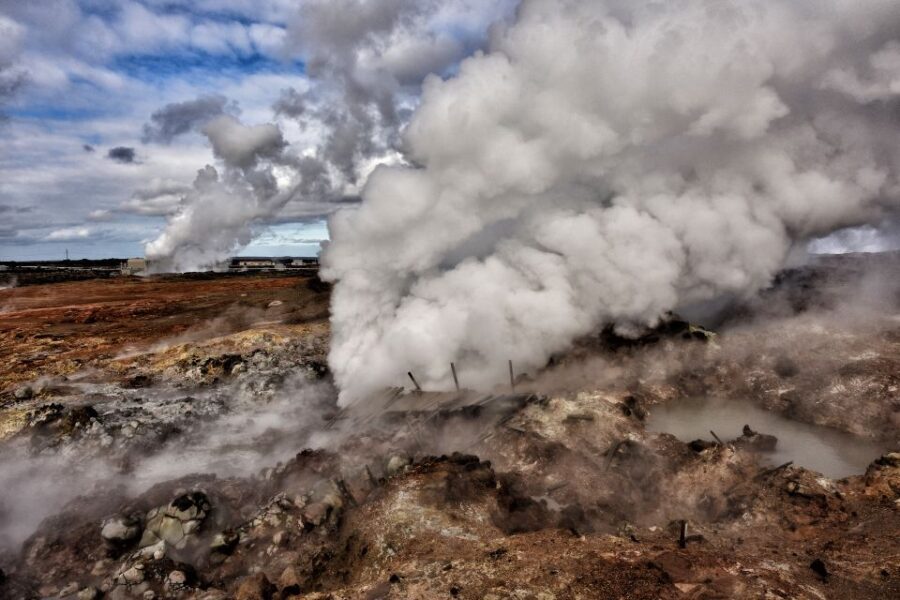
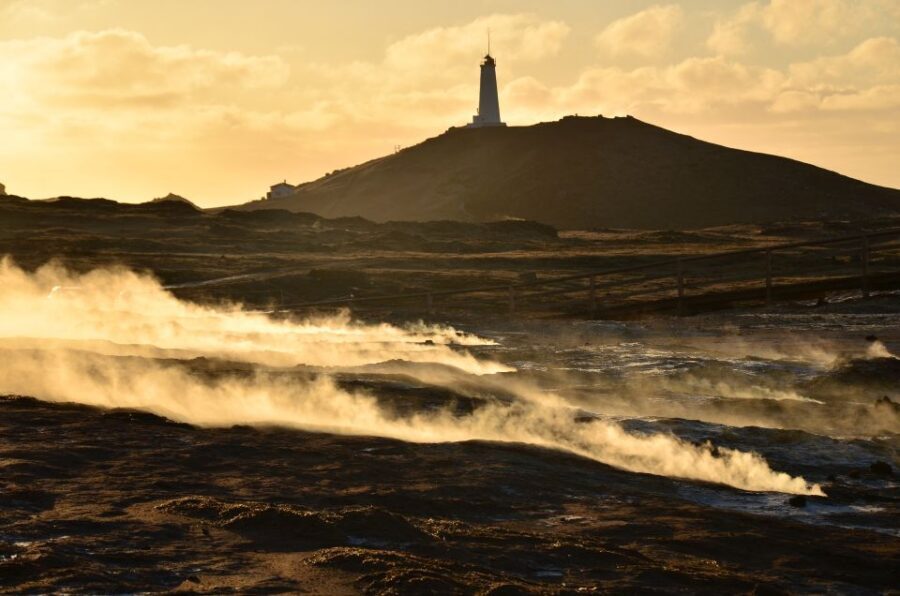
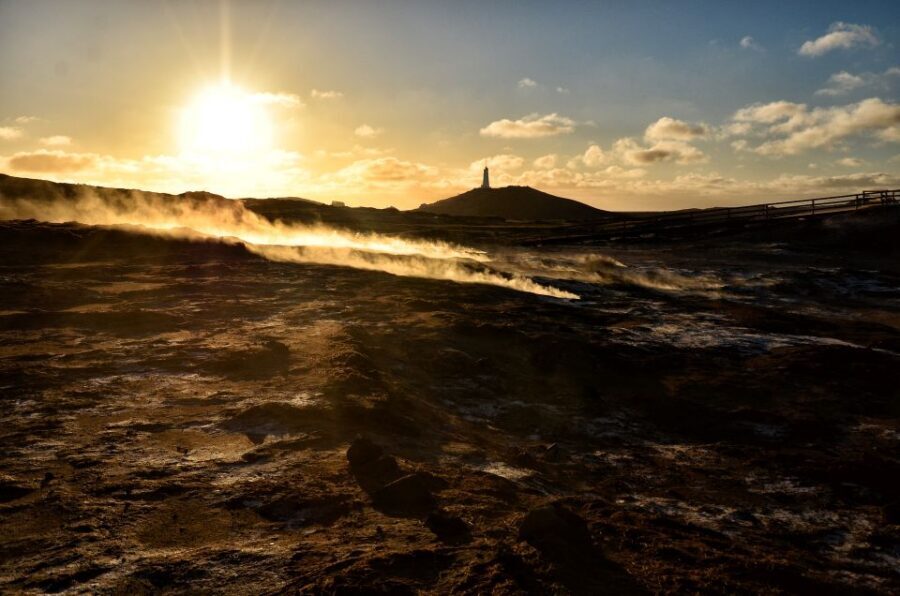
Gunnuhver is famous for geothermal mud pools and steaming vents. This is the place where the ground looks like it’s cooking from below, and you’ll likely feel the heat and smell as you get closer.
You’ll spend about 10 minutes here for sightseeing. Even in a short window, it can feel intense because the area is active and the textures are so unusual. The tour also includes a local ghost story connected to the site, which adds personality without turning it into a joke.
Birdlife becomes part of the experience along the coastal stretch too. If you’re the kind of person who notices small things, keep your eyes moving—this is one of those places where you can catch seabirds while you’re waiting for your turn to get photos.
Reykjanesviti lighthouse and the coast’s wide views
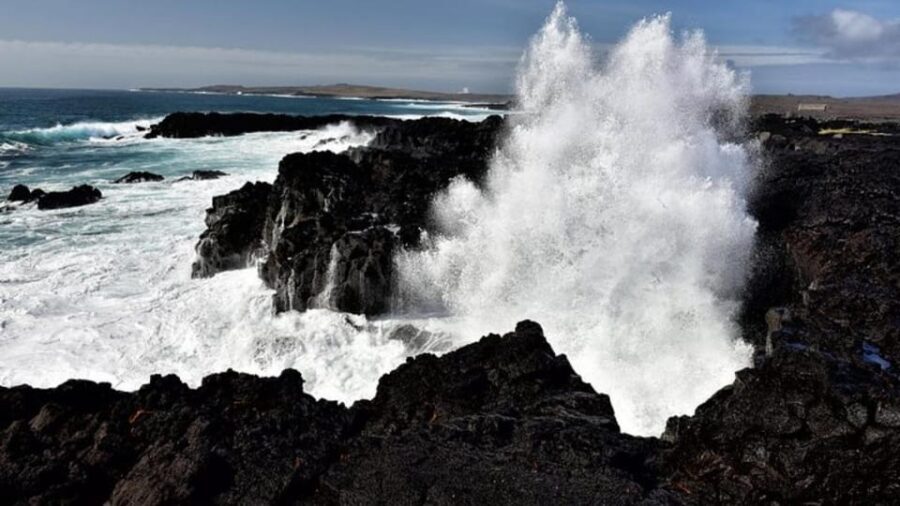
After the mud pools, you head to Reykjanesviti lighthouse. It’s described as Iceland’s oldest lighthouse, and the stop is built around taking in the ocean and coastal cliffs.
You’ll get about 30 minutes here for sightseeing, which is the kind of timing I like. It gives you room to find a safe spot for photos, walk to a viewpoint if conditions allow, and still come back without sprinting. Even when the weather is dramatic, the lighthouse setting tends to feel cinematic.
This is also where the tour feels “complete.” You’ve seen heat and destruction, and now you get the ocean-scale perspective that makes Iceland’s geology feel bigger than the sites themselves.
Bridge Between the Continents: quick, symbolic, and very photo-friendly
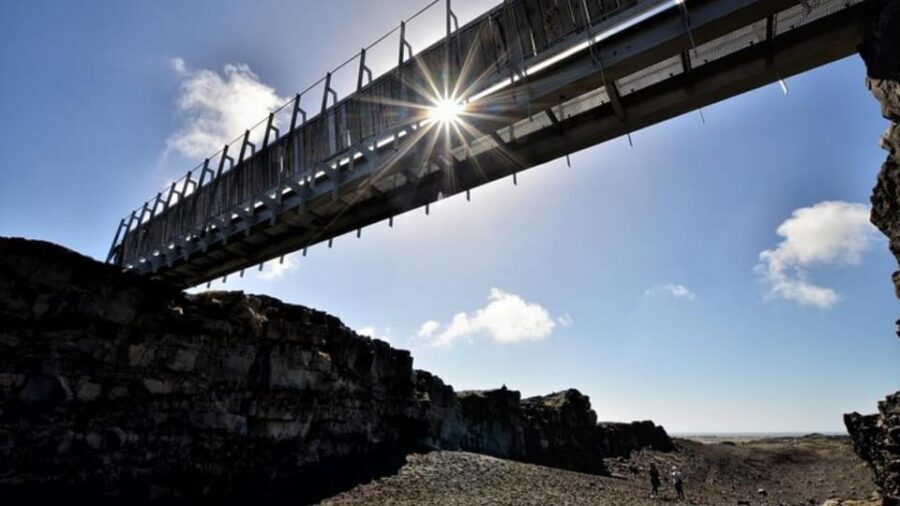
The Bridge Between the Continents is a symbolic crossing that spans Iceland’s tectonic plates. It’s not a long stop (about 20 minutes), but it’s memorable because you’re essentially standing in the line where two plate boundaries meet.
I like this kind of “short but meaningful” moment in a day tour. You’re not just looking at rock—you’re connecting it to the idea of movement underneath. If photos are part of how you travel, plan to spend enough time for a clear shot without letting the rest of your group rush you.
The guides you might meet: where the real storytelling happens
This is the part that most strongly affects how good your day feels. The guides on this tour range from playful to deeply story-driven, and you’ll hear both geology and human history.
You might ride with guides like Trond, Gummi, Jakob, Ian, Starri, or Rakel. Several of them are known for adding context beyond the site basics, including Icelandic history and personal storytelling. Starri, for example, is noted for weaving in tales with family connections, and he’s also linked with arranging extra time at a viewpoint called Valahnukur when the schedule allows.
There’s also a theme of adaptability. One guide helped find a lunch solution when dietary needs came up, and another was praised for strong communication and for stepping in when a guest needed extra help with timing and where not to walk. Even if you don’t need that kind of assistance, it’s a good sign that the guide is paying attention, not just reading off a script.
And since this is a small-group tour (typically 5–17 people), the vibe can be less chaotic. You’re more likely to get questions answered without feeling like you’re interrupting a conveyor belt.
Price and value vs doing it on your own
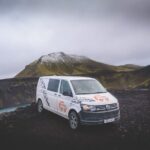
At $159 per person for a roughly 7-hour small-group tour, this is priced above the cheapest bus tours. But you do get value that’s hard to replicate on your own day plan: hotel pickup and drop-off plus a professional local driver/guide, carried out by a minibus designed for this kind of route.
You also get built-in pacing. The itinerary is structured so you can hit multiple geothermal and volcanic stops without needing to figure out parking, driving between far-flung sites, and when to switch from lake views to steamy ground to ocean cliffs.
What’s not included matters too. Food and drinks aren’t included, and admission to the Blue Lagoon isn’t included. If you want Blue Lagoon, you’ll need to budget for it separately. Still, the bus may offer an optional drop-off connected to Keflavík Airport and the Blue Lagoon area, which can be a big deal if your timeline is tight.
If you’re on a schedule where you’d otherwise spend precious time driving or stitching together a DIY route, the total value can make sense quickly.
Who this tour suits best (and who should skip it)
This tour fits you best if you want a fast, well-paced overview of Reykjanes Geopark without making your day stressful. It’s especially strong for people who have an afternoon flight and need to be back in Reykjavik by around 4 PM.
It also works well if you like variety: crater lakes, hot springs, mud pools, lava fields, lighthouse views, and a tectonic-plate bridge in one day. You’ll also appreciate the small-group size if you prefer fewer people blocking each other at viewpoints.
Skip it if you want a long hike or deep, hour-by-hour exploration of one single location. This is not built for that. Also keep in mind the route can change due to volcanic activity or unsafe travel conditions, so plan to stay flexible.
Finally, if you’re traveling with kids, Iceland requires booster seats by law, so plan for that ahead of time.
Should you book this Reykjanes tour?
I’d book this if your goal is to see the Reykjanes Peninsula’s geothermal and volcanic side in one organized half-day style block. The combination of Krysuvik–Seltun hot springs, Gunnuhver mud pools, Reykjanesviti lighthouse views, and the Bridge Between the Continents is a rare “all killer, no filler” pairing.
Book it especially if you don’t want to gamble on your own timing across multiple sites. The included pickup/drop-off, small-group minibus, and guide-driven storytelling add real value.
The only reason not to book is if you absolutely need a fixed route that never changes. With possible volcanic and weather-related adjustments, you’re taking on some natural Iceland flexibility. If you can handle that, this tour is a smart way to turn one day into a clear, memorable slice of the Land of Ice and Fire.
FAQ
How long is the Reykjanes Geopark Tour from Reykjavik?
The tour duration is 7 hours.
What is the price per person?
The price is $159 per person.
Is pickup and drop-off included?
Yes. Hotel pickup and drop-off are included, along with pickup from designated bus stops where needed.
What group size is this tour?
It’s a small-group tour with between 5 and 17 people.
What time does the pickup usually happen?
You need to be outside your pickup location by 9:00 AM, and pickup typically happens between 9:00 and 9:30 AM depending on traffic and the pickup list order.
Is food included?
No. Food and drinks are not included.
Does the tour include admission to the Blue Lagoon?
Admission to the Blue Lagoon is not included, though the bus may offer an optional drop-off connected to the Blue Lagoon area.
Where does the tour end?
You’ll return to Reykjavik by around 4 PM, and there’s also an optional drop-off at Keflavík International Airport.
What language is the live guide?
The live tour guide is in English.
What should I bring for this tour?
Bring rain gear and outdoor clothing, and wear sturdy outdoor footwear.