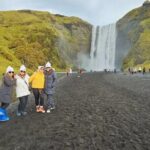
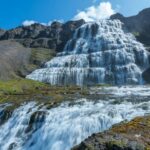
Iceland’s Westfjords feel like another planet. On this 3-day road trip from Reykjavík, you get real time on the Seven Fjord Road and the kind of raw nature stops Iceland does best. I especially love Dynjandi’s seven-step waterfall ladder and the bird-cliff walk at Látrabjarg for puffins and other seabirds.
One possible drawback: this is a remote loop with long drives and frequent weather checks, so the day can feel packed, and plans may shift to keep things safe. Bring windproof, waterproof clothes, or you’ll spend the whole trip thinking about changing layers instead of enjoying the views.
In This Review
- Key reasons this Westfjords road trip is hard to top
- Why the Westfjords feel wild on a 3-day loop from Reykjavík
- What you pay ($1,142) and what that covers in real terms
- Day 1: Eiriksstaðir, Breiðafjörður cliffs, Þingmanná Falls, and the Krosslaug soak
- Day 2: Látrabjarg seabirds, Rauðisandur sands, Fossfjörður, and Dynjandi
- Day 3: Bolafjall skywalk, Ósvör’s turf-roof village, the Seven Fjords Road
- Guides and pacing: what makes the small-group size matter
- What to pack (and why it affects your enjoyment)
- Wildlife moments: puffins, seals, and arctic foxes without forcing luck
- The meals reality: how to handle lunch and dinner on your own
- Should you book the Wild Westfjords road trip from Reykjavík?
- FAQ
- FAQ
- How long is the Westfjords tour?
- Where does the tour start and end?
- What’s included in the price?
- Are meals included?
- How big is the group?
- What accommodation do you get?
- What should I wear for this trip?
- Is Krosslaug pool included?
- Will I definitely see arctic foxes and seals?
- Is the ferry ever involved?
Key reasons this Westfjords road trip is hard to top
- Dynjandi’s seven-step waterfall ladder: a stop you’ll remember long after the bus rolls on.
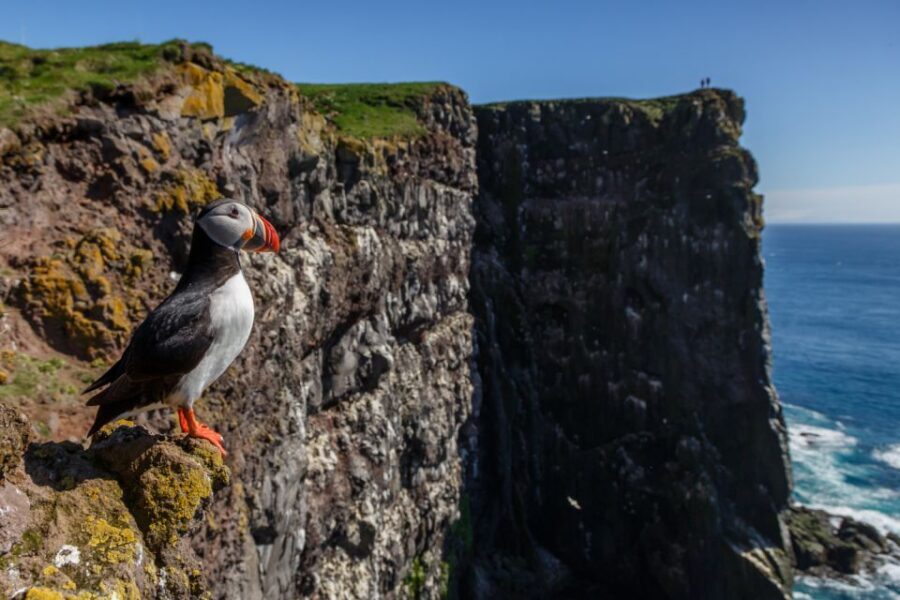
- Látrabjarg seabird cliffs: walk the edges where thousands of birds gather each summer.
- Rauðisandur’s multicolored sands: a bright contrast to all the rock and ocean gray.
- Optional Krosslaug natural hot pool: geothermal soaking with a local-run vibe.
- Arctic fox + seals timing: you’re not just hoping—there’s an Arctic Fox Center backup if luck is low.
- Small group (max 18) with an English guide: easier pace and better chances to hear stories at each stop.
Why the Westfjords feel wild on a 3-day loop from Reykjavík
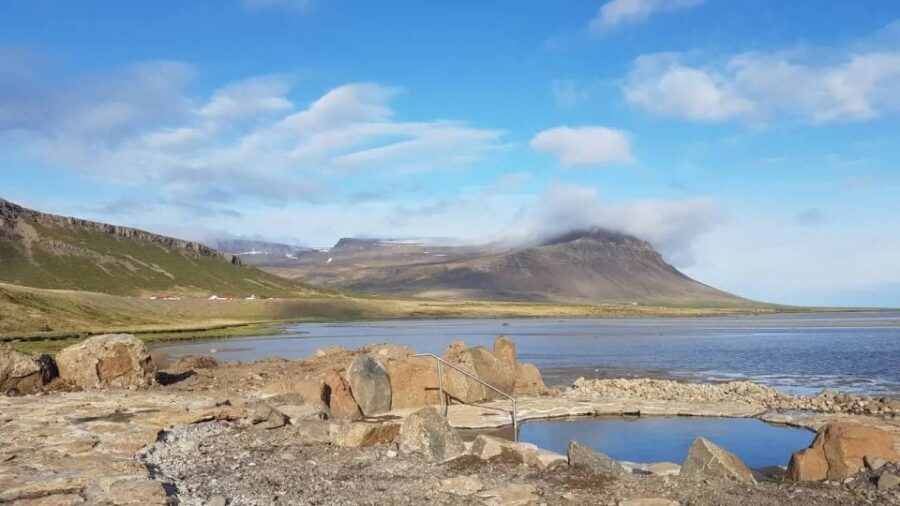
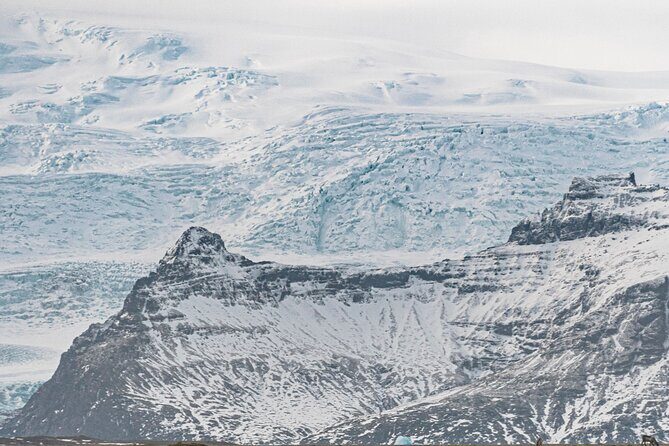
This tour is built around one key idea: don’t just see the Westfjords from far away. You ride, stop, walk, and look from multiple angles, so the region keeps changing in front of you. Day 3 alone includes the Seven Fjord Road, a coastline drive where fjords, mountains, and glaciers keep showing up in your peripheral vision.
Also, the timing is smart. You get the big nature moments without spending all day stuck in one long, scenic bus window. The schedule mixes walking and viewpoints (so you’re not just transported) with short museum or village stops to keep it human.
And yes, this is the kind of Iceland trip where weather is part of the story. The tour runs in all weather conditions, so you’re not waiting for perfect skies. You’re dressing for wind and rain and going anyway.
You can also read our reviews of more tours and experiences in Reykjavik
What you pay ($1,142) and what that covers in real terms
At $1,142 per person for 3 days, it’s not a budget hop. The value comes from what’s included rather than what’s left out.
You’re paying for:
- A professional English-speaking guide in a minibus
- Reykjavík pickup and drop-off (from your hotel or a nearby designated meeting point)
- 2 nights of accommodation in a private room with an en-suite bathroom plus breakfast
- Entry fees for Eiriksstaðir Viking Longhouse and Arctic Fox Center
- Wi‑Fi on the bus and USB chargers by your seat
Food is the main item not included. Lunch and dinner are on your own, though the tour includes scheduled stops where you can buy snacks or a meal. For me, that’s a fair setup: you keep flexibility while still having the structure of a guided route.
If you’re someone who hates planning, this cost makes sense because it covers the guide, key entrances, and the logistics of getting you through remote roads over three days. If you love total control and self-driving every minute, you might prefer a do-it-yourself version. But for many people, this route is the stress-free way to reach the best Westfjords highlights.
Day 1: Eiriksstaðir, Breiðafjörður cliffs, Þingmanná Falls, and the Krosslaug soak
Day 1 starts with Reykjavík pickup between 08:30 and 09:00. Because bus access inside central Reykjavík is limited, the tour uses designated stops even if you’re staying in the city center. You’ll get your exact pickup location after booking, so plan to be ready a bit early.
From there, you head toward Borgarnes and make your first major cultural stop: Eiriksstaðir, a Viking heritage museum with a turf-roofed house that was home to Eirik the Red and his son Leif the Lucky. It’s not a big stop, but it gives context for why people were drawn to the edges of this harsh country in the first place.
After that, you roll onward to the Breiðafjörður area. The driving here is the kind of introduction Iceland does best: coastal cliffs, fjord views, and lots of opportunities to stop and look while your guide points out what you’re seeing.
Next comes the Vatnsfjörður Natural Reserve, where you’ll visit the Þingmanná Waterfalls and a stunning canyon. This is the kind of place where you feel the “west” of Iceland isn’t just pretty—it’s rugged and carved by water over long time.
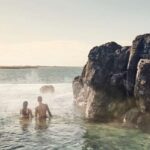
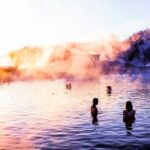
Then there’s a beach break at Birkimel Bay. The stop is paired with an optional warm-water idea: the Krosslaug Swimming Pool, a natural geothermal pool run by the local Youth Association. If you want to use it, bring swimwear and a towel. There’s also an optional donation left at a box, which supports the pool through local hands.
The day ends with a drive over the Kleifaheiði mountain range. You’ll also spot Kleifabúi, a five-meter-high stone statue tied to the work of engineers who built the mountain road. It’s a good reminder that even remote routes like this rely on people and planning, not just “nature doing its thing.”
Day 2: Látrabjarg seabirds, Rauðisandur sands, Fossfjörður, and Dynjandi
Day 2 is your big bird and waterfall day, with the kind of variety that keeps you from checking your phone. You start by visiting Látrabjarg, one of the best places for bird spotting in the Westfjords.
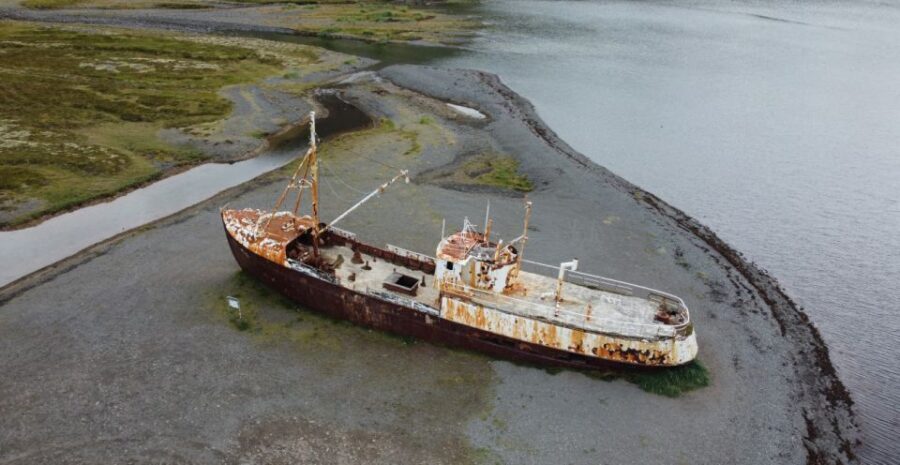
As you approach, you may see the Garðar shipwreck on the way. Then it’s onto the cliffs at Látrabjarg, the westernmost point in Iceland, where thousands of seabirds arrive each summer. This is where puffins come into the conversation, but the draw is bigger than one species: you’re looking at a whole living system of seabirds using the same cliff lines.
Next is Rauðisandur, with its multicolored sandy beaches. The color is the point here. After hours of black rock and gray-blue ocean, the sand looks almost painted, and you get the chance to walk on it instead of only photographing from the bus.
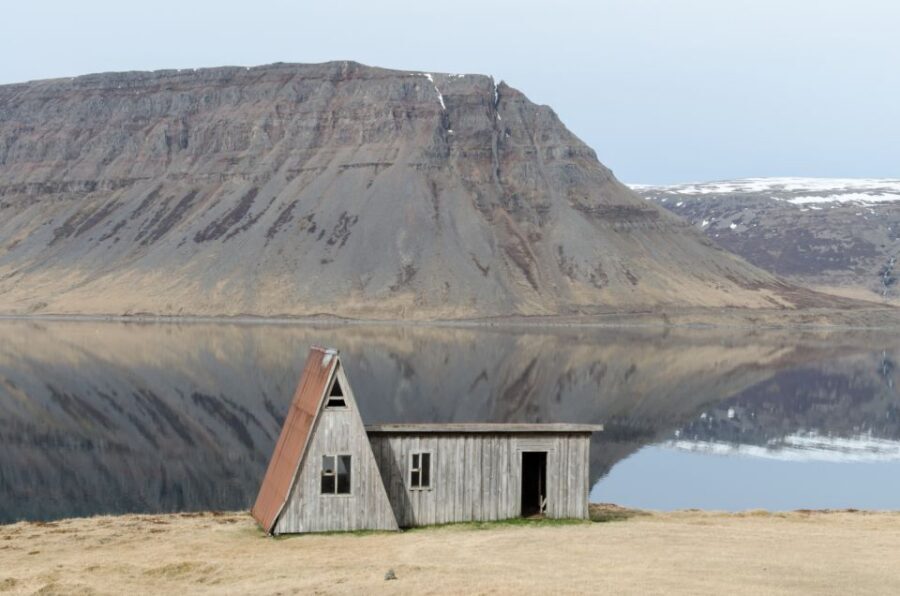
You also get a couple of iconic visual moments nearby: Fossfjörður waterfall and the A-House. They’re the sort of landmarks you’ll remember because they’re specific, not generic roadside views.
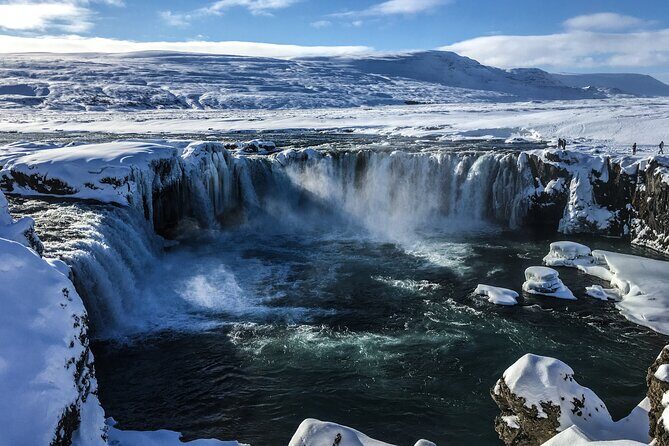
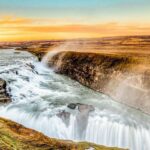
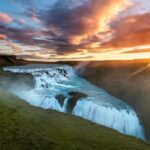
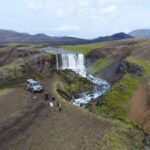
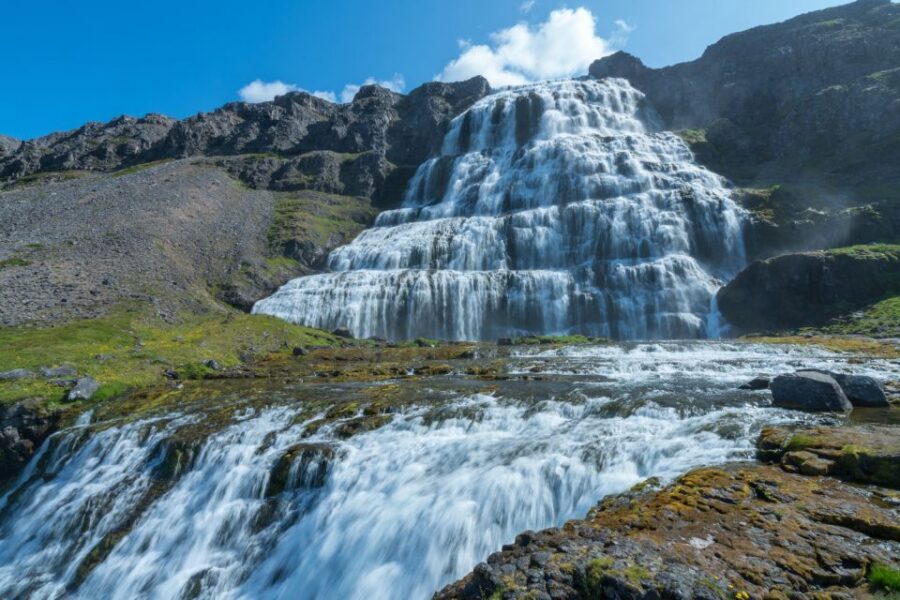
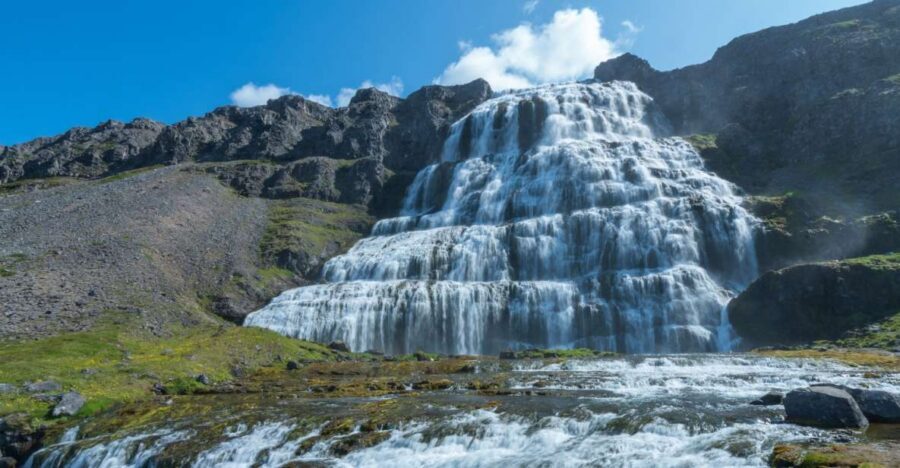
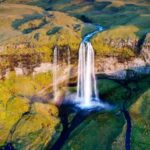
Then comes Dynjandi, often described as wedding-cake-shaped because it pours down in stacked sections. It’s a seven-step waterfall ladder, and the size of the waterfall plus the stair-like shape is why it’s a highlight on this route. You’ll stand there long enough to realize how water can look both powerful and oddly neat.
Your evening finishes in Ísafjörður, the capital of the Westfjords. That means you’re not just arriving and sleeping right away—you have time for your own dinner plans, a walk, or a quick look around the town while the day is done.
Day 3: Bolafjall skywalk, Ósvör’s turf-roof village, the Seven Fjords Road
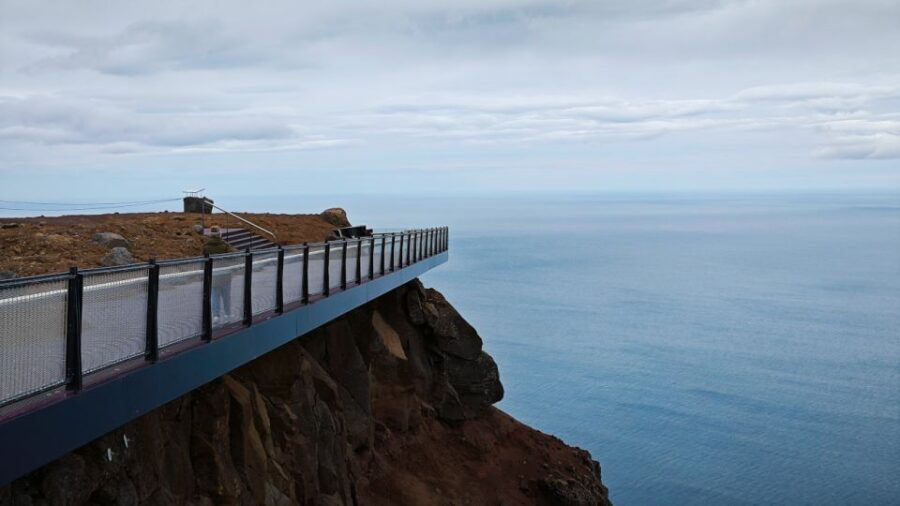
Day 3 starts with a climb to Bolafjall (638 m) and a walk on a skywalk viewing platform built over steep cliffs. This is one of those stops that changes your sense of scale. From up there, the coastline and fjords aren’t just “pretty”—you get a clearer mental map of how all the pieces fit.
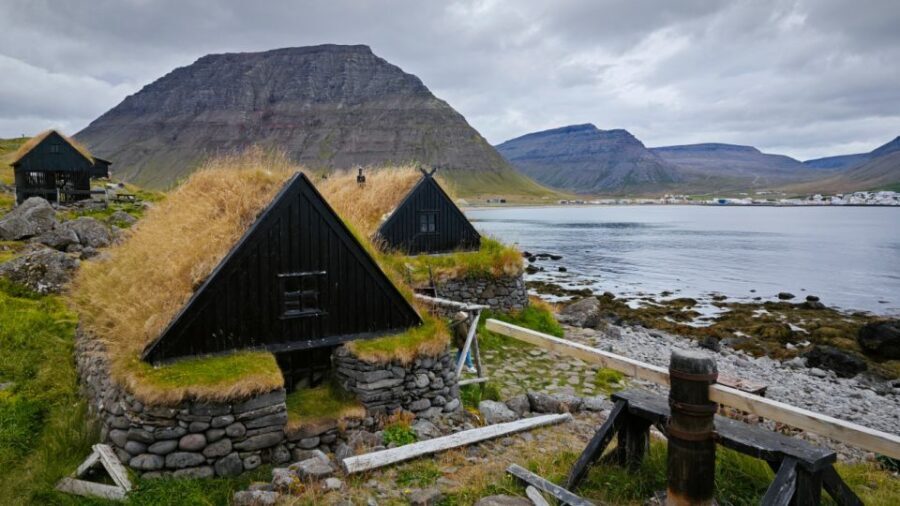
After that, you visit Ósvör Fishing Village with its collection of turf-roofed buildings, plus Óshólaviti Lighthouse. These stops are valuable because they show how people lived with the sea, not just visited it. You’ll likely notice how the architecture and the site placement are built around surviving wind, cold, and salt air.
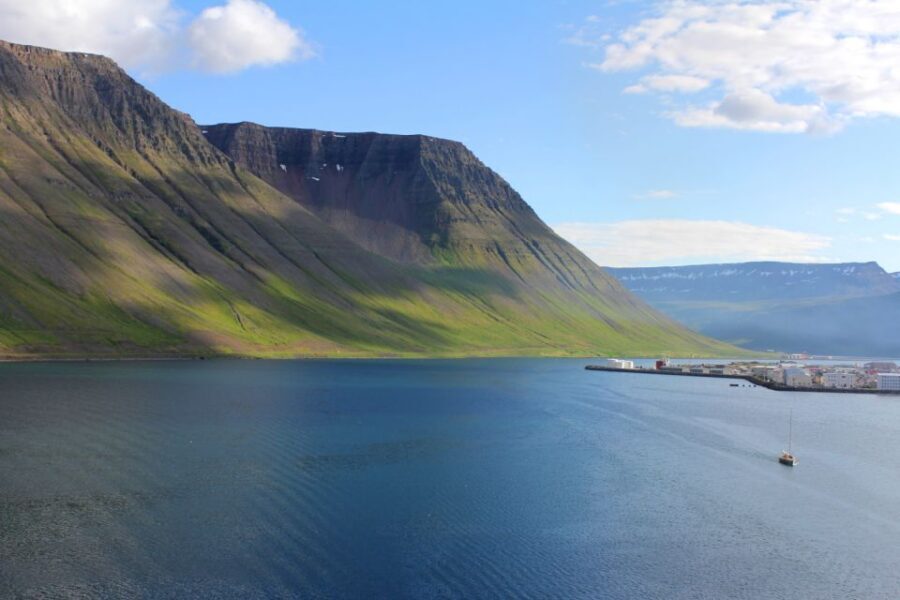
Then the drive begins: the Seven Fjords Road. The route hugs the coastline and keeps views open on both sides—fjords, mountains, and glaciers in sight when weather allows. The tour description mentions uninterrupted views, and that matches the feel of this kind of coastal road: every time you think you’ve seen the best angle, the road curves and you get a new one.
This is also where wildlife becomes part of the experience. Arctic foxes roam the area, so you’ll want to keep a close eye out from the road. If you don’t spot them in the wild, there’s a backup: the Arctic Fox Center, included in the tour and designed to help with protection efforts. It’s one of the smartest inclusions here because it turns a “maybe” into a real chance.
Next is a seals-focused stop at Hvitanes, described as one of the most accessible places to spot seals in the Westfjords. If you’ve spent two days looking at birds, it’s a nice pivot to mammals and the calmer rhythm of watching them on land.
The last stop is by the Grabrok Volcanic Craters. This gives the trip a geology finish—less about living creatures and more about how this region was shaped. It’s a good capstone before you start the long drive back toward Reykjavík.
Your estimated arrival back in Reykjavík on Day 3 is around 20:30, depending on weather and road conditions. Plan for a late evening and don’t stack extra commitments the same night.
Guides and pacing: what makes the small-group size matter
The tour runs with a small group limited to 18 participants. That’s not just a comfort perk—it affects the experience. With fewer people, stops feel less rushed, and your guide can actually talk through what you’re looking at.
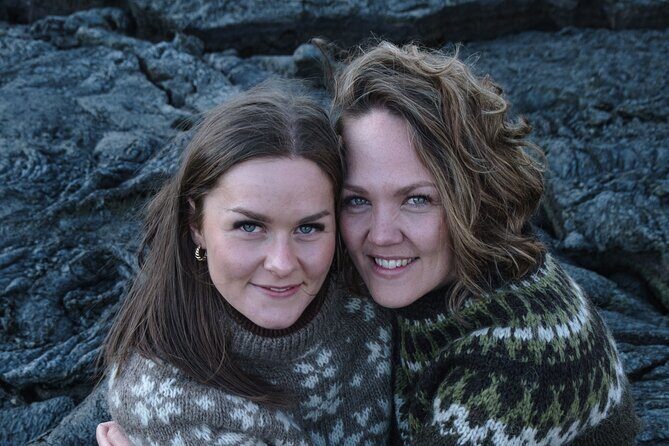
The feedback for guide quality has been strong. One review praised a friendly guide who made sure the day ran well. Another specifically highlighted David for pacing and an adventurous, nature-focused approach. A different review gave extra credit to Halldor for making the tour more interesting through professionalism and local insight.
That matters because in the Westfjords, details are everywhere: cliff shapes, waterfall behavior, the logic behind where you stop to look. A good guide turns random scenery into a route you understand.
What to pack (and why it affects your enjoyment)
This tour operates under all weather conditions, so you can’t rely on calm skies. You’ll be outside for viewpoints and short walks, including cliffside areas and beach stops.
Bring:
- Warm layers that work in wind
- Wind & waterproof outerwear
- Comfortable shoes for standing and walking on uneven surfaces
- Optional swimwear and towel if you plan to use Krosslaug
Also, the bus includes free Wi‑Fi and USB chargers next to every seat, which helps with navigation, photos, and keeping your phone alive. Still, your best photos will come when your hands aren’t freezing—so dress for that first.
Wildlife moments: puffins, seals, and arctic foxes without forcing luck
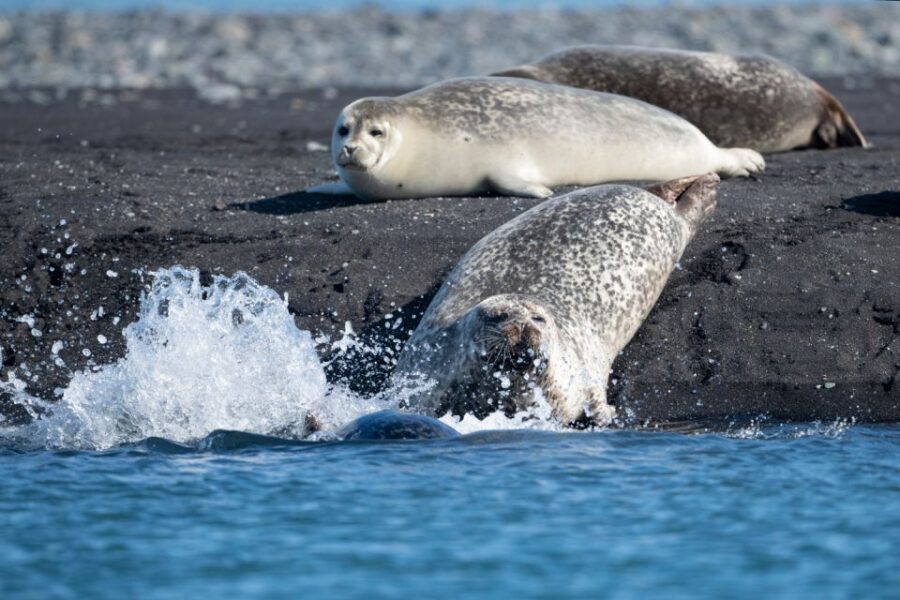
If you’re coming for wildlife, this route is built with a smart mix of “watch and walk” and “backup plans.”
At Látrabjarg, you’re in seabird territory, and the cliffs are the main stage. You’ll want to take your time here. The point isn’t sprinting to the far end; it’s scanning the cliffline and enjoying the fact that these birds have returned to the same steep edges year after year.
For seals, Hvitanes is included specifically because it’s accessible. You’re not driving to a remote idea of seal-watching. It’s a practical stop designed for viewing.
For arctic foxes, you have a real chance during the drive, and you also have a safety net at the Arctic Fox Center. That’s the difference between a trip that feels like a gamble and one that feels like a plan with room for surprises.
The meals reality: how to handle lunch and dinner on your own
Lunch and dinner aren’t included. The tour includes scheduled stops so you can buy lunch, snacks, or a simple meal.
For a trip like this, I recommend treating food as part of your planning rather than a scramble. When you’re in remote regions, the best options are usually nearby the stop—not back at some imaginary restaurant two turns away. Keep snacks handy in the morning and plan to eat when the tour builds in time.
Breakfast is included with your accommodation both nights, which helps you get moving without paying extra at the start of the day.
Should you book the Wild Westfjords road trip from Reykjavík?
Book this tour if you want a guided route that hits the Westfjords’ best nature moments in only three days. It’s especially a good fit for bird lovers (Látrabjarg), waterfall fans (Dynjandi), and anyone who wants the Seven Fjords Road experience without coordinating drivers, timing, or entrance fees.
Don’t book if you hate long drives, dislike weather uncertainty, or want full control over every meal and stop. The days are built to be active, and you’ll spend plenty of time in the minibus between walks and viewpoints.
One more deciding factor: the guide quality looks consistent, and the small group size helps the route feel thoughtful rather than rushed. If you like your Iceland trips with real stops and real walking, this is a strong choice.
FAQ
FAQ
How long is the Westfjords tour?
It runs for 3 days and 2 nights. Day 1 and Day 2 include guided sightseeing stops, and Day 3 returns toward Reykjavík.
Where does the tour start and end?
It departs from Reykjavík with pickup from your hotel or a nearby meeting point. It drops you back in Reykjavík on Day 3, with an estimated arrival around 20:30 depending on conditions.
What’s included in the price?
The price includes a professional English-guided tour in a minibus, Reykjavík pickup/drop-off, 2 nights in a private room with en-suite bathroom and breakfast, entry fees to Eiriksstaðir and Arctic Fox Center, plus Wi‑Fi and USB chargers on the bus.
Are meals included?
Lunch and dinner are not included. The tour includes scheduled stops so you can buy lunch or snacks during the day.
How big is the group?
The group is limited to 18 participants.
What accommodation do you get?
You get accommodation for 2 nights in a private room with an en-suite bathroom and breakfast service.
What should I wear for this trip?
Bring warm clothing and wind & waterproof layers. The tour operates in all weather conditions.
Is Krosslaug pool included?
Krosslaug is optional. You would need swimwear and a towel, and any donation to the Westfjords Youth Society is voluntary.
Will I definitely see arctic foxes and seals?
You might spot arctic foxes in the area during Day 3, and seals are viewed at Hvitanes. If arctic fox sightings don’t happen in the wild, the itinerary includes the Arctic Fox Center.
Is the ferry ever involved?
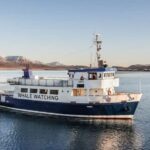
The information notes that a ferry ride can be canceled due to weather or safety reasons, and if that happens the ferry fee is refunded.