Puffins off Reykjavík are real.
This one-hour bird-watching trip sends you from Old Harbour onto Faxaflói Bay on a custom RIB boat, with a captain who can shut off the engine for a quieter approach. In the right season (mid-May through August), the area is packed with seabirds, including the iconic Atlantic puffin nests just offshore.
I love two things most: the small group size (max 12) that keeps the experience personal, and the fact that all the weather gear is included. Warm overalls, gloves, and goggles mean you can focus on birds instead of wrestling with Icelandic wind.
One thing to consider: the boat ride can be bumpy, because you’re on a speed-focused RIB. If you have knee problems (or you’re unsure about rough water), this is not the smooth, floating kind of tour, even with the provided protective gear.
In This Review
- Key highlights I’d plan around
- Getting from Old Harbour to puffin country fast
- When to go for the best bird-spotting (May to August)
- Gear matters: what’s included for Iceland wind and splash
- Stop 1: Old Harbour check-in, quick prep, then out to sea
- Stop 2: Akurey and the islands—close, but respectful
- A small reality check about “close to the birds”
- The birds you’re watching for in Faxaflói Bay
- Guides that can make the hour feel longer
- Boat comfort: what front-seat positioning really changes
- Photography tips that actually help with puffins
- Value check: is $105.22 worth it?
- Who should book this puffin bird-watching tour
- Final call: should you book it?
- FAQ
- How much does the Reykjavík puffin and bird watching tour cost?
- How long is the tour?
- When does the tour operate?
- Are there multiple departure times in a day?
- Where do we meet for this tour?
- What’s included in the tour price?
- How big is the group?
- Is there a minimum age, height, or health guideline?
- What happens if weather is bad?
- Do I need hotel pickup?
Key highlights I’d plan around
- A silent approach when it matters: the captain can shut off the engine to reduce disturbance near birds
- Small group feel (up to 12): easier viewing and less crowding when you’re scanning the islands
- Includes gear that actually works: warm overalls, gloves, goggles, plus binoculars
- Seasonal timing for puffins: May 15 to Aug 20 when nesting activity is strongest near Reykjavík
- You’re watching from a nature reserve zone: islands are treated like protected areas, so you stay mindful and safe
Getting from Old Harbour to puffin country fast
The tour meets near Reykjavík’s Old Harbour at Ægisgarður 5, and you’ll want to arrive about 30 minutes early. The crew gets you sorted, then you walk down to the dock where the boat is waiting.
Then it’s straight out to Faxaflói Bay on a custom RIB. This isn’t a slow sightseeing cruise. The whole point is to reach bird-holding waters quickly so you spend your hour where the action is.
You can also read our reviews of more tours and experiences in Reykjavik.



When to go for the best bird-spotting (May to August)
This tour runs during peak coastal bird season: May 15 to Aug 20. If you’re traveling outside those dates, the timing likely won’t line up with the operators, because the puffins you’re chasing are tied to nesting months.
The good news is that there can be up to four departures each day, so you can usually match your plans. Plan to book your chosen departure sooner rather than later, too, because the tour tends to sell well—on average it’s reserved about 51 days ahead.
Gear matters: what’s included for Iceland wind and splash
One of the best values here is that you’re not just paying for a ride. You’re paying for the equipment that lets you stay comfortable on a windy bay.
Included gear typically covers:
- warm overalls, gloves, and goggles
- binoculars for each passenger
- safety equipment
The binoculars are handy, but they’re not magic. If you care about spotting tiny details on distant birds, bring your own binoculars if you have them, and sit where you’ll have the cleanest view. A small note from the field: a few people found the included binoculars a bit limiting, so extra optics can help when puffins look like moving dots.
Stop 1: Old Harbour check-in, quick prep, then out to sea
The first stop is basically your launch moment. You check in by the ticket office at Old Harbour, then head to the dock with the guide before departure.
This portion is short—think of it as getting your gear on and letting the crew explain how the tour will work. It’s also the moment to get comfortable with how fast you’ll move, since RIBs don’t have the same gentle feel as big boats.
In practical terms, this “pre-ride” time matters because your comfort will affect your viewing. When you’re warm and positioned well, it’s easier to scan the water and not miss the quick moments when birds pop into view.
Stop 2: Akurey and the islands—close, but respectful
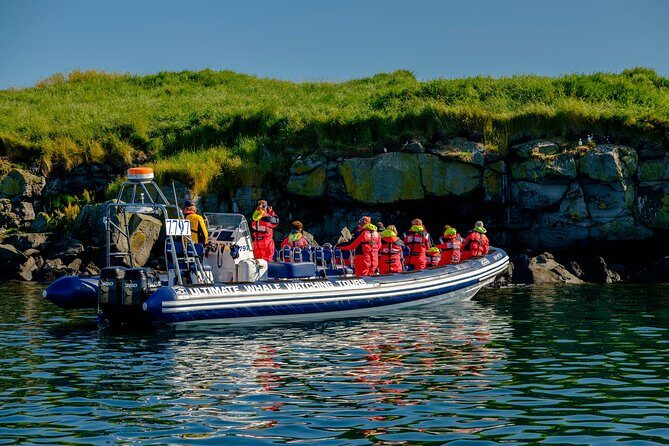
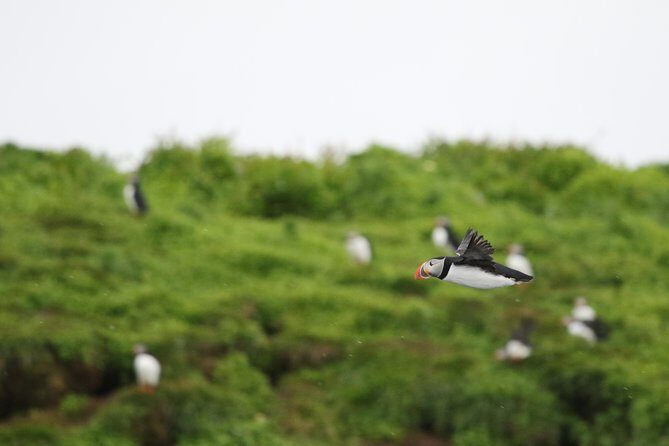
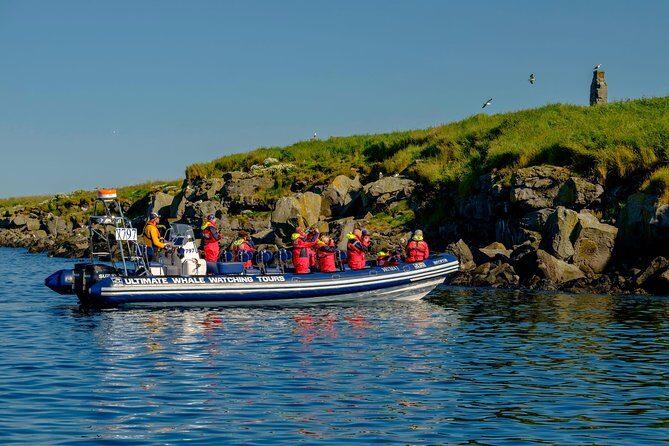
After you launch, the tour sails close by 2–3 islands where puffins nest. Those islands are nature reserves, so the approach is designed to keep disturbance low.
Here’s the key detail that makes this more than a drive-by: the captain can shut off the engine so the boat can approach silently. That’s smart for wildlife and smart for you, because it reduces the chaos that can happen when birds bolt from noise.
During this part, you stay on the boat, but you do get a closer view than you’d get from a distance-only cruise. Some groups report visiting two main island areas during the hour, which fits the idea of a tight, bird-focused route.






A small reality check about “close to the birds”
The puffins are small, and you’ll be viewing from water. Even at the closer approach, you’re not stepping onto the rocks. If you want photo-perfect “fill the frame” puffins, you’ll likely need to work with distance, zoom, and timing.
That said, the overall goal is to put you close enough to see behavior—where birds are flying in and out, how they cluster near nesting areas, and how often you spot them in the water.
The birds you’re watching for in Faxaflói Bay
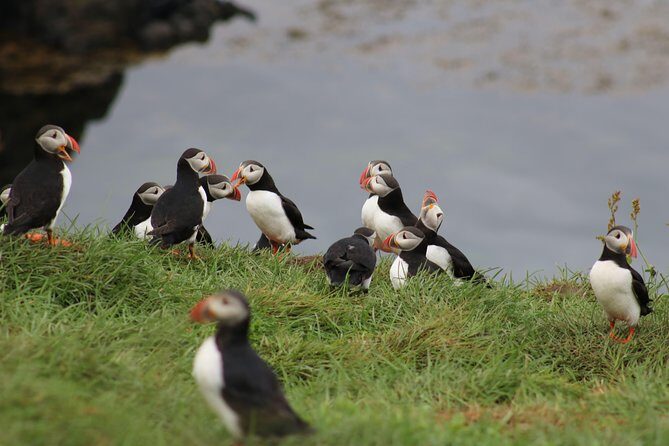
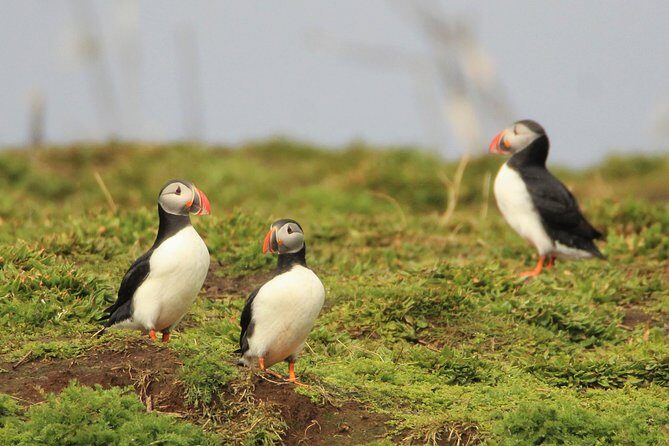
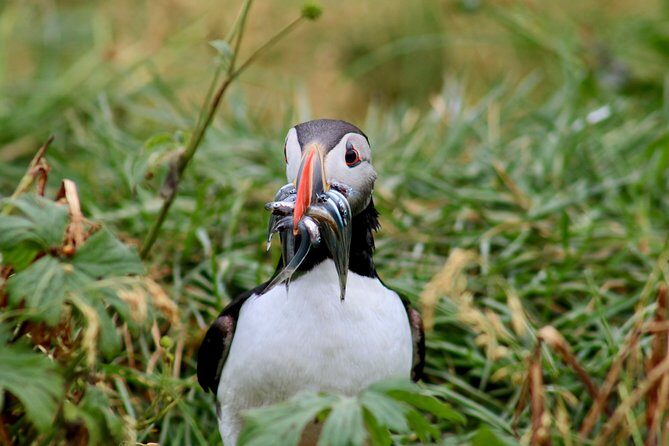
The highlight species is the Atlantic puffin. Off Reykjavík, the nesting activity can be intense, with estimates of around 30,000 puffins in the broader coastal area during the nesting season.
But this isn’t only about puffins. You may also spot:
- seabirds like gannets (described as the largest seabird in the North Atlantic)
- the flightless great auk
- additional seabirds that share the same coastal feeding zones
In Iceland, bird watching is also about learning patterns. The guide and captain share facts and stories as you go, and they help you connect what you’re seeing (flight paths, group behavior, nesting timing) with the “why” behind it.
Guides that can make the hour feel longer
A bunch of different guides have led these trips, and names showing up include Maja, Ricardo, Alex, Sam, Rachael, and Alma. People consistently describe the guides as friendly, organized, and strong at putting the wildlife into context.
Boat comfort: what front-seat positioning really changes
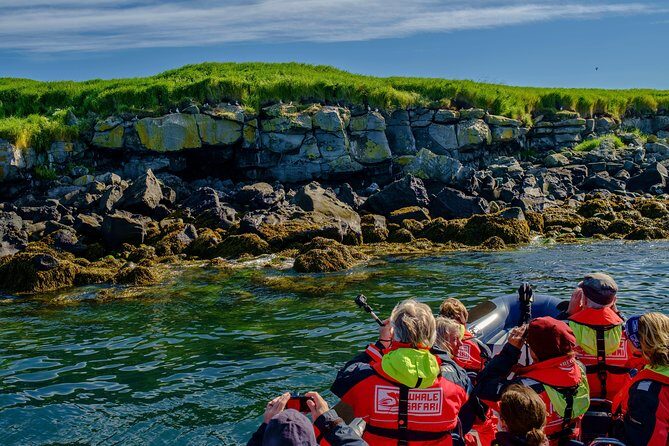
This is where you should be honest with yourself. Multiple accounts mention the ride can be bumpy on rougher waves, and at least one person reported knee pain from the jolts. Since the tour isn’t recommended for knee problems, take that seriously.
If you’re booking anyway, treat seating as a strategy:
- If you’re sensitive to motion, try to choose the most stable seating options when you board.
- If you’re tall, don’t assume you’ll see perfectly from the back—some people couldn’t see as much when taller riders blocked their line of sight.
On the flip side, one of the strengths of an RIB is that it gets you to bird areas faster. That time advantage can matter when birds shift location due to wind and water conditions.
Photography tips that actually help with puffins
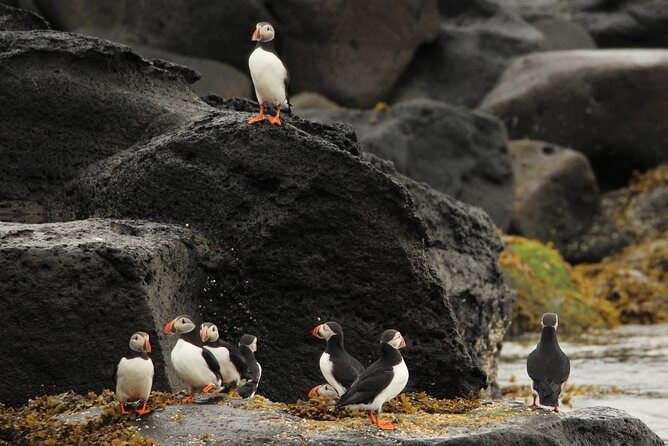
Puffins are fast and small. Your best tool is patience plus the right way of scanning.
A few practical moves:
- Use binoculars first to locate the densest movement, then switch to your camera.
- Expect that even with a decent zoom lens, puffins may not always be frame-filling. You’ll likely need to shoot bursts and accept some distance shots.
- If you’re lucky with lighting and water conditions, you can get excellent results quickly. Some groups specifically credited the day’s conditions and got sharp images.
Photo support is also a nice bonus. People have reported that guides captured group shots or used a telephoto lens and then emailed a download link (in some cases arriving the next day). If it doesn’t show up immediately, it’s worth being patient, since a few people reported delays.
Value check: is $105.22 worth it?
At $105.22 per person, this is not the cheapest thing in Reykjavík. But it may be good value if you care about wildlife viewing quality and comfort.
Here’s why the price can make sense:
- gear is included (overalls, gloves, goggles, safety equipment, binoculars)
- the boat approach is built for wildlife viewing (including the quiet, engine-off approach)
- small-group size (max 12) improves your chances of actually seeing birds, not just staring at water
You also get convenience. The tour ends back near Old Harbour, so you can roll right into dinner or a walk around town without extra transfers.
If you’re mainly chasing the cheapest activity, this may feel steep. But if you want a focused puffin hour with real wildlife protocols and the right boat, it can be a solid spend.
Who should book this puffin bird-watching tour
This is a great match if you:
- want a short, focused outdoor experience rather than an all-day outing
- are traveling in a small group or want a calmer feel (max 12)
- enjoy wildlife viewing in winter-to-summer shoulder conditions once nesting is active
- care about comfort on the water (warm gear is included)
It’s not a great match if you:
- have knee problems or expect rough motion to be an issue
- are bringing very young kids (minimum age is 10)
- can’t handle being on a moving RIB in wind and possible chop
If your main goal is calm, scenic cruising, you might choose a slower boat. If your goal is spotting nesting seabirds from the best coastal access near Reykjavík, this one earns its place.
Final call: should you book it?
Book this puffin and bird-watching tour if you’re visiting Reykjavík between May 15 and Aug 20 and you want your time focused on real bird viewing with a small group and provided cold-weather gear. The silent approach and the chance to see puffins at nesting sites make it a strong use of one hour.
Skip it or think twice if rough water will be a problem for you. The ride can be bumpy, and the tour is already not recommended for knee issues. If that’s you, look for a different style of boat—or plan a land-based wildlife day instead.
FAQ
How much does the Reykjavík puffin and bird watching tour cost?
The price is $105.22 per person.
How long is the tour?
It’s about 1 hour.
When does the tour operate?
It operates during the best months for spotting birds near Reykjavík, from May 15 to August 20.
Are there multiple departure times in a day?
Yes. There can be up to four departures each day.
Where do we meet for this tour?
The meeting point is Ægisgarður 5, 101 Reykjavík, Iceland, near public transportation.
What’s included in the tour price?
Included are local taxes, binoculars for each passenger, and warm overalls, gloves, goggles, and all necessary safety equipment.
How big is the group?
The tour has a maximum of 12 travelers.
Is there a minimum age, height, or health guideline?
The minimum age is 10 years and the minimum height is 145 cm. It is not recommended for travelers with knee problems and not recommended for young children.
What happens if weather is bad?
The tour operates in all weather conditions, but it requires good weather. If it’s canceled due to poor weather, you’ll be offered a different date or a full refund.
Do I need hotel pickup?
No. Hotel pickup and drop-off are not included. The tour ends back at the meeting point near Old Harbour.