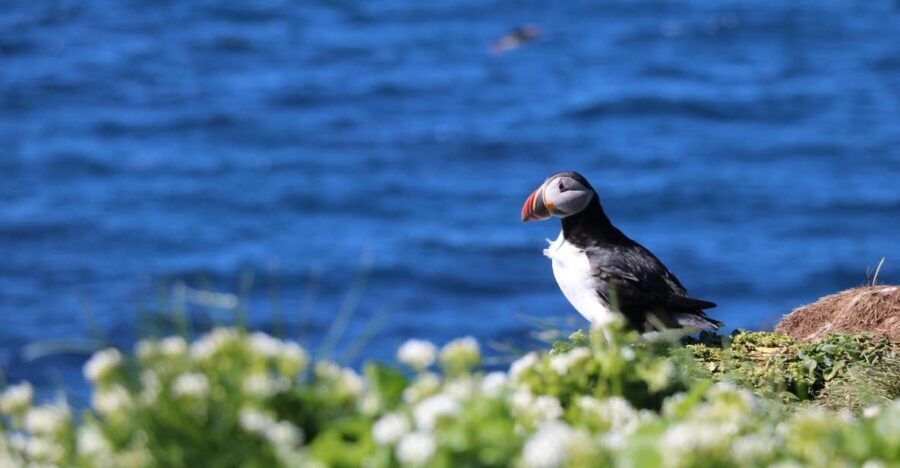
Speed plus puffins equals pure Iceland joy. This 1-hour RIB run across cold Faxaflói Bay is built for close views of puffins nesting on sea cliffs and rocky islets. One consideration: this is an open-air, high-speed style of wildlife outing, so rougher conditions (or fewer birds later in the season) can affect how close they feel.
You meet the Whale Safari team at Old Harbour in Reykjavik, gear up fast, and head out. You’ll get provided coveralls, safety equipment, and binoculars, then spend your time scanning cliffs and inlets for puffins and other seabirds like gannets and Arctic terns.
In This Review
- Key things you’ll like about this puffin RIB tour
- Why a RIB in Faxaflói Bay changes the puffin game
- Old Harbour meet-up: Whale Safari office, suits, and fast onboarding
- The 1-hour cruise: how the puffin viewing typically unfolds
- Leaving Reykjavik: setting up your eyes
- Approaching nests and cliff lines
- The pace: lots of motion, lots of chances
- Species spotting beyond puffins: gannets, auks, terns, and more
- Captain + guide teamwork: why it feels so well-run
- What to wear and bring for a comfy RIB day
- Photos you can actually use (and a backup plan)
- Price and value: what $101 buys in Reykjavik
- Who this tour fits best, and who should skip it
- The decision: should you book this puffin RIB cruise?
- FAQ
- Where is the meeting point in Reykjavik?
- How long is the puffin watching cruise?
- How much does it cost per person?
- What’s included in the tour price?
- Is food and drinks included?
- What should I bring or wear?
- Who is the tour not suitable for?
- Is free cancellation available?
Key things you’ll like about this puffin RIB tour
- RIB access that can bring you closer than standard boats around cliffy nesting spots
- Expert captain + wildlife guide team, with real explanations of behavior and diet
- Warm coveralls and safety gear that make the open-water ride far more tolerable
- Photo help: some guides take extra close-ups and share them after the trip
- Binoculars included, so even birds farther out still feel viewable
Why a RIB in Faxaflói Bay changes the puffin game
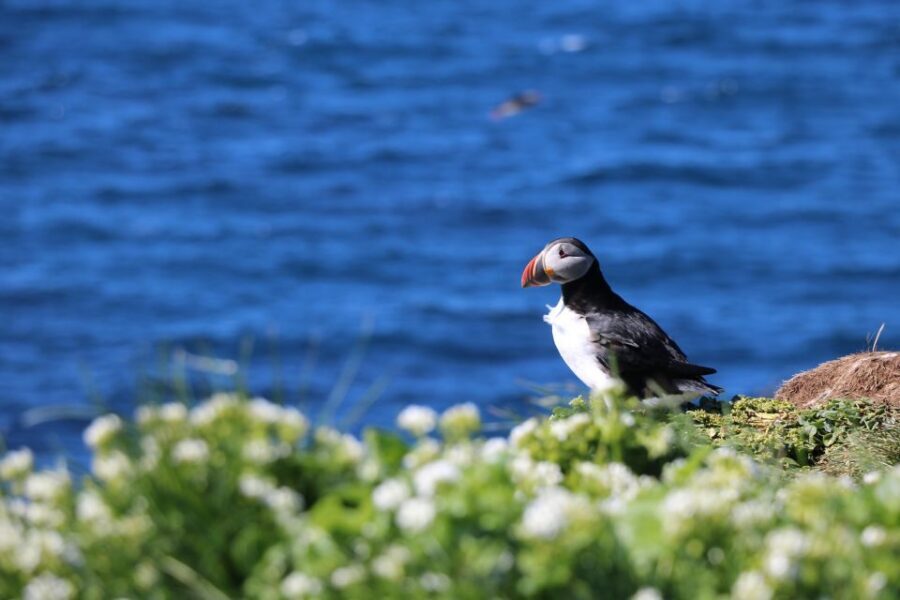
Puffins are cute from afar. They’re also busy. And when you’re aiming to see them dive, fly, and pop in and out of nesting areas, distance matters.
That’s the main advantage here: a rigid inflatable boat can cover more area and approach the islands and sea cliffs in a way that larger boats usually can’t. In practice, you end up with lots of chances to catch puffins at different moments—standing on rocky ledges, swimming in the bay, and taking off with that fast, determined wingbeat. If you’ve had a wildlife trip where the birds were always just slightly out of reach, this format is designed to fix that problem.
You’re also cruising Faxaflói Bay, not some far-off staging area. From Reykjavik’s Old Harbour, it’s a quick hop to the nesting zone, so you spend less time traveling and more time watching what you came for: puffins.
You can also read our reviews of more tours and experiences in Reykjavik.



Old Harbour meet-up: Whale Safari office, suits, and fast onboarding
Meeting at the Whale Safari office in Reykjavik’s Old Harbour is part of the appeal. You’re already in the right place for a short tour—no long bus ride, no waiting in a remote lot.
When you arrive, you’ll get a short safety briefing from the captain, then you put on provided coveralls and climb aboard. This matters more than you might think. The sea can be chilly even in summer, and open-air boats make wind a bigger factor than you’d expect. Several people specifically praised how well the coveralls block wind and help keep you dry, even if the weather turns.
A couple practical points to keep in mind:
- Closed-toe shoes and clothes you can layer are the right move.
- No large bags or luggage—so travel light and keep personal items compact.
If you’re the type who hates rushing, this tour moves at a steady clip. That’s not a bad thing. It helps you spend your limited time on the water doing the bird-spotting, not stuck in line.
The 1-hour cruise: how the puffin viewing typically unfolds
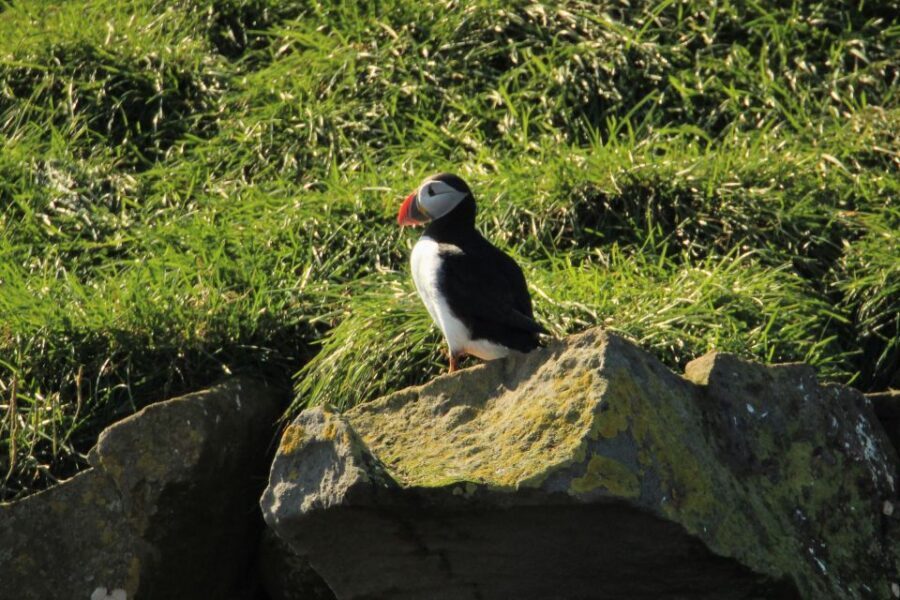
This trip is short by design: about one hour in total time on the water. In that window, you’re not doing a slow scenic drift. You’re moving, repositioning, and scanning the cliffs and rocky inlets where puffins nest during the May-to-August season.
Here’s what the experience feels like as it plays out:
Leaving Reykjavik: setting up your eyes
As the boat zips across the bay, you’ll be watching for more than just puffins. Iceland waters can be busy with seabirds, so your guide usually starts by getting you oriented—what to look for, what behavior means the birds are feeding or nesting, and how diving differs from just splashing around.
This is where the guide’s commentary really pays off. Puffins look similar to most people at first glance, but their behavior is the story: when they dive, when they pause, and how they react to movement on the water.
Approaching nests and cliff lines
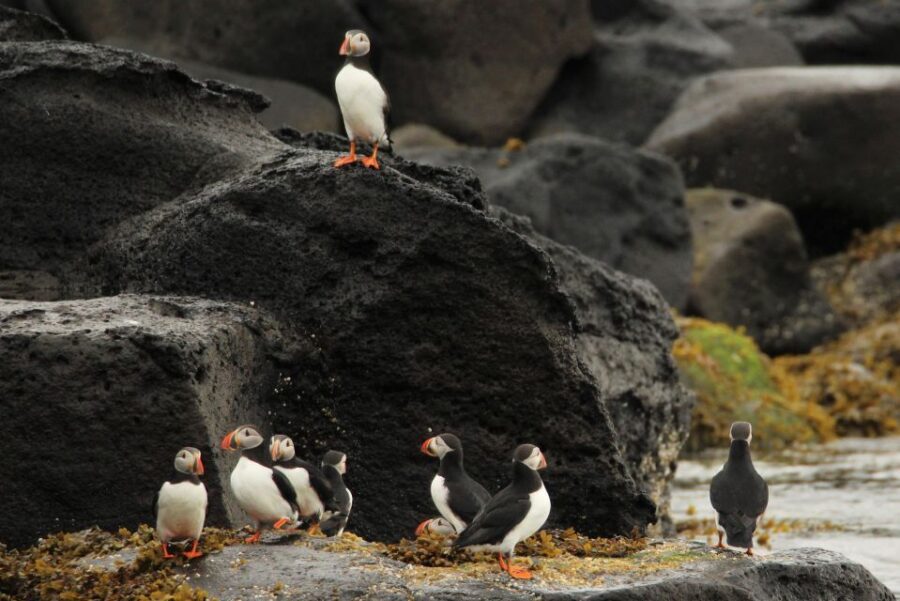
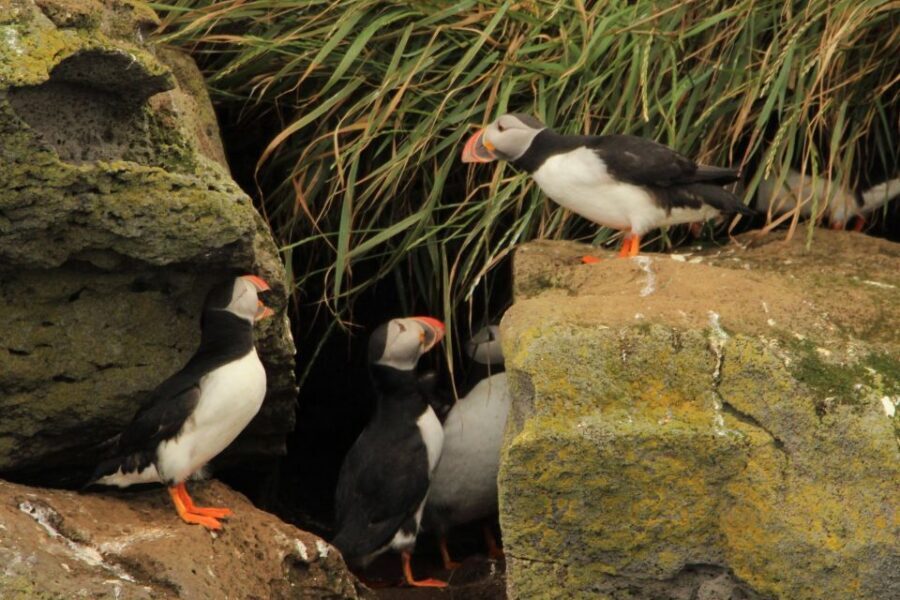
Then comes the best part: getting close to rocky islands and sea cliffs where puffins nest. This is the zone you’re paying for. Puffins usually won’t pose like a nature documentary on a tripod. They shift constantly, and you’ll see them:
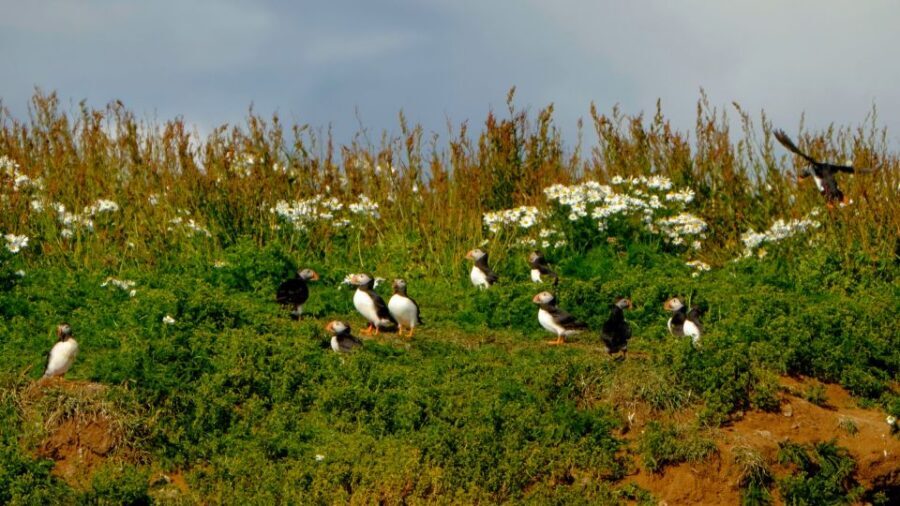
- Stand near nesting areas and burrows
- Swim and feed close to the rocks
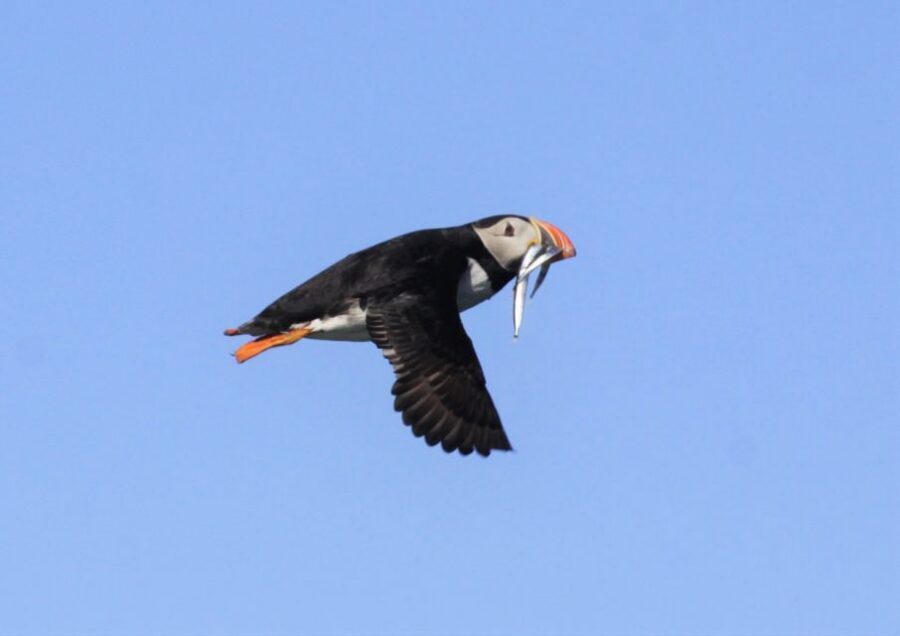
- Fly in short bursts between cliffs and water
A key detail: you’ll never have 100% control over distance to the birds. One important consideration is that puffins can be skittish. Even if the boat gets close, they can still decide to move away. Still, the RIB format tends to give you more chances to find them at the right angle.




The pace: lots of motion, lots of chances
Because the boat is smaller and faster, it bounces over waves. Most people think that’s part of the fun; some people find it rattly. If you’ve got a sensitive back, balance issues, or you’re worried about motion, this is worth taking seriously. The tour is not suitable for people with mobility impairments and people with back problems, and it also isn’t for pregnant women.
For everyone else, the “pacing” of the cruise is exactly what keeps the bird action coming. You’re not stuck watching one tiny patch for an hour.
Species spotting beyond puffins: gannets, auks, terns, and more
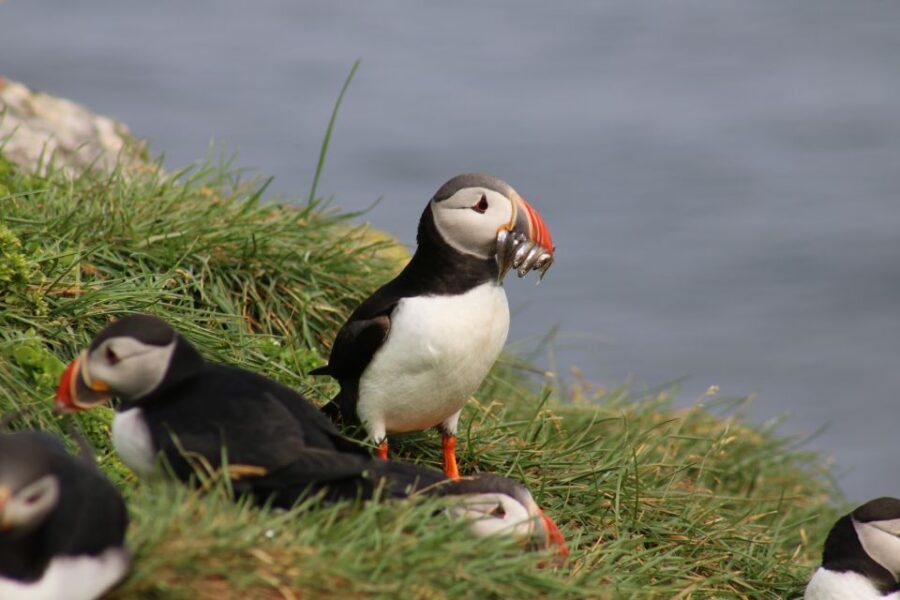
Puffins steal the show, but don’t lock your brain onto just one species. The tour is set up to help you read the rest of the bay too.
You can look out for:
- Gannets (often soaring or cutting across the water)
- Auks (smaller, fast-moving seabirds)
- Arctic terns (sharp, lively flyers)
Depending on what’s happening that day, you may also see other seabirds like fulmars. One of the better parts of a guided wildlife outing is learning how these species behave differently around the water—where they hunt, how they react to other birds, and what you can infer from their flight patterns.
Some people also reported bonus wildlife sightings on their cruise, including seals and even humpback whales surfacing in the wider area. That’s not something you should count on, but it’s a nice reminder that coastal Iceland can turn ordinary wildlife watching into an all-day story—just condensed into an hour.
Captain + guide teamwork: why it feels so well-run
A wildlife boat only works if the captain can position the boat safely and intelligently, and if the guide can keep you focused without turning the whole trip into a lecture.
This tour pairs a professional captain and wildlife guide, and that combo is repeatedly praised. Guides like Anna, Maria, Rob, Rachel, and others show up in the experience through different sailings. What matters for you isn’t the name—it’s the result: clear explanations delivered in a way that keeps you looking at the water and cliffs, not at the guide’s mouth.
The captain’s job is also visible. Skillful driving helps you get the best sightlines while keeping everyone safe. People specifically mentioned that the boats felt clean, efficient, and well equipped, and that staff helped with stability and safety steps right from boarding.
If you care about value, this is a big one. You’re spending money on access and on time. When the crew is tight and organized, you waste less time waiting, second-guessing, or missing key moments.
What to wear and bring for a comfy RIB day
I’ll say it plainly: your clothing can make or break an Iceland boat trip.
Bring and wear:
- Warm clothing
- Comfortable clothes for movement
- Closed-toe shoes (sports shoes are fine)
- Layers you can keep on without fuss
You’ll get coveralls, but you still need warm base layers underneath. Think windproof, not just warm. The open-air ride means wind chill is part of the equation, especially as you head out and back.
Also, keep your items secure. One useful tip from the field: there are Velcro pockets in the coveralls, and that’s exactly where you should put your phone while you’re riding. The boat can bounce enough that holding a phone in your hand feels risky.
If you’re aiming for photos, plan for quick moments. Puffins can take off or dive fast. Your best shots will usually happen when you stop chasing and instead watch for movement changes: a pause on a ledge, then a quick dive, then a pop back up.
Photos you can actually use (and a backup plan)
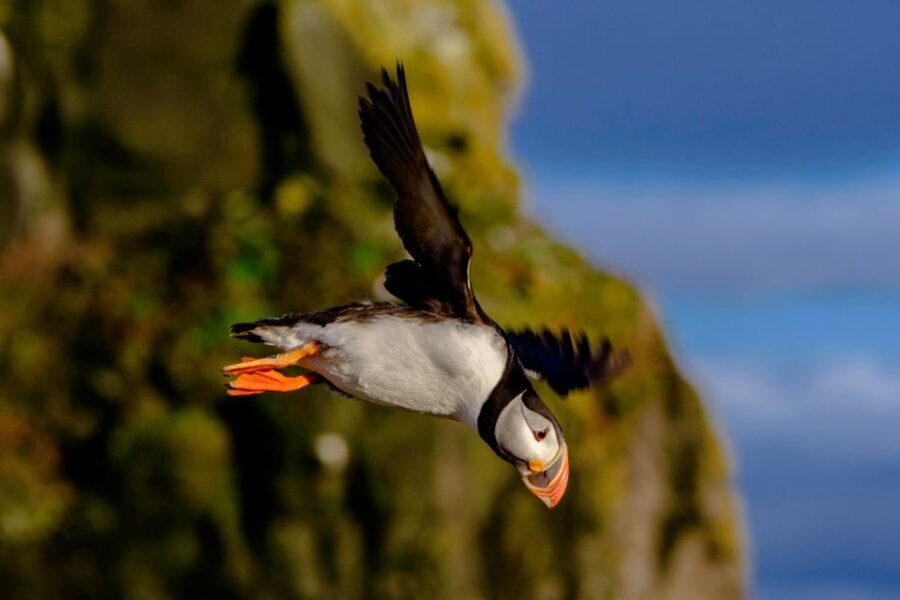
Photography is half the reason many people book puffin tours. And in Iceland, it’s not always easy to get a sharp shot with a phone while a boat is moving.
Here’s what helps:
- The included binoculars improve your viewing even if your camera skills are basic.
- A number of people reported that the guide took extra puffin photos and shared them by email afterward, sometimes with zoom-like framing.
So even if the boat bounce makes your own shots messy, you’re not totally out of luck. On a trip focused on close wildlife watching, having a backup set of images is genuinely useful.
Price and value: what $101 buys in Reykjavik
At $101 per person for a 1-hour RIB cruise, this isn’t a budget activity. Iceland wildlife tours tend to cost more than people expect, and the RIB format isn’t cheap—smaller boats, specialized driving, and gear like safety suits add up.
So is it worth it?
I’d call it good value if you want three things:
- Maximum access to cliff and island nesting areas
- Short time spent in transit, more time spent watching
- Included gear that makes the weather survivable (coveralls, safety equipment, binoculars)
If your ideal day is a long, slow sightseeing cruise from a covered deck, this might feel intense. If your ideal day is fast action with serious viewing potential, it fits well.
Also, the tour gets strong scores for transport quality. When a boat is well maintained and the crew runs smoothly, you feel the value quickly.
Who this tour fits best, and who should skip it
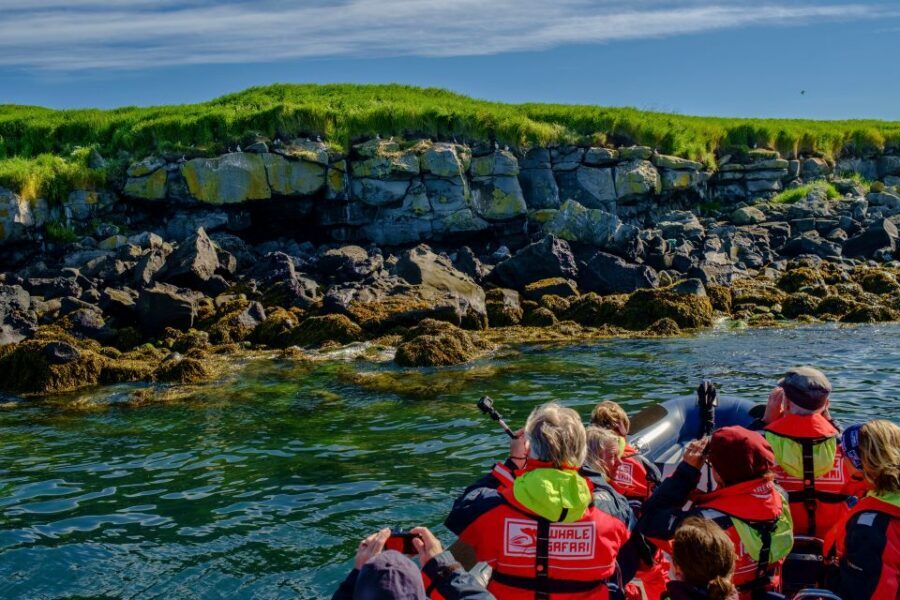
This is a wildlife cruise with speed and open-air exposure. That naturally shapes who should book it.
It’s a great fit if you:
- Want puffins in a realistic nesting setting, not just a distant sighting
- Enjoy active wildlife viewing, scanning constantly
- Like the idea of short-and-sweet, high-energy time on the water
- Can handle cold wind and boat motion for about an hour
It’s not suitable for:
- Children under 10 years
- People pregnant
- People with back problems
- People with mobility impairments
- People under 4 ft 8 in (145 cm)
- Anyone who needs a quiet, stable ride with minimal bouncing
If you’re unsure about motion sensitivity, treat this as a priority question. Some people said the ride felt manageable, while others felt nervous about how the boat slams on waves. Trust your own body and comfort level.
The decision: should you book this puffin RIB cruise?
Book it if puffins are your main goal and you want the best shot at seeing them up close on cliffs and rocky islands. This tour is built for proximity, and the included gear plus strong captain/guide teamwork helps you use your time well.
Skip it if you’re looking for a gentle, fully comfortable boat ride, if you fall into the stated unsuitability categories, or if you know you’ll struggle with fast open-water motion. Also remember that wildlife is wildlife. Even with the right boat, puffins can shift away.
If you do book, go in with the right mindset: dress warm, keep your phone secure in the pocket, and be ready to watch for behavior changes instead of expecting puffins to hold still. That’s when the cruise feels like money well spent.
FAQ
Where is the meeting point in Reykjavik?
Meet at the Whale Safari office in Reykjavik Old Harbour.
How long is the puffin watching cruise?
The duration is 1 hour.
How much does it cost per person?
The price is $101 per person.
What’s included in the tour price?
You get a professional captain and wildlife guide, use of coveralls, all necessary safety equipment, and binoculars.
Is food and drinks included?
No. Food and drinks are not included.
What should I bring or wear?
Bring warm clothing and wear comfortable clothes, plus closed-toe shoes (sports shoes are suitable).
Who is the tour not suitable for?
It is not suitable for children under 10 years, pregnant women, people with back problems, people with mobility impairments, and people under 4 ft 8 in (145 cm).
Is free cancellation available?
Yes. You can cancel up to 24 hours in advance for a full refund.