The sky over Vik is worth planning.
Tandem paragliding here gives you instructor-led flight over south Iceland, with big views of mountains, black beaches, and sea cliffs. It’s built for beginners, so you’re not trying to learn a new skill from scratch in cold wind.
I especially like two things: you get a no-experience-needed flight with an instructor at the controls, and you receive photos and video after you land. That takes the pressure off, so you can focus on the sensation of being carried by the air.
One thing to weigh before you book: the experience is weather dependent. If conditions are too windy or foggy, you may get a different day, a different spot, or less time in the air than you hoped for.
In This Review
- Key highlights worth your attention
- Tandem Paragliding From Vik: What makes this flight special
- Price and value for a roughly 1-hour block
- Where you meet, how you get to the launch, and what to wear
- How the flight day flows: briefing, short hike, and then the air
- The flight itself: soaring, swooping, and what you’ll do up there
- Reynisfjall: the takeoff view and the moment it clicks
- Reynisfjara Beach and the black-sand coast
- Vik from above: getting a sense of the whole area
- Reynisdrangar sea stacks: the iconic finish
- Photos and video: why this inclusion is worth money
- Guides and pilots: safety, patience, and that small-group advantage
- Weather reality check: the one risk you can’t ignore
- If your airtime is shorter: don’t panic
- What to pack for a cold wind in southern Iceland
- Best for who (and who should reconsider)
- Morning or afternoon: choosing the slot
- Should you book tandem paragliding from Vik?
- FAQ
- How long is the tandem paragliding experience?
- Do I need any paragliding experience?
- What’s included in the price?
- What should I bring?
- Where does the tour start and end?
- What if weather stops the flight?
Key highlights worth your attention
- Tandem setup with the instructor steering while you learn basic moves during takeoff and in the air.
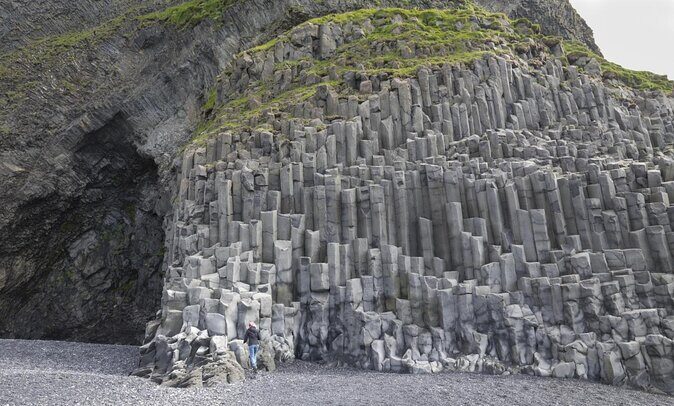
- South-coast scenery tying together Reynisfjall, Reynisfjara black sand, Vik, and Reynisdrangar sea stacks.
- Thermal lift for soaring and swooping, so the flight can feel fast, then smooth.
- Small-group feel (max 10 travelers), which usually means less waiting around.
- Included photos and video taken during your flight, so you leave with proof (not just memories).
- Last-minute weather changes are part of the deal, so keep your schedule flexible.
Tandem Paragliding From Vik: What makes this flight special
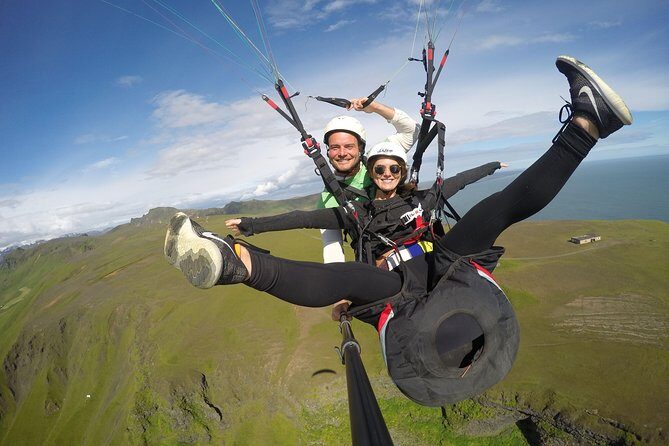
This is the kind of activity that’s easy to understand and hard to forget. You’re not paying to watch from the ground. You’re getting strapped in, briefed, and carried over some of Iceland’s most dramatic coastline.
What I like is the balance between thrill and comfort. You’ll feel the swoops and lift from thermal currents, but you’re also flying tandem with a skilled pilot handling the work. On a day when conditions cooperate, it hits the sweet spot: exciting, scenic, and beginner-friendly.
You can also read our reviews of more tours and experiences in Vik.


Price and value for a roughly 1-hour block
The price is $283.60 per person, and the whole visit runs about 1 hour (approx.). That hourly window matters because the flight itself (the time you’re up) can be shorter or longer depending on conditions, while the meeting, drive, gear time, and safety briefing still take the same basics amount of time.
You also get real value “bundled in.” Your fee includes all paragliding equipment (including a helmet) plus photos and video. Transport to and from the meeting point is not included, so factor that in if you’re not already staying nearby.
If you’re comparing options, think like this: you’re paying for a full guided operation, gear, and capture of your experience, not just a ticket to hop off a hill.
Where you meet, how you get to the launch, and what to wear
You meet at True Adventure Iceland, Víkurbraut 15b, 870 Vík. The experience ends back at the same meeting point, so you’re not scrambling across town after you land.
Transport from your hotel is on you. The good news: it’s described as near public transportation, which is helpful if you’re traveling without a car.
Warm clothes and suitable shoes are not included. That sounds obvious, but it’s a big deal here. Cold wind and damp ground can make you feel colder than you expect, even if the day looks bright.
How the flight day flows: briefing, short hike, and then the air
The day runs on safety checks and the weather window. Once you meet, the team heads up by super jeep toward the launch area. They often fly from Reynisfjall, but they may switch locations if conditions are better elsewhere.
Some takeoffs can involve a little hiking up the hill. It’s not described as a long trek, but you should still wear shoes that handle uneven ground and wind.
Before anyone flies, your instructor goes over safety procedures and teaches you basics of paragliding—both around takeoff and while you’re in the air. Since this is tandem, you’re not trying to manage everything. But you still get enough guidance to understand what’s happening.
The flight itself: soaring, swooping, and what you’ll do up there
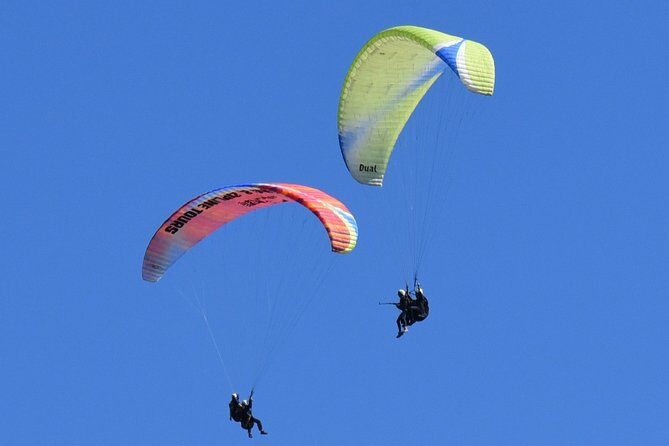
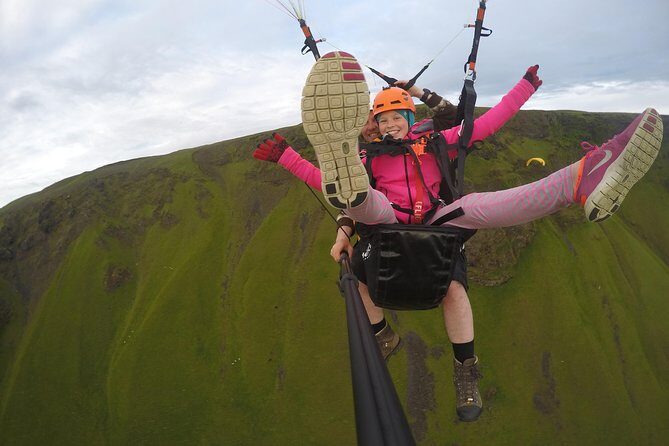
Your instructural flight is about 15–20 minutes, though real-world conditions can shorten that. The thrill comes from how the air moves. You’ll soar and swoop with thermal currents, which can feel like a mix of floating and riding a roller coaster made of clouds.
Because it’s tandem, the instructor is at the controls. Your job is mostly to stay calm, listen, and enjoy. The safety briefing is key here: once you understand how the system works, the nerves usually drop fast.
If you have motion sickness, take it seriously. One review specifically suggests taking something before you go and not eating beforehand, because the sensation can hit people differently. If you’re prone to nausea in vehicles, plan to manage that before you arrive.


Reynisfjall: the takeoff view and the moment it clicks
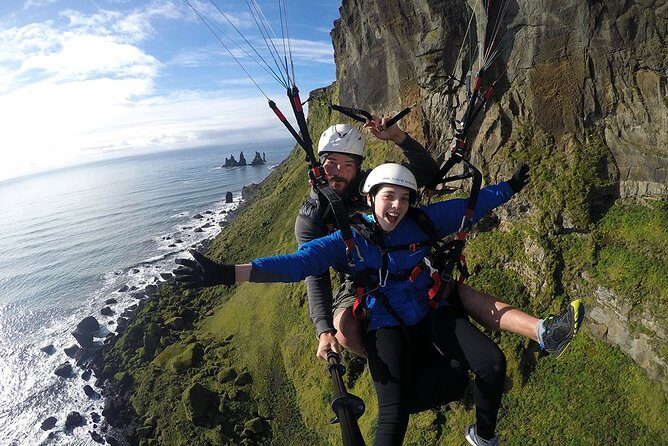
Reynisfjall is often the launch point, and it’s a strong start. From up there, you typically get a quick shift from “standing on land” to “hanging in the open air.” That first moment is usually where people realize this isn’t a short scenic photo moment. It’s a full-on ride.
Even if the takeoff involves a bit of walking, the payoff tends to be immediate. Once airborne, the instructor-led flight and the safety procedures sink in, and the coastline starts to look like a map you can fly over.
Reynisfjara Beach and the black-sand coast
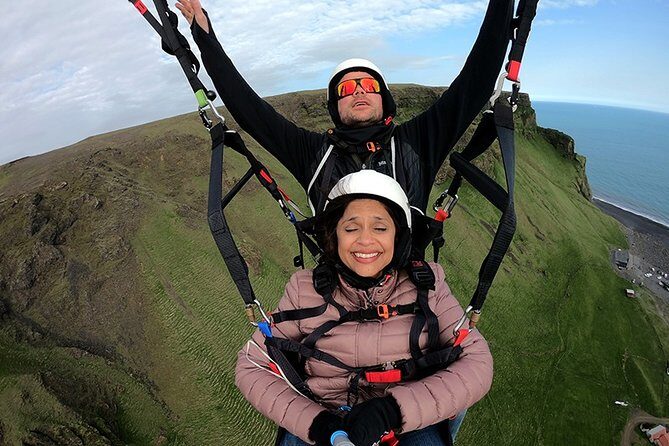
You’ll also pass over Reynisfjara Beach—the famous black sand coastline. The view from above is different from looking down from a cliff. You can spot the shape of the beach, the way waves hit the edges, and how the coastline bends.
This stop is where the “Iceland drama” becomes most obvious. The ocean looks close. The cliffs look steep. And the contrast between black sand and bright sky can be hard to match anywhere else.
It’s also where you might notice how wind and cloud layers behave in real time. Your pilot is reading conditions constantly to keep the flight smooth and safe.
Vik from above: getting a sense of the whole area
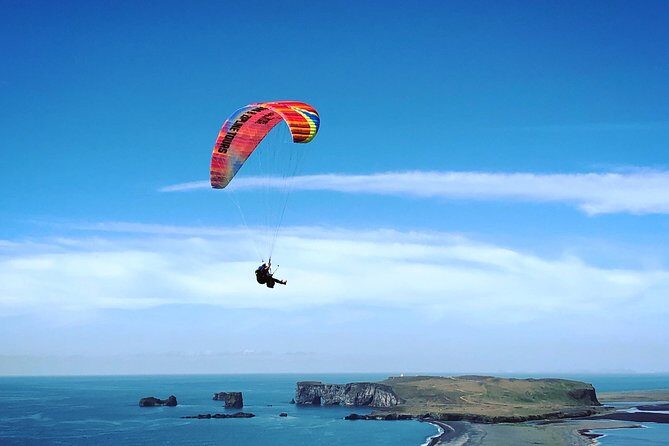
Vik isn’t just a place to base out of. From the air, you can get a better sense of how this coastline fits together with the surrounding terrain.
Flying over Vik helps you orient yourself. Afterward, it’s easier to understand where your other stops are and why certain roads and viewpoints line up the way they do. It turns your trip into a connected story, not a list.
Reynisdrangar sea stacks: the iconic finish
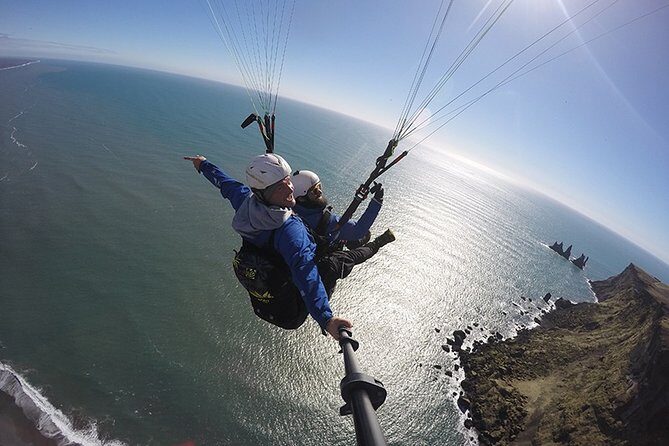
The plan includes Reynisdrangar, the dramatic sea stacks near the Reynisfjara area. When you see these from the air, they feel even more like sculptures carved by weather and time.
This part of the experience tends to be photogenic and memorable, partly because you can view the scale. From ground level, it’s easy to underestimate the distances and the jagged shape. From above, it’s clearer and more impressive.
It’s a good “wow” moment late in the flight, when you’re no longer thinking about takeoff and you’re fully in ride mode.
Photos and video: why this inclusion is worth money
You receive photos and a video after your flight. That’s not a small add-on here. Iceland weather can be unpredictable, and it’s often windy enough that holding a phone steady while you’re strapped in would be frustrating.
With the capture handled for you, you can focus on enjoying the ride instead of managing gear. Reviews mention GoPro-style photos and videos, which lines up with the idea that you’ll have usable footage after you land.
If you’re traveling with family or friends, this also helps. It’s one thing to say you flew. It’s another to watch it back later and remember how it felt when the air caught you.
Guides and pilots: safety, patience, and that small-group advantage
This operation keeps group sizes small, with a maximum of 10 travelers. That matters because fewer people usually means less chaos and more attention during boarding and safety checks.
The most praised theme in the feedback is how guides make people feel safe—especially during a first-time flight. One review highlights pilots who were kind, encouraging, and fun, while another calls out a smooth experience where landings felt controlled and graceful.
I also like that pilots aren’t just “fly and forget.” Some reviews describe instructors being accommodating and even sharing local recommendations. That’s small, but it makes the activity feel like part of your Iceland day instead of a separate production.
Weather reality check: the one risk you can’t ignore
Weather dependence is the big truth behind this kind of paragliding. Winds that are too strong or visibility that’s too low can shut down flights entirely.
Some disappointments in the feedback weren’t about the flight itself—they were about weather-driven cancellations and communication timing. In one case, a booking was canceled due to wind, and later the pilot deemed the conditions too windy even when the winds were described as moderate. The bigger lesson for you is simple: treat this like a plan, not a guarantee.
Practical advice: keep your schedule flexible, and watch for updates closely the day before and the day of your slot. If you’re the type who hates last-minute changes, this may be stressful.
If your airtime is shorter: don’t panic
Not every flight lasts the same amount of time. One review reports only about 5 minutes in the air due to conditions. That doesn’t automatically mean something went wrong; in weather sports, “safe and feasible” can mean “shorter than advertised.”
Your best mindset: aim for the full experience, but be happy if you get even a shorter, safe flight. In this activity type, that’s the winning outcome.
What to pack for a cold wind in southern Iceland
You know Iceland can be chilly, but paragliding adds a wind chill factor. The tour specifically notes that warm clothes and suitable shoes are not included, so plan for real cold-air exposure.
I’d pack:
- Warm layers you can move in
- Windproof outer layer
- Shoes with grip for uneven ground
- Any personal items you need for motion sickness management
If you’re thinking about comfort, also consider that you’ll be waiting for safe conditions. A few extra warm items can save your mood while you’re waiting near the launch area.
Best for who (and who should reconsider)
This is a good match if you:
- Want a first-time thrill without experience
- Like guided activities where an instructor handles the technical part
- Care about scenery as much as adrenaline
- Appreciate small group attention and included visuals
Most travelers can participate, and the pilot teaches you basics on takeoff and in the air. If you’re nervous, that teaching component can help.
If you struggle with motion sickness, this can still work for you—just plan ahead. Take the same approach you’d use for a windy boat ride: manage nausea before you go and don’t assume you’ll be fine.
Morning or afternoon: choosing the slot
You can choose a morning or afternoon flight. Because the operation runs on weather, the time of day can affect your odds of catching better conditions. Some reviews describe the team trying to adjust timing when conditions improved, which suggests flexibility can matter.
My practical suggestion: if you have control over your day, pick the time that leaves space for rescheduling. If your schedule is packed with other fixed commitments, you’ll feel the weather delays more strongly.
Should you book tandem paragliding from Vik?
I think you should book if you’re traveling to southern Iceland with a flexible day and you want a beginner-friendly way to experience the coast from above. The combination of tandem instruction, iconic views (black sand, sea stacks, cliffs), and included photos and video makes it a strong value.
Skip (or at least be cautious) if your itinerary is tight, you hate last-minute changes, or you’re likely to struggle with wind and motion sickness. Weather can shorten flights or force cancellations, and this activity won’t pretend otherwise.
If you do book, treat it like a living plan. Dress warm, keep an eye on updates, and go in expecting the sky will decide the exact script.
FAQ
How long is the tandem paragliding experience?
The overall experience runs about 1 hour (approx.), and the instructor-led flight in the air is typically around 15–20 minutes, depending on conditions.
Do I need any paragliding experience?
No. The flight is tandem, and your instructor will go over safety procedures and teach you the basics of paragliding both on takeoff and in the air.
What’s included in the price?
All paragliding equipment is included, including a helmet. You’ll also receive photos and a video of your experience after the flight.
What should I bring?
Bring warm clothes and suitable shoes. Transport to and from the meeting point is not included.
Where does the tour start and end?
It starts at True Adventure Iceland on Víkurbraut 15b in Vík, and the activity ends back at the same meeting point.
What if weather stops the flight?
This activity requires good weather. If it’s canceled due to poor weather, you’ll be offered a different date or a full refund.