Watch the sky, then ride winter.
This Northern Lights exploration pairs hands-on aurora learning with real nightly sky time, and it also drops you into big Iceland moments like Vatnshellir Cave underground. I like that the days are guided from start to finish, but you still get breaks for photos and your own pacing in towns like Reykjavík.
Two things I especially like: the Northern Lights Academy program (presentations, film, and aurora searches), and the way the itinerary mixes geology you can see right now with culture you can visit up close. The only real drawback to plan for is that northern lights are never guaranteed, and winter nights outdoors mean you need to dress like you mean it.
In This Review
- Key highlights worth your attention
- What you’re paying for: buses, hotels, aurora gear, and built-in timing
- Northern Lights Academy and nightly aurora searches: how to set your expectations
- Day 1 in Reykjavík: your easy landing night
- Day 2 from Reykjavík: Grábrók crater, Europe’s most powerful hot spring, and lava falls
- Day 3: Kirkjufell photo stop and going underground at Vatnshellir
- Day 4: Thingvellir, Geysir churn eruptions, and Gullfoss spray
- Day 5: Lava Center education, Skógar Museum culture, and the black sand coast
- Day 6: Jökulsárlón icebergs, Diamond Beach, and Vatnajökull National Park
- Day 7: Vík, Seljalandsfoss behind-the-water walk, and Blue Lagoon with towel included
- Day 8: Reykjavík again, but with the hard parts done
- Who this tour suits best (and who should think twice)
- Should you book this 8-day Northern Lights exploration tour from Reykjavík?
- FAQ
- How long is the tour?
- Where does the tour start and where do you meet?
- Is airport transfer included?
- What language is the guide?
- What’s included for the Northern Lights experience?
- What winter equipment do you receive?
- Which major paid admissions or activities are included?
- Is Blue Lagoon admission included?
- Is the tour non-refundable?
Key highlights worth your attention
- Northern Lights Academy: presentations, film, and guided searches at night
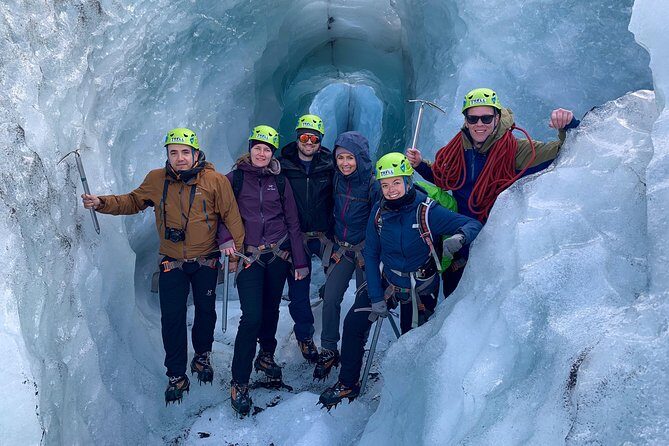
- Winter gear included: snow and ice grippers (plus a flashlight)
- Vatnshellir guided descent: 35 meters underground in a lava tube
- Geothermal stops with tastings: bread and eggs cooked with the heat of the earth
- Full glacier day: Jökulsárlón icebergs and Diamond Beach photos nearby
- Blue Lagoon included with towel: with a real-world Plan B noted in past departures
What you’re paying for: buses, hotels, aurora gear, and built-in timing
This is not just a northern lights trip with a couple of stops. It’s an 8-day plan that bundles transport, lodging, and a set of guided winter experiences that would take you a full week of organizing on your own.
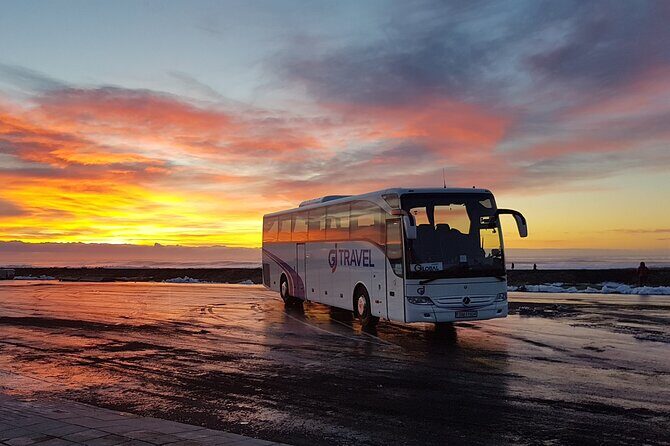
The big value pieces are the 7 nights in comfort tourist-class hotels with breakfast and the fact that you’re on a heated air-conditioned coach with parking fees handled. Add the winter and aurora equipment (snow/ice grippers and a flashlight), plus WiFi onboard, and you start to see why the price is what it is.
One more practical point: the tour runs with a maximum of 40 people. In winter, smaller groups tend to feel less chaotic when you’re moving between stops and waiting for the next departure.
You can also read our reviews of more tours and experiences in Reykjavik.
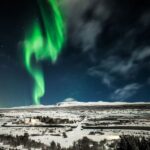
Northern Lights Academy and nightly aurora searches: how to set your expectations
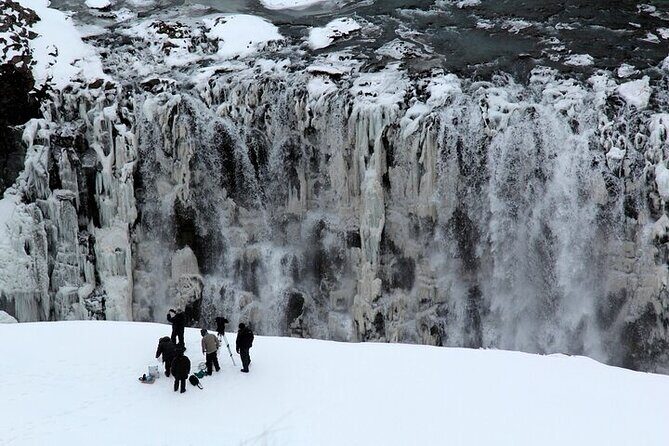
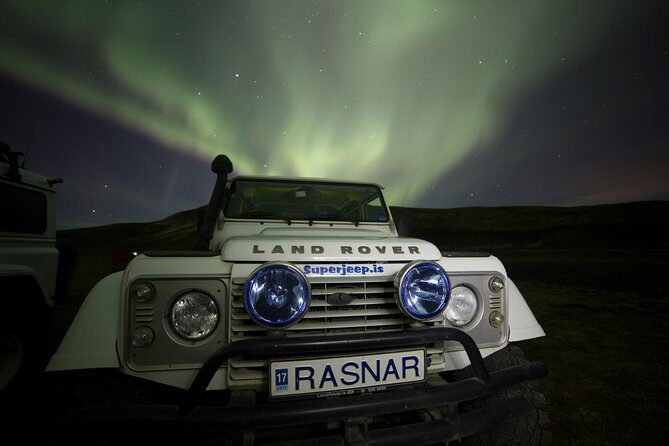
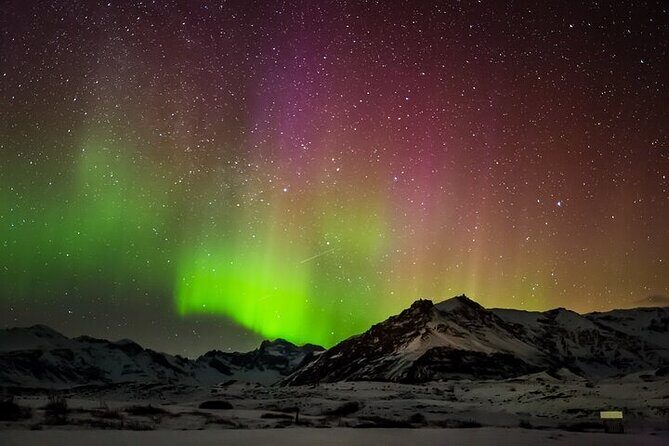
The tour’s aurora portion isn’t just a one-time hope-and-pray stop. The Northern Lights Academy program includes a combination of presentations and film, then scheduled northern lights searching. In plain terms: you’re learning what to look for, then you’re actually going out to look.
Here’s the honest expectation to keep in mind: weather controls everything. Even with the best planning, Iceland can be cloudy. You’ll still be doing the right things—going out repeatedly, staying alert, and using the guidance you’re given on where and when to watch.
I also like that you’re given gear meant for winter conditions. The grippers for your shoes help you move around safely, and the flashlight is one less thing to pack in a season where you’ll already bring enough layers.
And yes, success can happen. In one recent experience, the sky show landed twice during the tour, which is exactly what you want when you’re paying for nights to hunt the aurora.
Day 1 in Reykjavík: your easy landing night
Day 1 is a gentle start. You relax at your hotel or go out on your own. The hotel location is useful because you can walk to Reykjavík’s main shopping street, Laugavegur, which helps you burn off jet lag with something simple and local.
There’s a reason to like this kind of start in winter: you don’t want your first day to be a sprint across the city in the dark. Even if you do a short stroll, having the rest of the week organized by someone else is a relief.
Day 2 from Reykjavík: Grábrók crater, Europe’s most powerful hot spring, and lava falls
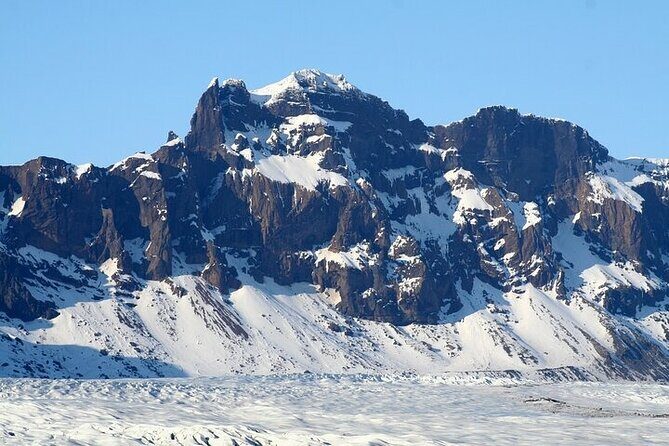
Day 2 is a showcase of west Iceland’s geothermal and lava scenery, with just enough walking to feel like you did something, without wearing yourself out before cave day.
You get a Reykjavik morning overview, then the tour shifts outward to Grabrok Crater (Grábrók). This is a volcano crater about 3,000 years old, sitting in a moss-covered lava field. You can walk up to the rim for roughly 20 minutes, which is the sweet spot for winter photos: short enough to stay warm, long enough to earn the view.
Next comes Deildartunguhver Thermal Spring, described as Europe’s most powerful hot spring. The water output is massive, and it runs near boiling—about 97°C. You’re there for the spectacle and the scale, not to soak (it’s far too hot for that).
Then you jump to Hraunfossar (Lava Falls) and Barnafoss (Children’s Fall). Hraunfossar looks like it’s coming out of nowhere across the river bank, spilling from under a birch-covered lava field. Barnafoss is a short walk away up the river—smaller and stranger, with rock shapes and a tragic local tale. The timing works because you’re hopping between sights close enough to keep momentum.
Day 3: Kirkjufell photo stop and going underground at Vatnshellir
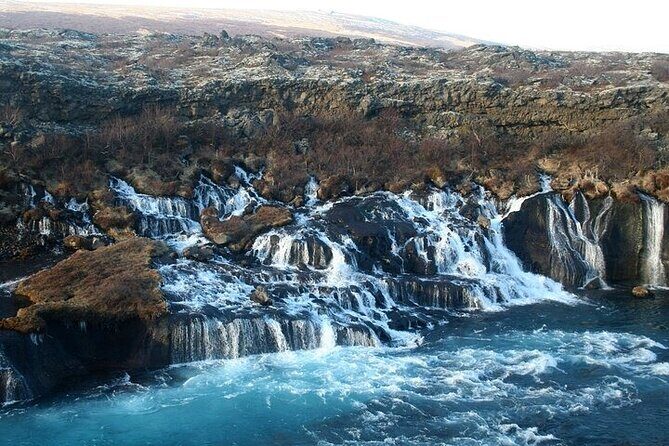
Day 3 starts with Kirkjufell Mountain, one of Iceland’s most photographed peaks. You’ll get a photo stop, which matters here: in winter, timing light and angle can make a huge difference, and you don’t want to guess your way through.
The main event is Vatnshellir Cave. You go 35 meters underground and about 200 meters into the lava tube under Snæfellsjökull. This is not a quick roadside look. A guided cave visit is valuable because you learn what you’re seeing while you’re down there—lava tubes form in specific ways, and it’s easy to miss the story if you’re just walking in silence.
Practical note: caves are colder than you might think, and you’ll likely want the layers you’ve already been using for winter days. The upside? You get a totally different Iceland feeling than waterfalls and steam.
Day 4: Thingvellir, Geysir churn eruptions, and Gullfoss spray
Day 4 is big classic Iceland territory, but tuned for winter: fewer long hikes, more wow per stop.
First is Thingvellir National Park, a UNESCO World Heritage site. You stroll around Alþingi, the oldest existing national parliament in the world, set in a place with an eye-opening geological setting—fissures on a plain by Thingvallavatn, Iceland’s largest lake. This is one of those places where nature and human story overlap in a way that feels real, not staged.
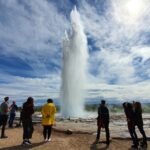
Then you head to Geysir. The original geyser is dormant, and Strokkur is the one that erupts regularly—every 5 to 10 minutes. That timing is handy because you can plan your watching rather than wait for a miracle.
You also get a short food moment here: freshly baked hot spring bread with Icelandic butter, plus boiled eggs and herring. It’s a small included experience, but it’s also a reminder that geothermal energy isn’t just scenery—it’s a cooking tool.
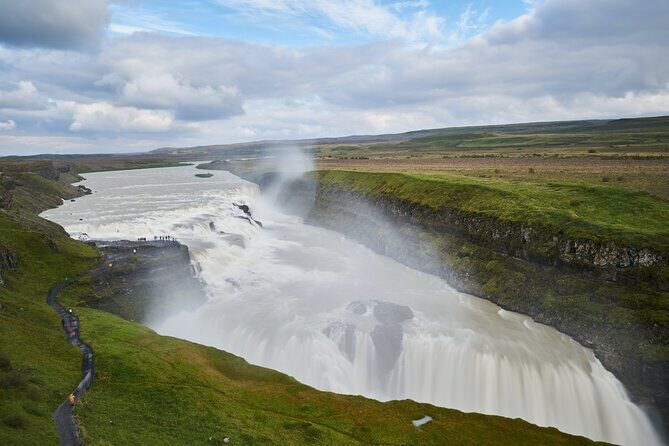
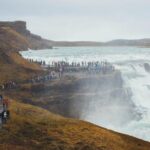
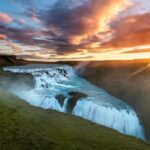
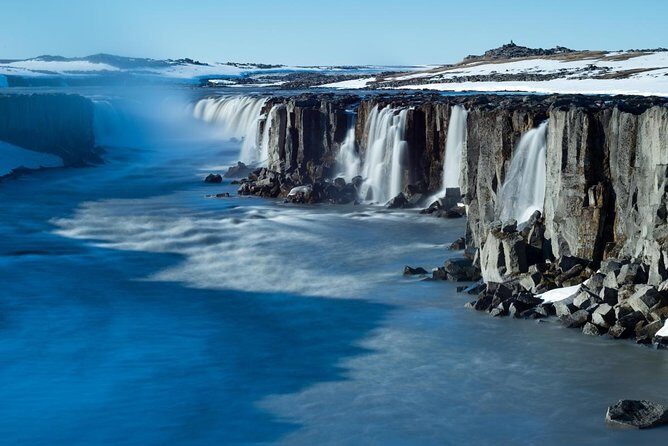
After that is Gullfoss, the Golden Falls. It drops in a double cascade from 32 meters and can produce rainbows in sunny spray. Even without sunshine, the sound and mist are part of the show. Come prepared to feel damp.
Finally, the day ends with Fridheimar, where you visit Icelandic horse stables and a geothermal greenhouse. The greenhouse detail matters because it shows how Iceland uses geothermal heat in a practical way—food and survival, not just sightseeing.
Day 5: Lava Center education, Skógar Museum culture, and the black sand coast
Day 5 is a clever mix of science, history, and coastline drama.
You begin at the Lava Centre, an interactive exhibition focused on geology and active volcanoes. Interactive stops can be hit-or-miss on tours, but this kind of center is a good match for Iceland because it helps you make sense of what you’ll keep seeing: lava fields, steam, eruptions, and why the land looks the way it does.
Next is Skógar Museum, one of Iceland’s best folk museums. You’ll see farm and domestic artifacts, plus turf-built houses. This helps ground the trip beyond glaciers and waterfalls—turf building is something Iceland adapted to over time, and it’s easier to appreciate when you’ve already spent a day surrounded by volcanic ground.
Then you get a presentation at the Icelandic volcano information center tied to Eyjafjallajökull. The 2010 eruption disrupted air traffic across Europe for about a week, and the center uses multimedia to connect the event to what’s happening in Iceland’s volcanic landscape.
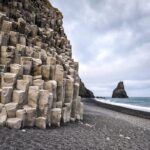
Later, you hit the coast at Reynisfjara Black Sand Beach. The black lava beach and bird cliffs bring the dramatic, wind-and-waves feel of the South Coast. You can also see caves and impressive columnar basalt formations, the kind that looks almost too geometric to be natural.
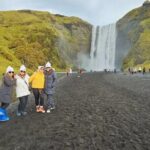
You finish with Skógafoss, a 60-meter waterfall near the village of Skógar. It’s a classic for a reason: broad power, strong spray, and a setting that’s easy to photograph even when winter light is short.
Day 6: Jökulsárlón icebergs, Diamond Beach, and Vatnajökull National Park
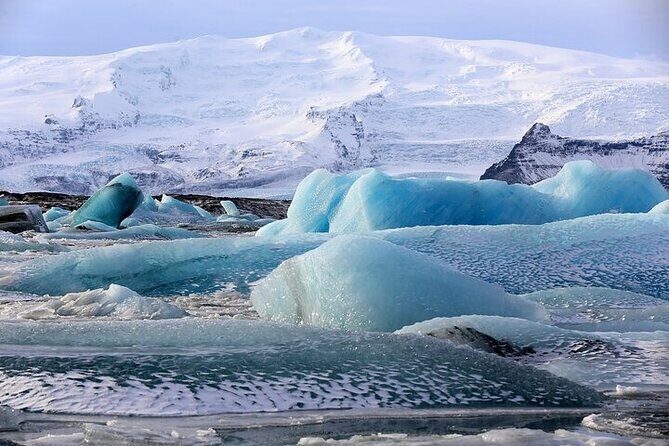
This is your glacier day, and it’s the kind of day where you stop thinking in terms of stops and start thinking in terms of scenes.
First is Jökulsárlón, a glacial lagoon with floating icebergs. You have time to explore the site, and there’s a chance you might see seals in arctic waters. Even if you don’t spot animals, the ice itself changes with the light, and it’s one of those places where you feel quiet even while walking around.
Right across the road is Fellsfjara, also known as Diamond Beach. When icebergs wash up on the black sand, they can look like crushed gems. You’ve got a short window here—about 20 minutes—so it’s smart to pick your spots quickly and get a few solid photos.
Then you stop at Hof, for a photo visit at a tiny turf church built in 1883, noted as the youngest turf church in Iceland. It’s brief, but it gives the trip a human scale after hours of ice and empty spaces.
Finally, you reach Vatnajökull National Park, Europe’s largest national park and home to Iceland’s largest glacier, Vatnajökull. You get about an hour, which is enough for big views and a better sense of scale—this isn’t a hiking day, it’s a “see the planet’s weight” kind of day.
Day 7: Vík, Seljalandsfoss behind-the-water walk, and Blue Lagoon with towel included
Day 7 starts with Vík, a village with dramatic black sand coastline and high bird cliffs. You’ll make a photo stop, which is perfect because Vík is visually intense even in winter and you don’t need hours to feel it.
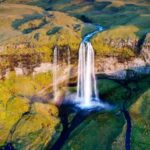
Then you go to Seljalandsfoss, a waterfall that drops from an overhanging lava cliff. The standout here is that you can walk behind it—just don’t expect to stay dry. The included time of about 40 minutes is plenty to get photos from both sides and still feel safe.
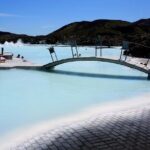
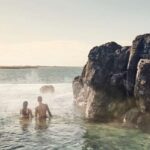
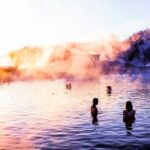
After the waterfalls, it’s time to warm up at the Blue Lagoon. Admission and a towel are included, and that matters because it keeps your planning simple at the end of a long week. The Blue Lagoon sits in a dramatic lava field and is connected to geothermal heat from a nearby power plant.
One practical caution: Iceland can throw curveballs. In at least one recent case, the Blue Lagoon was closed due to volcanic activity, and the operator rebooked the traveler for Sky Lagoon instead, which turned out awesome. So while you should expect Blue Lagoon, it’s smart to keep an open mind on any winter day when Mother Nature is unpredictable.
Day 8: Reykjavík again, but with the hard parts done
Day 8 is a return to Reykjavík for a relaxed finish. You’ll stay at your hotel or explore on your own if you have time. The same convenience applies: the hotel is set up for walking to Laugavegur.
This works well because your most intense days are behind you. By now you’ve got the rhythm of winter travel—short drives, frequent stops, and the reality that you’re always dressing for sudden weather shifts.
Who this tour suits best (and who should think twice)
This tour fits you if you want:
- Guided northern lights hunting with an actual training component, not just one viewing night
- A packed Iceland route that hits geothermal, waterfalls, glaciers, caves, and culture in one week-plus window
- Included safety basics like grippers and a flashlight, plus logistics handled by a driver-guide
It may not fit you as well if:
- You want lots of free time for independent exploring every day
- You’re the type who hates cold-weather waiting outdoors (northern lights nights mean time outside when conditions allow)
At a group size up to 40, it’s also good for people who don’t mind a schedule. The stops are frequent, and you’ll be moving.
Should you book this 8-day Northern Lights exploration tour from Reykjavík?
I’d book it if you want a real northern lights strategy plus a full Iceland winter sampler without the planning headaches. The combination of Northern Lights Academy, included winter gear, and guided big-ticket experiences like Vatnshellir and the glacier day makes it feel like more than the sum of its parts.
But be honest with yourself about expectations. Aurora viewing is weather-driven, and winter nights can be cold. If you handle unpredictability well—and you want guided structure—this is a strong pick.
If you want the best chance of enjoying every day, pack layers, keep your schedule flexible, and treat the night sky as the bonus, not the guarantee.
FAQ
How long is the tour?
It’s an 8-day experience, with about 7 nights of accommodation included.
Where does the tour start and where do you meet?
The start point is Hotel Klettur (Mjölni sholt 12-14), Reykjavík. Your tour guide meets you there before the departure at around 09:00.
Is airport transfer included?
Yes. You get arrival and departure airport transfer by FLYBUS Plus shuttle (no guide). You’ll pick it up using a voucher provided after booking.
What language is the guide?
The tour is offered in English.
What’s included for the Northern Lights experience?
You get the Northern Lights Academy program, including presentations, film, and northern lights searches, plus winter equipment (snow and ice grippers and a flashlight).
What winter equipment do you receive?
The tour includes winter and Northern Lights equipment: snow and ice grippers (for shoes) and a flashlight.
Which major paid admissions or activities are included?
The tour includes a guided visit to Vatnshellir Cave, hot spring tasting with geothermally cooked bread and eggs, and several other included admissions such as Fridheimar and Blue Lagoon.
Is Blue Lagoon admission included?
Yes. Blue Lagoon admission and a towel are included.
Is the tour non-refundable?
Yes. The experience is described as non-refundable and cannot be changed for any reason.