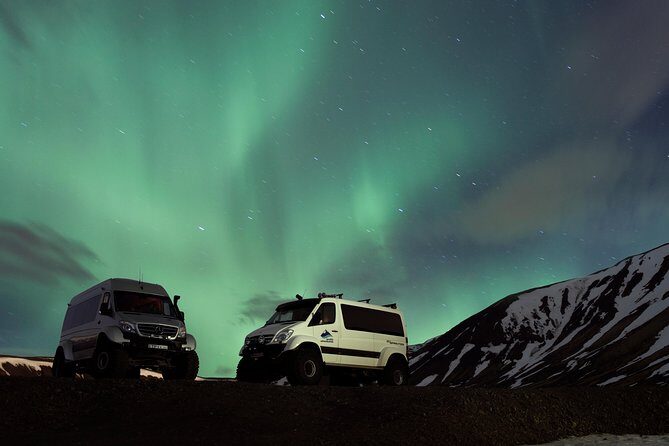
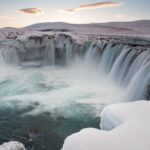
On a clear night, this 2.5-hour hunt turns Akureyri’s darkness into real stargazing time. You’re not just hoping for the aurora—you’re learning what to look for as the sky slowly changes.
I love two things most: the push to get away from light pollution for better views of stars, and the way the guide helps you spot and photograph the aurora (including pointers for those faint first moments). You may even get a guide like Jong, who focused on explaining the lights and helping with pictures, or Thor, who still tried hard to reach the right spots when conditions were tricky.
One possible drawback: seeing the Northern Lights is weather-dependent, and even the best planning can’t control clouds. If you’re expecting guaranteed fireworks in the sky, you may leave a bit disappointed.
In This Review
- Key things I’d circle before you go
- Why Akureyri is a smart base for aurora nights
- The 9:30 pm departure: what 2.5 hours is really for
- Leaving the city glow behind: the stargazing payoff
- Learning to spot faint aurora: you don’t need a PhD
- Photo help that matters: shooting the aurora without guessing
- What happens when clouds win: keep your expectations grounded
- Comfort checklist: what to wear so you can actually enjoy the sky
- Price and value: is $113 a fair deal?
- Who should book this Akureyri aurora hunt?
- Should you book this Northern Lights photography tour?
- FAQ
- How long is the Northern Lights photography tour?
- What time does the tour leave Akureyri?
- Where is the meeting point?
- Is hotel pickup included?
- What language is the tour guide?
- What should I bring?
- Will I definitely see the Northern Lights?
Key things I’d circle before you go
- Dark-sky driving away from residential light so your stars have room to shine
- Guide-led aurora spotting with tips for recognizing faint starts
- Stargazing practice, including how many constellations you can spot
- Photo help in the field, with real-time guidance for taking pictures
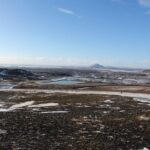
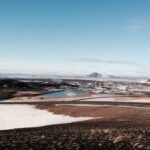
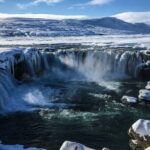
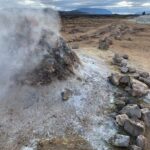
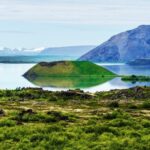
- Lake Mývatn area scenery that’s impressive even if the aurora is shy
Why Akureyri is a smart base for aurora nights
Akureyri sits in a part of Iceland where nights can get properly dark, which matters more than most people expect. For the Northern Lights, darkness isn’t a vibe—it’s a requirement. City glow washes out the contrast you need to see faint aurora curtains and a clean star field.
This tour is built around that idea: you leave the brighter zones and go hunting based on what’s likely to happen that night. The tour notes also mention that solar activity has been very active this winter, which is a good sign for aurora chances. Still, you’re paying for access to the right places at the right time, not a guarantee.
Another thing I like is that the experience is not only aurora-chasing. Even if the lights stay quiet, you’re out at night with a guide and time to enjoy the sky. That’s a win in a country where a lot of other things close up early.
You can also read our reviews of more photography tours in Akureyri
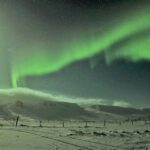
The 9:30 pm departure: what 2.5 hours is really for
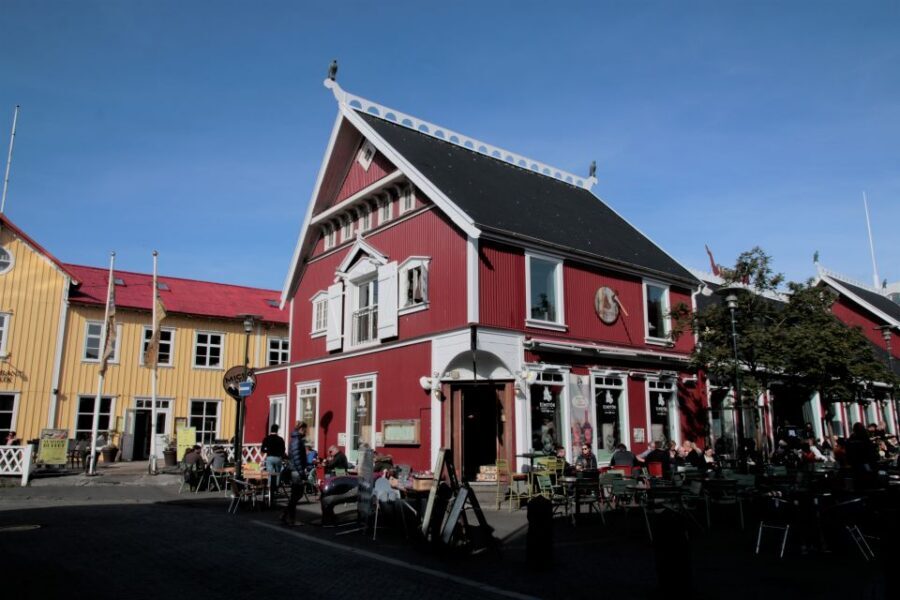
The tour leaves at 9:30 pm from KEA Hotel Hafnarstræti (arrive about 10 minutes early). If you choose pickup, you’ll meet the van at your hotel entrance about 10 minutes before your pickup time. Either way, you’re set up to start in the evening, not after midnight—important because aurora activity can show up at different hours, and you’ll want to be in the right spot as early as possible.
In practice, 2.5 hours is enough for one key mission: get away from city light, scan the sky, and adjust if conditions change. That means the guide can’t waste time. You’ll feel the focus: look up, wait, watch for faint motion, and then react fast if the aurora strengthens.
It’s also a good length for people who don’t want a full-night tour. You get time outside and still have the rest of the night (or morning) to recover. Just plan on being cold the whole time if the sky stays clear, since you’re staying outdoors for stargazing and spotting.
Leaving the city glow behind: the stargazing payoff
A big part of the value here is that you’re not stuck looking at the sky from inside the light bowl. The tour takes you out of the city and away from residential light pollution for a clearer view. That’s the difference between seeing a handful of brighter stars and seeing the kind of star density that makes you stop counting and just stare.
The tour highlights promise billions of stars, and that tracks with what happens when you go far enough from streetlights. You’ll also get the chance to see the Milky Way if you’re lucky, which is exactly the kind of bonus that becomes more likely when the sky is both clear and dark.
One more smart detail: the guide chooses a direction from Akureyri based on aurora predictions. That means your time is spent where the odds are best, rather than just driving aimlessly. On nights when the aurora is slow to start, that kind of planning keeps you in the game.
Learning to spot faint aurora: you don’t need a PhD
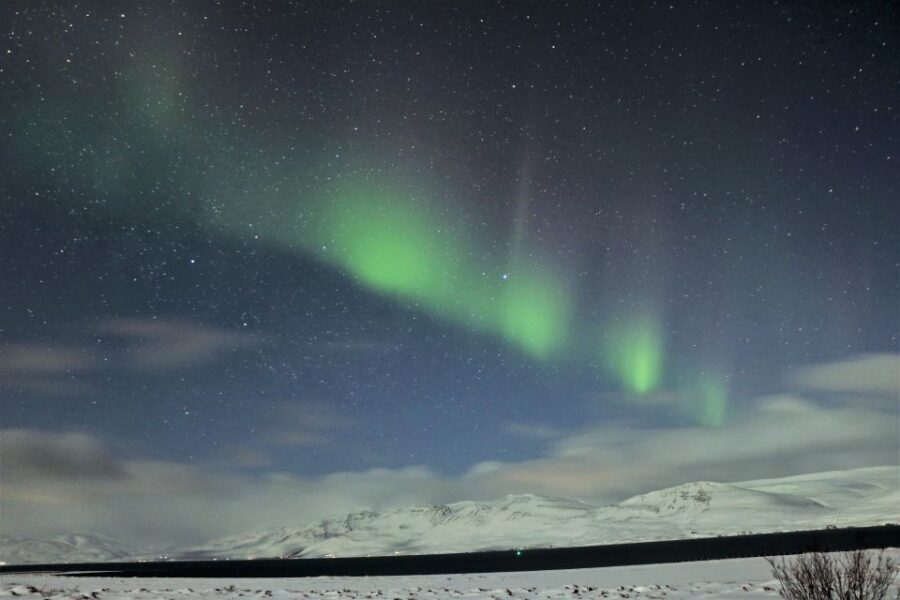
This tour is at its best when you treat it like a lesson you can use right away. The guide explains how to spot the aurora, and the key point is that it doesn’t always announce itself loudly. Sometimes it starts faint and subtle, like a barely moving patch in the sky.
That coaching matters because many first-timers look for dramatic green streaks immediately. When you’re told what to watch for—small shifts, pale glow, and movement—you’re more likely to catch it early and avoid missing the moment it becomes clearer.
You’ll also spend time stargazing and counting constellations. Even if you’re not an expert, it turns the waiting period into something active. It also gives your eyes a chance to adjust to darkness, which helps you see both stars and aurora better.
And yes, the help goes beyond theory. In at least one reported experience, Jong was actively assisting with photos while also explaining what the lights were doing. That combination—spotting + documenting—is exactly what makes a short tour feel worth it.
Photo help that matters: shooting the aurora without guessing
If you bring a camera, you’ll get more than permission to take pictures. The tour includes guidance aimed at helping you capture what you’re seeing. In the best cases, a guide isn’t just pointing at the sky—they’re helping you photograph it while the aurora is actually on.
That’s a practical advantage. Aurora can change quickly. If you’re fumbling with settings or framing while the sky is active, you’ll miss the stronger bursts. Real-world guidance helps you move faster and makes your results more reliable.
You should still come prepared to work for it. Aurora photos are never “set it and forget it,” and clouds can wipe out your chances even with the best camera. But having someone on-site to assist with timing and composition can make your night feel productive rather than frustrating.
Also, even when aurora is not visible, a dark-sky outing can still produce great star images. The tour’s emphasis on stargazing time gives you enough darkness to experiment without feeling rushed.
What happens when clouds win: keep your expectations grounded
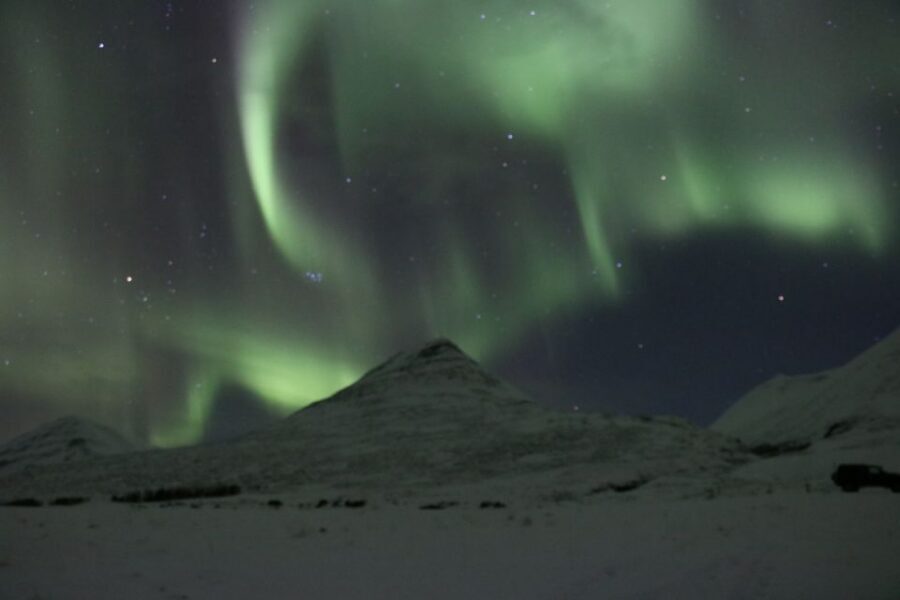
This is Iceland, and clouds happen. The tour is explicitly dependent on weather and sky conditions, and Northern Lights sightings can’t be guaranteed. The operator can also cancel at any time if conditions don’t allow the tour to run.
The good news is that you’re not completely on your own if the aurora doesn’t show. If the tour goes ahead and you don’t see the lights, you’ll be offered another booking for free. That’s a useful safety net when you’re traveling on a tight schedule.
Still, you’ll want to read the signs in your own planning: pick nights where you can be flexible, and pack for real cold even if you think the forecast looks promising. One of the most helpful reviews described a night with heavy cloud cover where the guide tried hard, drove around, and explained things—so even in a no-aurora scenario, you can still end up with a decent night, especially if you came for the stars too.
Comfort checklist: what to wear so you can actually enjoy the sky
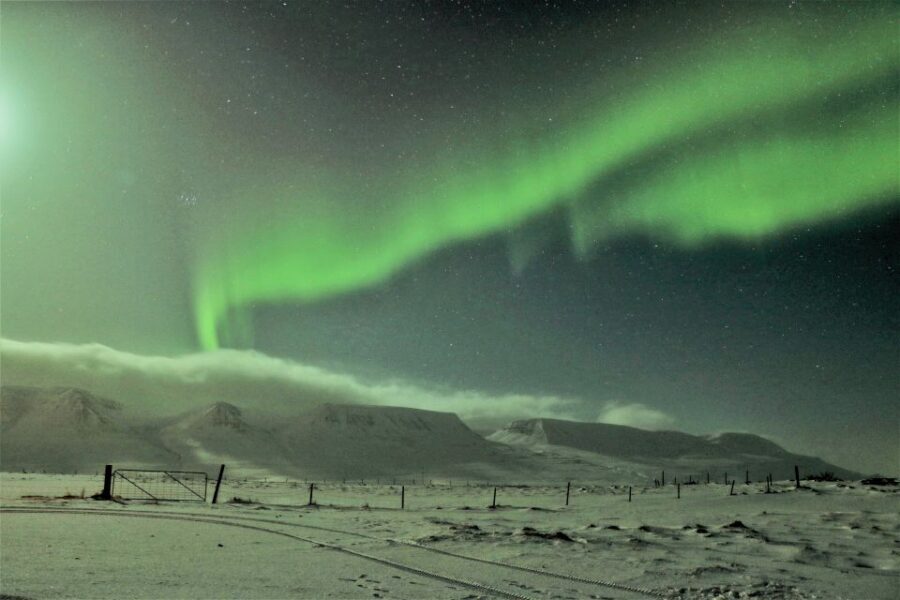
The tour is outdoors at night, so dressing like you’re going to stand still for a while is the rule. Bring warm clothing, a hat, gloves, and long pants. Warm shoes are also a must, since cold creeps in faster through your feet than you expect.
The tour suggests long-sleeved layers and weather-appropriate clothing, which is exactly right. Think of it like dressing for a long bus stop in winter, not a quick photo sprint. If you’re uncomfortable, you’ll stop looking up. Then the aurora—or the constellations—can still happen, and you’ll miss them.
Also bring water and comfortable clothes. It’s easy to forget hydration when you’re cold and focused on the sky. A simple water bottle makes a difference, and it keeps you from cutting the experience short because you feel drained.
And yes, bring your camera if you want to take pictures. The guide’s photo help only helps if you have the gear in your hands.
Price and value: is $113 a fair deal?
At $113 per person for a roughly 2.5-hour outing with hotel pickup (optional) and a local guide, you’re paying for three things:
First, you’re paying for access to darker locations without needing to drive yourself. If you don’t have a car, that alone is a big value.
Second, you’re paying for guidance. Learning how to spot faint aurora and understanding what you’re seeing is hard to do from scratch in the dark. A guide can also react as conditions change, instead of locking you into one spot.
Third, you’re paying for time efficiency. Aurora nights are like fishing: you want the right effort at the right time. A guided hunt helps you spend that time scanning the sky where the odds are better.
Is it expensive compared with driving around on your own? Maybe. But the tour saves you guesswork. And unlike many “sit and wait” experiences, this one includes active stargazing and instruction, plus photo tips.
The biggest factor is still the same: you’re not guaranteed aurora. If you’re the kind of traveler who needs a sure show, this might feel like a gamble. If you’re happy to chase the night sky and learn something in the process, the price starts to look reasonable.
Who should book this Akureyri aurora hunt?
This tour fits best if you want structured help and you don’t have the patience to figure everything out solo. It’s a strong pick for first-timers who want to learn what to watch for instead of staring into the night with no plan.
It also works well for photographers who want hands-on support while the lights are changing. Even if you don’t nail a perfect aurora shot, the night can still be worth it for the star field and the practice.
If you’re traveling with flexibility and you’re okay with the luck element, you’ll likely enjoy it more. If your schedule is rigid and you can’t handle the possibility of clouds, you might prefer a more flexible plan with backup options.
Should you book this Northern Lights photography tour?
I’d book it if you want a guided aurora hunt with stargazing built in, not just a generic night trip. The best part is the combination of dark-sky driving, practical instruction for spotting faint lights, and help with pictures. That trio turns “maybe aurora” into “you’ll still have a meaningful night outside.”
Skip the booking only if you’re expecting guaranteed lights on demand. The tour is clear about the weather dependency, and your experience still depends on the sky behaving. But if you pack warm, bring your camera, and go in ready to learn, you’re giving yourself a very fair shot.
If you want one simple rule: treat this like a night class for the sky. When you do, even a quiet aurora night can still feel like a win.
FAQ
How long is the Northern Lights photography tour?
It lasts about 2.5 hours.
What time does the tour leave Akureyri?
The tour departs at 9:30 pm.
Where is the meeting point?
The meeting point is KEA Hotel Hafnarstræti 87-89. Arrive about 10 minutes early.
Is hotel pickup included?
Hotel pickup is included, and pickup is optional. If you choose pickup, you’ll be ready at your hotel entrance about 10 minutes before your pickup time.
What language is the tour guide?
The tour guide provides live commentary in English.
What should I bring?
Bring warm clothing, a hat, gloves, long pants, long-sleeved layers, warm shoes, water, comfortable clothes, and a camera if you want to photograph the sky.
Will I definitely see the Northern Lights?
No. Aurora sightings depend on weather and sky conditions, and sightings cannot be guaranteed. If the tour goes ahead and you don’t see the lights, you’ll be offered another booking for free.