Hauganes makes whale spotting feel close.
The tour is designed around Eyjafjörður Fjord and the known humpback feeding area, so you’re not wasting time on a long guessing game. I like that it’s run by the oldest whale-watching operator in Iceland, with guides who focus on quiet boat handling and comfort in winter conditions.
Two things I’d put at the top of your checklist are the warm welcome (homemade cinnamon buns, hot chocolate, coffee) and the care in how the boat approaches whales. You also get live guidance and a setup built for whale viewing rather than getting bumped around in a general-purpose boat.
One drawback to consider: this trip is not suitable for people with motion sickness, since you’ll be on the water for the full cruise time.
In This Review
- Key points before you go
- Hauganes and Eyjafjörður: where the whales are already working
- The ship: renovated oak fishing boats and a comfort-first setup
- Before the whales: the 30-minute sightseeing cruise from Hauganes
- Welcome refreshments: warm-ups that actually matter in winter
- The whale watching hour: steady speed, close surfaces, and species variety
- Spending more time watching, less time running
- Around-the-fjord moments you might catch between whale surfaces
- Price, value, and who this 2.5-hour cruise fits best
- Practical tips to make whale watching easier (and warmer)
- Booking call: should you book Hauganes Whale Watching North Iceland?
- FAQ
- Where does the tour start?
- How long is the whale watching tour?
- What’s included in the price?
- Is hotel pickup or drop-off included?
- Is the tour suitable for motion sickness?
- Are whales spotted on most departures?
Key points before you go
- 99% whale-spotting track record gives you confidence on a short trip
- Warm overalls + blankets help you actually stay outside and watch
- Local guides use steady, respectful boat speed around whale habitat
- Renovated oak fishing boats are built for fjord whale watching
- Less long-distance sailing means more time looking, not chasing
- Warm refreshments keep the experience cozy in winter
Hauganes and Eyjafjörður: where the whales are already working
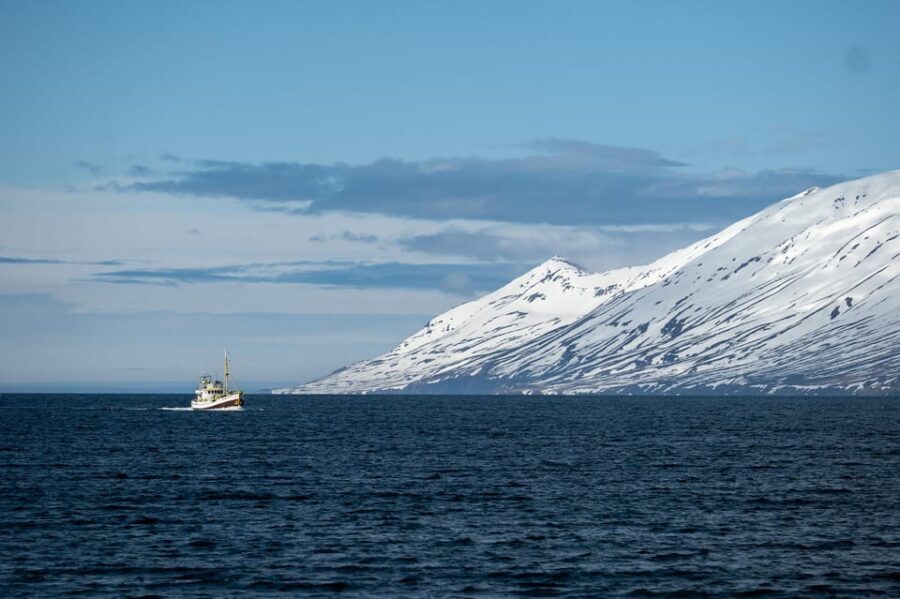
The starting point is Hauganes, a village on the northeastern side of Iceland, with views that instantly put you in the right mood for this kind of tour. From here, the Eyjafjörður Fjord feeding grounds are close enough that you’re not burning hours just to reach “the area.” That matters, because whale watching is partly timing—and partly just staying patient and watching closely.
This tour is built around the idea that you shouldn’t have to travel far to have a chance. The boat heads out from Hauganes toward the main feeding area for humpbacks in the fjord, and the view from land already feels cinematic: mountains, water reflections, and a coast that looks tailor-made for spotting something big moving below the surface.
Also, you get an easy base before and after the cruise. Hauganes works well as a short meal or break stop, since the harbor area is used to daily visitor flow and the vibe stays calm and practical.
You can also read our reviews of more tours and experiences in Iceland.


The ship: renovated oak fishing boats and a comfort-first setup
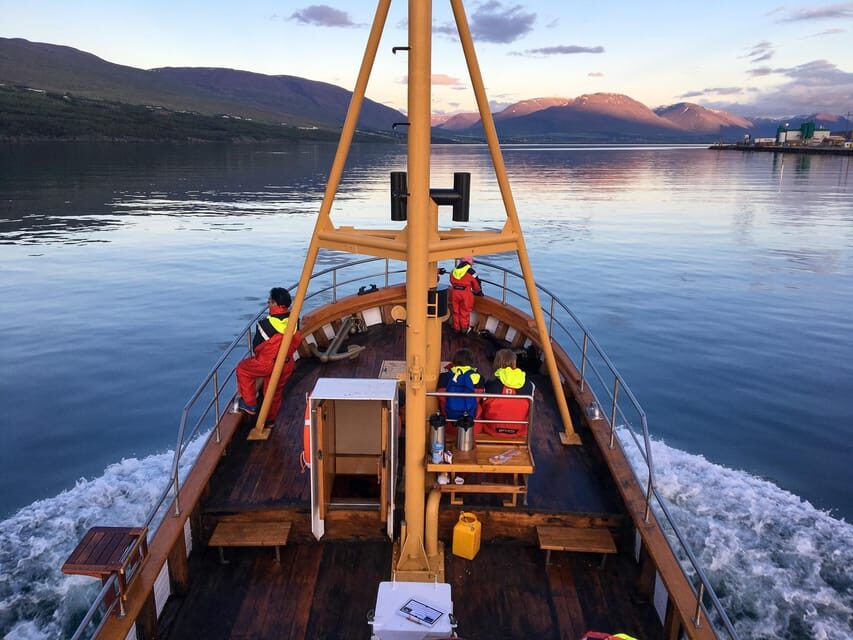
You’ll board a whale-watching boat that isn’t a random charter vessel. These are renovated oak fishing boats optimized for whale watching, with more than 30 years of use in the fjord. That long local experience isn’t just marketing—it’s the reason the tour can keep its focus on close, respectful viewing instead of constant repositioning.
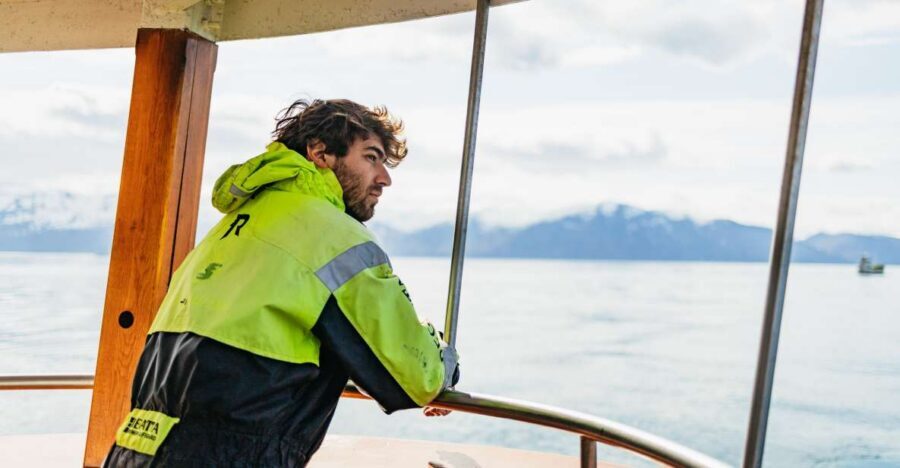
Comfort is handled in a very Iceland way: warm coveralls are provided, and there are blankets on board. In winter, that sounds like small stuff until you realize it’s the difference between looking out for ten minutes and actually watching continuously. You’ll also have guides managing the pace and boat behavior so you can stay focused on what’s happening in the water.
One more practical detail: the boat aims for a steady approach toward whale habitat. The tour runs at constant speed when heading to the whales’ area, which helps keep things stable for passengers and also supports the “don’t disturb the animals” rules that guide the whole experience.
Before the whales: the 30-minute sightseeing cruise from Hauganes
The first moving part of your time on the water is a 30-minute sightseeing cruise. This is a smart lead-in because it buys you a chunk of fjord scenery while everyone gets oriented—what you’re looking at, how the light sits on the water, and what the coastline and mountain backdrop looks like from the sea.
This segment also helps you understand the day’s conditions. In whale watching, weather and visibility affect how long you’ll keep sightlines to the surface. A short scenic run means you’re not suddenly thrown into cold wind and huge expectations; you ease in, get your bearings, and then the whale-spotting portion feels more “in control.”
You’ll likely notice how the area looks busy even when it’s calm. That fjord shape and the mountain reflections are exactly the kind of setting where a whale surface can look dramatic—especially if you’re watching for blows, dorsal fins, and the subtle changes that come right before something surfaces.
Welcome refreshments: warm-ups that actually matter in winter
In Hauganes, you get welcome refreshments before the main viewing time. This is about keeping people comfortable, not “filling time.” Expect coffee and hot chocolate plus homemade cinnamon buns, which sounds simple, but it’s a great reset if you’ve been outside in cold air on the walk to the harbor.
I like this part for one reason: it helps you stay in the watching mindset. If you’re warm and a little energized, you’re more likely to focus on the water instead of counting minutes until you can get back inside.
From a practical angle, it also means you’re less likely to feel rushed. That’s important when the whale-spotting period is about one hour of active watching—short enough that every minute counts.
The whale watching hour: steady speed, close surfaces, and species variety
The main whale watching portion lasts about one hour. This is where the tour’s whole approach earns its keep. The guides—locals with strong experience on Eyjafjörður—make a real effort to put you in the right place and then keep you there long enough to actually enjoy the sighting.
A key detail is the method of approach. The boat sails at constant speed toward the whales’ habitat and then makes sure not to disturb them with loud noises or sharp movements once you’re close. That respectful handling is a huge part of the experience. You can feel it in how the crew behaves—everyone moves carefully, and the tour has a “watch first” rhythm.
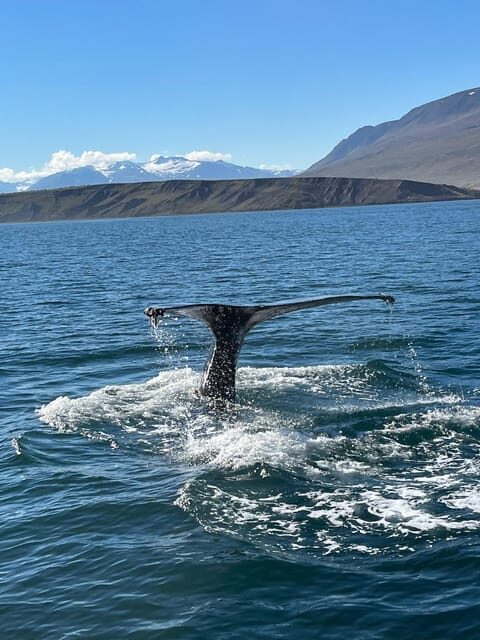
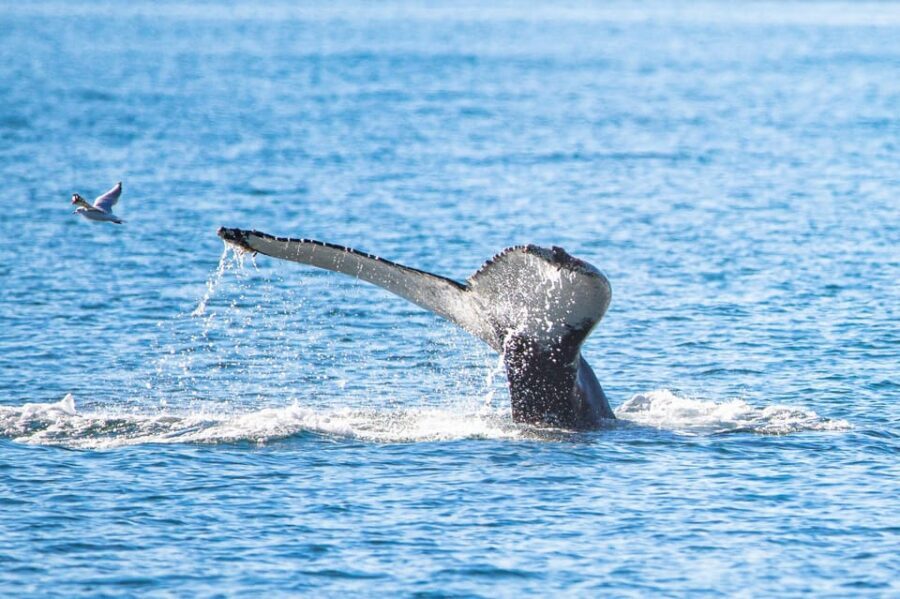
When you reach the whales, you’ll often be close. The tour describes that a variety of species can surface within a few feet of the boat. That’s when whale watching stops being abstract and becomes physical: you’re watching a living animal in its real environment, and the distance turns a single sighting into a sustained moment.
It’s also not only about humpbacks. The tour’s focus includes different whale species and even smaller marine life. One of the appealing parts of this fjord is that you might see humpbacks and also tiny porpoises surfacing near the viewing area. In a short tour, variety keeps your attention up.
And yes, the day-to-day success rate is the big selling point here: whales have been spotted on 99% of departures. That doesn’t mean every minute is guaranteed nonstop action, but it does mean you’re signing up for a high-probability experience rather than a hope-and-pray outing.



Spending more time watching, less time running
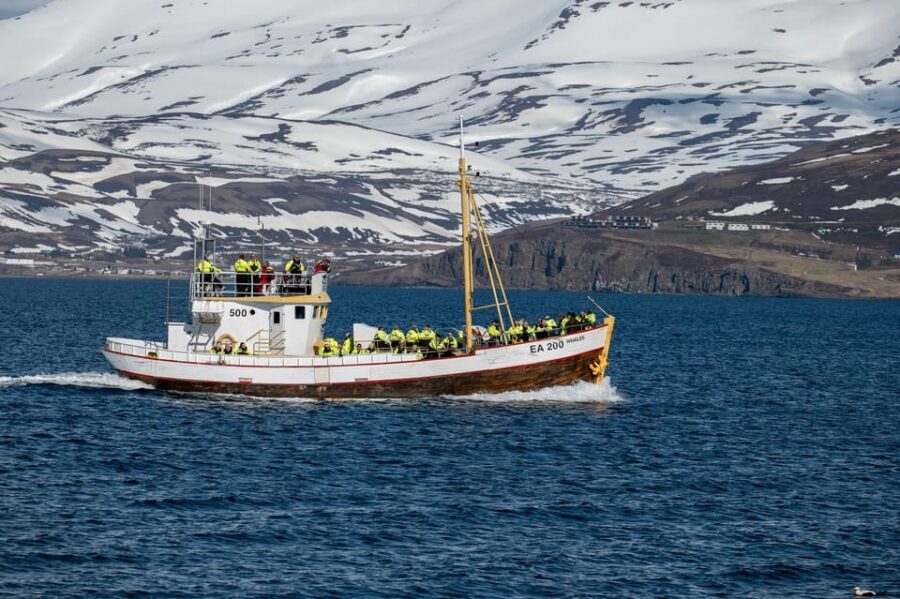
A lot of whale tours are basically “drive, search, repeat.” This one tries to flip that. The highlights specifically call out that you spend more time watching whales and less sailing for long distances.
For you, that translates into less time with blurred coastlines in the background and more time learning how to watch the water. The more time you’re actually stationed near whale activity, the more likely you are to see behavior—breaching, surfacing patterns, and the way whales move through a feeding zone.
There’s also an efficiency benefit: local guides can adjust quickly when whales are on the other side of the fjord. On at least some outings, the operation may turn the boat to reach the side where whales are closer. That kind of quick decision-making is what you want in winter: fewer delays, less wandering, and more time when it counts.
Around-the-fjord moments you might catch between whale surfaces
Even when you’re focused on whales, Eyjafjörður has other “Iceland is Iceland” moments. On the cruise, your guide may also point out a hot-water waterfall that feeds into the sea. It’s the kind of thing that makes the fjord feel alive and strange in the best way—warm water mixing into cold ocean space.
You should treat it as a “maybe” rather than a promise, but it’s an example of what this tour does well: it doesn’t just chase animals, it also gives you context for where you are.
And because the scenery is so strong—mountains, water reflections, and the fjord’s tight shape—your viewing experience doesn’t end the second whales surface. Even the waiting is scenic, and the overall setting makes the sighting feel more dramatic when it happens.
Price, value, and who this 2.5-hour cruise fits best
The price is $106 per person for a 2.5-hour experience. That’s not a budget impulse buy, but it’s also not overpriced for a whale-focused, winter-ready tour with warm clothing and built-for-purpose boats.
Here’s why I think it’s good value:
- You’re getting provided gear (warm coveralls and blankets) that actually improves your comfort and your ability to watch.
- The tour includes light food and drinks—coffee, hot chocolate, and homemade cinnamon buns—so you’re not paying extra just to stay warm.
- You’re paying for local skill and a high success rate, with whales spotted on 99% of departures and live commentary throughout.
If you have limited time in North Iceland, this format makes a lot of sense. Two and a half hours is long enough to do real whale watching without turning the day into a half-eroded weather gamble.
Who it suits best:
- You want a short, focused wildlife trip near a known whale-feeding area.
- You travel in winter and prefer tours that plan for cold instead of pretending you’ll just tough it out.
- You’d rather be stationed and watching than constantly moving.
Who should skip it:
- If you have motion sickness, this is not suitable. Cold, wind, and the open movement of a boat can be a bad combo when you’re already sensitive to motion.
Practical tips to make whale watching easier (and warmer)
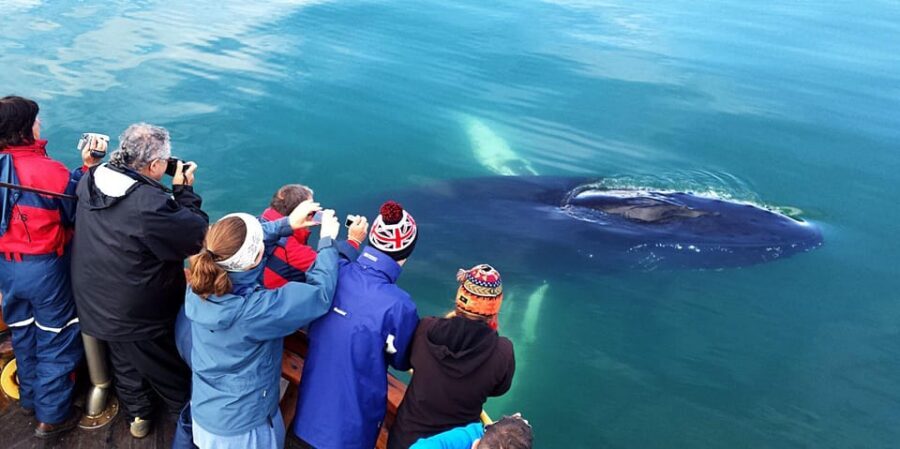
You don’t need a gear list the length of a packing cube, but you can set yourself up for better viewing with a few smart moves.
Dress for warmth anyway, even with coveralls provided. The coveralls help a lot, but you’ll still feel wind-chill when you’re standing near the rail. Think layers under the coveralls, warm socks, and a hat or something that covers your ears.
Also, treat silence like a courtesy, not a rule. The tour emphasizes not disturbing whales with loud noises or sharp movements. If everyone stays calm and watches, you’ll get better sightings—and you’ll feel better about the ethics of the trip.
Finally, go with patience. In a fjord, whales can surface, change direction, and vanish beneath the surface quickly. The tour’s constant speed approach and longer viewing time are designed to give you chances, but you still need a “watch and wait” mindset for the full hour.
Booking call: should you book Hauganes Whale Watching North Iceland?
If your goal is a high-probability whale encounter in a short window, I’d strongly consider booking this tour. The combination of a close starting area, a fjord built for whale habitat, warm coveralls, and the reported 99% departure spotting rate makes it one of the more sensible wildlife choices for North Iceland.
I’d especially recommend it if you’re traveling in winter and want a tour that takes comfort seriously. The warm refreshments and the cozy on-board setup are not distractions—they help you stay outside and pay attention.
Skip it only if motion sickness is a problem for you, or if you’re looking for a long multi-stop adventure rather than a focused whale watching cruise. For most people, this is a clean, straightforward way to experience Eyjafjörður’s whales without wasting your day chasing distance.
FAQ
Where does the tour start?
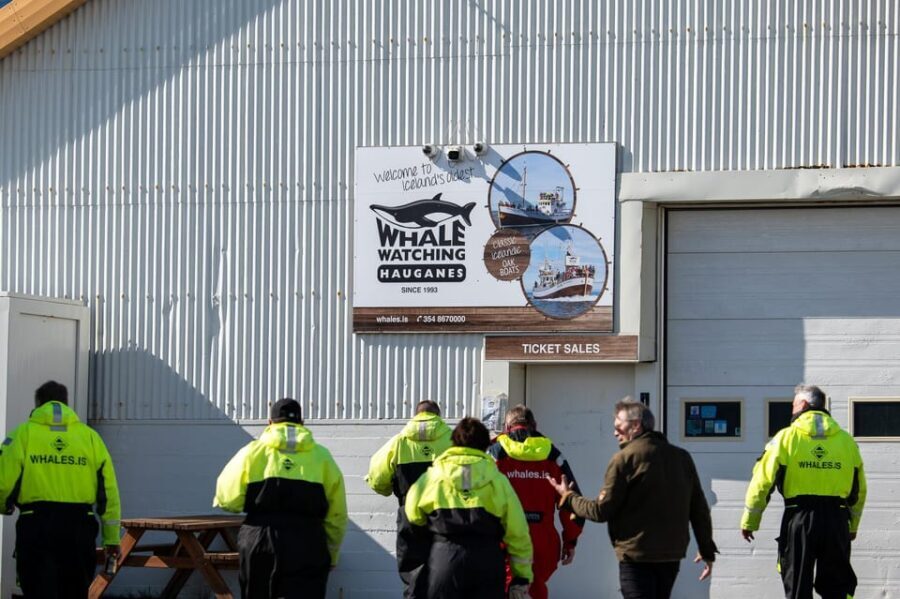
The meeting point is Hafnargata 2, 621 Hauganes, Iceland, at the main office by the harbor. You’ll find a large white building with reception.
How long is the whale watching tour?
The total duration is 2.5 hours, including time for sightseeing and refreshments.
What’s included in the price?
Included are the whale-watching cruise, a tour guide with live commentary, coffee and hot chocolate, homemade cinnamon buns, and warm coveralls.
Is hotel pickup or drop-off included?
No. Hotel pickup and drop-off are not included.
Is the tour suitable for motion sickness?
No. The tour is not suitable for people with motion sickness.
Are whales spotted on most departures?
Whales have been spotted on 99% of departures.