Geothermal weirdness without the crowds. This small-group run across the Reykjanes peninsula mixes geology you can’t fake with Iceland stories tied to the land—plus a drive that literally takes you over the Mid-Atlantic Ridge.
I especially like the small-group minibus feel (max 19 passengers, with many trips running even smaller) and the live commentary from a local guide who connects what you see to Icelandic history, folklore, and daily life.
The only real caution is that time is tight at each stop, and the route can shift with weather or volcanic road closures. If you choose the Keflavik Airport drop-off, plan for an afternoon departure, since transport timing is designed for flights leaving 4pm or later.
In This Review
- Key highlights worth planning around
- Reykjanes Geopark: why this peninsula beats the usual Iceland loop
- Small-group minibus, and how pickup really works in Reykjavík
- Passing Hafnarfjörður and the Icelandic president’s house
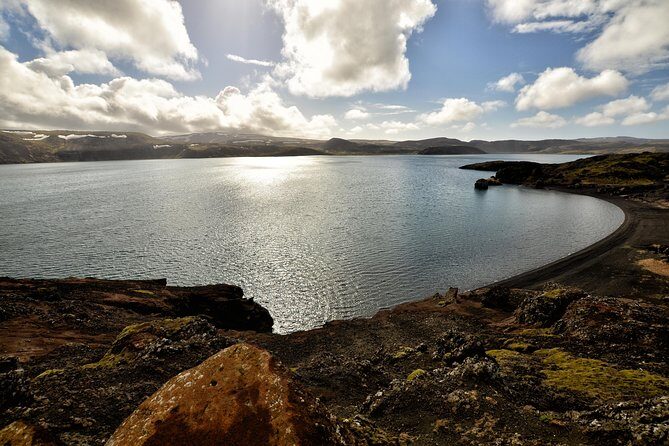
- Kleifarvatn Lake: sulfur water and myth you can almost smell
- Grænavatn: the green crater lake and why sulfur matters
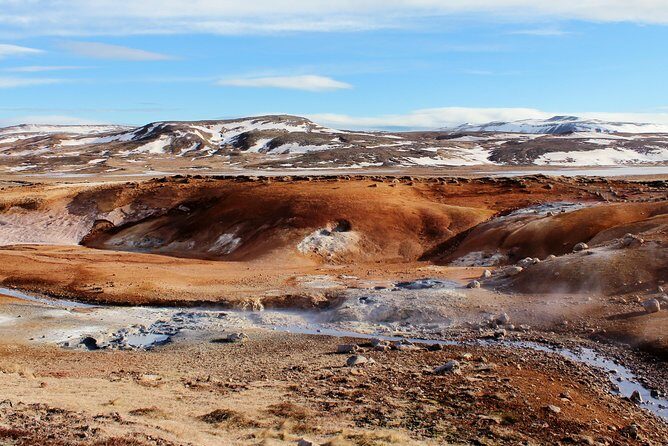
- Krysuvík hot springs: a colorful hillside walk
- Gunnuhver mud pools: geothermal heat plus a ghost story
- Grindavík and the eerie abandoned town feeling
- Lunch in Keflavík Harbor: a real break, not a rushed snack
- Bridge Between the Continents: Europe meets North America by car
- Reykjanesviti lighthouse: Iceland’s oldest, and the rocks that frame it
- Guides and storytelling: why small-group commentary matters
- Weather and road changes: pack smart, not fancy
- Price and value: what $134 covers (and what it doesn’t)
- Should you book this Reykjanes Geopark tour?
- FAQ
- How long is the Reykjanes Geopark tour?
- What time does the tour start?
- Is hotel pickup included?
- How big is the group?
- What stops are included during the day?
- Do I need to pay for site entry fees?
- Is food included?
- Can I choose my drop-off location?
- Do I need special clothing?
- What happens if roads are closed or weather is bad?
Key highlights worth planning around
- Kleifarvatn and Grænavatn: short photo stops at lakes tied to sulfur, depth, and local lore
- Krysuvík hot-spring walk: bubbling geothermal ground on a colorful hillside (about 30 minutes)
- Gunnuhver mud pools: geothermal area with a ghost story built into the visit
- Grindavík’s lava fields: a look at newer terrain plus the eerie feeling of an abandoned town
- Bridge Between the Continents: a clear, practical way to understand Europe vs. North America tectonics
- Reykjanesviti lighthouse: Iceland’s oldest lighthouse plus rocky coastline views
Reykjanes Geopark: why this peninsula beats the usual Iceland loop
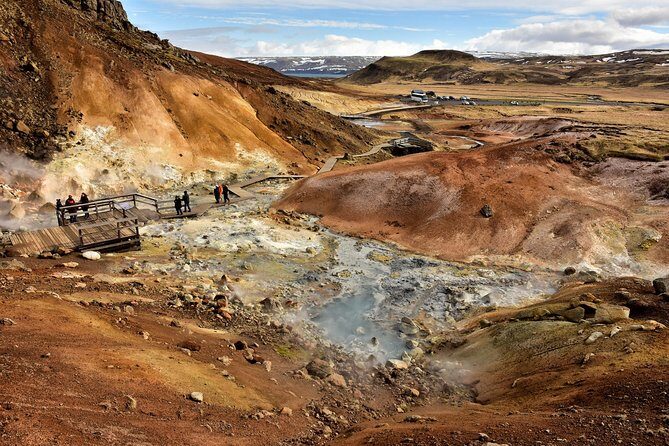
Most first-time Iceland trips chase the same headline stops. This one takes you to the Reykjanes peninsula, where the ground looks rearranged and the air smells faintly of sulfur (in a very Iceland way). You’ll see lakes in volcanic zones, multicolored hills, and active geothermal features without spending the whole day on long transfers.
What makes the day click is the rhythm. You’re not stuck in one long bus ride that turns into a nap. The tour is built around a chain of short, meaningful stops—each one designed to show a different side of the Geopark: water, heat, steam, and the human footprints left around it.
And yes, there’s the crowd-pleaser moment: the Bridge Between the Continents. It’s one of those experiences that turns a geography textbook into something you can point at from the car window.
You can also read our reviews of more tours and experiences in Reykjavik


Small-group minibus, and how pickup really works in Reykjavík
You’ll start at 9:00 am, with hotel pickup offered from select central Reykjavik hotels. If your hotel isn’t in the pickup list (and Reykjavík has driving restrictions), you’ll meet at a nearby bus stop that should be only a few minutes’ walk away.
The vehicle matters. This tour uses climate-controlled minibuses with a maximum of 19 passengers, and in practice the group often feels intimate enough for easy conversation and quick questions. That’s part of why the guide time feels productive instead of spent just reading place names from a map.
One practical tip: confirm your intended drop-off point when booking (Reykjavik, Blue Lagoon, or Keflavik Airport). The tour is flexible, but your timing depends on that choice.
Passing Hafnarfjörður and the Icelandic president’s house
Before you reach the Geopark proper, you head southwest from Reykjavík. On the drive, you’ll pass by the president’s house and old fishermen’s houses in Hafnarfjörður, then continue toward the Reykjanes peninsula.
This is a small detail, but it helps you understand Iceland isn’t only waterfalls and glaciers. The drive section gives you a quick sense of where the country lives—houses, shoreline work, and the human geography you’d miss if you only visited remote sights.
Kleifarvatn Lake: sulfur water and myth you can almost smell
The first true stop is Kleifarvatn Lake. It’s a fissure-zone lake fed entirely from underground, and it’s famous enough that locals and guides often bring up the idea that there are odd creatures hiding in the depths. Even if you treat the lore as folklore, the setting is the point: volcanic geology plus a cold, exposed shoreline.
Plan for wind. Even with a short visit (around 10 minutes), this is one of those places where Iceland reminds you it’s Iceland. Bring outerwear you can trust.
You don’t need special gear here—just a camera-ready mindset and a willingness to stand still long enough to let the light do its thing.
Grænavatn: the green crater lake and why sulfur matters
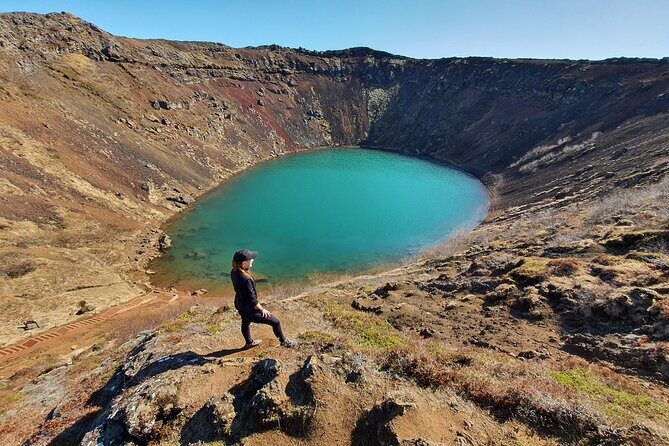
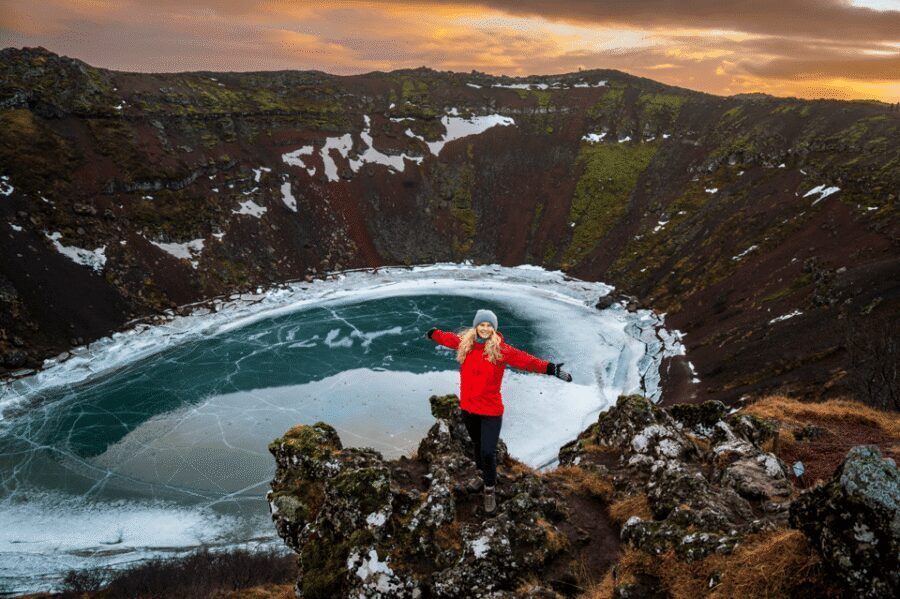
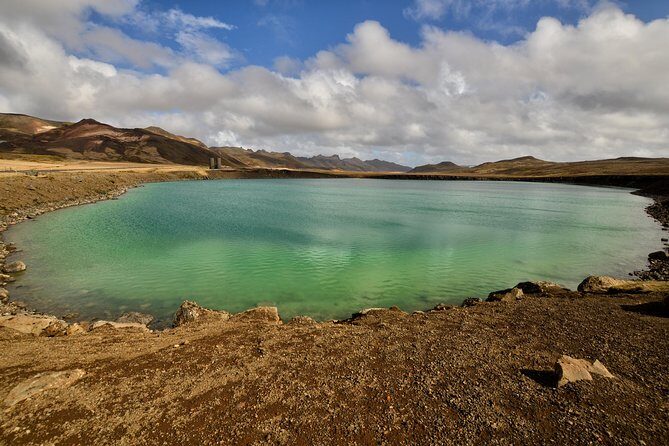
Next comes Grænavatn, a green lake in a volcanic crater. The tour framing is useful: you’ll learn that its color comes from sulfur content and that the lake is fairly deep (about 45 meters). This is one of those stops where the science is simple and the visuals do the convincing.
Expect another short stop (about 10 minutes). You’ll get enough time to look, take pictures, and feel how the water color changes with angle and weather.
The drawback? There’s not much time to linger. If you want a long nature walk, this tour isn’t built for that. It’s built for a sequence of geothermal “chapters.”
You can also read our reviews of more tours and experiences in Reykjavik






Krysuvík hot springs: a colorful hillside walk
In Krysuvík, you’ll take a walk between bubbling hot springs on multicolored ground. The stop time is about 30 minutes, and this is where the experience turns from viewing to stepping close to geothermal activity.
This is also where good shoes earn their keep. You’re dealing with cold conditions and potentially uneven ground near geothermal areas. Solid, warm, waterproof shoes aren’t optional here—they’re how you avoid thinking about your feet instead of the scenery and steam.
I like that this stop is active but not demanding. You’re not signing up for a hike. You’re getting a short, guided-style walk that works for a wide range of travelers.
Gunnuhver mud pools: geothermal heat plus a ghost story
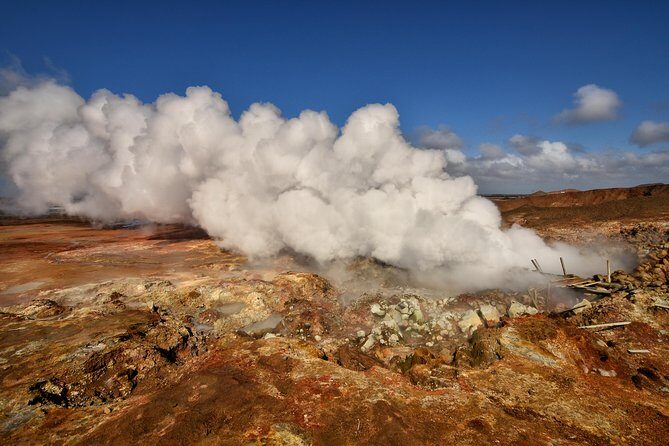
Then you reach Gunnuhver Hot Springs, known for its geothermal mud pools. The tour includes a ghost story connected to the site—exactly the kind of detail that makes geopark visits feel more than just sightseeing.
Time here is short (around 20 minutes), so you’ll want to move at a steady pace. If it’s windy, keep an eye on hats, hoods, and anything that likes to fly away in gusts.
The smell is part of the experience. If you’re expecting postcard-clean air, Iceland will politely disagree. The good news: even in bad weather, this stop usually still feels memorable because the activity is close up and obvious.
Grindavík and the eerie abandoned town feeling
Stop into Grindavík for dramatic terrain: newly formed lava fields and the atmosphere of an abandoned city that used to be thriving. The visit is about 15 minutes, so you’ll mainly be getting an overview and photos rather than a long exploration.
This stop gives the Geopark a human edge. Geothermal activity isn’t only science and folklore—it affects where people can live and what communities become after eruptions. That’s why this particular stop tends to stick with people even when the other sights start to blur together.
If volcanic activity in the region has changed access, the route may also shift. You might not see every exact segment every day, but the tour aims to keep the “volcanic + human” story intact.
Lunch in Keflavík Harbor: a real break, not a rushed snack
You’ll pause for lunch in the harbor town of Keflavík. You can bring your own food or buy lunch after arrival. Either way, this is one of the more relaxed blocks of the day because you’re not just sprinting from viewpoint to viewpoint.
The value here is simple: you’re not stuck eating something overpriced and weird right as you’re leaving the main sight. This break is timed so you can recharge before the tectonics and lighthouse stops.
If you’re sensitive to crowds, this is also helpful. Keflavík isn’t always on the top-3 list for short layover travelers, which can mean a calmer meal moment.
Bridge Between the Continents: Europe meets North America by car
The Bridge Between the Continents stop is one of the tour’s big “wow” moments, and it’s also the most educational. You’ll drive between Iceland’s two tectonic plates and spend time in the area long enough (about 20 minutes) to understand the idea without needing a lecture.
Here’s the practical benefit: the tour makes tectonics visual. You’re not imagining a boundary line on a map—you’re standing near the Mid-Atlantic Ridge concept in a place where Iceland’s geology is actively reshaping itself.
This stop also works for different travel styles. If you like photography, you’ll enjoy the angles. If you prefer science, the guide commentary ties it together. If you just want a memorable photo with meaning, this is it.
Reykjanesviti lighthouse: Iceland’s oldest, and the rocks that frame it
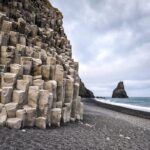
Your final major sight is Reykjanesviti, described as the oldest lighthouse in Iceland. The stop is around 20 minutes, with time to admire the rock formations of the Valahnúkamöl ridge.
Lighthouses can feel like a checkbox on some trips. Here it doesn’t, because you’re ending the day with the coastline version of the same theme: land shaped by heat, fault lines, and relentless ocean energy.
Also, it’s a good “end cap” for your photos. By now you’ve seen lakes, mud pools, and lava terrain. Finishing with the lighthouse and rocks keeps the day from feeling repetitive.
Guides and storytelling: why small-group commentary matters
The most praised part of this experience is the guide quality. Names like Gauti, Gummi, Starri, Thor, Andres, and Ian come up again and again, and the consistent theme is that the commentary connects geology to how Icelanders think and live.
You’ll get more than facts about what’s hot and what’s crater-born. The guides tend to fold in context—society, economy, local traditions, and the way folklore attaches to volcanic terrain. That’s why this tour feels different from the quick-drive-and-point style.
In my view, that’s the secret sauce: when you understand why Reykjanes looks like it does, each stop becomes more than a photo. It becomes a story you can retell.
Weather and road changes: pack smart, not fancy
This tour is weather dependent. In winter, heavy snow can close roads along Kleifarvatn, Krýsuvík, and Grænavatn, and the operator can alter the route and add stops instead. The region can also face volcanic activity, which may cause longer driving times and, in rare cases, some sections to be unavailable and replaced by alternative routes.
So what should you do? Dress for wind, rain, and sudden cold. The tour recommends warm, waterproof shoes plus warm rain and windproof outdoor clothing. I’d add one more reality check: layers matter because geothermal areas can be cold outside yet feel intense up close.
If you’re prone to motion sickness, bring your usual remedy too. You’re on a minibus for hours, and Iceland roads can be a rollercoaster even when conditions are decent.
Price and value: what $134 covers (and what it doesn’t)
At $134 per person, the value is mostly in transportation, timing, and expert guidance. You’re paying for hotel pickup/drop-off from designated spots, an in-person guide, and a route that strings together multiple major Reykjanes sites in one go.
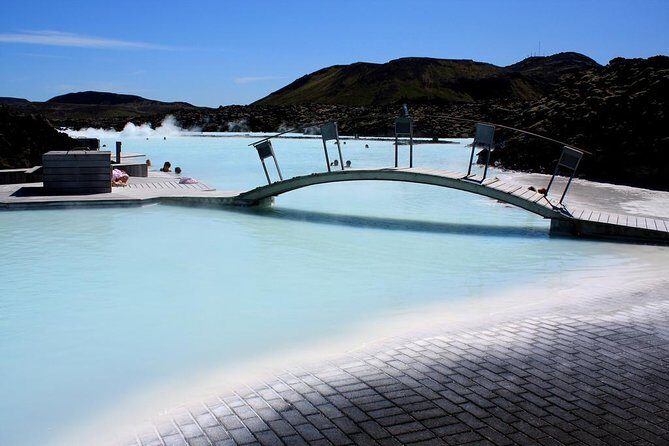
What’s not included is also clear: food and drinks are on your own, and Blue Lagoon admission needs separate booking. You’ll get lunch time, but you’ll pay for it unless you bring your own.
Also, the tour emphasizes site admissions being free (Kleifarvatn, Grænavatn, Krysuvík geothermal area, Gunnuhver, Grindavík, and Reykjanesviti). That means your big spend isn’t at the stops—it’s in the optional add-ons like Blue Lagoon.
If you’re short on time in Iceland or you’d rather not piece together local transport to far-flung geothermal zones, this price starts to look fair fast.
Should you book this Reykjanes Geopark tour?
Book it if you want a small-group day that feels like Iceland beyond the postcard circuit. The mix of geothermal stops, a tectonics moment at the Bridge Between the Continents, and a lighthouse ending makes it a well-shaped half-day-ish outing that’s easy to understand and hard to forget.
Skip it (or rethink your drop-off choice) if you’re very time-sensitive or if you need long stays at each site. Stops are intentionally short, and conditions can change with weather or volcanic road issues. If your flight timing is tight, treat the Keflavik Airport drop-off as an organized connection designed for 4pm+ departures, not a late-game gamble.
If you’re the kind of traveler who likes asking why something looks the way it does, this is the tour style to pick. The guide storytelling is built into the schedule, not stapled on at the end.
FAQ
How long is the Reykjanes Geopark tour?
The tour runs for about 7 hours.
What time does the tour start?
The start time is 9:00 am.
Is hotel pickup included?
Pickup and drop-off are included from designated bus stops and select central Reykjavík hotels. If your hotel is in a restricted area, you may meet at a nearby bus stop.
How big is the group?
The tour operates with minibuses holding a maximum of 19 passengers, with a maximum of 17 travelers noted for this specific experience.
What stops are included during the day?
The tour includes Kleifarvatn Lake, Grænavatn, a geothermal area walk at Krysuvík, Gunnuhver Hot Springs mud pools, Grindavík, Reykjanes Lighthouse (Reykjanesviti), and a stop at the Bridge Between the Continents.
Do I need to pay for site entry fees?
Admission is listed as free for the included stops.
Is food included?
No. Food and drinks aren’t included, but you can purchase meals during stops or bring your own.
Can I choose my drop-off location?
Yes. You can request drop-off at your original departure point in Reykjavík, at Blue Lagoon, or at Keflavik Airport for flights departing 4pm or later.
Do I need special clothing?
The tour recommends solid, warm, and waterproof shoes, plus warm rain and windproof outdoor clothing.
What happens if roads are closed or weather is bad?
The tour requires good weather. If canceled due to poor weather, you’ll be offered a different date or a full refund. In winter, heavy snow can close roads and the operator may alter the route. Volcanic activity can also change routes in rare cases.