Reykjavik clicks into place fast on foot. This small-group walking tour is built for first-time orientation, with a guide who connects landmarks to the people and events that shaped the city. You get top stops like Hallgrímskirkja and end near the lake and central square, so you can keep exploring right after.
I love how the route mixes major sights with just enough time at each place to understand what you’re looking at. I also like the comfort factor: it runs in all weather, and there are indoor pauses for warmth when Iceland weather turns. One thing to consider: the route can shift due to conditions, so you might not get a full, guaranteed stop at every building along the way.
In This Review
- Key highlights worth planning around
- A small-group intro that helps you navigate fast
- Group size and pacing: why 2 hours feels right
- Where the walk starts (and why it sets you up well)
- Stop-by-stop: what you’ll actually experience
- 1) Hallgrímskirkja: the city’s big “welcome” landmark
- 2) Rainbow Street: galleries, shops, and quick photo stops
- 3) National Theatre of Iceland: architecture with a story
- 4) Arnarholl statue: Ingólfur Arnarson and the first settlers
- 5) Harpa Concert Hall: great design, but the route can shift
- 6) Old Harbour: fishing history in plain sight
- 7) Parliament House (Althingishus): Iceland’s political story
- 8) Reykjavik City Hall: the indoor warm-up stop
- What makes the stories land: guides and interaction
- How to get more out of it (you can control this)
- Weather-proof comfort: walking in Iceland without suffering
- Value check: is $53.21 worth it?
- Who this tour fits best
- Should you book Reykjavík Small Group Walking Tour by CityWalk?
- FAQ
- How long is the Reykjavik Small Group Walking Tour?
- Where do you meet and where does the tour end?
- Is the tour in English and does it run in bad weather?
- What’s included in the tour price?
- Is Harpa Concert Hall guaranteed to be a stop?
- Is cancellation free?
Key highlights worth planning around
- Max 12 people keeps the vibe friendly and question-friendly.
- Hallgrímskirkja and Arnarholl give you two major “anchor points” for understanding Reykjavík.
- Rainbow Street photo moments plus quick culture stops along the way.
- Harpa can be missed, but the ending stays close—so you still have a smart next step.
- Indoor warm-up stops, including time inside Reykjavik City Hall when it’s cold.
A small-group intro that helps you navigate fast
This tour is basically your first-day cheat code. Reykjavík is small enough that you can walk a lot on your own, but the city still feels confusing when you don’t know what you’re looking at. CityWalk’s 2-hour small-group format fixes that by taking you along a tight route through the center and explaining the why behind the wow.
The group size matters more than you might think. With a maximum of 12 travelers, you’re not just marching past buildings. You have room to ask questions, and guides can adjust the story if people are curious about politics, Vikings, architecture, or everyday life. That flexibility shows up in how different guides run the walk—names like Asi, Ryan, Martin, Asta, Eric, Ari, and Thomas all come up in the feedback, and the common thread is a lively, conversational pace.
At $53.21 per person, it’s not the cheapest way to see a few streets. The value comes from the guide doing the heavy lifting: turning landmarks into context so you don’t spend your trip googling every corner. If you’re short on time—or it’s your first day and you’re still trying to locate everything—this tends to pay off quickly.
You can also read our reviews of more walking tours in Reykjavik


Group size and pacing: why 2 hours feels right
A 2-hour walk sounds brief, and it is. The best way to think of it is as an orientation loop, not a full sightseeing day. The stops are long enough to get a clear look and learn the key story points, without turning into a slow, stop-and-start crawl. Most people love that balance; a few feedback notes complain it felt short, or that the walking dominated over storytelling. That’s a risk with any walking tour, but the tight stop timing helps keep it from dragging.
Where the walk starts (and why it sets you up well)
You meet at Hallgrímstorg 1 near the big church Hallgrímskirkja. Starting here is a smart move. This isn’t just a famous landmark; it’s a visual compass. When you begin at the tallest, most recognizable building in central Reykjavík, you instantly understand direction and scale for the rest of the walk.
You’ll finish in the area of Austurvöllur (the main square) or by the lake Tjörnin, where City Hall sits. Either ending spot is useful because it puts you near areas where cafés, viewpoints, and further self-guided wandering make sense. In cold or rainy weather, ending near warm indoor options can feel like a small win.
Stop-by-stop: what you’ll actually experience
Here’s what the walk feels like in real time—what you’ll see, why it matters, and what to watch for.
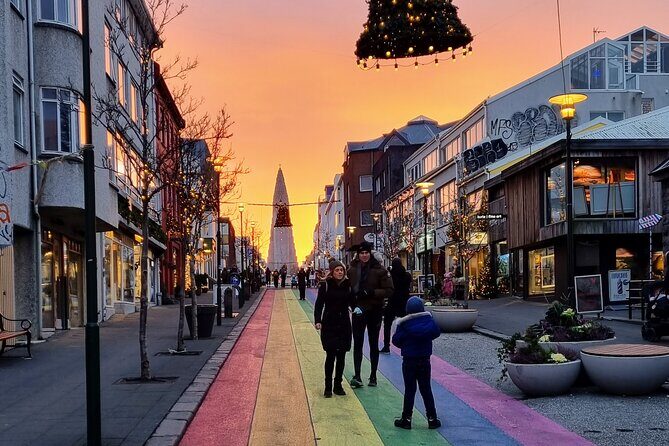
1) Hallgrímskirkja: the city’s big “welcome” landmark
You begin at Hallgrímskirkja, the iconic church designed by Guðjón Samúelsson. You’ll have about 15 minutes here, with free admission ticket noted. Even if you’re not a church person, it’s worth it because the design is so tied to Reykjavík’s identity. The building is instantly photogenic, but the tour’s point is that it’s also an easy entry into Icelandic art and public architecture.
What I’d pay attention to: the overall proportions and how the church “anchors” the surrounding streets. Once you understand it as a symbol, the rest of the walk feels less like random sightseeing and more like a guided map of the city.
Possible drawback: if you’re already tired from jet lag or rough weather, this is a lot to take in right away. But since you start near it, you’re not trekking across town first.





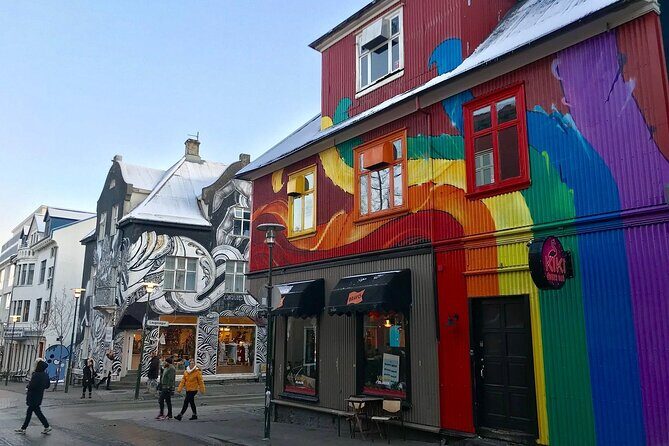
2) Rainbow Street: galleries, shops, and quick photo stops
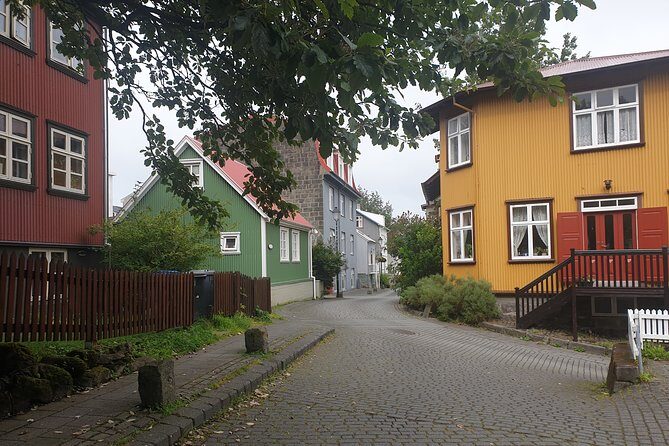
Next comes Rainbow Street, famous for its color and lively storefront energy. This is where the tour shifts from “major monument” mode to “this is what daily Reykjavík feels like” mode. You’ll pass galleries and shops and get time for photos.
This stop is especially helpful if you’re the type who wants souvenirs, design, or local crafts but doesn’t want to waste time wandering without a plan. Even if you don’t buy anything, you’ll leave knowing which direction to return to later.
Tip: bring a camera, but also keep your eyes up at shop displays. Icelandic storefronts can be mini-museums.
3) National Theatre of Iceland: architecture with a story
You’ll see the National Theatre of Iceland, also designed by Guðjón Samúelsson. The tour gives it context so it’s not just another grand building you pass by.
This is one of the places where guides can shine. A good guide connects a theatre to the idea of public culture in Iceland—how a small country builds institutions that matter. The timing is short, but it’s enough to give you a mental hook for later when you spot other arts venues.
Consideration: if the weather is nasty, you might feel rushed here. It’s still a quick look, not a long museum experience.
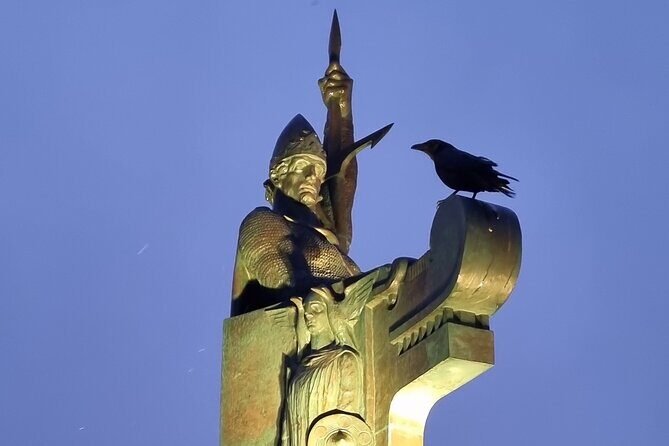
4) Arnarholl statue: Ingólfur Arnarson and the first settlers
The walk moves to Arnarholl and the statue of Ingólfur Arnarson, the name most associated with the first settlement story in Iceland. You’ll get about 10 minutes here, with the time focused on those early days and what the settlers meant for the country’s later identity.
This is one of those stops you’ll thank yourself for later. Once you understand the “first arrival” narrative, it changes how you interpret Viking-era references you’ll keep seeing around the city. A lot of Iceland travel is built on layers of time—and this is the first layer.
Quick visual cue: look at how the statue is positioned in the city space. It’s not just a figure; it’s a marker of memory.
5) Harpa Concert Hall: great design, but the route can shift
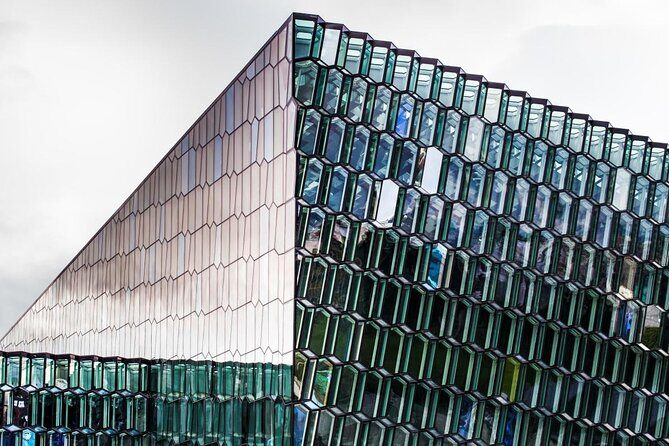
You’ll head toward Harpa Concert Hall and Conference Centre. The building’s design is described as a collaboration style between Ólafur Elíasson and Danish/Icelandic architectural influence, and it’s definitely a “stop for photos” kind of place.
Here’s the important planning reality: the route can change, and the tour can’t always promise an exact stop at Harpa. What it can promise is that the tour ends within walking distance, so you still have an easy next step.
Why Harpa matters: it’s modern Reykjavík in a single view—glass, light, and a sense of public cultural confidence. Even if you only catch the exterior, it’s worth a photo.
What to do if Harpa is your must-see: after the tour, head over anyway. Don’t wait for the guide to guarantee it. If the route shifts, you’ll still be close.
6) Old Harbour: fishing history in plain sight
Then it’s on to the Old Harbour, where the guide explains the city’s fishing industry and the history tied to it. You’ll have about 10 minutes here, and the goal is to connect the water, the boats, and Reykjavík’s economic story.
This stop helps balance the rest of the walk. You’ve been seeing architecture and settlement stories; now you get the “how did a place actually survive and grow” theme.
What to notice: how the harbour space shapes the surrounding streets. Even a short stop can help you understand why Reykjavík grew the way it did.
7) Parliament House (Althingishus): Iceland’s political story
Next is Parliament House (Althingishus) with about 10 minutes. The tour focuses on Iceland’s political history and what those early governing decisions meant.
If you want context for why Iceland talks about independence, identity, and self-rule so much, this is where you start hearing the thread. It also ties nicely into later city planning and civic spaces you’ll notice after the walk.
Practical note: this is a quick hit. Don’t expect a full lecture. Expect the key story points and places to look at.
8) Reykjavik City Hall: the indoor warm-up stop
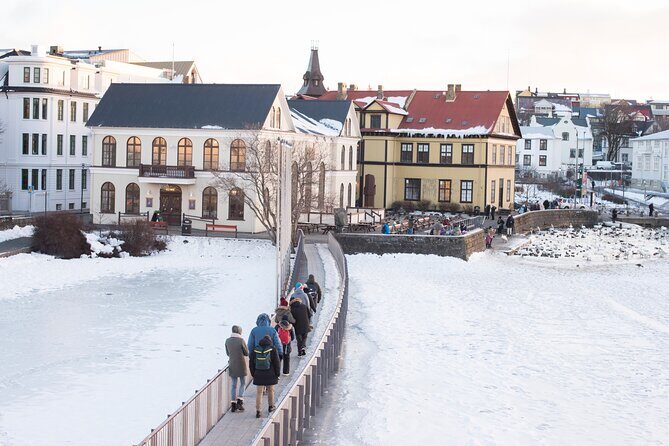
You finish near Reykjavik City Hall, a standout building on the lake. There’s another 10-minute stop, and the best part is that you can go indoors in colder weather. The tour includes time inside, and there’s even a big map of Iceland mentioned as part of the interior experience.
This is more than a photo moment. An indoor map stop does something helpful: it gives you a larger-country picture after seeing only the core Reykjavík streets.
What I’d do after you leave: glance at the map, then pick one or two ideas for a day trip. You’ll be standing in a better frame of mind than if you only saw city streets.
What makes the stories land: guides and interaction
Most of the strongest praise in the feedback centers on guides who manage both history and energy. People highlight that guides like Asta, Martin, Ryan, Asi, Ari, Eric, Thomas, and Vill keep things engaging—humor included—and keep the pace comfortable.
There’s also a clear theme: interaction. The better-run versions of this tour feel like a conversation. One person in the feedback described a guide asking questions to steer the story line. That’s what you should hope for. If the group is chatty, you’ll get more tailored explanations. If you’re quieter, the guide still runs the standard story path, but you may feel the tour moves faster than you’d like.
How to get more out of it (you can control this)
You’ll get better value if you arrive with two or three questions ready. For example:
- What’s the real deal with the church and the statue?
- How did fishing shape Reykjavík beyond the harbour?
- What’s the easiest way to plan the rest of my time?
If you ask early, you’ll usually get a better match between what you care about and what the guide spends time on.
Weather-proof comfort: walking in Iceland without suffering
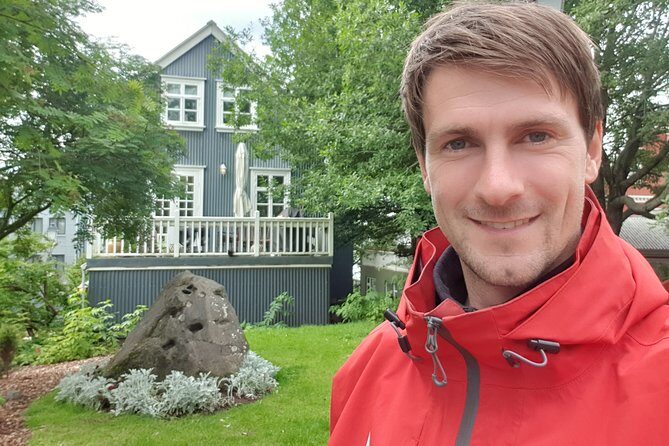
This tour operates in all weather conditions, and that’s the truth of Iceland travel. The practical advantage here is that the route includes indoor breaks. People explicitly liked the indoor stops as a way to warm up during rainy or windy weather.
Still, you should dress for the reality outside. Bring layers, a hat or hood, and waterproof footwear. If you’re comfortable outdoors for short stretches, the tour feels smooth. If you’re cold and soaked from the start, every stop will feel shorter.
If Harpa becomes a miss: don’t treat that as a loss. You’ll still end close enough to walk over on your own, and Reykjavík weather doesn’t exactly punish you for a quick detour.
Value check: is $53.21 worth it?
For a 2-hour walking tour at about $53.21, the value hinges on your travel style.
You’re likely to feel it’s worth it if:
- It’s your first day and you want quick orientation.
- You prefer small groups over big buses.
- You want context that makes later self-guided walks easier.
- You’re interested in Iceland’s settlement and political story, not just photos.
You might hesitate if:
- You already know Reykjavík well and only want to check off a few buildings.
- You dislike walking for short sightseeing bursts.
- You want deep history lectures rather than short story arcs at multiple stops.
One detail that helps value: with a maximum of 12 travelers, you’re paying for time with a guide, not just motion between landmarks. When guides run the interaction well, the price feels fair.
Who this tour fits best
This is a great match for:
- First-time visitors who want the city’s “big picture” quickly.
- People who like architecture, public buildings, and meaningful statues.
- Couples and families who want a manageable 2-hour plan instead of an all-day commitment.
- Travelers who appreciate humor and conversational storytelling.
It’s also a smart option for anyone arriving on a weather-heavy day. The tour keeps moving, but it doesn’t ignore warmth.
If you’ve got extra time after, you’ll have an easy follow-up plan: head toward Harpa if you want the full exterior experience, then use Austurvöllur and Tjörnin as your next exploration zones.
Should you book Reykjavík Small Group Walking Tour by CityWalk?
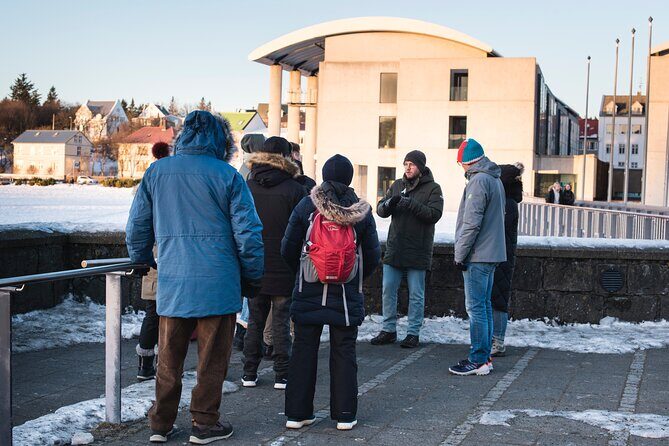
If you want a fast, organized way to understand central Reykjavík, I think this is an easy yes. The stop choices—Hallgrímskirkja, Arnarholl, Old Harbour, Althingishus, City Hall—form a practical story arc from settlement and culture to politics and daily life. The small group size and the emphasis on interaction make it feel less like a script and more like a guided walk.
My only caution is about expectations: it’s still a 2-hour introduction, not a long deep-history seminar. If you’re expecting hours of slow roaming and lots of indoor attractions, you may find it too brief. But if you treat it as day one orientation, it’s a solid use of money and time.
FAQ
How long is the Reykjavik Small Group Walking Tour?
The tour runs for about 2 hours.
Where do you meet and where does the tour end?
You start at Hallgrímstorg 1, 101 Reykjavík. You end in the main square Austurvöllur or by the lake Tjörnin near Reykjavik City Hall.
Is the tour in English and does it run in bad weather?
Yes, it’s offered in English and it operates in all weather conditions. You should dress appropriately for Iceland.
What’s included in the tour price?
The included item is a local professional guide. There are also listed free-admission stops during the route.
Is Harpa Concert Hall guaranteed to be a stop?
The route can change, so the tour can’t always promise a stop at Harpa. The tour ends within walking distance of Harpa.
Is cancellation free?
Yes, you can cancel for a full refund up to 24 hours before the experience starts. Within 24 hours, you won’t receive a refund.