A small city, a big story, and a lot of fresh air. This private Reykjavik route is built to help you get your bearings fast and understand Iceland’s modern capital without feeling rushed. You’ll move through civic landmarks, old wooden neighborhoods, and standout architecture, plus two nearby places that show a different side of life in the capital area.
I really like two things about this experience. First, the private format means your group can set the pace and spend extra minutes on what grabs you—photos, quick walks, or just taking in the views. Second, the onboard Wi‑Fi and hotel-area pickup cut down the usual Reykjavik stress, so you can stay connected between stops and spend less time figuring out logistics.
The main thing to consider is weather. Since you’ll be outside for short stretches between sites, you’ll want good layers and rain protection, and you should stay flexible if conditions force a change in date.
In This Review
- Key highlights worth your attention
- Reykjavik’s northern-capital loop in 3–4 hours
- Parliament House (Althingishús): the political heart on Austurvöllur
- Grjótagata and Grjótaþorp: old wooden Reykjavik, saved from the wrecking ball
- Reykjavík in context: founded by Ingólfur Arnarsson, capital by 1843
- Harpa Concert Hall to City Hall: when design does the talking
- Perlan, the Pearl dome: hot-water tanks under a glass roof
- Hafnarfjörður: the harbor town with Viking and hidden-people vibes
- Bessastaðir and the Icelandic presidency: a site with 1000-year roots
- Private pickup, Wi‑Fi, and photo time with guides Gulla and Villi
- Price and value: $650 per group up to 4
- What to pack for a city that can change its mind
- Should you book this Reykjavik orientation tour?
- FAQ
- What is the duration of the tour?
- How much does the tour cost?
- Is pickup included?
- Is this tour private?
- Do you get Wi‑Fi during the tour?
- What language is the tour offered in?
- Are tickets included for all stops?
- Is a meal included?
- What if the weather is bad?
- Is free cancellation available?
Key highlights worth your attention
- Private group, personalized pacing: your group stays together, and time feels elastic where it matters.
- Hotel-area pickup plus a comfortable ride: easier start, less waiting around, and air-conditioned transport.
- Wi‑Fi on board: useful for maps, translation help, and sharing photos right after the stop.
- Architecture and political landmarks in one loop: Parliament, Harpa, City Hall, Perlan, and more.
- Two admissions included: Perlan and Bessastaðir admission are built in.
Reykjavik’s northern-capital loop in 3–4 hours
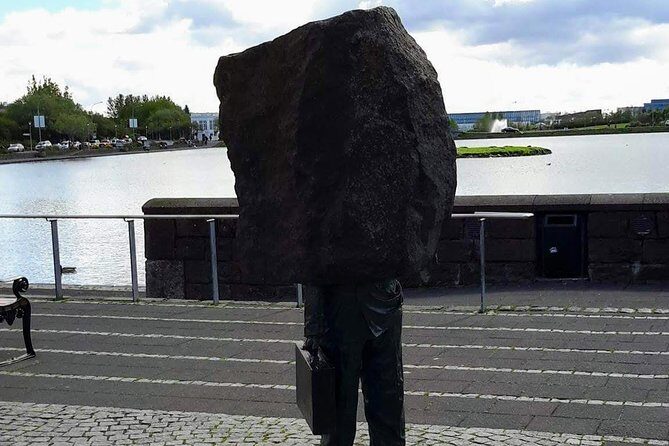
Reykjavik can feel small on the map, but it’s packed with layers: Norse settlement stories, Danish-era administration, modern civic life, and design-forward buildings that look like they belong to the future. This tour gives you a practical first-day framework—almost like a guided “what matters and why” route.
Timing is also realistic. Most stops are around 20 to 40 minutes, with one or two longer visits, so you get context without burning an entire day. You’ll be in a group of up to four, which is ideal if you’re traveling as a couple, a small family, or a tight group of friends and want the guide to focus on your questions.
It’s also a good fit if you don’t plan to rent a car right away. Pickup happens from the greater capital area, and you’re in a vehicle with private transportation—so you’re not juggling buses for a half-day introduction.
You can also read our reviews of more tours and experiences in Reykjavik.

Parliament House (Althingishús): the political heart on Austurvöllur
Your first stop lands right at Austurvöllur square, in front of Parliament House, the Althingishús. This isn’t just a building to point at. It’s a statement of Iceland’s identity: Icelandic stone, built in 1880–81, meant to mark a turning point in national pride.
Here’s what makes this stop click:
- You learn how Iceland linked national celebration to a permanent political space, including plans tied to the 1874 settlement millennium festival.
- You see the evolution in the architecture, with two annexes added later: Kringlan (the Rotunda) in 1908 and Skálinn in 2002.
- You get a special detail that many visitors miss: the garden of Parliament House is Iceland’s oldest public garden, with groundwork done in 1893–95 by Tryggvi Gunnarsson.
Why this matters for your trip: Parliament House sets the tone for the rest of the day. You’re not only looking at Reykjavik as scenery. You’re seeing it as a place where national decisions and public life have been staged for generations.
Grjótagata and Grjótaþorp: old wooden Reykjavik, saved from the wrecking ball
Next you head toward Grjótaþorp, a small area often described through its roots in old smallholdings. The street story is the point. The name connects to Grjóti, one of the eight smallholdings on the 18th-century Reykjavík estate, and the settlement pattern you can still feel today.
This stop has a neat behind-the-scenes twist. A major road plan threatened the neighborhood in the 20th century, but the idea was abandoned. Instead, the area you see today became a renovation and rebuilding project—old wooden houses were restored, and additional wooden buildings were brought in from other districts to reinforce the original street layout.
What you’ll notice walking briefly through this part of town:
- Narrow streets and small, tended gardens
- Detached wooden houses that match the neighborhood’s preserved scale
- A clear example of how Reykjavik can protect character without freezing time
If you’re the kind of visitor who likes “small place, big meaning,” this is one of the best stops. It also works as a reset—quiet streets after a civic monument.
Reykjavík in context: founded by Ingólfur Arnarsson, capital by 1843
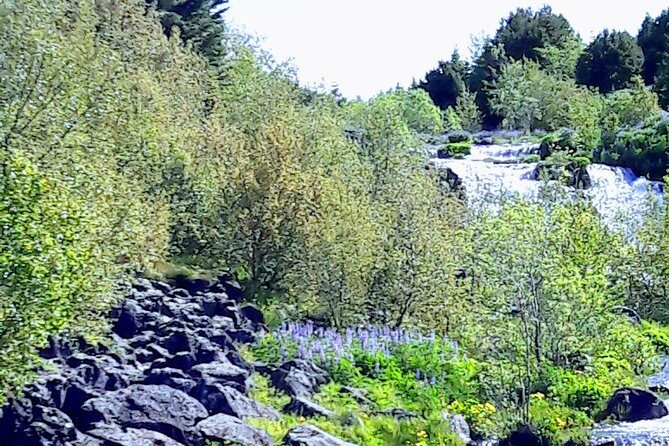
Reykjavík itself is the bridge between past and present. The tour places this stop right where you can connect the dots instead of reading plaques one by one.
You’ll get the essentials:
- Reykjavík was founded in 874 by Norse settler Ingólfur Arnarsson.
- For a long time it was a small fishing village and trading post.
- In 1786, it became the administrative center of Danish-ruled Iceland.
- In 1843, it became the capital.
And then there’s the fun, practical hook: Reykjavík is the world’s northernmost capital. That fact isn’t just trivia. It explains a lot about daily life, from how the city plans its energy and buildings to why Reykjavik feels simultaneously modern and shaped by climate reality.
If you want to understand why the city looks the way it does, this stop helps you connect history to architecture and public space.
Harpa Concert Hall to City Hall: when design does the talking
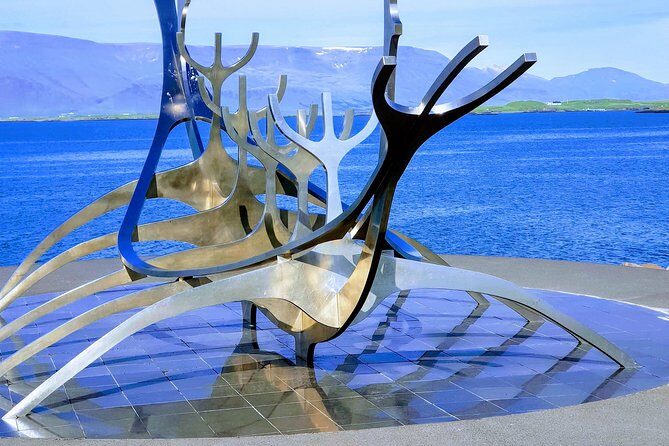
Two of Reykjavik’s most talked-about structures show up back-to-back: Harpa and Reykjavik City Hall.
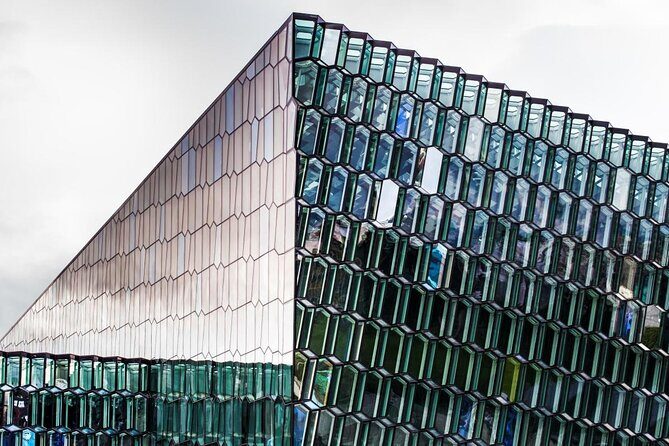
At Harpa Concert Hall and Conference Centre, you’re looking at award-winning architecture that opened May 4th, 2011. The scale of the public appeal is clear from the number of visitors since opening—4 million guests—which tells you this building isn’t just for performances. It’s a gathering point.
Then you shift to Reykjavik City Hall, an impressive building on the northern shore of a pond. This is one of those stops where you start noticing the city’s approach to nature in urban planning—water, greenery, and even birdlife as part of the design.
Why I like pairing these two: Harpa represents modern culture and public spectacle. City Hall shows how governance can sit beside nature rather than fight it. Together, they explain why Reykjavik feels designed and livable, not just functional.



Perlan, the Pearl dome: hot-water tanks under a glass roof
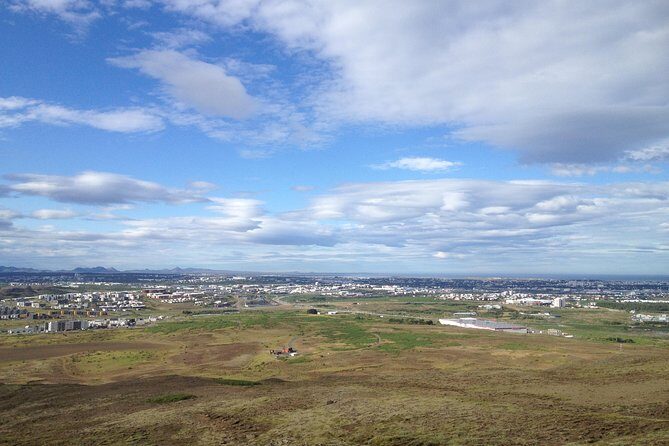
If there’s a “wow” factor stop on this route, it’s Perlan. The tour brings you up to Öskjuhlíð Hill, which rises 61 meters above sea level, and then points to the iconic Perlan structure—often described as the Pearl.
This building is built around an unusual foundation concept: a massive glass dome sitting on six hot water tanks. That detail is more than interesting trivia. It’s a reminder that in Iceland, energy and design often share the same physical space.
Perlan is also positioned as one of the most visited attractions in Iceland, so don’t be surprised if you feel the building’s popularity even from the outside. What you’ll take away from this stop is a stronger sense of how Reykjavik turns geothermal infrastructure into something you can experience, not just something you pass by.
The good news for planning: Perlan admission is included. That’s value because it saves one more ticket decision and keeps your time tight.
Hafnarfjörður: the harbor town with Viking and hidden-people vibes
From Reykjavik’s core, the tour swings into Hafnarfjörður, a harbor village in the greater capital area. It’s the third most populous city in Iceland, which means it’s not just a charming side trip—it has real everyday life.
You’ll also hear the local identity themes:
- The place is often called the town of hidden people
- It’s also linked with Vikings
That blend matters. Iceland’s folklore isn’t separate from the modern world; it shows up in how places are named, marketed, and remembered. A short visit here gives you a sense that the capital area isn’t one flat “Reykjavik only” experience.
And since it’s a quick stop, it works even if you’re mostly sightseeing in Reykjavik. It adds variety without dragging the day longer than promised.
Bessastaðir and the Icelandic presidency: a site with 1000-year roots
The final anchor is Bessastaðir, the official home of the President of Iceland. Even without long time inside, the history attached to this location gives it weight.
Here’s the timeline the tour lays out:
- Bessastaðir was first settled in 1000.
- In the 13th century, it became one of Snorri Sturluson’s farms.
- After Snorri was murdered, Bessastaðir was claimed by the King of Norway.
That sequence helps you understand why Bessastaðir sits in the national imagination. It isn’t just a residence. It’s a marker of how power and authority shifted across centuries.
Practical upside: Bessastaðir admission is included, so you don’t have to add another cost or ticket step to your half-day plan.
Private pickup, Wi‑Fi, and photo time with guides Gulla and Villi
A big part of why this works well is how it’s run. Pickup is offered from the greater capital area, which means you start closer to home and avoid the annoying hunt for meeting spots.
The vehicle is air-conditioned and you get Wi‑Fi on board, which might sound like a small perk until you’re between stops and want to pull up restaurant ideas, translate menus, or message friends right after your latest photo. In a place where weather can change fast, being able to check plans quickly is useful.
It’s also a private tour, meaning only your group participates. With a group of up to four, you can actually ask questions and get answers that fit your interests instead of hearing general statements over and over.
And in the guidance style, names matter. Based on the guide experience shared for this tour, Gulla and Villi are known for being friendly, English-speaking, and energetic—exactly what you want when your goal is to learn fast and enjoy the city without feeling like you’re being rushed.
Price and value: $650 per group up to 4
At $650 per group (up to four people), the first question is whether it’s “worth it” compared to cheaper tours. Here’s how I’d frame it.
If you fill the group, the effective cost can drop to about $162 per person—at which point a private, guided loop with admissions begins to look like a fair deal. Two admissions are included: Perlan and Bessastaðir. That added value helps justify the price because attractions with entry fees can otherwise add up quickly.
Also, the route covers more than one type of stop:
- Political history (Parliament House)
- Preserved neighborhood fabric (Grjótaþorp)
- Core identity (Reykjavík overview)
- Design-forward public buildings (Harpa and City Hall)
- A geothermal landmark experience (Perlan)
- A neighboring city with its own personality (Hafnarfjörður)
- A presidency-linked historical site (Bessastaðir)
In short: you’re paying for time plus context plus a vehicle to connect it all in a compact window.
If you’re traveling solo and would be paying full group cost by yourself, you may feel less satisfied—because you’re essentially buying the convenience of a private group vehicle. But if you have even one or two travel partners, it becomes much easier to call it a smart value.
What to pack for a city that can change its mind
Reykjavik is famous for weather that can shift. Even though each stop is relatively short, you’ll spend time outside between them.
Bring:
- Waterproof outer layer (not just a light rain jacket)
- Warm layers, even in milder months
- Comfortable walking shoes
- Sunglasses if the sky clears, because glassy architecture like Harpa and dome structures like Perlan can glare
Also keep your day flexible in spirit. This tour is designed to run in normal conditions, but it’s weather-dependent, and if conditions are poor, you may be offered a different date or a refund.
Should you book this Reykjavik orientation tour?
Book it if you want a high-value first-day plan that helps you understand Reykjavik’s story quickly—and you like civic landmarks, architecture, and character neighborhoods more than shopping or long drives.
Skip or rethink it if:
- You’re already confident navigating the city on your own and would rather spend the day at a slower, self-paced rhythm.
- Your group wants lots of free time in one place rather than a balanced sampler of major sights.
- You’re traveling with only one person and the full group cost feels steep.
If you’re coming to Iceland for culture and context (and you don’t want to guess where to start), this private loop is a strong way to orient yourself. You’ll leave with a better mental map of what Reykjavik is, where it came from, and how the modern city connects to older Icelandic roots—without turning your half-day into a slog.
FAQ
What is the duration of the tour?
The tour lasts about 3 to 4 hours.
How much does the tour cost?
It costs $650.00 per group (up to 4).
Is pickup included?
Yes. Pickup is offered from the greater capital area.
Is this tour private?
Yes. It’s a private tour/activity, and only your group participates.
Do you get Wi‑Fi during the tour?
Yes. Wi‑Fi is provided on board.
What language is the tour offered in?
The tour is offered in English.
Are tickets included for all stops?
Admission is free for several stops. Admission is included for Perlan and Bessastaðir.
Is a meal included?
No. Meals are not included.
What if the weather is bad?
The experience requires good weather. If it’s canceled due to poor weather, you’ll be offered a different date or a full refund.
Is free cancellation available?
Yes. Free cancellation is available up to 24 hours in advance for a full refund.