Seven days. One car-free circle around Iceland.
On this private Iceland tour, I like the fact that you’re not piecing together maps and car logistics. A private guide keeps the story straight as you move from democracy at Þingvellir to boiling-water eruptions near Geysir, and then out toward glaciers, lava, and eerie caves. The pace is busy and weather-driven, so the only real drawback is that you’ll be spending a lot of time in the car and doing short walks in places that can feel cold, windy, and slippery.
You also get a smart “comfort base” plan: six nights in local hotels or guesthouses, with daily breakfast included. Guides I’ve seen tied to this operator’s trips include Dr. Helga Bára, Addy, and Sigrún, and that matters because it’s their job to explain the geology and human history fast while you’re still actually enjoying the views. If you’re the type who wants long, unhurried mornings, this may feel like a sprint—but if you want maximum Iceland in a week, it’s a strong fit.
In This Review
- Key things to know before you go
- Golden Circle with Þingvellir, Geysir, Gullfoss, and Friðheimar
- Secret Lagoon to Skógafoss: the south coast’s waterfall loop
- Sólheimajökull to Reynisfjara: glacier fronts and black beach geology
- Skaftafell, Fjaðrárgljúfur, and the iceberg lagoons near Vatnajökull
- Winter ice caves or summer Into the Glacier: choose your frozen adventure
- East Iceland’s villages, Hengifoss, and the Myvatn power zone
- Goðafoss to Akureyri, then Kirkjufell’s iconic silhouette
- Snæfellsnes: black pebbles, lava caves, and basalt cliffs toward Borgarnes
- Price, inclusions, and whether this is value for you
- Pace, weather reality, and how to pack smart
- Should you book this private 7-day Iceland tour?
- FAQ
- What time does the tour start?
- Does the tour include pickup?
- What’s included in the price?
- Are meals included?
- Are ice experiences available year-round?
- Is the tour dependent on weather?
Key things to know before you go
- Private, door-to-sight pacing: pickup is offered, and you start around 9:00 am so you can get moving early.
- All the major “wow” stops are planned: Þingvellir, Geysir, Gullfoss, Seljalandsfoss, Skógafoss, glacier lagoons, Dettifoss, and Snæfellsnes are all built in.
- You’re guided through real geology: geothermal fields, lava tubes, basalt cliffs, and outlet glaciers are explained as you walk.
- Season matters for ice adventures: natural ice caves in winter (Nov–Mar) or Into the Glacier in summer (Apr–Oct).
- Food is mostly on your own after breakfast: lunch is included on day one; dinner and other lunches can be bought along the way.
- You’ll want good layers: most stops involve standing around viewpoints and doing short walks in exposed weather.
Golden Circle with Þingvellir, Geysir, Gullfoss, and Friðheimar
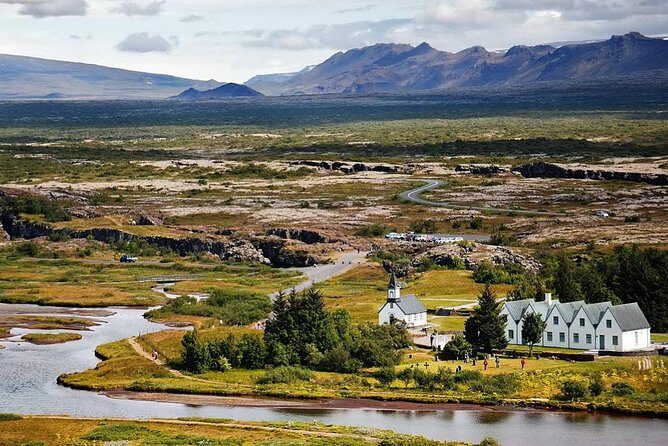
The trip starts in the Þingvellir area, where Iceland’s story begins in a very specific way. You’ll be at Þingvellir National Park, tied to Iceland’s early parliament (established in 930) and later recognized as a World Heritage Site. Then you walk to Öxarárfoss waterfall. It’s not just a photo stop; it’s a chance to stand where geology and politics both feel close-up.
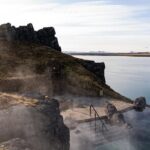
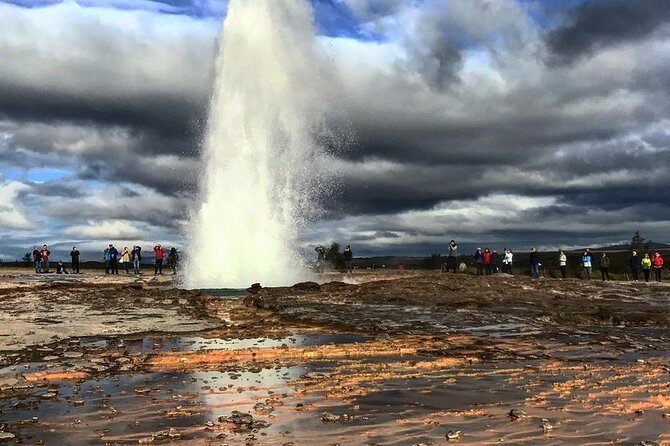
From there you roll to Geysir. The site has two big personalities: Geysir, which erupts less often, and nearby Strokkur, which shoots boiling water up on a regular rhythm. That “wait, count, then whoosh” pattern is exactly what makes geothermal areas feel alive even in bad weather.
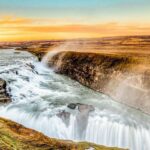
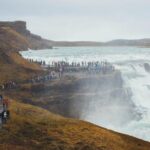
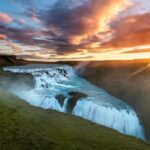
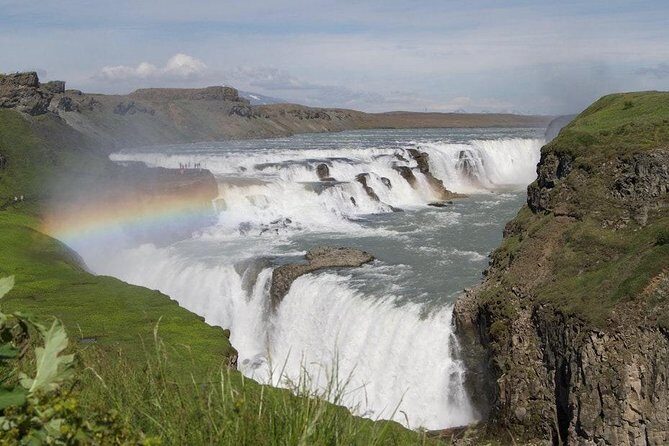
Next is Gullfoss, the waterfall that still manages to be dramatic even when you’ve seen other falls. You’ll get a viewpoint from above, then have the option to walk down the path to get closer to the power of the water. If rain turns the air into fog, the spray can actually make Gullfoss feel more theatrical.
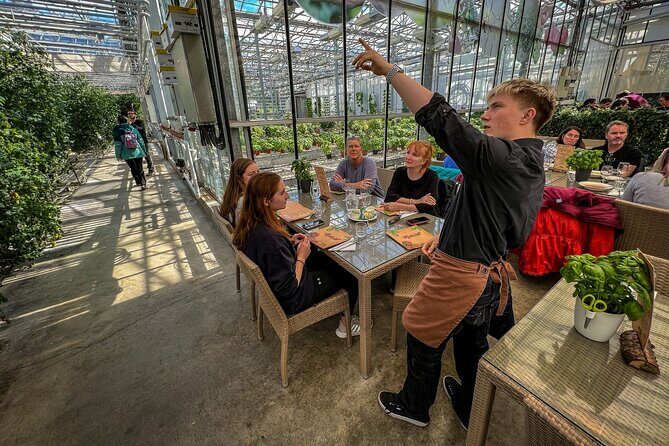
Then comes a meal that’s different from the usual Iceland routine. At Friðheimar greenhouse, tomatoes are grown with geothermal heat and geothermally generated electricity, and the restaurant serves a menu focused on those tomatoes. It’s a rare experience that connects Iceland’s energy story to something you can taste. Do it with an appetite, because you’ll likely want that fuel for the next long stretch.
Small consideration: Golden Circle days often include a lot of viewpoints plus driving. If you hate waiting in wind for eruptions or water flow, manage expectations and focus on the guide’s explanations while you’re there.
You can also read our reviews of more private tours in Reykjavik
Secret Lagoon to Skógafoss: the south coast’s waterfall loop
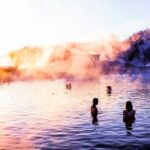
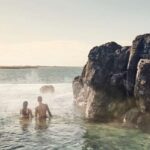
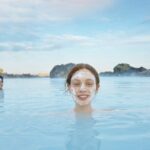
One of the best “reset” moments in the south is Secret Lagoon (Gamla Laugin). This is a geothermal bath in raw natural surroundings—meaning you’re relaxing outside, not in a sterile indoor pool. It’s the kind of stop that makes sense after hours of sightseeing, because your body stops feeling like a camera tripod and starts feeling like a human again.
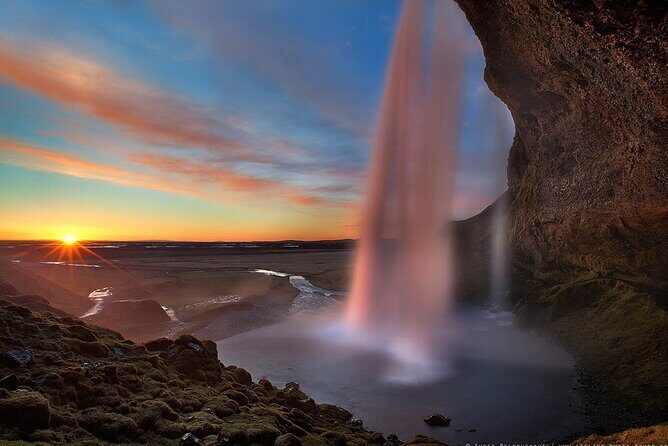
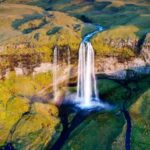
After that warm-up, you hit Seljalandsfoss, a 60-meter waterfall you can walk behind. This is one of those Iceland features that’s hard to appreciate fully until you’re literally in the misty tunnel of rock behind the fall. Keep an eye on footing; water + stone + wind is rarely a best-friends combo.
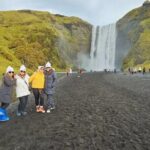
Not far away is Skógafoss, Iceland’s most famous waterfall. It’s also fed by meltwater linked to glaciers (from Eyjafjallajökull and Mýrdalsjökull). You’ll get about an hour there, and if the weather cooperates you can enjoy both the wide view and the intense sound that follows you everywhere. The practical advantage of having a guide: they’ll time your walking so you’re not trapped in the worst conditions longer than you have to be.
Small consideration: waterfalls in winter and shoulder seasons can mean icy paths behind falls. With a private guide, you’re more likely to be routed safely, but you still need grippy shoes and patience.
Sólheimajökull to Reynisfjara: glacier fronts and black beach geology
Next, you move to Sólheimajökull, an outlet glacier flowing out of the Mýrdalsjökull ice cap. Underneath that larger ice cap sits the volcano Katla, which gives the glacier region extra tension in the story. You’ll spend time on/near the glacier area with the right kind of context: this isn’t just ice, it’s a moving system tied to volcanic power.
From the glacier, you go to Dyrhólaey, a 120-meter-high promontory along the south coast. The sea has eroded the headland into dramatic angles and vantage points. This is where the views help you understand how Iceland’s coastline is basically a slow-motion sculptor.
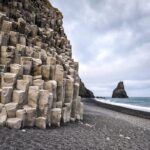
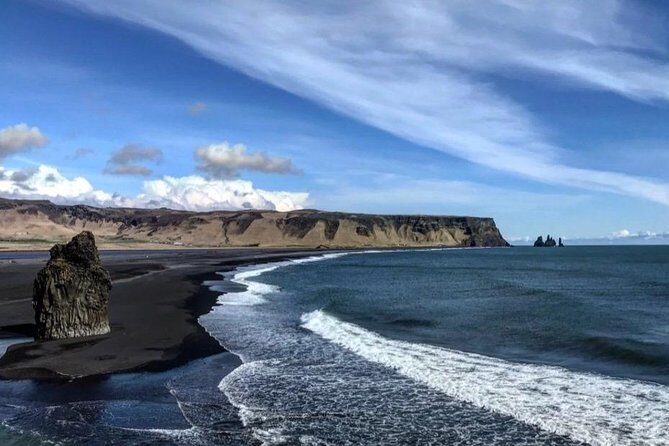
Then comes Reynisfjara, Iceland’s black beach stretch known for basalt geology. The basalt columns and Reynisdrangar sea stack are part of what makes the beach feel like a set from a science-fiction documentary. You’ll also learn how volcanic island geology shapes the color and texture under your feet. The tour includes time to enjoy the beach and take in the columns and formations.
Small consideration: black-sand beaches can be deceptively slick and windy, and ocean conditions can change fast. Stick to safe walking areas and listen to your guide when they talk about where waves break.
Skaftafell, Fjaðrárgljúfur, and the iceberg lagoons near Vatnajökull
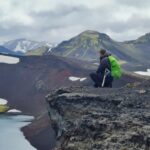
Once you reach the Vatnajökull region, the whole trip starts feeling more “world-scale.” You’ll visit Skaftafell, now within a larger Vatnajökull National Park system. Even the basics here are impressive: Vatnajökull is the largest glacier in Europe, and the surrounding wilderness is vast.
Then you go to Fjaðrárgljúfur, a canyon carved by a glacial river during the last ice age. It’s about 100 meters deep and roughly 2 kilometers long, and it’s known for dramatic angles you can see from planned viewpoints. You’ll likely notice how the canyon walls are layered and cut—proof that water and ice did the shaping, not time alone.
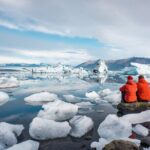
After that, the tour hits the glacier lagoon trio vibe: multiple lagoon stops facing calving glaciers. You’ll spend time at Fellsfjara (often tied to the idea of icebergs floating near a black beach), then at Jökulsárlón, and also at Fjallsárlón. In each place, the experience is similar in the best way: watch icebergs drift, look for calving activity when conditions allow, and then walk out toward the black sand area that people sometimes call Diamond Beach.
Here’s why this works so well on a guided private route: you’re not just there for pictures. Your guide can point out what you’re seeing—iceberg size changes, how the glacier front behaves, and how the lagoon’s color happens. It’s geology you can watch in motion, not just learn from a sign.
Small consideration: lagoons depend on weather. Wind and low visibility can reduce iceberg detail, so it helps to stay flexible and trust the guide’s timing.
Winter ice caves or summer Into the Glacier: choose your frozen adventure
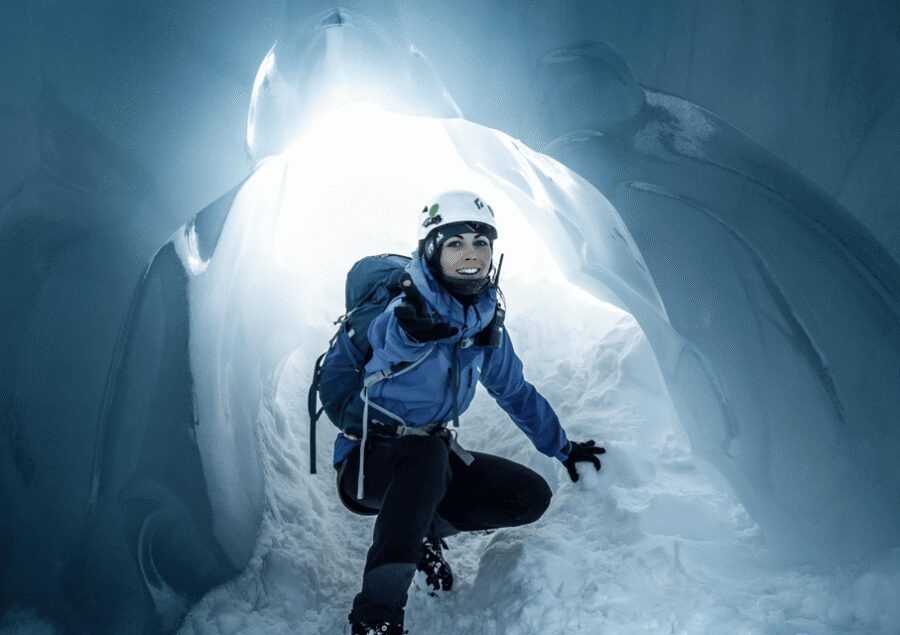
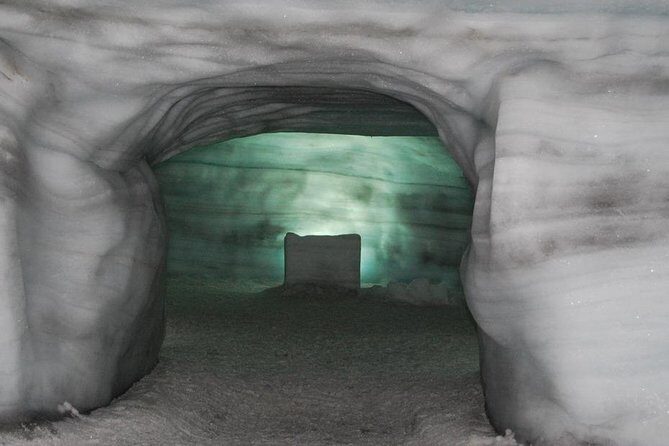
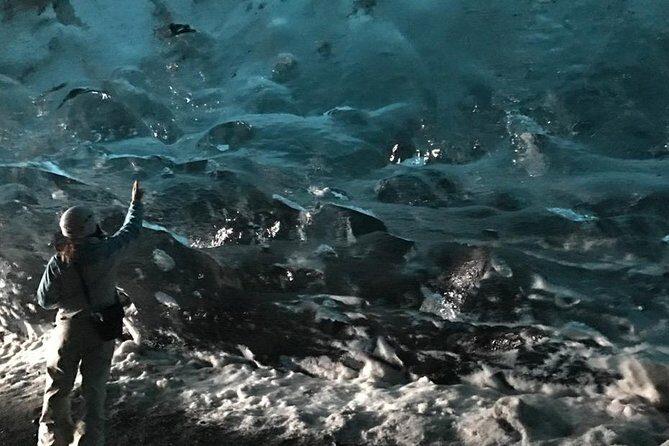
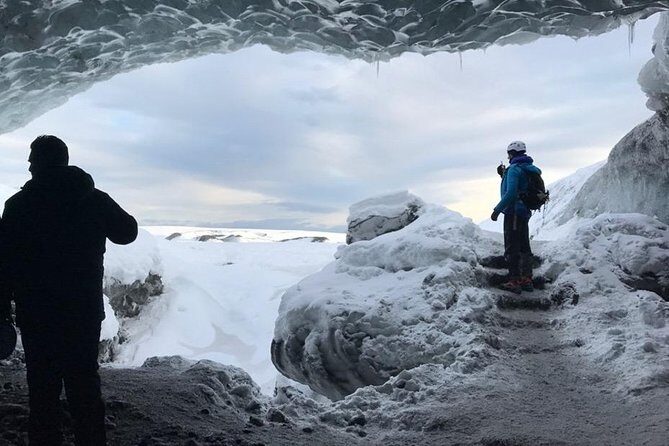
This part is genuinely seasonal. In winter (November–March), you’ll do ice cave exploration into natural ice caves, and in summer (April–October) you’ll do Into the Glacier, which is a man-made ice tunnel experience on Langjökull. That seasonal split is important because it changes what you’re actually walking through.
Into the Glacier includes an interesting twist: you’ll be transported onto the glacier using a monster truck, and then guided through the ice tunnel. In good weather, the view from the top is spectacular. The practical win here is that you get to see glacier terrain without having to master glacier skills yourself.
Natural ice caves are a different kind of magic—more raw, more changing, and more dependent on conditions. If your dates fall in the winter window, expect an adventure that feels more like exploring than sightseeing.
You can also read our reviews of more tours and experiences in Reykjavik
East Iceland’s villages, Hengifoss, and the Myvatn power zone
After the Vatnajökull area, the route shifts toward east Iceland’s character. You’ll stop in Djúpivogur, a picturesque fishing village known for art and views. It’s a palate cleanser after the giant glacier lagoons, and it adds human rhythm to a trip that could otherwise feel 100% geology.
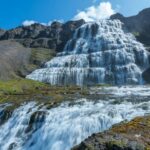
Then you go for waterfalls with Hengifoss and Litlanesfoss. Hengifoss is among the highest waterfalls in Iceland, and the setting makes it feel both tall and visually layered. Litlanesfoss is surrounded by basalt columns, so you get another geology-meets-water scene.
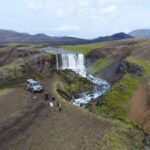
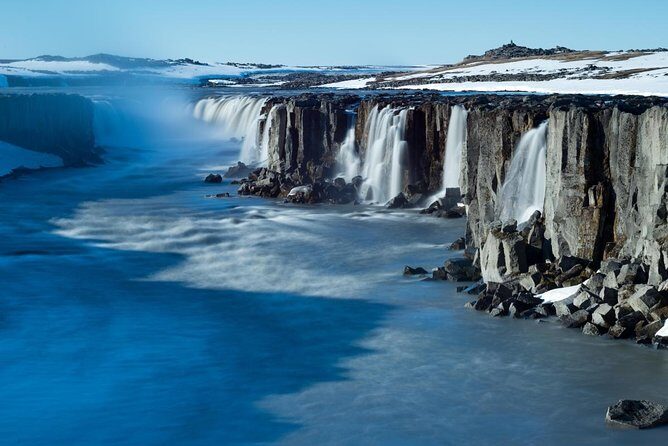
Next you reach the Lake Mývatn area, spending time around the lake and in the surrounding formations. You’ll visit Egilsstaðir village briefly on the way, then get to Mývatn and see more of the region’s volcanic and volcanic-adjacent features. Dettifoss is a must here: it’s described as the largest and most powerful waterfall in Iceland and Europe. Standing near it, you feel how force becomes atmosphere.
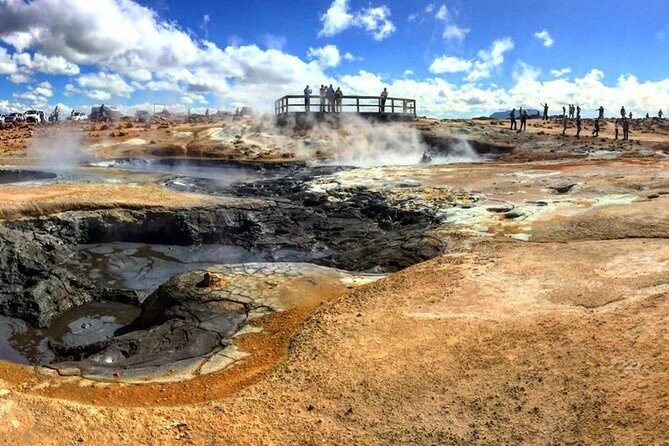
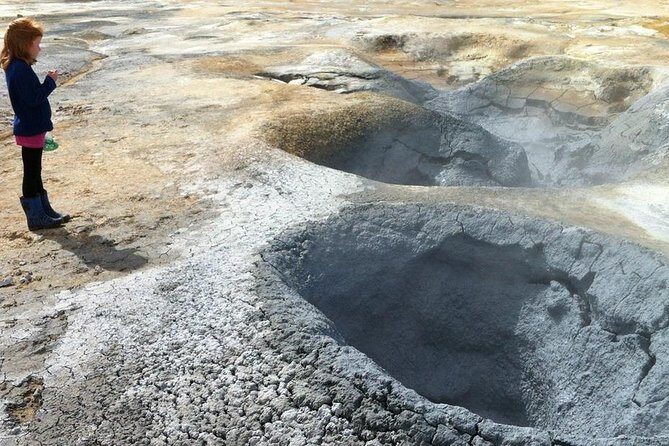
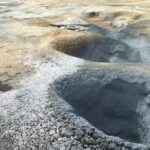
From there you’ll explore Námaskarð (often referred to as Hverarönd), an active field of thermal springs, mud pots, and boiling mud. It’s ever-changing and full of color from sulfur deposits. Nearby Krafla Lava Fields connect those geothermal signs to a central volcano (Krafla), keeping the science story threaded.
You’ll also see Dimmuborgir, lava formations made of massive lava tubes. The formations formed when lava flowed over a lake and created vapor paths through cooling rock. There’s also local folklore attached to the area, and your guide can connect myth to the physical shapes you’re staring at.
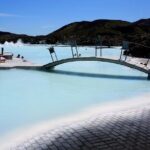
Back around the lake, you’ll revisit Lake Mývatn to look at Skútustaðagígar—pseudocraters that help explain how ice and volcanic processes can interact. Then you’ll do the Myvatn Nature Baths at Jarðböð, a naturally heated man-made lagoon with mineral-rich water. It’s the kind of soak that makes sense here because your day is all steam and stone.
Small consideration: the Mývatn/Dettifoss stretch can be long on roads. The private format helps because you don’t waste time negotiating schedules—your guide manages the flow.
Goðafoss to Akureyri, then Kirkjufell’s iconic silhouette
As you head north, you’ll stop at Goðafoss, the Waterfall of the Gods. The name gives it personality, but what matters is the feeling of scale and how the falls sit in their setting. Then you arrive in Akureyri for a city tour and dinner on your own, with an overnight stay.
Akureyri is a useful stop because it gives you a real base near services and a chance to reset after long driving days. And dinner on your own can be a plus if you like choosing where and what to eat.
From Akureyri, you’ll get one of Iceland’s most photographed natural symbols: Kirkjufell. You’ll also see Kirkjufellsfoss nearby, which pairs perfectly with the mountain’s outline. Even with gray skies, this area reads visually strong because the shapes are so clear.
Snæfellsnes: black pebbles, lava caves, and basalt cliffs toward Borgarnes
The tour then works through the Snæfellsnes Peninsula and nearby western stops. You’ll start with Djúpalónssandur, a black-sand beach with smoothed pebbles and scattered wreckage pieces from a 1948 shipwreck. It’s one of those places where nature and history sit on the same shoreline.
Next are Hellnar and its rocky coastal formations. Then you’ll explore Vatnshellir Cave, a lava tube in an 8000-year lava field. You’re shown how lava drains out and leaves behind a hollow system that becomes accessible. It’s a very “I can’t believe it’s real” type of stop, especially when you think about how quickly Iceland’s surface changes over time.
After the cave, the route goes to Arnarstapi, another fishing village area known for rock formations and a local legend connected to Bárðr. The scenery here supports the stories because the rocks look like they belong in a myth. You’ll then finish with Lóndrangar basalt cliffs, volcanic plugs of basalt shaped by erosion. Even without dramatics, the cliffs feel sculpted by forces larger than any individual can comprehend.
In summer season (April–October), you also may include Into the Glacier on Langjökull later in the day flow, which again adds a glacier-adventure component.
Then you swing to Hraunfossar and Barnafoss. Hraunfossar is a waterfall series streaming out of porous lava into the Hvítá river over about 900 meters—water finding exits in a way that looks almost engineered. Barnafoss is shorter, tied to a story about children and a broken lava bridge. Then the tour includes a stop in Borgarnes on the way back toward Reykjavík.
Small consideration: by the time you’re on the western side, you may be a little “viewed-out.” This is where the guide’s job matters most: to keep explanations fresh and help you notice the differences between each rock, each fall, and each coastline curve.
Price, inclusions, and whether this is value for you
The price for this private 7-day tour is listed at $11,101.77 per person, which is eye-watering. The key question is not whether it’s expensive—it’s what you get that you’d otherwise pay for in time, stress, and logistics.
What’s included here is meaningful for the value story:
- a tour guide
- private transportation
- hotels or guesthouses (six nights) with daily breakfast
- entrance tickets for the sights and activities (with extras not included)
- fees and taxes
What’s not included is also clear:
- lunch is included only on day one; lunches later can be bought on the trip
- dinner is not included (you can buy it on the trip)
So the value works best if you’re saving yourself:
- car rental effort and route planning
- driver fatigue on long days
- the need to figure out which seasonal ice experience is right
If you’re traveling with more people and you can split costs, private touring can start making sense quickly. If you’re a solo traveler who hates driving but also hates spending, you might feel the price more sharply. Either way, the trip is structured around major Iceland icons—waterfalls, geothermal areas, glacier lagoons, and cave/ice experiences—so you’re paying for access plus interpretation, not just driving.
Pace, weather reality, and how to pack smart
This is a week of highlights, which means you’ll move a lot. You’ll do plenty of short walks—at Þingvellir, near waterfalls, at black beaches, in canyon areas, and around lagoons. Plan on boots you trust and layers you can adjust fast. Wind is a constant character in Iceland, and it can turn a pleasant viewpoint into a wind tunnel in minutes.
Also, the tour needs good weather for it to run as planned. That’s not a threat; it’s just reality in a place where storms can close roads, change visibility, and affect ice conditions. Your guide’s experience is what helps you keep the day working when plans adjust.
Finally, your best strategy is mental: don’t expect perfection at every stop. Expect variety. One day might be clear and sharp at the glacier lagoon. Another day might emphasize sound and mist at a waterfall. The private guide approach helps because you’re not scrambling for alternatives.
Should you book this private 7-day Iceland tour?
Book it if you want a guided, car-free, high-impact loop through Iceland’s headline regions in one week. The mix is strong: Þingvellir’s historical setting, the Golden Circle core, south coast falls, glacier lagoon time, Myvatn’s geothermal intensity, Dettifoss force, and Snæfellsnes caves and basalt cliffs. Add in the bath at Secret Lagoon and the mineral soak at Jarðböð, and you’ve got the kind of week where you alternate between “wow” and “breathe.”
Skip it or at least rethink if you’re sensitive to a fast pace or you want mostly slow mornings. This tour is built to cover ground. And yes, at $11,101.77 per person, it’s a big splurge—so make sure your trip style matches the private touring promise: maximum sights, minimal logistics, and a guide who keeps the story clear while you’re seeing the real Iceland.
FAQ
What time does the tour start?
The tour start time is 9:00 am.
Does the tour include pickup?
Yes, pickup is offered.
What’s included in the price?
Included are a tour guide, hotels or guesthouses with daily breakfast (six nights), private transportation, entrance for all sights and activities, and all fees and taxes.
Are meals included?
Breakfast is included daily. Lunch is included on day one, while lunch on other days and dinner are not included and can be bought on the trip.
Are ice experiences available year-round?
There are seasonal options. Ice cave exploration into natural ice caves is described for November–March, and Into the Glacier is described for April–October.
Is the tour dependent on weather?
Yes. It requires good weather. If it’s canceled due to poor weather, you’ll be offered a different date or a full refund.