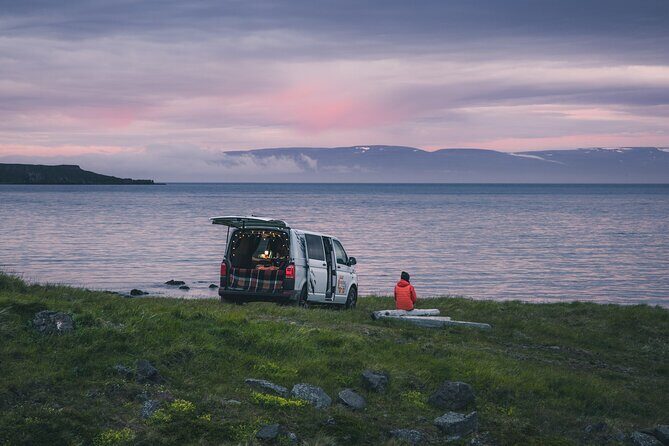
Ring Road in a week, minus the driving stress. This small-group circuit is built for people who want the big Iceland hits without the rental-car workload. You’ll roll through dramatic sights, sleep in included hotels with private bathrooms, and ride in a minibus limited to 19 passengers.
Two things I really like: the tour includes your accommodation with breakfast, so you’re not hunting for rooms each night, and the group stays small enough to feel human. I also love the guide style—on one trip, the guide Thorey brought a warm mix of real-world context and fun details, including a story or two worth remembering.
One thing to plan for: the days are packed, and if you add optional extras (glacier walk, spa baths, whale watching), lunch timing can get tight. When that happens, it’s smart to keep snacks handy.
In This Review
- Key things to know before you go
- Why this Ring Road feels doable in 7 days
- Price and value: what $1,479 buys you
- How pickup and the minibus make or break the experience
- Day 1: Seljalandsfoss, black sand beaches, and Solheimajokull glacier ice
- Day 1 drawback to watch for
- Day 2: Jökulsárlón icebergs, Diamond Beach, Vestrahorn photos
- Day 3: Mývatn’s steam, Dettifoss power, Studlagil’s turquoise canyon
- Day 4: Akureyri, Hvitserkur, turf churches, and optional whale watching
- Day 5: Deildartunguhver, lava caves, and a horse farm break
- Day 6: Ytri Tunga seals, Arnarstapi cliffs, and Kirkjufell photos
- Day 7: Þingvellir UNESCO, Geysir’s timing, Gullfoss, and Kerið’s overlooked crater
- Optional extras: when they’re worth it (and when to plan food)
- Packing and timing tips that save your trip
- Is this tour for you? My practical verdict
- FAQ
- FAQ
- How long is the Ring Road tour from Reykjavik?
- What’s included in the price?
- Are lunch and dinner included?
- Do you get picked up from hotels in Reykjavik?
- What optional activities cost extra?
- Can activities be cancelled due to weather or safety?
- What is the cancellation deadline for a full refund?
Key things to know before you go
- Hotels with breakfast are included in double rooms with private bathrooms
- Max 19 people means fewer crowds and smoother stopping for photos
- Pickup from Reykjavik is included, though your exact point may be a nearby bus stop
- Optional add-ons cost extra, and they can shift meal timing
- Weather and safety can change the day, with substitutions and refunds for price differences when possible
- Onboard Wi‑Fi and USB chargers make long drives less annoying
Why this Ring Road feels doable in 7 days
The Ring Road is big. Real big. This tour keeps it manageable by turning the driving into background work. You get the route structure, the stops, and the guide-led pacing, so you can focus on seeing things that would be hard to line up on your own.
The “small-group” part matters. With a maximum of 19 on the bus, you’re not stuck in a mass of people at every waterfall viewpoint. It’s still busy at the popular places, but the experience feels less like a conveyor belt.
The other secret sauce is that you’re not just doing sights—you’re also sleeping in a planned setup. Included hotels with breakfast reduce decision fatigue. You show up, you eat, you go again.
You can also read our reviews of more tours and experiences in Reykjavik
Price and value: what $1,479 buys you
At $1,479 per person, this isn’t the cheapest way to do Iceland. But it’s also not an “only transport” deal. You’re paying for a package that bundles the hardest parts: guided logistics, a max-19 minibus, Reykjavik pickup and drop-off, and hotel stays with breakfast.
Here’s how I think about the value:
- If you rented a car, you’d still pay for fuel, parking, tolls where applicable, and the time to plan nightly routes and lodging.
- If you fly in and out, this type of round-trip arrangement saves you from building the itinerary puzzle day by day.
- Hotels with private bathrooms are a big deal in Iceland, especially when weather can force changes. Having that front-loaded helps.
Also, certain entries are included depending on the day (like Kerið and Þingvellir), and Vidgelmir lava cave entry is included on 5-day or longer options. That adds up more than you’d think when you’re tracking fees.
How pickup and the minibus make or break the experience
Your day starts at 9:00 am, with pickup usually happening between 8:30 and 9:00. If you stay inside Reykjavik, pickup is free, but because some areas limit bus access, you may meet the bus at a nearby stop. If you skip pickup, you can meet at the Nicetravel office at Fiskislóð 45M, 101 Reykjavik—just make sure you’re there before 08:20.
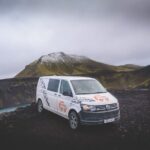
On the vehicle: it’s a minibus for up to 19, and you’ll have onboard Wi‑Fi and USB chargers. The ride is comfortable enough for long stretches, but seats are described as “airplane-seat style”—tight leg room. For day bags, there’s space for luggage in the back, and you can usually stash a smaller personal bag where it fits.
If you get cold easily (you will), dress in layers. Bring a small bag you can reach fast. One smart approach is to pack gloves, scarf, rain layer, and snacks in a bag you don’t have to dig for every time you stop.
Day 1: Seljalandsfoss, black sand beaches, and Solheimajokull glacier ice
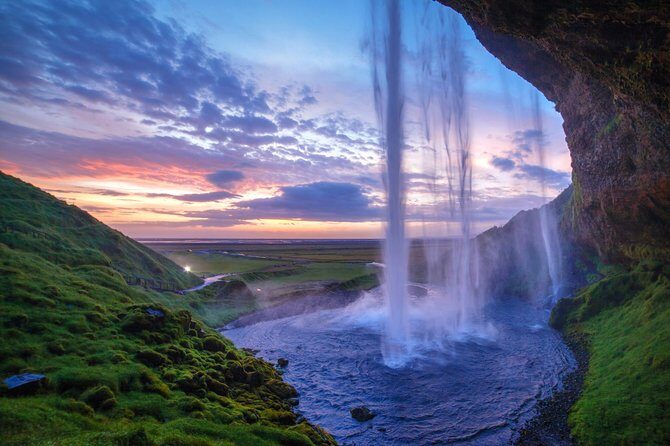
Day 1 is classic South Coast energy. You start with Seljalandsfoss, the waterfall you can walk behind. It drops around 60 meters and it’s timed so you get meaningful viewing time—not just a quick stop.
Next is Gljúfrabúi, sometimes called the hidden waterfall. It’s smaller, but the setting is the point: you see it from a cave-like approach, and it feels more intimate than some of the bigger falls.
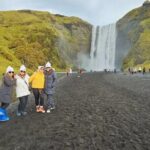
Then comes Skogafoss. This one is raw power—one wide, dramatic cascade that makes you understand why Iceland has such a strong storytelling culture about water and rock.
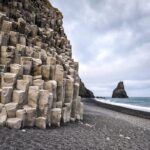
After the waterfalls, you head to Reynisfjara Beach, the famous black sand coast under Mt. Reynisfjall. The basalt formations—especially Reynisdrangar—are photo gold. Just keep your distance from the waterline. The Atlantic can be rough here.
You’ll also stop in Vík, giving you a break and a lunch opportunity in the south-coast village vibe.
Then the day turns volcanic and icy. The route includes a stop inspired by the Laki eruption (1700s) and the massive lava flow it created—one of the most famous cause-and-effect stories Iceland tells.
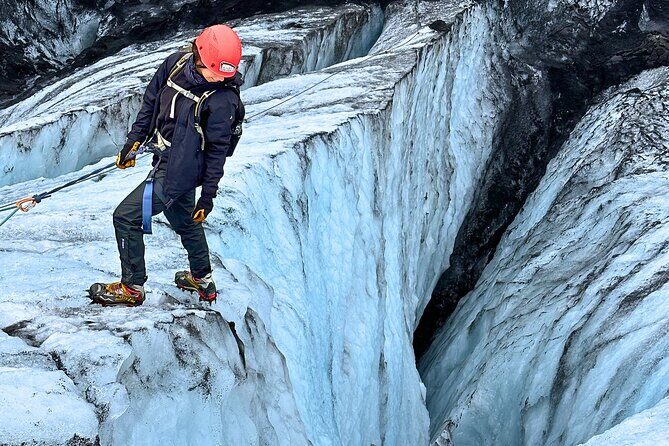
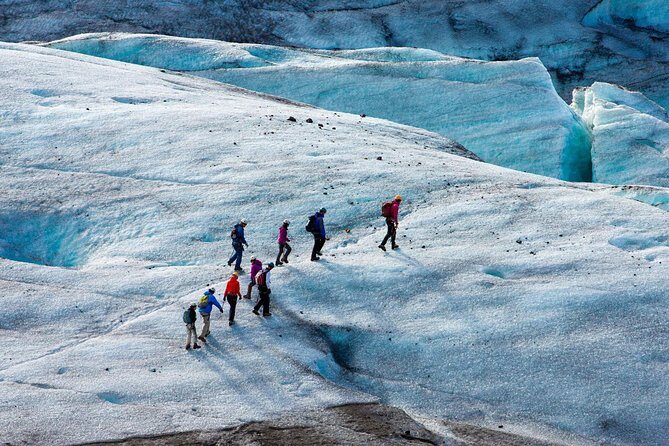
Finally, Solheimajokull Glacier. This is the big “wow” moment. You can do the optional glacier walk (extra cost). On that walk, you’ll get a safety introduction and you spend about 1.5 hours on the ice (listed as part of a longer total time on site). One practical tip from experience: if you’re issued crampon-style clamps, use them properly—don’t shuffle your feet. Stomp with your clamps so you don’t slip.
Day 1 drawback to watch for
If you add the glacier walk, you might find your meal timing gets squeezed. I’d rather say it plainly: keep snacks for this day. It turns potential hanger chaos into calm waiting.

Day 2: Jökulsárlón icebergs, Diamond Beach, Vestrahorn photos
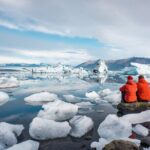
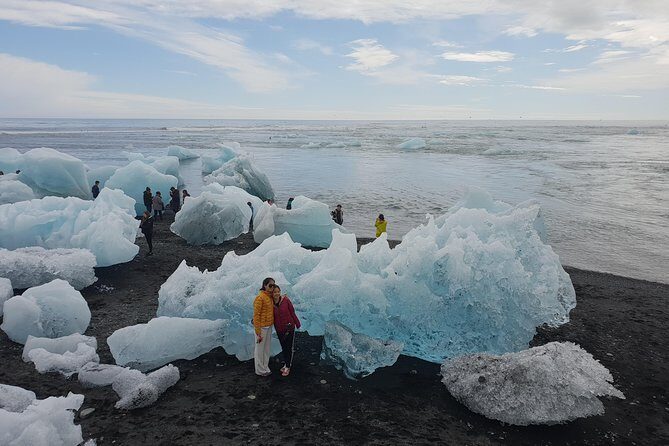
Day 2 shifts to East Iceland and leans heavily into ice. You start at Jökulsárlón glacier lagoon, widely considered one of Iceland’s most beautiful spots. You may also have the chance (extra cost) to join an amphibian boat tour among floating icebergs, which is the kind of option that changes your photos from “nice” to “how is that real?”
Then you head to Fellsfjara, where icebergs wash up on Diamond Beach. It’s a short stop, but the spectacle is in the movement: ice drifting, then getting stranded, then posing for photos against black sand.
Next is Vestrahorn, often loved as a photo stop. The area has that severe, mountain-meets-coast feel that Iceland does so well. You get a set viewing window, so come ready with your camera angles—don’t rely on luck for the best shot.
You’ll pass through Djúpivogur, a fishing village in the Berufjörður area. The vibe here is calmer and more local. You’ll get time for a port walk and a look at older trading history around Langabud (an old trading station dating to 1790).
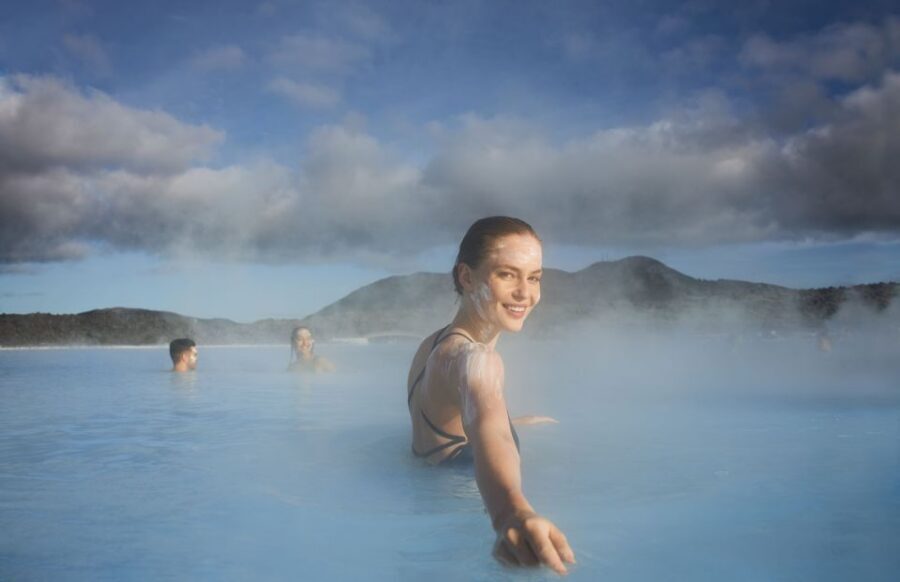
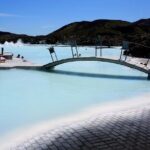
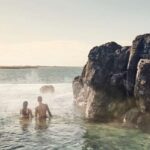
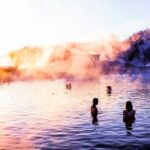
And then—if you booked it—there’s Vök Baths at Lake Urridavatn. This is the optional geothermal spa stop. It’s a warm-water reset with evening views. One experience-based comparison is useful: Vök tends to feel more open and varied across temperatures, while Forest Lagoon (the other optional spa) can feel more closed off. If you’re choosing between them, I’d lean to the one that matches your comfort with open spaces.
Day 3: Mývatn’s steam, Dettifoss power, Studlagil’s turquoise canyon
Day 3 is North Iceland with a heavy geology focus. You’ll spend time around Lake Mývatn, not just at the water edge. Think geothermal areas, lava formations, and birdlife (and yes, the walking paths and viewpoints matter here).
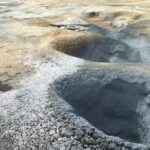
You also visit stops like Dimmuborgir, known for its strange rock formations. There’s also Grjótagjá, a hot spring cave area with a history tied to bathing. Add Krafla and Hverir, and you get a full geothermal lesson without needing a geology degree.
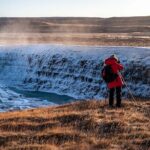
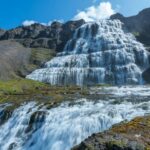
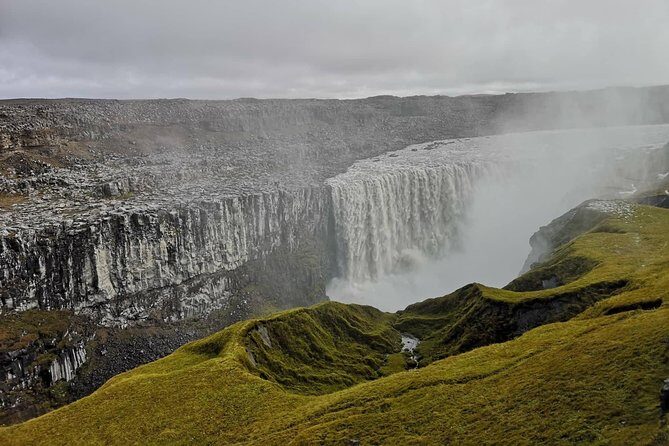
Next is Dettifoss, described as Europe’s most powerful waterfall. This is not a “pretty waterfall” day. It’s a roar-and-mist day. You’ll also do a short hike to Sellfoss on the way. One note: these are visited during summer months (Apr–Oct).
Then you reach Goðafoss, the waterfall of the Gods. It’s less about raw power and more about dramatic structure—still worth your time.
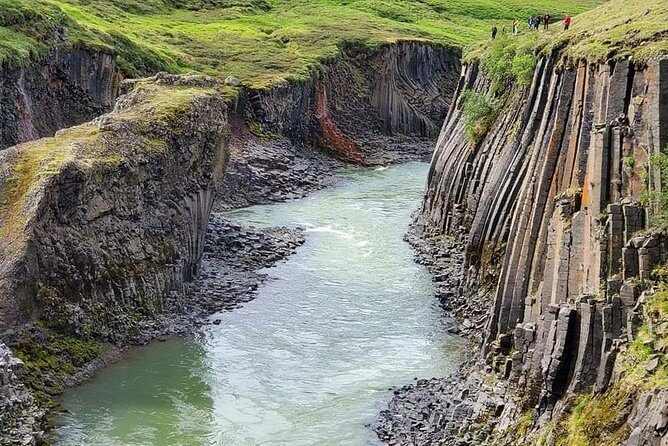
The day ends with Studlagil canyon, which is the kind of place that surprises people because it’s so colorful. The water is turquoise, coming from Vatnajökull-fed glacier sources, and you’ll view it from a short walk area near basalt columns. This one is best when the weather is decent, because you’ll want clear views across the canyon.
Day 4: Akureyri, Hvitserkur, turf churches, and optional whale watching
Day 4 starts in Akureyri, the north’s small “capital.” It’s set in a deep fjord, and the harbor area is a nice mix of modern buildings and older wooden houses. You also get a view element at Akureyri Church on the hill.
Then you head to Hvítserkur—a unique rock formation that looks like it belongs in a myth. It’s a quick photo-focused stop, but it’s memorable.
After that comes Kolugljúfur, a canyon with a waterfall. This is only accessible April to October. If you’re traveling outside those months, you should expect the schedule to adapt based on conditions.
Next is a cultural stop: Víðimyrarkirkja, a turf church in the Varmahlíð area. This is one of those stops that may not be on your must-see list—until you’re standing there. Turf churches are part of why Iceland feels specific, not generic.
If you book the optional activity, Elding Whale Watching Akureyri is a roughly 3-hour excursion. The chances of seeing whales are said to be positive in this area, which is exactly the kind of option where you’re buying the experience, not guaranteed sightings.
Day 5: Deildartunguhver, lava caves, and a horse farm break
Day 5 is a mix of thermal springs, waterfalls, an underground lava stop, and a very Icelandic “slow down” moment with animals.
You begin at Deildartunguhver, the highest-flow hot spring in Europe, listed at about 180 liters per second at roughly 100°C. It’s one of those places where you can feel the heat and hear it. Take your time. Don’t rush the paths.
Then Snorralaug at Reykholt. This is a small historic hot spring used by locals since the 12th century, with medieval links to Snorri Sturluson. It’s short, but it adds human scale to the geothermal story.
Next: Hraunfossar, the lava waterfalls. Water seeps out of a lava field and spreads into multiple channels across a distance of around 900 meters. Just a little farther: Barnafoss, the waterfall of the children, told through an accident legend connected to a stone bridge.
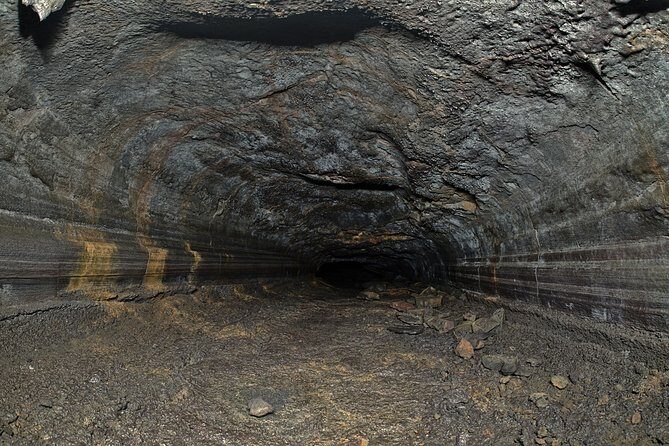
The day’s highlight is Víðgelmir lava cave (entry included on 5-day+). You’ll get about 1.5 hours underground, with time to see lava formations and colors. This is where Iceland turns from scenery to inside-the-earth.
Then you finish with a calmer stop at Sturlureykir Horses / Horse Farm, where you can get close to friendly Icelandic horses. There’s also time for a snack: homemade rugbraud (hot spring bread) plus coffee or water. One of the best parts of day 5 is that it gives your senses a break from constant wind-and-weather stops.
Day 6: Ytri Tunga seals, Arnarstapi cliffs, and Kirkjufell photos
Day 6 slows slightly and leans into the west-coast coastline vibe.
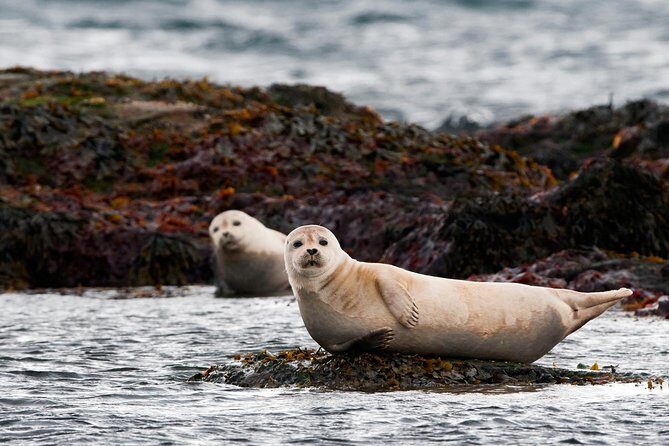
You start at Ytri Tunga Beach, a popular seal colony area. Expect a quiet, watch-from-the-side experience rather than an active “tour” moment. If you like animals, you’ll feel rewarded without needing big effort.
Then you go to Arnarstapi and Hellnar, with rocky coastal formations and mossy textures. There’s time for a coastal stroll, and the setting is perfect for fresh air and simple cliff views.
Next is Lóndrangar Basalt Cliffs, those tall black columns you can usually spot clearly even from the road.
Then the day hits two black-sand stops. Djúpalónssandur includes the lifting-stones legend: four smooth stones used to measure fishermen strength. It’s playful, and it helps you remember this coast wasn’t made only for photos—it was work and community.
Finally, you get Kirkjufell Mountain, one of Iceland’s most popular photography spots. It’s especially striking with nearby rivers and that strong silhouette against the sky. If you love getting your “one perfect shot” and then walking away happy, this is your moment.
Day 7: Þingvellir UNESCO, Geysir’s timing, Gullfoss, and Kerið’s overlooked crater
Day 7 is a strong finish with the Golden Circle basics—plus one crater stop people often miss.
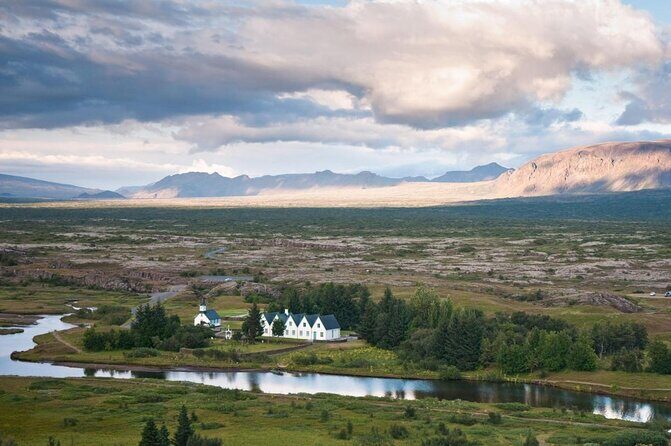
First is Þingvellir National Park, the only UNESCO World Heritage Site on the Icelandic mainland. You get two big angles: the political history (the long-running parliament site dating back to 930 AD) and the geology (you’re in the rift valley between tectonic plates). It’s one of those places where the ground itself is part of the story.
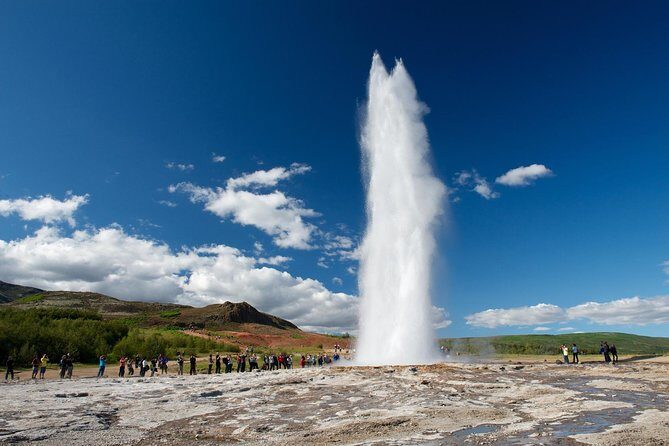
Next: Geysir area in Haukadalur Valley. You might not see Geysir itself erupt often these days, but Strokkur is predictable. You’ll watch it throw water up about every five to ten minutes and reach up to around 40 meters.
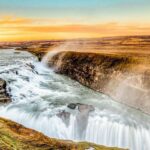
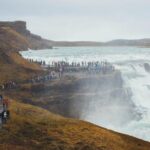
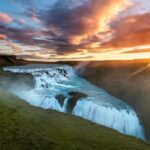
Then comes Gullfoss, the iconic waterfall. If you want one last “how is water doing that” moment, this is it. You’ll get set time to view from the best points.
After Gullfoss, stop at Kerið Crater, a water-filled crater lake that often gets overlooked. It’s short but visually satisfying, especially if you like color and texture contrast.
The tour usually ends back in Reykjavik around 5:00 pm on Day 7.
Optional extras: when they’re worth it (and when to plan food)
This tour gives you optional choices that can make your week feel tailored.
- Solheimajokull glacier walk (extra cost): If you’ve never walked on glacier ice, I’d treat this as a must for your checklist. It’s also the kind of activity that can move the rest of your day, so bring snacks.
- Vök Baths (extra cost): Great for warm-water relaxation after a travel-heavy day. One tip from real experience: Vök can feel more open with different temperature areas, which some people prefer.
- Forest Lagoon (extra cost): Another geothermal option, but it can feel more enclosed and some people found the water less warm compared to Vök.
- Vök or Forest Lagoon choice: Don’t overthink it. Pick the one that matches your comfort with space and temperature variety.
- Whale watching in Akureyri (extra cost): A 3-hour excursion if you want a sea-life moment with Iceland’s north-coast energy.
If you plan to add one or more extras, keep your expectations flexible. Iceland weather and safety can change things. The good part is that when something can’t run, the tour can swap in alternatives when possible and refunds price differences when they apply.
Packing and timing tips that save your trip
You’re dealing with wind, mist, and sudden weather shifts. So pack like Iceland is in charge (it is).
Bring:
- Warm layers you can add/remove fast
- A water/windproof jacket
- Good hiking shoes
- A small day bag for gloves, scarf, rain gear, and snacks
If you don’t have hiking shoes, the tour offers shoe rental. That’s a nice safety net, especially if you’re coming straight from a warm country.
Also, build a snack plan. Lunch and dinner are not included. The tour makes scheduled stops where you can buy food, but timing can slip when optional activities enter the picture. The simplest move is packing snacks that won’t take up much space.
Is this tour for you? My practical verdict
Book this if you want maximum Iceland highlights with minimum logistics stress. The included hotels and breakfast remove a huge planning burden. The small group size helps the experience feel personal, not crowded.
I’d think twice if you hate tight schedules or you’re sensitive to long days in a small vehicle. Seating is not huge, and some rooms can feel compact. If you’re picky about food options (especially vegetarian), plan on limited menu variety at hotel dinners and bring a backup snack strategy.
If you match the mindset—flexible, curious, and ready for weather-driven changes—this is a strong value way to do the Ring Road.
FAQ
FAQ
How long is the Ring Road tour from Reykjavik?
The tour is offered in 4, 5, 6, or 7-day options, with the 7-day itinerary lasting about a week. The tour typically finishes back in Reykjavik around 5:00 pm on Day 7.
What’s included in the price?
Included are Reykjavik hotel pickup and drop-off, English guidance, a small-group minibus tour (max 19 passengers), accommodation with breakfast in double rooms with private bathrooms, and onboard Wi‑Fi and USB chargers. Some entries are also included, such as Kerið, and Vidgelmir lava cave entry for 5-day or longer tours.
Are lunch and dinner included?
No. Lunch and dinner are not included. The tour makes scheduled stops so you can buy lunch and dinner during the day.
Do you get picked up from hotels in Reykjavik?
Yes. Pickup is free from hotels within Reykjavik, though your pickup may be at the nearest allowed bus stop in the city center. Pickup typically happens between 8:30 and 9:00, and you should be ready from 8:30.
What optional activities cost extra?
Optional extras listed include the Solheimajokull glacier walk, Vök Baths, Forest Lagoon, and whale watching in Akureyri. These are extra cost and not included in the base price.
Can activities be cancelled due to weather or safety?
Yes. It can happen that activities are cancelled due to weather and/or safety reasons. The operator will try to find other activities when possible, and refund if there is a price difference.
What is the cancellation deadline for a full refund?
You can cancel up to 3 days in advance for a full refund. If you cancel less than 3 full days before the experience start time, the amount paid will not be refunded.