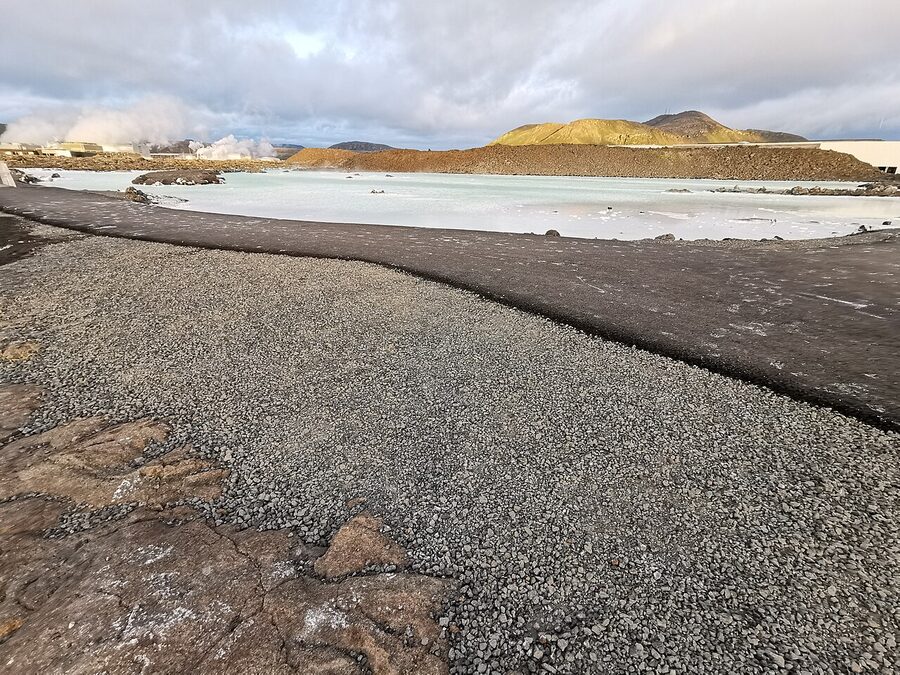
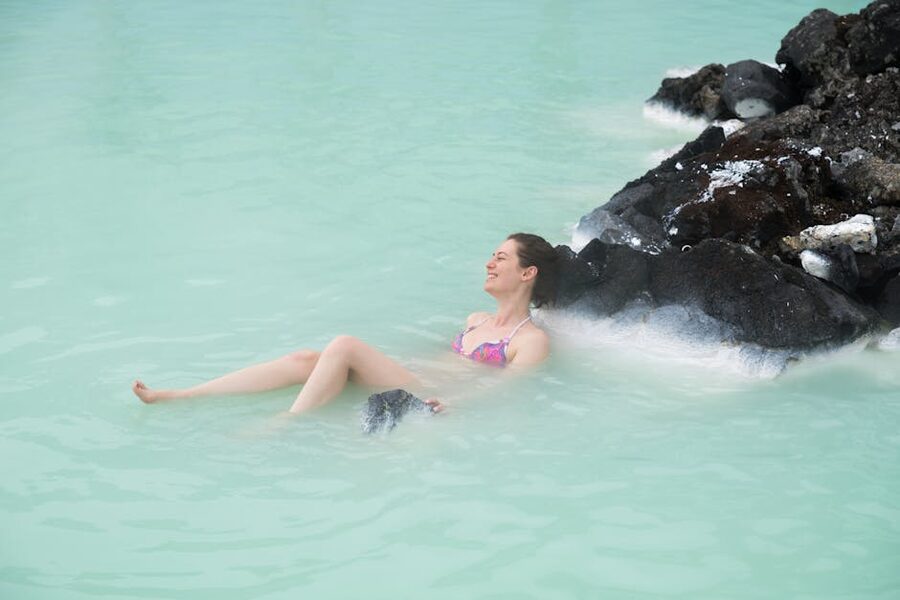
The Blue Lagoon is the photo. You know the one. Person in the milky-blue water, white silica streaked across their cheekbones, a bank of black lava rock behind them, steam curling up into the cold. It’s the picture every Icelandair commercial ends on. It’s the reason a lot of people book a flight to Reykjavík in the first place.
Here’s what nobody tells you in that photo: the lagoon sits next to a power plant. The water is a byproduct of geothermal electricity generation. It opened to bathers in 1992 because a guy with psoriasis decided to climb into the runoff pond in 1981 and his skin got better. Whatever you imagined, the real thing is a little stranger and a little better than the marketing.
I’ve been to the Blue Lagoon four or five times now. Once with my parents when I was fifteen and it was still a row of changing huts and a wooden walkway. Once with a friend visiting from Berlin in February when it was minus eight and we had to scrape ice off the windscreen. Once with my partner when we both had the worst hangover of our lives and decided heat plus silica plus a sparkling wine in the water was the cure (it was, mostly). I’ll tell you what I’ve learned, what’s worth the money, what isn’t, and how it actually works in 2026 with the volcanic eruptions still active up the road.
In This Article
- What it actually is
- The pitch and the catch
- What it costs in 2026
- Booking and time slots
- The skip-the-queue tip locals actually use
- What the silica actually does to your skin
- How to actually get there
- The eruption question
- What to actually do once you’re in
- Lava, Moss, and the Blue Café
- Blue Lagoon vs Sky Lagoon
- The cheaper, more local alternatives
- Who should book it, and who should skip
- The little things people get wrong
- Combining the lagoon with the rest of your trip
- What’s actually changed since the marketing photos were shot
- The tour categories worth booking with the Blue Lagoon
- One last thing
What it actually is
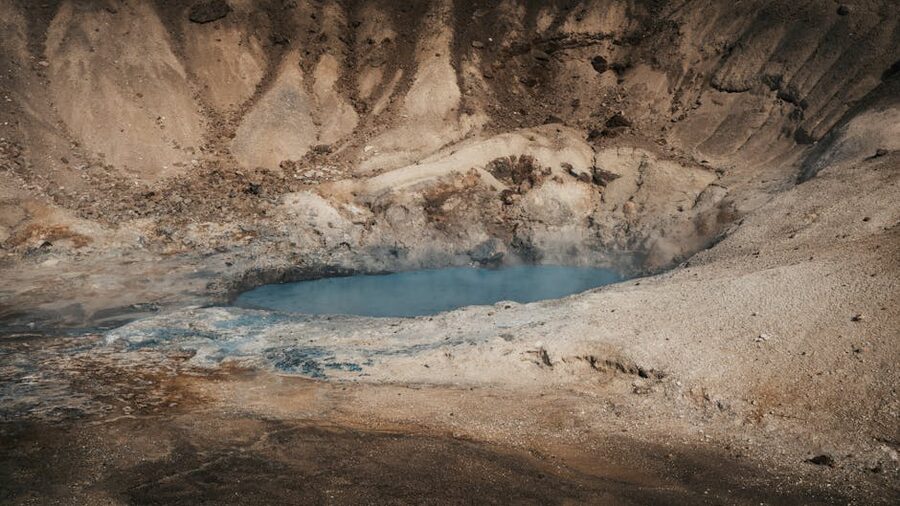
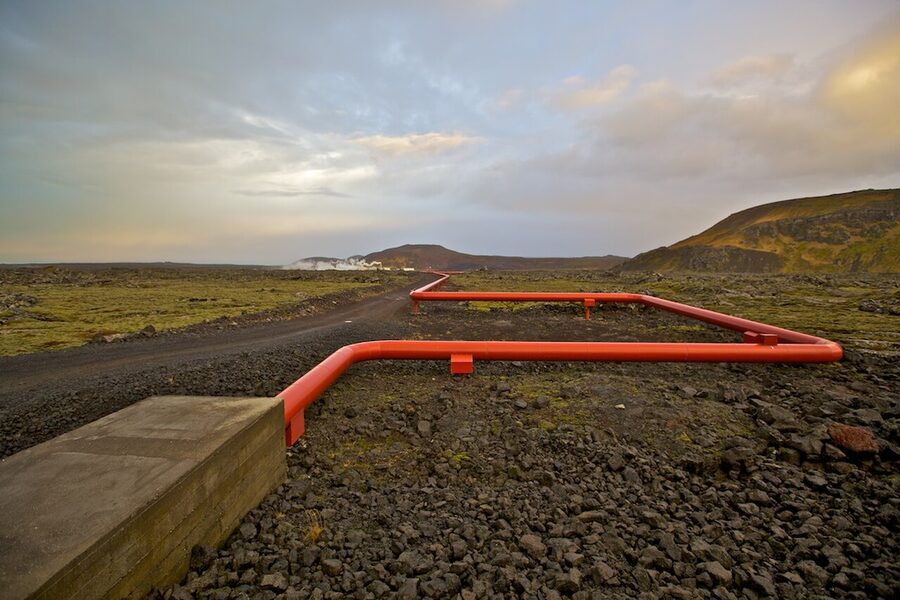
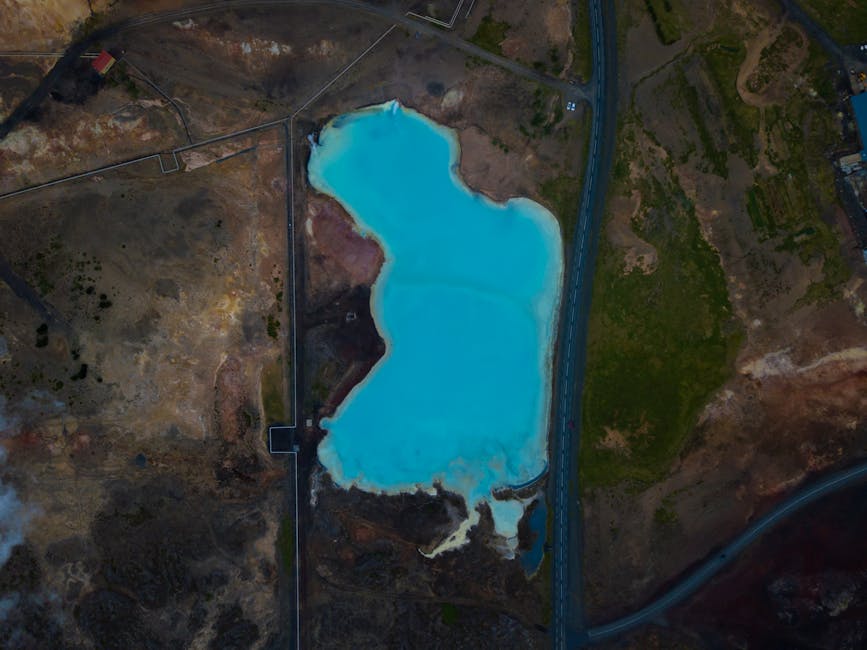
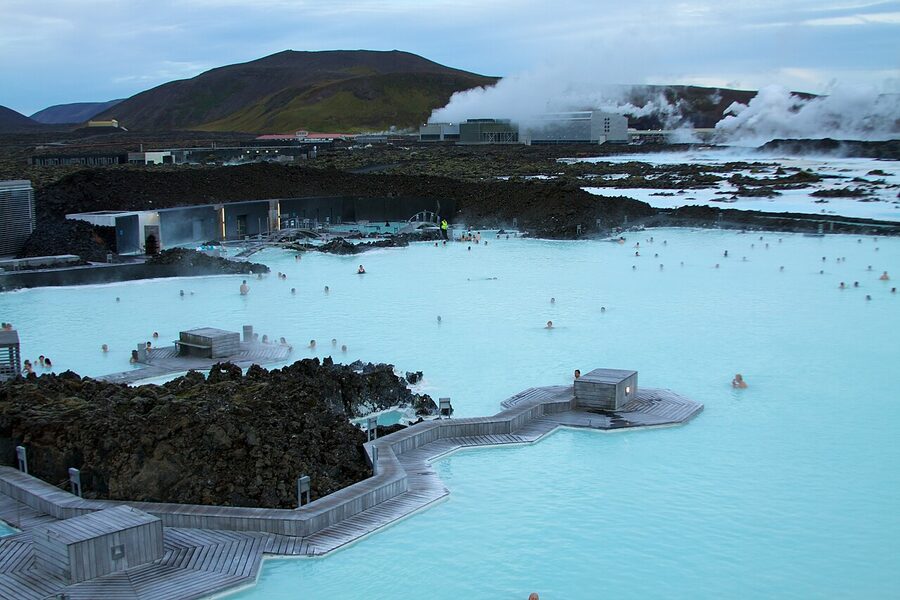
The Blue Lagoon, or Bláa lónið in Icelandic, is a man-made geothermal spa in the middle of an 800-year-old lava field on the Reykjanes peninsula. It sits about 20 km from Keflavík International Airport and 50 km from Reykjavík.
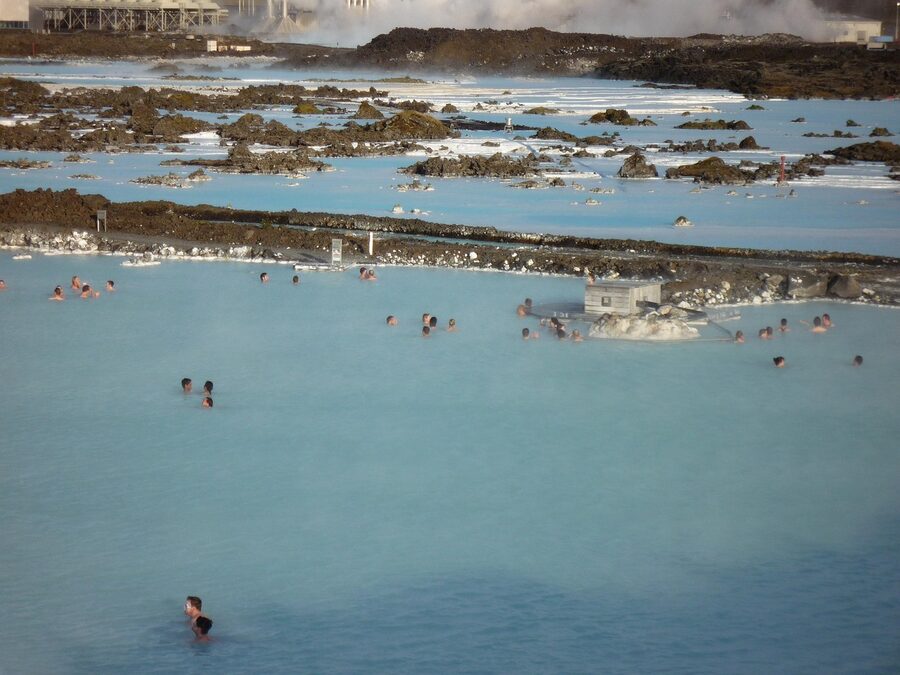
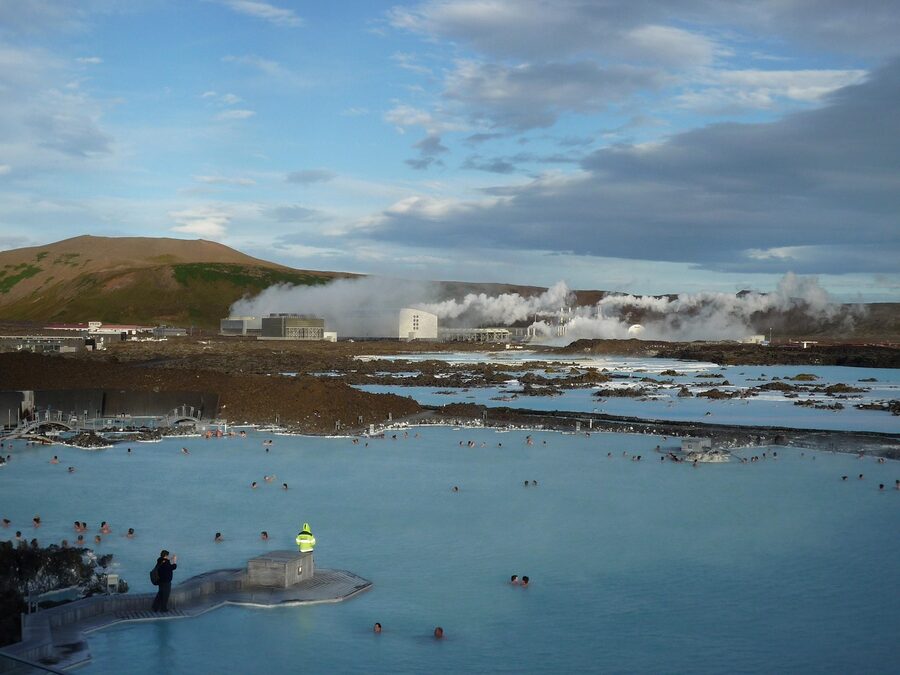
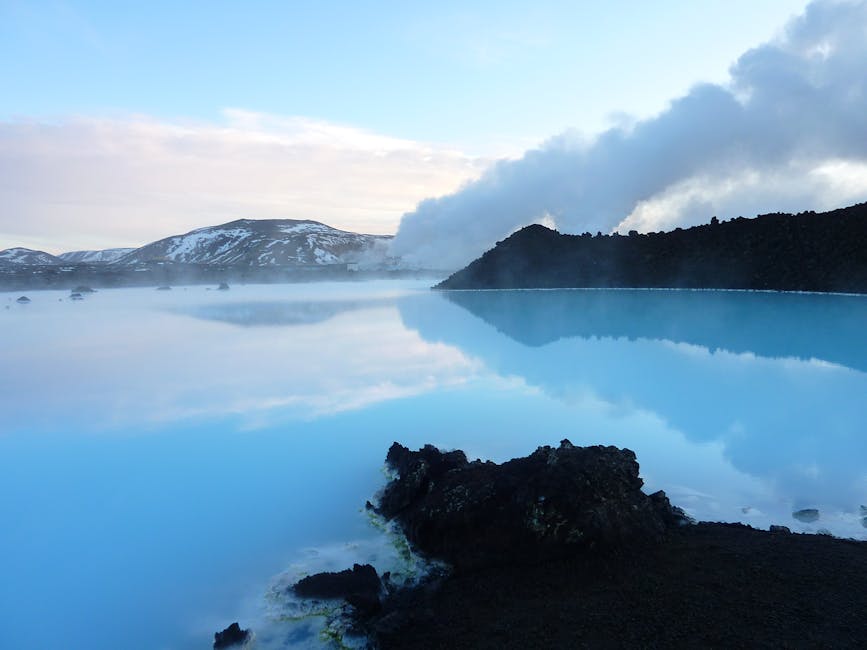
The water comes out of the Svartsengi power station next door. Down at depth the water is around 240°C, pushed up at high pressure to drive turbines that generate electricity for around 30,000 homes. After it has done its job in the turbines, the water passes through a heat exchanger that warms the municipal supply for nearby towns. What’s left, still rich in silica, sulfur, salt, and microalgae, gets vented into the lava field. It collects in pools. By the time it reaches you it’s a comfortable 37 to 40°C.
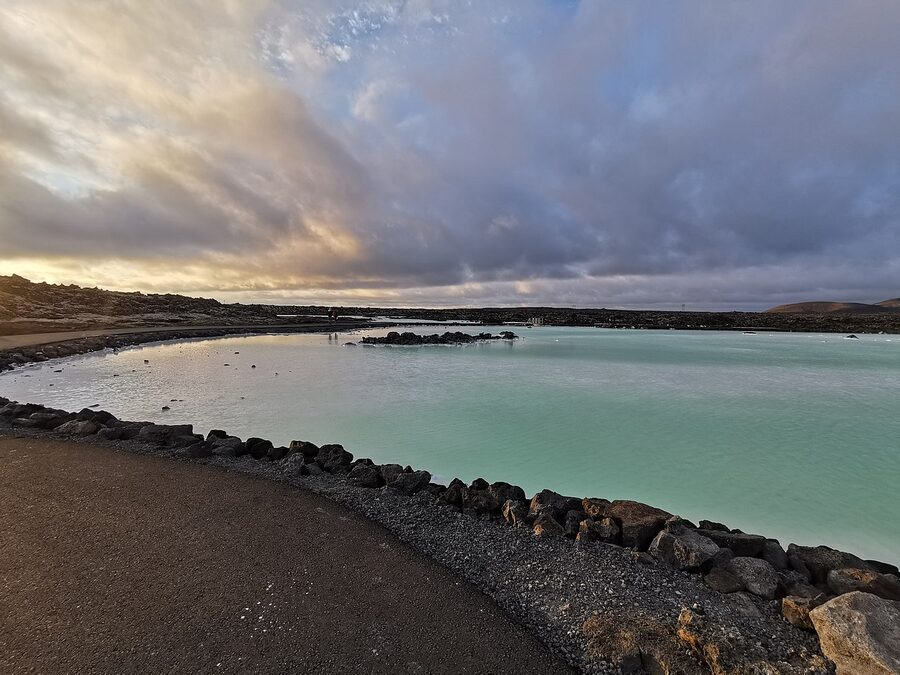
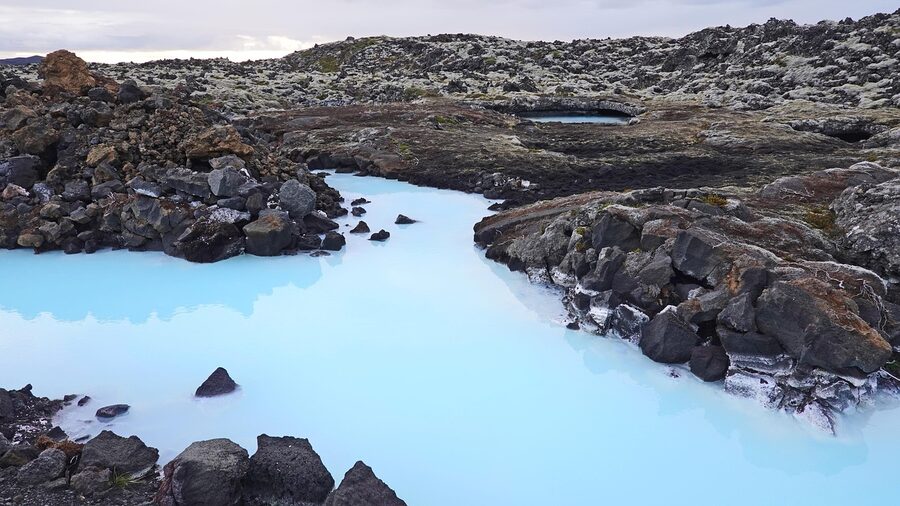
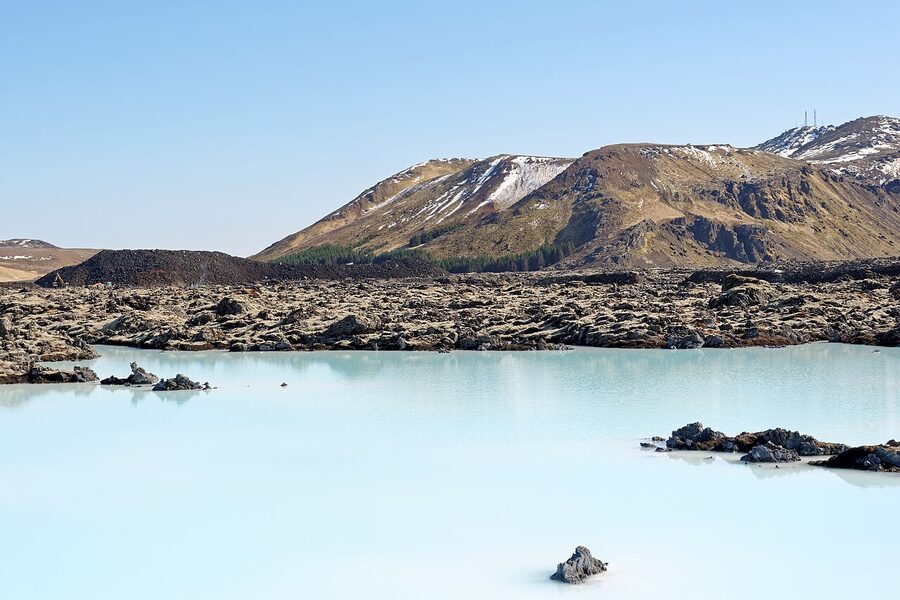
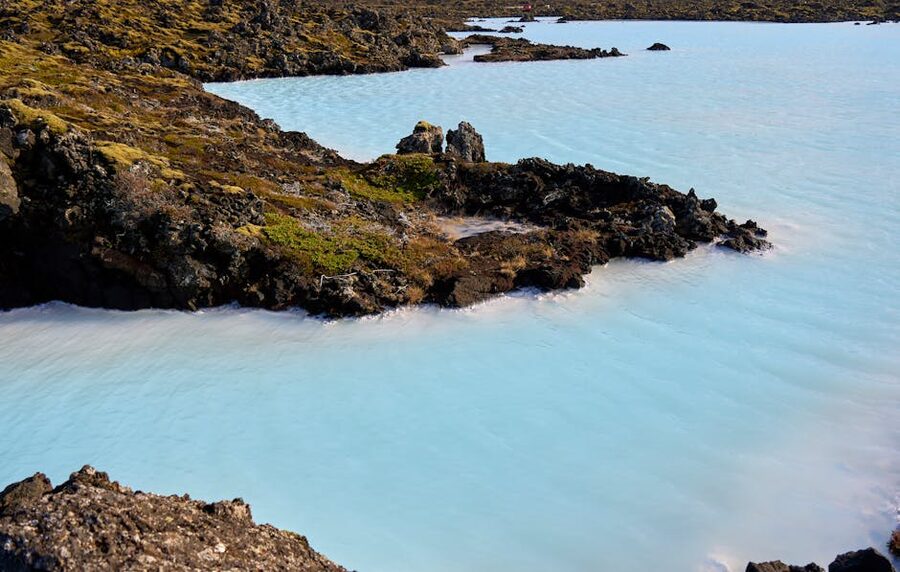
That milky-blue colour is silica. The white mud you see people smearing on their faces is the same silica precipitating out of the water and settling on the bottom. The water renews itself every two days. The pH is about 7.5, the salt content around 2.5%. There are essentially no bacteria in it because the silica and minerals make it inhospitable to most living things, which is why they don’t add chlorine.
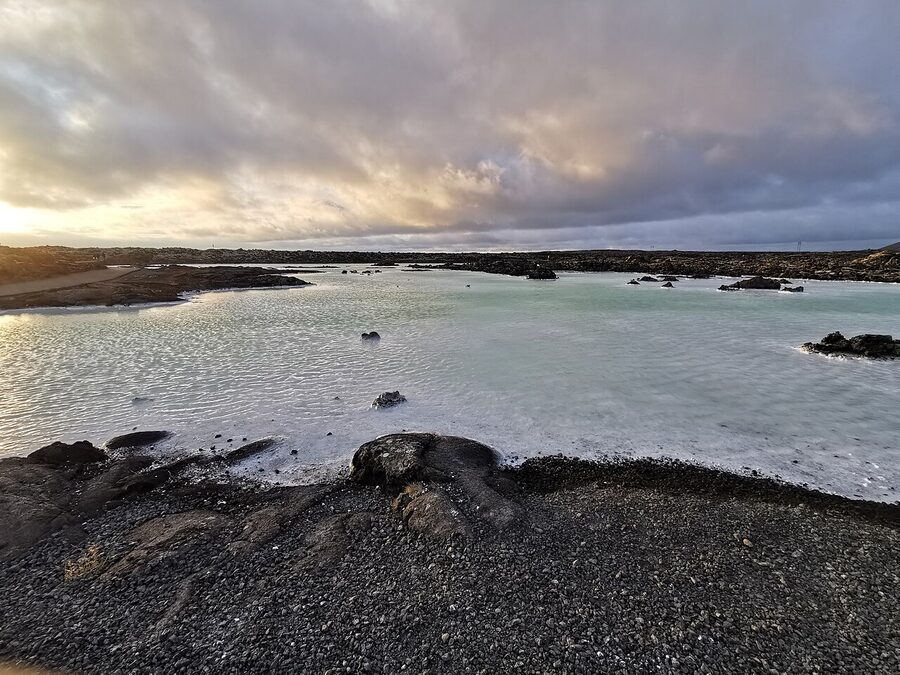
None of this was planned. The first person to bathe in the runoff was Valur Margeirsson, an Icelander with severe psoriasis. He noticed his skin cleared up after a soak. Word spread, then the rest of us showed up. Bathing facilities opened in 1987. The first proper lagoon facility opened in 1992. A psoriasis clinic was added in 1994 and treats patients to this day. The Blue Lagoon company now does over a hundred million euros of revenue a year and employs more than 600 people. So yes, it’s industrial in origin, and yes, it’s a serious business now. But the water is still real.
The pitch and the catch
People ask me whether it’s worth it. My answer is: do it once. The light, the steam, the strangeness of soaking in a warm pool while the wind whips snow across a black lava field, that combination is unlike anywhere else. There’s a reason the photos have done so well.
The catch is that the Blue Lagoon is not a wild discovery and it’s not a serene retreat. It’s a paid commercial spa with somewhere around 4,000 visitors on a busy day. You’ll be in the water with a hundred other people. You’ll see the rooflines of the power plant and the Retreat Hotel from the lagoon. You’ll queue for your silica mask. The marketing pretends none of this is happening; it’s all picture-perfect photos of one couple alone in the steam.
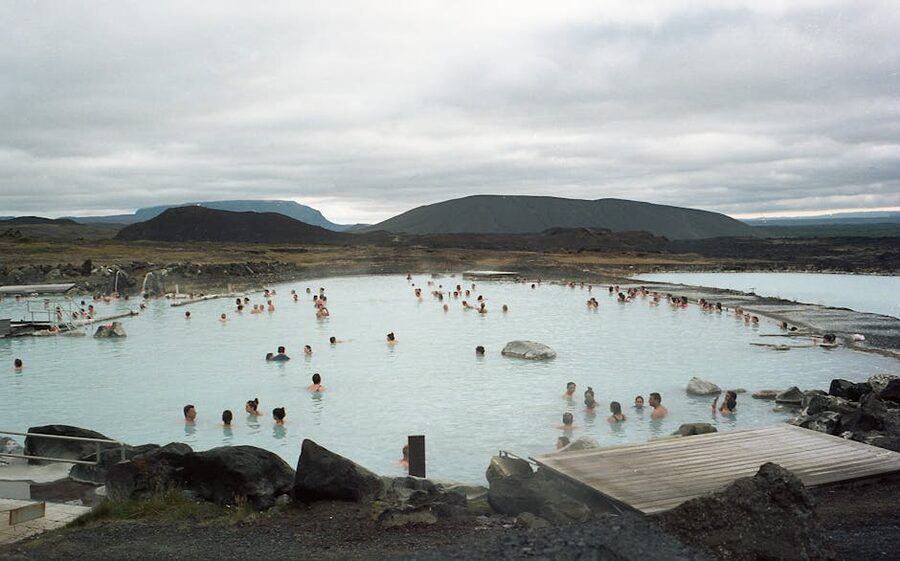
Set your expectations to “spa with thousands of other tourists, but the water and the setting are genuinely beautiful,” and you’ll have a good time. Set them to “I’m going to have an ethereal solo float in pristine wilderness,” and you will be disappointed. That’s not the Blue Lagoon’s fault, that’s their marketing budget.
Locals don’t go often. We have town pools, the laugar, where the water is hotter, the entrance is around 1,400 ISK, and you actually run into your neighbours. The Blue Lagoon is something we go to with visiting cousins or as a one-off treat. So if you want a real Icelandic bathing culture experience, also go to Laugardalslaug in Reykjavík one evening. Different category entirely.
What it costs in 2026
Pricing is dynamic. Off-peak slots cost less, peak times in summer cost more. These are the entry-level prices on bluelagoon.com at time of writing.
Comfort, from 11,990 ISK per person. Entry to the lagoon, a silica mud mask, towel, one drink. This is what most people book. It’s the right call for a first visit and you don’t really need anything else.
Premium, from around 14,000–17,000 ISK depending on slot. Adds a second drink, two more masks (algae and a mineral one), a bathrobe, and a glass of sparkling wine if you eat at Lava Restaurant. Get this only if you’re going to use the robe and you actually want the extras. Most people don’t, the upgrade is mostly comfort.
Signature. Premium plus take-home skincare products. Skip unless you specifically want to take home Blue Lagoon silica mud and mineral mask in 30 ml bottles. They sell those everywhere in Iceland anyway.
The Retreat Spa, from 89,000 ISK per changing room (two people). Five hours of access to the smaller, quieter Retreat Lagoon, the seven-step ritual, a private changing room, a drink, the Spa Restaurant. This is the luxury option. Worth it if you’ve already done the main lagoon and want a proper spa day, or if you’re on a special-occasion trip and money isn’t the issue. The Retreat genuinely is calmer and the architecture is gorgeous, all moss and volcanic rock.
The Retreat Hotel, from 230,000 ISK per night. Stay over and you get unlimited access. The Silica Hotel is the other on-site option, from around 104,000 ISK. Both expensive even by Iceland standards.
Inside the lagoon you can also buy:
- In-water massage, from 20,900 ISK. Genuinely good but you’re committing 30+ extra minutes and the price of another lagoon entry.
- Float therapy, from 20,950 ISK. Same range.
- Lagoon and Lunch package (saves 3,000 ISK on Premium plus a two-course Lava lunch). If you want a meal, this is the only “deal” they really offer.
- Group floating session, 5,900 ISK. Worthwhile if you’ve never floated and want guidance, otherwise you can just lie back yourself.
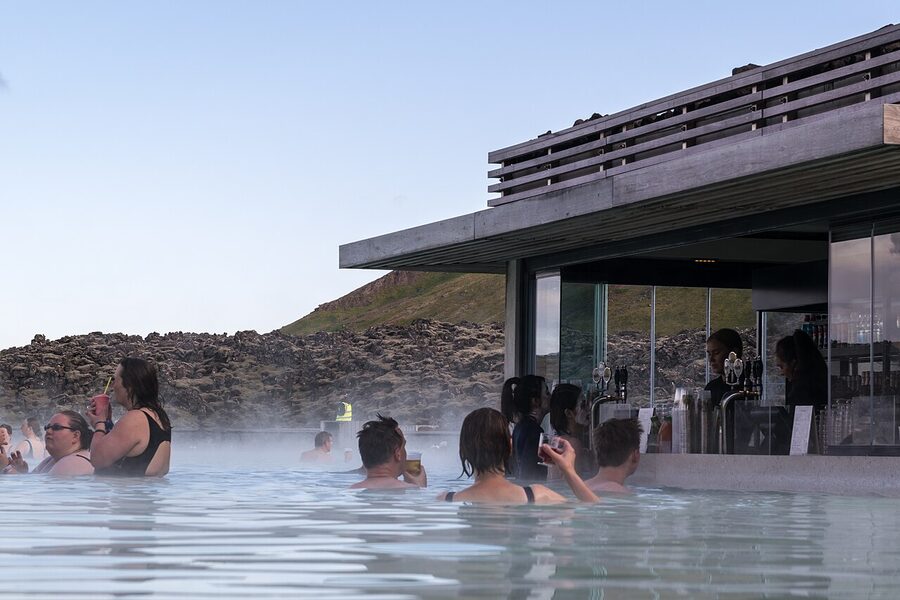
Drinks at the in-water bar are cashless via your wristband and run roughly 1,800–2,500 ISK for a beer or sparkling wine. They are not cheap, but having a drink in your hand while standing chest-deep in a lava lagoon is a particular pleasure that people will pay for. Two-drink limit per person on alcohol, and they enforce it.
Booking and time slots
You must book in advance. There are no walk-ups. Tickets are time-slot based, every half hour, and they are strict. In summer (June through August) the Blue Lagoon usually books out two to three weeks ahead. In winter you can sometimes get a slot a few days out, but I wouldn’t risk it.
Once you have a slot, you can arrive any time within a 30-minute window. Check-in closes after that. They will sometimes let you in late if you grovel, as one bus-stranded blogger discovered, but don’t count on it.
Cancellation: you can cancel for a full refund up to 24 hours before your slot. Inside 24 hours, no refund. There’s a separate eruption-cancellation policy in place since the Sundhnúkur events, which I’ll get to below.
The skip-the-queue tip locals actually use
Two slots are noticeably calmer than the rest. The first slot of the day, usually 8:00 am, gets you in before the airport buses arrive and the light at sunrise on the lagoon in winter is unreal. The very last slot of the day, around 8:00 pm in winter or 11:00 pm in peak summer, has the same effect at the other end. Most tour groups have moved on, and you might genuinely have a corner of the pool to yourself for fifteen minutes.
The middle slots, around 11:00 am to 3:00 pm, are the busiest by a wide margin. If you only have one option, take the earliest you can get.
For the photo people: morning gives you softer light from the east. Walk to the back left of the lagoon, past the wooden walkway, and shoot back across the water towards the steam. Fewer people in frame and the bridge becomes the foreground. Bring a waterproof phone case. The silica will eat your phone if you drop it in.
What the silica actually does to your skin
The silica claim isn’t hype, it’s measurable. Three things in the water do something for skin:
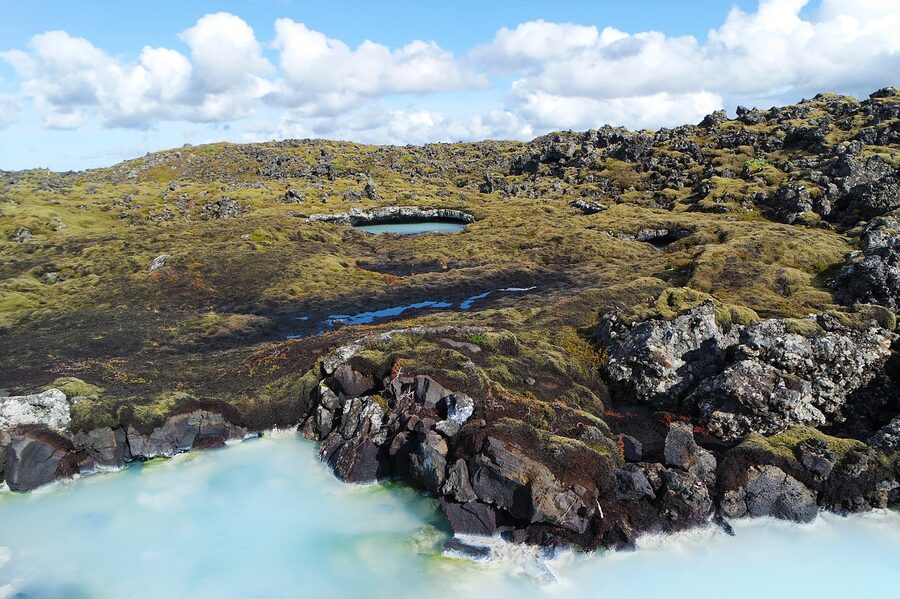
- Silica. Forms a thin barrier on the skin. Dries it slightly while you’re in the lagoon, then leaves it feeling smoother for a day or two after. The mud mask is the most concentrated dose. People with eczema in remission tend to like it. People mid-flare tend to not.
- Sulfur. Mild antibacterial effect. Smells faintly when you first walk in (like very dilute boiled eggs) but you stop noticing within a few minutes. It’s why old silver tarnishes.
- Algae. The blue-green algae in the water is the basis for the mineral mask, which is the only one that the Blue Lagoon really pushes as anti-ageing. The clinical data is real but modest. It hydrates and brightens, it doesn’t reverse decades.
The Blue Lagoon Medical Clinic on site (separate building, separate booking) treats psoriasis under medical supervision. It’s covered by the Icelandic health system for residents and available privately for visitors. If you have a serious skin condition and you’re going to be in Iceland for a while, it’s a real option. Not a quick spa thing, more a multi-week course.
For most visitors though, what you get is a mild improvement in skin feel that lasts a couple of days. The take-home Blue Lagoon Skincare products (silica mud mask 30ml, algae moisturiser, etc.) are sold everywhere in Iceland and at airport duty-free, usually cheaper at the airport than at the lagoon shop. Don’t load up at the on-site store unless you’re not going through the airport.
How to actually get there
The Blue Lagoon sits at Norðurljósavegur 9, 240 Grindavík. There are four sensible ways to get there.
Rental car. The best option for almost everyone. From Reykjavík it’s about 50 km, 50 minutes via Route 41 then 43. From Keflavík airport it’s 20 km, 20 minutes via Route 41 then 43. Parking at the lagoon is free. If you’re staying multiple days, a rental car is what unlocks the rest of Iceland anyway. Compare on northbound.is, which aggregates the local agencies, or book direct with bluecarrental.is or lavacarrental.is. Local rentals are usually cheaper than the international chains and the cars are newer.
Airport transfer + lagoon combo. The Reykjavík Excursions Flybus runs Blue Lagoon transfers from both Keflavík airport and the BSÍ bus terminal in Reykjavík. The smart move is to schedule your visit on either your first day or your last day in Iceland. They’ll pick you up from the airport with luggage, drop you at the lagoon, store your bags during the soak, then drop you in central Reykjavík. Around 7,500 ISK each way for the transfer, plus your lagoon ticket.
Organised day tour from Reykjavík. Operators like Reykjavík Excursions and Gray Line bundle the Blue Lagoon with the Golden Circle, the Sky Lagoon, or other day trips. Useful if you don’t want to drive and want to combine activities. Check options on GetYourGuide or Viator.
Public bus. There is a Strætó bus 55 from BSÍ but it’s slow, doesn’t run often, and the timing rarely lines up with lagoon slots. I wouldn’t bother unless you’re on the tightest possible budget.
If you only have a 24-hour layover in Iceland, do this: rent a car at Keflavík, drive 20 minutes to the lagoon for an early slot, soak for two hours, then drive into Reykjavík. You’ve already seen one of the country’s signatures and you’ve got the rest of the day.
The eruption question
This is the question I get most often now. The Reykjanes peninsula has been actively erupting since 2021, first at Fagradalsfjall, then from 2023 onwards along the Sundhnúkur fissure system right next to Grindavík. The Blue Lagoon was evacuated on 9 November 2023 when the seismic swarm got serious. It closed and reopened multiple times through 2024 as fresh fissures opened. In November 2024 lava reached the Blue Lagoon car park.
Where it stands as of writing: the lagoon is open and operating normally. They have a much better evacuation plan now, alerts on phones, dedicated bus capacity, and a clear protocol with the Department of Civil Protection. Their booking system has an eruption-cancellation policy, so if the lagoon has to close due to volcanic activity on the day of your slot, you get a refund or rebook for free.
Should you worry? Realistically, no, but check before you travel. Two reliable sources:
- Iceland Met Office (vedur.is) tracks earthquake activity, eruption status, and the volcanic forecast.
- SafeTravel.is is the official Icelandic safety information for travellers, run by ICE-SAR (the search and rescue service). They issue clear, plain-English alerts.
The Blue Lagoon also publishes its own status updates. If something serious happens, you will know about it. The road to the lagoon was rebuilt after the November 2024 lava flow and the new approach is from a different direction.
One thing worth flagging: the company has been criticised for being slow to close the resort during the 2023 unrest. Some guests at the Silica Hotel reportedly had to be evacuated quickly when the seismic activity escalated. Things have changed since, the protocols are tighter, but if you want to be on the safe side, ask at check-in what the current contingency is. They’ll tell you.
What to actually do once you’re in
The actual experience flow, once you’re past check-in:
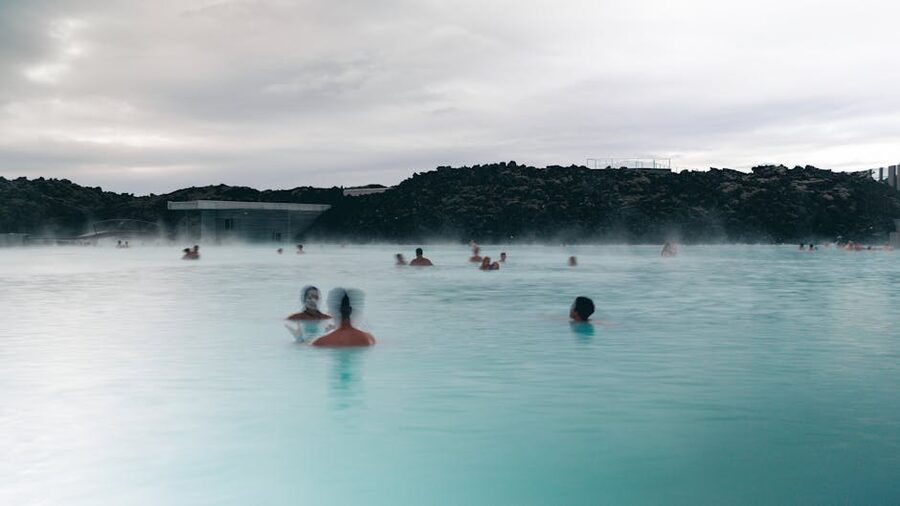
You get a wristband. The colour shows your tier (the basic Comfort gets a grey one, Premium green, and so on). The wristband is your locker key, your drinks tab, and your mask voucher all in one. Don’t lose it. Showering before the lagoon is mandatory and they enforce it strictly. This is not a Blue Lagoon rule, it’s an Icelandic public-pool rule. Naked, with soap, in the communal showers, before you put your swimsuit on. There are private cubicles if the open showers are not your thing, but you still need to actually wash. There’s also conditioner in the showers, and you should use it. Slather your hair, leave it in, tie it up. The silica in the lagoon will turn untreated hair into straw for a week.
Once you walk out into the cold and into the warm water, you have a few things to chase down.
- The mask bar. A bar attendant scoops the silica mask out of a bucket into your palm. Apply, leave it for around ten minutes, rinse off in the lagoon. With the Premium ticket you also get the algae and mineral masks, which are nicer textures but not noticeably more effective.
- The sauna and steam room. Both included with all tickets. The sauna is dry and around 80°C. The steam room is strong and visibility is essentially zero. Worth a few minutes between soaks.
- The waterfall. A constructed waterfall on the side of the lagoon you can stand under. Heavy on the shoulders, hot, mildly painful, weirdly addictive. Eight minutes is plenty.
- The in-water bar. Wade up, scan your wristband, get your drink. Two-alcohol limit. The hot chocolate is genuinely good and a fair shout if you’ve already had your two beers.
- Floating. Lie back, eyes closed, ears under, listen to the muffled rumble of nothing. This is what you came for.
Two hours is the minimum to make the entry fee feel worth it. Three to four hours is the sweet spot. Five-plus only if you’ve booked a treatment or are eating at Lava.
Lava, Moss, and the Blue Café
Three places to eat or drink on site, in increasing order of seriousness.
The Blue Café. Inside the main building, casual, soup and sandwich and cake. Sandwich around 2,200 ISK, soup around 2,800 ISK. Fine for a quick pre- or post-soak meal.
Lava Restaurant. Built into the cliff face overlooking the lagoon, the dining room is genuinely stunning. The food is modern Icelandic, mains around 6,500–9,500 ISK. The Lagoon and Lunch combo (saves 3,000 ISK off Premium plus a two-course set lunch) is the only real-deal package they sell. If you want lunch on site, do it this way.
Moss Restaurant. Inside the Retreat Hotel, this is the Michelin-starred option. Tasting menus around 32,000–42,000 ISK without wine pairings. Reservation only, separate from a lagoon visit. Not really a casual stopover.
If you’re paying out of pocket and you’ve already paid for the lagoon entry, save the Moss money for dinner in Reykjavík. There’s a stronger food scene in town for what you’d spend at Moss. If you’re on a special occasion and budget isn’t the question, Moss earns its star. The food is precise.
Blue Lagoon vs Sky Lagoon
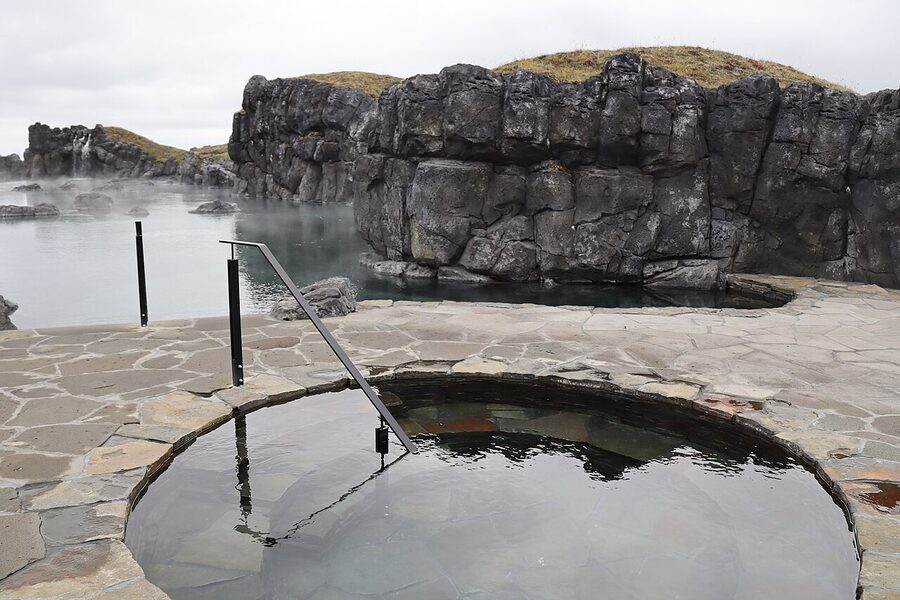
The other big geothermal spa in the Reykjavík area is Sky Lagoon, which opened in Kópavogur in 2021. A lot of locals prefer it, and a lot of visitors now choose it instead of the Blue Lagoon. Here’s the actual difference.
Location: Sky Lagoon is 15 minutes from central Reykjavík (you can take a bus). Blue Lagoon is 50 minutes from Reykjavík, 20 minutes from the airport.
Water: Sky Lagoon is geothermal seawater, with no silica. Blue Lagoon is the silica-rich power plant runoff. Sky Lagoon is clearer, less mineral, less of a hair issue. Blue Lagoon’s mineral content is genuinely better for skin.
Setting: Sky Lagoon has an infinity edge looking out over the Atlantic and the Reykjavík skyline. Blue Lagoon is set inside a black lava field with no view of anything except more lava. Different beauty, both real.
The ritual: Sky Lagoon’s signature is its seven-step ritual: hot lagoon, cold plunge, sauna, cold mist, scrub, steam, shower. You go through them in order. It’s the main reason to go. Blue Lagoon has masks and floating but no equivalent guided sequence.
Price: Sky Lagoon’s cheapest tier is around 12,990 ISK, comparable to Blue Lagoon Comfort. Their Sér ticket with private changing room runs around 16,990 ISK.
Crowd: Sky Lagoon’s design holds the crowd a bit better than the Blue Lagoon. The Blue Lagoon at peak hour can feel like a swim meet.
If you’re choosing one and you’ve never done either: Blue Lagoon for the iconic photo and the silica skin thing. Sky Lagoon for the ritual and a more local feel. If you’ve got time and money for both, do them on different days. They’re different experiences.
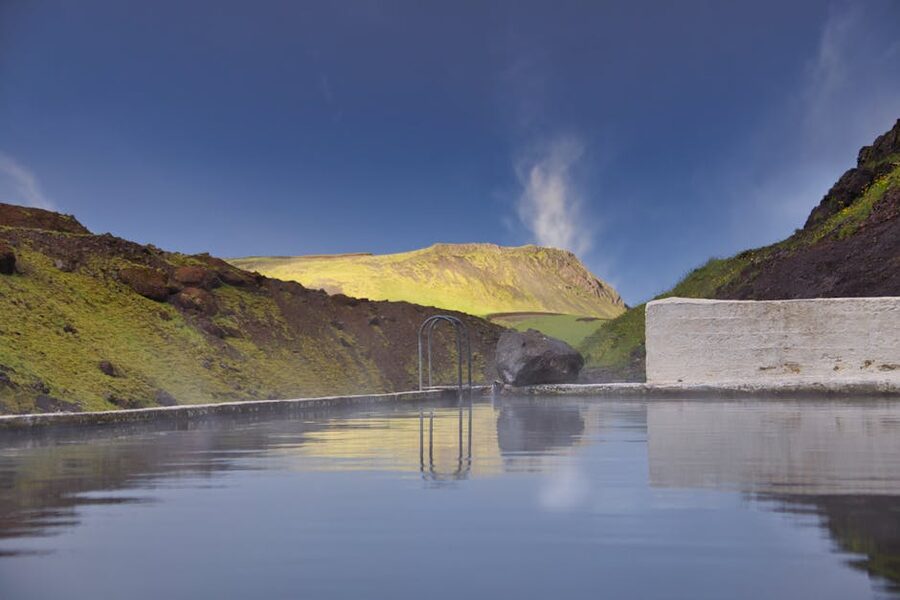
The cheaper, more local alternatives
If money matters, or if the Blue Lagoon vibes feel too much like a theme park, Iceland has cheaper options that get closer to the bathing-in-warm-water-outside experience.
Secret Lagoon (Gamla Laugin) in Flúðir. The oldest swimming pool in Iceland, opened 1891. Around 4,500 ISK, much smaller, much less polished, much more local. If you’re doing the Golden Circle anyway it’s a perfect detour. Dress code is identical (shower naked, swim).
Laugarvatn Fontana. On the Golden Circle route, geothermal pools and saunas built right next to Lake Laugarvatn. Around 6,500 ISK. They bake rye bread in the geothermal sand on site, then sell it in the café. Genuinely good.
Mývatn Nature Baths in the north. The Blue Lagoon’s quieter, much cheaper sibling. Same general experience (silica-rich geothermal water, big outdoor pool), 7,000 ISK or so, fraction of the crowds. If you’re going to North Iceland, do this instead.
Forest Lagoon outside Akureyri. Newer, in a forest, with a beer-and-burger café attached. Around 6,500 ISK. A nice in-and-out option after a day of driving in the north.
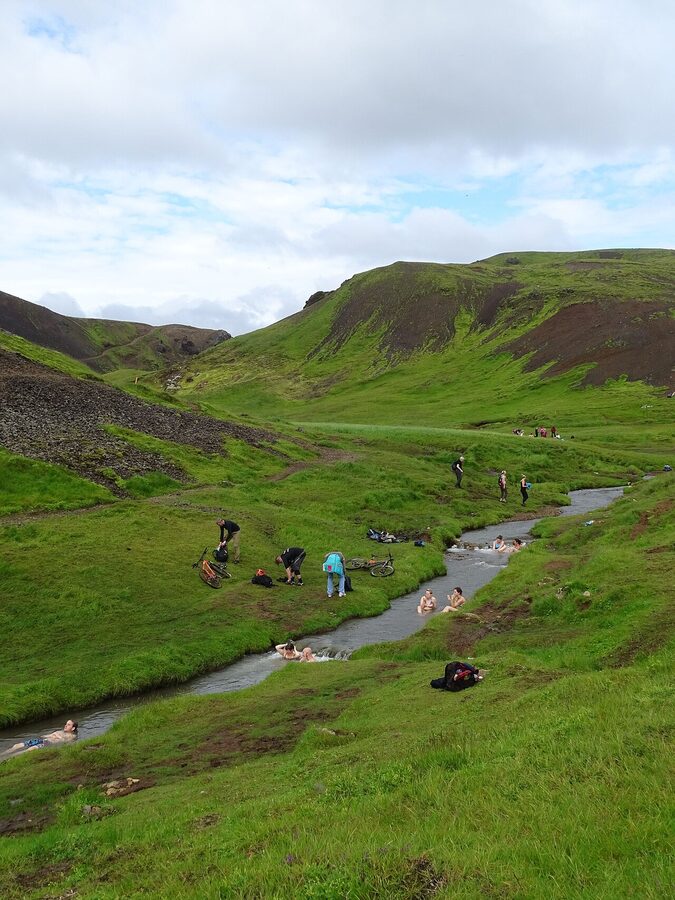
Reykjadalur hot river. Free. About an hour’s drive from Reykjavík to the trailhead at Hveragerði, then a 45-minute hike up the valley. You bathe in a literal river of hot water. It’s the best free hot spring near Reykjavík and easily the best counter-experience to the Blue Lagoon. Bring a towel and water shoes, the path is muddy.
Laugardalslaug, Sundhöllin, Vesturbæjarlaug. The town pools in Reykjavík. Around 1,400 ISK adult. Multiple hot pots at different temperatures, sauna, kids’ pool. This is where Icelanders actually go. If you only had one of these and you wanted to understand Iceland, I’d say go to Laugardalslaug at 8 pm on a Wednesday and skip the Blue Lagoon entirely. But that’s a different trip.
Who should book it, and who should skip
I prefer to be straight about who an experience suits. The Blue Lagoon suits some travellers very well and is a waste of money for others.
Book it if:
- It’s your first trip to Iceland and you want the iconic photo.
- You’re on a 24-hour layover or short stopover. The lagoon is right by the airport, and it gives you something memorable in a tight window.
- Special occasion. The Retreat for a honeymoon or anniversary is genuinely lovely.
- You have skin issues (psoriasis, eczema in remission, dryness). The silica really does help. The on-site clinic exists for a reason.
- You like spas and you’re happy to pay for the polish: changing facilities, towels, drinks brought to you, robes.
Skip it if:
- You’re on a tight ten-day Iceland budget. Town pools and Reykjadalur cost almost nothing and the experience is closer to “real” Iceland.
- You hate crowds. Even at the off-peak slots there will be hundreds of people in the water.
- You have active eczema flare-ups. The silica can irritate, and the temperature isn’t great for inflamed skin. Wait it out or go to Sky Lagoon (no silica) instead.
- You’re vegetarian/vegan and want full local pool culture. The Blue Lagoon experience is staged and commercial. Town pools are the real cultural item.
- You’ve already done Sky Lagoon and only have one spa left in your trip. Different is good but doing the same kind of thing twice in a week starts to feel repetitive.
The little things people get wrong
- Hair. Conditioner in, hair tied up, do not wet your hair in the lagoon. People who ignore this end up with straw for a fortnight.
- Wedding rings and silver jewellery. The sulfur in the water tarnishes silver and can damage some metals. Take it off and leave it in your locker.
- Phones. Waterproof case essential if you want photos in the water. Or leave it in the locker and use the locker-room mirror selfie afterwards.
- Sunglasses. Bring them in summer. The white silica reflects badly off the water in the sun.
- Children. Allowed from age 2 with floats provided free. Kids under 8 must wear arm floats. The Retreat is over-12 only.
- Pregnancy. Generally fine to soak, but the temperature is at the upper limit (39°C in places). Stay closer to 37°C areas and don’t overdo it.
- Towels. Comfort and above includes one. The cheapest entry doesn’t if it’s part of a promotional rate, so check before assuming.
- Cash. You don’t need any inside. Everything is wristband-tap.
- Time. Get to your slot 15 minutes early. Parking, walk to the entrance, check-in queue, all eats time. The 30-minute window is real.
- Weather. The Blue Lagoon stays open in basically anything except an active eruption alert. Soaking in the pool while it snows is exceptional. So is a wind that blows the steam sideways and stings your face. Bring a hat for the walk from the changing room to the water in winter.
Combining the lagoon with the rest of your trip
The smartest way to fit the Blue Lagoon into a trip is to bookend it. Land at Keflavík, drive 20 minutes to the lagoon, soak away the flight, then continue into Reykjavík. Or do the reverse on your last day: check out of your hotel, lagoon mid-morning, airport mid-afternoon. Either way you’ve avoided giving up a full day of your itinerary.
If you’re staying central, our Reykjavík city break itineraries set up the rest of your time well. Most visitors pair the Blue Lagoon with at least one of these:
- The Golden Circle. Þingvellir, Geysir, Gullfoss. All inside a day from Reykjavík. Together with Blue Lagoon you’ve covered the two biggest day-trip categories. Our guide to glaciers, geysers and the Golden Circle walks through what each stop is worth.
- South Coast. Skógafoss, Reynisfjara black sand beach, Vík, the Sólheimajökull glacier tongue. Long day, longer drive, worth it. Listed in our day-tour roundup.
- A Fire and Ice combo. Volcano + glacier. The Blue Lagoon is the easy fire half. Our Fire and Ice guide covers Inside the Volcano, Langjökull glacier, ice caves, and lava show alternatives.
- Reykjavík itself. A walk down Laugavegur, dinner at Dill or Mat Bar, Hallgrímskirkja, the Old Harbour. A few suggestions for Reykjavík on what’s actually worth your time.
For a longer trip, the Blue Lagoon is also a good final stop on a Ring Road circuit. Fly into Reykjavík, drive the Ring Road clockwise or anticlockwise over a week, end with the lagoon on the way back to Keflavík. Iceland’s day-tour categories all sit comfortably alongside it.
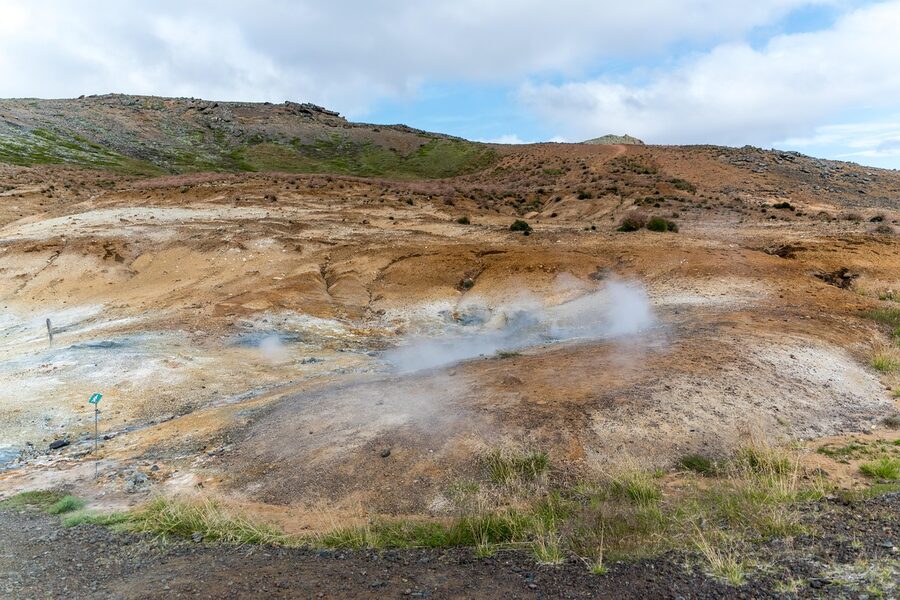
What’s actually changed since the marketing photos were shot
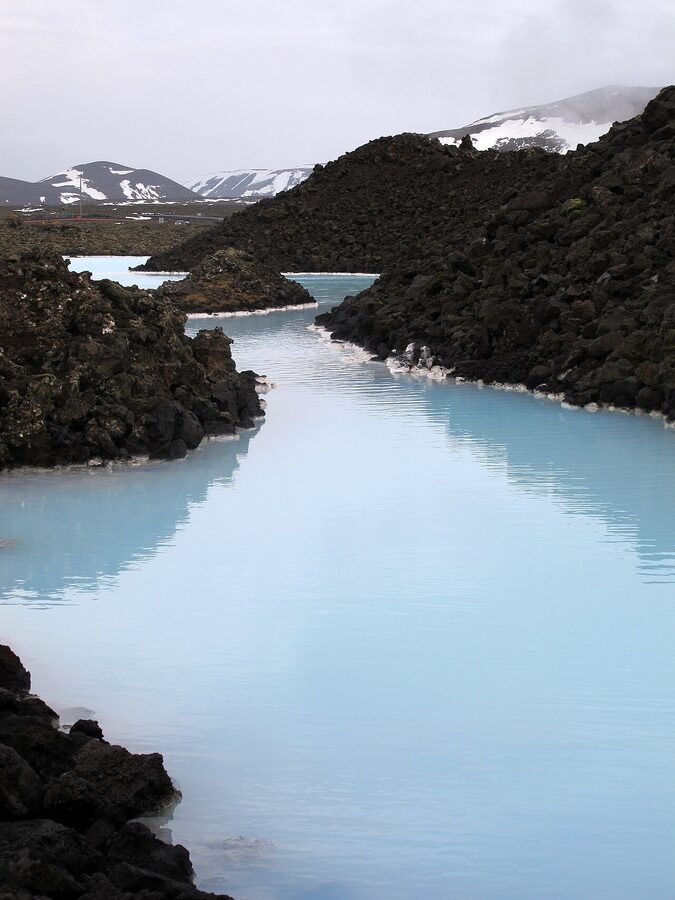
A few realities that the photos don’t show:
Since the eruptions, the road in changes from time to time. The November 2024 lava flow took out the original car park, so the entry road is a different alignment now. Signs are good, the Blue Lagoon has its own way-finding online, follow that and not Google Maps which still gets confused.
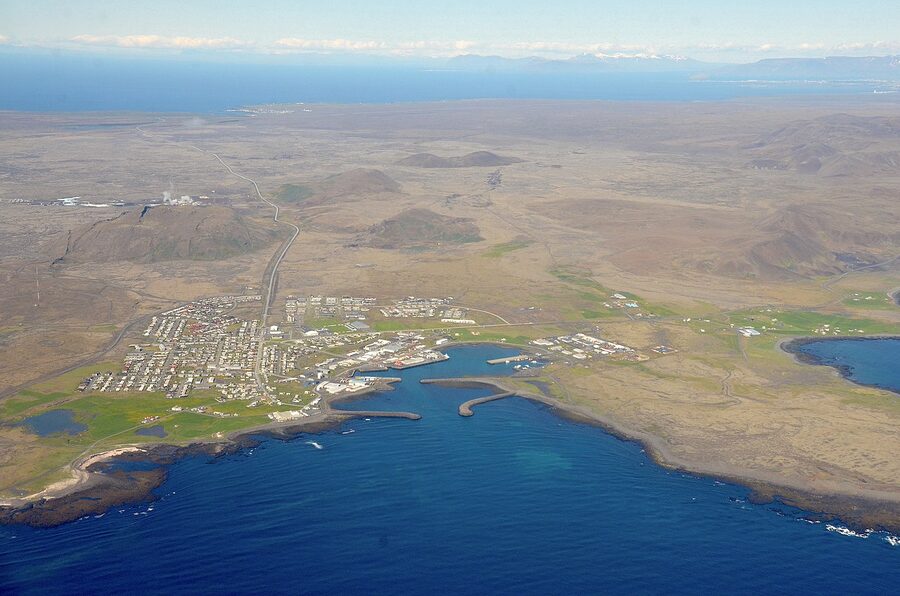
The town of Grindavík (3 km from the lagoon) has been mostly evacuated since the 2023–24 eruptions due to the fissure system passing under it. You can’t tour it. The road into Grindavík is partly closed and you’ll see the recent lava flows from the lagoon road. Strange feeling. The peninsula is the most active geological zone in Iceland right now, and these eruptions are likely to continue for years to decades according to the geologists. Read more on Iceland’s geology if you want the deeper context.
The new arrivals building, expanded restaurants, the Retreat Hotel, all of it is much bigger than it was even five years ago. The lagoon itself has not really expanded in capacity, but the surrounding development has. If you visited in 2014 and remember a more low-key place, that place is gone.
The Blue Lagoon company is also experimenting with events. There’s a total solar eclipse event for August 12, 2026 (the first total solar eclipse over Iceland since 1954). It’s already on sale. A pop-up dessert bar with a Netflix-famous pastry chef ran in May. The product mix is more elaborate every year.
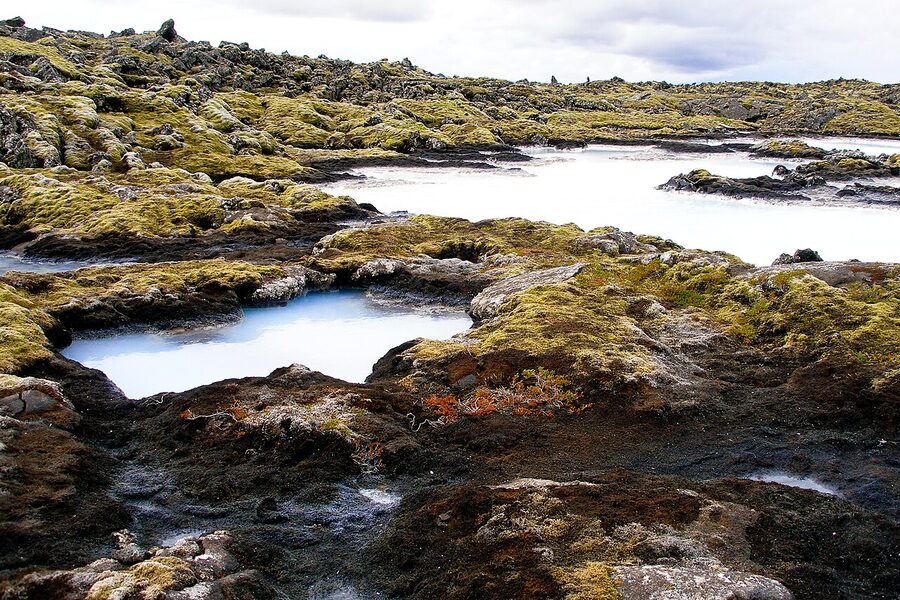
The tour categories worth booking with the Blue Lagoon
If you don’t have a rental car, the most efficient way to do the Blue Lagoon as part of a Reykjavík stay is via a combo tour. Common combinations:
- Golden Circle + Blue Lagoon. Long day (10–12 hours), but covers the two biggest day-trip items. Look for it on Reykjavík Excursions, Gray Line, or aggregators like GetYourGuide.
- Northern Lights + Blue Lagoon Premium. Some operators offer an evening Blue Lagoon visit followed by a Northern Lights chase. Romantic in theory, exhausting in practice. The aurora is never guaranteed (check vedur.is for the forecast and KP index before booking) but the float-then-stargaze pairing is unique.
- South Coast + Blue Lagoon. Long day, lagoon at the end, perfect way to wash off the day’s hiking. More options in our day-tour guide.
- Snorkel Silfra + Blue Lagoon. Two extremes: 2°C glacial water in a drysuit at Þingvellir, then 38°C silica water at the Blue Lagoon. Dive.is or Arctic Adventures for the Silfra half.
- Multi-day packages. Nordic Visitor, Hidden Iceland, and Iceland Travel all offer Reykjavík + Blue Lagoon + Golden Circle bundles for short stays.
For a tour-by-tour breakdown of what’s actually worth booking, our tours overview goes deeper.
One last thing
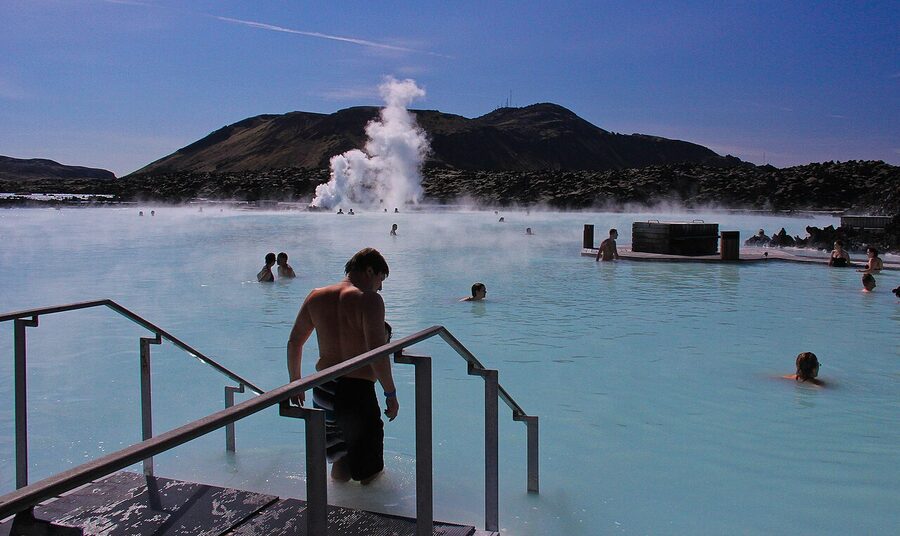
The Blue Lagoon is heavily marketed and quite expensive. None of that is wrong on its face, but it does mean a lot of people show up expecting a transcendent natural wonder and find a busy spa instead. They leave a bit cross.
I think the better way to frame it is: the Blue Lagoon is a great spa, in an unusual setting, with very good water, that happens to be in Iceland. If you go in expecting a great spa with very good water in an unusual setting, you’ll have a lovely time. If you’re expecting a sacred Icelandic ritual, you’re looking for something else, and that something else is Reykjadalur or Mývatn or your local town pool on a Tuesday at six.
I still go. Once a year, usually with someone visiting. We get an early slot, do the masks, drink one beer, soak for two and a half hours, drive back. It’s a nice way to spend a morning. Some experiences are simply worth doing once, and this is one of them.
Þetta reddast, it’ll work out. Book ahead, bring conditioner, take it for what it is.