The first thing you need to know about the Golden Circle is that it isn’t golden. The name comes from Gullfoss, the waterfall at the eastern end of the loop, and Gullfoss means “golden falls” because the water carries enough glacier silt that on a sunny afternoon the spray catches the light and goes the colour of cheap honey. Tourist boards in the 1930s spotted that and ran with it. Eight decades later, the Golden Circle is the most-driven 300 kilometres in the country, and on a coach in July you’ll share three viewpoints with about a thousand other people. Don’t let any of that put you off. Once you understand the rhythm (which extras, which season, which order), the day works.
I do this loop with visitors three or four times a year. Sometimes by car, sometimes I drop friends at the BSÍ terminal for a Reykjavik Excursions coach, sometimes I’m just driving past Þingvellir on the way to a wedding in Selfoss. What follows is the article I wish someone had handed me before my first attempt, when I tried to do the whole loop plus the South Coast in a single November day and ran out of light at Gullfoss with the camera battery dead. Stop by stop, the right way to plan it.
In This Article
- What the Golden Circle actually covers
- Þingvellir, the rift valley with a parliament in it
- The Alþingi and the Lögberg
- Walking the Almannagjá properly
- Silfra, if you want to do the snorkel
- The Geysir geothermal area, and what Strokkur really does
- How to actually watch Strokkur, the dome trick
- What to skip at Geysir, and where to eat
- Gullfoss, and the woman who saved it
- Sigríður Tómasdóttir’s campaign
- Gullfoss in winter
- Honourable extras, ranked by what I’d add first
- Friðheimar, the tomato greenhouse, book ahead
- Kerið crater, fast and gorgeous
- Faxi waterfall, free and quiet
- Brúarfoss, the bluest water in Iceland
- Skálholt, Iceland’s medieval bishop’s seat
- The Secret Lagoon at Flúðir, the cheaper soak
- Fontana baths at Laugarvatn, with rye bread
- The classic six-hour loop, hour by hour
- Tour formats, what you actually get
- Classic six- to seven-hour Golden Circle bus tour
- Small-group Golden Circle tour
- Golden Circle plus Blue Lagoon combo
- Golden Circle plus glacier or snowmobile
- Golden Circle on horseback
- Private tour with a Mercedes
- Self-drive vs guided, the real tradeoff
- The road itself, what to know
- Where to fuel up and pee
- When to go, season by season
- Summer (June to August)
- Winter (November to March)
- Shoulder (May, late September to October)
- Combining the loop with another day
- What I’d skip
- One final thing
What the Golden Circle actually covers
Three big stops, in this order if you go clockwise from Reykjavik: Þingvellir National Park, where the Mid-Atlantic Ridge runs above ground; the Geysir geothermal area, where Strokkur erupts every five to ten minutes; and Gullfoss, the two-tier waterfall in the Hvítá river canyon. About 300 kilometres of paved road, 230 if you cut corners. From central Reykjavik to the first stop is 45 minutes; the loop back to the city, including stops, sits between six and twelve hours depending how much you add.
The three big stops are free to walk into. What turns six hours into ten are the honourable extras: Kerið crater, Faxi waterfall, the Friðheimar tomato greenhouse, Skálholt cathedral, the Secret Lagoon at Flúðir, Fontana baths at Laugarvatn, Brúarfoss, Silfra snorkelling. Pick one or two and the day becomes something. Try to fit them all and you’ll be eating dinner from a petrol-station hot dog stand at half past ten.
For the deeper geology and a glacier hike combo, see our glaciers and geysers piece: it covers the Mid-Atlantic Ridge, Strokkur’s plumbing, and which Iceland glacier hike to add. This article is about the loop itself: route, stops, and how to pick a tour or do it yourself.
Þingvellir, the rift valley with a parliament in it
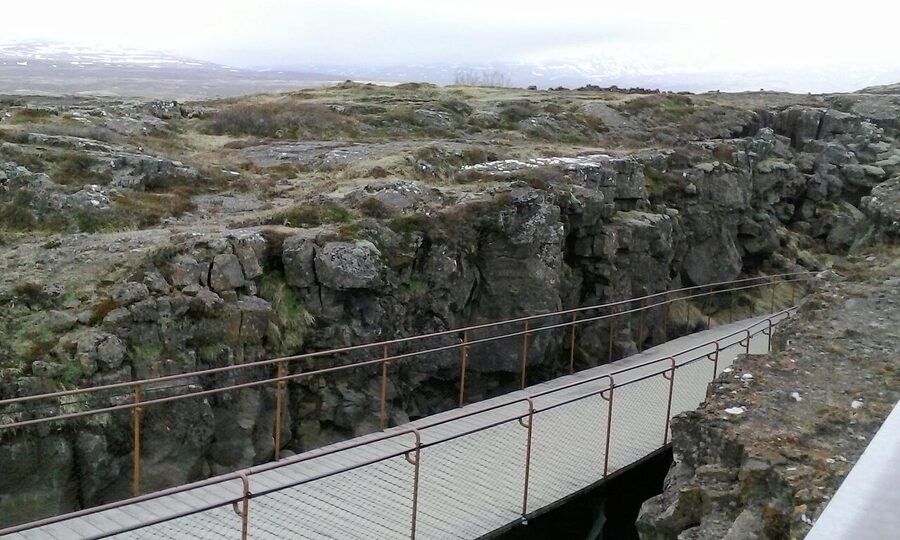
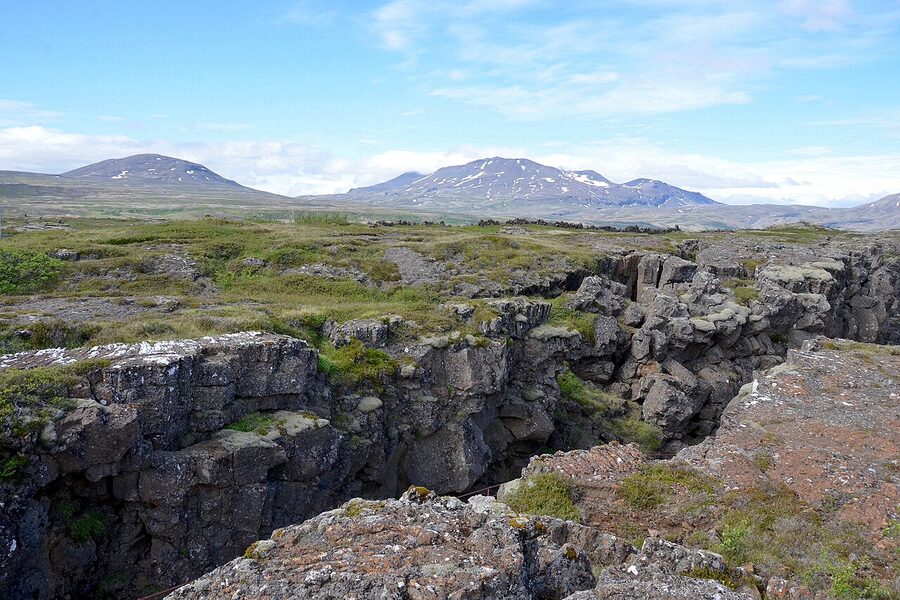
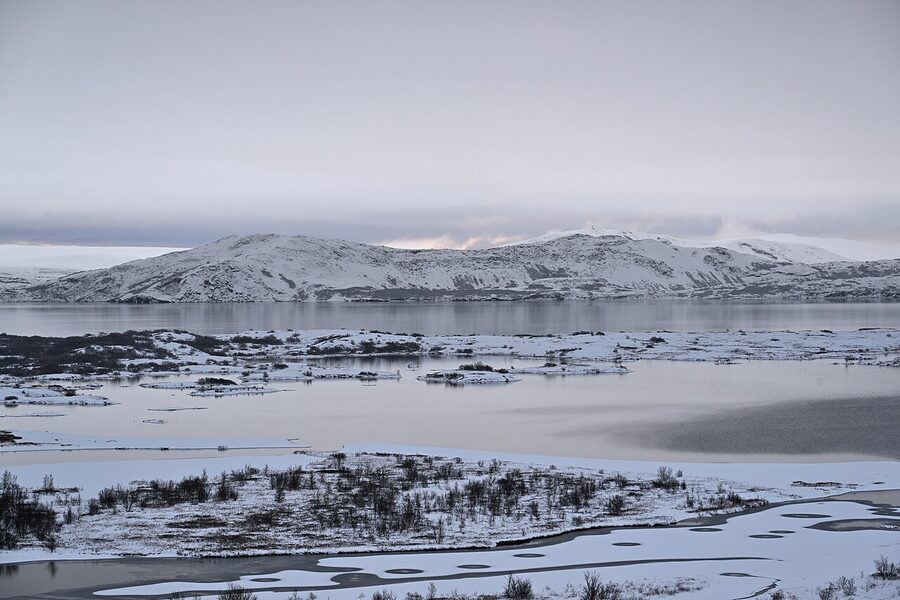
If you only stop at one place on the Golden Circle, make it Þingvellir (pronounced thing-vet-lir; þ is a soft “th”). UNESCO listed it in 2004 for two unusual reasons, geological and cultural. Most UNESCO sites earn one. Þingvellir got both: the rift valley you’re walking through is the visible crest of the Mid-Atlantic Ridge, and the flat strip of lava at the bottom of the canyon held the longest continuously running parliament on earth.
The North American and Eurasian tectonic plates pull apart here by about 2.5 centimetres a year. You can see the seam. Walk down the Almannagjá fissure on the western side of the park and your hand rests on the eastern wall of the North American plate; fifty metres east runs the western edge of Eurasia. Nowhere else in the world can you do this on dry land.
The Alþingi and the Lögberg
In the summer of 930 AD, chieftains from across Iceland gathered on a flat strip of basalt below the Almannagjá wall and founded the Alþingi, the world’s oldest parliament. The longest journey was seventeen days on horseback from the east fjords; people pitched turf-walled búðir (booths) covered in homespun cloth, traders sold goods, young people met people they’d marry, and on a small outcrop called the Lögberg, the Law Rock, the elected Lawspeaker recited the entire body of Icelandic law from memory for three summers running. No notes. Just the man and the laws.
The Alþingi met at Þingvellir until 1798. It moved to Reykjavik in the nineteenth century and still meets there. If somebody tells you Iceland has the oldest parliament in the world, this is what they mean. The site is marked with a flagpole on the flat strip. That’s where the country also converted to Christianity in the year 1000, in a single political decision the Lawspeaker made overnight under a fur cloak to keep the country from civil war. Heavy ground for a flat patch of basalt.
Walking the Almannagjá properly
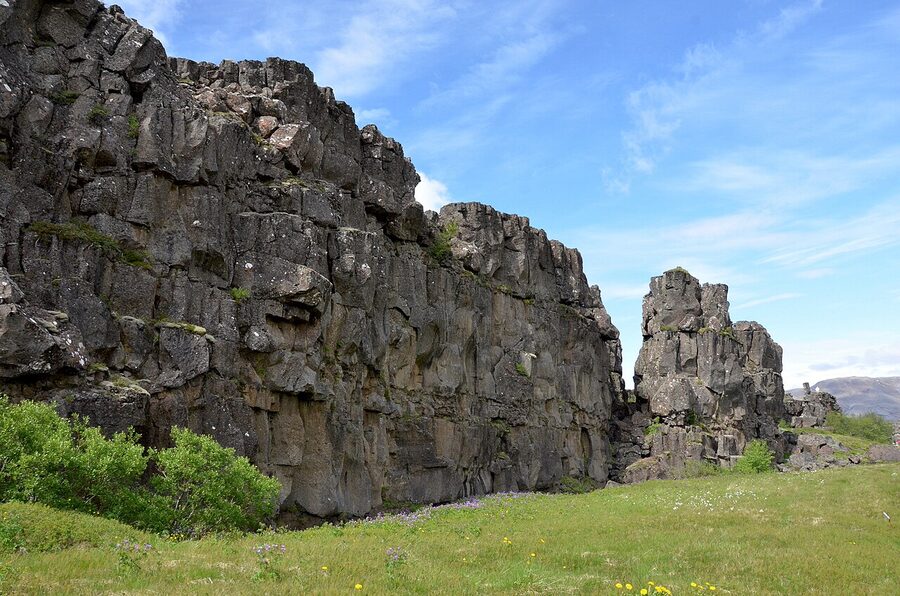
Most coach tours give you forty-five minutes here. That’s enough for the Almannagjá path and the Lögberg with maybe a glance at Öxarárfoss waterfall. If you self-drive, plan for ninety minutes minimum.
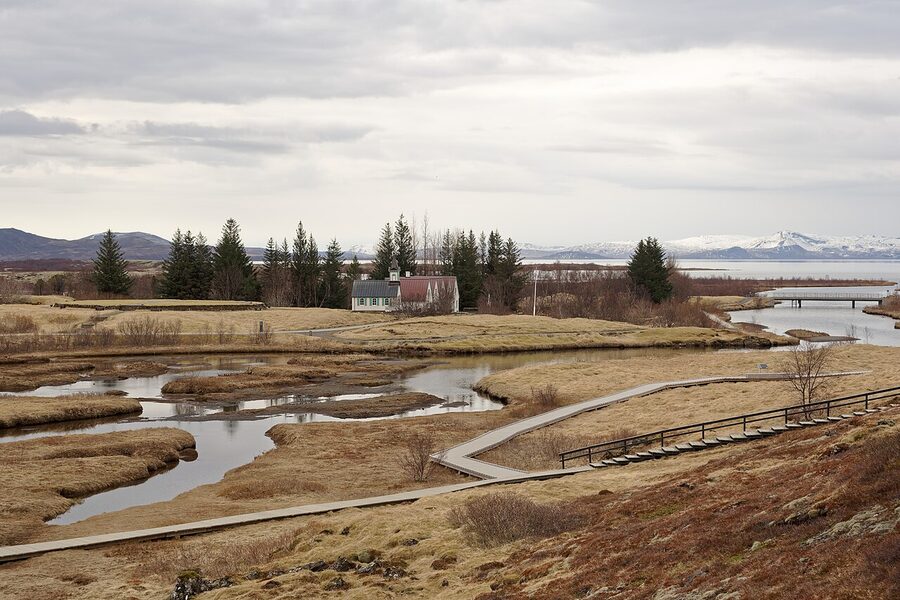
Park at P1 (Hakið), the upper car park at the visitor centre. The path drops down through the Almannagjá fissure with canyon walls rising twenty metres on either side. You walk roughly a kilometre downhill on a paved trail, past the Lögberg flagpole on your left, until you reach Þingvallakirkja church and Þingvellir farm. From there, loop back up through Flosagjá (a parallel fissure full of impossibly clear glacial water), or walk fifteen minutes east to Öxarárfoss. Don’t take the P5 shortcut from the church car park; you’ll skip the canyon walk, which is the whole point.
Parking is 1,000 ISK at P1, P2, or P5 and covers all park lots for the day. The Hakið visitor centre has the best panoramic view, a free 12-minute film, and clean toilets. Pop in before you walk down. More at thingvellir.is.
Silfra, if you want to do the snorkel
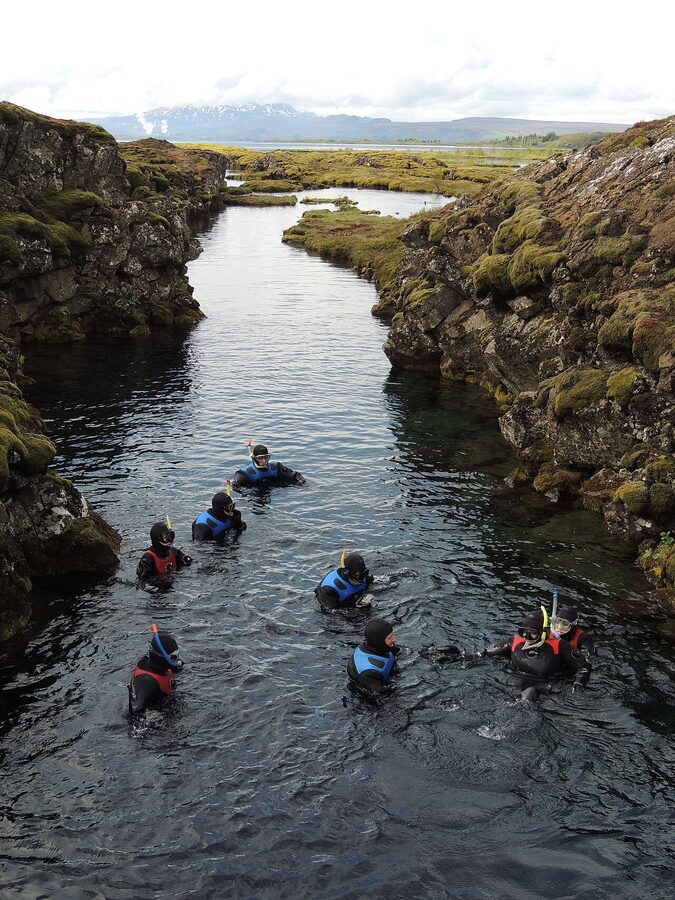
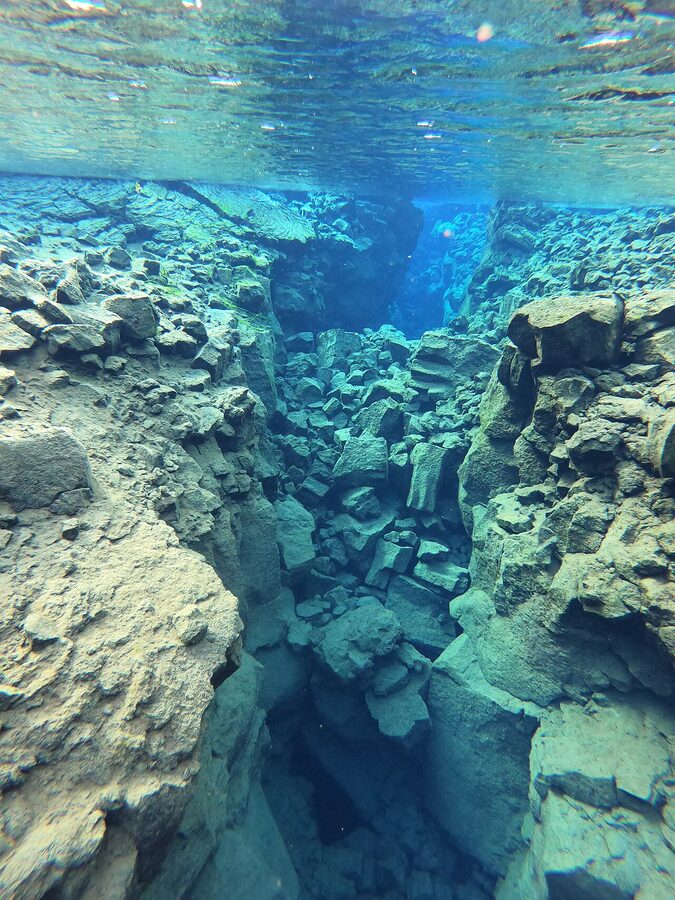
Þingvellir is also where you snorkel between the plates. The Silfra fissure, a few minutes by car from the main park, is filled with glacial meltwater so cold and clear you can see a hundred metres through it. You float between two continents in a dry suit: North American plate on your right, Eurasia on your left. Year-round, water 2°C, dry suit keeps you bone-dry from the neck down, 30 to 40 minutes in the water. Around 22,000 to 28,000 ISK for the snorkel, double for a dive (diving requires dry-suit certification, snorkelling does not).
I’d book with DIVE.IS, Arctic Adventures, or Troll Expeditions. They’ve all been running this for years, supply the gear, and know what to do if a customer panics in the water. You can either drive yourself to the meeting point or get pickup from Reykjavik, which adds an hour each way. If Silfra is on your list, do it at the start of the day; you’ll need a hot meal afterwards. Book a few days ahead in summer; in winter, surface tours can cancel but Silfra runs unless the access road is shut. The 30 to 40 minutes in the water are the single best half-hour you can buy in this country.
The Geysir geothermal area, and what Strokkur really does
From Þingvellir it’s about 60 km to the next stop, an hour by car on Route 36, then 365, then 37, past the farming town of Laugarvatn. You arrive at Haukadalur: a small geothermal valley with a car park, a Geysir Center across the road, and a marked path through a hectare of bubbling pools and steam vents. Most people call it “Geysir.” That’s a misnomer.
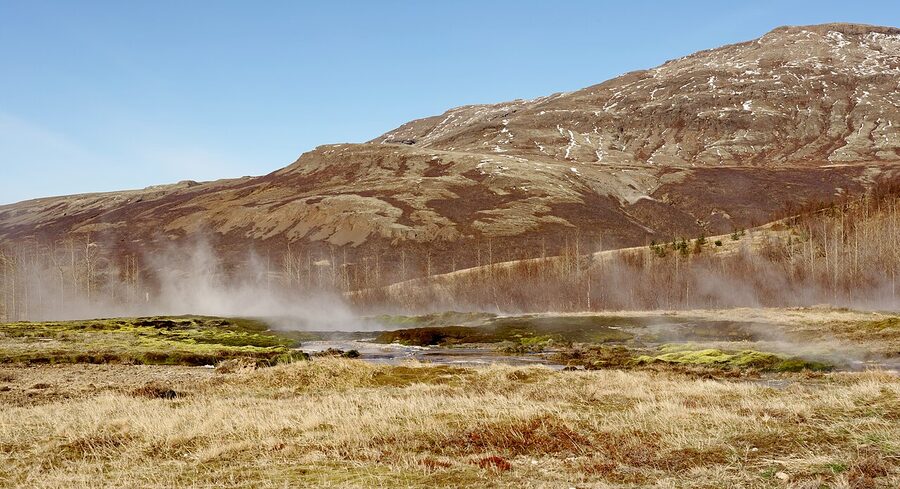
The original Geysir, with a capital G, gave its name to every geyser on earth. It’s the wide pale-blue pool in the lower corner of the field. It hasn’t erupted reliably since the 1970s; before that, at peak, it would throw water 70 metres in the air. Now it just steams, and most visitors walk straight past it without realising what it is.
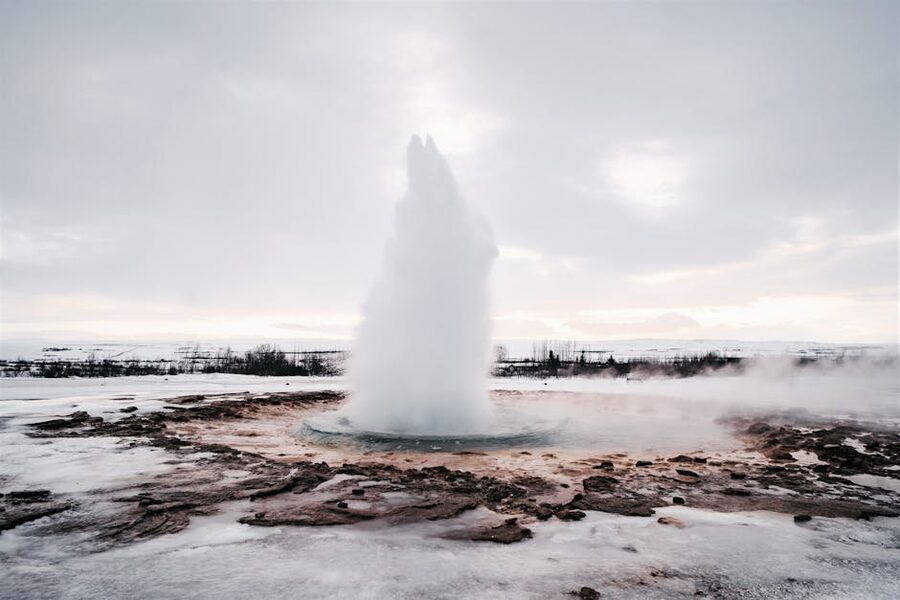
What everybody comes to see is Strokkur, Geysir’s smaller neighbour fifty metres up the path. Strokkur means “churn” in Icelandic, which is what the water in the basin does just before each eruption. It blows every five to ten minutes (sometimes twelve, occasionally fifteen if it’s in a mood). Most eruptions reach 15 to 20 metres; the big ones go up to 40. Steady since 1963, when locals cleaned out its conduit.
How to actually watch Strokkur, the dome trick
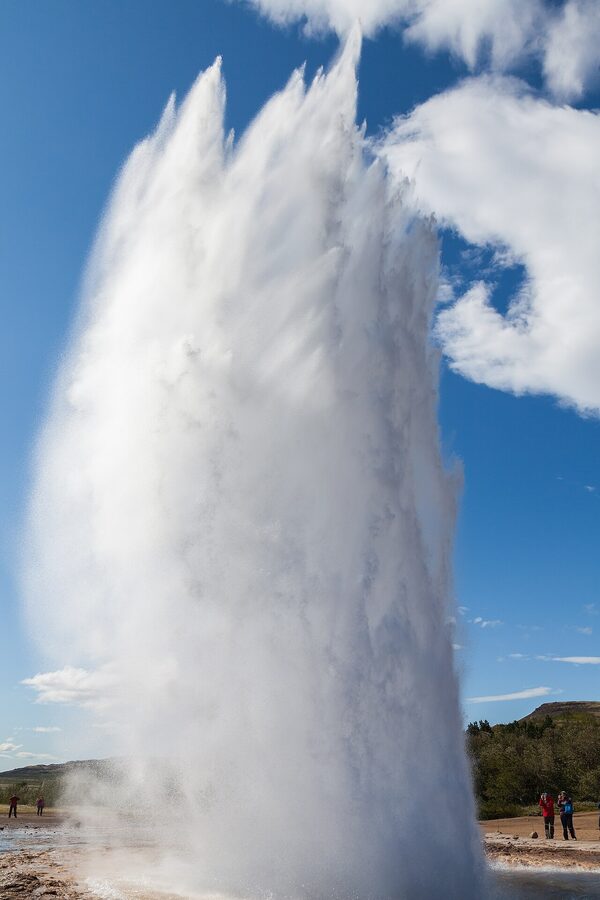
Here’s the thing nobody tells you on the coach. You can see the eruption coming, by about two to three seconds. The pool surface goes completely flat, and then a bluish, hemispherical dome rises in the centre of the basin, roughly the size of a paddling pool. That’s the same volume of water bulging up as the superheated steam below pushes from underneath. The dome holds for about one second, then collapses upward into a column of boiling water 15 to 20 metres tall. The whole eruption, dome to peak, lasts five seconds. Then it collapses back into the basin and the cycle restarts.
For photography, that’s the shot. Frame the basin wide, watch the surface, and the moment the swirling stops, hit record. Wide angle works much better than zoom because the spray drifts at the top. A phone framed in landscape, held still, gets the eruption fine; a 24mm prime on a mirrorless gets it better. Don’t bother trying to time the burst with a single click, the column rises faster than you can react. Use burst mode or video.
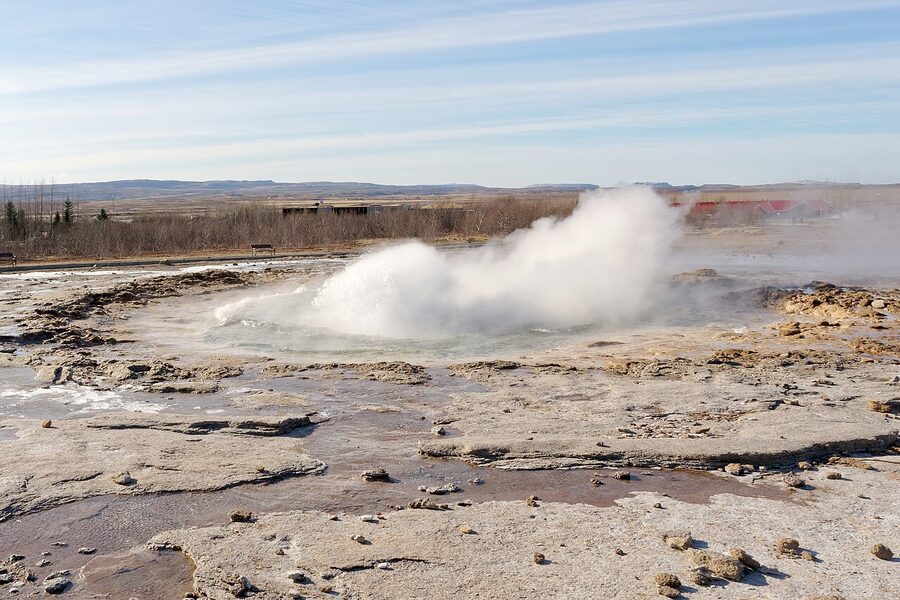
Watch where the wind is going. Strokkur’s spray will get you, especially if you’re standing on the downwind side, and the water comes out at boiling point but is air-cooled to lukewarm by the time it reaches you. It’s not dangerous, just damp. If you’re cold-averse, stand uphill or upwind. The unwritten etiquette is that nobody crosses the chain that marks the safe distance. Stay behind the chain. Some of the surrounding ground covers ninety-degree pools under a thin silica crust.
Most people stop at three or four eruptions. After the third you’ve got the rhythm, the camera comes down, and you just watch. I’d give the stop sixty to ninety minutes including the walk past Blesi, the turquoise hot pool further up the slope, and a coffee at the Geysir Center across the road. Entry and parking are free.
What to skip at Geysir, and where to eat
The Geysir Center across the road has a buffet (around 4,500 ISK), a sit-down restaurant, public toilets that are free if you buy something or 200 ISK at the turnstile, and a gift shop priced for tour coaches. Skip the shop. The lopapeysa wool jumpers are about thirty per cent more expensive here than in Reykjavik. The cafeteria is fine for a quick lunch if you’re on a tight schedule. If you have an extra hour, drive twenty minutes back toward Laugarvatn and stop at the Lindin restaurant on the lakeshore for proper Icelandic plates instead.
Gullfoss, and the woman who saved it
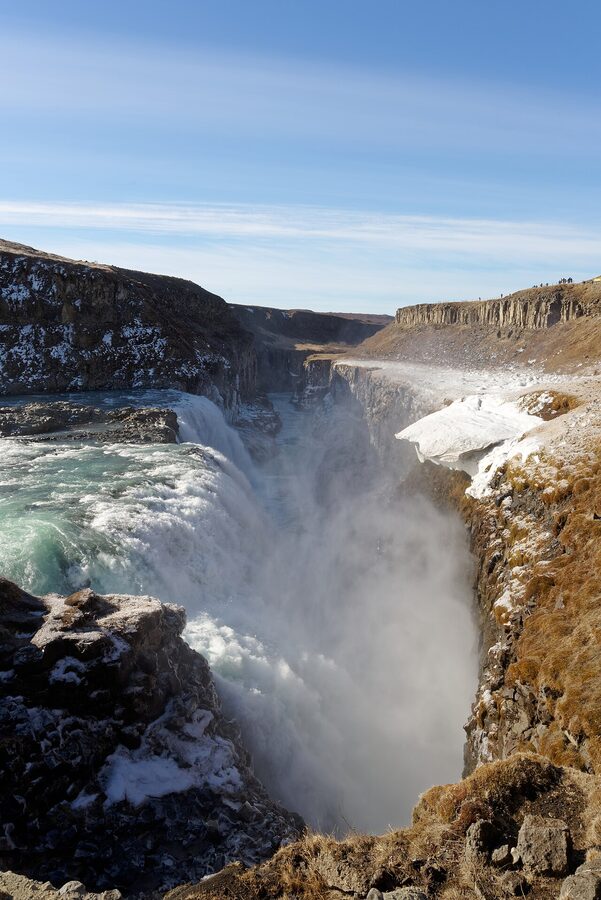
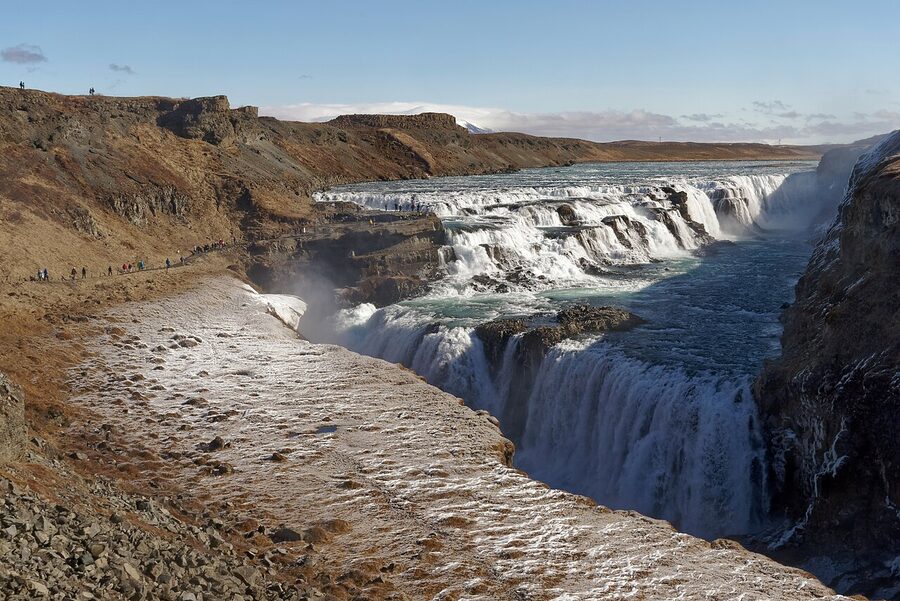
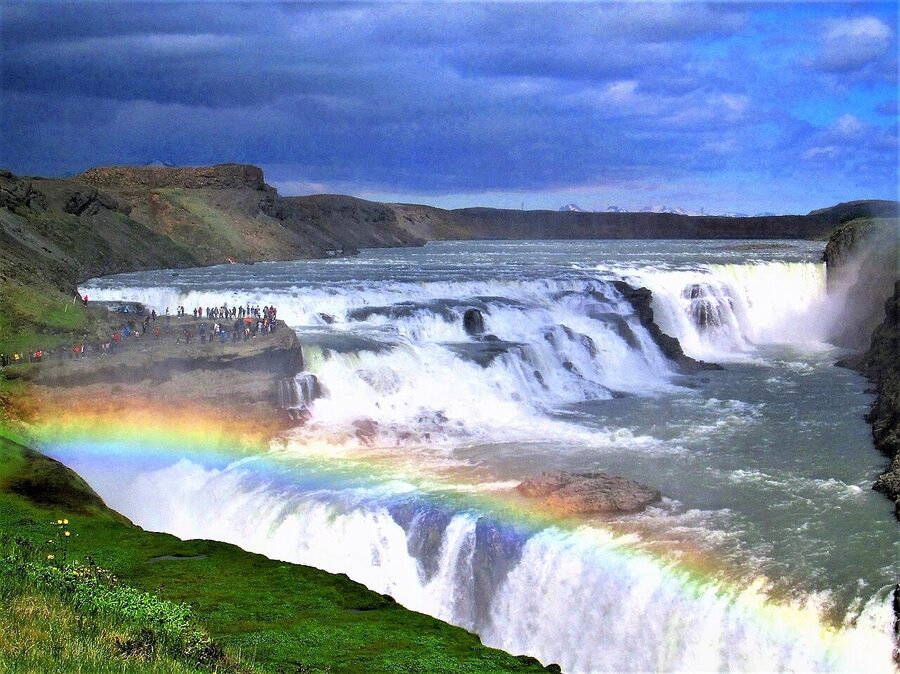
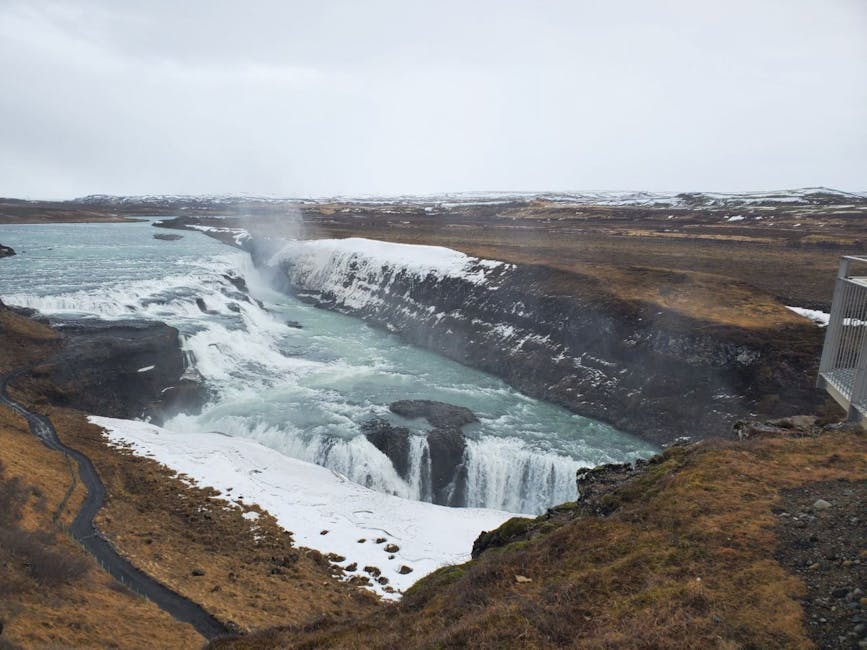
From Geysir it’s a ten-minute drive east on Route 35 to Gullfoss, the most-visited waterfall in Iceland. The Hvítá river flows south off the Langjökull glacier, takes a sharp right turn, and drops 32 metres in two stages (11-metre upper fall, 21-metre lower) into a canyon that cuts perpendicular to the river’s course. Average summer flow is 140 cubic metres per second. In flood, it’s been recorded at 2,000. You feel that number standing at the lower platform with the spray hitting your face.
The car park is vast (this is the most-visited spot in Iceland after the Blue Lagoon). The viewing area is on two levels: the upper deck for panorama, the lower path close enough to be soaked within a minute. Twenty minutes, do the upper. Forty, do both. Photographers should split half and half, and bring a lens cloth.
Sigríður Tómasdóttir’s campaign
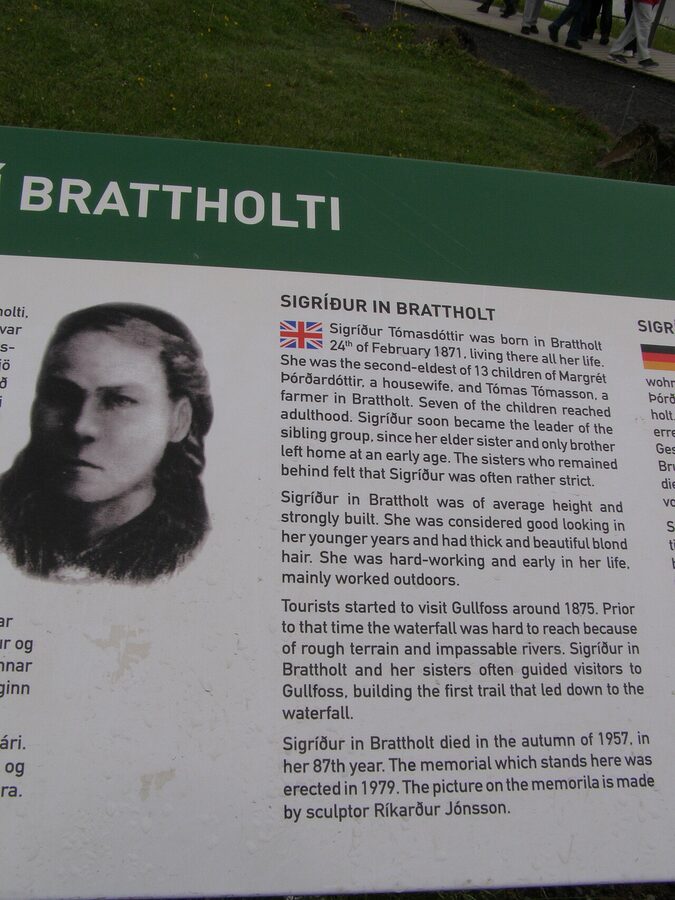
Walk up the path from the lower viewpoint and you’ll find a stone memorial with a bronze relief of a woman’s face. That’s Sigríður Tómasdóttir. In 1907, the British engineer Howell leased Gullfoss from her father for 99 years and announced plans to dam the river for hydroelectric power. The waterfall would have disappeared into a turbine. Sigríður, who’d grown up on the farm beside the falls, took the case to court in Reykjavik. She walked there barefoot for one of the hearings. She lost the first round. She lost the second. After a decade of fight, she won; in 1929 her foster son Sveinn Björnsson (who’d acted as her lawyer and later became Iceland’s first president) secured the falls for the state.
She’s celebrated as Iceland’s first environmentalist. Without her, the upper deck you’re standing on would be a dam wall. The bronze plaque is a quiet five-minute stop. Most coach tours don’t mention her at all.
Gullfoss in winter
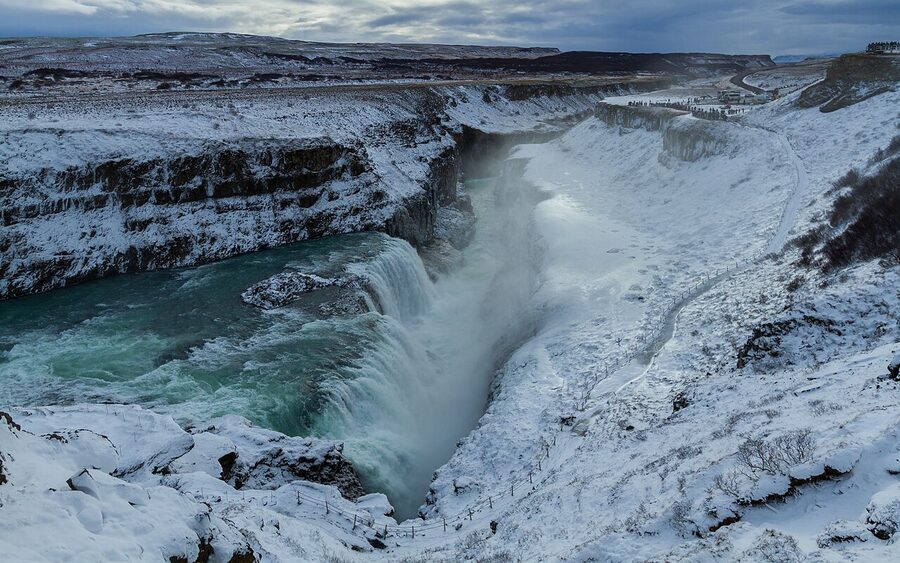
In winter the lower path is roped off because the spray freezes onto the rock and the surface becomes a sheet of glass. You can still see Gullfoss from the upper viewpoint, and the winter light makes the photograph. The mist plumes into snowy air, the canyon walls have icicles hanging fifty metres long, and on a clear cold day, the contrast between the brown river and the white everything-else is something you don’t get in summer. Pack proper crampons or microspikes if you want to walk the upper deck without sliding. The car park café (Gullfoss Visitor Centre, run by the same family who own much of the surrounding land) sells the famous Icelandic lamb soup for around 2,500 ISK. It’s good. Refills are free.
The whole stop, both platforms plus a soup, takes about an hour. There’s a small free toilet block at the car park.
Honourable extras, ranked by what I’d add first
You can do the three big stops in six hours flat from Reykjavik. The day becomes interesting when you add one or two of these, ranked from “almost essential” to “only if you’ve got serious time.”
Friðheimar, the tomato greenhouse, book ahead
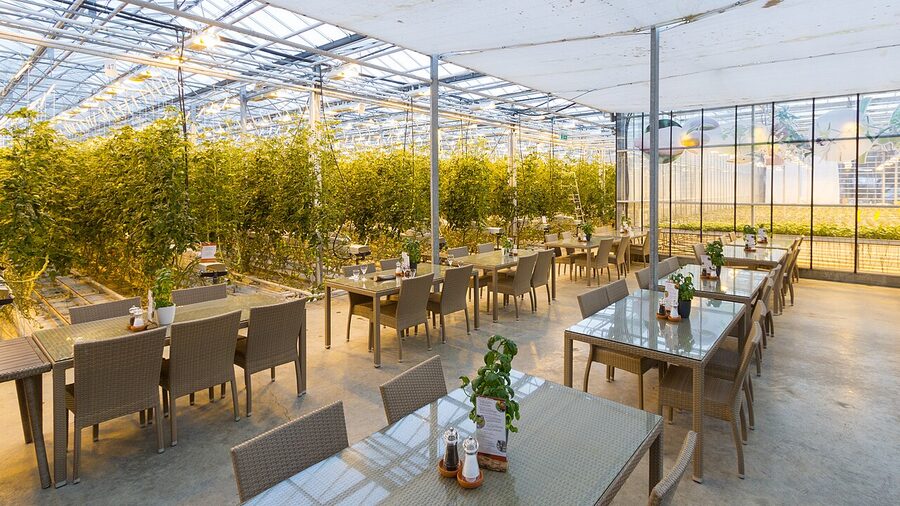
Of all the additions, this is the one I’d push hardest. Friðheimar sits in Reykholt, between Geysir and Selfoss. It’s a working tomato farm that grows about 350 tonnes a year using geothermal heat to keep the greenhouses at 22°C all winter. The restaurant is set up inside the greenhouse itself, so you eat among the vines under sodium grow lamps. The menu is built around the produce: tomato soup with fresh-baked sourdough bread, ravioli in tomato sauce, tomato cheesecake (yes, really), and a Bloody Mary made with their own juice.
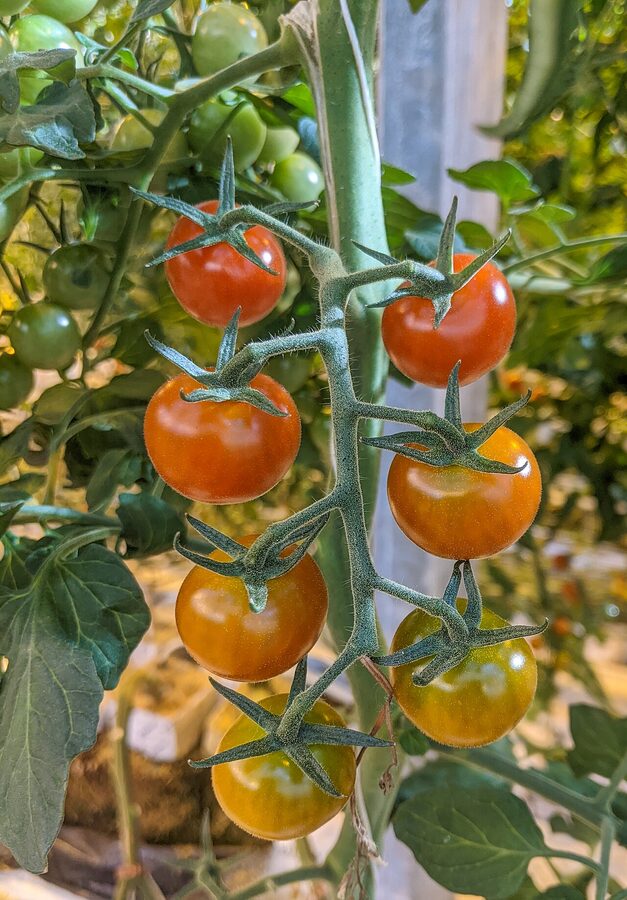
The tomato soup with bread is the move. Bottomless, ladled from a pot at the table, around 3,500 ISK and reasonable for Iceland. Bring an appetite; you can finish three bowls before you give up, which I have on more than one occasion. The Bloody Mary is excellent.
The catch: you must book ahead. Friðheimar takes online reservations and they fill up days in advance, sometimes weeks in summer. Walk-in is technically possible but you’ll usually be told there’s no table for two hours. Book a slot when you book your hire car. They’re closed on 24, 25, 26, and 31 December and 1 January. If full or shut, the next-best lunch is Lindin in Laugarvatn (Nordic-leaning, mid-range) or Efstidalur farm restaurant which serves beef from the farm beside it.
Kerið crater, fast and gorgeous
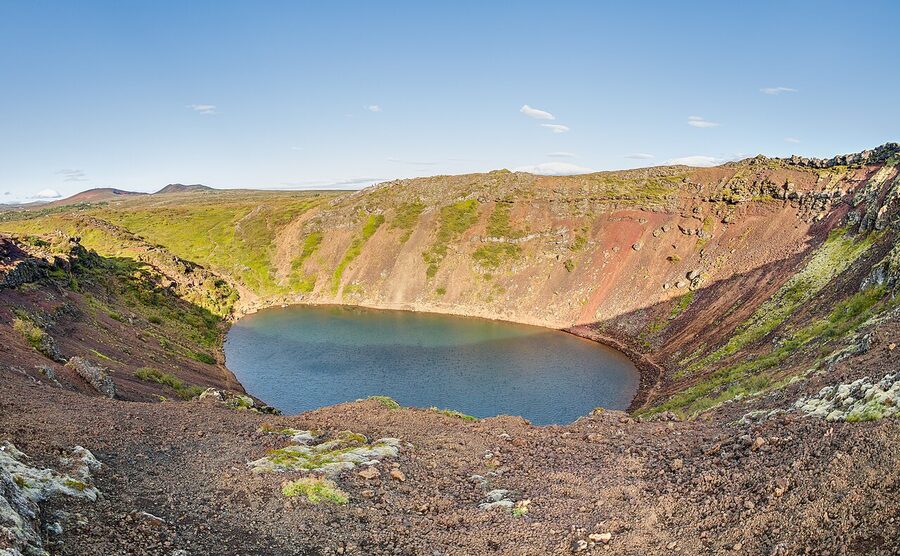
Kerið is a 3,000-year-old volcanic crater on Route 35 about thirty kilometres south of Gullfoss. A near-perfect ellipse, 270 metres long by 170 wide, with red-iron walls and a green lake about 15 metres deep. Privately owned (unusual in Iceland), so there’s an entry fee of 500 ISK per adult, kids under 12 free. Walk the full rim in fifteen to twenty minutes; there’s a path down to water level on the easier side. Allow 30 to 45 minutes total. Perfect last stop on a self-drive day, two minutes off the road back to Reykjavik.
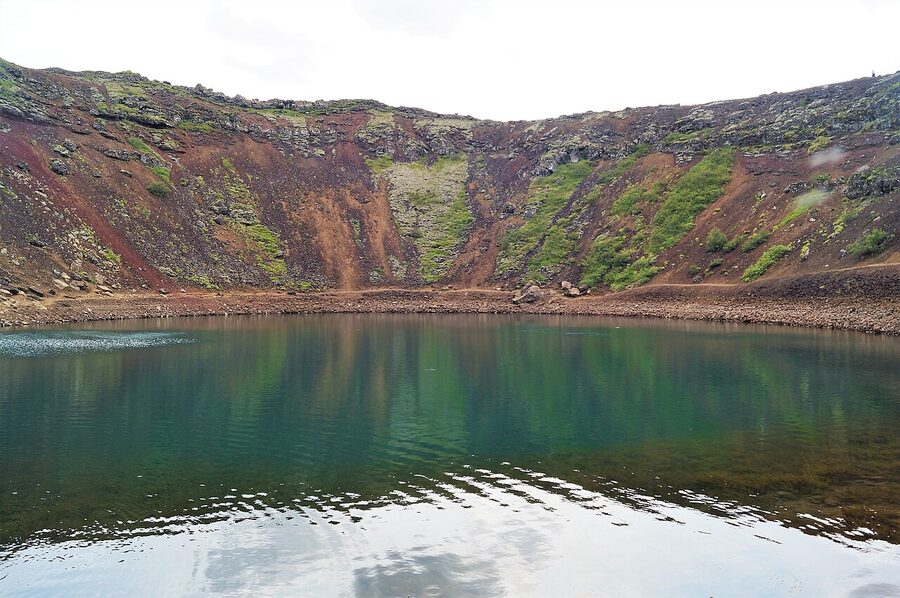
Some people grumble about paying to see a crater in a country where almost nothing has an entry fee. Fair enough, but the upkeep is decent and the toilets work. I’d pay it. If you won’t, the next-best free crater is Eldborg out on Snæfellsnes Peninsula, but that’s a different day.
Faxi waterfall, free and quiet
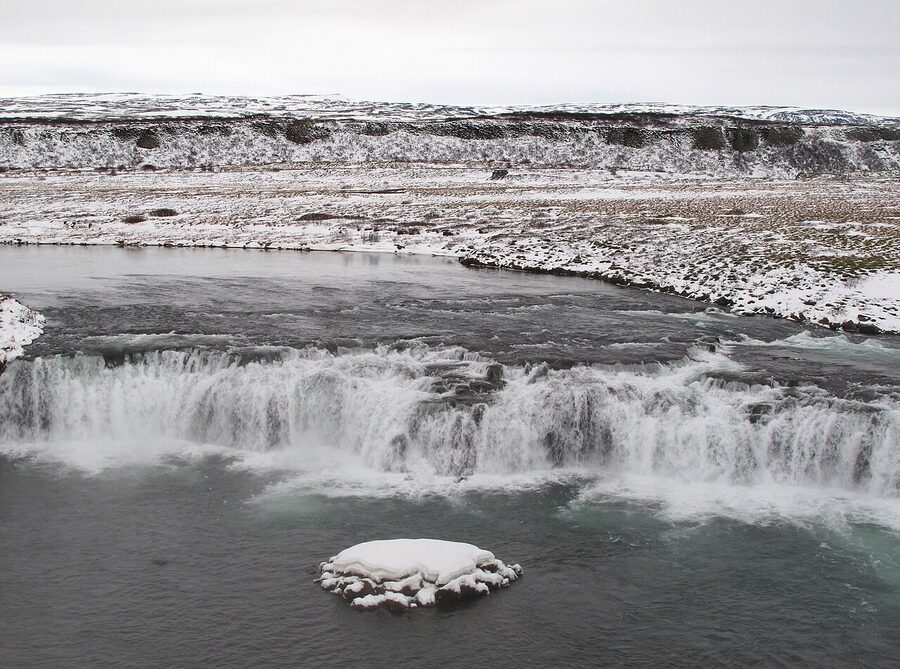
Faxi (also called Faxifoss or Vatnsleysufoss) is a wide, low-drop waterfall on the Tungufljót river, about ten minutes off the main road between Geysir and Gullfoss. It’s twelve metres tall, eighty wide, and modest by Gullfoss standards. The reason to stop is twofold: nobody’s there compared to the main loop, and there’s a salmon ladder cut into the rock on the right side of the falls that lets fish climb upstream during spawning season. In late summer you can sometimes watch them jumping. Free, no fee, small car park, twenty-minute stop. The kind of place a coach won’t take you.
Brúarfoss, the bluest water in Iceland
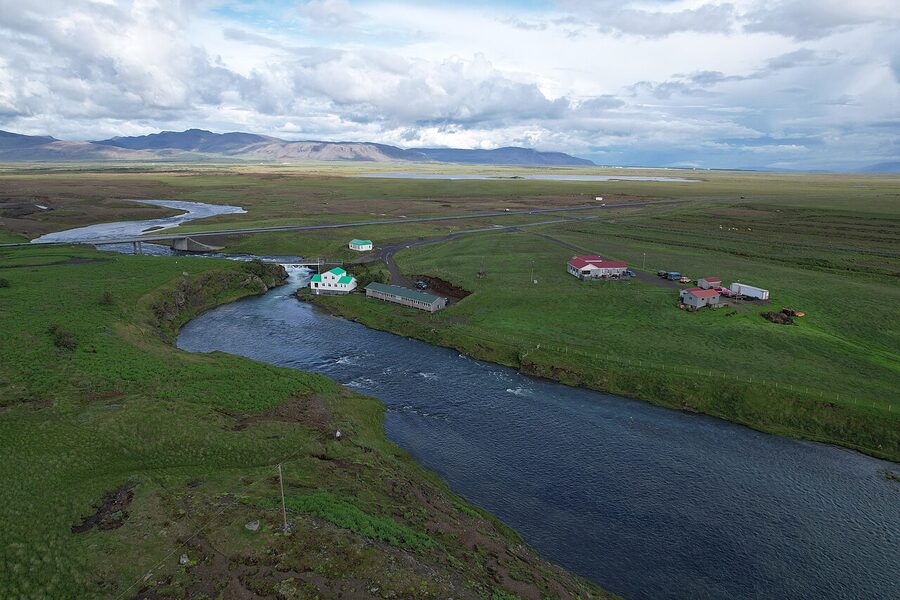
Brúarfoss isn’t enormous; it’s twelve cascades over a hundred-metre stretch of the Brúará river. The colour is genuinely surreal: bright turquoise, the kind that looks colour-corrected in photographs but actually exists. The blue comes from glacial silt suspended in meltwater from Lake Hagavatn. In 2021 they opened a proper marked trail from a paid car park (1,000 ISK) which cuts the walk to about an hour each way. Worth it for serious photographers; skip if you’re trying to do the loop in a day.
Skálholt, Iceland’s medieval bishop’s seat
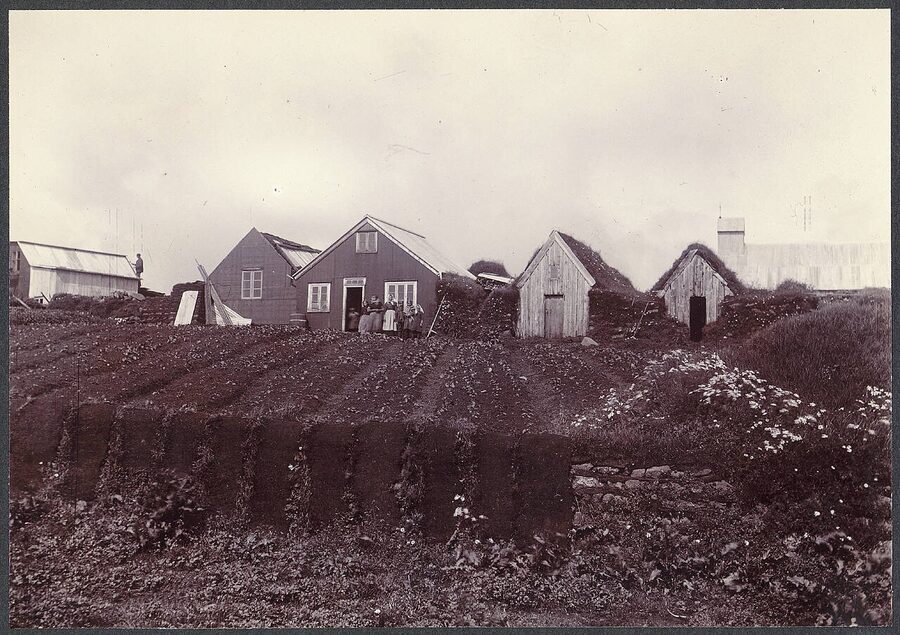
Between Geysir and Selfoss, just off Route 31, is Skálholt, which from 1056 to 1796 was the bishop’s seat of southern Iceland and effectively the religious capital. There were two seats in medieval Iceland, Hólar in the north and Skálholt in the south; Skálholt was the bigger. It had the country’s first school, first printing press, first cathedral. A 1784 earthquake levelled the medieval buildings and the see moved to Reykjavik.
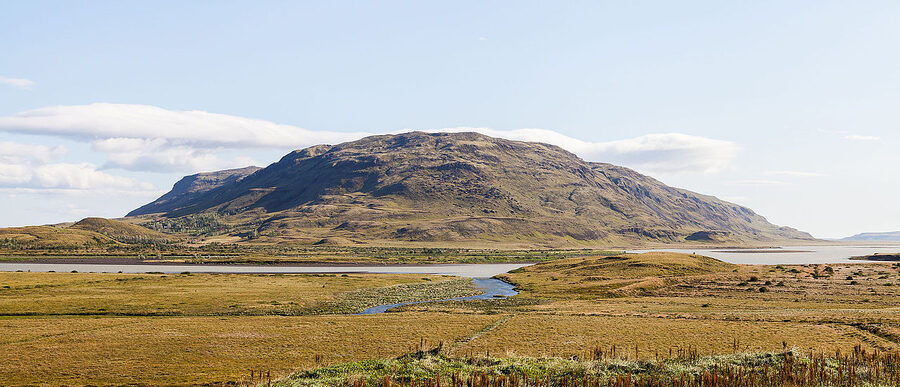
The current cathedral dates to 1963 and stands on the foundations of the medieval one. Inside there’s a tomb crypt where a thirteenth-century bishop’s sarcophagus is on display, reached by climbing down a hatch. The mural over the altar is by Nína Tryggvadóttir, one of Iceland’s best abstract painters, and it’s worth ten minutes alone. Entry free, donations welcome, site often empty even in July. Allow 30 to 45 minutes; the side road costs about thirty minutes round trip.
The Secret Lagoon at Flúðir, the cheaper soak
If you’d rather end the day in hot water than at another waterfall, the Secret Lagoon (Gamla Laugin, “the old pool”) at Flúðir is the move. It’s the oldest swimming pool in Iceland, built in 1891, fed by natural geothermal springs that bubble up around the edges. Water sits at 38 to 40°C year-round, and a small geyser erupts every few minutes about ten metres from the pool, a nice geological echo of Strokkur with the bonus that you’re warm.
Entry around 4,000 ISK (under 14 free), towel rental extra. Compared to the Blue Lagoon’s 9,500+ ISK, this is much cheaper and feels far more local; you’ll share the water with Icelanders down for an after-work soak. Fit it in after Gullfoss if you have a ten-hour day. Choosing between the two? See our Blue Lagoon piece; short answer, Secret Lagoon if you’re on the Golden Circle, Blue Lagoon if you’ve got a flight at Keflavík.
Fontana baths at Laugarvatn, with rye bread
Between Þingvellir and Geysir, on the lakeshore at Laugarvatn, is Fontana: a smaller geothermal spa with three pools at different temperatures and steam rooms built directly over a hot vent. Entry around 4,800 ISK. The killer feature is their rye bread, which they bake by burying a sealed pot in the hot black sand at the lake edge for 24 hours. They dig it up daily at 11:30 and 14:30 and you can come watch. Slightly sweet, dense, served warm with butter and smoked trout. Around 1,500 ISK for the bread tasting alone, included with pool entry. Choosing between Fontana and Secret Lagoon? Fontana wins for the bread and the lakeside.
The classic six-hour loop, hour by hour
If you’re self-driving and want a no-stress version that fits in a single day with one decent meal, this is the schedule that works. Start in Reykjavik with a coffee, end back at your hotel for dinner. About 230 kilometres in total, six and a half driving hours including stops.
08:00, leave Reykjavik. Take Route 49 / Vesturlandsvegur heading east, then Route 36 north toward Þingvellir. The drive is about 45 minutes on paved road through farmland and the Mosfellsheiði moor.
08:45, arrive Þingvellir. Park at P1 (Hakið), the visitor centre. Walk the canyon down to the church, loop back through Flosagjá to the car park. Allow 90 minutes.
10:30, drive to Friðheimar. About 50 minutes via Route 365 to Laugarvatn, then Route 37 east to Reykholt. You’re aiming to land at the greenhouse for an 11:30 lunch slot. Book the slot online before you leave home.
11:30, lunch at Friðheimar. Allow 75 minutes. Two bowls of soup, half a loaf, and a Bloody Mary. Good time to chat about the day so far.
12:45, drive to Geysir. 15 minutes east on Route 35.
13:00, Geysir geothermal area. Watch Strokkur for four eruptions. Walk the field. Quick coffee at the Geysir Center if you need one. Allow 60 minutes.
14:00, drive to Gullfoss. 10 minutes further on Route 35.
14:10, Gullfoss. Both viewpoints, the Sigríður memorial, a soup at the café if it’s cold. 60 to 90 minutes.
15:30, drive to Kerið. 50 minutes back south on Route 35, then Route 35 again toward Selfoss. Pay the entry fee, walk the rim. 30 minutes.
16:30, drive back to Reykjavik. 75 minutes via Selfoss and Route 1. You’re home by 17:45 with time to shower before dinner.
Add Silfra at the start of the day if you’ve got the appetite, that pushes everything by three hours and you’ll be back at 20:30. Add Secret Lagoon at the end (after Kerið) and you’re home by 19:30, much warmer, and ready for bed. Don’t try to do both. The day breaks if you push more than seven points of interest.
Tour formats, what you actually get
If you’re not driving, the loop runs as half a dozen different tour formats from Reykjavik. Pick by your priorities: budget, time, pickup location, comfort. Prices below are approximate and shift with season; book direct with operators for the best rate.
Classic six- to seven-hour Golden Circle bus tour
The standard product. A 30 to 50-seat coach picks you up from your hotel or the BSÍ terminal between 09:00 and 10:00, drives the loop with stops at Þingvellir, Geysir, and Gullfoss, includes English-speaking commentary, and drops you back in Reykjavik between 16:00 and 18:00. Around 10,000 to 13,000 ISK per adult. Operators worth booking with: Reykjavik Excursions, Gray Line, Bus Travel Iceland. The aggregators GetYourGuide and Viator sell most of these and let you compare in one place.
The tradeoff: cheapest hands-off option, no driving stress, you get a guide. But you’re on a fixed schedule (typically 45 minutes at Þingvellir, 50 at Geysir, 30 at Gullfoss), the coach picks the lunch stop (usually the Geysir Center buffet), and you can’t add Friðheimar or Kerið unless they’re built into the route. For a first-time visitor short on time this is fine; for photography without time pressure, frustrating.
Small-group Golden Circle tour
Same loop, but in a 12 to 20-seat minibus rather than a coach. Around 15,000 to 20,000 ISK. The advantage is more flexibility on stops, often a Friðheimar lunch built in (some include the meal in the price, some don’t), and a guide who can answer questions properly rather than reading from a script. If you can stretch the budget by another 5,000 ISK over the standard tour, the small-group is the better experience.
Golden Circle plus Blue Lagoon combo
The most popular combo. Same daytime loop, then a stop at the Blue Lagoon on the way back to Reykjavik. Around 15,000 to 22,000 ISK excluding the lagoon entry (which you book separately at around 9,500 ISK). It’s a long day, twelve hours, and you’ll be tired by the time you’re in the warm water. But it ticks two boxes in one go and works well if you’ve only got two days in Iceland. The lagoon at the end of a cold day is genuinely lovely.
Golden Circle plus glacier or snowmobile
This combo overlaps with the deeper article on glaciers and geysers. Two main flavours:
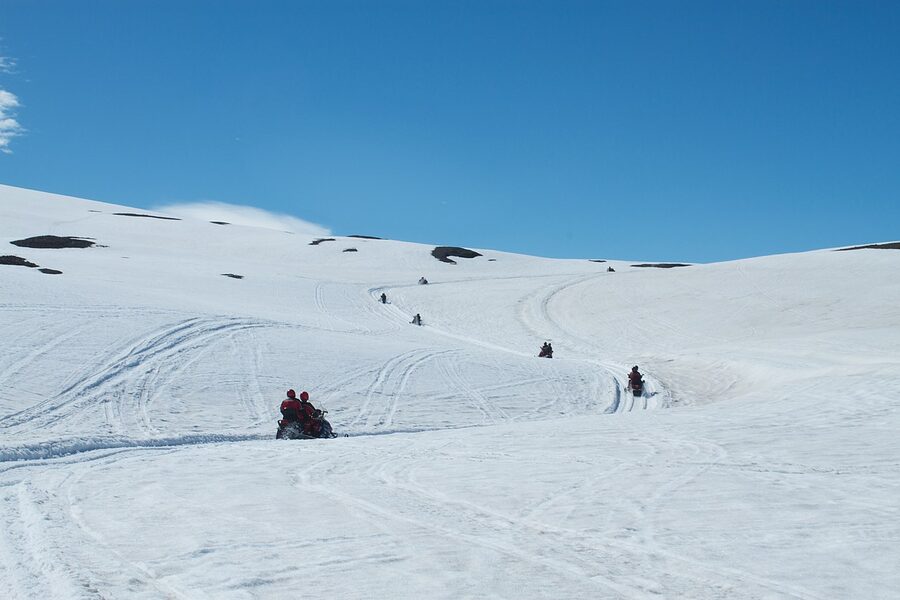
Golden Circle + Langjökull snowmobile (around 30,000 to 42,000 ISK). After Gullfoss, you transfer onto a super-jeep or snowcat and head up onto the glacier for an hour of snowmobiling. Operated mainly by Mountaineers of Iceland. Helmet and thermal suit included.
Golden Circle + South Coast glacier hike (more typically a two-day combo at around 25,000 to 35,000 ISK per day). Day one the loop, day two the South Coast plus a Sólheimajökull hike. The glaciers piece covers operators and which hike to pick.
Golden Circle on horseback
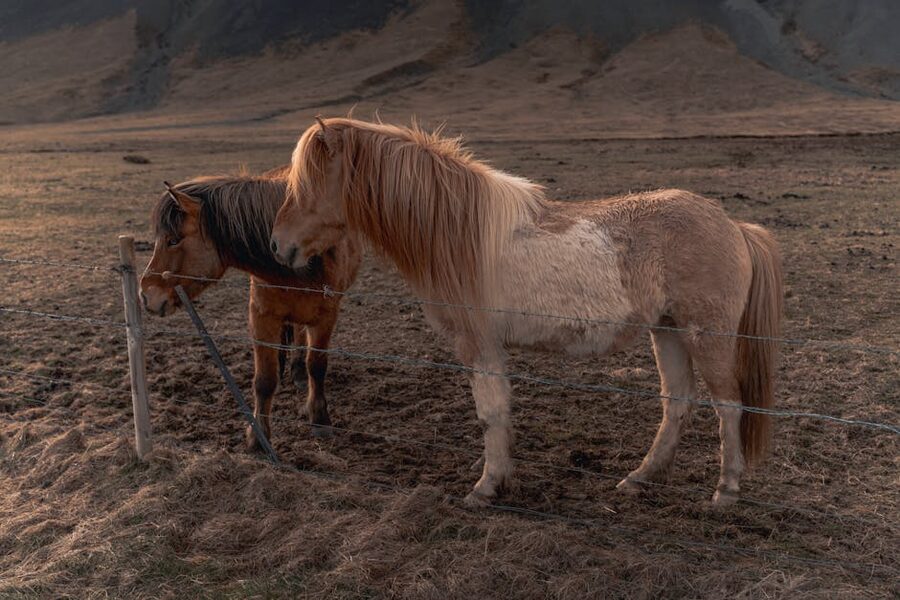
Multi-day horseback rides through the Golden Circle area run with Eldhestar and Íshestar. These aren’t really “tours of the Golden Circle” in the usual sense, more “rides through the same landscape.” Three to seven days, sleeping in farm guesthouses, around 200,000 to 400,000 ISK depending on length and standard. If horse-riding interests you, it’s a different and better way to see the area than a bus.
Private tour with a Mercedes
You’ll see a lot of operators offering “private Mercedes Golden Circle tours” at 100,000+ ISK per group. What you’re paying for is the car and the privacy, not extra access or expertise. The roads, viewpoints, and hours are identical. If you’re a group of four sharing the cost it can work out reasonable; if it’s just two of you, save the money and rent a car. The viewpoints at Geysir and Gullfoss don’t care what brand of car you arrived in.
Self-drive vs guided, the real tradeoff
I’ve done the loop both ways. The real tradeoff:
Self-drive wins if you want to stop where you like, you’ve got a camera, you’re with kids who need bathroom breaks, you want to add Friðheimar or Secret Lagoon, you’re a confident driver, or you’re more than two adults sharing the cost. Car rental is around 9,000 ISK a day for a basic compact plus 4,000 ISK fuel for the full loop. Three or four people, much cheaper than a tour.
Bus wins if you’re solo without a licence, it’s deep winter and you’re nervous about icy roads, you want a glass of wine at lunch, you’re badly jet-lagged, or you want a guide. The convenience of being driven, with somebody watching the road forecast, is real. For winter visits on tight schedules, the coach is often smarter.
For most people, in summer or shoulder, with a partner or family, with a couple of days here: rent a car. The driving is easy, the loop is straightforward, and you’ll see twice as much. If you need a rental, our car rental guide covers the operators (short version: Blue Car Rental for value, Northbound to compare, Hertz for predictable big-name service).
The road itself, what to know
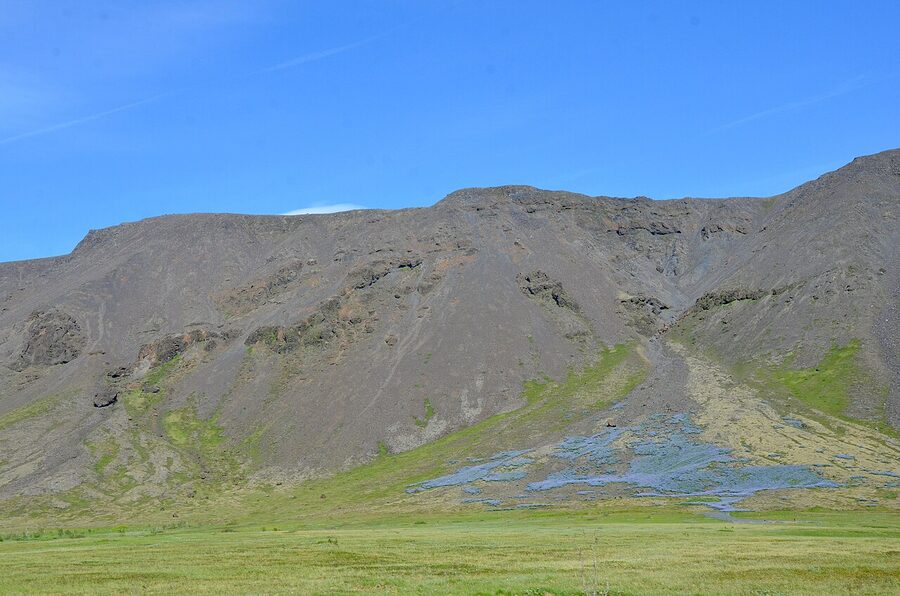
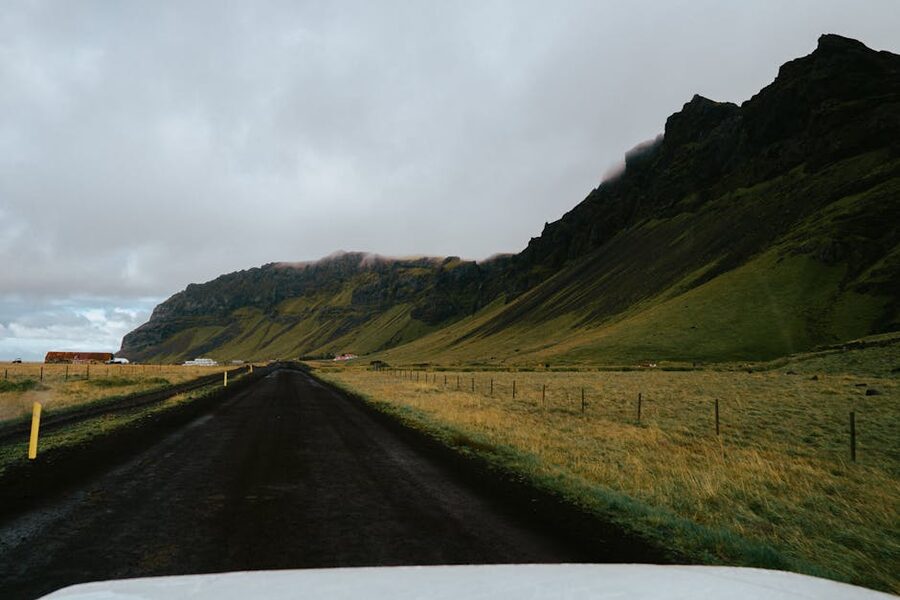
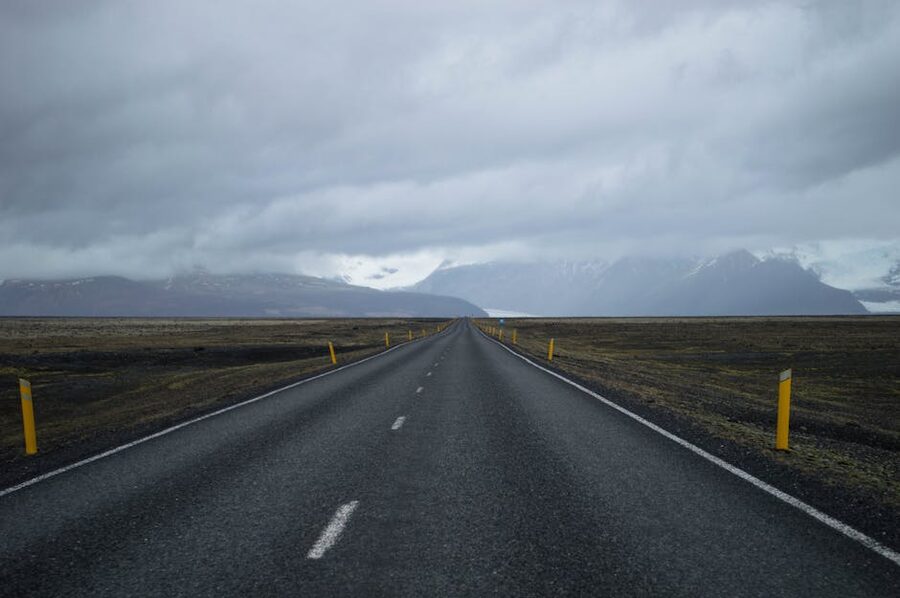
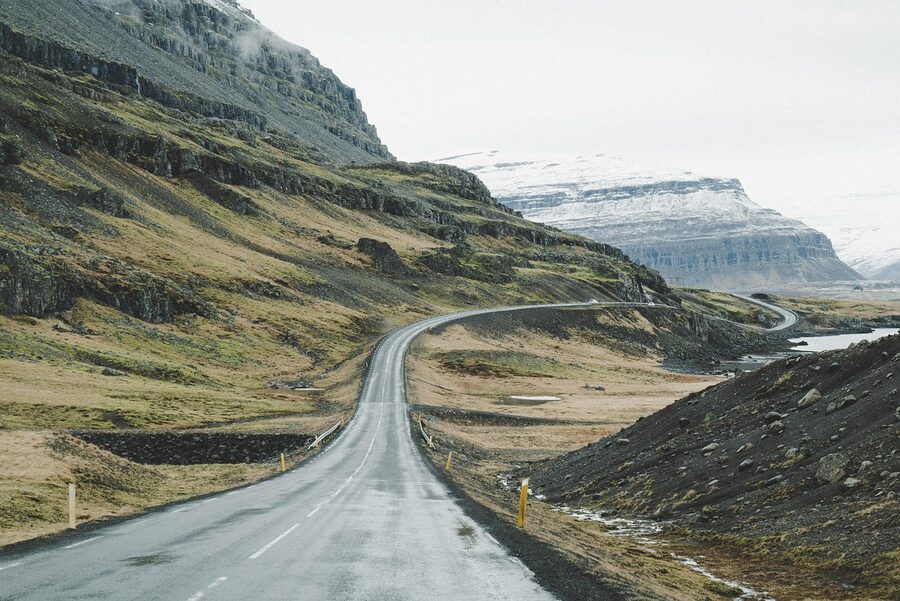
The Golden Circle uses Routes 36, 365, 37, 35, and a few minor connectors back to Route 1. All paved. No 4WD needed in summer. Two-lane country roads with light traffic between the stops, among the easiest driving in Iceland.
What surprises people is the wind. Iceland’s wind comes off the North Atlantic and can hit 25 metres per second on the upland sections between Selfoss and Gullfoss, especially in autumn and winter. A small rental can be pushed across a lane in a strong gust. Hold the wheel firmly through exposed gaps. Check vedur.is for wind forecast and road.is for road conditions before you set off. safetravel.is pulls both together.
In winter, Route 35 between Geysir and Gullfoss can ice over hard; bad days are marked yellow or red on road.is. A standard front-wheel-drive rental with winter tyres handles light snow; ice is another matter. If nervous, do the loop in reverse (Gullfoss first) so you drive the inland section in daylight. Or take the bus.
Where to fuel up and pee
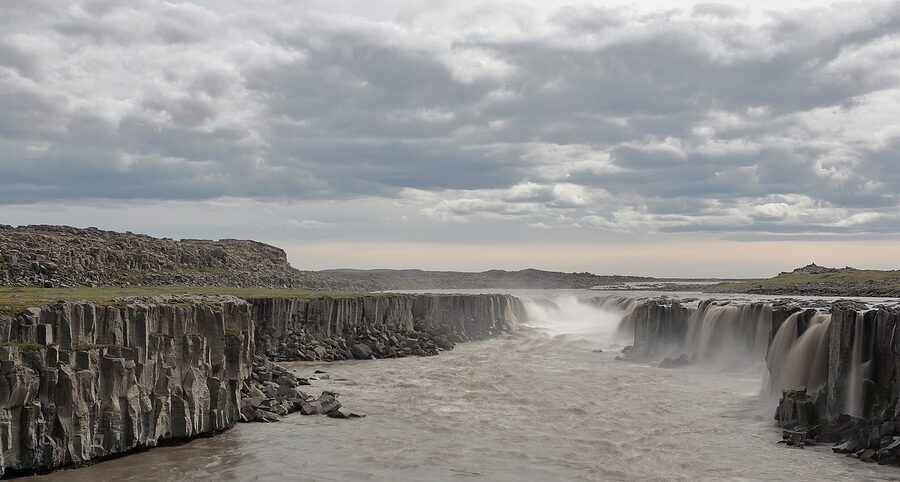
The N1 petrol station in Selfoss, on Route 1 just before you turn off for the loop, is where everyone fuels up before the inland leg. Cheaper than the small Esso pumps in Laugarvatn or Reykholt, and the shop has decent coffee, a hot dog stand (Pylsuvagn), free toilets, and a Bónus supermarket two minutes away if you want to grab sandwiches and apples. There’s also an N1 in the Geysir Center complex if you forgot to fill up earlier; expect to pay 15 to 20 ISK per litre more than Selfoss.
Toilet stops on the loop: Hakið visitor centre (Þingvellir, free), Geysir Center (free if you buy something, 200 ISK turnstile if not), Gullfoss visitor centre (free, often a queue), Friðheimar (for paying customers), Kerið car park (basic). Plan for a stop every 90 minutes.
When to go, season by season
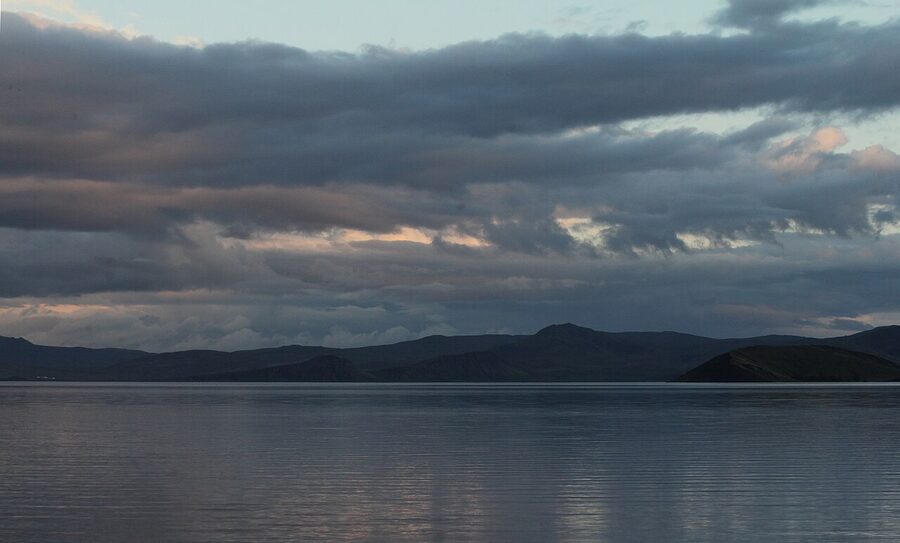
Iceland’s seasons hit harder than most countries because of the latitude. The Golden Circle is open year-round, but the experience changes a lot with the season. Our broader piece on when to visit Iceland month by month goes deeper; here’s the short version for the loop specifically.
Summer (June to August)
Long daylight (sun up effectively 20 hours from mid-June to mid-July), warm by Icelandic standards (15 to 18°C average daytime), lupines on the south coast. Downside: busy. Car parks fill from late morning, Friðheimar is booked weeks ahead, Gullfoss has lines for the toilets. Leave Reykjavik at 07:00 to be at Þingvellir before the coaches (around 09:30), or do the loop in the evening, leaving at 17:00 and finishing Gullfoss at 22:00 in golden light. The midnight light at Gullfoss in late June is one of the best sights in the country and most coaches don’t run that late.
Winter (November to March)
Short daylight (4 to 5 hours in December, 11 by March), real cold (minus 5 to plus 5°C average), risk of road closures and storm-day cancellations. Upside: snow on every viewpoint, fewer crowds, cheaper accommodation, and an aurora chance most clear nights. Tour operators switch the winter day route to start later (10:00 from Reykjavik) and finish at 16:30 because the light is gone. Driving is doable in good weather, sketchy in bad; watch road.is hour by hour. Friðheimar is closed 24, 25, 26, 31 December and 1 January, so adjust at Christmas (more in our Christmas in Iceland guide).
Shoulder (May, late September to October)
The best balance for most travellers. Ten to fourteen hours of daylight, manageable cold, far fewer crowds than peak summer, and an aurora chance from late September onward. Friðheimar still books up but you can usually get a slot 48 hours ahead. Roads are clear, weather is the genuine variable. May and the first half of October are my own favourite months in Iceland.
Combining the loop with another day
Most people do the Golden Circle as one day of a five- to ten-day trip. Natural partners:
+ South Coast (two days). Day one the loop, day two the South Coast (Seljalandsfoss, Skógafoss, Reynisfjara black sand beach, Vík). Most efficient way to cover southern attractions in a short trip. See our day tours from Reykjavik piece for which combo to pick.
+ Snæfellsnes Peninsula (three days). The loop on day one, then two days exploring Snæfellsnes (Kirkjufell mountain, Snæfellsjökull glacier, the lighthouse at the western tip). Quieter, more ocean. Our Snæfellsnes piece goes deeper.
Within the Ring Road. The Golden Circle is the natural day-one or day-two warmup before the South Coast leg. The Ring Road runs east from Selfoss; the loop fits in cleanly first.
Plus a customised add-on. If you want a day that mixes the loop with something specific (a horse ride, photography focus), our customised tour piece walks through how to brief an Icelandic operator.
What I’d skip
Some unsolicited opinions, take or leave them.
The Geysir Center gift shop. Lopapeysa wool jumpers at thirty per cent over Reykjavik prices, postcards and magnets at airport-grade. Buy your souvenirs at the Kolaportið flea market on Saturdays in town, or at Handprjónasamband Íslands (the wool sweater association) for a properly hand-knitted one.
The “Lava Centre.” Shows up in some Golden Circle write-ups but it’s at Hvolsvöllur on the South Coast, not on the loop. Fine if you’re driving the South Coast; don’t tack it onto the loop.
Combos doing Golden Circle + South Coast + glacier in one day. You’ll be on a coach for thirteen hours and see four things badly instead of two things well. Split it across two days.
Tours that promise Northern Lights as part of the day. The aurora isn’t daytime and isn’t guaranteed, ever. If a tour markets the loop with “Northern Lights included,” they’re stretching the truth. Add a separate aurora evening if the forecast looks right; don’t book a bundled combo.
Private “exclusive” tours that charge double for a Mercedes badge. The viewpoints don’t care. If you want a private guide for a real reason, book a small-group with a guide who knows the geology, not a luxury car.
One final thing
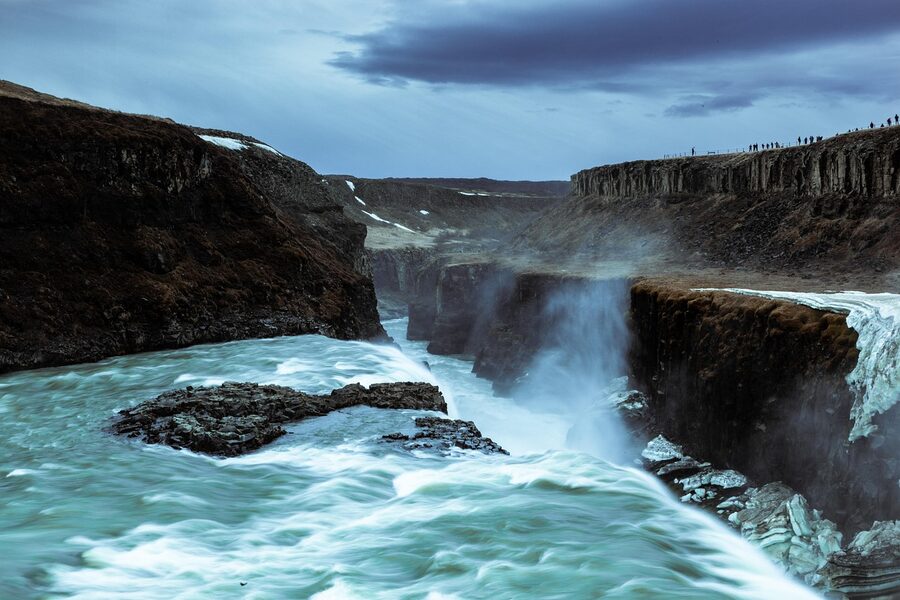
The Golden Circle is the most-driven 300 kilometres in Iceland for a reason. In one day you get the only place on earth where the Mid-Atlantic Ridge is visible on land, an active geyser that erupts on a five-minute clock, and a two-tier waterfall that one woman walked barefoot to Reykjavik to save. Add a tomato-greenhouse lunch and a soak in a 130-year-old hot pool and you’ve also eaten well and ended the day warm.
What I’d say to anybody planning it: don’t try to do too much. Three big stops, one or two extras, lunch booked. Six to ten hours, self-drive or coach. Don’t worry about the weather; þetta reddast, it’ll work out, and Strokkur erupts in the rain just the same as in the sun. Drive carefully, stop when you want to take photos, have the lamb soup at Gullfoss on the way back. Browse all our Iceland tours for what a longer trip looks like, or our tour guides for more day-trip pieces.
If it’s a clear afternoon when you’re at Gullfoss, watch the spray for a full minute. The colour the water turns when the light catches it is the reason the whole loop got its name.