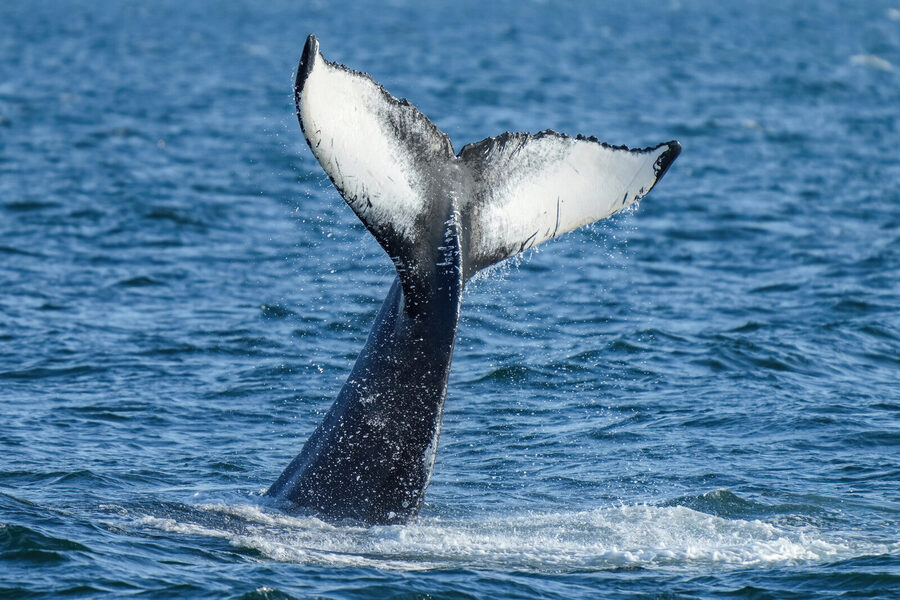
Húsavík is the town Iceland built around its whales. About 2,300 of us live there in winter, plus a few thousand tourists in July, and on a good summer afternoon the harbour has more boats coming and going than the rest of north Iceland combined. Skjálfandi (Shaky) Bay is shallow, food-rich, sheltered by the Tjörnes peninsula on one side and Flateyjardalur on the other, and the herring and capelin pile in to spawn. The whales follow the fish. The boats follow the whales. From the moment North Sailing’s first schooner left the harbour in May 1995, Húsavík has been the easiest place in Iceland to look a humpback in the eye.
This is the deeper companion to our broader Iceland whale watching guide. The pillar covers the four main ports and the species you’ll meet across the country. This one is just Húsavík: choosing between the operators, what each boat is actually like, what season changes what, where to stay, and how to fold the trip into a wider north Iceland route.
In This Article
- Why Húsavík beats Reykjavík for whale watching
- Skjálfandi Bay in one paragraph
- The three operators (and which to pick)
- North Sailing, the original from 1995
- Gentle Giants, the family operation
- Salka, the third option
- So which one
- The boats compared, in plain language
- The classic oak boat
- The schooner under sail
- The RIB speedboat
- The electric boat
- The species you’ll see, ranked by likelihood
- Humpback whale (hnúfubakur)
- Minke whale (hrefna)
- White-beaked dolphin (hnýðir)
- Harbour porpoise (hnísa)
- Blue whale (steypireyður)
- The rest
- What actually happens on the boat
- The Whale Museum
- GeoSea, the geothermal baths over the bay
- Húsavíkurkirkja and the rest of the town walk
- The Eurovision Fire Saga effect
- The puffin add-on (mid May to mid August)
- Best season, month by month
- Getting to Húsavík
- Where to stay in Húsavík
- Where to eat in Húsavík
- Combining Húsavík with the wider north
- Mývatn
- Ásbyrgi and the Diamond Circle
- A 2-day Húsavík plan from Akureyri
- Photo tips from a Húsavík deck
- What to wear and what to bring
- Sea sickness and what actually helps
- The whaling question, briefly
- Costs, in plain numbers
- What I would actually do
Why Húsavík beats Reykjavík for whale watching
Caveat first. Reykjavík whale watching is fine. The Old Harbour boats out of Faxaflói Bay sight whales most days from April to October, and if you’re already in the city without a car you’d be silly to skip it. But if you have wheels and 48 hours, Húsavík is the better trip. Four reasons.
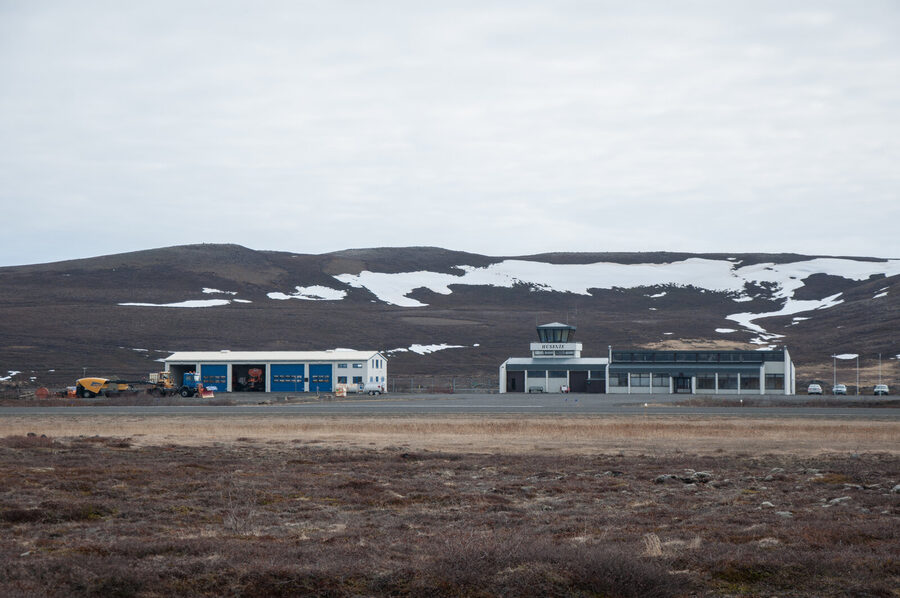
The first is the bay itself. Skjálfandi is shallower than Faxaflói and sits on top of two important fish nurseries. Herring spawn in early summer, capelin in mid-summer, and by July the bay holds enough food that whales don’t wander far. Reykjavík’s boats often steam 45 minutes out before they’re in whale water; Húsavík’s are typically on top of feeding humpbacks within twenty.
The second is the sighting rate. Both Húsavík operators advertise around 97 percent across a season; the museum keeps independent records and the figure holds up if you average across April to October. Reykjavík is closer to 90 percent at peak and lower in the shoulder months. Not dramatic but real, and on a single day you’re paying 13,000 ISK for, real matters.
The third is the species mix. Húsavík sees humpbacks daily (about 80 percent of all summer sightings), minkes most days, white-beaked dolphins regularly, and a small but consistent chance at blue whales in June and early July. Faxaflói gets blues too but rarely. If a blue whale shows in north Iceland it’s almost always in Skjálfandi Bay or Eyjafjörður next door.
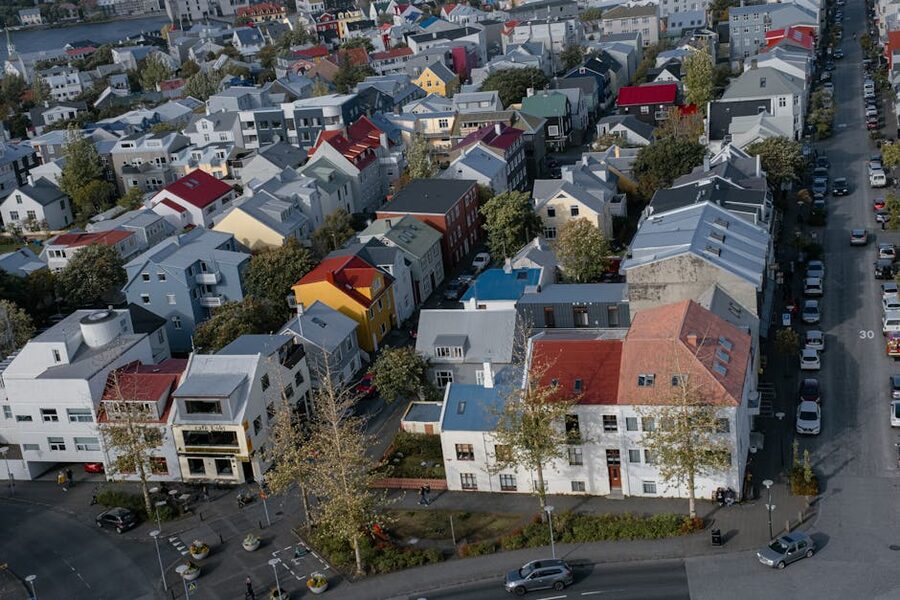
The fourth is the town. Reykjavík’s Old Harbour is a city harbour with souvenir kiosks and a cruise dock fifty metres away. Húsavík is a fishing town with one main street, the wooden church on the hill, the geothermal baths over the cliff, and the Whale Museum at the top of the harbour. The whole walk between them is twelve minutes. After your tour you can shower at the hotel, walk to GeoSea, eat fish at Salka, and be in bed by ten with the midnight sun still up. Reykjavík can’t do that.
Skjálfandi Bay in one paragraph
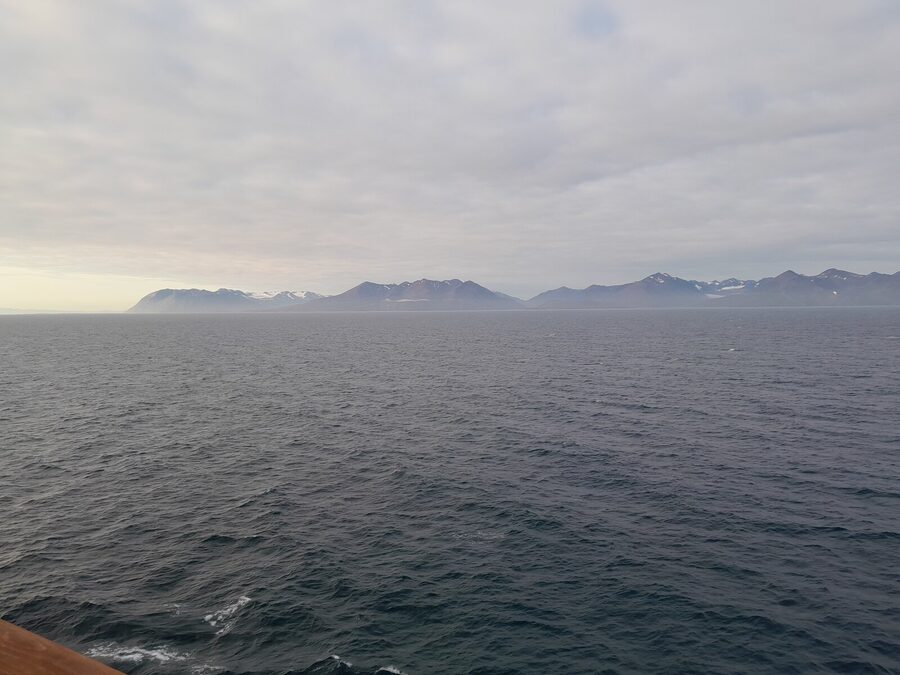
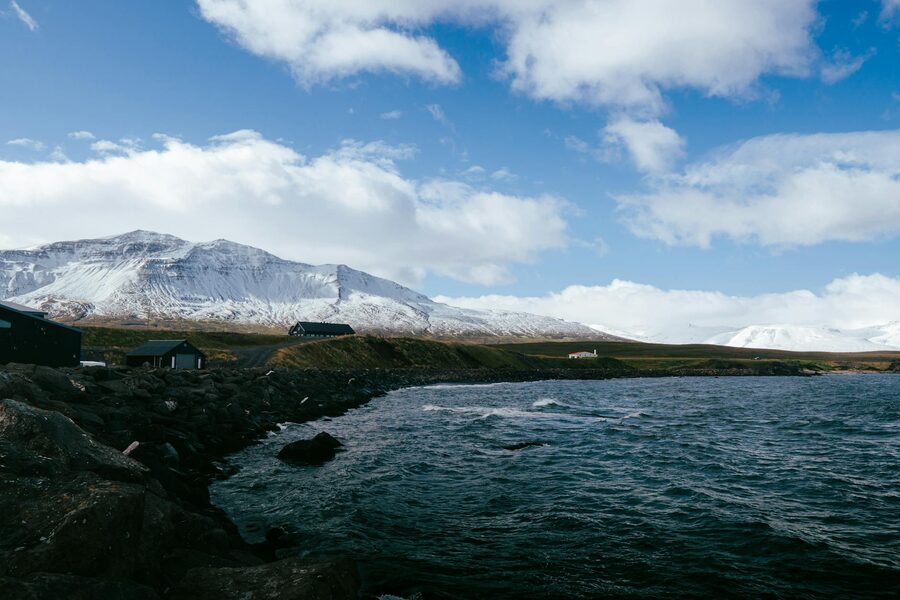
Skjálfandi means “the shaky one” because the seabed used to rumble during eruptions across the bay; it’s been quiet for a few centuries now. The bay is roughly 25 km across, opens north to the Greenland Sea, and is bracketed by the Flateyjardalur peninsula on the west and the Tjörnes cliffs on the east. Two rivers, Skjálfandafljót and Laxá, dump nutrients into the south end. That’s why the krill blooms, why the fish come, and why you can stand on the deck of a 1955 oak fishing boat and watch a 14-metre humpback breach 200 metres off your bow.
The three operators (and which to pick)
Three companies run whale watching out of the Húsavík harbour: North Sailing (since 1995), Gentle Giants (since 2001), and Salka (the smallest, mostly local). All three are family-run, all three have full whale-spotter guarantees (free re-tour if you don’t see whales), and all three are well-run local businesses. The differences are the boats, the price, and a couple of small character details. I’ll lay them out and then tell you which I’d book.
North Sailing, the original from 1995
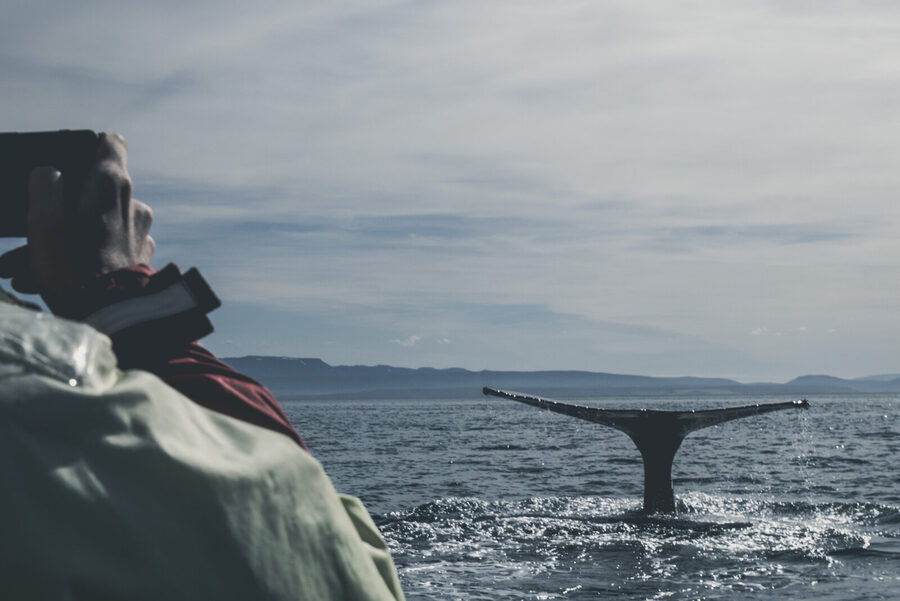
North Sailing invented this industry. They started in May 1995 with one converted oak fishing boat and the unproven theory that tourists would pay to be ferried into a cold bay to look at whales. The theory worked. They now run nine boats including three restored schooners (Hildur, Haukur, Opal) that actually sail, the all-electric Andvari, and a handful of converted oak fishing vessels from the 1950s and 60s. The classic Original Húsavík Whale Watching is what most people book: 12,990 ISK adult, 6,990 ISK ages 7 to 15, free under 7, three hours, daily 1 March to 30 November.
Their pitch is heritage and quiet. The schooners go under sail when the wind cooperates, which is maybe 30 percent of departures. When they do, the engine cuts and you slide silently up to a feeding humpback in a way no diesel boat can match. Their Silent Whale Watching tour on the electric Andvari (around 13,990 ISK) commits even harder: no engine noise at all, ever. Other options include Whales and Puffins (a Lundey island combo, mid-May to mid-August, around 17,500 ISK) and the lovely Midnight Sun Whale Watching (June and July, departs around 8.30 pm).
Gentle Giants, the family operation
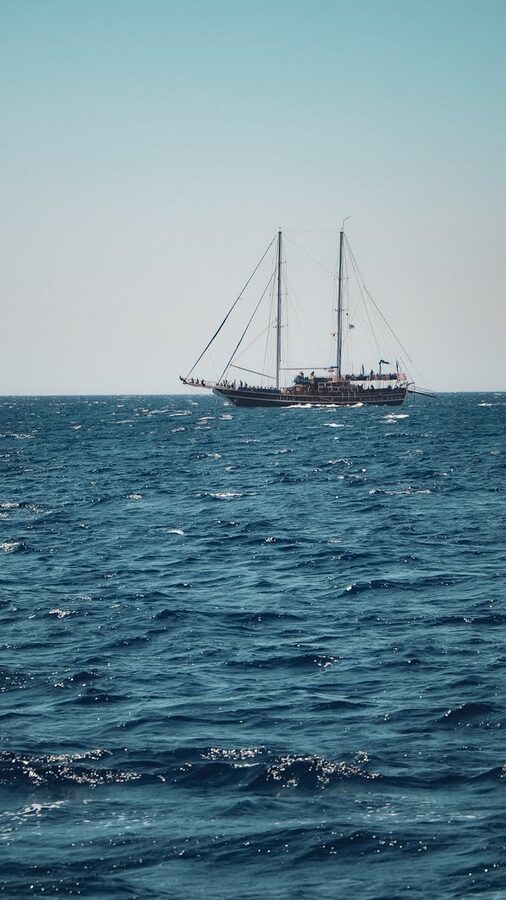
Gentle Giants started in 2001, with 160 years of founding-family fishing history in Skjálfandi Bay before that. The classic GG1 Whale Watching uses a traditional Icelandic oak boat: 12,490 ISK adult, 6,490 ISK ages 7 to 15, free under 7, three hours, daily 1 April to 30 November. Slightly cheaper than North Sailing, very similar experience. In 2025 they refitted their boat Sylvía with a new low-emission engine that consumes 75 percent less fuel and runs 50 percent quieter; if Sylvía is on your timetable you’re getting the cleanest oak boat in the fleet.
Their distinctive offering is the GG2 Big Whale Safari & Puffins, the original RIB whale watching tour in Iceland. You suit up in a survival suit, climb into a 12-passenger rigid inflatable, and tear out into the bay at 25 knots. The RIB covers far more area than an oak boat in the same time, so you’ll see more, and you can get close to Lundey for the puffin colony. It also bounces, gets you wet, and isn’t allowed for kids under eight or pregnant women. Around 22,500 ISK standard, 26,500 with the puffin extension. Two-and-a-half to three hours.
The Gentle Giants office staff remember your name if you’ve called, and the boats themselves have a slightly more personal feel than North Sailing’s larger fleet. Not better or worse, just smaller.
Salka, the third option
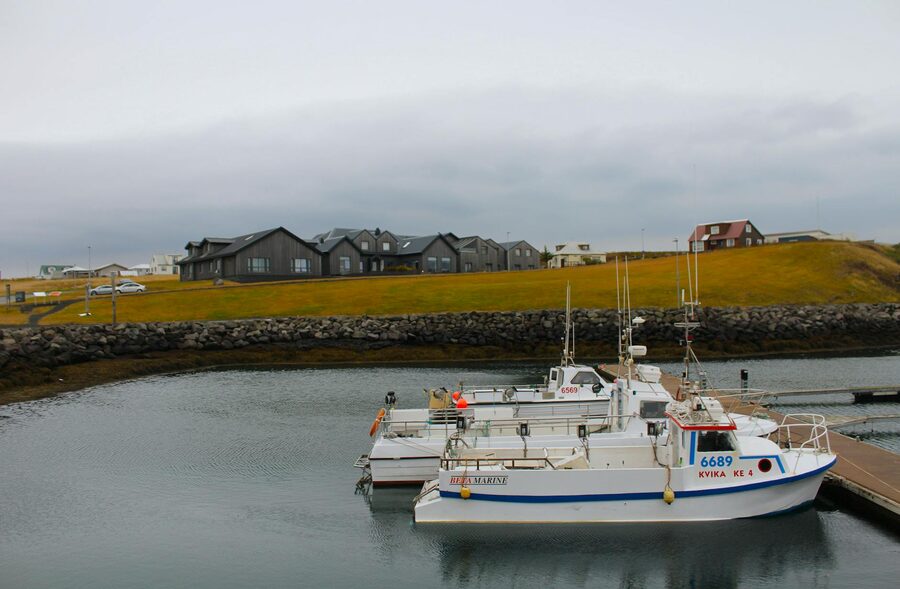
Salka Whale Watching is the smallest of the three and the most local. They run a single converted oak fishing boat and a single tour, three hours, similar pricing to GG1 (around 11,500 ISK adult). What they offer is fewer boats, fewer crew turnovers, and what’s effectively a guaranteed local guide every time. If both North Sailing and Gentle Giants are sold out (it happens in late July and August), Salka is your fallback. They’re also worth a look if you actively want to support the smallest of the three operators.
So which one
If it’s your first whale tour and you want the heritage experience, book North Sailing’s Original tour and hope for a schooner day. If you’ve done a whale tour before and want to cover more ground or get to the puffin colony, book the Gentle Giants RIB. If you want the very quietest experience, book North Sailing’s Silent Whale Watching on the electric Andvari. If everyone is full, Salka is fine.
The boats compared, in plain language
The classic oak boat
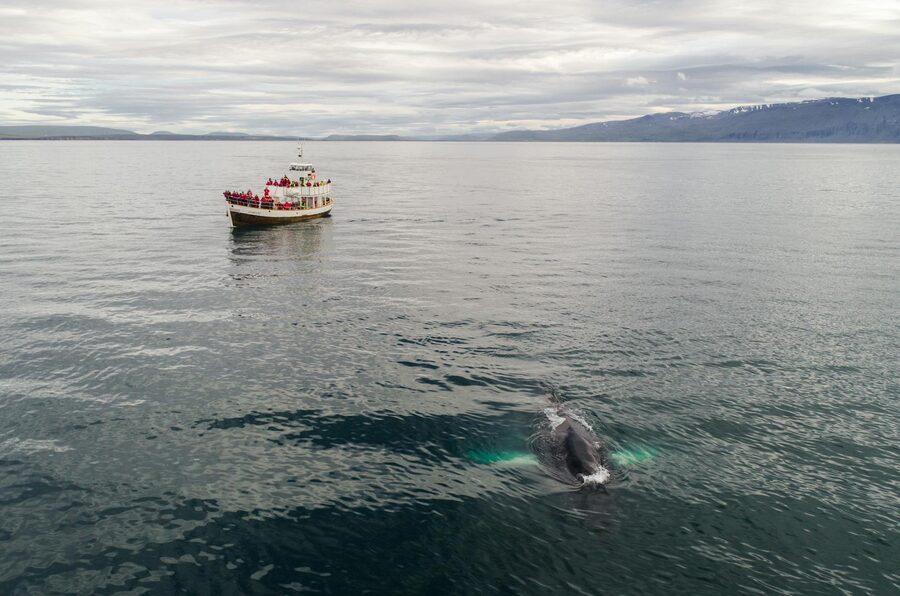
The standard Húsavík boat is a converted Icelandic fishing trawler from somewhere between 1950 and 1965, refitted for 60 to 80 passengers, twin diesel engines, an open foredeck and an indoor saloon below deck. The wood is real and old, and the boat has the slow heave-and-roll of something built for North Atlantic weather. The rail sits around 1.2 m above the waterline so you stand close, and the engine is quiet enough at idle to hear the whale’s blow. You can also disappear into the cabin when you’ve had enough cold.
The schooner under sail
Three of North Sailing’s boats are restored oak schooners (originally built 1880 to 1925), retrofitted with sails, and run engine-off whenever the wind is right. When they do, the experience changes completely. You hear the wood creaking, the rigging slapping, the water against the hull. And at 50 metres off the bow, the slow exhalation of a humpback breathing. You won’t get this on a diesel boat. If you’re booking specifically for the silent experience, ask the office which boat is on the timetable for your departure and whether the morning forecast is sailable.
The RIB speedboat
Gentle Giants’ RIB is a 12-passenger rigid inflatable with twin outboards capable of 25 knots. You suit up in a full waterproof flotation suit at the office before walking down to the boat (the suit covers your clothes, but wear waterproof shoes underneath, the spray finds them). You sit on a saddle-style bench, hold the handle, and brace. The advantage is speed and reach: you can be at a humpback in seven minutes from the harbour, you can cover three or four feeding zones in the time an oak boat covers one, and you can run in close to Lundey for the puffin colony in the same trip. The disadvantage is comfort. Choppy days are genuinely bouncy. You’ll be soaked despite the suit. And kids under eight, pregnant women, and people with back problems aren’t permitted. If none of those apply to you and you want the most efficient tour, book the RIB.
The electric boat
Andvari is North Sailing’s electric whale-watching boat. Smaller than the oak boats (around 35 passengers), all-battery, totally silent on the water. You can hear yourself think, you can hear the whale breathe from a kilometre away, and the emissions are zero. The trade-off is that range is limited, so on rough days when whales are further out, the Andvari might not be the right boat. If your departure is on a calm day and you can pick, the Andvari is the most ethical option in the fleet.
The species you’ll see, ranked by likelihood
Twenty-three cetacean species pass through Icelandic waters across the year. About eight are realistic to see from a Húsavík tour. Here they are, ordered by how often you’ll actually meet them.
Humpback whale (hnúfubakur)
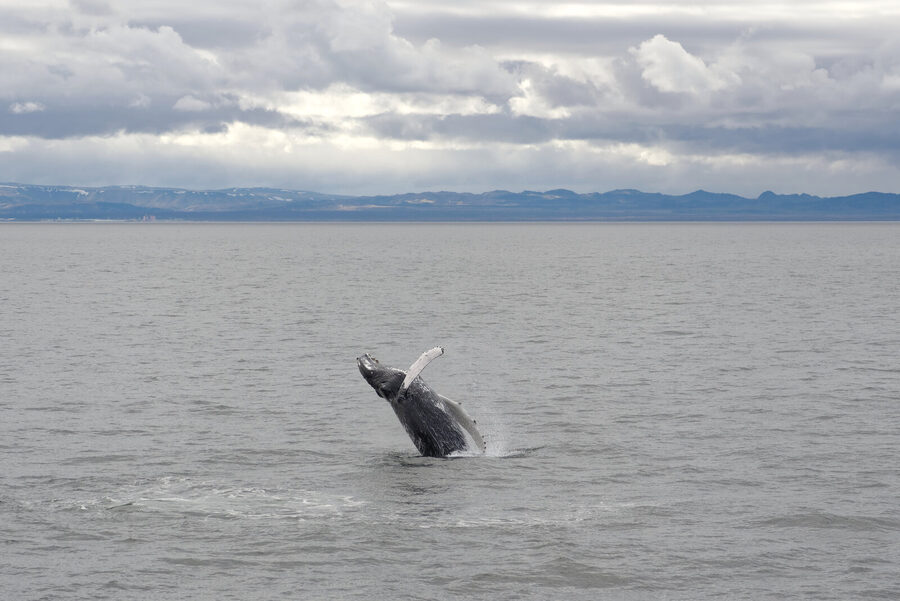
The star of the show. About 80 percent of summer Húsavík sightings. 12 to 15 metres long, up to 30 tonnes, and they breach. They lobtail (slap their tail flat against the water with a sound you can hear three kilometres off), they pec slap, and they fluke up cleanly when they sound. Each humpback’s tail underside is uniquely patterned and the museum keeps a catalogue of named individuals (Caracas, Tubilo, Skiri, dozens of others) who return to Skjálfandi year after year. A 2023 survey counted around 350 individuals using the bay across the season. Book any summer tour and you will see humpbacks.
Minke whale (hrefna)
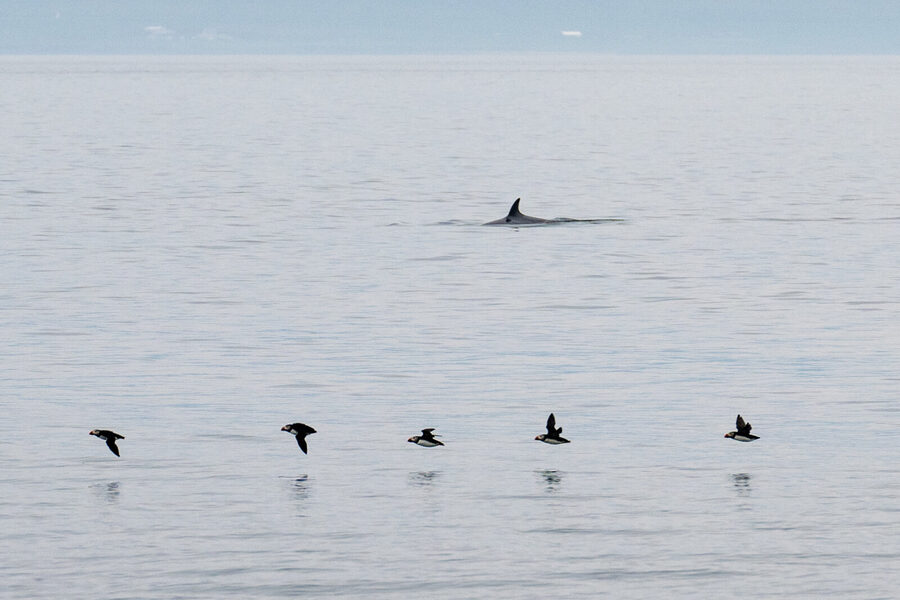
The second most common whale, seen on most departures. Minkes are the smallest of the baleen whales (8 to 10 metres) and they don’t put on a show. They show a back, a small dorsal fin, and they’re gone. They never fluke up. Their breath is thin and quick. To inexperienced eyes a minke surfacing 100 m from the boat is easy to miss. The guides will spot them and slow the boat for you. Minkes are also faster than humpbacks; once you’ve seen one, the boat will probably move on rather than try to circle.
White-beaked dolphin (hnýðir)
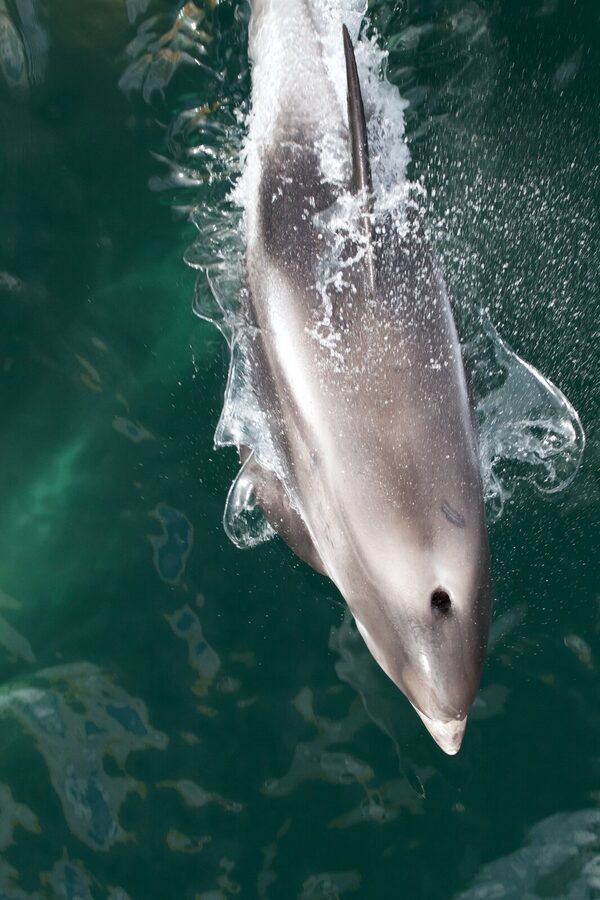
The dolphins of Skjálfandi Bay. Pods range from five to fifty individuals and they often come right up to the boat to surf the bow wave, which is a bonus you don’t really see with the larger whales. They’re around 2.5 to 3 metres long, dark on top, white-bellied, with a distinctive white snout (hence the name). Sighting frequency is high in summer, much lower in winter. If you’re lucky a humpback and a dolphin pod will be in the same patch of water and the boat will idle in the middle while both species feed.
Harbour porpoise (hnísa)
Smaller than dolphins, shy, and quick. You’ll see a small triangular fin breaking the surface twice and then nothing. The crew will note them, the camera people will sigh because they didn’t get the shot, and the boat will move on. They’re around 1.5 m long. The most common cetacean in Icelandic waters by total number, but the least dramatic to watch.
Blue whale (steypireyður)
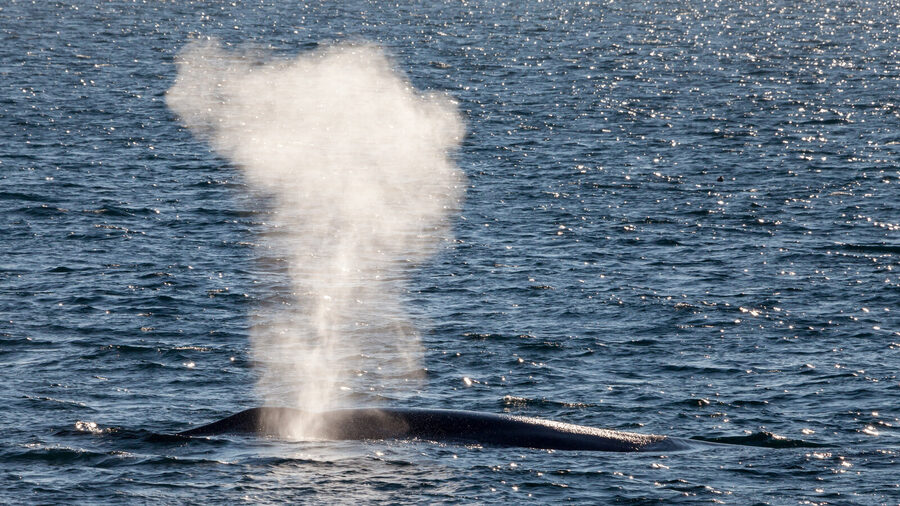
The largest animal that has ever lived on this planet. Up to 30 metres and 200 tonnes; the blow rises 9 metres on a calm morning and you can see it from kilometres out. The Húsavík chance is real but seasonal: June and the first half of July when individual blues come in to feed on the krill bloom. Gentle Giants reported their first blue of 2026 in mid-April. Most days the rest of summer there’s no blue whale sighting at all. If you want one specifically: book in June, take a longer tour (some operators run 4 to 5 hour blue-whale-focused departures), check forecasts. Even then the daily chance is maybe 20 to 30 percent at peak. When it happens it’s the kind of sighting people remember for the rest of their lives.
The rest
Fin whale, sei whale, sperm whale, orca, pilot whale, northern bottlenose whale: all are recorded in Skjálfandi each year, all are uncommon, none are reliable. Orca pods occasionally pass through but the orca-watching port in Iceland is Snæfellsnes, not Húsavík. Sperm whales prefer deeper water. If you see any of these on a Húsavík tour you’re in unusual luck and the museum will probably want a photo for their records.
What actually happens on the boat

Walking through the standard three-hour tour. Show up at the harbour office 30 minutes before departure. Check in, get your boarding card (which doubles as 10 to 20 percent discount vouchers at the museum, GeoSea, and a couple of restaurants). Use the toilet now, the boats have one but it’s small. Walk down to the boat, the crew hands you a warm overall and a rain jacket, you board.
First ten minutes: safety brief and species ID, usually from a marine biologist. Then the engines come up and you’re off. The boat motors out of the harbour at maybe 8 knots, takes 15 to 25 minutes to reach feeding zones depending on where the whales are that day, and then slows. From there it’s about two hours of slow cruising, circling, and idling. The crew is on the radio with the other Húsavík boats; they share sightings.
The rule is the engine cuts within 100 m of a whale. Boats don’t chase; they wait. A feeding humpback will dive for five to ten minutes and surface again within 200 m. The trick is reading the dive direction. Experienced guides predict it. After ninety minutes the boat turns and begins the slow trip back. That’s when the cinnamon bun and hot chocolate appear.
The full thing takes about 3 hours door-to-door, two of those on the water. The boats behave responsibly. Iceland’s commercial whaling fleet operates from a different harbour (Hvalfjörður, near Reykjavík); none of the Húsavík operators have any connection to it.
The Whale Museum
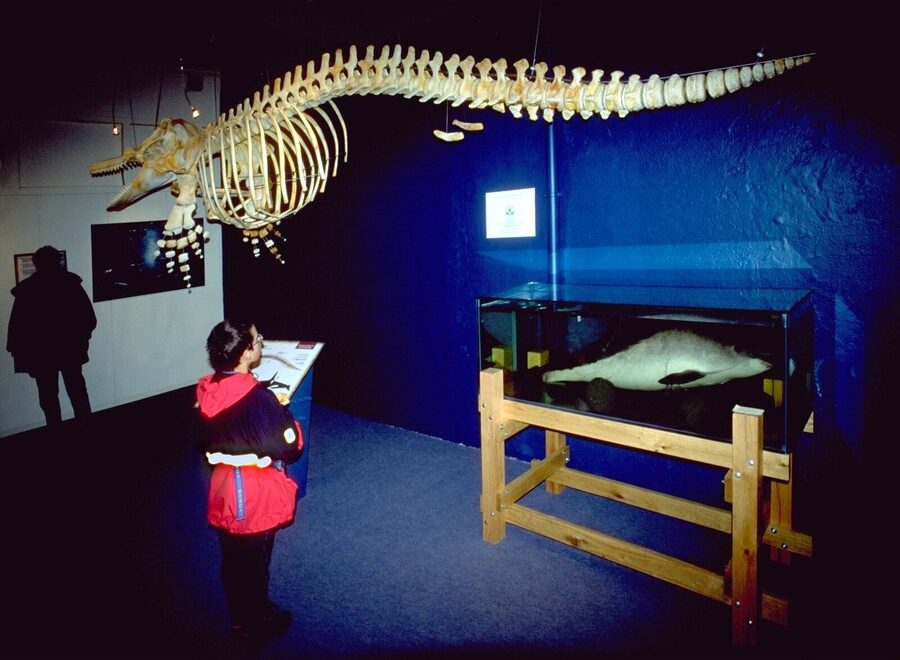
Hvalasafnið Húsavík (the Húsavík Whale Museum) is at the top of the harbour, three minutes’ walk from where the boats leave. It opened in 1997 and punches well above its size. Adult ticket 2,500 ISK, kids 1,250 ISK, free under 14 with a parent. Allow 90 minutes.
The hook is the skeleton hall. Eleven full whale skeletons hang from the ceiling, largest to smallest. The big one is a 25-metre blue whale that beached at Skagaströnd in 2010. Sperm whale, fin whale, humpback, sei, minke, two beaked whale species, a narwhal, orca, and beluga round out the line-up. Standing under the blue whale’s ribcage gives you a sense of scale no documentary does.
The rest covers whale biology, the history of Icelandic whaling (controversial bits included), echolocation and song, local population studies, and a small art gallery. Pair it with your morning whale tour: tour at 9.30 or 10.30, lunch at the café, museum at 1 or 2 pm. Boarding-card discount is 20 percent off entry.
GeoSea, the geothermal baths over the bay
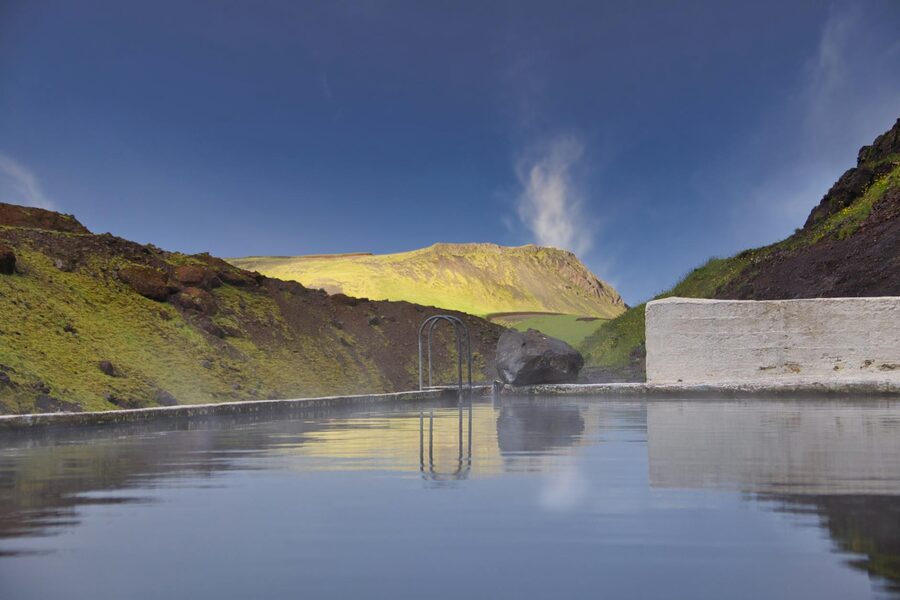
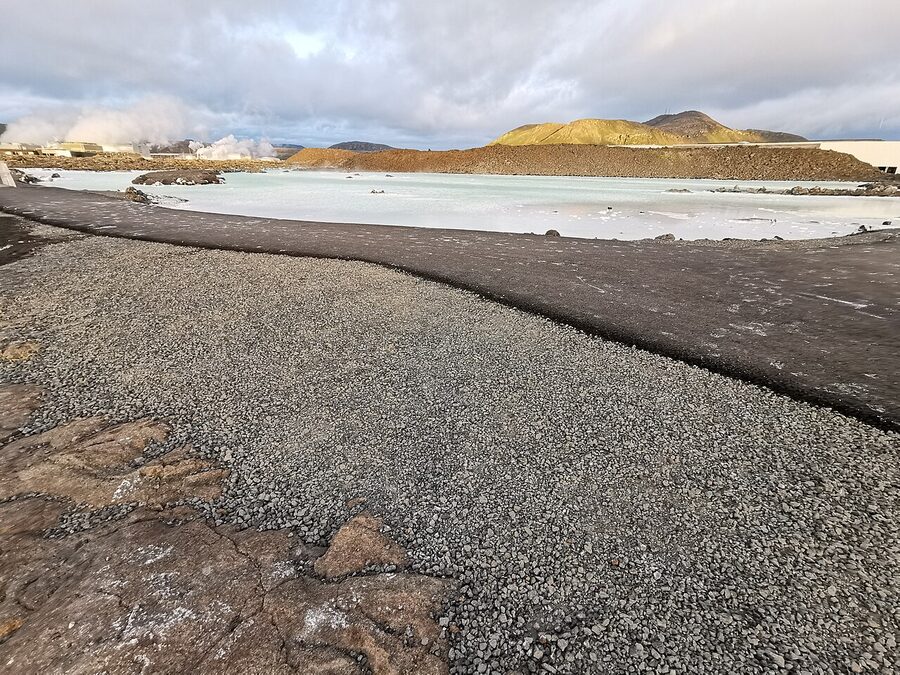
GeoSea opened in 2018 and changed Húsavík’s evening economy almost overnight. Geothermal infinity pools cut into the cliff at Húsavíkurhöfði, ten minutes’ walk north of the harbour. The water is warm seawater pumped from a deep borehole (not freshwater), temperature 38 to 39°C, and the view is the open expanse of Skjálfandi Bay.
Adult entry 5,800 ISK in 2026, towels and changing rooms included. Swim-up bar with beer, prosecco, and Icelandic cocktails (the gin and tonic with local juniper is good). Café and sun terrace if you don’t want to swim. The thing to do, if you’re staying overnight, is the late evening slot. June and July sunsets are around 11.30 pm. Sit in the warm seawater, drink something, watch the sun stay just above the horizon. This is the moment people pay to come to Iceland for. North Sailing boarding card gets you 15 percent off.
Húsavíkurkirkja and the rest of the town walk
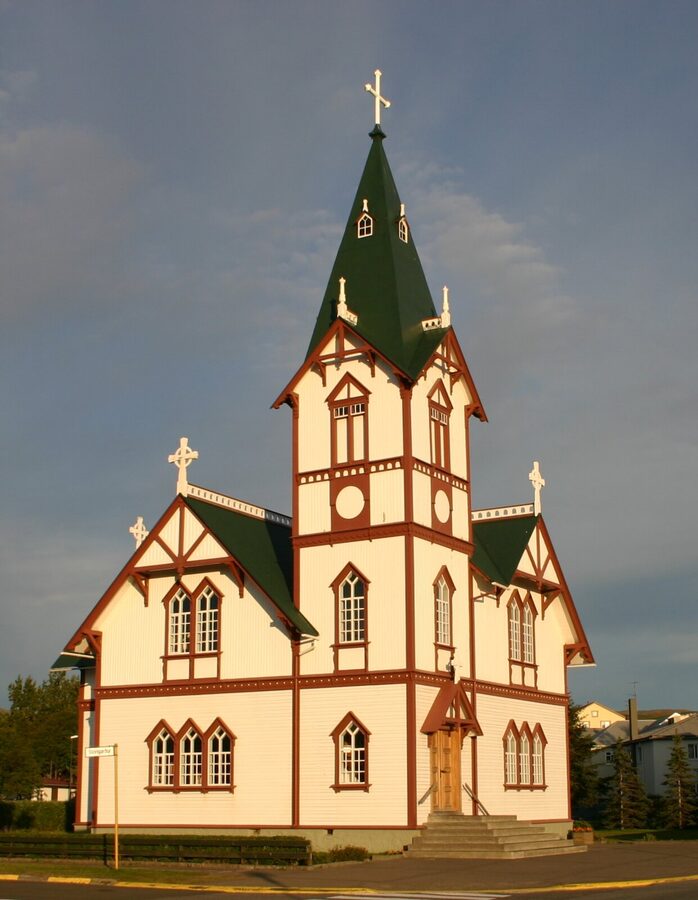
The whole town walk takes about an hour. Start at the harbour. Walk up Garðarsbraut to Húsavíkurkirkja, the wooden church built in 1907. The timber came from Norway, the design is Rögnvaldur Ólafsson’s, the cross-shaped floor plan is unusual for Iceland. If it’s open, look up at the painted ceiling. The graveyard around it has stones going back to the 1820s.
From the church, cut north along the cliff path. You’ll pass the Exploration Museum (dedicated to the Apollo astronauts who trained for the moon landings here in 1965 and 1967, genuinely interesting), a few cafés, and the GeoSea baths at the end. The walk continues past GeoSea to Húsavíkurhöfði, the headland with a lighthouse. Total loop is about 4 km.
The Eurovision Fire Saga effect
In 2020 Will Ferrell and Rachel McAdams made a Netflix comedy called Eurovision Song Contest: The Story of Fire Saga, about two Húsavík musicians who improbably reach the Eurovision finals. Most of the film was shot in Húsavík and the surrounding fjords. The closing song, Husavik (My Hometown), was Oscar-nominated in 2021. The town leaned in: an annual JaJaDing Dong singalong, the school choir performing the song at every public event, and a steady summer trickle of visitors looking for the wooden church featured in the chorus. The response is warm and bemused. The house used in the film is a private home; look at it from the road, take your photo, move on.
The puffin add-on (mid May to mid August)
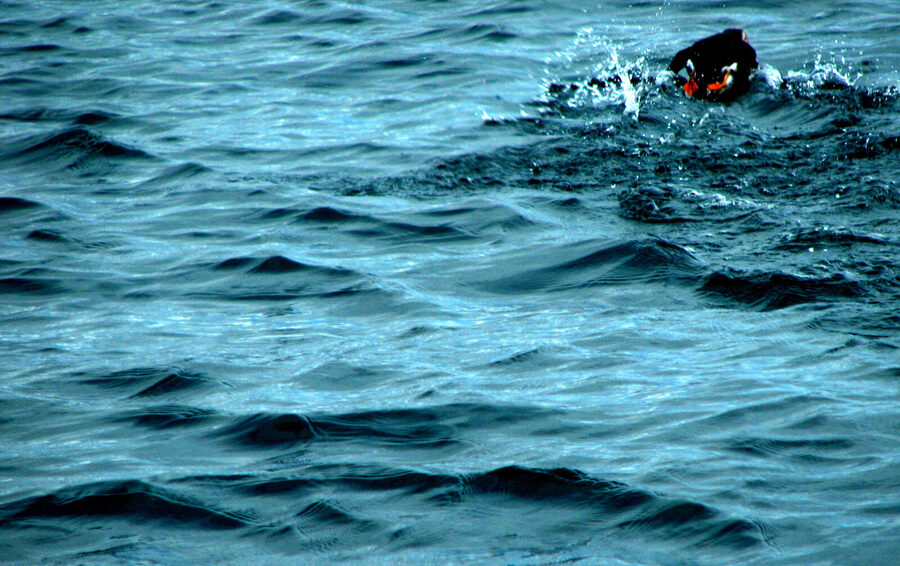
Lundey is a small flat-topped island about 20 minutes by boat from Húsavík harbour. In summer it holds an estimated 200,000 puffin pairs (the English translation of the name is “Puffin Island”). Both North Sailing and Gentle Giants run combo tours that head out for whales first, then divert to Lundey. North Sailing’s Whales and Puffins is around 17,500 ISK, daily late May through mid August. Gentle Giants’ GG2 (the RIB) adds the puffin run for around 4,000 ISK extra.
Viewing is from the boat (Lundey is uninhabited and protected). You circle the cliffs and watch the birds wheeling in and out of their burrows. Breeding season is late May to early August; by late August the chicks have fledged and the colony empties out. If your trip is May, June, or July, the combo is worth the upgrade.
Best season, month by month
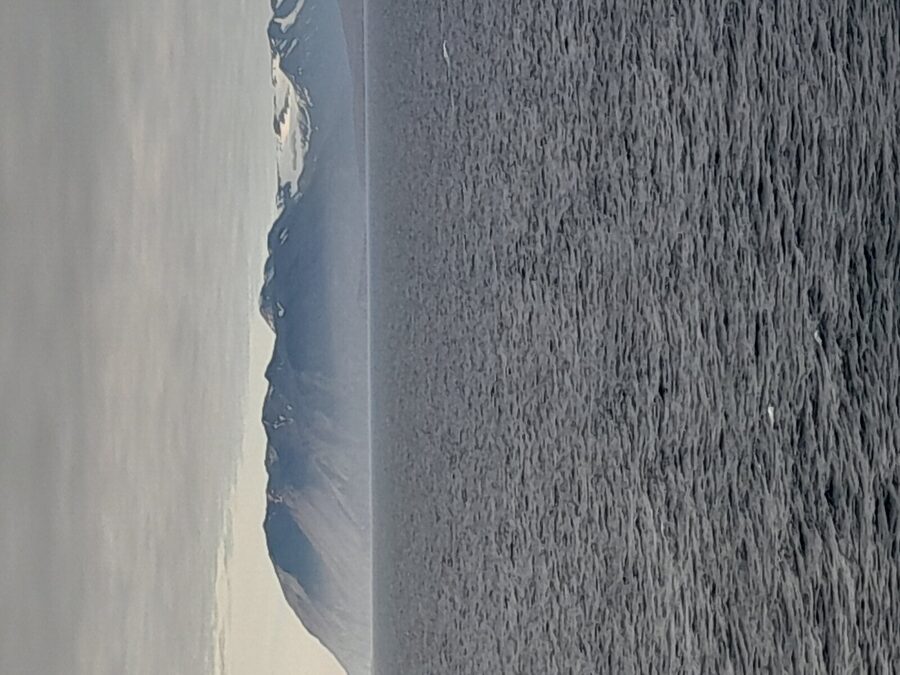
April: Tours start, sightings are reliable but limited (mostly minkes and the first humpbacks back from the Caribbean). Cold, often windy. Half the boats are still in dry dock.
May: Things ramp up. Humpbacks are arriving in numbers. Puffin tours start mid-month. Sea is calmer. Cold but bearable.
June: Peak blue whale window. Long days (sun barely sets). All operators full timetable. Sea generally calm. The best month if you can pick.
July: Reliable humpback action, often with calves born in the Caribbean now learning Icelandic feeding grounds. Puffins still on the cliffs. Weather usually best of the year. Crowded but the bay is big.
August: Still excellent for whales but puffins are leaving. The “midnight sun” tours stop after the first week (it gets dark again). Late August is one of my own favourite times because it’s still warm and the crowds thin.
September: Quieter. Sightings still good. Light is soft and golden. Some chance of an early aurora on the boat back if the sky cooperates.
October: Tours run reduced timetables. Sightings drop as whales begin migrating. Weather gets serious. Wear everything.
November: Last week of the season. Conditions can be rough. Wonderful for the brave; not for first-timers.
December to March: No tours. The boats are in maintenance, the harbour is iced over half the time, and the whales are in the Caribbean.
Getting to Húsavík
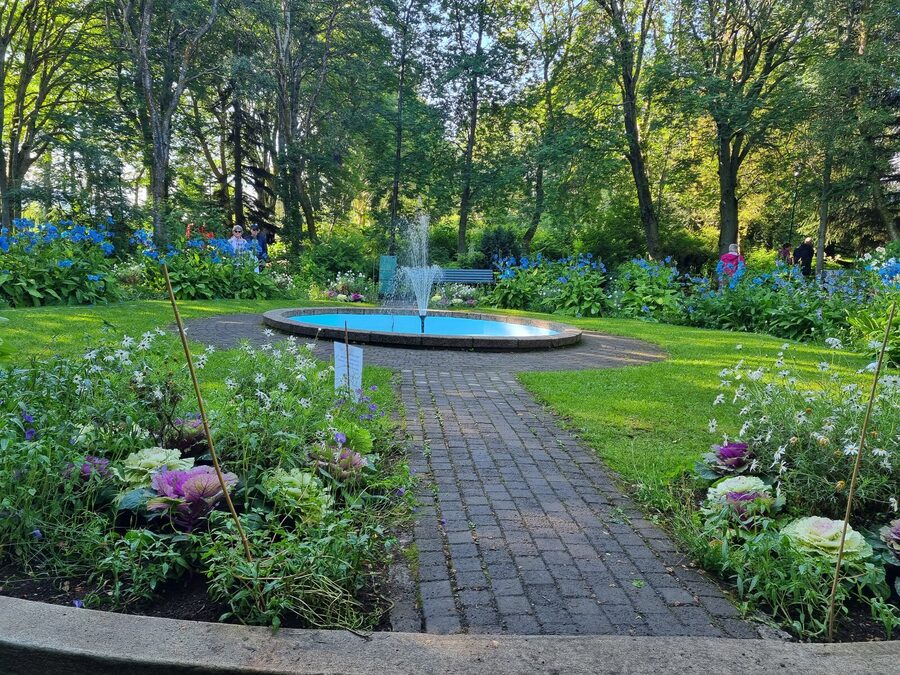
From Akureyri: Standard route. 78 km, 1 hour on Route 85, a beautiful drive along Eyjafjörður and over Víkurskarð pass. Possible as a day trip but much better as an overnight.
From Reykjavík: 480 km, around 6 hours via Route 1. Not a day trip under any circumstances. Overnight in Akureyri or Borgarnes on the way; see our Ring Road guide for the full route.
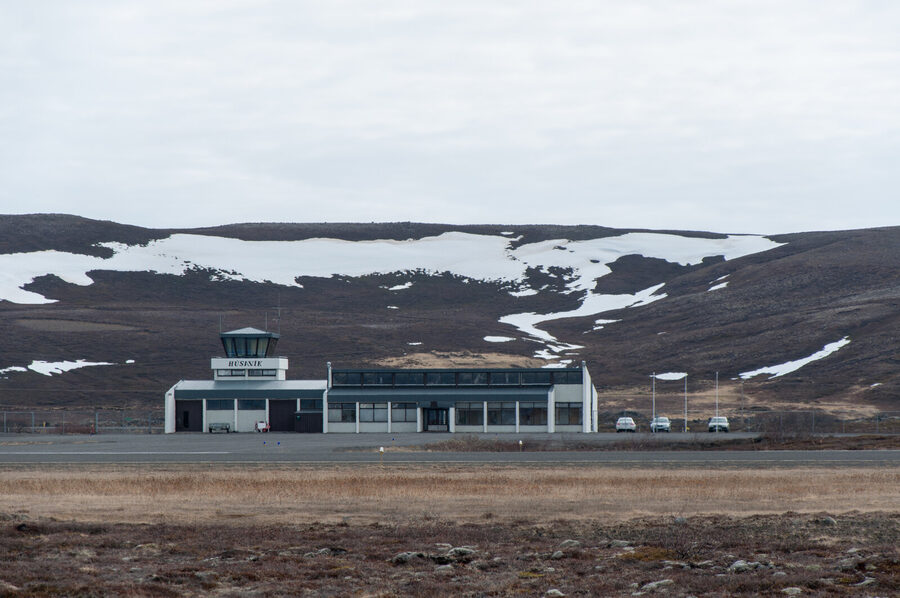
By air: No direct flights. Nearest airport is Akureyri (AEY), 1 hour by car, several daily flights from Reykjavík (Air Iceland Connect, 45 minutes flight time). Pick up a rental at Akureyri airport, drive direct.
By bus: Strætó bus 79 runs Akureyri to Húsavík daily in summer, less in winter. Around 2,500 ISK each way, 90 minutes. Check straeto.is for current timetables.
Pre-arranged tour from Reykjavík: Hidden Iceland and Iceland Travel both run 2-day or 3-day Reykjavík-to-Húsavík packages. Easier than driving for first-time visitors. Look for them under Iceland day tour aggregators.
Where to stay in Húsavík
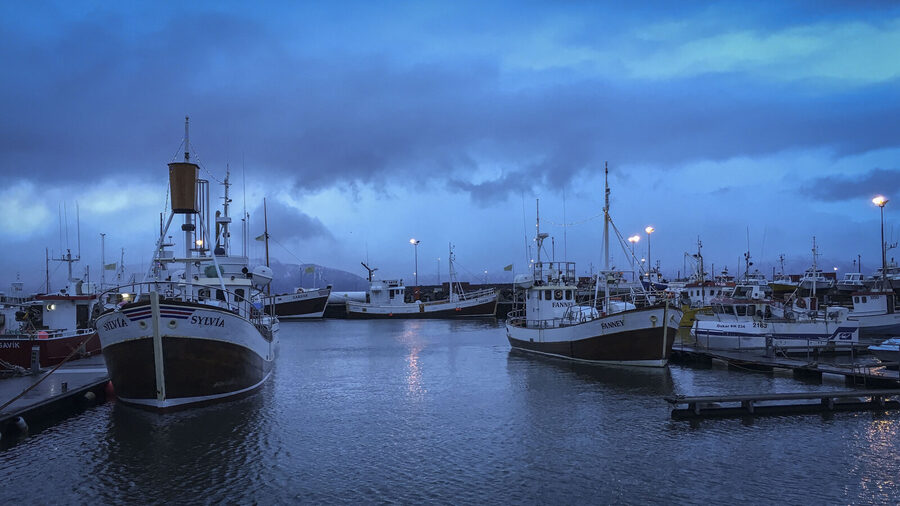
Húsavík is small. About twenty places to stay, almost all within ten minutes’ walk of the harbour. Summer (June to August) runs 25,000 to 45,000 ISK for a mid-range double; May or September is closer to 18,000 to 28,000 ISK. Book early for July and August.
Fosshotel Húsavík. Central, modern, two minutes from the harbour. Part of the Íslandshótel chain so reliable rather than charming, but the location is the best in town. 28,000 to 38,000 ISK in summer. Rated 8.4.
Húsavík Cape Hotel. Newer (opened 2021), up the cliff a short walk from the harbour, with its own private hot pots facing the sea. Best harbour views of any hotel in town. 32,000 to 48,000 ISK in summer.
Guesthouse Sigtún. Small, family-run, a few minutes from the harbour. Shared kitchen, breakfast included, the kind of place where the owner remembers your name when you check out. 22,000 to 30,000 ISK in summer. Rated 8.6, often booked weeks ahead.
Húsavík Green Hostel. Budget option: dorm beds and private rooms, garden, shared kitchen, sea views upstairs. 7,500 to 12,000 ISK per dorm bed; 18,000 to 22,000 for a private double. Rated 9.1.
Where to eat in Húsavík
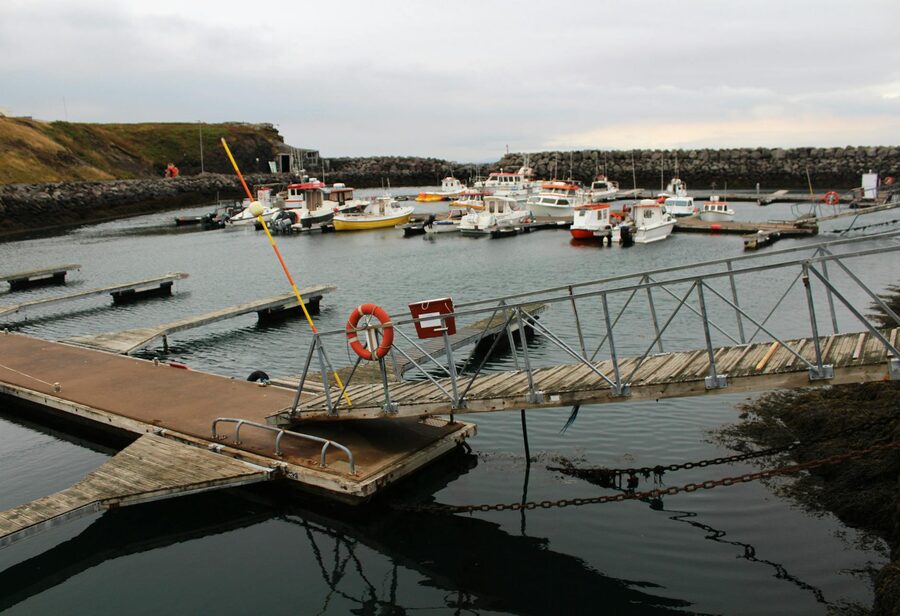
Salka on Garðarsbraut is the harbourfront classic. Strong on fish (plokkfiskur, fresh cod, grilled langoustine in season), Icelandic comfort menu (lamb soup, hangikjöt sandwich), one of the better small wine lists in north Iceland. Mains 4,500 to 8,000 ISK. Boarding-card discount 10 percent.
Naustið is the other harbourfront option, slightly cheaper, more focused on the fishermen-and-locals end. The fish soup at lunch (around 3,500 ISK with bread) is one of the better lunches in town.
Gamli Baukur sits on the dock; used to be the town’s main pub-restaurant. Burgers, fish, beer from the local Húsavík Öl brewery. Casual, loud, fine. 10 percent off with the North Sailing card.
Heimabakarí, the bakery on Garðarsbraut, opens at 7 am. Cinnamon snail and cardamom bread before a 9.30 boat. Coffee is good. Eat there or take it down to the harbour.
Húsavík Öl is the local microbrewery’s taproom, open afternoons. Pale ale and porter both good.
Combining Húsavík with the wider north
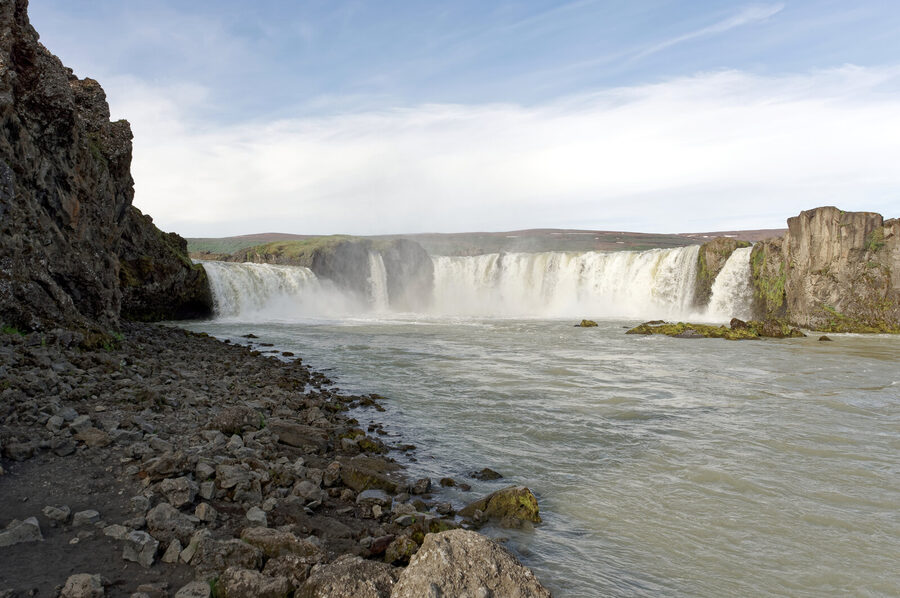
If you’re doing more than one or two nights in north Iceland, fold these in.
Goðafoss is on Route 1 between Akureyri and Húsavík, a 5-minute walk from the carpark. The “Waterfall of the Gods” earned its name in the year 1000 when the local chieftain converted Iceland to Christianity and threw the old Norse statues into the falls. It’s photogenic, free, and a good 20-minute stop on the drive in either direction.
Mývatn
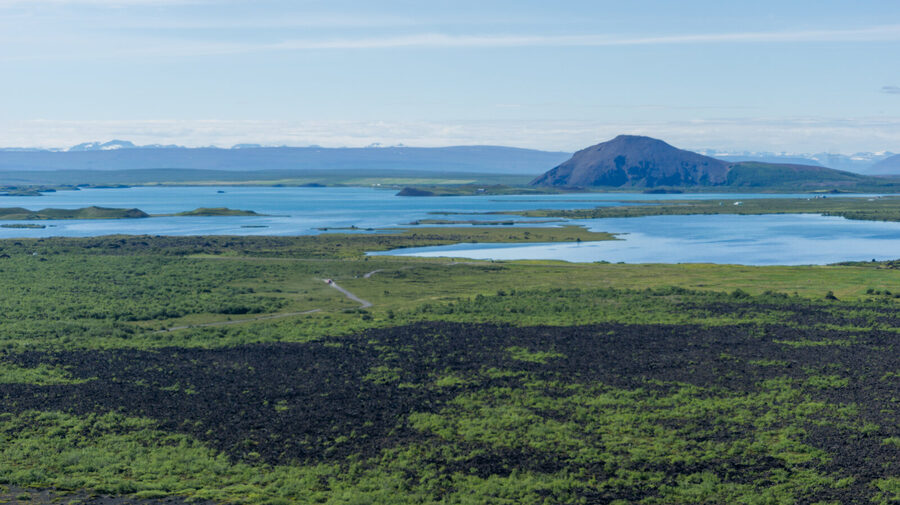
Mývatn lake is an hour south of Húsavík by car. Lava fields, pseudocraters, geothermal pools (Mývatn Nature Baths), and the Krafla geothermal area all within 30 minutes of the lake. A full day from Húsavík with lunch at Vogafjós Farm (the cowshed café, you eat next to the cows being milked) is a near-perfect addition. Bring midge repellent in June and July; the lake is named for them (mý means midge).
Ásbyrgi and the Diamond Circle
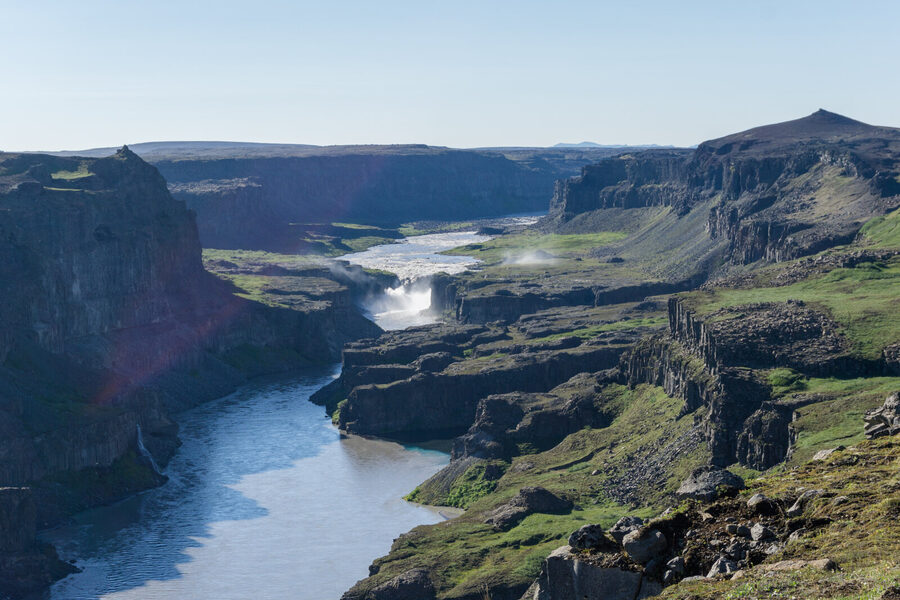
Ásbyrgi is the horseshoe-shaped canyon an hour northeast of Húsavík. Two-and-a-half kilometres long, 100 m deep, ringed by sheer cliffs, with a freshwater pond and a forested floor. Folklore says Óðinn’s eight-legged horse Sleipnir stamped his hoof here; geology says glacial flood from Vatnajökull. Pair with Dettifoss waterfall and Hverir geothermal mud pots for the local “Diamond Circle” loop (Ásbyrgi, Dettifoss, Mývatn, Húsavík).
A 2-day Húsavík plan from Akureyri
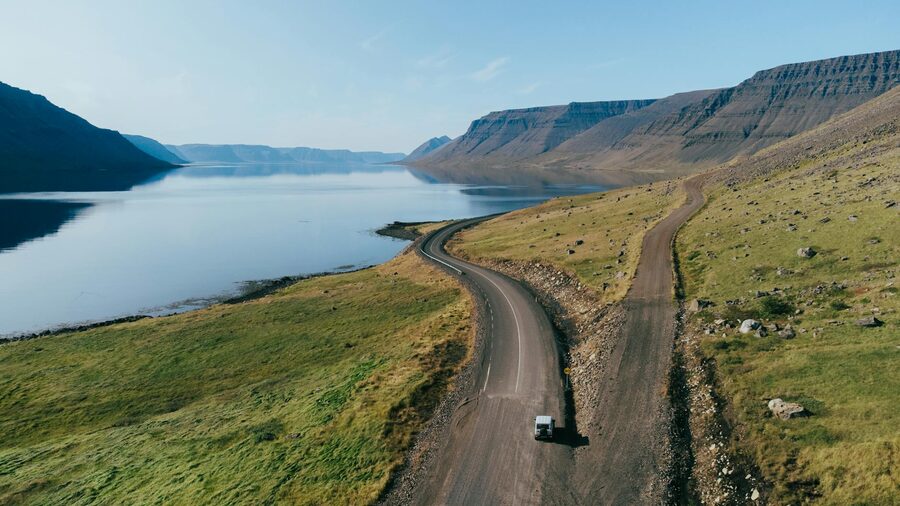
If you only have two days, here’s the plan I’d run.
Day 1. Pick up your rental in Akureyri at 8.30 am. Drive east on Route 1 with a 25-minute stop at Goðafoss. Continue to Húsavík, arriving around 11. Park at the harbour. Grab coffee and a cinnamon snail at Heimabakarí. Check in at the hotel (Fosshotel or Cape Hotel, depending on budget). Book yourself onto the 1 pm North Sailing Original Whale Watching tour. Tour 1 to 4 pm. Whale Museum 4.30 to 5.45. Walk back through town. Dinner at Salka, around 7. GeoSea baths 9.30 pm to 11. In bed by midnight, sun still up.
Day 2. Slow start. Coffee at Heimabakarí again. If you want a second whale tour (different boat, different day), book the 9 am Gentle Giants RIB or the silent Andvari for a contrast. Or skip the boat and walk the Húsavíkurhöfði headland loop. Lunch at Naustið. Drive south by 2 pm, fold in either Goðafoss again (different light) or a stop at Vogafjós at Mývatn for cake and coffee. Back in Akureyri by 5 pm, fly south at 7 or stay another night.
Photo tips from a Húsavík deck
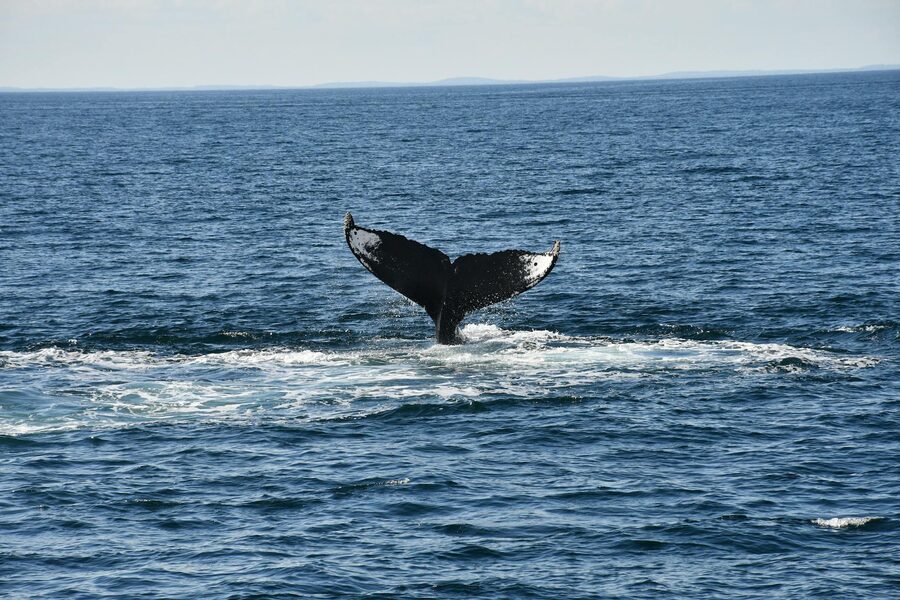
You don’t need a 600 mm lens. A 70 to 200 mm zoom on a full-frame body, or the equivalent on crop, is the sweet spot. Wider than 70 and the whales look small; longer than 300 and you can’t track them in the rolling boat. Set continuous focus, burst mode, shutter priority at 1/1000 minimum (1/2000 for frozen spray), auto ISO, aperture wide open. Watch for the back arch that signals a fluke dive, focus on the rising tail, fire ten frames.
For phones: burst mode (hold the shutter on iPhone, swipe and hold on Android), and don’t zoom past 2x because the cropped resolution beats the optical zoom on most phones. Brace your elbows on the rail. Spray kills phone shots fast; carry a microfibre cloth. What you can’t fix later: motion blur, focus on the wrong thing, missing the moment because you were checking the last shot.
What to wear and what to bring
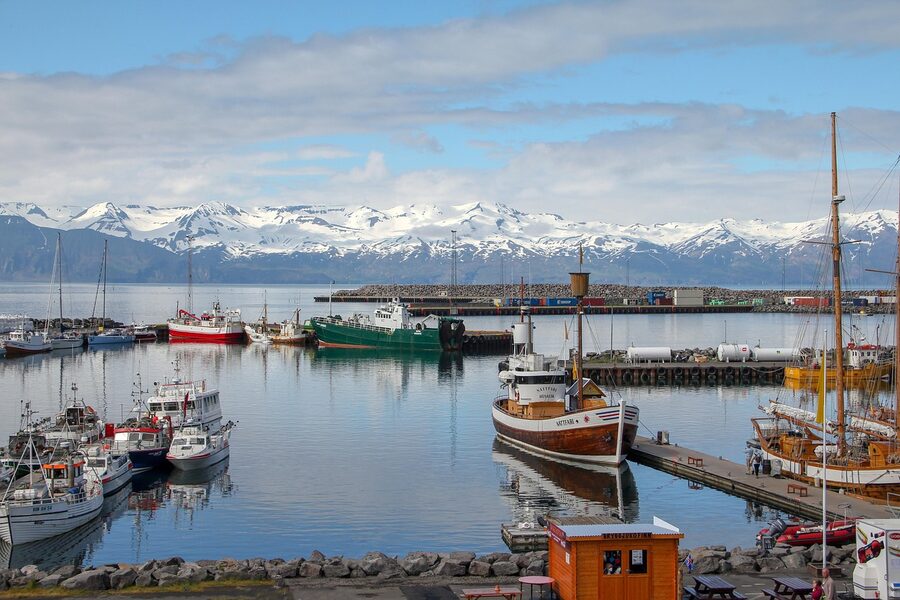
Three layers: base (merino or synthetic), fleece or thin wool jumper, warm waterproof jacket. The boat hands out a heavy overall on top, but you can’t have too much warmth on deck. Hat. Gloves (thin ones for the camera, warmer in your pocket). Sunglasses are essential, the glare off water is brutal even on grey days. Waterproof shoes you don’t mind getting wet. A small dry bag for camera and phone. Snacks if you’re prone to low blood sugar.
Sea sickness and what actually helps
Skjálfandi Bay is sheltered enough that on calm days the boats barely roll. On windy days they roll. If you know you get seasick, take cinnarizine (Stugeron) or meclozine 30 to 60 minutes before boarding. Scopolamine patches work if you have a prescription. Ginger sweets help marginally; the ear-pressure wristbands work for some and not others.
On the boat, stay outside on deck where you can see the horizon. Don’t go below for the toilet unless you have to. Don’t read your phone. Don’t eat heavy food before, but do eat something light (an empty stomach is worse than a half-full one). If it happens anyway, the lee side downwind is the place to be sick. The crew has seen it all. If the forecast is bad (winds over 20 knots), the operators will cancel rather than run a tour you’ll hate. They get the call right.
The whaling question, briefly
Iceland is one of three countries (with Norway and Japan) that still allows commercial whaling. The hunt is for fin whales and minkes; the fleet operates from Hvalfjörður, an hour west of Reykjavík. The meat goes mostly to export and to a small number of Reykjavík restaurants that serve it as tourist novelty.
None of this is connected to Húsavík. The whale watching operators here are explicitly anti-whaling, members of IceWhale (the Icelandic whale-watching association that lobbies against the hunt), and have been outspoken on the issue for two decades. If you want to support the anti-whaling position concretely, don’t order whale meat in Reykjavík restaurants. The market shrinks, the boats slow.
Costs, in plain numbers
For a 2-day Húsavík trip from Akureyri base in summer, a single traveller is looking at roughly:
- Whale tour (one of the standard 3-hour options): 12,000 to 17,000 ISK
- Whale Museum: 2,500 ISK (less with a boarding-card discount)
- Hotel mid-range (one night): 28,000 to 38,000 ISK
- GeoSea baths: 5,800 ISK (less with a boarding-card discount)
- Two dinners at Salka or Naustið: 10,000 to 16,000 ISK
- Two lunches and breakfasts: 6,000 to 9,000 ISK
- Car rental day rate plus fuel for the round trip: 10,000 to 15,000 ISK
Roughly 75,000 to 100,000 ISK per person all-in for the two days. A couple sharing a room and car can do it for 130,000 to 170,000 ISK total. Family of four with kids on the cheaper rate, 220,000 to 280,000 ISK. Add another whale tour, the puffin combo, or the RIB and the per-person figure climbs 15,000 to 25,000 ISK each.
What I would actually do
If you sat me down and asked for one specific Húsavík plan I’d put my own family on. Mid-July. Two nights. Stay at Cape Hotel for the harbour view. Rent a small car at Akureyri airport. Book the North Sailing Original Whale Watching for 1 pm on day one (oak schooner Hildur or Haukur if you can request it). Whale Museum after. Dinner at Salka: fish soup to start, plokkfiskur for main, a glass of Húsavík Öl pale ale. GeoSea at 9.30 pm. Up early on day two for the Goðafoss-Mývatn loop, lunch at Vogafjós, back to Húsavík by 4. Walk the Húsavíkurhöfði headland in the soft afternoon light. Light dinner at Naustið. Drive back to Akureyri the next morning, fly out at lunch.
What I wouldn’t do is try to fit Húsavík into a single day from Akureyri. You can, but you’ll spend most of it driving and the GeoSea evening, which is the moment most visitors actually remember, will be gone.
Skjálfandi Bay rewards slow visits in a way the more famous Iceland sites sometimes don’t. There’s no entrance gate, no queue, no Instagram quota. Just the wooden church on the hill, the smell of fish from the harbour, the slow rise of a humpback out of grey water, and on a still summer night, the silver bay and the sun that won’t go down.
For how Húsavík compares with Reykjavík, Akureyri, and Snæfellsnes, see the parent Iceland whale watching guide. For wider Iceland wildlife, the animals of Iceland piece is next. For more north Iceland on a longer trip, the Ring Road guide covers the full loop and the hot springs of Iceland piece covers GeoSea alongside its more famous siblings. To book a multi-day option that includes all of it, our tour reviews page is the place to start.