Vikings walkable? In Reykjavík, yes.
This private Viking Age walking tour strings together key Reykjavík landmarks so the city starts to feel like a living saga, not a list of stops. I love that you can move at a pace that fits your group, with time for questions instead of rushing with a busload of people.
My favorite part is the simple one: the included tea or coffee break that helps you reset (and warm up) mid-walk. It also makes the tour feel thoughtfully paced, not like a sprint between sites in the cold.
One possible drawback: it’s still a walking tour. If the weather turns nasty, you’ll want solid shoes and a good jacket, because you’ll be on your feet for the full walking stretch.
In This Review
- Key points I’d plan around
- Private pace in central Reykjavík: meeting points and pickup
- Price and value: what $227.12 covers in 2.5 hours
- Stop 1: Settlement Exhibition and the Vikings story that starts on purpose
- Stop 2: Althingishus and the early parliament angle
- Stop 3: Penninn Eymundsson and how the sagas show up in real places
- Stop 4: Ingólfur Arnarson and the “first settler” moment
- Stop 5: Sun Voyager and why Viking boats changed everything
- Stop 6: Skólavörðustígur and the Norse gods street-name map
- Stop 7: The Leif Eriksson statue and the long pre-Columbus story
- Pacing, questions, and why the guide matters so much
- Who this tour is best for (and who might want something else)
- Should you book this Private Icelandic Viking Age Walking Tour?
- FAQ
- How long is the private Viking Age walking tour?
- Is pickup available from hotels?
- Where does the tour start and end?
- What’s included in the ticket price?
- What language is the tour offered in?
- Is this tour really private?
- Do I need admission tickets for all stops?
- How do I find the guide at the meeting point?
- Can I cancel for a full refund?
- Are service animals allowed?
Key points I’d plan around
- Private, pace-controlled touring: just your group, no big-group hurry.
- Tea or coffee included en route: a real comfort stop, not a gimmick.
- Hotel pickup from select central areas: easier start to your day.
- A smart mix of indoor and outdoor stops: museum context plus street-level stories.
- Free access at most stops: you focus your ticket budget on the one paid entry.
Private pace in central Reykjavík: meeting points and pickup

You start in a very workable spot: the area outside Hlöllabátar on Ingólfstorg Square (look for the two tall stone pillars). It’s a convenient meetup because there are benches and a covered area to wait, which matters in Reykjavík weather.
Pickup is offered from hotels and accommodations within a specified radius, so if you’re staying downtown, you may not have to figure out transit or parking first. If you’re outside the pickup zone, you’ll meet at the start point instead, so plug the meeting location into Google Maps ahead of time and you’ll save yourself stress.
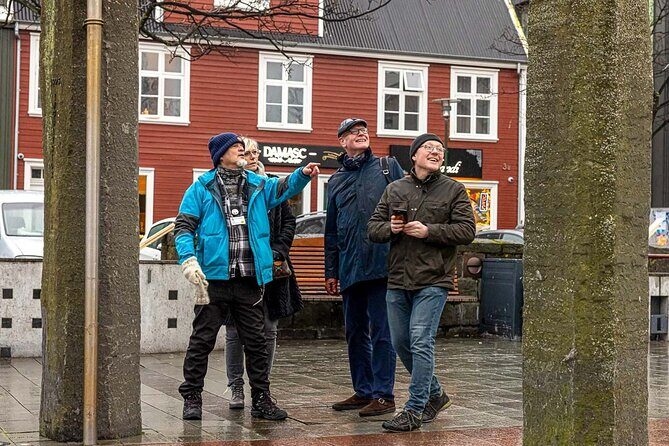
Your guide will be easy to spot in a light blue jacket. This is the kind of small detail that makes the whole experience feel smoother—especially if you’re jet-lagged and trying to match a face to a jacket in a city you’re still learning.
You can also read our reviews of more walking tours in Reykjavik


Price and value: what $227.12 covers in 2.5 hours
At $227.12 per person for about 2 hours 30 minutes, you’re paying for three things that add up fast: a private format, local storytelling, and ticketed access where it counts.
Here’s the value breakdown that matters in real life:
- One paid admission is included: the Settlement Exhibition (about 45 minutes).
- Most other stops don’t require admission: several are free to enter or just quick “look-and-learn” moments outside.
- Comfort is included: tea or coffee en route is part of the experience flow, not an afterthought.
- Your guide controls the tempo: that’s a big deal when you want to ask questions about sagas, Norse gods, or what Vikings actually did in Iceland.
You’re also choosing your day thanks to a wide range of departure times. If you’ve got a tight itinerary, that flexibility can be worth a lot more than you’d think—because it helps you avoid the classic problem of choosing a tour time that forces you to rush everything else.
One more practical note: because it’s private, you’re not stuck waiting around for everyone else’s pace. If your group likes to stand, read, and ask, you’ll get more of that than on a crowded group walk.
Stop 1: Settlement Exhibition and the Vikings story that starts on purpose
The tour begins with the Settlement Exhibition, where you get the framework for everything you’ll see afterward. You’ll spend about 45 minutes here, and admission is included, so you’re not hunting for tickets or working out entry rules on the fly.
What makes this first stop useful is that it sets context. Reykjavík is a modern city, but this exhibition helps you understand the Viking-era settlement story before the tour starts pointing at street names, statues, and “hello to the first settler” moments. Without that foundation, the later stops can feel like cool trivia. With it, the city feels like it has a plot.
Possible drawback: 45 minutes goes quickly. If you’re the type who could happily spend an hour or two in a museum, you’ll have to accept that this tour prioritizes breadth—getting you to multiple landmarks—rather than one deep museum session.
Stop 2: Althingishus and the early parliament angle
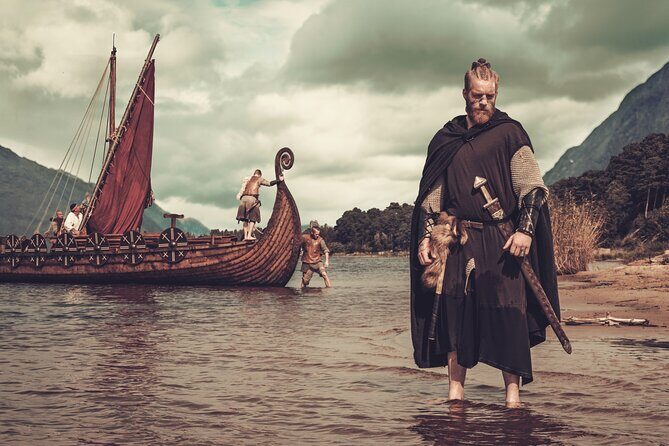
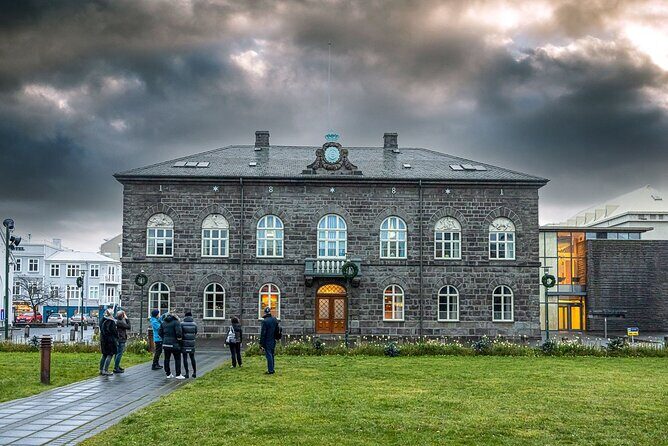
Next you’ll head to Parliament House (Althingishus) for a short stop (about 7 minutes). Even though the time is brief, it’s a strong thematic pivot: the Vikings in Iceland weren’t only raiders and sailors. This stop frames a key idea about governance and why the establishment of early parliament matters for the story of Iceland.
In a walking tour, timing is everything. A seven-minute stop can’t turn into a lecture, so the guide’s job is to give you the takeaways you can carry with you—like how early institutions shaped decision-making and community life. If you like history with a “so what” angle, this stop fits.
Because it’s mostly talk time, a small drawback is that you may wish you could linger longer if you’re a politics-history person. Still, as part of a 2.5-hour walk, it works well.
Stop 3: Penninn Eymundsson and how the sagas show up in real places
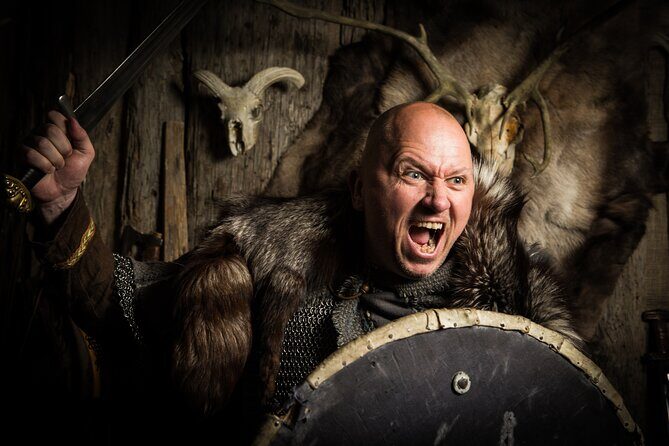
You’ll pause at Penninn Eymundsson, a classic Icelandic bookstore (about 10 minutes). Admission is free, and the point isn’t shopping—it’s using a real local space to talk about books connected to the Viking era and the Icelandic sagas.
This stop is sneakily valuable. Many tours talk about sagas like they’re only texts, sitting in the past. Here, you get a sense that stories still have a physical home in everyday Reykjavík life—books you can hold, not just topics you read about later.
If you’re a reader, you’ll likely leave with a few book leads you can chase after the walk. If you’re not, you’ll still get the cultural thread: why these sagas matter to Iceland’s self-image and how the stories helped preserve memory across generations.
You can also read our reviews of more private tours in Reykjavik



Stop 4: Ingólfur Arnarson and the “first settler” moment
One of the tour’s quick but memorable stops is at Ingólfur Arnarson, with about 10 minutes set aside. This is where you do the simple “say hello” part that sounds small, but lands well—because it ties a name to a place.
The practical value here is mental. It helps you picture settlement not as a vague timeline, but as people putting down roots. When a tour names the first settler and your guide connects him to what you’re seeing around you, the city gains a human scale.
This stop is short, so don’t expect a long discussion here unless your guide offers extra time. But as a moving anchor in the tour arc, it’s a good one.
Stop 5: Sun Voyager and why Viking boats changed everything
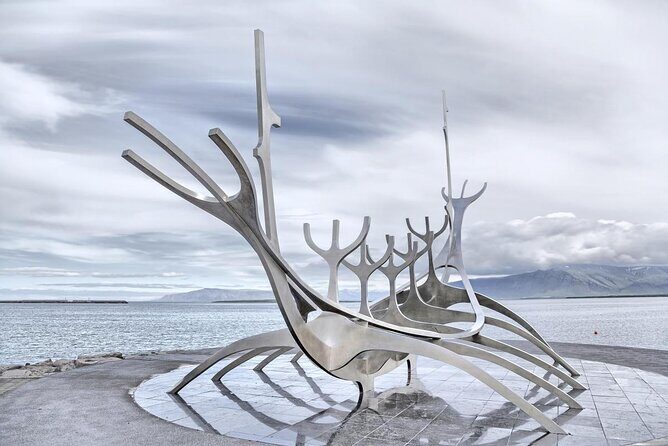
At Sun Voyager, you’ll spend about 15 minutes. This is one of the best “big idea” stops because it connects to the Viking story through seafaring.
Here’s the angle your guide will emphasize: the Vikings’ success depended heavily on their boats—particularly their low-keel designs—and on being skilled master boatmen. The tour ties the symbol of Sun Voyager to why those technical details mattered for voyages and raids.
I like this kind of history because it’s not just legends. It’s cause-and-effect. If you come away thinking about design, travel, and practicality, that’s a sign the stop did its job.
Because you’re outside, this is also a “dress for the moment” stop. If the wind is up, you’ll want to keep an eye on warmth and hand comfort, especially if you’re the type who likes to stand and look for a while.
Stop 6: Skólavörðustígur and the Norse gods street-name map
Next is Skólavörðustígur, centered on the so-called Gods District, where street names point to Norse mythology. You’ll have about 10 minutes here, and the experience is built around the idea that the city itself acts like a map of stories.
You’ll hear street names tied to gods—for example Odinsgata, Týsgata, and Þórsgata—and the guide will connect those names to the myth world. This is a great stop for anyone who likes “how do I read the place I’m in?” travel. You don’t just learn facts; you learn a method.
Short timing is again the tradeoff. You get a focused taste rather than an all-afternoon mythology lesson. Still, for a 2.5-hour tour, it’s a smart way to squeeze in interpretive context without burning your schedule.
Stop 7: The Leif Eriksson statue and the long pre-Columbus story
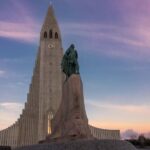
You’ll finish at the Statue of Leif Eiriksson area, with about 10 minutes set aside, plus time for moving between stops. The key story is the one Iceland loves to tell: Leif Eiriksson, an Icelandic Viking who discovered North America long before Christopher Columbus.
This stop works best if you treat it as more than a “who was he” quick fact. Your guide will use it to tie together the Viking theme of exploration, navigation, and Iceland’s role as a launch point for wider routes. In other words, it’s not only about one name. It’s about a bigger pattern.
It’s also a good end point because it gives you a final story hook before you roll into the rest of your Reykjavík day.
Pacing, questions, and why the guide matters so much
The most praised aspect of this tour type is the guide quality—and the way conversation stays open. In the best feedback, people specifically mention that Bardi (Barõi Guðmundsson) was fun to talk to and helped answer questions without brushing you off. That kind of back-and-forth is what turns a walking tour from a passive listen into a real experience.
Another reason guides matter here: Viking-age history in Iceland isn’t just dates and events. It touches literature, place names, governance, and travel skills. If your guide can connect those dots clearly, the whole tour clicks into place.
You’ll also feel the private format in the small ways. If you want to linger at one stop longer—because something grabs you—you can usually do that more easily than in a larger group setting. That’s exactly what the tour highlights as a core benefit: you’re not stuck keeping pace with strangers.
Who this tour is best for (and who might want something else)
This is a great fit if:
- you want a fast, meaningful intro to Reykjavík’s Viking connections
- you enjoy walking and learning in short bursts
- you like a tour where your questions actually get airtime
- you want one guided plan that covers museum context plus outdoor landmarks
You might look at another option if:
- you want a museum-only experience with deeper time inside each venue
- you’re uncomfortable with outdoor walking in cold, wind, or rain
- you prefer a totally open-ended wander with no structured stop sequence
The tour is offered in English, so that’s your best match if you’re comfortable there.
Should you book this Private Icelandic Viking Age Walking Tour?
Yes, if you want a high-value, structured-but-not-rushed way to understand Reykjavík’s Viking connections. The included Settlement Exhibition entry gives you necessary context, and the tea or coffee stop keeps the experience human instead of purely logistical. At $227.12 per person, it only feels expensive if you compare it to DIY walking without a guide; if you compare it to a guided plan that saves you thinking time and adds context at every stop, the price starts to make sense.
Book it especially if your ideal tour includes conversation and you want to feel like you’re learning from someone who can connect stories to real places—street names, statues, and the city’s “where it all happened” feeling.
If the weather forecast looks brutal, pack for it and plan to move smartly. The content is worth it, but comfort will decide how much you enjoy the walking.
FAQ
How long is the private Viking Age walking tour?
It runs for about 2 hours 30 minutes.
Is pickup available from hotels?
Yes. Pickup is offered from hotels/accommodations within a specified radius in central Reykjavík.
Where does the tour start and end?
It starts at Hlöllabátar, Ingólfstorg Square (HlöllabátarIngólfstorgi 1) and ends at Hallgrímstorg near Hallgrimskirkja (HallgrimskirkjaHallgrímstorg 1).
What’s included in the ticket price?
The tour includes a tea or coffee en route, and admission to the Settlement Exhibition is included. Other stops are free.
What language is the tour offered in?
The tour is offered in English.
Is this tour really private?
Yes. It’s private, and only your group participates.
Do I need admission tickets for all stops?
No. The Settlement Exhibition admission is included. The other listed stops are free (no admission ticket required).
How do I find the guide at the meeting point?
Your guide will be wearing a light blue jacket and you’ll meet near Hlöllabátar facing Ingólfstorg Square.
Can I cancel for a full refund?
Yes, free cancellation is available up to 24 hours before the experience starts for a full refund.
Are service animals allowed?
Yes, service animals are allowed.