Three big icons. One tight, efficient day.
This Golden Circle tour from Reykjavík strings together Iceland’s most famous geology, from earthquake fissures to active geysers, with a small group size that keeps it friendly and manageable. It’s built as a practical shore excursion too, with an 8:00 am departure timed for cruise ships in port.
I like two things a lot. First, the German-speaking guiding is hands-on and practical, with examples you may run into such as Andi, Jo, Joe, Jonina, Kirala, or Orri. Second, the day’s pacing gives you real time at the highlights: you’re not just peeking from the bus window.
One trade-off: you’ll spend a good chunk of the day on the road. Also, the schedule is packed enough that if you’re the type who wants a long, slow meal at every stop, you may feel the time pressure—especially around the geyser area.
In This Review
- Key points that make this Golden Circle tour work
- From Skarfabakki Harbour to the Golden Circle: how the day starts
- Hveragerði earthquake fissure: a quick stop with big meaning
- Kerið crater: the clock-friendly caldera with real measurements
- Gullfoss waterfall: where timing and walking options matter
- Haukadalur and Strokkur: watching multiple eruptions in one stop
- Efsti-Dalur II ice cream and a window into farm life
- Laugarvatn warm lake stop: bread energy from hot springs
- Þingvellir National Park: tectonics plus parliament history
- Back to Reykjavík: a quick city center loop and Hallgrímskirkja photo chance
- Price and value: why $178.62 can make sense on a cruise day
- Who should book this Golden Circle day and who should skip it
- Should you book this tour?
- FAQ
- What’s the duration of the Golden Circle tour from Reykjavík?
- How many people are in the group?
- What time does the tour start?
- Is pickup included?
- Where does the tour start and end?
- Is the guide German-speaking?
- Which major stops are included?
- Is lunch included in the price?
- Are entrance fees included for the stops?
- What’s the cancellation policy if weather changes?
Key points that make this Golden Circle tour work
- Small-group cap (19 max) keeps questions and walking-time decisions realistic
- German-speaking guide adds context at each stop, including hands-on geology and local stories
- Strokkur in Haukadalur gives you a good chance to see multiple eruptions
- Short, efficient stops balance Kerið, Gullfoss, Laugarvatn, and Þingvellir without dragging
- Cruise-friendly timing plus a quick Reykjavík city center drive on the way back
From Skarfabakki Harbour to the Golden Circle: how the day starts
The tour meets at Skarfabakki Harbour in Reykjavík and starts at 8:00 am. You’ll use a pickup-friendly setup built for cruise schedules, and that early start matters. It helps you get to the big natural sights before the day feels too crowded, and it gives you enough daylight time to move through multiple regions without feeling rushed.
This is a small group tour with a maximum of 19 people, using an air-conditioned vehicle. That mix matters in Iceland, where weather can shift fast and roads can feel busier as the day goes on. A smaller bus also means you’re more likely to get clearer group coordination at the stops—where to park, when to re-board, and what’s worth your exact walking effort.
One thing to keep in mind: the day is designed around a route. That means you’ll be in transit more than you might expect, especially if you’re used to slower countryside tours. Think of it as a “best-of” geological circuit, not a stay-and-hike day.
You can also read our reviews of more tours and experiences in Reykjavik.

Hveragerði earthquake fissure: a quick stop with big meaning
You begin with Hveragerði, known for geothermal activity. The first stop is an earthquake fissure display inside the Hveragerði shopping center, with a relief map of South Iceland and information about earthquakes in the region. It’s only about 15 minutes, and it’s not meant to drag. It’s a smart warm-up stop because it reframes what you’re about to see.
The Golden Circle is often marketed as waterfalls and geysers. This little science stop helps you see the whole route as one connected system: Iceland’s surface is shifting, cracking, and reforming all the time. You don’t need a geology degree to enjoy it. You just need a moment to connect the dots—what you’re seeing at Þingvellir is part of the same story as the fissure you just read about.
If you’re traveling with kids or you’re trying to manage energy on a cruise day, this is also a good “low-walking” stop. You can keep moving without feeling like you missed the important context.
Kerið crater: the clock-friendly caldera with real measurements
Next is Kerið crater, part of the Tjarnarhólar crater series. This is the kind of stop that works even if your day is tight. You get around 20 minutes, and admission is included.
Kerið is a lot more specific than it looks in photos. The crater is about 55 meters deep with a diameter of roughly 270 by 170 meters. Water depth can vary between about 7 and 14 meters, depending on conditions. That detail helps because it turns the view from just pretty scenery into something you can picture as a real landform.
What you’ll likely enjoy most here is the contrast: this crater gives you a different flavor than geysers. It’s volcanic and bowl-shaped, not steam-and-water. You’ll also get good photo angles quickly, and the stop is short enough that you won’t feel pressured to “get it all done” before re-boarding.
Possible drawback: if you’re the type who hates short stops, Kerið is built for speed. You’ll have just enough time for the main viewpoints and a couple of photos, not a long wander.
Gullfoss waterfall: where timing and walking options matter
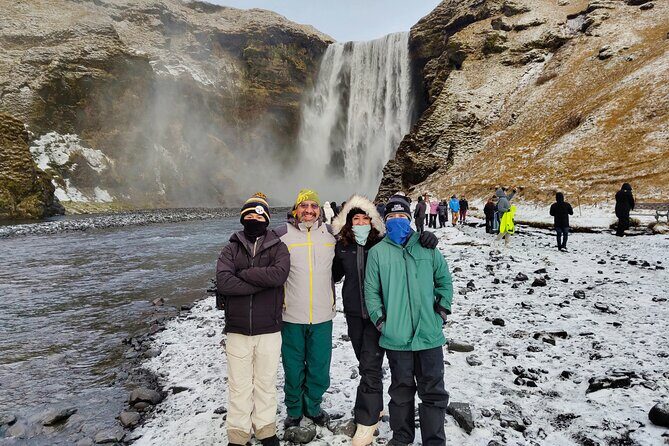
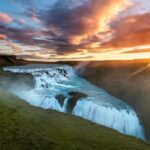
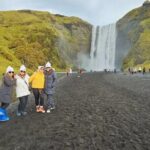
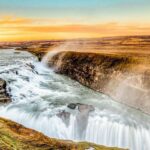
Then you hit Gullfoss, one of Iceland’s top waterfalls. You get about 30 minutes, and admission is free.
Here’s a practical detail that affects your experience: the bus parks first in the upper parking lot, then later you may re-join at the lower parking lot after walking/viewing. That’s your built-in choice. If you want maximum viewing, you’ll follow the walkway options at your own pace. If you want easier movement, you can keep your walking shorter and still see enough to appreciate how powerful the falls are.
Thirty minutes can sound short, but Gullfoss is one of those places where the best views are close by. You don’t need a long trek to understand why it’s famous. Even if you’ve seen photos, the scale and water motion can still surprise you.
Realistic consideration: weather and wind can change what the mist feels like. If it’s gusty, bring a layer and protect your camera. Also, Gullfoss can pull focus in a way that makes you forget to check the time. Set a mental reminder so you’re not sprinting back to the bus.
Haukadalur and Strokkur: watching multiple eruptions in one stop
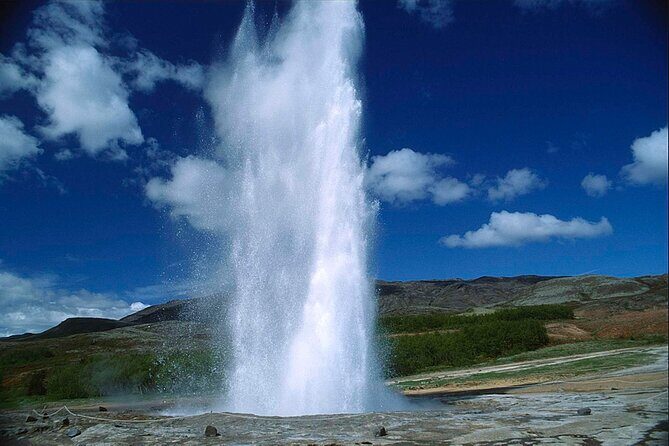
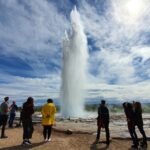
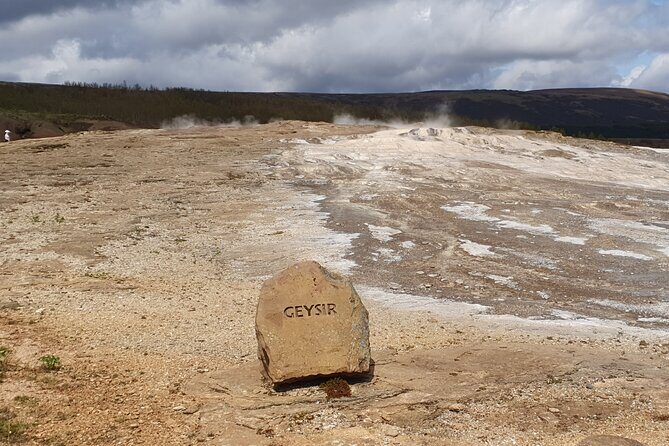
Your next big geothermal moment is Haukadalur, home to Strokkur, the active geyser. You’ll have around 45 minutes here, and admission is free.
The key promise of this stop is that it’s long enough to see multiple eruptions. That’s the difference between “saw it once” and “actually got a good look.” Geysers are timing-based, and even when you think you know the pattern, you can’t control it. A longer window gives you the flexibility to wait for the next surge if the first one isn’t perfect.
You’ll also benefit from how the stop is structured. There’s usually a “look, then re-position” feel at geyser areas. If you move a little between eruptions, you often get better sightlines for photos and for just watching the steam build and snap into action.
One potential drawback is simple: this is also where your stomach might start negotiating with your schedule. There’s no lunch included, so if you’re hungry here, you’ll want to be proactive and grab snacks before you arrive—or at least plan where you can do it. A review note specifically flagged that time at the geysers might feel a little short if you’re hoping to pair it with a full meal.
Efsti-Dalur II ice cream and a window into farm life
After the geysers, you head to a farm stop: Efsti-Dalur II, where you can buy ice cream made from the milk of the farm’s own cows. You also get a chance to look at the cows through a window. This is about 20 minutes, and admission is free.
This stop works because it gives you a human-scale break between geology heavy hitters. You’re not just moving from one scientific scene to another. You’re getting a taste of how Icelandic farms fit into this very rugged country.
And yes, the ice cream is the point. It’s a straightforward, fun reward that doesn’t require you to read menus or hunt for a café that fits the bus schedule. If you’re sensitive to dairy, you’ll want to check what’s offered on the day, but for most people, it’s an easy win.
Also, a quick note: some day variants include extra farm moments tied to hot-earth baking and even visiting nearby animals. The core experience stays focused on the ice cream and the farm window view.
Laugarvatn warm lake stop: bread energy from hot springs
You then stop at Laugarvatn, a warm lake area. You’ll have about 10 minutes, and admission is free.
This is a “pass-through with a payoff” stop. The hot springs on the shore are used for baking bread, and that geothermal connection is the theme. You’re getting a short, visual reminder that Iceland’s heat isn’t just for entertainment. It’s used for everyday food in a way that’s hard to imagine until you stand near it.
Ten minutes is brief, so treat it like a photo and quick-awareness stop. If you want a longer look, you won’t get it here. But as a calm breather between Þingvellir and the earlier geothermal sights, it helps the day feel less frantic.
Þingvellir National Park: tectonics plus parliament history
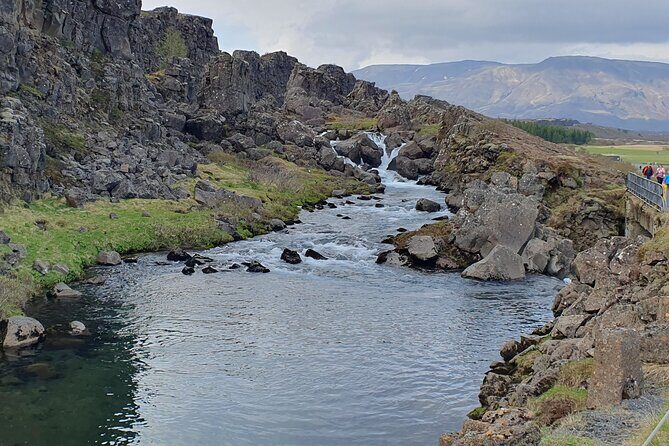
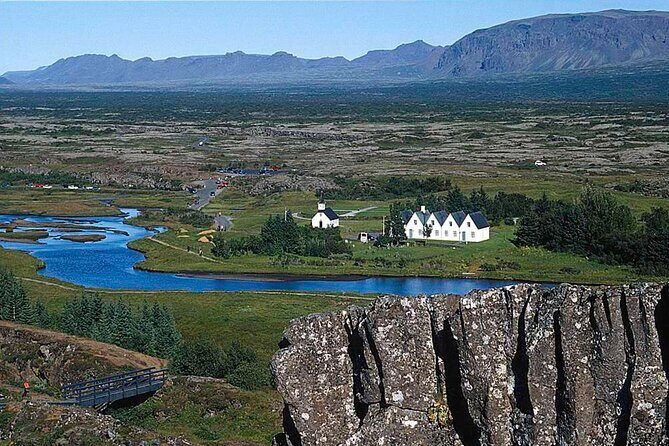
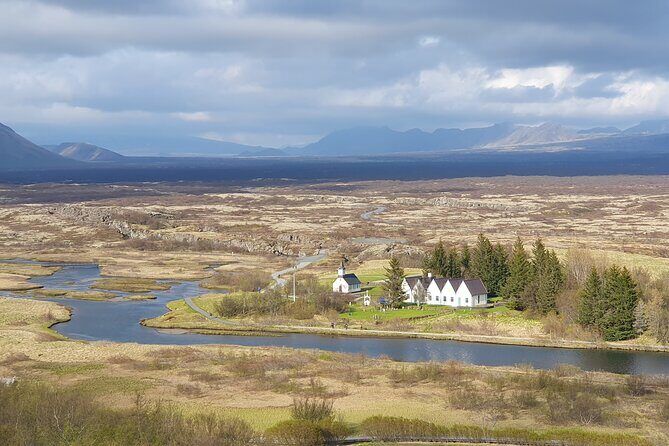
Now you reach Þingvellir National Park, one of the most rewarding stops on the route. You’ll have about 40 minutes, and admission is free.
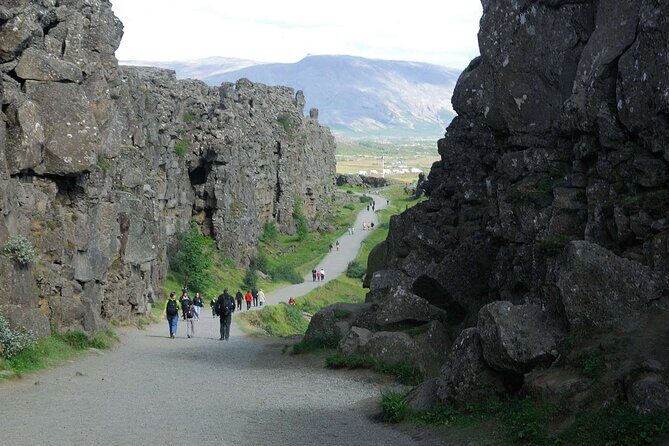
This is where Iceland’s geology and history stop being separate topics. Alþing, the Icelandic parliament, was founded in 930 in the Almannagjá gorge created by continental drift. That means you’re standing in a place where land movement is literally part of national story.
You’ll also have time for the scenery walk structure. The bus first stops at the lower parking lot, then goes to the upper parking lot at the visitor center and viewing platform. Participants can walk through Almannagjá to reach the upper area. If you can handle a short walk, this is worth it. You get a more grounded sense of the rift valley than you would from viewing platforms alone.
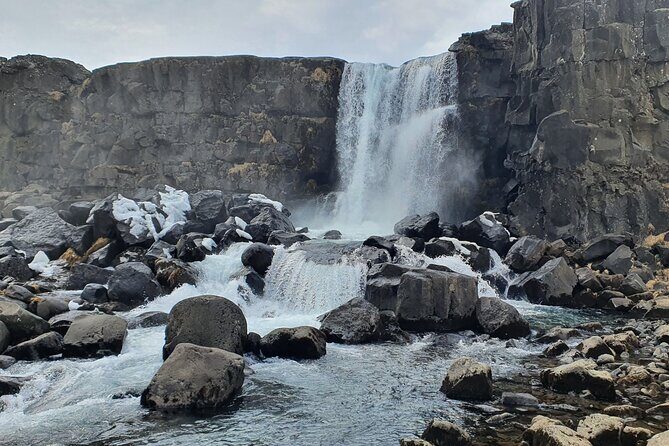
There’s also the Öxarárfoss waterfall, which you can visit as part of the park time. It’s not the only focus of Þingvellir, but it adds a familiar waterfall moment inside a very geology-heavy setting.
Real-world tip: wear shoes you trust. Even if it’s not a hike day, park paths can be uneven, and Iceland weather loves to change your footing. If the ground is wet or icy, go slower than you think you need.
Back to Reykjavík: a quick city center loop and Hallgrímskirkja photo chance
On the way back, the tour includes a short detour through Reykjavík’s city center. If the parking situation allows it, you may get a photo stop at Hallgrímskirkja.
This is a nice bonus because it gives your brain a reset after hours outdoors. It also helps cruise passengers who may not get time to explore the city on their own. You’re still not doing a full city visit here, but you get at least a taste of Reykjavík’s main visual identity.
The time focus stays on keeping you aligned with the re-boarding schedule. So don’t plan on a long walk around town. Think quick photo and back on board.
Price and value: why $178.62 can make sense on a cruise day
At $178.62 per person, this tour isn’t the cheapest way to see Iceland. But it can be good value if you’re traveling on a clock, especially as a cruise shore excursion.
Here’s why it can feel fair:
- You’re seeing multiple top-tier stops tied together efficiently: Kerið, Gullfoss, Strokkur, Laugarvatn, and Þingvellir.
- The group size is small, with a maximum of 19, which usually improves how smoothly re-boarding works.
- You get air-conditioned transport, helpful when weather goes from calm to cold fast.
- Pickup is offered, and the departure time is compatible with major cruise lines in port.
Also, this type of tour often books far ahead. With an average booking window around 252 days, it’s smart to lock it in early if you’re traveling in peak season or you have only one day in Reykjavík.
On the flip side, lunch isn’t included, and food and drinks aren’t part of the price. So you’ll want to budget for snacks or meals on your own. If you hate “buy as you go,” you’ll likely feel that cost creep during the day.
Who should book this Golden Circle day and who should skip it
This is a strong choice if:
- You want a high-impact highlights route without doing multiple transfers yourself
- You prefer a German-speaking guide with structured stops
- You’re on a cruise and need timing that fits the port window
- You’re okay trading a little “slow travel” for more total sights
Consider a different option if:
- You want a long, food-centered day where you linger at fewer stops
- You dislike bus-heavy schedules and want more hiking time
- You’re the type who needs lots of buffer time for weather delays
The best part is the balance. You get key geology and big Iceland icons with enough time to actually see them, not just pass them.
Should you book this tour?
I’d book this if your goal is to check off the Golden Circle and Þingvellir with a guide-led day that’s practical for Reykjavík port stops. The small group size, the mix of geothermal and tectonic context, and the chance to catch multiple Strokkur eruptions make it feel like a real experience instead of a rushed sightseeing loop.
If you’re sensitive to schedule pressure, plan snacks and accept that you’re traveling a lot between stops. Pack for wind and wet ground. And when you get to Þingvellir, take the extra few minutes to walk through Almannagjá if conditions allow.
Bottom line: for one-day visitors and cruise passengers, this is one of those “you’ll be glad you did it” Golden Circle routes.
FAQ
What’s the duration of the Golden Circle tour from Reykjavík?
The tour runs about 6 to 8 hours, depending on conditions and timing.
How many people are in the group?
It’s a small group with a maximum of 19 travelers.
What time does the tour start?
The start time is 8:00 am.
Is pickup included?
Pickup offered is part of the tour features.
Where does the tour start and end?
The meeting point is Skarfabakki Harbour (544P+F35, 104 Reykjavík, Iceland). The activity ends back at the meeting point.
Is the guide German-speaking?
Yes. The tour is described as a German-speaking tour with a German-speaking guide.
Which major stops are included?
You can expect stops at Hveragerði earthquake fissure, Kerið crater, Gullfoss waterfall, Haukadalur/Geysir with Strokkur, Efsti-Dalur II ice cream farm, Laugarvatn warm lake, and Þingvellir National Park, plus a short Reykjavík city center drive on the way back.
Is lunch included in the price?
No. Lunch, food, and drinks are not included.
Are entrance fees included for the stops?
Some are free and some are included. Kerið crater admission is included, while other stops listed include free admission (such as Gullfoss, Strokkur, and Þingvellir). Hveragerði earthquake fissure is also listed as free.
What’s the cancellation policy if weather changes?
You can cancel for a full refund if you cancel at least 24 hours before the experience starts. The experience requires good weather; if it’s canceled due to poor weather, you’ll be offered a different date or a full refund. The tour also requires a minimum number of travelers.