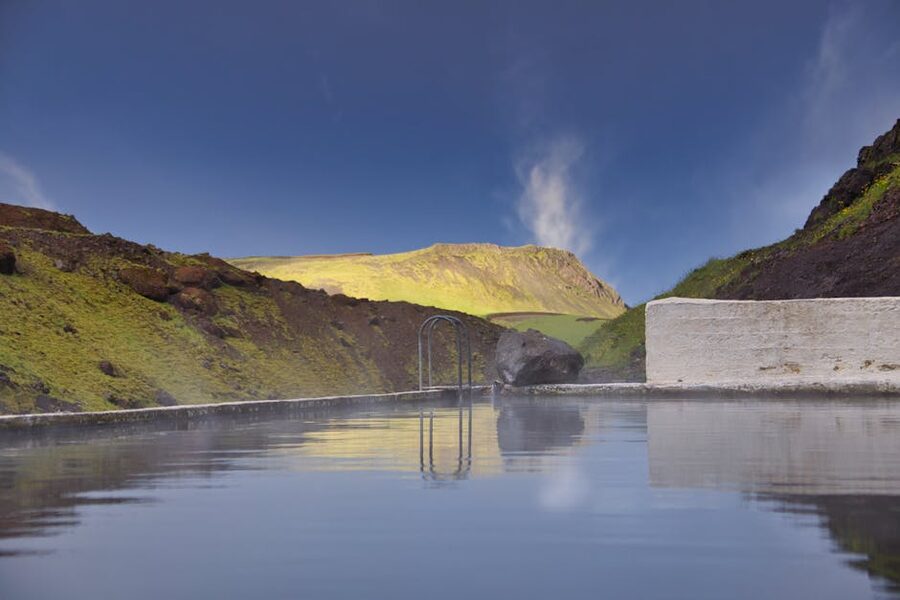
Iceland sits on top of a magmatic hotspot. The North American and Eurasian plates pull apart down the middle of the country, magma rises to fill the gap, and groundwater meets that heat on its way down. The result is roughly the same wherever you stand on the island: dig a hole, hit hot water. We’ve been bathing in it since the Vikings landed. Snorri Sturluson, the saga writer, had his own pool at Reykholt in the 1200s. There are still hot stones in it.
So the question for visitors isn’t really whether to soak. It’s which kind of soak you want. There are luxury spa lagoons charging 13,000 ISK at the door. There are mid-range geothermal complexes where you can taste rye bread baked in the earth. There are public pools in every village that cost less than a sandwich. And there are wild riverside soaks at the end of a hike, free, no roof, no rules. I’ve done all of them. Here is how to pick.
In This Article
- Four kinds of hot spring, and which one is for you
- The spa lagoons
- Blue Lagoon
- Sky Lagoon
- Forest Lagoon
- The mid-range geothermal complexes
- Secret Lagoon, Flúðir
- Laugarvatn Fontana
- Mývatn Nature Baths
- GeoSea, Húsavík
- Krauma, Borgarfjörður
- Vök Baths, east Iceland
- Hvammsvík
- Public pools, the local way
- Pool etiquette, the bit foreigners get wrong
- Reykjavík: the four pools to know
- Outside Reykjavík
- Wild hot springs
- Reykjadalur, the hot river
- Landmannalaugar
- Krossneslaug
- Grettislaug
- Hrunalaug
- Hveravellir
- Hellulaug
- Strútslaug, the off-trail one
- Safety, gear, and the things that catch tourists out
- What to bring
- What it costs and what you actually get for the money
- Day-trip combinations that work
- What I’d skip
- The personal pick
Four kinds of hot spring, and which one is for you
Before getting into named places, sort out which category you actually want. The marketing photos all look the same. The experience does not.
Spa lagoons. Commercial, premium, designed. Blue Lagoon, Sky Lagoon, Forest Lagoon. Saunas, swim-up bars, ritual circuits, robes. Expect 9,000 to 20,000 ISK at the door and to share the water with two or three hundred other people on a busy slot. They are good. They are also resorts, and you’ll see the rooflines of the changing rooms and the heated walkways from the water.
Geothermal pools (mid-range). Secret Lagoon, Laugarvatn Fontana, Mývatn Nature Baths, GeoSea, Krauma, Vök Baths. Built around real natural water, fewer crowds than the big lagoons, prices around 4,000 to 7,500 ISK. This is where I’d point a first-timer who wants the feeling without paying spa-lagoon prices.
Public pools. Every town has one. Heated geothermal water, a 25 or 50-metre lap pool, hot pots at three or four different temperatures, sometimes a steam room and a cold tub. Around 1,300 ISK for an adult. This is where Icelandic social life actually happens, and it’s the experience locals recommend to anyone who’ll listen.
Wild hot springs. Reykjadalur, Landmannalaugar, Krossneslaug, Grettislaug, Hrunalaug, Hveravellir, Hellulaug. Free or a small donation. A trail-hike or a 4WD drive. Sometimes a wooden boardwalk, sometimes nothing at all. This is the version of Iceland you came for if you saw a photo of someone alone in a steaming river surrounded by moss and you thought “yes.”
Most visitors do one spa lagoon, one wild soak, and one public pool over a week-long trip. That’s a balanced sampling and you don’t burn out on hot water. Try to do three lagoons in five days and they all start to blur into the same blue smudge.
The spa lagoons
Blue Lagoon
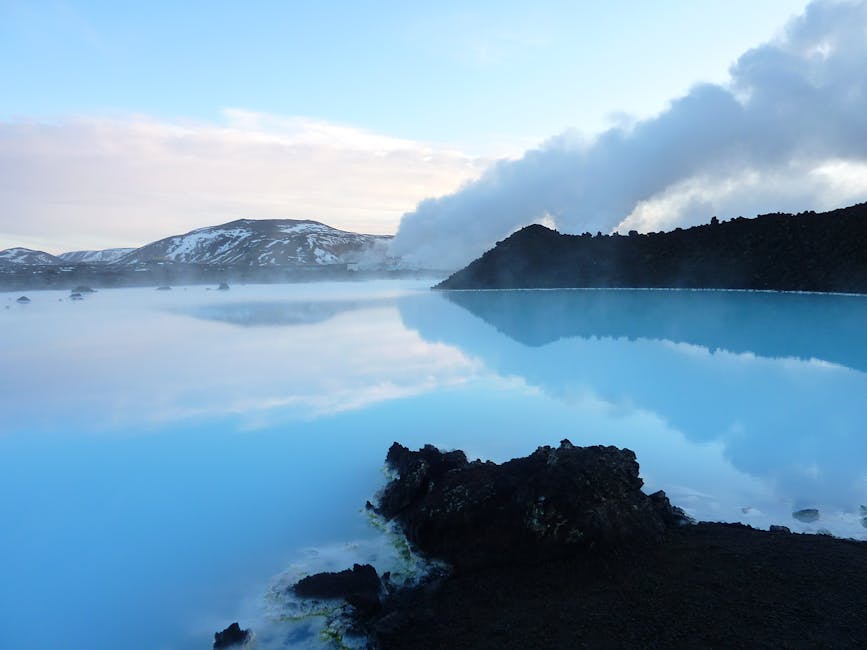
The original. Bláa lónið, on the Reykjanes peninsula, twenty minutes from Keflavík airport. You know the photo: white silica streaks on cheekbones, milky blue water, steam, lava field. That’s the Blue Lagoon and the photo doesn’t lie. Neither does the price tag. Comfort tickets start at around 11,990 ISK and the Premium and Retreat tiers run up to 230,000 ISK a night if you’re staying in the hotel.
I’ve written the deep-dive separately. If you’re trying to decide whether to do it, what to book, when to go, and how the eruptions on the Reykjanes peninsula affect access, head over to my Blue Lagoon guide. Short version: do it once, take the earliest morning slot you can get, skip the upgrades unless you really want a robe, and book three weeks ahead in summer.
Sky Lagoon
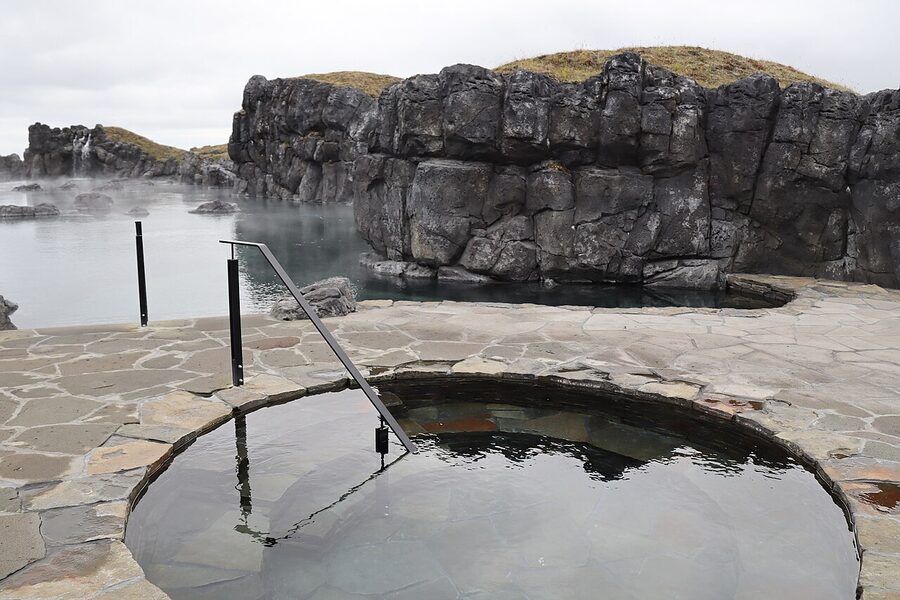
Sky Lagoon opened in 2021 in Kópavogur, the municipality that wraps around the south side of Reykjavík. It’s the closest serious lagoon to the city, about a 15-minute drive from the centre, and it’s where I send anyone asking me which spa lagoon to do.
The water is geothermally heated seawater, not freshwater, so it has a salt-water buoyancy you don’t get in the Blue Lagoon. The infinity edge looks straight out across Skerjafjörður towards Bessastaðir (where the President of Iceland lives) and the Snæfellsnes peninsula in the distance. On a clear winter night you can sometimes see the aurora over the bay from chest-deep in 38°C water. That alone is worth the ticket.
The differentiator from the Blue Lagoon is the Skjól ritual. It’s a seven-step circuit that comes included with every ticket and you do it in order:
- Soak in the lagoon to warm up
- Cold plunge in a stone bowl, around 5°C, count to ten and get out
- Sauna, looking through a wall of glass at the Atlantic
- Cold mist shower
- Body scrub (a salt and almond oil mix they hand you, you do it yourself)
- Steam room
- Rinse, then back to the lagoon
It takes about 90 minutes to do properly. By step four most people have stopped checking their watch. By step seven you’re slightly altered, in a good way. The Blue Lagoon doesn’t have anything close to this and that’s what tips it for me.
Pricing in 2026. Comfort 8,990 ISK (lagoon plus ritual, towel rental extra). Pure 12,990 ISK (lagoon, ritual, private changing, towel, robe). Sér 19,990 ISK (Pure plus a private suite). Open from 9am, last entry usually 8pm in winter and 9pm in summer. Pre-book on skylagoon.com; weekend evening slots fill out a week ahead in peak season.
The catch: the lagoon is much smaller than the Blue Lagoon, so it can feel a touch crowded at peak slots. Aim for the very first slot of the day, around 9am, or after 7pm. Both are noticeably calmer.
Forest Lagoon
The youngest of the three big spa lagoons, opened in 2022 just outside Akureyri in north Iceland. Birch and pine forest setting (rare in a country where 95% of the original woodland was felled centuries ago for ship-building). Two pools, a cold plunge, a sauna with a window onto the trees, a swim-up bar. About 7,500 ISK in low season, 8,500 ISK at peak.
Smaller and quieter than the southern lagoons because most foreign visitors never get this far north. If you’re driving the Ring Road or basing yourself in Akureyri for a few days, go. Sunset over the fjord from the warm pool in late September is one of the better images you’ll bring home from the trip. Book direct on forestlagoon.is.
The mid-range geothermal complexes
This is where the value is. Real geothermal water, smaller crowds, prices that don’t make you wince, and most of them are positioned at points along common driving routes so you can fit one in between attractions.
Secret Lagoon, Flúðir
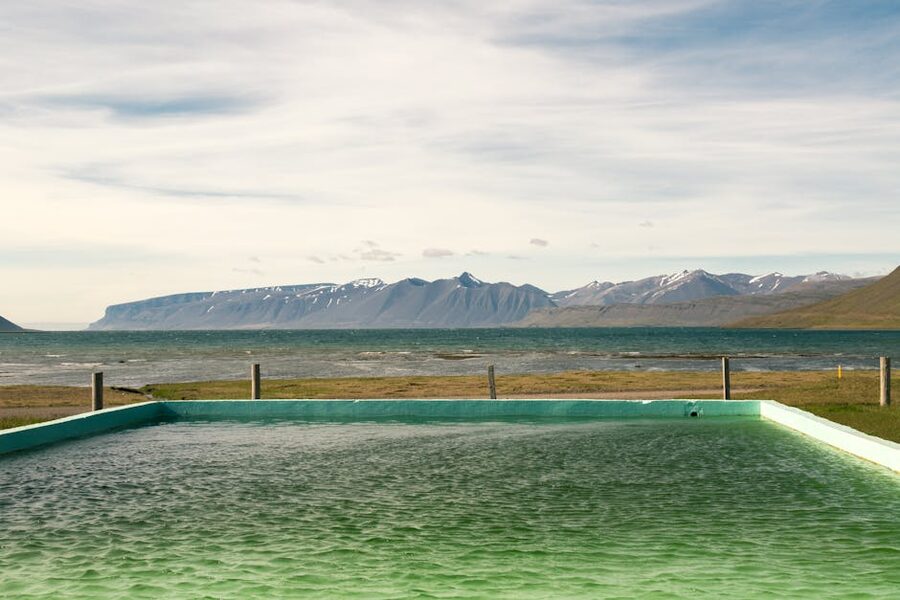
Gamla Laugin, the “Old Pool,” dates back to 1891. It’s the oldest swimming pool in Iceland, and unlike the Blue Lagoon it’s not a byproduct of anything; the water comes straight out of the ground in the surrounding geothermal area. There’s a small Strokkur-style geyser called Vaðmálahver that erupts every five or six minutes a few metres from the pool edge, and you can watch it from the water.
The pool itself is a simple rectangle, maybe 25 metres long, ringed with rough stone walls. It feels like what it is: a piece of late-19th-century Icelandic infrastructure that’s still in use. The temperature sits around 38 to 40°C. There are pool noodles available which sounds silly but is genuinely useful when you want to float for an hour without thinking about it.
About 4,200 ISK for an adult, and it sits 10 minutes off the Golden Circle route between Geysir and Selfoss. If you’re driving the circle, go in the late afternoon as the bus tours leave. Pre-book on secretlagoon.is for peak summer evenings; the rest of the year you can usually walk up.
This is the local-feeling pick. Of all the commercial spas, this is the one that feels least commercial.
Laugarvatn Fontana
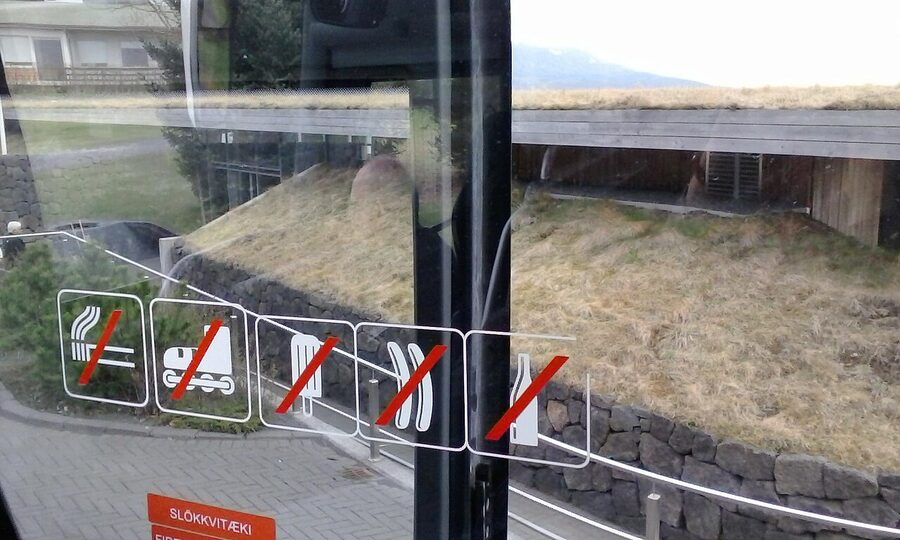
On the shore of Lake Laugarvatn, on the Golden Circle. Three different steam baths heated by a hot spring that bubbles up directly under the floor planks (you hear it the whole time you’re in there), several outdoor pools at varying temperatures, a sauna, and a jetty straight into the lake for the cold plunge crowd.
What really sets it apart is the rye bread tour. They bury a pot of rúgbrauð dough in the hot earth on the lakeshore in the morning and dig it out the next day, perfectly steamed. You can join the daily 11:30 or 14:30 dig and taste the bread with butter and smoked trout. Touristy, yes, but it’s also the actual traditional Icelandic way of baking that bread, and the bread is genuinely good.
Around 5,200 ISK for the bath complex, 1,950 ISK extra for the bread tour. Open until 9pm in winter, 11pm in summer. Worth pairing with Þingvellir and the Geysir area for a full Golden Circle day. Book on fontana.is.
Mývatn Nature Baths
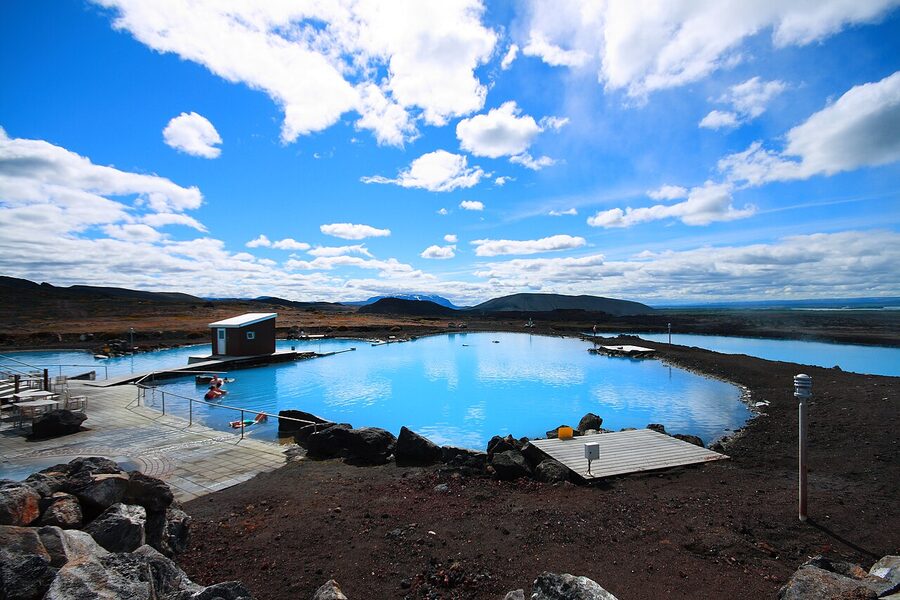
Often called the Blue Lagoon of the north. Same milky-blue mineral water, similar silica content, much smaller crowd, smaller price tag. About 6,990 ISK for an adult ticket, often half-empty even in summer because most travellers never make it past Akureyri.
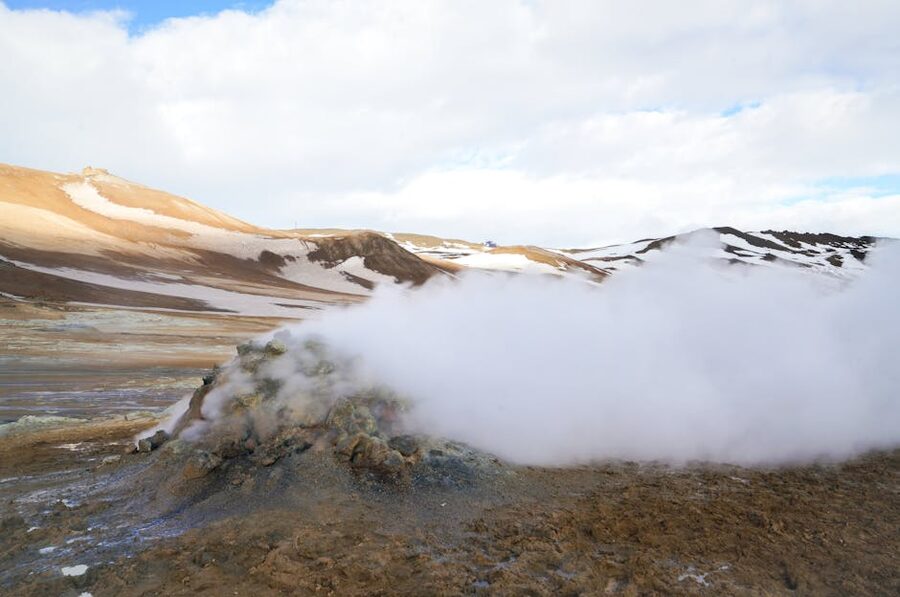
Sits a few hundred metres from the Hverir geothermal area where boiling mud pools and steaming fumaroles dot the landscape (worth ten minutes of your time, smelly, free). The lagoon itself looks across Lake Mývatn and the Krafla volcanic system. The water is a touch milder than the Blue Lagoon’s: fewer mineral particulates, less of the silica-mask thing, easier on hair.
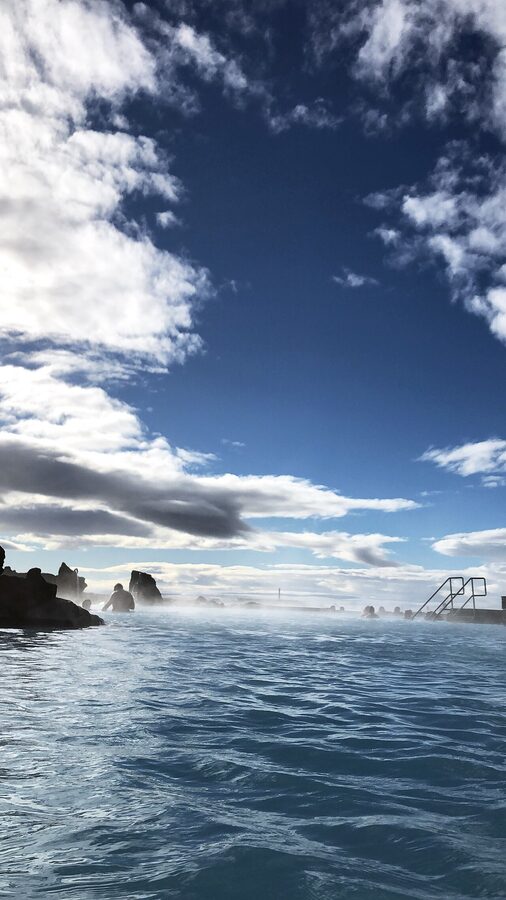
Open daily 12:00 to 22:00 in summer, shorter hours in winter. The cafe is decent, do the lagoon and grab a soup. Book at myvatnnaturebaths.is. If you’re driving the Ring Road and you have to choose between this and the Blue Lagoon, do this one. You’ll save money and you’ll have more space in the water.
GeoSea, Húsavík
Up on the cliff above Skjálfandi bay in Húsavík, looking out at exactly the water where the humpback whales come up to breathe in summer. The water in the pools is geothermally heated seawater pumped from a defunct dairy borehole; it has a different mineral profile from the freshwater spas and a noticeable salt sting if you have any cuts.
About 6,500 ISK to enter, open until 21:00 most of the year. Stay an hour, soak, watch for whale spouts. Pair with a morning whale-watching trip from the harbour 200 metres downhill. geoseabaths.is.
Krauma, Borgarfjörður
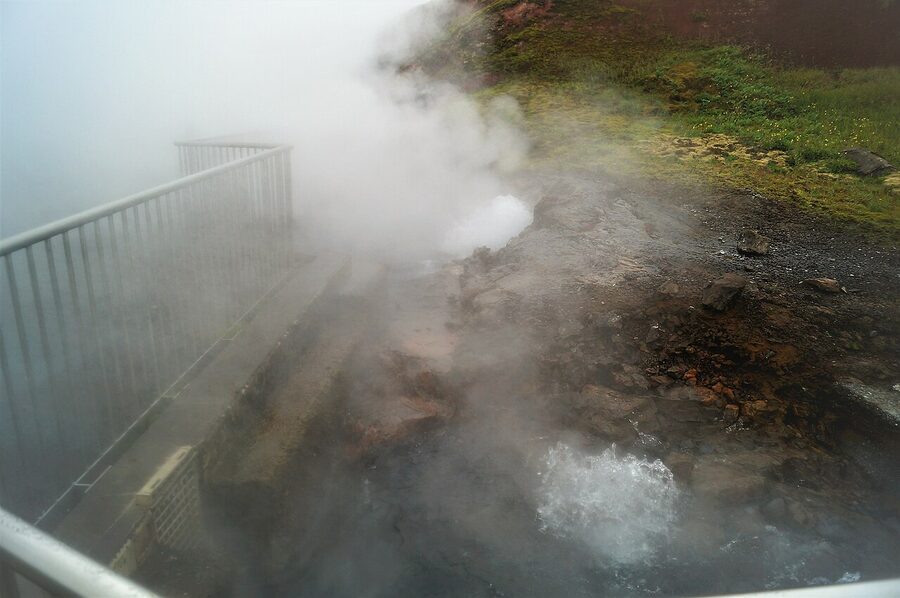
Built right next to Deildartunguhver, the most powerful hot spring in Europe (180 litres per second of nearly-boiling water). The pools at Krauma mix that scalding water with cold meltwater from the Ok glacier to get something you can actually sit in. Five hot pools at different temperatures, one cold pool, two saunas, a relaxation room with a fireplace.
About 6,800 ISK. The setting is rural and quiet, you’ll often have a pool nearly to yourself. It’s a 90-minute drive from Reykjavík and pairs naturally with a stop at the Hraunfossar waterfalls 20 minutes further on. krauma.is.
Vök Baths, east Iceland
This one’s only worth the detour if you’re already in east Iceland. Vök sits on Lake Urriðavatn near Egilsstaðir; the pools are floating wooden platforms anchored on the lake itself. You can hop straight from the 38°C pool into the 4°C lake and back, no walking required.
About 7,400 ISK. Far fewer foreign visitors out here, mostly locals from Egilsstaðir and a handful of Ring Road drivers who timed it right. vokbaths.is.
Hvammsvík
Newer, opened 2022, on a farm at the head of Hvalfjörður about 45 minutes north of Reykjavík. Eight pools at varying temperatures spread along a rocky shore, some literally washed by the tide so the temperature changes through the day. Less designed than the big spas; it feels more like a clever local farm operation that worked. About 7,500 ISK. Book ahead in summer.
Public pools, the local way
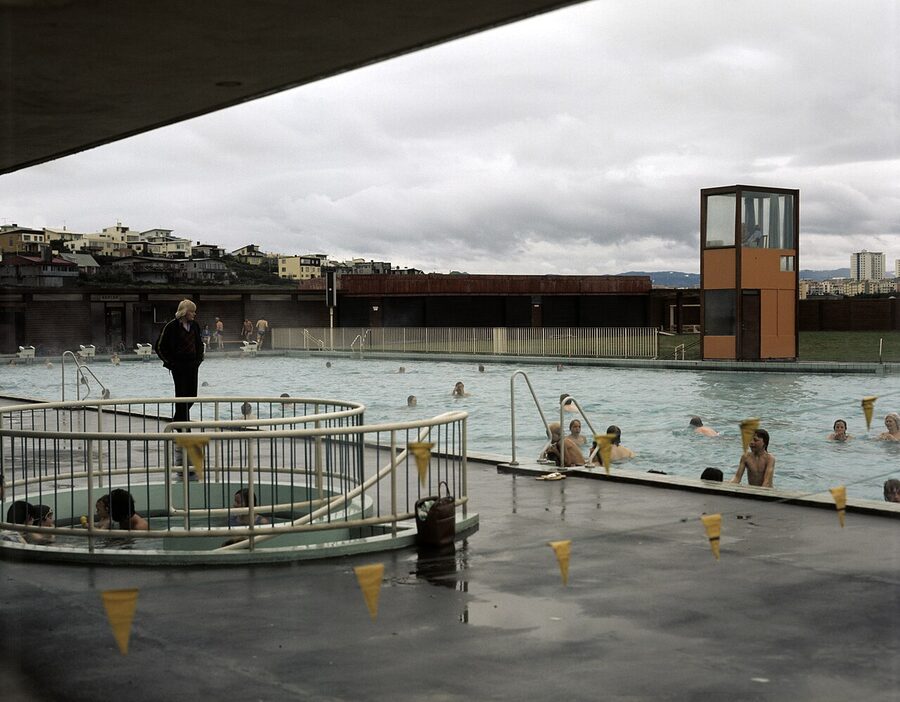
If you only do one Iceland-water thing, do this. Every village from Reykjavík out to the smallest fishing port in the Westfjords has a sundlaug, a public swimming pool, with geothermally heated water, a couple of hot pots at varying temperatures, sometimes a steam room and a cold plunge. Adult entry is 1,300 to 1,500 ISK and the water quality is no different from the 13,000 ISK lagoons. The country has roughly one pool for every 2,000 people. We’re a nation of swimmers.
This is where the social life of Iceland actually plays out. People come before work, after work, on Saturday morning with their kids, on Sunday afternoon with their dad. Conversations get started in the 40°C pot. The mayor of Reykjavík has been spotted in the Laugardalslaug hot pot in his swim trunks discussing council business with a stranger. This isn’t a tourist add-on. It’s the real thing.
Pool etiquette, the bit foreigners get wrong
You shower, fully naked, with soap, before you put a swimsuit on and enter the pool. There are signs in every changing room, in English, with a diagram showing which body parts to scrub (head, armpits, crotch, feet). This is the law and lifeguards do check; they will send you back if you’ve come out with dry hair. There are no private cubicles in the changing rooms or the shower area. Everyone is naked, nobody is looking, nobody cares.
This is the moment a lot of foreigners want to negotiate. Don’t. Icelanders genuinely don’t bat an eye, and the rule exists because we don’t chlorinate the pool water as heavily as you might be used to. Public health depends on people not bringing a layer of suncream and old sweat into the pool with them.
After the shower, swim. Or get straight into a hot pot, the small round tubs along the pool edge at 38, 40, and 42°C. Move between the temperatures as you like. Some pools have a 4°C plunge, which is genuinely life-affirming when you’ve cooked in the 42°C pot for a few minutes. A few rounds of hot-cold-hot and you’ll feel ten years younger walking out.
Phones aren’t allowed in changing rooms, full stop. In the pool area itself, some pools allow them, some don’t. Ask the front desk. The Blue Lagoon famously doesn’t, the local pools mostly do.
Reykjavík: the four pools to know
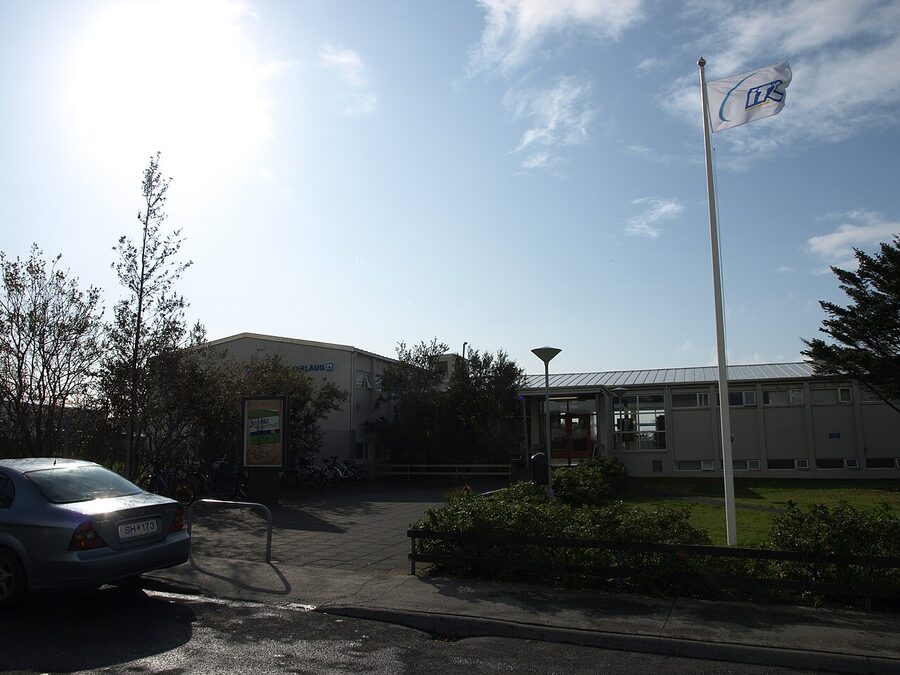
Laugardalslaug. The biggest. 50m outdoor lap pool, indoor 25m pool, four hot pots, a steam room, a waterslide, a children’s pool. 1,340 ISK adults, free for under-18s. Sundlaugavegur 30, fifteen-minute bus ride from downtown on route 14, or a half-hour walk through Laugardalur valley. Open 06:30 to 22:00 weekdays, slightly shorter on weekends.
Vesturbæjarlaug. The neighbourhood one. Smaller, in a residential district on the west side of town. Same price. This is where I’d send anyone who wants the local experience without bumping into other tourists. Open from 06:30 weekdays.
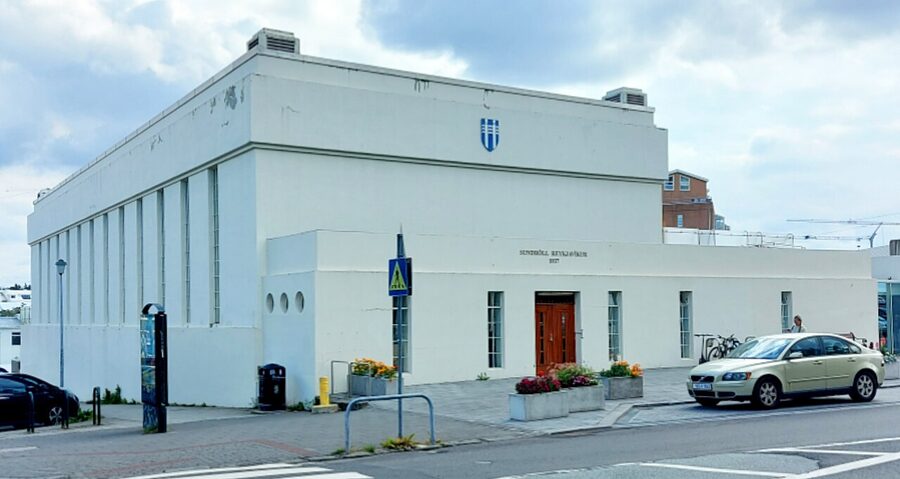
Sundhöllin. The old downtown pool, opened 1937, designed by Guðjón Samúelsson (same architect as Hallgrímskirkja and the Supreme Court). The original indoor 25m pool was the only public pool in Reykjavík until the 1960s. A new outdoor extension opened in 2017 with rooftop hot pots that look out over the city. The most architecturally interesting pool in Iceland and a five-minute walk from the church. If you’re staying downtown and want a one-hour local experience, this is the easy answer.
Árbæjarlaug. Suburban family pool out in the eastern district, more slides and kid pools, less for the lap-swimming crowd. Worth knowing about if you’re travelling with kids who need to burn off three hours.
Outside Reykjavík
Akureyri Sundlaug. Genuinely one of the best public pools in the country. Big outdoor 25m pool, three hot pots, a 50m lap pool, two waterslides, a kids’ splash area, and the local touch of looking out across the Eyjafjörður on a clear day. About 1,400 ISK.
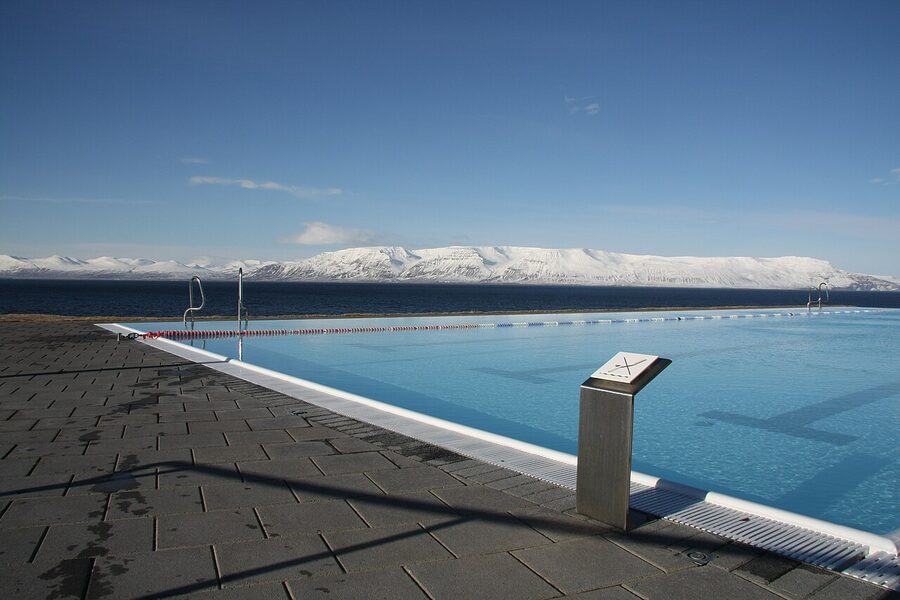
Hofsós. A small village pool on the north coast that has somehow ended up on the front of every Iceland coffee-table book. The infinity edge looks straight out at Drangey island in Skagafjörður and the pool was designed by the same architect as the Blue Lagoon (Sigríður Sigþórsdóttir). About 1,000 ISK. If you’re driving the north coast it’s a genuine reason to take a small detour.
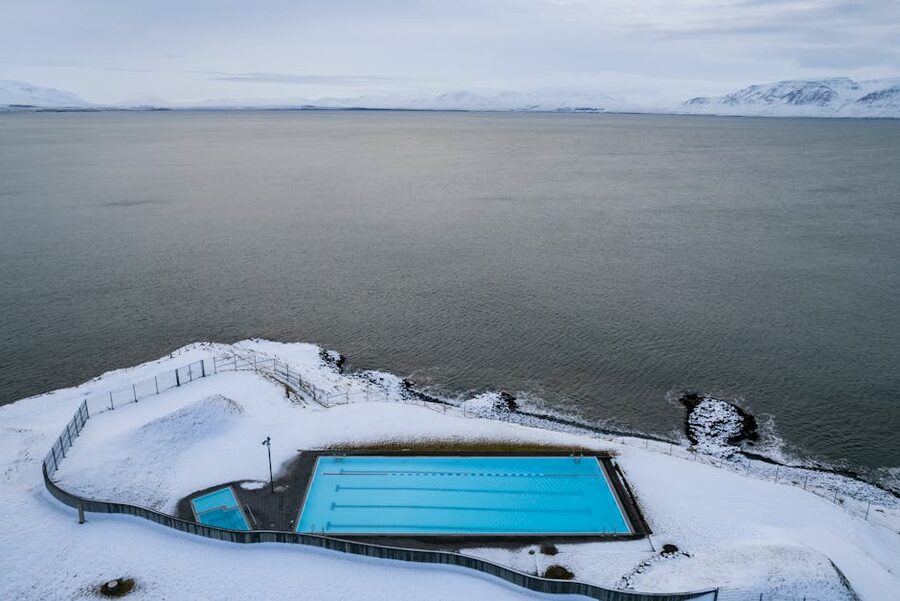
Selfoss. Big, family-oriented, three slides, a wading pool, hot and cold tubs, sauna, steam room. The default if you’re driving the south coast and need a swim before continuing.
Krossnes (Strandir, north Westfjords). Often called the most beautiful pool in Iceland. We’ll get to that one in the wild section because it sits at the very end of a road most people never drive.
Wild hot springs
This is the section visitors plan their trips around. The wild soaks are free or near-free, they sit in landscapes you couldn’t invent, and there’s nothing between you and the sky except sometimes a wooden boardwalk and a changing shed. Here’s the order I’d do them in if you’ve got time.
Reykjadalur, the hot river
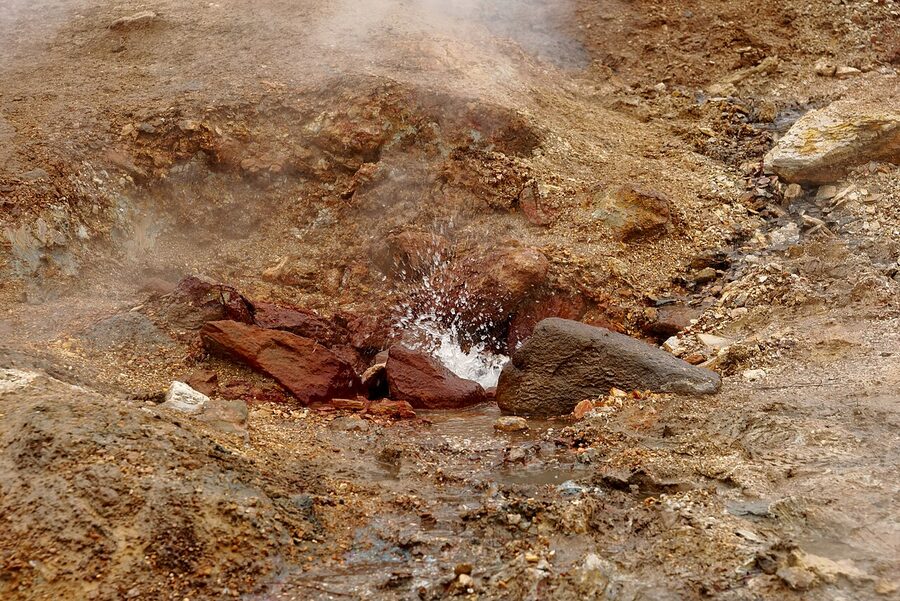
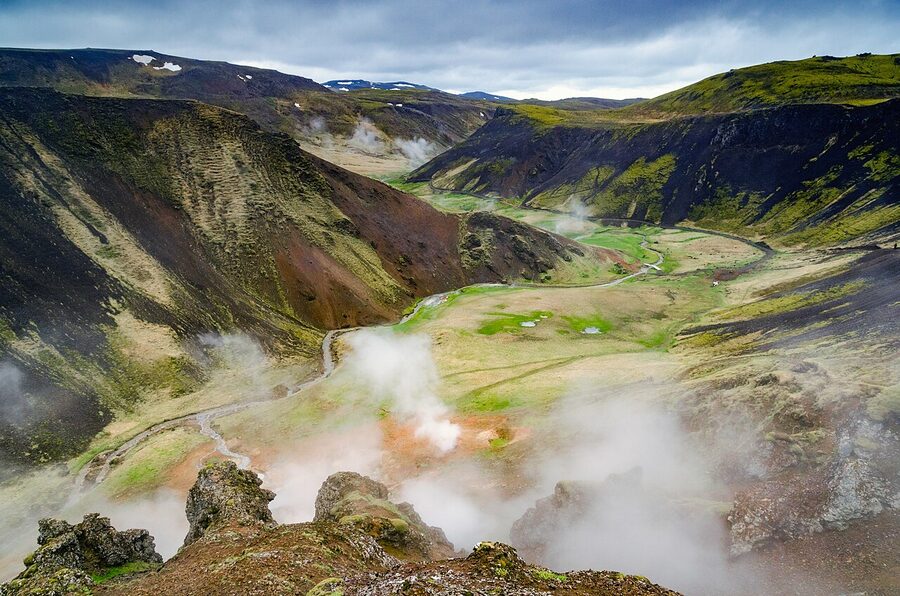
The most accessible wild hot spring in the country and a genuinely spectacular hike to get there. Trailhead is at Hveragerði, a 45-minute drive from Reykjavík on Route 1. From the parking lot it’s about 3 kilometres uphill, 200 metres of elevation, takes most people 60 to 75 minutes if they’re not rushing.
The trail climbs through the Hengill geothermal area, with steam vents on either side and the occasional bubbling mud pot a few feet off the path (don’t step off, the ground is boiling). You pass a small waterfall, ridge over the saddle, and drop down into Reykjadalur, “Steam Valley.” The hot river is exactly that: a stream of bath-temperature water flowing down the valley. The further upstream you go, the hotter it gets. Walk the bank until you find a spot at the temperature you want, lie down with your shoulders under, head out.
There are wooden boardwalks along the bathing stretch and basic three-walled changing huts. No toilets at the river itself, no running water, no shop. Take everything in, take everything out.
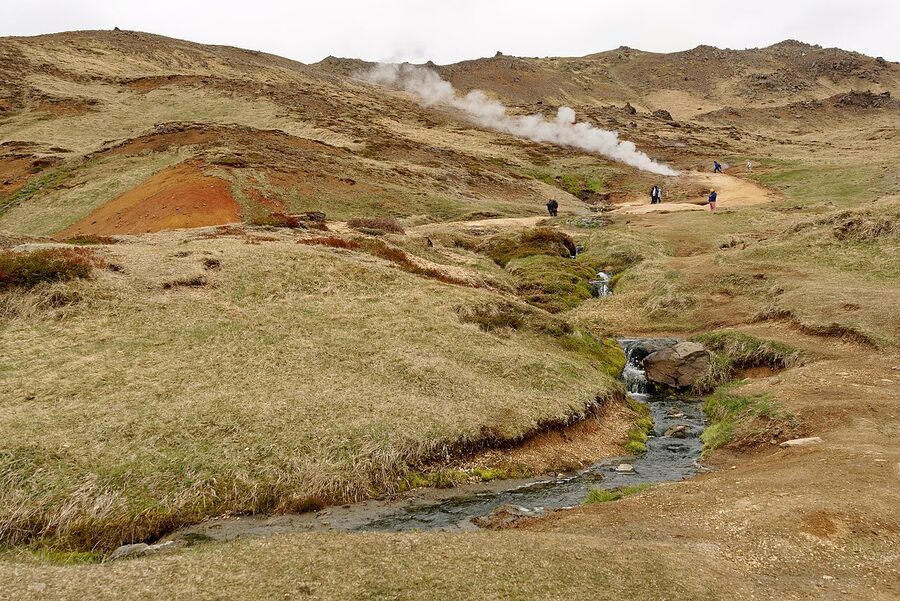
When to go. May through September is the easy season. October to April the trail can be ice or snow and the wind funnels through the valley; the bathing is still possible (the river is hot all year) but the hike becomes a different proposition. Check the day’s forecast on vedur.is.
Free. Parking at the lower lot is around 1,000 ISK; pay at the kiosk or via the app at the trailhead. Open 24/7. Best time of day: late afternoon, after the day-trip buses have left, before the trail goes dark.
Landmannalaugar
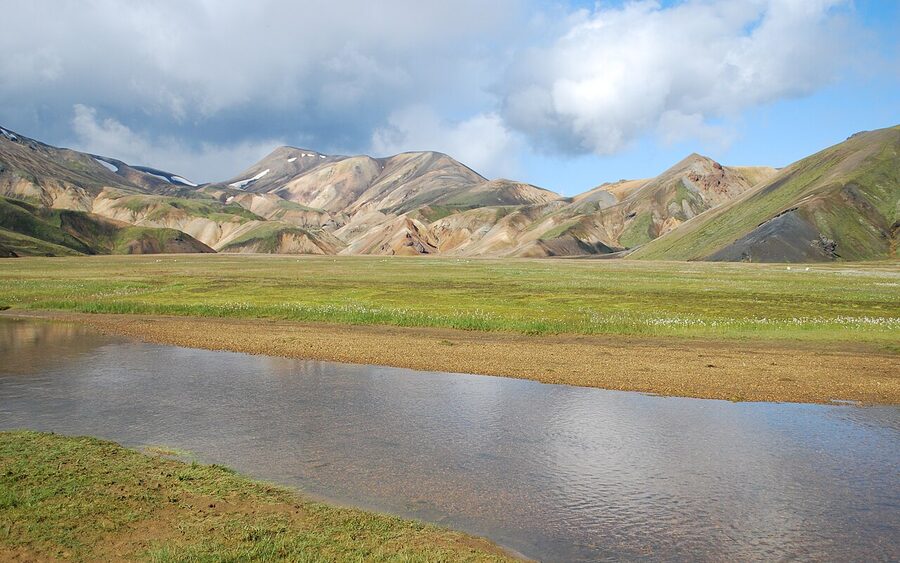
Up in the highlands inside Fjallabak Nature Reserve, surrounded by the rhyolite mountains you’ve seen on every Iceland poster. The bathing area is a hot stream that’s been dammed with rocks to form natural pools at the base of the mountains. Free to enter, 600 ISK to use the changing facilities and toilets at the basecamp.
The hot pool itself is the warm-down at the end of a long hiking day. The Laugavegur trek (the famous four-day hut-to-hut highland walk to Þórsmörk) starts here, and the pool at the end of day one or the beginning of day five is the social hub of the campsite. Day-trippers also use it; either way it’s a different temperature in different spots, hottest closest to the inflow, cooler downstream. Pool noodles and rocks help you find a spot you can sit in for an hour.
Access. F-roads only, mid-June to mid-September. F208 from the south, F26 across the highlands. River crossings on the way in. You need a 4WD with high clearance, real off-road experience, and current information on river depth from the rangers (call ahead or check safetravel.is). If you’re not confident, take the daily Reykjavík Excursions or Trex highland bus from BSÍ. They’re proper modified 4WD buses and they make the river crossings look easy.
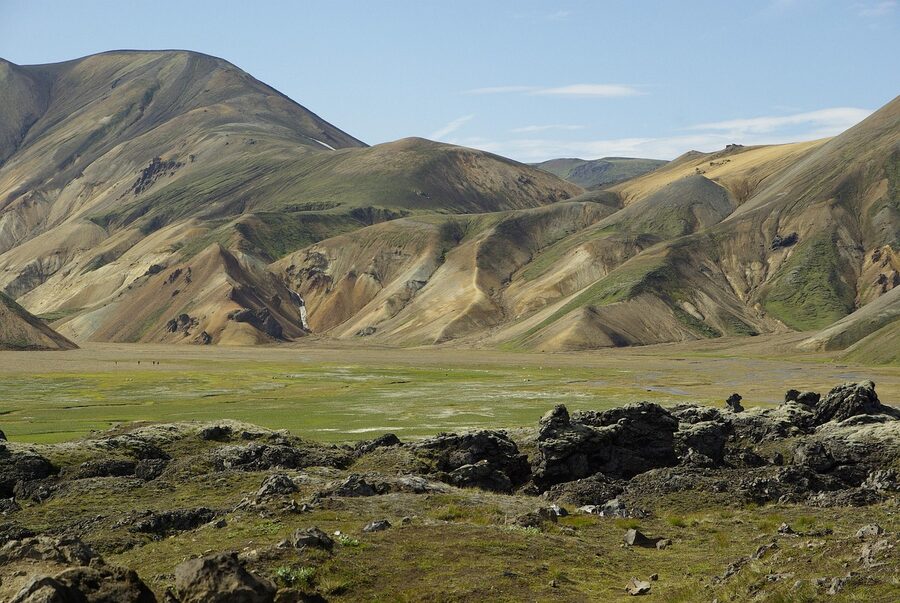
Allow at least 8 hours for a day trip from Reykjavík (the drive itself is 4 hours each way on F-roads). Better as the start or end of a 2 to 4 day highland trip with a night in the basecamp hut (book months ahead at fi.is).
Heads up on the bathing: there are occasional warnings about cercarial dermatitis, “swimmer’s itch”, in the pool. It’s a parasite carried by freshwater snails. Most people are fine. If you have very sensitive skin, towel off thoroughly and rinse at the basecamp showers afterwards.
Krossneslaug
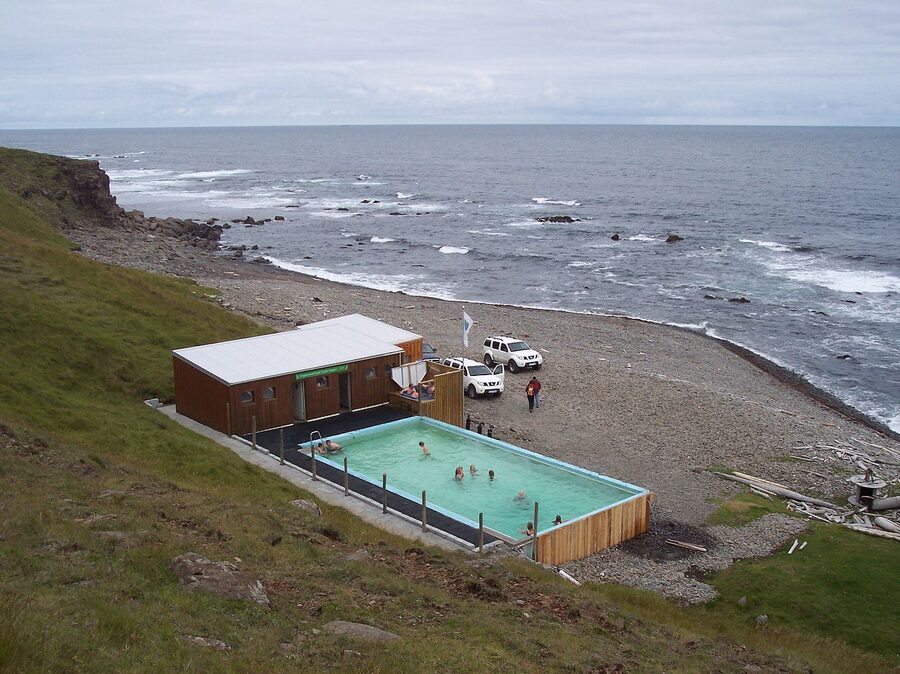
This is the one I push hardest if you’re driving the Westfjords. Krossneslaug sits at the very end of Road 643 on the Strandir coast in the north-east Westfjords, four hours of slow driving from Hólmavík, three of which are on gravel. There’s nothing past it: just open Atlantic and, on a clear day, the curve of the bay all the way back south.
The pool itself is a simple concrete rectangle, maybe 12 by 6 metres, fed by a hot spring running down the cliff. Around 38°C. There’s a smaller hot pot at 40°C. A wooden changing hut. A donation box, around 1,000 ISK. That’s the whole facility.
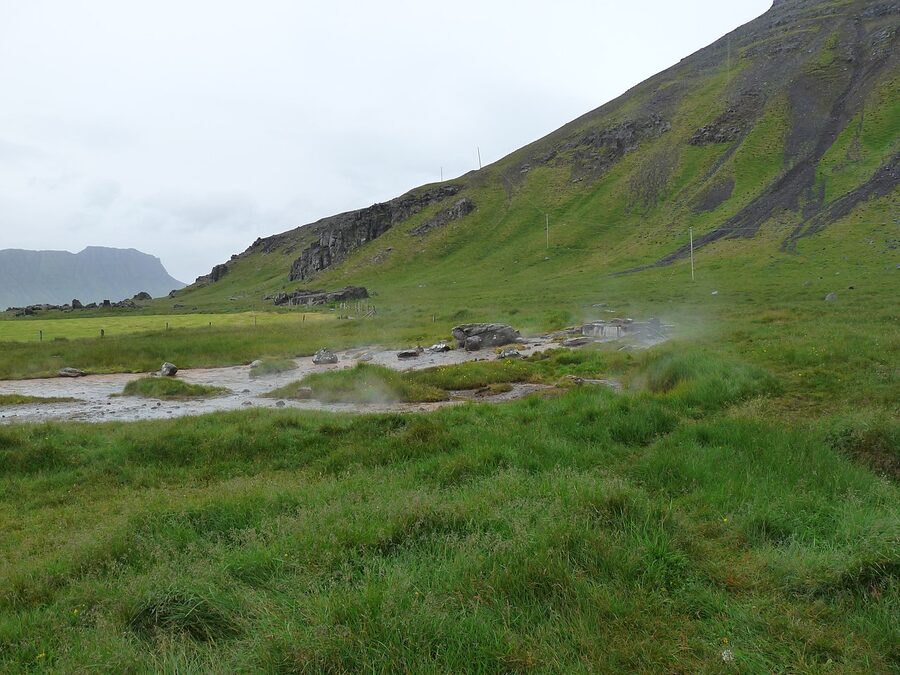
It’s the setting that makes it. You’re chest-deep in hot water, snow on the cliff behind you in early summer, the surf 20 metres away, and there’s no roof, no other building in sight, and probably nobody else in the pool. I’ve sat there for an hour at 11 at night in June with the midnight sun going golden on the water. It’s the sort of place you don’t really tell people about because you want it to stay quiet.
Open all year, never closed. Bring everything: towel, swimsuit, water, change for the donation box. There’s a small campsite at Krossnes itself if you want to sleep within walking distance of the pool, plus a fishing village (Norðurfjörður) ten minutes back down the road with a guesthouse and a tiny shop.
Grettislaug
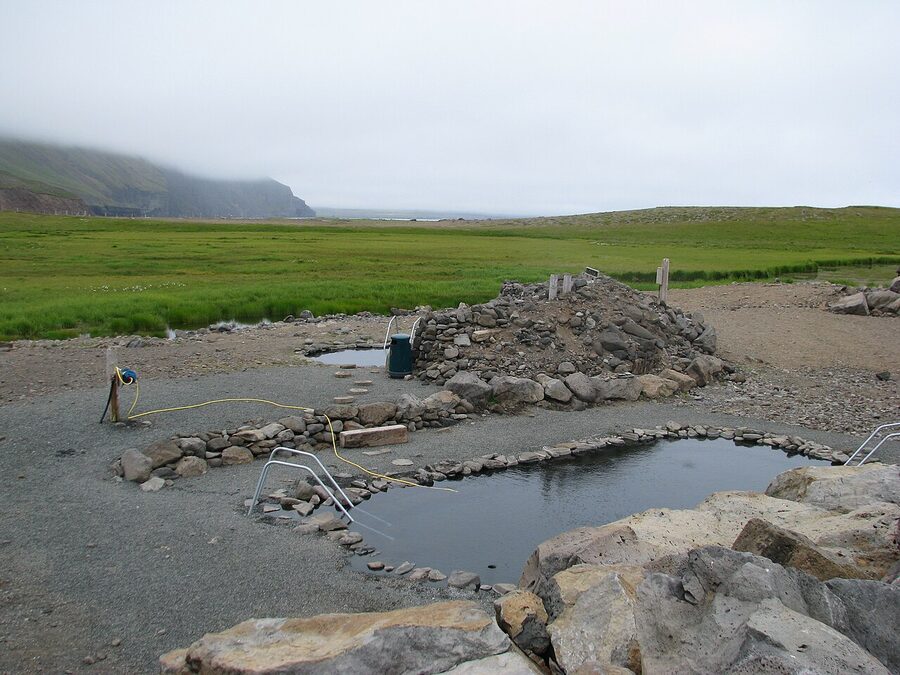
On the Reykir farm at the tip of the Skagi peninsula in north Iceland, looking across Skagafjörður to Drangey island. Two stone pools fed by hot springs, around 36 to 39°C. The name comes from Grettir Ásmundarson, the great medieval outlaw of Grettis saga, who is said to have warmed up here after swimming the seven kilometres from Drangey on a winter night to fetch fire from the mainland. Whether or not the story is literal, the pool is much older than the tourism industry; people have been bathing here for centuries.
Around 1,500 ISK to enter, paid at the campsite hut beside the pool. Open mid-May to early September; the road in (Road 748 from Sauðárkrókur) is rough but doable in any car in summer, closed in winter. If you’ve made the drive out to Hofsós for the pool, Grettislaug is worth the extra forty minutes of gravel road on the way back.
Hrunalaug
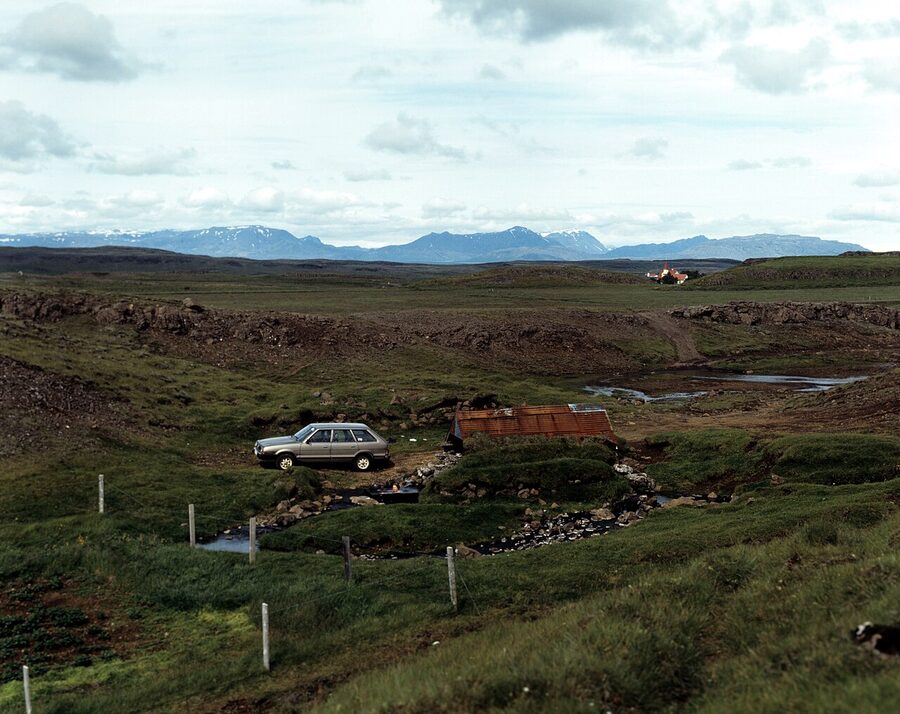
Six kilometres outside Flúðir, on a private farm. Three small stone pools, the oldest from 1890, originally used by the farmer to wash sheep wool. The biggest pool fits maybe four people, the others two each. There’s a small wooden bathhouse for changing.
1,500 ISK per person, paid into a box at the parking lot (the farmer trusts you). Best soaked in midweek or in the early morning before the Golden Circle traffic finds it. There’s no booking system; if there’s already a group in the pool you wait your turn or move on. It’s tiny, it’s rural, and it has the most quietly Icelandic feel of any spring on this list.
Hveravellir
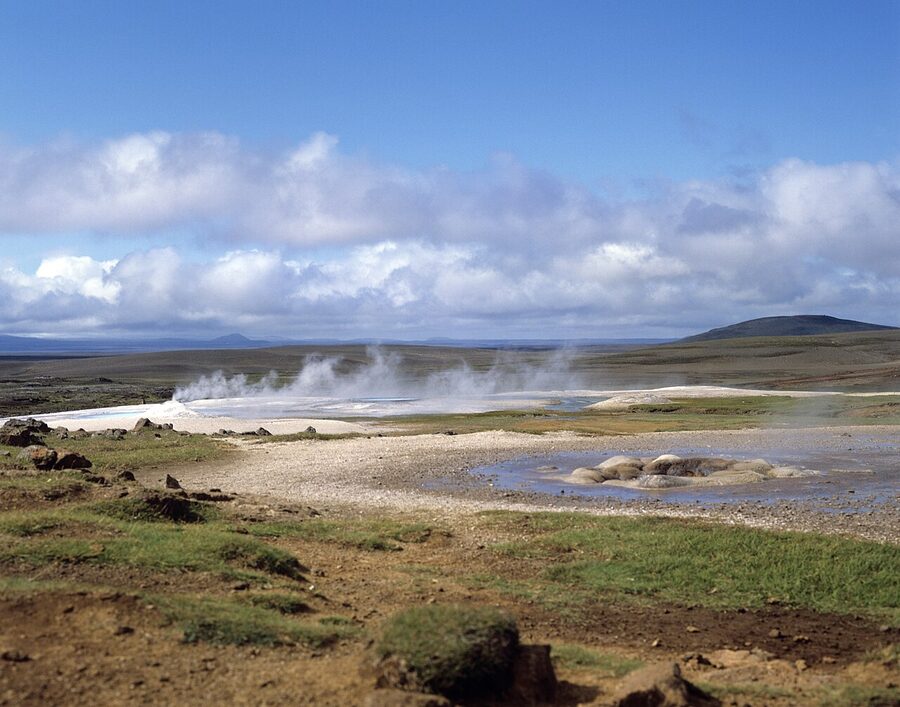
Halfway across the central highlands on the Kjölur route (F35), between Hofsjökull and Langjökull glaciers. A small geothermal area with steaming fumaroles, sintered silica deposits, and a single bathing pool where you sit in 38°C water with the highland sky overhead. The 18th-century outlaw Eyvindur lived in a hut here for years; you can see the foundations five minutes from the pool.
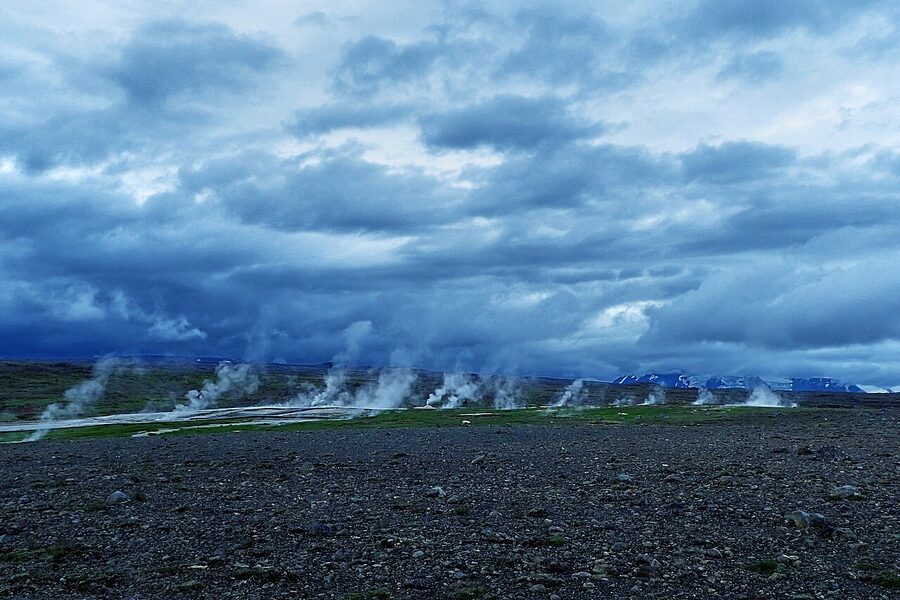
A small entry fee around 1,500 ISK. There’s a hostel and campsite on site (book ahead at hveravellir.is). F35 is open mid-June to mid-September; it doesn’t need a 4WD if you’re driving carefully (it’s a graded gravel road, not a full F-road), but check road.is for daily conditions.
Hellulaug
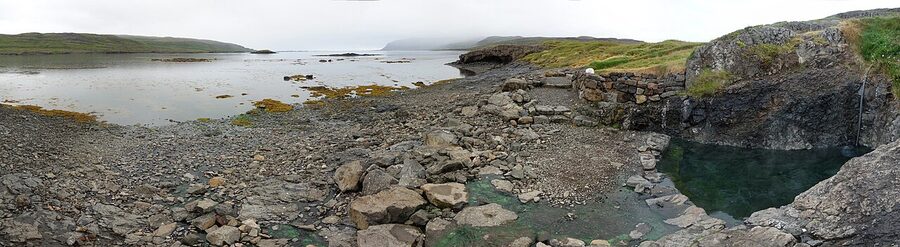
On the southern coast of the Westfjords, just off Route 60 near Flókalundur. A natural rocky pool a few metres above the shoreline, looking out across Vatnsfjörður towards the snow on the headland opposite. About 38°C in the main pool, no changing facilities (bring a towel and use the rocks), donation box at the road.
Five-minute walk from the parking lot. The Flókalundur campsite and a small hotel sit a short walk away if you want a cooked meal afterwards. Less crowded than Krossneslaug because almost everyone driving past is heading to the bird cliffs at Látrabjarg or the beach at Rauðasandur and doesn’t realise this is here.
Strútslaug, the off-trail one
This is the one for people who think Reykjadalur is too crowded. Strútslaug sits in the central highlands south-east of Mýrdalsjökull, accessible by an 8-hour return hike from the Strútur mountain hut on F261. No road to the pool itself. No sign. No facilities. Just a small natural rock pool in a moor with a view of the glaciers.
You need to know what you’re doing in the highlands and go in summer (July, August, early September only) with proper navigation, GPS, and weather margin. Don’t even think about it in winter or fog. Worth it for the right person, which is not most people.
Safety, gear, and the things that catch tourists out
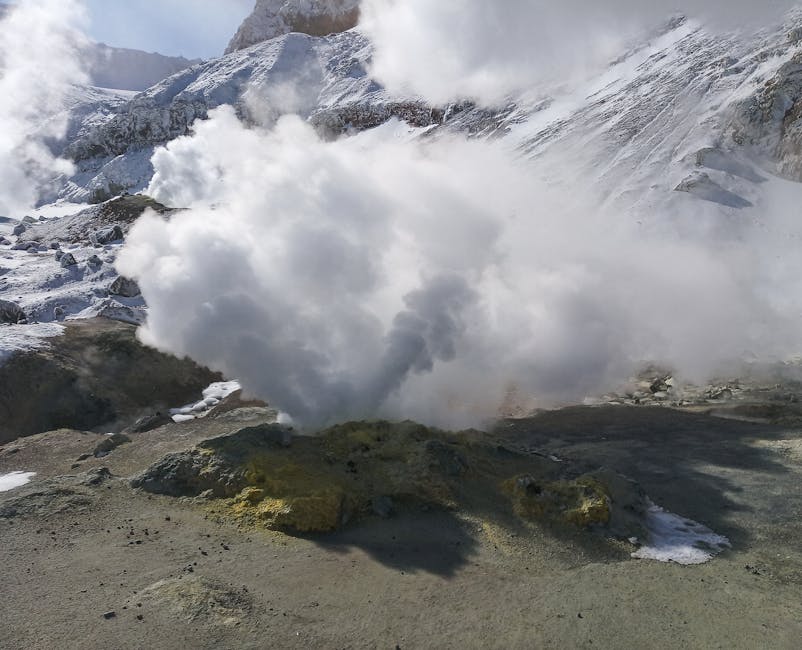
Wild hot springs aren’t supervised. The basics:
- Test the temperature with the back of your hand before you put any other body part in. Some natural springs run at 60°C or hotter, especially closer to the inflow. People have been seriously burned by walking straight into a steaming pool without checking.
- Don’t go alone in the highlands. Phone signal is patchy, the weather can flip from clear to whiteout in 90 minutes, and there are no rangers nearby. Either go with a partner or join a guided trip.
- Stagnant pools can carry bacteria. The big-volume springs flush themselves regularly and are fine. Small still pools can host things you don’t want in your eyes. Check for posted signs and don’t put your head under at any wild spring.
- The trail to Reykjadalur and the F-roads to Landmannalaugar can close in winter. Don’t trust last summer’s blog post. Check vedur.is for weather and road.is for road status before you set out.
- Leave it cleaner than you found it. No litter, no soap in the water, no bottles in the pool, no glass anywhere. Several wild pools have been temporarily closed in recent years because of trash piling up. Don’t be the visitor who ruins it for the next person.
What to bring
- Quick-dry travel towel. A hotel towel takes a day to dry in a damp van and you’ll regret bringing one.
- Swimsuit you don’t mind ageing. The mineral water at Blue Lagoon and Sky Lagoon will gently bleach a black swimsuit over a few visits. Wear something you don’t love.
- Hair conditioner. Especially for the silica-rich water at Blue Lagoon and Mývatn. Tie hair up; the marketing photos with hair down in the water are a bad idea, you’ll come out with the texture of straw. Apply conditioner before entering, leave it in.
- Reusable water bottle. You’ll dehydrate fast in 38°C water. Tap water in Iceland is excellent, fill up at the pool’s drinking fountain.
- Cash for the small wild ones. Donation boxes don’t take cards. 1,000 to 2,000 ISK per pool covers most.
- Waterproof phone case if you want photos in the water. Allowed at most public pools, banned at Blue Lagoon. Don’t drop your phone in a silica pool, it will not survive.
- Flip-flops for the changing-room walk. Some pool floors get cold in winter.
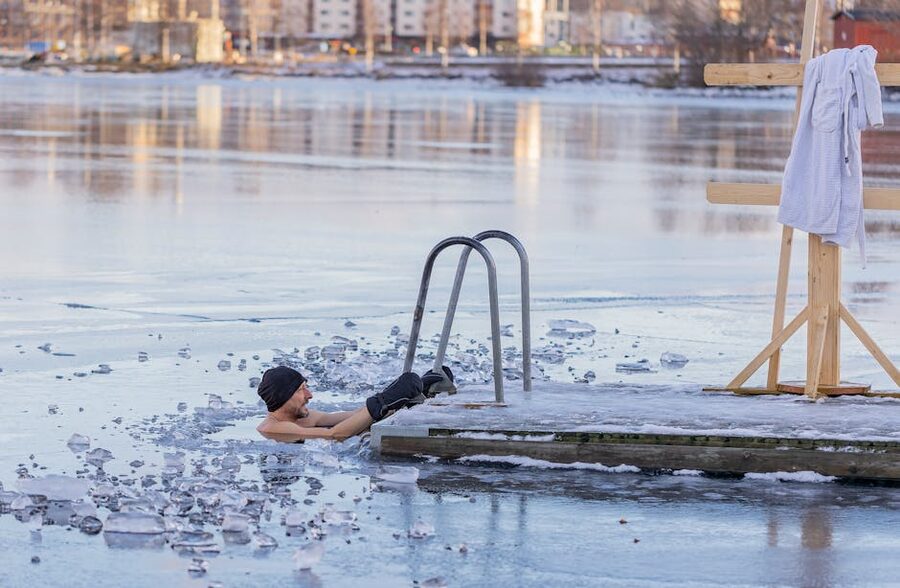
What it costs and what you actually get for the money
Rough breakdown so you can plan:
- Cheapest local feel: Reykjadalur (free + 1,000 ISK parking) plus a downtown public pool (1,340 ISK). Total under 3,000 ISK per person and you’ve done two of the most distinctive Iceland-water experiences in the country.
- Mid-range: Secret Lagoon 4,200 ISK, Laugarvatn Fontana 5,200 ISK, Mývatn Nature Baths 6,990 ISK, Krauma 6,800 ISK, GeoSea 6,500 ISK. Pick one if you want a designed experience without paying spa-lagoon prices.
- Splurge: Sky Lagoon Pure 12,990 ISK, Blue Lagoon Comfort from 11,990 ISK, Forest Lagoon 8,500 ISK. Splurge once on the whole trip, not three times.
The maths I run for friends: if you’ve got 25,000 ISK to spend on hot water across a full week, the strongest split is 13,000 ISK on Sky Lagoon (one big experience), 4,200 ISK on Secret Lagoon (one mid-range with character), 1,340 ISK on Sundhöllin (one downtown public pool), and the rest on a free Reykjadalur day. You’ve done all four categories and you’ve spent less than the price of one Premium Blue Lagoon ticket.
Day-trip combinations that work
A few combos I’ve tested and recommend:
The full hot-springs day from Reykjavík. Drive to Reykjadalur in the morning (45 minutes), hike up, soak for an hour, hike down (so 4 hours total). Drive back to Sky Lagoon for an evening slot, do the seven-step ritual at sunset. Eat in Reykjavík. Total cost around 18,000 ISK including fuel and parking; total time about 11 hours. This is the day I’d plan if you only have one day for hot water.
The Golden Circle plus. Þingvellir, Geysir, Gullfoss, then either Secret Lagoon at Flúðir (mid-afternoon) or Laugarvatn Fontana (drive past the lake on your way back). Either makes a Golden Circle day better. Don’t try to do both.
Westfjords loop reward. Drive the Strandir coast, end up at Krossneslaug for an evening soak with the midnight sun in June. Sleep at the campsite or the Norðurfjörður guesthouse. Drive back the next day. This is one of the best 36-hour trips you can do in Iceland.
North Iceland triple. Akureyri Sundlaug for an early-morning swim with locals, drive to Mývatn for the Nature Baths in the afternoon, end at Forest Lagoon for sunset back near Akureyri. A full day, two organised baths and one community pool, around 17,000 ISK total.
If you’d rather have someone else handle the driving, search for hot-springs day trips on GetYourGuide or Viator; both list combination trips like Golden Circle + Secret Lagoon and Reykjadalur hike + Sky Lagoon. For a deeper picture of Reykjavík-based options see my guide to day tours from Reykjavík.
What I’d skip
A few things I see visitors do that I wouldn’t:
- Booking three spa lagoons in five days. They blur. By the third one you’re not having the experience, you’re just sitting in another paid pool. Pick one spa lagoon, pair it with one wild and one public.
- Pop-up hot tub Airbnb listings. Some hosts in the south have started charging extra for a hot tub on the deck. The water is heated by a normal home boiler and there’s nothing geothermal about it. Pay this if you want privacy, not if you want the Iceland thing.
- Wild hot springs in a snowstorm. Reykjadalur is a 6km round trip uphill in the open. Hellulaug is exposed. People underestimate Icelandic winter wind every year. If the forecast says yellow or red on vedur.is, pick a roofed pool and try the wild one another day.
- Driving F-roads without the right car. Your standard rental compact will not make it to Landmannalaugar. The river crossings are real and a small SUV is not enough. Take the highland bus or rent a proper 4WD with high clearance.
- Booking the Blue Lagoon at noon. The middle slots are the busiest. If you’re going, take the first or last slot of the day.
The personal pick
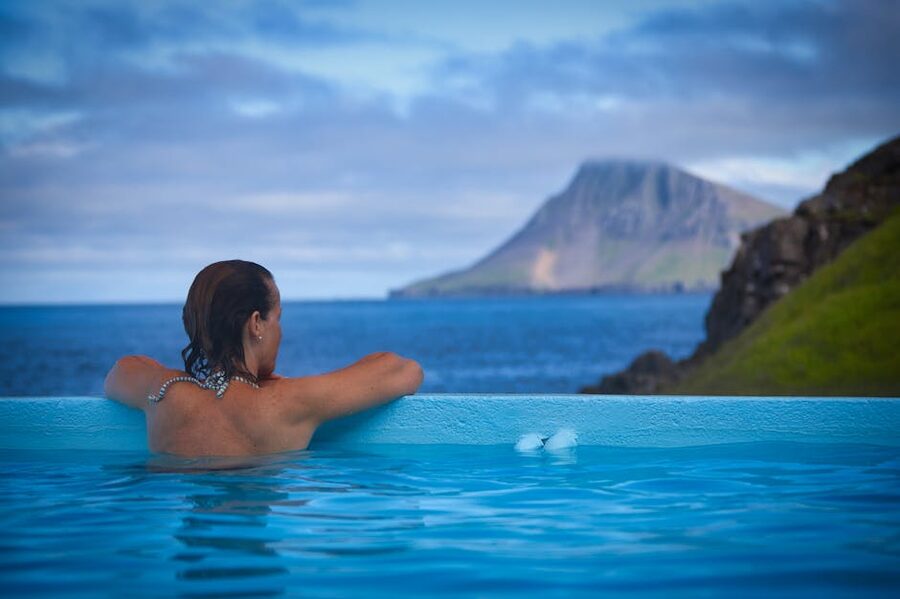
If you asked me to pick one of each:
Best spa lagoon: Sky Lagoon. The ritual circuit, the city access, and the infinity edge over the bay tip it for me over the Blue Lagoon. Do the Pure tier, take the 9am slot.
Best mid-range: Secret Lagoon. The 1891 history, the small geyser, the unfussy stone-walled pool. Less designed, more local.
Best public pool: Sundhöllin if you’re in downtown Reykjavík and short on time. Hofsós if you’re driving the north coast and you want the photo. Akureyri Sundlaug for the most complete pool experience in the country.
Best wild soak: Krossneslaug, no contest, if you’re willing to drive Strandir. Reykjadalur if you’re not. Either way it’ll be the part of your trip that you tell stories about for years.
The thing I’d tell a first-time visitor: don’t spend a fortune. The cheapest local pool is often the best afternoon you’ll have here. Ten Icelanders chatting in the 40°C pot at Vesturbæjarlaug on a Saturday morning, the steam coming off the water, the snow on the deck around it, the smell of geothermal sulphur in the changing room, all of that costs 1,340 ISK and it will tell you more about how this country works than any 20,000 ISK ticket. Get the local pool in. Then add whatever wild or designed soak fits the rest of your itinerary.
And bring a hat for the walk back to the car, because you’ll come out steaming and the Icelandic wind has no respect for warm hair.
For more on Iceland trips, see the rundown of every day tour from Reykjavík, the Snæfellsnes peninsula guide for west-coast soaks (Landbrotalaug is one I haven’t covered above; it’s tiny but charming), the full Reykjavík city break with the public pool culture chapter, and the multi-day tour catalogue. Or browse all the tour guides for individual activities.