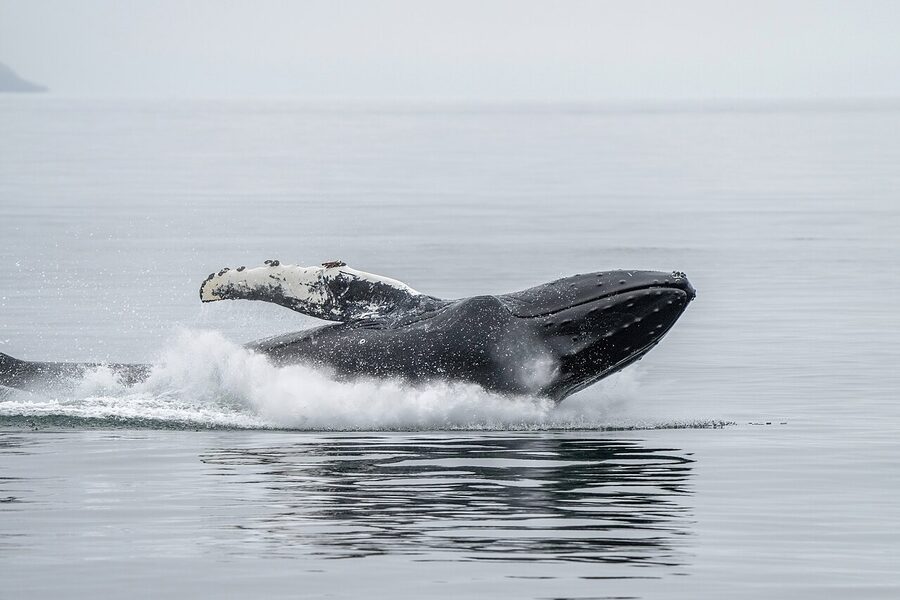
Iceland sits where the warm Gulf Stream runs head-on into the cold East Greenland Current. The two collide along the shelf, water gets stirred up from the deeps, plankton blooms, krill follows the plankton, capelin and herring follow the krill, and the whales follow the fish. That is the whole story of why this country has whales. The Atlantic gives us 23 cetacean species in our waters and a small fishing town in the north has built itself around watching them. From Reykjavík harbour you can be looking a humpback in the eye in 90 minutes. From Húsavík it is closer to 20.
This is a long guide because it deserves to be one. Whale watching in Iceland is one of the few things travel marketing claims about this country that quietly turns out to be true. The waters really are productive, the captains really do know where the animals are, and the success rate in summer really is somewhere around 90 percent at the right port. The hardest decision you have to make isn’t whether to go, it’s which harbour to leave from. I’ll walk you through the four real options, the species you’ll meet, the boats that take you out, what to wear, what to skip, and the small practical details that nobody else writes down. There’s a brief overview here of seabirds you might also see, but if puffins are your main reason for being on the water, we have a separate guide for bird watching tours.
In This Article
- Why Iceland’s water is full of whales
- The 23 species you might meet
- Humpback whale (hnúfubakur)
- Minke whale (hrefna)
- White-beaked dolphin (hnýðir)
- Harbour porpoise (hnísa)
- Orca (háhyrningur)
- Blue whale, fin whale and the rare giants
- Belugas, narwhals, and the once-in-a-decade visitors
- The four ports, and which one to choose
- Reykjavík whale watching from the Old Harbour
- Whales of Iceland is a museum, not a tour
- Húsavík, the whale watching capital
- The Húsavík Whale Museum
- Where to stay in Húsavík
- Akureyri and Eyjafjörður
- Snæfellsnes, the orca port
- Picking your boat: oak schooner, modern catamaran, or RIB?
- The best season, month by month
- What to wear and what to bring
- Photo tips that actually work on a whale tour
- The puffin combo (May to August only)
- Sea sickness and what actually helps
- The whaling question, briefly
- A practical “what I’d do” plan
- Booking, prices and tour aggregators
- Things I’d skip
- The short version
Why Iceland’s water is full of whales
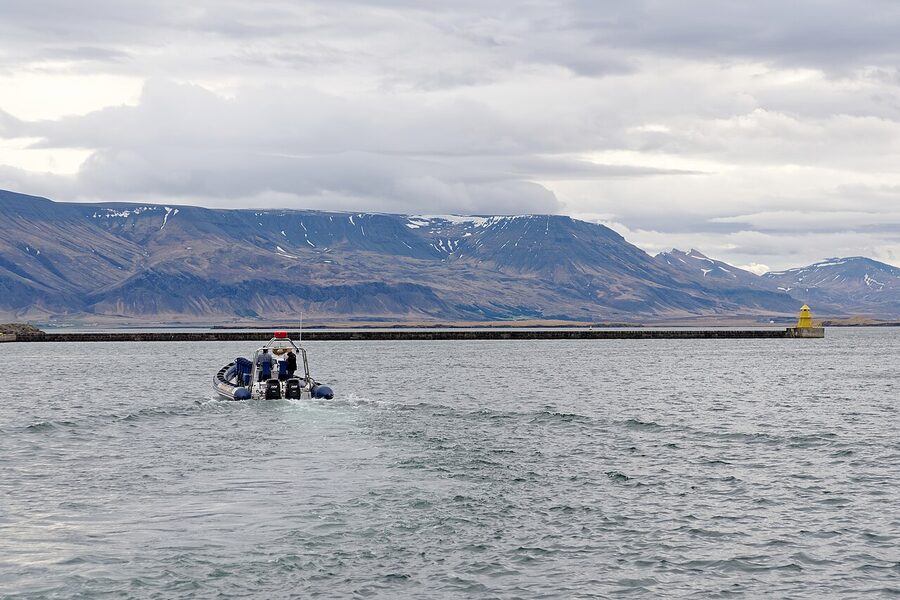
Most whale-watching countries get one or two reliable species and a handful of rare ones. We get four reliable species, half a dozen frequent ones, and a long tail of rarities all within easy reach of the harbours. The reason is in the oceanography. The Greenland Sea brings cold polar water down our western and northern coasts. The North Atlantic Current carries warmer Gulf Stream water up our south. Where the two meet over the continental shelf, deep water rises in a process called upwelling, dragging nutrients toward the surface. Algae bloom on those nutrients in spring and summer, krill multiply, small fish like sand eel, capelin and herring fatten on the krill, and the whales arrive on the back of the small fish. None of this is gentle. The wind helps it along. Storms churn the column and hand more nutrients up to the light. Iceland’s reputation for rough weather is exactly the same fact as its reputation for whales.
This also explains the seasonality. Most baleen whales (humpback, minke, fin, blue) winter near the equator, breed there, then migrate north each spring to feed. They arrive in our waters from April, peak in June through August, and start drifting back south in October. The toothed whales on the resident side (orca, white-beaked dolphin, harbour porpoise) hunt here year-round, though they shift between the bays as the herring move. The summer-only baleen feeders are why Icelandic whale watching has a real season. You can go in February if you must, and you might get lucky, but you are looking at a different (smaller) cast and a colder boat. Plan around April through October and you are giving yourself the best of it.
The 23 species you might meet
The full count of cetacean species recorded in Icelandic waters sits at 23. You will not see 23 on a tour. You might, if you go out twice in the same week from the same harbour, see four or five. Here is the order they actually turn up in.
Humpback whale (hnúfubakur)
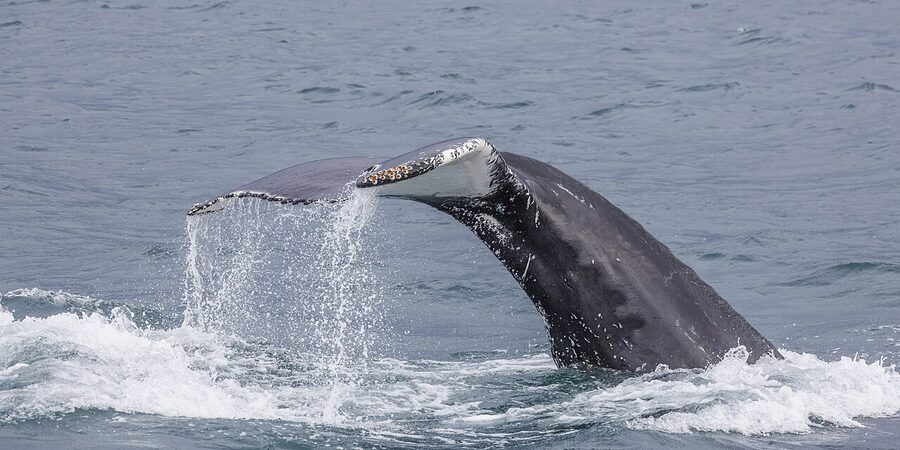
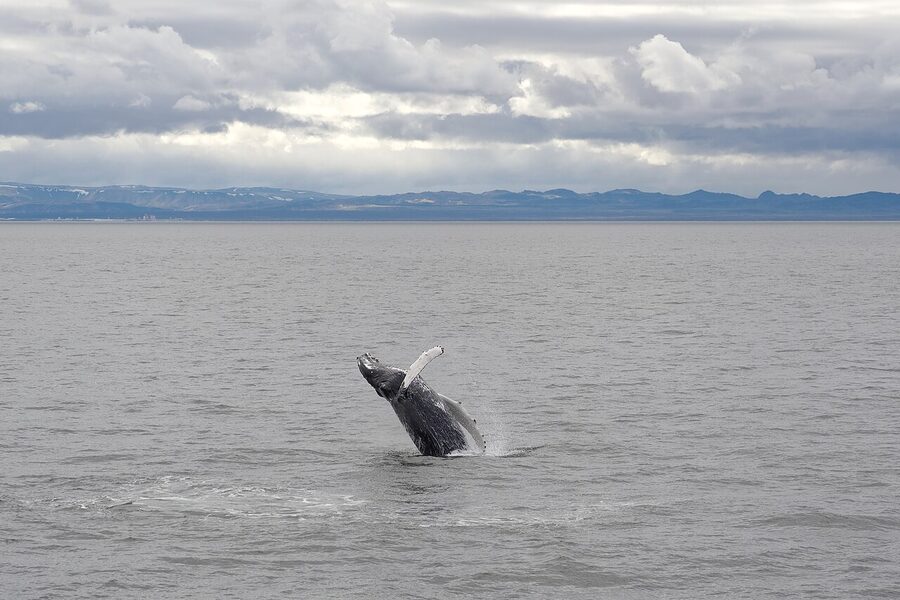
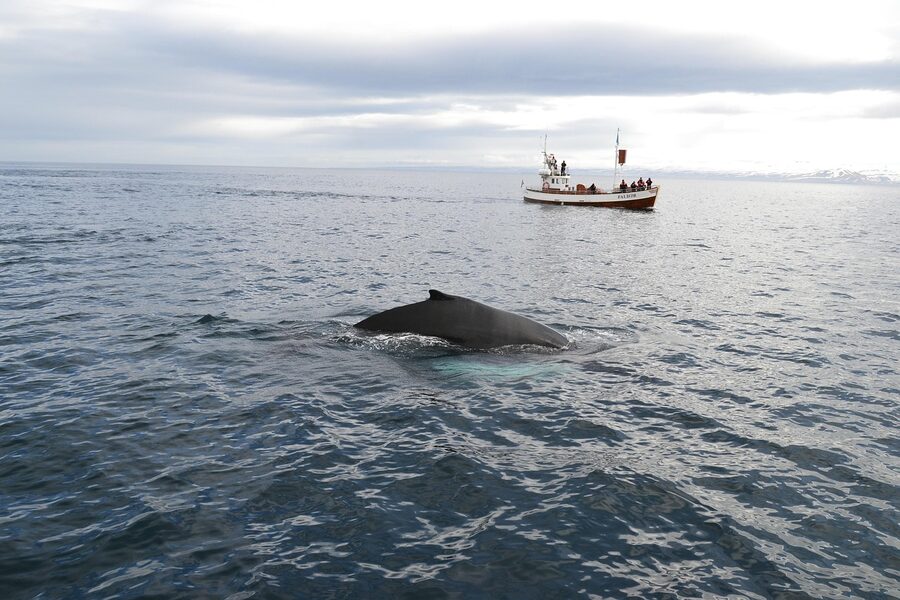
The humpback (Megaptera novaeangliae, hnúfubakur in Icelandic) is the headline act on any northern tour. Adults are 13 to 17 metres long and weigh up to 40 tonnes. They are also the most acrobatic whale you can reasonably expect to see. Breaches, lobtailing, pectoral slaps, the lot. In Húsavík and Akureyri, operators have had whole summer seasons in which they sighted at least one humpback on every single tour. If you are picturing a whale tour in your head, you are picturing a humpback. Reykjavík sees them too from June onwards but in lower numbers and with less reliability than the north. The thing to watch for is the dive sequence, three or four shallow rolls and then a deep arch with the tail rising clear of the water. That is your fluke moment, and it is the photo most people came for.
Minke whale (hrefna)
The minke (Balaenoptera acutorostrata, hrefna) is the workhorse of every Icelandic harbour. They are small for a whale at 7 to 10 metres, with a sharply pointed head, a curved dorsal fin set well back, and a habit of surfacing three or four times before arching down for a five-minute dive. They feed on sand eel and small fish and they stay near shore, which is why they are by far the species you are most likely to see from any port in any season. They are shy compared with humpbacks, almost no breaching, no surface play, just the back rolling up and going down again. But on a quiet bay in early summer with a minke working a school of fish twenty metres off the bow, the experience is genuinely lovely. One Special Tours minke that was tagged in Faxaflói was tracked all the way to the Canary Islands the following winter, which gives you a sense of how much these animals move.
White-beaked dolphin (hnýðir)
White-beaked dolphins (Lagenorhynchus albirostris, hnýðir) are the most common dolphin in Iceland. They are bigger than you might expect, two and a half to three metres, weighing up to 350 kg, and they live in pods anywhere from three to six animals up to enormous “superpods” of hundreds out in the open ocean. From a tour boat you usually meet small groups, and they are curious. White-beaks will come over to bow-ride. They breach. They leap. If you have ever watched dolphins on a Mediterranean tour and felt slightly cheated by how distant they stayed, the Icelandic version is more interactive. They are also on the 5-krona coin, in case you want a souvenir from your tour that costs you nothing.
Harbour porpoise (hnísa)
The harbour porpoise (Phocoena phocoena, hnísa) is the smallest cetacean you will see here, a metre and a half to two metres, with a stubby triangular dorsal and a habit of surfacing for a single quick breath before vanishing. They are easy to miss. The trained eye of the guide will spot them long before you do. When they are feeding hard or being chased, they sometimes “porpoise” across the surface in a flat sprint that splashes the tail at every stroke, and that is a sight worth getting out of the cabin for. Don’t expect drama. Expect a small dark fin in the corner of your eye, gone before you’ve raised the camera.
Orca (háhyrningur)
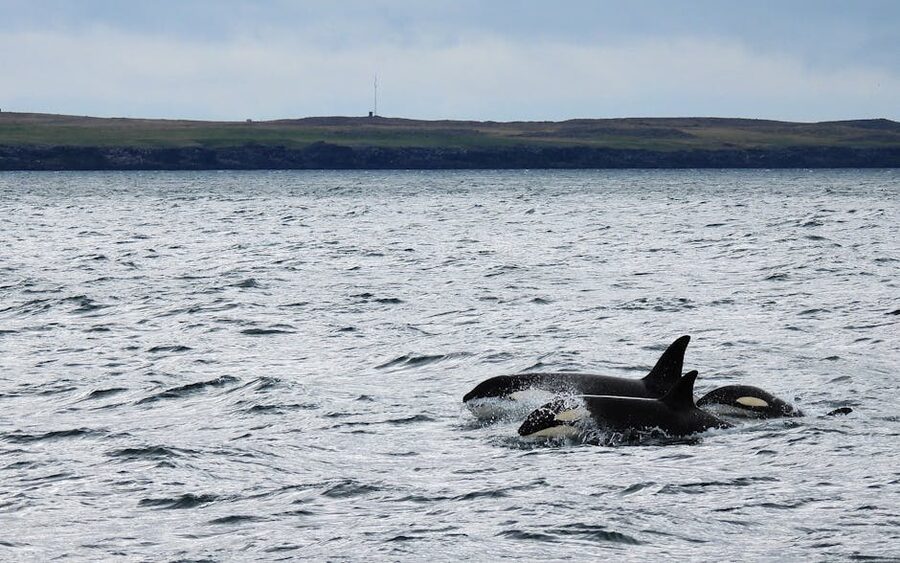
The killer whale (Orcinus orca, háhyrningur, the world’s largest dolphin despite the name) is the species people most badly want to see and the most weather-and-luck dependent. There are roughly 5,000 orcas living around Iceland, organised into pods that move with food. They eat 175 to 350 kg of herring and capelin a day per animal, which means they go where the schools go, which means in spring they pile into Breiðafjörður Bay between the Snæfellsnes peninsula and the Westfjords because that is where the herring overwinter. From late February through June, the boats out of Ólafsvík and Grundarfjörður on Snæfellsnes have the best orca sightings in the country. Outside of that window, orcas are scattered and almost impossible to predict. If your trip is spring and you can drive the two and a half hours out to Snæfellsnes, that is the orca tour to take.
Blue whale, fin whale and the rare giants
Blue whales (Balaenoptera musculus, steypireyður) are the largest animals that have ever lived and yes, they sometimes turn up in Iceland. They favour Skjálfandi Bay off Húsavík and Eyjafjörður off Akureyri in May through August. Sightings are not common but they are not unheard of, and a number of operators in the north have multiple confirmed blue whale encounters every season. Fin whales (langreyður), the second largest, are seen more often, also in the north. Sei whales, sperm whales and northern bottlenose whales appear rarely off the deep-water edge of Breiðafjörður. None of these are guaranteed and most tours go an entire season without seeing them. If a captain calls a blue or a fin from the bridge, drop your sandwich and get on deck.
Belugas, narwhals, and the once-in-a-decade visitors
Belugas (Delphinapterus leucas) and narwhals (Monodon monoceros) belong to the high Arctic and only stray down to Iceland in odd years when ice forces them south. Both have been documented in northern waters, but you would have to be very lucky and probably out from Akureyri or Húsavík in winter to catch one. There is a permanent way to see belugas though. Two rescued females, Little Grey and Little White, live in the SEA LIFE Trust Beluga Whale Sanctuary in Klettsvík Bay on Heimaey in the Westman Islands, the same bay where Keiko spent his post-Hollywood years before he was released in 2002. The sanctuary is open to visitors and worth the ferry over.
The four ports, and which one to choose
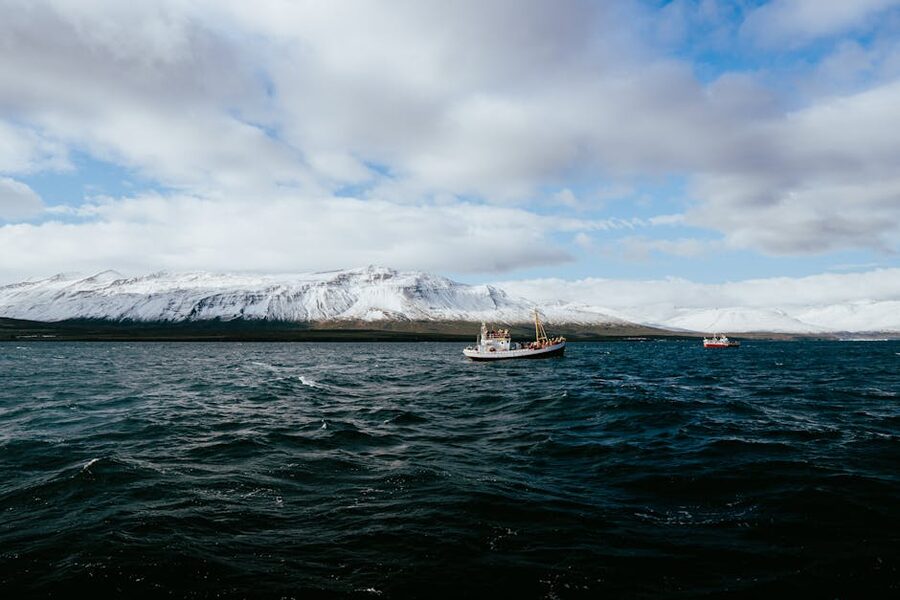
Iceland has four real whale watching bases. Each has a different vibe, a different success rate, and a different mix of species. If you are choosing one, this is the comparison you need.
Reykjavík wins for convenience. The Old Harbour is a 10-minute walk from most downtown hotels and tours run year-round. Húsavík in the north wins for reliability and species variety; in summer you are looking at sighting rates approaching 100 percent. Akureyri, also in the north, is more comfortable to reach (it has an airport and a real city) and runs tours from both the city itself and from a small dock at Árskógssandur an hour up the fjord. Snæfellsnes, specifically the harbours at Ólafsvík and Grundarfjörður, is the orca specialist port in spring. None of these is wrong. The right pick depends on when you go and what else you want to do. Below is the detail on each.
Reykjavík whale watching from the Old Harbour
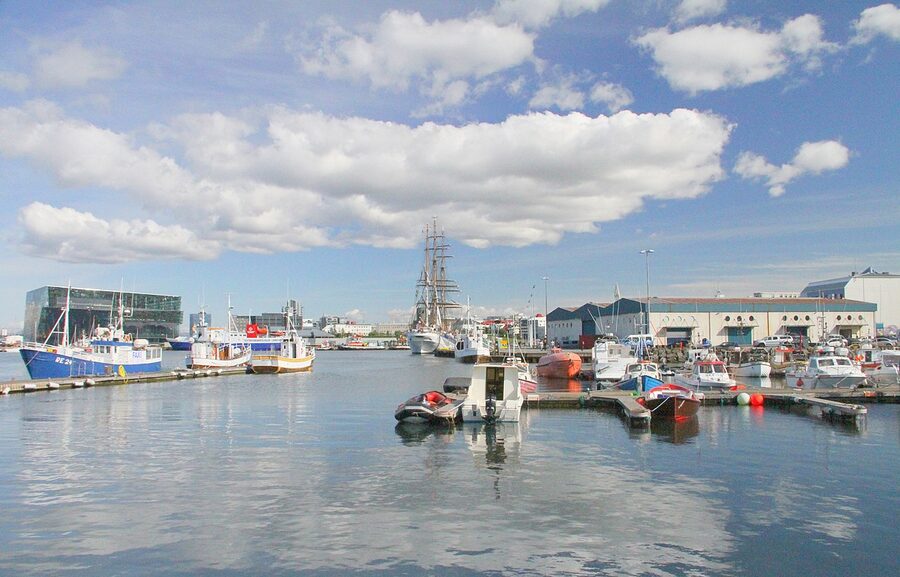
Reykjavík is the most-booked whale watching tour in the country and that’s mostly down to convenience. You walk from your hotel, you board a boat, you sail into Faxaflói Bay for two and a half to three hours, and you are back in town in time for a late lunch. The bay itself is shallow, sheltered, and full of sand eels in summer. The captain heads out toward the islands of Akurey and Lundey, both of which double as puffin colonies between mid-April and mid-August. Most of the year you are looking at minke, white-beaked dolphin and harbour porpoise. From June to early September add humpback to the regular menu. Operators publish summer success rates of around 95 percent and that matches what passengers actually report.
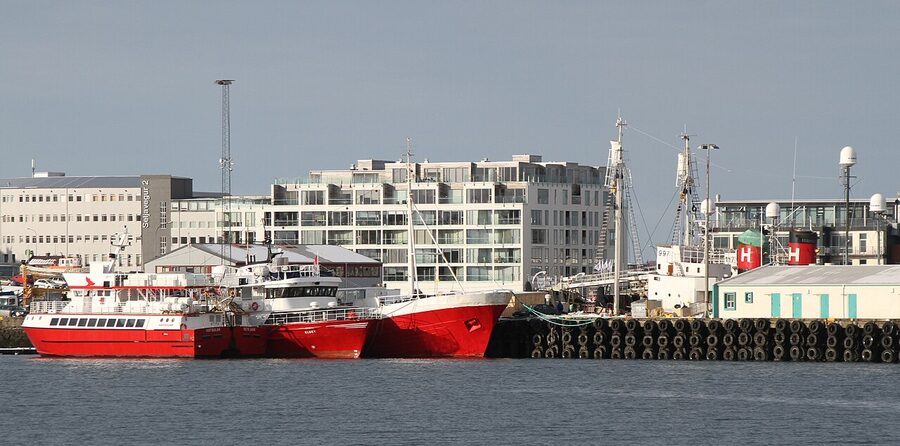
The two operators worth knowing here are Elding and Special Tours. Elding is the original, founded by the Hafdísardóttir-Hafsteinsson family in 1995 and now in its second generation. Their classic three-hour tour is around 14,000 ISK at the time of writing. They also run a small-group RIB premium tour from April to October on a 12-passenger high-speed boat for around 25,000 ISK, which gets you closer to the whales but is no fun on a rough day. Special Tours runs from a few berths down with a similar three-hour ticket priced at 14,490 ISK, plus combinations with the Whales of Iceland museum (more on that in a moment) for around 16,590 ISK. Both operators offer a free re-ride if you don’t see a whale on your tour, which is a sensible policy and worth knowing about because nobody can guarantee a sighting in the wild.
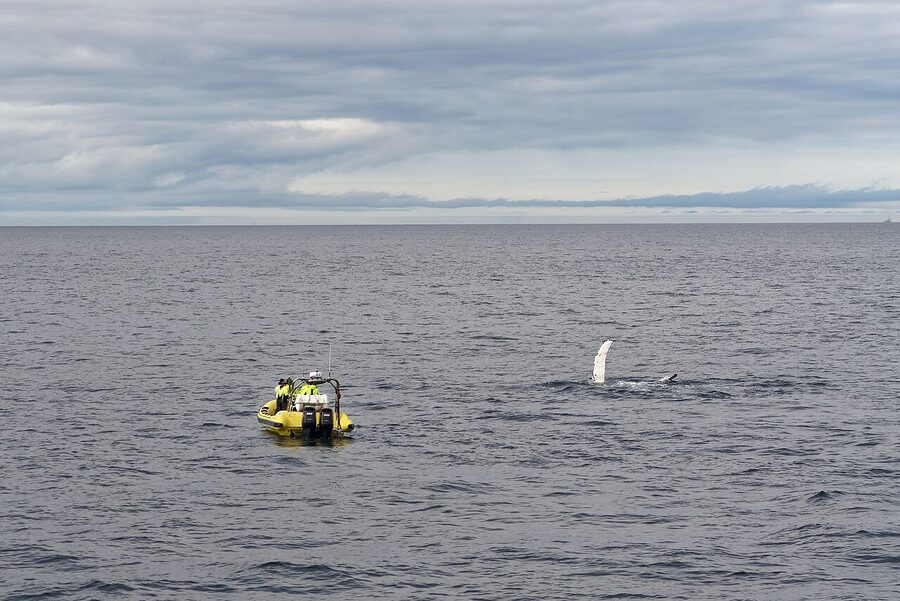
One thing about Reykjavík people don’t always realise: the puffins are right next to the whales. From late April to mid-August, the islands of Akurey and Lundey hold thousands of nesting Atlantic puffins. The combo tours that pair whales and puffins in one outing add about an hour and 4,000 ISK to the day, and they are worth doing. The puffins won’t blow your mind from a boat (you can’t land on the islands, you watch from the water with binoculars or a long lens), but seeing both species in one trip is good value if your time is short.
Whales of Iceland is a museum, not a tour
One small confusion to clear up. Whales of Iceland over at Fiskislóð, in the Grandi area of the harbour, is an indoor museum, not a boat operator. Inside there is an exhibition hall with full-size life-like models of every whale you might see in Icelandic waters, plus a few you won’t, including a 25-metre blue whale that fills the room. It is excellent for kids, especially on a day the boats are cancelled, and the combo ticket with Special Tours is genuinely good value. Don’t book it expecting a tour. Book it as the rainy-day backup.
Húsavík, the whale watching capital
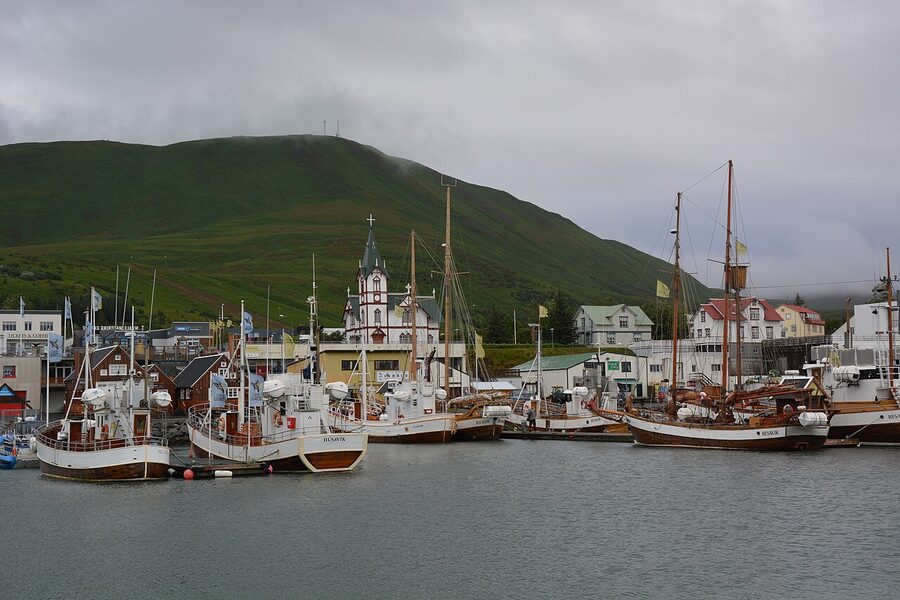
Húsavík sits on the eastern edge of Skjálfandi Bay on Iceland’s north coast, three quarters of an hour from Akureyri by road. It has a population of about 2,300 people, a wooden church on the hill, a row of brightly painted timber buildings along the dock, and a serious claim to being the best whale watching town in Europe. North Sailing’s Garðar BA 64, an old wooden oak schooner converted to passenger use, ran the country’s first commercial whale tour out of this harbour in 1995. Two months in, the captain had counted enough whales to convince every fishing family on the dock that there was a future in this. Thirty years later, the whole town is built around it.
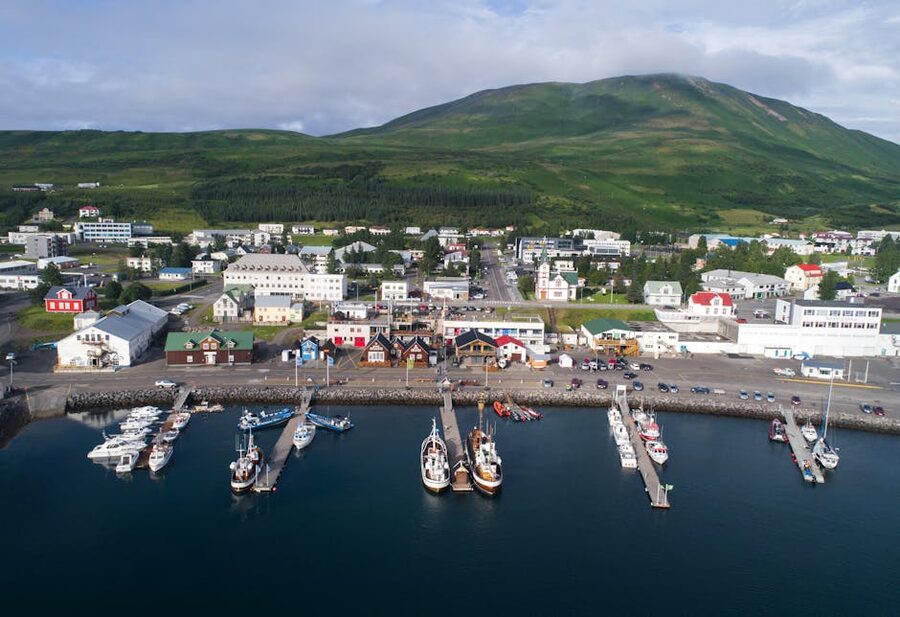
The case for Húsavík over Reykjavík is straightforward. Skjálfandi Bay is deeper and more productive than Faxaflói. The boats are out at the feeding grounds in twenty minutes, not forty-five. Sighting rates in summer run around 95 to 100 percent, and the species mix is broader: humpbacks dominate but minkes are reliable, white-beaks turn up most days, and blue and fin whales are uncommon but possible. Pair that with a town that has restaurants and an excellent whale museum on the dock, and you have a destination worth a night, not just a half-day.
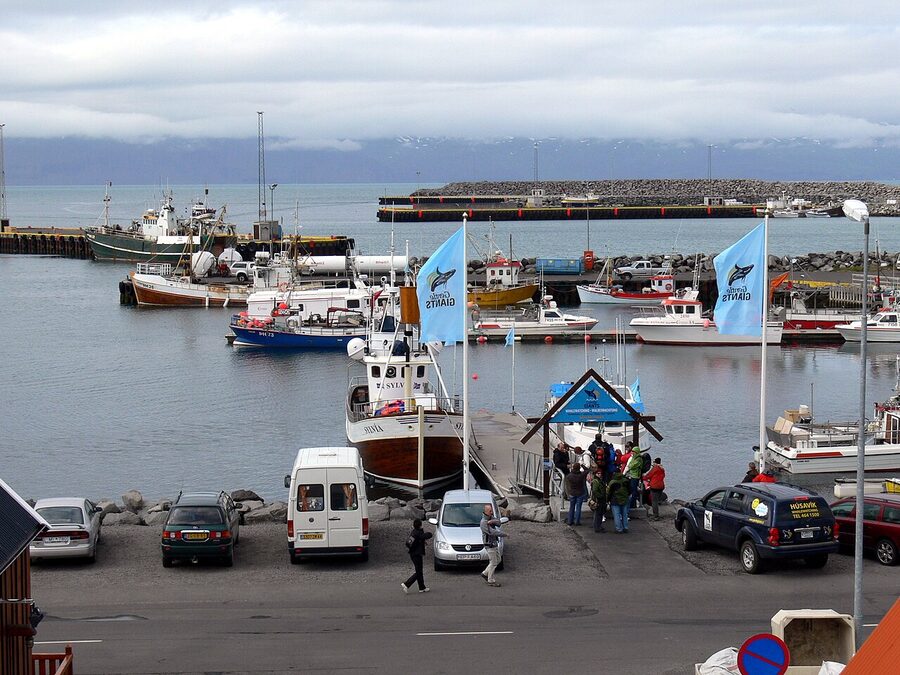
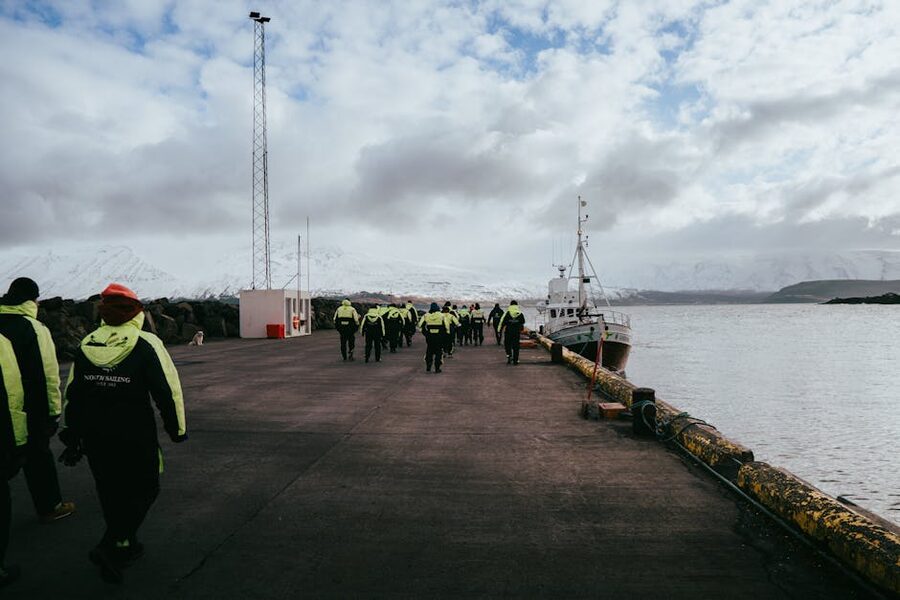
Two operators dominate. North Sailing is the original, the company that ran that 1995 tour, and they still operate a fleet of restored wooden oak schooners alongside modern hybrid-electric boats. The Original Whale Watching ticket is around 13,000 ISK for a 3-hour tour, with under-7s travelling free and 7 to 15 year-olds at half price. They also run a Carbon-Neutral Silent Whale Watching trip on the electric sailboat Opal which approaches whales without engine noise; this costs more (around 17,000 to 20,000 ISK) and the experience is qualitatively different, more meditative, fewer passengers, no diesel rumble. Gentle Giants is the rival, founded later by another Húsavík fishing family, with a similar fleet (oak schooners and a fast RIB option) at similar prices. Quality is comparable; pick by which schedule fits your day.
The Húsavík Whale Museum
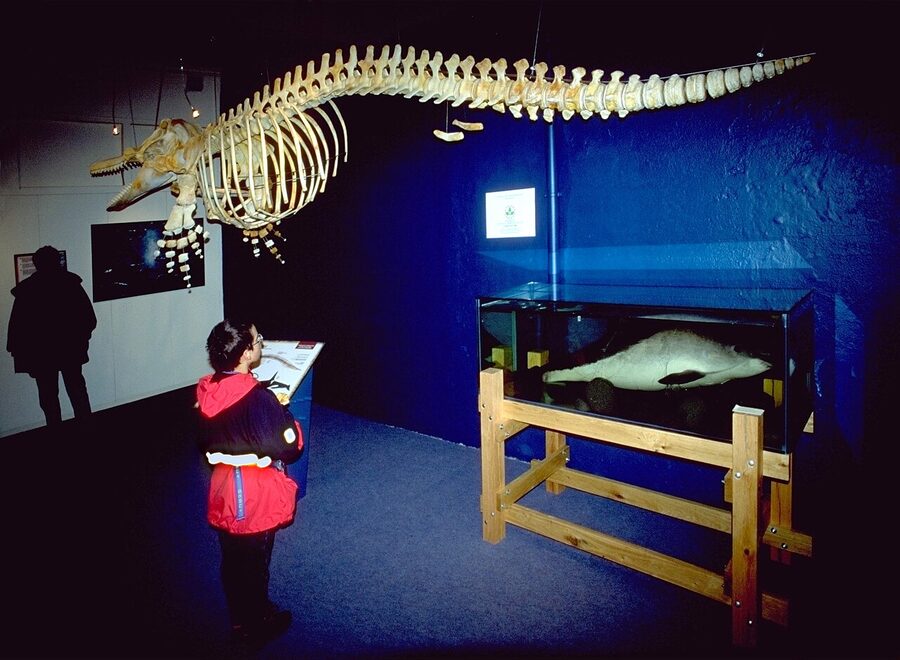
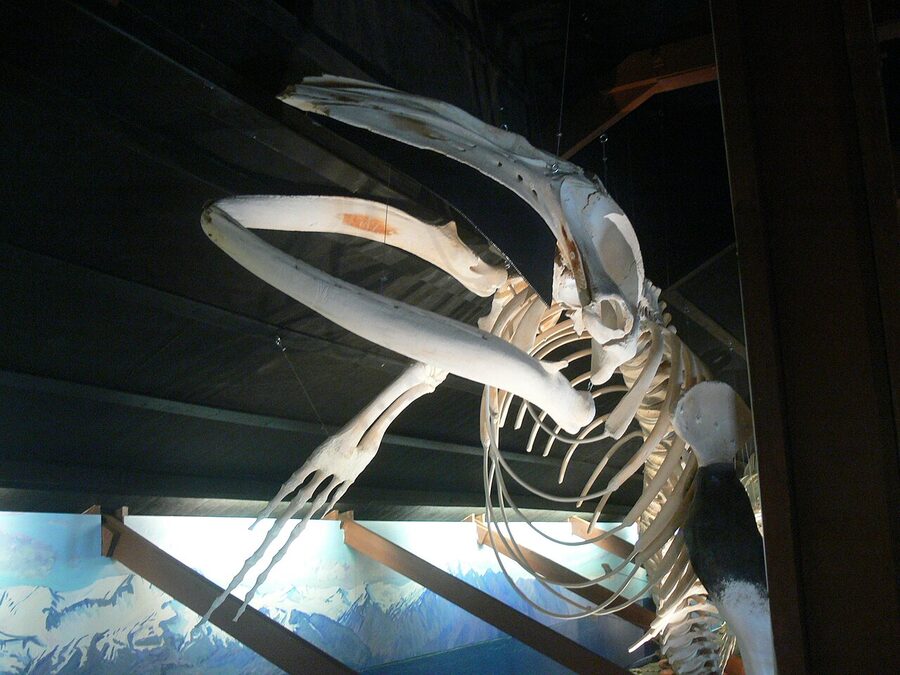
The Hvalasafnið á Húsavík (Húsavík Whale Museum) sits in a converted slaughterhouse about five minutes from the dock. It is small, smart, and worth an hour. The main hall hangs full skeletons of nine species from the rafters, including a sperm whale jaw that you can walk under, and there are good displays on cetacean biology, whaling history, and Iceland’s whale-watching boom. Adult ticket is around 2,500 ISK. Pair the museum with the boat tour for a more complete morning. If you have kids, the museum is the part they will remember.
Where to stay in Húsavík
If you are doing Húsavík properly, stay the night. The drive back to Akureyri after a 4pm tour means you arrive late, dehydrated, and with more pressure on your itinerary than you need. Two hotels are reliable. Fosshotel Húsavík sits on the harbourfront, looking straight at the dock; the rooms are unfussy modern Nordic, the breakfast is good, and the bar has a fjord view. Hótel Húsavík (Cape Hotel) a few minutes uphill is older but family-run and a touch warmer in feel; rooms are smaller and there’s a better restaurant. Both fall in the 25,000 to 40,000 ISK range in summer and book up by April for July nights.
Akureyri and Eyjafjörður
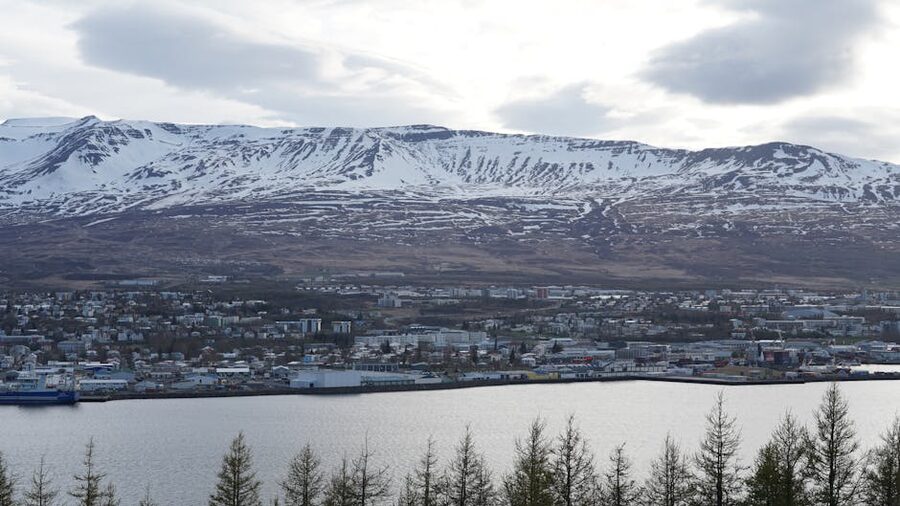
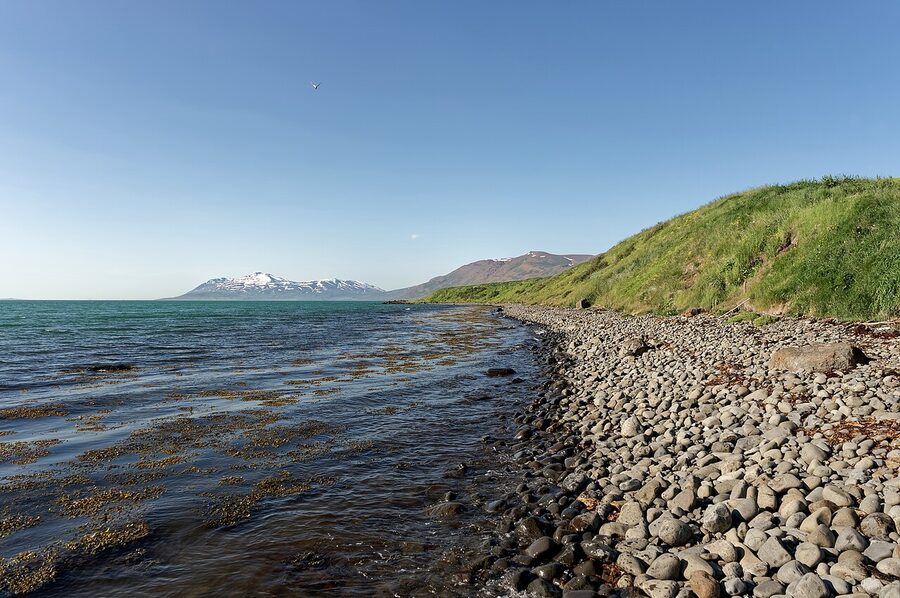
Akureyri is Iceland’s second city in everything but name (population 19,000), and the closest thing to a real urban base in the north. It has its own airport, a clutch of decent restaurants, the country’s best botanic garden for the latitude, and tour boats running directly from the city marina. Eyjafjörður is 60 km long, calm, deep, and surrounded by 1,000 m mountains. It is genuinely beautiful even when the whales don’t show. Sighting rates here run 95 to 99 percent in summer. Humpbacks are the main draw, with minke whales and white-beaked dolphins common as supporting cast.
You have two real options out of Akureyri. The first is Elding’s Akureyri Classic Whale Watching, a 3-hour tour from the city dock at around 14,000 ISK, running year-round. The second is to drive an hour up the western shore to Árskógssandur, a tiny harbour where North Sailing runs a 2.5-hour Whale Watching trip from a small fast boat. The Árskógssandur tour is shorter, gets you out of the marina traffic faster, and the small-boat experience is more intimate. It costs about the same. Pick by whether you want the convenience of the in-city dock or the more direct sail.
One genuine bonus of Akureyri: it makes the whole north of Iceland a logical add-on. After a morning whale tour, drive 90 minutes to Lake Mývatn for the afternoon, sleep in Mývatn, then continue the next day to Goðafoss waterfall and the Diamond Circle. If you are doing the Ring Road, this is the natural three-day chunk.
Snæfellsnes, the orca port
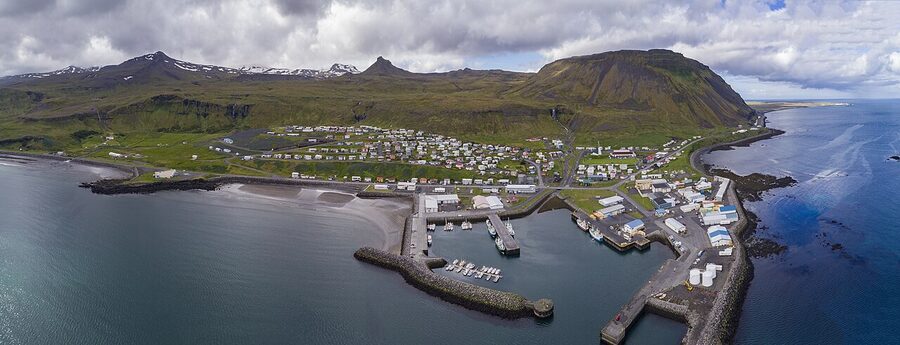
Snæfellsnes is the peninsula that sticks out west of Reykjavík, two and a half hours’ drive away on Route 54. The whale watching ports here are Ólafsvík on the north coast and Grundarfjörður (the village under Kirkjufell mountain) further along. Both face into Breiðafjörður Bay, which is shallow, full of small islands, and a wintering ground for vast herring schools. The herring is what changes everything. Where the herring goes, the orcas go, and from late February to June this is the most reliable orca-watching window in Iceland.
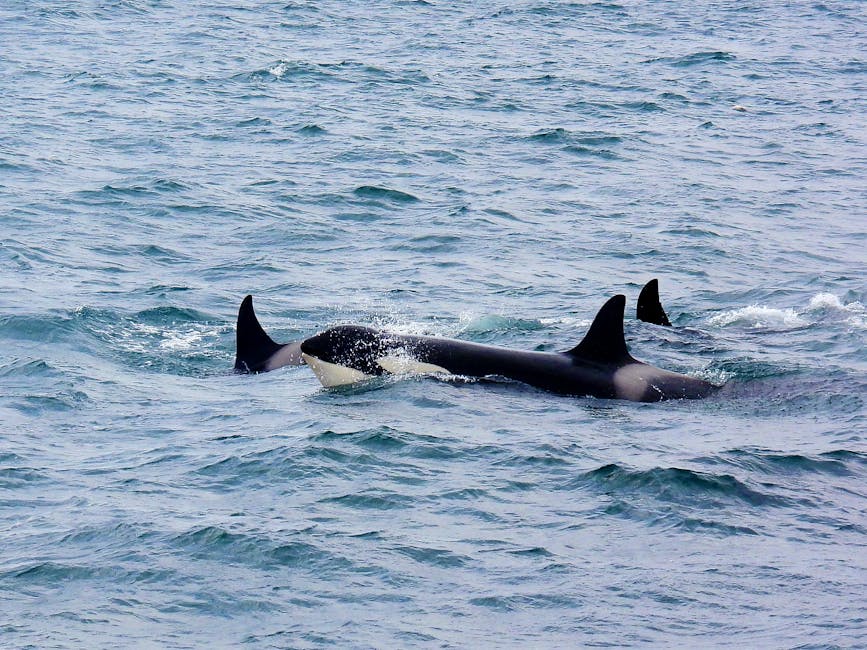
The operator that knows this water best is Láki Tours, an outfit based in Grundarfjörður and Ólafsvík that has been running orca-focused trips on the spring herring run since 2008. Their three-hour tour is around 13,000 ISK in spring, lower in summer when the cast switches to humpbacks, sperm whales (occasional, in the deeper Breiðafjörður trough), and pilot whales. They guarantee a free re-ride if no whales are spotted. The boats are smaller than the Reykjavík fleet and the experience is consequently more direct.
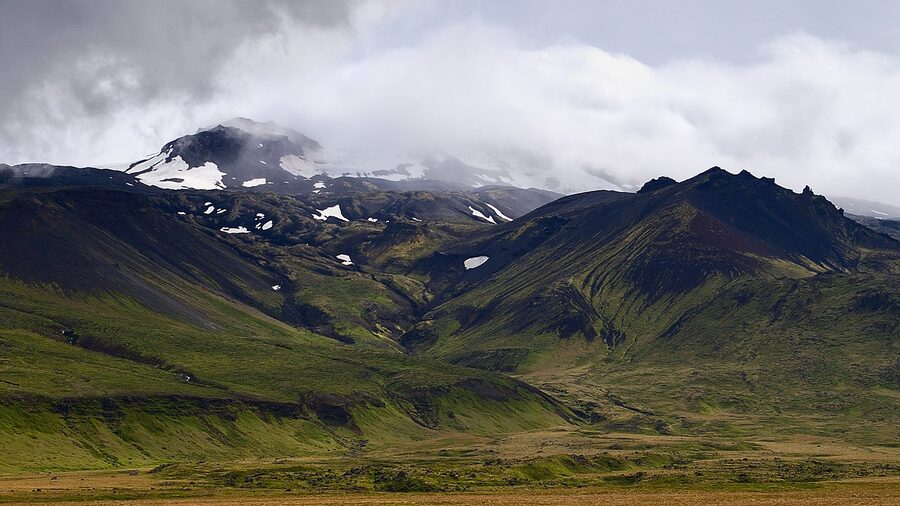
The catch with Snæfellsnes is logistics. There is no airport, the nearest hotel concentration is in Stykkishólmur an hour’s drive from Ólafsvík, and you need at least one full day on the peninsula to make it work. If your trip is March to early June and you can carve out two nights for Snæfellsnes, do it; you’ll get not just orcas but also one of the loveliest stretches of coastline in the country. If your trip is July or August, skip Snæfellsnes for whales (the orcas are gone) and head north for humpbacks instead. The peninsula remains worth visiting; we have a separate guide for that.
Picking your boat: oak schooner, modern catamaran, or RIB?
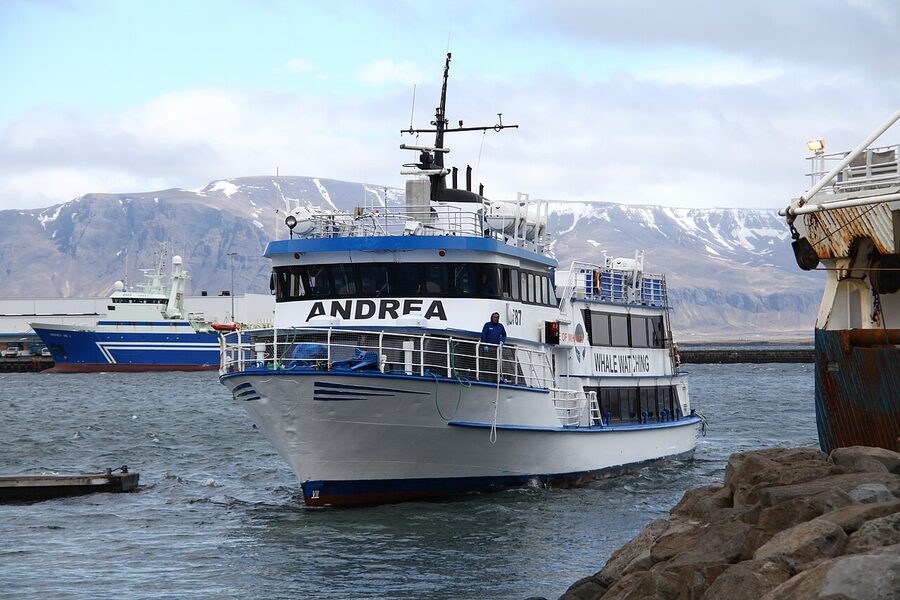
You will hear three main boat types when you book.
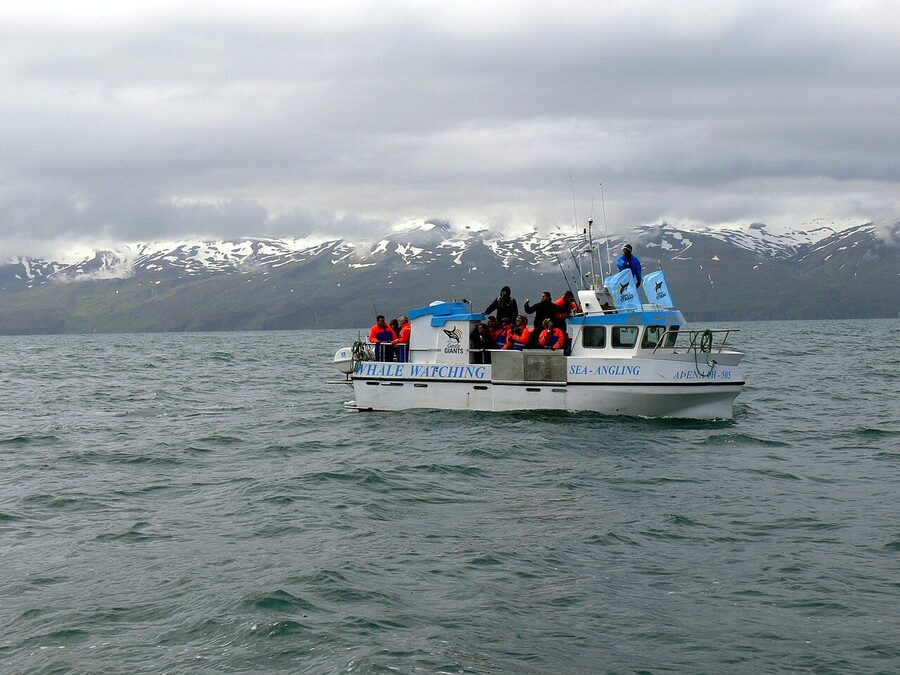
Traditional vessels (the “oak boats” or modern equivalents). These are 80 to 150 passenger boats, often converted fishing schooners or purpose-built catamarans. They are stable, comfortable, have an indoor lounge with hot drinks and the toilet, plenty of deck space, and are kid-friendly. The down side is they are slower (you spend more time getting to the whales) and they can’t get quite as close. This is what I’d recommend for first-timers, families, and anyone uneasy on the water.
RIB (rigid inflatable boat). A high-speed open boat carrying 12 passengers, with a price tag of 22,000 to 25,000 ISK and a minimum age (usually 7 or 10, depending on operator). You wear an issued thermal flotation suit. The boat reaches the whales in half the time, gets closer, and gives a much more direct experience. The trade-off is it is wet, cold, bouncy, and entirely outside. On a rough day RIBs are no fun. On a calm day they are the better trip.
Hybrid sail or electric boat. Special Tours and North Sailing both run these. The boats are quieter on approach, which is genuinely better for the whales and arguably for the experience too (you hear the breathing). They are slightly more expensive (16,000 to 20,000 ISK) and the schedule is less flexible. If you care about how you watch the whales rather than how many you watch, this is the option.
The best season, month by month
You can technically go whale watching here in any month. You shouldn’t.
April. The summer fleet starts running. Migratory baleen whales begin to arrive. The orca run on Snæfellsnes is in full swing and this is one of the best months to head out from Ólafsvík. The weather is volatile and trips do get cancelled. Book a flexible ticket.
May. Reliable conditions return. Humpbacks arriving in Skjálfandi and Eyjafjörður. Puffins land on Akurey and Lundey from late April; the Reykjavík combo tours kick in. Snæfellsnes orcas still around through early June.
June. The country opens up properly. Long evenings, midnight sun in the north, full whale fleet running, full success rates. North Sailing’s Midnight Sun Whale Watching tour at 8pm in late June is a particular favourite. Schools haven’t broken up yet so it’s still pre-peak crowds.
July and August. Peak everything. Highest sighting rates, longest light, calmest seas, most boats, most tourists, highest prices. If you want guarantees, this is the window. If you don’t like crowds, see September.
September. My favourite month for the trip. Whales still here, weather still mostly mild, prices a notch lower, half the people. The light starts to soften and the photos get better. Northern lights begin returning by mid-month so you can pair the day tour with an evening aurora chase.
October. Last call for the migratory species. Most still around early in the month, fewer by late. Tours still running but with fewer departures. A good month for a quiet trip if you don’t mind a 50/50 weather forecast.
November to March. The reduced winter season. White-beaked dolphins and harbour porpoises are reliable; minke whales sometimes; orcas sometimes (in Breiðafjörður); humpbacks rarely. Boats run in Reykjavík and Akureyri but with fewer departures and more cancellations. Húsavík mostly closes from November to March. If you happen to be in Iceland in winter and want to go, do it; just don’t fly in specifically for it.
What to wear and what to bring
The single biggest mistake first-timers make is under-dressing. You are on the open ocean, in wind, often on a moving boat. Even in July the wind chill on the deck can drop the perceived temperature below freezing. Operators at every port provide a warm waterproof over-suit free of charge, but everything beneath it is your responsibility. Here is what works:
- Thermal base layer (top and bottom). Merino wool is best.
- A warm middle layer. Fleece or thin down.
- Waterproof boots or hiking boots with thick wool socks. Trainers will get wet and stay wet.
- A hat that covers your ears. The wind makes a normal beanie not enough. A buff or balaclava is even better on the RIB.
- Gloves you can use a phone with. Touchscreens stop working when your fingers go numb.
- Sunglasses. The reflection off the water is fierce, even on cloudy days.
- Sunscreen on your face if it’s clear. Yes, in Iceland. The combination of wind, water reflection and clean air burns surprisingly fast.
- A camera with a 100-400mm zoom if you have one. The whale-tail shot needs reach. Phone cameras work for the boat and the harbour, not for the whale.
- Seasickness medication taken about an hour before departure if you are at all prone. Cinnarizine (Stugeron) works and doesn’t make you drowsy. Bonine (meclizine) is widely available in the US and works for most people.
One more piece of advice. Don’t film whales with your phone. By the time you have raised the camera, found the focus, started recording, and pointed it correctly, the whale has dived. Watch first, photograph second. The fluke shot is what you want, and it’s a single second when the tail is up before the deep dive. Continuous shooting mode helps. Your eyes do the rest.
Photo tips that actually work on a whale tour
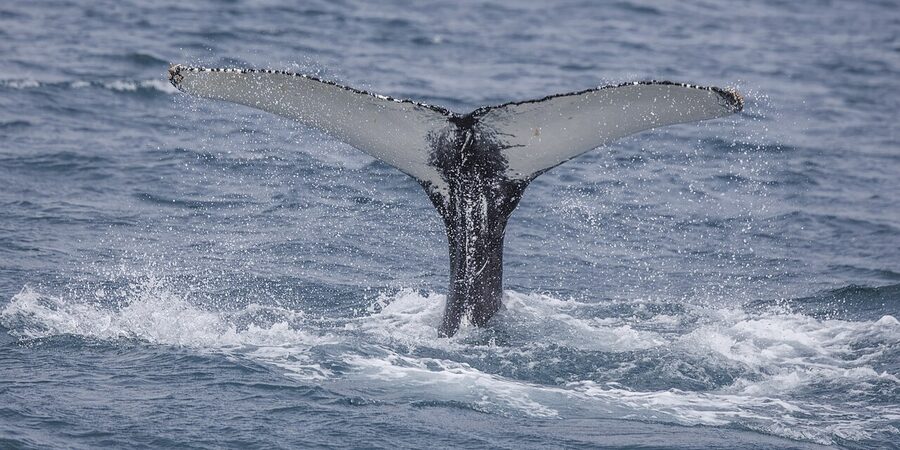
Most of the photos you see online from these tours come from professional photographers with full-frame cameras and 200-600mm zooms. You don’t need that. A reasonable crop-sensor body and a 70-300 lens will get you the fluke shot 80 percent of the time. Set the camera to continuous shutter (5 to 10 frames per second), 1/1000 second or faster shutter speed, and aperture priority around f/8. ISO can go up. Iceland’s light is good and modern sensors handle 800 ISO without complaint.
The harder skill is reading the whale. Humpbacks usually surface three or four times in a row, each surfacing roughly 30 seconds apart, before arching down for a deep dive that lasts five to ten minutes. The deep-dive arch is when the tail comes up and the fluke shows. Watch the back. If the back rolls higher and faster than the previous two surfacings, get ready, the dive is coming. If it rolls flat and they’re still feeding, you have another surface or two before they go down.
The other shot worth trying is the spout. Humpbacks send a column of vapour 3 to 5 metres into the air on each exhale, and from a thousand metres away in cold air you sometimes see the spout before you see the whale. With a long lens you can compose a tight shot with the snow-capped mountains of Eyjafjörður as the backdrop. Those are the photos that don’t look like everyone else’s.
The puffin combo (May to August only)
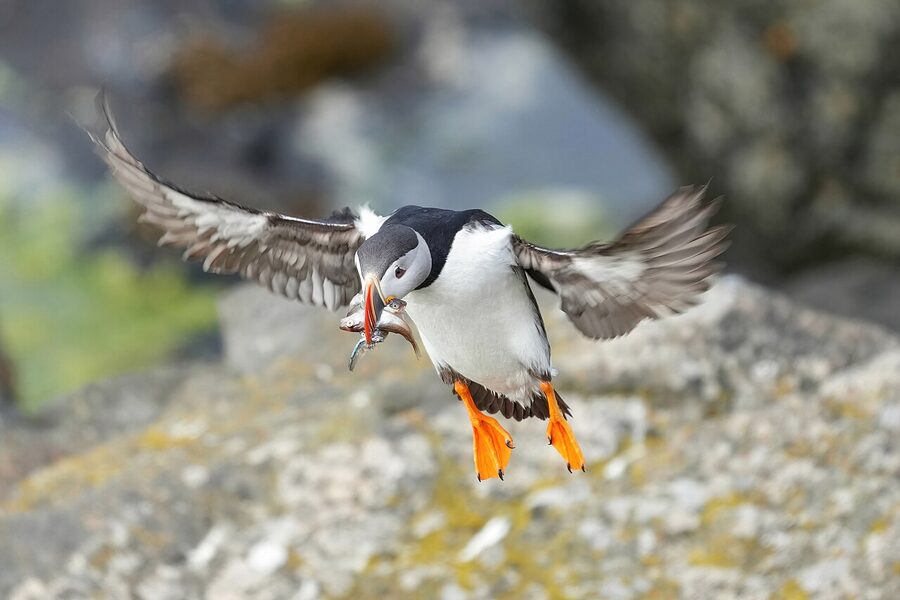
From mid-April to mid-August, almost every Icelandic tour port runs combo trips that pair whale watching with a stop at a puffin colony. From Reykjavík, the islands of Akurey (5 minutes out) and Lundey (15 minutes out) host thousands of nesting Atlantic puffins between landfall in April and departure to sea in mid-August. From Húsavík, the island of Lundey (a different island, also called puffin island in Icelandic) is a regular stop on the longer combo tours. Combo tickets typically add 3,000 to 5,000 ISK to the standard whale ticket and add 60 to 90 minutes to the trip.
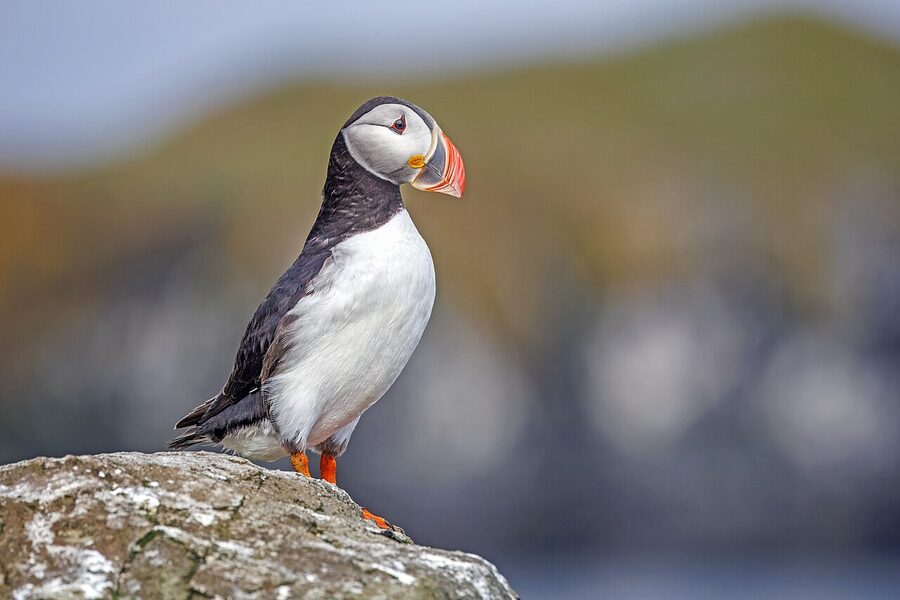
One thing to know: the puffin viewing from a boat is not as good as standing on a clifftop looking down at them. You see the colony from the water with binoculars, you watch the puffins flying back and forth from sea to nest, you maybe get a passable photo if you have a long lens. If puffins are your main reason for visiting Iceland, get yourself to Látrabjarg in the Westfjords or to Heimaey in the Westman Islands, where you can sit a metre from the birds without disturbing them. As a ride-along to the whale tour, though, the combo is good value and adds variety to your time on the water.
Sea sickness and what actually helps
A few real words about sea sickness, because more people get it on these tours than the operator marketing suggests. Even the sheltered bays move. Faxaflói has a swell. Skjálfandi can have whitecaps. The RIBs always bounce. About one passenger in five on any given trip looks slightly green by the second hour, and one in twenty disappears below deck for the duration. Here is what works.
Take medication an hour before departure. Cinnarizine (Stugeron, sold under the counter in pharmacies in Iceland and the UK) works for most people without drowsiness. Bonine (meclizine) is the US equivalent. Avoid Dramamine if you can, it works but it knocks you out and you’ll sleep through the whales. Eat a light, plain meal an hour before. Toast and water. Skip coffee and skip alcohol the night before; both make you worse. On the boat, stay on deck in fresh air, look at the horizon (not at your phone, not at the deck), and breathe through it. If you start to feel bad, do not go below to the toilet, this guarantees a full episode. Sit on a bench facing forward, eyes on the horizon, and the wave of nausea will usually pass in 10 to 15 minutes.
Wristbands and ginger candy do almost nothing. Don’t waste money on them.
The whaling question, briefly
This needs saying because anyone who reads carefully about Icelandic whales will trip over it. Iceland is one of three countries (with Norway and Japan) that still commercially hunts whales. The species hunted are minke and fin whales, in waters that overlap with the same bays we run whale watching in. The annual quota in 2024 was around 90 fin whales and a smaller number of minke. The hunt is controversial domestically; opinion polls show a slow majority swing against whaling, especially among Icelanders under 40, and the whale watching sector is now significantly larger by economic measure than the whaling sector.
The two operators most central to the whale watching industry, North Sailing in Húsavík and Elding in Reykjavík, are signatories to the Meet Us Don’t Eat Us campaign that opposes the hunt. If you go on either of their boats, your money is on the conservation side of the argument. Whale meat is sold in some Reykjavík restaurants but is now eaten almost entirely by tourists. The choice not to order it is a small but real one. If you want to read more on the policy and the hunt I’d send you to the Iceland Whale Watching Association rather than to either side’s campaign material.
A practical “what I’d do” plan
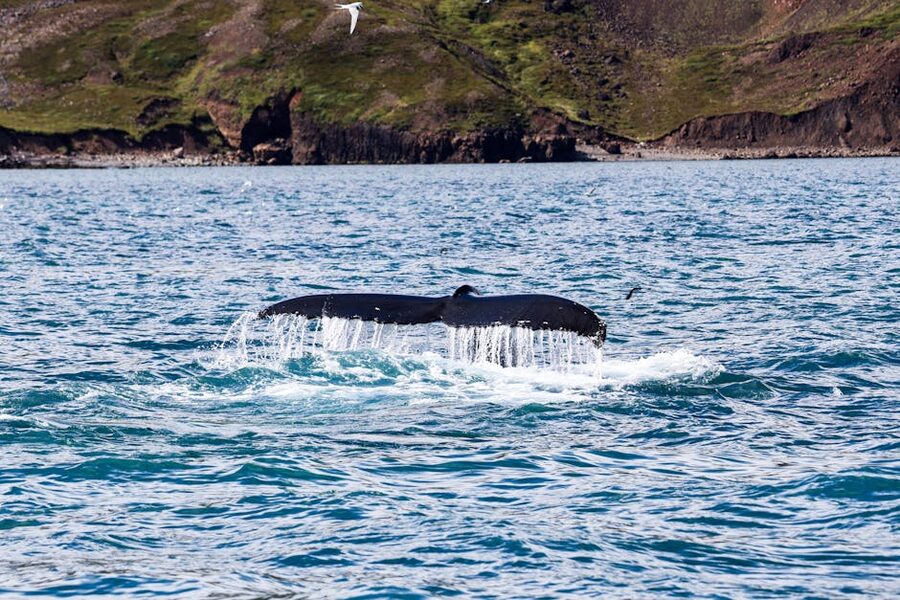
If your Iceland trip is short and Reykjavík-based: take a 3-hour Elding Classic Whale Watching from the Old Harbour, between May and August, and add the puffin combo. You’ll spend a half-day on it, you’ll come back in time for a hot lunch, and the success rate is around 95 percent.
If your Iceland trip is longer and includes the north (a full Ring Road, a Diamond Circle loop, or a flight up to Akureyri for a few days): drive to Húsavík, stay one night at Fosshotel or the Cape Hotel, and take a 3-hour North Sailing or Gentle Giants tour the next morning. You will see more whales, see them better, and the town itself is one of the nicest small ports in Iceland. Check the museum afterwards.
If your Iceland trip is in March, April, May or early June: drive out to Snæfellsnes, sleep one night in Stykkishólmur or Grundarfjörður, and take a Láki Tours orca trip from Ólafsvík. Spring herring runs only happen here and only this time of year, and watching a 6-tonne male orca break the surface against Snæfellsjökull glacier in the background is the kind of memory people fly to other countries for.
If you want to do all three, you can. Start with Reykjavík on day one, drive to Snæfellsnes for two nights, then loop up the Ring Road to Húsavík for two more. That’s a five-day whale-focused trip and the photos will be unlike anything you’ve shown your family from a holiday.
Booking, prices and tour aggregators
You can book directly with each operator (links above), and that’s usually 5 to 10 percent cheaper than going through an aggregator. The two main aggregator platforms with full Iceland whale watching coverage are GetYourGuide and Viator. The aggregators are useful for two things: comparing prices across operators side-by-side, and reading reviews from a source that isn’t filtered by the operator. Both have free cancellation up to 24 hours before the trip, which matters because you may want to swap your morning slot for the afternoon based on the wind forecast.
Indicative summer 2026 prices, rounded:
- Reykjavík classic 3-hour tour: 12,000 to 15,000 ISK adult, half price for kids 7 to 15, free under 7.
- Reykjavík RIB premium: 22,000 to 25,000 ISK, age 7 or 10+ depending on operator.
- Reykjavík whale + puffin combo: 17,000 to 19,000 ISK.
- Húsavík classic 3-hour tour: 13,000 to 18,000 ISK.
- Húsavík silent (electric sail): 17,000 to 22,000 ISK.
- Akureyri 3-hour tour: 12,000 to 15,000 ISK.
- Snæfellsnes (Ólafsvík/Grundarfjörður): 11,000 to 14,000 ISK.
One last booking tip: book the morning departure if you have the choice. Wind tends to pick up through the afternoon and the morning sea is usually flatter. The whales don’t care about the time of day, but you will.
Things I’d skip
“Guaranteed sighting” packages. No reputable operator can actually guarantee a sighting because these are wild animals in an open ocean. What the better operators do is offer a free re-ride if you don’t see a whale, which is the same thing in practice. If a tour is using “guaranteed” as a marketing line, look closely at the fine print before you book.
Combined whale-and-northern-lights tours. Both activities are good. Doing them on the same boat, on the same evening, in winter, dilutes both. The whale conditions are best in summer when there are no northern lights, and the aurora is best on a clear cold winter night when the whale season is at its quietest. Pick one, do it well.
Whale meat at a Reykjavík tourist restaurant. Not a moral lecture, just a practical note: most Icelanders don’t eat it, the supply chain that brings it to the menu exists almost entirely because tourists order it, and the meat itself is heavy and gamey and not particularly good. If you want the experience of a “wild” Icelandic protein, order lamb or arctic char or langoustine. Better food, no contribution to a hunt that’s increasingly out of step with the country.
The short version
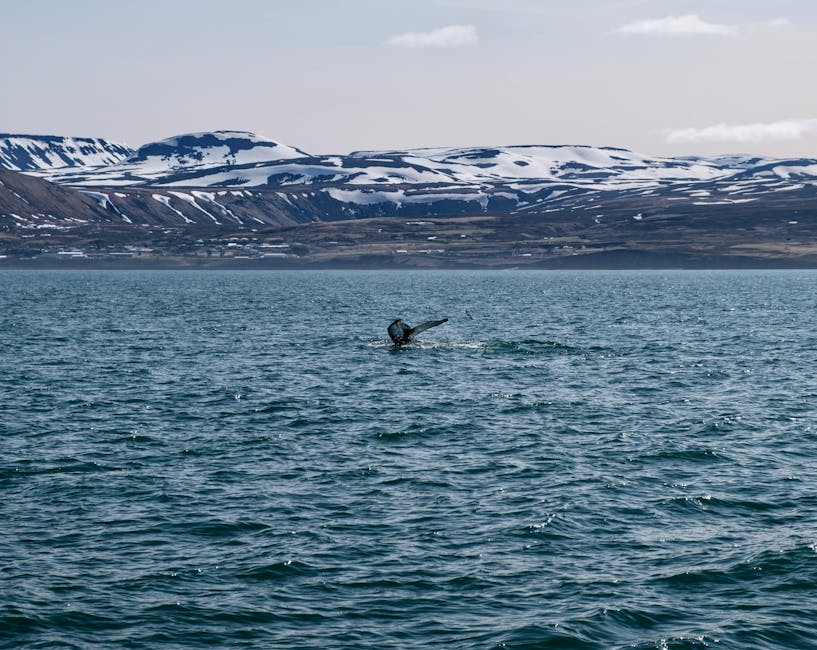
Iceland’s whale watching is one of the rare cases where the tourism marketing tells the truth. The waters genuinely are one of the most productive whale habitats in the North Atlantic. The success rates are real and they are high, especially in the north, especially in summer. The hardest call you have to make is the port. Reykjavík for convenience, Húsavík for reliability, Akureyri for the city base, Snæfellsnes for spring orcas. Pick by your timing, dress in real layers, take the medication an hour before, sit on deck, and watch the back of the whale rather than the screen of your phone. A 3-hour trip from a small north-coast harbour is the kind of thing you remember years later, in a way you did not expect.
The wider Iceland trip these tours fit into is the bit that takes planning. We have separate guides for all the day tours from Reykjavík, for Iceland’s wildlife more broadly, and for the full range of tours we cover. If you want to see a couple of full tour guides for context, browse the category page. Most travellers who book a whale tour end up wishing they had built it into a longer northern loop. If that becomes you, the Ring Road guide and the Snæfellsnes guide above are the next two reads.