Reykjavík moves fast when you’re on wheels.
This small-group e-scooter adventure is a smart way to see major sights in a short window, while your guide fills the gaps with stories you usually only hear in person. You meet in the center, get a safety talk, learn the scooter basics, and then glide between landmarks that sit closer together than they look on a map.
I love two things most: the tour stays small (max 8), so you’re not stuck behind a crowd, and the setup is beginner-friendly with helmets and hands-on training. Even if you don’t have a driver’s license, the tour is designed so you can ride after the orientation.
One thing to consider: Iceland weather can be wild. This experience needs good weather, and you’ll want to dress for cold wind and keep an eye on pedestrians until you’re fully comfortable on the scooter.
In This Review
- Key things that make this tour work
- Why an E-Scooter Tour Is the Fast Way to Get Your Bearings in Reykjavík
- Meeting on Skólavörðustígur and Learning the Scooter Basics
- From Skólavörðustígur Shops to the Coast at Nauthólsvík Beach
- Öskjuhlíð Hill Viewpoints and the Peace of Rolling Through Wood and Lava
- Höfði House and the 1986 Reykjavík Summit Story
- Sun Voyager for Viking-Ship Inspiration and Ocean Views
- Harpa Concert Hall and Parliament: Architecture You Can Actually Follow
- Tjörnin and Hljómskálagarður: Reykjavík’s Quiet Green Breathing Space
- Hallgrímskirkja: Finish at the Church and Look Out Over Reykjavík
- Price, Time, and Group Size: What $51 Buys You in 2 Hours
- When to Ride and What to Wear for Iceland’s Wind
- Should You Book This Reykjavík Rollers E-Scooter Tour?
- FAQ
- Where does the tour start?
- How long is the Reykjavík e-scooter tour?
- How big is the group?
- Do I need a driver’s license to join?
- What’s included with the tour?
- How do I get my ticket?
- Where is the tour ending point?
- Is public transportation nearby?
- Is the tour suitable for most people?
- What if weather is bad?
Key things that make this tour work
- Max 8 riders keeps the pace relaxed and the group easy to manage
- Helmets + training mean you don’t have to guess how to ride
- Route hits the big names like Harpa, Sun Voyager, Parliament House, and Hallgrímskirkja in one go
- Coastline + viewpoints give you both city icons and ocean-and-mountain scenery
- Historic stop at Höfði House connects Reykjavík to the 1986 summit
- Short photo breaks let you actually capture the views without the hassle of long line-ups
Why an E-Scooter Tour Is the Fast Way to Get Your Bearings in Reykjavík
Reykjavík is compact, but it still eats time when you’re walking—especially if you’re dealing with wind, rain, or that classic Iceland “surprise weather” feeling. A guided e-scooter tour is a practical shortcut: you cover a lot of ground while staying in the flow of the city center.
What I like about this format is that it’s not just a sightseeing loop. You’re learning how the city is laid out—where key neighborhoods sit, why certain buildings matter, and how the geography shapes views—without turning your day into a museum marathon.
If your goal is to get your bearings fast and leave with a sense of where to wander next, this kind of tour is ideal. It’s also a good match if you want fun movement, not “stand still and read a plaque” travel.
You can also read our reviews of more city tours in Reykjavik



Meeting on Skólavörðustígur and Learning the Scooter Basics
You start at Skólavörðustígur 6b in central Reykjavík, a convenient area for kicking off your day. Expect a safety briefing right away, then a short training session so you get comfortable before the sightseeing portion begins.
One of the best practical details: you don’t need a driver’s license to join. That doesn’t mean you’re handed a scooter and sent off blind. The tour is set up so you can learn the controls and riding basics with the guide guiding your early moments—then you move out as a group.
Also, you’ll ride a modern e-scooter and wear a helmet. That combination matters more than people think. Helmets are a clear safety win, and a stable, easy-to-handle scooter helps you focus on the city instead of fighting the vehicle.
From Skólavörðustígur Shops to the Coast at Nauthólsvík Beach

Your ride starts on Skólavörðustígur, the street known for charming shops and cafés. This is a smart first start because you’re already in a lively area, so you’re not “warming up” in an empty parking lot. It sets the tone: Reykjavík is walkable, but it’s fun to roll through it.
Then the tour shifts toward the coastline, and that’s where the scenery changes quickly. You head to Nauthólsvík Beach, where the contrast is the whole story: black sand paired with geothermal-heated seawater. Even if you don’t spend time sitting at the shore, you’ll feel the difference once you’re by the ocean.
A quick practical note: the coast can be windy. Keep your layers tight and your lower face covered if the cold hits. The goal is to stay comfortable enough that you can enjoy the stop, not just survive it.
Öskjuhlíð Hill Viewpoints and the Peace of Rolling Through Wood and Lava
Next you glide toward Öskjuhlíð Hill, which offers a calmer feel than the busiest city blocks. You’ll pass areas with woodland and lava fields, so the city’s island geology shows up in an everyday way.
This is the part of the tour I’d call the “breather.” The scooter lets you move through the visual space quickly, and the guide’s pacing gives you short, digestible moments to look around. Instead of rushing past one photo stop after another, you get a sense of Reykjavík as both city and island terrain.
If you’re sensitive to long walking, this is where the e-scooter shines. You still cover ground, but the ride feels less tiring than trudging uphill and back down.
Höfði House and the 1986 Reykjavík Summit Story

After the viewpoints, you head toward Höfði House, a historic building connected to the 1986 Reykjavík Summit between Ronald Reagan and Mikhail Gorbachev. This stop adds real-world context to Reykjavík’s modern identity.
The way this gets explained on the tour is what makes it land. You’re not just seeing a building; you’re learning what happened there and why that meeting mattered. It turns a normal-looking landmark into a place with weight.
And it’s a good reminder that Reykjavík isn’t only about today’s design and cafés. The city has played roles in world events, and Höfði House is one of the easiest ways to understand that without extra ticketing or switching between multiple tour companies.






Sun Voyager for Viking-Ship Inspiration and Ocean Views
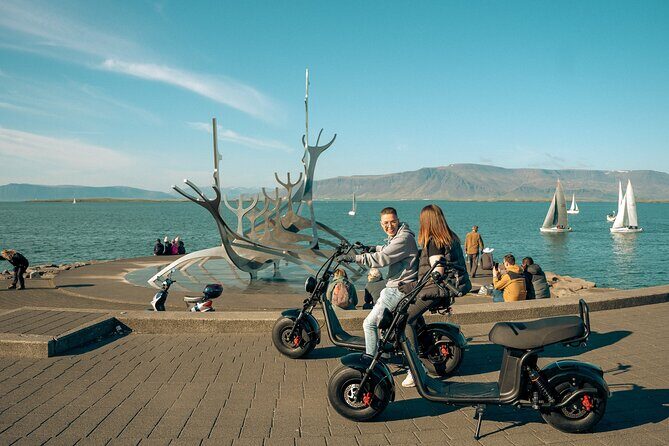
Then it’s time for Sun Voyager, the famous sculpture inspired by Viking ship designs. This is the stop where your camera likely starts working again, because the structure is striking—and the surroundings help you appreciate it.
You’ll also get panoramic ocean views, with Mount Esja visible in the distance on clear days. If you’ve been studying Reykjavík’s geography, this is where it clicks: you can see how the ocean wraps the city and how the mountain sits as a backdrop.
The stop is timed so you can look, take a photo, and keep moving. If you’re the type who likes a quick photo window rather than lingering for 45 minutes, this tour’s pacing suits you.
Harpa Concert Hall and Parliament: Architecture You Can Actually Follow
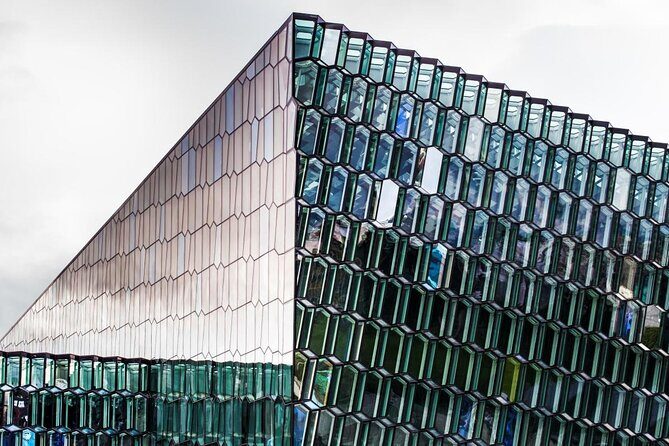
From Sun Voyager, you ride to Harpa Concert Hall, one of Reykjavík’s signature structures. The glass façade is the headline, designed to resemble Iceland’s basalt landscapes. Up close, that design choice makes more sense than it does in photos.
Harpa also connects to cultural life. You’ll hear why the hall matters and what kind of events happen inside. Even if you’re not attending a performance, the tour helps you understand Harpa’s role as a city gathering point.
After that comes Parliament House, where Iceland’s democratic process unfolds. This stop is mostly about seeing the setting and learning the context behind it. The architecture is noticeable, but the story is the real payoff—why democracy matters here, and how the city’s public buildings reflect civic identity.
If you want an easy way to connect modern Reykjavík icons to the country’s systems—culture and government—this section does it without turning your day into a schedule of separate stops.
Tjörnin and Hljómskálagarður: Reykjavík’s Quiet Green Breathing Space
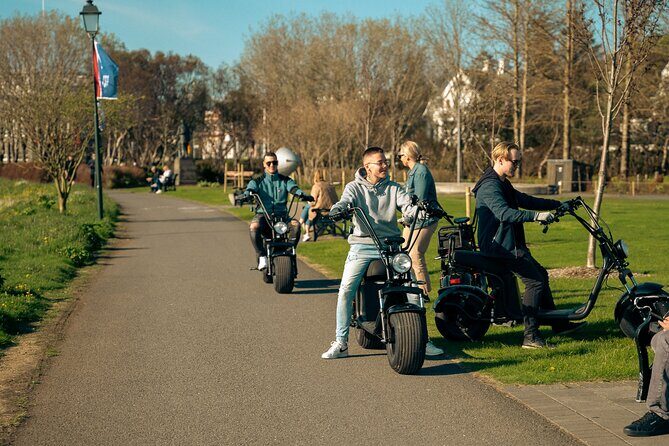
You continue toward Tjörnin, a serene lake surrounded by parkland. This is an important mental shift: after big architecture, you get open water and calmer surroundings. It’s also a great place to slow down for a moment and let the ride reset your senses.
The guide also shares what Tjörnin means within Reykjavík’s urban layout and points out the birdlife you might spot. Even if you’re not a bird-watching person, it’s a nice way to notice what makes this city feel alive.
Then you move to Hljómskálagarður, a park with a tranquil feel. The tour builds in a break so you’re not constantly moving. It’s the kind of pause that helps if you’re riding in cold weather and need a moment to warm up your hands or just catch your breath.
Hallgrímskirkja: Finish at the Church and Look Out Over Reykjavík
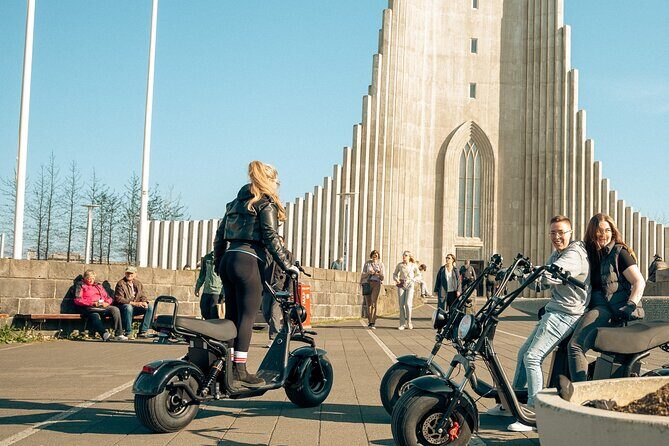
The tour concludes by heading to Hallgrímskirkja Church, one of the most iconic buildings in the city. The tower hits you visually before you even fully arrive, and that’s useful on a scooter tour: you always have a clear “finish line” to navigate by.
The highlight here is the observation deck, where you can get panoramic views over Reykjavík. This is where you’ll appreciate the scale of what you just covered. You can look back across the city and match landmarks to the route you rode.
You’ll also hear stories about the church’s construction and its cultural role. That context matters because this building isn’t just pretty from the outside. It’s tied to the identity of Reykjavík and Icelandic community life.
And then you roll back to the meeting point, so your day doesn’t end with more transport planning.
Price, Time, and Group Size: What $51 Buys You in 2 Hours
At $51 for roughly two hours, you’re paying for convenience and guidance as much as for the scooter itself. The value isn’t only that you see big sights—it’s that you see them in a single, organized run with a small group.
The fact that the group is capped at eight changes the experience. You’re more likely to get extra attention if you’re learning the scooter, and it’s easier for the guide to control the pace around pedestrians and tricky crossings.
Also, you’re not spending your day buying separate tickets and timing multiple independent stops. This tour is set up to thread together the highlights, including Harpa, Sun Voyager, Parliament House, and Hallgrímskirkja, into one cohesive loop.
If you’re on a short trip and want maximum orientation value, this is one of the better ways to spend a couple of hours in Reykjavík.
When to Ride and What to Wear for Iceland’s Wind
This experience requires good weather. That matters because Iceland wind can turn “fun cruising” into “white-knuckle survival” if you’re not layered properly. If the day looks truly rough, consider choosing a time when the forecast improves, or be ready for the tour to shift or cancel due to weather.
Wear warm layers you can handle while riding. Keep your gloves secure. Bring something that blocks wind at your neck if you’re sensitive to cold. Several riders mention how important it is to cover up when conditions turn nasty.
One more practical point: scooter comfort is partly physical, not just temperature. Until you feel fully confident with the vehicle in crowded pedestrian zones, you might need a little time. The training is designed for this, but you’ll still want to start calm and ride like you’re in learning mode. After a few minutes, most people find their rhythm.
Should You Book This Reykjavík Rollers E-Scooter Tour?
I’d book this if you want three things at once: city highlights, efficient touring time, and a fun way to move without draining your legs on cold sidewalks. It’s also a great first-day activity if you want to understand where landmarks sit, so the rest of your trip feels easier.
Skip it if you know you’ll struggle with scooters in shared spaces or if you’re hoping for a tour that’s purely sheltered from wind and outdoor walking. Also, if weather looks poor, you might end up rescheduling—this one is built around riding outdoors.
If you do book, aim to arrive on time at Skólavörðustígur 6b, dress for wind, and give yourself those first minutes to get comfortable. Once you settle in, the route turns into a quick, bright way to see Reykjavík from the inside out, with a guide like Viktor who keeps the ride fun and the stories grounded.
FAQ
Where does the tour start?
You start at Skólavörðustígur 6b, 101 Reykjavík, Iceland.
How long is the Reykjavík e-scooter tour?
It runs for about 2 hours.
How big is the group?
The tour is limited to a maximum of 8 travelers.
Do I need a driver’s license to join?
The tour welcomes people even without a driver’s license, as long as you can complete the training and safety briefing.
What’s included with the tour?
You get a modern e-scooter and a helmet. You also receive a safety briefing and a training session.
How do I get my ticket?
You’ll receive a mobile ticket.
Where is the tour ending point?
The tour ends back at the meeting point.
Is public transportation nearby?
Yes, the meeting area is near public transportation.
Is the tour suitable for most people?
The information says most travelers can participate, and the tour includes training so you can learn the scooter basics.
What if weather is bad?
The experience requires good weather. If it’s canceled due to poor weather, you’ll be offered a different date or a full refund.