Reykjavik makes sense when you walk it. This 2.5-hour small-group stroll ties together the city’s biggest sights with plainspoken stories about Iceland’s geology and the culture behind daily life. I especially love the small-group feel (max 12) and the way your guide turns famous buildings into real context, plus practical tips on where to eat and what to see next.
One thing to plan for: it runs in changing weather. You’ll be outside for most of the tour, and access to the Hallgrímskirkja bell tower can depend on conditions and rules on the day, so dress for wind and slick sidewalks.
In This Review
- Key takeaways
- A 2.5-Hour Reykjavik Walk That Sets Your Bearings
- Hallgrímskirkja: The Concrete Giant and the Bell-Tower View
- Einar Jónsson Statue Garden, Þingholt Lanes, and the City Pond Pause
- City Hall’s Topographical Map: Volcanology Made Simple
- Alþingishúsið, the Cathedral, and the First Viking Footprints
- Old Harbour, Harpa, and the Sólfar Bay Views That Land the Walk
- Small-Group Reality: Your Guide Drives the Experience
- Price and Value of a $54.65 Orientation Tour
- Tips I’d Use Before You Go: Shoes, Weather, and Photo Timing
- Should You Book This Reykjavik City Walking Tour?
- FAQ
- How long is the Reykjavik City Walking Tour?
- What landmarks does the tour include?
- How big is the group?
- Where do I meet the guide and where does the tour end?
- Is the bell tower at Hallgrímskirkja included?
- What’s included in the price?
- What’s not included?
- Does it run in bad weather?
- Do I get a mobile ticket?
- Can I cancel for a full refund?
Key takeaways
- Max 12 people keeps the tour conversational, not a loud shuffle through downtown
- Hallgrímskirkja views are the early win if the bell-tower access is available
- Norse myths to city pond ducks mix big cultural stories with small, surprisingly calming stops
- Reykjavík City Hall topographical map makes volcanology feel understandable, not academic
- Harpa + Sólfar give you a strong end-of-walk panorama over the bay
A 2.5-Hour Reykjavik Walk That Sets Your Bearings
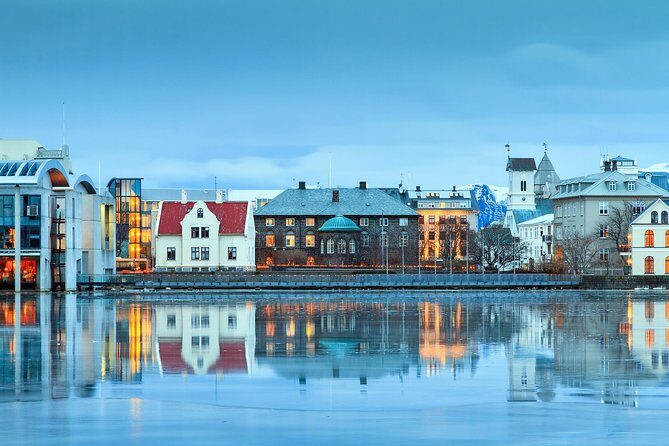
If this is your first trip to Reykjavik, you’ll feel the payoff fast. In about 2 hours 30 minutes, you cover central landmarks, but the real value is how they connect: church to harbor, politics to mythology, and daily city life to Iceland’s volcanic reality.
This is the kind of orientation walk that helps you navigate the rest of your time in Iceland. By the end, you’re not just looking at places—you understand why Reykjavik grew where it did and what makes Icelanders tick, including Viking-era roots and the local world of elves and legend.
You also walk at a steady city pace on established streets. That’s good if you want energy on day one, but it means you should expect normal winter discomfort if you’re traveling in colder months.
You can also read our reviews of more walking tours in Reykjavik


Hallgrímskirkja: The Concrete Giant and the Bell-Tower View
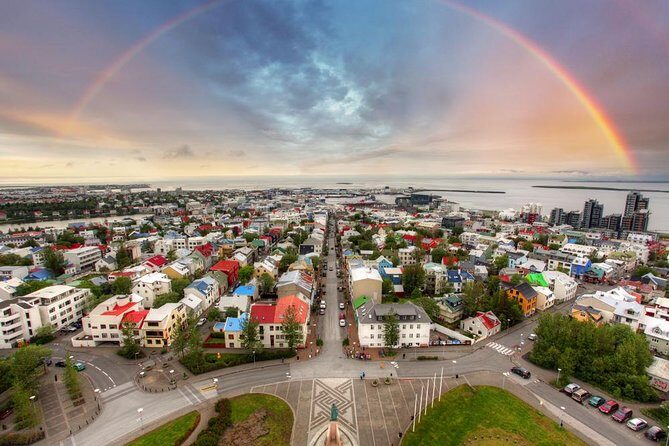
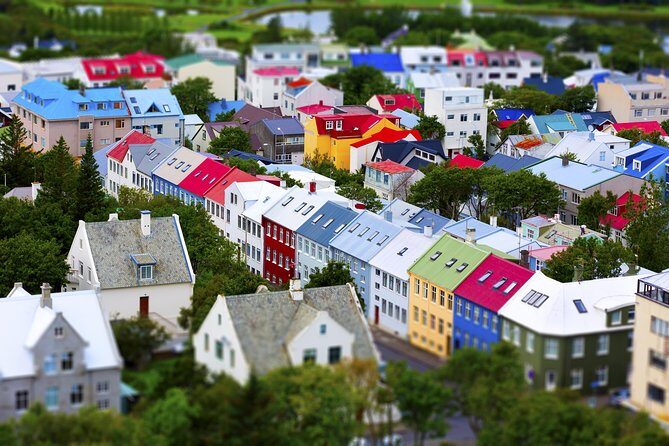
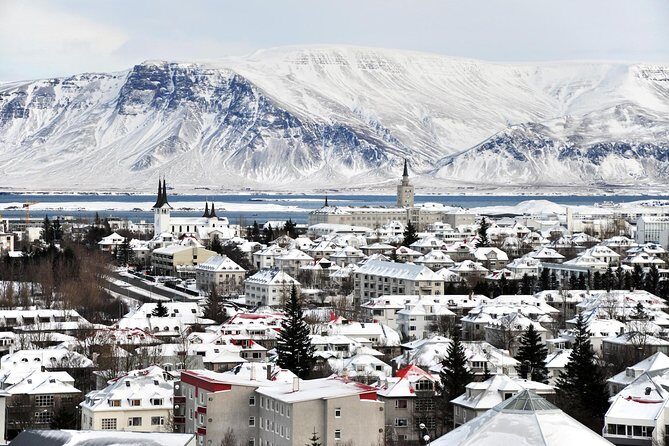
Most Reykjavik tours start with a showpiece, but Hallgrímskirkja earns its reputation. You meet at Hallgrímstorg 1 and begin at the church itself, then (if conditions allow) you go up to the bell tower for a big-city view over red rooftops and out toward Faxaflói Bay.
Even if you don’t get the tower access, the building is still worth your time. The church’s stepped concrete façade reminds you that this is Iceland: shaped by geology, built for weather, and quietly confident. Inside, the vibe stays minimalist, with a grand organ that gives the space a serious musical backbone.
You’ll also get the story behind the name. Hallgrímskirkja honors Hallgrímur Pétursson, a 17th-century clergyman and author of hymns tied to the Passion. That kind of detail turns the landmark from a photo spot into a real piece of Icelandic cultural memory.
Practical note: one guide-led group may not go up the bell tower every day due to access limits. If tower views are your top priority, plan to arrive early on your own before the tour starts, since the operator recommends using the elevator ahead of time when possible.
Einar Jónsson Statue Garden, Þingholt Lanes, and the City Pond Pause
After the church, you shift into myth mode at Einar Jónsson’s statue garden. This is where the Norse gods and the stories around them show up in a way that feels more human than textbook. If you like mythology that has a local accent, this stop is a fun change of pace from churches and official buildings.
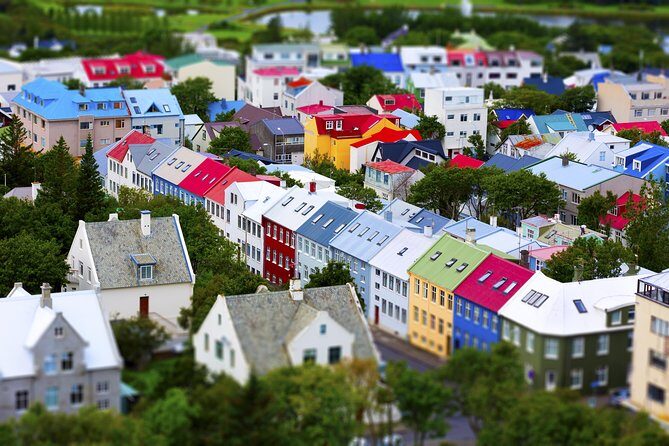
Next you walk through Thingholt (Þingholt), one of Reykjavik’s oldest neighborhoods, known for its colourful corrugated iron houses. The point here isn’t just architecture spotting. The guide uses the streets to explain how older Reykjavík fits into today’s downtown, so the city starts to feel layered instead of flat.
Then comes a surprisingly restful break: Reykjavik City Pond. You’ll feed ducks, geese, and swans in this pocket of nature right in the middle of town. It’s short, but it’s one of those moments that makes Reykjavik feel less like a capital and more like a lived-in community.
This stop also helps if weather is rough. Even when wind pushes hard, feeding the birds slows the tour down naturally—and gives you a quick reset before the more urban, political sights.
City Hall’s Topographical Map: Volcanology Made Simple
At Reykjavík City Hall, the guide points out a giant topographical map of Iceland. It’s a clever teaching tool because it makes the country’s shape feel physical, not abstract. Instead of hearing volcano talk in theory, you look at land forms that match what Icelanders live with.
This is where the tour’s geology thread really clicks. You get a primer on Icelandic volcanology and geological history while you stand in front of that map. It’s not a lecture hall moment—you’re walking, looking, and connecting ideas to places you’ll recognize later.
You’ll spend about 30 minutes around this stop. It’s also a good “warming up” window in winter travel because it’s not constantly exposed in the same way as open harbors. The guide will time it so you can catch the story and keep moving.
And this stop matters for value: Iceland is one of those places where people talk about volcanoes all the time, but knowing the basics helps you make sense of everything from road cuts to geothermal vibes later on.
Alþingishúsið, the Cathedral, and the First Viking Footprints
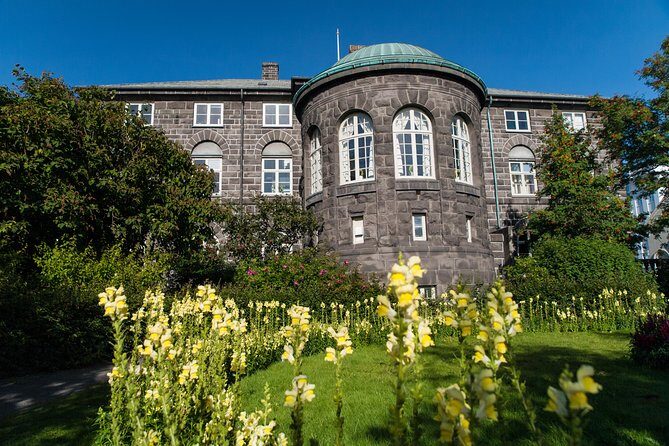
The middle of the walk focuses on governance and old city roots. You pass the parliament area (Alþingishúsið), plus Reykjavík’s cathedral, Domkirkjan, which serves as the seat of the Bishop of Iceland and the mother church of the Evangelical Lutheran Church of Iceland.
You’ll also hear about where the first Viking homesteads were located in the city. That detail changes how you read downtown streets. Instead of seeing them as modern blocks, you understand that settlement history sits right under the surface.
Domkirkjan itself isn’t just a stop for a quick glance. It anchors the old-city feel and gives you a sense of how religious and civic life braided together in earlier Reykjavík.
One small timing detail: these civic stops tend to be shorter, because the tour keeps you moving between zones. You’ll likely get about 10 minutes at Domkirkjan, and about 30 minutes total for the parliament/cathedral/first-homes-and-old-city stretch. If you’re the type who hates rushed photos, you may want to keep your camera ready early and shoot quickly.
You can also read our reviews of more city tours in Reykjavik





Old Harbour, Harpa, and the Sólfar Bay Views That Land the Walk
From the city center, the tour moves toward the Old Harbour and then the bayfront. This is where you’ll start to see why Reykjavik feels different from other Nordic capitals. The water isn’t a backdrop—it’s part of the city’s identity.
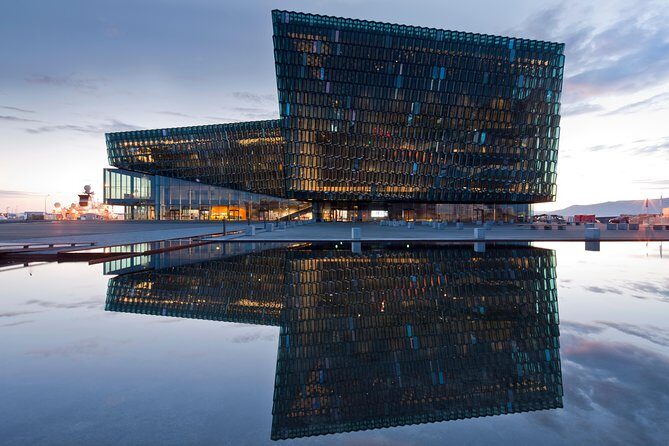
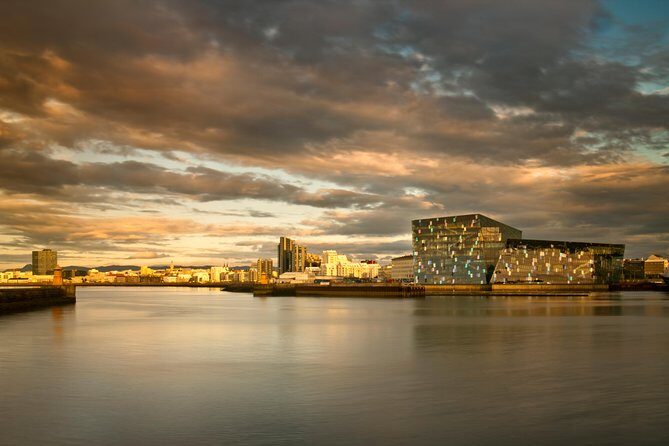
You’ll get views of Harpa, the concert hall and conference centre. It’s an architectural moment you can’t fake with photos at a distance. Up close, Harpa reads as a statement building meant for Reykjavik’s present-day cultural life.
Right near Harpa, you’ll stop at Sólfar (Sun Voyager), the sculpture designed by Jón Gunnar Árnason. From here, the view opens out over the bay and toward Mt. Esja. On a clear day, the whole area looks like a postcard. On a windy day, it still feels dramatic—just bundle up and keep your lens protected.
This part of the walk also tends to be a crowd favorite because it gives you perspective. You can finally link earlier stops—church, politics, neighborhoods—to the place where visitors naturally picture Reykjavík’s life: by the harbor, looking outward.
The tour finishes back in central Reykjavik at the Old Harbour Souvenirs area on Geirsgata 5c.
Small-Group Reality: Your Guide Drives the Experience
This tour is built around a small group of up to 12 people, and it shows. With fewer people, you’re more likely to get a guide who adjusts pace, answers questions, and adds the kind of humor that makes history stick.
Your guide is part storyteller, part city friend. Expect stories about vikings and elves, plus culture basics like how Icelandic names work. Several guides connected to this tour style are known for making fun, factual points—for example, the idea that Icelanders often don’t use typical last names, and family naming follows a different pattern than many visitors expect.
You’ll also leave with expert recommendations. That usually means where to go next for museums, bars, and restaurants, based on what you’re actually interested in.
Two practical considerations from the style of this tour:
- The pace is meant for a group moving together, so if you walk slowly, you may need to make a point of signaling you’re behind.
- Some people report that bell-tower access isn’t guaranteed every day, so don’t assume you’ll automatically get the top view.
If you’re the kind of traveler who likes questions—volcano basics, why neighborhoods look the way they do, and how Reykjavik works in real life—this format is a good fit.
Price and Value of a $54.65 Orientation Tour
At $54.65 per person, this is not a cheap city walk—but it also isn’t just you paying for a route. You’re paying for a live guide, a tight itinerary built around the most important central sights, and the time-saving benefit of having a narrative thread connecting everything.
There’s also a clear value structure:
- You cover multiple major landmarks in a compact radius
- Several key stops have free admission (as listed for the tour)
- You get tailored recommendations to help you spend the rest of your trip smarter
What’s not included is also important. Lunch isn’t included, and there’s no hotel pickup/drop-off. So you’ll need to handle your own meals and get yourself to the starting point at Hallgrimstorg 1.
For me, the best value angle is this: Reykjavik is small enough to walk, but confusing enough that a guided orientation makes your self-guided days better. You stop repeating the same questions in every museum line, because you already know the basics that explain what you’re seeing.
Tips I’d Use Before You Go: Shoes, Weather, and Photo Timing
This tour operates in all weather conditions, which is Iceland-speak for plan on rain, wind, snow, or the quick switch between them. Bring layers, and bring them like you mean it: warm top, insulating mid-layer, and something wind-resistant.
Comfortable walking shoes are a must. The route is downtown walking, so you’re not hiking a trail, but you are dealing with cold ground and slick patches.
Bring a camera, but also bring a realistic plan for stopping quickly. Some stops are short by design—like around 15 minutes at Hallgrímskirkja’s initial segment and about 15 minutes around Harpa/Sólfar—so you’ll want to shoot efficiently and listen at the same time.
If tower access matters to you, start earlier than the tour if you can. Even if the tour’s plan is to go up when conditions allow, the operator advises early arrival so you can use the elevator ahead of time if access is restricted during the tour.
Finally, if you’re scheduling big ticket items later that day (concerts, museums, or long drives), consider doing this as early in your trip as possible. It helps you turn the rest of your itinerary into a logical sequence instead of a list of unrelated places.
Should You Book This Reykjavik City Walking Tour?
Book it if you want a fast, friendly orientation that connects major Reykjavik landmarks to the reasons they matter. I’d especially recommend it if you’re interested in Iceland beyond nature—politics, names, myths, and the way geology shapes everything.
Skip it or think twice if you hate being outside for 2+ hours in changing weather, or if you need a very slow pace with lots of pause time at every building. Also, if your only goal is the Hallgrímskirkja bell-tower view, make a plan to check access early on your own.
For most first-time visitors, this tour hits a practical sweet spot: central locations, a coherent story thread, and enough city-specific tips to keep your next days from feeling like guesswork.
FAQ
How long is the Reykjavik City Walking Tour?
It runs for about 2 hours 30 minutes.
What landmarks does the tour include?
You’ll visit or pass major stops such as Hallgrímskirkja Church, Einar Jónsson’s statue garden, Reykjavík City Hall with the topographical map, Alþingishúsið (parliament area), Domkirkjan (Reykjavík Cathedral), the Old Harbour area, Harpa Concert Hall, and the Sólfar (Sun Voyager) sculpture.
How big is the group?
The tour has a maximum of 12 travelers.
Where do I meet the guide and where does the tour end?
You start at Hallgrímstorg 1, 101 Reykjavík, Iceland (Hallgrímstorg). The tour ends near Old Harbour Souvenirs at Geirsgata 5c, 101 Reykjavík, Iceland.
Is the bell tower at Hallgrímskirkja included?
The plan is to go up to the bell tower if conditions allow. However, there can be day-of access limitations, so it’s smart to arrive early if you want that view.
What’s included in the price?
The guide is included.
What’s not included?
Lunch and hotel pickup/drop-off are not included.
Does it run in bad weather?
The tour operates in all weather conditions. The operator notes you should dress appropriately.
Do I get a mobile ticket?
Yes, the tour uses a mobile ticket.
Can I cancel for a full refund?
Free cancellation is available if you cancel at least 24 hours in advance. If you cancel less than 24 hours before the start time, the amount paid is not refunded.