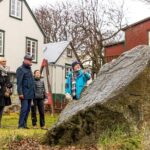
Old Harbor has a way of feeding your brain. This Reykjavik Food Tour turns a short walk into a lived-in introduction to Icelandic food, with stops tied to the fishing story that shaped the city. You’ll move through the Old Harbor/Grandi area, pausing at major points of interest while local bites and drinks keep the experience moving.
Two things I really like: the tight group size (max 8), which makes it easier to ask questions and get personal recommendations, and the way the tastings connect to real places like the Saga Museum, the Northern Lights Center, and the Maritime Museum. One thing to consider is that this experience depends on good weather, and the walking can feel a bit more noticeable if it’s cold or wet.
If you want your Reykjavik start to feel less like a checklist and more like understanding why Iceland eats the way it does, this is a smart pick.
In This Review
- Key highlights to plan around
- Old Harbor on Foot: Why This 3-Hour Loop Works
- Saga Museum and Grandi: Starting With the Story Behind the Food
- Northern Lights Center Stop: Understanding Iceland’s Daily Culture
- Maritime Museum: The Fish Stays at the Center of Everything
- Iceland Ocean Cluster: Sustainability, Fish Farms, and Whaling Talk
- How the Tastings Work: At Least Six Spots for Real Icelandic Food
- Price and Value: What $123 Buys You in Reykjavik
- Best Fit: Who This Old Harbor Food Walk Is For
- Should You Book It? My Practical Take
- FAQ
- How long is the Reykjavik Old Harbor walking food tour?
- How many people are in the group?
- What’s included in the tour tastings?
- Where does the tour start and end?
- What are the main stops during the tour?
- How much time is spent at each major stop?
- Is admission included for the museums and centers?
- What happens if weather isn’t good?
- Who runs the tour?
Key highlights to plan around

- At least six tastings across local eateries and street-food spots, plus drinks
- Small-group vibe (up to 8 people) with time to talk and ask questions
- Museum and cultural stops included with free admission tickets
- Old Harbor walking route built around fishing history and today’s industry
- Talk time on modern issues like sustainability, fish farms, and whaling
- Multiple tour times with morning or afternoon options (the day’s schedule can vary)
Old Harbor on Foot: Why This 3-Hour Loop Works
Reykjavik’s Old Harbor area is compact enough that you can get a lot done without turning the day into a slog. This tour runs about 3 hours and ends only a few minutes from where you started, so you’re not burning half your trip on transit or backtracking.
You also get a format that makes sense in Iceland. You’re not just walking between stops; you’re stopping often enough that you can stay warm, check out the sights, and refuel. The day includes several pauses plus food breaks, so even if you’re not the speed-walking type, you’ll still feel like you’re keeping momentum.
The group size matters more than you might think. With a maximum of 8, the guide can keep the pace human and tailor explanations as questions come up. That’s especially useful when you’re trying to make sense of Icelandic food—what’s traditional, what’s changed, and what people actually order now.
One practical note: the tour requires good weather. If it’s a miserable day outside, dress like you mean it. Bring layers you can take on and off, and use outerwear you’re comfortable with for wind and spray. If weather is poor, you’ll be offered a different date or a full refund.
You can also read our reviews of more walking tours in Reykjavik

Saga Museum and Grandi: Starting With the Story Behind the Food
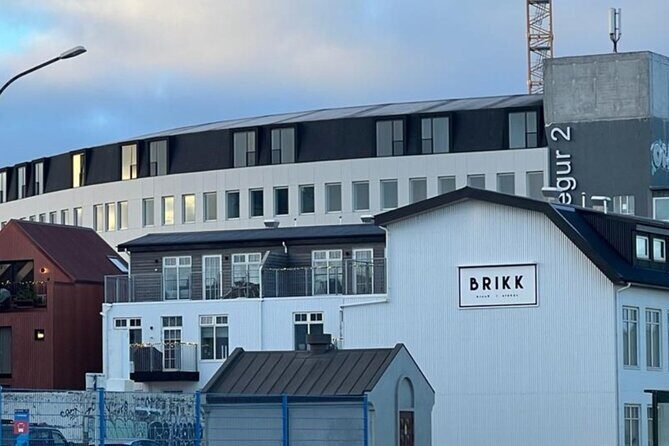
The tour kicks off with time around the Saga Museum area in Grandi, in the Reykjavík Old Harbor neighborhood. You spend about 30 minutes here, and the admission ticket is marked free, so this isn’t just a quick photo stop.
Why this matters for food: in Iceland, food isn’t only about taste. It’s also about survival, trading routes, and what the sea could reliably provide. Starting with a museum stop helps you put later bites into context instead of treating everything like random samples.
You’ll also pass eateries in the Grandi area, and the flow is designed so you’re not only learning and then waiting. During this part, you’ll stop at one to two local eateries nearby, which keeps the rhythm practical: a little context, then something to taste.
Possible drawback: if you’re hoping for a purely “eat-first” experience with minimal museum time, this start includes a cultural stop. It’s still tied to food culture, but it’s not a food-only crawl.
Northern Lights Center Stop: Understanding Iceland’s Daily Culture
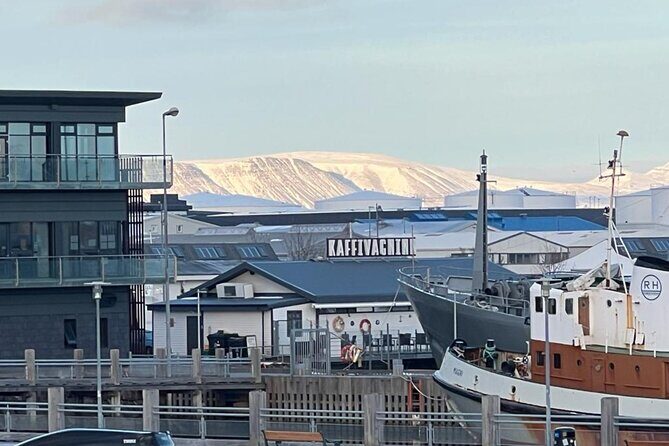
Next up is Aurora Reykjavik – The Northern Lights Center, again with about 30 minutes on the schedule. This isn’t just a stop to look at a building—it’s a chance to connect Icelandic identity to what people experience day to day, not only what Iceland looks like on postcards.
You’ll also move through points of interest in the Old Harbor area to understand Iceland’s past and present, and the Northern Lights Center fits that tone: it’s about awareness, learning, and how Iceland talks about the natural world as part of life.
Between stops, you’ll keep sampling. During this segment, the plan calls for another one to two local eateries. That means you’re not stuck in a museum and then starving afterward. You’re tasting as you learn, which makes the food feel like part of the same narrative.
What to expect: the focus here is on culture and context. If you’re the type who enjoys short explanations and likes asking follow-up questions, this is a strong fit.
Maritime Museum: The Fish Stays at the Center of Everything
Fishing is the backbone of Icelandic food culture, and this part of the tour makes that clear. You’ll spend around 30 minutes at the Reykjavik Maritime Museum, with a free admission ticket included.
This stop is where the walking food tour earns its stripes. Instead of just listing dishes, you get the reason behind them: fish didn’t become important as a trend—it became important as a foundation. The tour frames it from settlement onwards, so you’re connecting today’s menu to the long arc of how Iceland developed.
It also helps explain why fish shows up in so many forms. Even if you don’t love every style of seafood, you’ll at least understand why it exists and why it remains normal in Iceland.
During this segment, you’ll also hit one to two local eateries. That pacing is smart because it keeps you from overthinking. You learn a theme, then you test it with what you can actually taste.
A consideration: if you already know you dislike fish, this tour may not be your best match, since fish is described as a staple and it’s central to the stories tying the stops together.
Iceland Ocean Cluster: Sustainability, Fish Farms, and Whaling Talk
Between tastings, you’ll get talk time at the Iceland Ocean Cluster. Fishing isn’t only a historical topic here—the tour points to today’s major issues, including sustainability, fish farms, and whaling.
This is one of the most practical parts of the experience because it connects what’s on your plate to what’s happening in the industry right now. It’s also a good way to separate myths from reality in your head. You’ll hear how Iceland thinks about the ocean and the choices it makes for the future, not just the past.
You won’t just sit and listen the whole time. The tour uses the time between tastings to keep the conversation tied to what you’re eating and seeing around the harbor area.
Small caution: this section includes heavy topics. It’s not presented as political theater in the tour description, but you should expect serious discussion rather than a light-and-funny chat.
You can also read our reviews of more food & drink experiences in Reykjavik






How the Tastings Work: At Least Six Spots for Real Icelandic Food
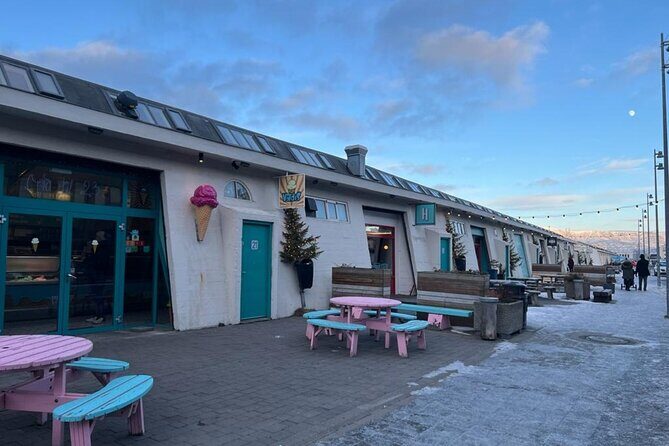
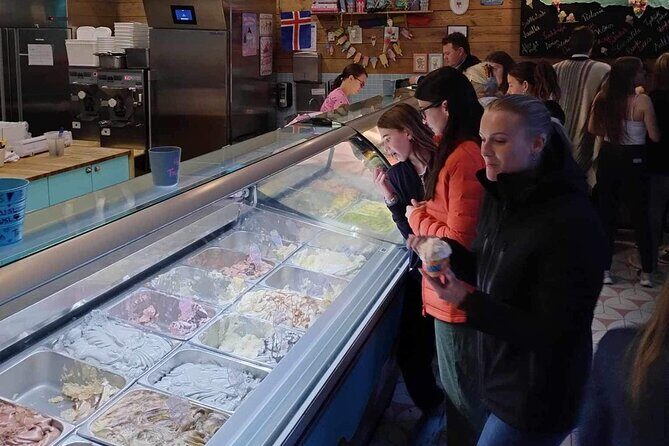
The headline promise is simple: you’ll sample a variety of Icelandic foods and drinks, visiting at least six different restaurants or street food vendors during the tour.
That number is useful because it changes the entire experience. You’re not putting all your money on one restaurant or one dish. You’re getting range—more textures, more flavors, and a better sense of what counts as normal Icelandic eating versus what’s only famous as a novelty.
This is also the part where the guide’s style matters. One guide named Sabrina is mentioned in feedback as someone who brought real energy and shared notes that made the food feel grounded in daily life. If you’re lucky enough to get a guide like that, the explanations can turn each bite into a mini lesson you’ll remember later when you order on your own.
Practical expectations: this is not described as a full sit-down meal with courses. It’s a walking tasting format—so think of it as smart sampling. It’s ideal as an early or mid-trip activity because it helps you decide what to seek out afterward.
Price and Value: What $123 Buys You in Reykjavik

At $123 per person, this tour sits in the mid-to-upper range for a city walking experience. The question is whether it feels like value, and for a lot of people it does, because you’re getting more than a guide and a stroll.
Here’s what supports the price:
- At least six tasting stops (food and drinks are part of the experience)
- A small-group format (max 8 people), which usually means more attention
- Free admission tickets for key cultural stops like the Saga Museum, the Northern Lights Center, and the Maritime Museum
- A structured route through Old Harbor with explanations tied to fishing and modern industry issues
You’re paying for a bundled experience: narration + tastings + museum/cultural access. If you’ve ever tried to piece this together alone, you’ll know how hard it is to get the same storyline and pacing on your own—especially in a place where many menu items are connected to local ingredients and history.
Timing also affects value. The tour is commonly booked about 34 days in advance on average, which tells you it’s a popular way to start. If you’re traveling in busy seasons or want a specific time window, booking early helps.
Best Fit: Who This Old Harbor Food Walk Is For
This works best if you want Reykjavik to feel legible fast. You’ll learn why the city’s food culture leans so heavily on the sea, and you’ll see how modern Iceland thinks about sustainability and industry issues.
You’ll especially like this if:
- you’re in Reykjavik for a short time and want a high-signal overview
- you enjoy walking tours where you stop often enough to stay comfortable
- you want a guided tour that connects food to places, not just a list of dishes
- you prefer small groups over large bus-style experiences
It may be less ideal if:
- you dislike seafood or want a strictly non-fish tasting plan
- you prefer zero museum/cultural content and only want food
- you’re traveling on a day where weather looks questionable and you hate adapting quickly
Should You Book It? My Practical Take
I’d book this tour if you want a food-and-identity experience in Old Harbor, with tastings that make sense alongside museums and modern industry talks. The small group size and the pairing of free admission cultural stops with multiple tasting vendors is what makes it feel efficient, not just entertaining.
Hold off (or plan carefully) if the weather in Reykjavik looks rough for the time you’re in town. Because it runs on good conditions, you’ll want to dress for wind and damp and be ready for the walking rhythm.
If you’re curious about Icelandic food beyond the most famous items and you want to understand how the fishing world shaped what people eat today, this is one of the smarter ways to use your time.
FAQ
How long is the Reykjavik Old Harbor walking food tour?
It’s listed as about 3 hours.
How many people are in the group?
The tour is described as an intimate small-group experience with a maximum of 8 people.
What’s included in the tour tastings?
You’ll sample a variety of Icelandic foods and drinks and visit at least six different restaurants or street food vendors.
Where does the tour start and end?
It starts at Seljavegur 2, 101 Reykjavík and ends at Grandagarður 21, 101 Reykjavík, with the finish noted as a short walk away.
What are the main stops during the tour?
The tour includes stops at the Saga Museum, Aurora Reykjavik – The Northern Lights Center, the Reykjavik Maritime Museum, and the Iceland Ocean Cluster.
How much time is spent at each major stop?
Each major stop is shown as 30 minutes.
Is admission included for the museums and centers?
The tour notes free admission tickets for the Saga Museum, the Northern Lights Center, and the Maritime Museum during the stops.
What happens if weather isn’t good?
The experience requires good weather. If it’s canceled due to poor weather, you’ll be offered a different date or a full refund.
Who runs the tour?
The experience provider is BiteSized Iceland. Feedback specifically mentions a guide named Sabrina.