A city with myths makes more sense.
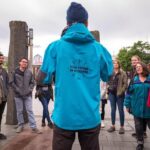
This Reykjavik Folklore Walking Tour uses landmarks you’ll actually pass anyway, then stuffs them with stories about elves, trolls, ghosts, and other “invisible” residents. You start at the bustling Ingólfstorgur area, then work your way through some of the oldest parts of town—ending near Austurvöllur public square, close to where you began.
I especially like the mix of myth + real places. The tour pairs legend with specific stops, like the oldest graveyard dating from around the year 900 and the cemetery linked to the Deacon of Dark River. I also love the way the best guides bring the material to life—Ester, Bo, Mathias, and Stefán all get singled out for humor, character voices, and even storytelling through song.
One drawback to plan for: this is a walking tour. It’s usually about 1 hour 30 minutes, and some people flag that it can be too much on your feet, so wear good shoes and expect weather to matter.
In This Review
- Key things you will notice
- Starting at Ingólfstorgur: meeting elves before you even leave town
- The oldest graveyard stop: folklore with real roots around year 900
- Cathedral of Christ the King: why trolls don’t like church
- Hólavallagarður cemetery: Deacon of Dark River and Reykjavik’s most famous ghost
- Tjörnin lake: the monster stories hiding in plain sight
- Reykjavik City Hall and the map of trolls: when geography becomes legend
- Alþingishúsið: guardian spirits by the Parliament building
- Ending at Austurvollur Square: wrap-up with an easy plan for afterward
- Guides and storytelling: why names matter on this kind of tour
- Price, timing, and value: is $55.63 worth 90 minutes of walking?
- What kind of traveler should book this?
- Should you book this folklore walk?
- FAQ
- How long is the Reykjavik Folklore Walking Tour?
- Where do I meet, and where do I end?
- Is the tour in English?
- Is hotel pickup included?
- Does it run in bad weather?
- Are admissions included at the stops?
- Is it suitable for kids and service animals?
Key things you will notice
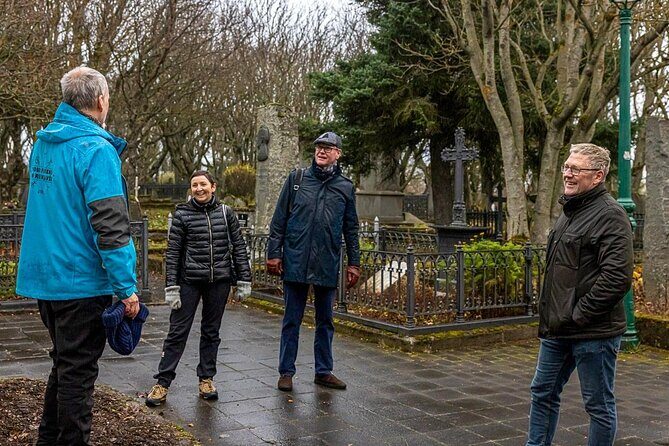
- Old cemeteries early on: you visit grave sites connected to Iceland’s folklore timeline, including one dating to around 900
- Stop-by-stop storytelling: every area has a reason in the myth, not just generic background
- Lake of Tjörnin monster stories: the tour turns Reykjavik’s calm water into a full-on creature tale
- City Hall map moment: you walk past the City Hall map discussions about where trolls and other creatures are said to live
- Frequent guide standouts: Ester, Bo, Mathias, Stefán, Dúi, and others are praised for energy and character voices
- Ends near the start area: Austurvollur Square is close to the city-center zone, so it’s easy to keep exploring after
Starting at Ingólfstorgur: meeting elves before you even leave town
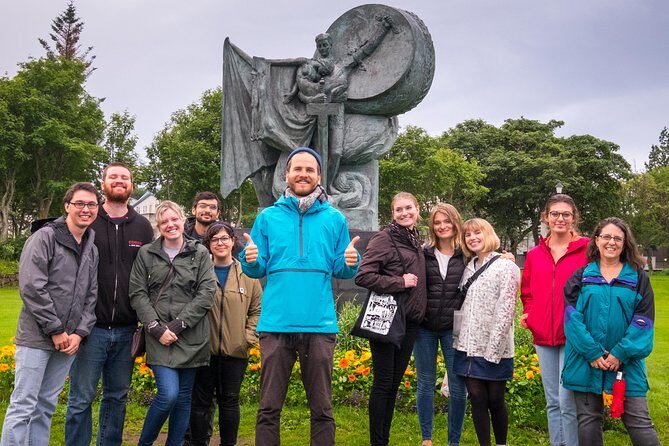
You’ll meet in central Reykjavik at Hlöllabátar, Ingólfstorgi 1. The tour begins with a meet-and-greet moment (your host is part guide, part storyteller), then the group heads out together on foot. Since this is a mobile-ticket experience and runs in all weather conditions, I’d dress like you’ll be outside the whole time—because you will be.
What makes the start work is the energy shift. You go from ordinary streets to a guided “myth route,” and suddenly details you’d normally ignore—building placement, street corners, the mood of a square—start to matter. It’s a smart way to get your bearings fast without turning your vacation into a museum schedule.
Also, you’re in the middle of things from the first minute. This isn’t a bus-and-back type of day. It’s compact, walkable, and designed for a first evening in the city when you want context and atmosphere.
You can also read our reviews of more walking tours in Reykjavik


The oldest graveyard stop: folklore with real roots around year 900
One of the tour’s strongest anchors is the first cemetery stop connected to the oldest graveyard in Iceland, dating to around 900. That’s an instantly meaningful contrast: the tour is talking elves and trolls, but it’s doing it at a place that’s grounded in human history.
Even if you’re not big on spooky, cemeteries do something special here. They force a slower kind of attention. The oldest graveyard setting naturally supports the darker parts of Icelandic legend, and it also gives the stories weight—like people were trying to explain life, death, and danger long before modern names for everything existed.
Practical note: some visitors wanted more time in the cemetery. The stop is brief, so if you’d like longer, bring a mindset of quick impressions rather than a full walk-through. You can always come back on your own later.
Cathedral of Christ the King: why trolls don’t like church
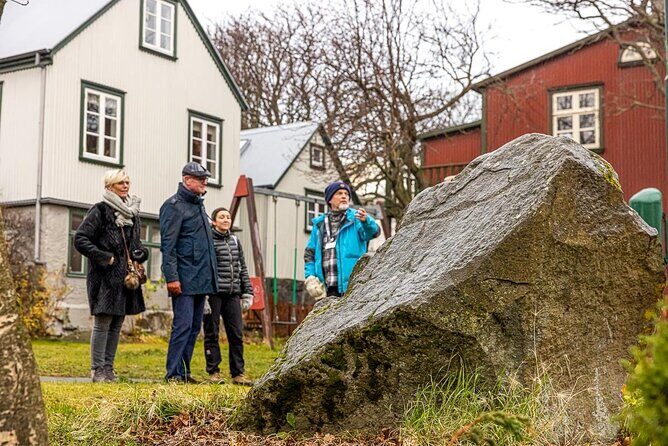
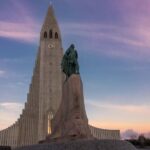
Next you pass by Cathedral of Christ the King, and the tour leans into an Icelandic theme: trolls and the church don’t get along. It’s playful, but it’s also part of a bigger pattern in folklore—places of power, religion, or authority often get treated as challenges to supernatural creatures.
This is where storytelling style matters a lot. Several guides are praised for humor and character voices, and you can feel the difference when a guide performs the myth instead of reading it. If you’re hoping for a fun, theatrical walk, this stop is a good indicator of what the rest of the tour will feel like.
Drawback watch: if you’re sensitive to tour content that touches personal faith, note that one guest reported an experience that felt inappropriate. If you prefer strictly folklore with no religious angle, it’s totally fair to request that early with a calm, direct tone.
Hólavallagarður cemetery: Deacon of Dark River and Reykjavik’s most famous ghost
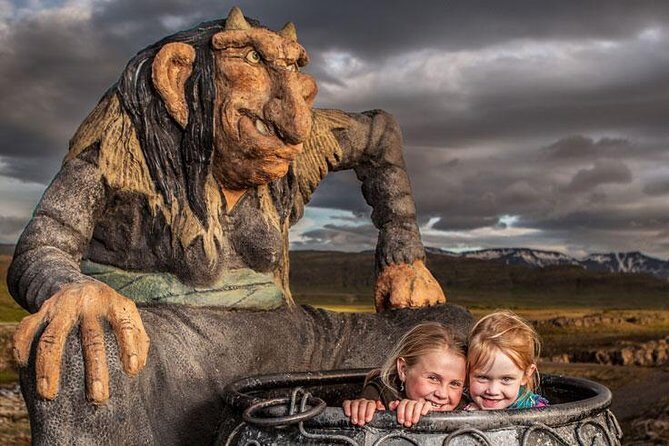
The big “ghost” moment comes at Hólavallagarður, the second oldest cemetery in Reykjavik. This is where the tour spotlights the Deacon of Dark River, Iceland’s most-famous ghost tied to the area’s stories.
Cemeteries plus a famous local ghost is a reliable recipe—because the setting already does half the work. The Deacon story tends to feel more specific than generic haunted-tour tales, and it helps that the tour keeps moving through streets that actually look like they could hold secrets.
One balance point: a few people wished for more time visiting the oldest graves. So if you love history details and want a slow stroll, consider that the tour gives you the folklore version first. You’ll get the atmosphere and key moments; you won’t get a deep, independent cemetery study.
Still, for many visitors, this stop is the reason to book. It turns “just another cemetery visit” into a Reykjavik identity lesson—how people used place names and characters to make sense of the unseen.
Tjörnin lake: the monster stories hiding in plain sight
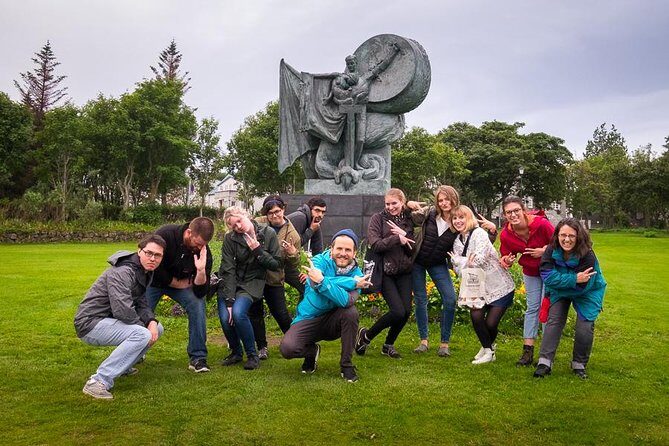
After the cemeteries, the tour heads to Tjörnin, the lake in central Reykjavik. Here the tone shifts a notch from ghostly to monster-focused. You hear stories about Icelandic monsters in a spot that looks serene at first glance—because the myth claims something else is happening under the surface.
This is a great stop for photos and for listening. The guide’s job is to make you see Tjörnin not as a pretty pond but as a stage. If you’re into folklore that connects to nature—water, darkness, cold—this is where the tour becomes genuinely memorable.
Practical detail: dress for wind near the water. Even when the city feels calm, lake air can hit fast.





Reykjavik City Hall and the map of trolls: when geography becomes legend
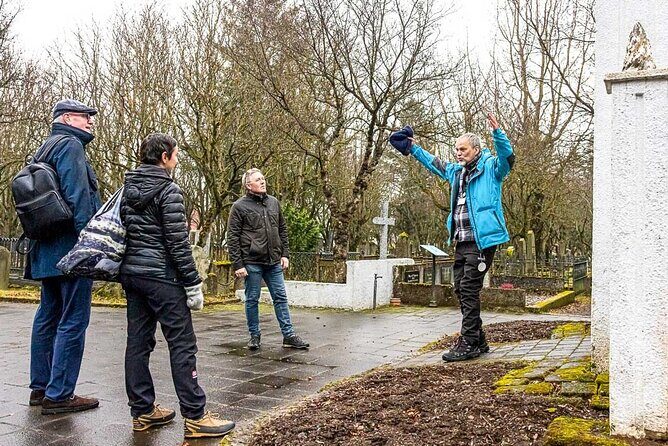
Next you walk by Reykjavik City Hall. One highlight here is that the guide may point out a big map of Iceland and talk about creature locations—trolls and other beings mapped onto real geography.
This is one of those moments that sounds nerdy until you experience it. Linking myth to actual places makes the stories feel less like fairy tales and more like a cultural language. You start picking up the logic of where legends are “supposed” to live, which makes future sightseeing across the country easier to interpret.
If you like learning how locals tell stories, this stop is a win. It also helps break up the heavier cemetery segments with a more civic, city-center feel.
Alþingishúsið: guardian spirits by the Parliament building
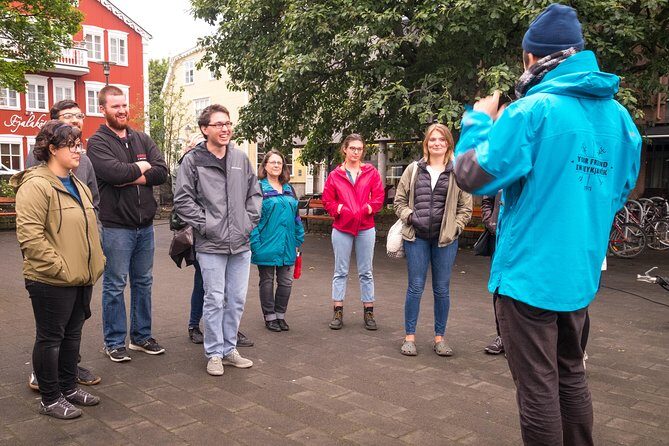
The tour then goes to Alþingishúsið, associated with Icelandic guardian spirits. It’s a strong choice for an ending stretch because it ties the supernatural back to something civic and public.
A lot of folklore tours stop after the spooky part. This one keeps going. You end up with a clearer sense that the unseen isn’t only for dark alleys and graveyards. It can show up next to the institutions a society builds.
This stop also benefits from timing. By now you’ve heard enough stories to notice patterns. Even if you don’t fully believe, you can understand why the belief mattered: it shaped how people talked about risk, place, and community.
Ending at Austurvollur Square: wrap-up with an easy plan for afterward
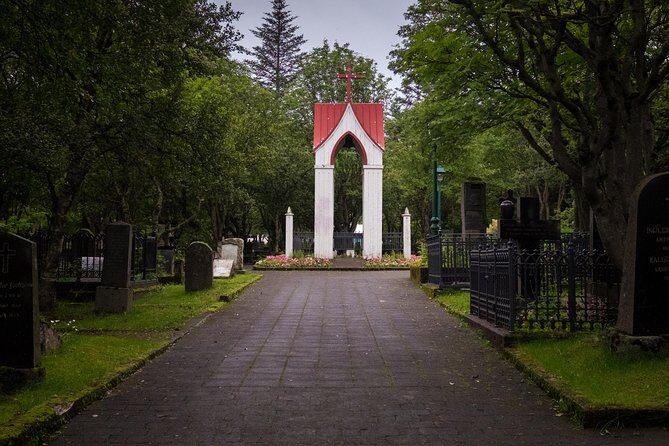
The tour finishes at Austurvollur Square. That’s convenient because it lands you in the city-center zone again, so you can keep exploring without needing a separate transport plan.
A couple of review stories hint at what people do right after: some grab snacks, some pivot to other sightseeing, and one person even described a gelato stop that felt like an instant spooky payoff. I can’t promise any specific treat as part of the tour—but the ending location makes it easy to follow your own mood.
Guides and storytelling: why names matter on this kind of tour
The quality swings based on the guide, and here the guide reputation is a big deal. Multiple guides get strong praise for bringing the myth to life with humor and performance:
- Ester is repeatedly described as engaging and fun, with helpful local tips at the end.
- Bo gets credit for joyful storytelling and entertaining voices for trolls and elves.
- Mathias is praised for being animated, funny, and sometimes mixing stories with song.
- Stefán stands out for enthusiastic, voice-driven storytelling that takes the myth to the next level.
- Dúi is noted for a singing voice and weaving culture and history into folklore.
There are also constructive notes. One guest said a guide felt scattered or off-topic, and another wanted more focus on elves specifically. That’s not unusual for story-heavy tours—different guides emphasize different characters. If elves are your priority, it helps to choose a date and guide known for that style when possible, and to ask one quick question at the start about what characters you’ll focus on most.
Price, timing, and value: is $55.63 worth 90 minutes of walking?
At $55.63 per person for about 1 hour 30 minutes, the value comes down to what you want from a trip.
If you like hearing stories in an active way—while you’re seeing the city—this is a fair spend. The tour includes a professional guide and live entertainment, and it focuses on central Reykjavík stops rather than long transit. You also hit “wow” elements quickly: the year-900 graveyard, the Deacon of Dark River, and the Tjörnin monster stories.
If you’re the type who wants deep, slow cemetery reading or heavy historical detail, you may feel the pace is too quick. A few people wanted more time at the cemetery, and one person felt the tour ran longer than expected. That’s the tradeoff: a compact route with lots of story energy, not a slow academic crawl.
One more value signal: this tour tends to be booked about 43 days in advance. That doesn’t mean it will sell out instantly, but it does suggest you should not wait until the last minute if you have a tight schedule.
What kind of traveler should book this?
This works best for you if you want:
- a first evening in Reykjavík that helps you understand the city’s cultural imagination
- a walk that mixes architecture, cemeteries, and myth
- storytelling you can actually picture as you walk (voices, humor, song)
It may not fit as well if:
- you have limited patience for standing or walking between stops
- you strongly prefer strictly factual history only
- you’re extremely sensitive to how guides frame religion alongside folklore (rare, but worth noting)
Because it operates in all weather and uses central walking routes, it’s also a good “plan B” activity. Iceland’s weather changes fast, and you’ll be out either way.
Should you book this folklore walk?
Yes—if you want a fun, story-forward way to learn Reykjavík’s vibe in a short window. The standout features are the old graveyard stops, the Deacon of Dark River, and the way the tour connects myth to specific central locations like Tjörnin, City Hall, and Alþingishúsið.
If you’re on the fence, here’s my simple decision rule: book it if you’ll enjoy listening and walking through the city’s older layers. Skip it if you need long quiet time at each site or you only want hard facts. Either way, you’ll come away with new context for how Icelanders talk about the unseen—because even when you don’t believe, the stories explain a lot.
FAQ
How long is the Reykjavik Folklore Walking Tour?
The tour is about 1 hour 30 minutes.
Where do I meet, and where do I end?
You meet at Hlöllabátar, Ingólfstorgi 1, 101 Reykjavík. You end near Jón Sigurðsson, Austurvöllur, at Austurvollur Square, close to the Parliament building.
Is the tour in English?
Yes, it’s offered in English.
Is hotel pickup included?
No. Hotel pickup and drop-off are not included.
Does it run in bad weather?
It operates in all weather conditions, and it’s also described as requiring good weather. If it’s canceled due to poor weather, you’ll be offered a different date or a full refund.
Are admissions included at the stops?
Admission is listed as ticket free at the stops in the tour sequence.
Is it suitable for kids and service animals?
Children must be accompanied by an adult, and service animals are allowed.