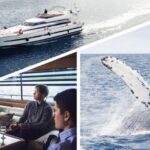
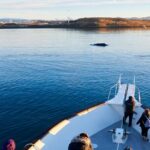
Fast boats, big wildlife, Reykjavik views. I like the small-group feel (max 12) and the up-close way this RIB boat can maneuver for birds and marine mammals. One thing to plan for: it’s an open-water ride with speed and wind, so you’ll want the warm gear and you should be ready for a hard-to-forget cold blast (and there’s no onboard toilet).
You start at the Old Harbour, then cruise past Harpa Concert Hall and the Sun Voyager before heading out toward puffin islands. The trade-off with whale watching is simple: wildlife is wild, so you might see more puffins than whales (or get only one whale day), even when conditions are good.
In This Review
- Key highlights at a glance
- Starting at Old Harbour: RIB ride basics and what you get
- Harpa and Sun Voyager: getting Reykjavik views before the wildlife hunt
- Puffin island time in the April–August window
- How the crew searches for whales and dolphins in wider water
- Marine biologist guides: better spotting, better questions
- The ride: fast fun, cold wind, and realistic comfort
- Timing and small-group flow: how the 2 hours gets used
- Price and value: what $191 buys you in real terms
- Who should book this Reykjavik whale and puffin RIB tour?
- Should you book?
- FAQ
- How long is the Reykjavik whale and puffin RIB tour?
- Where do I meet for the tour?
- When are puffins most likely to be seen on this tour?
- When does the tour operate during the year?
- What ages and height are allowed?
- Is there a weight limit?
- Is the tour appropriate for pregnant women or people with mobility impairments?
- What should I bring?
- Is food or a toilet available on board?
- What’s included for warmth and safety?
Key highlights at a glance
- RIB access that can get you closer than bigger tour boats
- Marine biologist guide commentary that helps you spot what matters
- Puffins in season on islands between late April and August
- Wider searching range for whales and dolphins thanks to the boat’s agility
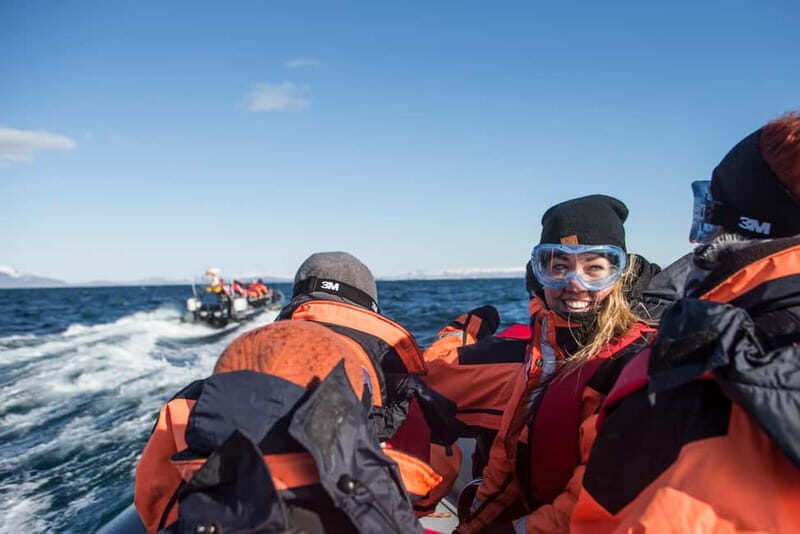
- Warm overalls, gloves, and goggles included so you aren’t just freezing for photos
- Harpa and Sun Voyager seen from the water on the way out and back
Starting at Old Harbour: RIB ride basics and what you get
This is a 2-hour whale and puffin watching trip in the Capital Region, leaving from the Old Harbour area. The meeting point is simple: meet at the ticket office at the old harbor, then you’re quickly routed to the boat and suited up.
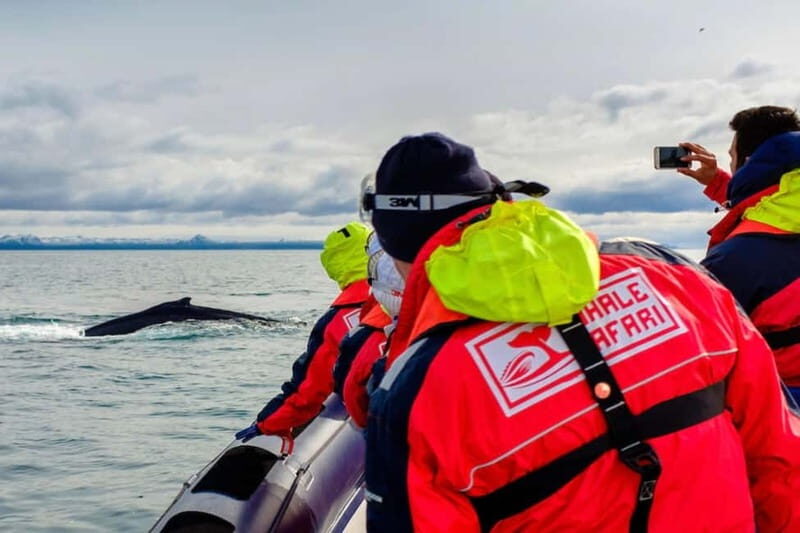
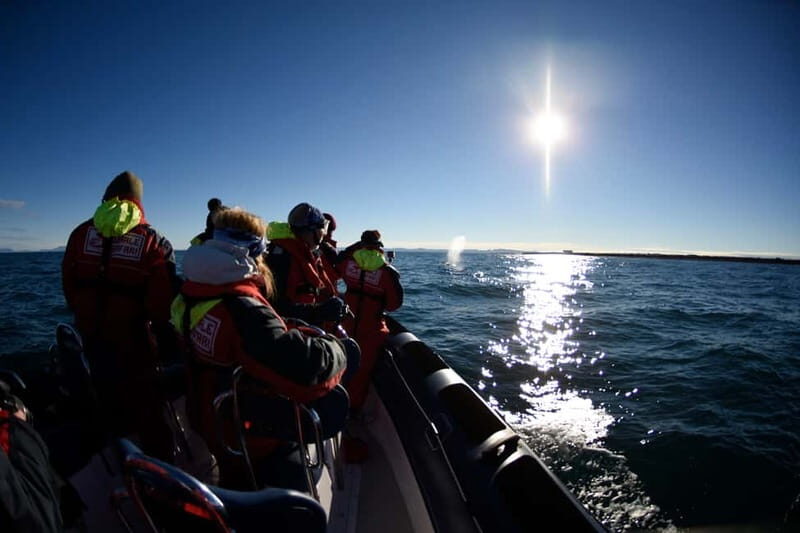
What makes the logistics feel painless is what’s included. You get warm overalls, gloves, and goggles, plus safety gear and a fully certified RIB captain. That matters because Iceland weather is less about being cold in general and more about the wind chill factor the moment you hit open water. If you’ve ever underestimated how fast spray and wind can zap your hands and face, you’ll appreciate being outfitted before you go.
You’ll still want to bring the basics:
- hiking shoes (good grip matters on wet docks and quick boarding)
- weather-appropriate layers
- a signed waiver
One other small rule that’s easy to miss: high-heeled shoes aren’t allowed, so wear something you can run or step in quickly.
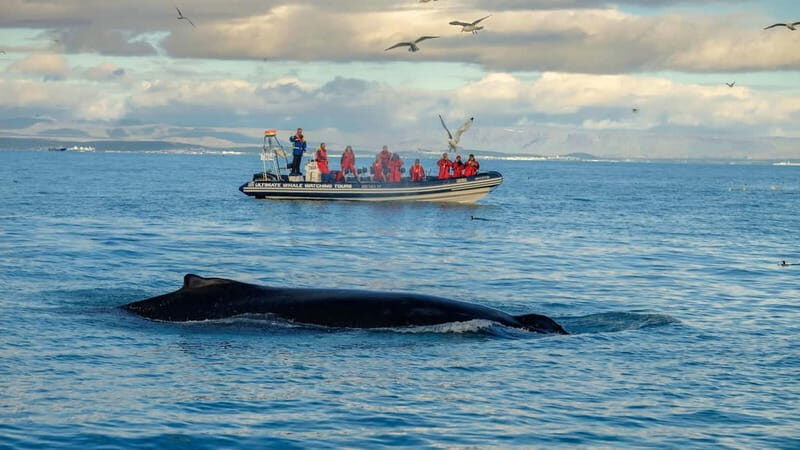
The group stays intentionally tight, limited to 12 participants. In practice, that improves your odds of everyone getting decent sightlines, and it keeps the guides’ bird-and-whale spotting rhythm from turning into a crowded scramble.
You can also read our reviews of more boat tours in Reykjavik
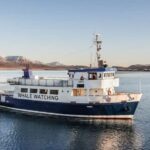
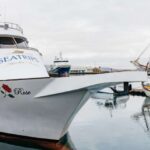

Harpa and Sun Voyager: getting Reykjavik views before the wildlife hunt
Before you even think about whales, you get Reykjavik’s coastline in a way most people never see: from a fast, maneuverable boat. On the way out, the route includes cruising past Harpa Concert Hall—the glassy, geometric building that looks like it was designed for dramatic weather—and the Sun Voyager sculpture.
Why this matters: you’re not just “waiting for wildlife.” You’re already on an active tour, moving along the city’s shoreline while the skyline opens up behind you. It also gives you a sense of scale—how Reykjavik sits right on the water, and how quickly the scenery can shift from city to open sea.
That scenic cruise continues on the return trip too, so even if you have a slow wildlife moment, you don’t feel like you’re stuck. You’re still getting real views, real motion, and real sea air.
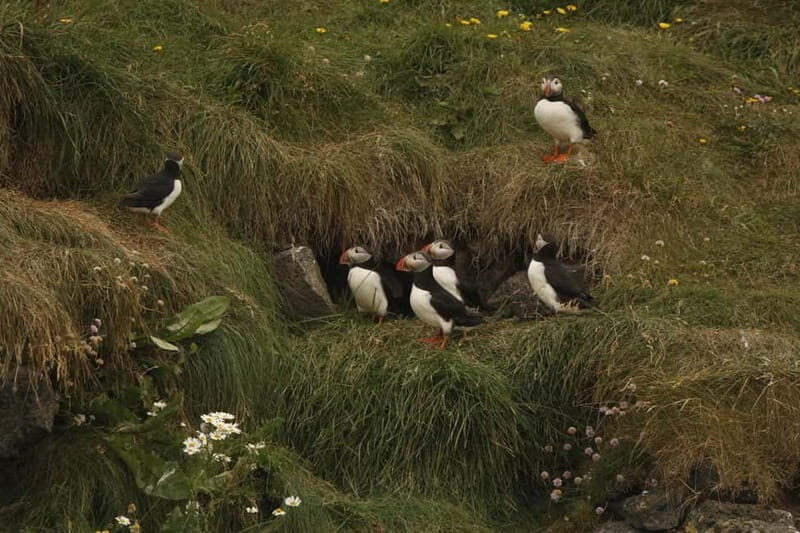
Puffin island time in the April–August window
The puffins are seasonal, and the timing is clear. Puffins run from 20 April to 20 August, with the tour itself operating from 1 April to 31 October. Late April through August is when you’re most likely to see them as the birds are actively nesting and present in good numbers.
The format is designed for bird viewing without turning it into a photo sprint. You ride out toward islands specifically to see puffins in their natural setting, then you move farther out for whale-and-dolphin searching. That sequencing helps because puffins are easier to plan for than whales. Birds are more predictable in where they show up, while whales depend on what’s happening in the water column that day.
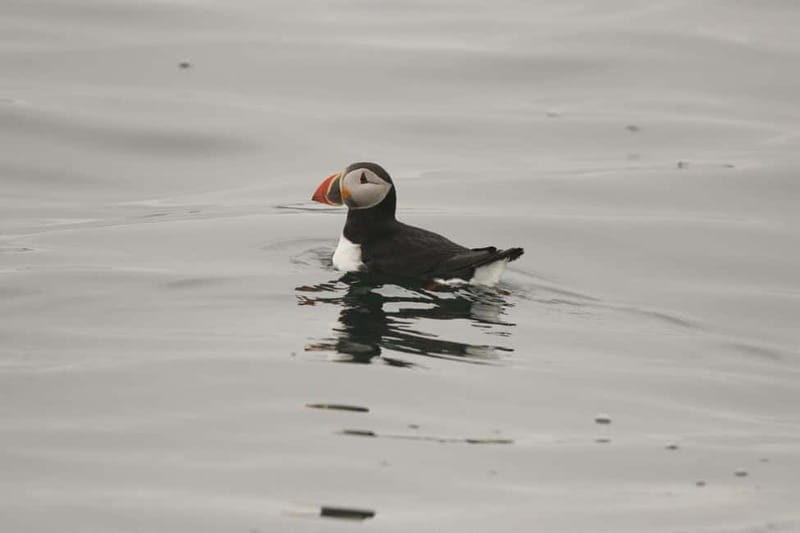
What I like about this approach is that it respects your attention span. You’re not spending the whole 2 hours chasing only whales and hoping a puffin might appear. You get a dedicated puffin chunk that gives you time to watch their behavior—standing, preening, and moving across rocky island zones—before the hunt gets broader.
Also, the boat’s maneuverability helps here. Even though the captain can’t make the island suddenly closer in a magic way, an agile RIB can position you more thoughtfully, so you spend less time fighting angles and wind.
How the crew searches for whales and dolphins in wider water
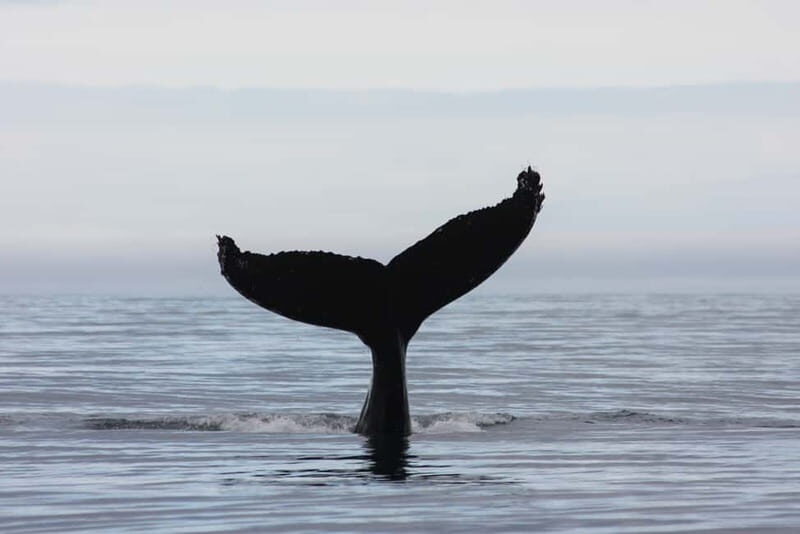
Whales and dolphins are the big headline, but they’re also the part that can surprise you. This tour aims to improve your odds in two ways:
1) it uses a RIB that can move closer to animals when conditions allow
2) it can search larger areas because the boat is stable and lightweight enough to cover more water efficiently
That combination is what you’re paying for with the RIB style. You’re not limited to a single tight viewing spot. The captain and guide can adjust based on sightings, animal behavior, and where the sea seems to be “busy.”
And the key thing to remember: whale watching is always probabilistic. One day it’s fast and action-packed; another day you might find smaller whales or fewer whale sightings. The operation is built to maximize your chances, but nature still gets the final word.
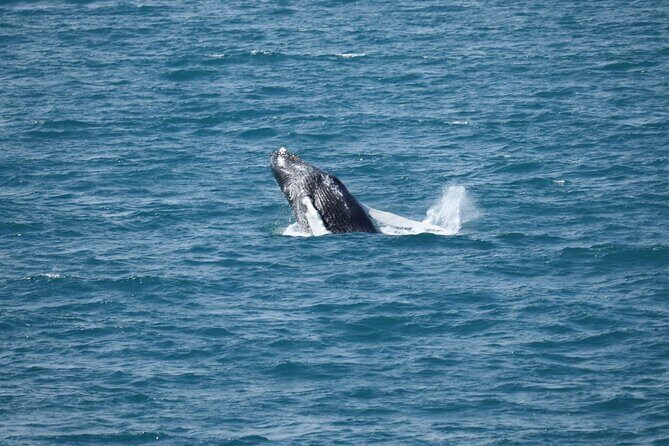
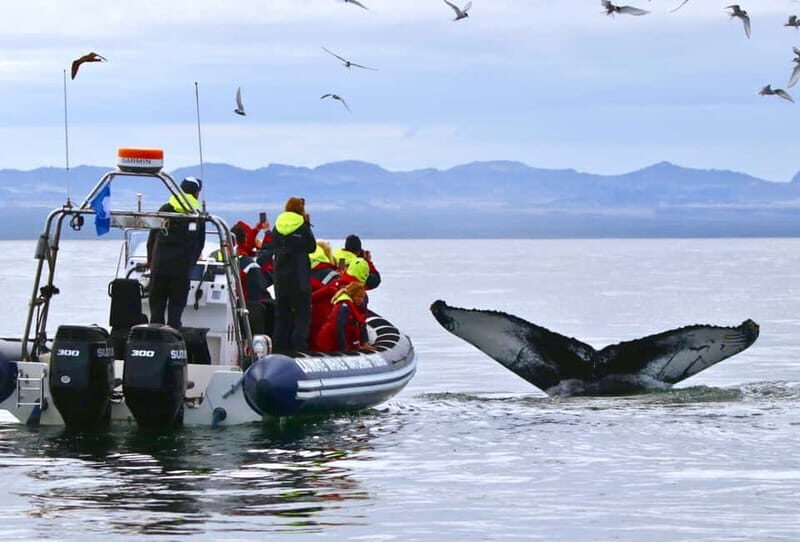
When you do spot whales, the experience tends to feel more vivid than you might expect. Being closer from a smaller craft means you can actually track surfacing and timing, not just watch animals as distant dots. And because the ride is designed for getting around efficiently, you’re more likely to catch multiple surfacing moments rather than one quick glance and a long wait.
Marine biologist guides: better spotting, better questions
This tour stands out because the guides aren’t just narrators. You get specially trained whale-watching guides, and many are marine biologists. Names that show up in guide accounts include Max, Kylie, Emily, Matt, Mike, and Marie.
Even if you don’t get one of those specific guides, the model is the same: you get commentary that helps you read the water. Instead of just hearing a generic description, you learn what to look for and why. That’s a huge value on a 2-hour tour, because it turns your attention into something useful. You’re watching with purpose, not just scanning for movement.
The guide format is also built for interaction. You can ask questions and get answers that connect animal behavior to what you’re seeing out on the sea. It’s the kind of info that makes the ride feel like you’re learning the rules of the game as you play it.
One more practical touch: the guides and crew take photos during the tour. Afterward, you receive access to those pictures. That’s helpful because you’re busy doing the real work of looking for wildlife, not fumbling with your camera every time something surfaces.
You can also read our reviews of more whale watching tours in Reykjavik
The ride: fast fun, cold wind, and realistic comfort
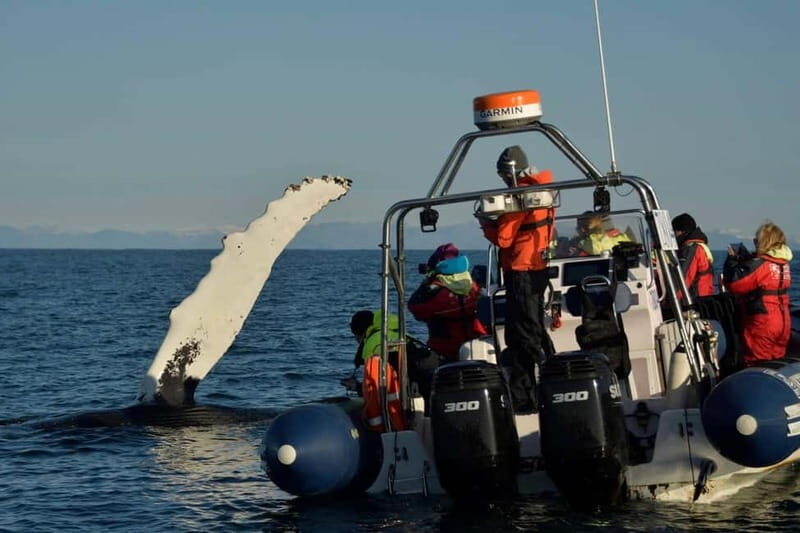
Let’s talk about the part people either love or brace for: the RIB speed. A RIB can feel like the sea is your windshield. It’s exciting, but it’s also why the clothing matters.
The good news: you’re provided with warm overalls, gloves, and goggles. That setup is meant to keep your hands and face functional, which is what you need if you want to actually enjoy the ride instead of constantly stuffing your arms back into sleeves.
What to bring anyway:
- warm base layers (you may still want more warmth under the overalls)
- a hat you can keep on in wind
- sun glasses or eyewear that can handle spray (the tour includes goggles, but wind and glare can still be an issue)
In terms of motion, the smaller boat often helps with comfort for people who worry about sea sickness. That said, this is still open water, and some wind or swell can make the ride feel thrilling rather than smooth.
A balanced note from the experience: you should expect gear to get wet. When you’re going fast through spray, the inside of clothing can feel damp. If you run cold easily, pack extra layers for after you get back on shore.
One more limitation to respect: this trip is not suitable for pregnant women, people with mobility impairments, and children under 10 years (also under 145 cm tall). It’s also not positioned for people over 75 years or over 140 kg maximum weight. The short, active boat time and the cold-water environment are reasons these limits exist.
Timing and small-group flow: how the 2 hours gets used
Two hours sounds short, but on water it becomes a tight, efficient window. Here’s how the time tends to flow based on how the operation is described:
- depart and cruise with city-to-sea views
- go to island areas for puffins
- head farther out for wider whale and dolphin searching
- return along Reykjavik’s shores and skyline
The advantage of this timing is that you’re not doing a slow crawl that chews up your viewing window. Instead, you’re moving and searching, with purposeful stops.
The small group size (up to 12 people) also changes how the tour feels. When the group is smaller, the crew can manage positioning better, and you’re less likely to get stuck behind tall people or gear bags. In whale watching, sightlines are everything, and a crowded boat can waste your chance to see surfacing patterns.
For the photo lovers: the crew takes pictures and shares them with you afterward. Some people like receiving a photo summary a few hours later; others mention it being provided after. Either way, it’s a nice safety net if your hands are busy holding onto the windproof gear.
Also remember the practical item: no food is on board. You’ll want to eat beforehand, and bring water only if that’s part of the operator’s allowed items (not specified here). And there are no toilets on the boat, so plan for that before you board.
Price and value: what $191 buys you in real terms
At $191 per person, you’re paying for a premium mix: speed, maneuverability, trained guidance, and included cold-weather gear. You’re not just buying a seat on a boat—you’re buying access to a craft that can position closer to animals and cover wider water in the same 2 hours.
Here’s how the value adds up:
- Close viewing capability: the RIB can maneuver in ways larger boats can’t, which is the core reason people choose this format
- Specialized guidance: the marine biologist angle helps you spot more effectively and understand what you’re seeing
- Included protection: warm overalls, gloves, and goggles reduce the chance your experience gets ruined by cold
- Photo support: the crew takes pictures so you don’t miss a moment while adjusting your camera
- Two viewing modes: dedicated puffin island time plus broader whale/dolphin searching
Could you spend less on a slower cruise? Sure. But if your goal is wildlife viewing that feels close and active, this price makes more sense. The cost is also why you should go in with realistic expectations. Wildlife isn’t guaranteed, and you’re partly paying for the process and tools that improve your odds—not a promise of whales on cue.
Who should book this Reykjavik whale and puffin RIB tour?
Book it if you want:
- an active 2-hour wildlife outing rather than a long, slow boat ride
- a guide who helps you understand animal behavior while you’re out there
- puffins in season plus a real attempt at seeing whales and dolphins
- the chance to see Reykjavik landmarks from the water: Harpa and Sun Voyager
Skip it (or consider another option) if:
- you’re not comfortable with a fast boat ride and cold wind exposure
- you need onboard toilet access
- your travel needs don’t fit the clearly stated limits (under 10, under 145 cm, pregnant, mobility impairments, over 75, or over 140 kg)
This is a great fit for couples, small groups, and families with older kids who can handle the cold and quick pace. If you’re the type who enjoys learning how to watch wildlife—what to look for and how to interpret movement—this tour is more rewarding than a basic sightseeing cruise.
Should you book?
I’d book this RIB tour if you’re visiting Reykjavik in the active season window and you care about maximizing wildlife sightings in the time you have. The RIB format plus marine biologist-style guidance is exactly the combo that turns scanning into spotting, and watching into understanding.
My only caution is the usual one, stated plainly: you can’t control the ocean. Some days deliver humpbacks and dolphins; other days focus more on puffins and seabirds, with fewer whale moments. If you’re okay with that reality—and you’re excited by the idea of being close on the water—this is a strong choice.
FAQ
How long is the Reykjavik whale and puffin RIB tour?
It lasts 2 hours.
Where do I meet for the tour?
Meet at the ticket office at the Old Harbour in Reykjavík.
When are puffins most likely to be seen on this tour?
Puffin season is 20 April to 15 August (and puffins run from 20 April to 20 August based on additional info).
When does the tour operate during the year?
The tour runs from 1 April to 31 October.
What ages and height are allowed?
The minimum age is 10 years, and the minimum height is 145 cm.
Is there a weight limit?
Yes. The maximum weight limit is 140 kg.
Is the tour appropriate for pregnant women or people with mobility impairments?
No. It is not suitable for pregnant women and it is not suitable for people with mobility impairments.
What should I bring?
Bring hiking shoes, weather-appropriate clothing, and a signed waiver.
Is food or a toilet available on board?
No. There are no toilets on board, and no food is provided.
What’s included for warmth and safety?
Warm overalls, gloves, and goggles are included, along with all necessary safety equipment.