A fast boat ride with real wildlife chances is hard to beat. This small-group RIB tour takes you out from Reykjavik’s Old Harbour, gives you short puffin island time in season, then searches a big stretch of Faxaflói Bay for whales, dolphins, and seabirds.
I love the small-group setup and the way the RIB design helps you get closer to the action at sea level. The marine biologist guide is a big plus too, especially when you want names, not just sightings.
The main consideration is weather and sea state. Even with warm coveralls and shock-absorbing seats, some days can mean a more bumpy ride, and there are limits for people with knee problems.
In This Review
- Key highlights you’ll feel on the water
- Reykjavik RIB whale watching: why this feels different
- What you might spot: whales, dolphins, and puffins near town
- Puffins in season
- Whales and dolphins in the bay
- Stop-by-stop: from Ægisgarður to puffin islands just outside Reykjavik
- Starting point at Ægisgarður 5d
- The Old Harbour departure and first wildlife scan
- Puffin stop at Akurey, Engey, or Lundey
- Faxaflói Bay and the value of sea-level viewing
- Why sea-level matters
- Shock-absorbing seats and the comfort factor
- If you’re sensitive to motion
- The harbor ride: Sun Voyager views and a quick Harpa stop
- Price and value: is $208.09 worth it?
- Proximity and boat choice
- Small group time
- Staff expertise and the “what am I looking at” payoff
- Weather risk and how to think about it
- What to pack and who this tour fits best
- What you’ll wear
- Fitness and health limits
- Kids and height rules
- Language and ticketing
- When to book: timing in the Reykjavik season
- Should you book this RIB whale watching tour?
- FAQ
- How long is the RIB whale watching tour?
- What wildlife can you see on this tour?
- Are food and drinks included?
- What should I wear?
- Is the tour suitable for children?
- What happens if there are no sightings?
- What if the tour is canceled due to weather?
Key highlights you’ll feel on the water

- Max 12 people means less crowding when the animals surface
- RIB speed and size help you cover more search area than slow boats
- Puffin island stops in season (early May to late August) add a second wildlife payoff
- Shallow, sea-level viewing gives the closest-feeling whale watch possible from a boat
- Warm coveralls and safety kit make cold wind a little less annoying
- Photo help from the crew shows up often in the experiences people share after the trip
Reykjavik RIB whale watching: why this feels different
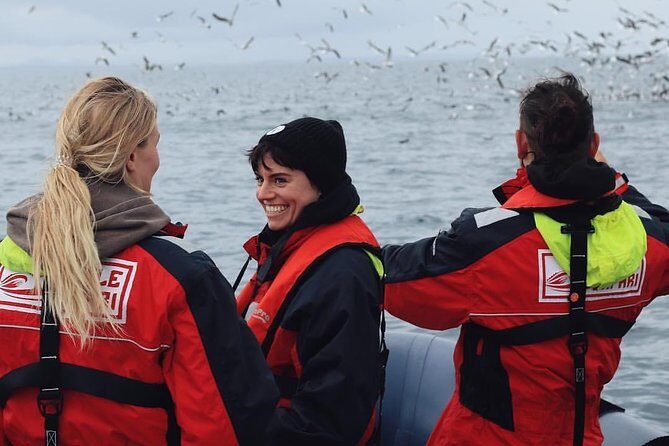
Reykjavik is the kind of place where the sea is never far away. This tour uses that advantage in the best way: you launch from the Old Harbour area, then head straight into the North Atlantic search zone. You’re not stuck listening to facts for two hours while everyone waits on a distant deck.
The big reason this works is the boat itself. A small speedboat can’t do magic, but it can do practical things well. It’s built to move fast, stay stable, and reach the right spots sooner. That matters because whales and dolphins do not schedule themselves for your vacation.
The tour also keeps the group tight. With up to 12 people, you’re not fighting for sight lines. You can actually see what’s happening when the guide calls a change in direction.
You can also read our reviews of more boat tours in Reykjavik

What you might spot: whales, dolphins, and puffins near town
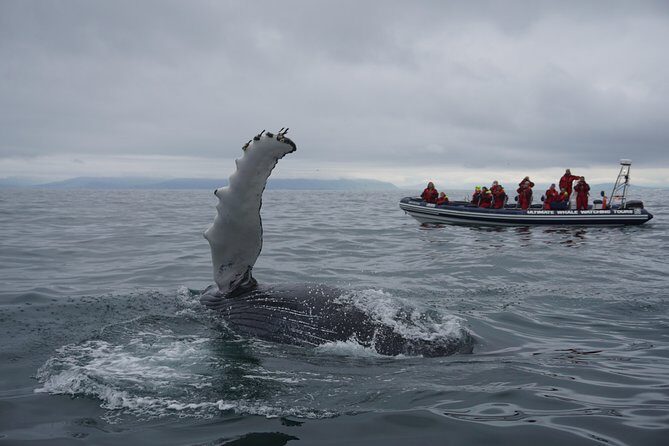
The wildlife here is not one-species-only. The goal is whales, dolphins, and seabirds, and the season influences the “puffin bonus.”
Puffins in season
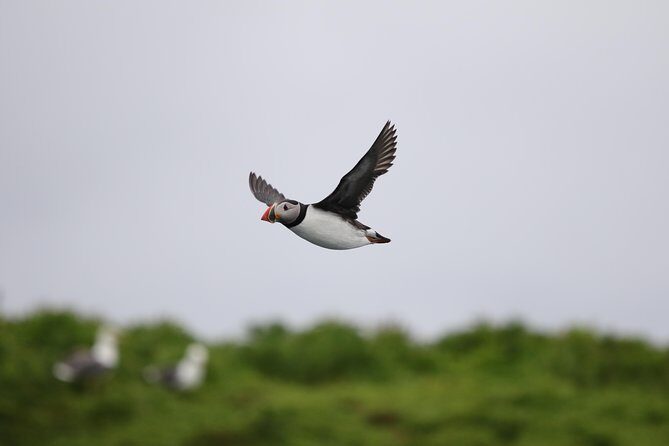
From early May through the end of August, you get a chance to visit puffins on islands just outside Reykjavik. The islands named for puffins are Akurey, Engey, or Lundey. The time on the islands is short—about 5 to 10 minutes—but it’s timed for that “wow, they’re right here” feeling.
In the skies and on sea cliffs, the tour also expects other birds in the mix, including auks and gannets, depending on what’s active that day.
Whales and dolphins in the bay
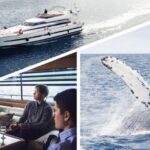
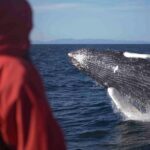
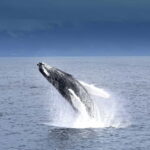
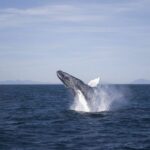
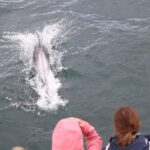
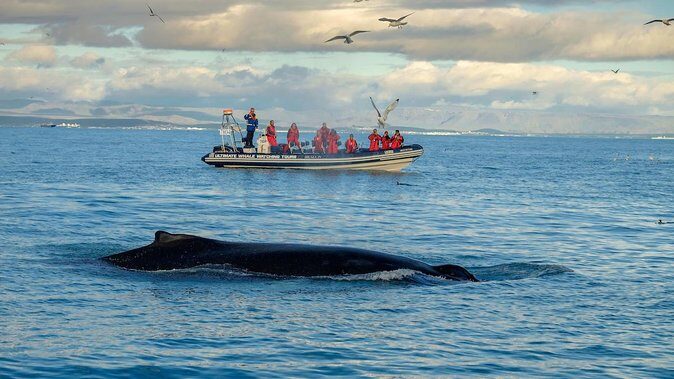
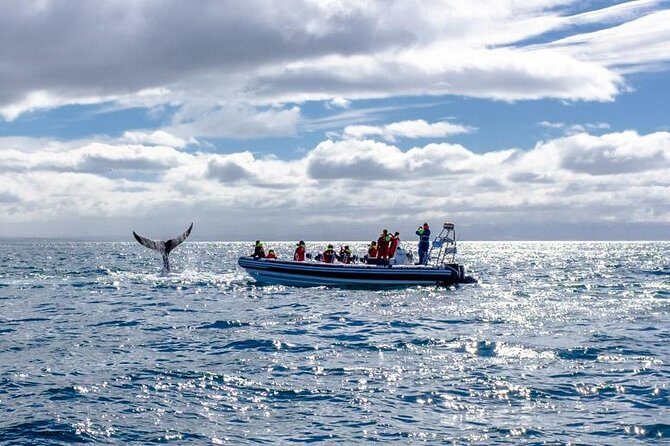
After puffins, you head for whales and dolphins in Faxaflói Bay. The tour is designed to look across a wide search area, which increases your chances. You’re also watching from sea level, so when a whale surfaces, it doesn’t feel like a speck in the distance.
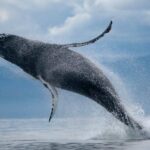
The sightings that show up repeatedly in feedback include humpbacks and minke whales, plus dolphins. Some people even mention porpoises. On a good day, you can get multiple surfaces and even dramatic breaching.
Stop-by-stop: from Ægisgarður to puffin islands just outside Reykjavik
You can also read our reviews of more whale watching tours in Reykjavik
Starting point at Ægisgarður 5d
You start at Ægisgarður 5d, 101 Reykjavík and return to the same meeting point. That’s nice because you don’t need a complicated plan for getting back into town. It also makes the whole experience feel like a clean, self-contained chunk of time during a Reykjavik day.
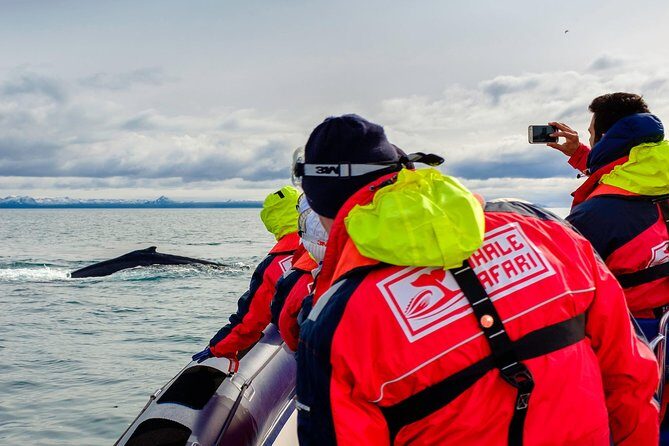
Once you’re aboard, the day begins with the crew getting everyone ready. You’ll be in coveralls and safety gear, and the marine biologist guide sets expectations for what you’re searching for.
The Old Harbour departure and first wildlife scan
From the Old Harbour area, the tour heads out looking for whales and dolphins. The RIB’s job here is speed-to-position: it can cover water efficiently while you keep that close-to-the-action view.
During puffin season, this early part of the day also builds in that seasonal bonus before the dedicated puffin island stop.
Puffin stop at Akurey, Engey, or Lundey
When the puffins are on the schedule, this is the part people remember for the easy-to-see wildlife. You travel a short distance from the harbour and spend about 5 to 10 minutes with puffins on the islands.
This quick stop is a good match for what most people want. Puffins are energetic, but you don’t need a long hike or a complicated route. The goal is focused viewing time with seabirds dominating the cliffs and the water nearby.
Drawback to keep in mind: that short island window means you’re not lingering. If the weather is bad, your time outside can be limited, and wildlife viewing can shift quickly.
Faxaflói Bay and the value of sea-level viewing
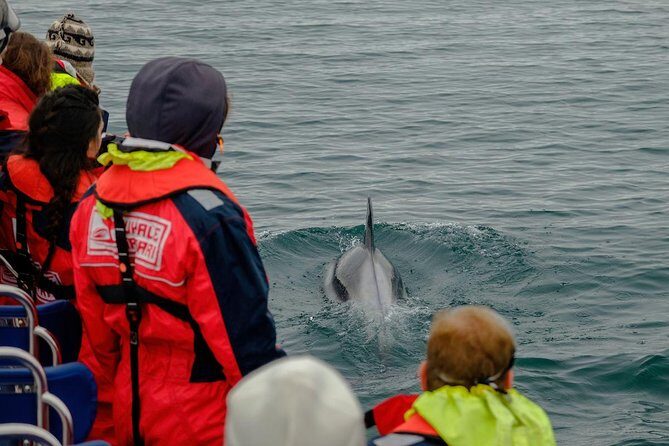
The longest block of time is the whale search in Faxaflói Bay (about 1 hour 30 minutes). This is where the RIB approach really pays off.
Why sea-level matters
Watching whales from higher decks can feel less immediate. Here, you get sea-level viewing, so when a whale comes up near the boat, it looks big and close. It’s the difference between spotting something and actually experiencing the moment.
Shock-absorbing seats and the comfort factor
One reason people rate this tour so highly is comfort, even when conditions turn choppy. The boat is equipped with high-performance suspension seats, designed to reduce shock and lower the risk of injuries. In practical terms, that means you’re more likely to enjoy the ride rather than spending the whole time bracing.
You should still plan for real sea weather. Iceland does not run on perfect forecasts. A few experiences mention a choppy trip out offshore on some days, and the ride back can feel rougher depending on wind and wave conditions.
If you’re sensitive to motion
If you get seasick easily, don’t ignore that. Some people say the ride isn’t rough for them, and others mention rougher moments. If you’re the type who needs help with motion, bring your own remedy and take it seriously. The crew may be ready to help, but prevention is always easier than recovery once you’re out on the water.
The harbor ride: Sun Voyager views and a quick Harpa stop
After the whale safari portion, you head back toward Reykjavik. Instead of cutting straight to the dock, the tour includes a bit of shoreline time so you can enjoy the city from the sea.
You’ll pass the Sun Voyager sculpture along the seafront, which is a fun contrast to the wildlife focus. This is also a good photo moment because it’s close enough to feel part of the city, yet still water-level.
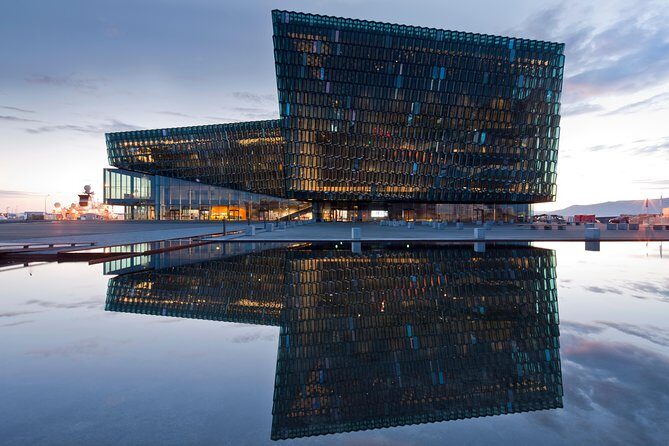
Then you’ll get a short stop by Harpa Concert Hall and Conference Centre. It’s brief—about 5 minutes—but it helps connect the marine part of the day to Reykjavik’s most famous building.
Price and value: is $208.09 worth it?
At $208.09 per person for about 2 hours, this is not a bargain. But it can be good value if you care about three things: proximity, group size, and staff expertise.
Proximity and boat choice
A small RIB is more expensive than a large vessel, mainly because it’s built for reach and speed. When you’re watching for whales that can surface unpredictably, being able to cover more water matters. Close viewing also tends to turn a good sighting into a memorable one.
Small group time
With a maximum of 12 travelers, you’re not sharing your view with half the planet. That helps when animals surface and the guide needs everyone facing the same direction at the same time.
Staff expertise and the “what am I looking at” payoff
This tour includes a professional marine biologist guide. That’s not just a title. It shows up in how people talk about the experience: you get explanations, guidance while searching, and practical help for staying comfortable.
Some feedback also mentions crew members like Maria as guide, and Emily as the driver/captain, plus photo sharing from crew such as Lefterius. The consistent theme is that the crew tries to make the trip feel personal, not scripted.
Weather risk and how to think about it
Because this is a water tour, conditions matter. Iceland can cancel or change plans based on weather. If no sightings happen, you’ll receive a ticket for an alternative tour. That safety net can reduce the sting of an unlucky day.
What to pack and who this tour fits best
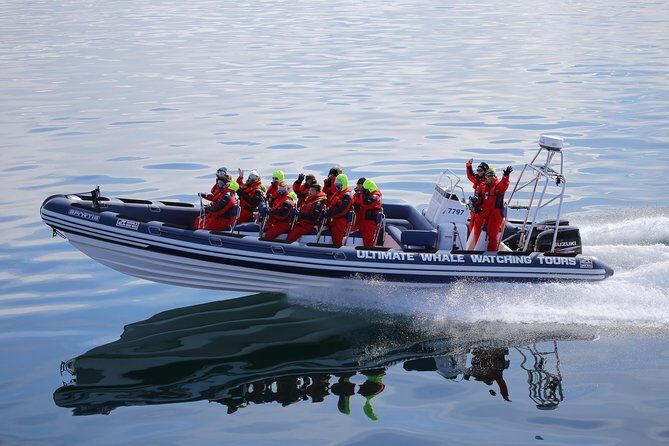
This tour asks for real cold-weather readiness, even with supplied gear.
What you’ll wear
You’ll get coveralls and safety equipment. People often mention that the coveralls are warm and can be waterproof, which makes a huge difference when wind hits your legs and arms.
Still, you should wear warm layers under them. The tour recommends a wool or fleece sweater, plus hat, gloves, and sturdy footwear.
If you’re planning from a warm indoor life in another country, remember this: you’re going to be outside on deck with wind chill. Warm layers are not optional.
Fitness and health limits
The tour says you need a moderate physical fitness level. It’s also not recommended for travelers with knee problems. That’s worth taking seriously because you’ll be moving around to board, disembark, and shift your stance for viewing.
Kids and height rules
Children must be over age 10 and over 145 cm tall. If you’re traveling with younger kids, you’ll need a different type of tour.
Language and ticketing
The tour is offered in English, and you receive a mobile ticket.
When to book: timing in the Reykjavik season
This activity is often booked around 46 days in advance on average, which tells you two things: it’s popular, and good weather days fill up first. In Iceland, you want flexibility, but you also want a backup plan.
If you’re traveling in the puffin season, aim for dates that give you at least some weather slack. Puffin time and whale time both depend on conditions.
Should you book this RIB whale watching tour?
Book it if you want the best mix of close-up wildlife viewing and a boat experience that feels active and efficient. The small group, marine biologist guide, and sea-level perspective are the heart of the value.
Skip it or choose something gentler if you have knee issues, or if you know you struggle badly with choppy rides. Even with suspension seats, the ocean can be unpredictable, and that’s part of the deal.
If you’re ready for cold-weather layers, want a short, focused puffin chance in season, and want whales/dolphins searched from a fast RIB, this is one of the more rewarding ways to spend a Reykjavik half day.
FAQ
How long is the RIB whale watching tour?
It lasts about 2 hours.
What wildlife can you see on this tour?
The tour searches for whales and dolphins, and in puffin season (early May to end of August) it also visits for puffins plus other sea birds.
Are food and drinks included?
No. Food and drinks are not included.
What should I wear?
Dress warmly. The tour recommends a wool or fleece sweater, hat, gloves, and sturdy footwear. Coveralls are provided.
Is the tour suitable for children?
Children must be over age 10 and over 145 cm tall.
What happens if there are no sightings?
In the case of no sightings, you’ll be given a ticket for an alternative tour.
What if the tour is canceled due to weather?
This experience requires good weather. If it’s canceled due to poor weather, you’ll be offered a different date or a full refund.