Silfra feels like the ocean got replaced by glass. This Iceland must-do is one of the only places on Earth where you can go underwater right between the American and European tectonic plates, with 100m+ visibility that makes the cracks look almost unreal.
I really like two things here: first, the clarity is so sharp you can read the fissure like a map—people often describe it as aquarium-clear. Second, the cold is handled well thanks to the dry suit setup, including warm undersuit, so you’re not just white-knuckling it. In the guide department, I’ve seen strong support like Filip and Giancarlo, with equipment that stays simple and reliable.
The main consideration is the gatekeeping on requirements. You’ll need the right scuba credentials and also specific dry suit experience, plus you should expect a serious cold-water day even in a suit designed for it—and the actual time in the water is limited (so you’ll want to come ready to enjoy what you get).
In This Review
- Key things to know before you go to Silfra
- Silfra’s fissure: where the American and European plates meet
- The route through four named sections (Big Crack to Silfra Lagoon)
- Big Crack: the plates get close enough to notice
- Silfra Hall: more space, more color, more clarity
- Silfra Cathedral: depth shows up in the atmosphere
- Silfra Lagoon: the end of the fissure story
- Dry suits and 2°C water: staying warm and buoyant
- Timing from Reykjavik: briefing, equipment, and the 45-minute water time
- Thingvellir above the water: UNESCO World Heritage before and after
- Price and value of the $289 ticket
- Who this Iceland plan fits best (and who should skip)
- Practical tips to make your Silfra session smoother
- Should you book Silfra in Thingvellir?
Key things to know before you go to Silfra
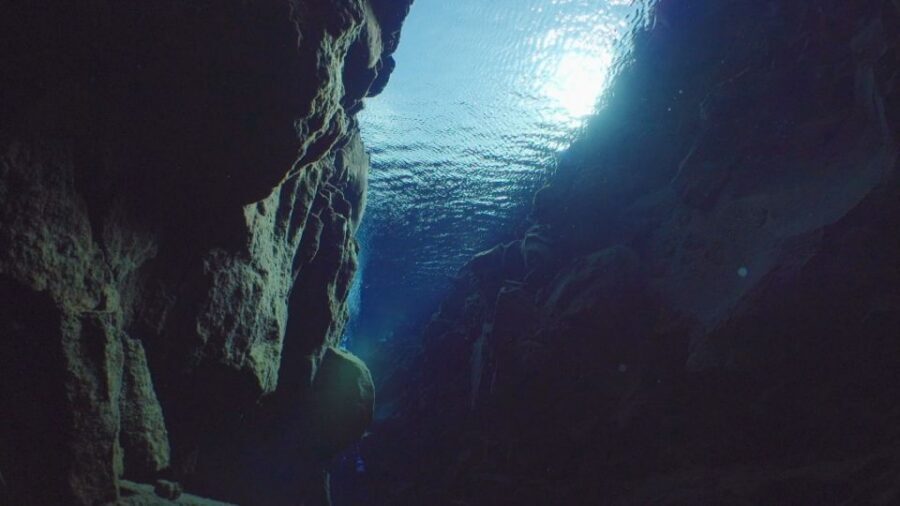
- 100m+ visibility turns the fissure cracks into the star of the show
- You can visit the fissure’s named spots, from the narrow Big Crack to Silfra Cathedral
- 2°C water year-round means the dry suit is not optional, it’s the whole point
- You’ll spend about 45 minutes in the water after about an hour of briefing and gearing up
- Thingvellir is UNESCO World Heritage, so the day is scenic even before you get suited up
- Guides are real professionals, and names like Filip and Giancarlo show up in strong feedback
Silfra’s fissure: where the American and European plates meet
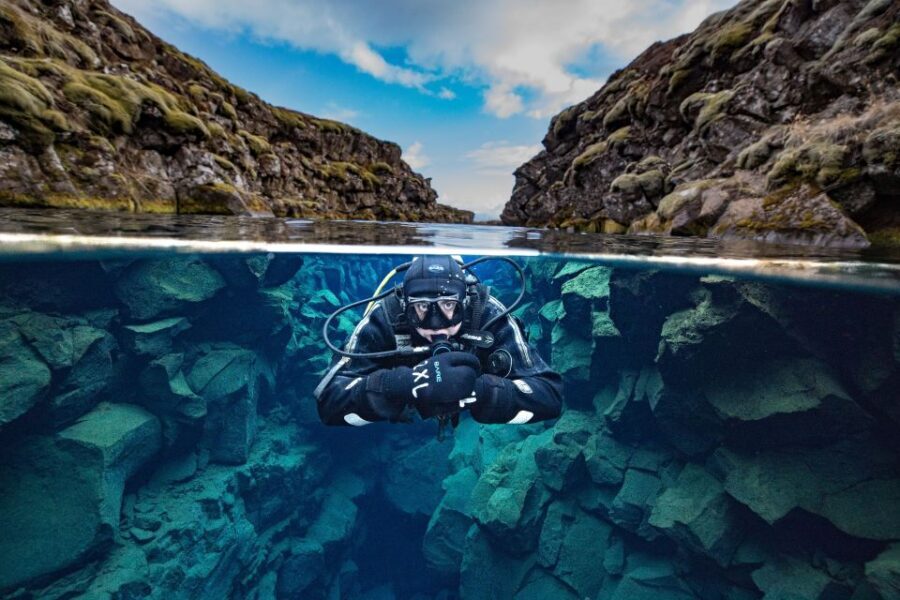
Silfra sits inside Thingvellir National Park, in a part of Iceland that’s famous for visible geology. The big headline is simple: the American and European tectonic plates are split here, and Silfra’s fissure cuts through that gap. When you’re suspended in the water and look around, the “science” part stops being textbook material and becomes something you can see—and, in the narrowest area, almost touch.
This is also why Silfra feels different from most cold-water scuba outings. You’re not just trying to spot fish or admire a wreck. The main subject is the earth itself: the deep cracks, the way the fissure changes width, and the colors that appear because of the water clarity.
Above water, Thingvellir already has that “how is this real?” feeling, and you’ll spend time there before and after your session. That matters because Silfra is not just about a single underwater moment. The whole day works as a geology tour that happens to include a suit and tank.
You can also read our reviews of more scuba diving tours in Reykjavik

The route through four named sections (Big Crack to Silfra Lagoon)
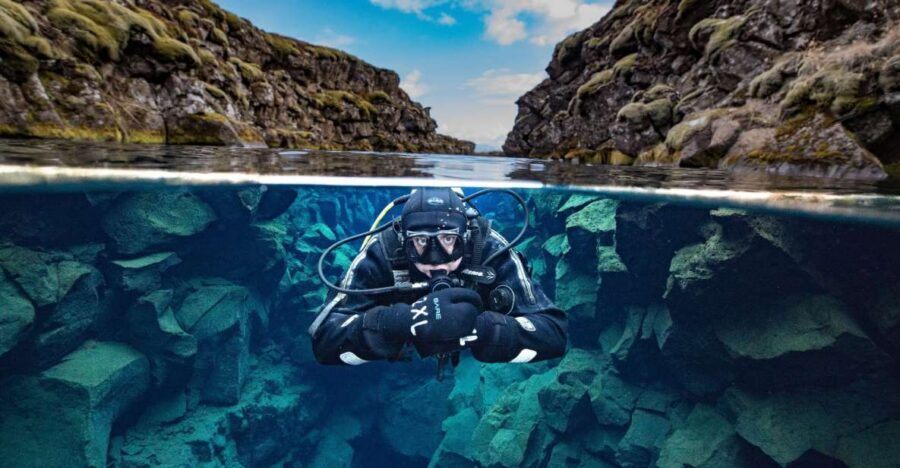
Your time in the water is structured into four named sections, and that sequencing is part of the magic. You’ll start at the entry platform and then move through the fissure areas in order, with about 45 minutes underwater exploring.
Here’s what you can expect from each section, and why they feel different:
Big Crack: the plates get close enough to notice
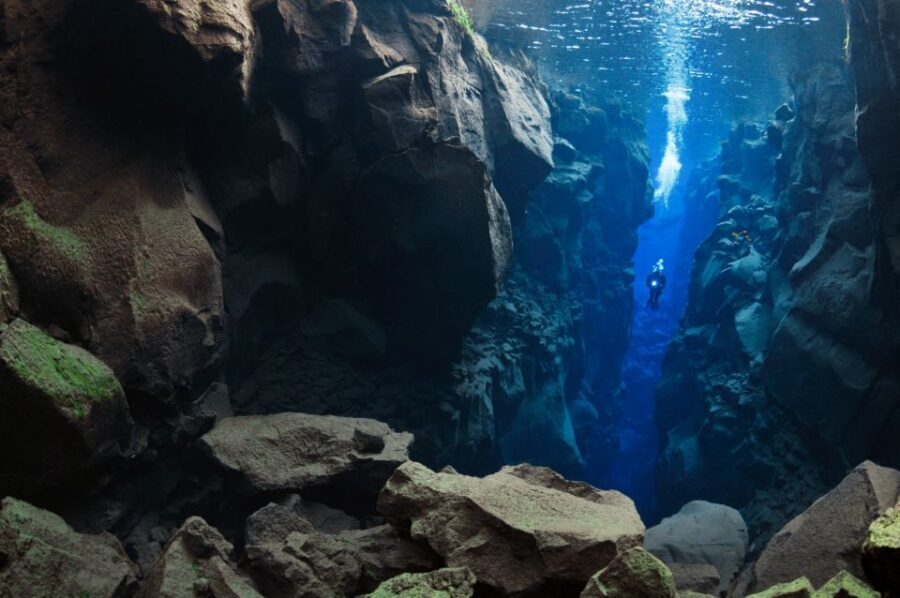
Big Crack is the narrowest section. This is where the “between two continents” concept becomes physical. You’ll likely notice how tight the space feels compared with the wider parts, and that closeness makes the fissure feel like a corridor rather than just an open channel.
Silfra Hall: more space, more color, more clarity
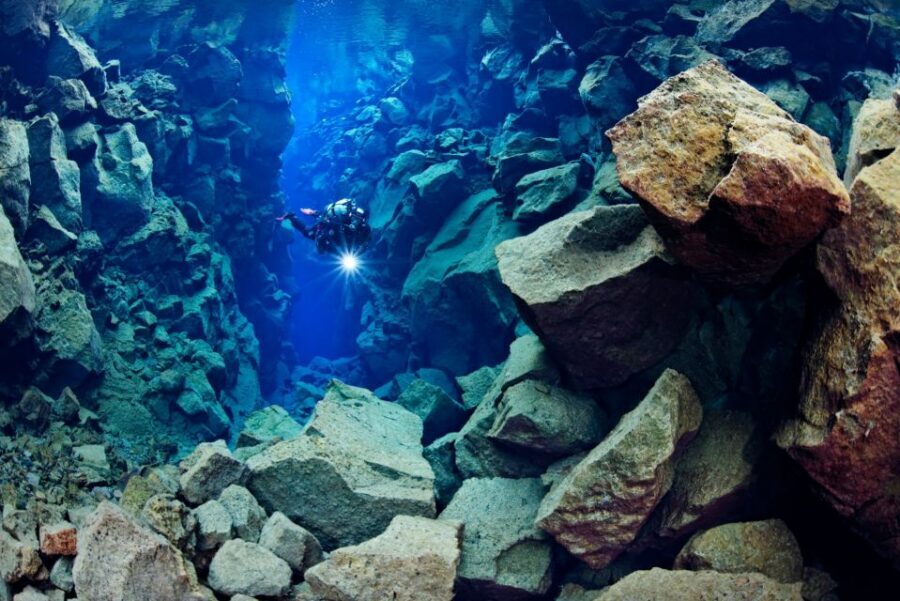
Then the fissure widens into Silfra Hall. This is where the full spectrum of Silfra’s color and clarity tends to show. When water is this clear, light behaves differently, and you get those clean, high-contrast views of the cracks and walls.
There’s also a neat visual trick reported in the route description: if you look at the right angle, you can see all the way to Thingvallavatn—over 150 meters away. It’s not a jump-scare moment. It’s more like you suddenly realize the scale is enormous.
Silfra Cathedral: depth shows up in the atmosphere
Near the opening of Thingvellir Lake, you enter Silfra Cathedral. This is the deepest named section, reaching 23 meters. Even if you’re not focused on numbers, depth changes the feel. Your buoyancy control matters more, and the way the walls recede looks different than in the shallower sections.



Silfra Lagoon: the end of the fissure story
Your session finishes at Silfra Lagoon. This is the “wrap-up” area where you come back toward the exit platform. With the visibility pushing 100 meters plus, the end feels almost endless—less like you’re leaving a defined spot and more like you’re drifting away from the main feature.
After you exit, you’ll walk back about 250 meters to the meeting point, and that short walk is long enough to feel your body go from underwater mode back to cold-air mode.
Dry suits and 2°C water: staying warm and buoyant
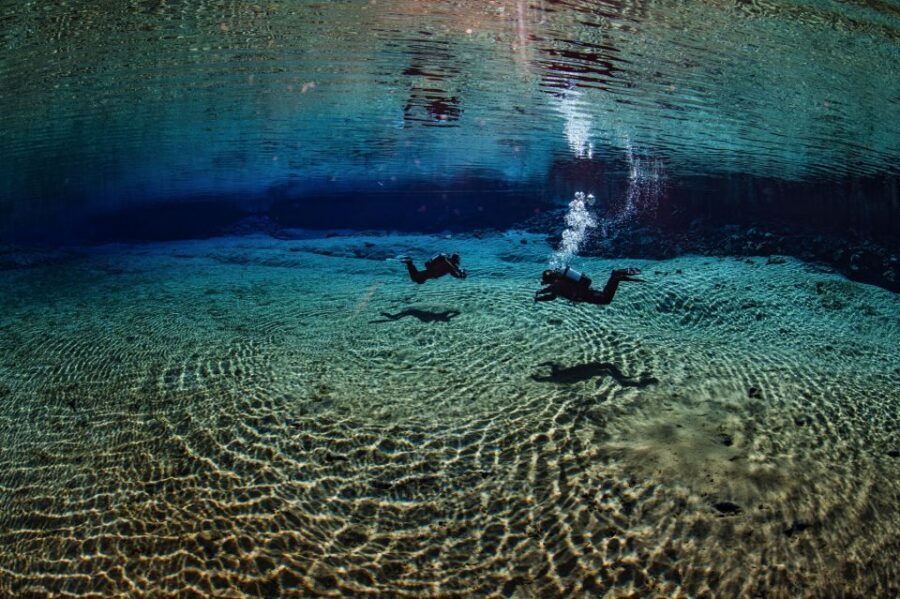
Silfra water is listed at 2°C year-round, no matter the weather. That’s a big deal, because cold isn’t just uncomfortable—it affects breathing, movement, and how fast you lose flexibility. What makes Silfra workable is the dry suit setup: a dry suit plus a warm undersuit.
In plain terms, the dry suit is what lets this experience stay enjoyable rather than miserable. You’re not relying on luck or “maybe I’ll be okay.” You’re going in with equipment meant for this temperature range.
One review even called out how the cold still hits once you’re in the suit, which is realistic. Dry suits help a lot, but you should still dress for Icelandic conditions and plan to move carefully. Your goal is smooth, calm motion—less thrashing, better buoyancy, and less “I’m fighting the gear” energy.
Also note: this is not a casual try-it-if-you-want situation. You must have the right scuba credentials, and you also need dry suit training with proof requirements. That’s part safety, part ensuring you can handle the suit’s fit and how it changes your buoyancy.
Timing from Reykjavik: briefing, equipment, and the 45-minute water time
The day is built around one crucial idea: gearing up takes time, and calm preparation makes the underwater part better.
If you choose pickup, you’ll ride a heated van/coach from Reykjavik area for about 45 minutes before you reach Silfra. If you don’t, you meet directly at Silfra in Thingvellir National Park and arrive 15 minutes early.
Once you’re at the site, plan for:
- About 1 hour for briefing and gearing up
- Then entry and about 45 minutes underwater
That hour matters more than it sounds. You’ll go over safety and how the route works, and you’ll get set up with scuba equipment, the dry suit, and warm undersuit. Then you’re ready for the fissure sections.
Group size is capped, and that tends to keep things personal. The info you’ll see describes both small-group limits and guided grouping, so on the ground you can expect plenty of attention and clear pacing. The result is fewer frantic moments and more time spent looking at the fissure.
After the water time, you’ll exit, walk back, and then warm up with hot chocolate and cookies. That little comfort break isn’t just a perk; it helps reset your body after cold exposure and gives you a moment to chat with your guide and look at photos taken during the tour.
Thingvellir above the water: UNESCO World Heritage before and after
Thingvellir National Park isn’t just a backdrop. It’s a UNESCO World Heritage Site, and it’s also a central stop on the famous Golden Circle route. That means two good things for your experience.
First, you’re not spending the whole day staring at a bus window. Even the time around the park feels meaningful. Second, the geology story makes the underwater story land harder. You see cracks and tectonic movement above water, then you step into the fissure and see the same forces from the inside.
This matters for value. The premium cost of Silfra isn’t just paying for the water clarity. You’re paying for a rare experience that ties together the park’s famous geology and an underwater view most people never get.
Price and value of the $289 ticket
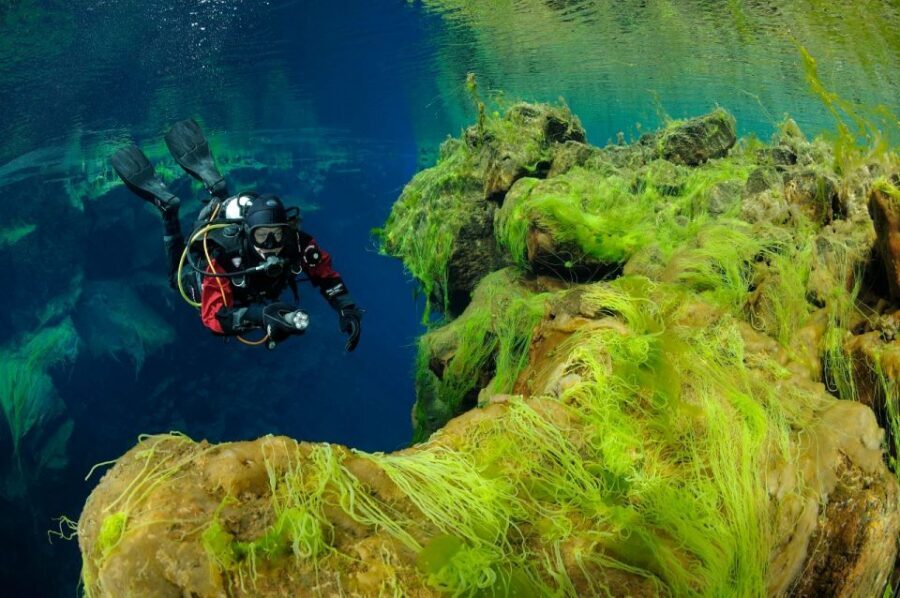
At $289 per person for a 3–5 hour outing, Silfra is not cheap. But it’s also not random pricing. What you’re paying for is a bundle of high-touch items that add up quickly on a cold-water day.
Here’s what’s included:
- Live guide / PADI instructor
- Silfra entry fee
- Scuba equipment
- Dry suit and warm undersuit
- Heated van to change clothes
- Hot chocolate and cookies
- Optional hotel pickup and drop-off
In other words, you’re not just paying for the “cool location.” You’re paying for the full cold-water system: instructor time, entry, gear, and the warm logistics that make it feasible in Icelandic conditions.
The small time window underwater is also part of the value equation. You’re doing one focused run through the fissure sections, not a long free-for-all. That helps with safety and pacing, and it also keeps the day from dragging. If you’re the type who likes a clear structure—get briefed, gear up, do the route, warm up, done—that structure is your friend.
Who this Iceland plan fits best (and who should skip)
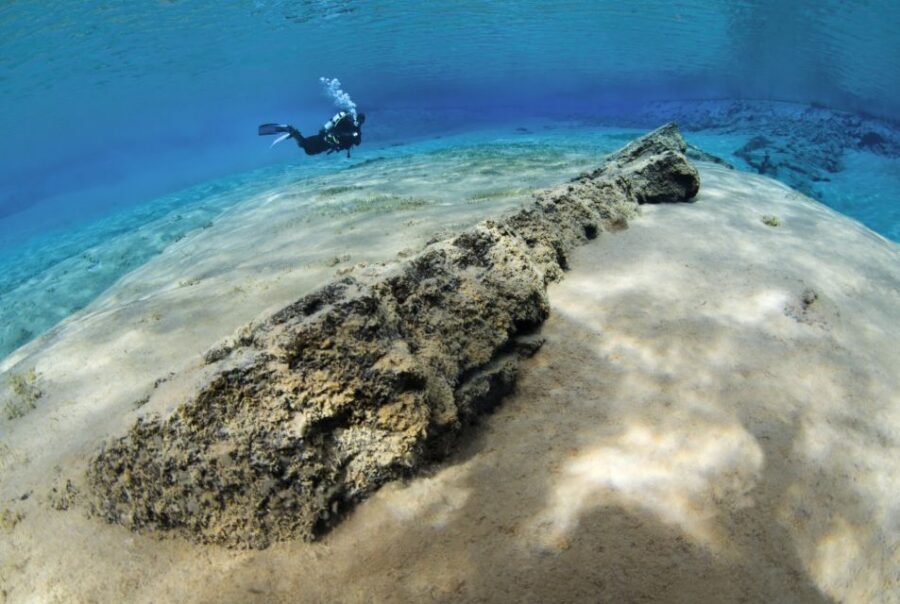
Silfra is built for experienced, properly trained scuba participants. The requirements are strict for a reason: the environment is cold, the suit is specialized, and the route is inside a fissure where you need controlled movement.
You must have:
- PADI Open Water certification or comparable
- Dry suit certification, with logged dry suit experience within certain time windows and written proof requirements
You’ll also need to sign a medical statement and a liability release.
And it’s not suitable for:
- Pregnant women
- People over 264 lbs (120 kg)
- People under 3 ft 9 in (120 cm)
- People over 6 ft 6 in (200 cm)
- People under 17 years
- People under 99 lbs (45 kg)
So who does fit well?
- You like structured, guided experiences
- You want geology as the main event
- You’re comfortable planning around cold exposure
Who might want a different Iceland activity?
- You don’t have dry suit training or can’t meet the proof rules
- You’re worried about controlled buoyancy and suit handling
- You want a more relaxed, casual “let’s see how it goes” day
One review did mention the experience felt more guided-by-the-guy than they expected, so if your ideal day includes lots of extra storytelling, plan to keep your expectations realistic: your attention should be on safety, buoyancy, and the fissure itself.
Practical tips to make your Silfra session smoother
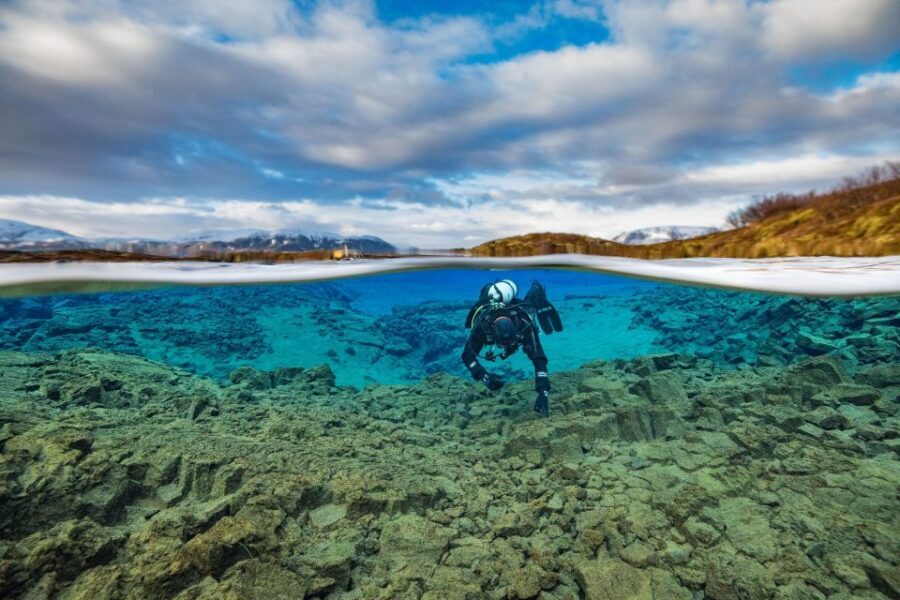
Silfra success comes down to basics done well. Here are the practical steps that will help you enjoy the experience instead of managing avoidable annoyances.
- Wear warm clothing to the park. You’ll have changing time, but your body still needs a head start in the cold.
- Bring your certification documents and be ready to show what you’re required to have. This isn’t paperwork theater—this is how you get fitted into the right safety category.
- Move slowly during gearing and on the platform. Cold + a dry suit can make you clumsier than you expect. Smooth beats fast.
- Plan your mind for the “main subject.” The cracked earth is what you came for. Let your eyes stay on the fissure walls and sections rather than searching for distractions.
- If you’re keen on photos, ask your guide what moments typically produce the best views. One feedback note described a relaxed setup when the group was small, and that kind of calm helps with photography.
And here’s a small mindset shift: accept that you’re working in a narrow, cold-water environment. The goal is not to rush through. The goal is to notice the geometry and the way clarity turns depth into something visible.
Should you book Silfra in Thingvellir?
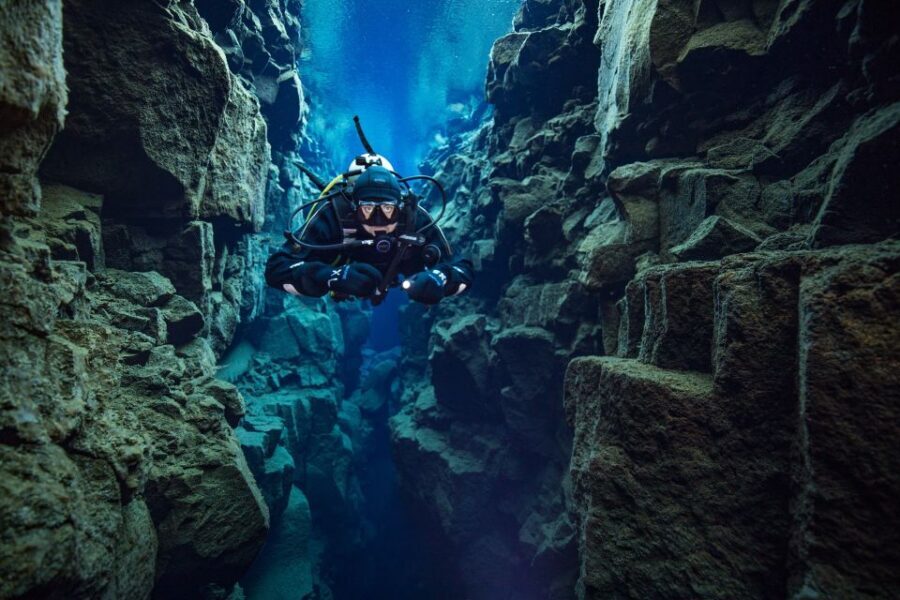
I think Silfra is a strong book if you fit the training requirements and you want a once-in-a-lifetime geology experience with real structure. The combination of 2°C water handled by dry suits, 100m+ visibility, and the fact that you’re literally under a tectonic boundary makes this one of Iceland’s most specific adventures. You’re not paying for generic scenery—you’re paying for a rare viewpoint.
If you don’t meet the dry suit rules, or if cold-water gear feels like a headache you can’t commit to, then skip it and choose another Thingvellir experience. You’ll enjoy Iceland more if you can stay relaxed and present.
If you do book, go in with warm layers, respect the briefing, and let the fissure do the talking.