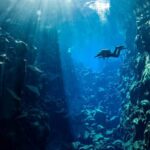
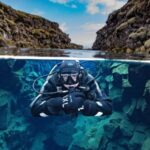
Silfra is Iceland’s cold-water showpiece. This small-group scuba session takes you into the Silfra fissure system—Silfa Hall, Cathedral, and Lagoon—where visibility can stretch past 100 meters and the water turns that electric blue you see in photos. What I like most is the careful pacing: you do gear checks, weight checks, and safety signals before you move into the crack. I also love the human touch from the guide experience—Arctic Adventures guide Franceska is a great example of how much comfort and confidence matter here.
The one big thing to consider is the challenge level. This is not a casual snorkeling-style outing; it’s built for people with drysuit training and strong physical fitness, including the ability to carry heavy equipment for about 400 meters and handle cold-water exposure.
In This Review
- Key Things to Know Before You Go
- Silfra’s Underwater Wonderland: What Makes This Route Special
- Thingvellir Meeting Point: Showing Up Ready for the Cold
- Gear, Drysuit, and That 400-Meter Gear Carry
- The Entry Process: Ladder Down, Waist-Deep Checks, Then In
- Underwater Route Highlights: Silfa Hall, Cathedral, Lagoon, and the Plates
- Session Length and What Timing Feels Like
- Who This Tour Is For: Skills, Fitness, and Eye Protection
- Post-Water Reset: Hot Chocolate, Cookies, and Real Recovery
- Value Check: Does $296.41 Make Sense Here?
- A Real Example of Great Guidance: Franceska’s Calm Support
- Practical Tips That Will Make Your Day Smoother
- Should You Book This Silfra Scuba Session?
- FAQ
- Where do I meet for the Silfra Fissure scuba tour?
- Is pickup from Reykjavik included?
- How long is the experience?
- What’s included in the price?
- Do I need drysuit certification to join?
- How many people are in the group?
- What happens in winter if temperatures are very low?
Key Things to Know Before You Go
- Max 3 participants for more time with your guide and less waiting around in the cold
- Drysuit + full scuba kit provided, so you’re not renting the wrong gear at the wrong time
- Very clear water, but zero forgiveness: you’ll follow a route through Silfa Hall, Cathedral, and Lagoon
- Comfort isn’t optional: warm undergarments and warm socks are required, and you’ll want a change of clothes
- Winter can shorten the plan if conditions are below freezing, with a possible switch to a single longer session
- Glasses aren’t compatible with the mask, so plan contacts or bring prescription goggles
Silfra’s Underwater Wonderland: What Makes This Route Special
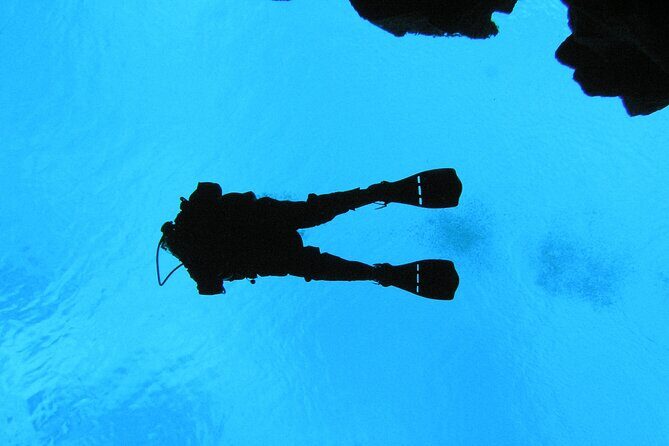
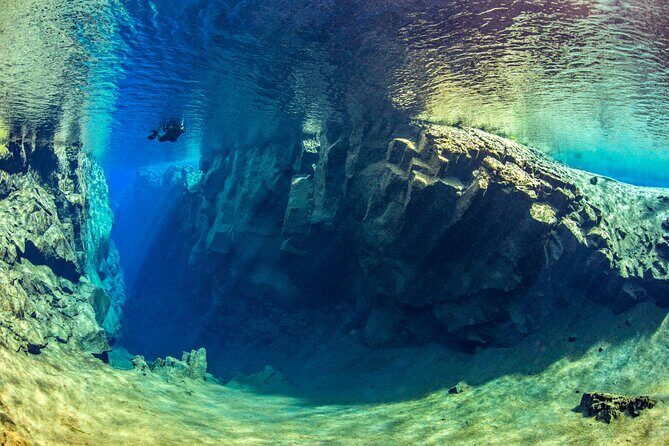
Silfra sits inside Thingvellir National Park, and the whole experience has a built-in wow factor: you’re swimming in water that’s incredibly clear and cold enough that you feel every second. The payoff is a surreal look at the fissure system. As you move along, the narrow crack opens into spaces described as Silfa Hall, then on toward Silfra Cathedral, and finally into Silfra Lagoon.
The water’s visual effect is a big deal. The tour describes visibility that can exceed 100 meters, which means the rock walls and the fissure edges stay crisp instead of hazy. It also means you can actually appreciate the geometry of the plates and the way the route changes from tight and spooky to wide and bright-blue.
And yes, there’s a moment that surprises people: you may be invited to taste the water. The tour notes it’s perfectly safe to drink, which gives the whole thing a slightly science-meets-adventure feel. Don’t expect it to taste like warm soda; it’s water, cold and clean.
What you’re buying isn’t just scenery. It’s structure: a guided swim through a carefully managed route with pre-checks and signals so you can focus on seeing what you came for.
You can also read our reviews of more scuba diving tours in Reykjavik

Thingvellir Meeting Point: Showing Up Ready for the Cold
You meet at the Silfra meeting point at Vallarvegur, 806, Iceland, and the activity ends back at the same place. There’s no pickup from Reykjavik, so plan your own ride or transport into Thingvellir. Also, the national park charges a parking fee (listed as 500 ISK for a private car). Budget for that even if you’re driving only once.
Timing matters. The tour asks you to book a required time in advance, then show up for a briefing before gear prep and entry. In cold-water activities, being late isn’t just inconvenient—it can throw off the whole safety rhythm. If you arrive stressed, you’ll feel it when you’re suiting up.
Once you’re there, you get a thorough orientation about park regulations and underwater procedures and signals. This is one of those details that sounds dry, until you realize it’s what helps you relax once you’re in the water. Clear hand signals and clear rules equal a calmer experience, especially if you’re new to a drysuit setting.
Gear, Drysuit, and That 400-Meter Gear Carry
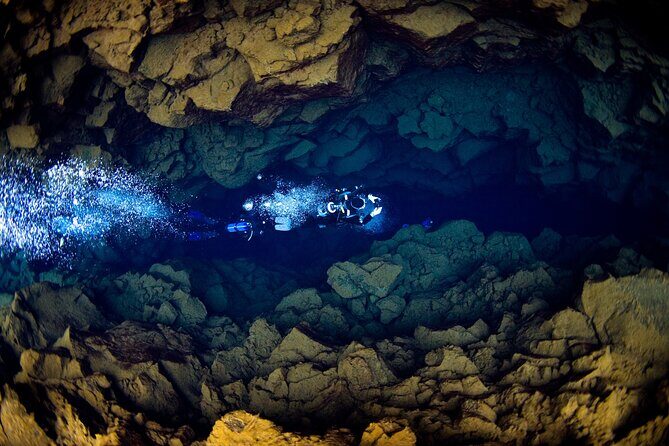
The tour provides the full setup: drysuit, mask, fins, thermal undersuit, tanks, weights, and regulator. That’s valuable because the right fit matters more than people think. A drysuit that fits badly won’t fail gracefully. It’ll leak cold air, limit your movement, and make the experience feel harder than it needs to be.
You’ll also do weight and safety checks before you head in. This matters because buoyancy in cold water is the last thing you want to figure out mid-session. The tour is explicit that Silfra is challenging and that you must be able to carry heavy equipment for about 400 meters.
So what does that mean for you practically?
- If you’re generally active and used to walking with a load, you’ll likely handle it fine.
- If you’re not, the carry can feel like the hardest part of the day—before the water even starts.
Also plan your clothing strategy on purpose. Warm undergarments (fleece or wool) and warm socks are required. You’ll want layers you can move in and that you can still tolerate if you get even a little damp.
And bring a change of clothing. The tour makes a point that no drysuit can be 100% guaranteed dry unless it’s made especially for you. In plain terms: you should not plan to leave soaked and hope everything dries on the drive home.
The Entry Process: Ladder Down, Waist-Deep Checks, Then In
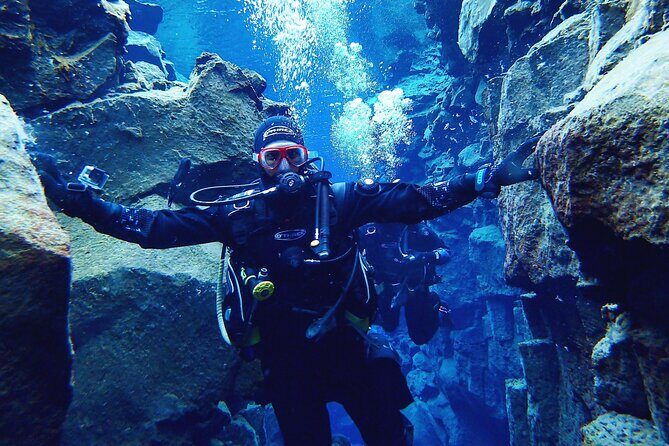
Once you’re geared up, you head to the Silfra entrance. The tour describes a descent via ladder to a submerged metal platform. You then stand in waist-deep water to acclimatize.
That waist-deep stage is more important than it sounds. It’s where you get used to the sensation of cold water plus the way your gear shifts your body position. You also complete required checks—weights, safety confirmations, and a quick run through of how you’ll move and respond underwater.
There’s also a chance to taste the water here or soon after. It’s a small moment, but it adds personality to an environment that can otherwise feel purely scientific.
After that, you descend and follow your guide through the route. Your job becomes simple: stay calm, follow instructions, and look around.
Underwater Route Highlights: Silfa Hall, Cathedral, Lagoon, and the Plates
Here’s the core promise of the route: you swim through the Silfra Deep Crack where the two continental plates lie close together, then move into progressively wider areas.
- Silfra Deep Crack: The tour emphasizes the narrow gap feel, then the way it opens as you move along. This is where people tend to pause mentally—because it’s not a wide open swimming pool. It’s a fissure.
- Silfa Hall: After the crack widens, the route leads into Silfa Hall, described as a passage that flows deeper into the system.
- Silfra Cathedral: The tour points out Cathedral’s deepest point around 72 feet (22 meters). At the same time, it lists a depth limit of 59 feet (18 meters) for the challenge level. If you’re trying to reconcile those numbers, treat the 18 m figure as the practical limit for your session and the 22 m figure as descriptive context for where the Cathedral area reaches in general.
- Silfra Lagoon: The route ends with Silfra Lagoon, where the water is described as brilliant-blue with seemingly endless visibility.
The biggest practical takeaway: you don’t just see one “pretty spot.” You move through multiple environments with different spatial vibes. Tight crack to open hall to cavern-like depth to a bright-blue open water finish. That variety is a big part of why this tour is so well-liked.
And because visibility can be extreme, your attention stays on the water and rock edges—not on your hands. You’ll still use your equipment and follow signals, but you get that calm feeling of gliding in a clear world.



Session Length and What Timing Feels Like
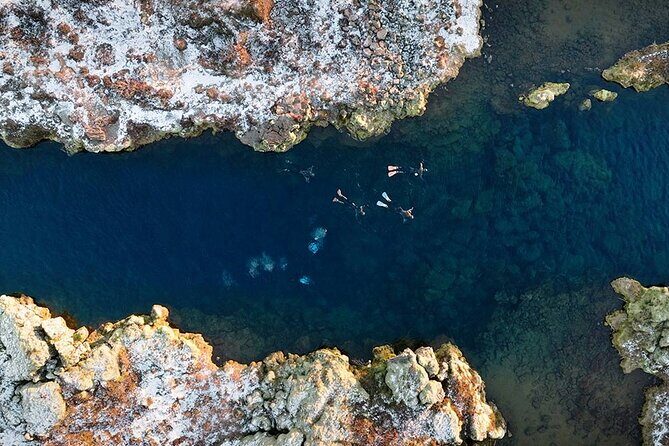
This is approximately a 4-hour experience total. The actual time in the water changes with season and water temperature.
In summer months, you may have the option of two 30-minute underwater sessions. In winter—when water temperatures are below freezing—the tour describes a single dive of about 45 minutes.
If conditions get extra harsh (below -0°C), there’s a possibility your instructor changes to just one session for safety reasons. That’s not a bait-and-switch; it’s safety management in a place where the environment calls the shots.
Plan for a day that feels longer than the total clock time. Pre-briefing, gear checks, suiting up, entry steps, then the post-water rinse and change all add weight. The hot drink and cookies after are a nice reset.
Who This Tour Is For: Skills, Fitness, and Eye Protection
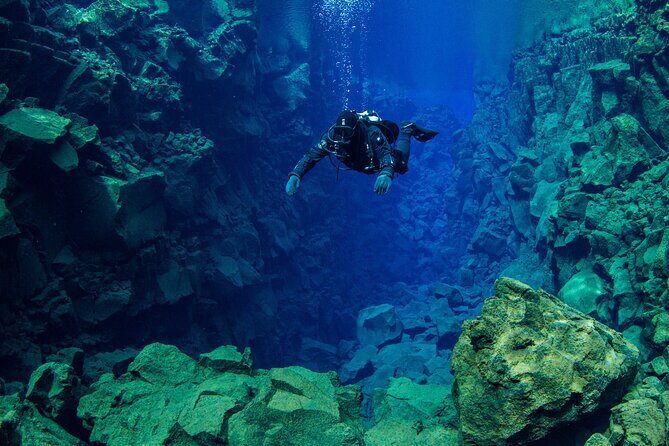
This tour is limited to people who meet strict scuba requirements. The tour notes it’s for PADI-certified participants with drysuit dive certification or experience. It also specifically requires drysuit experience: your guide must see your drysuit certification card, or proof in a logbook showing at least 10 previous drysuit dives signed by a dive professional. You also need to have dived in a drysuit within the last 2 years so your skills are current.
So if you’re planning this as a first-time drysuit experience, you may run into a hard stop. Even if you’re a strong swimmer, the drysuit requirement is about comfort, buoyancy control, and safety habits.
Physical fitness matters too. The tour says you should have a strong physical fitness level, and you must carry heavy equipment for about 400 meters. If you can’t comfortably walk with gear, don’t let pride talk you into it. Cold-water sessions reward practicality.
Eye and mask fit is another non-negotiable item. The tour explains that since you’re using a snorkeling/dive mask to see underwater, you cannot wear glasses underneath the mask. That means you’ll have to go without glasses, use contact lenses, or bring your own prescription goggles.
If you wear contacts, that’s often the simplest option. If you need prescription eyewear but don’t use contacts, bring a proper option ahead of time rather than trying to improvise with generic mask inserts.
Post-Water Reset: Hot Chocolate, Cookies, and Real Recovery
When you finish the underwater route in Silfra Lagoon, you ascend to the surface and remove fins and other heavy equipment. Then you walk back to the parking lot and change into your everyday clothes.
This is where most people feel the contrast. You’ll feel cold on and off while changing gear, and then the warm drink helps you come back to baseline. The tour includes hot chocolate and cookies, which isn’t fancy, but it’s effective and quick.
It’s also a good sign that the experience doesn’t end with you still feeling frozen and unfinished. You’re given that small built-in recovery moment before you drive away.
Value Check: Does $296.41 Make Sense Here?
At $296.41 per person, you’re paying for a specialized, guided cold-water scuba session in a very controlled environment. The price includes the whole technical kit: drysuit, mask, fins, thermal undersuit, tanks, weights, and regulator—plus hot chocolate and cookies afterward.
What you don’t get is pickup from Reykjavik and meals beyond the included snack and drink. The national park parking fee is separate.
So where’s the value?
- Small group size (max 3) reduces downtime and increases attention during checks and in-water guidance.
- Full equipment provided means you’re not guessing what to rent, and you’re using a standardized setup meant for Silfra conditions.
- A structured route through multiple named locations adds variety, not just one short photo stop.
If you’re a qualified participant with drysuit experience, this pricing can feel fair for Iceland, especially because the logistics are tight and the equipment burden is handled for you. If you’re not qualified yet, you might spend money twice—once on training and once on the actual session—so it can be smarter to line up the drysuit credentials first.
A Real Example of Great Guidance: Franceska’s Calm Support
One review stands out for the right reason: the guide. Arctic Adventures guide Franceska is praised for being genuinely enthusiastic, but more importantly, for making comfort and safety the priority. That kind of support shows up in small actions—warming gloves, helping with the drysuit setup, and staying calm while you’re in snow-adjacent cold conditions.
That matters because Silfra can be physically demanding even for experienced cold-water participants. When a guide keeps the tone steady and focuses on your comfort, you get more of the experience and less of the stress.
If you’re someone who gets anxious under instruction, this is the kind of guide style that can make the day work.
Practical Tips That Will Make Your Day Smoother
A few things to do before you go:
- Wear warm fleece or wool underlayers and warm socks as required.
- Bring a change of clothes and plan for your transport to be a little damp-proof.
- If you need vision correction: plan contacts or prescription goggles, since glasses don’t work under the mask.
- Don’t schedule this as a last-minute gamble if you’re not current on drysuit skills within the last 2 years.
- If it’s winter: pack for cold outside the water too. You’ll still be waiting, suiting up, and walking back.
And emotionally: go in with the right expectation. This is an outstanding scenic underwater experience, but it’s also a gear-heavy cold-water session. Treat it like a training-and-adventure mix, not a casual outing.
Should You Book This Silfra Scuba Session?
You should strongly consider booking if you:
- Have current drysuit experience and can show certification or logbook proof
- Want a guided route with clear, named underwater areas like Silfa Hall, Cathedral, and Lagoon
- Appreciate small-group attention and a structured pre-checking process
- Are comfortable with cold and can handle carrying gear for about 400 meters
You might skip or postpone if you:
- Don’t have the required drysuit background or you’re not current within the last 2 years
- Wear glasses and don’t already have a workable plan for prescription contacts or goggles
- Know you struggle with cold-water comfort or the physical gear-carry portion
If you tick the boxes for skills and preparedness, Silfra is one of those Iceland experiences that feels both scientific and cinematic. The route, the visibility, and the guide-driven safety rhythm all add up to a day you’ll remember long after the hot chocolate is gone.
FAQ
Where do I meet for the Silfra Fissure scuba tour?
You meet at the Silfra meeting point at Vallarvegur, 806, Iceland, and the tour ends back at the same meeting point.
Is pickup from Reykjavik included?
No. Pick up service from Reykjavik is not included.
How long is the experience?
It runs for about 4 hours.
What’s included in the price?
The tour includes a guided scuba session in Silfra, small-group experience, and all specialized dive equipment (drysuit, mask, fins, thermal undersuit, tanks, weights, and regulator), plus hot chocolate and cookies.
Do I need drysuit certification to join?
Yes. You need to have previous drysuit experience, and your guide needs to see a drysuit certification card or a logbook showing at least 10 previous drysuit dives. You also need drysuit diving experience within the last 2 years.
How many people are in the group?
The tour has a maximum of 3 travelers.
What happens in winter if temperatures are very low?
If the temperature falls below -0°C, there is a possibility the instructor changes the plan into just one session for safety reasons. In winter, the session is typically a single dive of approximately 45 minutes.