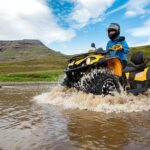
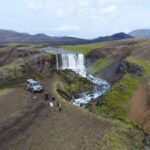
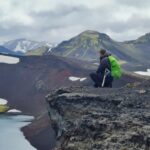
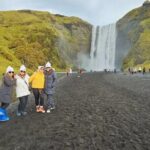
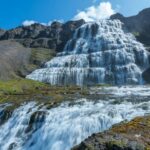
This drive runs itself. The Snæfellsnes Peninsula self-guided audio tour gives you a GPS-triggered guide across glacier, lava, cliffs, and small-town Iceland. You follow the route by audio cues, not by map anxiety, with offline maps and storytelling that feels like you’ve got your own person in the passenger seat.
I love that it’s built for real driving time: hands-free audio plays as you reach each spot, and you can pause or restart whenever you want. The big practical trade-off is that you must download the tour while you’re somewhere with strong wifi or cellular signal, because it’s offline only after the download.
In This Review
- Key things that make this tour worth your time
- The Snæfellsnes drive that feels like a guided road trip
- Price and value: what $49.99 per group really buys
- How the audio tour app works (and how to avoid common setup headaches)
- Best way to use it while driving and walking
- Timing: why the 3-4 hours and 89-mile loop makes sense
- Your stop-by-stop path across Snæfellsnes
- Welcome: Iceland in Miniature
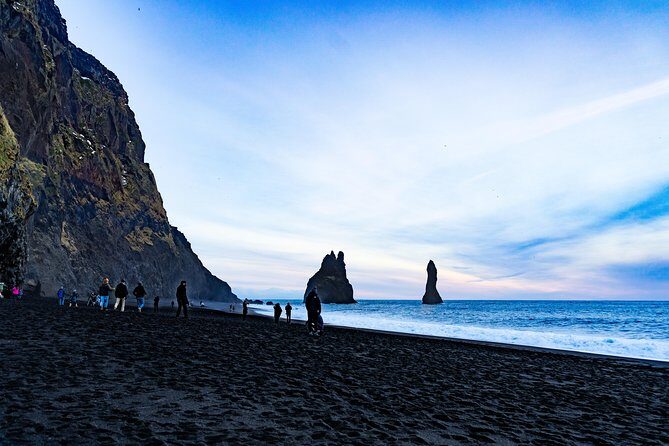
- Djúpalónssandur area and the Path of the Bulls
- Ingjaldshólskirkja: the church that has history under the paint
- Ölkelduvatn Mineral Spring: science in the background
- Ytri Tunga: the seal-skin legend
- Bjarnarfoss: a waterfall with a mythic matriarch
- Búðakirkja: the black church angle
- Snæfellsjökull viewpoint: volcano meets glacier
- Rauðfeldsgjá gorge: the 20-minute trail moment
- Sönghellir cave: cave echoes as a story device
- Arnarstapi detour: cliffs, arches, natural bridges
- Gatklettur and the herring harbor era
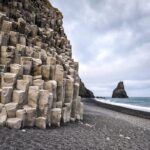
- Lóndrangar: basalt columns and the rocky castle nickname
- Malarrif Lighthouse: shaped like a rocket
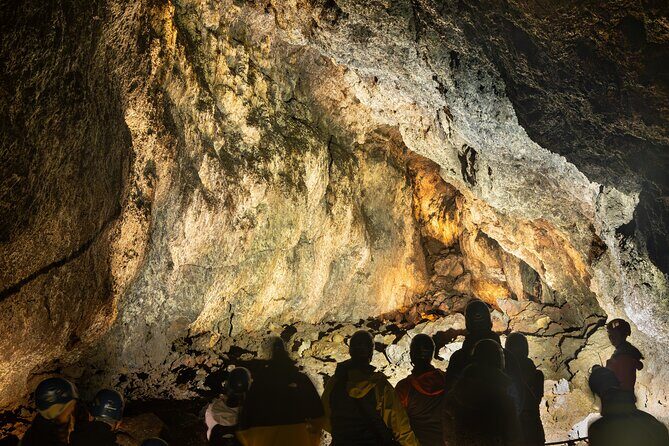
- Vatnshellir cave: the lava-tube reality check
- Djúpalónssandur revisited through story continuity
- Saxhóll Crater: phreatic eruptions in plain language
- Skarðsvík Beach: turquoise contrast against black rock
- Svörtuloft Lighthouse: bright orange against lava cliffs
- Öndverðarnesviti: a lighthouse for the rocky tip
- Hellissandur: street art capital energy
- Svöðufoss and glacier meltwater
- Bæjarfoss: Town Falls and a walk you can actually do
- Kirkjufellsfoss and Kirkjufell: the iconic duo
- Grundarfjörður: saga tales tied to real terrain
- Kolgrafarfjörður Viewpoint: final panorama
- Should you book the Snæfellsnes audio driving tour?
- FAQ
- How much does the Snæfellsnes Peninsula self-guided driving audio tour cost?
- How long is the tour and how far do you drive?
- Does the audio tour require Wi-Fi or a cellular signal during the drive?
- When do I need to download the tour?
- Where do you start and where do you finish?
- Does the audio play automatically, and can I pause it?
- Is there a free cancellation window?
Key things that make this tour worth your time

- Offline by design: no cellular or wifi needed after you download.
- GPS-triggered audio: stories play based on where you are, so you don’t have to constantly tap and check.
- Lifetime access: buy once and use it anytime, even on future trips.
- Ticket-smart pacing: short stops let you see a lot without eating your whole day.
- Value for the car: price is per group (up to 4), so the math is usually better than a bus or guided tour.
The Snæfellsnes drive that feels like a guided road trip
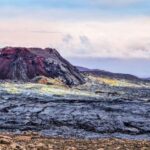
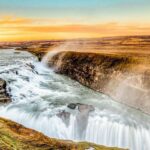
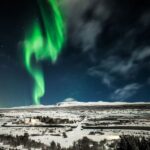
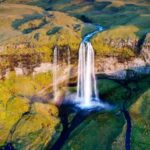
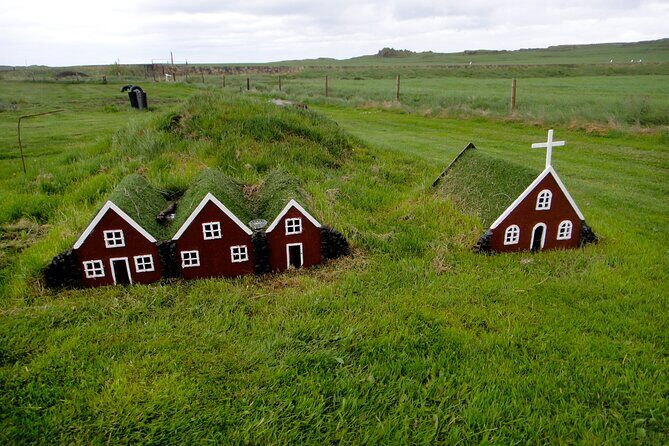
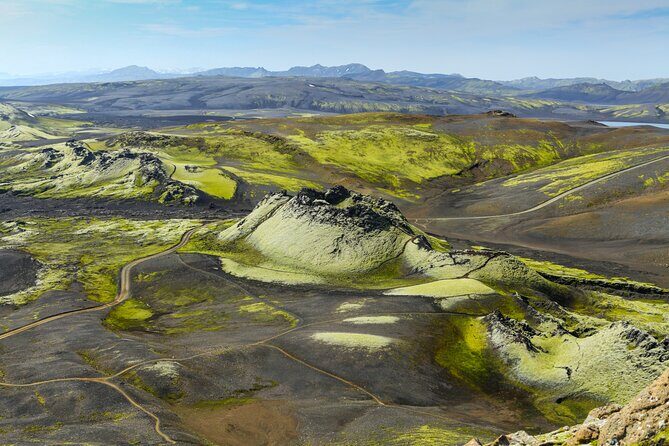
Snæfellsnes is the “Iceland in miniature” idea made real. In one loop of roads you get the range: a glacier-capped volcano, black lava textures, seaside cliffs, waterfalls fed by meltwater, and a string of small churches and coastal viewpoints. The fun here is the mix of scenery and story—Viking-era vibes alongside elves and trolls—without you doing any planning gymnastics.
What makes this tour click is how it uses your time in the car. Instead of you staring at directions, you get location-based audio that tells you what you’re looking at and why it matters. The result is a drive that stays light and fun, even when weather turns Icelandic and the view keeps changing by the minute.
And you’re not locked into one pace. You can start when you’re ready at the visitor center, pause for photos, stretch breaks, or a quick walk, then jump back in. The audio keeps the momentum without bossing you around.
You can also read our reviews of more guided tours in Reykjavik
Price and value: what $49.99 per group really buys
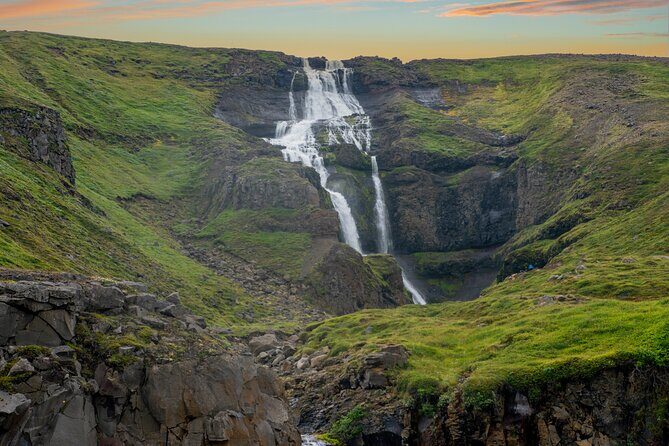
The price is $49.99 per group (up to 4). That matters because this is a driving tour. One rental car can carry up to four people, so the cost per person can drop a lot compared with paying for guided transportation seats.
Also, you’re not paying for a bus ticket where you’re stuck at someone else’s schedule. You’re paying for a route, stop order, and narration you can replay later. Add lifetime access—no expiry—and it becomes the kind of purchase you keep using on repeat trips.
The only catch is the obvious one: it only works if you’re comfortable driving this kind of road trip yourself. If you prefer a professional driver or would rather not rent a car, a guided tour might still be easier.
How the audio tour app works (and how to avoid common setup headaches)
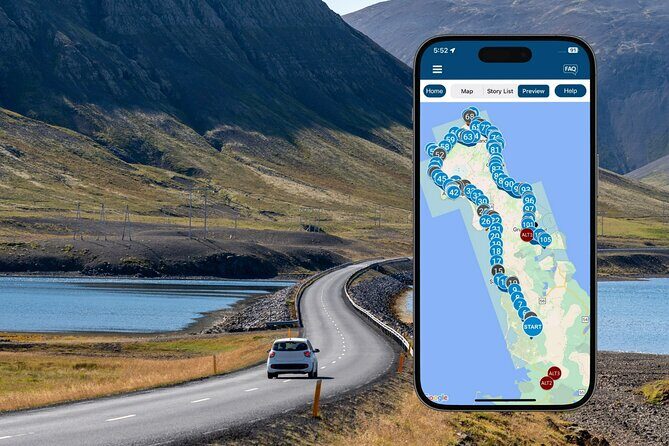
This is self-guided and private. No one meets you at the start. Instead, you park at the starting point, open the app, and the first story begins automatically once you’re at the first audio location.
Here’s the setup you need to plan for:
- After booking, you’ll get an email and text with setup instructions and a password. You’re told to download the separate audio tour app by Action, and to look for “audio tour” in your messages.
- You must download the tour while you’re on strong wifi or cellular.
- After download, it works offline: maps and commentary are available without signal.
- While you drive, audio plays on its own based on location. If you stop the app, then come back, you can continue where you left off.
Best way to use it while driving and walking
You can connect your phone to your car stereo via Bluetooth, USB, or AUX. For the walk bits, headphones can help because the audio is meant to follow you, not compete with road noise.
The tour notes also mention compatibility with Apple CarPlay, with navigation features coming later, and that Android Auto is on the way. For best results, they recommend an iPhone on iOS 15+ or Android 9+, plus GPS-capable iPads/tablets with cellular connectivity for navigation.
Timing: why the 3-4 hours and 89-mile loop makes sense
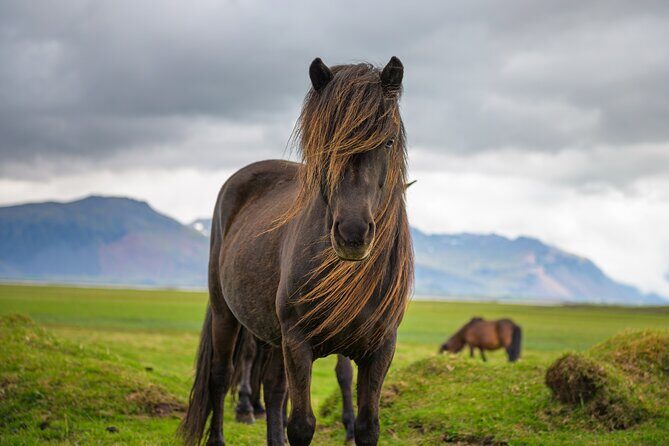
The route is about 89 miles long and typically takes 3-4 hours to complete. That timing is realistic if you treat most stops as photo-and-breathe moments rather than mini-adventures at every location.
Most audio stops are short, around five minutes, which is perfect for Iceland roadside sightseeing. A couple spots include moderate walking time, such as the ravine trail that’s about 20 minutes, depending on conditions and how curious you get.
Practical tip: Iceland weather can change your walking speed quickly. Give yourself a little buffer, and don’t feel guilty about skipping a longer stretch. The tour is designed for your pacing, not for forcing you to do everything.
You can also read our reviews of more tours and experiences in Reykjavik

Your stop-by-stop path across Snæfellsnes
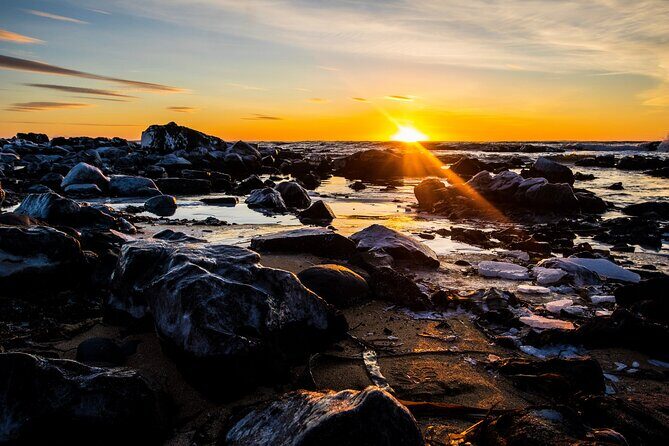
You’ll start at the Snæfellsnes Visitor Center at 342 (in the area listed for the tour) and finish at Kolgrafarfjörður Viewpoint on Snæfellsnesvegur 351. The driving order is built into the GPS audio cues, so you don’t have to memorize turns.
Below are the kinds of moments each audio stop sets you up for.
Welcome: Iceland in Miniature
Right away, the tour frames Snæfellsnes as a compact showcase of Iceland. Expect a mix of real geology and folklore: a glacier-capped volcano, Viking-era tales, and the trolls-and-elves style of storytelling Iceland does so well.
Djúpalónssandur area and the Path of the Bulls
You start learning before you even walk. Near the Djúpalónssandur Beach parking area, the audio points out two lagoons below the lot. There’s a Catholic bishop story from the 1100s tied to healing powers.
If you visit the lagoons, the audio leads you toward the Nautastígur, the Path of the Bulls—named for farmers who once brought bulls to drink there. It’s the kind of detail that turns a beach stop from scenery into a lived place.
Ingjaldshólskirkja: the church that has history under the paint
At Ingjaldshólskirkja, you get a nice example of how Iceland’s “new” building can sit on very old spiritual ground. Even though this structure is from 1903, the property has hosted a church since the early 1300s. The story helps you look at it like more than a pretty landmark.
Ölkelduvatn Mineral Spring: science in the background
At Ölkelduvatn (Ölkelda farm), you’ll hear how the water is rich in minerals like calcium and magnesium (and iron). The audio explains why iron can turn reddish when it reacts over time—basically the rust story applied to mineral-rich water.
It’s a quick stop, but it makes you notice the whole human habit of touching and testing local water sources.
Ytri Tunga: the seal-skin legend
At the Ytri Tunga beach parking area, the tour tells a story about a farmer finding a seal skin and the next-day discovery that follows. Whether or not you take folklore literally, it gives the beach a different emotional feel.
Bring patience here. Coastal areas can be windy and cold, and “5 minutes” can stretch into longer if you’re watching the shoreline.
Bjarnarfoss: a waterfall with a mythic matriarch
Bjarnarfoss comes with a legend about the Lady of the Mountain—described as locals’ incarnation of Iceland itself. Pair that with the waterfall in front of you and you’ll understand why Iceland myths often cling to physical features.
Búðakirkja: the black church angle
Next is Búðakirkja, one of the peninsula’s best-known churches. The audio keeps it playful with the idea of huldufólk wedding energy in such a small space.
This is also the kind of stop where photos matter. Even if you don’t want to spend long, you’ll get the “wow, that’s the one” moment fast.
Snæfellsjökull viewpoint: volcano meets glacier
At the Snæfellsjökull viewpoint, the tour connects two big Iceland forces: volcano and glacier. You’ll also hear about how the glacier has shrunk over recent decades, including a notable detail from 2012 when the summit showed no ice.
This stop is short, but it’s one of those “I’ll never think of glaciers the same way again” moments. Weather can affect visibility, so if the sky clears, take a moment to stare.
Rauðfeldsgjá gorge: the 20-minute trail moment
Rauðfeldsgjá is a deep rocky ravine with a small waterfall. In summer, you can even climb inside, and there’s a trail—about half a mile each way depending on conditions—that’s described as moderately challenging and around 20 minutes.
This is the one stop where you should think about footwear. If you’re on slick surfaces, shorten the walk and focus on the echoing canyon feel.
Sönghellir cave: cave echoes as a story device
At Sönghellir, the key experience is acoustic. The tour explains how twisting rocky walls create fantastic echoes, and ties those sounds to huldufólk lore.
Caves can be damp and cool. If you’re tempted to stay longer, be careful not to rush the rest of your route.
Arnarstapi detour: cliffs, arches, natural bridges
The audio flags an optional detour to Arnarstapi, a tiny fishing village with dramatic views. You’ll hear about craggy cliffs, a dramatic stone arch, and even a natural bridge.
There’s also a statue dedicated to a favorite troll figure: Bárðar Snæfellsás. This stop is worth it if you like walking along the edge of the sea and reading the coast like a puzzle.
Gatklettur and the herring harbor era
At Gatklettur, the story shifts to human history: fishermen finding plentiful herring in natural harbors along the shoreline, turning the village into a busy port in its day. It’s a reminder that this rugged coast wasn’t just scenic—it paid the bills.
Lóndrangar: basalt columns and the rocky castle nickname
At Lóndrangar, the audio points out two basalt columns rising above cliffs. The story connects the column shapes to the nickname rocky castle—and once you see it, the name makes sense immediately.
Malarrif Lighthouse: shaped like a rocket
At Malarrif Lighthouse, the tour describes it as unusual—almost rocket-like in shape—built in 1917 to help sailors along treacherous basalt cliffs. Even if you’re not a lighthouse person, lighthouses on Iceland coasts hit differently because the sea looks so powerful.
Vatnshellir cave: the lava-tube reality check
The audio also gives you a reality note about Vatnshellir Cave. Despite the name, it’s described as an 8,000-year-old lava tube. Lava tubes form when magma continues flowing under already-cooled sections, leaving a hollow passage.
This kind of “wait, that’s what it really is” detail helps you understand Iceland beyond postcards.
Djúpalónssandur revisited through story continuity
You’ll hear the Djúpalónssandur lagoon and Nautastígur story again as part of the later leg near Djúpálónssandur Beach. It’s a good reminder as you keep moving that this peninsula is built from repeated themes: water, lava, and folklore tied to specific places.
Saxhóll Crater: phreatic eruptions in plain language
At Saxhóll Crater, the audio sets up magma-water drama. The explanation focuses on how magma rises toward water-saturated rocks and leads to phreatic eruptions, explosive bursts of water, steam, and molten rock.
Then you’re invited to explore the enormous hollow it leaves behind. Even for a short stop, this makes the crater feel less random and more like a geological event you can picture.
Skarðsvík Beach: turquoise contrast against black rock
At Skarðsvík Beach, the audio calls out the contrast: turquoise water that feels tropical, paired with dark volcanic rock that defines much of Snæfellsnes.
This is a great “short stop, big payoff” place. Just note that wind and waves can make this more about quick views than long lingering.
Svörtuloft Lighthouse: bright orange against lava cliffs
At Svörtuloft Lighthouse, the tour describes the bright orange structure on dark lava cliffs. Built in 1931, it helped sailors and fishermen navigate that tricky stretch of the western peninsula.
You get the practical lens: this isn’t just scenery; it’s infrastructure for human survival at sea.
Öndverðarnesviti: a lighthouse for the rocky tip
The audio then moves to Öndverðarnesviti, built in 1973, overlooking cliffs at the peninsula’s tip. Again, it’s about navigation and safety—this whole route is full of “how did people survive out here” moments.
Hellissandur: street art capital energy
At Hellissandur, the tour pivots from coast to culture. It describes the town as the Street Art Capital of Iceland, with large murals and galleries along the main road. There’s also the Maritime Museum mentioned as a draw.
This stop is useful if you want a break from pure nature and reset your eyes with bright color.
Svöðufoss and glacier meltwater
At Svöðufoss, the audio connects the waterfalls to Snæfellsjökull. Meltwater from the glacier helps sustain nearly all waterfalls on Snæfellsnes.
It’s one of those explanations that makes you notice the water cycle instead of just admiring a fall.
Bæjarfoss: Town Falls and a walk you can actually do
At Bæjarfoss, you get an easy-walk waterfall near Ólafsvík, with a name that translates to Town Falls. Short walk plus big reward is the theme.
Kirkjufellsfoss and Kirkjufell: the iconic duo
One of the tour’s major moments is Kirkjufellsfoss, where you can see the steep Kirkjufell Mountain behind the waterfall. The audio even mentions Game of Thrones fans may recognize the look.
Then comes Kirkjufell viewpoint, where the audio helps you understand Kirkjufell isn’t a volcano. It’s described as a nunatak—a peak rising above surrounding glaciers—and explains how glacial erosion shaped the sheer sides and cylindrical feel.
If you like learning while looking, this is where your brain feels properly rewarded.
Grundarfjörður: saga tales tied to real terrain
At Grundarfjörður, the tour connects the area to the Eyrbyggja saga, including a 10th-century farmer named Viga-Styrr and his use of two muscular berserkers to work his fields.
It’s a neat reminder that stories often attach to very specific, very physical places.
Kolgrafarfjörður Viewpoint: final panorama
Near the end at Kolgrafarfjörður Viewpoint, you get the last big panorama: basalt cliffs, ancient volcano context, and dark lava fields.
It’s a strong finish because you can look back mentally at the whole loop and recognize repeating geological patterns.
Should you book the Snæfellsnes audio driving tour?
Book it if you want maximum time outdoors with minimum effort in navigation. The offline GPS audio approach is ideal for a road trip where you’d rather spend your attention on the scenery and stories instead of staring at a screen.
Also book it if you like folklore mixed with real-world geology. The tone keeps it playful while still giving practical context, like how mineral water relates to rust or what a lava tube actually means.
Skip it if you don’t want to drive yourself, or if you know you won’t have decent signal to download the tour before you start. That download requirement is the one point that can ruin the day if you plan poorly.
If you can handle that setup step, this is a smart, flexible way to experience Snæfellsnes without feeling rushed or dependent on a group schedule.
FAQ
How much does the Snæfellsnes Peninsula self-guided driving audio tour cost?
It costs $49.99 per group, up to 4 people.
How long is the tour and how far do you drive?
The tour is about 3 to 4 hours and covers roughly 89 miles.
Does the audio tour require Wi-Fi or a cellular signal during the drive?
No. It includes offline maps and offline audio commentary, so it works without cellular or wifi after you download it.
When do I need to download the tour?
You must download the tour while you have strong wifi or cellular connectivity. After that, it works offline.
Where do you start and where do you finish?
You start at Snæfellsnes Visitor Center 342, Iceland, and you finish at Kolgrafarfjörður Viewpoint on Snæfellsnesvegur 351, Iceland.
Does the audio play automatically, and can I pause it?
Yes. Audio stories play on their own based on your location, and you can pause or restart the app whenever you want.
Is there a free cancellation window?
Yes. You can cancel for a full refund up to 24 hours in advance of the experience start time.