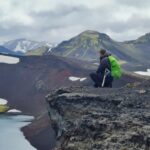
A volcano hike beats the usual bus tour. This one takes you from Reykjavik out to the Reykjanes Peninsula, then puts your boots on ground shaped by eruptions that are still changing the scenery. You’ll drive past Fagradalsfjall Volcano views, then hike into the Geldingadalur Valley area to look for lava features and heat coming off the rock.
I especially like the focus on real-time volcanic context and the way your guide connects it to the science of how lava hardens and how moss returns. When guides like Elias, Ottar, Tom, or Alain lead the group, they tend to turn geology into plain-language stories you can actually picture.
One drawback to plan around: the tour is not a guaranteed magma-spewing show. As of August 9, the flow at Litli-Hrutur had stopped (at least for the time being), but the area can still be smoldering, smoky, and fascinating. Also, the hike is moderate to hard and can be slick in bad weather.
In This Review
- Key Things You’ll Notice on This Reykjanes Volcano Hike
- Why Geldingadalur Feels Like Iceland’s Real Weather System
- Getting There From Reykjavik: A Scenic Drive With Built-In Context
- Seltún Hot Springs: Your First Hit of Volcanic Color and Sulfur
- The Main Event: Hike Into Geldingadalur Toward Litli Hrútur
- Meradalir Stops: Learning How Lava Becomes Ground
- Timing, Weather, and Volcano Reality Checks (Litli Hrútur May Vary)
- Price and Value: What $126 Buys You (Beyond the View)
- What to Pack (So You Don’t Suffer On Lava Rocks)
- Who Should Book This Hike (and Who Should Think Twice)
- Final Call: Should You Book BusTravel Iceland’s Guided New Volcano Hike?
- FAQ
- How long is the hike part of the tour?
- Is flowing lava guaranteed on this tour?
- What stops are included besides the hike?
- What should I bring?
- Is pickup in Reykjavík available?
- What’s included in the price?
- Is this tour suitable for kids or mobility needs?
Key Things You’ll Notice on This Reykjanes Volcano Hike
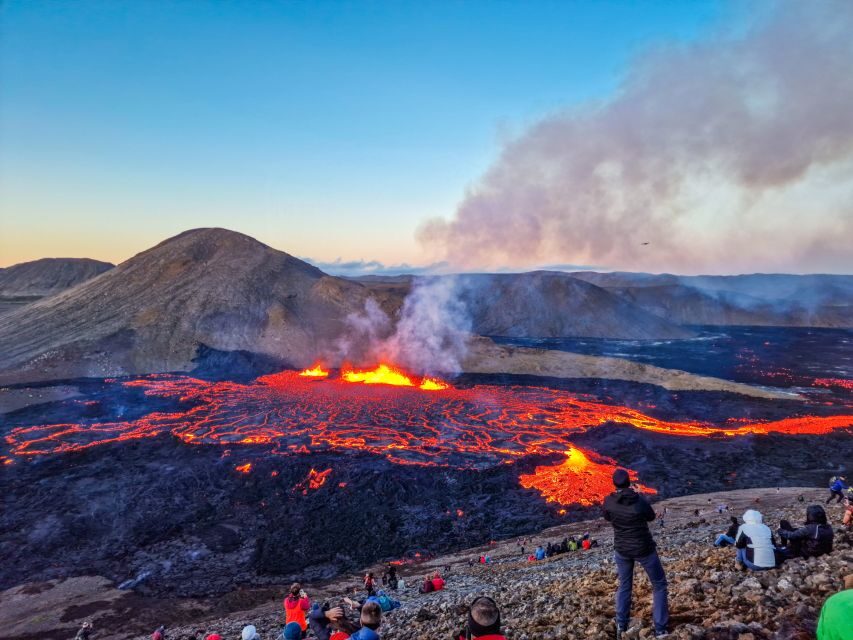
- Geldingadalur Valley access with a guided push toward a good viewing point
- Seltún Hot Springs stop for steam, color, and that sulphur smell
- Litli Hrútur and Meradalir route stops tied to recent eruption history
- Lava geology explained on the move, not as a lecture from the bus
- Route changes happen if conditions or closures require it
- Packing matters because there’s basically no food-for-buying once you’re on the hike trail
Why Geldingadalur Feels Like Iceland’s Real Weather System
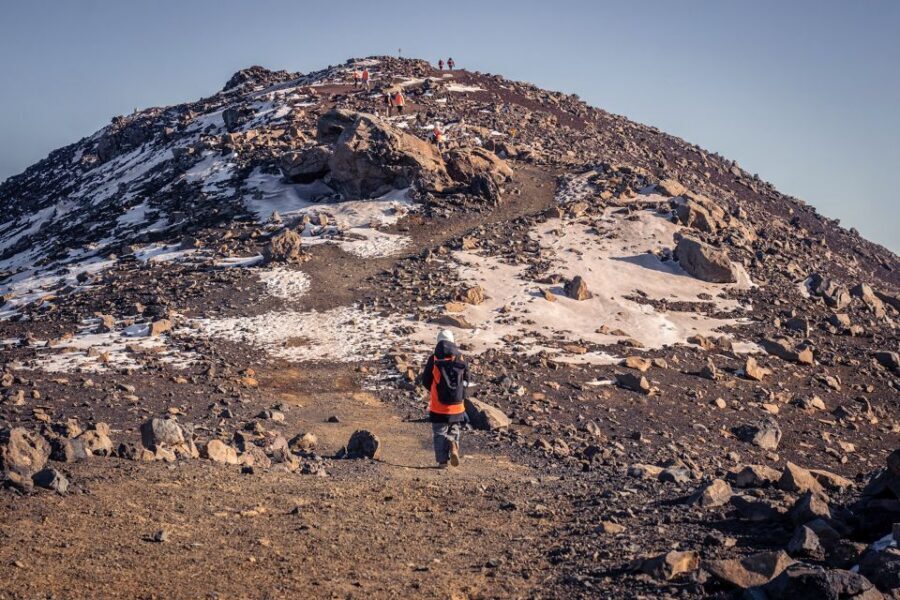
What makes this tour different is the setting. Reykjanes is where Iceland’s plates tug and twist, building volcanoes that can stay quiet for years, then wake up and reshape the ground fast. Geldingadalur Valley is one of those places where you’re walking through the aftermath of recent eruptions, with hardened lava fields that still look unfinished—because they literally aren’t done evolving.
The August 9 update is a good example of what you’re signing up for: even if the lava flow stops temporarily, the site can remain smoldering and active-feeling. That means you should mentally prepare for the experience to be about steam, heat, rock texture, mineral colors, and the story of the eruption—rather than expecting constant bright, flowing lava in every moment.
Guides are a major part of the payoff. In feedback, you’ll see names like Elias, Ottar, Tom, and Dave getting praised for keeping people engaged with clear explanations and smart pacing. The guides also tend to be honest about what’s visible that day, which matters on volcano tours where nature refuses to follow a schedule.
You can also read our reviews of more guided tours in Reykjavik
Getting There From Reykjavik: A Scenic Drive With Built-In Context
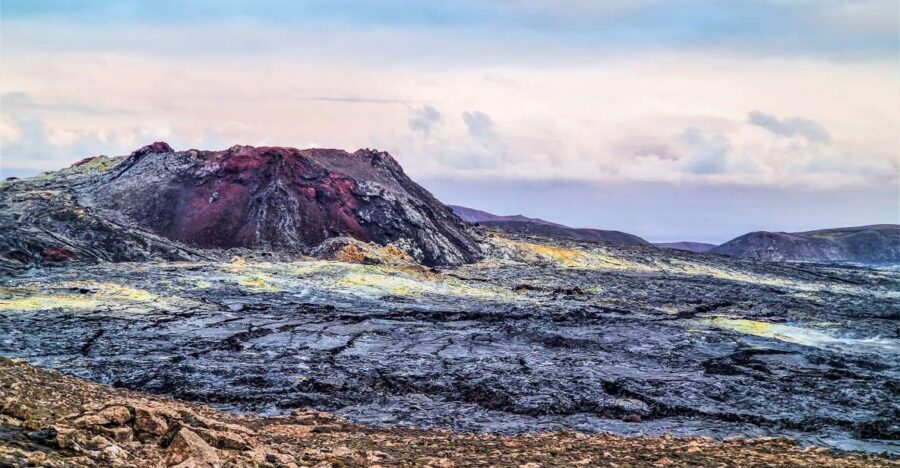
Pickup is available from central Reykjavík hotel areas and official bus stops, and the meeting point is Tour Bus Stop 12 opposite the Storm Hotel. From there, you’ll spend about 35 minutes on the bus heading out toward the Reykjanes Peninsula.
This drive isn’t just transit. Your guide uses the scenery—Fagradalsfjall Volcano area, Meradalir, and the Geldingadalur approach—to explain what you’re seeing. That’s smart. Iceland volcanoes can look random until someone explains the patterns: where eruptions occurred, how lava channels formed, and why some places heal with moss while others stay bare longer.
You’ll also get a useful reality check: the peninsula can be affected by weather and route access rules. Reviews frequently mention snow or tough wind conditions. That’s why the tour is set up with a planned hike segment and time buffers, but also why the length and route can shift depending on live volcano conditions and closures.
Seltún Hot Springs: Your First Hit of Volcanic Color and Sulfur
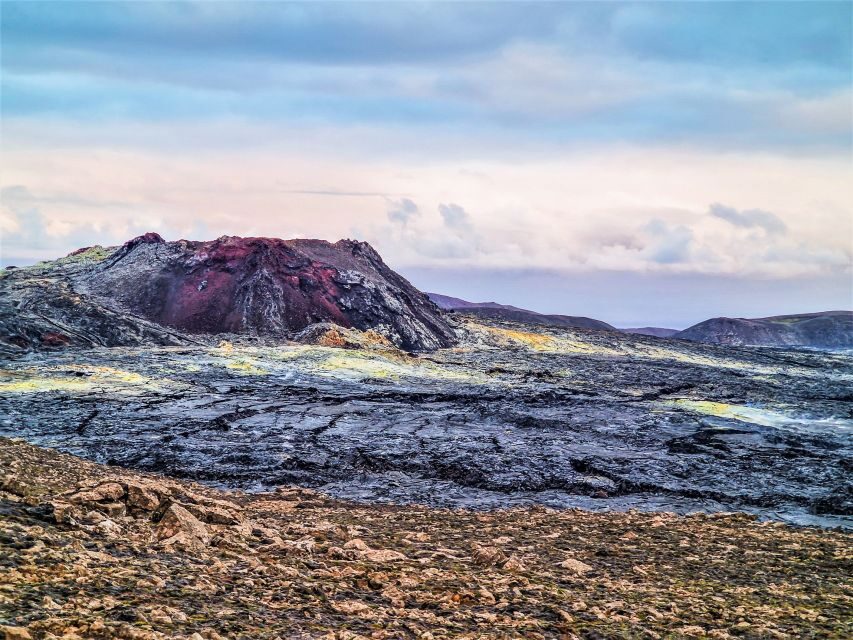
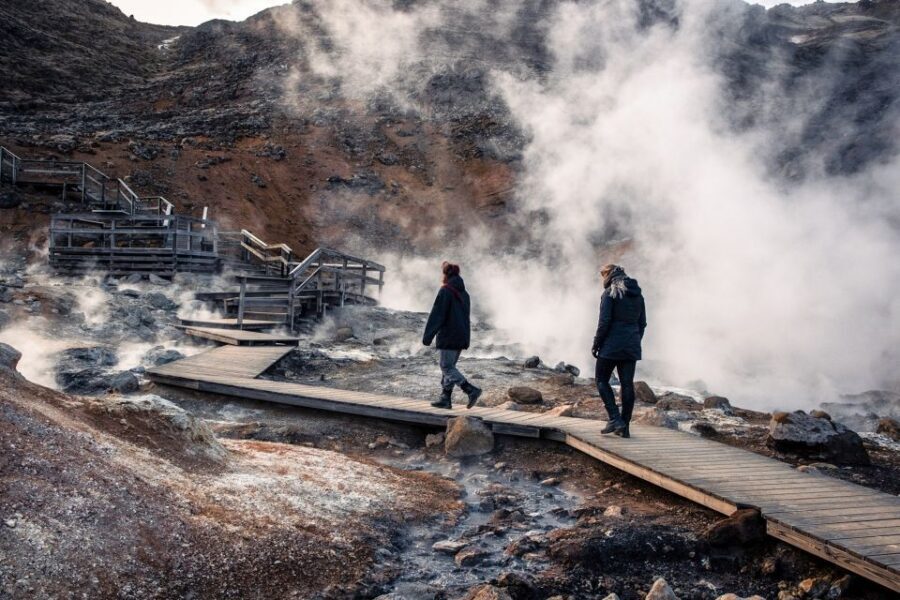
Before the main hike, you stop at the Seltún Geothermal Area for about 25 minutes. This is a quick photo stop plus a short walk and scenic views on the way, and it’s one of the easiest places to connect the dots between everyday Iceland and its deep volcanic engine.
You’ll see bright geothermal colors and steam vents. The smell can be strong (that’s normal here), so treat this stop like part of the fieldwork. Bring your sense of humor. Then, once your eyes adjust to the steam and mineral tones, it helps your brain “read” the lava field later.
Practical tip: wear breathable layers now, but don’t underestimate the next section outdoors. Even if Seltún looks manageable, the hike can still bring wind, cold gusts, or slick trail patches.
The Main Event: Hike Into Geldingadalur Toward Litli Hrútur
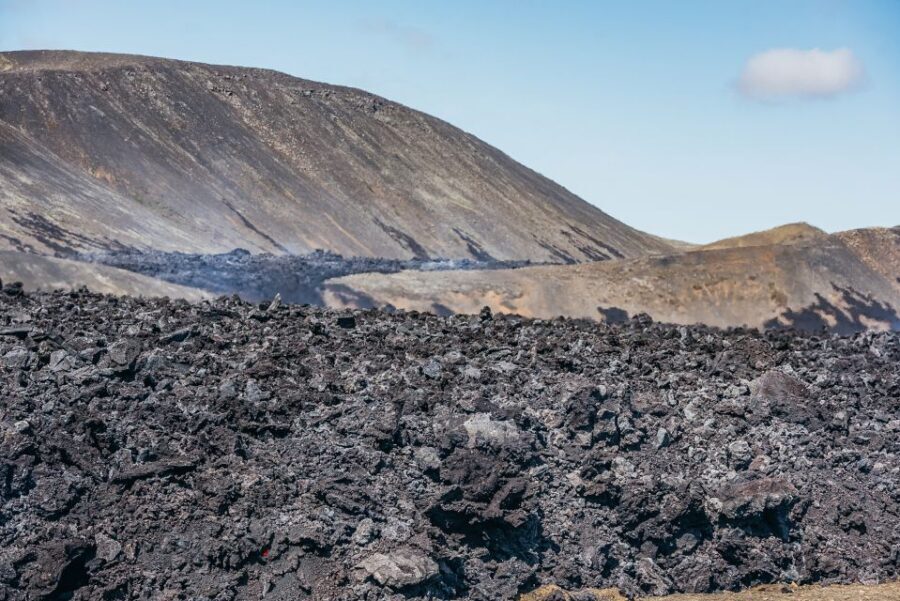
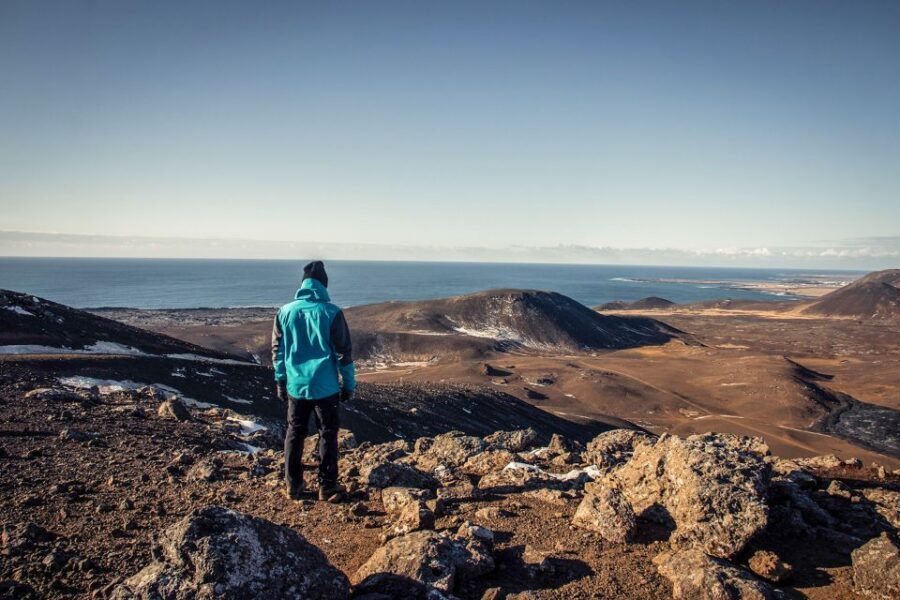
The core of the tour is the hike from the Geldingadalur area toward a good viewing point. The walking portion is often described as taking around 2 hours each way for the route to a viewing area, with the hike segment on the schedule clocking roughly 3 hours including time to regroup, stop, and photograph.
This is where you’ll likely spend your hardest effort. It’s described as moderate to hard, and the terrain can be tricky depending on the season and conditions. Some feedback calls out challenging climbs at times, and others mention slippery stones and ice. That’s also why the tour advises warm clothing, rain gear, gloves, and proper hiking shoes—and even notes that jeans and sports shoes aren’t allowed.
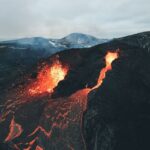
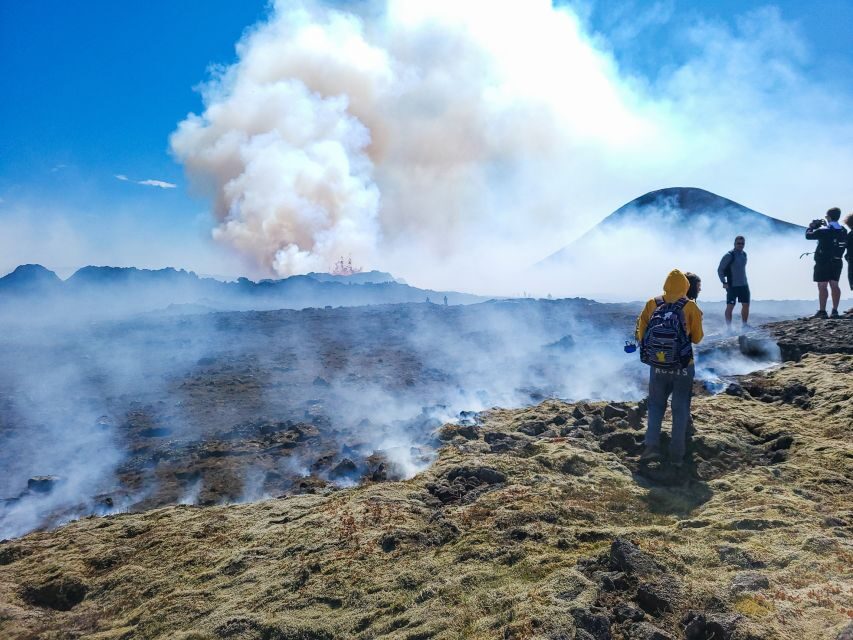
What you’re looking for is the eruption story made physical. Depending on that day’s access and activity, you may get views toward the new eruption area at Litli Hrútur. As of August 9, the lava flow at Litli-Hrutur had stopped, but the area could still smolder. Translation: you might see smoky ground, heat shimmering, and lava textures rather than constant flowing lava.
Also, don’t be surprised if you feel like you’re walking through a science book. In one account, a guide even highlighted that some lava rock areas can hold enough warmth to make sandwiches warm, just by sitting them near the right spot. I wouldn’t count on that happening for everyone or at every condition, but it’s a clue that the ground isn’t just scenery—it can still carry heat.
Bring your pacing game. You don’t need speed. You need steady breathing, good footing, and the patience to stop and look. This is one of those hikes where the best moment is often the one you almost walked past while rushing to the top.
Meradalir Stops: Learning How Lava Becomes Ground
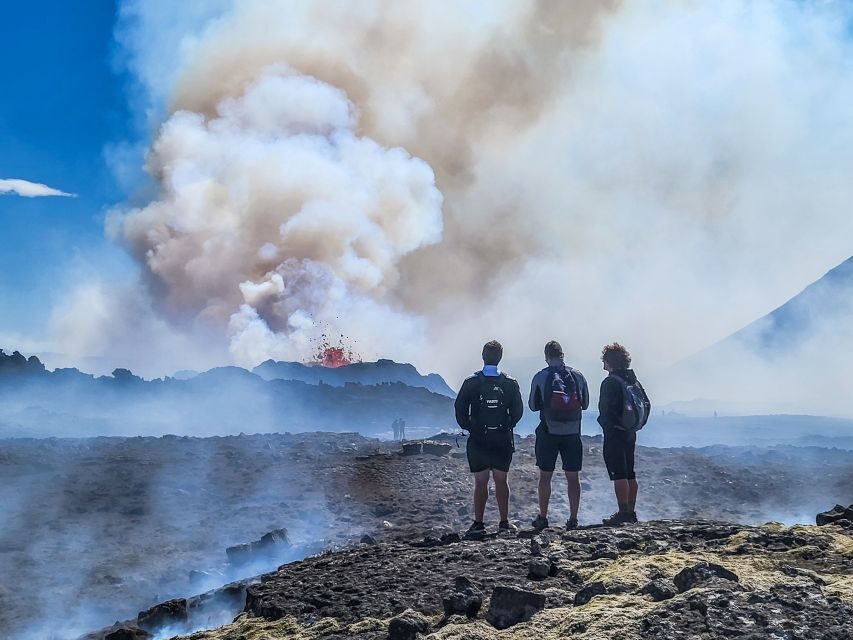
On the drive after your hike, and sometimes as part of the route approach, you pass by and learn about Meradalir. This valley is part of the “why it matters” piece of the tour: it connects different eruption phases and shows how lava forms, breaks down, and eventually supports plant life again.
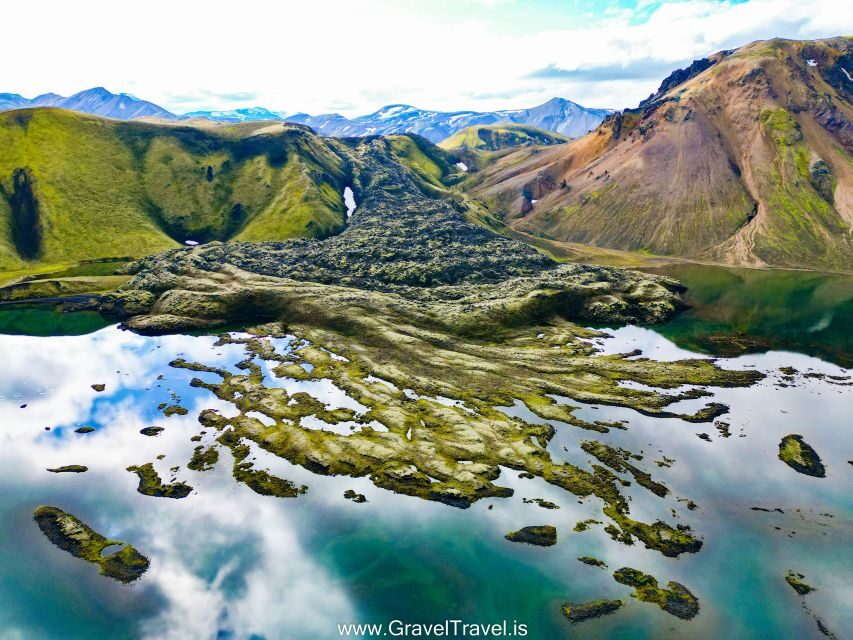
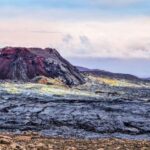
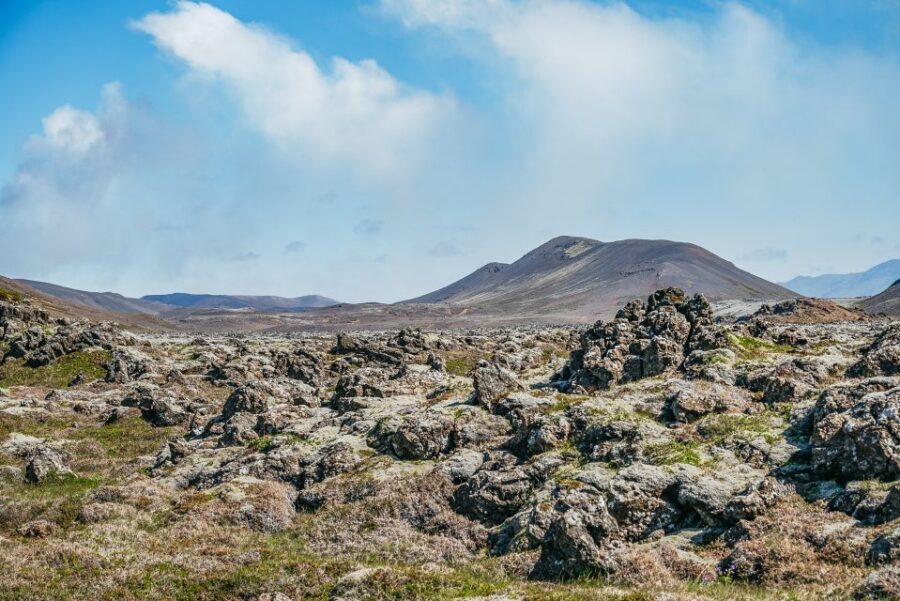
What I like here is the change in perspective. On a standard hike, you admire what’s already stable. Here, you’re watching the transition from molten chaos to hardened rock to the early return of life. In the drive commentary, guides mention long-dormant lava covered by soft green lava moss, which is a wonderfully visual reminder that even fresh-looking ground is part of a longer timeline.
This geology talk isn’t for lab coats only. It helps you interpret what you see:
- rough textures can indicate how lava cooled and moved
- mineral colors hint at geothermal chemistry
- smokes and steam can signal heat lingering under the surface
You can also read our reviews of more hiking tours in Reykjavik
Timing, Weather, and Volcano Reality Checks (Litli Hrútur May Vary)
Volcano hikes come with one honest rule: conditions change. The tour itself says the hike length can be subject to change due to live volcano activity and route closures, and that’s consistent with what people experience.
Wind and weather can be intense on this peninsula. Several reviews mention horrendous weather early on—snow sideways, strong wind—then better conditions once they reached the trail segment. Others mention the route being shortened due to conditions like strong wind and rain, which is not a failure. It’s safety and group management in action.
So here’s your planning mindset:
- Dress like the weather will change fast
- Expect that access might be adjusted
- Treat the hike as an active learning walk, not a guaranteed lava-flow spectacle
And yes, there are restrictions on how close you can get to certain areas. You’ll still get the core experience—walking on fresh or relatively recent lava ground—and your guide’s job is to keep you on the right side of safety rules while still making it worth your time.
Price and Value: What $126 Buys You (Beyond the View)
At $126 per person for a 7-hour guided outing, this isn’t a cheap add-on—but it also isn’t trying to sell you a generic scenic drive. Your money buys:
- a guided hike focused on the eruption area and geology
- entry fees
- a headlamp (useful if timing shifts or light levels drop)
What you don’t get: food and drinks. Multiple reviews stress the practical point: there’s not much to grab once you’re out there, so you’ll want to bring a packed lunch and snacks.
From a value standpoint, I like that the itinerary is structured around three “learning zones”: Seltún for geothermal signals, Geldingadalur for the main walk into the eruption landscape, and Meradalir/Fagradalsfjall context for the how-and-why explanations. That’s the kind of guided value that turns a photo trip into an experience you remember for the right reasons.
What to Pack (So You Don’t Suffer On Lava Rocks)
Here’s what the tour asks you to bring, and I agree with all of it:
- comfortable, warm layers
- warm clothing and rain gear
- gloves
- hat
- water
- snacks and a packed lunch
- weather-appropriate footwear (hiking shoes are the right call)
And here are a few details that come straight from real-world feedback patterns:
- Waterproof clothing helps if you’re hiking in rain or wet snow conditions.
- Trail footing can be slippery, especially in icy patches. If you see advice about traction or shoe clamps, take it seriously.
- Bring more than you think you need. It’s not just the hike; it’s also the wait time on the bus and time at stops.
Also, note what’s not allowed: jeans and sports shoes. Bring shoes you’d trust on a cold, uneven, volcanic surface.
Who Should Book This Hike (and Who Should Think Twice)
This tour fits best if you:
- enjoy hiking with uneven terrain and elevation changes
- want geology explained in plain language while you walk
- can handle cold wind and weather swings
- are comfortable with the idea that lava flow visibility can vary day to day
It’s not suitable for children under 12. It also isn’t recommended for people with mobility impairments, since it’s built around a moderate-to-hard hike.
One caution from feedback: an asthmatic hiker found it challenging at times. I’m not saying you shouldn’t go if you have asthma, but I am saying you should judge your tolerance honestly. If you’re sensitive to exertion in cold wind, plan extra buffers, go slow, and bring any medication you need.
Final Call: Should You Book BusTravel Iceland’s Guided New Volcano Hike?
If you want a Reykjavík day trip that feels more like real exploration than just sightseeing, I think this is a strong choice. The combination of Seltún geothermal color, a guided push into Geldingadalur, and the way your guide ties Litli Hrútur and Meradalir to the broader volcano story is exactly what makes a volcano hike worthwhile.
You should not book this if:
- you’re unwilling to hike for a couple hours each way
- you need guaranteed, close-up flowing lava on demand
- you can’t handle cold wind, wet conditions, or uneven ground
But if you pack smart and show up ready for a science-and-walk day, this tour can deliver one of the most memorable types of Iceland travel: walking across ground that’s still writing its own history.
FAQ
How long is the hike part of the tour?
The hike to a good viewing point takes around 2 hours each way (about 3 hours shown for the hike block on the schedule). Total tour time is about 7 hours.
Is flowing lava guaranteed on this tour?
No. The tour describes the chance to see lava flows, but visibility and access can change. The August 9 update notes the flow of new lava at Litli-Hrútur had stopped at least for the time being, while the area could still be smoldering.
What stops are included besides the hike?
You’ll make a photo stop and short walk at Seltún Geothermal Area, then you’ll drive through the Reykjanes Peninsula route that includes context for Fagradalsfjall, Meradalir, and the Geldingadalur hiking area.
What should I bring?
Bring comfortable shoes, warm clothing, a hat, gloves, water, snacks, rain gear, and a packed lunch or hiking food. You should also plan for weather-appropriate clothing.
Is pickup in Reykjavík available?
Yes, pickup is optional from hotels and official bus stops in central Reykjavík. If you’re in the city center, you may be redirected to special bus stops due to regulations.
What’s included in the price?
The price includes a guided tour, a headlamp, and entry fees. Food and drinks are not included.
Is this tour suitable for kids or mobility needs?
It is not suitable for children under 12, and it’s not suitable for people with mobility impairments.