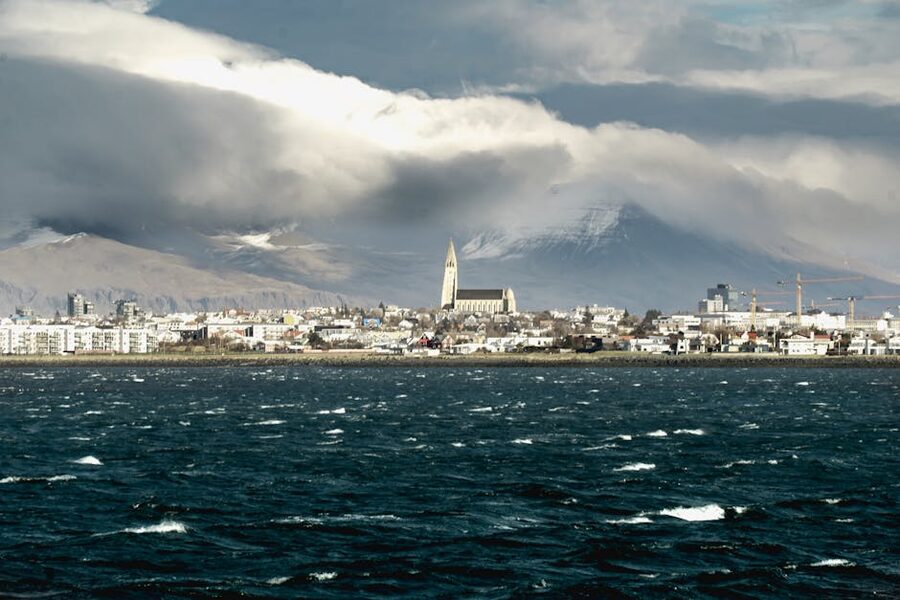
Iceland’s currency is the króna, written ISK in airline confirmations and “kr” on price tags around Reykjavik. It floats freely, isn’t pegged to anything, and at the time of writing one króna is worth roughly 0.007 US dollars. So a coffee that costs 750 kr lands somewhere near 5 USD or 4.50 GBP. The numbers look bigger than you’re used to. The actual price tag is what matters.
Here’s the part most people don’t realise until they land: you barely need cash. Iceland is the most card-happy country in Europe, and that includes the toilets at petrol stations and the till at the wool shop in Vík. I tap my phone for almost everything, and I live here. Below is what you actually need to know about the króna, what cards to bring, where ATMs live, what tipping looks like, and what things genuinely cost in 2026.
In This Article
- The króna in one paragraph
- How much your money is actually worth
- Cards rule the country
- The five percent of the trip you actually want cash for
- Where to get króna
- Cards worth bringing
- ATMs, fees, and the limits to know
- Tipping in Iceland, or rather not
- What things actually cost in 2026
- Daily budgets, three realistic tiers
- How to spend less without missing what matters
- Tax-free shopping and the VAT refund
- A short tour of the king sized banknote
- Strange but useful currency facts
- Frequently asked currency questions
- What I’d skip
- The short version
The króna in one paragraph
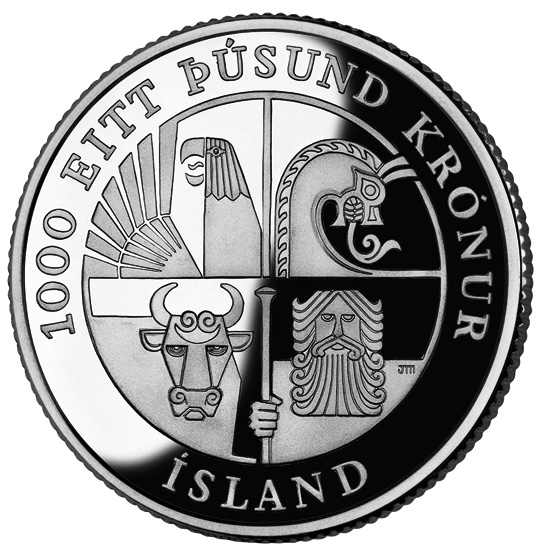
The Icelandic word króna means “crown,” same root as the Danish krone and Swedish krona. The plural is krónur. The symbol is “kr” and the international currency code is ISK. The currency is issued by Seðlabanki Íslands, the Central Bank of Iceland, and you can read its full history on cb.is. There’s no eurozone connection. Iceland kept its own money even as it shaped pretty much every other piece of its economy around EFTA and EEA agreements with Europe.
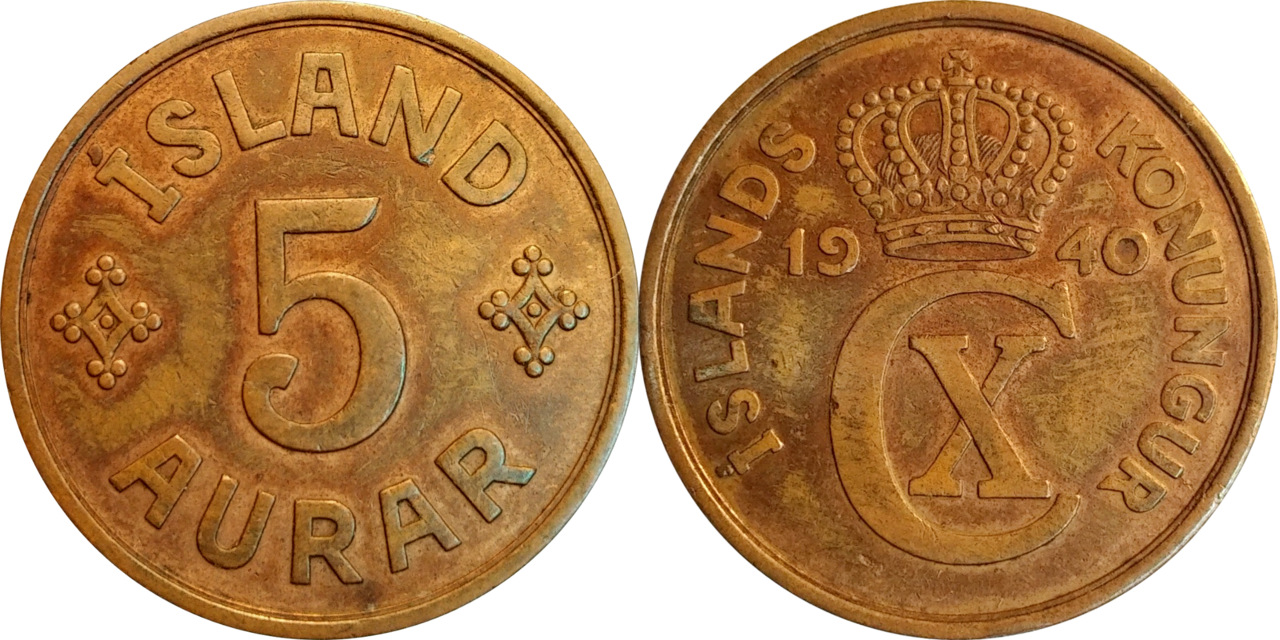
Coins come in 1, 5, 10, 50 and 100 króna. Banknotes come in 500, 1,000, 2,000, 5,000 and 10,000 króna. The 2,000 isn’t really used anymore and you’ll get them as oddities in change once or twice. The 10,000 króna note, the largest, is worth around 70 USD and looks deceptively like a normal bill, so be careful when you’re paying for a hot dog with it. Once upon a time the króna had a subunit called the eyrir, plural aurar, but that disappeared from circulation in 2003 and was formally retired in 2007. You will not see one. It’s a thing your grandfather had.
How much your money is actually worth
Rates wobble, so don’t take any of these as gospel. As a working snapshot in early 2026:
- 1 USD is roughly 135 to 140 ISK
- 1 EUR is roughly 145 to 150 ISK
- 1 GBP is roughly 175 to 180 ISK
- 1 CAD is roughly 95 to 100 ISK
The mental shortcut I give visitors: if you see a price in króna, divide by 140 and you have something close to USD, divide by 175 for GBP. Don’t agonise. Iceland prices are what they are, and you’ll save yourself stress by accepting the number on the tag rather than translating every coffee in your head. Check today’s exact rate at xe.com if you want a clean number for budgeting.
Cards rule the country
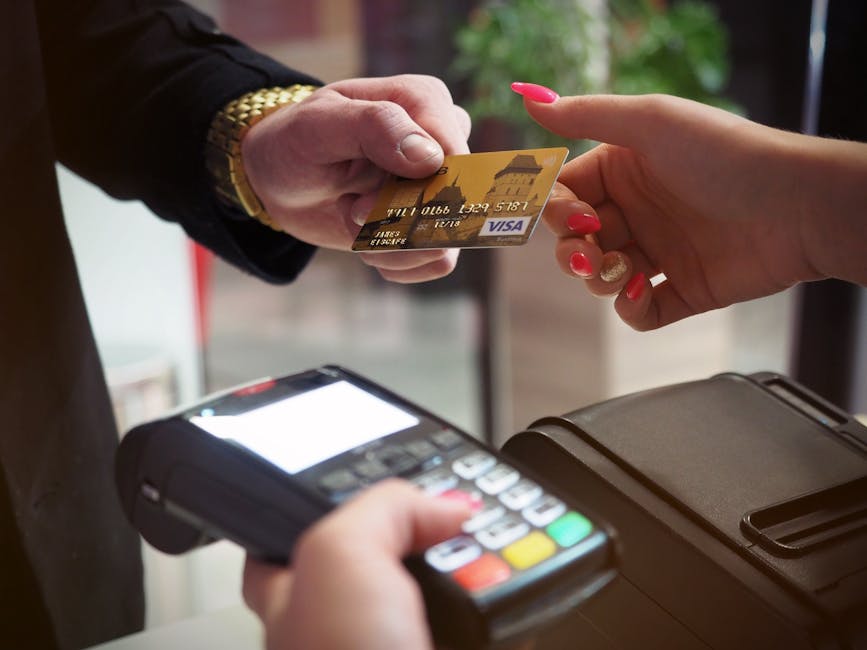
I cannot stress this enough. Iceland is functionally a cashless society. Visa and Mastercard are accepted everywhere a card reader exists, which is everywhere. American Express works in hotels, larger restaurants and supermarkets but you will hit small cafés in the countryside that don’t take it. Diners Club and JCB are processed through the Mastercard network and tend to work in the same spots Visa works. Maestro and Visa Electron debit cards function the way a normal Visa does.
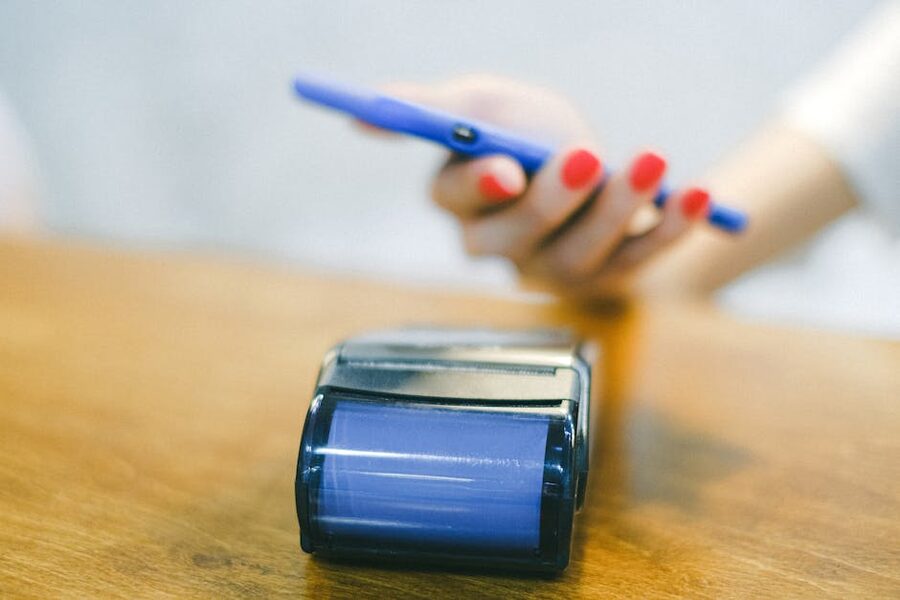
What about Apple Pay and Google Pay? Both work essentially everywhere a contactless card works. I pay for the bus, the swimming pool, the petrol pump, the bakery and the ice cream stand at Seyðisfjörður with my phone, and I have not had a refusal in years. Contactless has a per-tap limit of around 7,500 ISK on a standard card, after which the till will ask you to insert and PIN the card to reset that ceiling. Phone-based payments often skip that limit entirely because the biometric is treated as the second factor.
You’ll get card readers in places that startle visitors. Public toilets at the bigger Ring Road petrol stations have a card slot for the 200 ISK or 300 ISK fee. Parking meters in Reykjavik take cards. The hot dog stand at Bæjarins Beztu, the famous one near the harbour, takes cards for a 650 ISK pylsa. The card reader on the bus from BSÍ to Keflavík takes cards. So does the till at the petrol station in Höfn that I genuinely think has been there since 1990.
The five percent of the trip you actually want cash for
I tell first-timers to bring no cash and grab around 5,000 ISK from an ATM at Keflavík just in case. That covers more or less every situation where you’ll need physical money on a 7 to 10 day trip:
- Donation boxes at wild hot springs. Hrunalaug asks 1,500 ISK per person at the gate, dropped into a wooden box on trust. Hellulaug in the Westfjords runs on a donation envelope. Krossneslaug in the far Strandir region wants 1,000 ISK in coins or notes.
- Tips at small countryside guesthouses where you’ve been looked after particularly well. Not expected. Not refused.
- An emergency in case the card network has a wobble, which happens about as often as Iceland gets a heatwave but is not unheard of.
- Loose change for a public toilet in a village where the card reader has frozen in the cold.
That’s it. If you don’t end up using the 5,000 ISK, spend it on a beer at the airport on the way out. You will not regret bringing too little cash. Plenty of visitors regret bringing too much.
Where to get króna
The cleanest answer is: at the airport ATM when you land at Keflavík. There are several in the arrivals hall, run by the major Icelandic banks (Landsbankinn, Íslandsbanki and Arion banki), and they dispense the same crisp notes you’d get downtown at roughly the same rate. Pull what you need, ignore the currency exchange counter next to it, and walk to your shuttle.
If you’re already in Reykjavik and need cash, every neighbourhood has an ATM. The big banks all have branches on Austurstræti, Borgartún, in the Kringlan mall and at Hagatorg in the west. ATMs operate 24 hours a day. You can also walk into a bank branch on a weekday between 9 and 4 and exchange physical foreign notes for króna at a counter, but it’s slower than the ATM and the rate is the same or slightly worse.
What I genuinely recommend you avoid:
- Currency exchange counters at airports anywhere. They are expensive, anywhere in the world. Keflavík’s is no exception. The markup runs 5 to 8 percent above the interbank rate.
- Hotels offering to “exchange your dollars.” Worst rate in the country. Don’t.
- Buying ISK from your home bank before flying. Most US and UK banks either don’t carry króna at all or charge a hefty markup to source it. The ATM in Keflavík is better and it’s open the moment you walk through customs.
- Travellers’ cheques. Nobody takes them. The era ended a decade ago.
Cards worth bringing
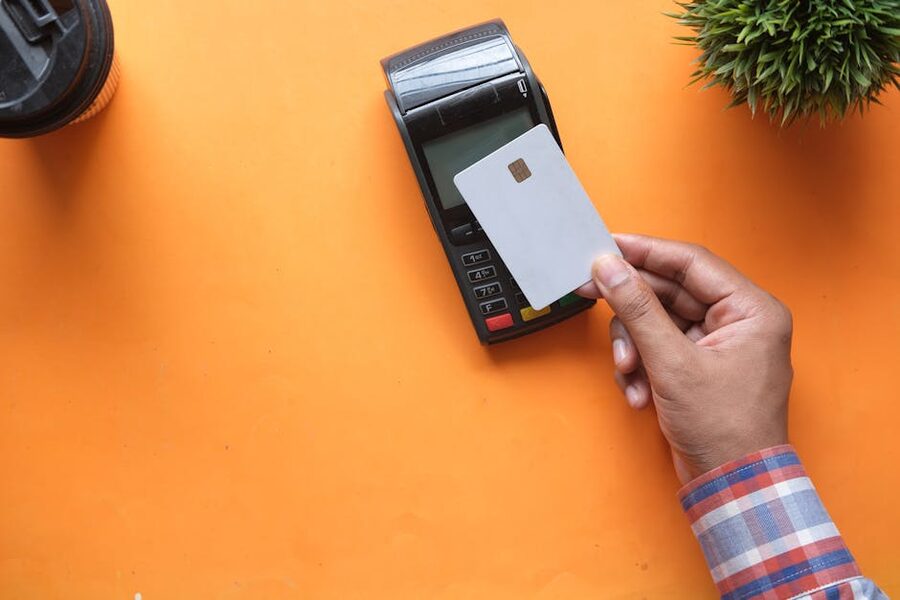
Most home bank debit cards charge a foreign transaction fee of 2 to 3 percent on every purchase outside your home country, and a small flat fee on top of any ATM withdrawal. Across a 10-day Iceland trip that adds up. The work-around is bringing a travel-friendly card that doesn’t do that.
For travellers from the US, UK and Europe, the cards I see visitors use most successfully are:
- Wise, formerly TransferWise. Multi-currency debit card, near-interbank rates, free to load, small flat fee on ATM withdrawals after a generous monthly free allowance. Genuinely the best all-rounder for Iceland.
- Revolut. Similar to Wise, with a free tier that does the job for short trips. Slightly worse weekend rates but quicker virtual card setup.
- Charles Schwab High Yield Investor Checking for US travellers. Refunds every ATM fee globally. Works in Iceland flawlessly.
- Capital One Venture or Quicksilver for US credit users. No foreign transaction fee, decent rate, accepted everywhere Visa is.
- Monzo, Starling and Chase UK for British travellers. Free spending in foreign currency, free ATM withdrawals to a monthly limit. The Monzo travel limits got friendlier in 2024 and they’re now my pick for short trips from London.
One small but important habit: when an Icelandic card reader asks whether you’d like to be charged in your home currency or in ISK, always pick ISK. The “let us convert it for you” option, called Dynamic Currency Conversion, layers an awful exchange rate on top of whatever your bank would have done. Pay in ISK, let your home bank convert at its own rate, save 4 to 6 percent every time.
ATMs, fees, and the limits to know
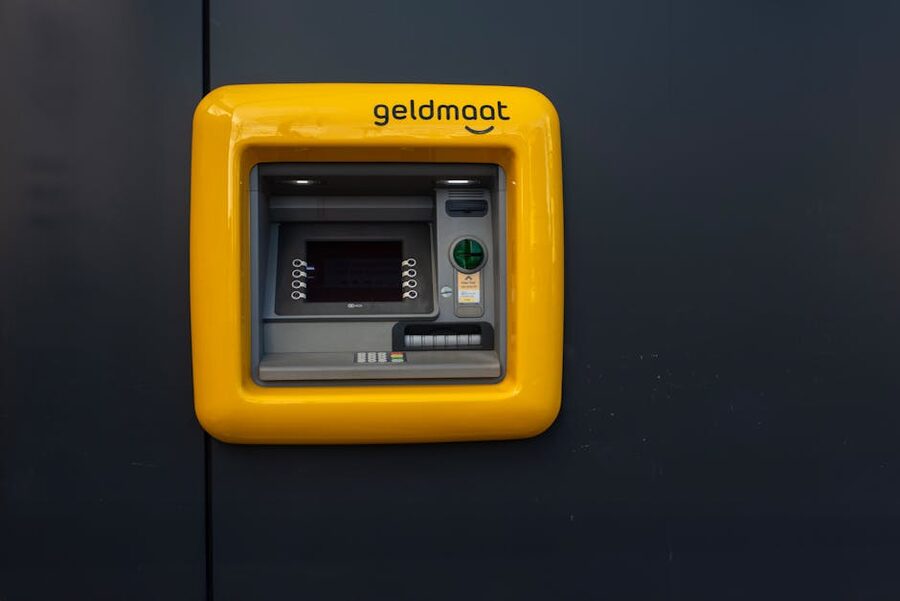
Iceland uses the word hraðbanki for an ATM, which translates roughly as “fast bank.” You’ll see them at all three big banks. They’re modern, multilingual, dispense crisp notes, and most of them accept just about every foreign Visa or Mastercard.
A few practical numbers:
- Maximum single withdrawal is usually 50,000 ISK, equivalent to around 350 USD. You can do multiple withdrawals back to back if you need more, though your home bank may have its own daily ceiling.
- The Icelandic bank’s own fee per withdrawal is small, somewhere between 3 and 7 ISK, basically nothing. The fee that hurts is the one your home bank levies, which depending on your card sits between 2 and 5 USD per withdrawal.
- ATMs in Reykjavik and at Keflavík are everywhere. In the larger Ring Road towns, Akureyri, Egilsstaðir, Höfn, Selfoss, Borgarnes, Vík, you’ll find at least one bank branch with an ATM in the centre. In settlements smaller than that, sometimes the village shop is the only option and it doesn’t always have a working machine.
- Out on the F-roads in the highlands, in the Westfjords beyond Ísafjörður, and in the remote bits of the Strandir coast, there are no ATMs. Get cash before you go.
Tipping in Iceland, or rather not
This one trips up Americans more than anyone else. Tipping is not a part of Icelandic culture. Service charges are baked into the menu price at restaurants, taxi fares are what the meter says, and waitstaff and bartenders are paid a real wage that doesn’t depend on you. There is no expectation of 18 percent at dinner, no jar by the till at the café, no “service” line on the bill at the bistro.
If you want to tip, no one will refuse it. Icelanders are genuinely gracious about it and won’t make you feel awkward. But you don’t have to. A few specifics:
- Restaurants and bars: nothing. The bill is the bill. If you had a great meal and want to round up by a few hundred króna, that’s friendly. If you don’t, that’s also fine.
- Taxis: nothing. Round up to the nearest 500 if it makes life easier.
- Hotels: nothing standard. A 500 to 1,000 ISK note for a porter who hauled four suitcases in a snowstorm is a kind gesture, not an obligation.
- Tour guides on a multi-day or full-day trip: the only category where a tip has become semi-normal, mostly because of American visitors. 1,000 to 2,000 ISK per person at the end of a glacier hike or Northern Lights tour is appreciated and not expected. The guide will say thank you, mean it, and move on.
If you’re walking around with a wad of dollars from home thinking you’ll need them for tips, you don’t. Bring fewer dollars and use them for your taxi at the destination airport on the way back.
What things actually cost in 2026
Iceland is expensive. There’s no working around that. Almost everything is imported, the labour cost is high because Icelandic wages are good, and the country is small enough that there’s not much economy of scale on anything other than fish. Here’s a realistic snapshot of what to expect, all in ISK, gathered from my own week of receipts and from menus around Reykjavik this winter.
Food and drink:
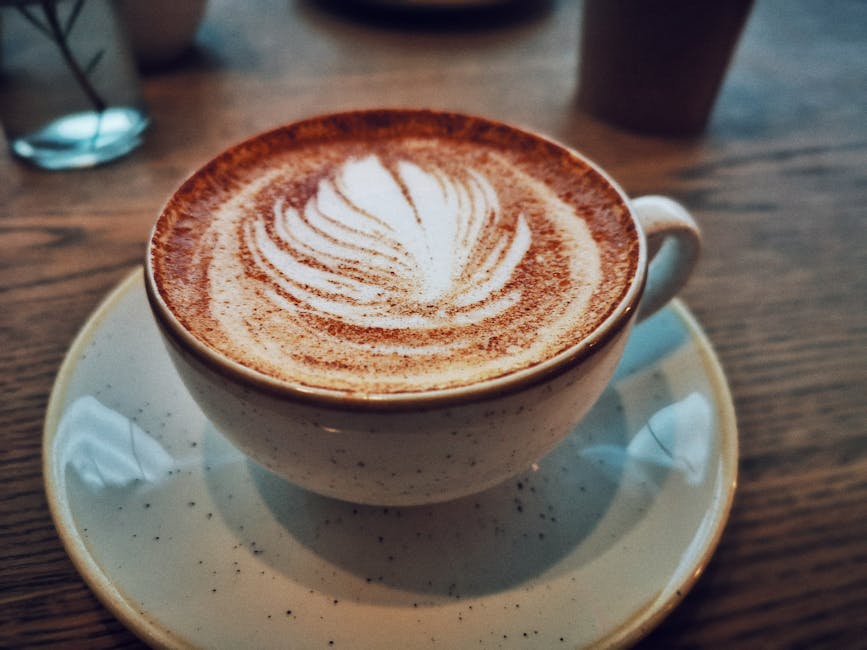
- Coffee at a downtown café: 600 to 900 ISK
- Pint of beer at a bar: 1,400 to 1,800 ISK, going to 2,000+ in the trendier spots
- Burger and fries: 2,800 to 3,800 ISK
- Bowl of soup with bread (often the cheapest sit-down meal): 2,400 to 3,200 ISK
- Mid-range dinner main with one drink: 6,000 to 9,000 ISK
- High-end tasting menu at a place like Dill or ÓX: 18,000 to 28,000 ISK before drinks
- Hot dog at Bæjarins Beztu: 650 ISK and the most photographed lunch in the country
- Bottled water at a kiosk: 400 to 600 ISK, which you should not buy because the tap water is the best in the world
Sleeping:
- Hostel dorm bed in Reykjavik: 7,000 to 11,000 ISK depending on season
- Mid-range hotel double in Reykjavik: 25,000 to 50,000 ISK
- Boutique or luxury double: 60,000 to 110,000 ISK and upward
- Countryside guesthouse, breakfast included: 18,000 to 30,000 ISK
- Campsite per person per night: 1,800 to 2,800 ISK
Getting around:
- Petrol per litre: 320 to 340 ISK, equivalent to roughly 8.50 to 9 USD per US gallon. Filling a small rental car from empty runs around 16,000 to 18,000 ISK.
- Reykjavik bus single fare via the Klappið app: 630 ISK
- Flybus from Keflavík to Reykjavik: 4,499 ISK one-way
- Day pass for Reykjavik public buses: 1,920 ISK
Activities:
- Public swimming pool entry (the best deal in Iceland): 1,330 ISK adult, 175 ISK child
- Blue Lagoon entry, Comfort: 12,990 ISK winter
- Sky Lagoon Saman pass: 12,990 ISK
- Glacier hike with a small group, 4 to 5 hours: 18,900 to 24,900 ISK
- Northern Lights minibus tour from Reykjavik: 12,000 to 16,000 ISK
- Whale watching from the Old Harbour, 3 hours: 14,000 to 16,500 ISK
Daily budgets, three realistic tiers
Trying to plan? Here are the per-person, per-day budgets I’d give a friend, assuming you’re already in Iceland and have your flights sorted. These aren’t lower limits or ceilings, they’re real ranges based on how I see visitors spend.
Tight budget, hostels and self-cater: 12,000 to 18,000 ISK per person per day. Hostel bed, supermarket food cooked at the hostel kitchen, a few pool entries, a handful of paid sights, no restaurant dinners, share a rental car between four. Doable. Not glamorous. Plenty of people do this in summer with a tent, which is even cheaper.
Comfortable middle, guesthouses and casual restaurants: 22,000 to 35,000 ISK per person per day. Mid-range guesthouse double room split with a partner, two simple meals out per day plus supermarket lunch, one bigger paid activity per day, your share of a car. This is where most visitors land.
Spoil yourself, hotels and proper dinners: 45,000 to 70,000 ISK per person per day. Boutique hotel, two restaurant meals daily at decent places, a tour and a lagoon entry most days, comfortable car. Adds up fast in the south coast where there isn’t much budget accommodation.
Genuinely luxury: 90,000 ISK and up per person per day. The Retreat at the Blue Lagoon, helicopter to the volcano, that kind of trip. Iceland will happily accept your money at this level.
How to spend less without missing what matters
Living here, watching visitors arrive nervous about prices, here are the moves that make the biggest difference and don’t damage your trip in any meaningful way.
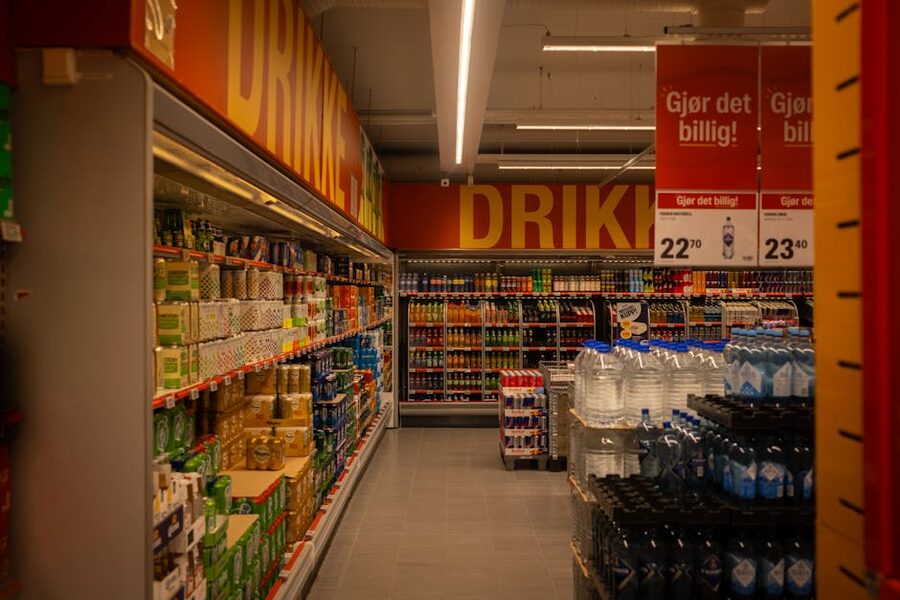
Cook at least half your meals. The supermarket chains Bónus (yellow piggy logo, the cheapest) and Krónan are everywhere along the Ring Road and in towns. Bread, cheese, smoked lamb, skyr, fruit, instant coffee, decent pasta, all standard supermarket prices and a fraction of what a restaurant charges. A roadside picnic at Skogafoss with skyr and a thermos cost me 1,200 ISK last summer. The same calories at the petrol station café would have been 4,500 ISK.
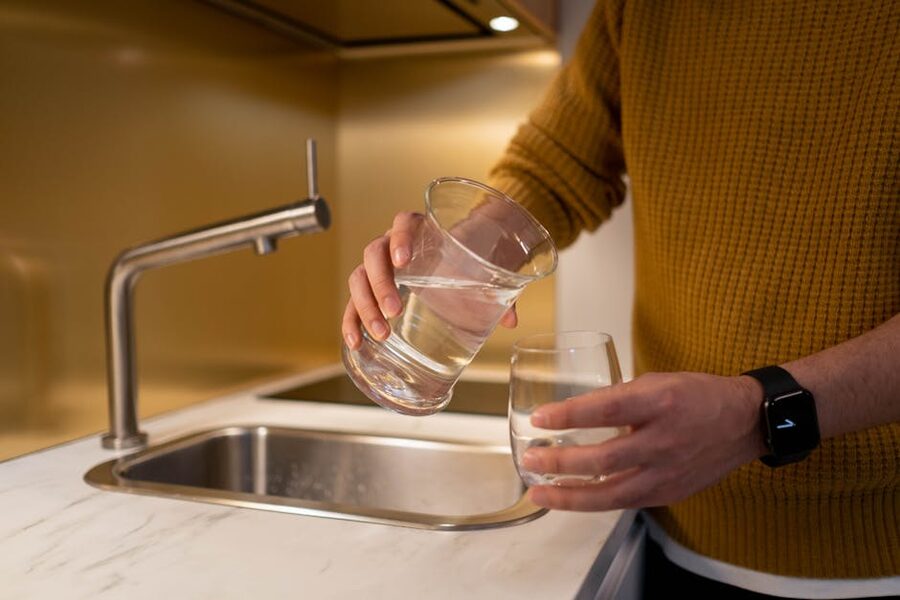
Drink the tap water. Iceland’s tap water is glacial, soft, and clean, and bottled water is a pure tourist tax. A reusable bottle and the bathroom tap will save you 3,000 to 5,000 ISK across a week.
If you want to drink, buy at Vínbúðin. Beer, wine and spirits in supermarkets are non-alcoholic by law, a quirk left over from prohibition that lasted in various forms until 1989. Real alcohol is sold only at Vínbúðin, the state monopoly. Their prices are still high, but they’re genuinely the cheapest option for alcohol in the country. A six-pack of Gull beer is around 2,400 ISK at Vínbúðin and the same beer is 1,800 ISK per single pint at a bar.
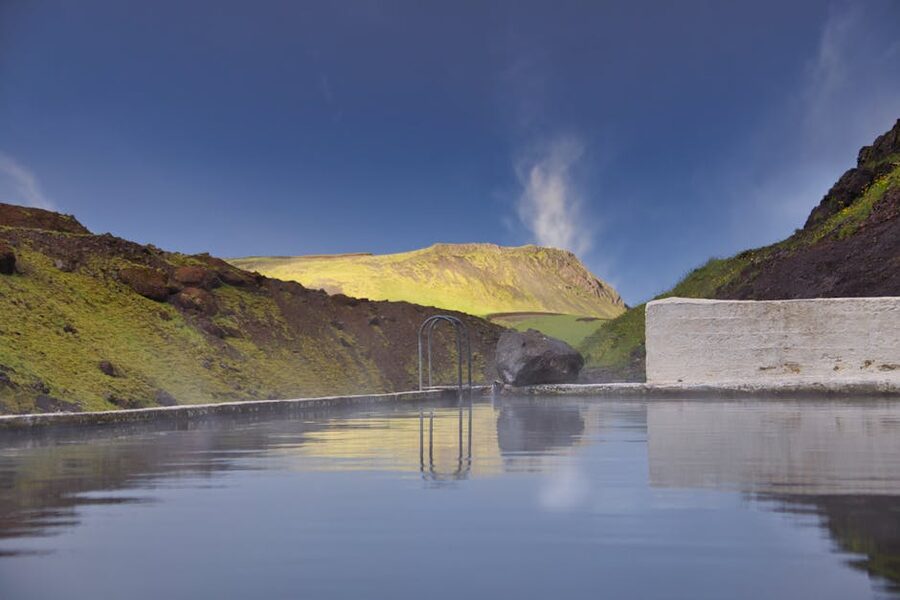
Use the public swimming pools. Every town has a heated outdoor pool with hot tubs, often a steam room, and locals go several times a week for a shower-plus-soak that’s part hangout, part bath. Entry is 1,330 ISK in Reykjavik, less in towns. You’ll have a better afternoon at Laugardalslaug than at the Blue Lagoon, at one tenth the price.
Eat your proper meal at lunch. Many sit-down restaurants in Reykjavik run a lunch menu at half to two thirds the dinner price. The Icelandic fish soup at the harbour, for example, is 2,800 ISK at lunch and 4,200 ISK at dinner. Same kitchen.
The hot dog. Bæjarins Beztu does one thing for 650 ISK and Bill Clinton ate there. So have I, many times. It is genuinely lunch.
Lagoon swap. If you have your heart set on a hot pot experience but the Blue Lagoon’s 12,990 ISK is making you wince, look at Secret Lagoon in Flúðir at 4,990 ISK or one of the smaller pools like Hoffell, Krauma at Deildartunguhver, or Vök Baths in the east. All proper geothermal experiences. None as photogenic. All a fraction of the price. More on the trade-offs in the hot springs guide.
Tax-free shopping and the VAT refund
Iceland’s VAT (called VSK locally) is 24 percent on most goods and 11 percent on food and accommodation. If you’re a non-EU resident, you can claim back a portion of the VAT on physical goods you buy and take home with you, provided each receipt at a participating store is over 6,000 ISK.
The mechanics are unromantic but they work. At the till, ask for a “Tax Free” form. The shop fills it in with your purchase, the VAT amount, and your details. Keep the form, the receipt, and the goods unworn. At Keflavík on the way out, before checking your bag, take everything to the Tax Free desk at the Arrivals Hall (Arion Bank handles purchases up to 100,000 ISK, customs handles anything bigger). They’ll stamp the form. You can then collect the refund in cash, in your card, or via Global Blue or Premier Tax Free, the two main processors. The refund typically arrives 4 to 8 weeks after the trip and lands at around 14 to 15 percent of the purchase price after handling fees.
Worth it for a 30,000 ISK lopapeysa, the traditional Icelandic wool sweater, since you’ll get roughly 4,200 ISK back. Not worth the queue for a 7,000 ISK fridge magnet. Read the official rules at globalblue.com.
A short tour of the king sized banknote
This isn’t strictly practical, but it makes the cash you do hold more interesting. Each modern króna note features an Icelander or motif worth knowing about:
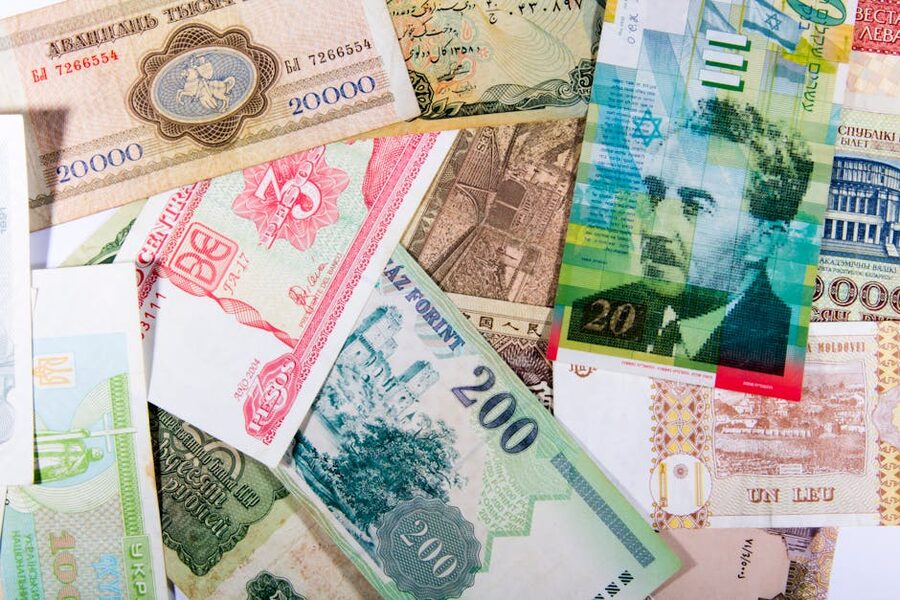
- 500 króna: Jón Sigurðsson, the 19th-century scholar and politician who led Iceland’s push for sovereignty from Denmark. National holiday on his birthday, 17 June.
- 1,000 króna: Brynjólfur Sveinsson, the 17th-century bishop who quietly hoarded medieval Icelandic manuscripts during the Reformation, including the Codex Regius of the Eddas. Without him we would not have the Norse mythology we have.
- 2,000 króna: Jóhannes Sveinsson Kjarval, the country’s most beloved 20th-century painter, who walked the lava fields with a sketchbook and saw faces in the rocks.
- 5,000 króna: Ragnheiður Jónsdóttir, the 17th-century educator who established embroidery schools for girls. The reverse shows young women working at a loom.
- 10,000 króna: Jónas Hallgrímsson, the romantic poet and naturalist who basically invented modern Icelandic literary nationalism in the 1830s. The note has plovers and birch leaves on the back.
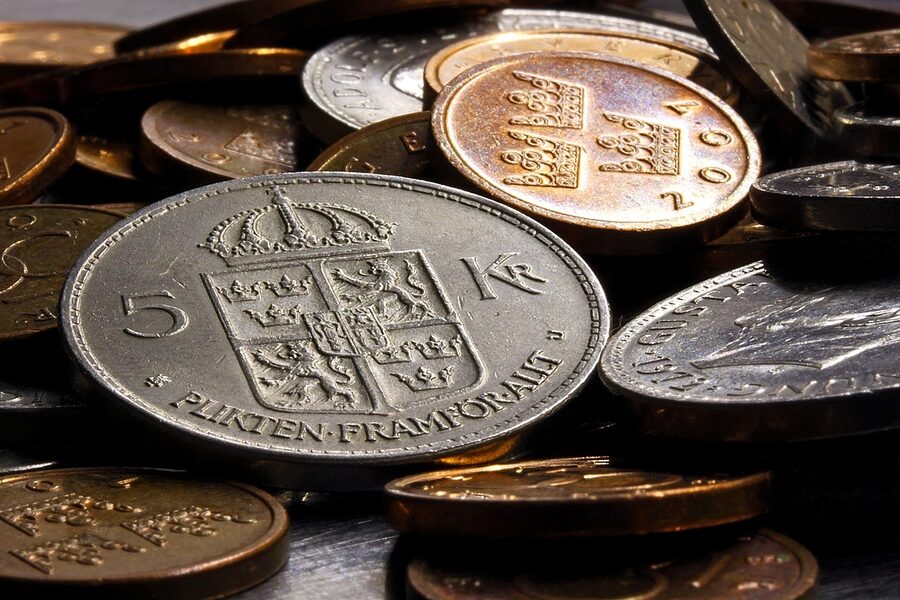
The coins each carry an animal from the four legendary land spirits, the landvættir, that protect the country in folklore: a bull (Griðungur), an eagle (Gammur), a dragon (Dreki) and a giant (Bergrisi). They’re on the obverse alongside marine life on the reverse: cod, dolphin, lumpsucker, shore crab. Worth a look before you spend them.
Strange but useful currency facts
A few things about the króna that come up in conversation more often than you’d expect:
The eyrir, the historical 1/100 subunit (think cents), was withdrawn from circulation in 2003 and formally retired in 2007. Inflation made it pointless. Anything priced at, say, 749 ISK is rounded to 750 at the till. You will never handle a coin smaller than 1 króna.
The 2008 banking crisis crashed the króna by roughly 50 percent over a single autumn, which is part of why the country pivoted so hard to tourism, foreigners suddenly found Iceland affordable. The currency was kept under capital controls between 2008 and 2017 to prevent further outflow, and those controls are now fully lifted. The króna is freely traded again, though it’s a small enough currency that liquidity outside Iceland is thin.
The first króna existed from 1874 to 1981, when 100 old krónur were swapped for 1 new króna due to runaway inflation. So your grandmother’s 100 króna note from 1972 isn’t worth 100 króna today, it’s worth 1, and even that is debatable since old notes are no longer legal tender.
Iceland is the second smallest country by population in the world to have its own currency and monetary policy, after the Seychelles. The economic argument for keeping it has been debated for decades. So far, every government has decided keeping the króna is worth more than joining the euro, mostly so the central bank can devalue when fish prices crash, which is what the Icelandic economy actually rests on.
Frequently asked currency questions
Do shops accept US dollars or euros? No. They might quote prices in dollars or euros online for tourists, but at the till everything is charged in ISK. Some hotels and souvenir shops in central Reykjavik will take cash dollars or euros as a courtesy and you’ll get a worse rate than your card would deliver. Skip it.
Should I exchange currency before I arrive? No. Your home bank’s rate will be worse than the ATM at Keflavík. Bring your travel-friendly debit card and use the airport ATM. If you really want backup paper, bring USD or EUR cash that you can exchange on arrival.
Can I tip in US dollars? Don’t. Tipping isn’t expected anyway, and a tip in foreign cash forces the recipient to find a bank to convert it. If you really want to tip, do it in króna.
What about travellers’ cheques? Nowhere in Iceland accepts them. Banks technically can process them but treat the request as a curiosity. The era ended around 2010.
Can I pay in euros at the airport? Some shops in the Keflavík departures area accept euros and dollars and give you change in ISK at a rate that benefits the shop. The Duty Free is more flexible than most. You’ll still get a better deal paying with your card.
Will my chip-and-PIN card work at petrol pumps? Yes, as long as it has a 4-digit PIN. American “chip-and-signature” cards without a PIN sometimes fail at the unmanned 24-hour N1 and Olis stations along the Ring Road. Get a PIN issued by your bank before you fly. Self-service pumps charge a temporary hold of around 15,000 to 30,000 ISK that releases back to your card in 2 to 10 business days. More on this in the car rental guide.
Where can I exchange leftover króna at the end of the trip? Best rate is at a bank branch in Reykjavik on a weekday morning before you head to the airport. Failing that, the Prosegur Change desk in the Keflavík departures hall will exchange notes (not coins) at a worse rate. Or just spend it at the airport on the way out.
What’s the largest banknote and why does it feel weird? The 10,000 króna note is worth around 70 USD. It looks similar enough to the 1,000 that I have, more than once, handed one over for a 700 króna coffee and walked off without my change. Pay attention to the colour. The 1,000 is blue, the 10,000 is red.
Is contactless safe? What about pickpocketing? Iceland is one of the safest countries in the world. The biggest risk to your wallet is leaving it in a rental car or losing it on a hike. Pickpocketing in central Reykjavik is rare but not unheard of in summer crowds around Hallgrímskirkja and Laugavegur. Carry one card in your front pocket, the other in your bag, and you’ll be fine.
What I’d skip
If I were giving you the short list of things to actively avoid with money in Iceland:
- The currency exchange counter at Keflavík. The ATM ten metres away is better.
- Buying ISK from your home bank before flying. Worse rate than the Keflavík ATM.
- Carrying more than 5,000 to 10,000 ISK in cash. You won’t use it, you’ll lose it, and the bank rate to convert it back will hurt.
- The Dynamic Currency Conversion option at any card terminal. Always pay in ISK, let your bank do the conversion.
- Bottled water. Tap water is excellent.
- Tipping out of guilt. There is no convention to live up to.
The short version
Iceland’s currency is the króna, ISK, divided into coins of 1 to 100 and notes of 500 to 10,000. You will pay for almost everything by tap-and-go card or phone. Bring a Wise, Revolut, Schwab, Monzo or other low-fee travel card. Skip the airport currency counter and use the Keflavík ATM for the small amount of cash you’ll want for hot springs and emergencies. Don’t tip in restaurants. Drink the tap water. Buy the supermarket cheese at Bónus instead of the petrol station sandwich. And if you fall in love with a 32,000 ISK lopapeysa at the harbour wool shop, buy it, get the VAT refund stamped at Keflavík on the way out, and wear it home. You’ll be glad you did.
For the rest of the practical questions about visiting, the Iceland guide and the travel tips section cover everything from packing to driving to the weather. Then look at Reykjavik for where to base yourself, and the best time to visit for choosing your month.