Iceland has the best official aurora forecast in the world, and it’s free. The Icelandic Meteorological Office (vedur.is) updates it every afternoon, it covers tonight plus the next four nights, and it puts the two things you actually need on the same map. Most visitors I meet have never opened it. They check a generic app, see “low activity,” and stay in the hotel. Then they go home thinking the aurora is rare. It isn’t. They just didn’t know where to look or what they were looking at.
This is the practical companion to my broader northern lights guide. That one covers when to come, what to wear, what the lights actually look like to the naked eye, and which tours I’d book. This one is purely about the forecast tools, how to read them, which ones matter, and how to combine them so you stand in the right field on the right night instead of waiting in a Reykjavík hotel for a show that’s happening 90 minutes east. The plan is to walk through vedur.is screen by screen, explain the KP index in language that actually helps you make decisions, show you the cloud cover trick that locals use, list the apps worth installing, and finish with what I’d genuinely do if I had a five-night window in Iceland and I wanted to maximise my chances.
In This Article
- The two ingredients aurora needs
- Open vedur.is and read what’s there
- The KP index in plain Icelandic
- The cloud cover map is where the trip is won
- The four-night forecast and how to use it
- The aurora oval and why Iceland is special
- Apps worth installing
- The nerd metrics, Bz, solar wind speed, hemispheric power
- What the lights actually look like, and why your camera lies
- Where to watch from based on the forecast
- The five-night strategy
- Common mistakes that ruin perfectly good nights
- Season and hours
- If you want to outsource the chasing
- The bottom line
The two ingredients aurora needs
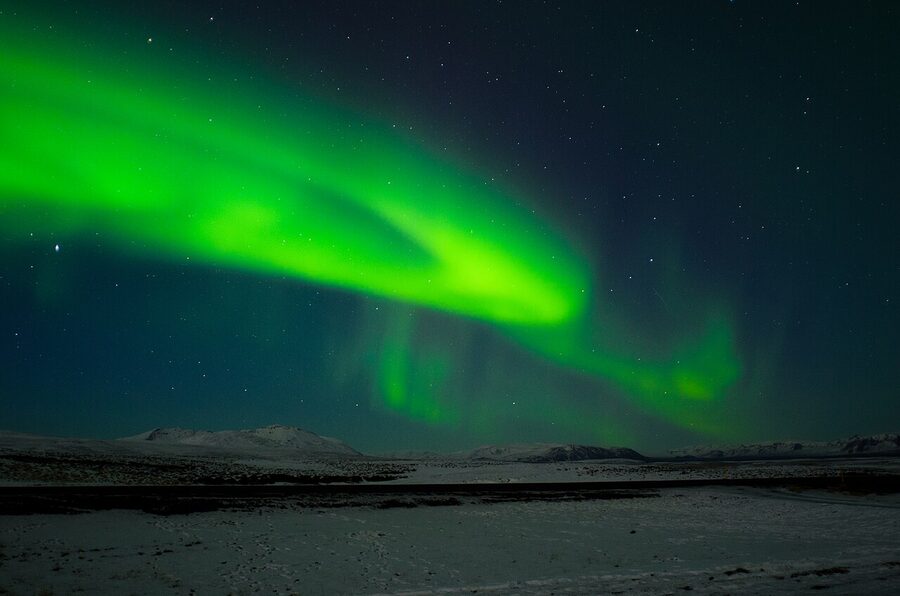
People assume aurora hunting is one variable. It’s two, and they’re independent.
The first is solar activity. That’s the aurora itself, measured by the KP index, scaled 0 to 9. The KP value tells you how far south the auroral oval has been pushed by solar wind hitting Earth’s magnetic field. Iceland sits inside the oval most nights, so we don’t need huge KP numbers, KP2 already produces a faint glow here, KP3 produces something visible to the naked eye, KP4 is a proper show. KP6 is something you remember.
The second is clear sky. The aurora can be a screaming KP6 directly above your head, but if there’s a low ceiling of cloud you will see absolutely nothing. This is the part most visitors miss. They check an app, see KP1, and assume it’s a bust, when actually a KP1 night with crystal-clear sky over north Iceland will give you a perfectly photographable aurora, while a KP6 night under thick cloud over Reykjavík gives you nothing.
That’s why vedur.is is the tool to use here. It puts both variables on one screen, for tonight and four nights ahead. No app does the cloud cover better, because no app has the same density of Iceland-specific data feeding it.
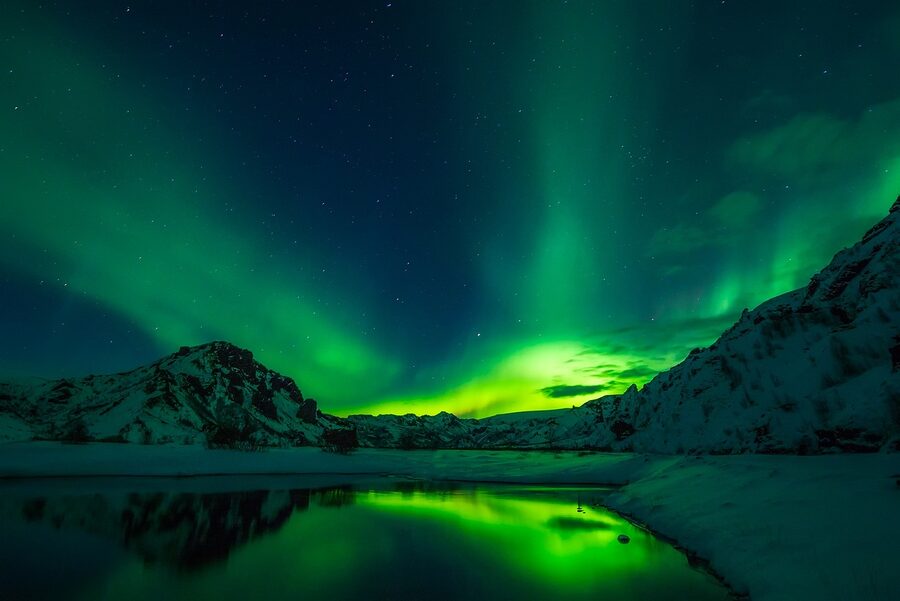
Open vedur.is and read what’s there
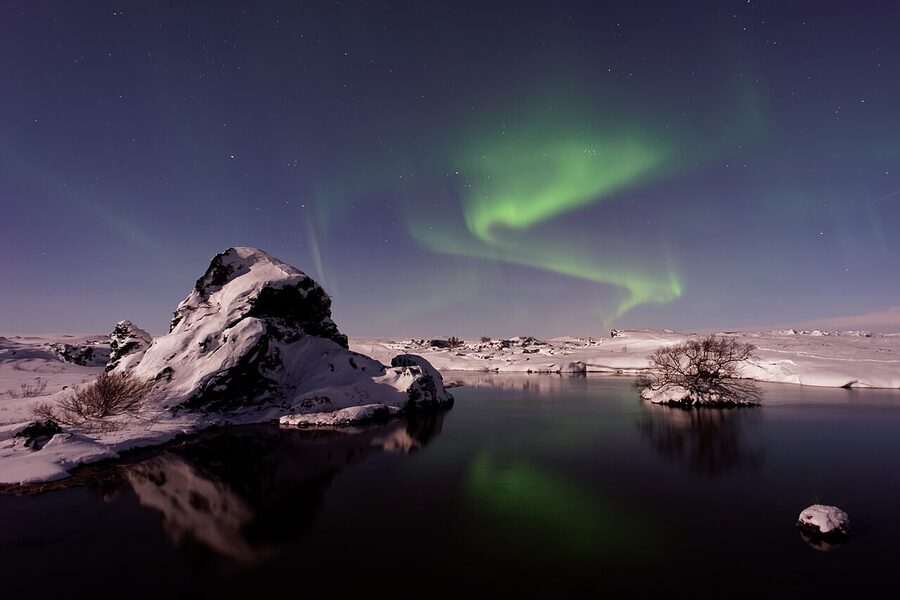
Go to en.vedur.is/weather/forecasts/aurora/. The page is updated every afternoon around 17:00 Iceland time, so the most useful moment to check it is after dinner. Here’s what’s on the screen.
In the centre, a map of Iceland with cloud cover painted over it. White means clear sky. Green means cloudy. The shading runs from 0% (white, you can see stars) to 100% (deep green, total overcast). There’s a slider underneath that lets you scrub forward in three-hour increments through tonight, tomorrow night, and the three nights after that. You’re looking for white wedges, anywhere on the island.
In the top right, a number from 0 to 9. That’s the KP forecast for tonight. There’s a colour-coded bar under it showing the activity over the past few hours and the next few hours. Red is high.
In the bottom right, a small graphic of Iceland with a red wave over it. That’s the auroral oval, and the closer the centre of the wave is to Iceland, the more directly we’re under it. On normal nights the wave is right on top of us. On KP5+ nights the oval pushes south and the wave bulges down into the Atlantic.
That’s the whole interface. Cloud cover map, KP number, oval graphic. If you can read those three things you know more about your aurora chances tonight than 95% of visitors who paid for a tour without checking.
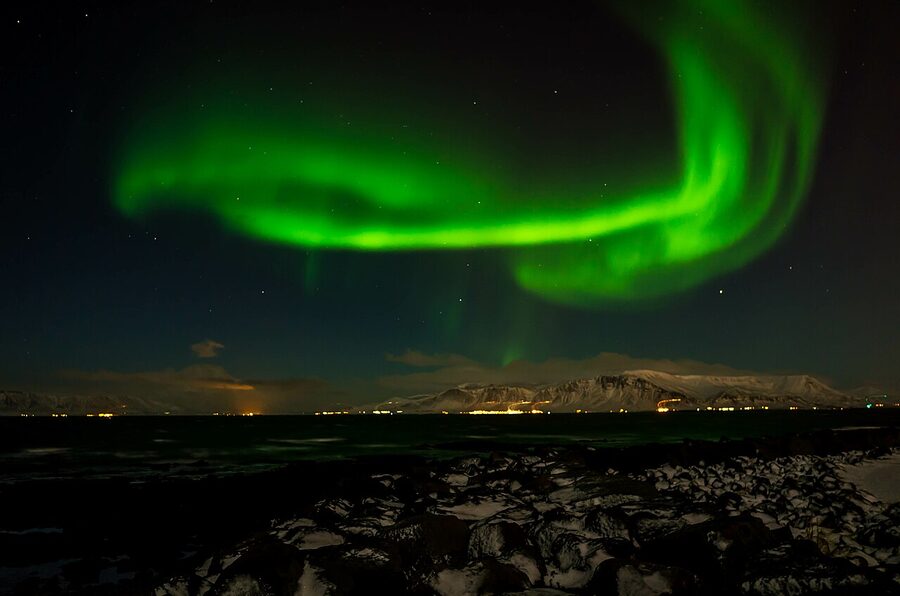
The KP index in plain Icelandic
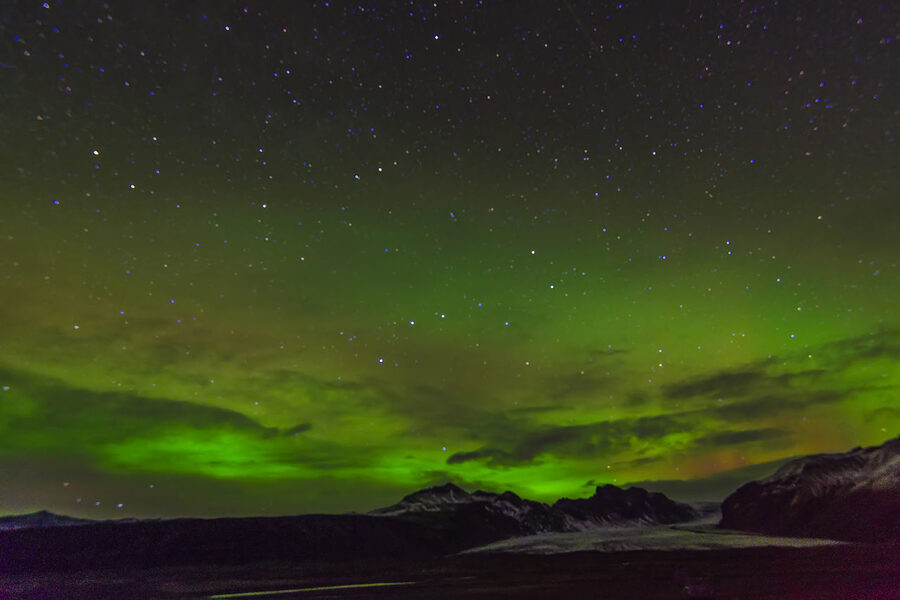
Most explanations of KP index online are written for someone living in Wisconsin or Scotland, where you need KP5 just to see a hint of green low on the horizon. Iceland sits much further north, basically inside the auroral oval already, so the practical thresholds are different here. Here’s how I read each value when I’m planning my own evening.
KP 0 to 1. Quiet. Genuinely quiet. The oval is sitting tight against the magnetic pole and there’s not much for us to see. Photographically you might pick up a hint with a 20-second exposure pointed north, but with your eyes you’ll see nothing. If skies are clear you can still go out, you might catch a brief flicker, but I wouldn’t drive an hour for it.
KP 2. Faint aurora possible, especially in the north (Akureyri, Mývatn, Húsavík). From south Iceland you’ll see a low pale arc on the northern horizon if it’s very dark and very clear. Camera will pick it up easily. Worth going out if the sky is clear.
KP 3. The practical threshold for “go outside and look.” Visible to the naked eye from anywhere in Iceland in clear sky. You’ll see a soft green band, sometimes pulsing slowly. This is the most common forecast in Iceland during the season, and it’s what you should plan trips around. If you get five nights at KP3 with one or two clear, you’ve had a good Iceland aurora trip.
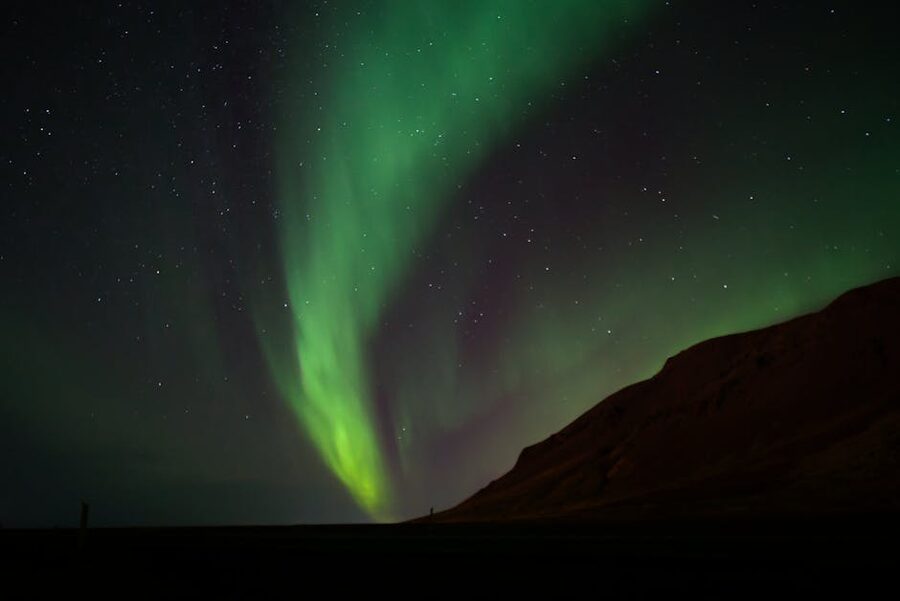
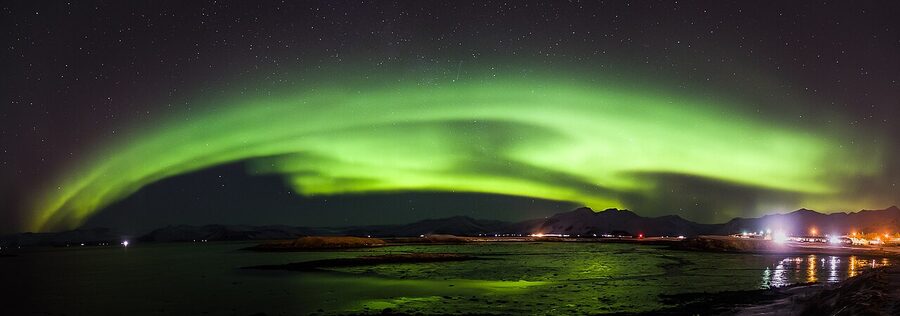
KP 4. Active. The band starts moving. You’ll see curtains forming, sometimes a corona overhead where the rays appear to converge. This is when people start gasping. KP4 nights happen often enough in winter that a full week of being in Iceland will usually catch one.
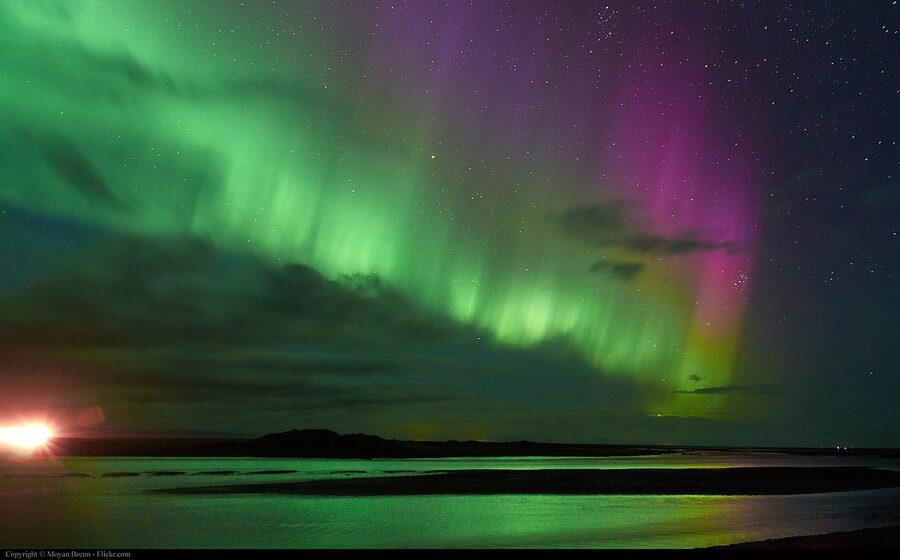
KP 5. Minor geomagnetic storm. Strong dancing, often a second or third colour appearing, purple at the top of the curtain, red at the very top. The whole sky can fill, not just the north. Maybe one or two nights per month in a normal solar season, more during solar maximum.
KP 6. Moderate storm. Aurora visible from mainland UK and parts of central Europe. In Iceland it’s overhead and chaotic, with movement that looks almost theatrical. Photographers cancel everything else. A handful of times per winter at most.
KP 7 to 9. Big storm. Once or twice a season if we’re lucky. The aurora can be visible from Madrid in extreme cases. In Iceland it’s something you don’t forget. People in their 60s here still talk about the 2003 Halloween storm.
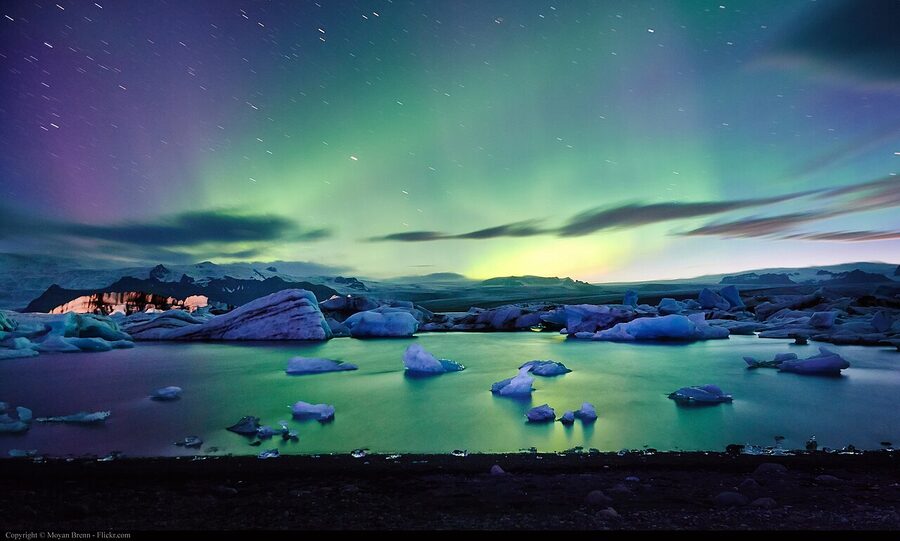
The takeaway: don’t fixate on hitting a high KP. The vast majority of beautiful aurora photos from Iceland were taken on KP3 or KP4 nights with clear sky. Plan around KP3 as the floor, treat anything higher as a bonus, and you’ll end up happy.
The cloud cover map is where the trip is won
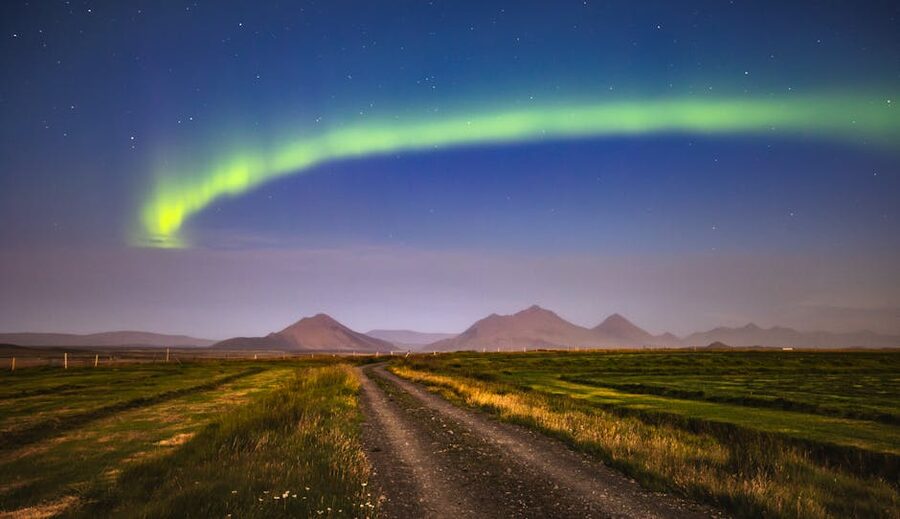
Solar activity is the part everyone obsesses over. Cloud cover is what actually determines whether you see anything. Once you’ve checked tonight’s KP, you spend the next ten minutes scrubbing the slider on the cloud map and looking for white.
The colour scale runs roughly like this. White is no cloud, you can see stars and aurora cleanly. Pale yellow or pale green is thin high cloud, sometimes you can still see aurora through it, especially the brighter movements. Mid green is broken cloud, where you’re hoping for gaps. Deep green or dark blue is thick low cloud, and at that point it’s over. The aurora is happening above the clouds and you’re seeing the underside of the weather.
The strategy is dead simple: find the white. Anywhere on the island. The map covers all of Iceland in a single view, so you can see at a glance whether the south coast is socked in but the north is clear, or whether there’s a clear bubble over the east while Reykjavík is under cloud. If you have a car and a few hours, you drive to the white.
A specific example. A friend booked a five-night November stay in Reykjavík and didn’t know about vedur.is. She checked a generic aurora app, saw KP4 every night, and walked out behind her hotel each evening. Saw nothing five nights running. The cloud map showed the south of Iceland was under 100% overcast for the entire week. The north was clear three of those five nights. A 4.5-hour drive to Akureyri or Mývatn would have given her three out of three.
Don’t be that person. Even if you can’t drive far, knowing the cloud map saves the obvious mistakes. It tells you whether to drive 30 minutes to a clear pocket inland, whether to give up at 10pm because the cloud is coming in at midnight, whether to get up at 4am because there’s a clearing window.
The four-night forecast and how to use it
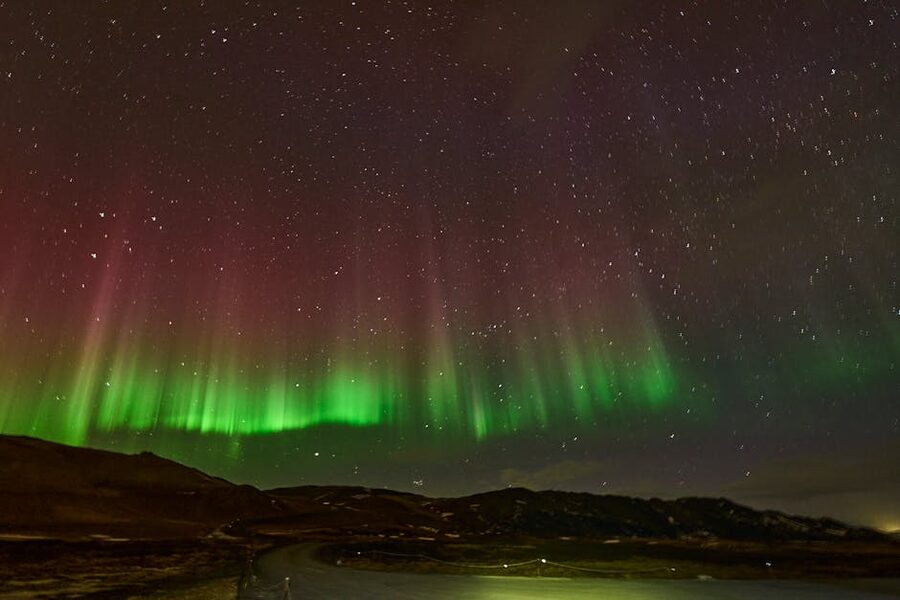
The vedur.is page gives you tonight plus the next four nights, both for KP and for cloud cover. The accuracy drops the further out you look. Treat the data like this:
Tonight (next 12 hours): reliable. Plan around it. The cloud cover map for tonight is usually within 10% of what actually happens. KP for tonight is short enough out that NOAA’s solar wind monitors at the L1 Lagrange point have measured the wind heading toward us, so the forecast has real data behind it.
Tomorrow night (24 to 48 hours): useful as a guide. The cloud cover is roughly right for the country as a whole, if the map shows the whole island going dark green, that probably happens. The exact placement of the clear pockets shifts by 50 to 100km. KP forecast is decent.
72 hours and beyond: rough. Use it for “is the trend toward more or less cloud?” Don’t book a hotel three regions away based on a cloud map for night four. By then the actual weather will look different.
The way I use it: I plan tomorrow night based on tonight’s forecast updated at 5pm, and I plan the next four nights as a rough sketch. If the trend is “south stays cloudy all week, north opens up by night three” then I’m booking my Akureyri or Mývatn night for night three. If the trend is “everything clears tomorrow, KP6 incoming” then I’m not making other plans for tomorrow night.
The aurora oval and why Iceland is special
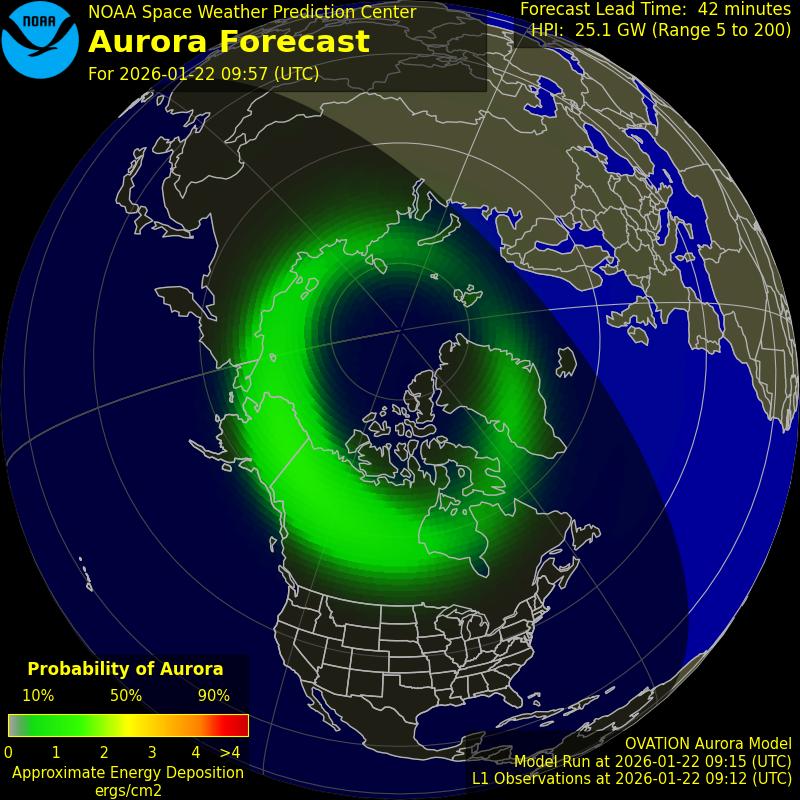
Aurora doesn’t form in a circle around the geographic North Pole. It forms in a ring around the magnetic pole, which currently sits in the Canadian Arctic. That ring is called the auroral oval, and it’s a doughnut shape that gets bigger when solar activity is high and shrinks when it’s quiet.
Iceland sits right at the southern edge of where that doughnut typically lies. We’re in the band on quiet nights and the band passes overhead on active nights. That’s why we see so much. Compare us to Edinburgh or Stockholm, they need a strong storm to drag the oval far enough south to see anything. We need a slow night with a clear sky and we’re already winning.
NOAA’s OVATION 30-minute forecast at swpc.noaa.gov shows the oval globally, updated every half hour from real solar wind data. Worth bookmarking. It tells you not just whether the aurora is happening but where on Earth it’s strongest right now. Iceland will usually be inside the green band. When the band turns yellow or orange over us, you go outside immediately.
Vedur.is uses the same underlying data plus its own meteorological models to make its KP prediction for Iceland specifically. Treat vedur.is as the authoritative number for here, NOAA OVATION as the live “is it happening right this minute” check.
Apps worth installing
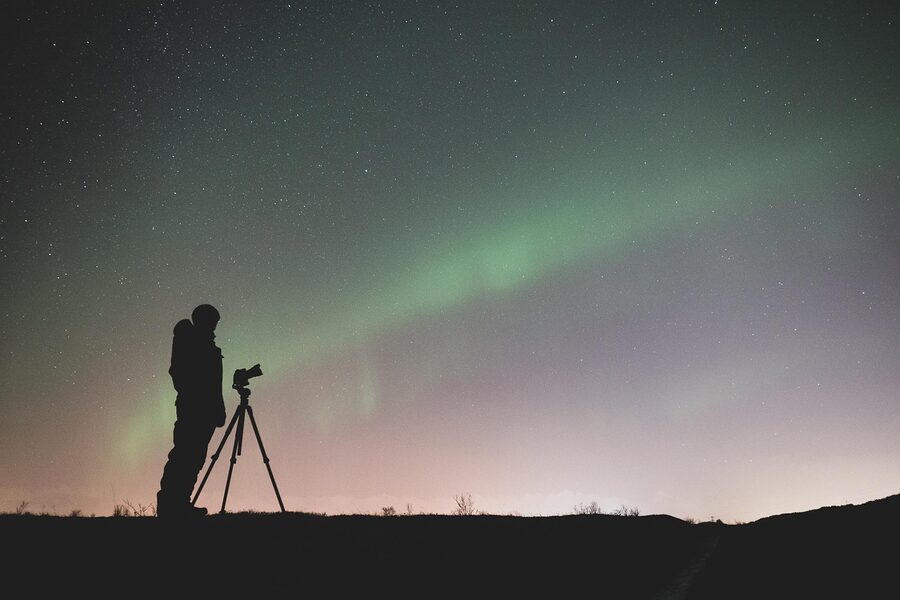
The website is great. An app on your phone is greater because it can wake you up. There are five worth knowing about, and only one is necessary.
Hello Aurora (free, iOS and Android). My pick. Built by two Icelanders, uses Icelandic Met Office data plus NOAA, has the cloud cover map for Iceland baked in, and pushes notifications when KP is rising or when other users in your area report a sighting. The crowd-sourced sightings layer is genuinely useful, when you see five green pins ten minutes south of you, you know it’s worth going outside. Get this one even if you get nothing else.
My Aurora Forecast & Alerts (free). The simplest one. It just shows you a KP-based probability for your current location and pushes alerts when it crosses your threshold. Less Iceland-specific than Hello Aurora but easier to read if you’ve never thought about KP before.
Aurora Forecast 3D (paid, around 600 ISK on iOS). Best for visual planning. It animates the auroral oval over a 3D Earth and shows you where it’s strongest hour by hour. If you’re a planner who likes to think in maps and you don’t mind paying for the upgrade, this is the one. For a one-week trip the free apps are fine.
SpaceWeatherLive (free, app and website). The nerd tool. It tracks solar wind speed, the Bz component of the interplanetary magnetic field, hemispheric power, and shows three to seven day forward forecasts based on solar features now visible on the sun. Use this when you’re trying to anticipate whether the next four nights will be quiet or active.
AuroraNow (free, push alerts only). Bare-bones notification service. Worth installing as a backup to Hello Aurora because the two cross-check each other. If both are pinging you at midnight, you’re going outside.
Realistically, the realistic setup is: vedur.is in your browser bookmarks, Hello Aurora on your phone, NOAA OVATION as a backup tab. Three tools, ten seconds each to check. That’s the entire workflow.
The nerd metrics, Bz, solar wind speed, hemispheric power
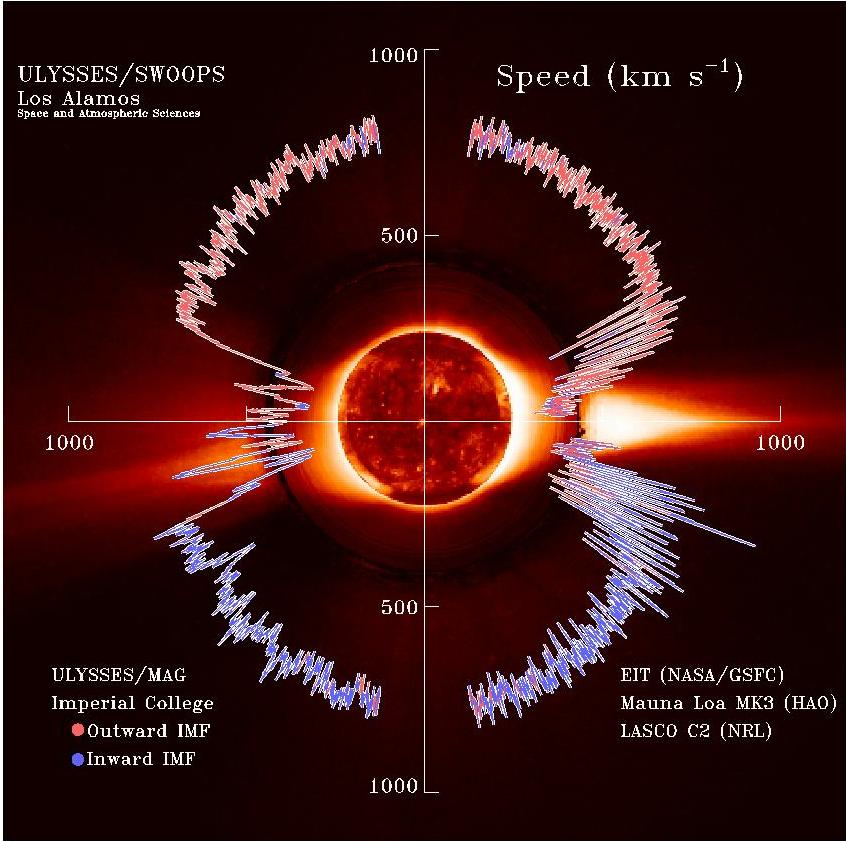
You don’t need any of this for a normal aurora trip, but if you’re staying long enough or you’re a planner by nature, three numbers add real predictive power on top of the basic KP check.
Bz is the north-south component of the interplanetary magnetic field. When it points south (negative numbers), it lines up the opposite way from Earth’s magnetic field and the two interconnect, opening a doorway for solar wind particles to pour in. When Bz dives to minus 10 or lower and stays there for a few hours, the aurora gets dramatic regardless of what KP says. Conversely, a perfectly fine-looking KP4 forecast can fizzle if Bz stays stubbornly positive. Check it on SpaceWeatherLive.
Solar wind speed, measured in kilometres per second at the L1 Lagrange point. Normal background is 300 to 400 km/s. Above 500 km/s the energy reaching Earth jumps and you can expect aurora to outperform its KP forecast. Above 700 km/s is storm territory. The L1 satellites give us roughly 30 to 60 minutes of warning before the wind reaches Earth.
Hemispheric power is the total power being dumped into the auroral oval, in gigawatts. Above 50 GW is a meaningful display. Above 100 GW is something you want to be outside for. NOAA OVATION shows it in real time.
None of these substitute for the basic KP plus cloud check. They just refine your “should I commit to going out now or wait an hour?” decision when you’ve got a borderline forecast. For a casual visitor, ignore them. For someone trying to photograph aurora over a specific location like Jökulsárlón, they’re worth tracking.
What the lights actually look like, and why your camera lies
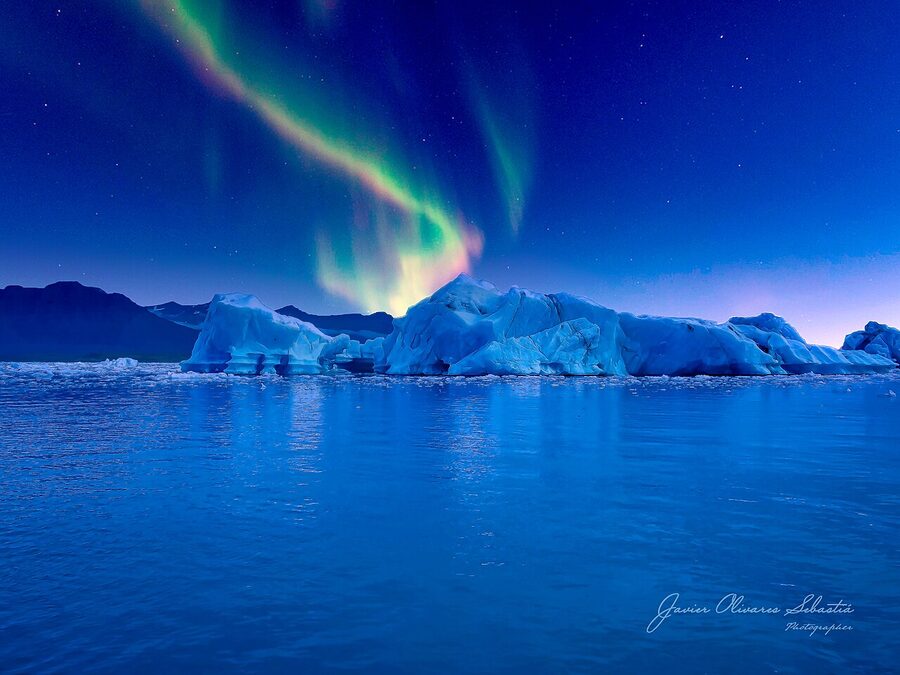
This is the part that ruins more aurora trips than weather does. The forecast is correct, you got out under clear sky, you saw something, but it didn’t look like the photos. So you assume it was a weak night and you stop chasing.
The truth is that human eyes don’t see colour well in low light. Our cone cells, which see colour, basically switch off in the dark and our rod cells take over, and rods only see in greyscale. So the same KP3 aurora that your eyes record as “a faint grey-green smudge moving slowly” the camera records as a saturated green ribbon. The camera isn’t lying, it’s gathering ten or twenty seconds of light through a wider aperture than your pupil. It just sees more than you do.
Roughly what you’ll actually see at each level:
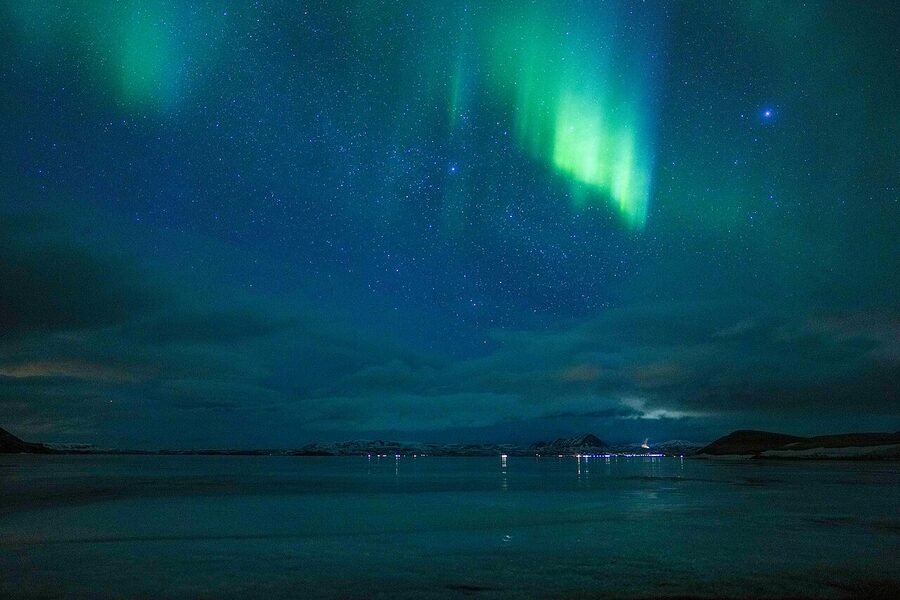
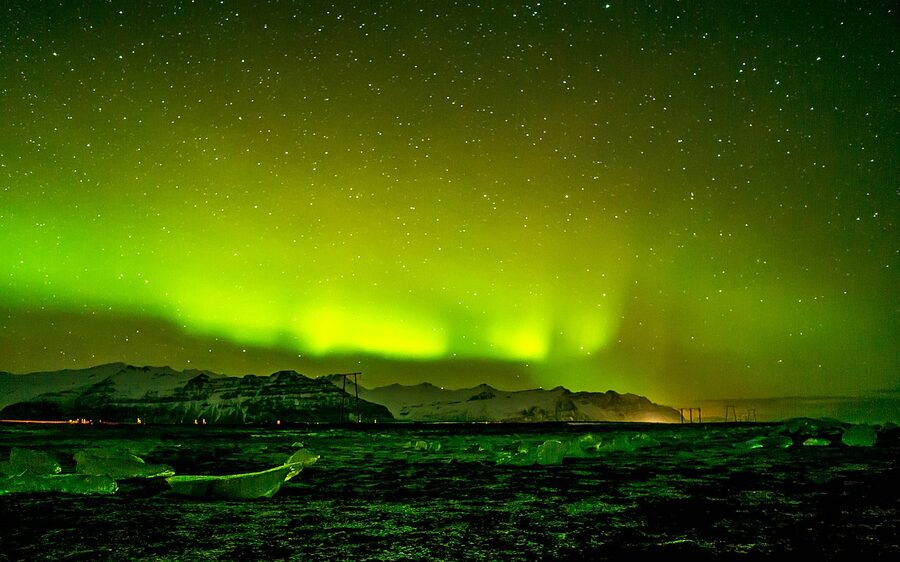
At KP2 to 3 with the naked eye: a pale grey or grey-green band low in the sky, slow movement, easily mistaken for a thin cloud. Camera turns it into a clean green wave.
At KP4 with the naked eye: clear green, definite movement, shapes you can make out. Camera turns it into vivid curtains with the second colour starting to show.
At KP5 and above: now your eyes catch up. You see green clearly, you see purple at the top edges, you see the whole sky pulsing. This is the show people imagine. Cameras still pick up more, but the gap narrows.
Knowing this in advance is the kindest thing I can tell a first-time visitor. Don’t go expecting the brochure photo every night. Most nights you’ll see the grey-green smudge, and that smudge is genuinely the aurora, your eyes just aren’t built like the camera. Take photos to confirm. Then enjoy the smudge.
Where to watch from based on the forecast
The forecast tells you where to go. Some default playbooks based on what the map shows you.
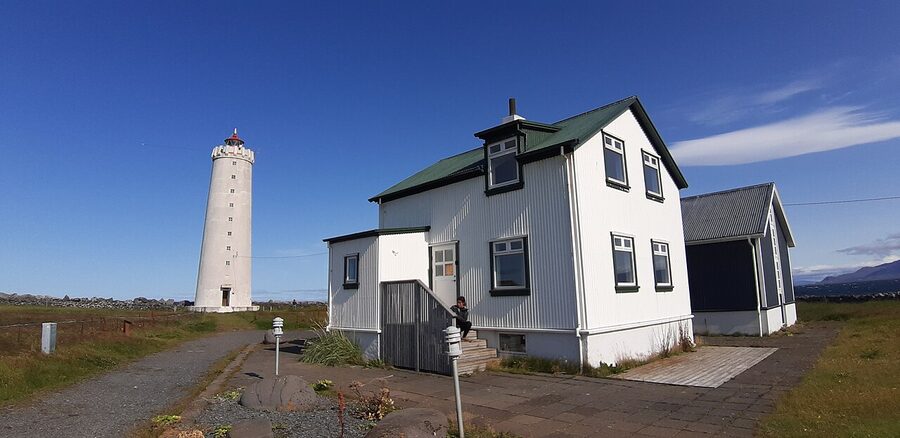
Reykjavík under clear sky. Walk or drive to Grótta lighthouse on the Seltjarnarnes peninsula. About ten minutes from the city centre, free, dark enough on the seaward side, and the horizon is north over the ocean which is exactly where you want to look. There’s a tiny hot foot bath nearby for the lulls. If you want darker still, drive 25 minutes east to Heiðmörk, a forest park with no street lighting.
Reykjavík clouded, south Iceland clouded, but the cloud map shows white over Selfoss or Hveragerði. Drive south on Route 1 (45 minutes) and find a turn-off near Selfoss. You’re hunting clear sky, not destinations.
South Iceland clouded, north clear. If you have a car and time, the four-and-a-half hour drive north to Akureyri or another hour to Mývatn is genuinely worth it. Stay overnight. The skies up there are darker, the cloud cover behaves differently, and you’ve doubled your nights of viable viewing. This is also where Iceland’s aurora-wake-up hotels mostly live.
You’re already on the south coast (Vík, Hofn). Walk away from town lights. In Vík, the beach at Reynisfjara works once you’re past the cliff parking area. In Höfn, the harbour itself is dark enough on most nights and you can see the lights reflected in the water.
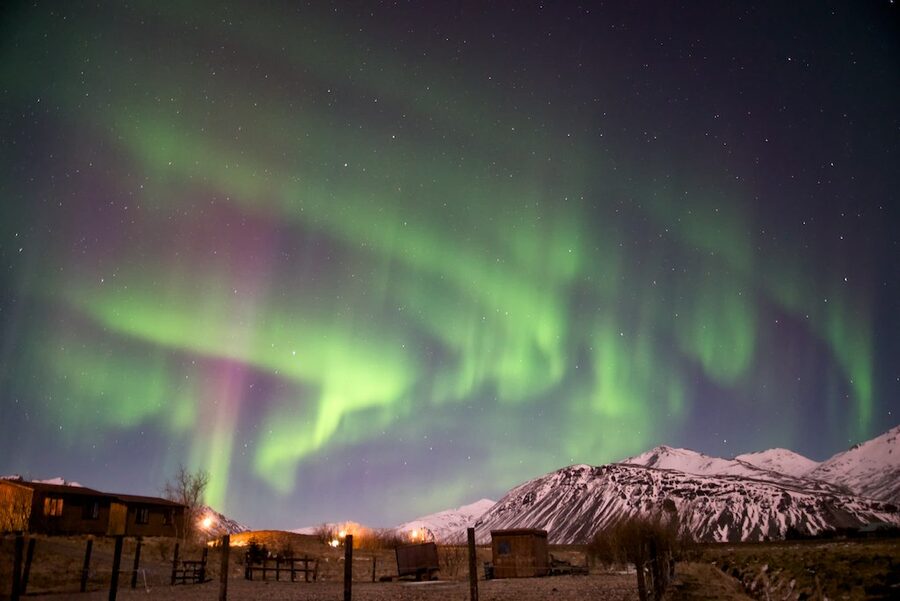
You’re on the Snæfellsnes peninsula. Drive away from Stykkishólmur and Grundarfjörður street lights. The roads around Kirkjufell mountain are great if there’s clear sky, and you’ve got the iconic foreground if the lights show up.
You’re at Jökulsárlón. Walk to the lagoon. The parking area is dark enough, the ice provides foreground, and you’re already in the south-east which often has different cloud patterns from the south.
Cloud map shows green everywhere on the island. Stay home. Make hot chocolate. Watch a clip of Áramótaskaupið on YouTube. There’s no point chasing through total overcast, the aurora needs a hole in the clouds and tonight there isn’t one.
The five-night strategy
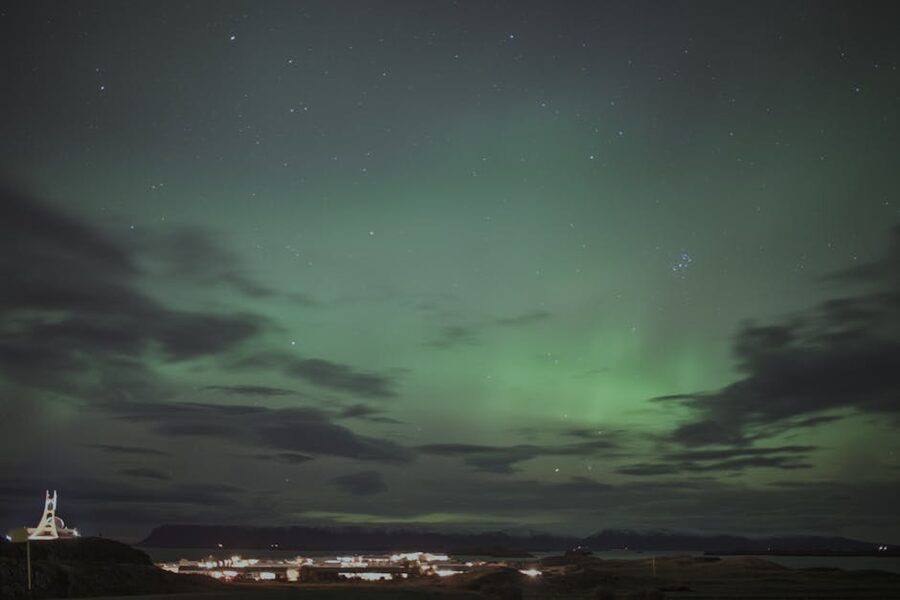
If you’ve got five to seven nights in Iceland in the season, your odds of seeing at least one good show are around 70 to 80% with a forecast-led plan and a car. Without those, more like 30%. Here’s how I’d run the trip.
Base somewhere rural. Reykjavík is light-polluted and the weather pattern often differs from the rest of the country. Better options: Hotel Rangá on the south coast (famously good aurora wake-up service), Skálakot near Eyjafjallajökull, the Fosshotel in Vík, the Höfn area, or Hotel Kría in Mývatn for a north Iceland base. See my when to visit Iceland guide for season-specific picks.
Build the trip around darkness. October through March is prime; April and August work but with shorter dark windows. December and January give you 18 to 20 hours of darkness, which is more chances per night.
Check vedur.is at 5pm every day. Make tonight’s plan from that. Don’t commit to plans more than 24 hours out unless the four-night trend is unusually clear.
Have a 24-hour emergency drive option. Know how long it would take you to drive to north Iceland or to the east coast if your area is locked under cloud all week. Make peace with doing that drive on the right night.
Be patient when you go out. The aurora often starts as a faint band that intensifies over 30 to 90 minutes. People give up after twenty minutes and miss the show. Bring a thermos. Stay an hour minimum once you’re set up.
If you’d rather outsource the worry, book a couple of aurora bus tours from Reykjavík. They check the forecast for you, drive to the clear pockets, and re-book you free if the night is a bust. Reykjavik Excursions and Gray Line both offer this. The downside is timing, they leave at 8pm and return around 1am whether or not the aurora shows in your window.
Common mistakes that ruin perfectly good nights
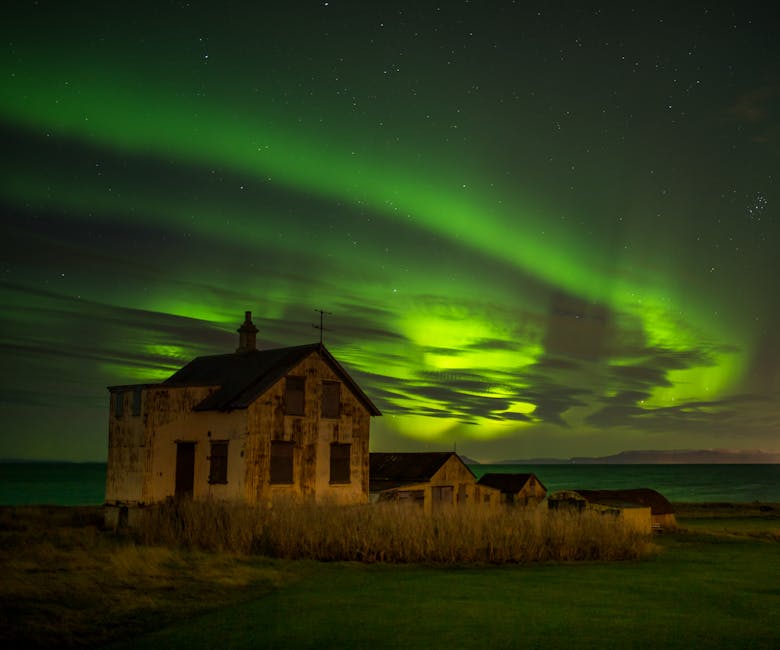
A handful of things go wrong over and over.
Looking the wrong way. The aurora belt is over your head in Iceland, not on the southern horizon. Face north. If you’re staring at where the sun set in the west, you’ll miss it.
Not letting your eyes adjust. Full night vision takes 15 to 25 minutes in the dark. Every time you check your phone, you reset the clock. Use red-screen mode if your phone has it, or put it away entirely.
Standing in light pollution. Reykjavík’s downtown is too bright. So is anywhere on Route 1 within five minutes of a town. Drive at least 15 minutes from any settlement to get usable darkness.
Watching from a hotel window. Window glass plus interior light plus heating making the glass mist plus your own reflection, you cannot see aurora through hotel glass. Step outside. Even ten metres past the entrance is better.
Giving up at 11pm. Aurora often peaks between 11pm and 1am Iceland time. Some of the best displays I’ve seen started at half past midnight. If the forecast says active and the sky is clear, stay out.
Trusting one forecast in isolation. Cross-check vedur.is, NOAA OVATION, and Hello Aurora. If two say strong and one says quiet, the strong is more likely. If all three say quiet, save your evening.
Booking only a single bus tour for your trip. One night isn’t enough margin against weather. Book two or three, or skip tours entirely and self-drive with the forecast in hand. The tour operators know this, that’s why most reputable ones rebook free.
Season and hours
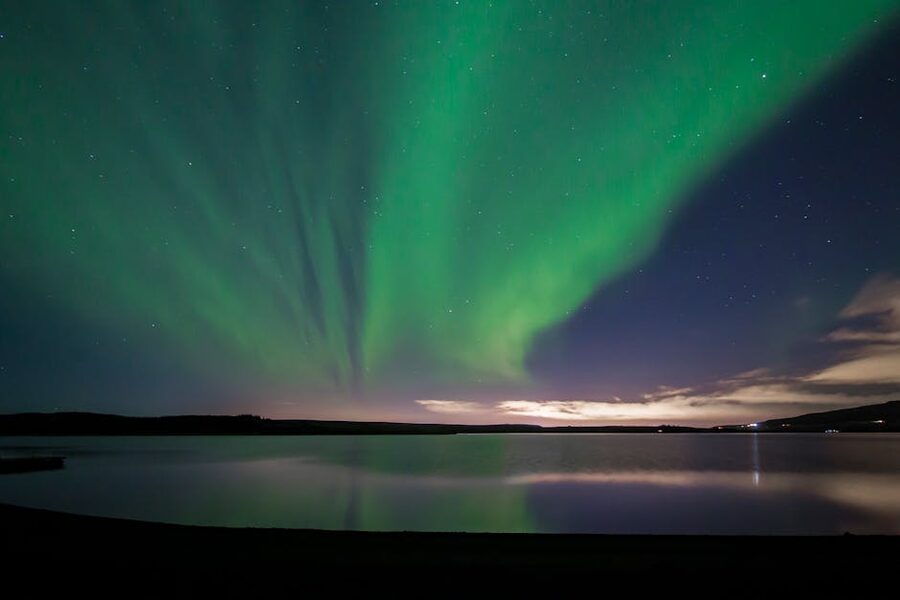
Aurora season in Iceland runs roughly from late August through mid-April. Outside that window the sky is too bright for aurora to be visible, there’s a brief twilight even at midnight in May, June, July, and most of August. Nothing wrong with the aurora itself in summer, you just can’t see it.
Within the season, peak viewing hours are 9pm to 2am Iceland time, with the strongest tendency between 11pm and 1am. In deep winter (December, January) the dark window is so wide that aurora can be visible from 4pm to 8am if it’s an active night. In late August or early April, you might only have a window of true darkness from 11pm to 4am.
September and March are the sweet spot for many people. The equinoxes coincide with statistically higher aurora activity (a real effect known as the Russell-McPherron effect, the geometry of Earth’s magnetic field favours interconnection with the solar wind around equinoxes). Combined with manageable temperatures and not-yet-extreme darkness, those two months produce a lot of the best aurora trips. December gives you the most darkness but the harshest weather. February tends to be cold and clear, often the best balance.
For a deeper month-by-month read, see my when to visit Iceland piece and my Iceland climate guide.
If you want to outsource the chasing
If reading forecasts and driving Icelandic country roads in the dark isn’t your idea of a holiday, there are three ways to outsource this.
Aurora bus tours from Reykjavík. Around 9,500 to 12,500 ISK per person. They leave 8pm or 9pm, drive to the clearest sky within range, give you a couple of hours under the lights with hot chocolate, and return around midnight or 1am. Both Reykjavik Excursions and Gray Line offer the standard rebook-free guarantee. Browse current listings on GetYourGuide for comparisons. The catch: you only get one window per night.
Aurora wake-up hotels. Hotel Rangá on the south coast is the classic, they monitor the sky from their staff and ring your room when the aurora appears. Several other rural hotels (Hotel Lækur, Hotel Grímsborgir, Húsafell) offer similar. Costs more than Reykjavík hotels but you wake up to the show rather than driving to find it.
Photography tours. If you want decent photos to take home, a guided photography tour with a small group is well worth the price. The guide handles the forecast, the location, and the camera settings, you just stand there and learn. Iceland Photo Tours and Arctic Shots are both run by aurora-experienced shooters.
The Northern Lights bar at Blue Lagoon. If you’re already booked into the Blue Lagoon, the Northern Lights add-on evening package puts you in the warm water under the lava field on a likely-clear night. Not a bad combination if you’re already paying for the lagoon.
The bottom line
Iceland gives you a free, government-run aurora forecast that puts the two things you need (KP and clear sky) on the same map for tonight and the next four nights. Apps and NOAA back it up. Most visitors don’t open it once. The ones who do, and who treat the cloud cover map as the real boss, end up seeing the aurora on a majority of nights of any reasonable trip.
Open en.vedur.is/weather/forecasts/aurora/ at 5pm tonight. Look at the cloud map first. Find the white. Check the KP. If the number is 3 or higher and there’s white anywhere on the island within driving distance, get in the car. Bring a thermos. Stay an hour. The aurora is sitting there waiting, Iceland just made it free for anyone who can read a map to find it.
Start your planning with my main northern lights guide, browse Iceland day tours if you want a guided alternative, or check more articles in the Travel Tips category. Þetta reddast, it’ll work out.