Planning an Iceland Honeymoon

The first time I saw a couple propose at Reynisfjara, the wind was hitting the basalt columns sideways and the bride-to-be lost a glove to the surf. They got engaged anyway, walked back up the beach laughing, and drove to Vík for soup. That is Iceland in one sentence. Beautiful, slightly absurd, you have to come prepared, and most of the time it works out. Þetta reddast, as we say. It will work out.

I have spent twenty-something years guiding couples around this country, and the honeymoon trips are the ones I remember most. Not because they are flashier than other holidays, but because the small things matter more. The room you wake up in. The dinner you book on day three. The decision to skip the long drive and soak in a hot tub instead. So this guide is the one I would write for my own friends if they asked me to plan their honeymoon. Romantic, yes, but also realistic about weather, daylight, and the things Iceland will not promise you no matter how much you spend.

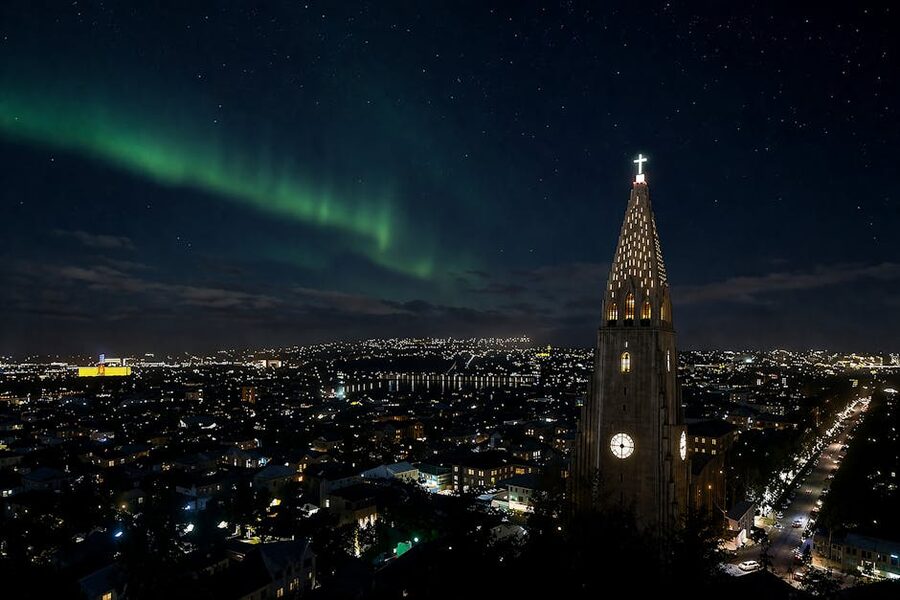
Couple watching the northern lights in Iceland

Why Iceland actually works for a honeymoon

I will not pretend Iceland is a beach. If you want palm trees and an all-inclusive resort, book the Caribbean. But if you have just had a wedding, what you probably want is space, quiet, and a few days where nobody can reach you. Iceland gives you that better than most places I have been.

The country is small. You can drive from a glacier to a black-sand beach to a candlelit dinner in a single afternoon. Reykjavík is a 45-minute flight from London and roughly five hours from New York. Once you land, almost everything is within a four-hour drive, which means you do not waste your honeymoon staring at airport ceilings.

It is also empty in a way most European destinations are not. The whole country has a population the size of a mid-sized US college town. Step off the Ring Road for ten minutes in October and you can feel like the only two people in the world. That is a real thing newlyweds say to me, and they always say it like they cannot quite believe it.

And Iceland does luxury well, in its own restrained way. We do not really do gold-leaf and butler service. What we do is geothermal water, very good lamb, dim winter light, and rooms with floor-to-ceiling windows pointing at a glacier. If that is your kind of romance, you are in the right place.

When to honeymoon in Iceland (every month is a trade-off)

I get the same question every week: when is the best time to come? There is no clean answer. Each season hands you something and takes something else away. Pick the one that matches the trip you actually want.

February to March: aurora odds, ice caves, and dark cosy evenings

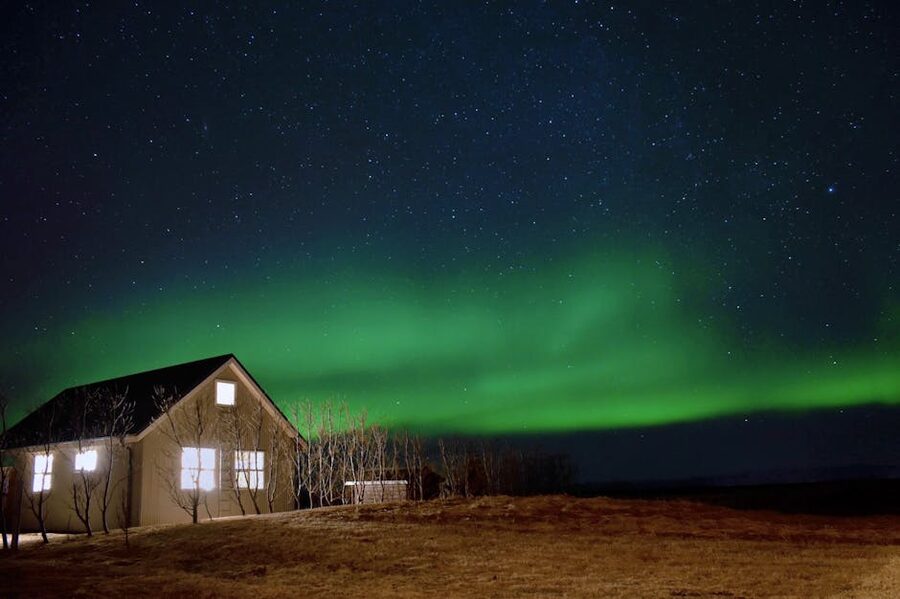
Northern lights over an Icelandic cabin in winter

This is the most romantic stretch of the calendar if you accept the trade. Days are short, around six to nine hours of usable light by mid-March, but every night is a chance for the aurora. Ice caves inside Vatnajökull are open and at their most translucent. Temperatures hover near freezing in the south and can drop to minus ten in the north, but it is a dry cold most days, not the wet bone-chill people expect.

The catch: Route 1 closures happen in storms, and a closure can swallow a whole day of your itinerary. Build slack into the trip. Two nights minimum at any aurora-focused stay. If you only have one night and the sky is solid cloud, you will leave disappointed and that is on the planning, not the country. Check en.vedur.is for the aurora forecast and road.is every morning before you drive. For more on this season specifically, our guide to Iceland in March goes deep.

May to June: midnight sun, puffins, and almost no crowds yet

Midnight sun glow over the Icelandic coast

If your wedding is in spring and you fly straight here, May and early June are quietly perfect. The lupines come out in mid-June and turn the south coast purple. Puffin colonies are full again, especially Látrabjarg and the Westmans. Daylight gets so generous you can have a full day’s drive, dinner at 9 pm, and another two hours of soft pink light to walk a beach. The downside is no aurora. The sky is too bright.

Crowds are still light. Most of the big tour buses do not pile in until late June. Rental cars and lodges are noticeably cheaper than July or August. If you want photographs without other tourists in them, this is when you book.

September to October: aurora returning, autumn colours, cheaper prices

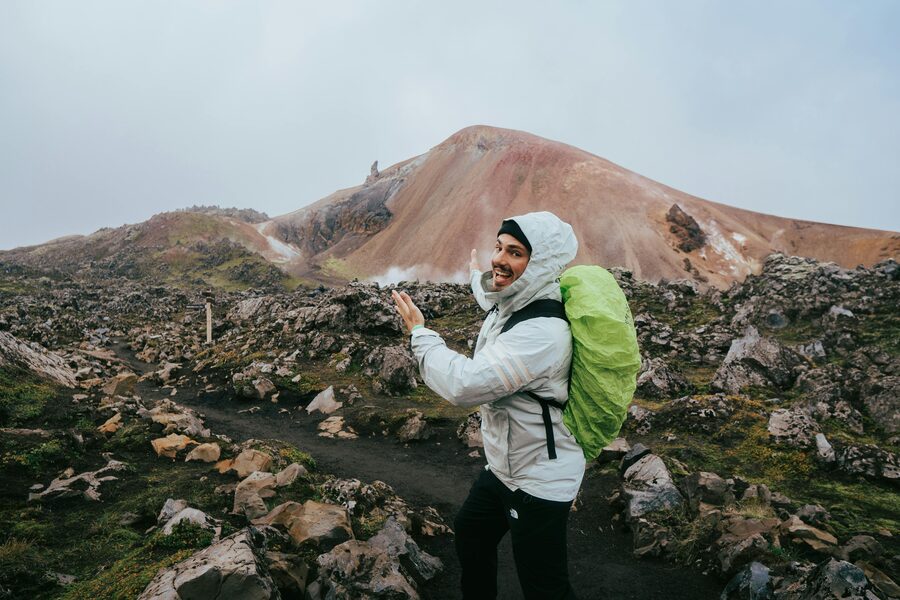
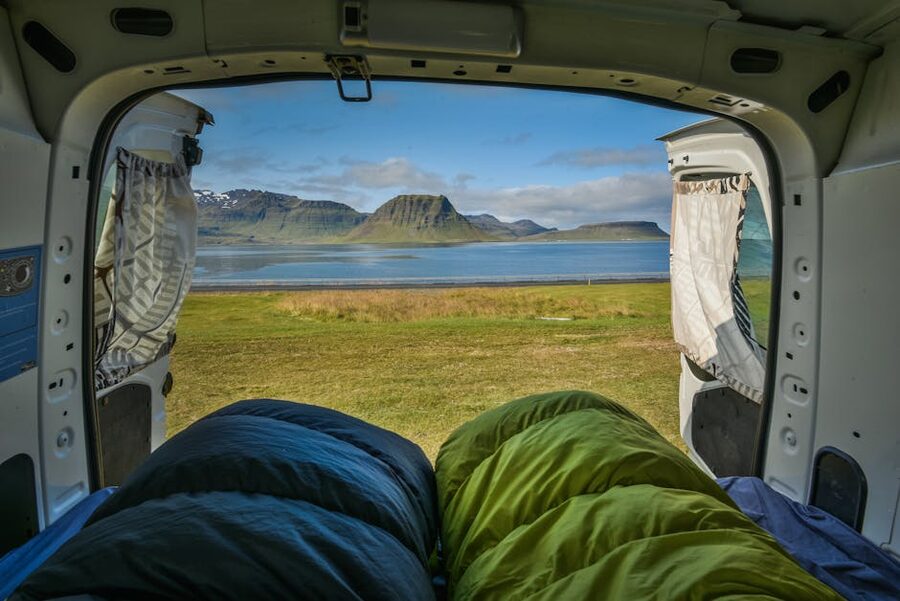
Couple on an Iceland road trip with mountains in the background

My personal pick if I had to choose one window. By mid-September it is dark enough at night for the lights to come back, and the autumn moss turns the lava fields a strange yellow-orange you only get for about three weeks. Highland roads (the F-roads) are still open until the first serious snow, usually mid-October, so you can detour up to Landmannalaugar without a guided super-jeep. Lodge prices drop noticeably after 1 September. We have a separate piece on Iceland in September that goes through the week-by-week shifts if you want to fine-tune dates.

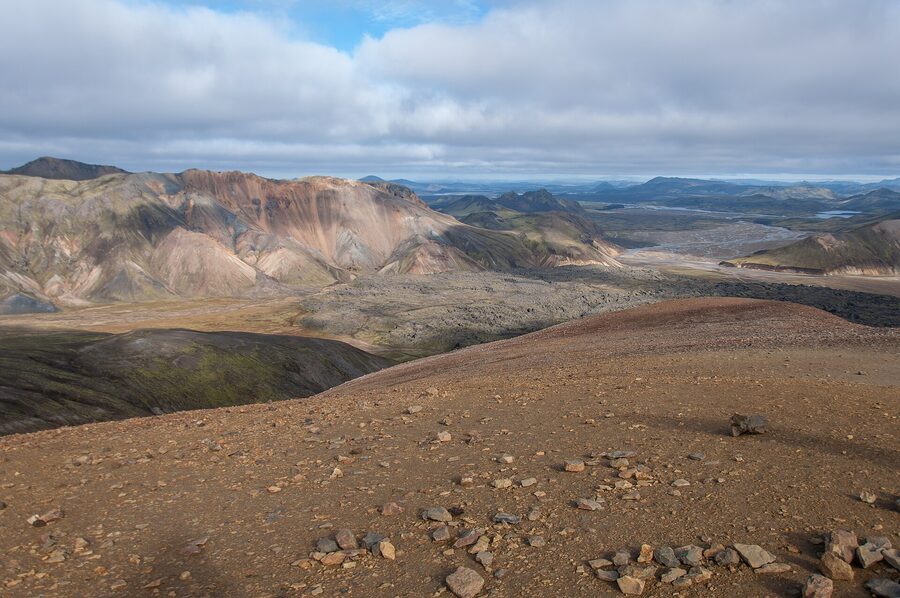
Coloured rhyolite mountains of Landmannalaugar in autumn

What you give up: stable weather. October especially can throw all four seasons at you in one afternoon. Pack like it is winter even when the forecast says ten degrees, because it can drop ten degrees and start sleeting in twenty minutes. I love it. But I would not call it relaxing.

Aurora cabins and glass-roof rooms (the truth about each one)

This is the part of every honeymoon Pinterest board: the bed under the glass dome, the green lights overhead, the photo for the wall. Aurora-focused stays exist in Iceland and they are good. But you need to understand what you are buying. The glass roof does not pull lights out of a cloudy sky. What you are paying for is a comfortable, warm, well-positioned platform on the off-chance the conditions cooperate. Stay two nights, three if you can.

Hotel Rangá and the on-site observatory

Aurora over Hotel Ranga area in south Iceland

Hotel Rangá near Hella is the one I recommend most often. It sits on the south coast about 90 minutes east of Reykjavík, far enough from city light to actually see the sky. The big draw beyond the rooms is their on-site observatory, open from September through April. Two real telescopes, a Celestron 14-inch and a TEC 160ED refractor, and an in-house astronomer who decides each evening at 17:00 whether to open based on the cloud forecast. If they open, guests get free guided viewing. There is also an automatic aurora wake-up call so you do not have to set an alarm and risk missing it.

The Master Suites here are themed by continent and a bit much for some couples (the Antarctica suite has a mock fur theme), but the standard deluxe rooms are calm and the restaurant is genuinely good. A good honeymoon move: book two nights in a riverside deluxe, eat the eight-course tasting on night one, and ask for the aurora wake-up call on night two. Check rates on Booking.com.

Hotel Húsafell, west Iceland

Húsafell sits 90 minutes north of Reykjavík in Borgarfjörður, surrounded by lava fields and mountains, and it is where I send couples who want a wilder feel without being remote-remote. Rooms point at the sky, the on-site canyon baths (two geothermal pools at 30 to 41 degrees) are open to hotel guests in the evening when day visitors leave, and the in-house restaurant has floor-to-ceiling windows so you can watch the lights while you eat. Check rates on Booking.com.

Magma Hotel, Kirkjubæjarklaustur

Magma is a small twelve-room hotel near Klaustur in the southeast, sitting beside a lake on the edge of moss-covered lava and within view of Vatnajökull glacier. It is one of the most aurora-suited locations in the country because of how dark the surroundings are. Rooms are simple Nordic, the restaurant is fine but not the reason to come, and the lake-and-volcanoes view from the deck is the thing you will remember. Check rates on Booking.com.

Buubble Hotel (the bubble pods)

The Buubble pods (the ones you have seen on Instagram) are inflatable transparent domes set up in private forests in Selfoss and elsewhere. They are warm, they have a real bed, and the GPS is given on booking confirmation only, which I think is a fun detail. The shared bathroom and shower are in a small building nearby, not in the bubble itself, which surprises some guests, so worth knowing in advance. One night here is the right dose. Two nights and the lack of insulation against sound starts to feel less novel. Check the Selfoss site on Booking.com.

Aurora Cabins, Höfn

Smaller, less polished, but a strong south-east option if your itinerary takes you toward Jökulsárlón. The cabins are wood-built with private decks pointing at the bay and the glacier, and the Höfn area has noticeably less light pollution than the more central south coast. Pair this one with a glacier ice cave day and you have one of the better forty-eight hours possible in Iceland. Check rates on Booking.com.

One thing worth saying plainly. None of these places guarantees the aurora. The Aurora cabin sounds perfect on paper, but you might see nothing for three nights in October if a low-pressure system parks over the south. I tell every couple this and most still want to chance it, which is fair. Just go in with your expectations calibrated.

Luxury hotels and lodges

Deplar Farm, Troll Peninsula (Eleven Iceland)

Remote village on Iceland's Troll Peninsula coast

If money is not the issue and you want the absolute top of the Iceland market, Deplar Farm is it. A converted sheep farm in a remote north valley, thirteen rooms, geothermal pool with a swim-up bar, full spa, sauna, steam room, helicopter and snowmobile included in the all-inclusive rate, and a private chef. It is genuinely one of the best lodges I have stepped inside anywhere. It is also five-figure-per-night territory, so you book it through their direct site at elevenexperience.com rather than a booking aggregator. If you have a film-star budget for one night of your honeymoon, this is where you would spend it.

ION Adventure Hotel, Nesjavellir

ION sits on a lava field at the foot of Mount Hengill, an hour from Reykjavík and right next to Þingvellir. The architecture (cantilevered concrete on stilts, all glass on the long side) won design awards and looks like it dropped out of a Bond film. The Northern Lights Bar is the gimmick, and it is fine, but the actual reason to stay is the location. You wake up, drive twenty minutes, and you are in the Þingvellir rift between continents. There is a small geothermal Lava Spa on site if you want a low-key day. Check rates on Booking.com.

Highland Base, Kerlingarfjöll

Highland landscape with moss and lava in Iceland

For couples who want full-on remote, Highland Base sits 200 km from Reykjavík, three and a half hours of driving, deep in the Kerlingarfjöll mountain range. It is a recently rebuilt mountain resort with on-site geothermal baths, an underground passage to the restaurant so you do not have to bundle up to eat, and views of orange-streaked rhyolite slopes that look like nowhere else on earth. Summer access is easy. Winter access is professional 4×4 only and weather-dependent. Plan a minimum of two nights if you go up. Check rates on Booking.com.

Hotel Búðir, Snæfellsnes Peninsula

Búðir is what people picture when they think of romantic Iceland. A black wood church on a black-sand bay, surrounded by lava, and the hotel right next to it. The food is some of the best on the peninsula and the in-house wine list pairs Icelandic dishes against bottles you will not see in many other places. Couples often book this for the night after a private wedding ceremony at Búðakirkja, the little black church behind the hotel. Check rates on Booking.com.

Siglo Hotel, Siglufjörður

Way up north, on the old herring-trade harbour, surrounded by mountains. Siglufjörður is a four-and-a-half hour drive from Reykjavík and it is exactly the kind of small place I send couples who want the trip to slow down. There is a brewery, a museum, a marina, and that is most of the town. The hotel has a hot tub on a deck over the water, which is the bit you remember. Check rates on Booking.com.

Reykjavík stays for the city portion

Reykjavik harbour at dusk

For a city base before or after the road trip, the calm picks are 101 Hotel on Hverfisgata (small, art-forward, all the rooms slightly different), The Reykjavík EDITION on the harbour (the most polished international-luxury option, walking distance to Harpa), Sandhotel on Laugavegur (boutique, very central, easy walk to dinner), and Hotel Borg right on Austurvöllur square (older grande-dame style, bigger rooms). I would lean EDITION or 101 for a honeymoon. More on the city in our Reykjavík guide.

Couples spas: the lagoon question

Almost every couple comes to me asking which lagoon to do. The short answer is at least one Reykjavík-area spa and one quieter regional spa. Each fills a different role.

Blue Lagoon Retreat (the splurge soak)

Couple in the Blue Lagoon, Iceland

You know the photos. The reality, when it is busy, is more crowded than the photos suggest. The fix is the Retreat at Blue Lagoon, a 62-suite hotel right on the lagoon’s private wing. Suite rates include access to the Retreat Spa, a separate quiet section of the lagoon you reach through the hotel rather than through the main entrance, and the Moss restaurant on site (Michelin Guide-recommended seven-course tasting). Some Lagoon Suites have a private door directly into the water. Day-visit access to the Retreat Spa is also sold separately if you do not want to stay over. The Premium and Signature day packages at the public Blue Lagoon are 14,990 and 18,490 ISK respectively in 2026. The hotel is comfortably more, and worth the difference if a honeymoon is your one Iceland trip. Check rates on Booking.com.

Sky Lagoon, Reykjavík (the city soak)

Sky Lagoon infinity edge over the North Atlantic

If you only have time for one lagoon and you are based in the city, this is the one. Sky Lagoon sits on the Kársnes peninsula a 15-minute drive from downtown, with an infinity edge dropping into the North Atlantic. The seven-step Skjól ritual (sauna, cold plunge, mist, scrub, steam, shower, lagoon) is what people talk about. Saman pass with the ritual is around 10,490 ISK in early 2026, the Sér pass with private changing rooms around 13,490 ISK. Couples often do this on the day they fly out, in the late afternoon before a night flight. More options in our hot springs piece. Direct booking at skylagoon.com.

Forest Lagoon, Akureyri

If you are heading north, Forest Lagoon outside Akureyri is the most romantic of the regional spas. Two infinity pools cut into a birch forest at 38 to 40 degrees, looking down across Eyjafjörður fjord. It is much less busy than Sky or Blue, particularly on weekday evenings, and the entry price is lower. The on-site bar and Finnish-style sauna make it easy to spend two or three hours here. Direct booking at forestlagoon.is. More on what else to do up there in our Akureyri guide.

GeoSea, Húsavík

GeoSea takes geothermal sea-water (not freshwater, you can taste the salt) at 38 to 40 degrees and pours it into infinity pools cut into a cliff over Skjálfandi Bay. It is the same bay where the whale-watching boats run from, so on a clear day in May or June you can sometimes spot a humpback’s plume from your deck chair. Quieter than Forest Lagoon. Pair it with a whale tour the same morning and you have a perfect north Iceland day. Direct booking at geosea.is.

Vök Baths, Egilsstaðir

Floating wooden pool platforms anchored on Lake Urriðavatn in the east. The east fjords are the quietest part of Iceland, so you can routinely have two of the three pools to yourself on a weekday. I rate this one highly for couples doing a longer Ring Road. vokbaths.is.

The “wow” private experiences

If you are going to splurge on one or two stand-out things during your honeymoon, here are the ones I would pick first. None of these are bargains. All of them are worth it for a once-in-a-lifetime trip.

Helicopter day with a glacier landing

Helicopter flying over Iceland's mountains

The big helicopter operator out of Reykjavík is Norðurflug. They run a Fire and Ice tour that lands once on a glacier and once on a hot-spring or volcanic landscape, and a Reykjavík Summit tour that lands on Mount Esja above the city. A private charter for a small proposal-style flight starts around USD 2,000 and goes up from there. Weather can ground the helicopter on short notice. Build a backup day into your trip if you book this on a tight schedule, and book early. The really special version is private charter with a marriage proposal landing at a remote glacier site, which their team does regularly and discreetly.

Crystal ice cave on Vatnajökull

Inside a blue ice cave on Vatnajokull glacier

The natural blue ice caves are seasonal, November to mid-March, and they form fresh every winter, so the cave you visit will literally not exist the next year. Operators meet you at Jökulsárlón Glacier Lagoon, super-jeep you onto the glacier, and walk you in with crampons. Local Guide and Glacier Trips are two small family-run operators I send couples to, both based in the southeast. A handful of caves were unstable in the 2025/26 season and operators rerouted to alternative caves, which is normal. Listen to your guide. Our full piece on ice caves goes deeper.

Glacier hike at Sólheimajökull or Falljökull

Glacier hike with crampons in Iceland

If you are coming in May or June and the ice caves are closed, the glacier hike is the alternative. Crampons, a guide, three hours, and you are on top of an active glacier looking down at a black-sand plain. Sólheimajökull is the easier-access option (it is right on the south coast); Falljökull is more dramatic, harder to reach, and lower-traffic. More on glacier hikes here.

Snowmobile sunset

Snowmobiling on an Icelandic glacier

This one is overlooked. Most operators run snowmobile tours mid-morning or midday, but the same Langjökull route at sunset (4 to 5 pm in February, slightly later in March) is far better. Pink light on snow, the engine off for ten minutes at the top, the quiet. Mountaineers of Iceland will run a private sunset session if you ask.

Private super-jeep day

For couples who do not want to drive themselves, a private super-jeep day with a guide is the unsung honeymoon experience. Six to eight hours, modified Land Cruiser, you set the route the night before. Most operators will mix Þingvellir with a hidden hot spring stop and a remote waterfall the buses do not reach. About 250,000 to 350,000 ISK for two people including a hot lunch packed in.

Restaurants by region

I am going to skip the big touristy listicle restaurants and tell you what I send my own friends to.

Reykjavík: where to eat

Candlelit fine-dining table set for two

Dill on Hverfisgata is Iceland’s only Michelin-starred restaurant currently. The tasting menu changes constantly, leans hard into Nordic foraging, and is the place I would book for the actual honeymoon dinner. Reserve four to six weeks ahead. dillrestaurant.is.

ÓX on Laugavegur is the wilder option. Ten seats, you ring a brass lion’s-head bell to be let in, four hours, and the chef cooks behind a counter modelled on his grandmother’s kitchen. Also Michelin-starred and Green-Star. It is theatrical without being pretentious, and not cheap. Book through their site months ahead.

Sumac Grill + Drinks on Laugavegur 28 is what I recommend if you want one slightly less formal night. Lebanese and Moroccan flavours layered onto Icelandic ingredients, run by Þráinn Vigfússon, who you will see on the floor. Always busy. The fire-roasted cauliflower and the lamb shoulder are the orders.

Matur og Drykkur on Grandagarður does a single tasting menu built around old Icelandic recipes (cod head, salt-cured lamb) reinterpreted properly. Closed Mondays and Tuesdays. The setting (the old Saltfish Museum building) is part of the experience.

For something low-key and special, swing by Búrið on Grandagarður 35 in the morning, build a picnic of Icelandic farm cheeses, smoked lamb, hardfiskur (dried fish, an acquired taste, my advice is try it but do not feel obligated to love it), and homemade preserves. Eat it on a bench at Tjörnin pond. That is the unfussy version of romance and it works.

Vík and the south coast

For lunch on the south coast: Suður-Vík in the village of Vík has good fish stew and a fireplace. Tryggvaskáli in Selfoss does a weekend brunch you will not find easily anywhere else outside Reykjavík. Fjöruborðið in Stokkseyri is the sea-scampi place; it is touristy, the lobster soup is genuinely worth it.

Höfn (the langoustine town)

Höfn calls itself the langoustine capital of Iceland and it is fair. Pakkhús on the harbour does the langoustine three ways and a langoustine-tail tail tasting menu in summer that is the meal I send people to most often in the southeast. The town’s annual Humarhátíð lobster festival lands on the last weekend of June or the first of July (2026 dates likely 26 to 28 June, confirm closer to time on visithofn.is). Worth timing the trip around if you are coming for the langoustine alone.

Akureyri and the north

Godafoss waterfall in north Iceland

Strikið in Akureyri has a top-floor terrace pointing across the fjord; book sunset. Bautinn is the old-school steak-and-fish place if you want a more traditional Icelandic dinner. In Húsavík, Naustið on the harbour does fish straight off the boat. More in the North Iceland and Mývatn guide.

Egilsstaðir and the east

The east is the quietest food scene, and that is the appeal. Nielsen Restaurant in Egilsstaðir is the standout, set in the oldest wooden house in town. Klausturkaffi at Skriðuklaustur monastery does a daily lunch buffet of east Iceland produce that is one of the best lunch deals in the country.

The five-day classic honeymoon (south coast loop)

If your honeymoon is short, this is what I plan most. Five days, three nights of driving, two of them at one base.

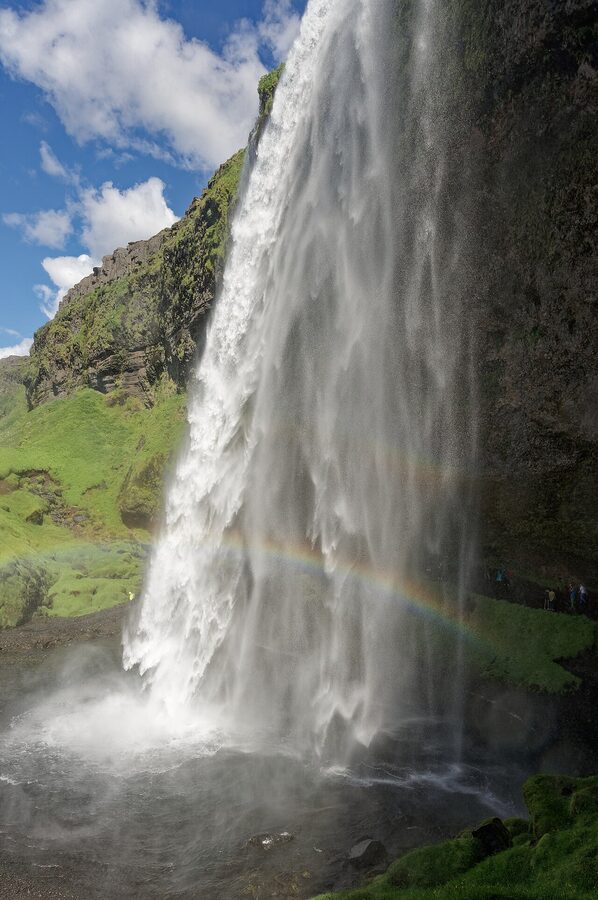
Skogafoss waterfall on Iceland's south coast

Day 1. Land at Keflavík, drive to Reykjavík (45 min), drop bags, walk Laugavegur for a coffee at Reykjavík Roasters, dinner at Sumac. Sleep at 101 Hotel or EDITION.

Gullfoss waterfall on the Golden Circle

Day 2. Pick up the rental car. Drive the Golden Circle (Þingvellir, Geysir, Gullfoss, Kerið crater). Soak at Laugarvatn Fontana (quieter and less touristy than Secret Lagoon). Continue to Hella, check in to Hotel Rangá. Dinner at the hotel, aurora wake-up call set.

Day 3. South coast east. Seljalandsfoss, Skógafoss, Sólheimajökull glacier hike, Reynisfjara (check the surf hazard board at the car park before stepping anywhere near the water). Dinner in Vík at Suður-Vík. Back to Hotel Rangá.

Day 4. Drive back to the city via the Reykjanes Peninsula. Sky Lagoon Skjól ritual late afternoon. Dinner at Dill or ÓX (book before you fly).

Day 5. Late breakfast, last walk along the harbour, fly out. If your flight is evening, swap in a Blue Lagoon stop on the way back to Keflavík.

Strokkur geysir erupting in Iceland's Golden Circle

The seven-day Ring Road snippets

Seven days lets you get north and start to taste the eastern half of the country, but I do not recommend trying to drive the whole 1,332 km loop in a week if it is your honeymoon. You will spend more time in the car than out of it. Here is the trim version that actually feels romantic.

Jokulsarlon glacier lagoon with floating icebergs

Days 1 to 2: Reykjavík and Golden Circle, as above.

Day 3: Hella to Vík. Stop at Seljalandsfoss, Skógafoss, the DC-3 plane wreck at Sólheimasandur (an hour’s walk in, atmospheric in low light). Sleep in Vík at Hótel Vík í Mýrdal. Check rates on Booking.com.

Day 4: Vík to Höfn via Skaftafell. Walk up to Svartifoss, lunch at Klausturkaffi, drive past Magma Hotel for an aurora-friendly stop, into Höfn for langoustine. Two nights at Aurora Cabins.

Day 5: Jökulsárlón ice-cave morning (winter) or boat tour (summer), Diamond Beach in afternoon light, second night Höfn.

Day 6: Drive back westward on the south coast, stopping in Vík for an early lunch and the Skógar folk museum. Last night Hotel Rangá or back in Reykjavík.

Day 7: Sky Lagoon, last meal, fly out. Our south coast piece covers each stop in more detail.

The ten-day deep itinerary (West Iceland or East Fjords detour)

Ten days is the sweet spot for a real honeymoon if you can take the time. You can do the south coast slowly and add either the west (Snæfellsnes Peninsula plus a night at Húsafell), or push into the East Fjords where the population thins to almost nothing.

Quiet bay along the Iceland east fjords

Kirkjufell mountain on the Snaefellsnes Peninsula

Snæfellsnes version (May to October): Days 1 to 7 as the seven-day plan, then Days 8 to 10 add a Snæfellsnes loop. Drive from Reykjavík to Stykkishólmur, dinner at Sjávarpakkhúsið on the harbour, sleep at Hotel Egilsen. Day 9 the full peninsula: Kirkjufell, Djúpalónssandur, Snæfellsjökull glacier views, lunch at Hotel Búðir. Sleep at Búðir or push back to Reykjavík.

East Fjords version (May to early October): Skip Snæfellsnes and instead push past Höfn on Day 6 along the coast to Seyðisfjörður. The road in over Fjarðarheiði pass is one of the great drives in Europe and the village (the one with the rainbow path leading to a blue church) is a quiet jewel. Hotel Aldan is the romantic stay. Soak at Vök Baths the next afternoon, then loop back along the Ring Road.

The east is also where Studlagil Canyon (the basalt-column gorge) is, and where the longest scenic stretches of Ring Road go without seeing another car. If you want quiet, this is the version. Full Ring Road piece here.

Getting married in Iceland (or renewing vows)

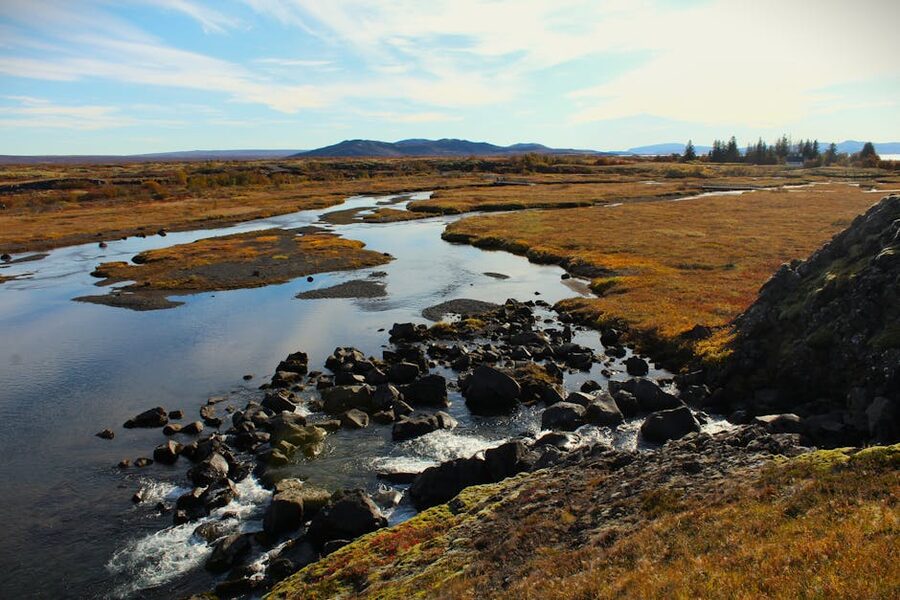
Thingvellir National Park, Iceland

I get this question more than I expected to. Iceland makes legal marriage for foreigners straightforward but slightly bureaucratic. The short version:

To legally marry, you submit documents (passports, birth certificates, divorce decrees if applicable, all certified) to the National Registry at least three weeks before the date. Civil ceremonies are conducted by a district commissioner (sýslumaður) and can be performed at officiant-approved sites including, in some cases, Þingvellir. Read the official process at island.is, the government portal, before doing anything else. Most foreigners use a planner for the paperwork side.

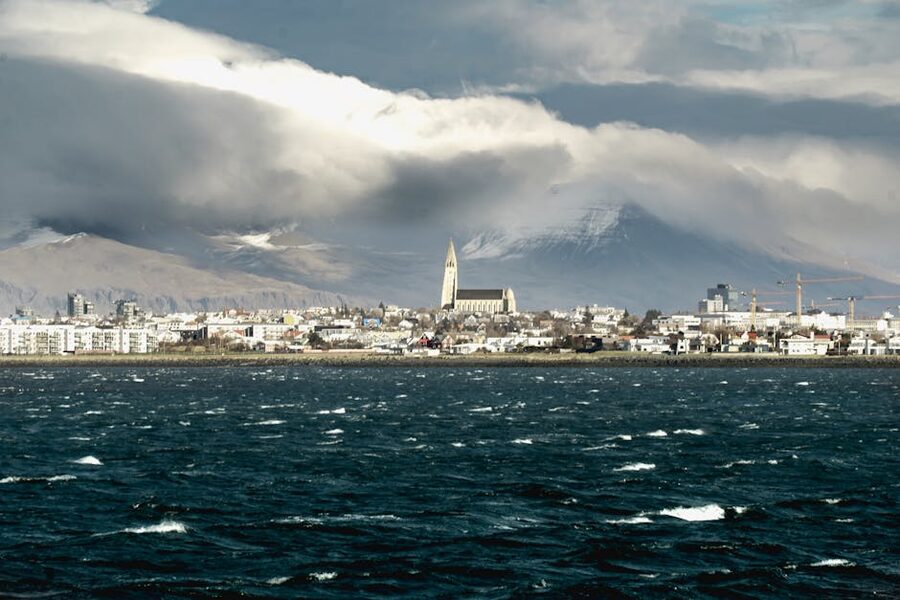
Hallgrimskirkja church in central Reykjavik

Popular ceremony sites:

  • Þingvellir: the national park where the Alþingi was founded in 930. Permits required from the park authority.
  • Hallgrímskirkja in Reykjavík: the biggest church in the country, big windows, dramatic acoustics.
  • Fríkirkjan í Reykjavík: the smaller “free church” by Tjörnin pond, more intimate, very photogenic, and usually easier to book.
  • Búðakirkja on Snæfellsnes: small black wooden church on a black-sand bay. The most photographed wedding spot in the country for a reason.
  • Skógafoss, Reynisfjara, Dynjandi: outdoor ceremonies. Permits and weather contingency required. Check Reynisfjara closure status before any plan.

Vow renewals do not require the legal paperwork, which makes them noticeably simpler. A photographer plus a celebrant plus a viewpoint, and you are done. I have seen couples do a vow renewal at Þingvellir with just a guide as witness and walk back to the car laughing. It is the simpler honeymoon move if you are already married.

Photography (this is the souvenir worth paying for)

Couple at an Icelandic waterfall

I keep telling couples that the one thing they will not regret on this trip is hiring a photographer for half a day. Iceland’s light is unusual, the backdrops are unfair, and a good local will know exactly where the wind is least bad and the buses do not stop. Names I send couples to: Ívar Eyþórsson (works around Reykjavík and the south, very natural style), the Iceland Wedding Planner team for full elopement coverage, and the Boutique Iceland Elopements network for bigger productions.

You can also book lighter sessions through Airbnb Experiences or GetYourGuide. Plan for two hours, pick golden hour (an hour before sunset), and accept that the wind will move your hair around in every shot. That is part of the look.

Wildlife, scenery, and the smaller romantic moments

Not every memorable bit of an Iceland honeymoon involves a glacier helicopter. Some of my favourites are smaller.

Icelandic horses

Icelandic horses in a snowy field

Riding the Icelandic horse, with its unique five-gait tölt, is the kind of thing you will do once and remember. Ishestar near Hafnarfjörður and Eldhestar near Hveragerði both run two-hour beginner-friendly tours. If you have never ridden, ask for a tölt-and-walk session. The horses are calm. The scenery is the wow part.

Whale watching

Whale-watching boat off Iceland

Húsavík is the better port than Reykjavík. The bay is shallower and the humpbacks come in close. Boats run April through October. North Sailing and Gentle Giants are the long-running operators. A morning whale tour followed by GeoSea sea baths in the afternoon is a perfect quiet honeymoon day.

Puffins

Atlantic puffin perched on a cliff in Iceland

Mid-May to early August. The Westmans, Látrabjarg, and Borgarfjörður Eystri are the three main colonies. Boat trips also run from Reykjavík harbour. If you are coming outside the puffin window you will not see them, no matter where you go, so do not chase the photo if your dates do not match.

Diamond Beach at sunrise

Iceberg fragments on Iceland's Diamond Beach

If you are sleeping near Höfn, set an alarm. Diamond Beach with the rising sun behind translucent ice fragments, before the first tour bus arrives, is the quietest version of one of the most photographed places in Europe. Go in winter for the lowest crowds and, often, the most ice on the beach.

Hot tub at the end of the day

Geothermal pool steaming in the Icelandic countryside

Almost every guesthouse and farm stay outside the city has a heitur pottur, the small geothermal hot tub. They are everyday infrastructure here, not a special thing. End each day with twenty minutes in one. It is the most underrated romantic moment of any trip to Iceland and it costs nothing.

The blunt stuff (read this before you book)

Weather will surprise you

Iceland’s weather is genuinely unstable. A blue-sky morning can become sleet by 2 pm. The wind has opinions. Expect at least one day where the planned drive does not happen. Pack the layers, accept that something will go sideways, and you will enjoy the rest of the trip more. safetravel.is is the official safety portal. Check it daily. en.vedur.is is the weather and aurora forecast.

The aurora is not guaranteed

I will say this twice because the marketing material does not. Even in February at a perfect aurora-cabin location, you can have three nights of solid cloud and see nothing. Two nights minimum at any aurora-focused stay improves your odds substantially. Three nights is better. Do not plan a single-night stay and expect a sky show. Our aurora forecast guide walks through how to read the readings.

Reynisfjara safety, plain language

Reynisfjara black sand beach with basalt columns

Reynisfjara has killed visitors, including a fatality in August 2025. The waves are sneaker waves: a calm beach can drown you in seconds because the slope is invisible underwater and the undertow is severe. The site now uses a colour-coded hazard board at the car park (green/yellow/orange/red) and rangers close the beach during red conditions. After major erosion in early 2026, large stretches of the beach are gone or restricted. Always check the board, never turn your back on the water, and stay above the visible high-tide line. The basalt columns and Hálsanefshellir cave area are sometimes off-limits entirely. This is the most important safety paragraph in this guide.

Driving

You will rent a car. Pay attention to the gravel-road insurance (the standard insurance does not cover gravel chip damage; the F-roads need a 4×4 anyway). Wind doors off cars at gas stations every spring. Hold the door when you open it. F-roads, the highland gravel routes, are 4×4-only and closed in winter. Our winter Iceland piece goes through it.

Plan slack

The two best honeymoon trips I have planned both had nothing scheduled on day three. Just “wake up at Hotel Rangá. See what the weather is doing. Decide then.” Slack is the most romantic line item on an Iceland itinerary.

Hotel rooms: ask for one bed, not two

Icelandic hotels default a lot of double rooms to two single beds pushed together with separate duvets, the Scandinavian standard. If you want a king or queen with one shared duvet, write it explicitly in the booking notes. Most hotels are happy to make the bed correctly. They just need to be told.

Booking and budgeting

Iceland is expensive. There is no graceful way around that. A reasonable mid-range honeymoon in 2026 with two nights at Hotel Rangá, two at a Reykjavík boutique, a glacier hike, a helicopter day, dinner at Dill once and Sumac twice, plus a rental car, will land somewhere between USD 6,500 and USD 9,500 per couple, not including flights. The luxury version with Deplar Farm or the Retreat at Blue Lagoon for one or two nights pushes well above USD 15,000.

If that hurts, the levers that move the most: travel in May or September instead of July, swap one luxury hotel night for a calm guesthouse with a hot tub, and pick one helicopter or one ice cave (not both). The trip is still spectacular.

Booking platforms I use, in plain order: Booking.com for hotels, GetYourGuide for tours, Viator as a backup, Klook for some Reykjavík-area options. For multi-day itineraries built fully for honeymooners we also send couples to our customized tours page, where we put together routes from scratch.

Christmas honeymoons (a small note)

If your wedding lands in late December and you want to come straight here, it works, with caveats. Reykjavík is decorated, a single Yule Lad shows up each of the thirteen nights leading to the 24th, and the country is genuinely cosy in a way that suits new marriage. We have a separate Christmas in Iceland piece on the traditions and the practical side. Book early. Daylight is six hours. Eat the hangikjöt (smoked lamb) on the 24th if you can.

One more thing

If you take only one piece of advice from this guide, take this. On your last morning in Iceland, before the lagoon and the airport, drive twenty minutes out of Reykjavík to a stretch of coast called Grótta on the western tip of the city. There is a small lighthouse, a tide pool that warms with geothermal water at low tide, and almost always nobody. Sit there for an hour. Do not photograph it. That is the kind of memory Iceland gives you, and it is the one you will think about in five years when someone asks how the honeymoon was.

Skál.

Iceland with Teens, A Local’s Real Playbook

Teen hiker on a trail in Landmannalaugar in southern Iceland

I have a niece who is sixteen, two nephews aged thirteen and seventeen, and the rotating teenage children of half my friends pass through my flat in 101 Reykjavík every summer. So I have done this trip, and watched many other families do this trip, more times than I can count. Iceland with teenagers is, in my opinion, one of the easiest age brackets you can travel with here. They walk, they sit on a boat, they put their phone down for a glacier, they pick it back up for a black-sand beach, and they post the photo before the boat is back in harbour.

This is the playbook I’d hand a friend whose kids are between thirteen and eighteen, including the high-schoolers and the just-about-uni-bound. ISK pricing throughout, named operators, real minimum ages, the bits that work, the bits that genuinely don’t, and what to do when your seventeen-year-old refuses to get out of the car at yet another waterfall. We have a separate piece for younger kids if you also have one of those in tow: Iceland with kids covers babies through about twelve.

Teen hiker on a trail in Landmannalaugar in southern Iceland
Landmannalaugar in the southern highlands. Iceland is photogenic in a way that survives the phone screen, which matters more with this age bracket than parents like to admit.

Why Iceland actually works for teenagers

The country is small enough that a 7-day trip can fit Reykjavík, the Golden Circle, the South Coast, and a glacier without anyone losing their mind in the back seat. The longest single drive in a sensible itinerary is around four hours, and most are two. Compare that to a week trying to do southern Spain by car. Iceland is also stunning in a way that translates to a phone camera. Black sand, blue ice, green moss on a thousand-year-old lava field, the cone of Snæfellsjökull at sunset. Even the most jaded sixteen-year-old will get a few photos they actually want to post.

English is universal. Crime is about as low as it gets in the developed world, so a fourteen-year-old can walk Laugavegur (the main shopping street) with a friend for an hour while you sit at a café and you’ll both be fine. The food is unintimidating, the pools are everywhere, the wifi is everywhere, and the activities are concrete and real, not “stand here and look at the view.” A glacier hike is a glacier hike. Snorkelling between two continents at Silfra is exactly that. There’s nothing abstract for a teen to roll their eyes at.

Young traveller at an Icelandic fjord viewpoint
The viewpoints sell themselves. Most teens will get out of the car for a fjord. They will not get out of the car for the seventeenth waterfall in a day, so plan accordingly.

One re-set before we go further: this is not a beach holiday. It can be 5°C and raining sideways in July. The Blue Lagoon will get one good photo and then the phone goes back in the locker. If you are coming from a Mediterranean-summer mindset, the trip will fail; if you treat it as an adventure trip with hot showers and Wi-Fi, it succeeds. Pack the layers, book the activities, accept that one day in seven will probably be a write-off because of the weather, and the rest will be brilliant.

When to come with teens

June through early September is the easy answer. Eighteen to twenty-one hours of usable daylight, around 10 to 15°C, F-roads to the highlands open from late June, every day tour running. The downside of summer is that everyone else also figured this out, so book the headline activities (Inside the Volcano, Silfra, the popular ice caves on the south coast) at least four weeks ahead.

Late August into early September is my favourite window with teens. School is back in some countries and Iceland gets quieter, days are still long enough for a 10pm sunset, the aurora season starts again from late August so on a clear night you might catch it, and prices ease. We have a full piece on Iceland in September if you can pull the kids out of class.

Low summer sun over an Icelandic mountain at near-midnight
Late June, around 11pm. The midnight sun is a real teen-pleaser the first night. By night three, blackout curtains earn their keep.

Winter (November to early March) works with older teens who actually want the Northern Lights, ice caves, and a snowmobile. With a thirteen-year-old who would rather be at the pool you’ll struggle. The aurora is never guaranteed, the days are four to six hours of usable light, and roads close. If you go in winter, build in slack and use the vedur.is aurora forecast daily. Full pieces on Iceland in winter and Iceland in summer cover the seasonal call in detail.

The adventure question, by activity and minimum age

This is the bit you actually came here for. Teens want activities they can post about, not “we drove to a viewpoint.” Here is what’s bookable, what the real minimum age is at the main operators, and what to expect.

Glacier hike, the headline activity

If you book one adventure, make it this. Crampons on, ice axe in hand, walking on a 1,000-year-old glacier with a guide. Photos are unreal. Effort level is moderate. Even reluctant teens enjoy it because the scale is genuinely impressive in a way that stops being abstract once they’re standing on the ice.

Group preparing crampons before a glacier hike near Vik in southern Iceland
The first ten minutes are crampon-fitting and the safety brief. Nobody loses their phone, nobody falls in a crevasse, the guide knows what they’re doing.

Minimum age: the standard easy glacier hike at Sólheimajökull (south coast, 2 hours from Reykjavík) and the Glacier Wonders trip at Skaftafell run with a minimum age of 8 with Arctic Adventures. The longer Glacier Explorer trip raises the minimum to 14. Glacier Guides at Skaftafell run a similar split. Worth knowing: crampons aren’t made smaller than EU shoe size 35, so check your kid’s foot size against that before booking. Most teens will be fine.

Operators worth your money: Arctic Adventures (adventures.is) and Mountain Guides (mountainguides.is) are the two I send people to. Glacier Guides (glacierguides.is) at Skaftafell are also excellent. Tröll Expeditions (troll.is) run from Vík and do the Katla ice cave / glacier combo well. Plain prices: a 3-hour Sólheimajökull hike runs around 14,000 to 18,000 ISK adult, slightly less for under-18s. Skaftafell tours are 14,000 to 22,000 ISK depending on length. Our full piece on the Iceland glacier hike goes deeper.

Hikers crossing the blue ice of an Icelandic glacier
The blue you see in the photos is real, not filtered. It’s the way old, compressed glacier ice scatters light. Once teens see it in person they get strangely quiet.

Ice caves, winter only

From November through March, Iceland’s blue ice caves open for tours. The Crystal Cave under Vatnajökull (south-east) is the famous one. The Katla ice cave from Vík can be visited a bit longer (sometimes into May). Both involve a super jeep ride and a short walk on the glacier in crampons.

Minimum age: the Katla ice cave tour with Arctic Adventures runs from age 8 in winter and from age 6 in summer (the lava-tunnel version of the cave). The Crystal Cave at Vatnajökull is more variable; most operators set the floor at 8, some at 10. Tröll Expeditions’ classic Katla tour from Vík starts at 6. Always check the specific tour at booking, and bring proper boots, not trainers. Full piece on Iceland ice caves with the operator comparison.

Hikers on the blue ice of Vatnajokull glacier in Skaftafell
An ice cave is the kind of phone photograph teens save for the year. Plan it for the winter trip; in summer the ice melts and the caves close.Photo by ArcticRafting / Wikimedia Commons (CC BY-SA 3.0)

Snowmobile on a glacier

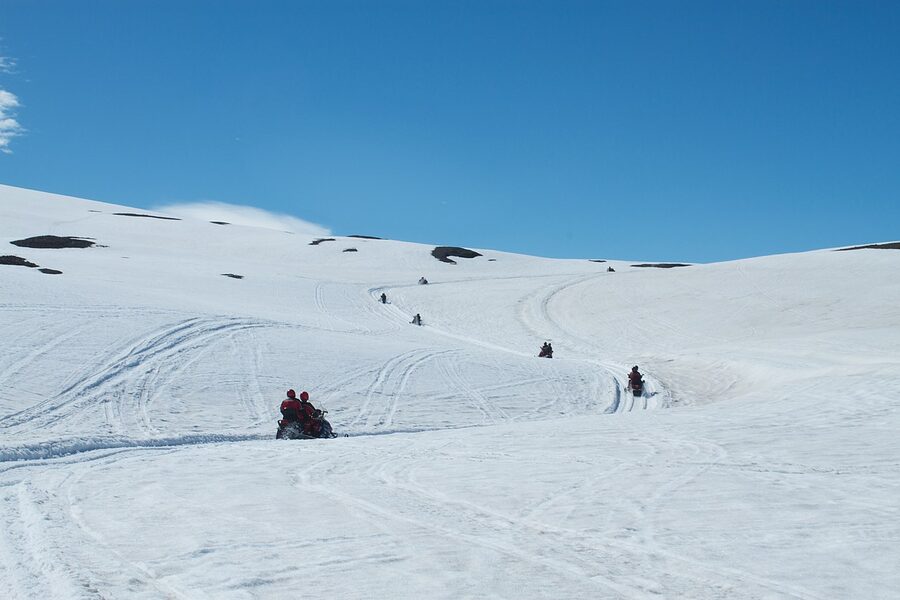
Year-round on Langjökull (the second-largest glacier, easy access from the Golden Circle). One person drives, one rides pillion. The driver minimum is 18 with a valid licence at most operators (some accept 17). Passenger minimum varies, with most operators running from age 8 and Mountaineers of Iceland (mountaineers.is) accepting passengers from 6. So a 14-year-old can ride pillion behind a parent; a 17-year-old usually rides their own machine if the operator allows. Around 30,000 to 38,000 ISK per person for a 1-hour ride after the super jeep transfer. Full piece on snowmobile tours in Iceland.

Snowmobiles crossing the white expanse of Langjokull glacier
An hour on the snowmobile is the right length. After that the cold gets through every layer and the photos all look the same.

Lava caving

The lava tubes are one of the easiest, cheapest adventure activities in Iceland and they work for every age in this bracket. Raufarhólshellir, just 30 minutes from Reykjavík, is the headline tube. Easy walk on a developed path, no crawling, helmets and torches provided. Minimum age varies by operator: the official Raufarhólshellir tour runs from age 3, Arctic Adventures’ express version sets a higher floor. Around 7,000 to 9,000 ISK per person for the standard 1-hour tour.

Víðgelmir in west Iceland is a longer, more impressive tube but a 2-hour drive from Reykjavík. Leiðarendi south of the city is the more adventurous option (some scrambling, harder for under-10s). For a Reykjavík-based teen trip, Raufarhólshellir is the right pick.

Coloured rock walls of the Raufarholshellir lava tunnel south of Reykjavik
Raufarhólshellir runs cool but never icy, so a fleece is enough. The wall colours come from oxidised iron and are even better in person.Photo by Jakub Hałun / Wikimedia Commons (CC BY-SA 4.0)

Snorkelling Silfra, my single best teen pick

If your teen is twelve or older, comfortable in water, and at least 150 cm tall and 45 kg, book Silfra. It is dry-suit snorkelling between the North American and Eurasian tectonic plates at Þingvellir, in glacial water so clear the visibility is over 100 metres. The water is 2 to 4°C all year. The dry suit keeps you warm; only your face is in the water. The actual swim is 30 to 40 minutes, the whole experience including kit and brief is 2 to 3 hours.

Minimum age: 12 at every operator, and the participant must be able to swim. They will sign a waiver. Operators: DIVE.IS and Arctic Adventures are the two I rate. Around 22,000 to 28,000 ISK per person from Þingvellir, more with Reykjavík pickup. Diving Silfra is 18+ and requires a dry-suit cert; for a family it’s snorkel only. Full piece on Silfra snorkelling.

Snorkellers in dry suits floating in the Silfra fissure at Thingvellir
The reason this lands as the best teen activity in Iceland: it’s mildly intimidating, photographs unbelievably well, and the geology genuinely matters.Photo by Diego Delso / Wikimedia Commons (CC BY-SA 4.0)

Riding an Icelandic horse

The Icelandic horse is small, sturdy, and a separate breed kept genetically isolated since the Viking Age. Once an Icelandic horse leaves the country, it cannot return. They have a fifth gait called the tölt, which is the smooth one teens always remember. A 1-hour beginner ride near Reykjavík is the right starting point.

Operators: Íshestar in Hafnarfjörður and Eldhestar in Hveragerði. Íshestar’s beginner tours run from age 7 (with conditions), and they put under-12s with no riding experience in a slower group. For a 14-year-old who has never ridden, this works well. Around 16,000 to 22,000 ISK for the 1-hour beginner package, 24,000 to 32,000 ISK for the 2-hour version with bigger landscapes.

Riders on Icelandic horses crossing a green coastal valley
Tölt at a steady clip is the gait you want on your first ride. Smooth enough that you stop death-gripping the reins after about ten minutes.
Icelandic horse with thick winter coat in a green field
The thick winter coat is a useful Iceland fact: this breed grew up handling the weather without anyone fussing about blankets.

Whale watching

From Reykjavík, the standard 3-hour boat trip with Elding from the Old Harbour is the right call for any teen who hasn’t been on a whale boat before. May to October sighting rates are around 80 to 95% on this route. Around 13,000 ISK adult, 6,500 ISK for under-18s, free under 7. Bring a warm hat regardless of the temperature on land. Boats are open-deck and indoor cabin so a teen who gets cold can step inside and watch through the windows.

If you make it to Húsavík in the north, the sighting rate jumps to 95 to 99% and you’ll often see multiple humpbacks feeding, sometimes blue whales. North Sailing and Gentle Giants are both excellent. North Sailing offers a no-whale rebooking guarantee. Full guide at whale watching in Iceland.

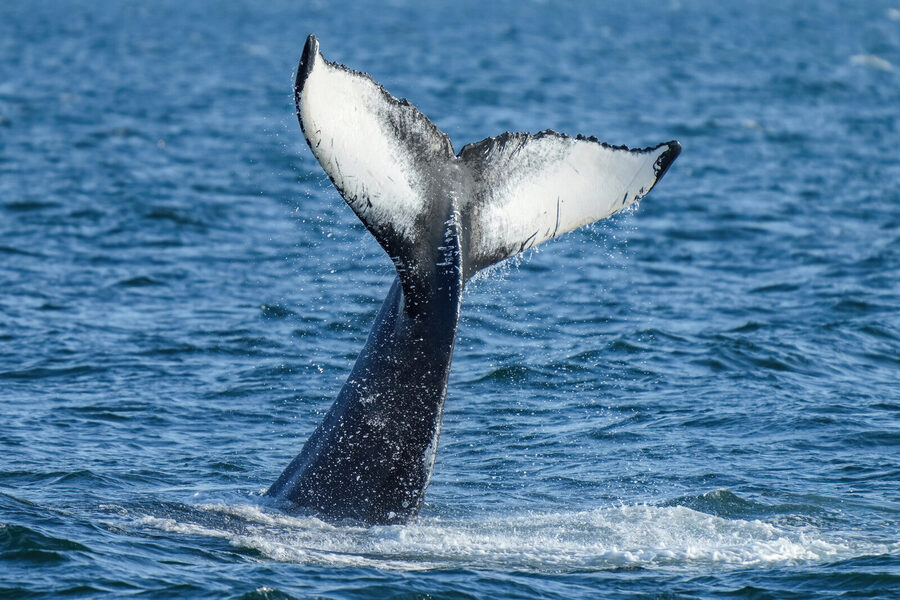
Humpback whale tail breaking the surface near a whale watching boat off Iceland
The fluke shot. Teens who grew up on David Attenborough get appropriately wide-eyed the first time a humpback gives a proper fluke 30 metres from the boat.
Wooden whale watching boat with passengers in fjord water
The Reykjavík fleet runs both old wooden ships and modern steel hulls. Both work; the wooden ones photograph better and the steel ones are faster on choppy days.

Inside the Volcano (Þríhnúkagígur)

Only Iceland lets you ride a window-cleaning lift 120 metres straight down into the magma chamber of a dormant volcano. Inside the Volcano is the only operator. May to October only, weather-dependent, around 53,000 ISK per person. Yes that’s expensive. It’s also a once-on-the-planet thing, so if your teen can stomach the descent it’s worth the money.

Minimum age: the operator’s stated floor is 12 at most booking partners, with some routes accepting from 10 if the kid can handle the 3 km hike each way to base camp. Closed-toe boots required. Anyone with a fear of confined spaces should pass.

View inside the magma chamber of Thrihnukagigur dormant volcano
The chamber is about the size of a cathedral with iron-stained walls in red and yellow. Photographs come out moody-warm, which is exactly the aesthetic teens want.Photo by Uaiecs / Wikimedia Commons (CC BY 3.0)

Surfing and stand-up paddle

Iceland is not Hawaii. But for a sufficiently keen teen, surfing here is a real bragging-rights story. The main beginner spot is Sandvík on the Reykjanes Peninsula (45 minutes from Reykjavík); the better break is Þorlákshöfn an hour east. Wetsuits are 6 mm thick and supplied. Adventure Vikings and Arctic Surfers run lessons from around 23,000 ISK including kit. Best from June to August.

SUP is the gentler version on Lake Elliðavatn or Álftavatn, both near Reykjavík. Most beginners are upright after about 15 minutes. Around 12,000 to 16,000 ISK for a 90-minute lesson. The Laugarvatn Fontana spa on the Golden Circle reopens with expanded geothermal facilities in June 2026, which makes a SUP-then-soak day on Laugarvatn lake possible.

Surfer pulling into a clean wave on the Iceland coast
Iceland surfing is cold-water, wetsuit, and committed. Worth it for one specific kind of teen and a hard pass for the rest.

Northern Lights, the only thing you can’t promise

The aurora is the one activity I refuse to oversell. From late August through early April, on a clear night with a high enough KP index, you can see them. From May to mid-August it’s never dark enough. Watch the vedur.is aurora forecast for the cloud cover map and the KP number. Most aurora bus tours run with a free rebooking guarantee if you don’t see them on the first attempt; that’s a real promise worth taking.

Operators worth using: Reykjavík Excursions, Gray Line, and the smaller Hidden Iceland (hiddeniceland.is) for a more guided experience. Around 8,000 to 14,000 ISK per person for the bus tour, more for super jeep. Most have no minimum age, though late nights with a 13-year-old can backfire after night two. See our Northern Lights guide and the practical aurora forecast guide.

Green aurora ribbons over a snowy Iceland landscape
The aurora doesn’t perform on demand. The teens who get lucky tend to remember the trip for that one night more than anything else.

The photo spots they’ll actually post

Forget the obscure waterfalls. Plan around the half-dozen places that survive a phone screen. None of these are secret, all of them earn the visit.

  • Vestrahorn near Höfn in the south-east. Black sand, dunes, and a saw-toothed mountain. The drone-style shots all come from here. Crosses on private land, small fee at the Viking Café (around 1,000 ISK).
  • Skógafoss on the south coast. The 60-metre waterfall every Iceland Reel uses. Climb the 527 steps for the top view; teens will complain on step 200, do it anyway.
  • Reynisfjara the black sand beach with basalt columns. Photograph from the dry sand, never the waterline. Two warning signs and a colour-coded yellow / red light system installed by the road authority signal sneaker-wave risk; when red is on, do not enter the red zone. People die here. Bring teens, take the photo, walk back up. safetravel.is/blackbeach-safety has the full briefing, read it before you go.
  • Jökulsárlón glacier lagoon and the adjacent Diamond Beach. Icebergs in a lagoon, ice chunks washed up on black sand. Most photogenic spot in the country.
  • Arnarstapi on the Snæfellsnes Peninsula. Sea cliffs and the natural arch of Gatklettur. A 2-hour drive from Reykjavík and worth the day trip.
  • Hallgrímskirkja in Reykjavík. The expressionist church tower, 75 metres tall. Pay 1,400 ISK to ride the lift to the top for a 360° view of the city; teens take the same photo every other tourist takes, and it still looks great.
  • Sun Voyager on the Reykjavík harbour. The skeletal-Viking-ship sculpture by Jón Gunnar Árnason. Best at midnight in summer or sunset in winter.
Vestrahorn mountain reflecting in still water near Hofn east Iceland
Vestrahorn at low tide. The sand films like a mirror when the tide retreats and the light is right.Photo by Eric Kilby / Wikimedia Commons (CC BY-SA 2.0)
Visitor in a red coat at the base of Skogafoss waterfall
Skógafoss. The trick for the photo is to stand off-centre and let the spray rainbow do its thing if the sun cooperates.
Icebergs floating on Jokulsarlon glacier lagoon Iceland
Jökulsárlón at midday. Boat tours run May to October if you want to ride out among the icebergs; otherwise the shore walk is enough.Photo by Jakub Hałun / Wikimedia Commons (CC BY 4.0)
Glistening ice chunks washed up on the black sand of Diamond Beach Iceland
Diamond Beach is across the Ring Road from Jökulsárlón. Twenty minutes here and your teen has the photo of the trip.Photo by Richard Banton / Wikimedia Commons (CC BY 2.0)
Sea cliffs and arch at Arnarstapi on the Snaefellsnes Peninsula
Arnarstapi cliffs on the Snæfellsnes Peninsula. The sea arch and the colony of nesting kittiwakes make this an easy half-day from Reykjavík.Photo by Chmee2 / Wikimedia Commons (CC BY 3.0)
Basalt columns and black sand at Reynisfjara beach Iceland
Reynisfjara: respect the sneaker-wave warning lights, photograph from the dry sand, leave the heroics to nobody.Photo by Nataliar77 / Wikimedia Commons (CC BY 4.0)

The pools, your secret weapon

Every Icelandic town has a public geothermal pool. They are not tourist attractions, they are where actual Icelandic families spend their evenings. If you build one pool visit a day into the trip, your teens will leave with a stronger memory of the country than they will of any single activity.

The format is the same everywhere: outdoor lap pool around 28°C, a row of heitir pottar (hot pots) at 38, 40, and 42°C, sometimes a steam room and a cold plunge. Adult entry to a Reykjavík city pool is around 1,430 ISK; teens 16 to 17 only 220 ISK; under 16 free. A family of four is doing this for under 4,000 ISK. By Iceland prices, that’s almost nothing.

Bathers soaking in the steam of an Icelandic geothermal pool
The 40°C pot is the social hot pot. Locals talk politics and football here. Teens listen, mostly understand none of it, and pick up the etiquette by osmosis.

The Icelandic shower rule. You shower naked, with soap, before getting in the pool. Yes, in front of staff. Yes, in front of strangers. The first time it’s awkward. The second time it’s normal. By the end of the trip your teen will think the rest of the world is gross for showering with swimsuits on. Take the win.

Reykjavík picks for teens specifically:

  • Laugardalslaug, Sundlaugavegur 30. The biggest pool in Iceland. An 86-metre water slide, a smaller kids’ slide, four hot pots, a saltwater pot, a steam room, a 50-metre outdoor lap pool. Open Mon to Fri 06:30 to 22:00, Sat to Sun 08:00 to 21:00. This is the one. Teens love it.
  • Sundhöllin, Barónsstígur. The downtown art-deco pool. Indoor lap pool plus outdoor hot pots and a small kids’ pool. Use this if you’re staying in 101 and don’t want to bus to Laugardalur.
  • Lágafellslaug in Mosfellsbær, 20 minutes east. The biggest slide complex in the capital area. Worth the bus ride if your teens are slide-obsessed.
  • Árbæjarlaug east of downtown. Two slides, less crowded than Laugardalslaug. Locals use this one heavily.

Outside Reykjavík, two destination pools are worth a detour. Hofsós in the north has an infinity-edge pool looking across Skagafjörður toward the island of Drangey. Krossneslaug in the Westfjords sits 3 metres from the Arctic Ocean on a black-pebble beach. Both are too far for a Reykjavík day trip; if you’re already in the region, give them an hour.

Sky Lagoon, Forest Lagoon, and the geothermal-spa question

Iceland has built a generation of luxury geothermal lagoons in the last few years and they’re all marketed at adult couples. With teenagers the calculation is different.

Cold plunge at Sky Lagoon Iceland near Reykjavik
Sky Lagoon is the most teen-suitable of the upmarket spas, mainly because it’s an active circuit rather than a sit-and-soak. Just confirm the 12+ rule applies.Photo by Laurenmcl / Wikimedia Commons (CC BY-SA 4.0)

Sky Lagoon in Kópavogur, a 15-minute drive from Reykjavík: minimum age 12, youth pricing for 12 to 14, must be with an adult. The 7-step Skjól ritual (sauna, mist, body scrub, steam, cold plunge) is what you’re paying for and teens 14 and up genuinely enjoy the circuit. Around 13,000 ISK for the basic pass, 15,000 for the ritual. Teens under 12 are not admitted.

Blue Lagoon on the Reykjanes Peninsula: minimum age 2, no upper. The most photographed pool in Iceland, but with teens the Sky Lagoon is the better experience and the locals’ pools are better still. Blue Lagoon is fine for one good photo on the way to or from the airport. See our full Blue Lagoon guide for the booking detail.

Forest Lagoon in Akureyri: no age minimum, but under-12s can’t enter after 8pm. Two infinity pools, sauna, cold plunge, on-site restaurant. Teens love it. Pair it with the Akureyri guide if you’re heading north.

For more on the wider scene see our piece on hot springs in Iceland.

Reykjavík for an evening with teens

Most of central Reykjavík is walkable in a long evening. Start at Hallgrímskirkja, walk down Skólavörðustígur (the rainbow street, painted permanently in 2019), drift onto Laugavegur (the main shopping street), eat at a food hall, end at the harbour. That’s the plan.

Hallgrimskirkja church tower rising above the rooftops of Reykjavik
Hallgrímskirkja from below. Pay 1,400 ISK at the church shop and ride the lift to the top for the photo every Reykjavík visitor takes. Worth it.
Coloured rooftops of central Reykjavik seen from above
The downtown grid is small, about 1.5 km across. A 14-year-old walking it solo for an hour is fine.Photo by Slawojar2 / Wikimedia Commons (CC BY-SA 4.0)

Bæjarins Beztu Pylsur is the red hot dog stand by the harbour that’s been there since 1937. Bill Clinton ate one. Order it eina með öllu (“one with everything”): mustard, remoulade, ketchup, raw onion, fried onion. Around 700 ISK. The teens will roll their eyes at you queuing for a hot dog. They will also order seconds.

Iconic red Icelandic hot dog from a Reykjavik street stand
The hot dog. Lamb, pork, and beef. Crispy fried onion under the sausage, raw onion on top. The whole thing costs less than a coffee in 101.

Sun Voyager at the harbour is a 5-minute walk from the hot dog. Harpa, the basalt-glass concert hall, is another 10 minutes east; the lobby is open to the public and the staircase photographs beautifully. End the walk at the Old Harbour at Grandi for ice cream at Valdís (try the licorice flavour at least once) or fish and chips at Reykjavík Fish.

Sun Voyager steel sculpture on the Reykjavik harbour at dusk
Sun Voyager is the only Reykjavík photo a teen will queue for. Best around 10pm in summer when the sky still has colour.
Glass facade of Harpa concert hall on Reykjavik harbourfront
Harpa’s facade was designed by Olafur Eliasson. The lobby is free to visit. Teens will photograph it and then ask why we built such a fancy concert hall, which is a fair question.

The food question, food halls beat formal restaurants

Iceland is expensive at sit-down restaurants. With teens, the food halls are the answer. Three actually good ones in Reykjavík:

  • Hlemmur Mathöll, top of Laugavegur. Iceland’s first proper food hall, opened 2017 in a converted bus station. Indonesian, Korean, Indian, Nepalese, Mexican, pizza, Icelandic. Open daily 11:00 to 23:00. The fish-and-chips at Skál has been the teenage repeat order in my flat for three summers running.
  • Pósthús Food Hall & Bar, Pósthússtræti, in the old downtown post office building (1910s). Won Reykjavík Grapevine’s Best Food Hall in 2024. Stronger cocktails for parents, decent burgers for teens.
  • Grandi Mathöll, in the harbour-side Grandi neighbourhood. Converted fish factory. More Icelandic-leaning food. Quieter than Hlemmur. Good if you want a sit-down version of the food-hall experience.

Outside the food halls: Hraðlestin for Indian, Mama for vegetarian, Lemon for fresh-pressed juice and sandwiches. For something the parents enjoy too, Matur og Drykkur at the Saga Museum building does a modern Icelandic menu in a price bracket that hurts but won’t sting.

And yes, the Icelandic gas-station hot dog is real. N1 stations on Route 1 do them for around 700 ISK with the same toppings as Bæjarins Beztu. Teens will request one as a road-trip staple by day three. For the full picture see what to eat in Iceland.

Museums teens might actually like

Skip most of the museums. These are the four worth your time:

  • Perlan on Öskjuhlíð hill. The glass-domed Wonders of Iceland exhibition has a 100-metre real ice cave kept at -10°C, a planetarium with an aurora film, and a 360° viewing deck. Adult 5,990 ISK, youth 6 to 17 around 3,490 ISK. Two hours easily.
  • Whales of Iceland on the Old Harbour at Grandi. Life-size replicas of every whale species in Icelandic waters, including a 25-metre blue whale you can walk under. Around 3,800 ISK adult.
  • Lava Centre in Hvolsvöllur, a stop on the way south to Vík. Volcanology done as a proper exhibition with shaking floors and lava-flow simulations. Around 3,200 ISK adult.
  • Aurora Reykjavík on the Old Harbour. Small but well done; the dome film is the highlight on a cloudy night when the actual aurora isn’t cooperating. Around 2,200 ISK adult.

Skip the Phallological Museum (yes, it exists; yes, you’ll spend the whole visit answering questions). The Punk Museum in a former public toilet is fun for older teens with specific musical taste, baffling otherwise. The Icelandic Punk Museum and the Museum of Witchcraft are both more enjoyable for adults.

Day trip versus Ring Road, the hard call

Five days in Iceland with teens: don’t try the Ring Road. You’ll spend the whole trip in the car. Base in Reykjavík, do day tours.

Seven to ten days: a south-coast loop is the right shape. Reykjavík for two nights, Vík or Hella for one or two, Höfn for one (so you reach Jökulsárlón), back to Reykjavík for one. That’s the high-impact route with the headline activities.

Twelve days or more: the full Ring Road works. Add Akureyri, Mývatn, the East Fjords. Teens with a tolerance for long-form drives reward you on this one.

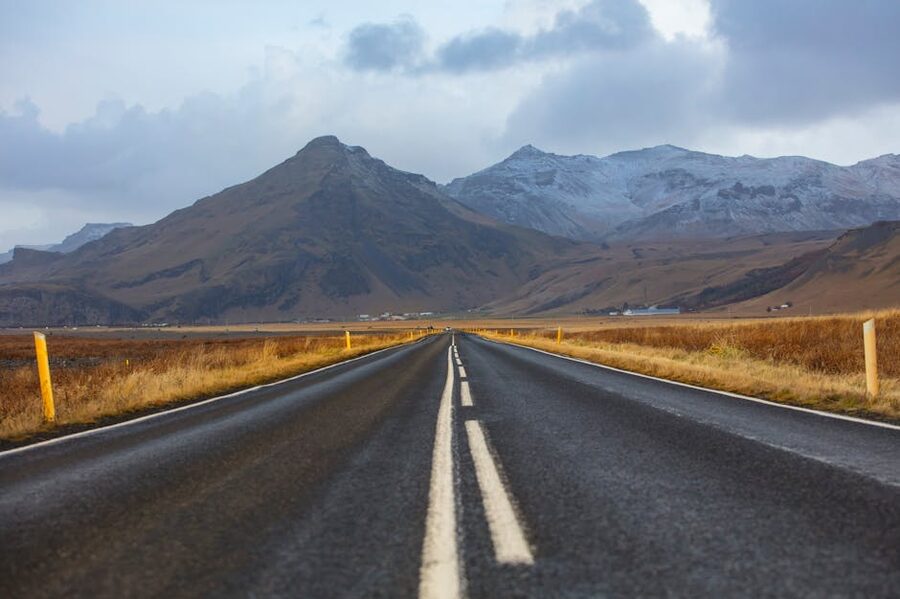
Empty stretch of Iceland Ring Road with mountains in the distance
Route 1, mid-morning, somewhere east of Vík. Teens always ask why no one else is on the road. There’s nobody on the road because there’s nobody in the country.

A 7-day teen itinerary

This is the loop I send people to first. Reykjavík plus Golden Circle plus South Coast plus a glacier. Built for teens 13 to 18, with a margin for one weather day.

Day 1: Reykjavík. Land at Keflavík, drive to Reykjavík (50 minutes), check in. Walk Hallgrímskirkja, Skólavörðustígur, Laugavegur, Sun Voyager, Harpa. Hot dog at Bæjarins Beztu. Dinner at Hlemmur Mathöll. Sleep.

Day 2: Reykjavík. Whale watching from the Old Harbour with Elding (3 hours, morning). Lunch at Grandi Mathöll. Afternoon at Perlan or Whales of Iceland. Evening pool session at Laugardalslaug.

Day 3: Golden Circle plus Silfra. Drive Reykjavík to Þingvellir (45 min). Snorkel Silfra (book the 11am or 1pm slot). Continue to Geysir, Gullfoss, Kerið crater. Sleep in Selfoss or Hvolsvöllur. Full piece on the Golden Circle.

Continental rift cliffs at Thingvellir National Park
Þingvellir, the rift cliffs. The Almannagjá walk from the upper car park is 30 minutes downhill, easy. Bring layers; the wind funnels through the rift.Photo by Diego Delso / Wikimedia Commons (CC BY-SA 4.0)
Strokkur geyser mid-eruption at the Geysir field on the Golden Circle
Strokkur erupts every 6 to 10 minutes. Tell teens to count down from 60 and they’ll all be looking the right way at the right time.
Two-tier Gullfoss waterfall plunging into the Hvita river canyon
Gullfoss is the loud one. Bring rain layers, even on a sunny day.

Day 4: South Coast to Vík. Skógafoss, Seljalandsfoss (the one you can walk behind), Reynisfjara (heed the warning lights), Dyrhólaey. Sleep in Vík. South Coast guide covers the stops in order.

Day 5: Glacier hike at Sólheimajökull or Skaftafell, plus Jökulsárlón. Morning glacier hike with Arctic Adventures or Glacier Guides. Afternoon at Jökulsárlón and Diamond Beach. Sleep at Höfn or Fosshotel Glacier Lagoon.

Day 6: Drive back west. Vestrahorn (1 hour east of Höfn for the photo, then back), then back to Vík or Selfoss for the night. Optional: Lava Centre at Hvolsvöllur on the way back.

Day 7: Reykjavík. Sky Lagoon in the morning. Lunch downtown. Last shopping run on Laugavegur. Drive to Keflavík.

A 10-day Ring Road snippet

If you have ten days and a teen tolerance for car travel, do the full loop. Days 1 to 6 as above. Then:

Day 7: East Fjords. Höfn to Egilsstaðir, around 4 hours. Stop at Vestrahorn and Stokksnes early. Dinner in Egilsstaðir.

Day 8: Mývatn. Egilsstaðir to Mývatn, 2.5 hours. Hverir mud pots, Dimmuborgir lava field, Mývatn Nature Baths in the evening. Sleep at Mývatn.

Day 9: Húsavík and Akureyri. Whale watching at Húsavík with North Sailing or Gentle Giants (sighting rate 95 to 99% in summer), then Akureyri. Forest Lagoon in the evening.

Day 10: Akureyri to Reykjavík. 5 hours through the north and west. Stop at Borgarnes for lunch. Reykjavík evening, fly out next morning.

Add another two days and you can fit in Snæfellsnes (Arnarstapi, Kirkjufell, Djúpalónssandur) on the way back from Akureyri.

Phone, data, wifi, charging

Iceland’s three networks (Síminn, Vodafone, Nova) all have strong coverage on Route 1 and around the populated coast. Coverage drops in the highlands and parts of the Westfjords. For a 7 to 14 day trip, the cheapest practical option is an eSIM bought before you fly: Airalo, Holafly, Saily, and Nomad all do Iceland packages from around $4.50 to $25 USD for 5 to 20 GB. Install before leaving home; once you land it activates with a tap.

Buying physical SIMs in Iceland: a Síminn 10 GB tourist SIM is around 2,800 ISK, a Nova 20 GB is around 2,600 ISK, both at any phone store or N1 petrol station. Skip the airport stand, the prices are higher.

WiFi is free in every café, hotel, restaurant, and most petrol stations. Your teen will be online any time they care to be. Charging: Iceland uses EU two-pin plugs (type F), 230V. Bring two adapters per teen because they will lose one. Power banks are mandatory for the south-coast day in winter when the cold drains a battery to nothing in an hour.

Safety, the boring but real bit

Iceland is a safe country, but the landscape is not. Three things to actually do before the trip:

  1. Install the 112 Iceland app on every phone in the family. 112.is/en/112-appid. The check-in feature pings your location to search and rescue with one tap; the silent emergency request lets you summon help without speaking. Free, no data needed in operation.
  2. Read safetravel.is the night before any south-coast or highland day. The travel-conditions page tells you which roads are passable. The blackbeach-safety page tells you the wave situation at Reynisfjara.
  3. Check road.is and vedur.is at breakfast every day. Road conditions and weather. Iceland weather changes fast.

Specific risks for teens:

  • Reynisfjara sneaker waves. The single most dangerous tourist site in Iceland. People die here. The colour-coded warning lights tell you the zone you can stand in. When it’s red, do not enter the red zone. Take the photo from the dry sand.
  • Glacier edges. Never walk onto a glacier without a guide. The crevasses are hidden under thin snow and you don’t see them until you’re falling.
  • Hot springs that scald. Wild hot springs on the south coast (Reykjadalur, Hrunalaug) have temperature variation along the river of ten or fifteen degrees. Test before you sit. Skip Geysir’s small geothermal pools entirely; they will burn.
  • The 17-year-old learner permit question. Don’t. Iceland’s driving age is 17 with a full licence. A US, UK, or EU learner permit is not valid here. The under-20s also can’t rent cars even with a full licence. The teen sits in the passenger seat the whole trip. They will survive.

2026 festivals and events worth catching

If your trip dates are flexible:

  • Iceland Airwaves, 5 to 7 November 2026 (with special events 4 and 8 November). Reykjavík’s flagship music festival. Most venues are downtown, the lineup mixes Icelandic and international acts. Many venues are 18+, but Harpa shows are all-ages, so a 16-year-old with a wristband can absolutely make it work. icelandairwaves.is
  • Reykjavík Pride, early August. The Saturday parade is family-friendly. Teens with any interest in inclusive politics will love it.
  • Þorrablót, late January to mid-February. Traditional midwinter feast. The food (rotted shark, sheep’s head) is a one-time-only experience teens will dine out on for years.
  • Menningarnótt (Culture Night), late August. Free events all over Reykjavík until midnight, fireworks at the harbour. Brilliant for teens.
  • Réttir, mid-September. The annual sheep round-up at farms across the country. Volunteers welcome at most. The closest to a real working-farm experience teens will get.

Family-friendly stays I’d actually book

Reykjavík for two adults plus two teens needs a family room or two adjoining rooms. The downtown options that consistently work:

  • Hotel Borg by Keahotels, Pósthússtræti. The 1930 art-deco landmark on Austurvöllur square. Family rooms available. Full breakfast included. Around 45,000 to 60,000 ISK a night in summer.
  • Hotel Reykjavík Centrum, Aðalstræti. Built around the actual remains of a Viking-age longhouse (visible in the Settlement Exhibition next door). Family-room layouts work. Around 38,000 to 52,000 ISK.
  • Icelandair Reykjavík Marina, on the Old Harbour at Grandi. Quirky design, family rooms with bunks, walk to whale watching. Around 32,000 to 48,000 ISK.
  • Fosshotel Reykjavík, Þórunnartún. Reykjavík’s tallest hotel, family-room layouts, walking distance to Hlemmur Mathöll. Around 30,000 to 45,000 ISK.
  • Center Hotels Plaza, Aðalstræti. Right on Ingólfstorg square, central. Family rooms reliable. Around 32,000 to 44,000 ISK.

South coast and east:

  • Hotel Skógafoss. Walk to the waterfall in 10 minutes. Restaurant on site. Family rooms. Around 36,000 to 50,000 ISK.
  • Hotel Rangá in Hella. Aurora-friendly south-coast lodge with an observatory. Worth the splurge for one winter night. Around 60,000 to 90,000 ISK.
  • Fosshotel Glacier Lagoon. Closest hotel to Jökulsárlón, perfect base for the glacier-hike day. Around 40,000 to 55,000 ISK.

North:

For Reykjavík itself we have a deeper section with restaurants and neighbourhoods in what to do in Reykjavík.

Booking the activities, who I send people to

Most family activities here are best booked direct with the operator or via a single aggregator. My usual cast:

If you’d rather hand the planning to someone, that’s what we do at customized tours. Send me your dates and the kids’ ages and we’ll build it.

If your teen is a photographer

Iceland is the country where I’d happily put a real camera in a 14-year-old’s hands. The light is generous, the subjects are obvious, and there’s no language pressure to ask for permission to photograph anything but a person. If you want a proper structured trip around photography, see our piece on photography tours of Iceland. The two-day workshops with Iceland Photo Tours run a teen-friendly version on the south coast in summer.

What I’d skip with teens

A few things consistently disappoint at this age:

  • Long-form museum days. One museum a day, ninety minutes maximum. Two in a row and they’re done.
  • The full Blue Lagoon experience. One photo, one float, then it’s the locker room and the price stings. Your teens will remember Sky Lagoon and Laugardalslaug more.
  • Ring Road in five days. They’ll memorise the back of your driver’s seat and forget the country.
  • Restaurants that won’t seat teens for dinner without a reservation a week ahead. Iceland has a couple. Skip them, eat at a food hall, the teens are happier.

One last thing

The trip your teens remember will not be the trip you planned. It will be the moment a humpback fluked twenty metres from the boat, the sneaker wave that almost got them at Reynisfjara (and didn’t, because you read the warning), the night the aurora actually came out and they ran out in their pyjamas, the gas station hot dog at midnight, the public pool where a stranger asked if they were Icelandic. The activities are the scaffolding. Iceland does the rest. Þetta reddast means “it’ll work out”, and with this age bracket on this island, it really does.

Have specific questions about your dates or your kids’ ages? See day tours from Reykjavík, the 7-day itineraries overview, or get in touch on the customized-tours page. Safe travels.

Mývatn, North Iceland’s Geothermal Wonderland

If you only see one place in north Iceland, it should be Mývatn. The name means Midge Lake, which is a fair warning for July and a bad piece of marketing the rest of the year. What it really is: a shallow blue lake in a flat green plain, ringed by old volcanic craters, surrounded by lava fields, smoking fumaroles, a milky-blue geothermal spa, and the kind of landscape that makes you understand why HBO sent the Game of Thrones crew here for the scenes north of the Wall. About an hour and a half east of Akureyri on Route 1, in a corner of the country most first-time visitors never reach.

I’ve sent friends to the south coast and watched them come back happy. I’ve sent friends to Mývatn for two days and watched them come back changed. There’s something about standing at Hverir at seven in the morning with the wind blowing sulphur steam across the parking lot, then driving fifteen minutes to soak in 38°C water at the new Earth Lagoon, that doesn’t happen anywhere else on the island.

Northern lights over Lake Mývatn in north Iceland
The aurora over Mývatn on a clear winter night. The lake is shallow enough to freeze flat in February, which makes for surreal reflections when the sky cooperates. Photo by Giles Laurent / Wikimedia Commons (CC BY-SA 4.0)

This is the long version of how to do it properly. What’s there, what’s worth your time, what to skip, where to sleep, and how to fit the waterfalls and the canyons into one trip. If you’ve got two days from Akureyri you can do nearly all of it. One long day is possible but rough. Three days is luxury. Read on.

What Mývatn actually is

The lake itself is shallow, eutrophic, and 37 km² of mostly flat water. It formed about 2,300 years ago when a basaltic eruption near what’s now the Krafla system sent lava flowing across an old river valley, dammed it, and let the meltwater pond up behind. The lake fills the dam. The lava is everything you see around it. That’s the short version.

Lake Mývatn panorama from Dimmuborgir, north Iceland
Looking west across the lake from the Dimmuborgir lava field on a still morning. The flat-topped hills in the distance are Sellandafjall and Bláfjall. Photo by Wikimedia Commons (CC BY-SA 4.0)

What the short version misses: this is one of the most active volcanic regions on the planet. The Krafla system just to the northeast went off in nine separate eruptions between 1975 and 1984, in something Icelandic geologists call the Krafla Fires. Steam still leaks out of the rifts. The geothermal plant on the next ridge produces 60 MW from boreholes drilled into the magma chamber. In 2009, scientists at the Iceland Deep Drilling Project accidentally drilled directly into molten rock at 900°C, around 2.1 km down. They had to cap the hole. It’s that kind of place.

Lake Mývatn is also the only spot in Europe where you can stand on the actual ridge of the Mid-Atlantic Ridge and watch ducks fly past. The North American and Eurasian plates are pulling apart at about 2 cm a year right under your feet. You don’t feel it. The ducks don’t either. But it’s there.

Why it’s worth the drive

Most people who fly to Iceland do the Golden Circle, the south coast, and maybe Snæfellsnes. They never make it north. There are good reasons for that, mostly related to the time it takes to get up here. From Reykjavik, Mývatn is about 6.5 hours of driving in summer. From Akureyri it’s 90 minutes. So either you fly to Akureyri (Icelandair has multiple daily flights from Reykjavik domestic, around 45 minutes) or you do the Ring Road and Mývatn becomes day three or four of the loop.

Moss-covered lava formations near Mývatn, north Iceland
The moss-covered lava that surrounds the lake. It’s older than the Krafla Fires, mostly from the Þrengslaborgir eruption that formed the lake itself. Don’t walk on it: the moss takes 50 years to recover from a footprint.

Worth it for what, then. For the density. In a 30-minute radius from Reykjahlíð (the village on the lake’s east shore) you have: a geothermal spa, a perfect tephra cone you can climb in 25 minutes, an actively steaming sulphur field that looks like Mars, the most photographed lava castle in Iceland, a cave with a hot spring that was a Game of Thrones set, and a 12-metre waterfall on the way in. Within 90 minutes: Europe’s most powerful waterfall, a horseshoe canyon that Norse mythology says was made by Odin’s eight-legged horse, and the whale-watching capital of Iceland. There is no other Icelandic destination that packs this much into this small a circle.

And it’s quieter. Even in peak July, Hverir at 7am is still you, two camper vans, and a couple of Germans with tripods. The south coast is a Disney queue by comparison.

The Earth Lagoon, what used to be Mývatn Nature Baths

Quick note before anything else: as of spring 2026, what was for years called Mývatn Nature Baths (Jarðböðin við Mývatn) has reopened under a new name and a new building. It’s now Earth Lagoon Mývatn. Same site on the Námafjall ridge, same milky-blue geothermal water, but the old wooden facility is gone and a new 4,000 m² stone-clad building has replaced it. It opened in late March 2026 after about three months of construction. If you booked under the old name, your reservation is fine. The website is now earthlagoon.is.

Bathers in the milky-blue water of Mývatn Nature Baths, now Earth Lagoon
The lagoon water sits at 36 to 40°C and gets its colour from silica and trace minerals. It’s the same chemistry as the Blue Lagoon in the south, just a third the price and a tenth the crowd. Photo by Bruce McAdam / Wikimedia Commons (CC BY-SA 2.0)

What’s it like to actually use. You park, walk into the new fissure-style entrance, pay (around 6,500 ISK at the old facility, expect a small bump for the new one), get a wristband, do the Icelandic shower-naked routine in the changing rooms, then step outside into the lagoon. The water is the colour of a Caribbean swimming pool, the air is around 5°C even in summer, and the steam hits your face like a wet towel. Walk to the far end where the water is hottest. Stay until your fingers prune. Get out, wrap up, drive ten minutes to dinner.

The blue water of Mývatn Nature Baths against the volcanic landscape
Looking out from the lagoon edge towards Bjarnarflag and the Námafjall ridge. The contrast between the blue water and the brown volcanic ground is the whole point.

How it compares to the Blue Lagoon: the water chemistry is similar (silica, sulphur, mineral salts), the temperature is the same range, the views are arguably better. The Blue Lagoon has more facilities, a louder spa industry around it, and a price tag pushing 10,000 ISK before extras. Earth Lagoon is calmer, cheaper, and looks out over a lava field instead of a power plant. If you’re going to Mývatn, do this one. If you’re choosing between the two and you’re flying out of Keflavík, the Blue Lagoon is more convenient. Either way you don’t need both unless you’re a hot-springs completist. For more on the wider category see our guide to hot springs in Iceland.

Hverir, the Mars landscape

Five minutes’ drive east of Earth Lagoon, on the other side of the Námafjall ridge, is Hverir. This is the geothermal area that gets photographed for every Iceland article and book cover. Boiling grey mud pots, ochre clay, hissing fumaroles, and the constant smell of rotten eggs.

Steaming fumarole at Hverir geothermal area, Námafjall, north Iceland
A typical Hverir fumarole. The wooden frame keeps you back about three metres because the surrounding ground is 90°C and would dissolve a hiking boot. Stay on the marked paths. People have been seriously burned here.

It’s free, it’s open 24 hours, and the parking lot is just off Route 1. Go early or go late. By 10am the tour buses arrive and the small loop walk gets congested. By 7pm they’ve left. The light at dawn is the best because the steam catches the low sun and the entire field looks like it’s smoking.

Aerial view of Hverir Námafjall geothermal area, Iceland
From above, the colour palette of Hverir is what makes it: ochre clay, sulphur yellow, grey mud, white steam. The wooden walkways are visible bottom-right. Photo via Wikimedia Commons (CC BY-SA 3.0)

Practical: bring layers, wind here is constant. Don’t wear anything you mind smelling of sulphur for the rest of the day. Keep your eyes open for the small “boiling pot” right by the path that’s deeper than the others; it’s the loudest, and the most photogenic. There are no facilities, no toilets, no café. Use the Earth Lagoon’s facilities before or after.

Bubbling mud pot at Námaskarð, Mývatn, north Iceland
The mud pots are the loudest feature: a constant glop-glop-hiss of clay being boiled from below. Get close enough to hear it but not close enough that the wind sprays you.

If you cross the small ridge at the back of Hverir on foot (about 15 minutes up, marked path), you get views down into the Bjarnarflag valley with the geothermal power plant on one side and the lake on the other. Most people don’t bother with the ridge. It’s the better photo of the two.

Krafla and the Víti crater

About 10 km north of Hverir, off Route 863, is the Krafla volcanic system. This is where the Krafla Fires happened from 1975 to 1984, and where Iceland built one of its first geothermal power plants. You drive past the plant (you can stop at the visitor centre, which is small and has free coffee), then continue up to the Víti crater parking.

The blue lake of Víti crater at Krafla, Iceland
Víti means hell in Icelandic. The lake is about 300 metres across and an unreal milky blue from the dissolved minerals. The rim walk takes about 30 minutes if you go all the way around. Photo via Wikimedia Commons (CC BY 4.0)

Víti is a maar, formed by a steam explosion in 1724. The lake at the bottom is around 7°C even in summer (don’t swim in it, despite the colour) and the rim walk gives you a perfect circle view of a volcano that could go again any day. Nobody minds. Iceland is used to this.

The rim of Víti crater at Krafla volcano, Iceland
From the rim looking south. The hills behind are part of the broader Krafla caldera, which is about 10 km across.

Beyond Víti, on the other side of the parking lot, is the Leirhnjúkur lava field. The black, still-warm-in-places lava here is from 1984. You can walk a 2 to 3 hour loop through it, and in places the ground is genuinely warm under your hand. Wear proper boots; the surface is sharp and uneven.

The central crater area of Krafla volcano, Iceland
Inside the Krafla caldera. The pale areas are altered rhyolite; the black is fresh basalt from the 1984 flow. Photo via Wikimedia Commons (CC BY-SA 4.0)

The geothermal plant itself is worth a slow drive past, even if you don’t stop. Sixty megawatts from a hole in the ground. The plant was built right on top of the caldera and survived the 1980s eruptions, which is its own kind of Icelandic story.

Krafla geothermal power station, north Iceland
Krafla power station, in operation since 1977. The pipes carry steam from boreholes that go several kilometres deep. Fun fact: in 2009 they accidentally drilled into molten magma at 2.1 km. Photo via Wikimedia Commons (CC BY-SA 4.0)

Dimmuborgir, the dark castles

Dimmuborgir means “Dark Castles” and that’s what it looks like: a 2 km² field of jagged lava pillars, arches, and hollow chimneys, some 20 metres tall. It formed when a lava lake drained suddenly and the cooling crust collapsed in on itself. There’s nothing like it in Europe. The closest geological cousins are in the Mexican deserts, and even those are smaller.

Dimmuborgir lava arch and pillars, Mývatn, Iceland
One of the larger natural arches at Dimmuborgir. There are dozens like this. The walking trails loop through the formations, with shorter and longer options marked. Photo via Wikimedia Commons (CC BY 4.0)

Three trails: the Small Circle (30 minutes, paved, good for kids and anyone with knees), the Church Loop (45 minutes, takes in Kirkjan, the famous “church” arch), and the Krókastígur trail (90 minutes, circles the whole area). I’d do the Church Loop on a first visit. The arch itself is worth the trip and the trail past it goes through the densest part of the formations.

A cave inside the Dimmuborgir lava field, Iceland
One of the hollow chimney structures. You can walk into a few of them. The dark green moss inside takes light from the top hole and makes everything glow slightly. Photo via Wikimedia Commons (CC BY 4.0)

In Icelandic folklore, Dimmuborgir is where the Yule Lads live. There are thirteen of them, the sons of the troll-woman Grýla, and they come down to town one at a time in the thirteen days before Christmas. We covered them in detail in our Christmas in Iceland piece. If you visit Dimmuborgir in late December (a) you’re brave because the road is often closed, and (b) there’s usually a costumed Yule Lad somewhere in the formations for kids.

Walking trail through Dimmuborgir lava field, Mývatn, Iceland
The marked trail. Stay on it. The lava is fragile, the moss takes decades to grow back, and there are deep cracks you don’t want to discover by stepping into them. Photo via Wikimedia Commons (CC BY-SA 3.0)

Dimmuborgir was also a Game of Thrones location. The Wildling camp where Mance Rayder negotiates with Jon Snow in Season 3 was filmed inside the formations. There’s no plaque, no signage, no fan tour. Most Icelanders prefer it that way.

Panorama of Dimmuborgir lava formations, Mývatn, north Iceland
A wider view across the formations. The dark vertical pillars are what gave the place its name. In overcast light they look almost black; in low evening sun they go orange. Photo via Wikimedia Commons (CC BY-SA 4.0)

Practical: there’s a small café and toilet block at the entrance. Free parking. Open year-round but the trails are icy from November to April; bring microspikes if you’re visiting in winter (we wrote a whole piece on what to pack, see the Iceland packing list).

Hverfjall, the perfect cone

Just south of Dimmuborgir, looming over the lake’s east shore, is Hverfjall (sometimes called Hverfell on older maps). It’s a tephra cone, almost geometrically perfect, 1 km across at the rim and 140 m deep at the bottom. It formed in a single explosive eruption about 2,500 years ago, then never erupted again.

Hverfjall tephra cone crater near Lake Mývatn, Iceland
Hverfjall from the lake. The hike to the rim takes about 25 minutes from the parking on the south side, and the rim circuit is another 45 minutes if you want to walk the whole way around. Photo via Wikimedia Commons (CC BY-SA 4.0)

The hike up is steeper than it looks but short. From the top, the view is the entire lake, Dimmuborgir, the Krafla ridge in the distance, and on a clear day, the snow-capped Vindbelgjarfjall on the far western shore. Wind on the rim is brutal even on calm days at lake level. Take a hat.

Park at the south parking (Route 860). The north access from Reykjahlíð is technically illegal due to erosion concerns; locals would rather you didn’t.

Grjótagjá and the cave Game of Thrones made famous

Grjótagjá is a small lava cave with a hot spring in it. From the late 19th century until the 1970s, it was a popular bathing spot for locals. Then the Krafla Fires heated the water past 50°C (uncomfortable to dangerous), and bathing was banned. The water has since cooled to around 43 to 46°C, which is warm enough to be technically swimmable, but the cave itself is now closed to bathing on the owner’s land. You can look in. You cannot get in the water.

The hot spring pool inside Grjótagjá cave, Mývatn, Iceland
Looking into Grjótagjá. The light beam through the entrance hits the water in the late afternoon and is the photo most people come for. Photo via Wikimedia Commons (CC BY 3.0)

This is the cave from Game of Thrones Season 3, where Jon Snow breaks his vows with Ygritte. The actual swimming was filmed in a studio (the cave was tighter than the camera needed) but the establishing shots are real. There’s no signage, no admission, no queue. You drive up Route 860 to a small parking, walk five minutes through lava across an open field, and step down into a fissure barely wider than your shoulders. The whole visit takes 15 minutes.

The fissure entrance at Grjótagjá near Mývatn, Iceland
The fissure walk above ground. Grjótagjá sits right on a fault line; the surface here split open during the 1975-84 Krafla Fires. The lake is 5 km southwest. Photo via Wikimedia Commons (CC BY-SA 4.0)

If you want to actually bathe in something natural here, the small Stóragjá fissure a kilometre down the road has a smaller pool you can technically get into, though the access is awkward and the water is quite warm. Most people just go to the Earth Lagoon. It’s easier and the water is cleaner.

Skútustaðagígar, the pseudocraters

On the south shore of the lake at Skútustaðir is a cluster of pseudocraters: small crater-like mounds that look like tiny volcanoes but aren’t. They formed when the lava that created the lake flowed over wet ground; the water flashed to steam, blew out through the lava as it cooled, and left these miniature ring craters behind.

Skútustaðagígar pseudocraters on Lake Mývatn, Iceland
Skútustaðagígar from the marked walking trail. The craters look fake. They’re not. The walk is flat and the round trip is about 45 minutes. Photo via Wikimedia Commons (CC BY-SA 3.0)

There are walking paths around them, free, family-friendly. It’s not a bucket-list stop on its own, but if you’re doing the lake loop drive (Route 1 + Route 848 around the south and west shore) it takes 45 minutes and you get the photo. Skútustaðagígar is also one of the better birdwatching spots in the area, especially in May and June when migratory ducks pass through.

Aerial panorama of pseudocraters at Mývatn, Iceland
From higher ground, the cluster of small craters is more obvious. Each one is the ghost of a steam explosion 2,300 years ago.

The lake itself: birds, ducks, and the midges

Mývatn is one of the most important breeding lakes in Europe. Fifteen species of duck nest here every summer, including Barrow’s goldeneye, harlequin duck, and the long-tailed duck, which is genuinely rare. If you’re a birder this is a major destination on its own. There’s a bird museum at Sigurgeir’s farm on the lake’s north shore that’s worth an hour if it’s raining.

Summer lakeside view of Mývatn in north Iceland
The lake in early summer. The campsite at Bjarg is on the right. Most of the breeding ducks are along the shallow east and south shores.

For the rest of us: the midges. The lake is named after them. Mý means midge, vatn means lake, and from late May through August there are clouds of them in the air every still summer evening. The good news is most species don’t bite. The bad news is they fly into your eyes, ears, and mouth. The fix is a head net: 1,500 ISK at any petrol station in the area, looks ridiculous, works perfectly. Wind disperses them, so windy days are fine. Sunny still evenings are the worst. We covered the seasonal logistics in Iceland in summer.

The biting species (mostly black flies) are present too, just less numerous. They’re worse at the river mouths than at the lake itself. If you’re sensitive, keep moving.

You can fish for trout in the lake (permits required, ask at any guesthouse) and you can take the loop drive around it in about an hour with stops. There are no boat rentals on the lake itself; the breeding ducks need quiet, so the lake is paddle-only and even that is restricted in nesting season.

Goðafoss, the waterfall of the gods

Thirty minutes west of Mývatn on Route 1, on the way back to Akureyri, is Goðafoss. It’s a 12-metre horseshoe waterfall, 30 metres wide, and it’s one of the most photographed in Iceland for good reason: the river splits in two over a basalt ledge in a perfectly symmetrical curve.

Goðafoss waterfall in summer, north Iceland
Goðafoss in summer, viewed from the west bank. There’s parking on both sides of the river and a footbridge between them. Photo via Wikimedia Commons (CC BY-SA 4.0)

The name means “Waterfall of the Gods” and refers to the year 1000 AD, when Iceland decided in a single Alþingi assembly to convert from Norse paganism to Christianity. Þorgeir, the lawspeaker, returned home to his farm at Ljósavatn (just east of here), took his wooden statues of the old gods, and threw them into the falls. The story is in Ari Þorgilsson’s Íslendingabók, written about 130 years after the event, so take it with the salt that any 12th-century history deserves. But the falls have been called Goðafoss ever since.

Powerful flow of Goðafoss waterfall, Iceland
The full width of the falls in spring meltwater. The volume varies enormously with the season; April-May is the peak.

Practical: free, year-round. Both banks have parking and viewing platforms. The east bank gets the morning sun on the falls. The west bank has the better long view. Both are accessible in 5 minutes from the car. There’s a small souvenir shop and toilets at the east bank parking lot, and a hotel (Fosshótel Goðafoss, separate from the Mývatn one) if you want to stay overnight here.

Goðafoss waterfall in winter, north Iceland
Goðafoss in winter is a different animal. The spray freezes on the rocks and the basalt platforms ice up; bring spikes. The roads are kept open year-round.

If you’re driving from Akureyri, Goðafoss is the natural first stop on the way to Mývatn (35 minutes east of Akureyri). On the way back, it’s the natural last stop before dinner. Either direction works.

Dettifoss, Europe’s most powerful waterfall

An hour east of Mývatn off Route 862 is Dettifoss. This is the big one. 100 metres wide, 44 metres tall, average flow 193 m³ per second, and at peak meltwater closer to 500. It’s not the highest waterfall in Europe, not the widest, not the prettiest. It is the most powerful by sheer volume. In person it’s the kind of thing where the noise reaches you before the view does.

The full power of Dettifoss waterfall, north Iceland
Dettifoss from the west bank platform. The spray on a windy day will soak you in 30 seconds; bring a waterproof. Photo via Wikimedia Commons (CC BY 4.0)

There are two banks. The west bank (Route 862) is paved all the way from the Ring Road, has a proper parking lot, toilets, and a 1 km walk to the falls on a graded path. The view is the wide front of the falls and the canyon spreading out below. The east bank (Route 864) is partly gravel and the road is closed in winter. The east-bank view gets you closer to the lip and is more dramatic if you have the time and the right vehicle. For most people, on a one-day visit, the west bank is the right answer.

Dettifoss waterfall and Jökulsárgljúfur canyon, Iceland
Looking down the Jökulsárgljúfur canyon from above the falls. The river has been cutting this gorge since the last ice age and is still going. Photo via Wikimedia Commons (CC BY 4.0)

Dettifoss made a brief Hollywood appearance in the opening scene of Ridley Scott’s Prometheus. The pale humanoid drinks from a goblet and dissolves into the river. That’s the falls. They look slightly more inviting in real life.

A rainbow at Dettifoss waterfall in summer, Iceland
On a sunny afternoon, the spray throws a near-permanent rainbow across the lower falls. The west bank is the side to be on for it.

About 1 km upstream of Dettifoss is Selfoss, a smaller, much wider waterfall (about 11 m tall and over 100 m wide) that most people miss because they walk straight back to the parking after Dettifoss. Don’t. The walk between the two takes 15 minutes each way and Selfoss is photogenic in a different way: lower, wider, more like a series of curtains than a single drop.

Selfoss waterfall on the Jökulsá á Fjöllum, Iceland
Selfoss, just upstream from Dettifoss. Worth the extra 15 minutes of walking. The view of the river above the lip is the photo. Photo via Wikimedia Commons (CC BY-SA 4.0)

Practical season: the west bank is open year-round but icy from November through April; bring spikes. The east bank closes around mid-October and reopens in June, depending on snow. Check road.is the morning of your trip.

Ásbyrgi, Odin’s hoofprint

Another hour north from Dettifoss, where the Jökulsá á Fjöllum river meets the coast, is Ásbyrgi. It’s a horseshoe-shaped canyon, 3.5 km long and 1.1 km wide, with cliffs 100 metres high on three sides. The floor is covered in birch and willow forest, which in Iceland is unusual enough to feel exotic. Norse myth says the canyon is the hoofprint of Sleipnir, Odin’s eight-legged horse, when he stumbled and his foot touched down. Geology says it was carved by an enormous glacial flood about 8,000 years ago, when a sub-glacial lake on Vatnajökull burst and sent half the ice cap’s meltwater roaring down to the sea in a few days.

The cliffs of Ásbyrgi canyon, north Iceland
The west cliff of Ásbyrgi from the canyon floor. The trees are mostly birch and the ground is mossy. There are walking trails of various lengths up to the rim. Photo via Wikimedia Commons (CC BY 3.0)

In the middle of the canyon is Eyjan, “the island”, a flat-topped rock formation that splits the horseshoe into two arms. You can walk to the back wall in about 45 minutes from the visitor centre, and there are short trails that climb up to the rim if you want a view down. The visitor centre at Gljúfrastofa has a small exhibit on the geology and the local birdlife (gyrfalcon, golden plover) and serves coffee.

Eyjan, the central rock island of Ásbyrgi canyon, Iceland
Eyjan, the rock island in the middle of Ásbyrgi. You can walk up onto it from the south side for the best view of the canyon back wall. Photo via Wikimedia Commons (CC BY-SA 3.0)

If you have a full day, you can hike from Ásbyrgi to Dettifoss (and back, with a car shuttle) on the Jökulsárgljúfur trail through the canyon. It’s a serious 34 km, two days with a tent. Most visitors do a 2 to 3 hour loop within Ásbyrgi itself and call it.

This whole stretch (Ásbyrgi, Dettifoss, Mývatn, and Húsavík) is marketed as the Diamond Circle, North Iceland’s answer to the Golden Circle. It’s a real loop of about 250 km from Húsavík and back. We’ll mention this again under route planning.

Húsavík and the whales, half a day north

An hour and a quarter north of Mývatn on Route 87 is Húsavík, the whale-watching capital of Iceland. It deserves its own day on a longer trip and we wrote a full guide to it: Húsavík Whale Watching. Short version: Skjálfandi Bay is shallow, food-rich, and one of the most reliable places in Europe to see humpbacks at close range. Multiple operators run from the harbour. Three hours on the water, around 12,000 ISK, May through October.

Geothermal mist over the volcanic landscape of north Iceland
The drive between Mývatn and Húsavík is itself worth doing. Route 87 cuts through highland pasture and volcanic moor most of the way.

If you’ve got two full days, a Húsavík morning is the easiest add-on. Drive up after breakfast at Vogafjós, do a 9am whale tour, eat fish at the harbour, drive back via Goðafoss to Akureyri or back to Mývatn for a second night. If you’re doing a 3-day Mývatn trip, fold Húsavík in on day two and Dettifoss + Ásbyrgi on day three.

Where to stay in Mývatn

The lake has maybe a dozen places to stay between the village of Reykjahlíð on the east shore and Skútustaðir on the south. Demand massively outstrips supply in July and August, so book early or you’ll be commuting from Akureyri.

Mývatn (Berjaya Iceland Hotels), formerly Hotel Reynihlíð

The biggest hotel on the lake, in the village of Reykjahlíð. It used to be Hotel Reynihlíð and then Icelandair Hotel Mývatn; it’s now operated by Berjaya Iceland Hotels. Comfortable rooms, decent restaurant, walking distance to the church and the lake shore, parking. This is the easy default if you want a proper hotel and don’t care about character. Check rates on Booking.com.

Sel-Hotel Mývatn

On the south shore at Skútustaðir, family-run, slightly old-school but in a nice way. Closer to the pseudocraters, slightly further from the geothermal sights. The restaurant is decent. Good for couples who want quiet. Check rates on Booking.com.

Fosshotel Mývatn

The newest big hotel, opened in 2017. Modern wood-and-glass building on the east shore with proper lake views from most rooms. Bigger and more anonymous than Sel-Hotel but the views are the best on the lake. Check rates on Booking.com.

Vogafjós Farm Resort

A working dairy farm with a guesthouse and restaurant attached, on the east shore between the village and Dimmuborgir. The restaurant (the Cowshed Café) is one of the best places to eat in the area; the rooms are simple and the cows are 20 metres away. If you want a real Iceland-farmstay experience, this is it. Check rates on Booking.com.

Hotel Laxá

South of the lake at the Laxá river, modern, glass-fronted, designed to disappear into the landscape. Quiet, slightly remote, good for couples and photographers. A 15-minute drive to the lake itself. Check rates on Booking.com.

Skútustaðir Farm Guesthouse

Old farm guesthouse on the south shore right by the pseudocraters. Smaller and cheaper than the hotels, family-run, basic but clean. Good for hikers and bird people. Check rates on Booking.com.

Where to eat

Three places worth knowing:

Vogafjós Farm Restaurant (the Cowshed Café) on the east shore is the local pick. You can watch the cows being milked through a window from your table. The menu is short and farm-driven (smoked lamb, fresh trout from the lake, geyser bread baked in the geothermal ground at the back of the property). It’s not cheap, but it’s the most distinctly Mývatn place to eat. Reservations recommended in summer.

Daddi’s Pizza in Reykjahlíð is the local institution for everyone who isn’t doing fine dining. Wood-fired, decent toppings, fast service, open late. After Hverir or the Earth Lagoon when you’re tired and don’t want to think, this is the answer.

Gamli Bærinn, attached to the Mývatn Berjaya hotel in Reykjahlíð, is the catch-all pub menu (burgers, fish soup, lamb stew). Reliable, busy in summer, fine.

For a proper sit-down with a wine list, the restaurant at Fosshotel does the best plate in the area, in my opinion. Vogafjós for character and the local angle. Daddi’s for everything else.

How to plan a Mývatn visit

Here are the three plans I’d actually recommend, depending on how much time you’ve got.

The long day from Akureyri (8 to 10 hours)

Possible but a bit miserable. Leave Akureyri at 8am, stop at Goðafoss for 30 minutes, push on to Hverir for a quick walk, do the Earth Lagoon for a 90-minute soak, drive the lake loop in your car (Skútustaðagígar, Dimmuborgir), and head back to Akureyri for dinner. You’re skipping Krafla, Dettifoss, and Ásbyrgi. You’re skipping the morning light at Hverir and the evening light at the lake. You’ll be tired. Do this only if you genuinely have one day.

The overnight (24 hours, my pick)

Drive from Akureyri after lunch on day one. Goðafoss on the way (30 min). Arrive Mývatn around 4pm. Earth Lagoon for the late afternoon soak. Dinner at Vogafjós. Sleep at Sel-Hotel or Fosshotel. Day two: up early, Hverir at 7am before the buses, then Krafla and Víti, then Dimmuborgir mid-morning, then Hverfjall climb, then Skútustaðagígar on the south shore on the way back. Late lunch, drive back to Akureyri via Goðafoss again if you want a different angle. This is the right amount of time for the Mývatn area itself.

The sulphur pits at Námaskarð, Mývatn area, Iceland
This is what an early Hverir morning looks like. The colours are stronger before the sun is fully up and the steam catches the light differently.

Two nights, three days (the proper trip)

Same first day as above. Day two: up early to Hverir, then Krafla and Víti before lunch. Lunch at Daddi’s. Afternoon to Húsavík for a 4pm whale tour (book ahead). Back to Mývatn for sunset and the Earth Lagoon a second time, if you can be bothered. Dinner at Vogafjós or back at the hotel. Day three: leave early for Dettifoss (1 hour east, west bank parking, walk to Dettifoss and Selfoss together, 90 minutes total). Continue to Ásbyrgi (another hour north), do a 2-hour loop. Then drive back to Akureyri the long way through Húsavík and over the Tjörnes peninsula (3 hours) for the scenery, or back via Mývatn and Goðafoss for speed.

This is the plan if you’ve come specifically to see north Iceland. Anything less and you’re rushing.

Best season

Mývatn is open year-round but most of what makes it special is easier in summer.

June through August is high season. All roads open, all sights accessible, midges in their full glory, midnight sun (the sun barely sets in late June; you can hike Hverfjall at 11pm). Hotels expensive and full. Book everything weeks ahead.

September and early October are the sweet spot, in my view. Roads still mostly open, midges gone, autumn colour in the birch around Ásbyrgi, prices coming down, aurora season starting. We covered this in detail in Iceland in September.

Late October through April is winter. The Earth Lagoon is magical in winter, especially with northern lights overhead. Dimmuborgir under snow is otherworldly. But the east-bank Dettifoss road is closed, the Krafla road is sometimes closed, Hverfjall is icy. Everything takes longer. This is a stunning trip if you have the patience for the conditions; check our Iceland in winter guide for the planning side.

May is the spring shoulder. Roads mostly open by mid-month, ducks arriving, snow still capping the higher ground. Lovely if you’re flexible about weather.

Game of Thrones in the Mývatn area

Three filming locations worth knowing if you care:

Dimmuborgir for the Wildling camp scenes in Season 3, where Mance Rayder’s army is camped beyond the Wall. The dark vertical pillars stand in nicely for the kind of jagged frozen edge of the world they were trying to convey.

Grjótagjá cave for the famous Jon Snow + Ygritte scene. As mentioned, the actual hot-spring shots were done in a studio because the cave is too small for film equipment. The exterior fissure shots are real.

Höfði, a small forested headland on the lake’s east shore, was used for some of the frozen-lake battle scenes in Season 5 (Hardhome, mostly shot elsewhere, but parts were filmed here). It’s a 20-minute walk through birch trees with views back across the lake. Free to visit, parking off Route 1.

None of these are signposted or commercialised, which is part of the charm. Iceland generally doesn’t make a big deal of its film locations.

Driving from Mývatn

To Akureyri: 90 minutes via Route 1, paved all the way, easy in any car.

To Reykjavik: 6.5 hours via Route 1 in summer. In winter it’s a serious drive and check road conditions before leaving. See our Ring Road piece for the full loop logic.

To Húsavík: 1 hour 15 minutes via Route 87 (faster, scenic) or Route 85 (longer, via the coast).

To Dettifoss west bank: 1 hour via Route 862, paved.

To Ásbyrgi: 1 hour 45 minutes via Route 862 then Route 85.

The lake loop itself (around the lake on Route 1 + Route 848) is about 36 km and takes an hour in driving alone, plus stops. Very flat, easy.

Petrol: there’s an N1 station in Reykjahlíð. Fill up here before heading to Krafla or Dettifoss. There’s nothing for 60 km in either direction.

Roads: in summer, all the main routes are paved. The east-bank Dettifoss road (Route 864) is gravel and rough. Anything marked F (F88, F-road into the highlands towards Askja) is restricted to 4×4 only and closed most of the year. We covered F-road logic in the Iceland highlands guide.

Tours from Akureyri or Reykjavik

If you’re not driving, you have options. Multiple operators run day tours from Akureyri to the Mývatn area, usually a long 10 to 12 hour day covering Goðafoss, Hverir, Krafla, the Earth Lagoon, and Dimmuborgir.

Saga Travel (sagatravel.is), based in Akureyri, runs the most consistent Mývatn tours, including small-group versions and shore-excursion variants for cruise ships. They’re the operator I’d default to.

SBA-Norðurleið runs the bigger coach tours, including the daily Reykjavik Excursions feeders. Less personal but reliable.

Multi-day packages including the Diamond Circle from Reykjavik are available through Nordic Visitor, Iceland Travel, and others, usually a 5 to 7 day itinerary covering the whole north. See the booking platforms GetYourGuide Iceland and Viator Iceland for current options.

For photography-focused tours of the area, see our photography tours of Iceland. The light at Hverir and Dettifoss is genuinely worth the dedicated trip.

Practical bits

Mobile coverage: 4G works in Reykjahlíð and along Route 1. It drops out around Krafla, around Dettifoss, and on the Tjörnes peninsula. Don’t rely on it for navigation; download offline maps before you go.

Money: cards everywhere, including the small visitor centres. You don’t need cash. We covered this in detail in Iceland’s currency.

Weather: wind is the issue at Hverir, Hverfjall, and the lake shore. Snow is the issue from October to May. Always check vedur.is the morning of your trip and road.is for road status. Safetravel.is for general weather warnings.

Toilets: at Earth Lagoon, at the Dimmuborgir café, at the Goðafoss east-bank parking, at the Dettifoss west-bank parking, at the Ásbyrgi visitor centre. Hverir, Krafla, Hverfjall: nothing.

Midge nets: N1 in Reykjahlíð, around 1,500 ISK. Worth it from late May through August.

Aurora: Mývatn is well placed for aurora viewing in the dark months (late September through mid-April). Low light pollution, open horizons, high latitude. Check the aurora forecast guide for how to plan around it. The Earth Lagoon at night, in winter, with KP 4 or higher, is a near-perfect Iceland evening.

A geothermal shower beside the road in the Mývatn area, north Iceland
A geothermal shower-pipe beside the road. There are a few of these around the Krafla area, mostly used by hikers to wash off after a day on the lava. The water comes straight from the bedrock.

What I’d actually do

Two days from Akureyri. Drive across after lunch, Goðafoss on the way, settle in to Sel-Hotel Mývatn before dinner. Earth Lagoon for the late soak, the new fissure entrance done properly with the steam-room cave they’ve built. Dinner at Vogafjós, the smoked lamb plate and the geyser bread, sit by the cow window if it’s free. Bed.

Day two up at 6am for Hverir before the buses. Coffee from the thermos in the parking lot while the sun comes up over the ridge. Then drive 20 minutes north to Krafla, walk the Víti rim, walk into the Leirhnjúkur lava field for an hour. Lunch from Daddi’s pizza taken to a bench by the lake. Hverfjall climb after lunch, all the way around the rim, an hour to 90 minutes total. Dimmuborgir late afternoon when the light comes in low through the formations. Quick stop at Skútustaðagígar on the way out. Drive back to Akureyri via Goðafoss for the evening light on the falls.

That’s the trip. You’ve covered the volcanic stuff, the lake, the Earth Lagoon, the two best waterfalls within reach, and you’ve eaten well. Skip Dettifoss and Ásbyrgi only if you have to; if you can squeeze a third day in, do them on the way back to the Ring Road.

The bigger picture

Mývatn is the part of Iceland that most first-time visitors don’t see. The Golden Circle is famous because it’s close to Reykjavik. The south coast is famous because it’s pretty and accessible. Mývatn is famous in Iceland because it’s the most concentrated piece of weird volcanic landscape on the island. A new geothermal spa, a horseshoe waterfall with a Christianisation legend, an actively steaming sulphur field, a perfect tephra cone you can climb in 25 minutes, a fake-castle lava field that doubled as the Wildling camp on TV, Europe’s most powerful waterfall, a horseshoe canyon supposedly hoof-printed by a Norse god, and the whale-watching capital of Iceland, all within 90 minutes of one base.

If you’ve been to Iceland once and you’re planning a second trip, this is where you go. If it’s your first trip and you have eight days or more, fly into Reykjavik, do the Golden Circle and the south coast, then fly to Akureyri and spend two nights at Mývatn before flying home from Reykjavik. The flight is an hour and the change in landscape is total.

Þetta reddast. Most things in Iceland do. But Mývatn rewards the kind of trip that gives it space to breathe. Two days is the right amount of time. Three is better. One is a near-miss. Plan accordingly.

South Coast of Iceland: Route 1 from Reykjavik to Hofn

If you only get one day outside Reykjavik, this is the one. Route 1 east of the city, the South Coast, is where Iceland tries to show off everything it has in a single 480 km strip. Waterfalls you can walk behind. A glacier tongue you can stand a few metres from. A black-sand beach with sea stacks the trolls forgot to bring home before sunrise. And the further east you push, the bigger the ice gets, until you’re standing at Jökulsárlón watching icebergs the size of vans drift toward the sea.

I’ve driven this stretch in every season, in every kind of light, in winds that tried to take the car door off and on still mornings when the surface of the glacier lagoon looked painted. What follows is how I’d actually do it, what’s worth the stop, what’s overrated, and the one safety warning that I would tattoo on every tourist’s forearm if they’d let me.

Seljalandsfoss waterfall on Iceland's South Coast
Seljalandsfoss is the first big stop east of Reykjavik. Park, pay 800 ISK, and walk the path that goes behind the curtain of water. Photo by Jakub Hałun / Wikimedia Commons (CC BY 4.0)

What people mean by “the South Coast”

When Icelanders or tour operators say Suðurströnd, the South Coast, they mean Route 1 from Reykjavik east, roughly as far as Höfn. The official length you’ll see on operator websites is about 480 km from Reykjavik to Höfn. Most day tours stop at Vík (190 km out, 380 km round trip) and turn back. Two- or three-day trips push further to Skaftafell, Jökulsárlón, and Höfn at the eastern end. Beyond Höfn you’re into the East Fjords, which is a different trip entirely, quieter, slower, prettier in a low-key way, but not what you came south for.

The route stitches together the country’s greatest hits. Waterfalls. A black-sand beach. A glacier tongue. A glacier lagoon. Iceland’s largest national park. Lava fields old enough to have moss the depth of a mattress. A small fishing town that produced one of Halldór Laxness’s sharpest novels (Salka Valka, set in a thinly disguised Höfn). It’s not a hidden corner of the country. Most of these stops are on the front of every Iceland brochure ever printed. They’re popular because they’re genuinely good.

Route 1 highway running through the South Coast of Iceland
Route 1 east of Selfoss. The road is paved the entire way to Höfn, with one lane each direction and very little overtaking room. Patience is the speed limit.

How long do you need

The South Coast is one of the rare bits of Iceland that scales nicely. Pick the version that fits your time and your tolerance for sitting in a car.

One day from Reykjavik (10–12 hours): Reykjavik → Seljalandsfoss → Skógafoss → Reynisfjara → Vík → back to Reykjavik. About 380 km round trip. You’ll see the big waterfalls and the black-sand beach, eat a quick dinner in Vík, and roll back into the city around 8 or 9pm. Tight, but doable. This is what every bus tour does.

Two days with a Vík overnight (the version I recommend): Day 1 is the same, except you sleep in Vík. Day 2 you push east, Sólheimajökull glacier walk, Skaftafell hike, Jökulsárlón, Diamond Beach, then the long drive back to Reykjavik (about 4.5 hours from Jökulsárlón). It’s still a hard Day 2, but you’ve spread the load and you’ve actually seen the eastern half.

Three days to Höfn and back: Day 1 Reykjavik to Vík via the classic stops. Day 2 Vík east to Höfn via Skaftafell and Jökulsárlón. Day 3 Höfn area in the morning (langoustine for lunch is mandatory) and the long drive back to Reykjavik. About 970 km of driving across three days. This is where you start to enjoy the route instead of fighting it.

One-week Ring Road extension: If you’ve got a full week, the South Coast is your first three days. After Höfn you continue clockwise around Iceland on Route 1, past the East Fjords, Mývatn, and Akureyri, back through the Westfjords or straight south. We’ve got a separate guide for that, see the Ring Road itinerary for the full circle.

View over Vik from above with the church on the hill
Vík from above. Population around 800, one petrol station, one supermarket, one church on the hill. The black sand beach is just over the headland. Photo by PLBechly / Wikimedia Commons (CC BY-SA 4.0)

The drive out: Reykjavik to Hvolsvöllur

You start by climbing over the Hellisheiði pass, which tops out at about 370 metres. On the right you’ll see Hellisheiðarvirkjun, the geothermal power plant that supplies most of Reykjavik’s hot water. The visitor centre is open daily and worth 30 minutes if you want to see what an Icelandic kettle looks like at industrial scale (and learn why your hotel shower smells faintly of sulphur). It’s free for the exhibition area, around 1,800 ISK for the guided plant tour.

Down the other side you’ll roll into Selfoss, the biggest town in southern Iceland with about 9,000 people. It’s where Bobby Fischer is buried, in the small Laugardælir church cemetery five minutes east of town. He moved here after Iceland granted him citizenship in 2005 and died the next year. The grave is signposted from the road and there’s no fee to visit. Most tour buses skip it; if you’ve got a chess habit, it’s a pleasant 10-minute detour.

From Selfoss it’s about 35 minutes east to Hvolsvöllur, a one-street town that punches above its weight thanks to the Lava Centre. Open 9–7 in summer, slightly shorter winter hours, around 4,500 ISK for adults. It’s the best volcano museum in the country, interactive, well-paced, an hour and a half if you read everything. Worth doing on Day 1 because everything you’ll see east of here makes more sense once you understand the geology underneath it.

The Lava Centre exhibition in Hvolsvollur, Iceland
The Lava Centre in Hvolsvöllur. The earthquake simulator floor will get small children. The volcano timeline got me, 1,200 years of named eruptions. Photo by Ray Swi-hymn / Wikimedia Commons (CC BY-SA 2.0)

Seljalandsfoss and its hidden neighbour

Twenty-five minutes east of Hvolsvöllur, you’ll see it before you see the sign. Seljalandsfoss is a 60-metre drop where the river Seljalandsá flies off a sea cliff that the ocean abandoned at the end of the last ice age. What makes it famous is the path that loops behind the waterfall, there’s a hollow in the cliff face wide enough for a single-file walk through.

The car park costs 800 ISK (pay at the machine, card only, there’s no cash booth). It’s busy in summer between 10 and 4, and uncomfortably busy on cruise-ship days. Get there before 9am or after 6pm if you can. The behind-the-falls path is slippery year-round and properly dangerous in winter when ice forms, the rangers usually rope it off then. Wear waterproof everything; you’ll get wet whether the wind cooperates or not.

Now the part most day tours miss. Walk 500 metres north from the main car park, past the smaller falls, and you’ll come to Gljúfrabúi, the “canyon dweller.” It’s a waterfall hidden inside a slot canyon. To see it you wade or stone-hop up a shallow stream into a rocky cleft and emerge into a cathedral-shaped chamber with the water roaring down from above. It’s one of those places where the photo doesn’t work and the experience does. Free, no fee, almost always quieter than its big sibling next door.

Seljalandsfoss and Gljufrabui waterfalls together on the South Coast of Iceland
Seljalandsfoss on the right, Gljúfrabúi tucked into the cliff on the left. Most people see the first and miss the second, five minutes’ walk gets you both. Photo by Alexander Grebenkov / Wikimedia Commons (CC BY 3.0)
Inside the Gljufrabui canyon waterfall chamber
Inside the Gljúfrabúi chamber. Wear shoes you don’t mind soaking; there is no dry route in. Photo by Pjt56 / Wikimedia Commons (CC BY-SA 4.0)

Skógafoss and the 527 steps

Half an hour further east, Route 1 rounds a bend and Skógafoss appears straight ahead, a 62-metre block of white water. It’s the same geological story as Seljalandsfoss, water tumbling off the old sea cliff, but Skógafoss is wider, louder, and you cannot walk behind it. What you can do is climb. There are 527 metal steps on the right side of the falls (yes, I counted, twice, because I lost track once). At the top there’s a viewing platform, and beyond that the Fimmvörðuháls hiking trail keeps going for 25 km past 26 more named waterfalls into Þórsmörk.

The base of the falls is free, the car park is free (rare on this coast), and the spray on a windy day will cover you in seconds. Rainbow forms in the afternoon when the sun is behind you. Don’t waste the climb if it’s drizzling, the view from the top is mostly cloud.

The local legend goes that the Viking settler Þrasi Þórólfsson buried a chest of gold under the falls. A boy once tried to drag it out with a rope, only managed to grab a ring on the side, and the ring went on to become the door handle of Skógar church, where it stayed for centuries. It’s apparently in the small church museum now if you want to test your faith in folklore.

Skogafoss waterfall on Iceland's South Coast
Skógafoss in late afternoon. The 527 steps to the top start to the right of the falls, 15 minutes up if you take it slow. Photo by Jakub Hałun / Wikimedia Commons (CC BY-SA 4.0)

Right next to the waterfall is the Skógar Folk Museum, an open-air collection of turf houses, fishing boats, and farm buildings that have been moved here from across the south. The grounds are free; indoor exhibits are around 2,500 ISK. If you’ve never seen the inside of a turf house, low ceilings, wood-panelled rooms heated by a single peat fire, a smell I cannot describe but never forget, it’s worth the stop. This is how almost every Icelander lived until the 1920s.

The DC-3 plane wreck on Sólheimasandur

Eight kilometres further east, watch for the small parking area on the south side of Route 1 marked “Sólheimasandur Plane Wreck.” A US Navy DC-3 belly-landed on the black sand here in 1973 (everyone walked away, they ran out of fuel after icing up). The fuselage has been sitting there ever since.

To reach it you walk 4 km out across flat black sand. There’s a shuttle bus from the car park (around 4,000 ISK round trip) if you don’t fancy the 8 km round walk. I’d skip both unless you really want the photo. There’s no shelter, no benches, no signs along the way, and on a bad-weather day it’s miserable. On a clear day it’s the most photogenic abandoned aircraft you’ll ever see, and you’ll have to share it with thirty strangers all queuing for the same shot.

DC-3 plane wreck on the black sands of Solheimasandur, Iceland
The Sólheimasandur DC-3. Free to visit, free to photograph, expensive in time and effort. Skip it on a tight day, save it for the still-light evening hours. Photo by Virtual-Pano / Wikimedia Commons (CC BY-SA 4.0)

Sólheimajökull: the easy glacier

A few minutes past the plane-wreck car park, a small road heads inland to the Sólheimajökull glacier tongue. It’s the most accessible glacier on the South Coast, a 1 km flat walk from the car park brings you to a viewing area at the foot of the ice. Free, open year-round, no booking needed for the walk itself.

If you want to actually walk on the glacier, you need a guide and crampons. Icelandic Mountain Guides and Arctic Adventures both run small-group hikes from the car park, three to four hours, around 13,000–18,000 ISK. They supply the gear. Don’t try to walk on the ice solo, Sólheimajökull is riddled with crevasses and meltwater channels you can’t see until you’re in one. Two people died here in 2017 doing exactly that.

Sólheimajökull has retreated more than 1 km since 2000. The glaciologists at the University of Iceland have a measurement post at the snout that gets moved every couple of years. Standing there and looking at the photo board showing where the ice was in 1995 is the most affecting thing on the South Coast for me. It’s not a tourist attraction; it’s a slow disaster you can stand in front of.

Solheimajokull glacier tongue on Iceland's South Coast
The snout of Sólheimajökull. The dark colour is volcanic ash from Mýrdalsjökull above; the blue inside the cracks is what real glacier ice looks like. Photo by Hyppolyte de Saint-Rambert / Wikimedia Commons (CC BY-SA 4.0)

For the full glacier-day version of this stop, our Iceland glacier hike guide has the operator comparison and what to wear; the glaciers and geysers page covers the broader pillar.

Dyrhólaey: arch, puffins, lighthouse

Just before Vík, a side road climbs up to the Dyrhólaey peninsula, a 120-metre headland with a basalt sea arch, a small lighthouse, and a colony of Atlantic puffins that nest May through August. The view is enormous: Reynisfjara below to the east, the Mýrdalsjökull glacier behind, and the open North Atlantic stretching as far as the curvature lets you see.

The road up is closed every spring during the puffin nesting season (usually 1 May to 25 June, though dates shift annually based on bird arrivals). Check before you go. The lower viewing area stays open year-round. There’s no entry fee.

Two practical notes. The road is single-lane, gravel, and steeper than it looks, drive in low gear in winter, and don’t take a campervan up unless you’re confident reversing it. And the wind on top of Dyrhólaey can be aggressive. I’ve been knocked off my feet there twice; one of those times I ended up sitting down in the gravel until it eased off. Hold onto kids and don’t approach the cliff edge.

Dyrholaey peninsula and basalt sea arch on Iceland's South Coast
Dyrhólaey from the road below. The arch is just visible on the right; the puffins nest on the cliff face beneath the lighthouse. Photo by Jakub Hałun / Wikimedia Commons (CC BY 4.0)

Reynisfjara: the warning that has to come first

Before I tell you anything about Reynisfjara, the famous black-sand beach, read this paragraph twice.

People die here. Not “have died, once, decades ago”, people die here regularly. Five fatalities between 2007 and 2024, a sixth in August 2025 when a 9-year-old girl drowned after sneaker waves caught her family in the basalt-column cave. The waves are called sneaker waves because they appear without warning, sometimes 30 metres further up the beach than the previous wave reached, and they pull people back into freezing water with currents you cannot swim against. The water comes from the Southern Ocean with nothing in between to slow it down. There is no way to predict which wave will be the dangerous one.

The rules, every single one of which has been broken by someone who later got rescued or didn’t:

  • Never turn your back on the sea. Not for a photo. Not for a second.
  • Stay at least 30 metres from the waterline. Closer than that and you’re inside the danger zone.
  • Watch the warning lights. The beach has a flashing-light system installed in 2022, green, yellow, red. If it’s red, do not go down to the sand. After the 2025 death, the council also closes off the basalt-column cave when the red light is on.
  • Do not enter Hálsanefshellir cave when waves are running. The cave is the photogenic one with the columns; it is also where the most dangerous trapping happens.

I’m sorry to lead with this. Reynisfjara is genuinely one of the most beautiful beaches in the country and I’d hate for you to skip it. But it’s not a beach in the way you’re used to. It’s a piece of geology that happens to look like a beach.

Reynisfjara black sand beach with Reynisdrangar sea stacks, Iceland
Reynisfjara seen from the safe high ground at Dyrhólaey. From this angle you can appreciate the basalt columns and the Reynisdrangar stacks without standing in the wave path. Photo by Martin Falbisoner / Wikimedia Commons (CC BY-SA 4.0)

Now, the beach itself. The sand is volcanic, ground from basalt by the surf into a fine glittery black. The cliff at the eastern end is hexagonal basalt columns, the same geological pattern as the Giant’s Causeway in Ireland or Devil’s Postpile in California; cool magma cracking into honeycomb shapes as it shrinks. The sea stacks just offshore are Reynisdrangar, three jagged spikes that, in the folklore, are two trolls who tried to drag a three-masted ship to land overnight and got caught by the sunrise. They’ve been petrified ever since.

Reynisdrangar basalt sea stacks at Vik, Iceland
Reynisdrangar at sunset. The trolls in the legend are roughly 66 metres tall, the tallest stack matches almost exactly. Photo by Kasa Fue / Wikimedia Commons (CC BY-SA 4.0)
Reynisfjara beach and Reynisdrangar viewed from Dyrholaey, Iceland
Looking east from Dyrhólaey, the full sweep of Reynisfjara opens up. This is the safest place to take the picture you came for. Photo by Jakub Hałun / Wikimedia Commons (CC BY 4.0)

Note: in February 2026, weeks of east winds and heavy surf collapsed part of the basalt columns and reshaped a chunk of the beach. The rangers have re-marked the safe zones since. Check current conditions on safetravel.is before you visit.

Vík: the small base east of the waterfalls

Vík í Mýrdal, usually just Vík, is a town of about 800 people that punches well above its weight as the South Coast’s overnight base. There’s one petrol station (the N1 on Route 1), one supermarket (Krónan, open until 8pm), one wool shop (Víkurprjón, the only thing in town that ships internationally), and a striking white church on the hill that you’ll see in every Vík photograph because it’s the only thing higher than the buildings.

From Vík you can see the Mýrdalsjökull glacier, which sits on top of the Katla volcano, which is overdue for an eruption that nobody is in a hurry to witness up close. The 2010 Eyjafjallajökull eruption that grounded European air travel for a week was Katla’s smaller neighbour to the west. When Katla goes, and the geologists say when, not if, Vík is the town that gets evacuated. They run the drill every year.

Where to stay in Vík

I have a soft spot for Hotel Vík í Mýrdal, central, quiet rooms, the breakfast buffet has skyr and lamb sausage, and the staff actually live here. About 35,000–55,000 ISK depending on season.

Black Beach Suites sits a couple of kilometres west of town with views straight at Reynisdrangar. Nicely designed apartments, kitchenettes, the windows are the point. Around 50,000–80,000 ISK.

Magma Hotel is 20 minutes east of Vík at Kirkjubæjarklaustur, set among the Eldhraun lava field. Standalone wooden cabins on a small lake, Northern Lights views in winter, very quiet. Easily 70,000–100,000 ISK in peak season but worth every krona on a clear winter night.

If those are full, also look at Volcano Hotel further east, or any of the smaller guesthouses on Booking with Vík in the title. Book ahead in summer, there are not many beds in town and they sell out by April for July and August.

Where to eat in Vík

Halldórskaffi on the main street is the locals’ lunch spot, named after the ferryman who used to row passengers across the river before the bridge. Lamb soup (around 2,800 ISK), pizza (around 3,500 ISK), the cake counter is good. Open 11.30 till about 9pm.

Suður-Vík is the dinner upgrade. Set in a wooden house with a fireplace, the menu does Icelandic mains with French technique, the Arctic char and the lamb shank are reliably good, mains 4,500–7,500 ISK. Book ahead in summer; it’s small.

Berg Restaurant inside Hotel Vík is a fine fallback if the others are full. Solid breakfast for non-guests (around 3,500 ISK), and an evening menu of fish soup, lamb, char.

The drive east of Vík: lava fields and emptiness

The next hour east is one of my favourite drives in Iceland and the one most tour buses skip. Twenty minutes past Vík, Route 1 cuts through Eldhraun, the lava field from the Laki eruption of 1783, which lasted eight months, killed about a quarter of Iceland’s population through the famine that followed (the “Mist Hardships”), and is generally considered one of the worst environmental disasters in European history. The lava flowed across 565 square kilometres. It’s still here, covered in a thick green moss that takes about 70 years to grow back over volcanic rock and gets crushed by a single footprint.

Stop at one of the small lay-bys along the way. Don’t walk on the moss. Just look at it, the colour is genuinely unreal in afternoon light, somewhere between sage and chartreuse, soft as a duvet. There’s a small viewing platform near the village of Kirkjubæjarklaustur (you don’t need to know how to pronounce it) with information boards.

Eldhraun moss-covered lava field east of Vik, Iceland
Eldhraun in summer. The moss is what makes it. Stay on the marked paths, a single boot print can take a decade to recover. Photo by Hornstrandir1 / Wikimedia Commons (CC BY-SA 4.0)

Past Eldhraun the road runs along the southern edge of Vatnajökull, the largest glacier in Europe by volume. You’ll catch glimpses of ice tongues in the gaps between mountains. The wind here can be vicious, Route 1 between Vík and Skaftafell is the stretch most likely to be closed in winter for sandstorms (yes, sandstorms, the wind picks up volcanic ash from the glacial outwash plains). Check road.is before you set off.

Skaftafell and Svartifoss

About 60 km east of Vík, the road delivers you to Skaftafell, the southern gateway to Vatnajökull National Park. The visitor centre has the only proper café for 70 km in either direction, clean toilets, and a parking fee of 1,000 ISK that goes to the park. There are ranger-led talks in summer.

The headline walk from the centre is up to Svartifoss, the “Black Falls.” It’s a 90-minute round trip on a wide, well-marked path that climbs about 150 metres through birch scrub. The waterfall itself isn’t huge, maybe 20 metres, but it pours over a cliff of basalt columns that the architect Guðjón Samúelsson studied when he was designing Hallgrímskirkja in Reykjavik. The shape of the cathedral’s facade is essentially Svartifoss.

Svartifoss waterfall and basalt columns in Skaftafell, Iceland
Svartifoss. The basalt columns inspired Iceland’s most famous church. The walk up is steady but not punishing. Photo by Martin Falbisoner / Wikimedia Commons (CC BY-SA 4.0)

If you’ve got more time, the longer Sjónarnípa loop adds another two hours and gives you a panoramic view down onto the Skaftafellsjökull glacier tongue. Skaftafell is also the launch point for guided glacier hikes onto Vatnajökull, Icelandic Mountain Guides has its sales hut right at the visitor centre car park, and there’s also Glacier Guides running tours from May through October. Hikes are around 13,000–18,000 ISK for three to four hours.

From November through March, the same operators run ice cave tours inside Vatnajökull. The caves form fresh every winter as meltwater carves new passages through the ice; no two seasons look the same. Around 22,000–28,000 ISK, includes the super-jeep ride out to the entrance.

Aerial view of Skaftafell National Park and Vatnajokull glacier, Iceland
Skaftafell from the air. The visitor centre sits on the green plain at the bottom; everything white in this photo is glacier. Photo by Eysteinn Guðni Guðnason / Wikimedia Commons (CC BY-SA 4.0)
Glacier hikers walking on the ice in Iceland
Glacier walking gear. Crampons strap onto whatever boots you’re wearing; the operators supply them with the helmet and the harness.

Jökulsárlón: the lagoon that keeps producing icebergs

Fifty kilometres east of Skaftafell, about an hour’s drive, Route 1 crosses a single-lane bridge over the most photographed body of water in Iceland. Jökulsárlón is a glacier lagoon, formed where the Breiðamerkurjökull glacier meets the sea and calves icebergs into a 25-square-kilometre lake. The lake didn’t exist before 1934. The glacier was in front of where you’re standing now. It’s been retreating since.

The icebergs sit in the lagoon, drift slowly toward a narrow outlet, and eventually flow out under the bridge into the North Atlantic. Some make it to the open sea. Others get pushed back onto Diamond Beach (next stop). The whole system turns over every couple of weeks; the lagoon you see today is not the lagoon you’d see in a fortnight.

It’s free to visit and stand at the edge. There’s a small café, toilets, and a parking area that fills up by 11am in summer. Get there before 9 or after 5 if you can. Look out for harbour seals, they fish in the outlet under the bridge most of the day, basking on the icebergs in summer.

Panoramic view of Jokulsarlon glacier lagoon, Iceland
Jökulsárlón panorama. The icebergs drift right to left toward the outlet under the bridge. Photo by Ira Goldstein / Wikimedia Commons (CC BY-SA 3.0)

Two boats run on the lagoon May through October. Amphibian boats hold about 30 people, last 40 minutes, around 11,500 ISK, they drive into the water from a ramp, the kids love them, you don’t really get up close to the ice. Zodiac boats take you in a 12-person inflatable, last 75 minutes, get within touching distance of the icebergs (you don’t actually touch them), around 17,000 ISK. Ice Lagoon and Arctic Adventures are the main zodiac operators. Minimum age 10 for zodiac (or 130 cm tall). Book the day before in summer; they sell out.

If you want to skip the queue at Jökulsárlón, drive five minutes back west to Fjallsárlón, a smaller glacier lagoon under a different tongue of Vatnajökull. Quieter, slightly cheaper boat tours (also zodiac), and you can usually walk up without booking. The icebergs are fewer but the setting is better, you see the actual glacier face plunging into the water, not just the calved ice.

Icebergs floating in Jokulsarlon glacier lagoon, Iceland
Icebergs in Jökulsárlón. The blue colour is dense ice that’s been compressed for centuries; air bubbles get squeezed out and only blue light scatters back. Photo by Jakub Hałun / Wikimedia Commons (CC BY 4.0)
Fjallsarlon glacier lagoon with the glacier face visible, Iceland
Fjallsárlón. Smaller, less-crowded sister lagoon, and you can see the glacier itself, not just the leftover ice. Photo by Jakub Hałun / Wikimedia Commons (CC BY 4.0)

Diamond Beach: the icebergs come ashore

Across Route 1 from Jökulsárlón is Diamond Beach, the popular name for the stretch of black sand on the seaward side of the bridge where chunks of iceberg get washed back up. The contrast is what people come for: black volcanic sand, clear-as-glass ice, sometimes with the deep-blue cores still showing.

It’s free, it’s open all the time, and what’s on the beach changes every tide. Some days there’s enough ice to walk between car-sized blocks. Other days there’s hardly any, just a few fist-sized chunks. The wind off the sea is brutal in winter, gloves, hat, the warmest jacket you’ve got.

Same wave warning as Reynisfjara, though the danger is lower because the surf here isn’t as extreme. Still, don’t turn your back, don’t get too close to the waterline, don’t stand on icebergs that are floating in the surf zone (they roll, suddenly, with the tide).

Iceberg chunks on the black sand of Diamond Beach, Iceland
Diamond Beach. What’s here today won’t be here next week, the ice melts, the sea takes it back, the next iceberg gets calved into the lagoon and starts the journey. Photo by Ashleyatnyu / Wikimedia Commons (CC BY-SA 4.0)
Close-up of an ice diamond with internal bubble lines on Diamond Beach, Iceland
Get close. The bubble lines inside the bigger diamonds are the air the ice held captive for the last few hundred years inside the glacier. Photo by Eric Kilby / Wikimedia Commons (CC BY-SA 2.0)

Höfn: langoustine, ice cap, end of the line

If you’re going all the way, Höfn í Hornafirði is your eastern end point, a small fishing town of about 2,400 people sitting on a thin spit of land between Vatnajökull and the Atlantic. The harbour is the only deep-water port between Reykjavik and the East Fjords, and what comes in off the boats is mostly langoustine. Höfn has built its reputation on it; there’s even a langoustine festival every June.

You came this far. Eat the langoustine. Two restaurants do it well: Pakkhús, in a converted warehouse on the harbour, does the classic grilled tail with garlic butter (around 7,500 ISK for a main, more for the langoustine soup that comes with the head meat included). Humarhöfnin across the harbour is the other contender; smaller, slightly cheaper, the langoustine pizza is a local favourite among people who don’t realise they’re not supposed to like the idea.

The drive east of Höfn into the East Fjords is one of the most underrated stretches in Iceland, quiet, dramatic, scattered with tiny fishing villages. But it’s a different trip. If you’ve come this far on a tight schedule, turn around at Höfn, drive back along the same Route 1, and try to get to Vík for sleep that night. The straight drive Höfn-Reykjavik is around 6 hours.

Höfn harbour and fishing boats, eastern Iceland
Höfn harbour. The langoustine boats come in late afternoon and the restaurants get the day’s catch. Photo by Maryam Laura Moazedi / Wikimedia Commons (CC BY-SA 3.0)
Fresh langoustine, the speciality of Höfn in Iceland
Fresh Höfn langoustine. The local name is humar (lobster) although they’re technically Norway lobster, smaller and sweeter than Maine lobster.

Where to sleep in Höfn: Fosshotel Glacier Lagoon sits halfway between Skaftafell and Höfn, big modern hotel, restaurant on site, around 45,000–70,000 ISK. Hotel Höfn is in town and walking distance to the restaurants, around 35,000–55,000 ISK. Hali Country Hotel is 55 km west, set under the glacier with a small museum about Þórbergur Þórðarson (one of Iceland’s stranger 20th-century writers, raised in this exact farmhouse), around 35,000–50,000 ISK.

Getting there: drive, bus, or guided tour

Self-drive

This is the version I’d choose. You set the pace, stop where you want, eat where you want, leave when you want. Renting a car in Iceland is straightforward, pick up at Keflavík airport or in Reykjavik, drop off at the same place. Route 1 is paved the whole way, two lanes, no F-roads. A small 2WD is fine in summer; in winter you want a 4WD with proper winter tyres (legally required from 1 November to 14 April).

Fuel is around 320 ISK per litre at time of writing. The N1 stations in Selfoss, Hella, Vík, Kirkjubæjarklaustur, and Höfn are your refuel stops, don’t drop below quarter tank in winter. Park-by-app is the norm at the busy waterfalls (Parka or EasyPark, both work in English).

Bus tours from Reykjavik

If you don’t want to drive, several operators run full-day South Coast bus tours from BSÍ terminal. Reykjavik Excursions has been doing it longest (since 1968), their classic South Shore Adventure runs daily year-round, 10–11 hours, around 15,000 ISK. Gray Line runs a similar tour, slightly larger buses, similar price. Bustravel and Iceland Horizon run small-group versions in 16-seat minibuses, around 22,000 ISK, more flexible at the stops.

For multi-stop bookings spanning glacier hikes, ice caves, or zodiac tours, the aggregator platforms tend to have the best deals, try GetYourGuide, Viator, or Klook for combo packages.

Multi-day organised trips

Iceland’s main packagers, Nordic Visitor, Hidden Iceland, Iceland Travel, all run 2-, 3-, and 4-day South Coast trips with hotels included. Useful if you don’t want to plan or drive. Expect 80,000–150,000 ISK per person per day for a mid-range trip including hotel, transport, and one or two activities.

For a fuller comparison of what’s available on a single day from the city, our day tours from Reykjavik guide goes through every option.

When to go

Summer (June to August)

Long days, mild temperatures (8–15°C), every road open, every operator running. The downside is crowds at the waterfalls and full hotels in Vík from mid-June through August. Daylight runs 20+ hours in late June; you can do the Reykjavik–Vík–Reykjavik day trip and still be back in the city before sunset. Best season for first-timers, families, anyone who doesn’t want to think about ice on the road.

Winter (November to March)

Shorter days (4 hours of light in December), cold, frequent storms, but the South Coast in snow is genuinely magnificent and you might catch the Northern Lights from anywhere east of Vík. This is also the only season for ice cave tours into Vatnajökull. Drive a 4WD with studded tyres, check road.is twice a day, and add buffer time for everything. If you’re doing this in winter, the 2-day version with a Vík overnight is much safer than trying to do it as a day trip.

Snowy winter road in southern Iceland
South Coast Route 1 in February. Beautiful, slow, and not the time for an inexperienced winter driver. Check road.is before every leg.
Aurora borealis over a cottage by the sea, Iceland
Aurora over a coast cottage. Best South Coast aurora-watching is from Vík eastward, less light pollution, and the open sky over the ocean.

Shoulder seasons (April–May, September–October)

The sweet spot for me. Most things are open, the crowds are thinner, prices are lower, the weather is unpredictable but workable. April still gets snow flurries, May gets puffins back at Dyrhólaey. September has the first dark nights for aurora, you can chase the lights without sitting up till 2am like in winter. October is the gamble; some years you get gold, others you get sideways rain for a fortnight straight.

For more detail on month-by-month conditions, see Iceland in March, September, and winter; the best time to visit guide pulls the trade-offs together.

Activities to add along the route

If a day or two of stops doesn’t feel like enough, the South Coast has more to offer if you’ve got time and budget.

Glacier hike on Sólheimajökull or Vatnajökull. Three to four hours, real crampons on real ice. About 13,000–18,000 ISK. The most accessible adventurous thing on the route, non-hikers can manage it.

Ice cave at Vatnajökull. November through March only. Around 22,000–28,000 ISK. The caves form fresh each winter from meltwater channels, see our ice cave guide for which operators to book through.

Snowmobile on Mýrdalsjökull from Vík. Run by Arctic Adventures and a few smaller operators, around 30,000–40,000 ISK for two hours including the super-jeep ride up. Year-round, weather permitting. Our snowmobile tour guide has the comparison.

Zodiac at Jökulsárlón. May to October, 75 minutes, around 17,000 ISK, get within touching distance of icebergs. Book a day in advance.

Photography tour. The South Coast is one of the most-shot stretches in Iceland for good reason. Specialist photo tours run by photo-tour operators add a guide who knows the light and the unmarked viewpoints, useful especially in winter for aurora and ice caves.

Northern Lights chase. If your trip is in aurora season (September–April), most South Coast hotels can arrange an evening lights chase with a guide who watches the cloud forecasts. Or self-drive somewhere dark east of Vík and check the Veður aurora forecast on your phone. Cleared sky and KP 3 or higher and you’re in business, but never promised, that’s the deal you make with the sky here.

What it costs

Rough numbers, in ISK, at time of writing. Prices in Iceland move with the krona; treat these as orders of magnitude.

Day trip from Reykjavik, self-drive: 12,000 ISK fuel + 1,600 ISK parking (Seljalandsfoss + Skaftafell), plus food. Maybe 18,000 ISK total per car for two adults if you bring a sandwich.

Day trip, bus tour: 15,000–22,000 ISK per person, lunch separate. The classic Reykjavik Excursions South Shore Adventure is around 15,000 ISK; small-group operators 20,000+.

Two days with Vík overnight, self-drive, mid-range: Hotel night around 40,000 ISK for two. Fuel 25,000 ISK across both days. Two dinners at Suður-Vík or similar 12,000 ISK. Add one activity (glacier hike at Sólheimajökull) 14,000 ISK per person. Total around 110,000 ISK for two people for the two days.

Three days to Höfn, mid-range: Two hotel nights around 80,000 ISK for two. Fuel 40,000 ISK across three days. Three dinners 18,000 ISK. Two activities (glacier hike + zodiac at Jökulsárlón) 30,000 ISK each. Total around 200,000 ISK for two for three days.

Compare against currency at the time you book, see our Iceland currency guide for cards, ATMs, and what to expect at the till.

What I’d actually do

Two days, self-drive, Vík overnight at Hotel Vík í Mýrdal. Out of Reykjavik by 8am Day 1. Lava Centre at Hvolsvöllur (skip if you’re tired). Seljalandsfoss + Gljúfrabúi at lunch, eat a sandwich in the car park. Skógafoss mid-afternoon (climb the steps if the sky is clear). Skip the plane wreck unless the kids have to see it. Quick stop at Dyrhólaey for the view. Reynisfjara from the safe upper area only, see it, don’t risk it. Check into Vík by 6pm. Dinner at Suður-Vík.

Day 2: out the door by 8am again, an hour east to Sólheimajökull for a 3-hour guided ice walk if you’ve booked one (worth it). Lunch at the Skaftafell visitor centre café. Walk up to Svartifoss in the afternoon (90 minutes round trip). Push on to Jökulsárlón for late afternoon, the light at the lagoon between 5 and 7pm in summer is the best you’ll see anywhere in the country. Walk across Route 1 to Diamond Beach for half an hour. Then the long drive back, about 4.5 hours to Reykjavik. Eat in the car. Don’t try to do it without two drivers if you can help it.

That itinerary will give you the South Coast in a way that the day trip simply cannot. You’ll have stood in front of three waterfalls, walked on a glacier, climbed to a fourth waterfall, watched icebergs calve into a lagoon they didn’t exist before 1934, and slept in a town that the next big eruption of Katla will probably destroy. It’s a lot of Iceland in 36 hours.

What to skip if you’re tight on time

Honest list of the stops I’d cut first if you’ve only got 8 hours and you’re trying to do a Reykjavik return.

  • Sólheimasandur plane wreck. 8 km round-trip walk for a single photo of an old fuselage. Fine if you’ve got the time, brutal if you haven’t.
  • Skógar Folk Museum indoor exhibits. The outdoor turf houses are free and tell the same story in 20 minutes.
  • Bobby Fischer’s grave. Small detour, only worth it if you care about chess history.
  • Hellisheiði power plant tour. The visitor centre is fine for 15 minutes; the full guided tour takes 90 you don’t have.

What I would not skip even with 8 hours: Seljalandsfoss + Gljúfrabúi together, Skógafoss (just the bottom), and a careful look at Reynisfjara from the high ground at Dyrhólaey. Those three give you the South Coast in compressed form.

One last thing about the weather

Þetta reddast is what we say here when something looks unworkable, it’ll work out. The South Coast tests that philosophy harder than most parts of Iceland. The wind comes off the open Atlantic with no land between here and Antarctica to slow it. Storms close Route 1 in winter without much notice. Sand storms in late summer can sandblast a rental car back to bare metal.

Two habits make it manageable. First, check vedur.is the night before and again at breakfast, they post road forecasts in plain English. Second, give yourself a buffer. If the schedule says 2 hours from Vík to Skaftafell, plan for 3. You’ll either arrive early or you’ll arrive on time despite the wind. Both are fine.

And if Reynisfjara is on red alert when you arrive, do not bargain with the sea. Drive on. The black sand will still be there next time. The waves do not care that you flew here from Singapore.

If you do nothing else outside Reykjavik, do this drive. Even the day-trip version is one of the great drives you can take in any country I’ve seen. The full version, all the way to Höfn, is the trip that makes people stop posting “Iceland was nice” and start phoning friends to say they’re going back.

Húsavík Whale Watching, Iceland’s Whale Capital

Húsavík is the town Iceland built around its whales. About 2,300 of us live there in winter, plus a few thousand tourists in July, and on a good summer afternoon the harbour has more boats coming and going than the rest of north Iceland combined. Skjálfandi (Shaky) Bay is shallow, food-rich, sheltered by the Tjörnes peninsula on one side and Flateyjardalur on the other, and the herring and capelin pile in to spawn. The whales follow the fish. The boats follow the whales. From the moment North Sailing’s first schooner left the harbour in May 1995, Húsavík has been the easiest place in Iceland to look a humpback in the eye.

Humpback whale tail slap (lobtailing) on Skjalfandi Bay near Husavik
A humpback hits the water with its tail off Húsavík, the move whale guides call lobtailing. Skjálfandi Bay sees it almost daily through summer. Photo by Giles Laurent / Wikimedia Commons (CC BY-SA 4.0).

This is the deeper companion to our broader Iceland whale watching guide. The pillar covers the four main ports and the species you’ll meet across the country. This one is just Húsavík: choosing between the operators, what each boat is actually like, what season changes what, where to stay, and how to fold the trip into a wider north Iceland route.

Why Húsavík beats Reykjavík for whale watching

Caveat first. Reykjavík whale watching is fine. The Old Harbour boats out of Faxaflói Bay sight whales most days from April to October, and if you’re already in the city without a car you’d be silly to skip it. But if you have wheels and 48 hours, Húsavík is the better trip. Four reasons.

Husavik fishing village and harbour from above, Iceland
Húsavík from the hill above town. The harbour at the bottom is where every whale tour leaves. Population around 2,300 in winter, multiplied by ten on a busy summer day. Photo by Frank Schulenburg / Wikimedia Commons (CC BY-SA 4.0).

The first is the bay itself. Skjálfandi is shallower than Faxaflói and sits on top of two important fish nurseries. Herring spawn in early summer, capelin in mid-summer, and by July the bay holds enough food that whales don’t wander far. Reykjavík’s boats often steam 45 minutes out before they’re in whale water; Húsavík’s are typically on top of feeding humpbacks within twenty.

The second is the sighting rate. Both Húsavík operators advertise around 97 percent across a season; the museum keeps independent records and the figure holds up if you average across April to October. Reykjavík is closer to 90 percent at peak and lower in the shoulder months. Not dramatic but real, and on a single day you’re paying 13,000 ISK for, real matters.

The third is the species mix. Húsavík sees humpbacks daily (about 80 percent of all summer sightings), minkes most days, white-beaked dolphins regularly, and a small but consistent chance at blue whales in June and early July. Faxaflói gets blues too but rarely. If a blue whale shows in north Iceland it’s almost always in Skjálfandi Bay or Eyjafjörður next door.

The fourth is the town. Reykjavík’s Old Harbour is a city harbour with souvenir kiosks and a cruise dock fifty metres away. Húsavík is a fishing town with one main street, the wooden church on the hill, the geothermal baths over the cliff, and the Whale Museum at the top of the harbour. The whole walk between them is twelve minutes. After your tour you can shower at the hotel, walk to GeoSea, eat fish at Salka, and be in bed by ten with the midnight sun still up. Reykjavík can’t do that.

Skjálfandi Bay in one paragraph

Skjalfandi Bay seen from a whale watching boat off Husavik
Skjálfandi Bay from the deck of a tour boat. The mountains across the water are the Víknafjöll, the same range you see from Akureyri. Photo by Diego Delso / Wikimedia Commons (CC BY-SA 4.0).

Skjálfandi means “the shaky one” because the seabed used to rumble during eruptions across the bay; it’s been quiet for a few centuries now. The bay is roughly 25 km across, opens north to the Greenland Sea, and is bracketed by the Flateyjardalur peninsula on the west and the Tjörnes cliffs on the east. Two rivers, Skjálfandafljót and Laxá, dump nutrients into the south end. That’s why the krill blooms, why the fish come, and why you can stand on the deck of a 1955 oak fishing boat and watch a 14-metre humpback breach 200 metres off your bow.

The three operators (and which to pick)

Three companies run whale watching out of the Húsavík harbour: North Sailing (since 1995), Gentle Giants (since 2001), and Salka (the smallest, mostly local). All three are family-run, all three have full whale-spotter guarantees (free re-tour if you don’t see whales), and all three are well-run local businesses. The differences are the boats, the price, and a couple of small character details. I’ll lay them out and then tell you which I’d book.

North Sailing, the original from 1995

North Sailing oak boats and harbour at Husavik
North Sailing’s boats tied up in Húsavík harbour. The schooners with the masts are the company’s signature; the rest of the fleet is converted oak fishing boats from the 1950s and 60s.

North Sailing invented this industry. They started in May 1995 with one converted oak fishing boat and the unproven theory that tourists would pay to be ferried into a cold bay to look at whales. The theory worked. They now run nine boats including three restored schooners (Hildur, Haukur, Opal) that actually sail, the all-electric Andvari, and a handful of converted oak fishing vessels from the 1950s and 60s. The classic Original Húsavík Whale Watching is what most people book: 12,990 ISK adult, 6,990 ISK ages 7 to 15, free under 7, three hours, daily 1 March to 30 November.

Their pitch is heritage and quiet. The schooners go under sail when the wind cooperates, which is maybe 30 percent of departures. When they do, the engine cuts and you slide silently up to a feeding humpback in a way no diesel boat can match. Their Silent Whale Watching tour on the electric Andvari (around 13,990 ISK) commits even harder: no engine noise at all, ever. Other options include Whales and Puffins (a Lundey island combo, mid-May to mid-August, around 17,500 ISK) and the lovely Midnight Sun Whale Watching (June and July, departs around 8.30 pm).

Gentle Giants, the family operation

Traditional oak whale watching boat at sea
An old oak fishing boat refitted for passengers. Both Húsavík operators run boats like this; Gentle Giants got a new low-emission engine on Sylvía in 2025. Photo by ArtHouse Studio / Pexels.

Gentle Giants started in 2001, with 160 years of founding-family fishing history in Skjálfandi Bay before that. The classic GG1 Whale Watching uses a traditional Icelandic oak boat: 12,490 ISK adult, 6,490 ISK ages 7 to 15, free under 7, three hours, daily 1 April to 30 November. Slightly cheaper than North Sailing, very similar experience. In 2025 they refitted their boat Sylvía with a new low-emission engine that consumes 75 percent less fuel and runs 50 percent quieter; if Sylvía is on your timetable you’re getting the cleanest oak boat in the fleet.

Their distinctive offering is the GG2 Big Whale Safari & Puffins, the original RIB whale watching tour in Iceland. You suit up in a survival suit, climb into a 12-passenger rigid inflatable, and tear out into the bay at 25 knots. The RIB covers far more area than an oak boat in the same time, so you’ll see more, and you can get close to Lundey for the puffin colony. It also bounces, gets you wet, and isn’t allowed for kids under eight or pregnant women. Around 22,500 ISK standard, 26,500 with the puffin extension. Two-and-a-half to three hours.

The Gentle Giants office staff remember your name if you’ve called, and the boats themselves have a slightly more personal feel than North Sailing’s larger fleet. Not better or worse, just smaller.

Salka, the third option

Small fishing harbour with boats moored
The third operator in town runs out of the same harbour; on busy August mornings all three companies leave within an hour of each other. Photo by Lukas Hartmann / Pexels.

Salka Whale Watching is the smallest of the three and the most local. They run a single converted oak fishing boat and a single tour, three hours, similar pricing to GG1 (around 11,500 ISK adult). What they offer is fewer boats, fewer crew turnovers, and what’s effectively a guaranteed local guide every time. If both North Sailing and Gentle Giants are sold out (it happens in late July and August), Salka is your fallback. They’re also worth a look if you actively want to support the smallest of the three operators.

So which one

If it’s your first whale tour and you want the heritage experience, book North Sailing’s Original tour and hope for a schooner day. If you’ve done a whale tour before and want to cover more ground or get to the puffin colony, book the Gentle Giants RIB. If you want the very quietest experience, book North Sailing’s Silent Whale Watching on the electric Andvari. If everyone is full, Salka is fine.

The boats compared, in plain language

The classic oak boat

Passengers on the deck of a whale watching boat off Husavik
Open viewing decks beat enclosed cabins for spotting blows. You spend the cold on deck and the calm sea time in the wheelhouse. Photo by Diego Delso / Wikimedia Commons (CC BY-SA 4.0).

The standard Húsavík boat is a converted Icelandic fishing trawler from somewhere between 1950 and 1965, refitted for 60 to 80 passengers, twin diesel engines, an open foredeck and an indoor saloon below deck. The wood is real and old, and the boat has the slow heave-and-roll of something built for North Atlantic weather. The rail sits around 1.2 m above the waterline so you stand close, and the engine is quiet enough at idle to hear the whale’s blow. You can also disappear into the cabin when you’ve had enough cold.

The schooner under sail

Three of North Sailing’s boats are restored oak schooners (originally built 1880 to 1925), retrofitted with sails, and run engine-off whenever the wind is right. When they do, the experience changes completely. You hear the wood creaking, the rigging slapping, the water against the hull. And at 50 metres off the bow, the slow exhalation of a humpback breathing. You won’t get this on a diesel boat. If you’re booking specifically for the silent experience, ask the office which boat is on the timetable for your departure and whether the morning forecast is sailable.

The RIB speedboat

Speedboat for whale watching in Atlantic waters
RIB speedboats get to the whales faster but you bounce, you wear a survival suit, and small kids are not allowed. Worth it if you want more area in less time. Photo by ArtHouse Studio / Pexels.

Gentle Giants’ RIB is a 12-passenger rigid inflatable with twin outboards capable of 25 knots. You suit up in a full waterproof flotation suit at the office before walking down to the boat (the suit covers your clothes, but wear waterproof shoes underneath, the spray finds them). You sit on a saddle-style bench, hold the handle, and brace. The advantage is speed and reach: you can be at a humpback in seven minutes from the harbour, you can cover three or four feeding zones in the time an oak boat covers one, and you can run in close to Lundey for the puffin colony in the same trip. The disadvantage is comfort. Choppy days are genuinely bouncy. You’ll be soaked despite the suit. And kids under eight, pregnant women, and people with back problems aren’t permitted. If none of those apply to you and you want the most efficient tour, book the RIB.

The electric boat

Andvari is North Sailing’s electric whale-watching boat. Smaller than the oak boats (around 35 passengers), all-battery, totally silent on the water. You can hear yourself think, you can hear the whale breathe from a kilometre away, and the emissions are zero. The trade-off is that range is limited, so on rough days when whales are further out, the Andvari might not be the right boat. If your departure is on a calm day and you can pick, the Andvari is the most ethical option in the fleet.

The species you’ll see, ranked by likelihood

Twenty-three cetacean species pass through Icelandic waters across the year. About eight are realistic to see from a Húsavík tour. Here they are, ordered by how often you’ll actually meet them.

Humpback whale (hnúfubakur)

Humpback whale surfacing close to a whale watching boat in Iceland
A humpback comes up for a breath right next to the boat. About 80 percent of summer Húsavík sightings are humpbacks. Photo by Diego Delso / Wikimedia Commons (CC BY-SA 4.0).

The star of the show. About 80 percent of summer Húsavík sightings. 12 to 15 metres long, up to 30 tonnes, and they breach. They lobtail (slap their tail flat against the water with a sound you can hear three kilometres off), they pec slap, and they fluke up cleanly when they sound. Each humpback’s tail underside is uniquely patterned and the museum keeps a catalogue of named individuals (Caracas, Tubilo, Skiri, dozens of others) who return to Skjálfandi year after year. A 2023 survey counted around 350 individuals using the bay across the season. Book any summer tour and you will see humpbacks.

Minke whale (hrefna)

Minke whale fin breaking the surface with puffins flying past
A minke whale surfacing with puffins overhead. Minkes are smaller and faster than humpbacks; they show a fin and a back, almost never a tail. Photo by Whit Welles / Wikimedia Commons (CC BY-SA 2.0).

The second most common whale, seen on most departures. Minkes are the smallest of the baleen whales (8 to 10 metres) and they don’t put on a show. They show a back, a small dorsal fin, and they’re gone. They never fluke up. Their breath is thin and quick. To inexperienced eyes a minke surfacing 100 m from the boat is easy to miss. The guides will spot them and slow the boat for you. Minkes are also faster than humpbacks; once you’ve seen one, the boat will probably move on rather than try to circle.

White-beaked dolphin (hnýðir)

White-beaked dolphin in northern Atlantic waters
White-beaked dolphins travel in pods of five to fifty and routinely come over to surf the bow wave. Photo by Chris Huh / Wikimedia Commons (CC BY 4.0).

The dolphins of Skjálfandi Bay. Pods range from five to fifty individuals and they often come right up to the boat to surf the bow wave, which is a bonus you don’t really see with the larger whales. They’re around 2.5 to 3 metres long, dark on top, white-bellied, with a distinctive white snout (hence the name). Sighting frequency is high in summer, much lower in winter. If you’re lucky a humpback and a dolphin pod will be in the same patch of water and the boat will idle in the middle while both species feed.

Harbour porpoise (hnísa)

Smaller than dolphins, shy, and quick. You’ll see a small triangular fin breaking the surface twice and then nothing. The crew will note them, the camera people will sigh because they didn’t get the shot, and the boat will move on. They’re around 1.5 m long. The most common cetacean in Icelandic waters by total number, but the least dramatic to watch.

Blue whale (steypireyður)

Blue whale spout (blow) at sea in Arctic waters
A blue whale’s blow rises up to 9 metres on a still morning. June and July are the months for the slim chance of seeing one in Skjálfandi Bay. Photo by NA-Foto / Wikimedia Commons (CC BY-SA 4.0).

The largest animal that has ever lived on this planet. Up to 30 metres and 200 tonnes; the blow rises 9 metres on a calm morning and you can see it from kilometres out. The Húsavík chance is real but seasonal: June and the first half of July when individual blues come in to feed on the krill bloom. Gentle Giants reported their first blue of 2026 in mid-April. Most days the rest of summer there’s no blue whale sighting at all. If you want one specifically: book in June, take a longer tour (some operators run 4 to 5 hour blue-whale-focused departures), check forecasts. Even then the daily chance is maybe 20 to 30 percent at peak. When it happens it’s the kind of sighting people remember for the rest of their lives.

The rest

Fin whale, sei whale, sperm whale, orca, pilot whale, northern bottlenose whale: all are recorded in Skjálfandi each year, all are uncommon, none are reliable. Orca pods occasionally pass through but the orca-watching port in Iceland is Snæfellsnes, not Húsavík. Sperm whales prefer deeper water. If you see any of these on a Húsavík tour you’re in unusual luck and the museum will probably want a photo for their records.

What actually happens on the boat

Warm cinnamon bun and hot chocolate on a wooden surface
Hot chocolate and a cinnamon bun on the way back in. North Sailing started this; everyone copied; nobody has stopped. Photo by Tetiana Bykovets / Pexels.

Walking through the standard three-hour tour. Show up at the harbour office 30 minutes before departure. Check in, get your boarding card (which doubles as 10 to 20 percent discount vouchers at the museum, GeoSea, and a couple of restaurants). Use the toilet now, the boats have one but it’s small. Walk down to the boat, the crew hands you a warm overall and a rain jacket, you board.

First ten minutes: safety brief and species ID, usually from a marine biologist. Then the engines come up and you’re off. The boat motors out of the harbour at maybe 8 knots, takes 15 to 25 minutes to reach feeding zones depending on where the whales are that day, and then slows. From there it’s about two hours of slow cruising, circling, and idling. The crew is on the radio with the other Húsavík boats; they share sightings.

The rule is the engine cuts within 100 m of a whale. Boats don’t chase; they wait. A feeding humpback will dive for five to ten minutes and surface again within 200 m. The trick is reading the dive direction. Experienced guides predict it. After ninety minutes the boat turns and begins the slow trip back. That’s when the cinnamon bun and hot chocolate appear.

The full thing takes about 3 hours door-to-door, two of those on the water. The boats behave responsibly. Iceland’s commercial whaling fleet operates from a different harbour (Hvalfjörður, near Reykjavík); none of the Húsavík operators have any connection to it.

The Whale Museum

Skeleton hall inside the Husavik Whale Museum (Hvalasafnio)
Inside Hvalasafnið, the Húsavík Whale Museum. Eleven full skeletons hang from the ceiling; the largest is a 25-metre blue whale that washed up at Skagaströnd. Photo by Christian Bickel / Wikimedia Commons (CC BY-SA 4.0).

Hvalasafnið Húsavík (the Húsavík Whale Museum) is at the top of the harbour, three minutes’ walk from where the boats leave. It opened in 1997 and punches well above its size. Adult ticket 2,500 ISK, kids 1,250 ISK, free under 14 with a parent. Allow 90 minutes.

The hook is the skeleton hall. Eleven full whale skeletons hang from the ceiling, largest to smallest. The big one is a 25-metre blue whale that beached at Skagaströnd in 2010. Sperm whale, fin whale, humpback, sei, minke, two beaked whale species, a narwhal, orca, and beluga round out the line-up. Standing under the blue whale’s ribcage gives you a sense of scale no documentary does.

The rest covers whale biology, the history of Icelandic whaling (controversial bits included), echolocation and song, local population studies, and a small art gallery. Pair it with your morning whale tour: tour at 9.30 or 10.30, lunch at the café, museum at 1 or 2 pm. Boarding-card discount is 20 percent off entry.

GeoSea, the geothermal baths over the bay

Geothermal infinity pool overlooking the ocean in Iceland
GeoSea sits on the cliff a few minutes’ walk from the harbour. The water is warm seawater pumped from a borehole, the view is Skjálfandi Bay, and sunset around 11 pm in midsummer is the moment. Photo by Pixabay / Pexels.

GeoSea opened in 2018 and changed Húsavík’s evening economy almost overnight. Geothermal infinity pools cut into the cliff at Húsavíkurhöfði, ten minutes’ walk north of the harbour. The water is warm seawater pumped from a deep borehole (not freshwater), temperature 38 to 39°C, and the view is the open expanse of Skjálfandi Bay.

Adult entry 5,800 ISK in 2026, towels and changing rooms included. Swim-up bar with beer, prosecco, and Icelandic cocktails (the gin and tonic with local juniper is good). Café and sun terrace if you don’t want to swim. The thing to do, if you’re staying overnight, is the late evening slot. June and July sunsets are around 11.30 pm. Sit in the warm seawater, drink something, watch the sun stay just above the horizon. This is the moment people pay to come to Iceland for. North Sailing boarding card gets you 15 percent off.

Húsavíkurkirkja and the rest of the town walk

Wooden church Husavikurkirkja in central Husavik, Iceland
Húsavíkurkirkja, the wooden church on the hill. Built in 1907 from Norwegian timber. It’s the building you see in every Húsavík postcard.

The whole town walk takes about an hour. Start at the harbour. Walk up Garðarsbraut to Húsavíkurkirkja, the wooden church built in 1907. The timber came from Norway, the design is Rögnvaldur Ólafsson’s, the cross-shaped floor plan is unusual for Iceland. If it’s open, look up at the painted ceiling. The graveyard around it has stones going back to the 1820s.

From the church, cut north along the cliff path. You’ll pass the Exploration Museum (dedicated to the Apollo astronauts who trained for the moon landings here in 1965 and 1967, genuinely interesting), a few cafés, and the GeoSea baths at the end. The walk continues past GeoSea to Húsavíkurhöfði, the headland with a lighthouse. Total loop is about 4 km.

The Eurovision Fire Saga effect

Husavik town view and surrounding north Iceland landscape
Húsavík became famous overnight when Will Ferrell’s Eurovision: Fire Saga came out in 2020. The Oscar-nominated song Husavik is now the unofficial town anthem; the school choir sings it at every public event. Photo by Frank Schulenburg / Wikimedia Commons (CC BY-SA 4.0).

In 2020 Will Ferrell and Rachel McAdams made a Netflix comedy called Eurovision Song Contest: The Story of Fire Saga, about two Húsavík musicians who improbably reach the Eurovision finals. Most of the film was shot in Húsavík and the surrounding fjords. The closing song, Husavik (My Hometown), was Oscar-nominated in 2021. The town leaned in: an annual JaJaDing Dong singalong, the school choir performing the song at every public event, and a steady summer trickle of visitors looking for the wooden church featured in the chorus. The response is warm and bemused. The house used in the film is a private home; look at it from the road, take your photo, move on.

The puffin add-on (mid May to mid August)

Atlantic puffin standing on cliff edge in Iceland
Lundey island, 20 minutes off Húsavík, has 200,000 puffin pairs in summer. Most operators run a whales-and-puffins combo from late May to mid August. Photo by Karen Roe / Wikimedia Commons (CC BY 2.0).

Lundey is a small flat-topped island about 20 minutes by boat from Húsavík harbour. In summer it holds an estimated 200,000 puffin pairs (the English translation of the name is “Puffin Island”). Both North Sailing and Gentle Giants run combo tours that head out for whales first, then divert to Lundey. North Sailing’s Whales and Puffins is around 17,500 ISK, daily late May through mid August. Gentle Giants’ GG2 (the RIB) adds the puffin run for around 4,000 ISK extra.

Viewing is from the boat (Lundey is uninhabited and protected). You circle the cliffs and watch the birds wheeling in and out of their burrows. Breeding season is late May to early August; by late August the chicks have fledged and the colony empties out. If your trip is May, June, or July, the combo is worth the upgrade.

Best season, month by month

Skjalfandi Bay in summer, calm sea ideal for whale watching
A still morning on Skjálfandi Bay in late June. Calm water makes blows easier to spot from a kilometre out. Photo by Diego Delso / Wikimedia Commons (CC BY-SA 4.0).

April: Tours start, sightings are reliable but limited (mostly minkes and the first humpbacks back from the Caribbean). Cold, often windy. Half the boats are still in dry dock.

May: Things ramp up. Humpbacks are arriving in numbers. Puffin tours start mid-month. Sea is calmer. Cold but bearable.

June: Peak blue whale window. Long days (sun barely sets). All operators full timetable. Sea generally calm. The best month if you can pick.

July: Reliable humpback action, often with calves born in the Caribbean now learning Icelandic feeding grounds. Puffins still on the cliffs. Weather usually best of the year. Crowded but the bay is big.

August: Still excellent for whales but puffins are leaving. The “midnight sun” tours stop after the first week (it gets dark again). Late August is one of my own favourite times because it’s still warm and the crowds thin.

September: Quieter. Sightings still good. Light is soft and golden. Some chance of an early aurora on the boat back if the sky cooperates.

October: Tours run reduced timetables. Sightings drop as whales begin migrating. Weather gets serious. Wear everything.

November: Last week of the season. Conditions can be rough. Wonderful for the brave; not for first-timers.

December to March: No tours. The boats are in maintenance, the harbour is iced over half the time, and the whales are in the Caribbean.

Getting to Húsavík

Akureyri waterfront and harbour in north Iceland
Akureyri is the natural base for Húsavík: an hour’s drive south, an airport, a few decent restaurants, and almost every car rental desk that matters in the north. Photo by Frank Schulenburg / Wikimedia Commons (CC BY-SA 4.0).

From Akureyri: Standard route. 78 km, 1 hour on Route 85, a beautiful drive along Eyjafjörður and over Víkurskarð pass. Possible as a day trip but much better as an overnight.

From Reykjavík: 480 km, around 6 hours via Route 1. Not a day trip under any circumstances. Overnight in Akureyri or Borgarnes on the way; see our Ring Road guide for the full route.

By air: No direct flights. Nearest airport is Akureyri (AEY), 1 hour by car, several daily flights from Reykjavík (Air Iceland Connect, 45 minutes flight time). Pick up a rental at Akureyri airport, drive direct.

By bus: Strætó bus 79 runs Akureyri to Húsavík daily in summer, less in winter. Around 2,500 ISK each way, 90 minutes. Check straeto.is for current timetables.

Pre-arranged tour from Reykjavík: Hidden Iceland and Iceland Travel both run 2-day or 3-day Reykjavík-to-Húsavík packages. Easier than driving for first-time visitors. Look for them under Iceland day tour aggregators.

Where to stay in Húsavík

Husavik harbour and town view in evening light
Most Húsavík hotels are within ten minutes’ walk of the harbour. The town is small enough that you do not need a taxi. Photo by Steve Slater / Wikimedia Commons (CC BY-SA 2.0).

Húsavík is small. About twenty places to stay, almost all within ten minutes’ walk of the harbour. Summer (June to August) runs 25,000 to 45,000 ISK for a mid-range double; May or September is closer to 18,000 to 28,000 ISK. Book early for July and August.

Fosshotel Húsavík. Central, modern, two minutes from the harbour. Part of the Íslandshótel chain so reliable rather than charming, but the location is the best in town. 28,000 to 38,000 ISK in summer. Rated 8.4.

Húsavík Cape Hotel. Newer (opened 2021), up the cliff a short walk from the harbour, with its own private hot pots facing the sea. Best harbour views of any hotel in town. 32,000 to 48,000 ISK in summer.

Guesthouse Sigtún. Small, family-run, a few minutes from the harbour. Shared kitchen, breakfast included, the kind of place where the owner remembers your name when you check out. 22,000 to 30,000 ISK in summer. Rated 8.6, often booked weeks ahead.

Húsavík Green Hostel. Budget option: dorm beds and private rooms, garden, shared kitchen, sea views upstairs. 7,500 to 12,000 ISK per dorm bed; 18,000 to 22,000 for a private double. Rated 9.1.

Where to eat in Húsavík

Iceland fishing harbour with boats and town behind
Salka and Naustið are both on the harbour and both serve plokkfiskur, the traditional fish-and-potato dish that’s the national comfort food. Photo by Brianna Eisman / Pexels.

Salka on Garðarsbraut is the harbourfront classic. Strong on fish (plokkfiskur, fresh cod, grilled langoustine in season), Icelandic comfort menu (lamb soup, hangikjöt sandwich), one of the better small wine lists in north Iceland. Mains 4,500 to 8,000 ISK. Boarding-card discount 10 percent.

Naustið is the other harbourfront option, slightly cheaper, more focused on the fishermen-and-locals end. The fish soup at lunch (around 3,500 ISK with bread) is one of the better lunches in town.

Gamli Baukur sits on the dock; used to be the town’s main pub-restaurant. Burgers, fish, beer from the local Húsavík Öl brewery. Casual, loud, fine. 10 percent off with the North Sailing card.

Heimabakarí, the bakery on Garðarsbraut, opens at 7 am. Cinnamon snail and cardamom bread before a 9.30 boat. Coffee is good. Eat there or take it down to the harbour.

Húsavík Öl is the local microbrewery’s taproom, open afternoons. Pale ale and porter both good.

Combining Húsavík with the wider north

Godafoss waterfall in north Iceland on the road from Akureyri to Husavik
Goðafoss is a 30-minute detour on the drive between Akureyri and Húsavík; you can stop on the way out and not feel rushed. Photo by Diliff / Wikimedia Commons (CC BY 4.0).

If you’re doing more than one or two nights in north Iceland, fold these in.

Goðafoss is on Route 1 between Akureyri and Húsavík, a 5-minute walk from the carpark. The “Waterfall of the Gods” earned its name in the year 1000 when the local chieftain converted Iceland to Christianity and threw the old Norse statues into the falls. It’s photogenic, free, and a good 20-minute stop on the drive in either direction.

Mývatn

Myvatn lake area in north Iceland with volcanic landscape
Mývatn is an hour south of Húsavík: lava fields, geothermal pools, and a different kind of north Iceland day. Photo by Diego Delso / Wikimedia Commons (CC BY-SA 4.0).

Mývatn lake is an hour south of Húsavík by car. Lava fields, pseudocraters, geothermal pools (Mývatn Nature Baths), and the Krafla geothermal area all within 30 minutes of the lake. A full day from Húsavík with lunch at Vogafjós Farm (the cowshed café, you eat next to the cows being milked) is a near-perfect addition. Bring midge repellent in June and July; the lake is named for them (mý means midge).

Ásbyrgi and the Diamond Circle

Asbyrgi horseshoe-shaped canyon in northeast Iceland near Husavik
Ásbyrgi, the horseshoe canyon an hour northeast of Húsavík. Folklore calls it Sleipnir’s hoofprint; geology calls it a glacial flood scar. Photo by Diego Delso / Wikimedia Commons (CC BY-SA 4.0).

Ásbyrgi is the horseshoe-shaped canyon an hour northeast of Húsavík. Two-and-a-half kilometres long, 100 m deep, ringed by sheer cliffs, with a freshwater pond and a forested floor. Folklore says Óðinn’s eight-legged horse Sleipnir stamped his hoof here; geology says glacial flood from Vatnajökull. Pair with Dettifoss waterfall and Hverir geothermal mud pots for the local “Diamond Circle” loop (Ásbyrgi, Dettifoss, Mývatn, Húsavík).

A 2-day Húsavík plan from Akureyri

Empty road through north Iceland landscape
The drive from Akureyri to Húsavík is 78 km, takes an hour with no stops, and crosses three small mountain passes. Photo by Steve Halama / Pexels.

If you only have two days, here’s the plan I’d run.

Day 1. Pick up your rental in Akureyri at 8.30 am. Drive east on Route 1 with a 25-minute stop at Goðafoss. Continue to Húsavík, arriving around 11. Park at the harbour. Grab coffee and a cinnamon snail at Heimabakarí. Check in at the hotel (Fosshotel or Cape Hotel, depending on budget). Book yourself onto the 1 pm North Sailing Original Whale Watching tour. Tour 1 to 4 pm. Whale Museum 4.30 to 5.45. Walk back through town. Dinner at Salka, around 7. GeoSea baths 9.30 pm to 11. In bed by midnight, sun still up.

Day 2. Slow start. Coffee at Heimabakarí again. If you want a second whale tour (different boat, different day), book the 9 am Gentle Giants RIB or the silent Andvari for a contrast. Or skip the boat and walk the Húsavíkurhöfði headland loop. Lunch at Naustið. Drive south by 2 pm, fold in either Goðafoss again (different light) or a stop at Vogafjós at Mývatn for cake and coffee. Back in Akureyri by 5 pm, fly south at 7 or stay another night.

Photo tips from a Húsavík deck

Humpback whale fluke (tail) close to the water surface
The fluke shot is the one everyone wants. Watch for the back arch, focus continuously, fire ten frames, pick the keeper later. Photo by SAIF SIDDIQUE / Pexels.

You don’t need a 600 mm lens. A 70 to 200 mm zoom on a full-frame body, or the equivalent on crop, is the sweet spot. Wider than 70 and the whales look small; longer than 300 and you can’t track them in the rolling boat. Set continuous focus, burst mode, shutter priority at 1/1000 minimum (1/2000 for frozen spray), auto ISO, aperture wide open. Watch for the back arch that signals a fluke dive, focus on the rising tail, fire ten frames.

For phones: burst mode (hold the shutter on iPhone, swipe and hold on Android), and don’t zoom past 2x because the cropped resolution beats the optical zoom on most phones. Brace your elbows on the rail. Spray kills phone shots fast; carry a microfibre cloth. What you can’t fix later: motion blur, focus on the wrong thing, missing the moment because you were checking the last shot.

What to wear and what to bring

Cold north Iceland coast and exposed cliffs
It’s cold and the wind has opinions. Layers, a hat, gloves, sunglasses (the glare off water is real). The boat hands out overalls and rain jackets but your shoes are on you. Photo by valtercirillo / Pixabay.

Three layers: base (merino or synthetic), fleece or thin wool jumper, warm waterproof jacket. The boat hands out a heavy overall on top, but you can’t have too much warmth on deck. Hat. Gloves (thin ones for the camera, warmer in your pocket). Sunglasses are essential, the glare off water is brutal even on grey days. Waterproof shoes you don’t mind getting wet. A small dry bag for camera and phone. Snacks if you’re prone to low blood sugar.

Sea sickness and what actually helps

Atlantic ocean waves and choppy sea
Skjálfandi Bay is sheltered by the Tjörnes peninsula, so it’s calmer than open North Atlantic. But weather still wins. If you’re prone, take the pill before you board. Photo by congerdesign / Pixabay.

Skjálfandi Bay is sheltered enough that on calm days the boats barely roll. On windy days they roll. If you know you get seasick, take cinnarizine (Stugeron) or meclozine 30 to 60 minutes before boarding. Scopolamine patches work if you have a prescription. Ginger sweets help marginally; the ear-pressure wristbands work for some and not others.

On the boat, stay outside on deck where you can see the horizon. Don’t go below for the toilet unless you have to. Don’t read your phone. Don’t eat heavy food before, but do eat something light (an empty stomach is worse than a half-full one). If it happens anyway, the lee side downwind is the place to be sick. The crew has seen it all. If the forecast is bad (winds over 20 knots), the operators will cancel rather than run a tour you’ll hate. They get the call right.

The whaling question, briefly

Iceland is one of three countries (with Norway and Japan) that still allows commercial whaling. The hunt is for fin whales and minkes; the fleet operates from Hvalfjörður, an hour west of Reykjavík. The meat goes mostly to export and to a small number of Reykjavík restaurants that serve it as tourist novelty.

None of this is connected to Húsavík. The whale watching operators here are explicitly anti-whaling, members of IceWhale (the Icelandic whale-watching association that lobbies against the hunt), and have been outspoken on the issue for two decades. If you want to support the anti-whaling position concretely, don’t order whale meat in Reykjavík restaurants. The market shrinks, the boats slow.

Costs, in plain numbers

For a 2-day Húsavík trip from Akureyri base in summer, a single traveller is looking at roughly:

  • Whale tour (one of the standard 3-hour options): 12,000 to 17,000 ISK
  • Whale Museum: 2,500 ISK (less with a boarding-card discount)
  • Hotel mid-range (one night): 28,000 to 38,000 ISK
  • GeoSea baths: 5,800 ISK (less with a boarding-card discount)
  • Two dinners at Salka or Naustið: 10,000 to 16,000 ISK
  • Two lunches and breakfasts: 6,000 to 9,000 ISK
  • Car rental day rate plus fuel for the round trip: 10,000 to 15,000 ISK

Roughly 75,000 to 100,000 ISK per person all-in for the two days. A couple sharing a room and car can do it for 130,000 to 170,000 ISK total. Family of four with kids on the cheaper rate, 220,000 to 280,000 ISK. Add another whale tour, the puffin combo, or the RIB and the per-person figure climbs 15,000 to 25,000 ISK each.

What I would actually do

North Iceland coastal sunset over mountains and ocean
Húsavík at the kind of summer hour when the sun never properly sets and the bay turns silver. Photo by Mae Mu / Pexels.

If you sat me down and asked for one specific Húsavík plan I’d put my own family on. Mid-July. Two nights. Stay at Cape Hotel for the harbour view. Rent a small car at Akureyri airport. Book the North Sailing Original Whale Watching for 1 pm on day one (oak schooner Hildur or Haukur if you can request it). Whale Museum after. Dinner at Salka: fish soup to start, plokkfiskur for main, a glass of Húsavík Öl pale ale. GeoSea at 9.30 pm. Up early on day two for the Goðafoss-Mývatn loop, lunch at Vogafjós, back to Húsavík by 4. Walk the Húsavíkurhöfði headland in the soft afternoon light. Light dinner at Naustið. Drive back to Akureyri the next morning, fly out at lunch.

What I wouldn’t do is try to fit Húsavík into a single day from Akureyri. You can, but you’ll spend most of it driving and the GeoSea evening, which is the moment most visitors actually remember, will be gone.

Skjálfandi Bay rewards slow visits in a way the more famous Iceland sites sometimes don’t. There’s no entrance gate, no queue, no Instagram quota. Just the wooden church on the hill, the smell of fish from the harbour, the slow rise of a humpback out of grey water, and on a still summer night, the silver bay and the sun that won’t go down.

For how Húsavík compares with Reykjavík, Akureyri, and Snæfellsnes, see the parent Iceland whale watching guide. For wider Iceland wildlife, the animals of Iceland piece is next. For more north Iceland on a longer trip, the Ring Road guide covers the full loop and the hot springs of Iceland piece covers GeoSea alongside its more famous siblings. To book a multi-day option that includes all of it, our tour reviews page is the place to start.

Snowmobile Tours in Iceland, From Langjökull to Vík

The first thing you notice on a snowmobile in Iceland is how loud the suit is. Polyester and helmet padding zipping past your ears, the engine a steady angry buzz under you, the wind on the buckles. Then your guide pulls away, you squeeze the throttle, and suddenly the noise drops out of your head and you are just moving across an enormous flat white surface that stretches further than you can see. This is Langjökull. This is the bit people pay for.

Snowmobile tours in Iceland are the easiest way to get out onto a real glacier under your own steering. You don’t need any prior experience, you don’t need any kit, and you don’t need to be especially fit. What you do need is a driving licence (passenger doesn’t), a willingness to share a sled with another adult unless you pay extra, and four to twelve hours depending on whether you self-drive to the base or take a Reykjavik pickup. Year-round on Langjökull and Mýrdalsjökull, more weather-dependent on Vatnajökull, and most operators run several departures a day. Standalone snowmobile-only at the base costs around 28,000 to 33,000 ISK, full Reykjavik day tours run 38,000 to 55,000 ISK, and the popular Into the Glacier ice-tunnel combo lands around 36,900 ISK from Húsafell.

Snowmobile group riding in line on Vatnajökull glacier in Iceland
A snowmobile line on Vatnajökull. You ride single-file behind the guide, two-up on each sled, no overtaking. Photo by Brian Gratwicke / Wikimedia Commons (CC BY 2.0)

This is the standalone snowmobile guide. The wider glaciers and geysers piece covers the Golden Circle add-on flow, the glacier hike guide walks through the slower on-foot version of the same activity, and the ice cave guide handles the winter-only natural cave option. Here we go deep on the snowmobile day, where you can do it, what each glacier feels like, what to wear, what the operators differ on, and which one I’d actually book if you only had time for one.

What a snowmobile tour actually is

Strip the marketing video away and the activity is simple. You meet a guide either at a glacier base camp (Húsafell, Klaki, Skjól, Skógar, Geysir) or at a Reykjavik pickup point. You climb into a super-jeep or modified bus that grinds 30 to 45 minutes uphill from the base to the snowline. You spend 30 minutes putting on the operator-provided snowsuit, helmet, balaclava, gloves, and boots. The guide gives a 10-minute safety brief on throttle, brakes, hand signals, single-file rule, and the swap-driver-mid-tour mechanic. Then you ride, single-file in groups of 6 to 12 sleds, for 45 minutes to 90 minutes across the glacier surface. You stop a couple of times, the guide takes photos, you swap who is driving. You ride back to the snowline, peel off the suit, climb into the jeep, return to base.

Person riding a snowmobile across a snowy mountain landscape
You ride two-up on a Ski-Doo or Lynx sled. The driver works the throttle and brake. The passenger holds the grab bar behind. Most couples swap halfway through.

Total time depends entirely on the format. Snowmobile-only at the base is 2.5 to 3.5 hours including the suit-up and the jeep transfer. Full day from Reykjavik with pickup, transfer to the glacier, snowmobile, return drive, and lunch stop is 8 to 12 hours. The Into the Glacier ice-tunnel combo from Húsafell adds a 60-minute walk through the manmade ice passage on top, taking 4 to 5 hours total at the base or 10 to 11 hours with Reykjavik pickup. The riding itself, the bit you actually came for, is rarely more than 60 minutes. Operators have settled on 60 minutes because it’s long enough to feel substantial but short enough that the adrenaline doesn’t burn out and that they can run two or three departures a day per snowmobile.

You sit two-up. Driver in front, passenger behind, both hands on the grab bar. The driver works the right-thumb throttle and the left-hand brake, no clutch, no gears. The maximum speed your guide will let you go is around 50 to 60 km/h on flat ice, slower in fresh powder, faster (sometimes) on the return leg if the group is comfortable. Couples and friends typically swap mid-tour at the photo stop, which is the practical reason snowmobile tours need a driver’s licence on the booking and not just on the day: both of you might want to drive.

Where you can snowmobile in Iceland

Langjökull glacier overview in west Iceland
Langjökull from above. Iceland’s second-largest glacier, the country’s main snowmobile playground, and the only one with the Into the Glacier ice tunnel. Photo by Chris 73 / Wikimedia Commons (CC BY-SA 3.0)

Iceland has glaciers covering about 11% of its land. Only a few of the outlet ice caps and plateaus are tour-accessible by snowmobile, and the operators concentrate on three. Pick the one that fits the shape of your trip rather than chasing a “best” glacier. They are different days, not better or worse versions of the same one.

Langjökull, the default choice from west Iceland

Deep blue ice abyss on Langjökull glacier in Iceland
Langjökull is mostly a flat white plateau, but the surface holds these blue-ice abysses where summer meltwater has cut a hole. Tours skirt around them. Photo by Ville Miettinen / Wikimedia Commons (CC BY 2.0)

Langjökull is Iceland’s second-largest glacier and the country’s main snowmobile destination. It sits in the western highlands, about 130 km from Reykjavik via Þingvellir or via Borgarnes and Húsafell. The ice cap is roughly 50 km long by 20 km wide, mostly flat, and topped year-round with snow. From the snowmobile end you don’t see it as a “tongue” the way you do Sólheimajökull or Skaftafellsjökull. You arrive at the edge of an enormous white plateau that stretches to the horizon in three directions.

The two base camps for Langjökull are at Húsafell in the south and Klaki directly on the western edge of the ice cap. Húsafell is a small farm-and-hotel cluster about 2 hours from Reykjavik, and from there a super-jeep takes you up the F550 service road to the snowline. Klaki is closer to the snow itself, accessed via the F35 Kjölur route, and it’s where Mountaineers of Iceland and the Into the Glacier operation run from. From Reykjavik you can either drive yourself to Húsafell (Road 1 to Borgarnes, Roads 50 and 518) or take an operator pickup that adds 4 hours of driving to your day. The pickup is worth it if you don’t have a 4×4 in winter.

Húsafell base in west Iceland
Húsafell, the southern base for Langjökull snowmobile tours. There’s a hotel, a hot pool complex, and the Hraunfossar waterfalls a few minutes drive away if you’re staying overnight. Photo by Aconcagua / Wikimedia Commons (CC BY-SA 3.0)

The big appeal of Langjökull is that it’s the only glacier where you can combine a snowmobile ride with the Into the Glacier ice tunnel, a 500 metre passage cut into the ice cap with side rooms and a small wedding chapel inside. The combo runs around 36,900 ISK from Húsafell or Klaki, more from Reykjavik, and it’s the single best-value snowmobile tour in the country if you want both experiences in one day. It also runs all year, where natural ice caves only run November to March.

Operators on Langjökull include Mountaineers of Iceland (the largest fleet, operating since 1996, base at Klaki and Gullfoss), Into the Glacier (snowmobile + ice tunnel combo, Húsafell or Klaki), Glacier Guides (Reykjavik or Skjól pickup), and the day-tour resellers like Reykjavik Excursions, all charging in roughly the same band. Mountaineers and Into the Glacier are the two I’d default to if you want the operator running its own kit rather than reselling someone else’s.

Mýrdalsjökull, the South Coast option from Vík

Mýrdalsjökull glacier in southern Iceland with Katla volcano underneath
Mýrdalsjökull sits on top of the Katla volcano. Iceland’s fourth-largest glacier and the snowmobile playground for South Coast trips. Photo by Beata May / Wikimedia Commons (CC BY-SA 4.0)

Mýrdalsjökull is Iceland’s fourth-largest glacier, sitting directly on top of the Katla volcano (overdue an eruption, geologically speaking, which adds a frisson to the day). It sits in the south, accessible from Vík or Skógar, and it’s the glacier you snowmobile if you’re doing a Ring Road trip and don’t want to backtrack to Reykjavik for the western option. The base camp is at Ytri-Sólheimar 1, about 25 km west of Vík and 11 km east of Skógar, roughly 160 km from Reykjavik (a 2-hour drive each way).

Mýrdalsjökull glacier seen from Route 1 in southern Iceland
The view of Mýrdalsjökull from Route 1 driving east. The snowmobile base camp turn-off is signed from the ring road. Photo by Jakub Hałun / Wikimedia Commons (CC BY 4.0)

The terrain at the top of Mýrdalsjökull is similar to Langjökull, a flat snow plateau, but the approach is different. The glacier truck takes about 30 minutes to grind up the mountain road from the base, and once you’re on top the views back down to the South Coast and out toward the Vestmannaeyjar islands on a clear day are some of the best you’ll get on any Iceland glacier. Most operators run a 2.5 to 3 hour total tour with about 60 minutes of riding time. Cost at the base is around 26,000 to 32,000 ISK per person, less than Langjökull because the transfer is shorter and operations are simpler.

Operators on Mýrdalsjökull include Arctic Adventures (the biggest, with day tours from Reykjavik), Troll Expeditions (also runs ice cave tours from the same base), and the Icelandia / Mountain Guides snowmobile arm. Arctic Adventures is the one I’d default to here, partly because they have the strongest fleet and partly because they run the South Coast minibus loop you can plug a snowmobile day into without re-driving.

Vatnajökull, the southeast option for Ring Road trips

Vatnajökull ice cap in southeast Iceland
Vatnajökull is the giant. Europe’s largest glacier by volume, covering 8% of Iceland’s land area. Snowmobiling here is more weather-dependent than Langjökull. Photo by DCheretovich / Wikimedia Commons (CC0)

Vatnajökull is the giant. Europe’s largest glacier by volume at 8,100 km², covering 8% of Iceland’s land area. It sits in the southeast, with most snowmobile access via the Skálafellsjökull outlet near Höfn, run by Glacier Adventure and a couple of smaller outfits. The drive from Reykjavik is 4 to 5 hours each way, so you don’t do this as a day trip. You do it as part of a Ring Road overnight in the Höfn or Hofsnes area.

Vatnajökull glacier view from Skaftafell National Park in Iceland
The Skaftafell view of Vatnajökull. Most snowmobile access on this glacier is from Höfn further east, but Skaftafell is where the photo stops happen. Photo by Martin Falbisoner / Wikimedia Commons (CC BY-SA 4.0)

Snowmobile on Vatnajökull is more weather-dependent than the western or southern options. The glacier is bigger, more exposed, and gets wilder weather coming in off the North Atlantic, so cancellations and re-bookings are more common. When it runs, the experience is the most dramatic of the three: long sight-lines across an enormous plateau, the surrounding peaks of Hvannadalshnúkur (Iceland’s highest at 2,110 metres) on the horizon, and almost no other tour groups around. Cost is 30,000 to 36,000 ISK at the base.

If you’re planning a snowmobile tour on Vatnajökull, build flexibility into your itinerary and have a backup plan (glacier hike, the ice caves at Breiðamerkurjökull, or the lagoon boat tour) for the day in case the weather doesn’t cooperate. Glacier Adventure are the operator I’d book here. They’re a small Höfn-based outfit, less corporate than Arctic Adventures, and the guides genuinely know this glacier rather than rotating through three different ones.

Vatnajökull glacier outlet flows in southeast Iceland
Outlet flows from Vatnajökull. The snowmobile tours run on the upper plateau, well away from these tongues. Photo by Ilya Grigorik / Wikimedia Commons (CC BY-SA 3.0)

Eyjafjallajökull and Snæfellsjökull, the niche picks

Eyjafjallajökull glacier and volcano in southern Iceland
Eyjafjallajökull, the volcano-glacier that grounded European flights for a week in 2010. A few operators run snowmobile tours up here in summer. Photo by Hrönn Traustadóttir / Wikimedia Commons (CC BY-SA 2.0)

Two short mentions for the curious. Glacier Guides runs a summer-only snowmobile tour on top of Eyjafjallajökull, the volcano that grounded European flights in April 2010. It’s a small operation (5 to 8 sleds), the views over Þórsmörk and the South Coast are unbeatable when the weather plays along, and you’re literally riding on top of an active volcano. Cost is around 29,990 ISK. The catch is the tour only runs November to June and weather cancellations are routine.

Snæfellsjökull glacier on the Snaefellsnes peninsula in west Iceland
Snæfellsjökull, the small glacier on the tip of the Snaefellsnes peninsula. Snowmobile tours here are seasonal and rare. Photo by kfk / Wikimedia Commons (CC BY-SA 3.0)

Snæfellsjökull, on the Snæfellsnes peninsula, has occasional snowmobile operations from the western base when conditions allow. It’s a smaller glacier on top of an ancient volcano (the one that opens the journey in Jules Verne’s Journey to the Centre of the Earth) and the views west out over the Atlantic are different to anything you get on Langjökull. Tours are sporadic and not all years run. If you’re already on the peninsula it’s worth checking what’s available; if you’re not, don’t build a trip around it.

Langjökull or Mýrdalsjökull, the call I’d make

Snowmobile rider on snowy mountain landscape
Both glaciers feel similar from the saddle. The difference is in the day around the snowmobile, not the snowmobile itself.

This is the question I get asked the most. Both are good. The riding itself is similar (60 minutes of throttle on a flat-ish white plateau behind a guide), so the choice is mostly about the shape of your trip rather than the glacier. Here’s the shorthand I use.

Langjökull wins if your trip is short and Reykjavik-based. Two reasons. First, the Into the Glacier ice-tunnel combo is the strongest tour in the country and only runs on Langjökull, so if you want both a snowmobile ride and a glacier interior in one day this is the only option. Second, the operator depth is better here, with Mountaineers of Iceland having the largest fleet in the country and the longest history (since 1996). Pickup from Reykjavik adds 4 hours but it removes any winter-driving stress and means you can drink the celebratory beer when you get back.

Mýrdalsjökull wins on a Ring Road trip. If you’re driving the South Coast anyway (Seljalandsfoss, Skógafoss, Reynisfjara, Vík), the Mýrdalsjökull base is right there. You don’t backtrack, you don’t reshape your day, and the South Coast snowmobile tour fits naturally into a one-night Vík stay. It’s also the cheaper option (26,000 to 32,000 ISK at base vs 30,000+ for Langjökull at base), the transfer is shorter (30 minutes vs 60 to 90 minutes from Húsafell), and the views down to the coast on a clear day are arguably better than the flat-white Langjökull horizon.

Vík í Mýrdal village in southern Iceland with church on hill
Vík village. The base for South Coast snowmobile tours, and where you’ll probably stay overnight if you’re booking Mýrdalsjökull. Photo by Andrea Schaffer / Wikimedia Commons (CC BY 2.0)

Vatnajökull wins on scale and quiet. If you’re already going to Höfn or Hofsnes for the ice caves at Breiðamerkurjökull, the Vatnajökull snowmobile fits in the same area. It’s the most dramatic of the three (taller surrounding peaks, longer sight-lines, fewer tour groups) and the most weather-vulnerable. Don’t book it if it’s your only glacier day. Do book it if you have a buffer day for cancellation.

The five-day shorthand: short Reykjavik-based trip, do the Langjökull + Into the Glacier combo. Ring Road, do Mýrdalsjökull from Vík and skip Langjökull. Two-week trip with a Höfn overnight, add Vatnajökull as a second snowmobile day. If it’s your only glacier activity in Iceland and you’re picking between snowmobile and a glacier hike, the snowmobile is faster and noisier, the hike is slower and stranger; both are valid first-time picks but they aren’t substitutes for each other.

What’s included and what you bring

Snowmobile rider in protective helmet and snowsuit
The operator-provided suit is what gets you through the cold. It’s a thick one-piece overall that goes on top of your own clothes, plus helmet, balaclava, and basic gloves.

Operators provide the heavy gear. You bring your own base layers, warm socks, a hat, and ideally proper waterproof shoes. Here’s what each side covers.

Provided by the operator (no charge): a thick one-piece snowsuit (waterproof, insulated, goes over your own clothes), full-face helmet, balaclava or neck buff, basic snowmobile gloves, and either boots or boot covers depending on the company. Mountaineers and Glacier Guides hand out boots if you ask; some other operators just provide overshoes. The snowsuit is the critical piece. It’s bulky, often a faded orange or yellow, and absolutely warm enough for any conditions you’ll encounter on Iceland’s glaciers, including a -20°C wind chill day. You don’t need your own ski jacket on top.

Bring yourself: warm wool or synthetic base layers (top and bottom), a wool or fleece mid-layer, wool socks (two pairs), a thin hat that fits under the helmet, sunglasses (UV reflecting off snow is brutal), and a camera or phone in a waterproof pouch. Driving licence is mandatory for the snowmobile driver and the operator will check it. Most accept any country’s licence, including digital licences in some cases (check with the operator if your country only issues digital).

Skip these: ski jackets and ski pants. The snowsuit goes over your normal clothes and adding a ski jacket underneath makes the suit too tight to move in. Heavy snow boots. The operator’s boot or boot cover handles the snow contact, and your own boots inside the snowsuit just get sweaty. Ski mittens. The operator gloves are thin enough to use the throttle properly, ski mittens aren’t.

One thing nobody mentions in the booking emails: bring a pair of really warm gloves to put on at the photo stops. The basic operator gloves are fine for riding (you need finger dexterity for the throttle) but they get cold the moment you stop and dismount to take photos. A pair of woolen mitts in your daypack is the move.

Driving licence rules and the passenger question

Three snowmobiles riding in line across snowy glacier landscape
The single-file rule is non-negotiable. You ride behind the guide and ahead of the next sled in line. Overtaking is forbidden because of crevasses.

This is the bit that trips people up at the booking stage. The rules are simple but you need to know them in advance.

Driver: must be 17 or older, must have a valid driver’s licence (any country accepted, full or provisional), must be the same person who turns up on the day. The licence gets checked at the base camp. No licence, no drive. Some operators are strict about expired licences; some accept them if it’s your home licence. Don’t gamble on this; bring a current one.

Passenger: usually 8 years or older (some operators 10 or 12), no licence needed. The passenger sits behind the driver, holds the grab bar, and can request a swap mid-tour if both adults have licences. This is how most couples ride: book one sled with two riders, and they alternate driver/passenger at the photo stop.

Solo riders: if you’re travelling alone, you have two options. You can pay a single-rider supplement (typically 10,000 to 18,000 ISK extra, basically the price of the second seat) and have your own sled. Or you can be paired up with another solo passenger by the operator. Most companies prefer to pair up where possible because it keeps prices accessible, but if you specifically want your own sled, book and pay for the supplement upfront.

The number-of-licences rule is real. Operators won’t book a tour where the number of guests without licences exceeds the number with licences. So if you’re a couple with one driving licence between you, that’s fine (one drives, one passengers). A group of four where only one has a licence? They might let you book one sled with the licensed driver + one passenger, but the other two are out unless someone else gets a licence. Read the fine print or call the operator before booking.

Best season and weather

Person riding snowmobile across icy Icelandic landscape
The riding feels different in winter (deeper snow, harder light) and summer (firmer surface, longer days). Year-round operation on the main glaciers.

Snowmobile tours run year-round on Langjökull and Mýrdalsjökull because the glacier surface is permanent and the snowfields are stable enough through summer. Vatnajökull and Eyjafjallajökull are more seasonal because they’re more weather-exposed. So when should you actually go?

November to April is the peak. Best snow conditions, deepest cover on the surface, the Northern Lights chance after the tour, and the broadest operator availability. The downside is short daylight (4 to 5 hours of light in December, 7 to 8 hours in February), so the day-tour-from-Reykjavik format gets squeezed and you ride in dim conditions. November and March are the sweet spots: winter atmosphere, good snow, more daylight, fewer cancellations than December and January.

May to October is the off-peak. The snow on the glacier surface is thinner, more bare-ice patches show through, the light is bright (often too bright; bring strong sunglasses), and the riding feels firmer underfoot. Tours still run on Langjökull and Mýrdalsjökull, the day-tour-from-Reykjavik format works better with the long daylight, and you can combine a snowmobile day with the summer-only experiences like Landmannalaugar and the Highlands. The only big trade-off is no Northern Lights chance.

Cancellations are uncommon but real. Operators have stable bases and will run in moderate weather where you’d cancel an outdoor walk. Where they cancel is in proper Icelandic storms (sustained 25+ m/s winds at the base, white-out visibility, or active volcanic activity in the area). Vatnajökull and Eyjafjallajökull cancel more often than Langjökull and Mýrdalsjökull because they’re more exposed and the access roads are more vulnerable. Always check vedur.is for the weather forecast and road.is for road conditions the day before.

If your tour does cancel, operators reschedule for free or refund. They don’t reschedule onto a worse-weather day, so don’t book the snowmobile for your last day in Iceland; build a buffer.

Cost breakdown, what you’re actually paying for

Super jeep transferring guests up to glacier in Iceland
The super-jeep transfer up to the snowline is half the day. Modified Land Cruisers and Defenders with chains for ice. Photo by Stebjo / Wikimedia Commons (CC BY-SA 3.0)

Snowmobile tours are not cheap, even by Iceland standards. Here’s what you’re actually paying for at each price point so you can decide what’s worth it.

Snowmobile only at the base, 26,000 to 36,000 ISK per person. You drive yourself to Húsafell, Klaki, Skjól, the Mýrdalsjökull base camp, or Höfn. The price covers the super-jeep transfer up to the snowline, the snowsuit and helmet, the safety brief, 60 minutes of riding, and the return jeep. This is the best value if you have a 4×4 and are comfortable winter-driving in Iceland. Not all rental cars are insured for the F-roads to the bases (Húsafell road is regular Road 518 in summer but the F35 Kjölur is closed November to June and the side road up from Húsafell needs a 4×4 in winter).

Day tour from Reykjavik with pickup, 38,000 to 50,000 ISK. Adds the round-trip transport in a minibus, typically 6 to 8 hours of driving sandwiched around 60 minutes of snowmobile. Worth it if you don’t have a car, or if you don’t want to deal with winter highland driving. The downside: 8 to 12 hours of your day for 60 minutes of saddle time. If you have any flexibility, the self-drive-to-base option is better value.

Snowmobile + Into the Glacier ice tunnel combo, 36,900 to 55,000 ISK. The combo from Húsafell or Klaki base is around 36,900 ISK and is the strongest value in Iceland snowmobile-land. From Reykjavik with pickup it climbs to 50,000 to 55,000 ISK. The ice tunnel is genuinely impressive (a 500 metre passage through the glacier with a small chapel inside) and the combination is what most people remember from the day. If I were booking one snowmobile tour in Iceland this would be it.

Snowmobile + Golden Circle combo, 45,000 to 55,000 ISK. Adds Þingvellir, Geysir, and Gullfoss to the snowmobile day. Long day (10 to 12 hours from Reykjavik) and the Golden Circle bit is rushed because the snowmobile is the priority. If you’ve already done the Golden Circle on a separate day, skip the combo. If you haven’t, it works.

Single-rider supplement, 10,000 to 18,000 ISK. Buys you the second seat on your sled so you ride alone. Worth it if you’re solo and don’t want to share with a stranger, otherwise pair up.

Snowmobile rider on Iceland glacier
The 60-minute riding window is what you remember. Operators have settled on it because longer rides see riders’ attention drift and shorter ones feel like a tease.

What I’d skip in the price list: the cheaper “ride-along” tours marketed at 18,000 to 22,000 ISK that aren’t on a real glacier (some are on snow plains in winter only) and the deluxe “private snowmobile” tours at 80,000 to 120,000 ISK that just remove other guests from your group. Those don’t add anything substantial to the experience.

Operator-by-operator, what each does well

Super jeep on Icelandic glacier
Operators differ on the shuttle vehicle (super-jeep vs modified bus), group size, and how strictly they enforce the single-file rule.

There are five operators that matter for snowmobile tours in Iceland. The other names you’ll see (Reykjavik Excursions, Iceland Travel, Gray Line) are mostly resellers who book you onto these five’s tours and add a transport markup. Here’s what each does well.

Mountaineers of Iceland. The largest fleet in the country, operating since 1996, based at Klaki and with day-tour pickups from Gullfoss and Reykjavik. Their flagship is the Glacier Rush tour from Gullfoss (4 to 5 hours, 33,500 ISK at base) and the Snowmobile and Ice Cave combo with Into the Glacier. Strengths: depth of operation, consistent guide quality, the largest sled fleet means tours rarely fill up. Pick if you want the safe-default operator.

Into the Glacier. The only operator running the manmade ice tunnel on Langjökull, which is the unique selling point. Their snowmobile + ice tunnel combo is around 36,900 ISK from Húsafell or Klaki, around 50,000 ISK with Reykjavik pickup. Strengths: the tunnel is genuinely worth seeing, year-round operation. Weakness: the actual snowmobile portion is shorter (25 to 30 minutes) than competitors because it’s a combo. Pick if you want both experiences in one day.

Arctic Adventures. Iceland’s biggest adventure-tour company by volume, with the strongest South Coast operation. Their Mýrdalsjökull snowmobile tour is around 26,000 ISK at base, around 38,000 ISK from Reykjavik. Strengths: Mýrdalsjökull dominance, good day-tour packages from Reykjavik, polished booking experience. Weakness: corporate feel, larger group sizes (up to 14 sleds). Pick if you want the South Coast option.

Troll Expeditions. Smaller South Coast operator, also runs the Katla ice cave from the same Vík base. Their Mýrdalsjökull snowmobile is around 25,000 ISK at base. Strengths: smaller groups, cheaper, runs the ice cave + snowmobile combo from the same base camp. Pick if you want the budget Mýrdalsjökull option or the snowmobile + Katla ice cave package.

Glacier Guides. Reykjavik or Skjól pickup for Langjökull, also runs the Eyjafjallajökull summer-only tour. Their Langjökull snowmobile is around 32,500 ISK from Skjól or with Reykjavik pickup. Strengths: small group sizes (max 1 guide per 6 sleds), runs the niche Eyjafjallajökull operation. Pick if you want a smaller-group Langjökull tour or the volcano-glacier add-on.

Glacier Adventure. The Vatnajökull specialist, based in Höfn. Strengths: the only operator running the eastern snowmobile loop properly, guides who know this glacier (rather than rotating between three). Weakness: weather-dependent, smaller fleet. Pick if you’re already on a Ring Road and want to snowmobile in the southeast.

Combining snowmobile with other tours

Person inside an ice cave in Iceland
The Into the Glacier ice tunnel is a manmade passage through Langjökull. The natural ice caves at Breiðamerkurjökull are different and only run November to March. Photo by Davide Cantelli / Wikimedia Commons (CC0)

A snowmobile day is not enough to plan a whole Iceland trip around. It’s a 3 to 5 hour activity at the base, an 8 to 12 hour day from Reykjavik. Most travellers combine it with one of these.

Snowmobile + Into the Glacier ice tunnel. Same day, Langjökull only, around 36,900 ISK from Húsafell. The strongest combo. Both activities are on the same glacier so you don’t need a second transfer. The ice tunnel takes 60 minutes of walking and the snowmobile portion is 25 to 30 minutes of riding, which is shorter than the snowmobile-only tour but is fine because you’re getting the tunnel experience too.

Gullfoss waterfall on the Golden Circle in Iceland
Gullfoss, the third stop on the Golden Circle. The Mountaineers Reykjavik day tour stops here on the way to Klaki base. Photo by Jakub Hałun / Wikimedia Commons (CC BY-SA 4.0)

Snowmobile + Golden Circle. Day tour from Reykjavik, 45,000 to 55,000 ISK, full 10 to 12 hour day. You hit Þingvellir (parliament site, continental rift), Geysir (Strokkur erupting every 8 minutes or so), Gullfoss (the big waterfall), then up to the snowmobile base for the ride. Long day. The Golden Circle stops are rushed because the snowmobile is the priority. Works if you haven’t already done the Golden Circle, otherwise skip and book separately on different days.

Strokkur geyser erupting at Geysir in Iceland
Strokkur erupting at Geysir. Goes off every 6 to 10 minutes. The Golden Circle + snowmobile day tours stop here for 30 minutes. Photo by Diego Delso / Wikimedia Commons (CC BY-SA 4.0)

Snowmobile + South Coast (Mýrdalsjökull only). Most operators on Mýrdalsjökull bundle the snowmobile with the standard South Coast loop (Seljalandsfoss, Skógafoss, Reynisfjara, Vík). Long day from Reykjavik, around 45,000 to 50,000 ISK, but it’s the natural way to do both if you’re Reykjavik-based and not driving the Ring Road yourself.

Reynisfjara black sand beach with Reynisdrangar sea stacks in Iceland
Reynisfjara black sand beach and the Reynisdrangar stacks. The standard South Coast snowmobile day tours from Reykjavik stop here. Photo by Martin Falbisoner / Wikimedia Commons (CC BY-SA 4.0)

Snowmobile + ice cave (Mýrdalsjökull or Vatnajökull). Troll Expeditions runs the Katla ice cave from the same Vík base as their snowmobile, so you can do both in one day around 50,000 ISK. Glacier Adventure can pair Vatnajökull snowmobile with the natural ice caves at Breiðamerkurjökull (winter only, around 65,000 ISK combined). The Katla cave is open year-round (it’s a manmade-accessed natural cave); Breiðamerkurjökull is November to March only.

Breiðamerkurjökull ice cave in southeast Iceland
Breiðamerkurjökull’s natural blue ice cave. Pairs with a Vatnajökull snowmobile day in winter only. Photo by Jakub Hałun / Wikimedia Commons (CC BY 4.0)

Snowmobile + Northern Lights. Not in the same day but back-to-back nights work well in winter. Snowmobile in the afternoon, dinner in Reykjavik, Northern Lights tour at 9 or 10pm. Mountaineers and Arctic Adventures both run aurora tours and will discount if booked together.

Northern Lights aurora over Iceland night sky
Aurora night after a winter snowmobile day. The combination is the classic two-day Iceland adventure pair. Photo by Lauren Stephan / Wikimedia Commons (CC BY-SA 4.0)

Where to stay near each base

If you’re not doing the day tour from Reykjavik, you’ll need a night near the snowmobile base. Here’s the practical option list. All Booking.com URLs verified.

Húsafell, for Langjökull

Hotel Húsafell is the four-star hotel directly at the snowmobile base, with the geothermal Krauma baths next door (the Húsafell-fed hot pools are a separate attraction worth a visit even if you’re not staying). The hotel restaurant is genuinely good (better than you’d expect from a remote location) and you can walk to the Hraunfossar waterfalls in 15 minutes. Booking direct or via Booking.com both work; rates are similar.

Vík, for Mýrdalsjökull

Hotel Vík í Mýrdal is the main hotel in Vík village itself, simple but warm, walking distance to the petrol station, the Vík church on the hill, and a couple of the better restaurants. Used to be Icelandair Hotel Vík and was rebranded a few years back. Hotel Kría at the eastern edge of town is newer (opened 2022), bigger, and has the better view of the Reynisdrangar stacks from the rooms. Puffin Hotel Vík is the third option in the village, smaller and cheaper than the other two.

Höfn, for Vatnajökull

Höfn has a handful of hotels in the village proper plus a couple of guesthouses scattered along Route 1 within driving distance. The town is small (1,700 people) and quiet. Most snowmobile tours pick up from the Glacier Adventure base camp at Hofsnes, about 80 km west of Höfn, so consider whether you want to be in the village or closer to the base.

Photography on a snowmobile

Snowy Kaldidalur route on the way to Langjökull glacier in Iceland
The Kaldidalur route, used by some operators going up to Langjökull from the south. Bleak, beautiful, and the camera will struggle in the white-out conditions. Photo by Barry Marsh / Wikimedia Commons (Public domain)

Snowmobile photos are harder than they look. The light is brutally bright (sky and snow both reflecting), the contrast is wrong (everything is the same shade of white-grey), and you can’t easily reach into a pocket while riding. Here’s what works.

Helmet-mounted GoPro is the best vantage if you want video. Mount it on top or on the side of the helmet, hit record at the start of the ride, and let it run. The over-shoulder shot of your hands on the bars + the white plateau ahead is the iconic snowmobile shot. The chin mount on the helmet is the second-best position. Don’t try to film with your phone while riding; you’ll drop it.

Phone in a waterproof pouch or a chest-mount strap if you want stills. Take photos at the stops, not during the ride. The guide will stop two or three times for photo ops, including a longer one at the highest point of the route, and that’s when you take your gloves off and shoot. The light will be harsh; expose for the bright snow and let the people silhouette.

Sunglasses are mandatory for both photography and not getting snow blindness. The operator-issued goggles are fine for riding but they distort the field of view and make it hard to compose a shot. Take them off at the photo stops, put on your own sunglasses, then back to goggles for the ride.

If you’re hoping for a “snowmobile riding past with motion blur” shot, you’ll need someone (a non-rider) to stand still and pan with the moving sled. That’s almost impossible to set up on a guided tour because the whole group rides together. Realistic expectation: stationary photos at the stops, video footage from the helmet cam.

Safety and what can go wrong

Snowmobile tours in Iceland have a strong safety record. The operators are professional, the guides are trained, the routes are checked daily, and the kit is maintained. The serious risks (crevasses, white-out conditions, mechanical failure) are managed by the guide and the single-file rule. Here’s what you can do as a guest.

Listen to the safety brief. The 10-minute brief at the base covers throttle, brake, hand signals, single-file, what to do if you tip over (stay still, the guide comes to you), and the no-overtaking rule (because the guide is reading the surface for crevasses you can’t see). It’s not theatre; it’s the actual operating manual.

Stay in line. Single-file is non-negotiable. The guide picks the route based on the surface conditions for that day, and your sled needs to follow exactly the same line. Going wide or trying to overtake is the single most dangerous thing you can do on a glacier snowmobile, because crevasses don’t always show on the surface.

Don’t lean. Snowmobiles are not motorbikes. You don’t lean into corners. You stay upright and let the sled steer through the skis. New riders sometimes try to lean and end up tipping the sled.

Two hands on the bars. Always. Don’t try to film with one hand while riding. If you want video, helmet-mount the camera and let it record. The throttle is responsive and the brake is your panic button; you need both hands on them.

Speak up if you’re cold. The operator suit is warm but if you have cold hands or feet at the stops, tell the guide. They have spare warmer gloves and balaclavas in the support vehicle. Cold extremities are the most common comfort issue and the easiest to fix.

The actual injury statistics on Iceland snowmobile tours are very low (a handful of broken wrists per year across thousands of tours, mostly from inexperienced riders tipping at low speed in the first 10 minutes). The crevasse risk that gets discussed is real but extremely rare on the main commercial routes. Operators have GPS tracking, satellite communication, and ice screws + ropes in the support vehicle. SafeTravel.is is the Icelandic search and rescue site if you want to read the full safety guidance.

How a typical day actually goes

Putting it all together. Here’s what a Langjökull snowmobile day from Reykjavik looks like step by step, so you know what to expect.

07:30. Pickup from your Reykjavik hotel by minibus. Quiet on the way out of town. The guide does a roll-call and a brief intro, then you drive out via Mosfellsbær and Borgarnes. Stop at the Borgarnes N1 petrol station for coffee around 09:00. Continue to Húsafell, arriving around 10:30.

10:30 to 11:00. At Húsafell or Klaki base camp. Suit up in the heated changing room. Snowsuit, helmet, balaclava, boots, gloves. The brief on the snowmobile is given by the guide who’ll lead your group, usually with diagrams on a whiteboard.

11:00 to 11:45. Super-jeep up the F-road from the base camp to the snowline. Bumpy, slow, dramatic views back down the valley. Modified Land Cruiser or Defender with chains for ice. You sit in the back, three or four to a row.

11:45 to 13:00. Snowmobile time. Quick on-snow practice (start, stop, turn, single-file), then the guide pulls away and the group follows. 60 minutes of riding with two photo stops. The guide takes group photos on a phone (sometimes shared via WhatsApp later, sometimes not). Swap drivers at the second stop if you want.

13:00 to 13:30. Return jeep to base. Peel off the suit, hand back the gear, use the toilet. Cup of coffee or tea provided.

13:30 to 14:30. Optional Into the Glacier ice tunnel walk if you booked the combo. You go back up the F-road to the tunnel entrance (different from the snowmobile snowline), walk through with a different guide, and visit the chapel.

14:30 to 18:00. Drive back to Reykjavik. Stop at Hraunfossar and Barnafoss waterfalls for 15 minutes, photo opportunity. Continue back via the same route. Drop-off at your hotel. Total day: 10 to 11 hours including transit, 60 minutes of which was actually riding.

If that ratio seems off (10 hours for 60 minutes of saddle time), that’s the snowmobile tour. The riding is the headline. The transit and the suit-up are the bulk of the day. People who book this and come back disappointed are usually surprised by the ratio. People who book it knowing the ratio come back happy because the 60 minutes is genuinely good.

Booking platforms, what each does

You can book snowmobile tours direct with the operator or through one of the aggregators. Both work; here’s the trade-off.

Direct (operator website). Mountaineers, Into the Glacier, Arctic Adventures, Troll, Glacier Guides, Glacier Adventure. Best price, easiest changes, direct line to the operator if weather cancels. Pick this if you know which operator you want.

Aggregators. GetYourGuide, Viator, Guide to Iceland. Useful if you want to compare operators side-by-side, or if you want a single platform for all your Iceland bookings. Slightly more expensive (the operator pays the aggregator a commission, sometimes passed on, sometimes absorbed). Free cancellation policies usually better than direct.

Aggregator-only tours. Some bundled day tours (snowmobile + Golden Circle + Blue Lagoon for example) are only sold via aggregators because they’re stitched together from multiple operators. Direct booking won’t get you these.

My default: book direct with Mountaineers, Into the Glacier, or Arctic Adventures depending on which glacier. Use GetYourGuide for the bundled day-tour packages where you want one company to handle the day.

What I’d actually book

If this is your first Iceland trip and you have 5+ days, book the Mountaineers Snowmobile and Ice Cave Tour on Langjökull (around 37,400 ISK from Klaki base, around 50,000 ISK with Reykjavik pickup). It’s the strongest combo, runs year-round, gets you both the snowmobile and the manmade ice tunnel in one day, and it’s run by the most experienced operator in the country. Pair with a Northern Lights tour the night before or after if you’re there in winter.

If you’re driving the Ring Road and want to plug a snowmobile into the South Coast leg, book Arctic Adventures’ Mýrdalsjökull snowmobile from base (around 26,000 to 32,000 ISK at base). You drive to Ytri-Sólheimar, do the 2.5 to 3 hour tour, and continue to Vík for the night. No backtracking, easier on your day.

If you have time and you’re already in the southeast, book Glacier Adventure’s Vatnajökull snowmobile from Höfn (around 30,000 to 36,000 ISK). Quieter, more dramatic, more weather-vulnerable. Build a buffer day.

If you’re short on time (3 days or fewer) and you have to pick one Iceland adventure activity, snowmobile would not be my pick. The Blue Lagoon, the Golden Circle, the Northern Lights hunt, and the Silfra snorkel all give you more iconic Iceland in less time. Snowmobile is a great fifth or sixth activity once you’ve covered the headliners; it’s not a top-three first-trip pick.

Quick answers to the questions I get asked

Is snowmobile in Iceland worth the money? If you want speed and adrenaline and a real glacier under you, yes. If you want quiet and atmospheric and slow, do a glacier hike instead.

Do I need a driving licence? Yes if you want to drive. No if you’re a passenger only. Operators check on the day.

Can children go? Most operators allow passengers from 8 years old (some 10 or 12). Drivers must be 17.

Is it dangerous? No more than skiing. The single-file rule, the trained guides, and the route-checking each morning manage the actual glacier risks. The injuries that do happen are usually low-speed tip-overs in the first 10 minutes.

What if it cancels? Free reschedule or refund. Don’t book for your last day in Iceland; build a buffer.

Best time of year? November to April for the winter atmosphere and Northern Lights chance, May to October for longer days and fewer cancellations. Both work.

Day tour from Reykjavik or self-drive to base? Self-drive if you have a 4×4 and don’t mind winter highland roads. Day tour from Reykjavik for everyone else. The day tour is 8 to 12 hours for 60 minutes of riding; the self-drive is 4 to 5 hours total but you do the 130 km drive yourself.

What’s the difference between snowmobile and snowcat tours? Snowmobile = you drive a single-rider sled. Snowcat = you ride as a passenger in a tracked vehicle. Snowcat tours are slower, less interactive, and cheaper; you don’t need a licence and they take families with younger children.

That’s the snowmobile day. Loud and fast and cold and ridiculous. Not the most cerebral Iceland experience, not the most photogenic, definitely not the cheapest. But there is a moment, after the brief and the suit-up and the jeep ride, where you squeeze the throttle for the first time and the sled pulls away and the white plateau opens up in front of you, and that moment is the whole reason people book it. Two hours later you’re back in the changing room peeling off a sweaty balaclava, and the only thing you can think about is doing it again.

Iceland in 7 Days, Three Ways to Plan the Trip

Long empty Iceland Ring Road through autumn mountain landscape

Seven days is the Iceland question I get asked more than any other. People have a week of leave, they’re trying to decide whether to drive the Ring Road, base in Reykjavik and day-trip out, or do the South Coast slowly to Höfn and turn around. The answer depends on what kind of trip you’re actually after. There isn’t one right way to spend seven days here. There are three obvious ones, and they reward different kinds of traveller.

I’ll walk you through all three the way I’d walk a friend through them. Day-by-day, hotel by hotel, with ISK numbers, the spots I’d skip, and the stretches that catch people out. By the end you’ll know which version is your trip, and you’ll have it planned tightly enough to book this afternoon. Þetta reddast, as we say. It’ll work out. You just need a plan with some room in it.

Long empty Iceland Ring Road through autumn mountain landscape
The Ring Road in autumn. Most days driving Iceland look something like this. Long stretches of empty tarmac, a mountain in the middle distance you’ll be photographing for the next forty kilometres, and weather that has its own opinions about your itinerary.

The three approaches to seven days

Before you book anything, pick which trip you’re doing. The mistake people make most is trying to combine them. You’ll either short-change yourself in Reykjavik or you’ll spend half your week behind the wheel.

Approach 1: Ring Road clockwise. Þjóðvegur 1 (Route 1) loops the country in 1,332 km. You drive 1,500-1,600 km in six days with one stop most nights and one base on either end. You see the headline acts of every region. Pace is brisk. This is the approach that most week-long visitors should pick if they have full driving days in them.

Approach 2: Reykjavik base, day trips out. One hotel for six nights, day trips by car or guided tour to Snæfellsnes, Golden Circle, South Coast, glacier hike, whale watching. Slower, less time packing and unpacking, doesn’t try to see the north or east. Best for slower travellers, families with younger kids, anyone who doesn’t want to drive much.

Approach 3: South Coast deep, no loop. Drive only as far east as Höfn, then turn around and come back slowly. You get the South Coast and Vatnajökull region without the East Fjords run, with extra nights at the spots people usually breeze past. This is the photographer’s seven days, or the version for people who’d rather see fewer places properly than tick more boxes.

I’ll give you the full Ring Road first, in detail, because it’s the most common ask. Then the Reykjavik radial. Then the South Coast deep version. At the end you’ll find a comparison so you can pick clean.

Ring Road clockwise, day by day

Remote Icelandic road through green mountains under cloudy sky
Most of the Ring Road looks something like this when you’re moving. Wide-open Route 1, weather changing inside an hour, and almost no traffic between settlements.

The standard Ring Road counter-clockwise routing front-loads the South Coast, which puts you in the tour-bus pinch on Day 2 and 3 when you’re least ready for it. Clockwise saves the south for the end and starts you in the Snæfellsnes-edge country with smaller crowds. The light works better for waterfall photography in the afternoons of the last days too. I write the itinerary clockwise. If you’d rather go the other direction, just read it from the back. The places don’t move.

For full background on the road itself, the bridges, the speed cameras, and the insurance question, I’ve gone deeper in the Ring Road in Iceland guide. This itinerary assumes you’ve sorted the car. Compare prices on northbound.is, then book direct with Blue Car Rental or Lava Car Rental, both at Keflavík. Also see our Iceland car rental piece for the insurance breakdown that saves a chunk at the desk.

Day 1, arrive Reykjavik

Aerial view of Reykjavik cityscape with Mount Esja in background
Reykjavik from the air, with Esja across the bay. The first day is for jet lag and Hallgrímskirkja, not for activities you’ve prepaid.

Whatever your flight time, Day 1 is for jet lag and a walk. Most flights from North America arrive at Keflavík between 6 and 8am, which is the worst time and the best time at once. You’ll be exhausted but you’ll have the whole day. Don’t book a glacier hike for this afternoon. It’ll be the worst glacier hike of your life.

Pick up the rental at Keflavík (BSÍ shuttles are an alternative if you’re delaying the car), drive the 50 minutes to Reykjavik on Route 41, and check in. Most central hotels won’t have the room ready before 14:00 but will hold bags, which is the move. Center Hotels Plaza sits one block off Laugavegur, the main shopping street, with rooms in the 28,000-42,000 ISK range depending on season. Reykjavik Natura is a notch out of the centre with free parking, which matters when you’ve got the rental from the start. Budget travellers, Kex Hostel is the better hostel in town, in an old biscuit factory, with a kitchen and a decent bar that locals use too.

Hallgrimskirkja church under dramatic clouds in Reykjavik
Hallgrímskirkja from below. Climb the tower (1,400 ISK) for the cleanest view of the corrugated-iron rooftops. The interior is plain by Lutheran standards and that’s part of what’s good about it.

Walk Laugavegur from Hlemmur down to Lækjargata. Climb Hallgrímskirkja’s tower (1,400 ISK), which is the cheapest view of the city you’ll find. The church itself is a Guðjón Samúelsson design from 1937 and looks like the basalt columns at Reynisfjara, which you’ll see on Day 3 and feel a little smug about recognising. Walk down to the Sun Voyager sculpture by the harbour. If the weather’s going then duck into the Settlement Exhibition by the council building (2,500 ISK), which is built around an actual Viking longhouse from before AD 1000.

Dinner: keep it light. Bæjarins Beztu Pylsur for an Icelandic hot dog (650 ISK) is the cliché answer and a good one. For a sit-down meal, Messinn does excellent fish at maybe 4,800 ISK a main, or Apotek if you want something nicer at 6,500-9,000 ISK. There’s deeper guidance in what to eat in Iceland. Sleep early. You’re driving 220 km tomorrow and the Golden Circle is on top of it.

Day 2, Golden Circle and the start of the South Coast

Thingvellir National Park cliffs and lake under cloudy sky
Þingvellir’s Almannagjá rift, where the North American and Eurasian plates pull apart at about 2 cm a year. Walk the boardwalk between them. Free to enter, parking is 1,000 ISK.

Out of Reykjavik by 8:30 if you can manage it. The Golden Circle is about three hours of actual driving (Reykjavik to Þingvellir to Geysir to Gullfoss to the Ring Road junction at Selfoss), but you’ll spend three more on the stops. Þingvellir is first. This is where the Alþingi (the parliament) met from 930 AD onwards, the sagas were debated, and outlaws were sentenced. It’s also where the North American and Eurasian tectonic plates are visibly pulling apart at about two centimetres a year. Walk the Almannagjá rift down to Lögberg, the Law Rock. Park at P1 (1,000 ISK, valid all day at all park lots). Two hours is plenty. There’s full coverage in our Golden Circle and glaciers piece if you want more.

Strokkur geyser erupting against snowy backdrop in Iceland
Strokkur, going off about every six minutes. The Great Geysir next door retired in the 1900s. Stand on the south side: the wind blows the spray north most days.

Geysir next, 35 minutes east. The Great Geysir itself stopped erupting reliably around 1916 (it sometimes wakes up after an earthquake), so what everyone’s watching is Strokkur next door, which goes off every five to seven minutes and is the better show anyway. Free to enter. Twenty minutes is enough unless you really want to see Strokkur six times.

Gullfoss waterfall in Iceland with tourists on rocky ledge
Gullfoss in midsummer with a clean rainbow. Walk both viewpoints. The lower one gets you spray, the upper gives the proper drop. There’s a soup-and-bread lunch at the visitor centre for 2,400 ISK that’s better than it has any right to be.

Gullfoss is ten minutes further. Two-tier waterfall in a canyon, quite hard to overstate, and very photogenic in any light. Walk the upper path first then the lower. The visitor centre does a lamb soup with bread refills (2,400 ISK) that’s excellent for a 12,000-ISK price point everywhere else in Iceland. Allow an hour.

From Gullfoss, you cut south on Route 30 then 35 to Selfoss and join the Ring Road. From Selfoss it’s another hour to Seljalandsfoss, the first South Coast waterfall.

Seljalandsfoss waterfall flowing over green cliffs in Iceland
Seljalandsfoss in late afternoon. You can walk behind it, which is the whole appeal. Bring a waterproof jacket and bag your camera. Parking is 1,000 ISK and the cafe at the top of the path does decent coffee.

Seljalandsfoss is the one you can walk behind, which is what makes it. Wear a waterproof and put your phone in a bag. While you’re there, walk five minutes north up the cliff to Gljúfrabúi, a smaller fall hidden in a slot canyon that everyone misses. You’ll get wet getting in. Worth it.

Visitors looking at Skogafoss waterfall in south Iceland
Skógafoss with the standard staircase up the side. The view from the top is of a moss-green river canyon disappearing toward the glacier. Most people don’t bother climbing. They’re missing the better half of the stop.

Skógafoss is 30 minutes further east on Route 1. Sixty metres straight down off the old sea cliff, perfect rectangle, frequent rainbows. Climb the 527 steps on the right side for the view down the moss-green Skógá river. The car park is free. There’s a small cafe at the base with so-so food and good loos.

Push on to Vík. You’ll be there by 19:00 if you’ve kept moving, exhausted but with the worst-driving day of the loop already behind you. Sleep at Hotel Vík í Mýrdal, the obvious choice in town with breakfast included for around 38,000-58,000 ISK depending on season. Hotel Skógafoss is an alternative 30 km west, smaller, with the falls almost out the window.

Day 3, Reynisfjara to Höfn via Skaftafell

Reynisfjara black sand beach with basalt sea stacks
Reynisfjara on a calm day. The sneaker waves here have killed people, including in years when the weather looked benign. Watch the warning lights at the entrance. If they’re orange or red, do not go down to the sand.

Wake early. Reynisfjara is 10 minutes from Vík and you want it before the buses arrive at 10:30. Black sand beach, basalt-column cliffs, the Reynisdrangar sea stacks rising offshore. Important: the sneaker waves here are not exaggerated. People die. Stand back from the wet line, watch the warning system at the path (orange or red means don’t go on the sand at all), and never turn your back to the ocean. Locals know this. Visitors don’t always.

Aerial view of Vik church and Reynisdrangar sea stacks
Vík church on its hill above the village. It’s also the official tsunami refuge if Katla blows. Iceland thinks ahead about geology.

From Vík, the drive to Skaftafell is 140 km along a stretch of Route 1 where you cross the Skeiðarársandur, an enormous outwash plain in front of Vatnajökull. This is the bit that wasn’t bridged until 1974, the last piece of the Ring Road. The sands look monotonous from the car. They’re not. They’re created by jökulhlaup floods that occur when subglacial volcanoes erupt and flush millions of cubic metres of water out from under the glacier in a few hours. The single-lane bridges across the channels are rebuilt every few decades. Don’t speed. The wind on this stretch can be vicious.

Skaftafell glacier with mountains under dramatic skies
Skaftafellsjökull, an outlet tongue of Vatnajökull. The visitor centre walking trail (about 4 km return) takes you to the snout. For a guided ice walk, Mountain Guides is the operator I’d use.

Skaftafell is the visitor area inside Vatnajökull National Park. If you’ve pre-booked a glacier walk on Skaftafellsjökull, this is where you do it. Two hours on the ice with crampons, a guide, a helmet. Around 16,500-22,000 ISK per person depending on operator. Mountain Guides and Glacier Adventure are the two I’d happily put a friend in. Book at least two weeks ahead in summer, four weeks for ice cave season (November through March). There’s more on this in our glacier hike piece. If you don’t want the full hike, the visitor-centre walk to the glacier snout is about 4 km return and free, and Svartifoss waterfall, with its famous black basalt columns, is another 2 km loop on the same network of paths.

Blue icebergs in Jokulsarlon glacier lagoon Iceland
Jökulsárlón. Icebergs the size of small cars calve off Breiðamerkurjökull and float to the sea. The amphibious-vehicle boat tour is fine but not necessary. You can stand on the shore and see most of what matters.

Jökulsárlón is 60 km further east. This is the iceberg lagoon you’ve seen in photos, where chunks calve off Breiðamerkurjökull and float toward the sea. The amphibious-vehicle boat tour is around 8,500 ISK and pleasant but skippable; the zodiac tour is 12,800 ISK and gets you closer to the icebergs, which is genuinely better. You can also just walk the shore and watch them drift. The lagoon itself only formed in the 1930s when the glacier began retreating. It will be a saltwater bay within a few decades at the current rate.

Iceberg fragments on the black sand of Diamond Beach Iceland
Diamond Beach across the bridge. Icebergs that escape the lagoon get pushed back onto the black sand by the surf. Some days are scattered with hundreds of pieces. Other days the beach is bare. It depends on tide and wind.

Cross the bridge to Diamond Beach (the same lay-by parks for both sides). The icebergs that have made it out of the lagoon get washed back onto the black sand by the surf. The contrast is what everyone photographs. The number of bergs varies wildly day to day. Sometimes the beach is covered. Sometimes there’s one melted lump. You won’t know until you arrive.

Höfn is another 80 km east. Sleep at Fosshotel Glacier Lagoon if you want to be near Jökulsárlón (it’s about 10 minutes back), or in Höfn town at Hotel Höfn. Hotel Höfn is 32,000-46,000 ISK with breakfast and walking distance to Pakkhús, the langoustine restaurant the village is famous for. Eat there. Langoustine tails in garlic butter for around 6,500 ISK is the dish to order.

Day 4, East Fjords to Egilsstaðir

Vestrahorn mountain reflected in calm waters at Stokksnes
Vestrahorn from Stokksnes on a calm morning. The 900 ISK entry fee at the Viking Café feels stiff but goes to the landowner who maintains the access. Pay it. The view is the reason most photographers cite for putting Iceland on their list.

Stokksnes first, 15 minutes back west from Höfn. There’s a 900 ISK entry fee at the Viking Café (which is also where you park and use the loo). You drive a short gravel track out onto the headland and Vestrahorn rises straight from the black sand. Calm-morning shots are the famous ones, when the lagoon mirrors the peaks. There’s also a film-set “Viking village” left over from a movie that never got made; visit it for ten minutes if you like, skip it if you don’t. An hour at Stokksnes is enough.

Vestrahorn mountain with black sand dunes and ocean at Stokksnes
Stokksnes from the dunes. The light is best within the first hour after sunrise; midday is flat. Tides matter for the reflections, so check before you drive out.

Then it’s the East Fjords. This is the longest driving day of the whole loop, about 270 km from Höfn to Egilsstaðir, but it’s also the prettiest stretch nobody warns you about. Route 1 hugs each fjord, climbs over a pass, drops into the next one. There are six or seven of them. Tiny fishing villages at the heads. Sheep on the verges. You can stop at Djúpivogur for an hour for the harbour and Eggin í Gleðivík (a series of egg sculptures by Sigurður Guðmundsson representing local birds), or push on to Stöðvarfjörður for Petra’s Stone Collection (a private mineral collection in a fishing-cottage garden, 2,500 ISK, mildly mad and wonderful).

East Iceland autumn landscape with river and mountains
The East Iceland country off the Ring Road. There’s almost no traffic on this stretch, the views never let up, and the light in late September turns the moor orange. The day is long but it doesn’t feel it.

Lunch options on this stretch are thin. Pack a sandwich from the N1 in Höfn before you start. Stöðvarfjörður has a small cafe (Bambahús) at lunchtime if you want a proper sit-down. Otherwise, Egilsstaðir is your dinner.

Egilsstaðir is the East’s main town, set on the lake Lagarfljót, which has its own lake monster (Lagarfljótsormurinn, a wyrm that supposedly grows by eating sheep on the shore, an old story but a CCTV camera caught a long undulating shape in 2012 that briefly went viral). Sleep at Hotel Edda Egilsstaðir, which is the practical pick at 24,000-38,000 ISK. Eat at Salt Café & Bistro for a fish stew or a lamb burger.

Day 5, north to Mývatn, Goðafoss, and Akureyri

Powerful flow of Dettifoss waterfall over rugged cliffs in Iceland
Dettifoss in late summer. This is the west bank, accessed via Route 862 (paved), which is the better side for the standard shot. East side via Route 864 is gravel and rougher; both views are good.

Out of Egilsstaðir on Route 1 west. About an hour and twenty minutes in, turn off onto Route 862 north for Dettifoss. This is Europe’s most powerful waterfall by water-volume-times-drop-height. 100 metres wide, 45 metres high, brown with glacial silt, and frankly terrifying up close. Use the west-bank approach (Route 862, paved). The east bank (Route 864) is gravel and slower. Allow about 90 minutes for the side trip including the walk in. Selfoss, a smaller waterfall a few hundred metres upstream of Dettifoss, is worth the extra ten minutes.

Volcanic crater and lake in Iceland with mountainous backdrop near Myvatn
Hverfjall crater near Mývatn. A short walk up the rim from the car park gives you a 1-km-wide tephra ring you can walk all the way around. Nothing about this looks like Earth, which is what people come to see.

Back on Route 1, push on to the Mývatn area. This is the geothermal heartland: the Krafla volcano system, Hverir mud pots (yes, the smell is right), Hverfjall tephra crater (climb the rim in 20 minutes), Grjótagjá cave (now closed for swimming but you can look in; this is the Game of Thrones cave from the Jon Snow scene), and the Mývatn Nature Baths (10,200 ISK, smaller and quieter alternative to the Blue Lagoon and arguably better for it). Mývatn means “midge lake”, in summer the midges can be brutal in still weather. They don’t bite but they swarm. Pack a head net if you’re here in July.

Godafoss waterfall under clear blue sky in north Iceland
Goðafoss. Named for the moment in AD 1000 when the lawspeaker Þorgeir, having declared Iceland Christian, threw his pagan idols into the falls. It still feels like a place where decisions get made.

Goðafoss is 50 km west of Mývatn on Route 1. The “waterfall of the gods”, named for the moment in AD 1000 when the lawspeaker Þorgeir Þorkelsson, having ruled at the Alþingi that Iceland would convert to Christianity, walked home and threw his pagan idols into the falls. There are two viewpoints and a footbridge between them. Free, parking 700 ISK at the visitor centre. Half an hour.

Aerial view of Akureyri Iceland with snow-capped mountains
Akureyri at the head of Eyjafjörður. The country’s “second city” has 19,000 people and a single set of traffic lights with hearts on the red signal. It’s the best dinner you’ll have outside Reykjavik.

Akureyri is 35 km further. The “second city” of Iceland (population 19,000), at the head of Eyjafjörður. Walk the centre in an hour. The Akureyrarkirkja church on the hill, the botanical garden, the heart-shaped red traffic lights at the town intersection (the council swapped the standard red discs for hearts during the 2008 crash to cheer everyone up; they kept them). Sleep at Hotel Kea, the central choice at 32,000-48,000 ISK with breakfast. Eat at Strikið for fish and a fjord view, or RUB 23 for a more casual dinner. Akureyri’s restaurant scene punches well above its weight.

Day 6, west across Tröllaskagi and Borgarnes

Winding road through Thingeyjarsveit valley in north Iceland
The country between Akureyri and Borgarnes. Six hours on Route 1 with the option to take Route 76 around Tröllaskagi (the troll peninsula) for fjord views and Siglufjörður’s herring museum.

The longest driving day after the East Fjords. Akureyri to Borgarnes is 380 km on Route 1 alone, about 5 hours of driving without stops. If you want to add the Tröllaskagi loop (Route 76 around the peninsula via Siglufjörður), that adds about 90 minutes and gives you the herring-museum town and a couple of fjord crossings worth photographing. Whether to do it depends on whether you’ve got the energy. If you don’t, the Ring Road via Varmahlíð is fine and faster.

Stops along Route 1 west: Hvammstangi (a seal centre that’s pleasant but not essential), Staðarskáli (the petrol station everyone uses for lunch, the lamb soup here is the same recipe as Gullfoss for around 2,200 ISK), Laugarbakki for the small Settlement Era museum if Norse history is your thing.

Hraunfossar waterfalls flowing into turquoise water in west Iceland
Hraunfossar near Húsafell. The water seeps out from under a 9,000-year-old lava field, which is what makes the colour. The smaller Barnafoss waterfall is a five-minute walk upstream.

Side trip from Borgarnes: take Route 50 east 50 km to Hraunfossar, the “lava waterfalls.” A wide curtain of small falls emerging from a lava field next to the Hvítá river. Otherworldly. The smaller Barnafoss is upstream and is named for the legend of two children who fell to their deaths from a now-removed natural arch. The detour adds about an hour and a half. Worth it if you’re not exhausted.

Sleep in or near Borgarnes. Hotel Húsafell is the upgrade pick if you can stretch (60,000-95,000 ISK, geothermal pool on site, Krauma baths next door). Otherwise the Settlement Centre Guesthouse in Borgarnes town is functional at around 28,000 ISK. From Borgarnes, Reykjavik is 75 minutes back along Route 1 through the Hvalfjörður tunnel, which is now toll-free.

Day 7, Blue Lagoon or Sky Lagoon, then home

Blue Lagoon geothermal spa Iceland with steaming water and rocks
The Blue Lagoon. Built into the Svartsengi power plant’s outflow in 1976; it’s been the famous one since. Pre-book a slot, do not turn up. Cheapest entry from around 11,500 ISK.

Drive Borgarnes to Reykjavik in the morning. Drop the rental at the airport (or in Reykjavik, then bus). The classic last-day move is a soak before flying, and it is, genuinely, a good move, because there’s nothing quite as airport-defying as floating in a geothermal pool an hour before you board.

Two choices.

Blue Lagoon, near the airport (20 minutes from Keflavík), 11,500 ISK and up. Pre-book a slot. There’s luggage storage, so you can do this on the way out and not have to detour. It’s busier than it used to be but the milky-blue water is still real. We’ve covered it in detail in the Blue Lagoon piece.

People relaxing in geothermal Blue Lagoon spa Iceland
Blue Lagoon swimmers in late afternoon. Bring conditioner before you get in or your hair will be straw for a week. The silica is what does it.

Sky Lagoon, in Kópavogur (20 minutes from central Reykjavik, 50 from Keflavík), from 13,990 ISK. Newer, smaller, oceanfront, and, frankly, the better experience now. The seven-step ritual is a sales gimmick that’s also genuinely nice, and the infinity edge over the Atlantic is the photo most people are after. There’s full coverage in our hot springs piece.

Pick one. Don’t try both. Then get the rental back to Keflavík with a 90-minute buffer before your flight. The drop-off shuttle from the lots can be slow at peak. If you’re someone who prefers a guided walking-pace day, you can also browse Reykjavik day tours for a final-morning option that doesn’t involve more driving.

Approach 2: Reykjavik base, day-trip out

River between mountains at sunset in Iceland
Snæfellsnes from the Ring Road end. From Reykjavik it’s a long but doable day trip, about 7 hours of driving with stops, or a guided coach if you’d rather not.

If the Ring Road version sounds like too much driving, this is for you. One hotel for six nights. Day trips out and back. You’ll see less geography but you’ll be more relaxed, you’ll eat better dinners, and you won’t spend three of your nights in tiny rural hotels. This is also the best version for travellers with kids under ten, or for anyone who’d rather take guided tours than drive Iceland themselves.

Where to base. Anywhere central in Reykjavik. Center Hotels Plaza, Reykjavik Natura, or Kex Hostel for budget all work. Six nights at one hotel saves you packing and unpacking five times.

Day 1. Arrive, check in, walk Reykjavik. Same as Day 1 of the Ring Road version above. Hallgrímskirkja, Sun Voyager, harbour, dinner, sleep early.

Day 2, Golden Circle. Either rent a car for the day or take a guided coach. GetYourGuide and Viator both list small-group Golden Circle days for around 12,000-18,000 ISK that include the same Þingvellir-Geysir-Gullfoss core with a bonus stop at the Secret Lagoon or Kerið Crater. Coach-day is fine if you don’t want to drive on Day 2.

Day 3, South Coast day. Same waterfalls and beach as Day 2 of the Ring Road plan, but back to Reykjavik in the evening. By car it’s a long day (12 hours, 380 km round trip). By guided coach, similar duration. The South Coast tour is the standard one every operator runs, see our day tours guide for the picks. This is the day you’ll see Seljalandsfoss, Skógafoss, Reynisfjara, and possibly Sólheimajökull glacier on the way back if the operator includes it.

Aerial view of road through green moss in southern Iceland
Southern Iceland’s moss-covered lava fields from the air. This is the country you cross to reach the famous waterfalls. The detour to Snæfellsnes shows you a different side of the same kind of geology.

Day 4, Snæfellsnes Peninsula. The full peninsula loop: Borgarnes for breakfast, Stykkishólmur, Kirkjufell mountain (the Game of Thrones “arrowhead mountain” you’ve seen in photos), the black church at Búðir, the lava cliffs at Arnarstapi. About 8 hours including stops. By car it’s 480 km round trip. We’ve covered this region properly in the Snæfellsnes guide. Tour-bus alternative is around 16,500 ISK.

Day 5, whale watching plus a slower day. Morning whale-watching from the Old Harbour with Elding, around 12,500 ISK and three hours on the water. Likely sightings of minke whales, white-beaked dolphins, and harbour porpoises year-round; humpbacks and fin whales in summer. There’s full background in our whale-watching piece. Afternoon free for the National Museum, the Perlan dome with its planetarium and ice-cave exhibit (4,990 ISK), or just lying down in your room.

Day 6, pick one. Either a glacier hike on Sólheimajökull (3 hours from Reykjavik, half-day with operator), or an aurora-chase coach in winter, or the volcano-and-Reykjanes-tour to see lava fields, the Bridge Between Continents, and Gunnuhver hot springs. Reykjanes is the underrated half-day day trip from Reykjavik nobody talks about because the Blue Lagoon is on it.

Northern Lights aurora over Hallgrimskirkja Reykjavik
Aurora over Hallgrímskirkja. The lights need a clear sky and a high-enough KP index to be visible from town. Check vedur.is before booking a chase tour.

Day 7, Sky Lagoon, depart. Sky Lagoon is the better one for this trip because it’s a 20-minute drive from central Reykjavik (Blue Lagoon is closer to the airport but is the wrong direction if you’re sleeping in town). Two hours, then taxi or shuttle to Keflavík.

If you want this version pre-built and someone else carrying the logistics, multi-day Reykjavik-based packages from Nordic Visitor or Hey Iceland cover most of these days as a pre-arranged set. Or browse our tour reviews and custom Iceland trips.

Approach 3: South Coast deep, no loop

Aerial view of Vatnajokull Glacier vastness in Iceland
Vatnajökull from the air. Europe’s largest ice cap by volume covers about 8% of Iceland’s land area. The South Coast version of seven days lets you spend two nights with this on your doorstep instead of one.

The least common version, and the one I’d actually pick if I were planning my own week and wanted photos to be good rather than complete. You drive only as far as Höfn, then turn around and come back slowly, sleeping somewhere different on the return.

Day 1. Arrive Reykjavik, walk it, sleep central. Same as before.

Day 2. Golden Circle and on to Vík, same as the Ring Road version. Sleep in Vík.

Day 3. Reynisfjara, then a full slow day along the South Coast. Skaftafell glacier walk in the morning, lunch at the visitor centre, Jökulsárlón and Diamond Beach in the afternoon, dinner in Höfn at Pakkhús. Sleep at Hotel Höfn or Fosshotel Glacier Lagoon.

Day 4. Stokksnes at sunrise. Then back west, slowly, with a glacier-lagoon boat tour you didn’t have time for yesterday and a second visit to Diamond Beach in different light. Sleep again at Fosshotel Glacier Lagoon, or move to Hotel Klaustur in Kirkjubæjarklaustur, which puts you west of the Skeiðarársandur and 90 minutes closer to the next day’s stops.

Group hiking on a snowy glacier in Iceland under sunlight
A small group on Sólheimajökull. The three-hour walks here are the standard introduction. Bring layers, the wind on the ice is colder than the air temperature suggests.

Day 5. Slow morning at Fjaðrárgljúfur canyon (the gorge from the Justin Bieber video, sorry, but it’s genuinely spectacular and the boardwalks were rebuilt in 2021). Then back to Vík for a second night. Or push to the Skógafoss area and sleep at Hotel Skógafoss with the falls almost out the window.

Day 6. Sólheimajökull glacier hike in the morning (45 minutes east of Skógafoss; Arctic Adventures and Troll Expeditions run these), then a slow drive back to Reykjavik with a Sky Lagoon stop on the way in. Sleep in Reykjavik central.

Day 7. Reykjavik morning. Last walk through Laugavegur, late checkout, drive to Keflavík. Or upgrade to Blue Lagoon on the way to the airport.

What you give up: the East Fjords, Mývatn, Goðafoss, Akureyri, the whole north. What you gain: time. Two nights in the Höfn area means you get a clear morning at Stokksnes, two cracks at the Diamond Beach, a glacier walk that isn’t sandwiched between two five-hour drives. For photographers and slower travellers, this is the version that delivers.

Best season for a 7-day trip

Orange SUV parked on dirt road in Iceland countryside at sunset
The car you drive matters more than the season, until it doesn’t. Mid-June to early September lets a 2WD economy car do the entire Ring Road. November to March needs a 4WD with studded tyres and an early start.

Mid-June to early September is the easy choice. Long daylight (the midnight sun proper through late June and early July), all roads open, ferries running, hotel availability the worst of the year but everything else easier. You can drive the Ring Road in shorts, the F-roads to the Highlands are open, and you don’t need to worry about ice. The trade is cost (peak prices for hotels and cars) and crowds at the famous spots.

Late September is my own favourite. The autumn moss turns orange, the crowds thin out, prices drop 20-30% off peak, the aurora becomes possible (you need true dark, which doesn’t return properly until mid-August), and the weather is still drivable on Route 1. The risk is the first big storm of autumn, it can come anytime from mid-September on. We’ve covered the month in detail in Iceland in September.

Late February to March is the credible winter version. Aurora chances are excellent, ice caves are open, Sólheimajökull and Vatnajökull both run guided ice walks daily, prices are well below summer. The trade is the driving. Route 1 is generally cleared but you need a 4WD with studded tyres and the willingness to stay put when a blizzard rolls through. We’ve broken this down in Iceland in March. For winter Iceland generally, see the winter overview.

Avoid late November through January for a Ring Road unless you’ve got serious winter driving experience and don’t mind a 70% chance of one full day staring at the inside of your hotel. The light is gone (sun up at 11:00, down by 15:30 at the solstice), the storms are frequent, and the roads close without warning. There is real beauty to a midwinter trip, but the seven-day Ring Road is not the format for it. The when to visit Iceland piece walks through every month.

Vehicle, fuel, and the actual cost

Person beside red campervan with mountains in Iceland
A campervan can cut accommodation costs roughly in half if you’re willing to wake up where you stopped. Happy Campers and Kúkú Campers are the two reputable local outfits.

Route 1 is paved end to end, so a 2WD economy car (Toyota Yaris, Hyundai i10) does the loop in summer at 8,000-12,000 ISK a day before insurance. A compact AWD (Suzuki Vitara, Dacia Duster) is 14,000-20,000 ISK and what I’d send most week-long visitors to. In winter, full 4WD with studded tyres, no negotiation. Budget 22,000-35,000 ISK a day.

The campervan alternative consolidates car and bed: Happy Campers and Kúkú Campers are the two outfits I’d happily put a friend in. Designated campsites cost about 2,000 ISK per person per night. Wild camping outside designated sites is illegal, that rule was tightened years ago after too much mess in too many lay-bys. Full breakdown in our Iceland campervan piece.

real 7-day Ring Road cost for two adults, summer 2026:

  • Car rental, compact 4WD with full insurance for 7 days: 175,000-250,000 ISK
  • Fuel for ~1,500 km at current pump prices: 50,000-70,000 ISK
  • Six nights mid-range accommodation: 270,000-450,000 ISK
  • Food, mix of self-catered and restaurant: 100,000-200,000 ISK
  • Activities (one glacier walk, Blue or Sky Lagoon, one whale watch): 100,000-200,000 ISK
  • Total: 700,000-1,170,000 ISK for two people, excluding flights

That’s roughly 5,000-8,300 USD at the current rate. The bottom of the range assumes hostels and a 2WD in summer, the top assumes mid-range hotels and a 4WD with full insurance in winter. The campervan version with self-catering all meals lands closer to 350,000-500,000 ISK total.

For more on currency, ATMs, and how cards actually work here (every ISK transaction goes to card, even the toilet at the petrol station), see our Iceland currency piece. For flights, the flights guide walks through which routes are reliable from which airports.

What to pre-book and when

Vestrahorn mountain reflected in calm waters at Stokksnes
Stokksnes again, a sunrise shot. Hotels in Höfn sell out 4-5 months ahead in summer. Don’t leave the East Fjords accommodation booking to the last minute.

Iceland sells out further in advance than most countries. Plan accordingly:

  • Car rental: 3-4 months ahead in summer, 2 months in shoulder. Compact 4WDs go first.
  • All hotels for the seven nights: all of them, before you arrive. Vík and Höfn especially.
  • Glacier hike or ice cave: 2-4 weeks ahead. Ice caves (November-March) sell out faster than summer ice walks.
  • Inside the Volcano (May-October only): 1-2 months ahead. Only one operator, Inside the Volcano, single 6-hour slot per day, capped numbers.
  • Blue Lagoon or Sky Lagoon: 2-3 weeks ahead for a specific time slot, more in peak.
  • Whale watching: 1 week ahead is fine; multiple operators with daily sailings.
  • Multi-day tour packages through Nordic Visitor or Hidden Iceland: 3-6 months ahead in summer.

For weather and road conditions before you set out each morning, bookmark vedur.is (Iceland’s Met Office) and road.is (the road-conditions map updated every 15 minutes). Both have English versions. The third is safetravel.is, where you can register a travel plan if you’re going somewhere remote.

Modifications by traveller type

Couples, photographers, families, honeymooners, the seven days bend.

Family with kids 8+: add Whales of Iceland indoor exhibit at the Old Harbour on Day 1 (great for travel-fried kids), an Icelandic horse farm on Day 2 (Eldhestar in Hveragerði on the way to the South Coast offers one-hour rides on tölting horses for around 12,000 ISK), and stretch the East Fjords day across Day 4 with a stop at Petra’s Stones (mineral collection, kids love it). Skip Inside the Volcano (8+ minimum). Mývatn Nature Baths is much better for kids than Blue Lagoon. The full Iceland with kids piece goes deeper.

Honeymoon or anniversary: upgrade Vík to Hotel Rangá on Day 2 (it’s about 90 minutes back west from Vík but the rooms are themed by continent and the on-site observatory is set up for aurora viewing, they wake guests when the lights are visible). Trade Egilsstaðir for ION Adventure Hotel near Þingvellir if you reroute. Borgarnes becomes Hotel Húsafell with the Krauma baths next door. Add a private guide for the glacier walk (it doubles the cost but you don’t share the rope team).

Photographer: push the trip to late September if you can, take the South Coast deep version, and add aurora-chase nights. Two nights at Vík, two at Höfn. Book the morning Stokksnes shot, stand at Jökulsárlón at blue hour, do Goðafoss at sunrise. Bring a tripod and a head torch with a red mode. Late September gives you both the autumn moss colour and the dark for aurora.

Budget: hostels along the route (the Hostelling International chain has rooms in Reykjavik, Vík, Höfn, Egilsstaðir, Akureyri, and Borgarnes), self-cater all your breakfasts and most lunches from Bónus and Krónan supermarkets (the cheapest two), use the Sólheimajökull half-day glacier hike instead of a full Skaftafell day, swap Blue Lagoon for Krauma or Mývatn baths. Total comes down by about 50%. Berunes HI Hostel in the East Fjords is the standout, it’s an old farm with home-cooked communal dinners.

The mistakes people make

East Iceland autumn landscape with river and mountains
The East Fjords stretch is the longest day of the loop. People consistently underestimate it. Allow eight hours including stops, not five.

Five mistakes I see again and again on first-time week-long trips.

Trying to add the Westfjords. The Westfjords need three days at a sane pace and ideally five. Adding them to a Ring Road week means you’ll spend two full days driving and skip half of what you came for. They get their own trip on a return visit. The Westfjords piece explains why.

Trying to add the Highlands. The interior needs a 4WD with high clearance, river-crossing experience, and at minimum two days. F-roads only open mid-June and start closing in early September. Don’t try to fit Landmannalaugar or Þórsmörk into a seven-day Ring Road, see the Highlands guide for what they actually involve.

Reykjavik base plus Ring Road. If you keep Reykjavik as a base and try to also do the loop, you’ll spend half your time driving and won’t experience either the city or the country properly. Pick one. Same trip in either format costs roughly the same.

Underestimating the East Fjords day. Höfn to Egilsstaðir is the longest single day of the whole loop. People who plan it as 4 hours of driving and an early dinner get caught at 21:00 still in a fjord they can’t pronounce. Allow 8 hours including stops.

Booking nothing in advance. Iceland is not a country where you can wing it in summer. By April, the popular hotels along the South Coast have sold out the full peak season. By June, the second-tier ones are gone too. Book everything before you fly.

Quick comparison: which approach is yours

If you’ve made it this far and you’re still deciding, the rough version:

  • You want to see the country and you don’t mind real driving days: Ring Road clockwise.
  • You want to relax, eat well in Reykjavik most nights, and you’re okay missing the north: Reykjavik radial.
  • You want photos, slow mornings, and depth at fewer places: South Coast deep.
  • Travelling with younger kids: Reykjavik radial.
  • Travelling in March or November: Reykjavik radial or South Coast deep, not the full Ring Road, unless you’re confident on winter Icelandic roads.
  • It’s your first trip and you don’t know which suits you: Ring Road. It’s the default for a reason.

A final word

Seven days lets you see Iceland. Ten lets you understand it. Fourteen lets it work on you. If you can stretch even to nine days, do it, the buffer makes a different trip and the cost-per-day actually drops on accommodation when you’re booking longer stays. But seven well-planned days, especially in the right season, still delivers.

The country is small enough that you can cover it. It’s also strange enough that the ground itself does most of the work. You’ll come home with photos that don’t look real and a half-week of muscle memory for driving past glaciers. That’s most of what people are after.

Bóka snemma og keyra hægt, book early, drive slow. The rest takes care of itself.

If you’d rather have someone else handle the logistics, our custom Iceland tour service builds itineraries around exactly these three approaches, with flexible dates and the kind of route changes that the package operators won’t make. Or browse the tour reviews for the multi-day packages we’d recommend, and the travel tips category for everything else you need to plan with.

Iceland Visa: What You Actually Need by Passport

Iceland entry stamp on a US passport

I get the same email three times a week, usually from Texas or Mumbai or Manila, and the question is always some version of: do I need a visa to come to Iceland? The answer depends entirely on the cover of your passport. For most readers of this site, no. For some, yes, and the rules are stricter than you would guess from how friendly the country looks in photos. This guide walks through every category, what changes when ETIAS arrives later in 2026, and the practical traps that catch even seasoned travellers.

I am writing this from Reykjavik on 26 April 2026, after spending a morning on the phone with the Útlendingastofnun, the Directorate of Immigration, double-checking the income threshold for the long-term remote-worker visa. Rules move. ETIAS has slipped twice already. So treat this as the current state of play and double-check the official sources before you travel.

Iceland entry stamp on a US passport
A clean Iceland entry stamp on a US passport. For most Western travellers this is all the paperwork you ever see at Keflavik. Photo by Loozrboy / Wikimedia Commons (CC BY-SA 2.0)
Traveler arriving at airport with passport
Arrivals at Keflavik for visa-free travellers is a quick walk: kiosks, stamp, baggage, taxi. Plan on 60 to 90 minutes from wheels-down to the airport exit.

Iceland is in Schengen, and that is the whole story

Iceland joined the Schengen Area on 25 March 2001, alongside Norway. Schengen is the agreement that abolishes passport checks between 29 European countries. So when you fly into Keflavik from Frankfurt or Paris or Copenhagen, nobody stamps your passport at the gate. You are already inside Schengen the moment you land in mainland Europe.

That matters because the visa rules for Iceland are not Iceland’s rules. They are the Schengen rules. Iceland has no independent visa policy of its own. Whatever paperwork the Schengen Area requires for your nationality is the same paperwork that gets you into Reykjavik.

Map of the 29 Schengen Area countries with Iceland marked
The Schengen Area as it stands in 2026, with Bulgaria and Romania newly added at the south-east corner. Iceland is the small isolated island top-left.

The 29 Schengen members today are: Austria, Belgium, Bulgaria, Croatia, Czech Republic, Denmark, Estonia, Finland, France, Germany, Greece, Hungary, Iceland, Italy, Latvia, Liechtenstein, Lithuania, Luxembourg, Malta, Netherlands, Norway, Poland, Portugal, Romania, Slovakia, Slovenia, Spain, Sweden, and Switzerland. Ireland and Cyprus are EU members but not in Schengen. The UK has not been in Schengen since the agreement existed.

Who does NOT need a visa for Iceland

Icelandic landscape with mountains and water
The reason 2.3 million people came to Iceland in 2024. Different paperwork for different passports, but everyone gets the same scenery.

If you hold a passport from one of the following countries, you can enter Iceland for up to 90 days in any 180-day period for tourism, business, or family visits, with no advance visa. You just turn up at Keflavik with a valid passport. The list is set by the EU Visa Liberalisation Regulation and applies to all of Schengen, not just Iceland.

Visa-exempt for short stays:

  • All EU and EEA citizens (Norway, Liechtenstein, Iceland itself), plus Switzerland, these travel under freedom of movement, not the visa exemption
  • United States, Canada, United Kingdom, Australia, New Zealand
  • Japan, South Korea, Singapore, Hong Kong SAR, Macau SAR, Taiwan, Brunei, Malaysia
  • Israel, United Arab Emirates, Qatar, Bahrain, Kuwait, Oman, Saudi Arabia
  • Argentina, Brazil, Chile, Colombia, Costa Rica, El Salvador, Guatemala, Honduras, Mexico, Nicaragua, Panama, Paraguay, Peru, Uruguay, Venezuela
  • Antigua and Barbuda, Bahamas, Barbados, Dominica, Grenada, Saint Kitts and Nevis, Saint Lucia, Saint Vincent and the Grenadines, Trinidad and Tobago
  • Albania, Bosnia and Herzegovina, Georgia, Moldova, Montenegro, North Macedonia, Serbia, Ukraine (biometric passports), Kosovo
  • Mauritius, Seychelles
  • Marshall Islands, Micronesia, Palau, Samoa, Solomon Islands, Tonga, Tuvalu, Vanuatu, Kiribati
  • East Timor

That covers the bulk of the people who actually visit Iceland. If you are American, British, Canadian, Australian, German, French, Dutch, or hold any other Western or Western-aligned passport, you do not need a visa.

European Union passports
EU and EEA citizens skip every part of this article. Bring your passport or national ID and walk through immigration with everyone else.

What the visa exemption gives you: 90 days in any rolling 180-day window. That is a hard limit across all 29 Schengen countries combined. So if you spend 60 days in France in January and February, you only have 30 left for Iceland in the same 180-day period. The clock does not reset at the Icelandic border.

What it does not give you: the right to work for an Icelandic employer, the right to study formally, or the right to stay longer than 90 days in any 180. We will get to all three further down.

Who DOES need a Schengen Type C visa

The Type C, or short-stay Schengen visa, is the standard tourist visa. It is issued by an embassy or consulate of a Schengen country and is valid for short stays in any of the 29 Schengen members. If your passport is on the visa-required list, this is what you apply for.

Person filling out a visa application form
The Schengen short-stay form is roughly four pages of personal details. Boring but important. Errors get applications kicked back.

Visa-required nationalities (most common):

  • India, Pakistan, Bangladesh, Sri Lanka, Nepal, Bhutan, Afghanistan
  • China (mainland), Vietnam, Cambodia, Laos, Myanmar, Mongolia, Philippines, Indonesia, Thailand
  • Most African nations, including Nigeria, Kenya, Ghana, Egypt, Morocco, South Africa, Ethiopia, Tanzania
  • Iran, Iraq, Syria, Jordan, Lebanon, Yemen
  • Russia, Belarus, Armenia, Azerbaijan, Kazakhstan, Kyrgyzstan, Tajikistan, Turkmenistan, Uzbekistan
  • Cuba, Bolivia, Dominican Republic, Ecuador, Haiti, Jamaica, Suriname
  • Türkiye

If your country is not on the visa-exempt list above, assume you need a Type C. The full reference is on the Government of Iceland’s Visa to Iceland page, and the official wizard at island.is/en/do-you-need-a-visa walks you through your specific case in three clicks.

Keflavik airport scene from outside
Keflavik sits 50 km outside Reykjavik, served by Flybus, Reykjavik Excursions, and Lava Express. The airport bus runs every flight arrival.

How to apply for a Schengen visa to Iceland

Embassy building exterior
If Iceland has no embassy in your country, the Danish or Norwegian one usually handles the application instead. There are nine such representation agreements in force.

Iceland processes Schengen short-stay visa applications at its embassies in five cities: Beijing, New Delhi, Tokyo, London, and Washington D.C. Application intake is outsourced to VFS Global, which has visa application centres in roughly 100 countries. You go to the VFS centre, hand in your documents, give biometrics, pay the fee. They forward everything to the relevant Icelandic embassy for the actual decision.

The fee is EUR 90 for adults, EUR 45 for children aged 6 to 12, and free for children under 6. Add a VFS service fee of roughly EUR 30 to EUR 40 depending on country. The visa fee is non-refundable, even if you are refused.

What you submit:

  • Completed Schengen short-stay application form, signed
  • Passport valid for at least 3 months past your intended date of departure from Schengen, with at least 2 blank pages, issued in the last 10 years
  • Two recent biometric passport photos, 35 by 45 mm
  • Round-trip flight reservation (you do not need to have paid for it at this stage, a hold is fine)
  • Hotel bookings or an invitation letter from a host in Iceland for the entire stay
  • Travel insurance covering the whole Schengen Area, minimum EUR 30,000 medical and repatriation cover
  • Bank statements from the last three months showing roughly EUR 100 per day of your trip in available funds
  • Employment letter or proof of self-employment, plus tax records
  • The visa fee, paid at the VFS centre
Passport photos on a counter
Two passport photos, 35 by 45 mm, taken in the last six months. The Schengen rules on framing are stricter than most national passport rules. Use a photographer who knows the spec.

The Icelandic Ministry of Foreign Affairs sets a reference figure of ISK 8,000 per day for means of subsistence (or ISK 4,000 if you are staying with family or friends who provide food and lodging). At today’s exchange rate that is roughly USD 60 a day, which is laughable in actual Icelandic prices. Bring statements that show real funds, not the bare minimum.

Processing times: 15 calendar days from when the embassy receives your application is the standard quote. In peak season (May to August) and during the run-up to Christmas, expect 30 to 45 days. Apply at least 6 weeks before you fly, even though the system technically allows you to apply up to 6 months in advance and as late as 15 days before departure.

Where to apply if your country has no Icelandic embassy

This is one of the most common questions I get. Iceland is a small country and only operates embassies in a handful of cities. For everywhere else, it has signed representation agreements with nine other Schengen states, who handle Schengen visa applications on Iceland’s behalf.

In practice this means if you are in, say, Lagos or Manila or Cairo, you walk into the Danish or Norwegian embassy (or sometimes the German, French, or Dutch one) and apply for an “Iceland Schengen visa” there. The decision is made by the representing country, not Iceland, but the visa it issues is valid for entry to Iceland.

The official Government of Iceland site lists the active representation agreements. The big takeaway: if you cannot find an Icelandic embassy in your country, search “Schengen visa” plus your nearest Danish or Norwegian embassy. They almost certainly handle it.

Border crossing booth
Once you are inside Schengen, internal borders mostly do not check you. The 90-day count keeps ticking regardless of which country you sleep in.
Hallgrimskirkja church bells in Reykjavik
Hallgrimskirkja in Reykjavik. If your visa stamp gets you through Keflavik, this is probably your first proper photo stop in town. Photo by G. Edward Johnson / Wikimedia Commons (CC BY 4.0)

ETIAS: the new authorisation arriving in late 2026

Now the big change. ETIAS (European Travel Information and Authorisation System) is the EU’s answer to the US ESTA. It is a pre-travel authorisation, not a visa, and it applies to people from the visa-exempt countries listed above. So Americans, Brits, Canadians, Australians, Japanese travellers, etc, yes, this means you.

Confirmed timeline as of April 2026:

  • Q4 2026 (October to December), ETIAS goes live. The exact launch date will be announced several months in advance.
  • First six months after launch, transitional period. Travellers without an ETIAS will not be turned away at the border, but the system is operational and you should apply.
  • Six-month grace period after that, first-time visitors to Schengen can still enter without ETIAS if they meet entry rules at border discretion. Repeat visitors must have one.
  • Roughly October 2027, fully mandatory. No ETIAS, no entry, no exceptions for the visa-exempt nationalities.
Aurora borealis seen from a rooftop in Iceland
The visa paperwork takes maybe two hours of your life over the years. The aurora can take three nights to show up at all, if it shows up. The trade is fine. Photo by Marco Ottobelli / Wikimedia Commons (CC BY-SA 4.0)

Cost: EUR 20 (raised from the originally proposed EUR 7 in early 2025). Free for under-18s and over-70s. Free for family members of EU citizens.

Validity: 3 years, or until your passport expires, whichever comes first. Multiple entries during that period.

Application: Online via the official portal at travel-europe.europa.eu/etias. You fill in passport details, basic biographic info, security questions, and pay by card. Most approvals come back within minutes. Cases that need extra checks can take up to 30 days, so do not leave it to the night before.

One thing that catches people: your ETIAS is tied to a specific passport. Renew the passport, you renew the ETIAS. If you have dual citizenship, the ETIAS only covers the passport you applied with.

The ETIAS is not the same as the EES (Entry/Exit System), which launched in October 2025 and is now in full deployment. EES replaces the manual passport stamp with a digital record at the border using fingerprints and a face scan. You will go through this every time you enter and leave Schengen as a non-EU visitor, regardless of whether you need ETIAS or a visa. Allow an extra 15 to 30 minutes at Keflavik on your first entry while the kiosks register your biometrics.

Working in Iceland

A tourist visa or Schengen visa-exempt entry does not let you work for an Icelandic employer. Period. Even one week of paid contract work without the right permit can get you fined and deported, with a re-entry ban that follows you across all of Schengen.

If you want to work in Iceland, the process depends on your passport.

EU/EEA/Swiss citizens have full freedom of movement. You can rock up, find a job, sign a lease, and register with the National Registry within three months. No work permit, no visa. The only paperwork is the kennitala (national ID number) you get from Þjóðskrá when you register your address.

Reykjavik buildings under the mountain
Reykjavik from across the bay. The Directorate of Immigration office sits a 10-minute walk inland from this view, on Skogarhlid 6, 105 Reykjavik.

Non-EU citizens need a work permit before they apply for a residence permit. The work permit is the employer’s responsibility, they apply on your behalf to the Directorate of Labour (Vinnumálastofnun). The categories include: qualified professional (matching specific shortage occupations), specialist (high-skill roles where Icelandic candidates aren’t available), athlete or coach, family member of an existing permit holder, and a handful of others.

Once the work permit is issued, you apply for a residence permit through Útlendingastofnun. Processing takes 90 days as the official quote, often longer in practice. Bring patience.

Working holiday visas exist with a small number of countries: Canada, Japan, South Korea, Taiwan, Hong Kong, Argentina, and Chile. Aged 18 to 26 (or 30 in some cases), you can come for up to 12 months and work casually. Quotas are tiny, usually 100 to 200 people per country per year, and they fill fast. Apply months in advance.

Reykjavik colourful buildings
Colourful houses in central Reykjavik. The University of Iceland campus is a 20-minute walk south of here, on Suðurgata.

Studying in Iceland

Studying is a separate visa track. EU/EEA students enrol directly through the university’s admissions process and arrive on freedom of movement. No paperwork beyond the university registration.

Non-EU students need a residence permit for the purpose of study, which requires:

  • Acceptance letter from a recognised Icelandic university (the big four are University of Iceland, Reykjavík University, University of Akureyri, and Bifröst University)
  • Proof of funds: ISK 248,000 per month for the duration of your studies (roughly EUR 1,650), via bank statements or a sponsor
  • Health insurance valid in Iceland for the first six months (after that you join the national health system as a student resident)
  • Clean criminal record certificate from your country of citizenship and any country you’ve lived in for the last five years
  • Application fee of ISK 18,000 to ISK 22,000 depending on category

Apply through Útlendingastofnun at island.is. Processing takes 90 days. Don’t book your flight until the permit is approved, yes, even though you have an acceptance letter, the residence permit is what gets you across the border.

Long-term visa for remote work (the digital nomad visa)

Remote worker on laptop
Iceland’s long-term remote work visa: 180 days, ISK 1,000,000 per month, only for visa-exempt passport holders. Cafes in Reykjavik with reliable wifi are easy to find. Cafes outside Reykjavik, less so.

Iceland launched a long-term visa for remote workers in October 2020. It is a real bureaucratic visa, not just a long tourist stay, and it has tighter requirements than the Estonian or Portuguese versions get talked about online.

Who qualifies: Citizens of countries that do not need a Schengen visa for short stays. So Americans, Canadians, Australians, Brits, Japanese, etc. If your passport already needs a Type C to enter Iceland, you cannot apply for this, you would apply for a residence permit through other categories.

Income threshold: ISK 1,000,000 per month for a single applicant. If you bring a spouse or partner, it rises to ISK 1,300,000 combined. At April 2026 exchange rates this works out to roughly EUR 6,900 per month for a single, EUR 9,000 for a couple. Verified through pay stubs, contracts, or business bank statements.

Work conditions: Your work must be entirely remote, for an employer or clients located outside Iceland. You cannot take any work from an Icelandic employer or participate in the Icelandic labour market in any way. Freelancing for a New York agency from a Reykjavik apartment is fine. Picking up shifts at the local café is not.

Stay length: 90 to 180 days. This is shorter than many other countries’ nomad visas and it is non-renewable. After 180 days you must leave for at least 90 before you can apply again, and the second application gets more scrutiny.

Application fee: ISK 12,200, paid online. Application is via Útlendingastofnun’s portal. Processing: 3 to 4 weeks once they have a complete file.

What you submit: passport copy, employment contract or proof of self-employment, recent payslips, bank statements showing the income threshold met, health insurance covering all of Iceland for the full stay, criminal record certificate, and a passport-size photo. Detailed checklist on the official Work in Iceland portal.

My take: this visa works best for high-earning remote professionals doing a one-off six-month stretch. The income bar is steep on purpose, Iceland is not trying to recruit budget nomads. If you make EUR 4,000 a month and want to wing it for a season, this is not your visa. Try Spain’s nomad visa, Estonia’s, or Portugal’s instead.

The 90/180 rule, properly explained

This rule trips up more travellers than any visa application. The 90 days within 180 days is a rolling window, not a calendar year and not a per-trip limit.

On any given day you arrive at a Schengen border, the officer can count back 180 days and check how many of those days you spent inside Schengen. If it adds up to more than 90, you are denied entry. That can happen even if your last visit was months ago, if you stayed long enough on previous trips.

The official Short-Stay Visa Calculator on the EU portal does the maths for you. Plug in your previous Schengen stay dates and the calculator tells you how many days you have left and the earliest you can re-enter.

The 90/180 rule applies to the entire Schengen Area combined. Sixty days in France in March followed by thirty days in Iceland in April uses up all 90 of your allowance. The fact that you crossed an internal border between France and Iceland doesn’t reset anything.

Iceland rocky coastline
South coast cliffs near Vík. Once ETIAS is enforced, your 3-year authorisation will let you see this view as often as you want, within the 90/180 window.

Common ways to overshoot:

  • Booking a 3-month Iceland trip without realising your previous Italian holiday in January counts toward the same window
  • Assuming you “reset” by leaving for the UK or another non-Schengen country for a weekend (you don’t)
  • Counting only nights, not days, partial days at entry and exit each count as a full day
  • Trusting the EES system to email you when you’re at 80 days (it doesn’t, it just refuses entry on day 91)

Travel insurance, a real requirement

Travel insurance documents on a desk
Schengen-compliant travel insurance is a visa requirement, not optional. Minimum EUR 30,000 medical cover, valid across all 29 countries, including repatriation.

For Schengen visa applicants, travel insurance is mandatory and the minimum spec is non-negotiable: EUR 30,000 of medical and repatriation cover, valid in all Schengen countries for the full duration of your visa. The certificate must list the policy holder, the issuer, the validity dates, and the coverage amount.

For visa-exempt travellers, insurance is technically not required to enter, but Iceland’s medical system is private at the point of use for foreigners. A helicopter rescue from Vatnajökull or a stitch-up after a Reykjavik bicycle crash will run into thousands. Get insurance anyway. Most travel cards include basic cover, but read the small print on adventure activities and pre-existing conditions.

For ETIAS once it launches, insurance is not part of the application. But the same practical advice applies, visit Iceland uninsured and you are gambling with your savings.

Children, partners, and pets

Travelling with non-citizen family members complicates things and the answer changes by relationship.

Children: Each child needs their own valid passport. If they hold a visa-exempt passport, they enter visa-free like any adult. If a single parent travels with a child whose other parent stays home, bring a notarised consent letter from the absent parent, Icelandic immigration officers are professional but they will ask, especially at peak season.

Non-EU partners of EU citizens: If you are an EU citizen travelling with a non-EU spouse or registered partner, your partner is covered by the EU Free Movement Directive. This means a faster, free Schengen visa application (no fee, simplified documents), or in some cases visa-free entry on production of the marriage certificate plus the EU citizen’s passport. The catch: you must travel together or the EU partner must already be in Iceland. Solo arrival of the non-EU partner without the EU citizen does not trigger free movement.

Pets: Iceland has the strictest pet import rules in Europe. Dogs and cats need a 4-week pre-import isolation period at the Hrísey or Reykjanes quarantine facility, plus blood tests, microchip, rabies vaccination, and a heap of paperwork starting 6 months before travel. The cost runs to several thousand euros. Most pet owners simply leave the animal at home with a sitter. The official process is on the Icelandic Food and Veterinary Authority (MAST) website.

Russian, Belarusian, and other restricted travellers

Keflavik International Airport waiting room interior
Keflavik departures. Arrivals is upstairs and your passport is checked there before you ever see baggage claim. Photo by OhanaUnited / Wikimedia Commons (CC BY-SA 3.0)

Since the 2022 invasion of Ukraine, Iceland (along with all EU and EEA states) has heavily restricted Schengen visa issuance to Russian and Belarusian citizens. Tourist visas are technically still possible but applications are scrutinised, processing takes far longer, and refusal rates are above 50% for first-time tourist applicants.

Russian citizens cannot apply for visa simplification, the EU-Russia visa facilitation agreement was suspended in September 2022. Visa fees doubled to EUR 80 (now EUR 90 since 2024), processing time guidance is “no fixed timeline,” and many embassies require additional documentation including detailed itineraries and proof of funds well beyond the standard.

If you hold a Russian or Belarusian passport and want to come to Iceland, expect the process to take 3 to 6 months, expect a high refusal probability for purely tourist applications, and be ready to provide far more documentation than the standard checklist suggests. Family visits, business with strong ties, and study or work permits are still being processed but with extra scrutiny.

Sanctioned individuals on the EU restrictive measures list cannot enter Iceland regardless of visa status.

Aurora over Iceland with night sky
Aurora over a black-sand beach. First peak hour is usually 22:00 to 02:00 in winter. Visa or no visa, the lights don’t care which passport you carry.

Cruise ship visitors

Cruise ships visiting Reykjavik, Akureyri, Ísafjörður, and other Icelandic ports operate under a different rule. Passengers on a properly documented cruise generally do not need an individual visa for the day they spend ashore, even if their passport would normally require one for an independent visit.

The cruise line handles the paperwork via a “ship’s manifest” submitted to Icelandic authorities. You step off with your cabin card, see the town, take the optional excursion, and re-board the same day. The window is usually 8 to 10 hours, no overnight stay.

The exception: if you plan to leave the ship and travel independently in Iceland for any extended period, or to step off at one Icelandic port and reboard at another, you need normal Schengen documentation. Check with the cruise line at booking, they will tell you what category your itinerary falls into.

Northern lights aurora over Iceland coastline
Aurora season is October through March. ETIAS will be required for visa-exempt travellers chasing this view from late 2027 onwards.

Common visa traps and how to avoid them

Iceland glacier landscape
Glacier scenery in the south. Visa or not, this is the bit you came for. Don’t let paperwork errors keep you from it.

A handful of mistakes account for most visa refusals and border problems. Here is what to actually avoid.

Cancelling hotel bookings after the visa is issued. If you booked a hotel for the visa application and then cancelled it after approval, and the embassy finds out later (they sometimes do, especially on repeat applications), you will struggle to get future visas. Don’t book and cancel, book real accommodation you intend to use, or use a refundable rate that you actually keep.

Applying through the wrong country. The “main destination” rule says you must apply at the embassy of the country where you’ll spend the most days. If your trip is 3 days Iceland, 7 days France, you apply for a French Schengen visa, not an Icelandic one. People who apply at the wrong embassy get refused on procedural grounds without the application even being assessed.

Travel insurance that doesn’t cover Schengen-wide. Many cheap travel policies cover one country only. The Schengen visa requires Schengen-wide cover. Read the certificate carefully and confirm it lists “all Schengen states” or the equivalent.

Passport validity counted from the wrong date. The 3-month validity rule is calculated from the day you depart Schengen, not the day you enter. If your trip is 1 to 15 May and your passport expires 30 July, you fail (only 76 days past departure, not 90). Renew well in advance.

Assuming the UK counts as a “Schengen reset.” It doesn’t. A weekend in London does not restart your 90-day clock. Neither does Ireland, Cyprus, or any non-Schengen destination.

Missing the second-trip ETIAS rule. Once ETIAS is in effect, a first-time visitor without one might get waved through during the grace period. A repeat visitor without one will be turned away from the gate before boarding. Don’t fly assuming you can sort it on landing.

Iceland flag flying
The Icelandic flag (krossfáni). Most travellers never look at it twice before booking the trip, but the country it represents has its own immigration agency, fees, and rules independent of the rest of Schengen.

Practical pre-trip checklist

Flag of Iceland in 16:9 ratio
The blue, white and red. National Day is 17 June, and you’ll see flags everywhere if you visit then.

Whatever your visa status, run this checklist 4 weeks before flying.

  • Passport check, valid for 6 months past your intended date of departure (most airlines won’t board you with less, even though Schengen technically requires only 3)
  • Visa or ETIAS, applied for, approved, copied (digital copy on your phone, paper copy in the bag)
  • Travel insurance, Schengen-wide, EUR 30,000 minimum cover, certificate printed
  • Proof of return, printed flight itinerary in the carry-on, even if it’s already in your phone email
  • First night accommodation, printed booking confirmation, address, host name if it’s an Airbnb
  • Funds proof, recent bank statement (the last month is enough), credit card with reasonable limit
  • Contact info for your destination in Iceland, hotel phone number, host phone, anyone who can confirm you
  • Email yourself the photos of every key document. If your bag is stolen and you have no phone, you can still walk into a consulate and prove who you are.

For practical help once you’re on the ground, our Iceland Guide covers what to do in your first 48 hours, the Iceland Flights guide walks through getting here on points or a budget, and our car rental guide covers the real costs of driving the Ring Road. The Iceland currency guide explains the krona and why nobody actually carries cash, and the best time to visit Iceland guide helps you pick a season that suits the trip you actually want. Browse all our travel tips for the rest.

The short summary

Blue Lagoon geothermal pool in Iceland
Blue Lagoon in Grindavik. Most of the people in this water are here on a 90-day Schengen window or, soon, an ETIAS authorisation.

For most readers of this site, the visa story is one sentence: your passport is fine, no advance paperwork needed today, but ETIAS will become mandatory in 2027 and you should apply once it launches in late 2026.

If you do need a Schengen Type C, the process is bureaucratic but not mysterious. The official Government of Iceland page and VFS Global between them will tell you exactly what to bring. Apply at least 6 weeks early. Get the insurance. Bring the bookings.

For long-term plans, work, study, the remote-worker visa, start much earlier. Iceland’s Útlendingastofnun is methodical and slow. Three months of processing time is normal, sometimes longer.

And one last thing: Icelandic immigration officers are courteous and direct. The Keflavik queue is usually short. If you have your paperwork in order, you will be drinking coffee in 101 Reykjavik within 90 minutes of touching down. The visa is the easy part. Picking which 14 of the 800 things to do in Iceland actually fit your trip, that’s the hard one.


Last verified 26 April 2026 against the Government of Iceland’s official visa page, the Útlendingastofnun (island.is) wizard, the EU’s ETIAS portal, and VFS Global for application processing details. ETIAS launch confirmed for Q4 2026 with phased mandatory enforcement through October 2027. Always cross-check official sources before travelling, visa rules change.

How to Campervan Iceland Without Going Broke

The cheapest way to do Iceland properly is to put a bed in your car. That’s the whole pitch. Your accommodation drives with you, you wake up at Jökulsárlón or Vík with the windscreen full of glacier or sea, and the dinner you cook on the gas burner costs a fifth of what the same plate costs at the hotel restaurant down the road. Done well, a couple saves something like 1,500 to 3,000 dollars over a 7 to 10 day trip versus the rental-car-plus-hotels version. Done badly, you’re cold, you’re sleeping in a parking lot you weren’t supposed to be in, and your travel insurance just got voided because you took a 2WD up an F-road.

This is the practical guide. Who the operators are, what the categories actually mean once you cut through the marketing, what insurance is non-negotiable, where you can legally park, and what the trip costs day by day. If you’ve already read the car rental piece, this is the same idea, just with a kitchen and a bed bolted in.

Camper van parked beside a lake with mountains in Iceland
Wake up next to this. The whole point of campervanning Iceland is that your accommodation drives with you and parks where the view is best.

What a campervan is, in plain terms

A campervan in Iceland is a small van with a bed in the back, a small kitchen (a two-burner gas hob, a few pots, a cooler or fridge), and sometimes a heater. Some have a chemical toilet. Most don’t. You drive it during the day, you park it at a campsite at night, you sleep in it, you cook in it. That’s the whole thing. It is not a motorhome (those are bigger and rarer here, more on those below) and it is not a tent on a roof rack (those exist too and are a different proposition I’d skip).

Traveler at a red campervan with mountains in Iceland
The standard pull-off-and-have-a-look. Iceland is full of these. Marked picnic spots with the blue sign are fine for daytime stops; overnight, you go to a campsite.

Sizes go from a converted hatchback that just barely fits two adults end-to-end (think Citroën Berlingo or VW Caddy with the back seats yanked out and a plywood box bed dropped in) up to a proper Class B motorhome that sleeps four with a fixed kitchen and a separate sleeping area. The sweet spot for most couples is the middle: a Renault Trafic, Mercedes Vito, or Peugeot Boxer-style van that’s tall enough to sit up in but small enough to drive without thinking too hard. You’ll see thousands of these on the Ring Road in summer.

The real reason campervanning works in Iceland and not as well in, say, France: hotel prices here are punishing. A mid-range double room in Vík in July is 30,000 to 45,000 ISK a night and the restaurants alongside it are 6,000 to 10,000 ISK per person per main. A campervan that sleeps you and has a kitchen in it kills both bills at once. The ferry, so to speak, pays for itself.

Campervan parked by green Icelandic countryside
The standard rhythm: drive an hour or two, pull off at a marked spot, kettle on, sandwich made, back on the road. Less expensive than every roadside café and almost always a better view.

The major operators (all currently active)

Iceland’s campervan market is competitive and the names move around year to year. As of this season the operators worth looking at are:

Campervan on a mountain highway in Iceland
Most operators are based at or near Keflavík airport (KEF). You land, take their free shuttle to the depot, do the paperwork, and drive 50 minutes to Reykjavík to stock up before heading out.

Happy Campers. The biggest name and the one most travellers will recognise. Family-run, in business since 2009, premium pricing reflects the brand. Fleet runs from a 2-person Dacia Dokker up to a 5-person Mercedes Sprinter. Strong on customer service, the heaters work, the vans are usually 2 to 4 years old. Expect to pay 25 to 45 percent more than the budget operators.

KuKu Campers. The big budget option, in business since 2012, the largest fleet in the country by van count. Their vans are graffitied with cartoon characters which you’ll either love or quietly tolerate. Cheaper per day than Happy Campers, fleet is older on average, the basics work but don’t expect a hotel-on-wheels finish. If price is the deciding factor and you’ve campervanned before, this is the obvious pick.

CampEasy. Local Icelandic operator with one of the best fleets going, 11 different camper types from Easy Small for couples up to the 4×4 Easy Viking with a snorkel for river crossings. They include a tablet with offline maps, weather, and direct messaging to the office, which sounds gimmicky until your phone signal dies in the East Fjords and you realise it’s actually useful. Pricing is mid-range, reviews are consistently strong.

Indie Campers. The international chain (Lisbon-based, present across Europe and now North America). They have a Reykjavík depot with around 20 vans. Strong if you’re combining Iceland with a campervan trip somewhere else and want one account, one app, one experience. Pricing competitive with KuKu and CampEasy, the booking system is the slickest of the bunch.

Go Campers. Smaller local operator, fleet of 2023-2026 model vans, depot 5 minutes from KEF and a second location in central Reykjavík (handy if you’re not flying in). Year-round operation, including winter rentals with proper Webasto heaters. Worth a quote if the bigger names are sold out.

Campervan Iceland. The site that ranks #1 on Google for the keyword. They’re cheap (often the cheapest), and reviews on Trustpilot are mixed. I’ve seen genuinely happy customers and I’ve seen complaints about insurance not covering things people thought were covered. If you go this route, read the small print on the policy and take photos of every existing scratch at pickup. They’re fine, just go in eyes-open.

Two other names you’ll see on comparison sites: Northbound is a comparison engine (not an operator itself, useful for shopping prices across multiple companies) and Motorhome Iceland who, as the name suggests, lean toward larger motorhomes and 4×4s. For a 4×4 you’ll also see specialists like Iceland Camping Cars in the listings.

The categories, what they actually mean

Booking sites split the fleet into a confusing pile of names. Here are the four shapes that matter.

2-person mini-camper

Campervan parked by an Icelandic lake
The 2-person mini-camper is cheapest and smallest. Fine for one of you, claustrophobic for both unless you really get on.

Converted Berlingo, Caddy, Dokker, Doblo. Bed in the back, a tiny kitchen kit you usually have to set up outside, no standing room, no separate seating. Around 12,000 to 18,000 ISK per day in summer, less in shoulder season. They’re 2WD only, paved roads only, summer only really. The math works if you’re a solo traveller or a couple who don’t mind close quarters and you want to save every króna.

What you give up: any sense of being indoors when it rains. Cooking happens with the back doors open and the wind has opinions. There’s no realistic way to sit down inside other than on the bed. One blogger I read described not being able to adjust the driver’s seat back far enough for her 6-foot-5 husband and him driving 1,500 km hunched. That’s the mini-camper experience in plain summary.

4-person standard van

Renault Trafic, Mercedes Vito, Ford Transit Custom, Peugeot Expert. Tall enough to sit up in (some are tall enough to stand in if you’re under about 1.75 m), proper bed across the back, kitchen pull-out at the rear or built into the side. Sleeps two comfortably or four if you’re a family with smaller kids who don’t mind sharing. Most have a Webasto diesel heater which runs without the engine, which is the big upgrade over the mini-camper. Around 18,000 to 28,000 ISK per day.

This is what most people end up with and for good reason. Big enough that you don’t hate each other on day five. Small enough to drive on any road in the country. Insurance doesn’t cover F-roads in 2WD form, but you can take it on every paved road, every Ring Road, every standard gravel road including the Snæfellsnes loop and the Westfjords main routes.

4×4 camper

Camper van near Herðubreið in Iceland highlands
The 4×4 is what gets you to places like this, the area around Herðubreið in the central highlands. Summer-only, F-road insurance, river-crossing experience helps.

Land Cruiser-based conversions, Ford Transit 4×4, Mercedes Sprinter 4×4, Dacia Duster with roof box. These are the only campers Icelandic insurance will cover on F-roads, and even then only with the right add-ons. Around 30,000 to 50,000 ISK per day. If you want to drive into Landmannalaugar, Þórsmörk, or Askja and sleep there, this is the only legal way to do it in a camper.

The catch: the F-road season is short (late June through early September, sometimes shorter depending on snowmelt), most rivers crossed on F-roads need actual experience to read, and even with full insurance, water damage to the engine is almost always excluded. If you’ve never crossed a glacial river before, take a guided 4×4 day tour first and watch how it’s done.

Motorhome (Class B / C)

Motorhome with mountains in Iceland
A small motorhome, fixed shower, gas heating, real fridge, is the comfortable end of the spectrum. Worth it for a family of four or for shoulder-season trips when you really want to be warm.

The proper motorhome, fixed bathroom, fridge instead of cooler, gas hob with three rings, fold-out table you can sit at without contorting. Sleeps four to six. Around 35,000 to 60,000 ISK per day. Heavier and slower on the road than a campervan, more affected by wind, harder to park in towns. But meaningfully more comfortable in bad weather, and the only realistic option for a family of four-plus on a longer trip.

One thing to know about motorhomes in Iceland: their tall side profile catches Iceland’s wind like a sail. Check vedur.is every morning and don’t drive on days when wind warnings are issued for your route. People have lost the doors of their motorhomes by opening them in 25 m/s gusts (the door tears off the hinges). It’s a known thing.

Insurance, the part nobody reads carefully enough

If you read one section of the rental contract, read this one. Iceland’s roads will damage your van in ways that don’t happen in other countries, and the standard insurance covers less than you think.

CDW (Collision Damage Waiver). Always included. Reduces but doesn’t eliminate your liability if you crash. Standard self-excess is around 350,000 to 400,000 ISK, meaning you’re on the hook for that much before the insurance kicks in.

SCDW (Super CDW). Reduces the self-excess down to about 50,000 to 100,000 ISK. Around 3,000 ISK per day extra. I’d take it. The cost over a 10-day trip is maybe 30,000 ISK against a potential liability of 300,000 ISK.

GP (Gravel Protection). Add this. Around 1,500 ISK per day. Covers the windscreen and paintwork against flying gravel, which is the single most common claim in Iceland. Every gravel road throws stones, every passing truck is a roulette wheel, and a cracked windscreen on pickup-day return will cost you the better part of 100,000 ISK without GP.

SADW (Sand and Ash Damage Waiver). Also add this. Around 1,500 ISK per day. Iceland gets sand storms that strip paint off cars in the south, and ash fall from active volcanoes does similar. SADW covers it. Skip it on a short summer trip if you’re staying north and west; take it for any trip touching the south coast or the Vík to Höfn stretch.

Theft Protection. Usually included. Doesn’t cover what’s inside the van, only the van itself.

Tyre and Windscreen Protection. Sometimes separate, sometimes bundled. Bundle it if offered.

WUW (Water Underbody Waiver). F-road only. Covers water damage from river crossings. Without it you’ll be charged for the engine if you stall in a river. Even with it, intentional water damage (i.e., crossing a river that was clearly too deep) is typically not covered.

Most operators bundle these into a “Premium” or “Gold” insurance package costing 8,000 to 12,000 ISK per day on top of the base rental. On a 10-day trip that’s another 80,000 to 120,000 ISK. It’s a lot. But the alternative is finding out, on day six in the East Fjords, that the gravel chip in your windscreen is going to cost you 90,000 ISK at return because you didn’t take the 1,500-ISK-per-day GP.

Where you can legally park overnight

Reykjavik campsite welcome sign
Reykjavík Campsite in Laugardalur, your most likely first night and last night. Open year-round, 2,500 ISK per van, hot showers, electricity, the lot. Photo by Helgi Halldórsson / Wikimedia Commons (CC BY-SA 2.0)

Read this twice. Wild camping with a campervan or motorhome is illegal in Iceland. The law was tightened in 2015 after years of campers parking overnight wherever they liked, leaving rubbish, and using farmers’ fields as toilets. Now: campervan and motorhome overnight stays must happen at designated campsites or, if you’ve explicitly asked, on private land with the owner’s written permission.

“Wild camping” in this context includes: pulling off Route 1 to sleep in a lay-by, parking overnight at a waterfall car park, sleeping at the trailhead of a hike, parking at a fuel station overnight (some N1s tolerate it for short stops, none for full overnights), parking on a beach, sleeping at a public picnic area. All of it. The fine if a ranger catches you is 50,000 ISK and they do check, especially around popular sights in the south.

What you do instead is use Iceland’s network of about 200 official campsites. The official map and booking guide is tjalda.is, bookmark it before you fly. Most campsites cost 1,500 to 2,500 ISK per van per night. That covers a pitch, access to drinking water, toilets, often a kitchen building you can use in the rain. Hot showers usually cost extra (200 to 500 ISK for a few minutes), as does electricity hookup if you need it.

The major Ring Road campsites

Campsite with mountains at sunset in Iceland highlands
The Iceland campsite experience varies wildly. Some are fields with a portaloo. Some have showers and a kitchen building. Read the tjalda.is reviews before committing to a long drive to one.
Coastline scene from Iceland Ring Road trip
Iceland’s Ring Road campsite network is dense enough that you can break a 7 to 10 day loop into easy 200 to 300 km days, sleeping somewhere different every night. Photo by Ben & Gab / Wikimedia Commons (CC BY 2.0)

Reykjavík Campsite, in Laugardalur, is open year-round and is where most trips start and end. Big, organised, hot showers, kitchen building, walking distance to Laugardalslaug pool. About 2,500 ISK per van.

Skógar Campsite, on the South Coast directly under Skógafoss waterfall. Wake up to the sound of the falls. Open May through September.

Vík Campsite, the busiest in the south. Often full in July and August by 8pm, so arrive early. The town has a Krónan supermarket if you need to restock.

Skaftafell Campsite, inside Vatnajökull National Park, near the glacier hiking base. Stunning views of the Hvannadalshnúkur ridge if the weather plays.

View from Skaftafell National Park Iceland
The view from Skaftafell. Whatever else the weather does on your trip, hope for clear skies on the Skaftafell night, this is one of Iceland’s best campsite settings. Photo by Martin Falbisoner / Wikimedia Commons (CC BY-SA 4.0)

Höfn Campsite. Good for restocking before the long drive to the East Fjords. Höfn itself is the langoustine capital of Iceland.

Hofn Iceland coastline
Höfn from the harbour. The town’s known for langoustine and is the last meaningful supermarket stop before the East Fjords. Plan accordingly. Photo by Maryam Laura Moazedi / Wikimedia Commons (CC BY-SA 3.0)

Seyðisfjörður Campsite, in the East Fjords. Seyðisfjörður itself is the postcard fjord with the rainbow path leading to the blue church. Worth a night for the village alone.

Egilsstaðir Campsite, the East’s main town. Useful supermarket stop and a sensible base for exploring nearby Lagarfljót.

Seydisfjordur eastern Iceland
Seyðisfjörður is the East Fjords’ showpiece village. Spend a night at the campsite, walk the rainbow path to the blue church, and skip the cruise-ship hours (mid-day). Photo by Kasa Fue / Wikimedia Commons (CC BY-SA 4.0)
Seydisfjordur village in eastern Iceland
Looking down on Seyðisfjörður from the pass road. The drive in over Fjarðarheiði is one of the more dramatic descents in Iceland, switchbacks all the way to the fjord head.

Mývatn Campsite (Bjarg), on the lake. Lava fields, geothermal area, the pseudo-craters at Skútustaðir, and the Mývatn Nature Baths a short drive away.

East Iceland scene Ring Road trip
The drive between Egilsstaðir and Mývatn is one of the loneliest stretches of the Ring Road. Long open valleys, no settlements for hours, then the geothermal steam rising on the horizon. Photo by Ben & Gab / Wikimedia Commons (CC BY 2.0)

Akureyri Campsite (Hamrar). The capital of the north, big proper campsite with everything, walking distance to a town that actually has restaurants and a botanic garden.

Akureyri northern Iceland
Akureyri, the unofficial capital of the north. Big enough for a proper night out (the campsite’s a 15-minute walk from town), small enough to feel like a village. Photo by Lee Vilenski / Wikimedia Commons (CC BY-SA 4.0)

Borgarnes Campsite. The natural last stop before Reykjavík on the home leg of a Ring Road trip. About 75 km from town.

The Westfjords and the Highlands have campsites too, but they’re sparser and many open later (June to August window). For a Westfjords trip, plan ahead, Patreksfjörður, Þingeyri, and Hólmavík are the main bases.

Iceland fjord and snowy mountains in the Westfjords
The Westfjords are a different country in many ways, slower, emptier, harder to drive in shoulder season. The campsite network is thinner here, so plan one or two nights ahead.

Camping Card Iceland

If you’re camping more than four or five nights and you’re a family or couple, the Camping Card is worth a look. Around 17,500 ISK for two adults plus up to four kids gets you nights at about 30 affiliated campsites. The math works if you’re staying at five-plus card-affiliated sites, beyond that it’s free nights. It doesn’t cover every campsite, so check your route against the card’s site list before buying.

What’s included in a typical rental, and what you buy

Every operator’s “standard kit” includes more or less the same stuff. Linens (duvet, sheets, pillows for however many people), towels, basic kitchen kit (two pots, a pan, plates, bowls, cutlery, a kettle), a two-burner gas hob with one full bottle of gas, a cooler or 12V fridge, basic cleaning supplies, an emergency phone holder. Most include unlimited mileage. Most include a paper road map and a tablet or guidebook with the rules.

Bonus supermarket in Keflavik Iceland
Bónus is the cheapest supermarket in Iceland. The Keflavík branch is your first stop after pickup. Stock seven days of breakfasts and dinners, freeze a couple of meals if your fridge is up to it. Photo by Ralf Roletschek / Wikimedia Commons (GFDL 1.2)

What you’ll buy on day one before leaving the Reykjavík area:

Food. Hit Bónus or Krónan, the two cheap supermarkets. Both have branches near KEF airport (Bónus in Keflavík, Krónan in Reykjanesbær). Stock for the whole trip, or at least for the first half, supermarkets thin out east of Vík. Pack the basics: bread, eggs, oats, pasta, rice, tinned fish, sausages or pre-cooked meat (the fridge isn’t great), tomatoes, onions, peppers, fruit, cheese, butter, coffee, tea bags, a couple of chocolate bars, snacks for driving days. Don’t buy fresh meat or fish unless you’ll eat it within two days.

Drinking water. Iceland’s tap water is the best in the developed world. You don’t need bottled water. Buy a couple of refillable 1L bottles at the supermarket and fill from any tap (the campsites all have potable water taps). Skip the 5,000 ISK/week mineral water bills.

Toiletries. Bring from home or buy at the supermarket. Toilet paper for emergencies (campsite bathrooms have it but you might need it on the road).

Booze. Buy at the duty-free shop on arrival in the airport arrivals hall. Iceland’s regular alcohol prices are punishing (a beer at a bar is 1,500 to 2,000 ISK; a bottle of wine in the Vínbúðin state monopoly is 3,000 to 5,000 ISK). Duty free is meaningfully cheaper. Per-person allowance: 1L spirits + 0.75L wine + 3L beer, or some equivalent combination.

Apps to download. Vedur.is for weather, Road.is for road conditions and closures, Safetravel.is for rescue check-ins (and for filing your travel plan if heading anywhere remote), Tjalda for finding campsites, Parka and EasyPark for paid parking in Reykjavík. Waze or Google Maps for everything else. There’s also a 112 Iceland app, install it.

Driving rules and the wind problem

Iceland driving in challenging conditions
The weather changes faster than you can pull off. Check vedur.is at breakfast and again at lunch. If wind warnings are above 18 m/s, don’t drive a tall van that day. Photo by Winniepix / Wikimedia Commons (CC BY 2.0)

Same rules as the car rental piece. Speed limits: 90 km/h on paved highways, 80 km/h on gravel, 50 km/h in towns. Headlights on at all times. Zero alcohol tolerance for driving. Off-road driving is illegal and the fines are eye-watering. The road system is mostly Route 1 (the Ring Road) plus tributary roads numbered up to about 870, plus the F-roads (the unpaved highland tracks, restricted to 4×4).

The wind is the campervan-specific issue. A standard campervan has a tall side profile that catches wind like a sail. Sustained winds above 18 m/s make tall vans genuinely dangerous to drive, the van will get pushed around the lane, and gusts can move it sideways into the gravel verge. Vedur.is publishes wind forecasts in m/s. Anything above 15 m/s, slow down and watch the van. Above 18 m/s, find a campsite and stay put. Above 22 m/s, do not open the door (wind will rip it off the hinges). I’m not exaggerating; this is a known issue and operators charge for door damage from wind.

The other thing the wind does is ash and sand, especially in the south near the Vík to Skaftafell stretch. SADW insurance handles paint damage from this, but you can also just not drive on the worst days. Vedur publishes ash/sand storm warnings the same way.

F-roads, what they are and who can drive them

Trail between Thorsmork and Fimmvorduhals in Iceland
Þórsmörk is one of the classic F-road destinations. The road in (F249) crosses several rivers and is closed to non-4×4 vehicles. If your van isn’t 4×4, you don’t drive there, full stop. Photo by Michal Klajban / Wikimedia Commons (CC BY-SA 4.0)

F-roads (the F prefix stands for “fjalla”, meaning mountain) are the unpaved highland tracks. They go to the interior, Landmannalaugar, Þórsmörk, Askja, Kerlingarfjöll. They’re spectacular, they’re open from late June to early September only, and Icelandic law requires a 4×4 vehicle to drive on them. Insurance on a 2WD camper is void the moment you cross an F-road sign, even if you don’t crash. If you crash, you pay for everything.

If your camper is 4×4 and your insurance covers F-roads, the rules are: drive slowly (40 km/h max), never cross a river you can’t see the bottom of, walk a river first if unsure, never cross alone (wait for another car), and accept that even with full insurance, river crossings carry real risk. The classic advice is “if it looks too deep, it is too deep”. A camper is taller and heavier than a car; if you stall in mid-river, recovery is on you.

Remote Iceland road through mountains
An F-road in the central highlands. Looks fine in the photo, doesn’t show the three river crossings between you and the next campsite. Pack a paper map and don’t rely solely on a GPS.

What it actually costs, day by day

Mountains and meadow from Iceland Ring Road
The numbers below are for the 4-person standard van category in summer, two travellers, a 7-day Ring Road. Adjust up for a 4×4, down for a mini-camper, up again for a motorhome. Photo by Ben & Gab / Wikimedia Commons (CC BY 2.0)

Numbers in ISK, two adults, July, 7-day Ring Road, 4-person standard van with full insurance package.

  • Van rental + insurance: 25,000 to 40,000 ISK per day → 175,000 to 280,000 ISK total
  • Campsite fees: 1,500 to 2,500 ISK per night × 6 nights → 9,000 to 15,000 ISK
  • Hot showers: 300 ISK × ~10 → 3,000 ISK
  • Fuel: A 1,332 km Ring Road in a diesel camper at about 9 L/100km, diesel at around 320 ISK/L → about 38,000 ISK. Petrol vans burn more, around 50,000 ISK. Add highland detours, side trips, the day you drove out to Stokksnes and back, you’re closer to 60,000 to 70,000 ISK.
  • Food (self-cater): 4,000 to 7,000 ISK per day for two people if you cook in the van and shop at Bónus. → 28,000 to 50,000 ISK total.
  • One restaurant meal: average 12,000 to 18,000 ISK for two with drinks. Allow for two of these over the trip → 25,000 to 35,000 ISK.
  • Activities and tours: variable. A glacier hike is 13,000 to 16,000 ISK each. A whale watching tour is 11,000 to 13,000 ISK each. A hot springs entry is 5,000 to 12,000 ISK each. Budget 30,000 to 80,000 ISK depending on what you do.

Total for a 7-day Ring Road, two adults: about 360,000 to 500,000 ISK (roughly $2,600 to $3,600 USD at recent exchange rates, though don’t take that as gospel, the króna moves).

Compare to the same trip with a 4×4 SUV plus mid-range hotels plus restaurant dinners: easily 600,000 to 900,000 ISK for two adults. The campervan saves a couple something like 240,000 to 400,000 ISK on a one-week trip. That’s a meaningful chunk of the airfare back from North America or Europe.

The trip type the campervan fits

The 7-day Ring Road

Empty Iceland Ring Road with mountains
The Ring Road in summer. 1,332 km, mostly two-lane paved, doable in 7 days at a sensible pace.

The classic. Pick up at KEF, head to Reykjavík to stock up, drive south then east anti-clockwise. Day 1 Vík via Seljalandsfoss and Skógafoss. Day 2 Skaftafell with the glacier hike. Day 3 Höfn and into the East Fjords overnight at Egilsstaðir or Seyðisfjörður. Day 4 across to Mývatn. Day 5 Akureyri and Goðafoss on the way. Day 6 across north to Borgarnes. Day 7 back to Reykjavík and out via KEF. Pace is roughly 200 km of driving per day. Detailed routing in the Ring Road piece.

10 to 14 days, Ring Road plus side trips

The same loop with extra time. Add the Snæfellsnes peninsula (a day or two on the West Coast, west of Borgarnes), the Westfjords (three to five days in their own right, slow roads), Húsavík for whale watching from the north, the Highlands (only if you have a 4×4), or the lava beach detour out to Stokksnes from Höfn. This is where the campervan really earns its keep, you can change plans mid-trip when the weather closes a region, and you don’t have to call a hotel to cancel.

Atlantic puffin on Icelandic grassland
Puffin season is mid-May to mid-August. Látrabjarg in the Westfjords and the Westman Islands are the two best places to see them, and both work as campervan add-ons to a longer trip.
Icelandic horse and camper van
You’ll see Icelandic horses everywhere. They’re descended from the small horses brought by Vikings in the 9th century and Iceland forbids importing other breeds, so the bloodline is pure. Don’t feed them, they have careful diets.

The 5-day South Coast loop

Yellow van on Reynisfjara black sand beach Iceland
The South Coast loop: Reykjavík to Vík and back via the Golden Circle, with a campsite at Skaftafell or Höfn if you push further east. Five days is just enough.

Reykjavík to the Golden Circle (Þingvellir, Geysir, Gullfoss), south to Seljalandsfoss and Skógafoss, on to Vík, push to Jökulsárlón on day three or four, sleep at Skaftafell, then back to Reykjavík via the same coast. Doable in five days at a comfortable pace. Doesn’t take in the East Fjords or the North, but covers most of what people come to see in their first Iceland trip.

Strokkur geyser erupting in Iceland
Strokkur erupts every 5 to 8 minutes. The Geysir Campground is a good base if you’re doing the Golden Circle on day one and want an early start before the tour buses arrive.
Seljalandsfoss waterfall southern Iceland
Seljalandsfoss is the first big waterfall of the South Coast and the only one you can walk behind. Bring a waterproof jacket, the spray is not optional.

The shorter trips that don’t fit the campervan

If you’ve got 3 days or fewer, skip the camper. The setup time alone (KEF shuttle, paperwork, walk-around, drive to Reykjavík for groceries) eats 4 to 5 hours. Stick with a regular rental car and book hotels or guesthouses, or do the airport-pickup day tours. The campervan only earns back the setup overhead from about day 4 onward.

Season reality check

Best: mid-June to early September

Icebergs in Jokulsarlon glacier lagoon Iceland
Mid-June to early September is the campervan window. Daylight nearly round the clock at peak, all campsites open, F-roads accessible by July, mild nights, you’ll be warm.

This is when campervanning Iceland really works. All campsites open, F-roads accessible, mild nights (5 to 12 °C usually), nearly continuous daylight in late June and early July if you go far enough north. The downsides: it’s also the most expensive time, the popular campsites fill up by 7pm at peak, and Reynisfjara and the Golden Circle are crowded.

For more on this season, see Iceland in summer.

Shoulder: May and late September

Doable but cold. Some campsites are still open, some are not (check tjalda.is for opening dates). Nights drop to 0 to 5 °C, you’ll need the heater on. F-roads usually closed (some don’t open until late June; in 2018 some didn’t open until mid-July). The upside: half the tourists, and prices that are 20 to 30 percent lower than peak.

Winter: October to April

Travelers next to a campervan in Iceland snow
Winter campervanning is technically possible if your van is properly winterised. It’s also genuinely uncomfortable for most people. Most operators don’t offer winter campervan rentals at all.

Don’t, unless you’ve campervanned in winter before. Most operators close their campervan fleets for winter and switch to 4×4 SUV rentals instead. Of those who do offer winter vans, the situation is: temperatures regularly below freezing inside the van overnight even with a heater running on diesel; many campsites closed (only Reykjavík and a handful of others stay open year-round); aurora viewing is wonderful but the cost is sleeping in a metal box at minus 5 °C.

If you want winter Iceland, book hotels and rent a 4×4 SUV. The savings from camping in winter are eaten by the discomfort and by the heating fuel cost. A genuine winter aurora trip is its own thing, see our aurora forecast guide, and not the same trip as a summer Ring Road in a campervan.

Pickup logistics

Most operators are based at the Keflavík (KEF) airport area, not Reykjavík. The drill is: you land, you collect your bags, you call (or text) the operator’s free shuttle which picks you up from the agreed meeting point at the airport, and they drive you 10 to 30 minutes to the depot. There the staff walk you through the van, kitchen, heater, bed setup, where the gas bottle valve is, how to dump grey water, how to use the campsite electric hookup.

The walk-around plus paperwork takes 30 to 45 minutes. Take photos of every existing scratch and every dent before signing. The van gets handed back when you return, and the smaller scratches you didn’t photograph at pickup will be on you. The whole sequence, landing to driving away, usually eats 1.5 to 2.5 hours.

Then you drive 50 minutes to Reykjavík (via the south route, not the north), stop at a Bónus or Krónan, fill the cooler, and head to your first night. Reykjavík Campsite is the obvious first night for most travellers: easy from the supermarket, walking distance to a swimming pool, sets you up to leave the city for good the next morning.

Pros and cons

Pros. Flexibility. Your accommodation moves with you, you wake up where you parked, and you can change the plan mid-trip when weather closes a region. Cost. Saves a couple something like a quarter to a third versus the hotel-and-restaurant version. Atmosphere. Cooking dinner in the van as the sun sets at 11pm somewhere in the East Fjords with no other humans visible is a specific kind of memory you don’t get from a hotel restaurant. Self-sufficiency. You eat what you like, when you like, with the radio on.

Cons. Small space. Even a 4-person van is genuinely tight for two adults living in it for 10 days. Showers. Iceland’s campsite shower situation is hit-or-miss, some have hot showers, some don’t, some charge per minute, some are communal. You’ll have at least one frustrated evening hunting for a working shower. Tiredness. Driving every day, cooking every meal, packing up every morning, planning every campsite, by day five or six, the romance of vanlife wears thin. The weather. Rain in a small van is genuinely depressing, and Iceland gets a lot of rain. Noise. Wind on a metal van roof at 2am sounds like the world is ending.

What I’d skip

The 2-person mini-camper unless you really love each other. Winter campervanning unless you’re doing it for a specific reason and have done it before. Wild camping (illegal, ruins the country for everyone, you will get caught). Driving F-roads in 2WD (illegal, voids insurance, dangerous). The cheapest possible insurance package, Iceland will damage your van and the difference between a 350,000 ISK self-excess and a 50,000 ISK one is a real number.

What I’d actually pick

View through a campervan windscreen on an Iceland road
What it looks like from the driving seat most days. The Ring Road is paved and easy; the side trips are where the trip actually happens.

Couple, 7 to 10 day Ring Road, summer: a 4-person 2WD van from Happy Campers, CampEasy, or Go Campers, with the full insurance package (CDW + SCDW + GP + SADW + theft + tyre/windscreen). All-in cost around 25,000 to 35,000 ISK per day. The 4-person rather than 2-person matters, the extra space is worth more than the price difference, and you can stretch out.

Family of four, 10+ days, summer: a small Class B motorhome from Indie Campers or Happy Campers. Around 40,000 to 55,000 ISK per day. The fixed bathroom and the actual fridge make it bearable for kids. Plan slower stages (200 km max per day) and overnights at the bigger campsites with kitchens.

Adventurer or photographer wanting the Highlands: a 4×4 camper from CampEasy (Easy Viking 4×4) or KuKu, with WUW insurance for river crossings. Around 35,000 to 50,000 ISK per day. Plan the highland sections for late July through August when F-roads are reliably open.

Solo traveller or couple on the tightest possible budget, summer: a 2-person mini-camper from KuKu or Campervan Iceland, with at minimum CDW + SCDW + GP. Around 14,000 to 22,000 ISK per day. Accept the trade-off.

The night-before checklist

Before you fly:

  • Booking confirmation printed or saved offline
  • Driving licence (your home country licence is fine, no IDP needed for most countries)
  • Credit card with a PIN (some N1 self-service pumps need PINs, your contactless card may not work at the pump)
  • Cash in ISK is unnecessary, Iceland is card-everywhere, but a 5,000 ISK note for emergencies doesn’t hurt
  • Layered clothing for 5 to 12 °C nights (a fleece, a down or synthetic puff, a waterproof shell, a hat)
  • Two power banks, fully charged. The van’s 12V outlet charges phones slowly and the campsite plug points are oversubscribed at peak
  • A swim towel and swimsuit (Iceland is geothermal pool country)
  • The 112 Iceland app, vedur.is, road.is, safetravel.is bookmarked or installed
  • A loose plan you’re prepared to abandon when the weather makes you

The closing thought

Aurora borealis over Iceland
Þetta reddast, it’ll work out. The weather will turn, the wind will drop, the supermarket will be where you needed it. Plan loosely, drive safely, and let the trip find its own shape.

The campervan is the right answer for a specific kind of trip. Seven days or more, late June through early September, two or more travellers, you don’t need a hotel mattress to be happy, and you’d rather wake up at Jökulsárlón than at the Hilton Canopy. Match the van to the trip and the season, take the insurance you’d skip in a country with softer roads, sleep where you’re supposed to sleep, and the maths and the experience both work in your favour.

If you’re earlier in the planning, still working out flights, still picking dates, see how to book flights to Iceland for getting there, the currency guide for what your money’s worth on the ground, and our day tours overview for what to add to a Reykjavík bookend. For more travel tips like this one, the Travel Tips category has the rest.

Iceland in September, the Locals’ Quiet Favourite

Icelandic river through autumn yellow foliage with mountains in September

Ask an Icelander when they take their own holidays inside Iceland, and you’ll keep getting the same answer. September. Specifically the second week through the third week. Not because the country empties out (it does, but that’s a side effect), and not because the weather flips dramatically (it doesn’t), but because the whole month sits in a kind of sweet spot that the calendar reorders later. The summer light is still doing useful work. The first proper aurora of the season turns up. The Highlands are usually still open through the early days. The colour starts moving in the dwarf birch around the rift at Þingvellir. And the prices breathe.

If you’ve narrowed your trip down to a shoulder season but you’re not sure which end to pick, this is the longer version. What the month actually does, what stays open, what starts to close, what the photographs look like, what to put on, and a couple of itineraries you can lean on. The when-to-visit guide walks every month if you want the wider context first, and the climate piece sets up the wind and the daylight properly. If you’re weighing September against July, the summer guide is the comparison piece. This one is September-specific.

Why September is the locals’ month

Icelandic river through autumn yellow foliage with mountains in September
Late-September light over Borgarfjörður, the kind of long golden hour I plan a whole afternoon around.

The straight answer to “is September a good time?” is that it’s the month I quietly recommend to friends visiting from abroad if they’re flexible on dates. You still get summer-tier access, summer-tier road conditions, and most of the operators still running, but on top of that you get autumn light, the aurora coming back, and the kind of sky that photographs don’t do justice to. The Mediterranean idea of “shoulder season” doesn’t quite map. Here it means the weather might still be summer-mild on the south coast on a Wednesday and feel borderline winter on a Friday. You hedge with layers and you keep moving.

Hotel pricing eases noticeably from the second week. Car rental is meaningfully cheaper than mid-July, often by a third on a small 4WD. Tours that were on a constant queue in August have gaps you can walk into the day before. The Ring Road is calmer. South-coast laybys aren’t full. You won’t be alone at Skógafoss, but you also won’t be ninth in line for a parking spot.

And then around mid-month, the night gets dark enough that the aurora becomes worth chasing. That’s the real argument for September over August. August has long days and warmer water and zero northern lights, full stop. September gets you both summer access AND the first real aurora window. If you want one trip that covers the maximum of what Iceland offers in a single shot, it’s the only month that does it.

What the daylight is actually doing

Reykjavík skyline at sunset by the harbour in early autumn
Reykjavík around 8pm in early September, the sun still works for landscape photographers.

The numbers matter here. On 1 September in Reykjavík, sunrise is around 6:11am and sunset is around 8:41pm, call it 14 hours of usable light, with a long golden hour that just keeps going. By 30 September, sunrise has moved to about 7:35am and sunset to about 6:58pm, so you’re down to roughly 11.5 hours. That’s a sharp drop over the month, and it changes what your day looks like depending on when in September you come.

If you arrive in the first week, plan as if it’s still summer. You can do a full Golden Circle day after a leisurely breakfast and still be back at the hotel before dark. By the last week, you’re packing more tightly. A south-coast day to Vík and back is still doable, but you’re driving the last hour with headlights on. The flip side: those late-September nights are when the aurora season properly starts, so the trade is real.

One thing you’ll notice: the sunsets are long. Iceland sits high enough north that the sun’s exit angle is shallow, so the golden hour stretches into a golden two hours. Photographers who’ve shot summer here grumble about the harsh midnight sun. September gives them the light they actually want. If you’ve got a camera, structure your driving days so you’re somewhere photogenic, Jökulsárlón, Reynisfjara, the Stokksnes peninsula behind Vestrahorn, between roughly 6pm and sunset.

Weather, plainly

Reykjavík averages about 7 to 11°C through September, with daytime highs nudging up to 13 or 14°C in the first week and dropping toward 8 or 9°C by the end. Hotel Rangá’s records put the average high at 11°C and the average low at 6°C, which matches what I’ve seen most years. North Iceland (Akureyri) runs a degree or two cooler. The east is similar to the south. The interior, when you can get to it, is colder than all of them.

Rainfall climbs. Reykjavík averages around 86mm spread across the month, which sounds dramatic but is mostly delivered in short, hard bursts followed by clearing. The Icelandic word for it is fjúk, the kind of fast-moving precipitation that you walk through rather than wait out. An umbrella is genuinely useless here. The wind almost always has a horizontal component and umbrellas turn inside out within a block of leaving the hotel. Stick to a proper waterproof jacket and waterproof trousers if you’re going to be out all day.

Wind is the other variable. September isn’t the windiest month (that’s usually November to January), but storms do start rolling in from the North Atlantic with more frequency than in July. The forecast on vedur.is is excellent and updates every couple of hours. Use it religiously. If a yellow or orange wind warning lands on a day you’d planned to be on the south coast, swap that for an indoor Reykjavík day and run the south-coast loop later. The country is small enough that re-shuffling your itinerary by 24 or 48 hours is usually fine.

Snow on the highest peaks becomes possible toward the end of the month. You’ll see Esja get a dusting from Reykjavík some mornings around the 25th. It’s beautiful and harmless at sea level, but it’s the first proper signal that the highland pass routes are about to close.

The aurora returns

Aurora borealis dancing over a rural Icelandic landscape in autumn
Mid-September is when the aurora becomes practical to chase again, first big show I caught was around the 14th.

This is the part that quietly tips the scale toward September for a lot of trips. From late August onward the night sky goes properly dark again for a few hours. By the second week of September there’s enough darkness between roughly 10pm and 5am that, if KP is up and the sky’s clear, you’ll see them. Mid-month near a new moon is the sweet spot. The first big show of my year is almost always between the 10th and the 20th.

To be clear: the aurora is never guaranteed. You need three things to line up. Solar activity (KP index 3 or above is fine for Iceland because we sit under the auroral oval), clear skies, and being away from city light pollution. Two of those you can plan for. The third you can’t. Check the vedur.is aurora forecast in the early evening, look at the cloud-cover map alongside it, and if both look workable, head ten or fifteen minutes out of town.

You don’t necessarily need a tour. If you’ve rented a car, you can drive yourself to anywhere on the Reykjanes peninsula, around Þingvellir, or out toward the south coast and find a dark layby. If you’re in town without a car, a guided aurora tour from Reykjavík is the easier option, they monitor the forecasts professionally and shift the destination on the night to give you the best clear-sky shot. Pick one with a “free re-tour if no aurora” guarantee. Most of the reputable operators do.

The aurora hunting guide goes deeper on the chasing logistics, when to leave the hotel, what to bring, how to read KP and cloud cover together. If you’re coming specifically for the lights and aurora is your top priority, lean toward the second half of September, build in three or four nights so you can wait out clouds, and stay somewhere with low light pollution like Hella, Selfoss, or Hofn. Reykjavík itself is fine in a pinch but you’ll always do better outside it.

The autumn-colour window

Icelandic landscape with autumn colour and a fjord in the background
Iceland’s autumn is mostly low scrub and birch, subtle, not flame-red, but real.

This needs a small expectation reset. Iceland’s autumn isn’t New England. The country is mostly treeless. What turns colour is the dwarf birch, the willow, the heather, and the moss, low, ground-hugging, more red and rust than New England’s flame orange. It’s a quieter palette and you have to be looking for it. Once you see it, you can’t unsee it. The hillsides take on this almost Persian-rug texture, brown-red, gold, and the occasional surviving green.

Timing-wise, the change tends to land mid-month and accelerates fast. North Iceland turns about a week ahead of the south. By the third week of September you’ll see meaningful colour at Þingvellir, in the Þórsmörk valley if you can get up there, in Skaftafell, and on the Snæfellsnes hillsides. The lupine season is long over (they peak in late June) so you won’t catch the famous purple, but the post-lupine grasses turn a deep straw-gold that photographs beautifully.

Þingvellir National Park in autumn light
Þingvellir in late September, the dwarf birch in the rift starts turning yellow first. Photo: Kristof Magnusson / Wikimedia Commons (CC BY-SA 4.0)

If autumn colour is a primary reason you’re coming, plan to be here in the third week. Þingvellir, Vatnshlíðarvatn near Akureyri, and the Þórsmörk side valleys are the highest-density colour spots I’d point a photographer at. The wind being what it is, the leaves don’t always last long once they turn, a single hard storm can strip the birch in 24 hours, so don’t bank a whole trip around peak foliage the way you would in Vermont. Treat it as a bonus.

What’s still open in September

The good news is that most of summer’s offering is still running. Tour operators don’t switch to winter mode until October. Whale-watching from Húsavík and Reykjavík still has high success rates (90%+ in early September, dropping to about 80% by month-end). Puffin season is over by mid-August, so you’ve missed those, but other birdlife is still around. Inside the Volcano at Þríhnúkagígur, the descent into a magma chamber that’s only operated mid-May to late October, runs through to 30 October so September is a perfectly good window for it.

The Westman Islands ferry from Landeyjahöfn runs the full schedule through September, dropping to a slightly reduced winter timetable at the start of October. Hornstrandir ferries from Ísafjörður wind down at the end of August or very early September, so if you wanted to hike the Westfjords nature reserve, that’s the one window that’s basically closed by now. Glacier hikes on Sólheimajökull and Skaftafellsjökull continue year-round and the September weather is actually some of the most reliable for them.

Landmannalaugar coloured mountains in the Iceland highlands
Landmannalaugar in early September, last week of the season before the F26 closes.

The Highlands tail-end

The interior, Landmannalaugar, Þórsmörk, the Kjölur and Sprengisandur tracks, is the most weather-dependent part of any September trip. The Icelandic Road Administration closes the F-roads when the first proper snow comes, and the timing varies year to year. Most years the early F-roads start closing around the second half of September, with the higher and more remote ones (F210 to Þórsmörk via Krossá, F35 across the interior) usually closed by the end of the month. F26 Sprengisandur often shuts earliest because the river crossings get unpredictable.

Þórsmörk side valley with sunset light
Þórsmörk on a clear early-September evening, superjeep in, hike out.

Check road.is the morning of any highland day, not the night before. Conditions change overnight. If you’re set on the highlands, come in the first ten days of September and you’ll usually have access. After the 15th it becomes a coin flip. After the 25th it’s almost certainly closed for the season. A Reykjavík-based superjeep day tour with operators like Mountaineers of Iceland or Arctic Adventures is the safer way to access Þórsmörk in the second half of the month, they have the vehicles for the river crossings and they cancel rather than risk it when the rivers are too high.

The Ring Road, calmer

Empty Icelandic road with snow-capped mountains in the distance
The Ring Road in September, one car ahead, one behind, and an hour of road in front.

September is genuinely a good month to drive Route 1 the whole way around. Roads are mostly clear of snow except possibly in mountain passes the very last days of the month. Traffic is thinner. Hotels and guesthouses, which book up months ahead in summer, often have rooms 48 hours out. Petrol stations are all open. The only complications: shorter days mean tighter daily distances, and weather can close one section while another sits in sun, so you may have to flex your itinerary.

For a full clockwise loop, eight days is the right length. Seven works but you’ll feel rushed at the east. Ten is luxurious. The basic outline I’d suggest: Reykjavík to Vík to Höfn (south coast); Höfn to Egilsstaðir (east fjords); Egilsstaðir to Mývatn to Akureyri (north); Akureyri to Borgarnes to Reykjavík (closing the loop, optionally via Snæfellsnes). The full Ring Road guide has stop-by-stop notes and where to overnight.

Long empty road through Icelandic mountain landscape in autumn
Coming over a pass on Route 1 in late September, first dustings of snow on the tops are possible.

For car rental, you want a 4WD. A small Dacia or Suzuki is fine if you’re sticking to Route 1, but the moment you want to take the road into Þórsmörk, the back way to Glymur, or any of the more interesting side trips, a 2WD will leave you stranded. Northbound is a good comparison engine that aggregates Icelandic rental companies. Blue Car Rental is the one I quietly use myself, straightforward, no nonsense on the gravel-and-ash damage waiver wording, easy pickup at the airport.

Reykjavík in shoulder season

Aerial view of Reykjavík with Esja Mountain in background
Reykjavík from above with Esja behind, the city is at its most photogenic in shoulder season.

The capital is at its best in shoulder months. Cruise-ship traffic eases (most ships have wrapped their season by mid-September). Restaurants take bookings 24 hours ahead instead of two weeks. The Saturday morning routine at the public pools, Sundhöllin, Vesturbæjarlaug, Laugardalslaug, is back to mostly locals, so you actually overhear Icelandic at the hot pots. The cafés along Laugavegur and Skólavörðustígur stop being completely full and you can sit at one with a book without queuing.

Hallgrímskirkja church in Reykjavík
Hallgrímskirkja from Skólavörðustígur, the colour of the basalt-inspired tower changes with the autumn light. Photo: Jakub Hałun / Wikimedia Commons (CC BY-SA 4.0)

The classic Reykjavík day works fine in September. Walk up Skólavörðustígur to Hallgrímskirkja, take the lift up the tower (1,500 ISK or so, gets you the best view of the city colour patterns), come back down the rainbow street, drop into Mokka or Reykjavík Roasters for a coffee, head down to the harbour for the Sun Voyager and the Harpa concert hall, eat at one of the harbour-area places (Matur og Drykkur, Kopar, the food hall at Grandi). The Reykjavík city guide goes deeper on neighbourhoods and where to actually eat.

Wooden building on a Reykjavik street
Old timber on Laugavegur, Reykjavík’s cafés are at their best in September shoulder season.

Festivals and events

The big September anchor is the Reykjavík International Film Festival (RIFF), which runs from 24 September to 4 October in 2026. It’s an indie-leaning festival, first and second features in competition, and it runs everything from regular cinema screenings to swim-up cinema in geothermal pools and screenings inside actual lava caves. Tickets are easy to grab on the day; few sessions sell out. If you’re going to be in Reykjavík in those final days of September, build in an evening for it.

The Reykjavík Marathon sits at the very end of August (22 August in 2026) so technically it’s pre-September, but the Reykjavík Culture Night (Menningarnótt) runs the same weekend, and the post-marathon vibe carries into the first week of September. You won’t catch the marathon itself unless you’re here on the 22nd, but the city tends to be in a slightly festive mood for a few days after.

Réttir, the sheep round-up

Icelandic sheep round-up Réttir gathering pen
Réttir at a sorting pen in late September, locals turn out, visitors are welcome to watch. Photo: Ethan Kan / Wikimedia Commons (CC BY-SA 2.0)

If you want a single experience that few visitors ever see, this is it. Through September, farmers across rural Iceland walk their sheep down from the highland summer pastures to lower ground for winter. The animals get sorted at a rétt, a circular wooden pen with radiating sections, one section per farm. The sorting itself takes a long, social afternoon, multiple generations of the same family, plus the inevitable kids in wellingtons running around, and most réttir are public-welcome. The northern réttir tend to happen first, often in the second week of September, and the timing rolls south through the month.

Specific dates aren’t published far in advance. The Visit Iceland sheep round-up page has a region-by-region list closer to the day, and asking at any rural information centre will usually get you a date within a 24-hour window. Skaftholtsréttir in Skagafjörður and Auðkúlurétt are well-known and easy to drop in on. The thing to know: dress warm, don’t try to help (you won’t recognise your own farmer’s mark), and bring a camera, the dust, the wool, the late-afternoon light, and the long line of sheep coming down the slope photograph beautifully.

What to actually pack

Person in warm clothing overlooking Vík, Iceland in misty landscape
Layers, a real waterproof, and proper boots, the September packing list isn’t complicated.

The September packing list isn’t long but it’s specific. The principle is layers, three light layers will keep you warmer than one thick one, and you can shed and add through a single afternoon as the weather flips.

Base layer: merino wool or a synthetic equivalent. Mid layer: fleece or a light down sweater. Outer layer: a proper waterproof shell jacket, not a “water-resistant” one. Same for trousers, waterproof shell pants you can pull on over jeans. A warm beanie. Light gloves (you’ll want them in the second half of the month, especially north of Akureyri). Decent waterproof boots with ankle support, gravel and uneven volcanic terrain is hard on flat trainers. Wool socks, not cotton.

Things people forget: a buff or neck gaiter (cuts the wind), a head torch (if you’re driving in late September, sunset is at 7pm and you’ll appreciate it for finding things in the rental car footwell), and sunglasses with proper UV cover (the low autumn sun goes straight through your windshield and is genuinely brutal driving east in the morning or west in the late afternoon). A sleep mask is still useful in the first week of September if you sleep light, sunset at 8:40pm and sunrise at 6:10am is still bright at the wrong end of a hotel room.

Skip: the umbrella, the dressy clothes, the “just in case” extra big jacket. Iceland is informal everywhere. A clean fleece over your base layer is fine for any restaurant, including the Michelin-starred ones.

The south coast in September

Reynisdrangar sea stacks on the south coast of Iceland under cloudy skies
South coast laybys in September, half as many cars as July, same view.

The south coast is the most-driven stretch in Iceland and September is when it becomes properly enjoyable again. Reykjavík to Vík and back is doable in a long day if you’re up at 7am, but I’d give it two days and overnight at Vík or Hella so you’re not rushed. The standard sequence: Seljalandsfoss and Skógafoss, the DC-3 wreck on Sólheimasandur (a 4km flat walk each way from the parking, or take the shuttle), Reynisfjara black-sand beach at Vík, then dinner.

Seljalandsfoss waterfall over green cliffs in Iceland
Seljalandsfoss in September, you can still walk behind the falls without the queue you get in July.

Real safety note about Reynisfjara: the so-called “sneaker waves” come in unpredictably and faster than you can outrun them. People drown here. Stay back from the high-tide line, watch where the locals stand, and never turn your back on the water. The basalt columns and Reynisdrangar sea stacks are magnificent, there’s just no need to die for them.

Solitary person standing on Reynisfjara black sand beach with rock formations
Reynisfjara, keep back from the surf line. The sneaker waves are what kills tourists, not the cold.

If you’ve got the third day, push on east to Skaftafell and Jökulsárlón. This is where September’s lower-angle light starts paying off. Skaftafell has a gentle 1.8km walk to the Svartifoss columnar-basalt waterfall that’s one of the country’s prettiest short hikes, and from the visitor centre you can see Skaftafellsjökull glacier tongue without much walking. Jökulsárlón is two more hours of driving and a major stop, the floating bergs and the seal colonies in the bay are best mid-afternoon to sunset.

Skaftafell glacier and mountains in Vatnajökull National Park
Skaftafell glacier tongue from the Sjónarsker viewpoint, the easy walk most people skip.
Crystal blue icebergs floating in Jökulsárlón glacier lagoon
Jökulsárlón in September, bergs, low sun, and the chance of aurora over them after 10pm.

Höfn is your overnight base if you want to push further east. From Höfn to Egilsstaðir is about three and a half hours along a gorgeous east-fjord coast where you’ll often have the road to yourself in shoulder season. The fjord road climbs over a series of low passes and drops down into each fishing village in turn, Djúpivogur, Breiðdalsvík, Stöðvarfjörður, most of which have one café and a population in the low hundreds.

North Iceland in autumn light

Akureyri town in north Iceland
Akureyri, Iceland’s northern capital, where you base for Mývatn and Goðafoss. Photo: Fabio Achilli from Milano, Italy / Wikimedia Commons (CC BY 2.0)

Akureyri is the second city, but “city” is generous, it’s about 19,000 people sitting at the head of a long fjord on the north coast. It’s also the most logical base for the Mývatn/Goðafoss/Húsavík cluster of sights, all within an hour or so. In September the colour change here is more pronounced than further south because the latitude pushes things forward by about a week. Akureyri’s botanic garden, free to enter, is at its most photogenic in mid-month.

Goðafoss waterfall in north Iceland
Goðafoss in autumn, north Iceland sees the colour change a week earlier than the south. Photo: Jakub Hałun / Wikimedia Commons (CC BY 4.0)

Goðafoss, the “waterfall of the gods”, named after the year 1000 when the Lawspeaker is said to have thrown his old Norse pagan idols into it, is half an hour east of Akureyri and worth a stop in either direction. The new viewing platforms on the east side are flat and accessible. The west side requires a short scramble down but gives you the better mid-afternoon angle.

Mývatn lake area in north Iceland
Mývatn, the geothermal area the locals prefer to the Blue Lagoon, half the price. Photo: diego_cue / Wikimedia Commons (CC BY-SA 3.0)

Mývatn is a geothermal lake area an hour beyond Goðafoss. The Dimmuborgir lava formations, Hverir’s bubbling mud pots, and the Mývatn Nature Baths (the local equivalent of the Blue Lagoon, half the price, far less crowded) make a full day. If you want a soak without paying Blue Lagoon prices, Mývatn Nature Baths is what locals from the north use, about 6,500 ISK adult entry. The water has that same milky blue from silica and mineral content.

From Akureyri you can also do Húsavík for whale watching. North Sailing and Gentle Giants are the two main operators, both running on traditional schooners and oak boats. September success rates are still well above 90%, humpbacks are the main draw, sometimes minkes and white-beaked dolphins. Bring more layers than you think you need; the wind on a boat is meaner than on land.

Humpback whale tail breaching the water near Akureyri Iceland
Humpback off Akureyri, September success rates from Húsavík still run above 95%.

The east, when you can get there

Seyðisfjörður village in the East Fjords of Iceland
Seyðisfjörður, the east fjord village that decided to paint the road rainbow. Photo: Kasa Fue / Wikimedia Commons (CC BY-SA 4.0)

The east is the quietest region of Iceland year-round and September is when you really feel it. Egilsstaðir is the biggest town in the east at about 2,700 people. Seyðisfjörður, half an hour east over a high pass, is the famous photogenic village with the rainbow road leading to the blue church. The pass road (Route 93) gets a dusting of snow most years in late September, so check it before you commit.

The east is where I’d send someone on a return trip to Iceland, not a first trip. There’s less postcard-iconic than the south, but the slowness is the point. You can sit in a café in Seyðisfjörður and not see another tourist for an hour. The fjords are deep and quiet and the road clings to the water all the way down to Höfn.

Snæfellsnes, Iceland in miniature

Kirkjufell mountain in Snæfellsnes peninsula with waterfall and dramatic clouds
Kirkjufell at Grundarfjörður, easiest mountain in Iceland to photograph well.

If you only have a few days and you can’t do the full Ring Road, Snæfellsnes is the day-trip-from-Reykjavík alternative that gives you a compressed version of everything. Glaciers, lava fields, beaches, fishing villages, Iceland’s most-photographed mountain (Kirkjufell at Grundarfjörður), and the Snæfellsjökull volcano that Jules Verne sent his characters through to the centre of the earth. Two hours from Reykjavík to the southern coast of the peninsula, then a slow loop.

In September the peninsula is at its quietest of the practical season. Tour buses still run but in lower numbers. Stykkishólmur is a working fishing town with one of the best small museums in Iceland (the Library of Water, an art installation in an old library building, free). Arnarstapi has a basalt-column coast walk that’s flat and beautiful. The full Snæfellsnes guide has the full route.

Hot springs and lagoons in autumn air

Bathers in the Blue Lagoon geothermal spa in Iceland
Blue Lagoon early-morning slot in September, go at 8am, not midday.

Hot springs are arguably better in shoulder season. Cold air, hot water, steam rising, the contrast is the point, and September gives you that without subjecting you to a January storm. The Blue Lagoon remains the famous one and is worth doing once, but book the early-morning slot (8 or 9am, before the airport-pickup crowds) and you’ll have a different experience to the midday tourist crush. Standard entry is around 12,000 ISK in September, ramping up by booking class.

Bathers in a natural geothermal spa in Reykjavík
Sky Lagoon at sunset, last week of September, the seven-step ritual hits different in cold air.

Sky Lagoon is the modern alternative on the Reykjavík edge, built into the cliff edge with an infinity-style pool that looks out over the bay. The seven-step ritual (sauna, cold plunge, steam, body scrub, etc.) is the gimmick and it actually works. I prefer it to the Blue Lagoon for atmosphere; the Blue Lagoon’s design is showier, but Sky Lagoon’s view is better and the crowds are smaller.

Hot spring pool in scenic Icelandic mountains with clear blue skies
A natural hot spring (Reykjadalur or Landmannalaugar), September air temperatures still let you walk in dry.

For the wild option, Reykjadalur (an hour from Reykjavík, 90 minutes’ moderate uphill walk to a hot river you sit in fully clothed in your swimwear) is in its absolute best season. Cold air on the walk in, then steam rising off the river when you arrive. Free, no booking required. A more adventurous option is Landbrotalaug on Snæfellsnes, a tiny natural pool that fits two adults, go early or late to have it to yourself. Read the full hot springs piece for the longer list.

The cost of a September trip

Concrete numbers based on rates I’ve checked recently. Hotel pricing in Reykjavík for a mid-range double in September runs around 28,000 to 38,000 ISK per night, against 38,000 to 55,000 in July. Outside Reykjavík the gap is wider, countryside guesthouses that charge 32,000 ISK in summer drop to 22,000 in September. Self-catering apartments have the smallest gap. A small 4WD rental for a week from a comparison engine like Northbound sits around 80,000 to 110,000 ISK in September against 130,000 to 170,000 in July.

Tour pricing doesn’t shift as much. The big bus operators (Reykjavik Excursions, Gray Line) and the smaller Highland 4WD specialists run the same prices. What you save is on availability, you can book day-of in September where July requires booking weeks ahead. If you’re booking accommodation through Booking.com, the standard hotels aren’t dramatically cheaper but the small guesthouses are.

Overall budget for two adults, eight days, mid-range, flights aside, works out around 600,000 to 900,000 ISK including car rental, accommodation, fuel, food, and a couple of paid activities (Blue Lagoon, an aurora tour, a glacier hike). That’s 30 to 40% less than the equivalent in mid-July.

What to skip in September

Camping after the second week of the month is for the experienced and committed. The wind chills get serious, the rain becomes more frequent, and most of the established campsites start closing or going to self-pay winter mode. If you’re new to Iceland or new to camping, just don’t. A guesthouse for 22,000 ISK is a much better night’s sleep than a tent in horizontal rain.

Camping tent in Iceland landscape
Tent camping after mid-September is for the committed, the wind doesn’t care about your sleeping bag rating.

Beach swimming is also out, and it always is in Iceland. The North Atlantic stays at 8 to 10°C through summer, drops further in autumn. People do it as a stunt, not as a swim. The hot pots and lagoons are where you actually want to be.

Trying to see all of Iceland in four or five days. The country looks small on the map but the distances are deceptive. Five days lets you do the south coast properly, plus a Golden Circle day, plus one downtime day in Reykjavík. Eight days lets you do the full Ring Road. Less than five and you’re going to spend the trip in the car. Add days, not stops.

A sample seven-day September itinerary

This is the version I’d send a friend who’s flexible on dates and wants the country at its photogenic best.

Day 1. Land at Keflavík, pick up car, drive into Reykjavík (45 minutes). Walk Skólavörðustígur and the harbour, climb Hallgrímskirkja, dinner near the harbour. Early to bed, jet lag is real and tomorrow’s an early start.

Day 2. Golden Circle. Þingvellir, Geysir, Gullfoss, with an afternoon stop at Secret Lagoon (cheaper and quieter than Blue Lagoon, 4,500 ISK). Back in Reykjavík for the evening. If the aurora forecast is up, a guided aurora tour from Reykjavík.

Day 3. South coast. Seljalandsfoss, Skógafoss, the wreck walk, Reynisfjara, overnight Vík.

Day 4. Vík to Höfn via Skaftafell (Svartifoss walk) and Jökulsárlón. Long day but the scenery is the trip’s high point. Overnight Höfn, aurora possibilities are strong this far from any city.

Day 5. Höfn to Egilsstaðir along the east-fjord coast. Slow day, lots of stops at fishing villages. Overnight Egilsstaðir or push on to Seyðisfjörður if the pass is open.

Day 6. Egilsstaðir to Akureyri via Mývatn. This is a longer driving day but Mývatn is an essential stop. Overnight Akureyri.

Day 7. Akureyri to Reykjavík. The longest single day on the loop (about five and a half hours) but you can break it at Hvammstangi for seal-watching or Borgarnes for the Settlement Centre. Drop the car at Keflavík next morning for the flight.

An eight-day version adds a Snæfellsnes loop on Day 7 and pushes the Reykjavík return to Day 8. A six-day version cuts the east section and goes Reykjavík → south coast → Vík/Höfn → back via interior on Day 6.

A shorter five-day version

If you’ve only got five days, the realistic version is: Reykjavík and Golden Circle on Days 1 and 2; south coast (Vík + Jökulsárlón overnight) on Days 3 and 4; back to Reykjavík via Sky Lagoon on Day 5. You won’t see the north or east, but the south coast is the photogenic highlight reel anyway. Don’t try to add the north on a five-day trip, you’ll end up with two extremely long driving days that consume the time you saved.

Booking the right way ahead

Hotels and guesthouses in popular areas (Vík, Höfn, around Mývatn, Akureyri) book up earlier than you’d think for September. Three to four months ahead is comfortable. One month is doable but you’ll be reaching for second-choice options. Two weeks out, in central Reykjavík, you’ll find rooms but probably not at the best places.

For mid-range, Hotel Rangá at Hella is one of the better-positioned south-Iceland places, a working aurora hotel with wake-up calls when the lights appear. Hotel Höfn at Höfn is the most reliable east-coast base. Berjaya Hotel Akureyri is the standard north-base choice. In Reykjavík itself, Sand Hotel on Laugavegur is a good central option that doesn’t feel like a chain.

Tours are a different timeline. The big bus tours (Reykjavik Excursions Golden Circle, Arctic Adventures glacier hikes, Mountaineers of Iceland superjeep) you can book a few days ahead. Inside the Volcano sells out further ahead, book three to four weeks out for September dates. Whale watching from Húsavík and aurora tours from Reykjavík you can book the day before.

The bigger picture, briefly

If September is the locals’ month, October is the photographer’s month and August is the tourist’s month. Knowing which of those three you are tells you more than any guide can. A first-time visitor who wants the iconic Iceland, a chance at aurora, and easy logistics is best served by the second and third weeks of September. Someone who wants empty Highlands and warm weather should be here in late June or early July. Someone who wants long winter aurora and ice caves should come in February or early March. The when-to-visit overview goes through every month.

The downsides of September, to be fair: the weather genuinely is more variable than mid-summer, you’ll spend some days inside, and one or two stops on a planned itinerary may get rain-cancelled. The Highlands aren’t a guarantee. The aurora isn’t a guarantee either. If you need certainty, June or July is more reliable. If you want maximum range, summer access, autumn light, returning aurora, lower prices, September gives you all four in a single window, and nothing else does.

What I’d actually do

If somebody told me they had eight days in mid-September and a flexible budget, here’s the trip. Land Reykjavík on a Saturday, rent a 4WD from Blue Car Rental, full clockwise Ring Road starting Sunday morning. Two nights at Höfn (the southern light is the best of the trip, you want a slow morning at Jökulsárlón). One night at Egilsstaðir. Two nights at Akureyri (one for Mývatn day, one for whale-watching from Húsavík or to slow down at Goðafoss in good light). Drop back to Reykjavík via Borgarnes and add a Snæfellsnes loop on the last full day. Fly out the morning after.

If the aurora hits one of those nights, change the plan. Drive out from wherever you’re staying, find a dark layby, sit on the bonnet of the car for an hour. The photographs people frame from Iceland trips are almost always taken in conditions that wouldn’t have happened to plan.

September in Iceland is the month I quietly point friends to. It’s not the showiest, it doesn’t make magazine covers the way the midnight-sun summer does. But it does more in one trip than any other month manages, and it does it with the country having space to breathe again. Þetta er sko bestasti tími, this really is the best of times. If your dates can flex, this is when to come.