
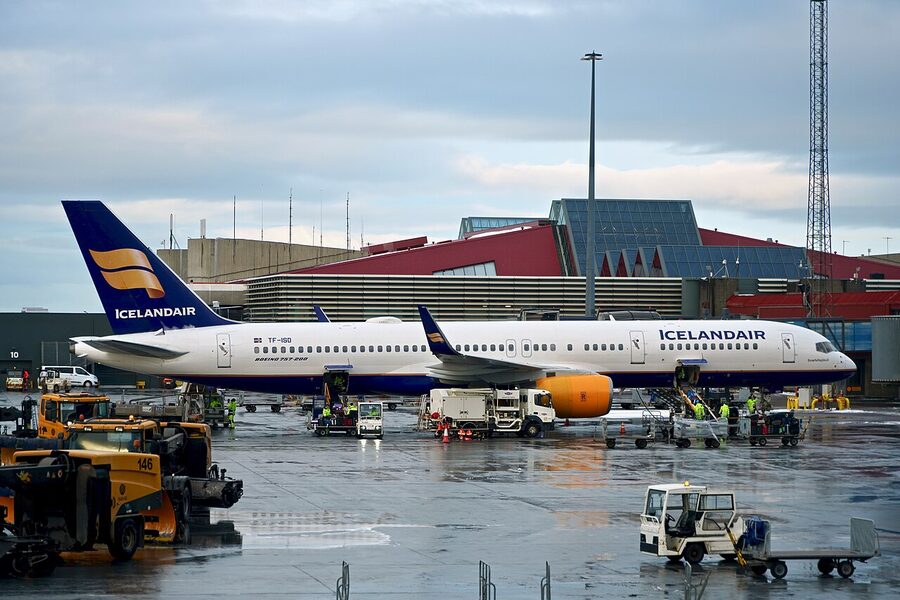
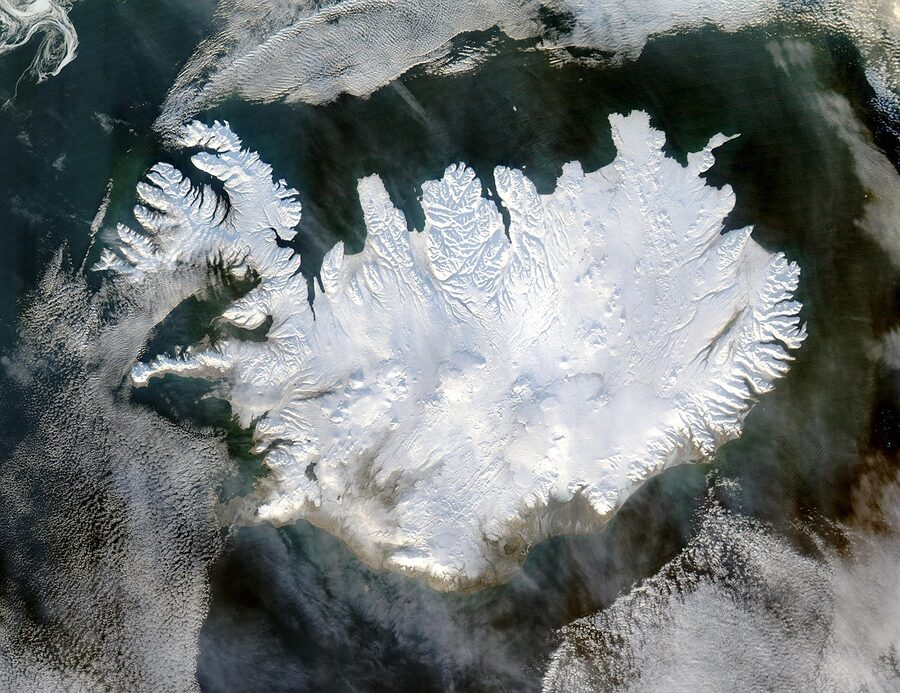
Iceland is small enough that a flight here is a single decision rather than a series of them. There’s only one international airport that matters, the country sits halfway between New York and Brussels by some quirk of plate tectonics, and one airline carries the flag in such a way that “fly Icelandair” is the answer for a lot of people on a lot of routes. So far so simple. The reason this article is 6,000 words long and not 600 is that the small choices around that simple decision are where the money is. Which fare class. Whether to bother with the Stopover programme. Whether to wait for a sale. KEF or RKV. Flybus or rental car. Whether the budget option that looked half the price was actually half the price after the bag, the seat, the snack, and the credit-card fee.
I’ve been booking flights into and out of Iceland for as long as I’ve been alive, and watching visitors do it for nearly as long. I’ve put my own family on Icelandair and on PLAY before PLAY went under, on Wizz Air to Warsaw and back via Keflavík, and on the Norröna ferry from Hirtshals when somebody insisted on bringing a car. What follows is what I’d actually tell you if you asked me at a kitchen table. Which airline. When to book. What the Stopover thing is and whether it’s worth it. What baggage rules to read twice. How to get from the runway to your hotel without paying 30,000 ISK for a taxi. Þetta reddast, it’ll work out, but knowing what you’re walking into makes the working-out cheaper and less stressful.
In This Article
- The short version, if you don’t have time
- KEF vs RKV, and why this matters before you book anything
- The airlines, and what’s actually flying right now
- Icelandair
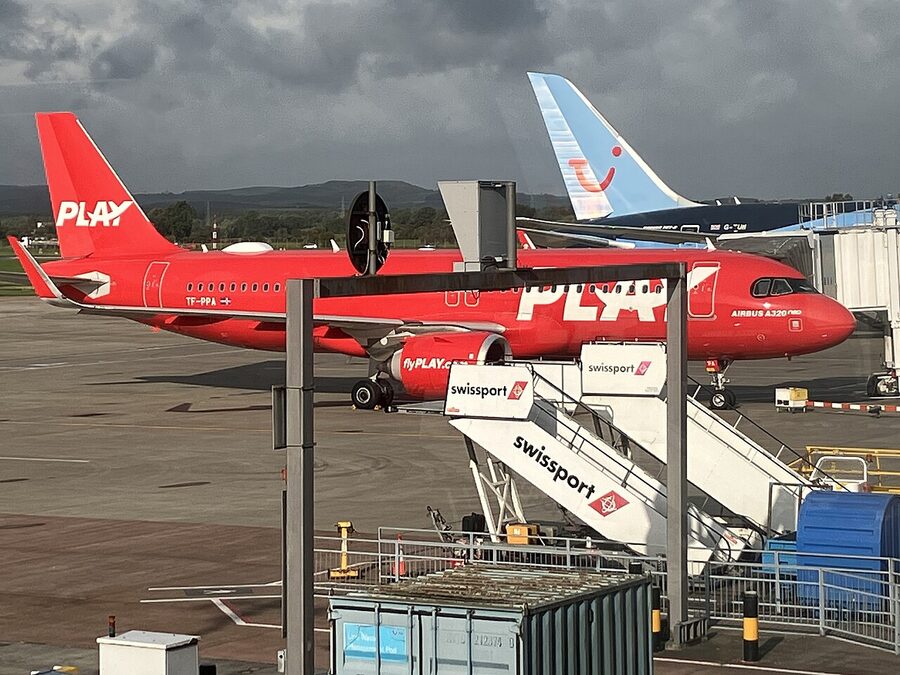
- PLAY Airlines, may it rest in peace
- Wizz Air
- Delta, United, American, Alaska, Air Canada, Air Transat
- European carriers, Lufthansa, KLM, SAS, Finnair, BA, easyJet
- The Icelandair Stopover programme, and whether it’s worth it
- When to book, and the calendar that actually matters
- Baggage rules that will catch you out
- Keflavík airport, what to expect on the ground
- From Keflavík to Reykjavík, the four ways in
- If you have a layover, what’s actually doable
- Finding genuinely cheap fares without the gimmicks
- If your plans change
- Connecting onwards within Iceland
- The Norröna ferry, for the truly determined
- Flying to Iceland with kids
- The carbon question, briefly
- What I’d actually book, from where
- Last thoughts
The short version, if you don’t have time
If you’re flying from the US East Coast or Canada and Iceland is part of a longer European trip, book Icelandair with the Stopover option and add three to five nights in Iceland on the way through. You’ll pay something like the same total as a direct New York-to-Paris ticket, and Iceland comes free. From the UK, look at Icelandair from Heathrow or Gatwick first, then check Wizz Air from Luton if you can travel light. From mainland Europe, Icelandair direct from your nearest big city if it exists, or a carrier like SAS, Lufthansa, KLM, or Wizz Air depending on where you’re starting. Book three to six months ahead for summer, two to three for winter, and don’t fly on a Friday or a Sunday if you have any flexibility. That’s the whole article in a paragraph. Read on for the why.
KEF vs RKV, and why this matters before you book anything
Iceland has two airports near Reykjavík and they are not interchangeable. Get this wrong and you’re in for an interesting day.
Keflavík International Airport (KEF) is where roughly 99 percent of you will land. It sits on the Reykjanes peninsula, about 50 kilometres from central Reykjavík, in a flat lava field that gets sandblasted in winter and floats on a fog bank for half of October. Every transatlantic flight, every Wizz Air, every Icelandair from Europe, the lot, they all come into Keflavík. International code: KEF. Real name: Keflavíkurflugvöllur. Nobody calls it that out loud.
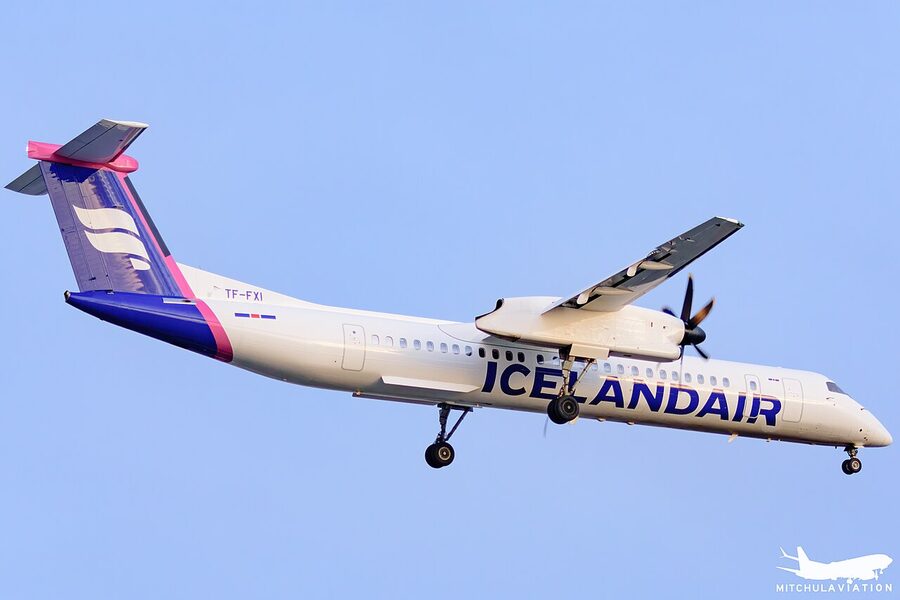
Reykjavík Airport (RKV) is the small domestic airport inside the city. It’s a five-minute taxi from Hallgrímskirkja. Air Iceland Connect (now part of Icelandair) flies Dash 8 turboprops out of here to Akureyri, Egilsstaðir, Ísafjörður, the Westman Islands, and a handful of routes onward to Greenland and the Faroes. There are no international flights out of RKV, none, not even to Europe. If your booking confirmation says RKV and you came from London, something has gone very wrong.
The trap: travel agents and search engines occasionally show “Reykjavík” as the destination and pick whichever airport has availability. Always check the three-letter code on your booking. KEF for international. RKV only if you’re planning a hop to Akureyri or to Nuuk in Greenland.
The other airports worth knowing about: Akureyri (AEY) is the small airport that serves the north and is starting to pick up a few seasonal direct routes from Europe, easyJet has flown London Stansted to Akureyri in summer, and there are occasional charters. Egilsstaðir (EGS) in the east is regional only. Ísafjörður (IFJ) in the Westfjords is a small but spectacular landing, the approach drops you between two fjord walls, and runs three or four times a week from RKV. Everything else is gravel airstrips for fishermen and rescue services.
The airlines, and what’s actually flying right now
Here’s the live list as of spring 2026, after PLAY went under in September 2025 and the dust settled. About twenty airlines run scheduled flights to Keflavík at any given time, with summer adding a half dozen seasonal routes that disappear in October.
Icelandair
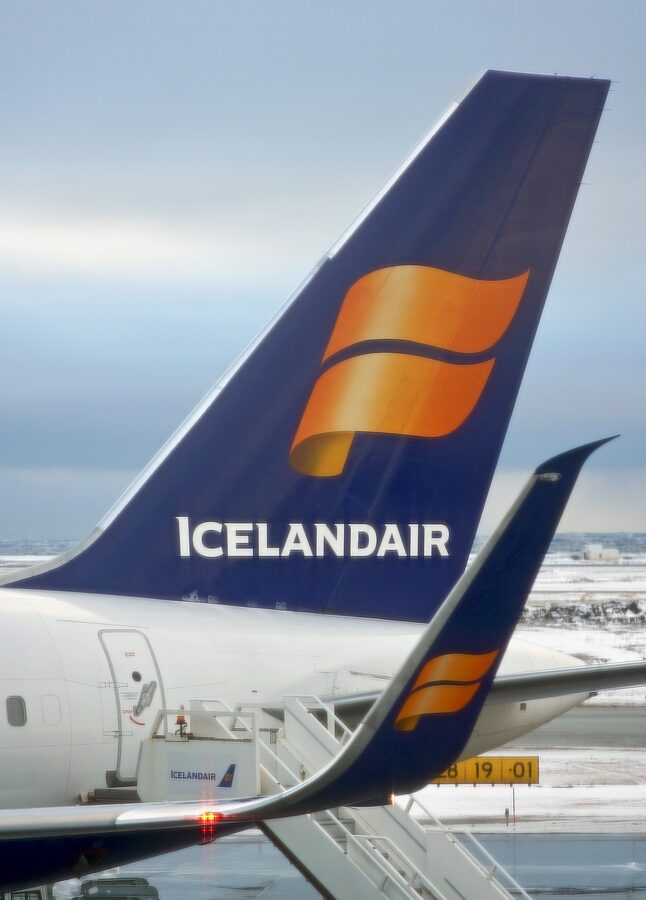
Icelandair is the answer to a lot of “best airline to Iceland” questions, and not because I’m being patriotic. They’re full-service in the older sense of the word, you get a checked bag on most fares (not the cheapest one, more on that below), seat selection, complimentary water and a hot drink, and a tail logo that comes from the Old Norse for “the airline” basically. Founded in Akureyri in 1937 as Flugfélag Akureyrar, moved south to Reykjavík in 1940, became Icelandair in the 1970s after merging with Loftleiðir. Eighty-eight years of flying without a hull-loss crash on the airline’s own watch. That’s a number worth knowing.
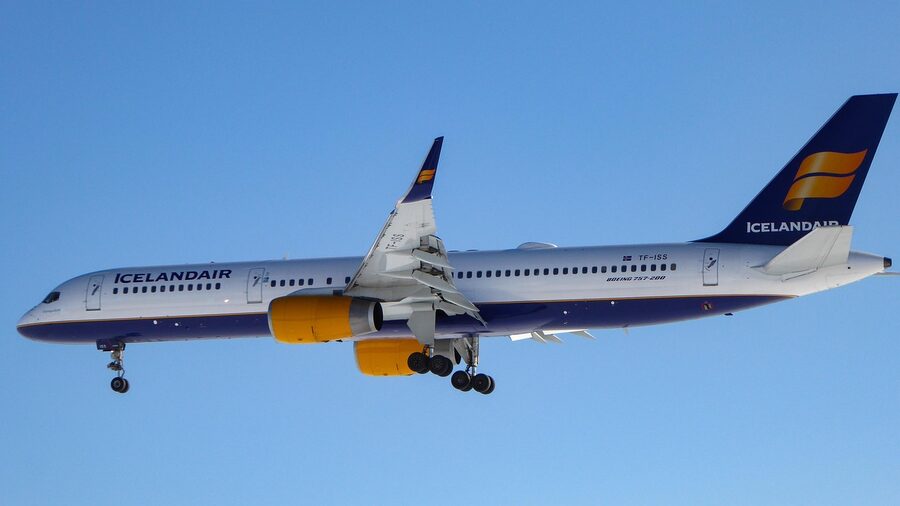
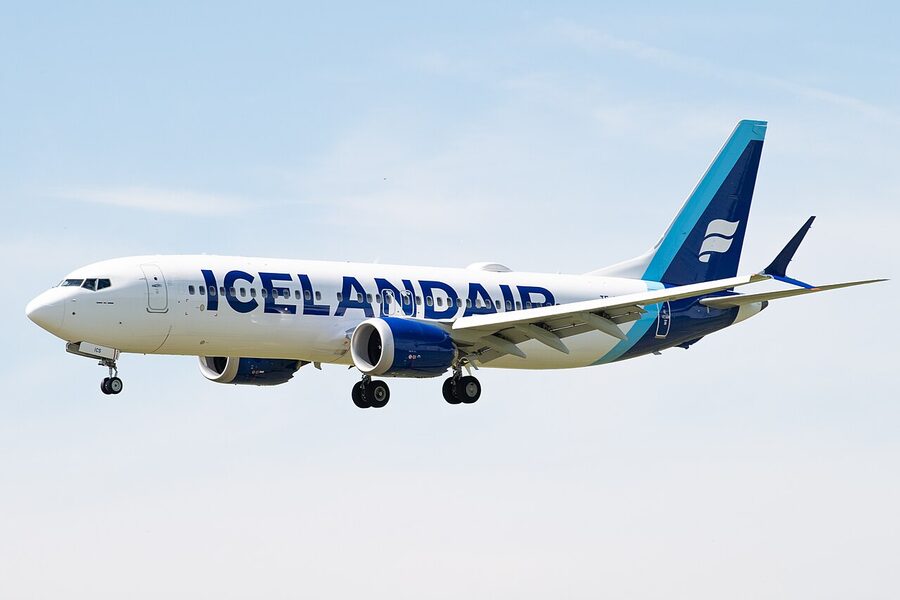
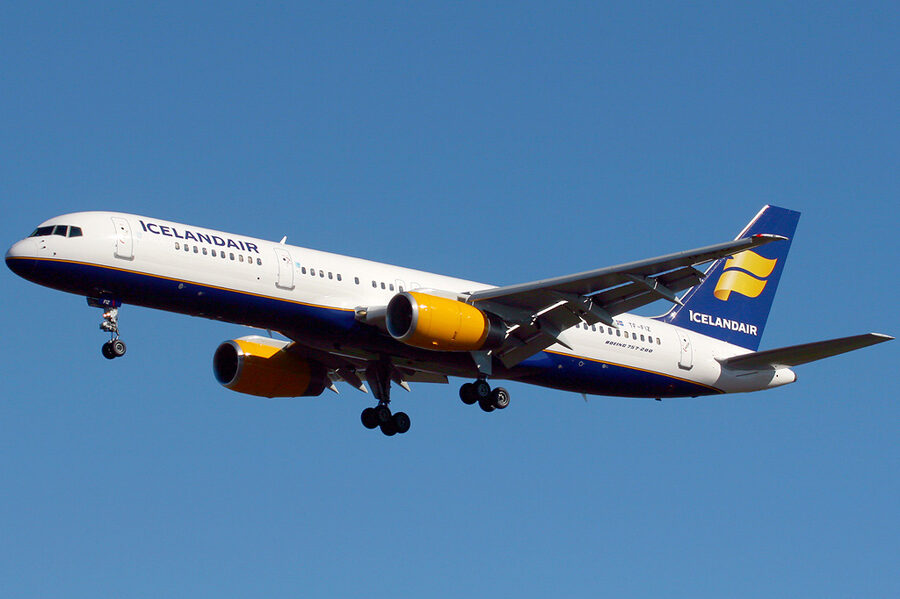
The fleet is mostly Boeing 737 MAX 8 and MAX 9 these days, with the older 757-200s slowly retiring after twenty-plus years of crossing the Atlantic. The 757 is a strange aeroplane to use for transatlantic flying, single-aisle, six abreast, but it has the range, and Icelandair was the carrier that proved you could put bums in seats from Boston to Reykjavík and back without needing a wide-body. Saga Premium is the business class up front, with fully reclining seats on the 757s and a slightly smaller version on the MAX. Economy Comfort sits in the middle for a few extra inches of legroom and a guaranteed empty middle seat. Then standard Economy and Economy Light at the back.
Routes from North America: New York JFK and Newark, Boston, Washington Dulles, Toronto, Chicago, Minneapolis, Seattle (year-round), Vancouver. Several of these run year-round, others are summer only. Denver, Orlando, and Portland show up seasonally. From the UK and Ireland: London Heathrow, London Gatwick, Manchester, Edinburgh, Glasgow, and Dublin. From mainland Europe: Frankfurt, Munich, Berlin, Hamburg, Amsterdam, Paris CDG, Brussels, Copenhagen, Oslo, Stockholm, Helsinki, Madrid, Barcelona, Milan, Geneva, Zurich, Vienna, Prague, Warsaw. Plus Greenland (Nuuk, Ilulissat, Kulusuk) and the Faroes (Vágar). It’s a wide network for an airline of this size, built around the simple geographical fact that Reykjavík is roughly equidistant from New York and Frankfurt.
Service-wise, Icelandair sits between the American legacy carriers and the European budget operators. Better than Spirit, not as good as Singapore. Hot drinks and a snack come free in economy on transatlantic flights. Meals you pay for off a fairly decent menu, kjötsúpa (lamb soup) and a few Icelandic things alongside the standard chicken-or-pasta options. The 737 MAX has Wi-Fi, the older 757s usually don’t. Power outlets at every seat on the MAX, hit and miss on the 757.
PLAY Airlines, may it rest in peace
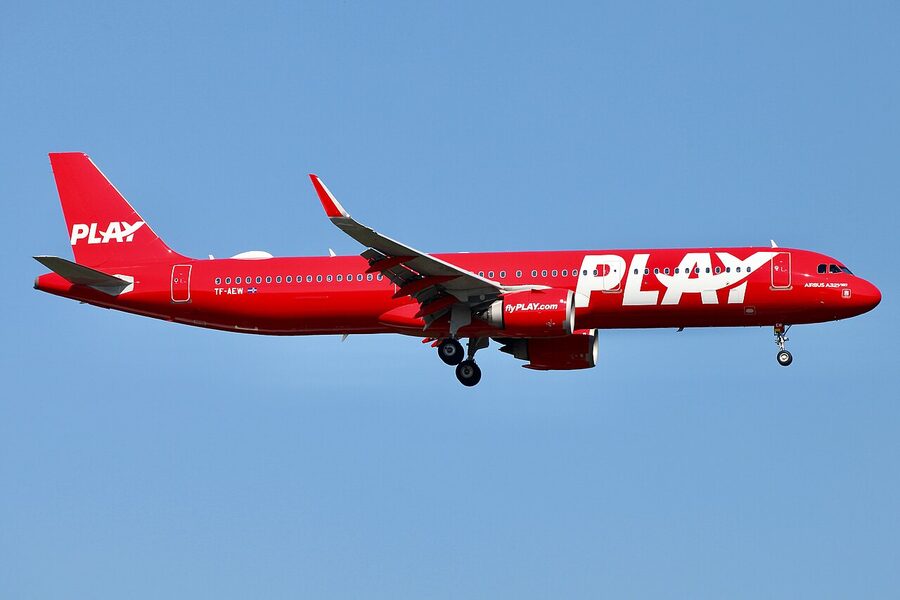
I’m leaving this section in because PLAY is still the first thing visitors ask about. PLAY was the budget Icelandic carrier founded in 2021, run on a lean A320/A321neo fleet from Keflavík to Baltimore, Boston, Newark, Stewart (the small one upstate from JFK), Dulles, Hamilton in Ontario, plus a thicket of European routes including Stansted, Liverpool, Cardiff, Glasgow, Paris, Berlin, Tenerife, and a dozen more. Cheap base fares, everything else extra. It was the spiritual successor to WOW Air, which itself collapsed in 2019.
PLAY ceased operations on 29 September 2025. The board’s statement said “deep-rooted challenges that have built up over time”, code for “we ran out of money.” About 18,000 passengers were stranded mid-trip. Around 400 employees lost their jobs. The Icelandic Transport Authority confirmed the closure that morning and the planes never flew again. I had a friend who arrived at Stansted that day for a 2pm departure and stood there with three other people watching the screens until somebody from the airport came to confirm the flight was cancelled.
Why I’m telling you this in a 2026 article: tickets were still being sold up to days before the collapse, and you’ll find blog posts from 2024 and earlier that recommend PLAY in glowing terms. Those posts are stale. Don’t book PLAY. The brand is gone. Refunds for cancelled tickets have been tied up in Icelandic bankruptcy proceedings for months and at the time of writing only a partial dividend has been paid out to creditors. If you bought a ticket on a credit card, your card’s chargeback was the only realistic route to a refund.
The lesson for the future: a budget carrier sitting on tight margins, in an industry where one bad quarter eats the cash buffer, is a risk. Always book budget airlines on a credit card with chargeback protection. Always.
Wizz Air
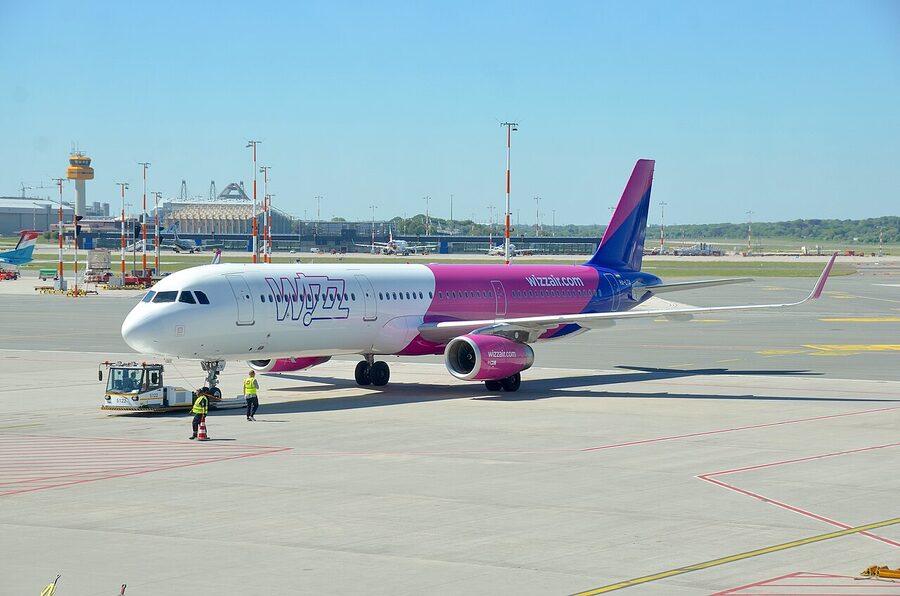
Wizz Air is the Hungarian ultra-low-cost carrier that fills the budget gap PLAY left behind on European routes. They don’t fly to North America at all and there’s no indication they ever will. From Iceland they currently serve Vilnius, Warsaw, Budapest, Wrocław, Gdańsk, and a couple of seasonal routes that come and go. Wrocław was added for summer 2026 and runs June through October.
The Wizz model is the same as PLAY’s was: rock-bottom base fare, everything else costs. The big small print is the cabin baggage rule. The cheapest Wizz fare lets you take one personal item that fits under the seat, about 40 by 30 by 20 centimetres, the size of a small backpack. Anything bigger, including a normal hand luggage suitcase, costs an extra fee that varies by route but typically runs 15 to 50 euros each way. Checked bags are 30 to 60 euros each way depending on weight and how late you book it. Seat selection 5 to 30 euros. Priority boarding 15 to 25 euros.
The fares can be genuinely cheap, I’ve seen Warsaw to Keflavík return for under 100 euros in November. They can also balloon if you arrive at the airport with a bag you didn’t pay for. Read the rules. Pack to the rules. If you’re a one-rucksack sort of traveller doing four nights in Reykjavík and not coming home with souvenirs, Wizz from a city Icelandair doesn’t serve directly is hard to beat. If you’re packing for a fortnight on the Ring Road with hiking boots and a tent, Icelandair will probably end up cheaper once you’ve added everything to the Wizz fare.
Delta, United, American, Alaska, Air Canada, Air Transat
The American legacy carriers all run summer routes to Keflavík and most have shrunk back over the winter. Delta flies JFK and Minneapolis year-round, plus Detroit, Boston, and a couple of others seasonally. United serves Newark year-round and added Washington Dulles starting 21 May 2026, running through to September. American runs Dallas-Fort Worth and Philadelphia in summer. None of these carry the volume Icelandair does, but they’re useful if you’re already in their loyalty programme or if your home airport doesn’t have an Icelandair route.
The newer ones worth flagging: Alaska Airlines launches its first transatlantic route from Seattle to Keflavík on 28 May 2026, daily through early September. It’s a big deal for the West Coast, until now, Seattle travellers had to connect via JFK or Boston or fly Icelandair’s own Seattle service, which only started a couple of years ago. Alaska has a codeshare with Icelandair, so you can buy onward European tickets in one booking, and Saga Premium passengers and Atmos Rewards top tiers get the Saga Lounge at KEF.
From Canada: Air Canada flies Toronto to Keflavík year-round and Vancouver in summer. Air Transat, the leisure carrier, launches Montreal-Keflavík twice weekly from 16 June to 27 September 2026. WestJet has announced an Edmonton route for summer 2026 too, though it’s worth checking the schedule confirms before you book.
European carriers, Lufthansa, KLM, SAS, Finnair, BA, easyJet
If your starting city is on the European mainland or in the UK, you have direct options on more carriers than I can sensibly list. The headline names: Lufthansa from Frankfurt and Munich. KLM from Amsterdam (Schiphol’s connection bank to Asia, North America, and South America makes this a good hub flight). SAS from Copenhagen, Oslo, and Stockholm, practical if you’re already in Scandinavia. Finnair from Helsinki, with onwards to Asia. British Airways from London Heathrow and Gatwick, full-service, baggage included. easyJet from London Gatwick, Manchester, Bristol, and Edinburgh in summer. Eurowings from Düsseldorf and Cologne, summer-heavy. Norwegian from Oslo and Stockholm. Transavia from Amsterdam (KLM’s budget arm). Edelweiss from Zurich. Iberia Express from Madrid, returning summer 2026 according to the latest Icelandic press. Vueling from Barcelona seasonally.
For a current confirmed route list on the day you’re booking, the most reliable single source is the official airline list at Isavia’s Keflavík airport site. Routes shift season to season and even mid-season as carriers add or pull capacity.
The Icelandair Stopover programme, and whether it’s worth it
The Stopover is the single most useful thing Icelandair offers. It’s been the airline’s signature trick for fifty years and it’s the reason a generation of Americans have ended up in Iceland by accident. The mechanic is simple: every Icelandair flight between North America and Europe technically stops at Keflavík to swap passengers between the two halves of the route network. You’re allowed to “extend” that stop from a normal one-hour layover to anywhere from one to seven nights at no extra airfare. On Economy Light it’s capped at three nights. Other fare classes run up to seven. Economy Flex and Saga Premium Flex go up to twenty-one nights, but those have to be booked by phone.
Walk through what this means in practice. A standard one-way New York to Paris on Icelandair runs around 350 to 500 dollars in shoulder season. The same flight with a three-night stopover in Iceland costs almost the same, sometimes literally identical, sometimes ten or fifteen dollars more depending on whether your second leg lands on a more expensive day. Compare that to buying two separate tickets: New York to Reykjavík at maybe 400 dollars, then Reykjavík to Paris at another 250 to 350. The stopover saves you between 200 and 600 dollars, which is your hotel and food budget for those three nights, or three full Blue Lagoon entries, or a glacier tour.
The catch, such as it is, is that you have to fly Icelandair both legs. You can’t stopover in Iceland and then catch a Lufthansa onwards from KEF to Paris on the same booking, different airline, separate ticket, different price equation. That limits you to Icelandair’s network for your final destination, which is broad but not infinite. If you want to fly into Stockholm and out of Madrid, that works. If you want to fly into Tbilisi, you’ll have to book that leg separately.
The booking process is simple but easy to miss. On Icelandair’s website, before you enter dates, there’s a small “stopover in Iceland” toggle. Tick it. Then enter your departure (let’s say Boston), your final destination (let’s say Frankfurt), your departure date, and the number of nights you want to stop. The site shows you flight options as if it were one booking with a long layover, “2d 9h 30m” between flights, and the price is one fare for the whole thing. You pay once, you check in once, your bag is checked through to Frankfurt with a transit through Reykjavík where you collect it for your stopover days. On the way back you fly out of Keflavík to your final destination as if it were a single onward ticket.
One detail nobody mentions: you can stopover on either the outbound or the return, or both. Both means up to seven nights each way for fourteen total in two visits. I’ve done it twice, once with the bigger stop on the way out, once on the way back, and the way-back version is genuinely lovely because by then you’ve decompressed from your Europe trip and you’re not racing through Iceland with a list. If anything, do the longer stop on the way home.
What about cheaper than Icelandair direct, no stopover, just a flight to Iceland for an Iceland trip? That’s the other use case. If you’re not going on to Europe, the stopover doesn’t apply and the question becomes “what’s the best single-direction fare.” For that, see the booking section below.
When to book, and the calendar that actually matters
Iceland’s flight prices are not a smooth curve. They’re spiky, with hard cliffs around school holidays and the start of the aurora season. Here’s the calendar I’d actually plan to.
For summer travel (June, July, early August): book by mid-March. Cheap economy fares from major US cities to Reykjavík return run 500 to 700 dollars in March, then climb steadily. By the start of June they’re often 900 to 1,400 for the same routes. Saga Premium goes from around 2,200 dollars in March to 3,500 by booking time in June. The cheap fare classes sell out first, by April or May you’re often left with Economy Standard or Economy Comfort even on flights that “still have availability.” If summer Iceland is your trip, book in February or March.
For shoulder season (mid-September through October, late April to May): the sweet spot. Iceland is most beautiful in autumn, the aurora season starts, the leaves turn yellow, the F-roads close one by one but the Ring Road and the South Coast are wide open. Fares are 30 to 50 percent lower than summer. You can book one to two months ahead and still get reasonable prices. Northern Lights demand creeps up through September and peaks around October half-term and the early-November aurora chasers, but it’s nothing like summer.
For winter (November through March): the cheapest part of the year except for Christmas and New Year, which are weirdly expensive because Icelanders fly home and visitors come for the festive light. Aurora season is in full swing from October to early April. Flights from the US can be found for under 400 dollars return in mid-January or early March. Two months’ lead time is usually enough. Avoid 22 December to 5 January and Easter, those weeks are the most expensive of the year, more expensive than peak summer.
The day-of-week pattern: Tuesdays and Wednesdays out, Tuesdays and Saturdays back are the cheapest combinations. Friday outbounds are reliably the most expensive day of the week, followed by Sunday returns. If you can move your dates by a day or two, the fare comparison sites will show 100- to 300-dollar swings just on day-of-week.
Sales: Icelandair runs two big promotional cycles a year. The first hits in late January and is for summer travel, these are the cheapest summer fares you’ll see all year, often 30 percent below normal. The second hits in late August or early September and is for the following winter and spring. Both are usually flagged on the airline’s flight deals page and pushed via their newsletter. Sign up for the newsletter even if you only book once a year, the sale alerts pay for themselves.
The “fare alert” trick: Set up Google Flights price tracking on your specific origin-destination pair as soon as you start thinking about Iceland. Don’t wait until you’re ready to book. Watch the price for two or three weeks. You’ll start to see the floor and the ceiling for your route. When the price drops to the bottom third of the range, book within 24 hours, Iceland fares snap back up quickly.
Baggage rules that will catch you out
Each airline plays this differently and the differences cost real money if you get caught at the gate.
Icelandair Economy Light: the base fare. Includes one carry-on (10 kg, max 55 by 40 by 20 cm) and one personal item. No checked bag. Adding a checked bag at the booking stage is around 90 dollars each way, more if you do it at check-in or worse, at the airport. Total damage if you only realise at the gate: roughly 130 dollars one way. Don’t.
Icelandair Economy Standard: includes one checked bag (23 kg) and one carry-on (10 kg). This is the fare to book if you’re bringing a normal suitcase. The fare difference between Light and Standard at booking is usually less than the cost of adding a bag separately. Default to Standard unless you’re truly travelling with one rucksack.
Icelandair Economy Comfort: two checked bags, more legroom, guaranteed empty middle seat in pairs. Worth the upgrade on the seven-hour Vancouver-Reykjavík flight if you can swing it.
Icelandair Saga Premium: three checked bags, full lie-flat seat on the 757, Saga Lounge access at KEF and partner lounges, real meals on real china. Expensive but a different proposition altogether.
Wizz Air WIZZ Lite: one personal item under the seat (40 by 30 by 20 cm), nothing else. Adding cabin baggage 15 to 50 euros each way, checked baggage 30 to 60 euros. Always add at booking, never at the airport, the gate fee is brutal.
easyJet: one cabin bag of 45 by 36 by 20 cm free. Anything larger, including normal hand luggage that goes in the overhead bin, you pay for. Checked baggage 7 to 50 pounds depending on weight and how late you book.
Lufthansa, KLM, BA, SAS Economy: one carry-on plus a personal item, free. Most fare classes include a 23 kg checked bag. Their cheapest fare classes (Economy Light, Light, Saver) sometimes don’t, read the fare rules.
The general rule: if you’re flying anything called “Light” or “Lite,” you’re flying without a checked bag. Read the fine print at booking time, not at the gate. The single most expensive mistake a traveller makes is paying for an unexpected bag at the airport, the fees double or triple at that point.
Keflavík airport, what to expect on the ground
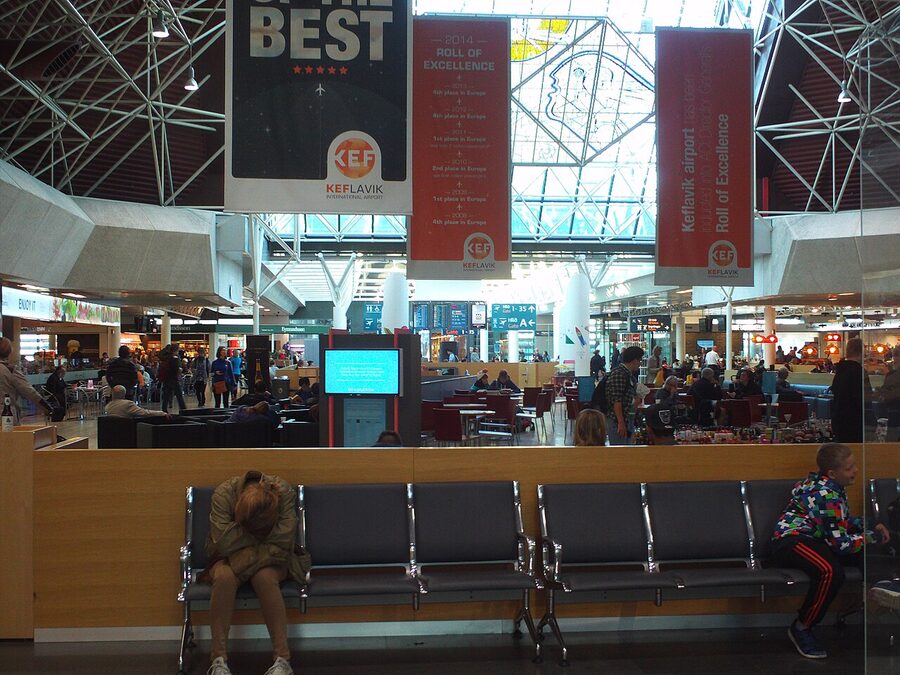
Keflavík is a manageable airport. It’s much smaller than Heathrow or JFK but considerably bigger than what an island of 380,000 people would normally need, because of the transit traffic. Total handling is around eight million passengers a year. The single terminal is laid out roughly in a Y shape, South Pier handles the Schengen flights, North Pier handles non-Schengen, with a pre-clearance for US-bound passengers (you go through US immigration in Iceland, walk straight off the plane in the States).
For arrivals: walk off, follow signs to immigration (passport control is the same regardless of where you’re flying from), then baggage claim, then through customs and into the arrivals hall. Total time from off the plane to in the arrivals hall, on a normal day with a normal queue, is 30 to 50 minutes. The famous Eyjafjallajökull mural, a glass artwork by Leifur Breiðfjörð in the form of a giant eye, is in the arrivals hall and is the photo every Iceland visitor takes. Worth the photo.
For departures: arrive 2.5 hours before international, especially in summer when the queues stack up. Security is generally efficient but they enforce the liquid rule strictly. Iceland is in Schengen, so flights to most of Europe go through Schengen security; flights to the US, UK, and other non-Schengen destinations go through additional checks. There’s a fairly decent Duty Free in the centre of the terminal, the Brennivín, Reyka vodka, and Icelandic chocolate (Omnom, Nói Síríus) are worth picking up here at duty-free prices, which are about 30 percent cheaper than the Vínbúðin in town. There’s also a small but well-stocked Icelandic design shop and a couple of bookshops.
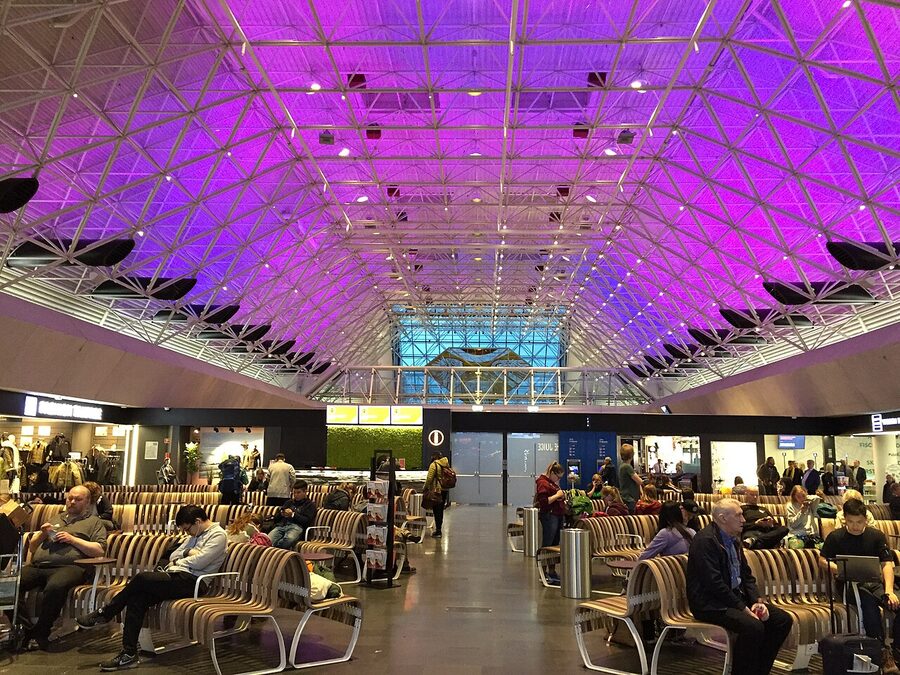
Dining options airside are limited. There’s a Joe & The Juice and a couple of standard airport cafés. The Saga Lounge for premium passengers and Star Alliance/oneworld lounge-access cardholders is in the South Pier and is a perfectly fine business lounge, showers, decent buffet, free Brennivín if you’re brave. There’s a Priority Pass-accessible lounge too. If you have a long layover and no lounge access, there are some quiet seating areas with charging points near the gates at the far end of each pier, better than fighting for an outlet in the main hall.
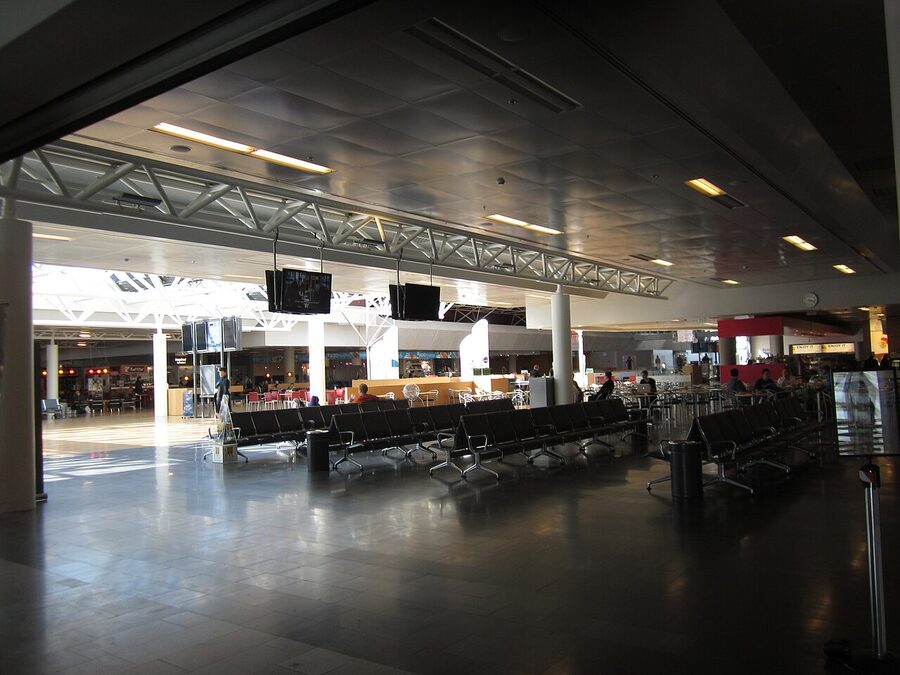
Wi-Fi: free, limited to one hour without an Icelandic phone number. Decent speed.
Money: Iceland is essentially cashless. Cards work everywhere. Don’t change money at the airport, you’ll pay 8 to 12 percent on the spread. If you really want some cash for a tip or a market, use the ATM at the arrivals hall (in the back left corner past the rental car desks, not the obvious one near the entrance) and take 5,000 ISK and not a krona more. You probably won’t spend it.
From Keflavík to Reykjavík, the four ways in
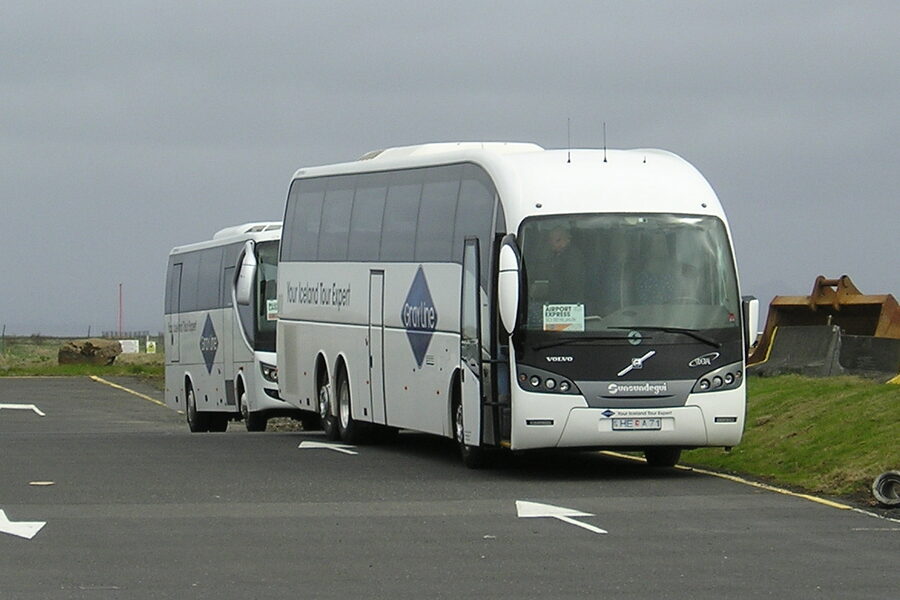
The airport is 50 km from the city. There’s no train. There never will be (Iceland doesn’t have a passenger rail network at all, anywhere). You have four sensible options.
Flybus (Reykjavík Excursions): the default. Coaches leave 30 to 40 minutes after every arriving flight, even at three in the morning. Around 4,500 ISK each way to BSÍ Bus Terminal, which is a 10-minute walk or short taxi from most central hotels. For around 6,500 ISK they include a hotel transfer in central Reykjavík via a smaller minibus from BSÍ. The journey is 45 to 60 minutes depending on traffic. Book at the desk in arrivals or pre-book online at flybus.is, same price either way. The seats have free Wi-Fi and power. This is what I’d put 90 percent of visitors on.
Airport Direct: the main competitor to Flybus. Slightly cheaper at around 4,000 ISK each way, hotel pickup included for 5,500 to 6,000. Less frequent than Flybus, they wait for several flights and group passengers, so you might wait longer in arrivals. airportdirect.is. Fine choice if the price difference matters.
Rental car: the right answer if you’re starting a road trip from the airport. All major operators have desks at Keflavík (Hertz, Avis, Europcar, Sixt, Enterprise, Budget) and the local outfits (Blue Car Rental, Lava, Lotus, Geysir, Reykjavík Cars, Go) have shuttles or short walks to nearby yards. Allow 60 to 90 minutes from off the plane to driving. Budget around 8,000 to 25,000 ISK per day depending on car and season. Our full guide to renting a car in Iceland walks through the insurance, the operators, and which cars are worth your money.
Taxi: 25,000 to 30,000 ISK each way for a standard car, more for a minivan. Stupid money for a single passenger, sometimes worth it for a group of four with a lot of luggage at four in the morning. There’s an official taxi rank outside arrivals. The “Hreyfill” and “BSR” companies are the local mainstays.
Public bus (Strætó 55): technically exists, runs from KEF to BSÍ for around 2,000 ISK, but takes 90 minutes, doesn’t run overnight, and has limited luggage space. For backpackers travelling on the cheap with one rucksack only.
If you have a layover, what’s actually doable
Layovers between flights at Keflavík are an underappreciated bonus. If you’ve got more than four hours scheduled between landing and your next departure, you can do something. Here’s the math.
Less than 3 hours: stay at the airport. By the time you’ve cleared immigration, collected bags, and made it back through security for the next flight, you’re already at the gate. Use the time to explore the Duty Free and take a slow lunch.
3 to 4 hours: Blue Lagoon is 25 minutes by car from KEF. With a tight layover and your luggage in storage at the airport (there’s a luggage hold near the check-in desks), it’s just possible, but you need to pre-book your Blue Lagoon entry, take the dedicated Blue Lagoon shuttle from the airport (Reykjavík Excursions runs this, around 11,000 ISK round trip including entry), and not linger. Reasonable if you’re disciplined. Stressful if you’re not.
4 to 6 hours: Blue Lagoon comfortably, or a quick run into Reykjavík for lunch and a walk down Laugavegur. The town is 50 km away, so you need 90 minutes return on the bus plus your time in town.
6 to 12 hours: a proper Reykjavík visit. Take the Flybus, drop your luggage at a downtown hotel that does day-rate luggage storage (the Center Hotels chain, the Reykjavík Marina), have a meal, walk Laugavegur, see Hallgrímskirkja, soak at the Sundhöllin pool for a couple of hours. Easy itinerary. Our Reykjavík guide has the day-trip routes mapped out.
Overnight or longer: at this point you’re not on a layover, you’re on a stopover. Book a hotel. The Blue Lagoon has its own Silica Hotel and Retreat Hotel right at the lagoon if you want to combine the bath with somewhere to sleep without coming into Reykjavík at all. For airport-area sleep, the Aurora Hotel and Hotel Berg are walking distance from the terminal.
Finding genuinely cheap fares without the gimmicks
The websites that work, in roughly the order I’d use them:
Google Flights for the price calendar view. Type your origin and destination, then click the calendar grid view. You can see price-per-day across two months at a glance, and the cheap days jump out. Use the Explore feature to find the cheapest single airport in a region (e.g. cheapest US city to fly from to KEF in October).
Skyscanner for “everywhere” searches. If you don’t have a fixed origin yet, say you’re booking a flight that will leave from any of three or four UK airports, or you’re heading from Iceland to “anywhere in Europe” on the way home, Skyscanner’s flexible search is the best.
Kayak for hacker fares (booking outbound and return on different airlines as separate tickets, sometimes cheaper). Useful for one-way Iceland trips.
Momondo for the prediction tool that tells you whether to book now or wait. Not always right but a useful sanity check.
Icelandair direct for the actual booking, especially if you’re using the Stopover. Aggregator sites occasionally don’t surface stopover combinations correctly. Always confirm the price on the airline’s own site too, sometimes the airline is cheaper, sometimes not.
What not to bother with: hidden-city booking (where you book a flight that connects through your real destination, then skip the second leg), Icelandair, like most airlines, will cancel your return ticket if they catch you. Last-minute “deals”, the days of cheap last-minute walk-up fares are over. Most opaque-fare booking sites (Hotwire, Priceline) don’t have meaningful Iceland inventory.
If your plans change
The cheapest fares on every airline serving Iceland are non-refundable and either non-changeable or changeable for a fee equal to roughly the original ticket price (so, useless). Read the fare rules before you book. The hierarchy at Icelandair from cheapest to most flexible:
Economy Light: non-refundable, change fee around 95 dollars per person plus fare difference. Don’t book this if your dates aren’t certain.
Economy Standard: non-refundable, change fee around 75 dollars per person plus fare difference. A bit better.
Economy Flex: changes free of charge, refundable for a 95-dollar fee per person. Worth it if you’re booking far ahead and might need to move.
Saga Premium Flex: fully refundable, fully changeable, and you get the full Saga experience. The expensive option.
For travel insurance: worth it for winter trips because of weather cancellations. Iceland has yellow, orange, and red weather warnings issued by vedur.is, the Met Office, and orange or red warnings can shut down ground transport, ferries, and occasionally departures from Keflavík. Most travel insurance covers this if your origin or destination has an official warning. The carrier, by EU and Icelandic law, has to put you on the next available flight or refund you, but you’ll be a long way from home in the interim. Insurance covers the hotel and food.
Connecting onwards within Iceland
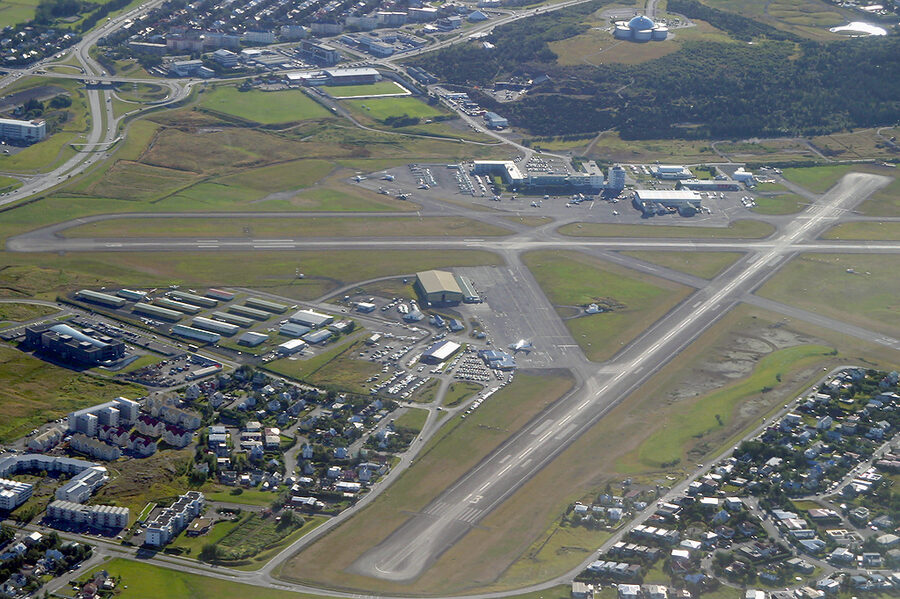
If your trip extends to Akureyri, the Westfjords, or out to the Westman Islands by air, you fly out of Reykjavík city airport (RKV), not Keflavík. The flights are operated by what was Air Iceland Connect, now folded into Icelandair, on Dash 8 turboprops. Routes:
Reykjavík-Akureyri: 45 minutes flying time, three to five flights a day depending on season, around 18,000 to 30,000 ISK each way. The cheapest way to skip a six-hour drive when you want to base yourself in the north. Book at icelandair.com.
Reykjavík-Egilsstaðir: 60 minutes, two flights a day, around 22,000 to 35,000 ISK each way. The east is otherwise an eight-hour drive from Reykjavík.
Reykjavík-Ísafjörður: 45 minutes, two flights a day, around 22,000 to 30,000 ISK each way. The Westfjords are otherwise a five-hour drive plus a ferry. The landing is one of Europe’s tightest fjord approaches and is genuinely beautiful in clear weather.
Reykjavík-Westman Islands: 25 minutes, two flights a day in summer, runs irregularly in winter. Useful when the ferry from Landeyjahöfn is cancelled by weather, which happens about 30 percent of the time in autumn and winter.
Getting from Keflavík to RKV: 50 minutes by Flybus to BSÍ, then a five-minute taxi or 15-minute walk to the city airport. Allow 90 minutes minimum on the day. Better to overnight in Reykjavík between the two flights if you can.
The Norröna ferry, for the truly determined
If you absolutely cannot fly, fear of flying, climate concerns, or simply because you want to bring a car or a motorbike from Europe, there is one alternative. The MS Norröna, run by the Faroese line Smyril Line, runs weekly between Hirtshals (north Denmark), Tórshavn (Faroe Islands), and Seyðisfjörður (east Iceland). It takes about three days from Denmark, two from the Faroes. The summer service is genuinely pleasant, there’s a swimming pool, a cinema, restaurants, and a couple of bars. The winter service is leaner and more focused on freight.
Cabin prices range from around 800 euros for a basic shared four-berth cabin to 3,000-plus for a suite, depending on season and direction. Bringing a small car adds another 400 to 700 euros. Compared to flying, it’s expensive and slow. But if you’ve always wanted to do an Iceland road trip in your own car from the UK, this is how. Drive from London to Hirtshals (24 hours including the ferry from Harwich or via the Channel Tunnel and continental Europe), board the Norröna, two days later you roll off at Seyðisfjörður and you’re in the Eastfjords.
Seyðisfjörður itself is a small, beautiful fishing village on the east coast, surrounded by waterfalls. It’s a four-hour drive from there to Egilsstaðir’s nearest motorway-grade road, and seven hours to Akureyri. If you arrived in Iceland by ferry and you’re driving onwards, plan a slow first day.
Flying to Iceland with kids
Icelandair is one of the more child-friendly transatlantic airlines. Children under two travel for around 10 percent of the adult fare on a parent’s lap; ages two to eleven get a roughly 25 percent discount on standard fares (less on Economy Light). Strollers can be checked at the gate at no extra cost, you keep them until you board, then pick up at the door of the plane on arrival. Bassinets are available on the longer routes (the 757 has them; the 737 MAX has fewer) and need to be requested at booking.
Wizz Air and the budget carriers don’t usually offer the same discounts and don’t have bassinets. easyJet is similar, children pay full fare, but they do offer a “speedy boarding” option that helps with the boarding chaos.
For the actual flying: the Icelandair seatback entertainment on the MAX has a children’s section, the meals can be pre-ordered as kids’ meals, and the cabin crew are unusually patient with toddlers. The 737 MAX gates at Keflavík tend to be at the further pier, so factor in a longer walk if you’re already herding two children in pushchairs.
Our Iceland with kids guide goes deeper on what to do once you’ve landed.
The carbon question, briefly
One acknowledgement worth making: a transatlantic flight is the single most carbon-intensive thing most travellers do in a year. New York to Reykjavík return is around 1.5 to 2 tonnes of CO2 equivalent per economy passenger. Reykjavík to London is around 0.5 tonnes. There’s no airline, biofuel, or carbon offset programme that meaningfully changes this. Icelandair offers a CO2 offset purchase at booking; PLAY did not before it folded. Wizz Air offers one. The science on whether forestry-based offsets actually do what they claim is mixed, and the cleanest position is that flying is high-impact and the only meaningful response is to fly less often and stay longer.
Practical take: if you’re flying to Iceland anyway, make it a longer trip rather than a long weekend. A week makes the per-day carbon cost more reasonable than three days. The Stopover programme is, perversely, a slightly better option from a carbon perspective than a separate Iceland-only trip plus a separate Europe trip, you only fly transatlantic once instead of twice.
What I’d actually book, from where
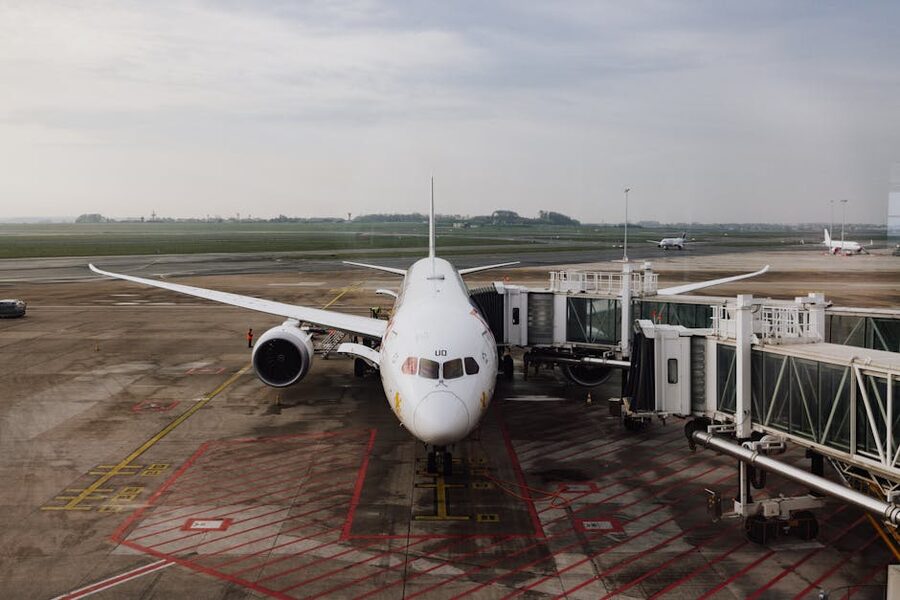
Stripping it down to the recommendation, by where you’re starting:
From the US East Coast (NYC, Boston, DC, Philadelphia): Icelandair direct. If you’re going on to Europe afterwards, use the Stopover programme, it’s the single best deal in transatlantic flying. If Iceland is the only destination, Icelandair Economy Standard is still the easiest single-ticket option. Delta and United are valid backup if you’re already in their loyalty programmes.
From the US Midwest and Mountain West: Icelandair direct from Chicago, Minneapolis, Denver (seasonal), or one of the Coast cities. United from Newark or Chicago is competitive too.
From the US West Coast: Until 2026, Icelandair from Seattle was the only direct option. From 28 May 2026, Alaska Airlines adds a daily nonstop from Seattle that gives the West Coast a second choice. From California, plan to connect via Seattle or one of the East Coast hubs, there are no direct flights from LA, San Francisco, or San Diego.
From Canada: Air Canada from Toronto or Vancouver year-round, Air Transat from Montreal in summer 2026. Icelandair from Toronto and Vancouver too. WestJet’s announced Edmonton route adds a Western Canada option.
From the UK (London): Three real options. Icelandair from Heathrow or Gatwick, full service. British Airways from Heathrow, also full service, sometimes 50 to 100 pounds cheaper. easyJet from Gatwick or Luton, much cheaper if you’re packing light. Wizz Air from Luton if it’s running on your dates. I’d default to Icelandair for a normal trip and easyJet for a weekend with hand luggage only.
From the UK (regional): Icelandair from Manchester, Edinburgh, Glasgow. easyJet from Bristol and Edinburgh in summer. Jet2 from Manchester. If your nearest direct route doesn’t suit your dates, fly via London.
From Ireland: Icelandair direct from Dublin in summer, otherwise via London or Manchester. Aer Lingus has talked about Iceland routes for years and not delivered.
From Germany, France, Benelux, Scandinavia: direct on Icelandair, KLM, Lufthansa, Air France, SAS, or the budget options (easyJet, Eurowings, Transavia). Direct is almost always available; the question is fare class and luggage allowance.
From southern Europe (Spain, Italy): Icelandair direct from Madrid, Barcelona, Milan in summer. Iberia Express returning to Madrid-Reykjavík in June 2026. Vueling occasionally. Otherwise connect via Frankfurt, Amsterdam, or London.
From eastern Europe: Wizz Air from Warsaw, Vilnius, Wrocław, Gdańsk, Budapest. LOT from Warsaw. Icelandair from Warsaw and Prague. The cheap base fares from this region make Iceland the surprise weekend trip from Poland.
From Asia, Australia, New Zealand, anywhere east of the Black Sea: there’s no direct flight to Iceland and there isn’t going to be one any time soon. Connect through London (Icelandair from Heathrow or Gatwick) or Helsinki (Finnair plus Icelandair). The Stopover programme via Icelandair is genuinely useful here, fly Tokyo to London on JAL or BA, then Icelandair London to JFK with a stopover in Iceland on the way.
Last thoughts
Iceland is a small country with a single international airport and one big-name airline. That makes the flight question easier than it sounds. You’ve got essentially three live decisions: which airline (Icelandair for almost everything, Wizz Air or another budget carrier if you’re packing light from Europe), which fare class (read the baggage rules, default to Standard not Light), and whether to use the Stopover programme if you’re going on to Europe.
Get those three right and you’ll save anywhere from a few hundred to a couple of thousand euros versus the worst booking decision. Book three to six months ahead for summer, two for winter, and watch the Tuesday-Wednesday cliffs in the price calendar. Skip the taxi from KEF unless you really need it, the Flybus is a tenth of the price and almost as fast. And if you have a layover of more than four hours, the Blue Lagoon is genuinely 25 minutes from the airport doors.
The rest of Iceland is waiting on the other end. Once you’re at the baggage carousel under the Eyjafjallajökull mural, you’re in. Our Iceland travel guide for first-timers picks up from there. Or head straight to the car rental guide if you’re collecting wheels at the airport, the best time to visit for trip-planning, or the tours we’d actually book if you’d rather have someone else drive.
Þetta reddast.

.jpg)


_01.jpg)

.jpg)