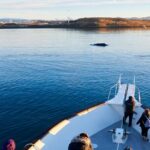
One cold bay can change your whole day. This whale-watching cruise from Reykjavik heads out over Faxaflói Bay, with live onboard commentary designed to help you spot and understand local marine life fast. It’s built for the reality of Iceland weather and sea conditions, so you’re not just chasing sightings.
I love that you get practical gear and real help before you’re even on the water. Thermal waterproof overalls (including kids’ sizes) plus sea-sickness tablets, onboard info (including WiFi), and an expert guide make this feel less like a gamble and more like a guided nature outing.
The main drawback is also the honest one: whale sightings depend on luck and the day’s conditions. If the sea is rough or whales are elsewhere, you may come back with dolphins and birds instead of big whales—even though the crew offers a try-again ticket if nothing is seen.
In This Review
- Key Things To Know Before You Go
- Leaving Reykjavik Port for Faxaflói Bay (and why it’s worth it)
- Cruise Options: 3.5 Hours vs High-Speed 2.5 Hours
- Meeting at Skarfabakki Harbour: where the day really starts
- What’s Actually Included (the stuff you’ll feel on the water)
- Warm Overalls, Sea-Sickness Tabs, and a Boat Setup That Helps You Watch
- Species You Can Expect in Faxaflói Bay
- How the Guide and the Special Tours Iceland App Make Spotting Easier
- Picking the Right Spot on Deck
- Weather, Rough Seas, and the Real Limits of Whale Watching
- Value for $108.13: What You’re Really Paying For
- Who This Cruise Fits Best
- Should You Book This Whale-Watching Cruise?
- FAQ
- How long is the whale-watching cruise?
- Where does the tour start and end?
- Is pickup available from the cruise port?
- What’s included on board?
- Is food or drink included?
- What wildlife might you see?
- What languages are available?
- What happens if the tour is canceled due to weather?
Key Things To Know Before You Go
- Expert onboard commentary helps you identify what you’re seeing and where to look
- Warm waterproof overalls take the edge off Reykjavik’s chill
- Free sea-sickness tablets and WiFi reduce stress on a bouncy day
- Two cruise lengths let you choose a relaxed 3.5-hour trip or a faster 2.5-hour run
- A try-again ticket is included if you see nothing
- Max 189 passengers means it’s not a tiny boat, but you can usually find a view
Leaving Reykjavik Port for Faxaflói Bay (and why it’s worth it)
This cruise starts at Skarfabakki Harbour and heads into the water around Faxaflói Bay, right off Reykjavik. That matters because this area is part of a living marine highway. You’re not just riding in open ocean for the sake of it—you’re going to where Iceland’s cetaceans tend to show up.
What makes the experience feel higher quality is how much attention is paid to making the water time productive. You’re not stuck with vague “look for whales” instructions. Instead, you get guidance on species and behavior so you can translate a quick spout or a distant dark back into something real.
And yes, it’s cold. But the comfort setup is thoughtful. You can grab waterproof thermal overalls so your outing doesn’t turn into a shivering contest. That’s a big deal in Iceland, because comfort affects your ability to stay outside watching instead of retreating indoors at the first gust.
You can also read our reviews of more boat tours in Reykjavik


Cruise Options: 3.5 Hours vs High-Speed 2.5 Hours
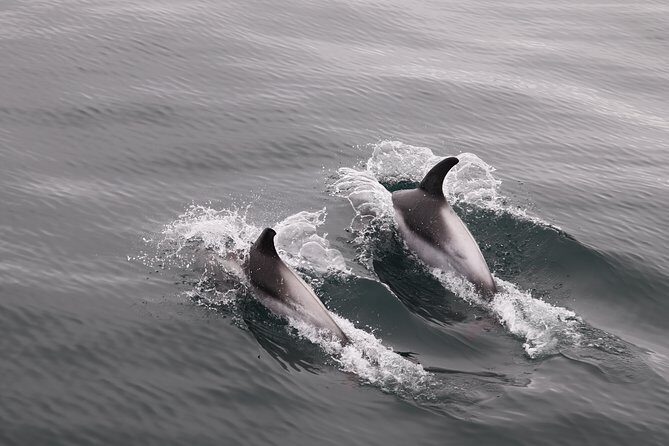
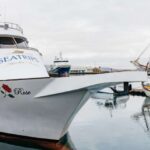
You can choose between two shore excursions: a longer, leisurely cruise (about 3.5 hours) or a high-speed 2.5-hour option. Both follow the same idea—get you out into the bay for whale watching with onboard learning—but the feel is different.
The longer cruise is best if you like slow searching. Time on the water increases your chances of encountering whales, and it gives you more chances to re-position as the animals move. It also gives you time to watch smaller marine activity—like porpoises and white-beaked dolphins—without feeling like you’re always “behind” the action.
The shorter high-speed option can be a good fit if you’re squeezed by your schedule in Reykjavik. It trades some time for speed, and you’ll want to be mentally ready for a faster-paced hunt. If you’re prone to motion sickness, shorter might feel kinder too, though any sea can still be bumpy.
Meeting at Skarfabakki Harbour: where the day really starts
The meeting point is Skarfabakki Harbour (544P+F35, 104 Reykjavík), and the trip ends back at the same place. If you selected pickup, plan to be ready at least 1 hour prior to your departure time.
That “be ready early” tip isn’t just helpful—it’s key. A late pickup story shows up in the real-world experience of this kind of shore excursion, and the takeaway is simple: don’t assume the van will appear exactly when your brain expects it to. Give yourself buffer time, especially if your ship docks on a tight schedule.
If you’re walking in, Skarfabakki is close to public transportation, so you’re not trapped if your timing is off. Still, the best experience comes from arriving calmly and letting the boarding process go smoothly.
What’s Actually Included (the stuff you’ll feel on the water)
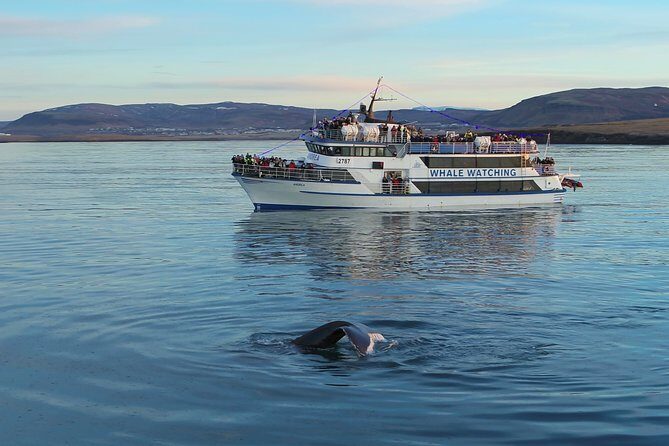
A common problem with boat tours is paying for a “maybe.” This one tries to soften the maybe with meaningful inclusions.
Here’s what you get:
- Thermal overalls (available in children’s sizes)
- Free WiFi onboard
- Complimentary sea-sickness tablets, if needed
- Free ticket to try again if nothing is seen
That try-again ticket is the standout value feature. You’re not stuck with a shrug and a lost day if whales don’t show. You’re given another shot, which matters because Iceland conditions can change fast, and marine life does not read your calendar.
One more small but real bonus: the setup aims to keep you outside. With waterproof layers, you can stay on deck for spotting instead of retreating indoors. That improves your odds simply because you’re in the right place to notice spray, tail movement, and quick surface breaks.
Warm Overalls, Sea-Sickness Tabs, and a Boat Setup That Helps You Watch
The biggest complaint on cold-water cruises is usually discomfort. Here, waterproof coveralls/overalls help you stay warm enough to watch without constantly changing layers. If you’re traveling with kids, the fact that children’s sizes exist is a practical win. It also means fewer trips back and forth for borrowed jackets.
Then there’s motion comfort. Even when the sea is fine, boats can rock. The included sea-sickness tablets give you a way to manage it rather than guessing. Take them as directed by the crew or package instructions, not “later if you start feeling bad.”
On the viewing side, the boat is designed so you can hear the guide clearly through installed speakers. More than once, the guide’s role is described as both informative and upbeat. That’s important because you’re trying to spot fast wildlife. Hearing what the guide is pointing out helps you get your bearings fast.
If you’re hoping for a front-row experience for sightings, do a bit of strategy. The best view is often where your boat position lines up with the animals’ approach. In real life, that can mean moving early and staying flexible.
You can also read our reviews of more whale watching tours in Reykjavik
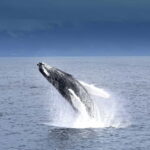
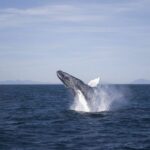
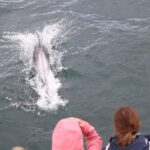
Species You Can Expect in Faxaflói Bay
The waters around Reykjavik support a mix of marine life, and the onboard commentary focuses on what’s likely around Faxaflói Bay. Expect the chance to see:
- Porpoises
- White-beaked dolphins
- Minke whales
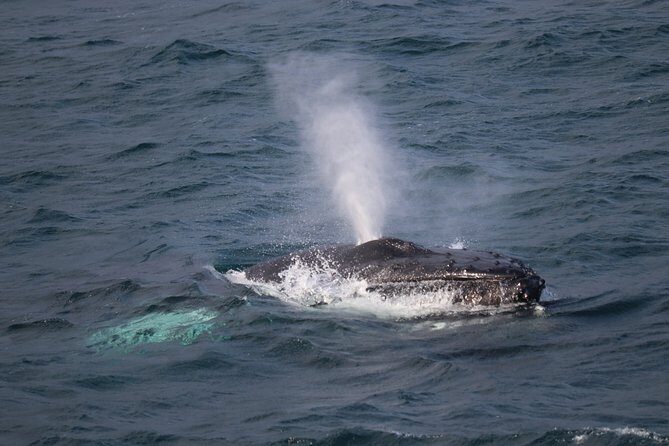
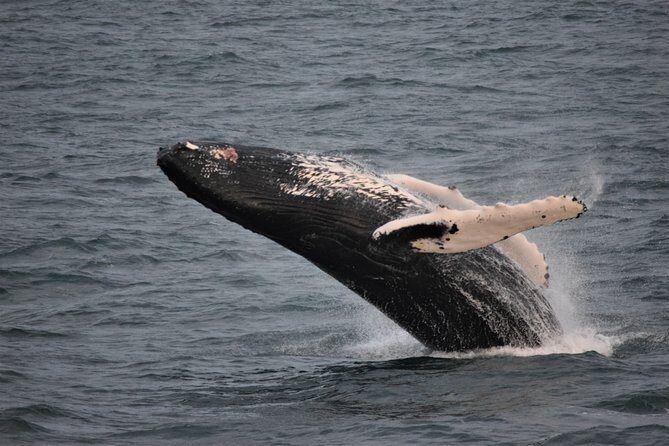
- Humpback whales
It’s also not just about whales. You may also see seabirds that react to marine activity, like gannets, and you could spot other signs of feeding behavior. That’s part of what makes the cruise work even on days when the big whales don’t make an appearance.
One reality check you should keep in mind: this cruise does not promise whale “leaping out of the water” moments on demand. Iceland whale watching is still search-based. Some guests report the crew relies on human sightings rather than sonar/radar devices to find whales, so the honest approach is to treat it as wildlife watching with an expert guide, not a guaranteed show.
How the Guide and the Special Tours Iceland App Make Spotting Easier
This tour includes a new Special Tours Iceland app. The goal is to help you understand what you’re looking at and where you are in the natural world around you.
What the app adds:
- Text and audio info about the tour and wildlife
- Available in English, German, French, Spanish, and Chinese
- You can download before or during the tour
Even if you’re not the type to use apps on trips, audio wildlife explanations can help. On a boat, you’re balancing wind noise, motion, and quick animal appearances. Having both spoken and on-screen context makes it easier to connect a spout to a species and a behavior to a why.
A specific guide name you may hear associated with this operation is Dominiki, noted for strong marine knowledge and humor. Again, you shouldn’t plan your whole trip around a specific guide, but it’s a good signal: the commentary tends to be more than facts read off a page.
Picking the Right Spot on Deck
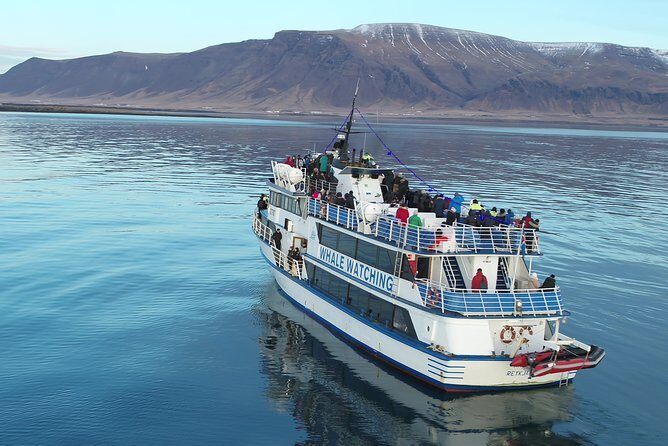
The boat experience depends on where you stand. More than once, people have noted that the best sightings come when you’re positioned well—often near the front areas of the deck where your line of sight is clearer.
If you want to improve your chances:
- Arrive early enough to choose a viewing spot
- Stay willing to move when the captain adjusts course
- Keep your eyes on the guide’s orientation points
Also, don’t underestimate smaller sightings. Sometimes the first “real” win is not a giant humpback, but a minke or a quick dolphin pod. Catching those early keeps the day from feeling empty.
Weather, Rough Seas, and the Real Limits of Whale Watching
This is a weather-dependent activity. If conditions are poor, the experience may be canceled and you’ll be offered a different date or a full refund.
Even with good weather, sea conditions can still feel choppy. Some people report seasickness despite the tablets, and others mention that rougher water can make it hard to move around the boat. If motion is a concern for you, plan for it.
There are also practical comfort considerations:
- You may want to wear layers under the overalls to adjust to changing wind
- Bring gloves if you get cold hands
- Expect the boat to chase and reposition when animals surface
One frustration that shows up in real-world experiences is when whales are scarce that day. When that happens, the guide and crew can do a lot to keep things engaging—explaining local geography, wildlife behavior, and what patterns might mean. But there’s no way to force whales to appear on schedule.
Value for $108.13: What You’re Really Paying For
At about $108.13 per person for a cruise around 3 hours 50 minutes (approx.), you’re paying for several things at once:
- Access to the bay area via a dedicated wildlife search boat
- Onboard expert commentary and species education
- Comfort support: waterproof overalls, sea-sickness tablets, WiFi
- A safety net: free ticket to try again if nothing is seen
A common mistake is judging value only by the chance of seeing humpbacks. That’s not the right frame. The stronger value is the full package: instruction, comfort, and time on water with real learning built in.
If whales are your top priority, you’re still paying for “a chance,” not a contract. But the included try-again option changes the math. It turns a missed sighting into an opportunity to try again rather than a one-and-done gamble.
Who This Cruise Fits Best
This tour is a strong match if:
- You want a guided wildlife experience, not just a ferry ride
- You’re willing to dress for cold and stay flexible on the water
- You like learning about marine species while you watch them
It also works well for most visitors because the tour is designed for participation in typical shore excursion conditions and includes warm gear.
Where I’d be more cautious:
- If you strongly need whale sightings at all costs, adjust expectations. Some days focus more on dolphins, porpoises, and birds.
- If accessibility needs are part of your planning, ask the operator ahead of time. One report noted limited handicapped accessibility on the boat, so don’t assume you’ll be able to move and view in the same way as everyone else.
Should You Book This Whale-Watching Cruise?
I’d book it if you want a real nature outing with warm gear, helpful guidance, and the included fallback ticket. The combo of expert commentary, species-focused orientation, and practical comfort makes it easier to enjoy even when the big whales are elusive.
Skip it or book with extra expectation-management if whales are the only thing you’ll accept. This is search-based wildlife watching. Some days deliver whales close and spectacular, and other days deliver fewer sightings and more “we’re out here looking” time.
My final advice: check the day’s weather, get to Skarfabakki Harbour with buffer time, and dress warm enough that you can stay outside. Do those three things and you give yourself the best shot at a memorable Faxaflói Bay experience.
FAQ
How long is the whale-watching cruise?
It’s approximately 3 hours 50 minutes overall, and you may choose between a 3.5-hour cruise or a 2.5-hour high-speed cruise.
Where does the tour start and end?
The tour starts and ends back at Skarfabakki Harbour (544P+F35, 104 Reykjavík, Iceland).
Is pickup available from the cruise port?
Pickup is offered. If you chose pickup, you should be ready at Skarfabakki Harbour 1 hour prior to departure.
What’s included on board?
Included items are thermal overalls, free WiFi, complimentary sea-sickness tablets, and a free ticket to try again if nothing is seen.
Is food or drink included?
Food and drinks are not included, unless specified.
What wildlife might you see?
You can look out for porpoises, white-beaked dolphins, minke whales, and humpback whales in the Faxaflói Bay area.
What languages are available?
The tour is offered in English. The Special Tours Iceland app includes English, German, French, Spanish, and Chinese (text and audio).
What happens if the tour is canceled due to weather?
Because it requires good weather, if it’s canceled due to poor weather you’ll be offered a different date or a full refund.